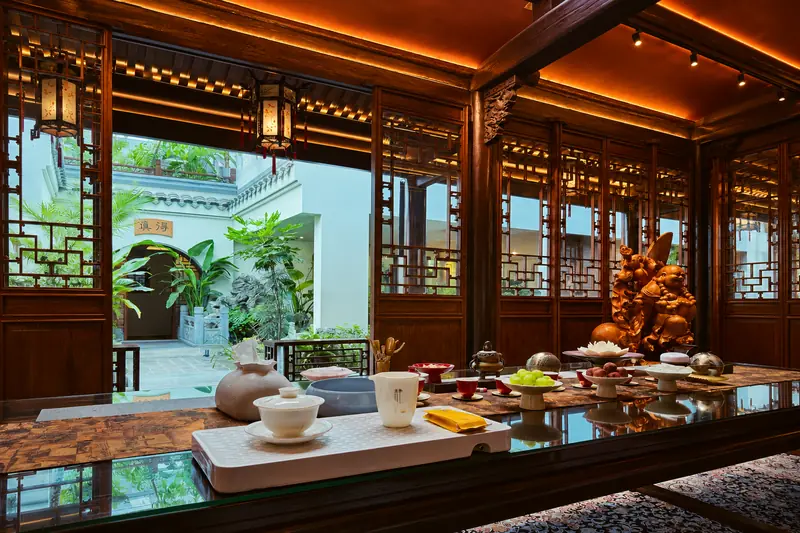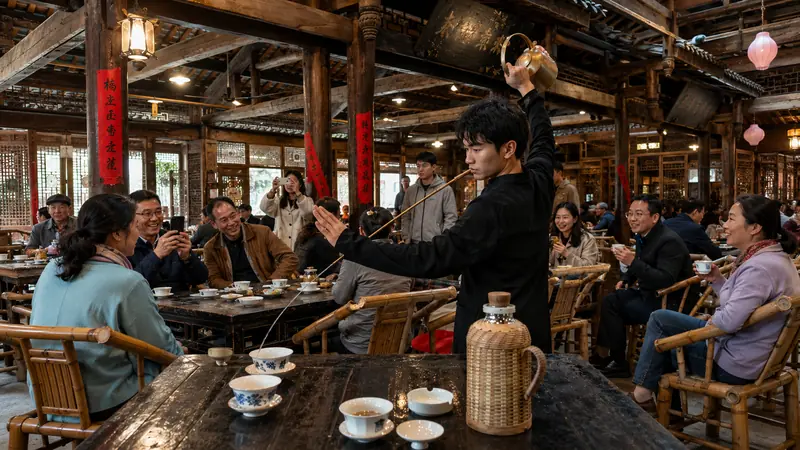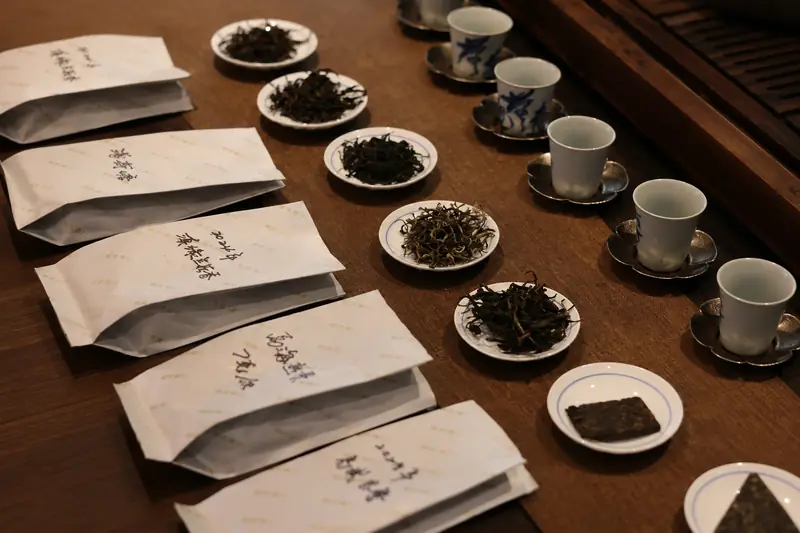
Chinese tea is not hard because China has six main processing categories. It is hard because English menus and Chinese tea categories do not always use the same map. English black tea usually means Chinese red tea, Pu'er is better understood through dark tea, and jasmine tea is a scented tea rather than one of the main processing categories. This guide gives you the traveler version of the map before you walk into a teahouse or tea shop.
Executive Summary
What this guide covers
A practical map of Chinese tea for travelers: green, yellow, white, oolong, red/black, dark/Pu'er, and flower teas, plus how to choose, brew, and buy without getting lost.
Best first choices
Start with Longjing for green tea, Tieguanyin for oolong, Dianhong for Chinese black tea, White Peony for white tea, ripe Pu'er for dark tea, and jasmine tea for an easy teahouse cup.
Main traveler trap
Do not trust English color words alone. Chinese red tea, English black tea, Chinese dark tea, Pu'er, and flower tea all need a little translation.
6
Main tea categories
Hongcha
English black tea
Heicha
Chinese dark tea
50-100 g
First loose buy
Chinese Tea Starts With Leaf Processing
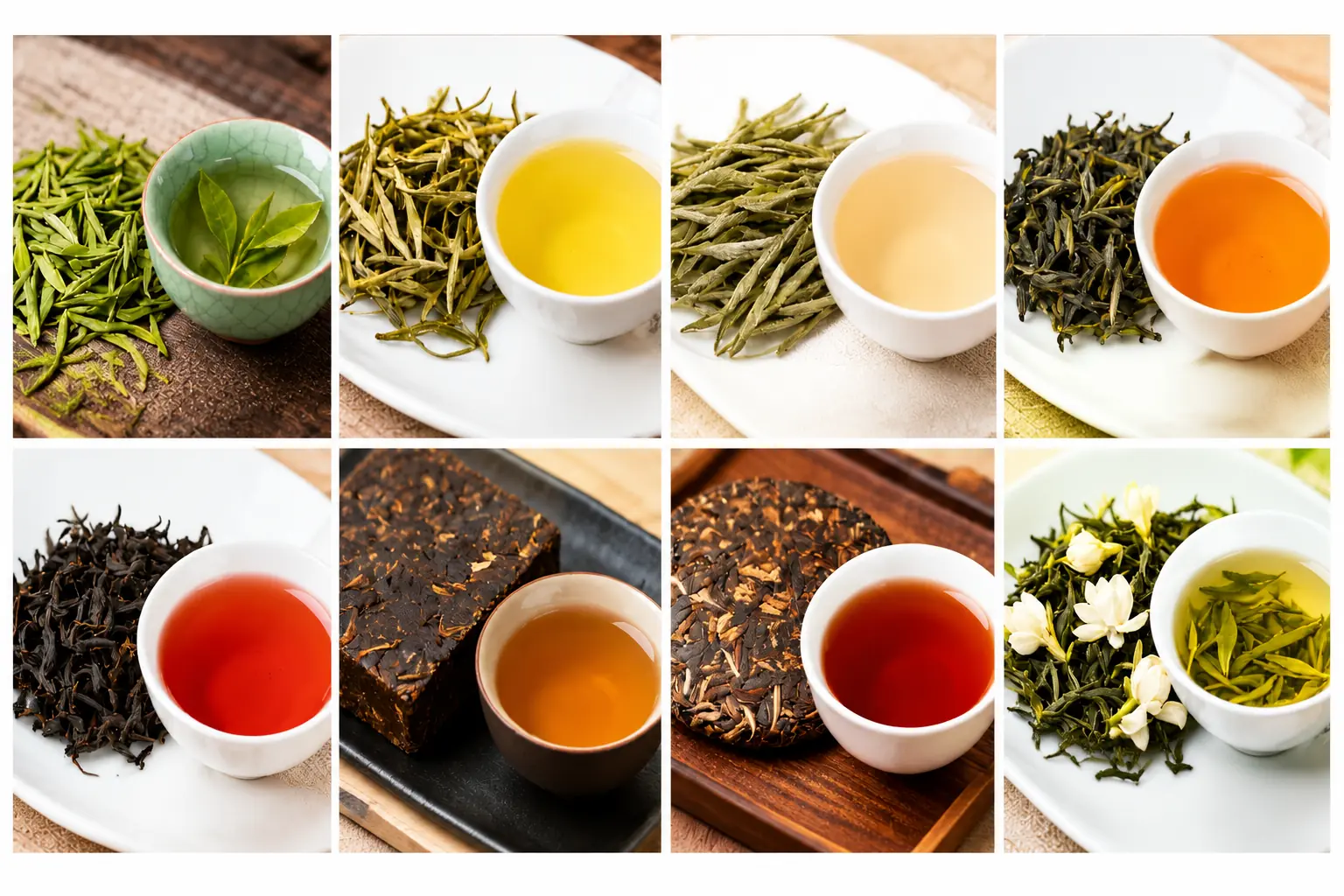
A practical traveler map: six main Chinese tea categories plus jasmine and other scented flower teas.
The safest way to understand Chinese tea is through processing, not just color. Ask what happens to the leaf: is oxidation stopped quickly, allowed partly, allowed fully, shaped by withering, warmed through a yellowing step, or transformed by post-fermentation and aging? That question explains more than a translated menu ever will.
UNESCO's page on traditional tea processing techniques in China says Chinese tea producers developed six categories: green, yellow, dark, white, oolong, and black teas. That English "black" needs a note. In Chinese tea language, the tea English speakers usually call black tea is red tea (红茶), while Chinese dark tea (黑茶) is a different category.
For a traveler, this is not a textbook point. It changes what you order. If you want a malty cup like English black tea, ask about Chinese red tea. If you want Pu'er tea (普洱茶), you are entering dark-tea and aging logic. If you want jasmine tea, you are usually drinking a scented or reprocessed tea made from a base tea, often green tea.
Think process before color
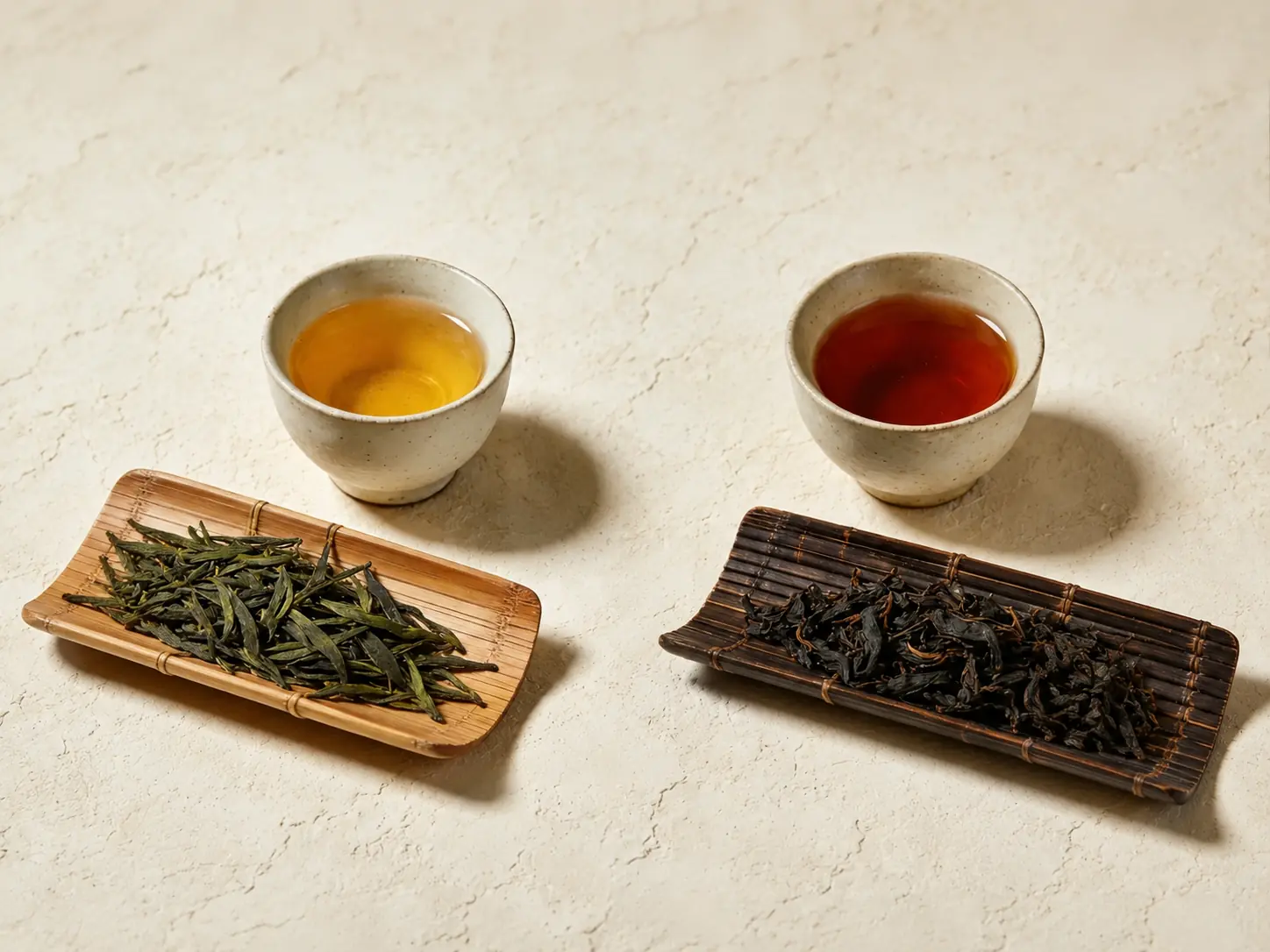
Tea names can be poetic, but the useful traveler map is processing: fresh green, mellow yellow, delicate white, aromatic oolong, fully oxidized red/black, post-fermented dark, and scented flower teas.
Six Base Teas and Flower Teas
A Chinaculture report on the ISO tea classification standard lists black, green, white, oolong, dark, and yellow tea as basic tea types and notes that these can be further processed into products such as scented tea and compressed tea. In everyday Chinese tea talk, you will more often hear red tea for what English classification calls black tea.
| Chinese tea type | English menu clue | Traveler shortcut |
|---|---|---|
| Green tea 绿茶 | Green tea | Fresh, light, spring-like; Longjing and Biluochun are easy entry points. |
| Yellow tea 黄茶 | Yellow tea | Rare, mellow, close to green tea but usually softer. |
| White tea 白茶 | White tea | Subtle, sweet, downy; Silver Needle and White Peony are the key names. |
| Oolong tea 乌龙茶 | Oolong tea | Semi-oxidized, with floral, roasted, mineral, or high-aroma styles. |
| Red tea 红茶 | Black tea in English | Fully oxidized; malty, sweet, fruity, smoky, or cocoa-like. |
| Dark tea 黑茶 | Dark tea, Pu'er | Post-fermented or aging-driven; Pu'er is the main traveler gateway. |
| Flower tea 花茶 | Flower tea, jasmine tea | Scented or reprocessed tea; jasmine tea is the classic example. |
This table is enough for ordering. If you want fresh, start with green tea or jasmine tea. If you want aroma, choose oolong. If you want warm and sweet, choose Chinese red tea. If you want dark, earthy, or aged flavor, look at Pu'er. If you want to complete the tea map, try yellow tea in a serious tea room.
Green Tea: Fresh, Light, and Familiar
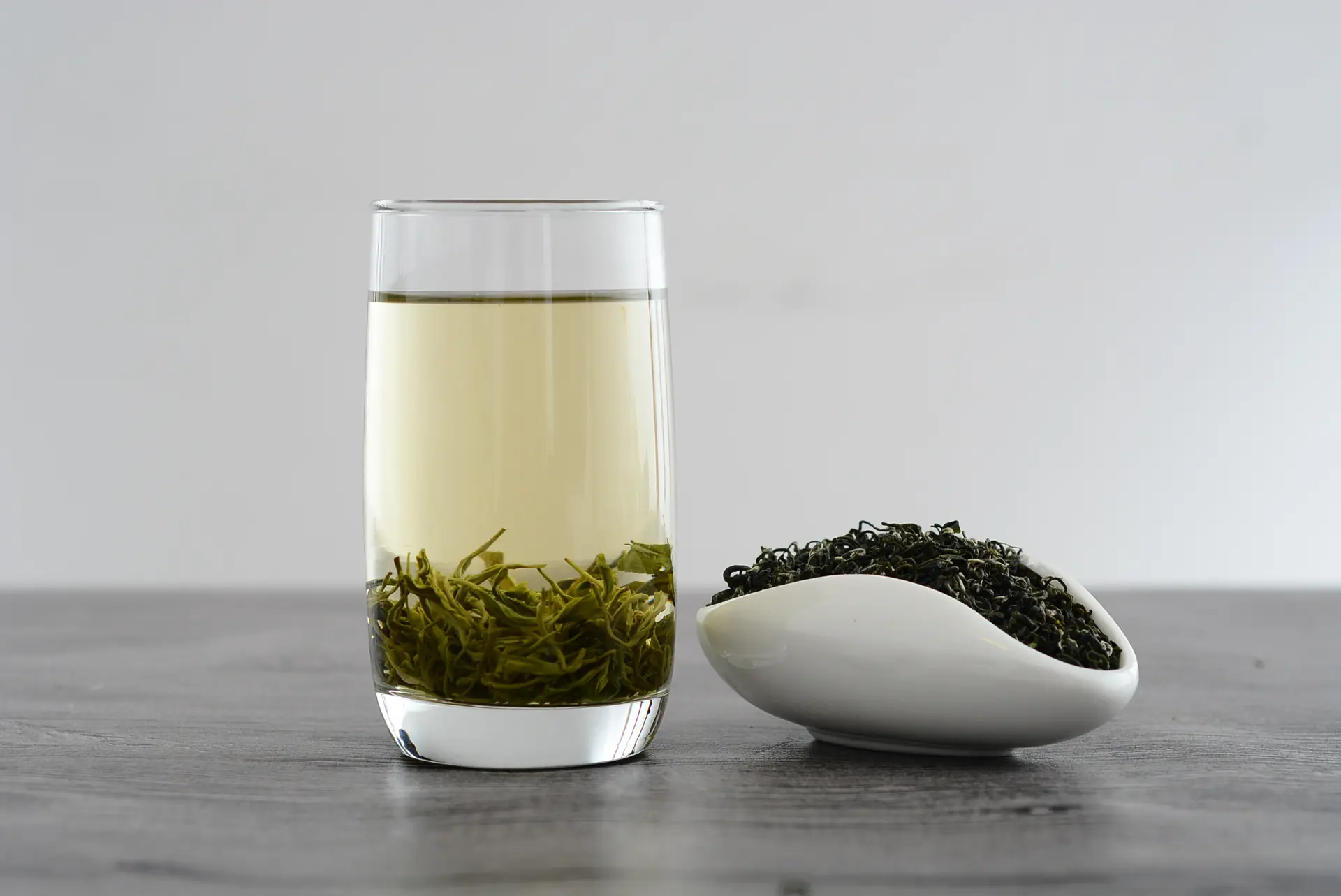
Longjing and Biluochun are the easiest green-tea names for travelers to recognize on a first China trip.
Green tea (绿茶) is usually the easiest Chinese tea category to recognize. The leaves are heated to stop oxidation, keeping the tea fresh, light, and green-leaning. Good green tea is not meant to be dark or heavy.
It can taste like toasted bean, chestnut, young grass, flowers, or a clean spring breeze, which is why it works best when the brewing stays light and quick.
For a first China trip, Longjing or Dragon Well tea (龙井茶) and Biluochun tea (碧螺春) are the two names to know. Longjing belongs naturally with Hangzhou (杭州), West Lake, and a flatter leaf shape. Biluochun belongs naturally with Suzhou (苏州), Taihu Lake, curled leaves, and a softer flower-and-fruit aroma.
The traveler warning is brewing. Green tea turns bitter and flat if you use too much leaf, boiling water, and a long hotel-mug soak. Use less leaf, slightly cooled water, and shorter steeps. For the full version, use the Chinese Green Tea Guide.
Oolong Tea: Floral, Roasted, and Aromatic
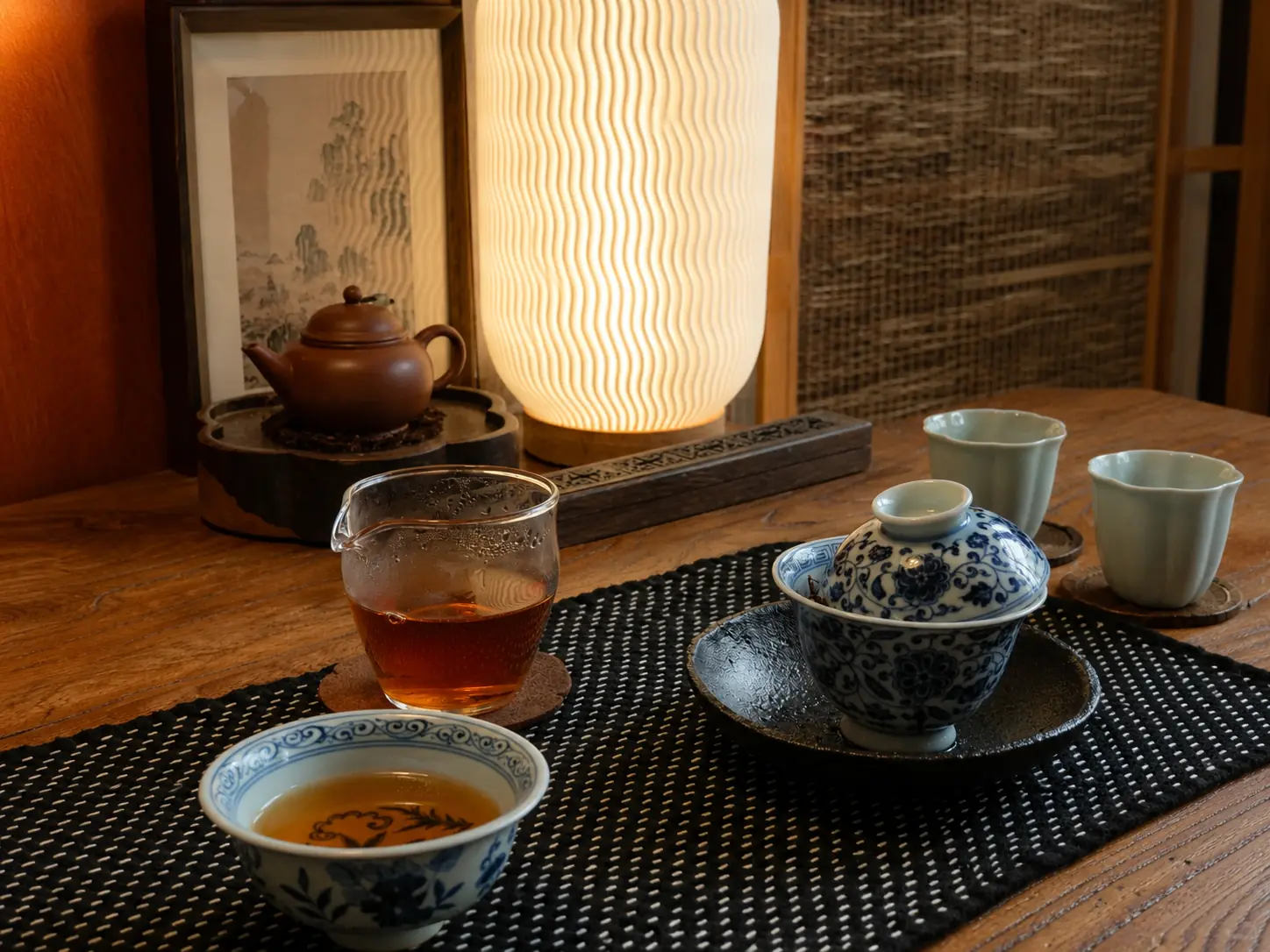
Oolong often shines in small-cup gongfu brewing, where aroma and repeated infusions are part of the experience.
Oolong tea (乌龙茶) is the category that often surprises travelers most. It is semi-oxidized, but that does not mean it sits neatly halfway between green and black tea.
It can be light and floral, deeply roasted, mineral, fruity, honeyed, or almost perfume-like, especially when brewed in small cups through repeated infusions.
Three names build a useful map. Tieguanyin, or Iron Goddess tea (铁观音), is the easiest oolong starter. Da Hong Pao, or Big Red Robe (大红袍), introduces Wuyishan (武夷山), rock tea, roasting, and famous-name risk. Phoenix Dancong (凤凰单丛) introduces Chaozhou (潮州), gongfu tea, and high-aroma styles such as honey orchid or Duck Shit Aroma (鸭屎香).
Oolong is especially good in small cups with repeated infusions. Ask whether the tea is light, roasted, rock tea, or Dancong before buying. For details, use the Oolong Tea Guide and the Gongfu Tea Ceremony Guide.
Why Chinese Black Tea Means Red Tea
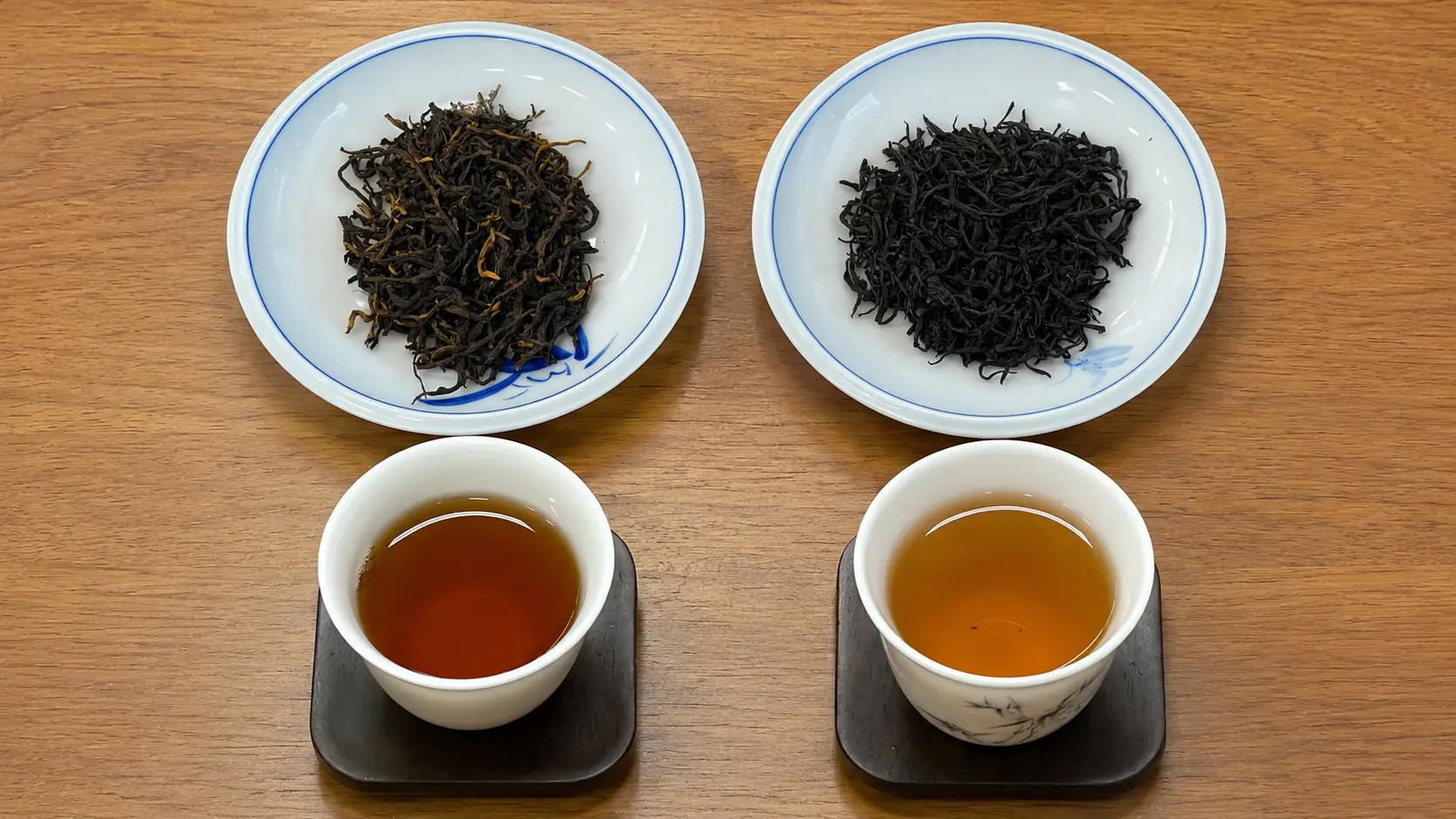
Chinese red tea is what many English menus call black tea: malty, honeyed, smoky, or cocoa-like depending on the style.
This is the translation trap. English black tea usually corresponds to Chinese red tea (红茶), a fully oxidized tea category. Chinese dark tea (黑茶) is different and belongs closer to Pu'er and post-fermentation.
If you remember only one vocabulary point, make it this one: ask for Chinese red tea when you want the malty family English menus usually call black tea.
Chinese red tea can taste malty, honeyed, fruity, smoky, floral, woody, or cocoa-like. Zhengshan Xiaozhong / Lapsang Souchong (正山小种) connects to Wuyishan and pine-smoke or longan sweetness. Keemun / Qimen black tea (祁门红茶) connects to Anhui fragrance and Western black-tea blends. Dianhong (滇红) connects to Yunnan (云南), golden buds, malt, and honey.
If you want the easiest first cup, choose Dianhong. If you want elegance, choose Keemun. If you want something memorable, try Lapsang Souchong, but ask whether it is smoked or unsmoked. The full comparison is in Black Tea in China.
White Tea and Yellow Tea Stay Quiet
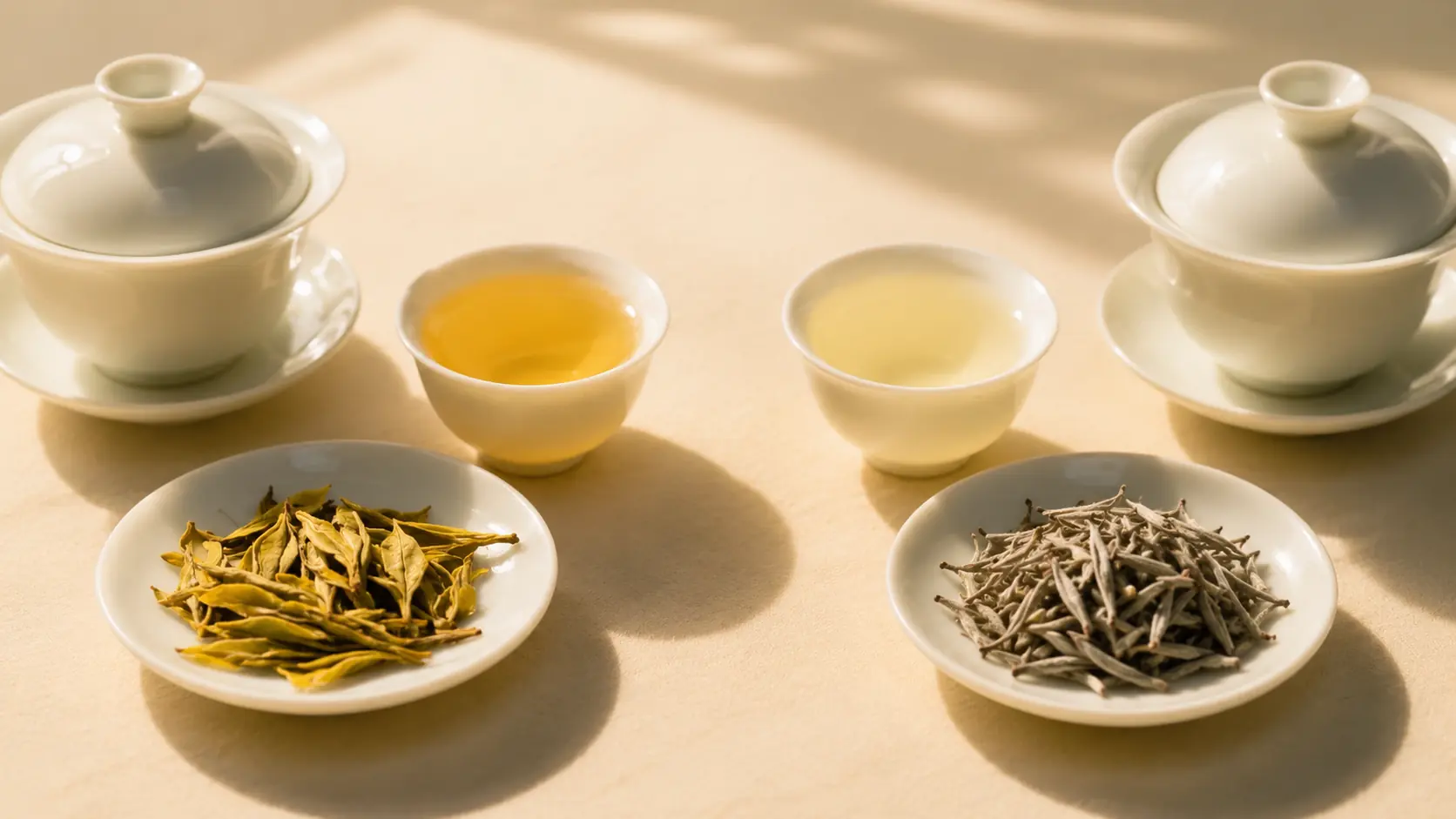
White tea and yellow tea are subtle categories, better read through texture and softness than strength.
White tea and yellow tea are easy to dismiss as "too light." That is usually a mismatch of expectations. They are not weak; they are quiet.
Read them through texture, softness, sweetness, and finish rather than through the heavy body you might expect from a breakfast tea.
White tea (白茶) is lightly processed and lightly oxidized, often through withering and drying rather than aggressive shaping. Baihao Yinzhen / Silver Needle (白毫银针) shows the bud-only, downy, delicate side. Baimudan / White Peony (白牡丹) is fuller, more forgiving, and often a better first buy.
Yellow tea (黄茶) is much rarer. It starts close to green tea but includes a warm, humid yellowing step called menhuang (闷黄), which usually makes the cup softer and less grassy. The names to recognize are Junshan Yinzhen (君山银针), Mengding Huangya (蒙顶黄芽), and Huoshan Huangya (霍山黄芽).
Choose White Peony if you want a gentle, approachable first white tea. Try yellow tea if you want to complete your six-category map. Use White Tea in China and Yellow Tea & Jasmine Tea in China when you want the details.
Pu'er Tea Belongs With Chinese Dark Tea
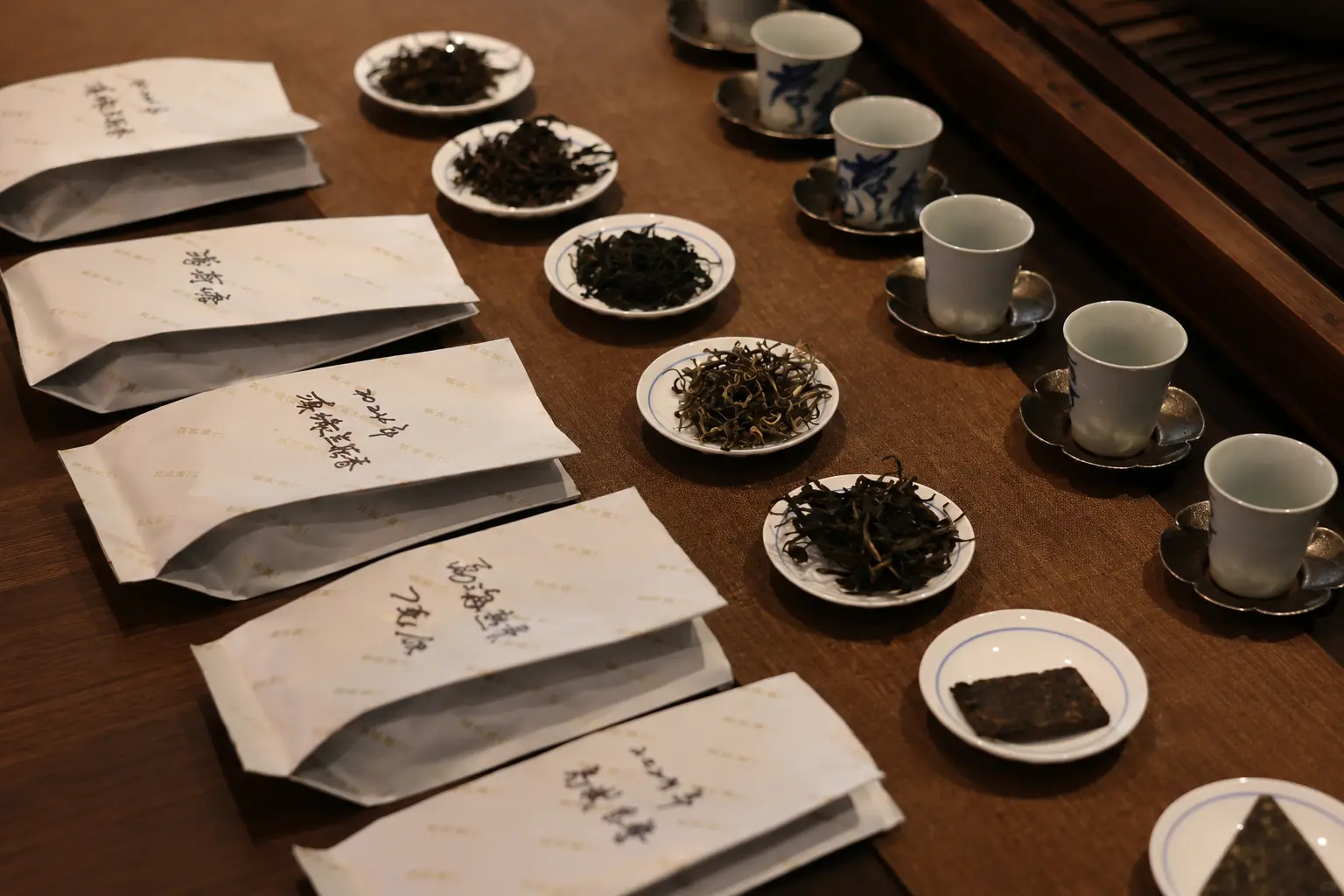
Pu'er belongs in the dark-tea conversation, with raw-versus-ripe choices and aging stories to keep in perspective.
Pu'er tea (普洱茶) is the tea most often misfiled by English speakers. It is not English breakfast-style black tea. It belongs in the Chinese dark tea (黑茶) conversation.
The useful traveler frame is post-fermentation, aging, storage, pressed cakes, and raw-versus-ripe choices, not simply whether the cup looks dark.
The first Pu'er question is raw or ripe. Raw Pu'er (生茶) can be bitter-sweet, herbal, floral, sharp, or aging-driven. Ripe Pu'er (熟茶) is usually darker, smoother, and easier with food, with possible notes of wood, dates, clean earth, or autumn leaves. Ripe Pu'er is often the better first cup at dim sum or after a rich meal.
Pu'er attracts big stories: old trees, famous mountains, vintage cakes, investment language. Keep the conversation in the cup. Ask raw or ripe, year, weight, storage, and unit price. Buy samples before cakes. Start with the Pu'er Tea Guide if this category interests you.
Flower Teas: Jasmine Scenting and Beyond
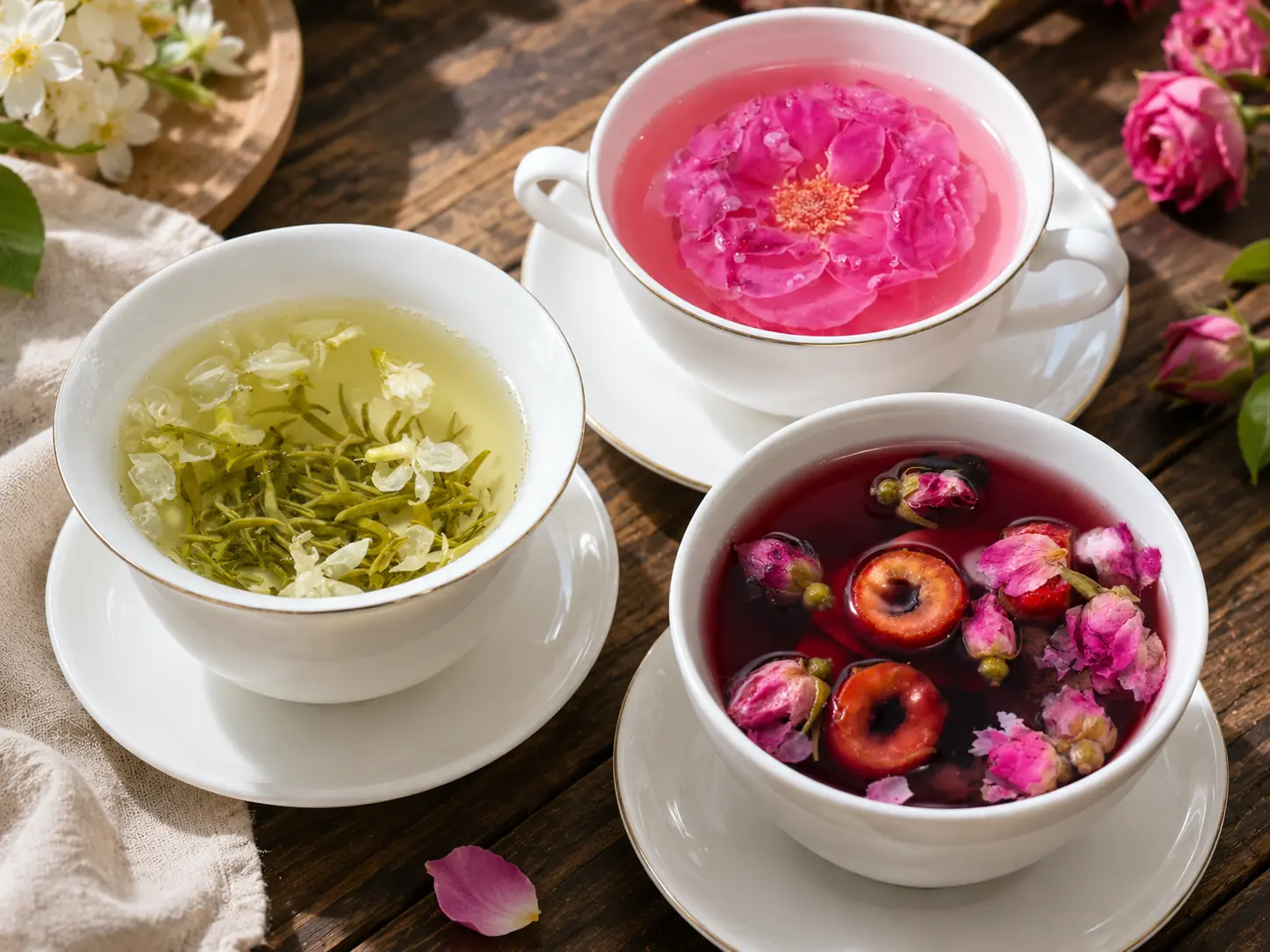
Jasmine tea is usually a scented tea, often made by letting a base tea absorb fresh flower fragrance.
Flower teas are usually reprocessed or scented teas, so they sit outside the six main processing categories rather than forming another parallel base category.
The most important example for travelers is jasmine tea (茉莉花茶), often made by scenting a green tea base with fresh jasmine flowers.
The best jasmine tea is not just dried flowers floating in water. Traditional scenting lets tea leaves absorb fragrance from fresh blossoms, often through repeated rounds. The spent flowers may be removed, so visible petals do not prove higher quality. What matters is whether the flower aroma feels fresh, clean, and integrated with the tea.
Jasmine tea is the easiest first cup in many teahouse situations: Chengdu park teahouses, Cantonese yum cha, northern restaurants, Fuzhou tea shops, and big-city tea rooms. For the deeper flower-tea context, use the Yellow Tea & Jasmine Tea in China.
Which Tea Should You Try First
Choose by taste and setting before prestige.
Decision shortcut
Best Chinese tea first cup
I want fresh and light
Choose Longjing or another green tea. Use cooler water and do not over-steep.
I want fragrance and drama
Choose oolong, especially Tieguanyin for floral or Da Hong Pao for roasted depth.
I want warm and sweet
Choose Dianhong or Keemun, both Chinese red teas that English menus may call black tea.
I want dark and food-friendly
Choose ripe Pu'er, especially with dim sum or after a heavy meal.
I want gentle and subtle
Choose White Peony before expensive Silver Needle.
I want an easy teahouse cup
Choose jasmine tea, especially in Chengdu, Fuzhou, or a casual teahouse.
If you only have one tea stop, match it to the route. Hangzhou means Longjing. Wuyishan means oolong, rock tea, or Lapsang Souchong. Kunming means Pu'er or Dianhong. Fuzhou means jasmine tea. Chengdu means park teahouse and gaiwan tea. Guangzhou or Hong Kong means tea with dim sum.
Where Tea Fits Into a Trip
A calm city teahouse can teach you more than a rushed tea-origin detour that does not fit your route.
Tea does not need to become a separate tea mountain tour. For most travelers, the best tea experience is one that naturally fits the route.
Hangzhou and Suzhou are strong green-tea contexts. Wuyishan and Chaozhou are strong oolong contexts. Kunming is the easiest practical city for Pu'er and Dianhong.
Do not force every famous tea origin into a first trip. One or two good tea stops are enough, especially when a city teahouse fits the rest of your day.
Fuzhou gives jasmine tea deeper meaning. Chengdu gives you a living teahouse culture where jasmine tea and local green teas feel social rather than specialist. Cantonese yum cha shows how tea supports a meal.
Brewing Basics for Chinese Tea Travelers
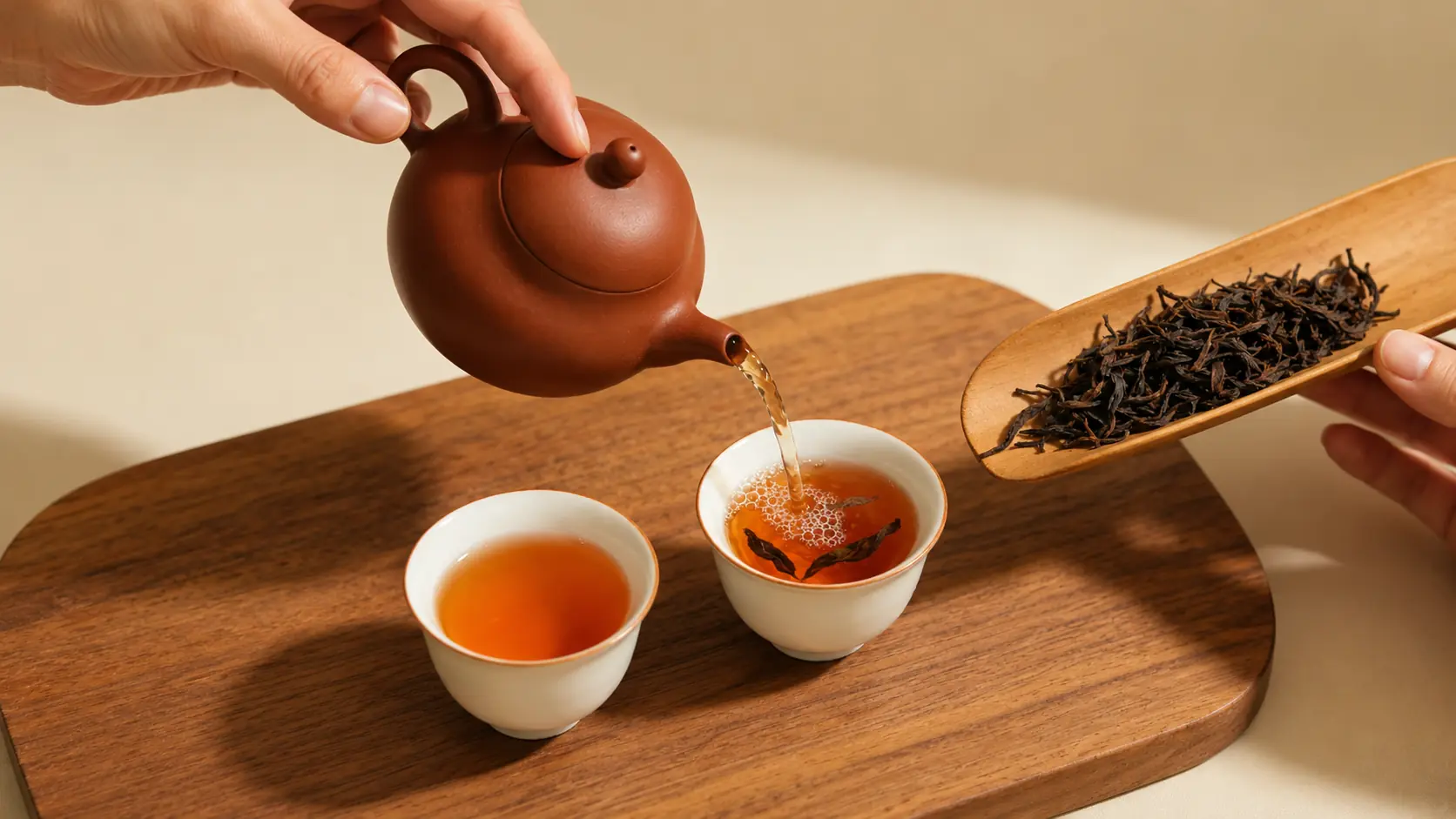
Travel brewing is mostly about controlling leaf amount, water temperature, steep time, and refills.
You do not need complex equipment on the road. You do need to avoid treating every Chinese tea like a tea bag.
The traveler version is simple: start light, match the water to the tea, taste early, and adjust the next steep instead of forcing one fixed recipe.
- Use less leaf first- Hotel cups are larger than tea-shop cups. Start light and adjust.
- Match water to tea- Green, yellow, and jasmine green teas prefer slightly cooler water. Oolong, red tea, and Pu'er usually handle hotter water.
- Taste early- Try the first cup before it turns bitter, smoky, sour, or muddy.
- Adjust the next steep- Too weak means more time or leaf. Too bitter means less leaf, cooler water, or shorter time.
- Refill if it stays pleasant- Many Chinese teas are meant for multiple infusions. Stop when the cup turns flat.
In a gaiwan (盖碗), use more leaf, short steeps, and quick pouring. In a mug, use less leaf and shorter soaking. The goal is not perfect ceremony. It is controlling strength so you can actually taste the tea.
How to Buy Tea Without Overpaying
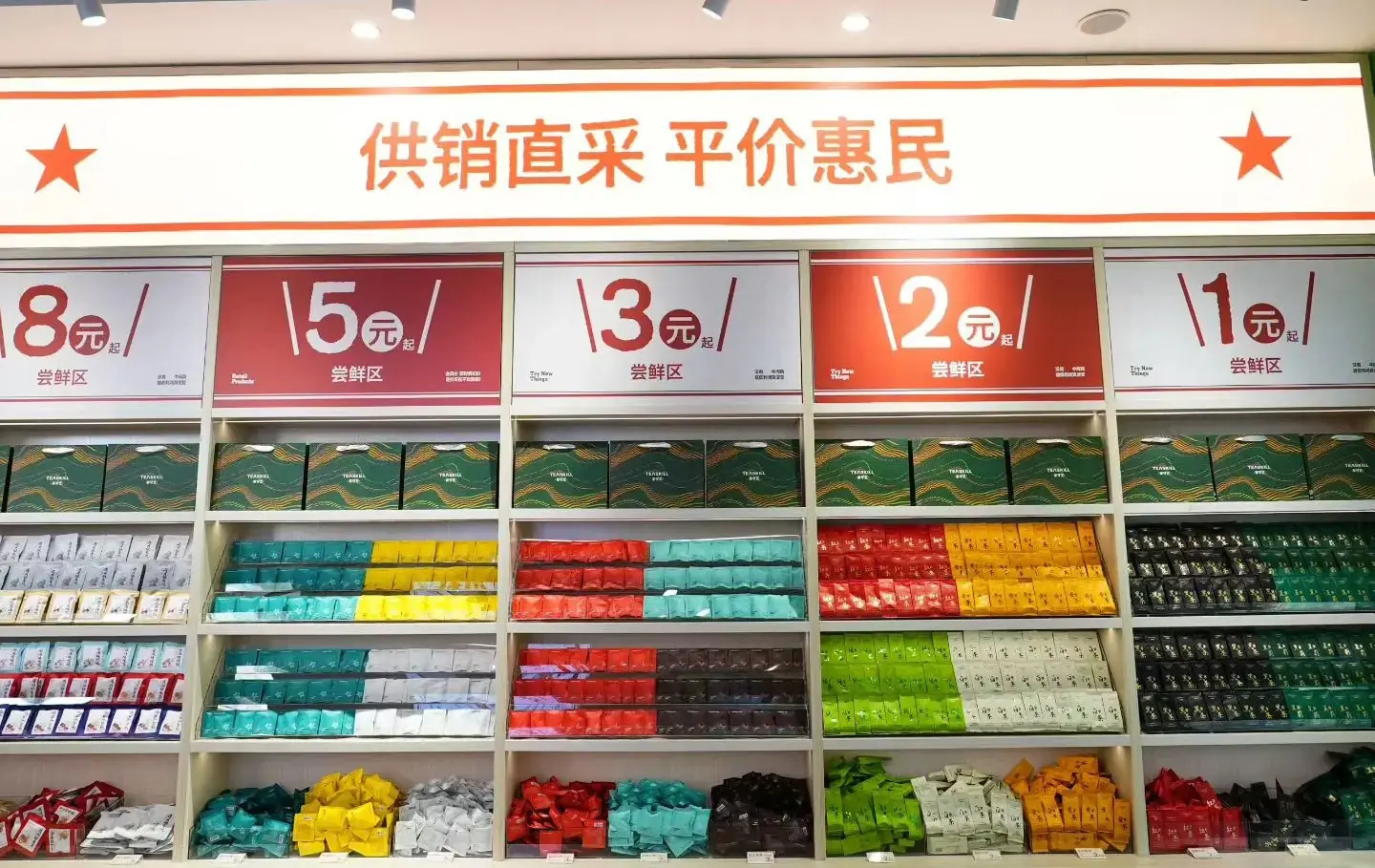
Buy small first and confirm the unit price before packaging, mountain names, or gift boxes take over the conversation.
Tea shops sell leaves, but they also sell names, boxes, years, mountains, gifts, and stories. Some stories are real. None of them replace tasting.
For most first purchases, buy 50-100 grams of loose tea. For rare yellow tea, even 25-50 grams is enough. For Pu'er, buy samples or a small cake before committing to a full-size cake.
Always ask the unit price: per 50 grams, 100 grams, tin, cake, pot, box, or person.
Do not buy prestige before preference. You may enjoy a mid-range White Peony more than an expensive Silver Needle, a simple Dianhong more than a gold-labeled gift tin, or a clean jasmine tea more than a rare yellow tea. A good souvenir is a tea you will actually drink after the trip.
- Buy small first: 50-100 grams is enough for most first loose-leaf tea purchases.
- Ask the exact tea name: category words are not enough; ask for Longjing, Tieguanyin, Dianhong, Baimudan, or the specific tea on offer.
- Confirm the unit price: per 50 grams, 100 grams, cake, tin, gift box, pot, or person can change the real cost completely.
- Be careful with old tea stories: age helps only when the tea and storage are good.
- Separate tea from packaging: a heavy box is not proof of better leaves.
Useful Chinese Tea Phrases for Shops
Show the Chinese if pronunciation feels awkward. These phrases help you confirm the tea type, price, and brewing style.
| English | Chinese | Pinyin | Say It Like… |
|---|---|---|---|
| Green tea | 绿茶 | lǜ chá | lyoo chah |
| Oolong tea | 乌龙茶 | wū lóng chá | oo long chah |
| Chinese black tea / red tea | 红茶 | hóng chá | hohng chah |
| Dark tea | 黑茶 | hēi chá | hay chah |
| White tea | 白茶 | bái chá | bye chah |
| Yellow tea | 黄茶 | huáng chá | hwahng chah |
| Jasmine tea | 茉莉花茶 | mò lì huā chá | mwaw lee hwah chah |
| How much is this per 50 grams? | 这个多少钱一两? | zhè ge duō shǎo qián yī liǎng? | juh-guh dwaw-shaow chyen ee lyahng |
| Can you brew it lighter? | 可以泡淡一点吗? | kě yǐ pào dàn yī diǎn ma? | kuh yee paow dahn ee dyen mah |
Frequently Asked Questions
Chinese tea is commonly grouped into six main processing categories: green, yellow, white, oolong, red or black in English classification, and dark tea. Flower teas such as jasmine tea are usually scented or reprocessed teas.
Beyond This Guide
This page is the map. Use the deeper guides when one category catches your attention: Chinese Green Tea Guide, Oolong Tea Guide, Black Tea in China, White Tea in China, Yellow Tea & Jasmine Tea in China, Pu'er Tea Guide, Gongfu Tea Ceremony Guide, Chengdu Teahouse Guide, and Cantonese Dim Sum and Yum Cha Guide.
- Bubble Tea & China's Modern Tea Chains — order custom sugar, ice, and fresh-fruit tea toppings on Heytea, Chagee, and Nayuki mini-programs
© gochinafreely.com — Original guide by Go China Freely.