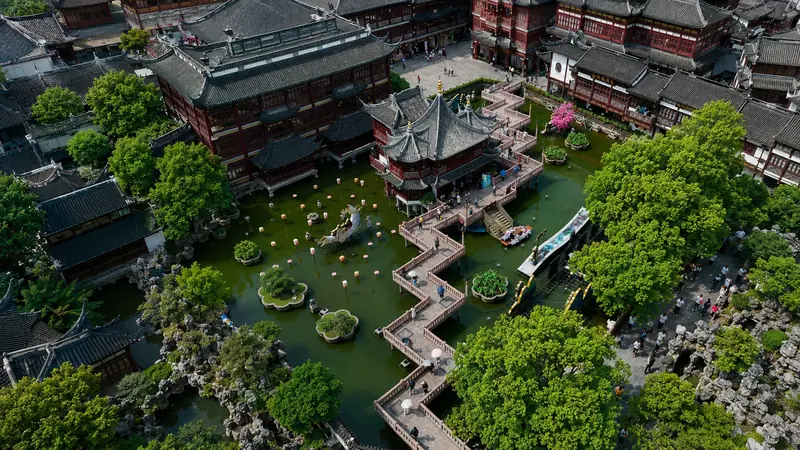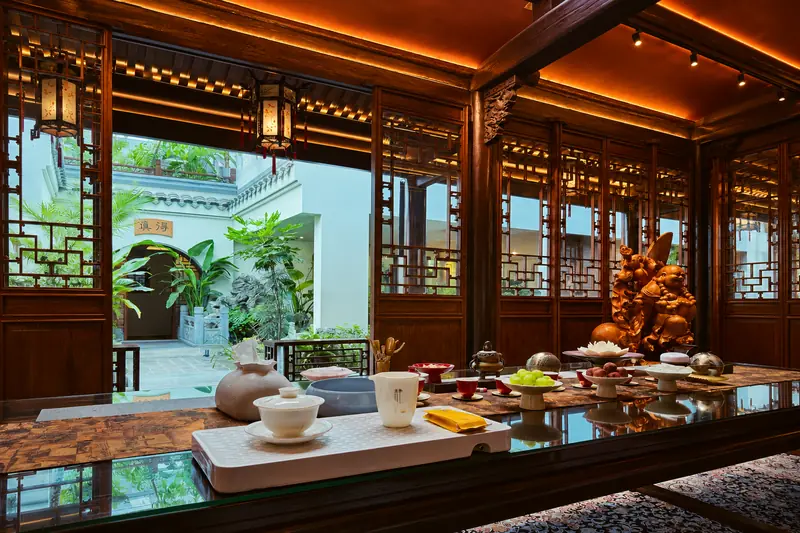
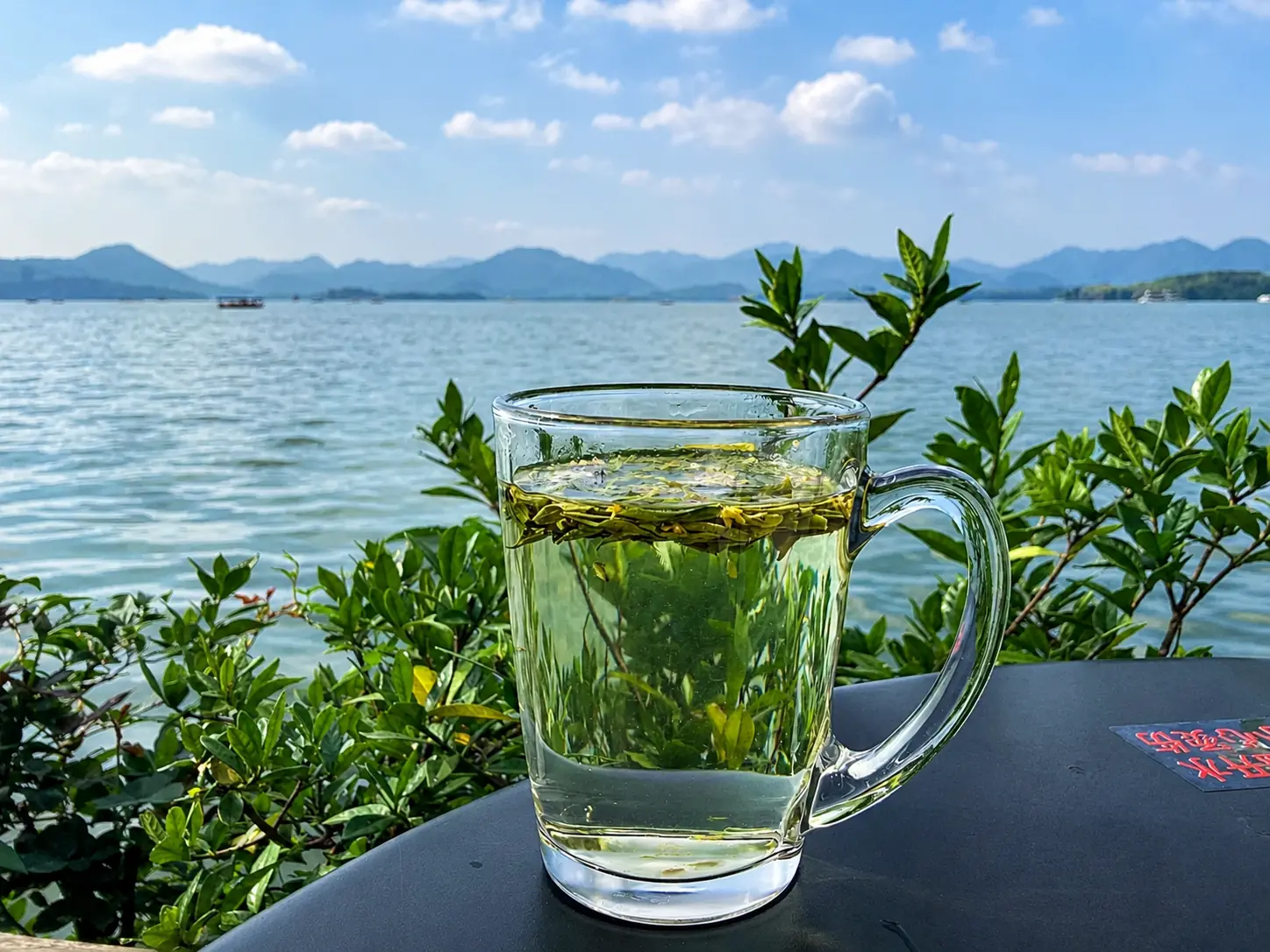
Hangzhou makes tea feel geographical: West Lake on one side, green ridges on the other, and Longjing leaves served within a short ride of the fields that grow them. UNESCO lists West Lake as a cultural landscape, and China's traditional tea processing techniques and associated social practices, a broader heritage element that includes Longjing traditions, entered the intangible heritage list in 2022. This guide is not a tea-class article; it helps you choose the right place to sit with Longjing, from lake-view pavilions to quieter tea villages.
Executive Summary
What this guide covers
Where to drink Longjing tea in Hangzhou: lake-view teahouses, Longjing Village, Meijiawu, the tea museum area, Tiger Spring, ordering basics, and tea-buying pressure points.
Best first choice
Choose a West Lake teahouse if you want convenience and scenery. Choose Longjing Village or Meijiawu if you want tea hills and a slower sit-down.
Main traveler trap
Do not confuse tasting tea with agreeing to buy tea. Ask the price first, buy small amounts, and leave expensive gift boxes for later consideration.
Longjing
Dragon Well tea
West Lake
Scenic anchor
Tea villages
Origin context
Ask first
Price before tasting
Longjing Tea Belongs to Hangzhou's Hills
Longjing tea (龙井茶), often translated as Dragon Well tea, is not just a green tea name on a menu. In Hangzhou, the drink is tied to a very specific landscape: West Lake (西湖), the wooded hills west of the lake, and villages where tea rows climb the slopes within the city sightseeing zone.
That place context is the reason to drink Longjing in Hangzhou rather than treating it like any other cup of green tea. UNESCO's West Lake listing describes a cultural landscape shaped by lake, hills, causeways, temples, gardens, and ornamental planting. Tea is part of that wider Hangzhou rhythm: Hangzhou tourism materials promote tea-themed routes that connect the China National Tea Museum, Longjing Village, Longwu Tea Town, and Jingshan tea culture.
1This is a place guide
This article asks where to sit down for tea in Hangzhou, not how to classify every Chinese green tea.
2It avoids tea-class overlap
Use the green tea guide for Longjing flavor, Biluochun, brewing temperature, and buying small amounts.
3It avoids activity overlap
Use the Longjing tea-picking class guide for structured picking, roasting, and teacher-led learning.
Pick the Right Hangzhou Tea Setting
There is no single best Hangzhou teahouse for every traveler. A lake-view pavilion, a family tea room in Longjing Village, a farm-style teahouse in Meijiawu, and a museum tea stop all answer different travel needs.
| Tea Setting | Best For | What You Get | Traveler Watchout |
|---|---|---|---|
| West Lake teahouse | First-timers with limited time | Lake views, clear seating, easy logistics | Higher prices and a more visitor-facing mood |
| Longjing Village | Tea-origin context after Lingyin or West Lake | Tea fields, village lanes, family-run tea rooms | Ask whether you can drink without buying tea |
| Meijiawu | Longer tea sits and tea-village meals | Many tea houses, tea hills, simple farmhouse food | Needs more time and usually works better by taxi |
| Tea museum area | Curious travelers who want context first | Exhibitions, tea gardens, classification basics | A museum visit is not the same as a full teahouse session |
| Tiger Spring and quiet edges | Second-time visitors and tea lovers | Water-and-tea tradition, hills, slower scenery | Less convenient as a first and only Hangzhou tea stop |
Decision shortcut
Where should I drink Longjing?
I only have one hour
Use a West Lake teahouse near the lakefront. Pay for the view and keep expectations simple.
I want tea fields
Choose Longjing Village if you are already near Lingyin or the tea museum; choose Meijiawu if you have a slower half day.
I want to learn first
Start at China National Tea Museum, then continue to Longjing Village or a nearby tea room.
I dislike sales pressure
Avoid private tastings that begin without a price. A lake teahouse or museum-style stop is easier.
Lake-View Longjing Tea Near West Lake
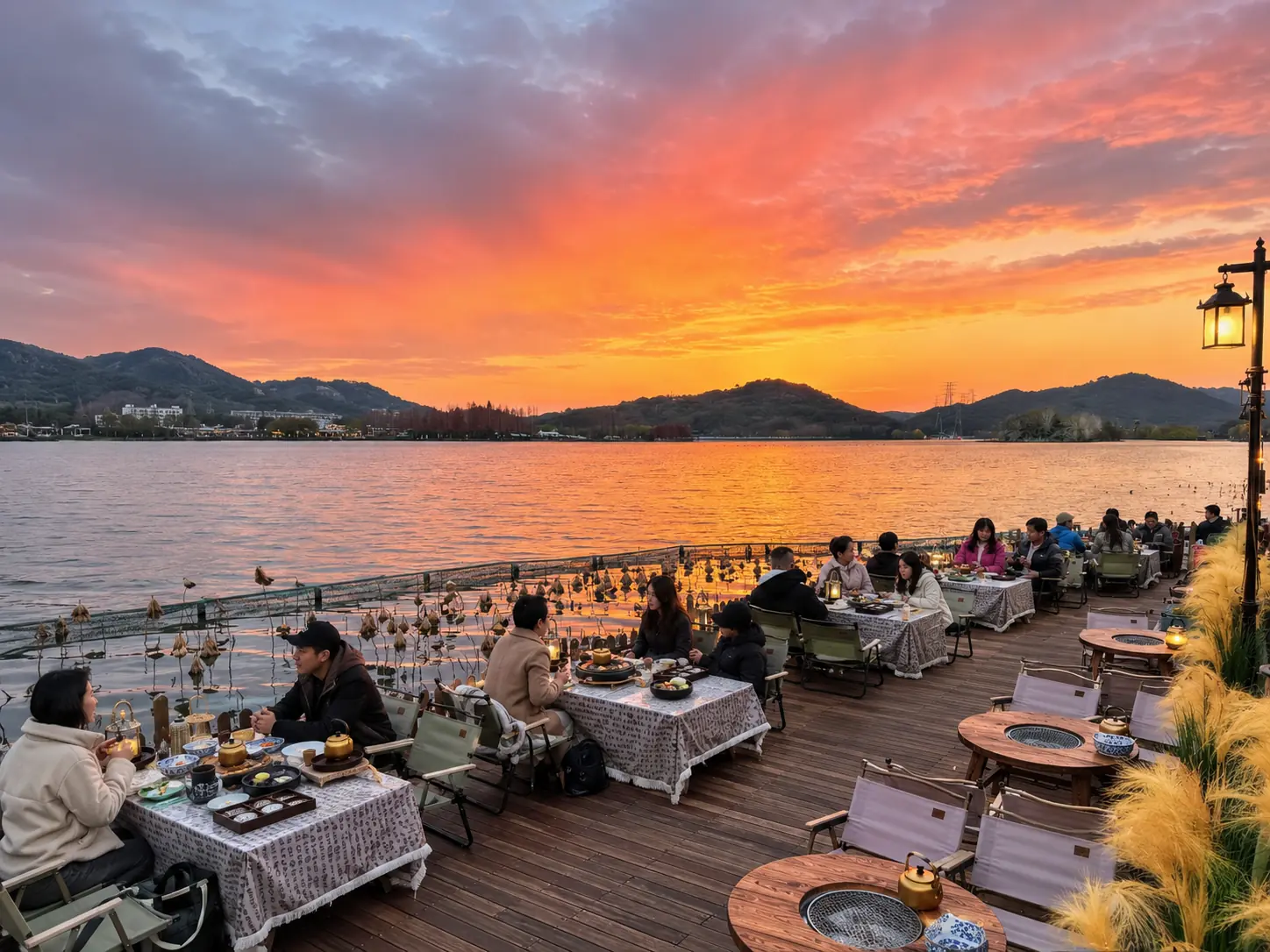
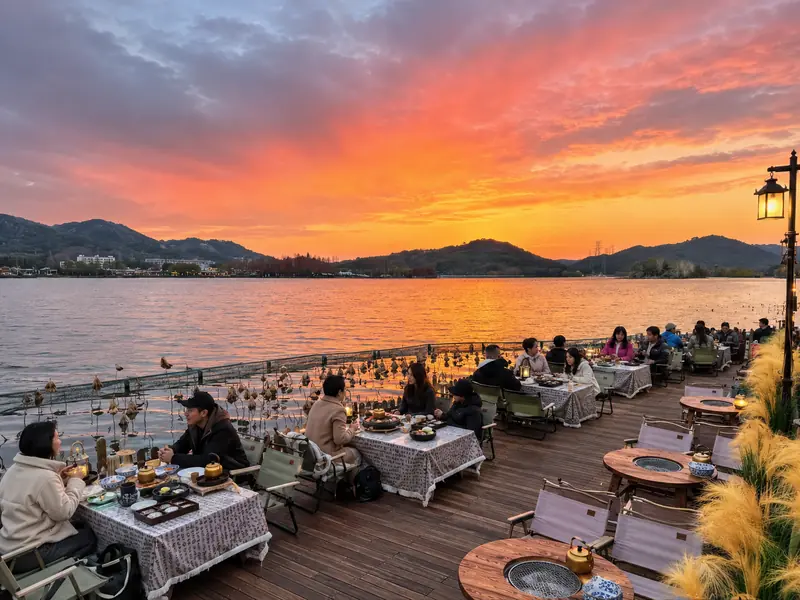
For many travelers, the easiest first tea stop is a lake-view teahouse, not a tea village. You may be jet-lagged, your West Lake walk may run long, or you may simply want one sit-down moment with water and willow trees in view.
Hu Pan Ju Teahouse (湖畔居) is the most useful reference point for this category. The official Hangzhou tourism page describes Hu Pan Ju as a well-known lakeside teahouse in the Shengtang Scenic Area on the West Lake side, serving West Lake Longjing and other teas with tea snacks.
The appeal is obvious: you do not need to drive into the hills, decode a farmhouse menu, or negotiate a tea purchase. The tradeoff is also obvious: lake-view seating costs more than a casual village cup, and the mood can feel polished, scenic, and visitor-facing.
Do not go expecting a hidden local secret. Go because you want West Lake as the background to your first cup of Longjing.
Map Links: Hu Pan Ju Teahouse (Google | Amap) · West Lake (Google | Amap)
Use lake tea as a reset
A West Lake teahouse is best after walking, not before. Let it break up the day between a lake route, a classic Hangzhou meal, and your next move.
Longjing Village for Tea Origin Context
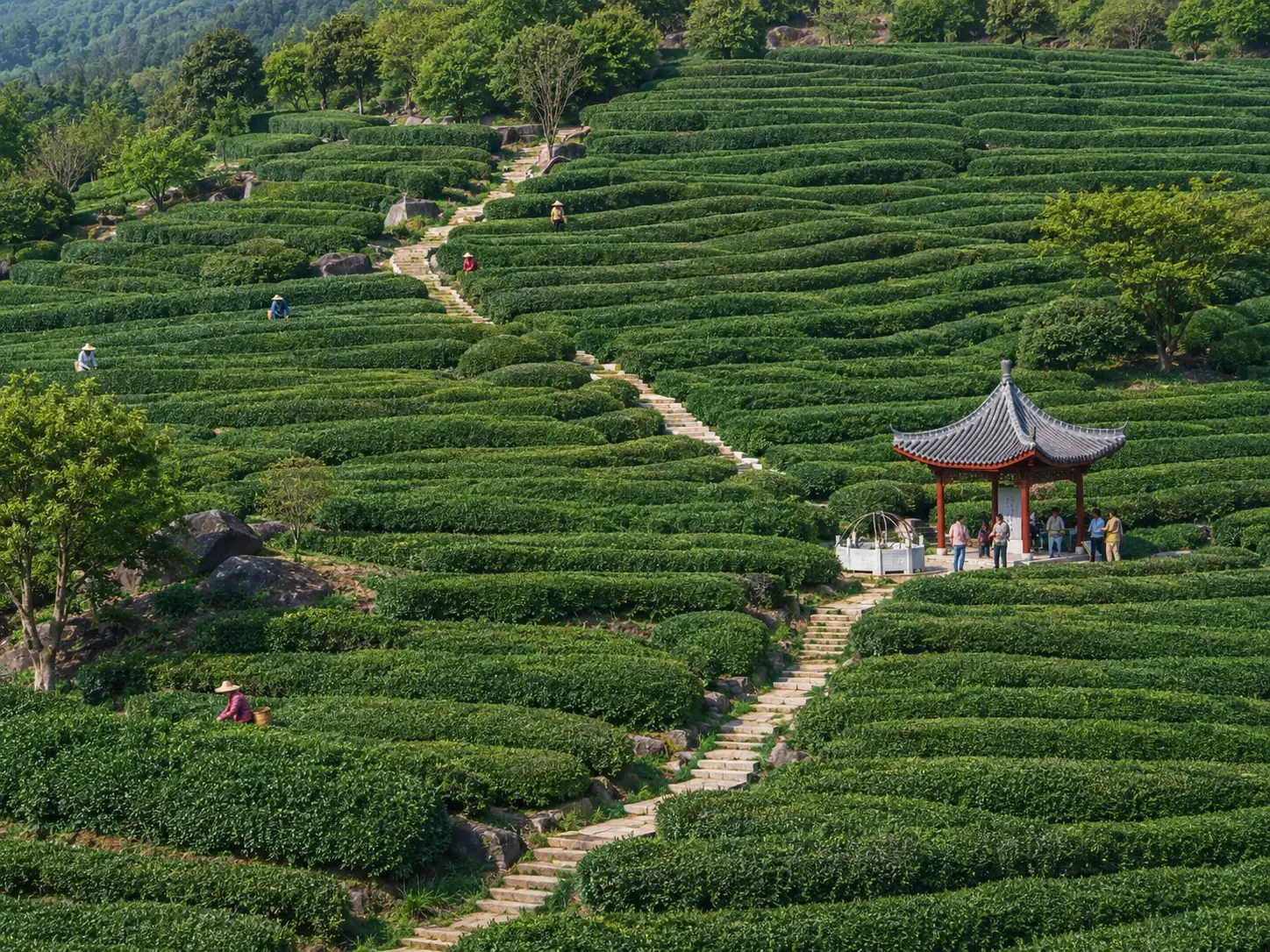
Longjing Village (龙井村) gives the strongest immediate feeling that tea is growing around you. The lanes are compact, the tea fields climb quickly above the houses, and family-run tea rooms make it easy to understand why the name Longjing became attached to both a place and a tea.
The best reason to come is context, not shopping. Sit for a cup, look at the slopes, and connect the tea in your glass with the rows outside.
If you want a structured picking or roasting lesson, use the dedicated Longjing tea-picking and roasting guide. If you only want to drink tea, ask directly whether you can sit for tea without buying leaves to take home.
Longjing Village works especially well after Lingyin Temple (灵隐寺), China National Tea Museum (中国茶叶博物馆), or Nine Creeks and Eighteen Gullies (九溪十八涧). It is less useful as a rushed taxi detour between two big-ticket attractions. The value is in having enough time to sit without turning every conversation into a purchase decision.
Map Links: Longjing Village (Google | Amap) · China National Tea Museum (Google | Amap) · Nine Creeks (Google | Amap)
Meijiawu for a Longer Tea Sit
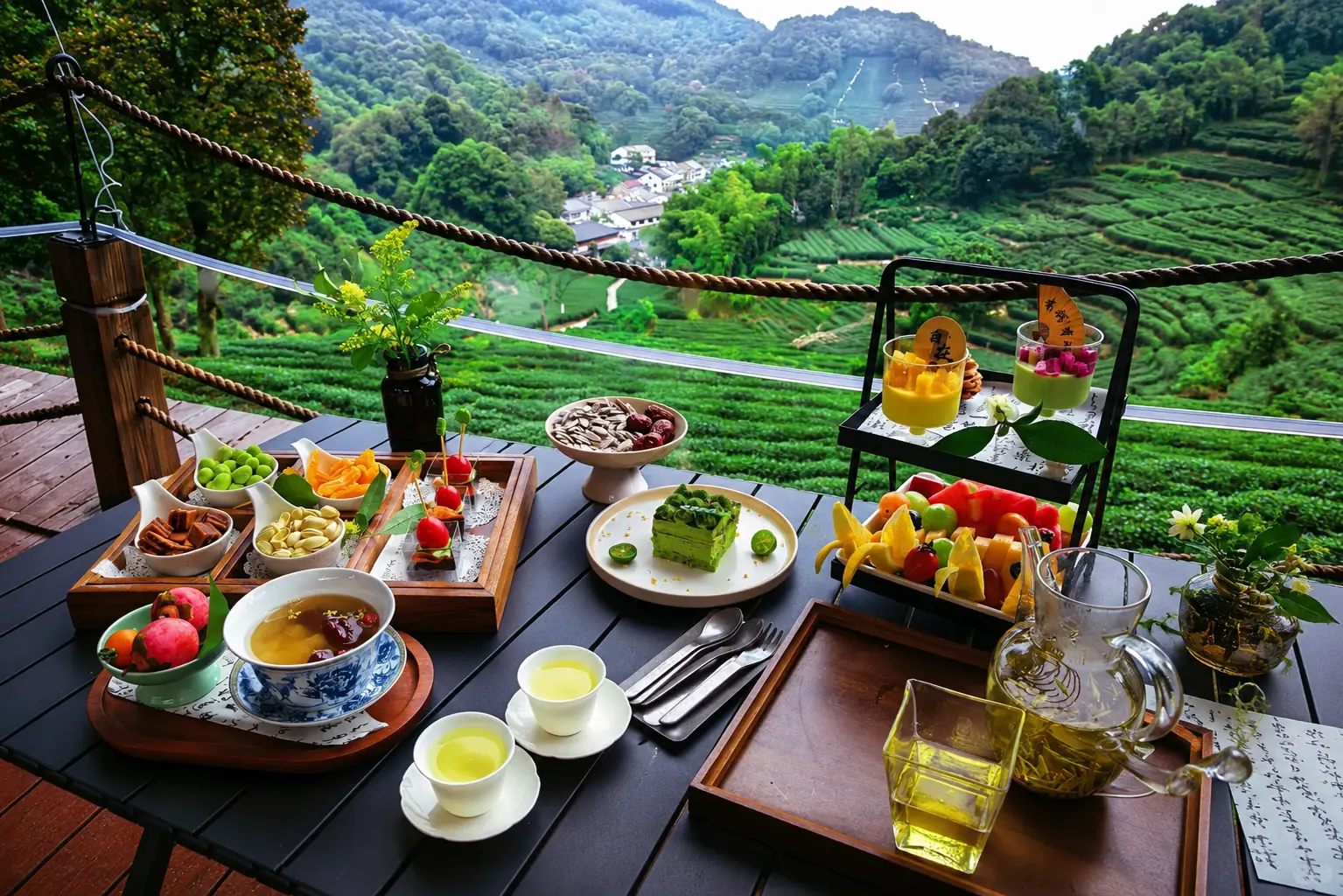
Meijiawu Tea Village (梅家坞) is the better choice when tea is the afternoon, not the add-on. The official Hangzhou tourism page on Meijiawu describes a tea-culture village with over 2,000 mu of tea plantations, well over 100 tea houses and farm restaurants, and a setting built around picking, making, appreciating, and relaxing with tea.
That scale changes the experience. In Longjing Village, you often feel the origin story tightly. In Meijiawu, you feel the leisure economy around tea: tea houses, farmhouse meals, longer tables, tea fields along the road, and groups who come to sit, eat, talk, and drink.
Choose Meijiawu if you have half a day, want a tea-village meal, or are traveling with family members who need a slower pace. Do not choose it if you are trying to squeeze West Lake, Lingyin, a boat ride, dinner, and a train departure into one day. Tea villages reward slack in the schedule. Without that slack, they can feel like expensive scenery seen from a car window.
Map Link: Meijiawu Tea Village (Google | Amap)
Tea Museum, Tiger Spring, and Quiet Edges
These three stops are useful when you want more than one named teahouse. They explain why Hangzhou tea routes often mix museums, springs, wetlands, creeks, and temple valleys.
China National Tea Museum
Context before tasting
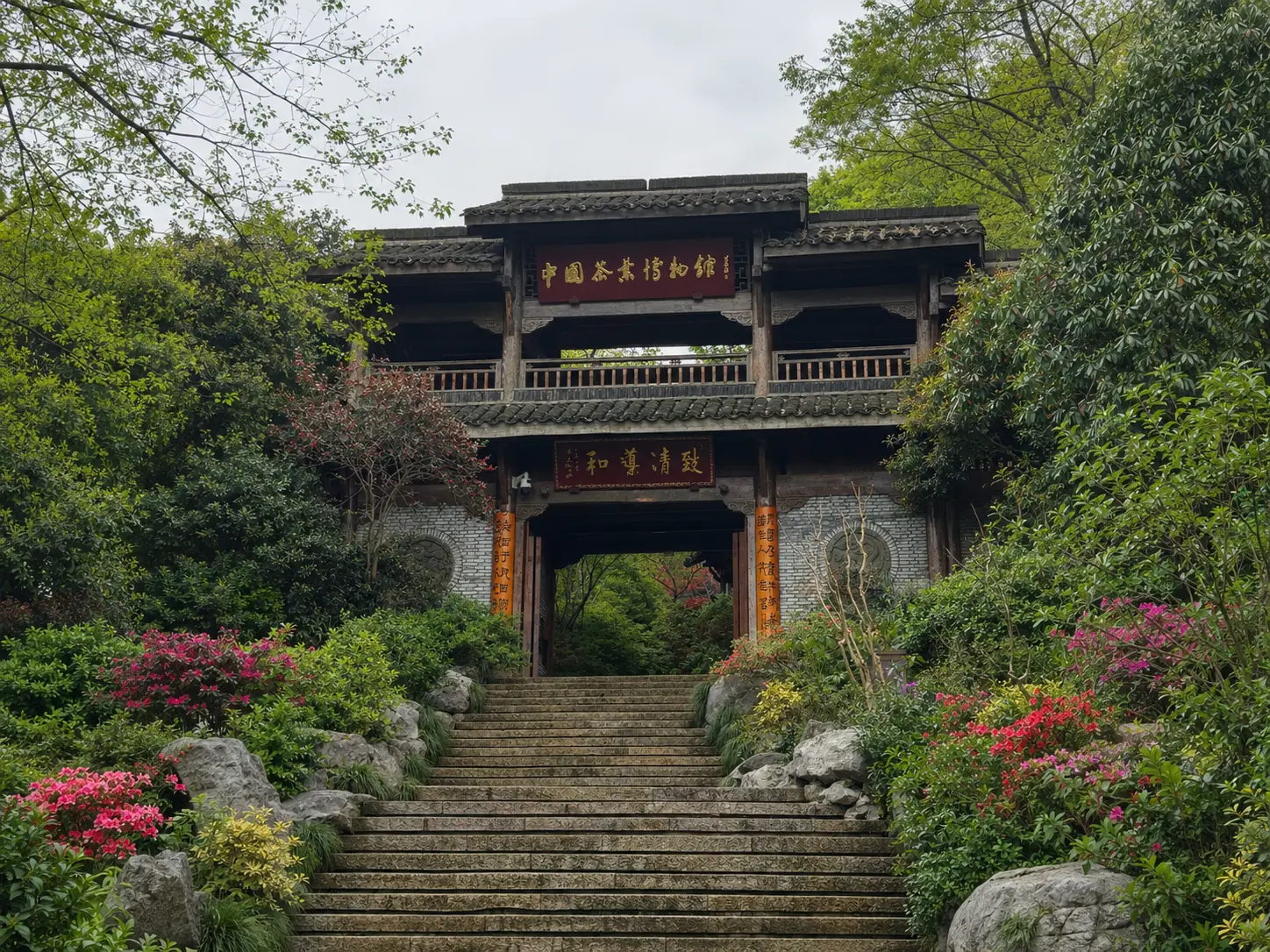
China National Tea Museum is the best stop if you want to understand what you are drinking before you sit in a tea room. The museum's official English introduction says the Shuangfeng branch opened in April 1991 at 88 Longjing Road, the Longjing branch opened in May 2015 at 268 Wengjiashan, and the twin museums cover 122,000 square meters.
Tiger Spring
Water as part of tea
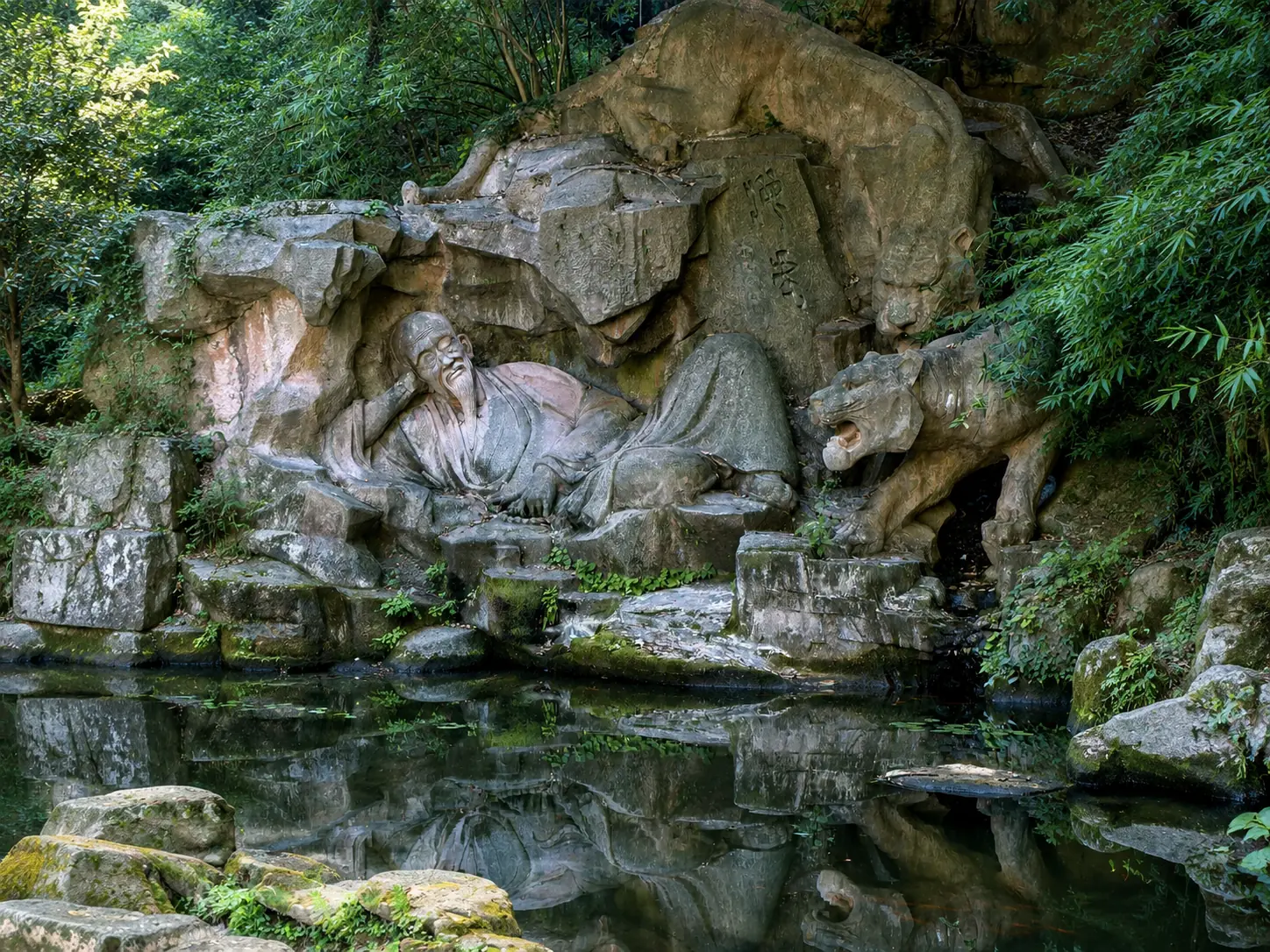
Tiger Spring (虎跑泉) belongs to a different layer of Hangzhou tea culture. The official Hangzhou tourism page on Dreaming of Tiger Spring connects the spring with Longjing tea and notes that tea lovers come for the water as much as the leaves.
Quiet western edges
Soft route pauses
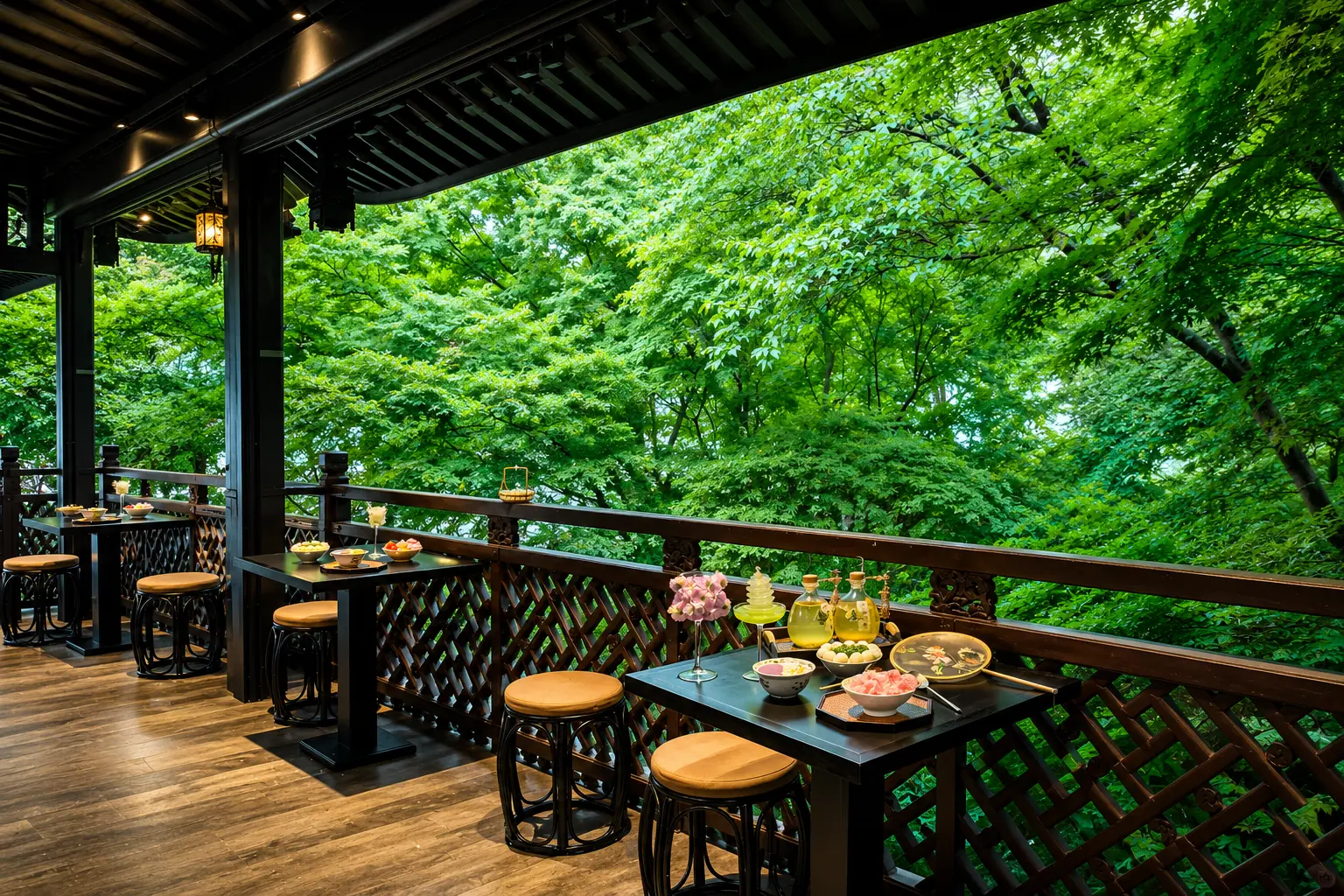
Maojia Bu (茅家埠), Nine Creeks, and Fayun Village (法云古村) are not always about one famous teahouse name. They are useful because they put tea into a softer route: lake wetland, shaded walking, temple valleys, and small pauses between larger sights.
Map Links: Tiger Spring (Google | Amap) · Maojia Bu (Google | Amap) · Fayun Village (Google | Amap)
How to Order Longjing Tea Clearly
The hardest part is not pronunciation. It is understanding the pricing format before the tea arrives. In Hangzhou, tea may be priced by cup, pot, person, room, tea grade, snack set, or package. A polished lake teahouse may have clearer menus. A family-run tea room may begin with tasting and conversation, then drift toward buying leaves.
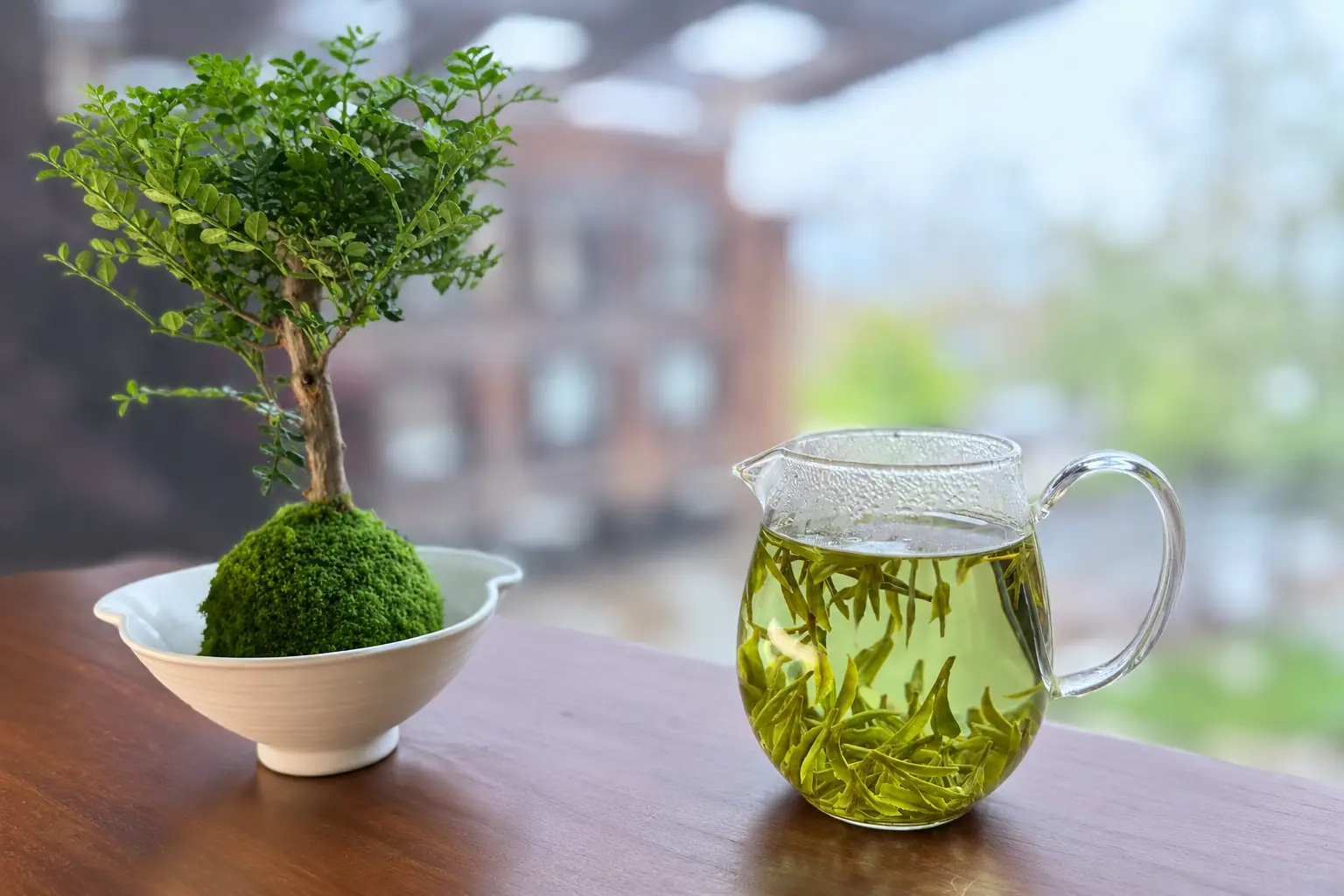
- Choose the setting- Lake view, tea village, museum area, or quiet route edge. The setting determines the price and pressure level.
- Ask the format- Is it per cup, per pot, per person, or a set with snacks? Ask before sitting down for a long session.
- Start normal- A regular Longjing or West Lake Longjing is enough for a first cup. You do not need the top spring grade immediately.
- Separate drinking from buying- If you only want tea now, say so early. Buying loose tea should be a separate decision.
- Buy small if unsure- For souvenirs, 50-100 grams is more practical than a large gift box.
Do not let advanced words do all the thinking for you. Pre-Qingming, Shifeng, first flush, hand-roasted, private garden, and old-tree language can all be meaningful, but they are also easy sales vocabulary. If the price is unclear, slow down. If the seller only discusses quality and not cost, ask again.
Price first, tasting second
In a tea village, a free-looking tasting can become a sales conversation quickly. There is nothing wrong with that, as long as you know the price and feel free to stop.
Buying Longjing Tea Without Sales Pressure
The cleanest rule is simple: drinking tea and buying tea are separate activities. You can enjoy Longjing in Hangzhou without bringing home a large tin, and you can buy tea later after comparing prices.
- Ask per 50 grams: this is easier to compare than gift-box pricing.
- Buy small amounts: 50-100 grams is enough for most travelers.
- Keep packaging simple: loose tea in a small pouch is more useful than a bulky gift box.
- Do not buy under pressure: if the conversation feels rushed, pause and leave politely.
- Do not chase the highest grade first: most first-time visitors cannot judge whether the premium is worth it.
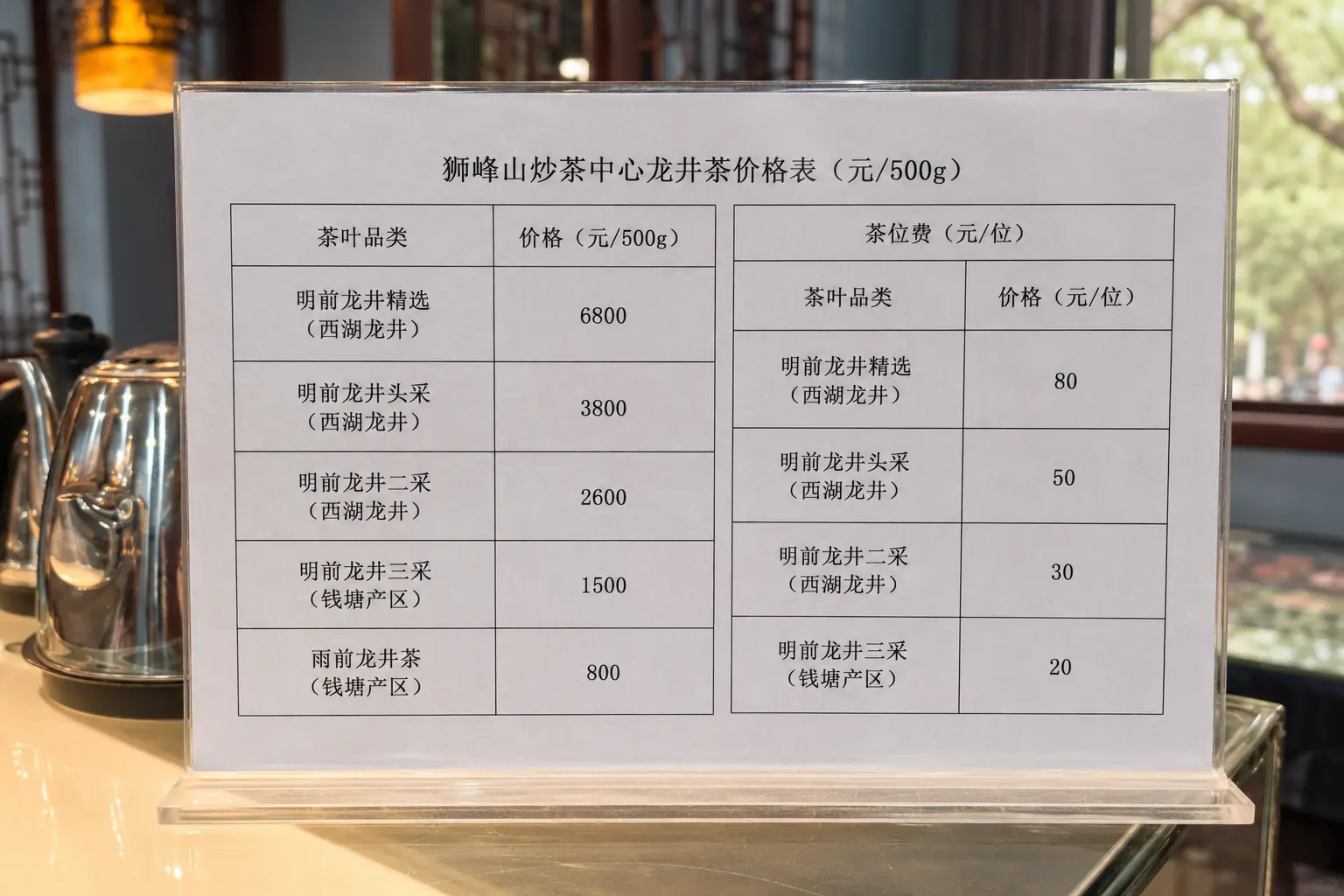
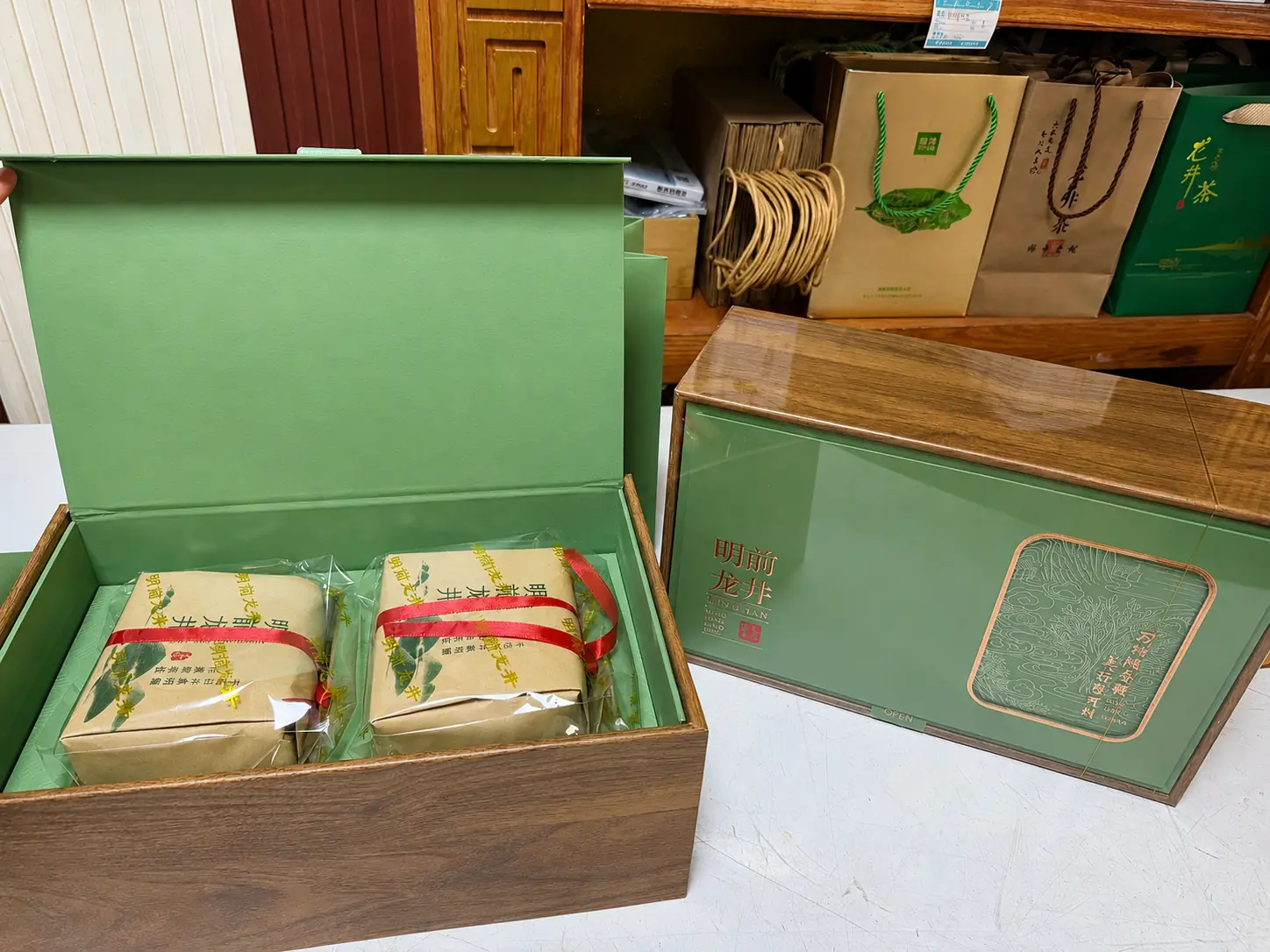
If you care deeply about tea quality, spend more time learning than buying on the first day. Visit the tea museum, taste two settings, take notes, then buy. Good tea is still good after lunch. A deal that depends on you deciding before you understand the price is not a deal you need.
Best Timing and Easy Hangzhou Tea Routes
Spring gives the strongest Longjing atmosphere, especially around late March and April, but it also brings higher demand, stronger tea-buying energy, and more visitors in the tea hills. Autumn is easier: the weather is pleasant, osmanthus scent appears around Hangzhou, and sitting with tea can feel more relaxed. Summer favors shaded or indoor tea stops; winter is quieter, with less green in the fields but fewer crowds.
| Route Style | Tea Stop | How to Use It |
|---|---|---|
| West Lake half day | Lake-view teahouse | Walk first, then sit for tea when the lake crowds or your feet need a pause. |
| Lingyin half day | Tea museum or Longjing Village | Use tea after temple halls, not before, so the day slows down naturally. |
| Tea-village afternoon | Meijiawu | Go when you have time for tea, a simple meal, and a return taxi without pressure. |
| Quieter western route | Maojia Bu, Nine Creeks, or Fayun | Use tea as a shaded pause between wetlands, creeks, temple valleys, and dinner. |
For a full-day structure, use the Hangzhou day trip itinerary. For lake-only planning, use the West Lake guide. This article is the tea layer: where to sit and what to ask once you choose that route.
Useful Chinese Phrases for Hangzhou Teahouses
Show the Chinese if pronunciation feels awkward. These phrases keep the conversation centered on tea, price, and pressure-free buying.
| English | Chinese | Pinyin | Say It Like… |
|---|---|---|---|
| Longjing / Dragon Well tea | 龙井茶 | lóng jǐng chá | lohng jing chah |
| West Lake Longjing | 西湖龙井 | xī hú lóng jǐng | shee hoo lohng jing |
| I would like a cup of Longjing. | 我想喝一杯龙井。 | wǒ xiǎng hē yì bēi lóng jǐng | woh shyahng huh ee bay lohng jing |
| Can I just drink tea? | 可以只喝茶吗? | kě yǐ zhǐ hē chá ma? | kuh yee jir huh chah mah |
| How much per person? | 多少钱一位? | duō shǎo qián yí wèi? | dwaw-shaow chyen ee way |
| How much per 50 grams? | 多少钱一两? | duō shǎo qián yì liǎng? | dwaw-shaow chyen ee lyahng |
| I am not buying tea leaves for now. | 我先不买茶叶。 | wǒ xiān bù mǎi chá yè | woh shyen boo my chah yeh |
| No gift box needed. | 不用礼盒。 | bù yòng lǐ hé | boo yohng lee huh |
Frequently Asked Questions About Hangzhou Tea
A West Lake teahouse is the easiest first stop because it fits naturally after a lake walk and usually has clearer seating and prices than a village tasting.
Beyond This Guide to Hangzhou Tea
Longjing tea makes more sense when it belongs to a real Hangzhou day: West Lake in the morning, Lingyin or the tea museum, a tea village pause, and a meal that does not rush the conversation. Pair this guide with the green tea guide, Longjing tea-picking class guide, West Lake guide, Hangzhou food guide, and Hangzhou day trip itinerary.
© gochinafreely.com — Original guide by Go China Freely.