Chengdu teahouses are easy to mistake for tea ceremonies. They are not. A real Chengdu tea stop is usually a bamboo chair, a lidded bowl of tea, endless hot-water refills, local chatter and table games in the background, maybe an ear-cleaning master passing through, and enough time to let the city slow down around you.
Executive Summary
What this guide covers
How Chengdu teahouses work for travelers: where to drink gaiwan tea, how to choose the right setting, how to order, when to skip optional add-ons, and how to behave respectfully.
Best first stop
Start with Heming Teahouse in People's Park if you want the classic bamboo-chair scene. Choose Wenshu Monastery or a temple-area teahouse if you prefer a calmer stop.
Main traveler trap
Do not turn a teahouse into a checklist. The point is not to do every service; it is to sit long enough for Chengdu life to become visible.
Gaiwan
Lidded tea bowl
45-90 min
Easy first stop
1923
Heming origin story
Ask first
Ear cleaning price
Chengdu Runs on Gaiwan Tea
Gaiwan tea (盖碗茶) is the easiest way to understand Chengdu's slower rhythm. A Sichuan tourism page on the culture of gaiwan tea describes gaiwan tea as representative of Sichuan tea culture, and connects Chengdu leisure with bamboo chairs, lidded-bowl tea, Sichuan opera, and ear cleaning. The tea matters, but the sitting matters just as much.
1Not a formal ceremony
Chengdu gaiwan tea is casual: a lidded bowl, hot-water refills, bamboo chairs, and time to sit.
2The seat matters
You are buying shade, a social room, and Chengdu's slower pace as much as a drink.
3Watch before doing
Order simply, settle in, and let the room teach you how refills, lids, games, and add-ons work.
This is not gongfu tea in the Chaozhou sense, where tiny cups and quick pours make the brewing technique the main event. It is also different from the Chengdu mahjong class guide and the People's Park Chengdu guide: here, the goal is choosing the right kind of teahouse and knowing what to do once you sit down.
Pick the Right Teahouse Style
There is no single best Chengdu teahouse for every traveler. Choose the setting first, then the specific stop. A noisy park teahouse, a temple tea garden, and a restored old-street tea room can all serve gaiwan tea, but they do not feel the same.
| Teahouse Style | Best For | What You Will See | Traveler Watchout |
|---|---|---|---|
| Park teahouse | First-timers who want local life | Bamboo chairs, gaiwan tea, ear-cleaning offers, long conversations | Weekend afternoons can be crowded. |
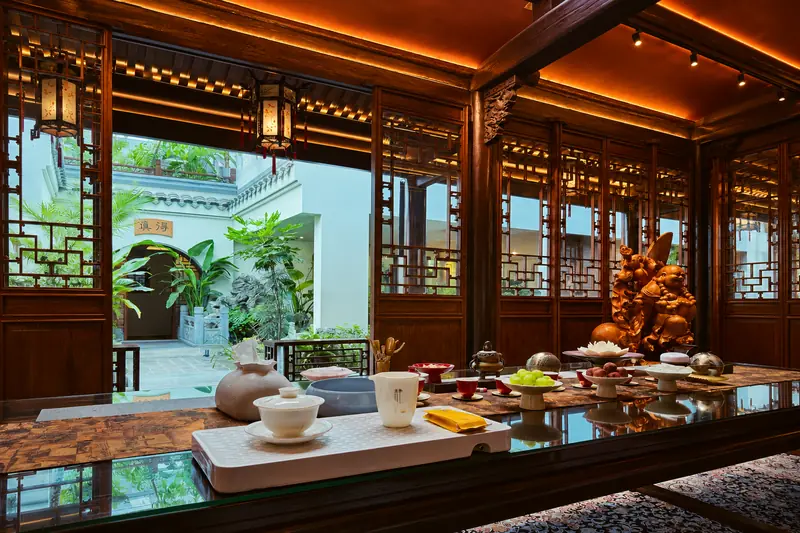
| Temple-area teahouse | Travelers who want a quieter tea stop | Trees, incense nearby, vegetarian food, slower tables | Better earlier in the day than late at night. |
| Old-street teahouse | Short visits and easy logistics | Kuanzhai-style courtyards, snacks, restored lane atmosphere | More commercial and visitor-facing. |
| Neighborhood tea garden | Repeat visitors or travelers accompanied by a local | Older regulars, card games, relaxed community pace | Less English and fewer obvious instructions. |
| Performance teahouse | Visitors who want tea plus Sichuan opera | Tea service, stage seating, face-changing or variety acts | More of a cultural show than a normal tea stop. |
Decision shortcut
Which Chengdu teahouse should you choose?
First time in Chengdu
Start with Heming Teahouse in People's Park, then use the dedicated People's Park guide for timing and route details.
I want quieter tea
Choose Wenshu Monastery or a temple-area teahouse instead of a peak weekend park table.
I only have one hour
Use Kuanzhai Alley or a nearby old-street teahouse, but expect a more commercial setting.
I want a class
Book a structured cultural class separately; a normal teahouse visit is mostly self-guided.
Heming Teahouse: Classic First Stop
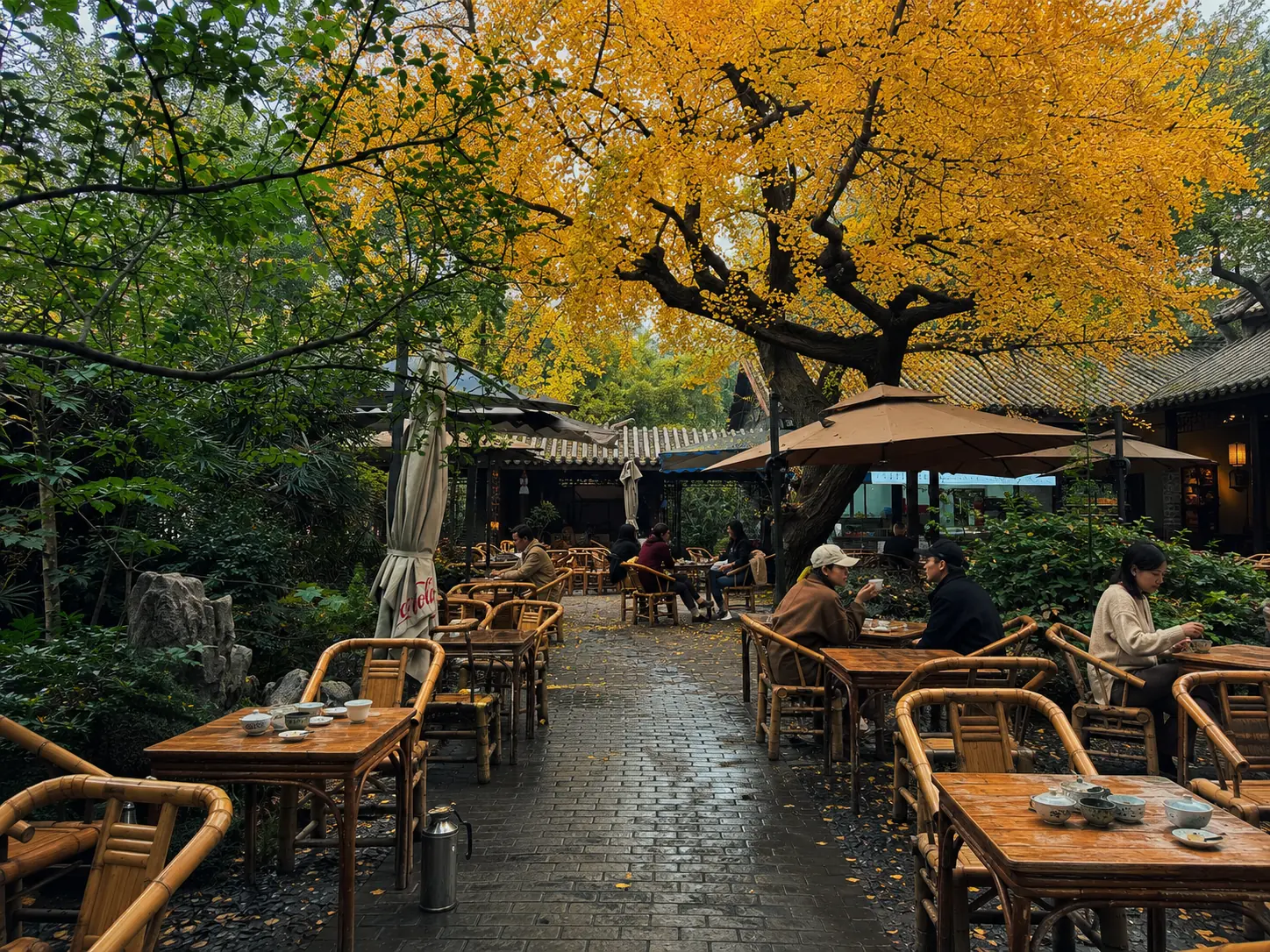
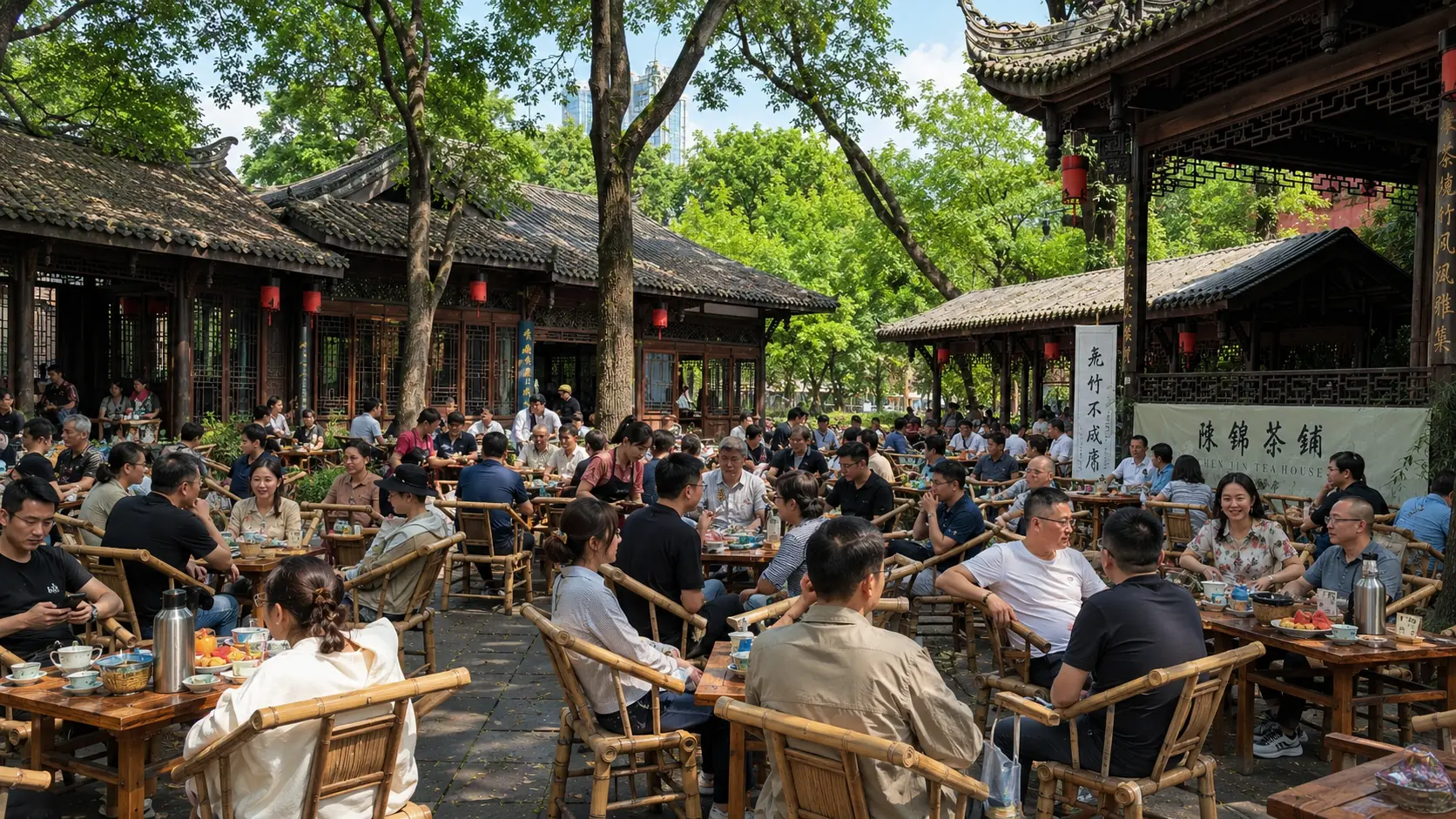
Heming Teahouse (鹤鸣茶社) in People's Park (人民公园) is the easiest first stop because it concentrates the classic Chengdu teahouse image in one place.
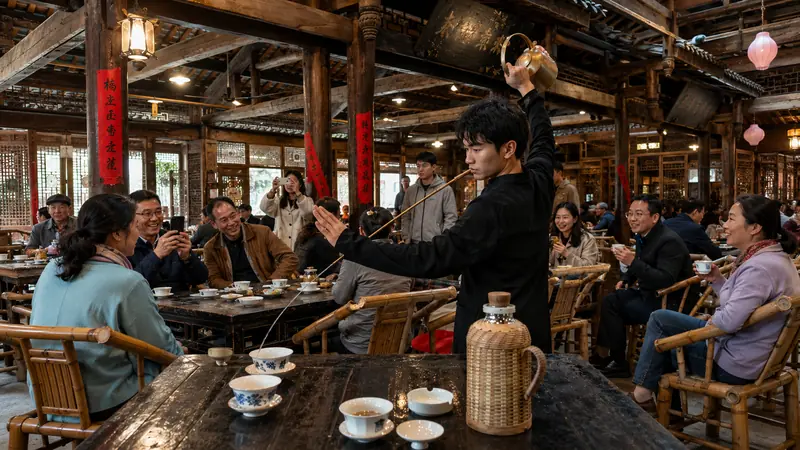
CGTN reported in 2023 that Heming was first built in 1923 and is one of Chengdu's oldest existing teahouses, with tea, snacks, long-spouted kettle pouring, ear cleaning, and leisure time all in one scene.
For a first visit, keep the goal modest. Order jasmine tea or a Sichuan green tea, find a seat, and stay 45-90 minutes.
The advantage is clarity. You will understand bamboo chairs, gaiwan tea, water refills, ear-cleaning offers, and local sitting culture in one visit. The disadvantage is also clarity: it is famous, so weekend afternoons can feel crowded and camera-heavy. For the full park context, use the People's Park Chengdu guide.
Map Links: Heming Teahouse (Google | Amap) · People's Park (Google | Amap)
Quieter Tea Beyond People's Park
If you already know People's Park, or you want something calmer, build tea into another Chengdu route.
Wenshu Monastery
Temple courtyards + tea break
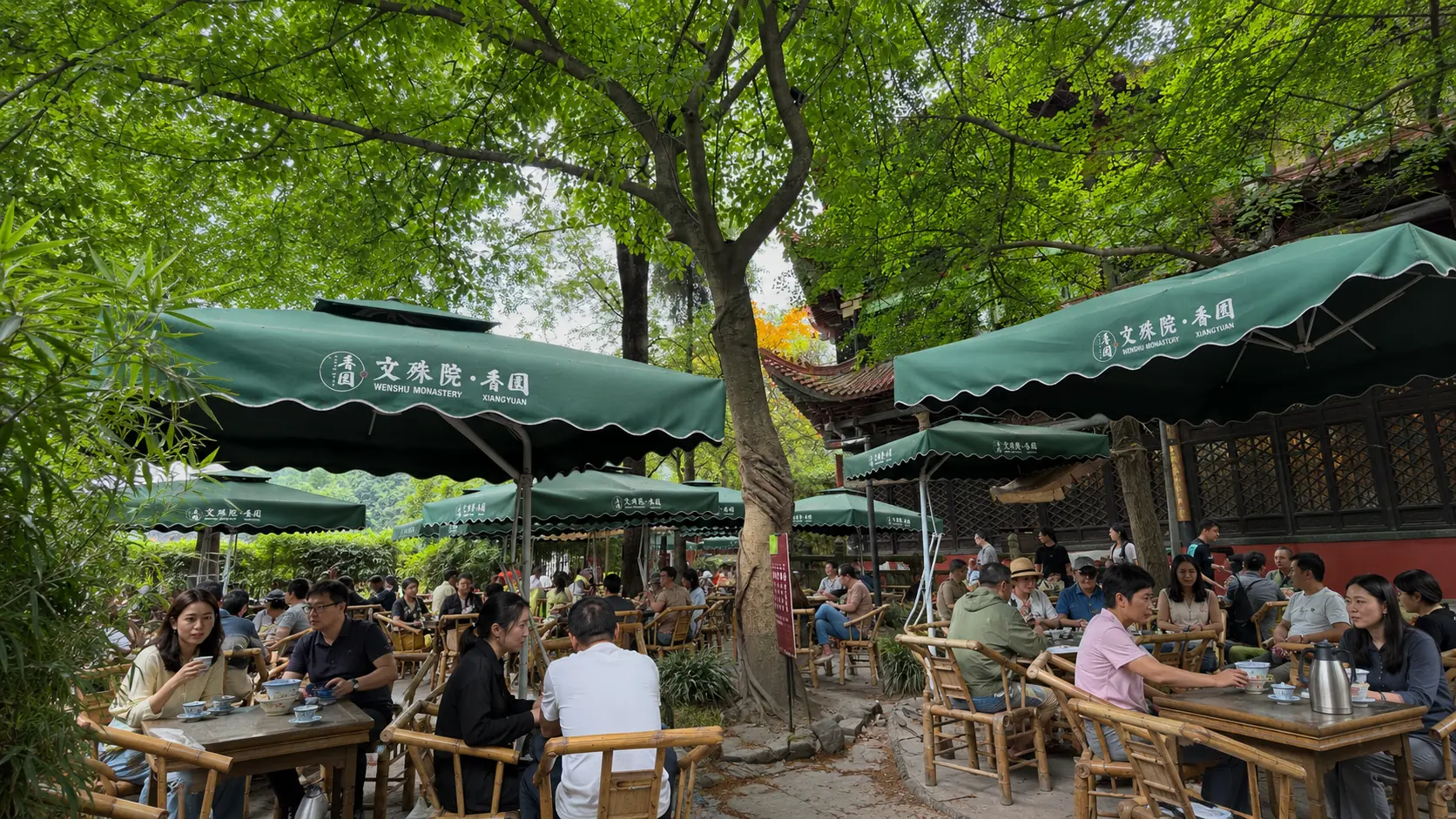
Wenshu Monastery (文殊院) is the easiest quieter alternative. Pair temple courtyards, vegetarian food, Wenshufang (文殊坊), and a tea break without chasing a separate attraction.
Kuanzhai Alley
Convenient, restored, visitor-facing
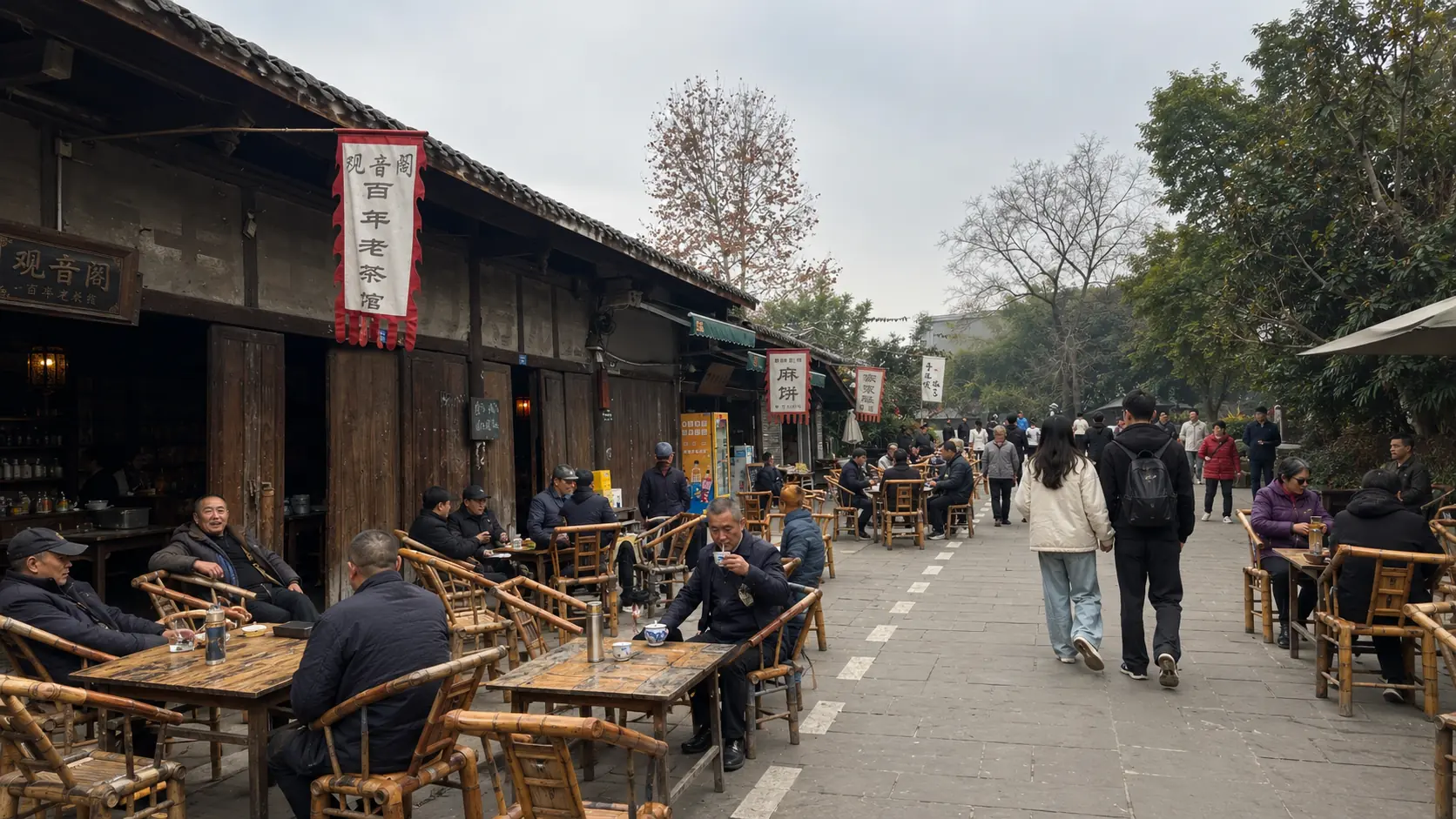
Kuanzhai Alley (宽窄巷子) is central, photogenic, and easy to pair with People's Park. Use it when time is short, not when you want the most everyday room.
Neighborhood and west-side tea
Slower routes, fewer instructions
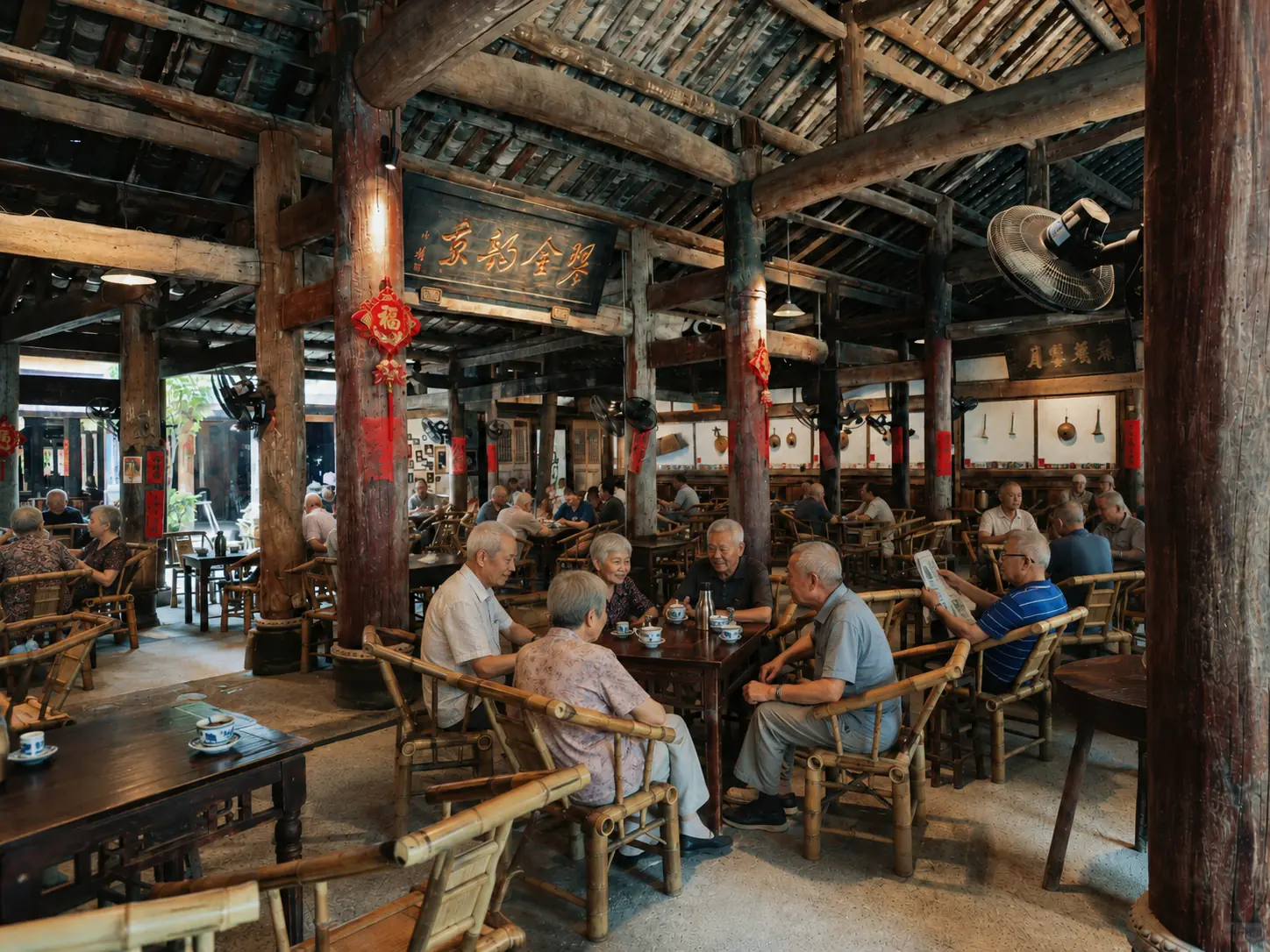
Qingyang Palace (青羊宫), Culture Park, Huanhuaxi Park (浣花溪公园), and the Du Fu Thatched Cottage (杜甫草堂) side work well for a slower Chengdu day.
Map Links: Wenshu Monastery (Google | Amap) · Wenshufang (Google | Amap) · Kuanzhai Alley (Google | Amap) · Qingyang Palace (Google | Amap) · Huanhuaxi Park (Google | Amap)
How to Order Gaiwan Tea
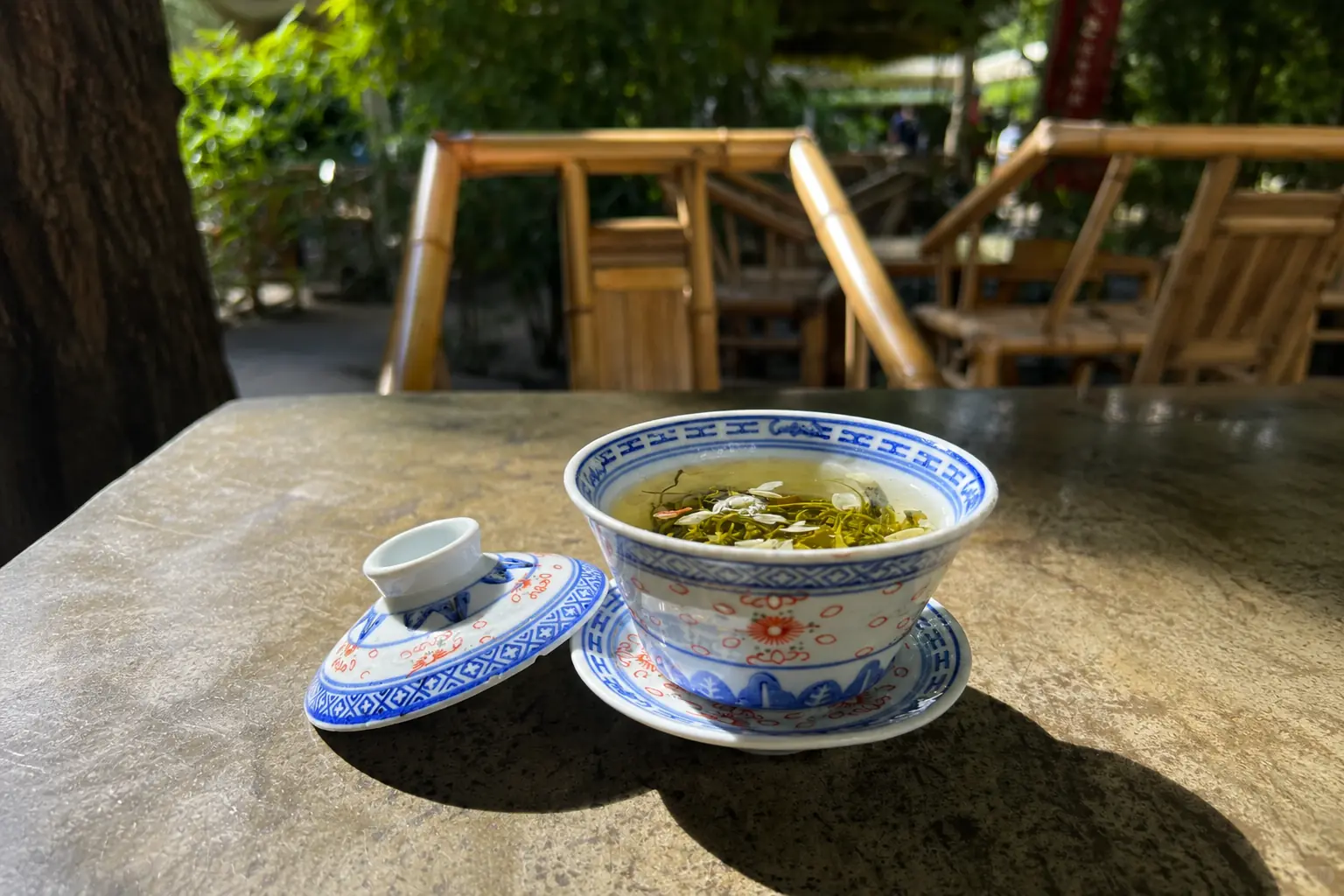
The intimidating part is not the tea. It is not knowing whether to wait, sit, pay, refill, or leave.
Chengdu teahouses are usually more relaxed than restaurants. Once you have ordered tea, you can often sit for a long time with hot-water refills, especially in traditional park and temple settings.
The lid is practical: use it to push floating leaves aside, then sip through the gap between lid and bowl.
- Find a seat- At casual teahouses, you can often sit first and order when staff comes over. At busier places, ask staff where to sit.
- Choose a simple tea- Jasmine tea is the safe everyday choice. Zhuyeqing is a Sichuan green tea option if listed.
- Use the lid- Push floating leaves aside with the lid, then sip through the gap between lid and bowl.
- Signal for water- Rest the lid at an angle or catch a server's eye when you want a refill.
- Check extras first- Ask the price before ear cleaning, snacks, performances, or premium tea.
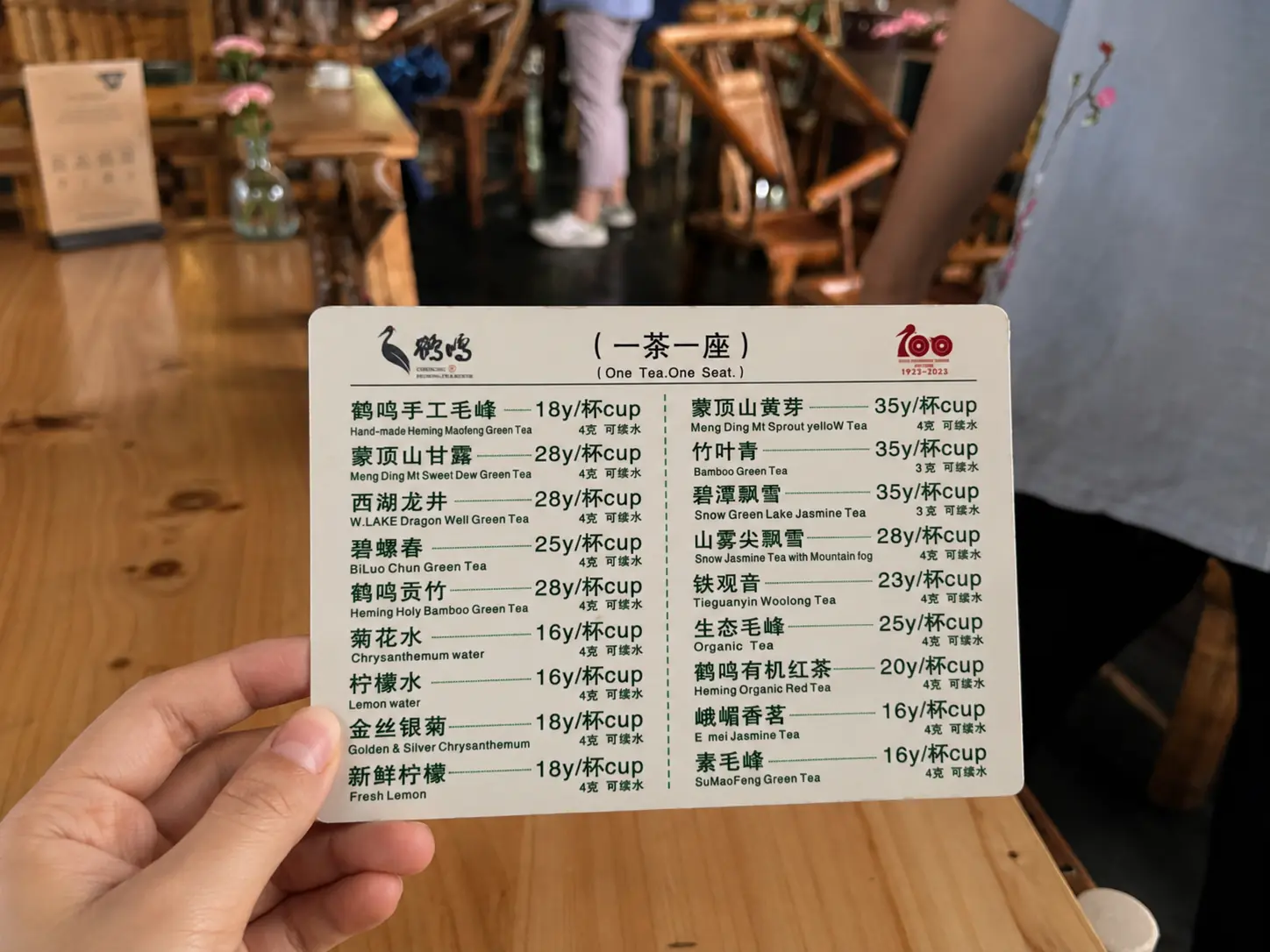
Do not overthink the first order. The Sichuan tourism page lists jasmine tea, Biluochun tea (碧螺春), and Zhuyeqing tea (竹叶青) as common types to experience with gaiwan tea.
For a first Chengdu teahouse, jasmine tea is often the easiest local-feeling choice, and Zhuyeqing is useful if you want a Sichuan green tea name to recognize.
Menus and add-ons can vary, so check the price before premium tea, snacks, performances, or ear cleaning.
The tea is not the whole point
Your first Chengdu teahouse stop does not need rare leaves. Choose a normal tea, sit comfortably, and watch how the room works.
Optional Teahouse Add-Ons
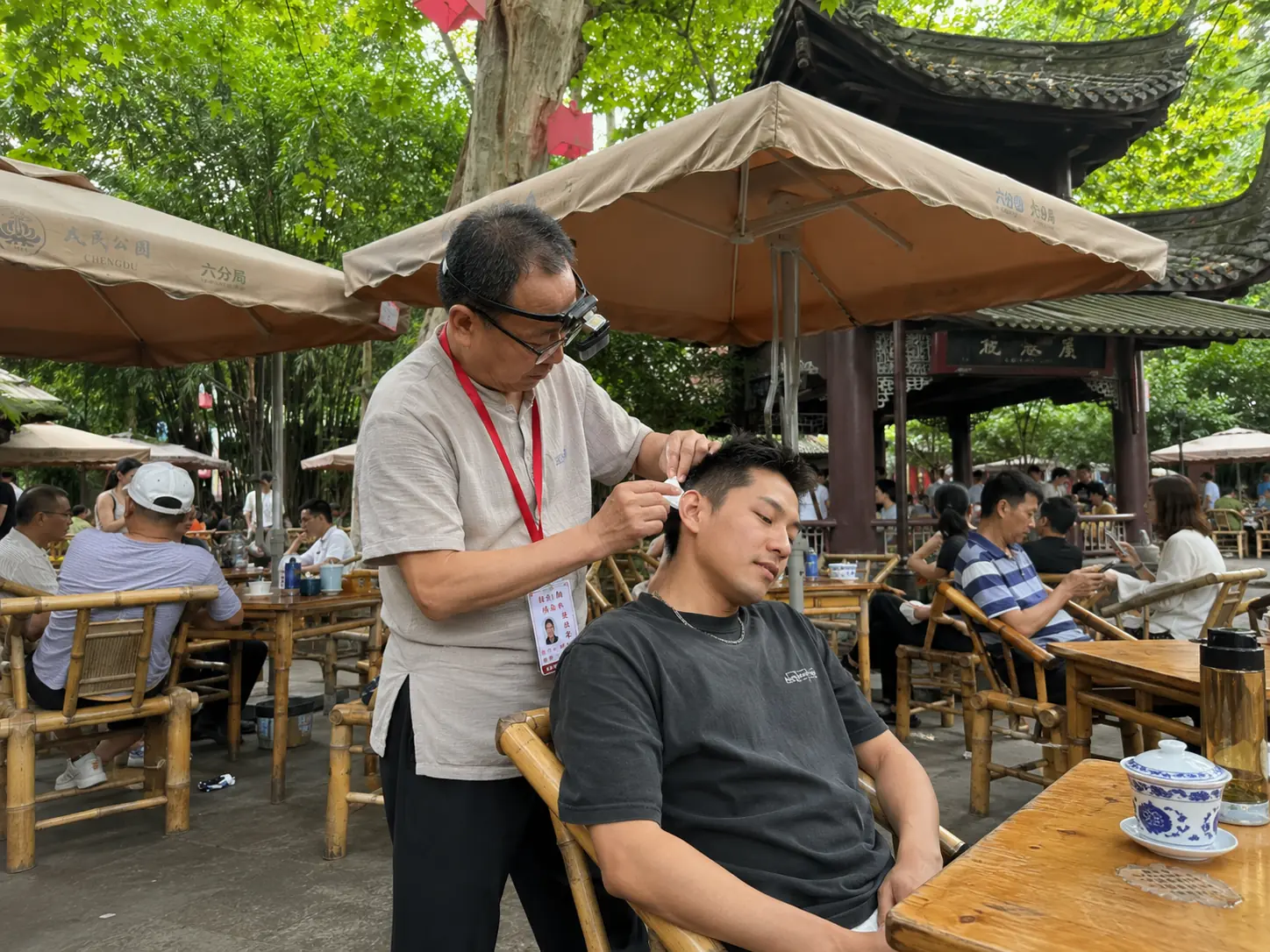
Ear cleaning (采耳) is a famous Chengdu teahouse add-on, especially in park settings. It is optional.
If you have sensitive ears, an ear infection, recent ear surgery, or simple discomfort with the idea, skip it.
If you do try it, ask the price first and choose a fixed stall or a practitioner who looks clean and organized.
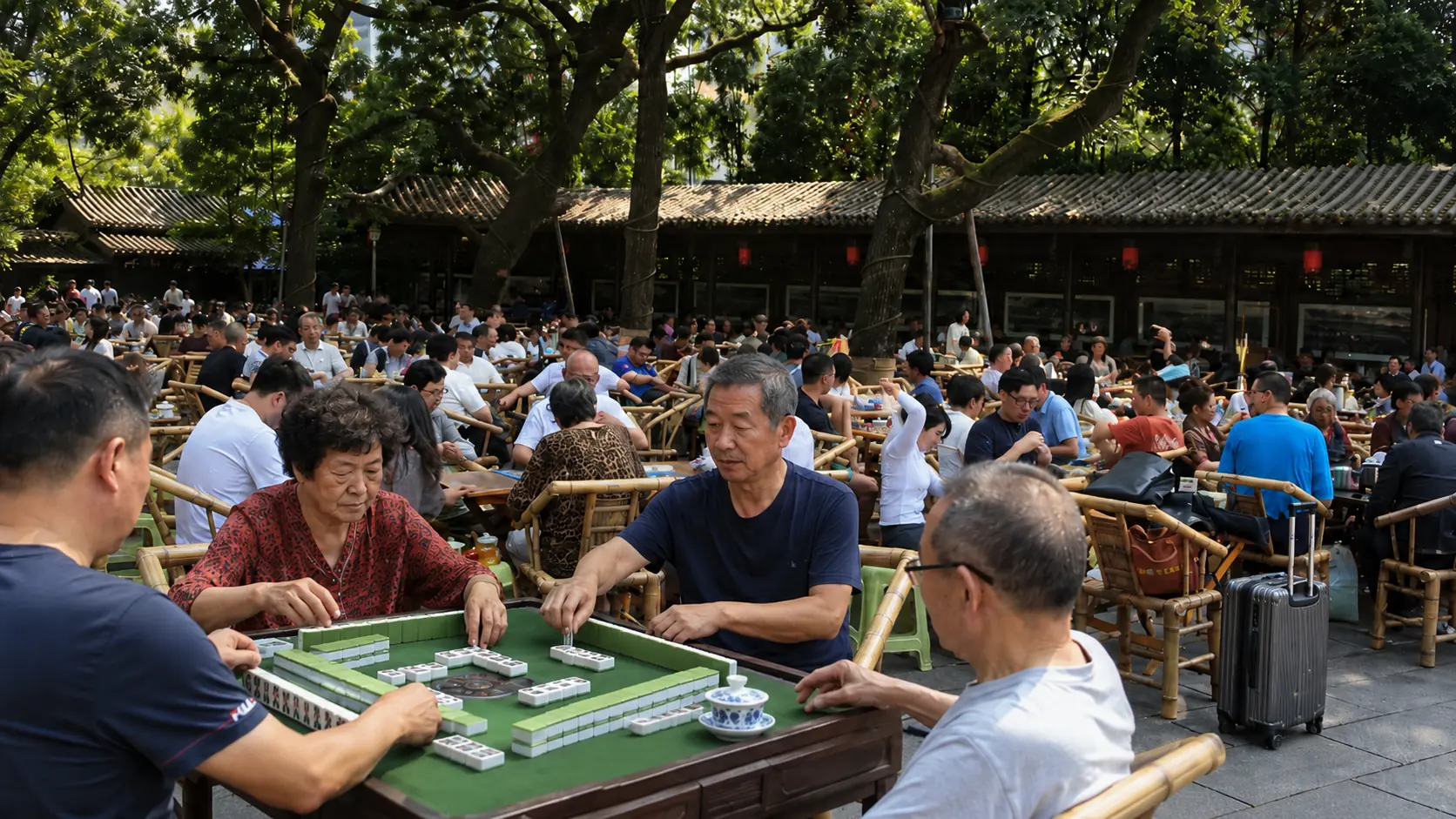
Local card and tile games may be part of the teahouse soundscape, but nearby tables are not open lessons.
Watch respectfully from a distance. Do not join a stranger's game, lean over the table, or treat players as performers.
If the game side is what you actually want to learn, use the dedicated Chengdu mahjong class guide instead.
What should you skip? Pushy tea-selling experiences in tourist streets, unclear premium tea prices, surprise performance fees, and any service that begins before you understand the cost. Chengdu teahouses are low-pressure when they are good; if a situation starts feeling like a sales funnel, leave politely.
Ask before the service starts
Ear cleaning, snacks, Sichuan opera mini-shows, and premium tea may all cost extra. A quick price check keeps the tea stop relaxed.
Best Times and Easy Pairings
Chengdu teahouses work year-round, but the mood changes by hour. Mornings are quieter, afternoons are most alive, and evenings depend on the venue. Summer can be humid, but shaded tea seats are surprisingly pleasant. Winter is grey and damp, which makes hot tea feel even more useful.
| Time | Best For | What to Expect |
|---|---|---|
| 08:00-10:00 | Quiet tea, temple routes, soft photos | The full park atmosphere may not have built up yet. |
| 10:00-12:00 | Wenshu Monastery, vegetarian lunch, old streets | A good window before the afternoon tea crowd. |
| 14:00-17:00 | Classic Chengdu teahouse life | More people, more refills, more ear-cleaning offers, more local scene. |
| Evening | Tea before dinner, Sichuan opera, relaxed wandering | Check the venue; not every traditional teahouse is an evening hangout. |
The easiest pairings are simple: People's Park plus Kuanzhai Alley, Wenshu Monastery plus Wenshufang and vegetarian food, a panda-base morning followed by a slow teahouse afternoon, or tea before hotpot. Do not squeeze a teahouse between two rushed transfers. If you are watching the clock every five minutes, you are doing Chengdu tea wrong.
Chengdu Teahouse Etiquette
Chengdu teahouses do not expect foreign visitors to know every local habit. A few simple moves are enough to feel comfortable and respectful.
- Order before settling in: one cup usually gives you time and hot-water refills.
- Use the lid gently: push leaves aside rather than removing the lid and stirring dramatically.
- Ask before close-up photos: hands, tea cups, and room details are safer than strangers' faces.
- Check the price first: especially for ear cleaning, snacks, performances, or premium tea.
- Do not interrupt local games: card and tile tables are social spaces, not open lessons.
If you do not speak Chinese, point at the menu, use your translation app, or show one of the phrases below. Most traditional teahouses have limited English, but this experience does not require complex conversation.
Useful Teahouse Phrases
Show the Chinese if pronunciation feels awkward. These phrases keep the interaction simple: tea, refill, price, and ear cleaning.
| English | Chinese | Pinyin | Say It Like… |
|---|---|---|---|
| Gaiwan tea / lidded-bowl tea | 盖碗茶 | gài wǎn chá | guy wahn chah |
| Jasmine tea | 茉莉花茶 | mò lì huā chá | maw lee hwah chah |
| Zhuyeqing, a Sichuan green tea | 竹叶青 | zhú yè qīng | joo yeh ching |
| Can I get more hot water? | 可以续水吗? | kě yǐ xù shuǐ ma? | kuh yee shoo shway mah |
| How much is this? | 这个多少钱? | zhè ge duō shǎo qián? | juh-guh dwaw-shaow chyen |
| How much is ear cleaning? | 采耳多少钱? | cǎi ěr duō shǎo qián? | tsai arr dwaw-shaow chyen |
| I will sit for a while first. | 我先坐一会儿。 | wǒ xiān zuò yí huìr | woh shyen dzwoh ee hwair |
Frequently Asked Questions
No. A normal Chengdu teahouse is a local social space, not a formal tea ceremony. You order tea, sit, refill hot water, and watch the room move around you.
Beyond This Guide
Gaiwan tea is the gateway into Chengdu's rhythm, not a standalone checklist item. Pair this guide with the People's Park Chengdu guide, Wenshu Monastery guide, Chengdu mahjong class guide, Chengdu one-day itinerary, and Chengdu Food Guide to build a day that actually has room to sit.
© gochinafreely.com — Original guide by Go China Freely.