Not speaking Mandarin isn't the barrier it used to be — QR menus, map apps, and mobile payments handle most of daily life in China. But there are moments — a taxi or ride-hailing driver who cannot find your pickup point, a hotel room with no hot water, a restaurant QR order that needs staff help, or a market stall where the price keeps changing — when a handful of the right words makes all the difference.
This guide covers 100+ phrases across nine real travel situations, each with Chinese characters, pinyin romanization, and an English phonetic approximation so you can read it aloud. Or just turn your phone screen toward the person you're speaking to — that works too.
9
Scenarios
100+
Phrases
No app
Works On Screen
120 · 110 · 119 · 122
Emergency Numbers
How to Use Chinese Phrases in China
Use these phrases two ways: read the Say It Like column out loud, or show your phone screen and point at the Chinese column. Showing the screen is faster and more reliable for long phrases, medical needs, allergies, station problems, and anything involving exact addresses.
For quick help
Show the Chinese text first. Staff, drivers, and station workers can read it faster than they can guess foreign pronunciation.
For polite basics
Learn only a few spoken phrases: hello, thank you, sorry, no thanks, and I do not understand.
For weak signal
Save the card images before you leave, so language backup still works offline.
You can save individual phrase-card images to your phone before you leave.
Daily Chinese Phrases
Saying Hello & Being Polite
"谢谢" (thank you) is the one phrase worth learning by heart — it opens doors everywhere. "不用了,谢谢" is your polite deflection for persistent vendors: firm, friendly, and unmistakable.
| English | Chinese | Pinyin | Say It Like… |
|---|---|---|---|
| Hello / Hi | 你好 | Nǐ hǎo | Nee how |
| Thank you | 谢谢 | Xiè xie | Shyeh-shyeh |
| Sorry / Excuse me | 不好意思 | Bù hǎo yì si | Boo how yee suh |
| Correct / Yes, that's right | 对 / 是 | Duì / Shì | Dway / Shrr |
| No / That's not it | 不是 | Bú shì | Boo shrr |
| I don't want it. | 不要。 | Bú yào. | Boo yow. |
| No / Not allowed. | 不可以。 | Bù kě yǐ. | Boo kuh yee. |
| I don't understand. | 我听不懂。 | Wǒ tīng bù dǒng. | Wor ting boo dong. |
| No, thank you. (To refuse vendors) | 不用了,谢谢。 | Bú yòng le, xiè xie. | Boo yong luh, shyeh-shyeh. |
| Where is the restroom? | 洗手间在哪? | Xǐ shǒu jiān zài nǎ? | She show jyen dzai nah? |
Wi-Fi & Charging
Many restaurants and malls have free Wi-Fi — the password just isn't always posted. Rental power banks (扫码借充电宝) are common in malls, stations, and convenience stores, but availability, deposits, and payment setup vary by brand.
| English | Chinese | Pinyin | Say It Like… |
|---|---|---|---|
| Does this place have Wi-Fi? | 这里有 Wi-Fi 吗? | Zhè lǐ yǒu Wi-Fi ma? | Juh lee yo Wai-Fai ma? |
| What is the password? | 密码是多少? | Mì mǎ shì duō shǎo? | Mee mah shrr dwor shao? |
| Where can I rent a power bank? | 哪里可以借充电宝? | Nǎ lǐ kě yǐ jiè chōng diàn bǎo? | Nah lee kuh yee jyeh chong dyan bow? |
| My phone is out of battery. | 我手机没电了。 | Wǒ shǒu jī méi diàn le. | Wor show jee may dyan luh. |
| Is there a power outlet here? | 这里有插座吗? | Zhè lǐ yǒu chā zuò ma? | Juh lee yo chah dzwor ma? |
| Where can I buy a SIM card? | 哪里可以买手机卡? | Nǎ lǐ kě yǐ mǎi shǒu jī kǎ? | Nah lee kuh yee my show jee kah? |
SIM Cards at the Airport
China Mobile (中国移动) and China Unicom (中国联通) counters are available at many international arrivals halls, but opening hours and tourist plans vary. Bring your passport and treat airport SIM prices as a planning range, often around ¥80–150+ for a short visitor plan depending on carrier and data allowance. For setup choices, compare the SIM, eSIM, and pocket Wi-Fi options before you fly.
Hotel Chinese Phrases
Most city hotels handle foreign-passport check-in as a normal front-desk step. International chains and major tourist-city hotels are more likely to have English-speaking staff; smaller guesthouses, budget properties, homestays, and county-town hotels can be Chinese-first, so check before booking if the listing is not clearly used to foreign guests. For the paperwork side, see the hotel check-in and registration guide.
Check-In & Services
| English | Chinese | Pinyin | Say It Like… |
|---|---|---|---|
| I have a reservation. | 我有预订。 | Wǒ yǒu yù dìng. | Wor yo yoo ding. |
| What time is breakfast? | 早餐几点开始? | Zǎo cān jǐ diǎn kāi shǐ? | Dzow tsan jee dyan kye shrr? |
| Can I store my luggage? | 可以寄存行李吗? | Kě yǐ jì cún xíng lǐ ma? | Kuh yee jee tsun shing lee ma? |
| Where is the elevator? | 电梯在哪里? | Diàn tī zài nǎ lǐ? | Dyan tea dzai nah lee? |
Room Issues
| English | Chinese | Pinyin | Say It Like… |
|---|---|---|---|
| There is no hot water. | 没有热水。 | Méi yǒu rè shuǐ. | May yo ruh shway. |
| The AC is broken. | 空调坏了。 | Kōng tiáo huài le. | Kong tyao hwhy luh. |
| It is too noisy. | 太吵了。 | Tài chǎo le. | Tie chow luh. |
| I need more toilet paper. | 我需要卫生纸。 | Wǒ xū yào wèi shēng zhǐ. | Wor shoo yow way shung jir. |
| I need a towel. | 我需要毛巾。 | Wǒ xū yào máo jīn. | Wor shoo yow maow jeen. |
Check-Out
| English | Chinese | Pinyin | Say It Like… |
|---|---|---|---|
| Check out, please. | 我要退房。 | Wǒ yào tuì fáng. | Wor yow tway fahng. |
| Can I have a late checkout? | 可以延迟退房吗? | Kě yǐ yán chí tuì fáng ma? | Kuh yee yen chirr tway fahng ma? |
| Please call a taxi for me. | 请帮我叫出租车。 | Qǐng bāng wǒ jiào chū zū chē. | Ching bang wor jyaow choo dzoo chuh. |
Restaurant Chinese Phrases
Most restaurants now use QR code menus with photos — pointing at a picture and saying "我要这个" gets you far. These phrases are essential for dietary restrictions, which are harder to communicate without the right words.
Ordering & Dietary Needs
| English | Chinese | Pinyin | Say It Like… |
|---|---|---|---|
| Do you have an English menu? | 有英文菜单吗? | Yǒu Yīng wén cài dān ma? | Yo Ying when tsai dahn ma? |
| I want this one. (Point at photo) | 我要这个。 | Wǒ yào zhè gè. | Wor yow juh guh. |
| I am a vegetarian. | 我是吃素的。 | Wǒ shì chī sù de. | Wor shrr chir soo duh. |
| No spicy, please. | 不要辣。 | Bú yào là. | Boo yow lah. |
| No sugar, please. | 不要糖。 | Bú yào táng. | Boo yow tahng. |
| I have a peanut allergy. | 我对花生过敏。 | Wǒ duì huā shēng guò mǐn. | Wor dway hwah shung gwo min. |
| I have a severe allergy. | 我严重过敏。 | Wǒ yán zhòng guò mǐn. | Wor yen jong gwo min. |
| Please do not use the same pan or oil. | 请不要用同一个锅或油。 | Qǐng bú yào yòng tóng yí gè guō huò yóu. | Ching boo yow yong tong yee guh gwor hwor yo. |
| Please tell me directly if you can make it safely. | 能做的话请直接告诉我。 | Néng zuò de huà qǐng zhí jiē gào sù wǒ. | Nung dzwor duh hwah ching jir jyeh gaow soo wor. |
| I don't eat pork. | 我不吃猪肉。 | Wǒ bù chī zhū ròu. | Wor boo chir joo row. |
| Coke / Beer / Coffee | 可乐 / 啤酒 / 咖啡 | Kě lè / Pí jiǔ / Kā fēi | Kuh luh / Pee jyo / Kah fay |
Vegetarian in China
"吃素" covers many vegetarian situations, but eggs, dairy, broth, oyster sauce, lard, and shared oil still need checking. Buddhist vegetarian restaurants (斋菜) usually avoid meat and seafood, but strict vegan or allergy-safe meals are not automatic. If peanuts, nuts, sesame, seafood, or soy are a risk, use a dedicated allergy note such as the peanut, nut, and sesame allergy guide.
Table Needs & Bill
| English | Chinese | Pinyin | Say It Like… |
|---|---|---|---|
| Can I have a fork / spoon? | 可以给我叉子/勺子吗? | Kě yǐ gěi wǒ chā zi / sháo zi ma? | Kuh yee gay wor chah dzuh / shaow dzuh ma? |
| A glass of water, please. | 请给我一杯水。 | Qǐng gěi wǒ yì bēi shuǐ. | Ching gay wor yee bay shway. |
| Hot water, please. | 请给我热水。 | Qǐng gěi wǒ rè shuǐ. | Ching gay wor ruh shway. |
| Napkins / Tissues, please. | 请给我纸巾。 | Qǐng gěi wǒ zhǐ jīn. | Ching gay wor jir jeen. |
| The bill, please. | 买单。 | Mǎi dān. | My dahn. |
| Do you accept WeChat Pay / Alipay? | 可以用微信/支付宝吗? | Kě yǐ yòng Wēi Xìn / Zhī Fù Bǎo ma? | Kuh yee yong Way Shin / Jrr Foo Bow ma? |
| Please pack this to go. | 请帮我打包。 | Qǐng bāng wǒ dǎ bāo. | Ching bang wor dah bow. |
No Tipping Expected
Tipping is not customary in mainland China — neither at restaurants nor with taxi drivers. Leaving cash on the table may confuse staff. Just pay the bill and go.
Transport Chinese Phrases
Taxis & Ride-Hailing
DiDi (滴滴) can feel familiar once it is set up through its app, Alipay, or WeChat, and putting the destination in-app reduces the need to explain the route aloud. Do not rely on every foreign card or pickup point working smoothly; keep taxi phrases and a map address ready. For the full transport fallback plan, use the subway, taxi, and DiDi guide.
| English | Chinese | Pinyin | Say It Like… |
|---|---|---|---|
| Please take me to this address. | 请带我去这个地址。 | Qǐng dài wǒ qù zhè gè dì zhǐ. | Ching dye wor choo juh guh dee jir. |
| Please use the meter. | 请打表。 | Qǐng dǎ biǎo. | Ching dah byow. |
| Please stop here. | 请在这里停。 | Qǐng zài zhè lǐ tíng. | Ching dzai juh lee ting. |
| I am at the pickup point. | 我就在定位点。 | Wǒ jiù zài dìng wèi diǎn. | Wor jyo dzai ding way dyan. |
| Please wait a minute. | 请等一下。 | Qǐng děng yí xià. | Ching dung yee shyah. |
| Can you turn on the AC? | 可以开空调吗? | Kě yǐ kāi kōng tiáo ma? | Kuh yee kye kong tyao ma? |
| I am at the hotel entrance. | 我就在酒店门口。 | Wǒ jiù zài jiǔ diàn mén kǒu. | Wor jyo dzai jyo dyan mun ko. |
Subway & Directions
Major city subways have English signage throughout — you rarely need words. These phrases help when you're genuinely lost.
| English | Chinese | Pinyin | Say It Like… |
|---|---|---|---|
| Where is the subway station? | 地铁站在哪里? | Dì tiě zhàn zài nǎ lǐ? | Dee tyeh jahn dzai nah lee? |
| Which line goes to the airport? | 哪条线去机场? | Nǎ tiáo xiàn qù jī chǎng? | Nah tyao shyen choo jee chahng? |
| Which exit? | 哪个出口? | Nǎ gè chū kǒu? | Nah guh choo ko? |
| Where is the transfer passage? | 换乘通道在哪里? | Huàn chéng tōng dào zài nǎ lǐ? | Hwan chung tong dao dzai nah lee? |
| Am I going the wrong direction? | 我是不是坐反方向了? | Wǒ shì bú shì zuò fǎn fāng xiàng le? | Wor shrr boo shrr dzwor fan fahng shyahng luh? |
| Is it far? | 远吗? | Yuǎn ma? | Ywen ma? |
| Can you show me on the map? | 可以在地图上指一下吗? | Kě yǐ zài dì tú shàng zhǐ yí xià ma? | Kuh yee dzai dee too shang jir yee shyah ma? |
High-Speed Train
Buy tickets on Trip.com or the 12306 app. Foreign passports can sometimes fail at automated gates; the staffed/manual channel (人工通道) is the right fallback, but leave extra time and show the exact passport or booking ID used for the ticket. First-timers should also read the 12306 and Trip.com train-ticket guide.
| English | Chinese | Pinyin | Say It Like… |
|---|---|---|---|
| Where is the staffed ticket window? | 人工售票窗口在哪里? | Rén gōng shòu piào chuāng kǒu zài nǎ lǐ? | Run gong show pyaow chwang ko dzai nah lee? |
| Where is security check? | 安检在哪里? | Ān jiǎn zài nǎ lǐ? | An jyen dzai nah lee? |
| Where is the boarding gate? | 检票口在哪里? | Jiǎn piào kǒu zài nǎ lǐ? | Jyen pyaow ko dzai nah lee? |
| My passport won't scan. | 我的护照刷不过去。 | Wǒ de hù zhào shuā bú guò qù. | Wor duh hoo jaow shwah boo gwo choo. |
| Where is the manual channel? | 人工通道在哪里? | Rén gōng tōng dào zài nǎ lǐ? | Run gong tong dao dzai nah lee? |
| Where can I store large luggage? | 大件行李放哪里? | Dà jiàn xíng lǐ fàng nǎ lǐ? | Dah jyen shing lee fahng nah lee? |
| Do you have boxed meals? | 有盒饭吗? | Yǒu hé fàn ma? | Yo huh fahn ma? |
| Is there a power outlet? | 有充电插座吗? | Yǒu chōng diàn chā zuò ma? | Yo chong dyan chah dzwor ma? |
| I missed my train — how do I change the ticket? | 我误车了,怎么改签? | Wǒ wù chē le, zěn me gǎi qiān? | Wor woo chuh luh, dzuh muh gye chyen? |
| This is my seat. | 这是我的座位。 | Zhè shì wǒ de zuò wèi. | Juh shrr wor duh dzwor way. |
| Where is the hot water? | 开水在哪里? | Kāi shuǐ zài nǎ lǐ? | Kye shway dzai nah lee? |
Airport Chinese Phrases
| English | Chinese | Pinyin | Say It Like… |
|---|---|---|---|
| Where is the check-in counter? | 值机柜台在哪里? | Zhí jī guì tái zài nǎ lǐ? | Jrr jee gway tye dzai nah lee? |
| I want to check this bag. | 我要托运行李。 | Wǒ yào tuō yùn xíng lǐ. | Wor yow twore yoon shing lee. |
| Is my luggage overweight? | 行李超重了吗? | Xíng lǐ chāo zhòng le ma? | Shing lee chaow jhong luh mah? |
| Where is the boarding gate? | 登机口在哪里? | Dēng jī kǒu zài nǎ lǐ? | Dung jee koh dzai nah lee? |
| Has the gate changed? | 登机口变了吗? | Dēng jī kǒu biàn le ma? | Dung jee koh byen luh mah? |
| What time does boarding start? | 几点开始登机? | Jǐ diǎn kāi shǐ dēng jī? | Jee dyan kye shrr dung jee? |
| I need an arrival card. | 我需要入境卡。 | Wǒ xū yào rù jìng kǎ. | Wor shoo yow roo jing kah. |
| Where is the shuttle bus to Terminal…? | 去T…的摆渡车在哪里? | Qù T… de bǎi dù chē zài nǎ lǐ? | Choo T… duh bye doo chuh dzai nah lee? |
| Where is baggage claim? | 行李提取在哪里? | Xíng lǐ tí qǔ zài nǎ lǐ? | Shing lee tea choo dzai nah lee? |
| Can I take this power bank on board? | 这个充电宝可以带吗? | Zhè gè chōng diàn bǎo kě yǐ dài ma? | Juh guh chong dyan bow kuh yee dye ma? |
| Where can I discard my lighter? | 哪里可以扔打火机? | Nǎ lǐ kě yǐ rēng dǎ huǒ jī? | Nah lee kuh yee rung dah hwor jee? |
| Where is the transfer counter? | 中转柜台在哪里? | Zhōng zhuǎn guì tái zài nǎ lǐ? | Jong jwan gway tye dzai nah lee? |
| Where is the tax refund counter? | 在哪里退税? | Zài nǎ lǐ tuì shuì? | Dzai nah lee tway shway? |
Power Banks Cannot Be Checked
Power banks must travel in your carry-on — never in checked luggage. The limit is 100Wh (roughly 27,000mAh) for unrestricted carry-on; 100–160Wh requires airline approval. For China domestic flights, security may also reject power banks with no clear 3C mark, unclear labeling, or recalled model/batch information. Lighters with gas are banned entirely; there are disposal bins before security.
Shopping and Money Phrases
Fixed-price shops and chain stores don't negotiate. Markets, souvenir stalls, and night markets are different — starting prices can be inflated, so compare nearby stalls first and bargain politely when the setting clearly allows it.
Shopping
| English | Chinese | Pinyin | Say It Like… |
|---|---|---|---|
| Can I try this on? | 可以试穿吗? | Kě yǐ shì chuān ma? | Kuh yee shrr chwan ma? |
| Where is the fitting room? | 试衣间在哪里? | Shì yī jiān zài nǎ lǐ? | Shrr yee jyen dzai nah lee? |
| Do you have a larger size? | 有大一点的吗? | Yǒu dà yì diǎn de ma? | Yo dah yee dyan duh ma? |
| Do you have a smaller size? | 有小一点的吗? | Yǒu xiǎo yì diǎn de ma? | Yo shyao yee dyan duh ma? |
| Do you have other colors? | 有别的颜色吗? | Yǒu bié de yán sè ma? | Yo byeh duh yen suh ma? |
Polite Refusals
| English | Chinese | Pinyin | Say It Like… |
|---|---|---|---|
| Just browsing, thanks. | 我先随便看看。 | Wǒ xiān suí biàn kàn kan. | Wor shyen sway byen kahn kahn. |
| I'll think about it. | 我再考虑一下。 | Wǒ zài kǎo lǜ yí xià. | Wor dzai kao lyoo yee shyah. |
| I don't want it, thanks. | 我不要了,谢谢。 | Wǒ bú yào le, xiè xiè. | Wor boo yow luh, shyeh shyeh. |
| I'll look at other shops. | 我再去别家看看。 | Wǒ zài qù bié jiā kàn kàn. | Wor dzai choo byeh jyah kahn kahn. |
Payment & Bargaining
| English | Chinese | Pinyin | Say It Like… |
|---|---|---|---|
| How much is this? | 这个多少钱? | Zhè gè duō shǎo qián? | Juh guh dwor shao chyen? |
| Too expensive! | 太贵了! | Tài guì le! | Tie gway luh! |
| Can you make it cheaper? | 可以便宜一点吗? | Kě yǐ pián yi yì diǎn ma? | Kuh yee pyen yee yee dyan ma? |
| What's your best price? | 最低多少钱? | Zuì dī duō shǎo qián? | Dzway dee dwor shao chyen? |
| I'll take it. | 我要了。 | Wǒ yào le. | Wor yow luh. |
| Do you accept cash? | 收现金吗? | Shōu xiàn jīn ma? | Show shyan jeen ma? |
| Do you accept WeChat Pay / Alipay? | 可以用微信/支付宝吗? | Kě yǐ yòng Wēi Xìn / Zhī Fù Bǎo ma? | Kuh yee yong Way Shin / Jrr Foo Bow ma? |
| Do I scan you, or you scan me? | 我扫你?还是你扫我? | Wǒ sǎo nǐ? Hái shì nǐ sǎo wǒ? | Wor sao nee? Hi shrr nee sao wor? |
| Receipt, please. | 请给我小票。 | Qǐng gěi wǒ xiǎo piào. | Ching gay wor shyao pyaow. |
| Where is the QR code? | 二维码在哪里? | Èr wéi mǎ zài nǎ lǐ? | Arr way mah dzai nah lee? |
Numbers and Currency
You don't need all ten digits by heart — but knowing 1–10, "hundred" (百), and "thousand" (千) covers most market transactions. Prices are spoken as 块 (kuài) in everyday speech, not 元 (yuán).
| English | Chinese | Pinyin | Say It Like… |
|---|---|---|---|
| 1 / 2 / 3 | 一 / 二 / 三 | Yī / Èr / Sān | Yee / Arr / San |
| 4 / 5 / 6 | 四 / 五 / 六 | Sì / Wǔ / Liù | Suh / Woo / Leo |
| 7 / 8 / 9 / 10 | 七 / 八 / 九 / 十 | Qī / Bā / Jiǔ / Shí | Chee / Bah / Jyo / Shrr |
| Hundred / Thousand | 百 / 千 | Bǎi / Qiān | Bye / Chyen |
| Yuan (spoken) | 块 | Kuài | Kwhy |
Emergency Chinese Phrases
Hopefully phrases you never use. China's emergency numbers: Medical 120 · Police 110 · Fire 119 · Traffic accidents 122.
Communication Breakdown
| English | Chinese | Pinyin | Say It Like… |
|---|---|---|---|
| Please find someone who speaks English. | 请帮我找一个会说英语的人。 | Qǐng bāng wǒ zhǎo yí gè huì shuō Yīng yǔ de rén. | Ching bahng wor jaow yee guh hway shwor Ying yoo duh run. |
| Please use a translation app to talk to me. | 请用翻译软件跟我说话。 | Qǐng yòng fān yì ruǎn jiàn gēn wǒ shuō huà. | Ching yong fan yee rwan jyen gun wor shwor hwah. |
| I need to call my Embassy. | 我要给使馆打电话。 | Wǒ yào gěi shǐ guǎn dǎ diàn huà. | Wor yow gay shr gwan dah dyan hwah. |
Medical Help
| English | Chinese | Pinyin | Say It Like… |
|---|---|---|---|
| I need to go to the hospital. | 我要去医院。 | Wǒ yào qù yī yuàn. | Wor yow choo yee ywen. |
| Where is the pharmacy? | 药店在哪里? | Yào diàn zài nǎ lǐ? | Yaow dyan dzai nah lee? |
| I have diarrhea / a fever. | 我拉肚子/发烧了。 | Wǒ lā dù zi / fā shāo le. | Wor lah doo dzuh / fah shao luh. |
| I am allergic to this medicine. | 我对这种药过敏。 | Wǒ duì zhè zhǒng yào guò mǐn. | Wor dway juh jhong yaow gwo min. |
| Do you have over-the-counter pain relief? | 请问有非处方止痛药吗? | Qǐng wèn yǒu fēi chǔ fāng zhǐ tòng yào ma? | Ching wun yo fay choo fahng jir tohng yow ma? |
| This is serious; please call 120. | 情况很严重,请打120。 | Qíng kuàng hěn yán zhòng, qǐng dǎ yī èr líng. | Ching kwahng hun yen jong, ching dah yee arr ling. |
For routine pharmacy questions and hospital backup planning, pair these phrases with the China doctors, pharmacies, and healthcare guide.
Police, Passport & Lost Items
| English | Chinese | Pinyin | Say It Like… |
|---|---|---|---|
| I lost my passport. | 我的护照丢了。 | Wǒ de hù zhào diū le. | Wor duh hoo jaow dyoo luh. |
| Please call the police for me. | 请帮我报警。 | Qǐng bāng wǒ bào jǐng. | Ching bahng wor bow jing. |
| Please call 110. | 请打110。 | Qǐng dǎ yī yī líng. | Ching dah yee yee ling. |
| I left my bag in the taxi. | 我把包忘在出租车上了。 | Wǒ bǎ bāo wàng zài chū zū chē shàng le. | Wor bah bow wahng dzai choo dzoo chuh shahng luh. |
| I left my bag on the bus / ride-hailing car. | 我把包忘在公交车/网约车上了。 | Wǒ bǎ bāo wàng zài gōng jiāo chē / wǎng yuē chē shàng le. | Wor bah bow wahng dzai gong jyaow chuh / wahng yweh chuh shahng luh. |
| I am lost. | 我迷路了。 | Wǒ mí lù le. | Wor mee loo luh. |
| Please help me. | 请帮帮我。 | Qǐng bāng bang wǒ. | Ching bang bang wor. |
Emergency Numbers in China
Medical: 120 · Police: 110 · Fire: 119 · Traffic accidents: 122. For serious symptoms, injury, fire, theft, assault, traffic accidents, or responsibility disputes, call the relevant number and wait for official handling.
Save Phrase Cards
All phrase cards are free to save and use for personal travel. Long-press any card below to save it to your phone.
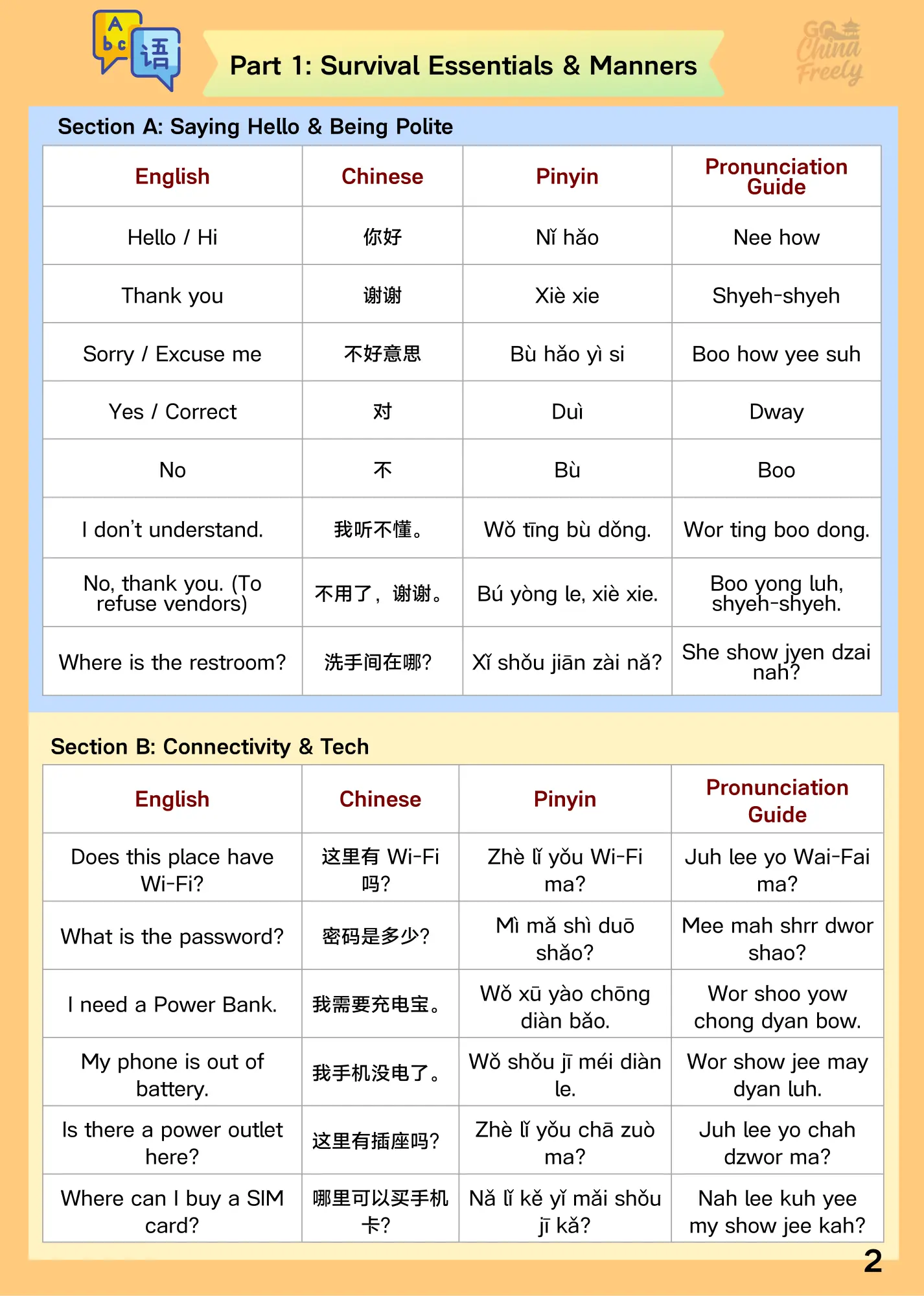
Greetings & Connectivity
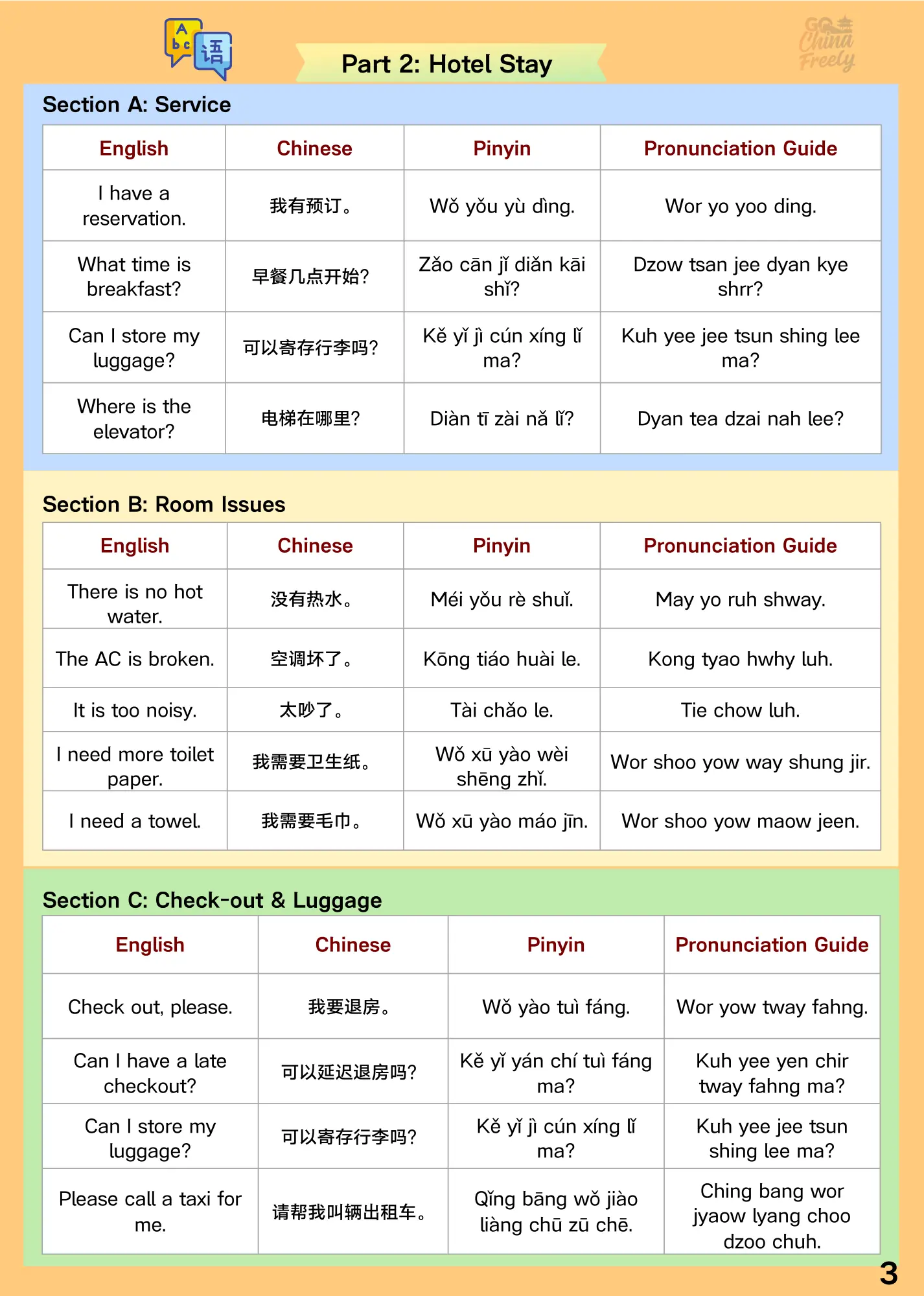
Hotel Stay
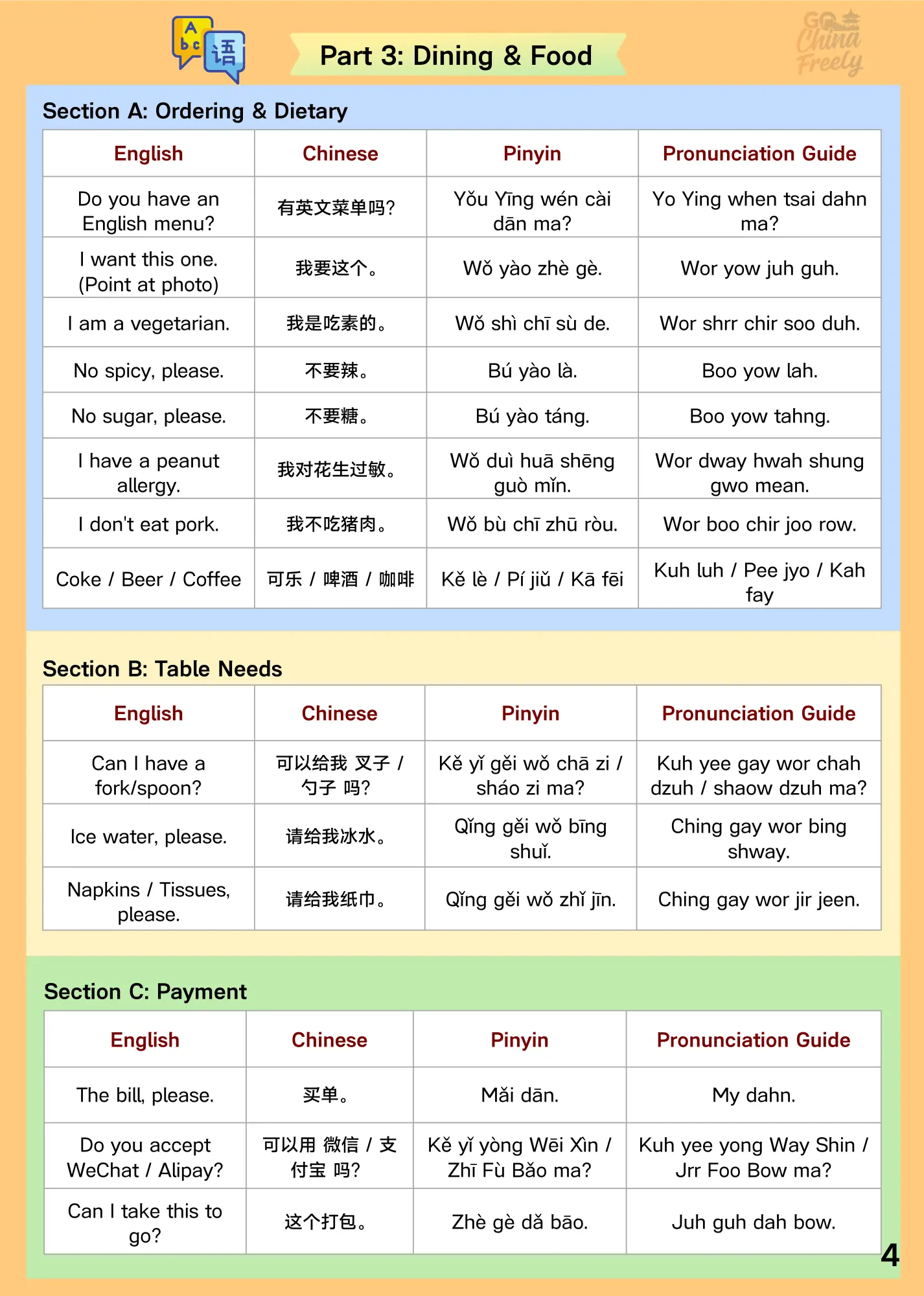
Dining & Food
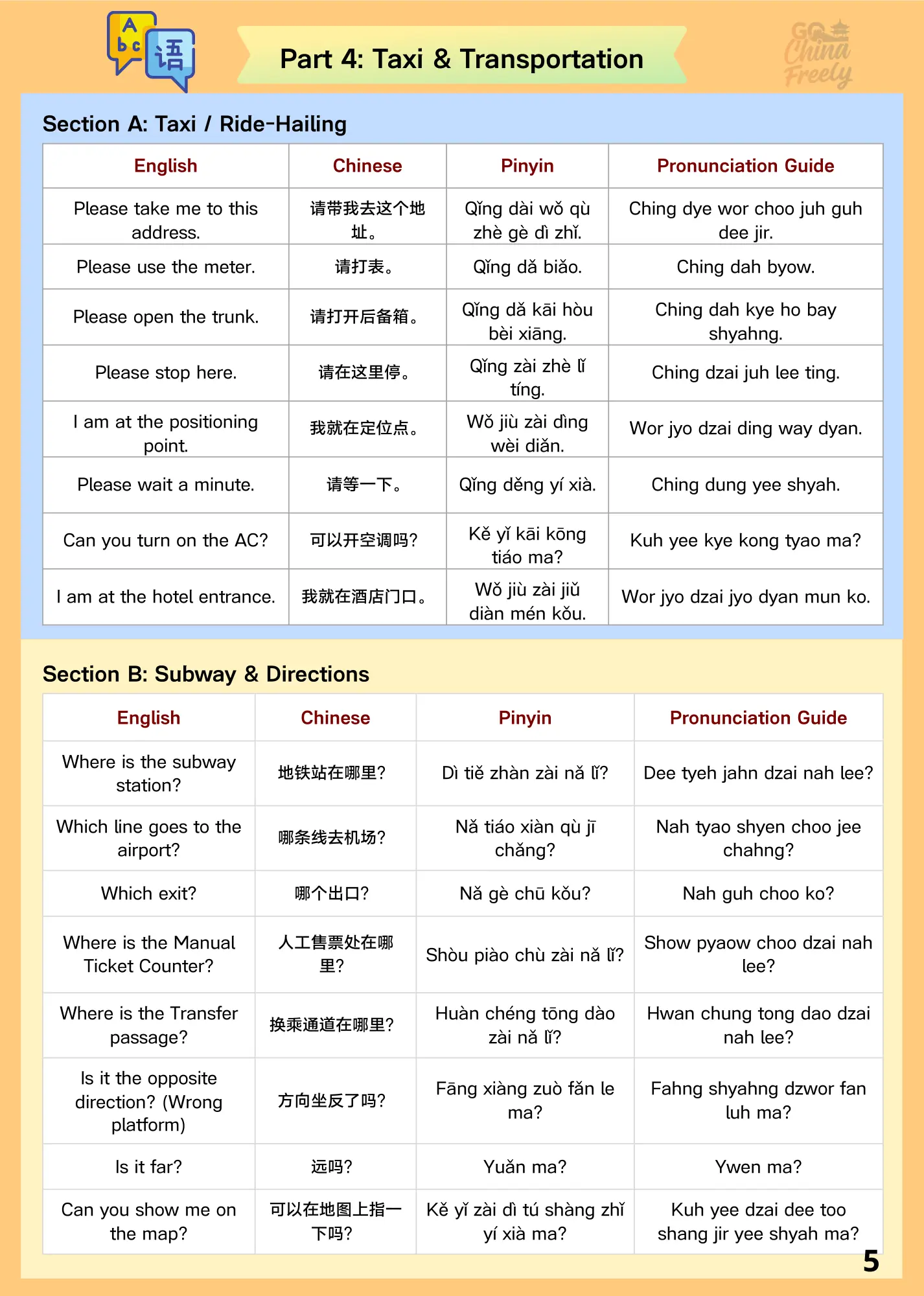
Taxis & Subway
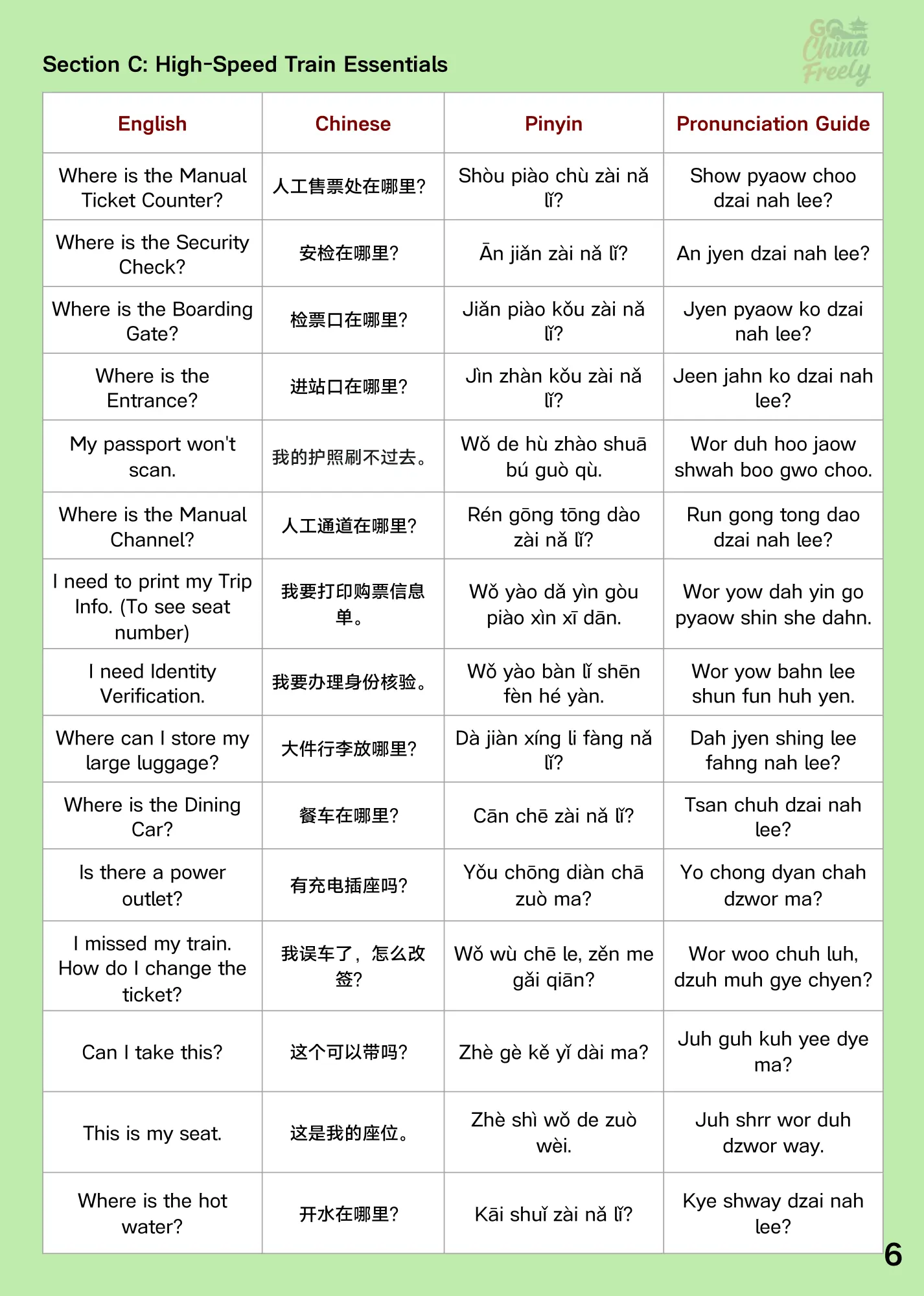
High-Speed Train
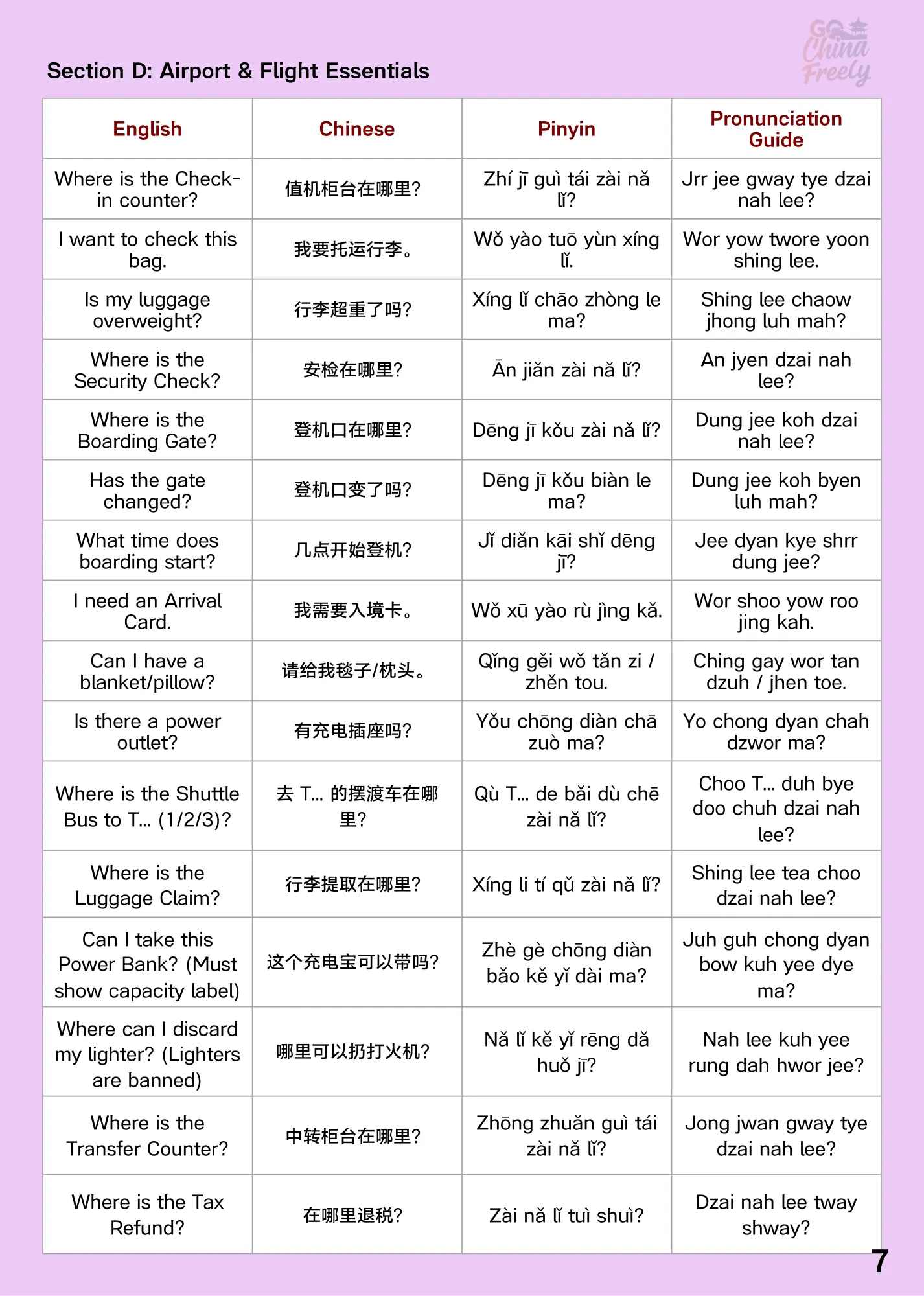
Airport
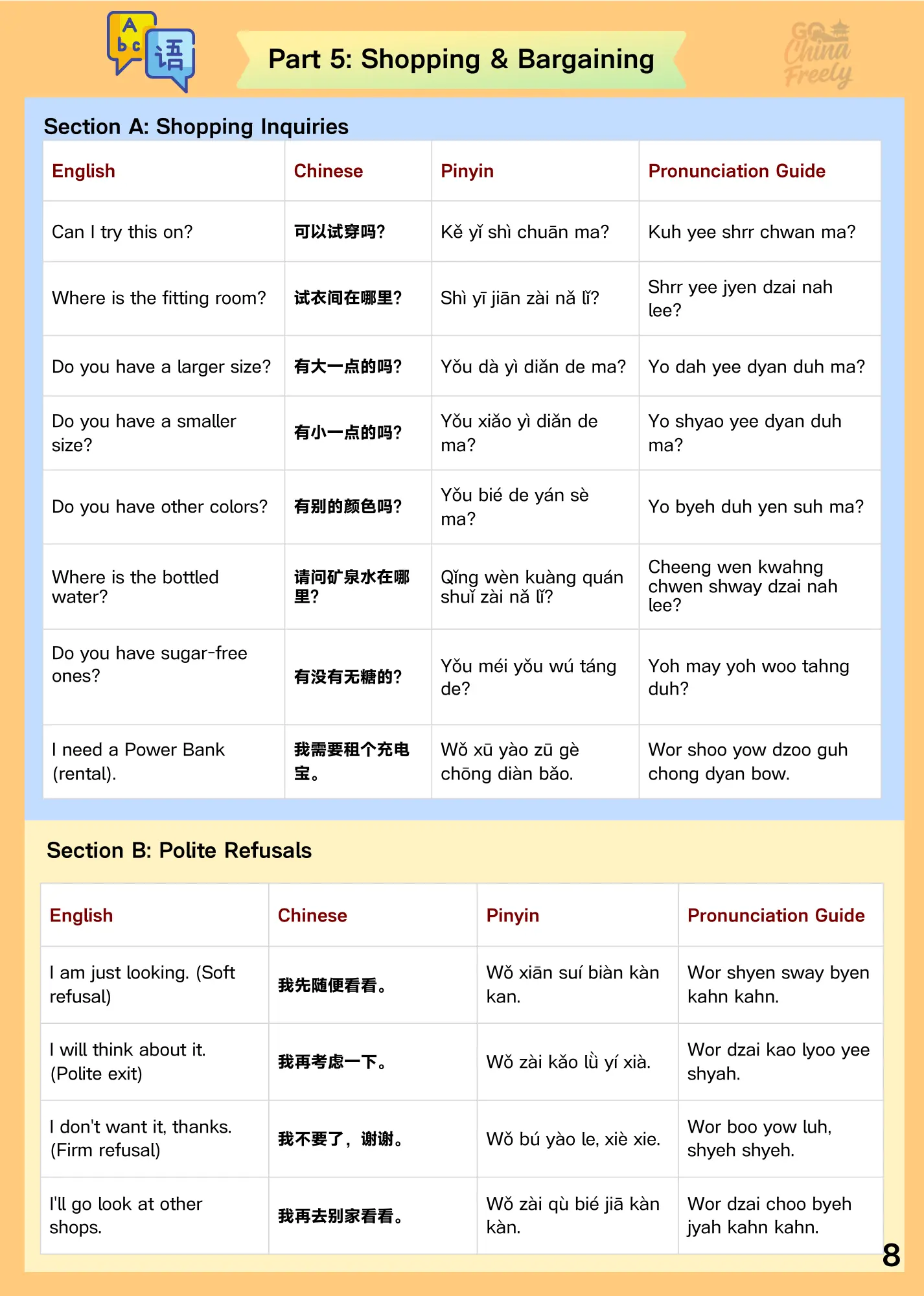
Shopping & Refusals
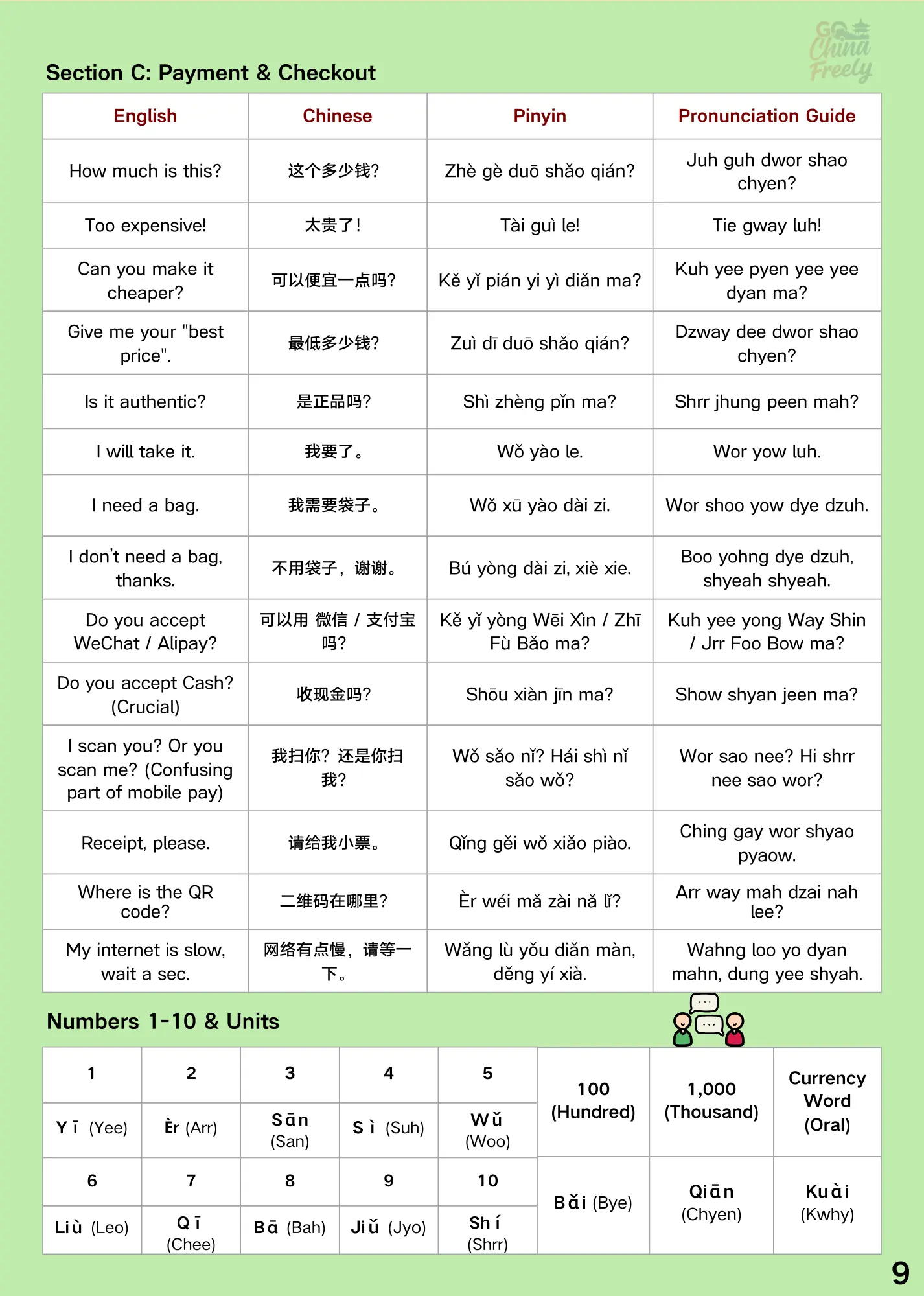
Payment, Numbers & Currency
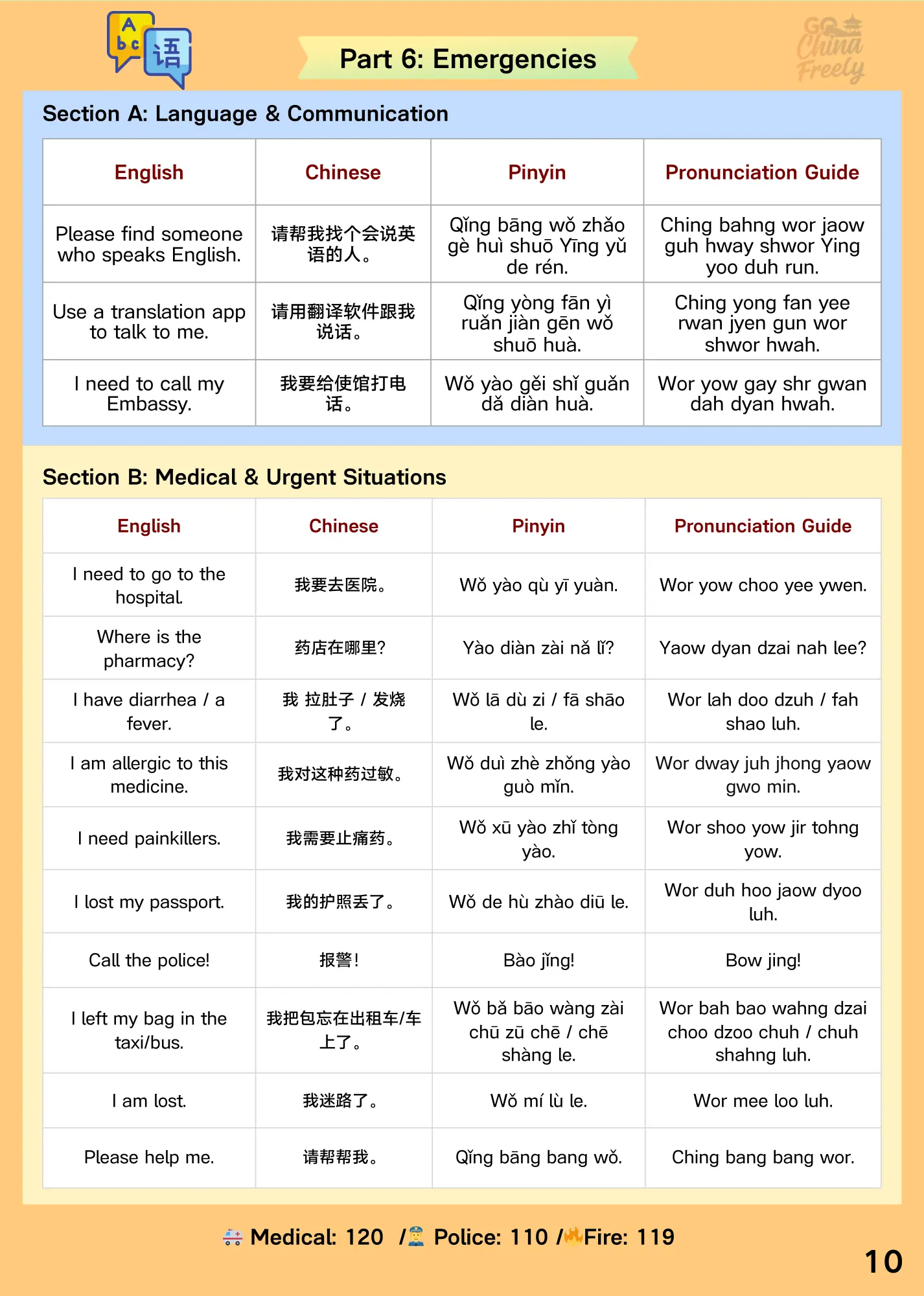
Emergencies
Best Offline Strategy
Save the individual card images to a "China Trip" album on your phone before you leave. No internet needed — open the relevant card and show it to whoever you're talking to.
Essential Chinese Phrases FAQ
For low-stakes moments, often yes. The English phonetics are a backup, not a guarantee of perfect pronunciation. For medical needs, allergies, police reports, tickets, addresses, or payment disputes, show the Chinese text on your phone or use a translation app instead of relying only on spoken pronunciation.
Sources checked for this guide
- Emergency-number guidance checked against the official Beijing travel-service page for nationwide 110, 119, 120, and 122 calls: Beijing emergency numbers
- Airport power-bank carry-on, Wh, and no-use rules checked against CAAC passenger battery guidance: CAAC passenger battery guide
- 2025 China domestic-flight 3C and recalled-power-bank restriction cross-checked against Reuters reporting on the CAAC notice: Reuters power-bank restriction report
- Medical-emergency and healthcare-cost context checked against GOV.UK China health advice: GOV.UK China health advice
- Food-allergy severity and restaurant communication cautions checked against NHS food-allergy guidance: NHS food allergy guidance
- Payment phrase context checked against official overseas-visitor payment guidance: State Council payment service guide
- Translation-app backup advice checked against Google offline-language help and mainland service-status reporting: Google Translate offline language help and TechCrunch Google Translate mainland China report
Beyond This Guide
These phrases are your offline fallback. Pair them with translation apps that work in China, food-shopping-direction communication habits, city transport basics, China train-ticket setup, doctors and pharmacies, food allergy planning, hotel registration basics, navigation apps, and mobile payment setup. If you want a human backup plan, we can advise, guide, and walk you through language problems during the trip without booking or handling paid items on your behalf.
- Reading Chinese Signs: Beginner's Guide — decode restroom, metro, menu, and ticket-window characters fast
© gochinafreely.com — Original guide by Go China Freely.