Pu'er tea is confusing because English black tea, Chinese red tea, and Chinese dark tea are not the same thing. Many travelers first meet Pu'er as a dark pot beside dim sum, or as a wall of compressed tea cakes in a Yunnan shop. This guide keeps the focus practical: how to choose raw or ripe, what "earthy" should taste like, how aging works, and how to buy without being pulled into tea-investment theater.
Executive Summary
What this guide covers
How Pu'er tea works for travelers: dark tea meaning, raw versus ripe, earthy flavors, aging and storage, brewing, tea-shop buying, and where it fits into a China trip.
Best first choice
Start with ripe Pu'er if you want a smooth, dark, food-friendly cup. Try raw Pu'er later if you enjoy bitter-sweet, herbal, and aging-driven teas.
Main traveler trap
Pu'er attracts big stories: old trees, famous mountains, vintage cakes, and investment language. Taste first, ask the unit price, and buy samples before full cakes.
Raw
Sharper starter
Ripe
Smoother first cup
GI
Protected Yunnan tea
2023
Jingmai UNESCO listing
Pu'er Is Yunnan's Protected Dark Tea
Pu'er tea (普洱茶) is best introduced to travelers as Yunnan's great dark tea. That word needs care. In English, "black tea" usually means fully oxidized tea; in Chinese tea categories, that is red tea (红茶). Dark tea (黑茶) is a different category, associated with fermentation or post-fermentation. Pu'er sits right in this translation trap.
Official definitions are useful here. China's National Intellectual Property Administration describes Pu'er Tea as a geographical-indication product made from tea leaves grown in certain regions of Yunnan and processed with special techniques. The EU geographical-indication technical specification for Pu'er Tea also defines it as tea made from Yunnan large-leaf sun-dried tea within the protected GI area, with raw and cooked types.
For travelers, the identity matters because it stops three common mistakes. Pu'er is not any tea pressed into a cake. It is not simply "old tea." And it is not the same thing as the English black tea you may drink with milk. The useful starting point is: Yunnan origin, large-leaf tea, specific processing, and two main styles.
Dark tea is not breakfast black tea
If a menu says Pu'er, expect a Chinese dark tea profile: deeper, fermented, sometimes earthy. Do not expect English breakfast tea or a floral black tea.
Raw vs Ripe Pu'er Tea: First Choice
The first choice is raw Pu'er (生茶) or ripe Pu'er (熟茶). Both are Pu'er, but they behave very differently in a cup, especially when young.
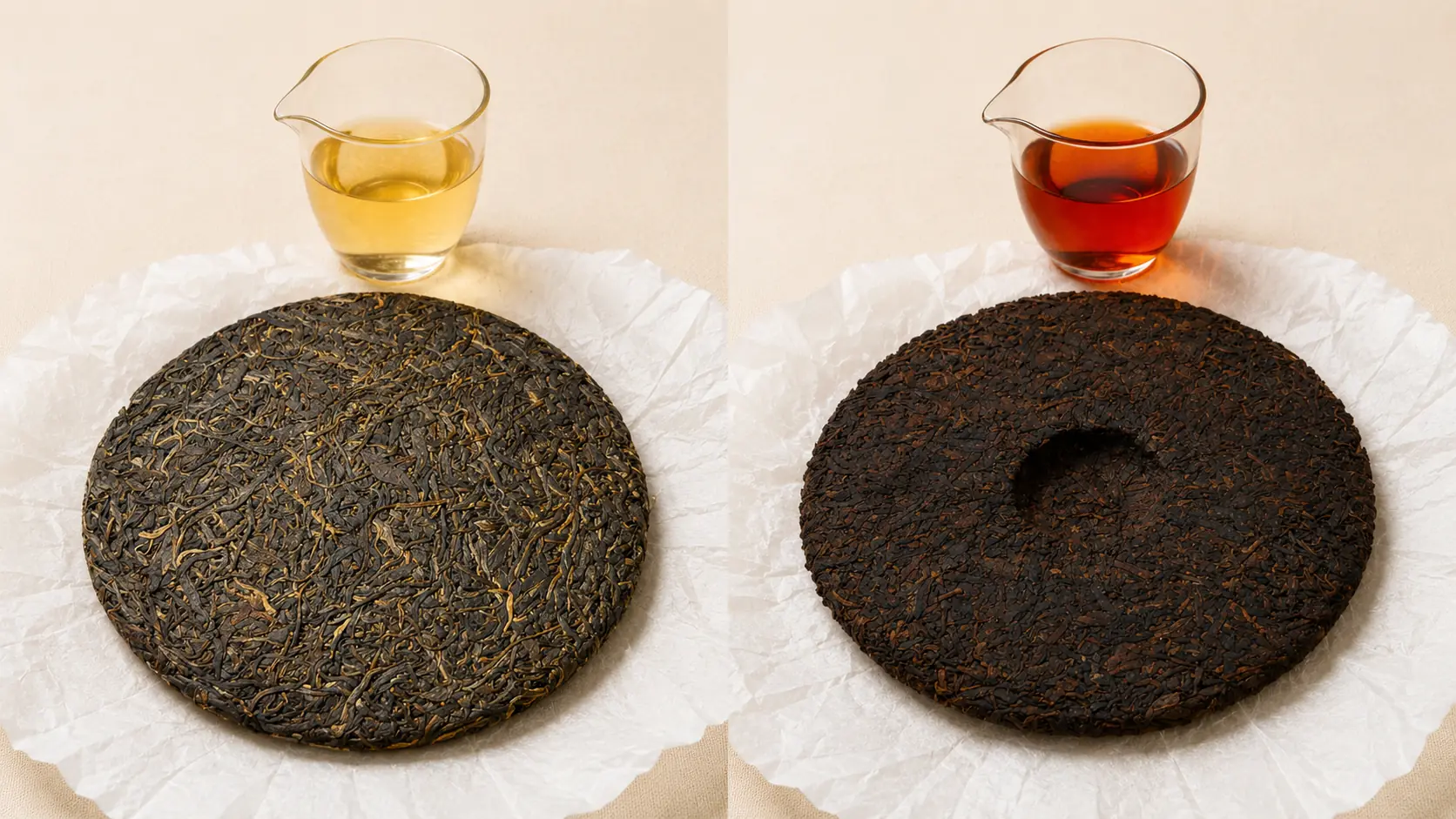
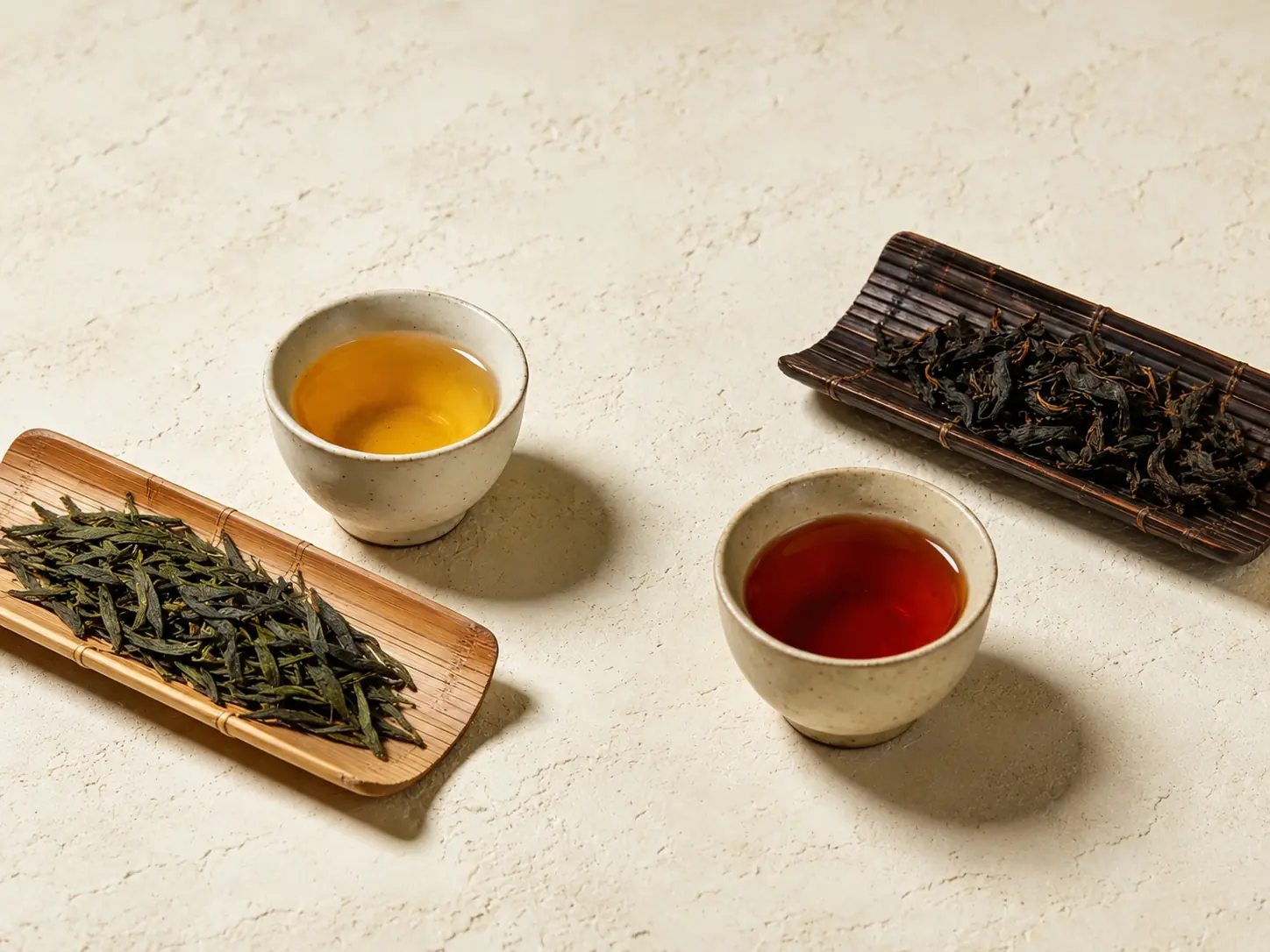
Raw Pu'er starts with fresh leaves from Yunnan large-leaf tea. The leaves are heated to stop enzyme activity, rolled, sun-dried into rough tea, then often steamed and pressed into cakes. Young raw Pu'er can taste green, herbal, bitter-sweet, floral, sharp, or astringent. With years of good storage, some raw teas become rounder, woodier, fruitier, and more layered.
Ripe Pu'er starts from the same Yunnan large-leaf sun-dried tea, but then goes through controlled pile fermentation (渥堆发酵) before it is sold loose or pressed. This modern style was developed in Yunnan in the early 1970s to create a smoother, darker tea without waiting decades for natural aging. Ripe Pu'er is usually the easier first cup: darker liquor, softer texture, and notes of wood, dates, damp leaves, or clean soil.
← swipe to compare all options →
Raw Pu'er
生茶 · sharper starter
- ✓Typical liquor starts yellow, golden, or orange, then darkens with age.
- —Common flavors include herbal, grassy, floral, woody, bitter-sweet, or aged notes.
- —Young tea can feel harsh, thin, or too bitter; ask for a lighter brew before judging it.
Best for bitter-sweet flavor and aging curiosity
Ripe Pu'er
熟茶 · smoother first cup
- ✓Typical liquor is red-brown, deep red, or dark brown.
- —Common flavors include earthy, woody, mellow, date-like, damp-leaf, or lightly sweet notes.
- —Poor storage can smell musty, fishy, sour, or moldy; clean earthy flavor should still feel drinkable.
Best for most first-timers, dim sum, and after-meal tea
Decision shortcut
Raw or ripe Pu'er first?
I want an easy first cup
Choose ripe Pu'er. It is usually smoother, darker, and more forgiving with food.
I like green, bitter-sweet teas
Try young raw Pu'er, but ask for a lighter brew first.
I want aged complexity
Taste aged raw Pu'er in a proper tea shop before buying any full cake.
I am drinking dim sum
Choose ripe Pu'er or a house Pu'er. It cuts grease and is easy to share.
Why Good Pu'er Tastes Earthy, Not Dirty
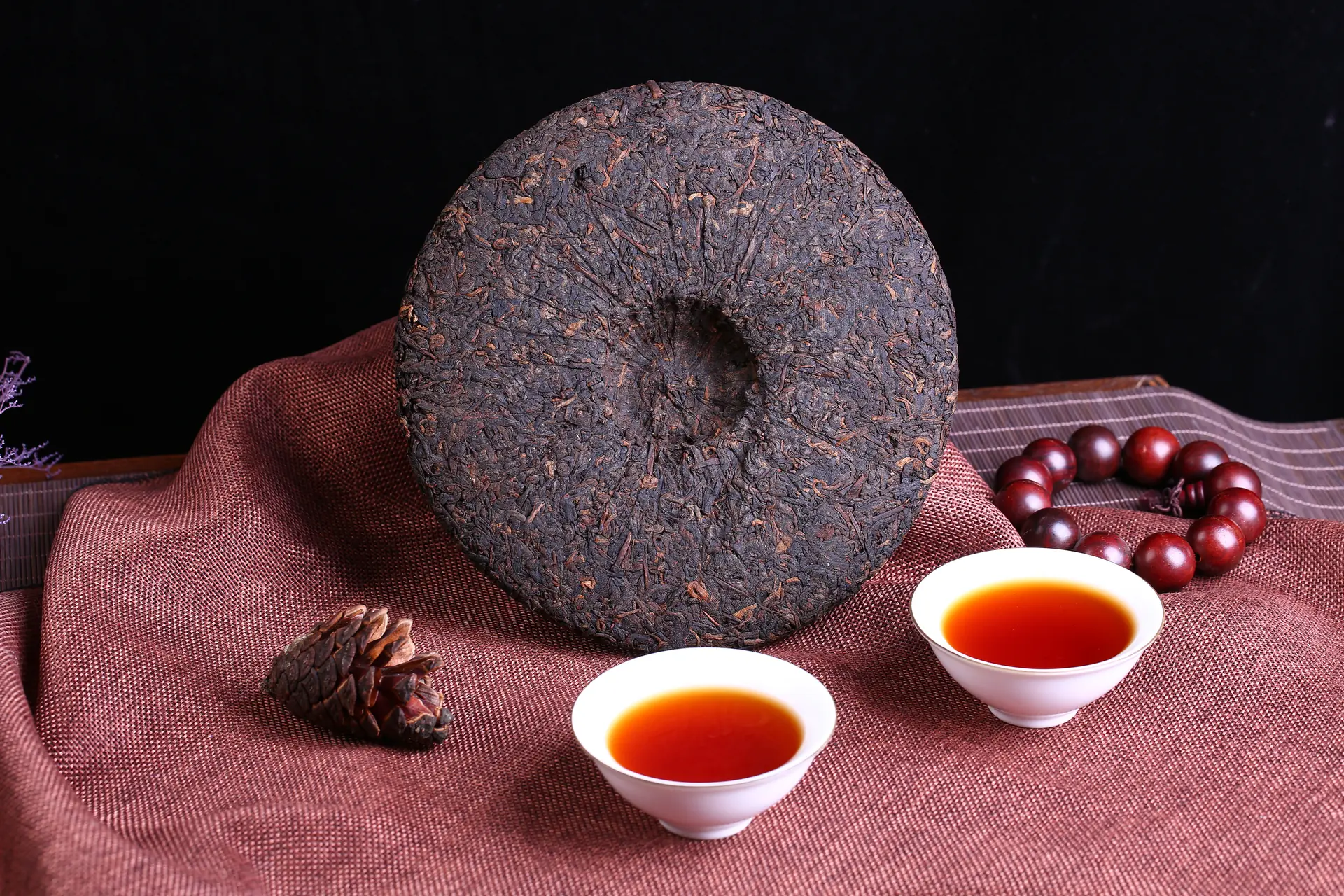
English speakers often describe ripe Pu'er as earthy. That can be accurate, but it needs a boundary. Good earthy flavor can remind you of rain on forest soil, autumn leaves, old wood, dates, mushrooms, or a clean cellar. It should still taste smooth and drinkable.
Earthy does not mean dirty. It should not smell like moldy walls, sour rot, fishy water, wet cardboard, or a basement that has gone wrong. If the tea leaves your throat scratchy or uncomfortable, you do not need to keep drinking it because someone says it is "aged."
Raw Pu'er has a different challenge. Young raw tea can be bitter or astringent, but good bitterness often changes quickly into sweetness or a cooling finish. Bad bitterness just stays sharp. You do not have to force yourself to admire a tea that feels aggressive. Ask for a lighter brew, or switch to ripe Pu'er.
Earthy should still taste clean
Good earthy Pu'er feels like forest floor, wood, or autumn leaves. Obvious mold, sour rot, fishiness, or throat irritation is a warning sign, not a mark of quality.
Why Pu'er Aging Does Not Mean Better
Pu'er can change with time, and that is part of its appeal. It is also where sales talk gets slippery. Raw Pu'er can slowly transform in good storage. Ripe Pu'er can become cleaner and rounder after resting. But age alone does not prove quality, authenticity, or value.
Three things matter more than a big year number: leaf material, processing, and storage. Poor raw material does not become excellent because it sat on a shelf. Bad storage can make a tea flat, sour, moldy, or unpleasant. Very dry storage can slow transformation; very damp storage can create serious off-flavors.
1Leaf Material
Old labels cannot rescue weak leaves. The tea should taste clean, balanced, and worth drinking now.
2Processing
Raw and ripe Pu'er age differently, and careless processing can leave harshness that time will not magically fix.
3Storage
Good storage supports slow change. Damp, sour, moldy, or flat storage can ruin tea at any age.
When a seller says "twenty-year tea," "old tree," "famous mountain," or "collector grade," bring the conversation back to the cup. Do you like the tea now? Is the price clear? Are you buying it as something to drink, not as a promised investment?
Taste the tea in front of you
Pu'er stories can be interesting, but your purchase should still pass a simple test: clean aroma, clear price, comfortable body feel, and a flavor you want to drink again.
Where Travelers Meet Pu'er Tea in China
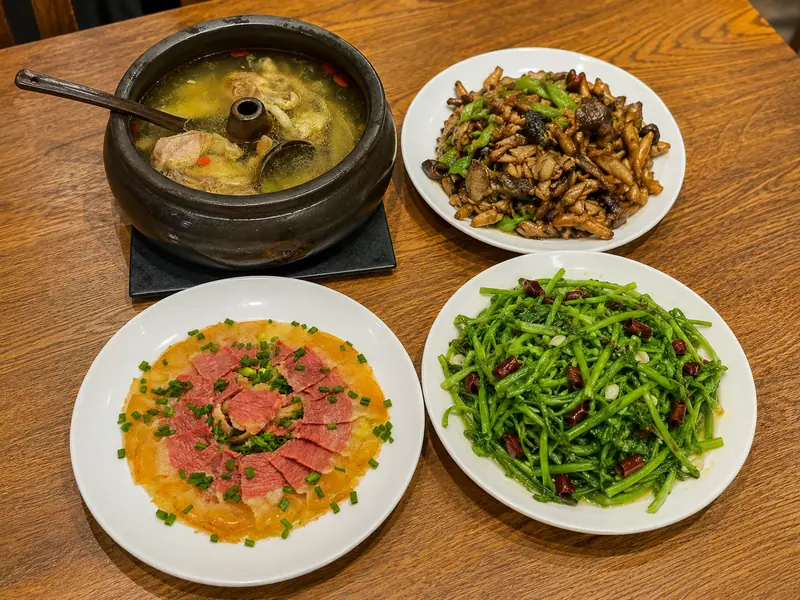
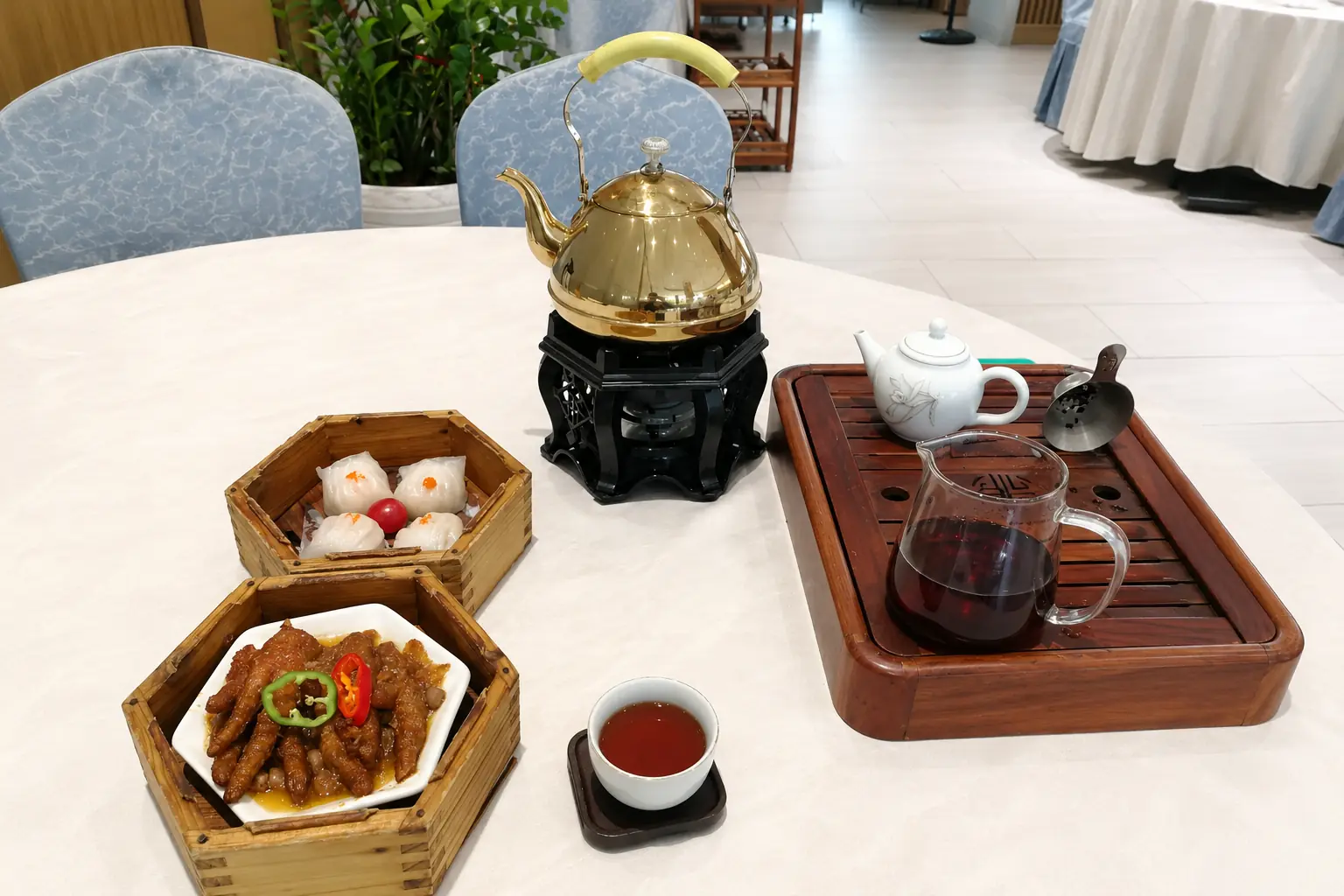
The easiest place to drink Pu'er may be outside Yunnan. In Guangzhou (广州), Hong Kong (香港), and many Cantonese restaurants, Pu'er is a common table tea with dim sum, roast meats, fried turnip cake, and barbecue pork buns. In that setting, it is less about mountain names and more about cutting through a rich meal.
Yunnan gives the tea its deeper map. Kunming (昆明) is the softest entry point for foreign travelers: tea markets, teahouses, and food routes where Pu'er can follow rice noodles, mushrooms, or steam-pot chicken. Pu'er City (普洱) and Xishuangbanna (西双版纳) bring you closer to tea-country geography. Jingmai Mountain (景迈山) gives Pu'er a world-heritage frame.

UNESCO inscribed the Cultural Landscape of Old Tea Forests of Jingmai Mountain in Pu'er on the World Heritage List in 2023. Its official description places the site in Huimin Town, Pu'er City, Yunnan, and describes old tea groves, tea plantations, forests, and traditional villages shaped over more than a thousand years by Blang and Dai communities.
This guide is not a Jingmai travel itinerary. For most travelers, the best first step is simpler: drink a clean ripe Pu'er with dim sum, taste raw and ripe side by side in Kunming, then decide whether a deeper Yunnan tea-country stop belongs in your route.
How to Brew Pu'er Tea on the Road
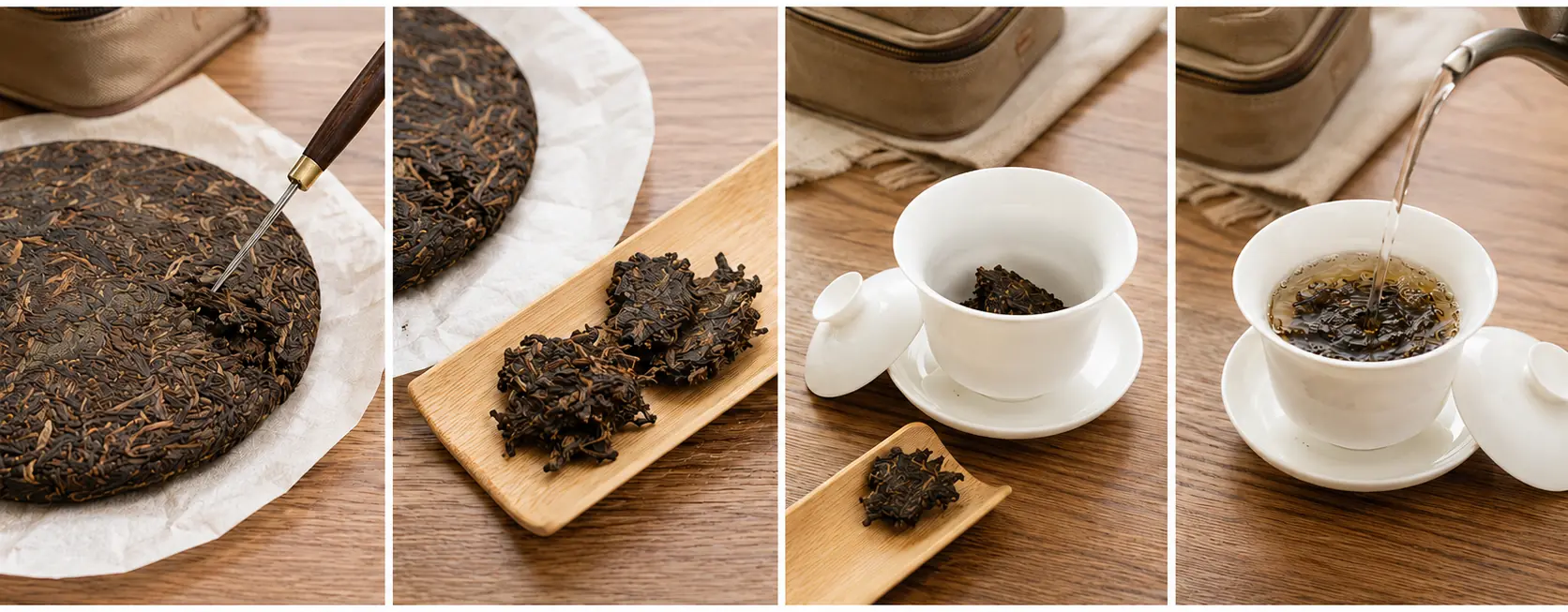
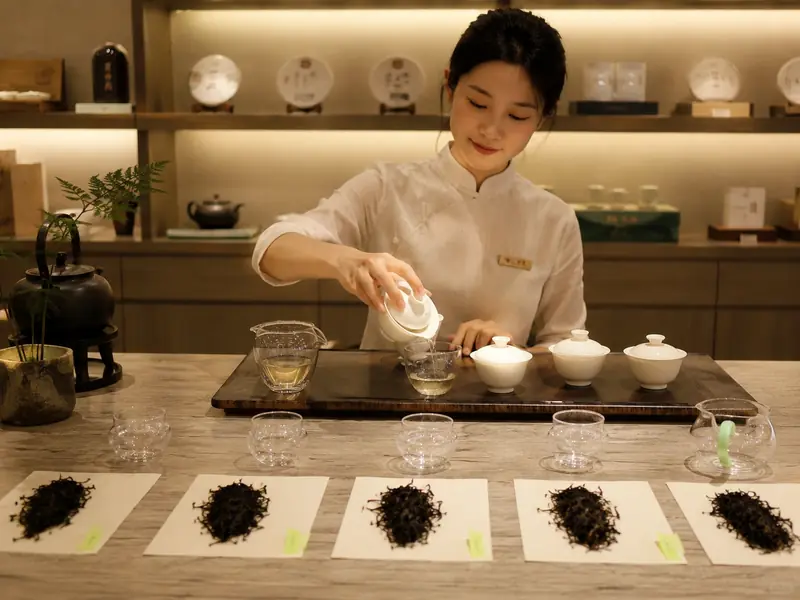
Pu'er is travel-friendly because it can be brewed many times. It usually handles hotter water better than green tea. The main skill is controlling strength: ripe Pu'er can become too heavy if overdone, and young raw Pu'er can turn sharply bitter.
In a hotel cup, use less tea than a tea shop would. A small piece of cake or a pinch of loose tea is enough. Avoid trapping leaves in a thermos for hours unless you already know you like very strong tea.
- Break a small piece- If it is a cake, pry from the edge with a tea pick or knife. Do not snap the center in half.
- Rinse once- A quick hot-water rinse wakes compressed leaves and is especially useful for ripe Pu'er.
- Use hot water- Near-boiling water is common for Pu'er. The timing matters more than babying the temperature.
- Keep early steeps short- Taste early. If it is too strong, pour faster next time or use less leaf.
- Refill several times- Good Pu'er is built for repeat infusions. Stop when the cup becomes thin or flat.
Long soaking can make ripe tea muddy and raw tea bitter. If the first steep comes out too strong, use less leaf or pour faster next time.
How to Buy Pu'er Tea Safely
Pu'er is one of the easiest Chinese teas to overspend on. The words are seductive: old tree, famous mountain, ancient method, rare cake, collector storage. Those words may point to real quality, or they may be packaging around an average tea.
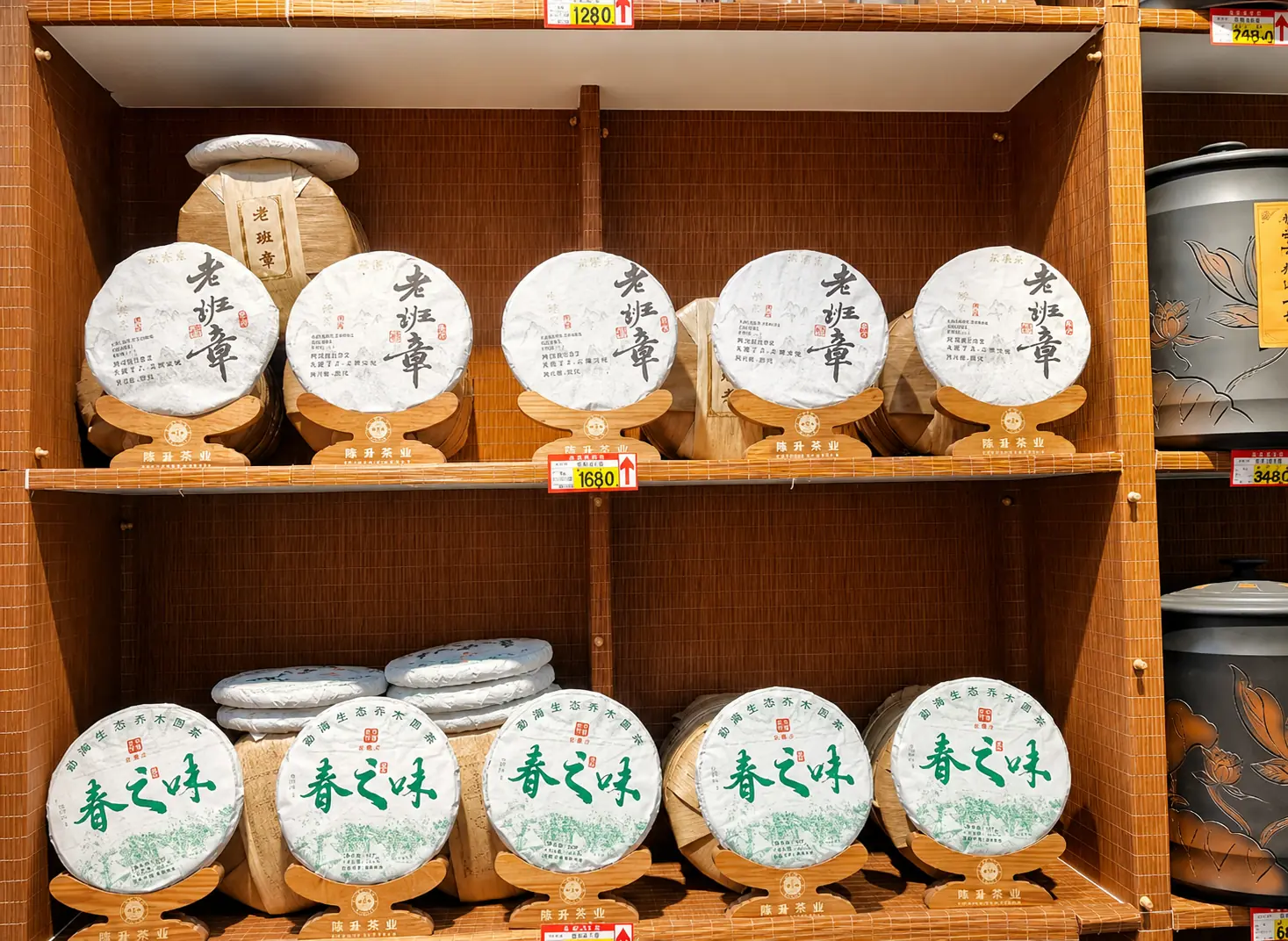
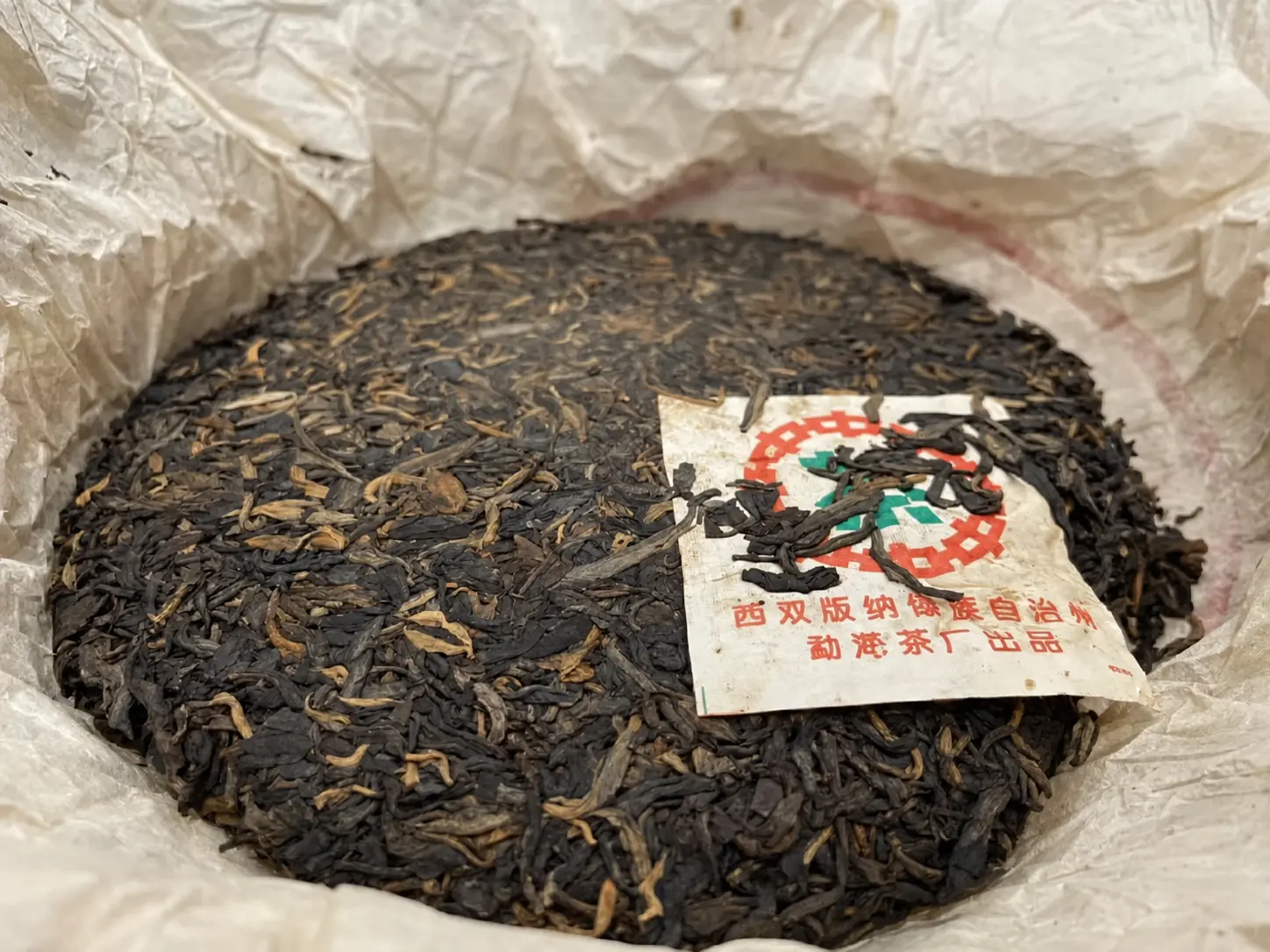
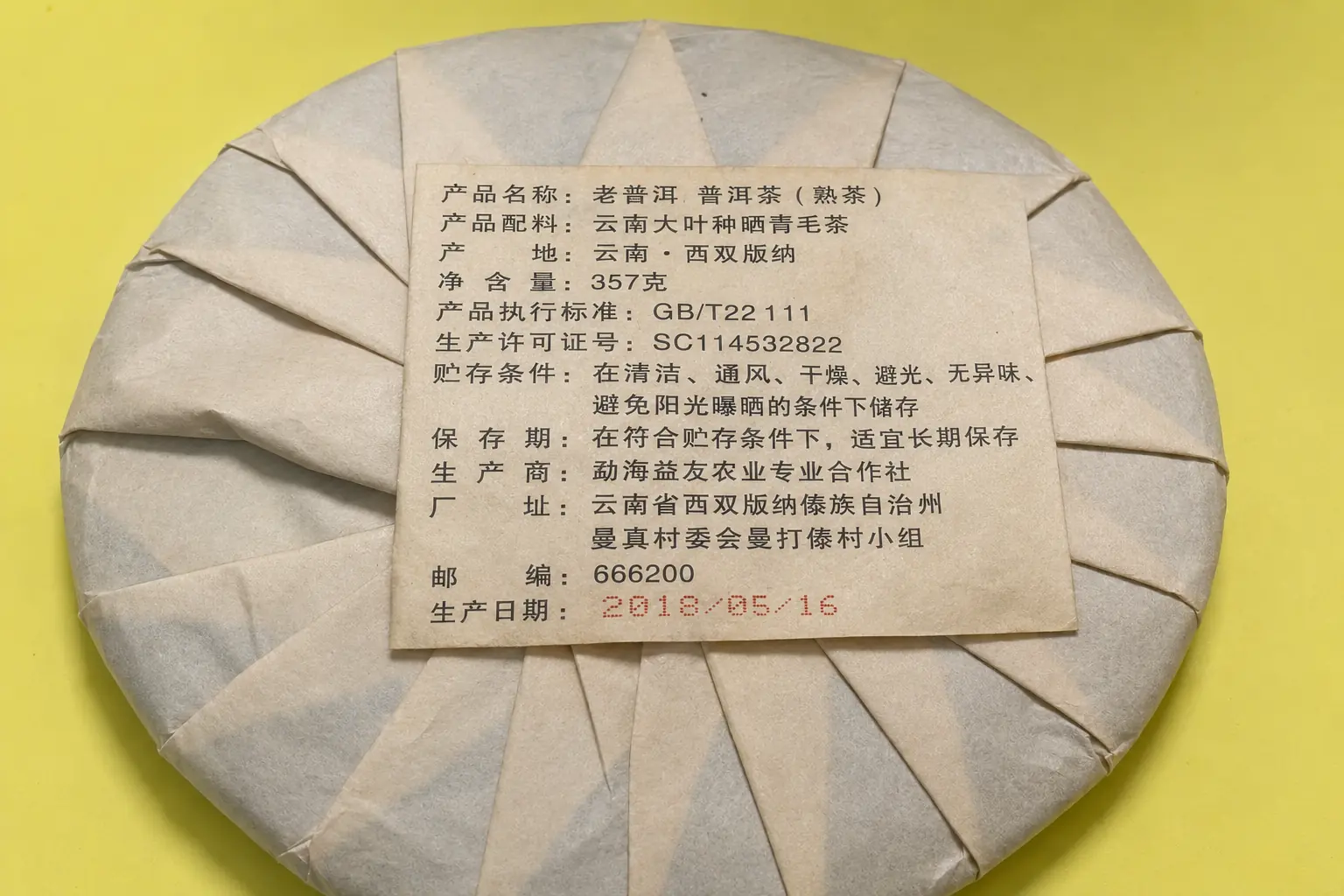
Ask practical questions first: is it raw or ripe, where is it from, what year is it, how much does it weigh, and what is the unit price? A full-size cake is often 357 grams, but shops also sell small cakes, bricks, nest-shaped tea, mini squares, loose tea, and samples. For a first purchase, samples or 50-100 grams are smarter than a full cake.
Do not buy Pu'er with an investment mindset. Buy it as a drink. If you would not enjoy brewing it at home next week, the story is not enough. If the seller refuses to give a clear price, pushes full cakes before samples, or turns moldy notes into a virtue, walk away politely.
- Buy samples first: small samples or 50-100 grams are safer than a full cake.
- Confirm raw or ripe: the flavor, aging logic, and beginner-friendliness are different.
- Do not buy investment stories: treat Pu'er as a drink, not a guaranteed asset.
- Reject moldy tea: clean earthy notes are fine; obvious mold, sour rot, or fishy storage is not.
Useful Pu'er Tea Phrases for Shops
Show the Chinese if pronunciation feels awkward. In a tea shop, these phrases keep the conversation practical instead of drifting into expensive stories.
| English | Chinese | Pinyin | Say It Like… |
|---|---|---|---|
| Pu'er tea | 普洱茶 | pǔ ěr chá | poo-arr chah |
| Raw Pu'er tea | 生茶 | shēng chá | shung chah |
| Ripe Pu'er tea | 熟茶 | shú chá | shoo chah |
| Is this raw tea or ripe tea? | 这个是生茶还是熟茶? | zhè ge shì shēng chá hái shì shú chá? | juh-guh shir shung chah high shir shoo chah |
| Can you brew it lighter? | 可以泡淡一点吗? | kě yǐ pào dàn yì diǎn ma? | kuh yee paow dahn ee dyen mah |
| How much is this per cake? | 这个多少钱一饼? | zhè ge duō shǎo qián yì bǐng? | juh-guh dwaw-shaow chyen ee bing |
| Do you have samples? | 有小样吗? | yǒu xiǎo yàng ma? | yo shyow yahng mah |
| I will buy just a small amount first. | 我先买一点点。 | wǒ xiān mǎi yì diǎn diǎn | woh shyen my ee dyen dyen |
Frequently Asked Pu'er Tea Questions Answered
Not in the usual English sense. English black tea usually corresponds to Chinese red tea. Pu'er is better understood as a Chinese dark tea or post-fermented tea, and it still needs to be divided into raw and ripe styles.
Beyond This Pu'er Tea Guide: Next Reads
Pu'er brings Chinese tea into the world of fermentation, storage, and time. For a broader tea path, pair this guide with the Chinese Green Tea Guide, Oolong Tea Guide, Yunnan Cuisine Guide, Kunming Food Guide, and Cantonese Dim Sum and Yum Cha Guide.
© gochinafreely.com — Original guide by Go China Freely.