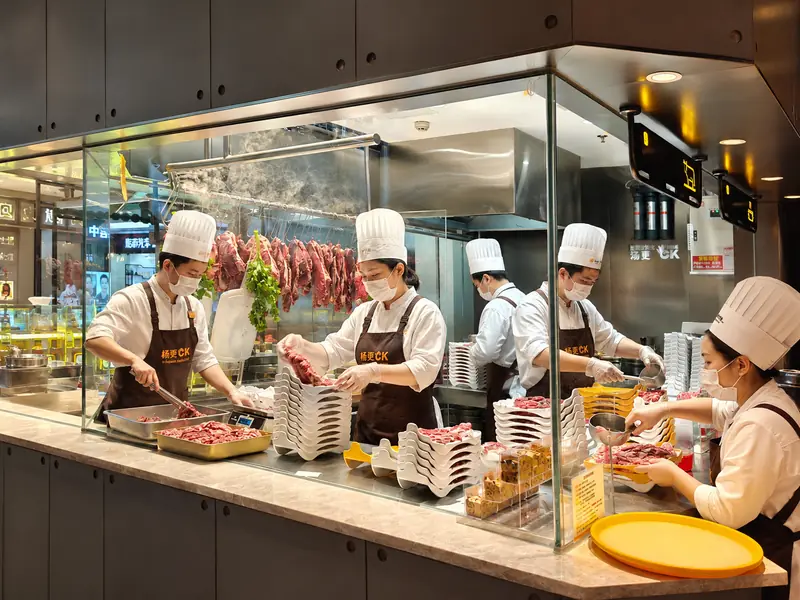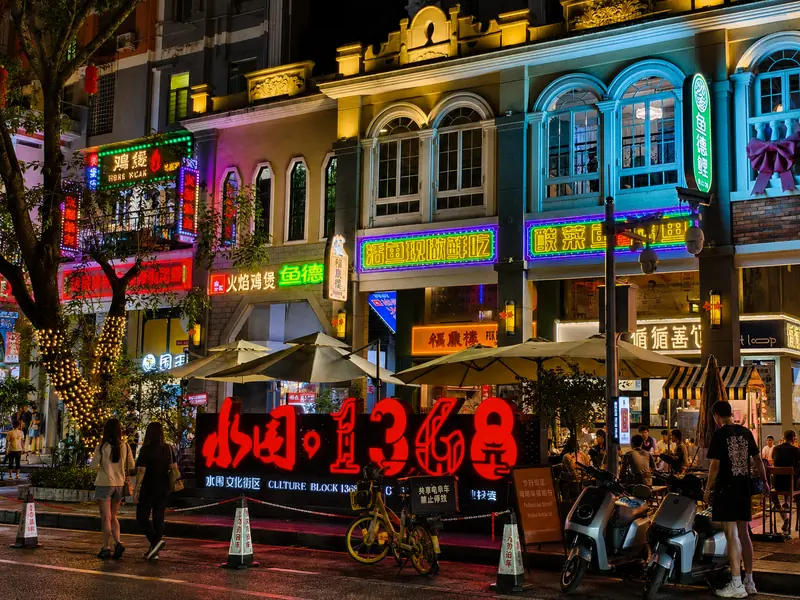
Cantonese yum cha (饮茶) is tea culture that grew into a meal. A teapot arrives before the dumplings, the table pays a tea cover, refills keep the conversation moving, and dim sum becomes the food side of the ritual. This guide treats yum cha as Cantonese morning-tea culture first, then shows you what to order, how to behave, and how to read the bill in Guangzhou and Hong Kong.
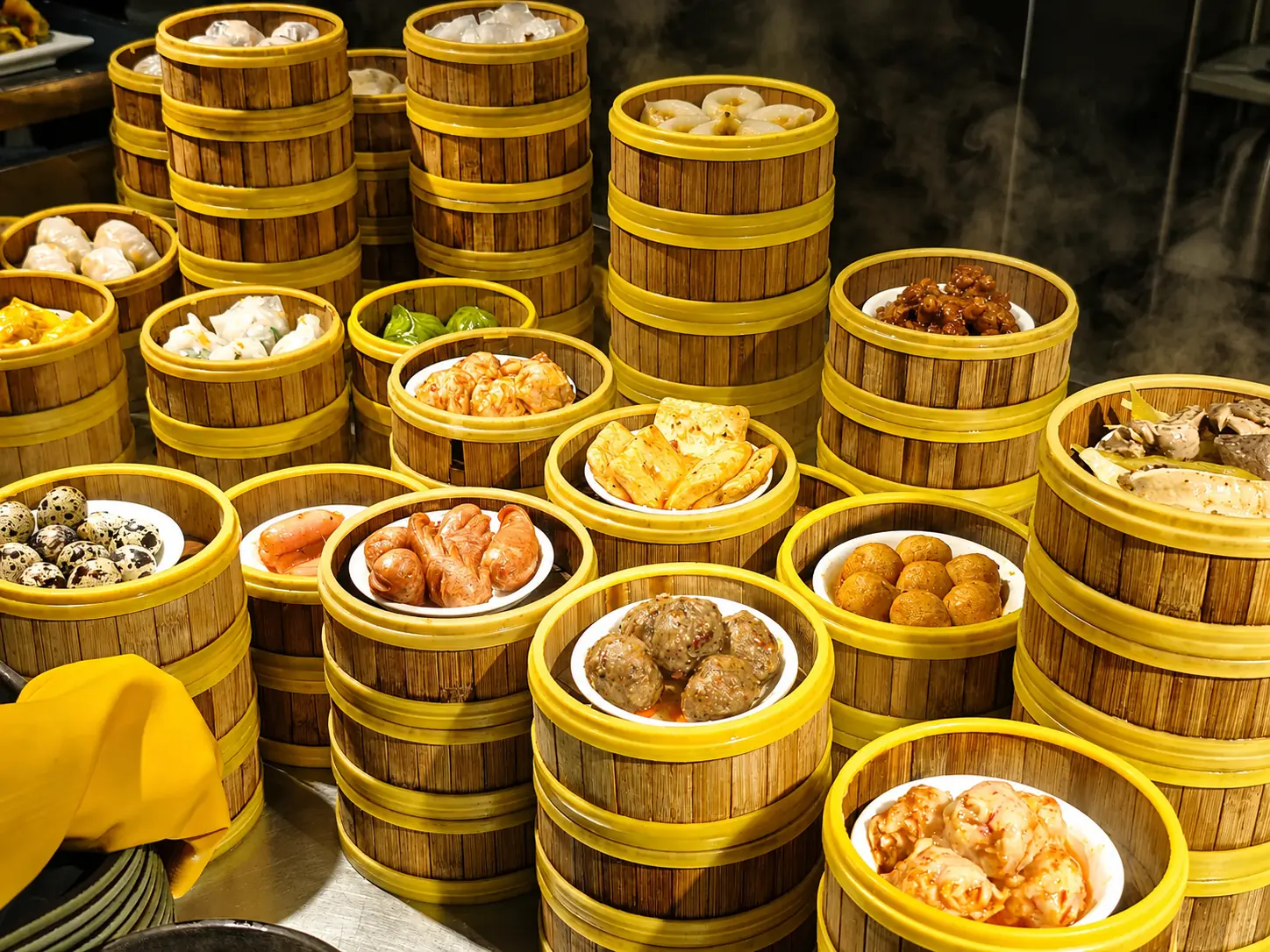
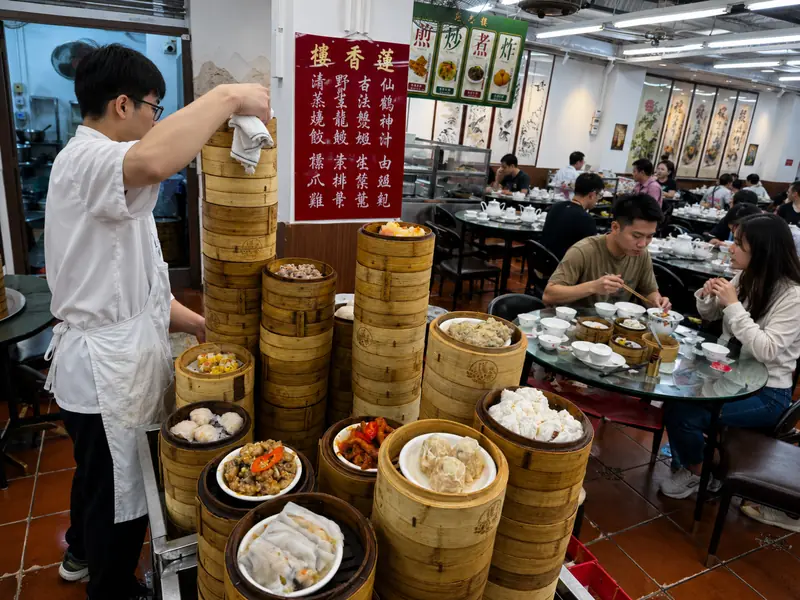
Yum cha begins with tea, then builds into shared dim sum across the table.
Executive Summary
What yum cha means
Yum cha is Cantonese tea-led dining: tea first, shared dim sum second, and conversation moving through refills rather than one fixed brunch plate.
Best first order
Start with pu'er or tieguanyin tea, then add shrimp dumplings, siu mai, barbecue pork buns, rice noodle rolls, turnip cake, one vegetable, and egg tarts.
Main traveler challenge
The hard part is not spice. It is choosing tea, reading tea cover fees and ordering systems, avoiding over-ordering, and spotting pork, shrimp, wheat, egg, or lard.
From Teahouse Ritual to Shared Table
Cantonese dim sum works because it is a table habit, not only a cooking category. In Guangzhou (广州), the ritual is formal enough that the city now has a dedicated morning-tea protection rule: the official Guangzhou Morning Tea Inheritance and Protection Regulation, approved in 2026 and implemented from May 1, 2026, defines Guangzhou morning tea as a local food-consumption form centered on tea plus Cantonese dim sum, shaped by Lingnan food culture, social custom, and traditional technique.
That definition is useful even if you never read local policy again. It tells you what to pay attention to: tea, small dishes, craft, social rhythm, and the fact that the table belongs to everyone. For travelers, yum cha belongs closer to tea culture than to a single dish guide. The tea sets the table, and the dim sum gives that table something to share.

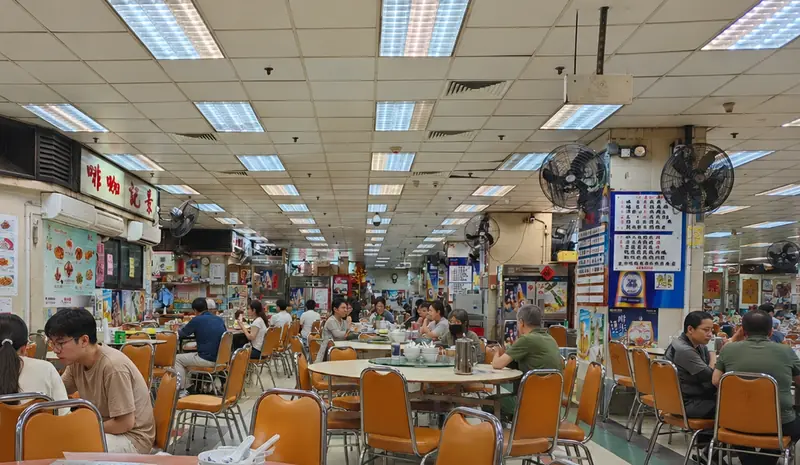
Guangzhou morning tea is a social rhythm as much as a meal.
Hong Kong (香港) carries the same Cantonese base in a faster city. The Hong Kong Intangible Cultural Heritage Office has featured Chinese dim sum making technique among local food-culture heritage items, and the official 2024 ICH Inventory notes that different types of Chinese dim sum have been served in Hong Kong Chinese restaurants since the 1950s. For travelers, the practical lesson is simple: this is everyday food, but it is not casual in the sense of being random.
Tea first
Table rhythm
Shared plates
How to eat
Morning-lunch
Classic window
1-2 / 5
Typical spice
Do not make the first meal a trophy hunt
Choose one good teahouse and learn the rhythm. Chasing three famous dim sum places in one morning usually means more queues than food memory.
Yum Cha Is the Ritual, Dim Sum the Food
Yum cha (饮茶) means the tea meal. Dim sum (点心) means the small dishes served during that meal. English speakers often use "dim sum" for the whole outing, and staff will understand you, but the distinction helps you order like a local.
| Term | Chinese | What It Means | Traveler Translation |
|---|---|---|---|
| Yum cha | 饮茶 | The act of going to a teahouse, drinking tea, and eating small dishes | The meal and ritual |
| Dim sum | 点心 | The individual savory and sweet items served in small portions | The food you order |
| Morning tea | 早茶 | The classic Guangzhou-style morning version | Best early in the day |
| Tea cover | 茶位 | Per-person tea and seat charge | Normal bill item |
So you do not order "one yum cha." You go for yum cha, then order dim sum.
A helpful mental shortcut
Yum cha is the verb of the meal. Dim sum is the noun on the table.
Tea Comes Before the Dumplings
The first question at many teahouses is tea, not food. Common choices include pu'er tea (普洱茶), tieguanyin oolong tea (铁观音), chrysanthemum tea (菊花茶), jasmine tea (茉莉花茶), and other house options. When in doubt, choose pu'er. It is strong enough to cut through barbecue pork buns, fried turnip cake, siu mai, and chicken feet.
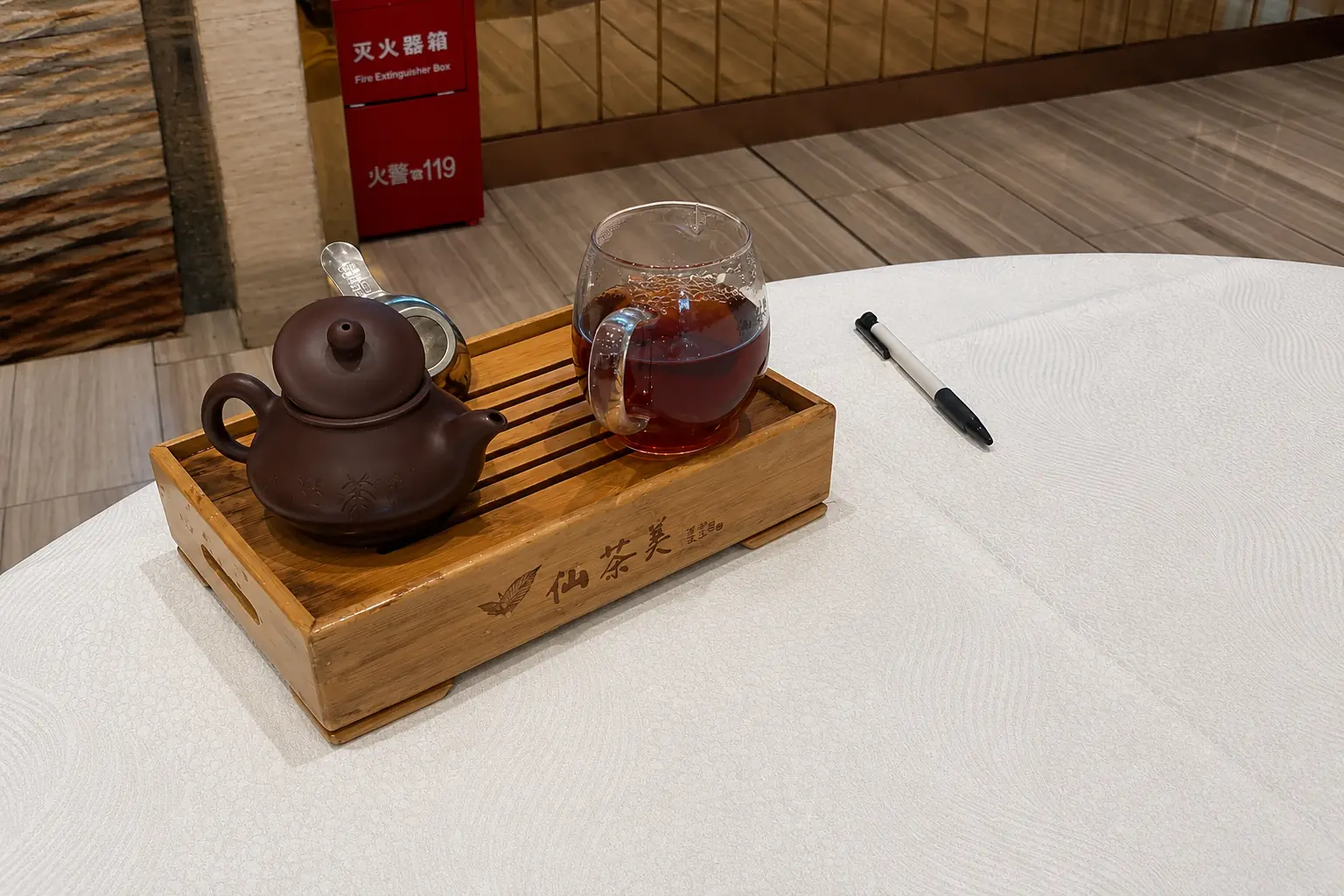
Tea comes first at yum cha, and the tea cover is a normal part of the bill.
Tea is usually charged per person as a tea cover. In Guangzhou, the 2026 morning-tea regulation says restaurants charging a tea cover should provide choices such as black tea, green tea, oolong tea, pu'er tea, and chrysanthemum tea, and should clearly mark fees. You still need to read the menu and bill, but the presence of a tea cover itself is normal.
When someone refills your tea, tap two fingers lightly on the table two or three times. This is the Cantonese table-knock thank-you. Visitors are not expected to perform every local habit perfectly, but this small gesture reads well in both Guangzhou and Hong Kong.
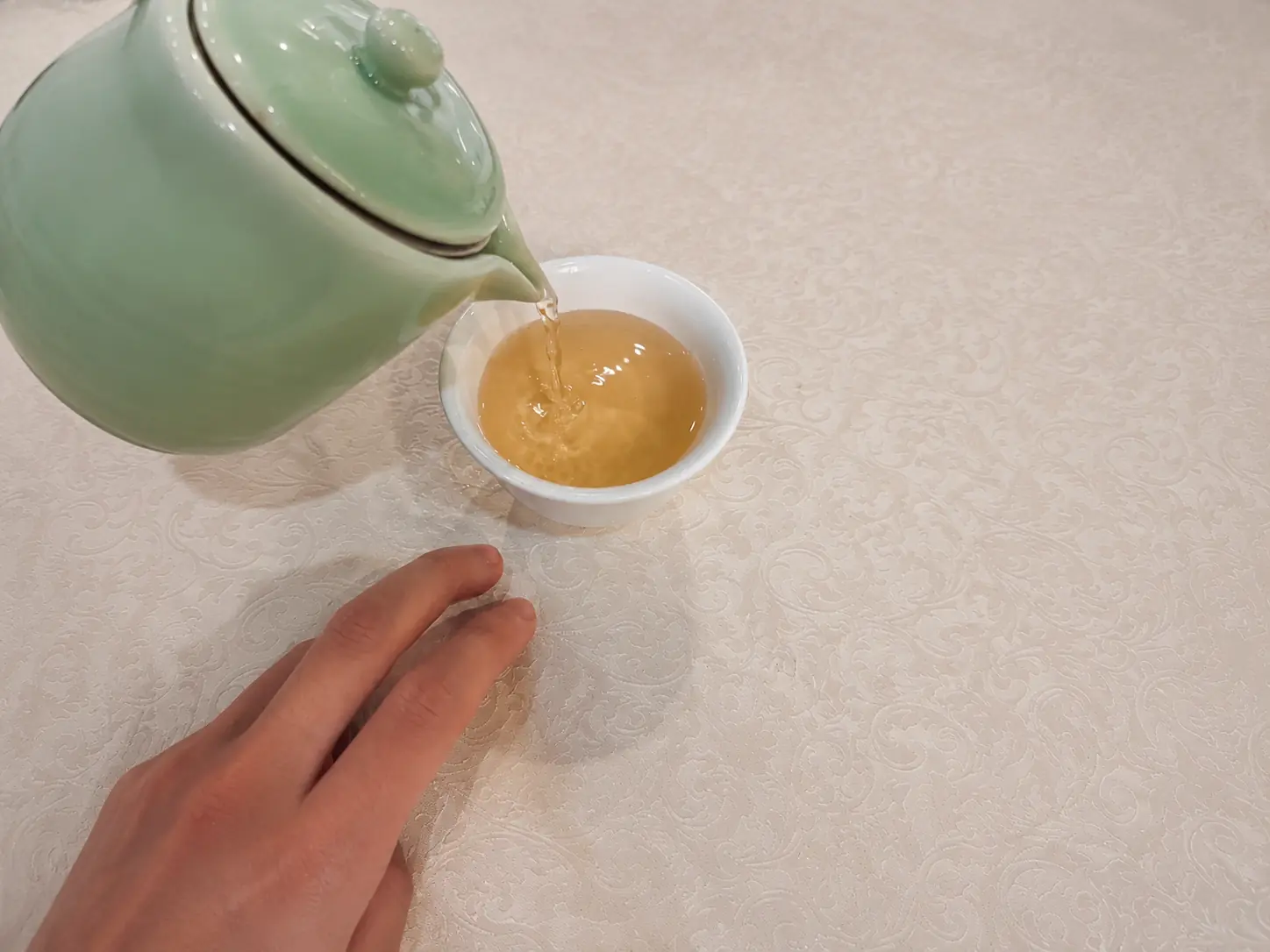
A light finger tap is the classic thank-you when someone refills your tea.
Pu'er
Safest first tea
Per person
Tea cover
Tap fingers
Refill thanks
What to Order After Tea Arrives
For a first yum cha, do not try to decode the full menu. Start with dishes that test the kitchen and teach the range of Cantonese dim sum. The Hong Kong Tourism Board beginner guide highlights classics such as siu mai, barbecue pork buns, shrimp dumplings, sticky rice in lotus leaf, rice noodle rolls, and egg tarts. That is a strong first table.
| Order | Chinese | Why It Matters | Watch For |
|---|---|---|---|
| Shrimp dumplings | 虾饺 | The wrapper and shrimp texture show skill quickly | Thin elastic skin, bouncy shrimp |
| Siu mai | 烧卖 | The open-topped pork-shrimp standard | Juicy filling, not rubbery |
| Barbecue pork buns | 叉烧包 | Sweet-savory char siu inside soft bread | Fluffy bun, balanced filling |
| Rice noodle rolls | 肠粉 | Silky rice sheets with light soy sauce | Smooth skin, clean sauce |
| Sticky rice in lotus leaf | 糯米鸡 | A heavier, fragrant anchor | Warm lotus aroma |
| Turnip cake | 萝卜糕 | Pan-fried texture contrast | Crisp edge, real radish flavor |
| Chicken feet | 豉汁凤爪 | Local comfort item, not for everyone | Soft skin, black-bean savor |
| Egg tarts | 蛋挞 | Sweet finish | Warm custard, crisp shell |
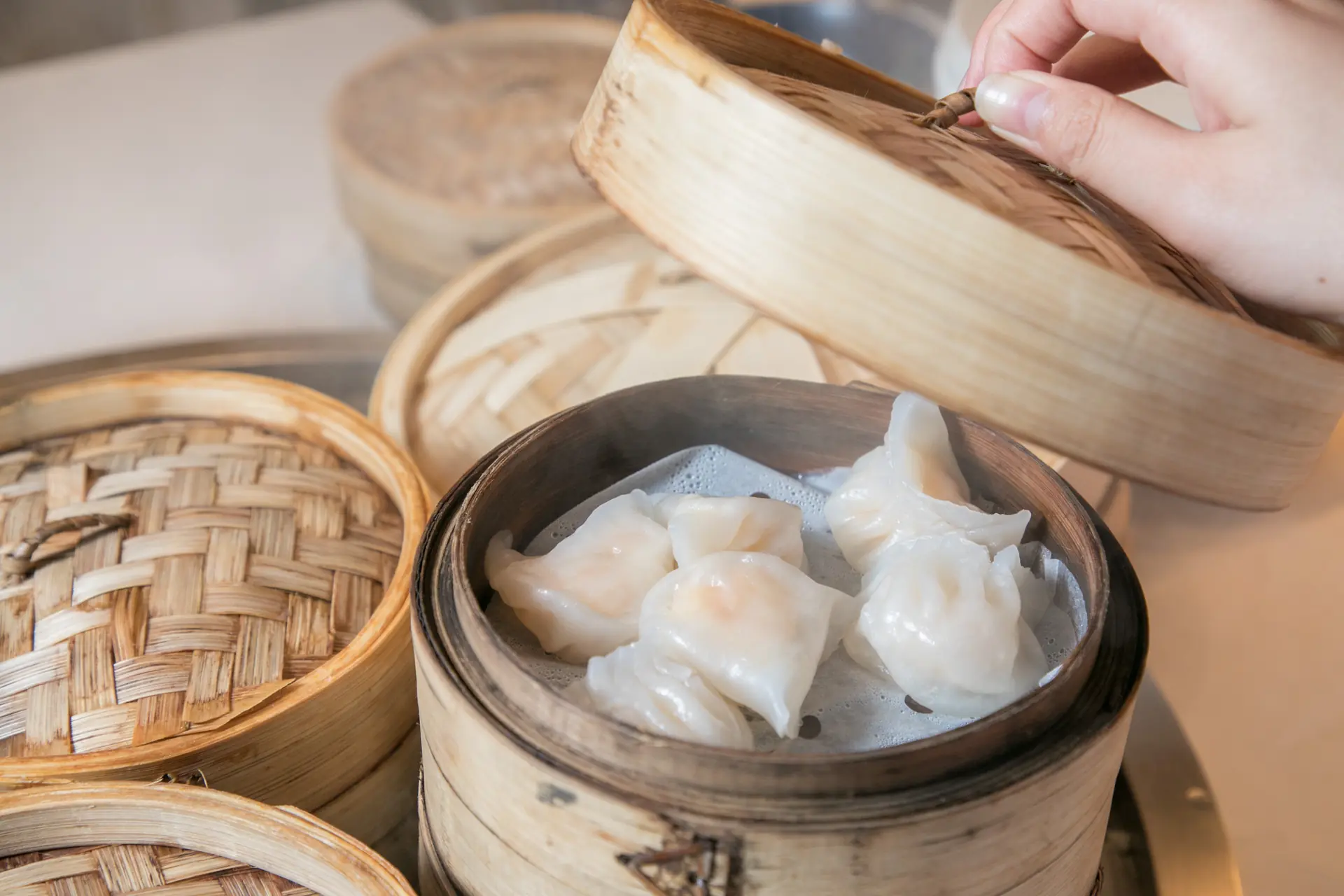
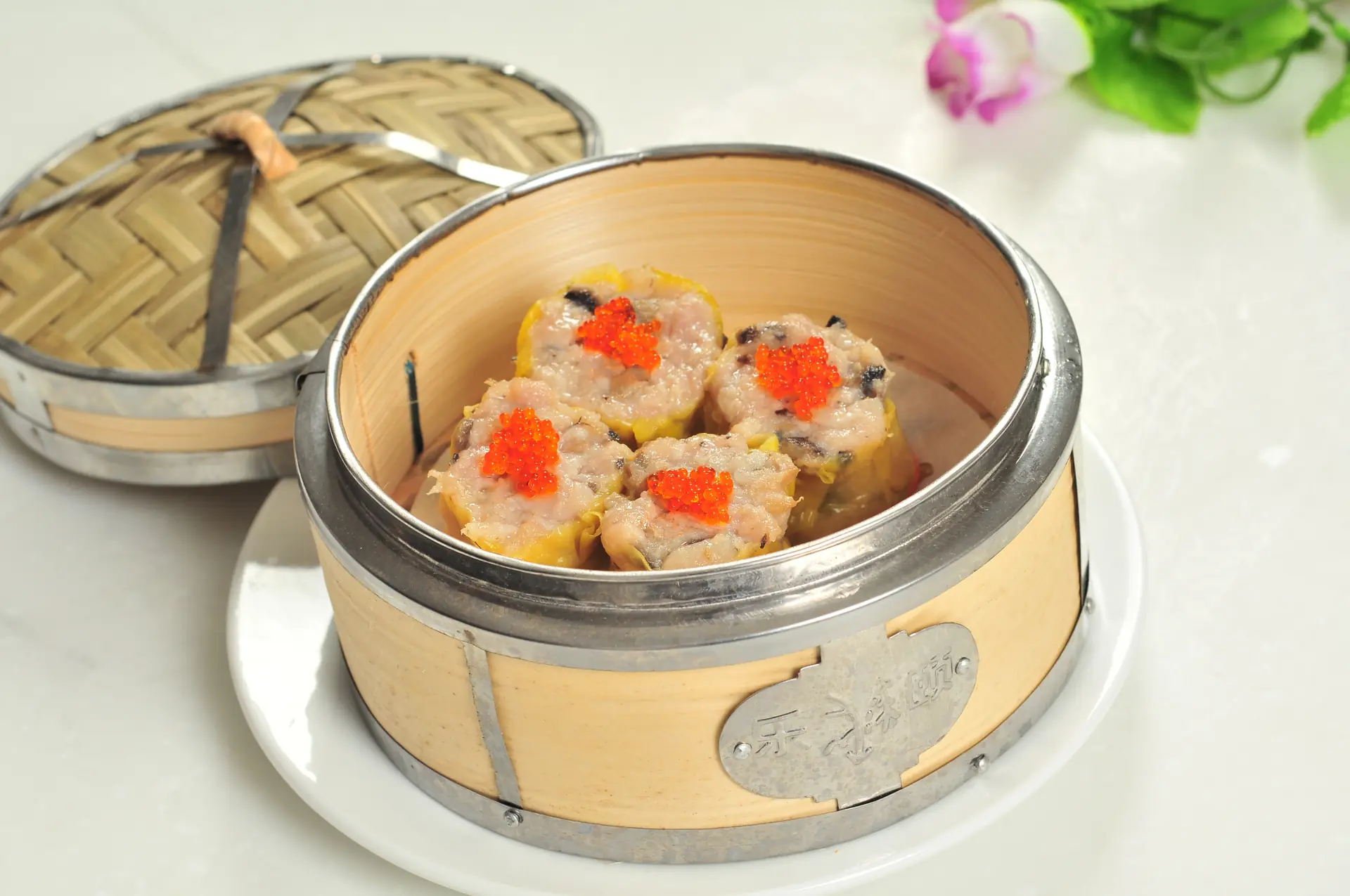
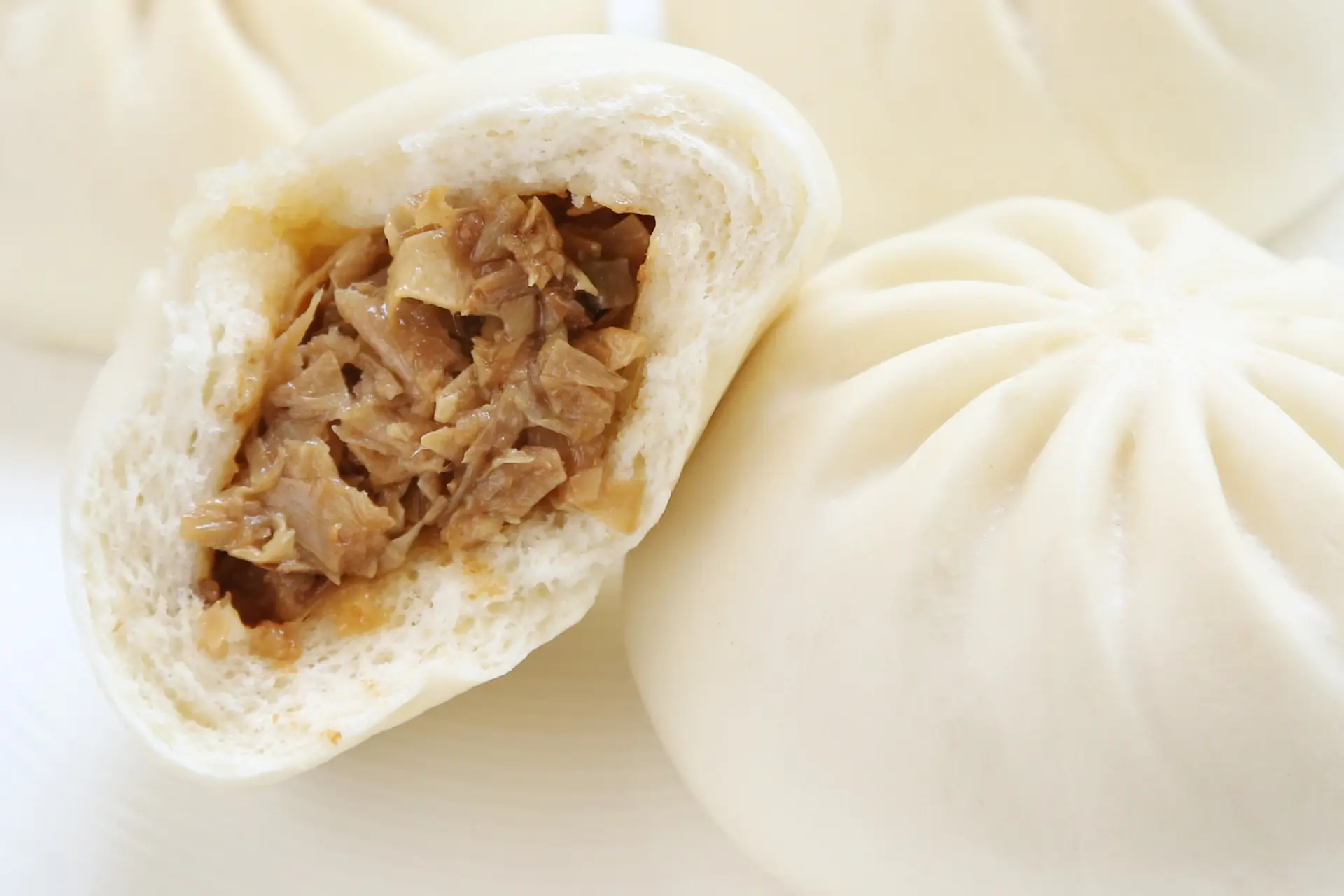
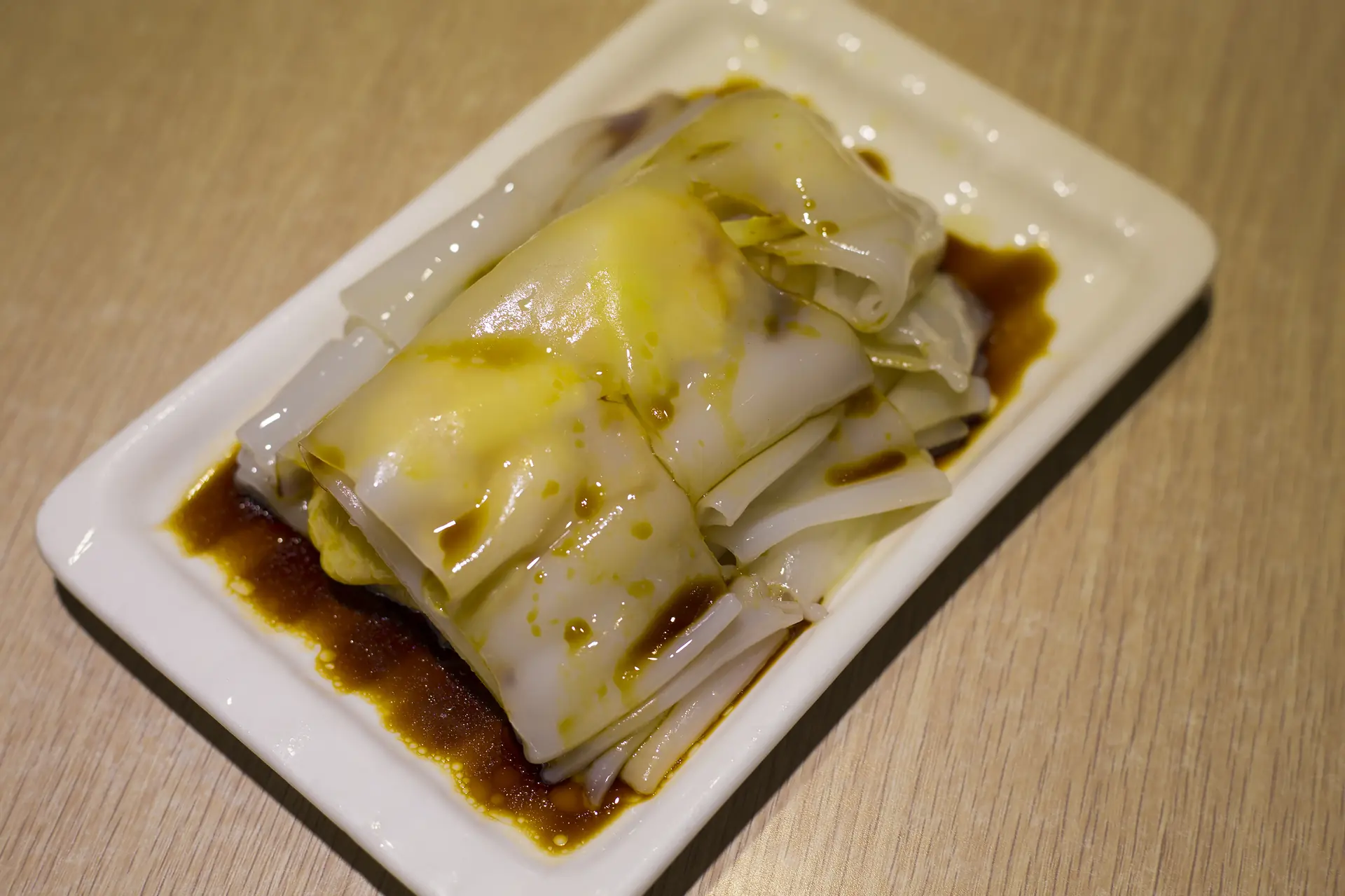
Order the first round small
Start with four to six items, then add more. Teahouse meals are better when you adjust after seeing portions, table appetite, and what looks good around you.
How Locals Build a Dim Sum Table
A local-style table has balance. It is not eight bamboo baskets of dumplings and nothing else. Build across texture, weight, and sweetness.
| Group Size | Good First Order | How to Add |
|---|---|---|
| Solo | 2-3 items plus tea | Shrimp dumplings, rice rolls, egg tart |
| 2 people | 4-5 items plus tea | Add siu mai, barbecue pork bun, turnip cake |
| 3-4 people | 7-9 items plus tea | Add sticky rice, greens, chicken feet, one sweet |
| 5+ people | 10+ items and larger plates | Add congee, roast meats, noodles, or vegetables |
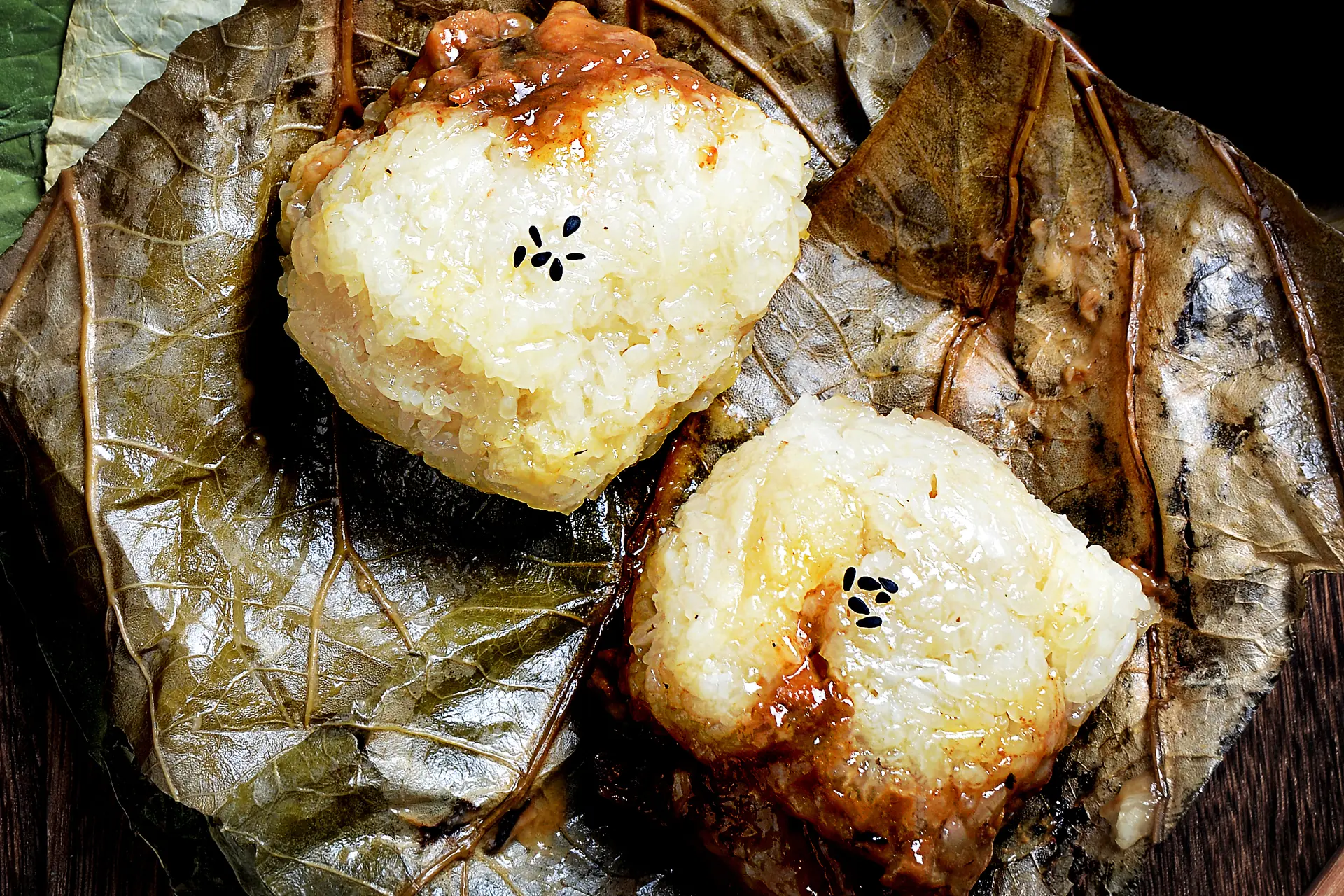
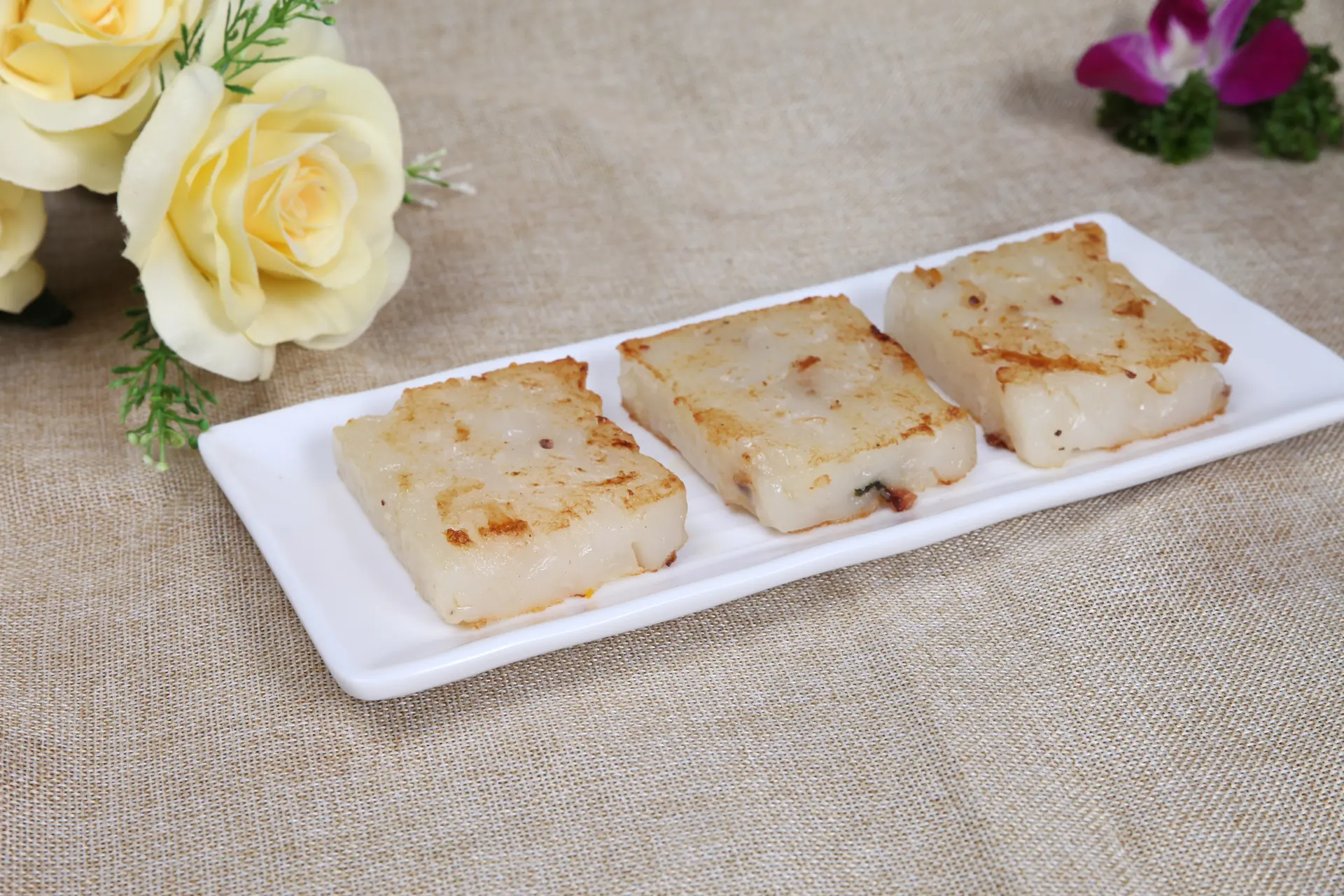
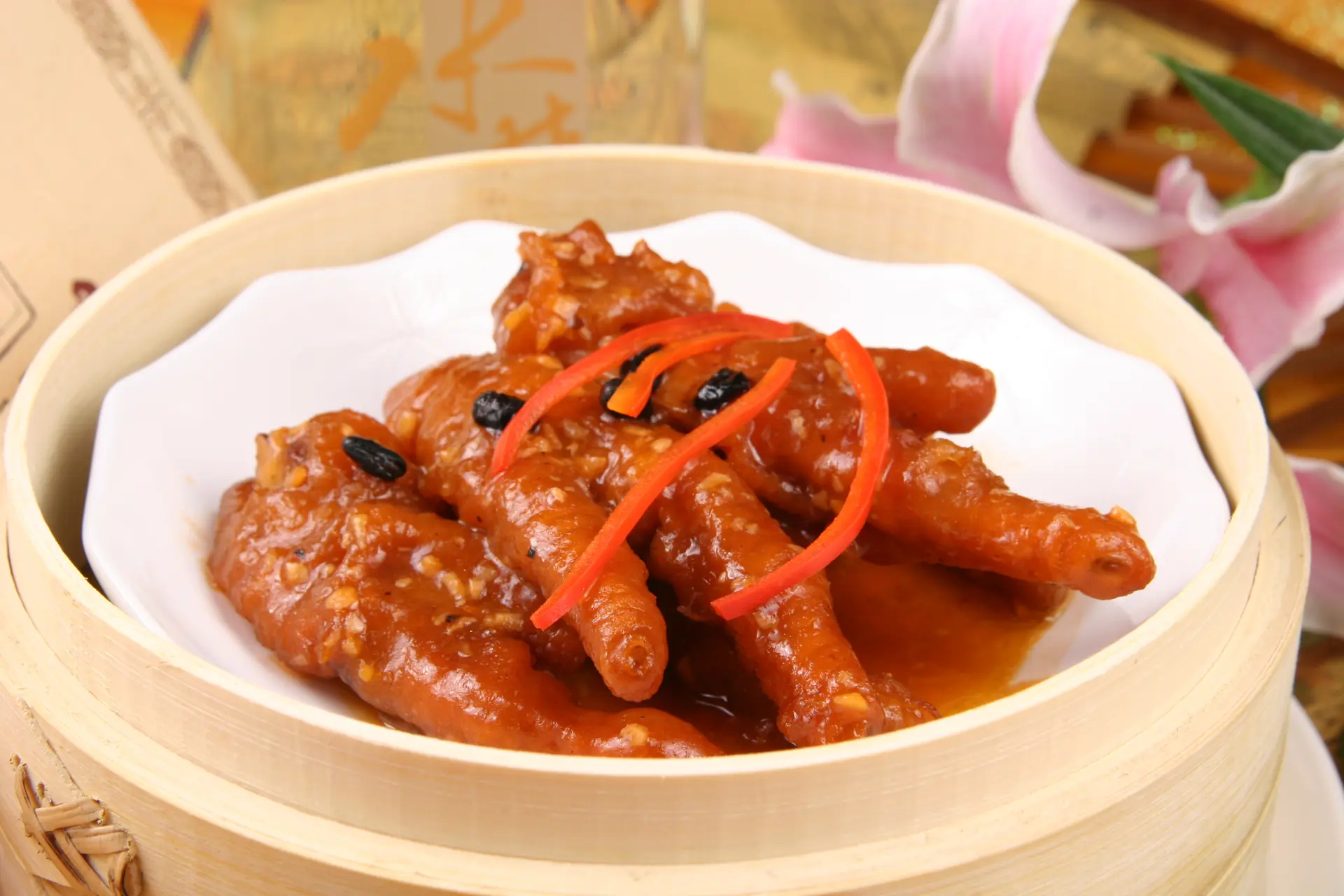
The most useful rule: order one benchmark dumpling, one pork or meat item, one rice-sheet or rice item, one fried or pan-fried item, one vegetable if available, and one sweet finish. This gives the table rhythm without turning the meal into a starch wall.
- Choose tea- Pu'er is the safest first order if you are unsure.
- Order four classics- Shrimp dumplings, siu mai, rice noodle rolls, and barbecue pork buns.
- Add texture- Turnip cake, spring rolls, taro puffs, or another pan-fried item.
- Add weight only if needed- Sticky rice, congee, noodles, or larger Cantonese dishes.
- Finish sweet- Egg tarts, steamed sponge cake, sesame balls, or double-skin milk.
Steamed, Fried, Baked, and Sweet Dishes
Dim sum menus become less intimidating when you read by technique.
Steamed Items
Steamed items show wrapper skill and timing. This is where shrimp dumplings, siu mai, beef balls, chicken feet, steamed ribs, and many dumplings live. They are essential, but too many steamed baskets can make the meal feel repetitive.
Fried and Pan-Fried Items
Fried and pan-fried items add aroma and crunch: turnip cake, spring rolls, taro puffs, glutinous fried dumplings, and crispy shrimp rolls. Order one or two, not half the table.
Buns and Baked Items
Buns and baked items are filling. Barbecue pork buns, barbecue pork pastries, custard buns, pineapple-topped buns, and baked puffs can be delicious, but they close stomach space quickly.
Sweet Dishes
Sweet dishes belong at the end. Egg tarts, steamed sponge cake (马拉糕), sesame balls (芝麻球), double-skin milk pudding (双皮奶), and coconut jelly are better after the savory table has done its work.
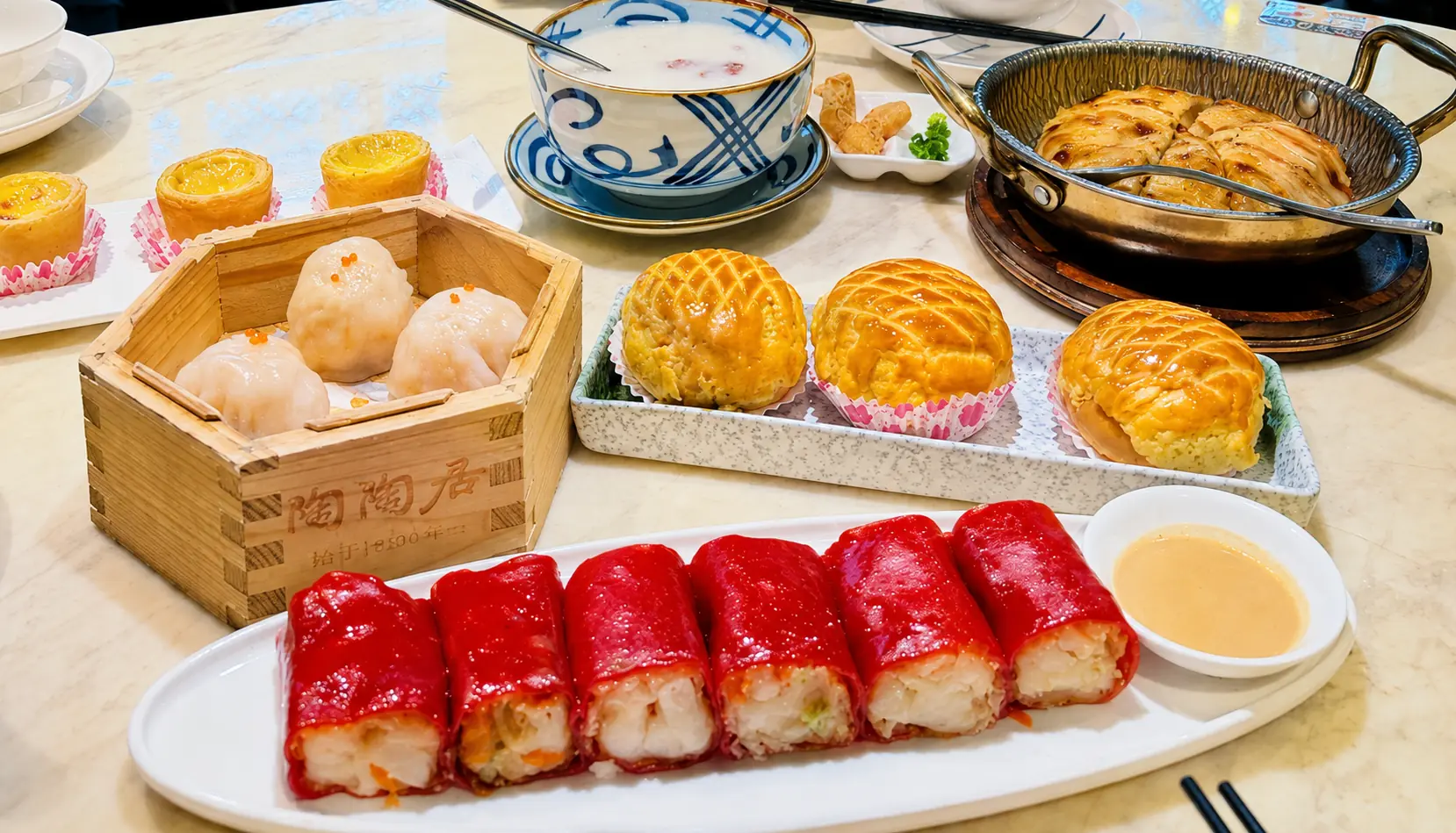
Sweet dim sum works best after the savory table has done its job.
Do not let the menu trick you into all-starch ordering
Buns, sticky rice, turnip cake, rice rolls, and egg tarts can all be excellent, but together they become heavy fast. Add at least one dumpling, one vegetable or lighter item, and enough tea.
Guangzhou, Hong Kong, and Macau Styles
The same Cantonese morning-tea idea feels different across the Greater Bay Area. Use the city to choose your pace, not just your restaurant name.
Guangzhou
Deepest morning-tea context
Best for old-brand teahouses, Liwan and Xiguan walks, neighborhood family crowds, and the clearest sense that yum cha is local tea culture as well as food.
Hong Kong
Easiest first-timer logistics
Best for bilingual signs, compact routes, faster turnover, and a wide range from old-school teahouses to casual dim sum shops. The trade-off is speed.
Macau
Useful side note, not the main stage
Best as contrast on a broader food trip. Cantonese dim sum exists, but the stronger story often mixes it with Portuguese egg tarts, Macanese dishes, hotels, and old-town snacks.
If your trip includes all three cities, use Guangzhou for depth, Hong Kong for accessibility, and Macau for contrast.
Where to Try Yum Cha in South China
Use these as practical starting points, not eternal rankings. Restaurant hours, queues, branch quality, and service style can change, so check current maps before you go.
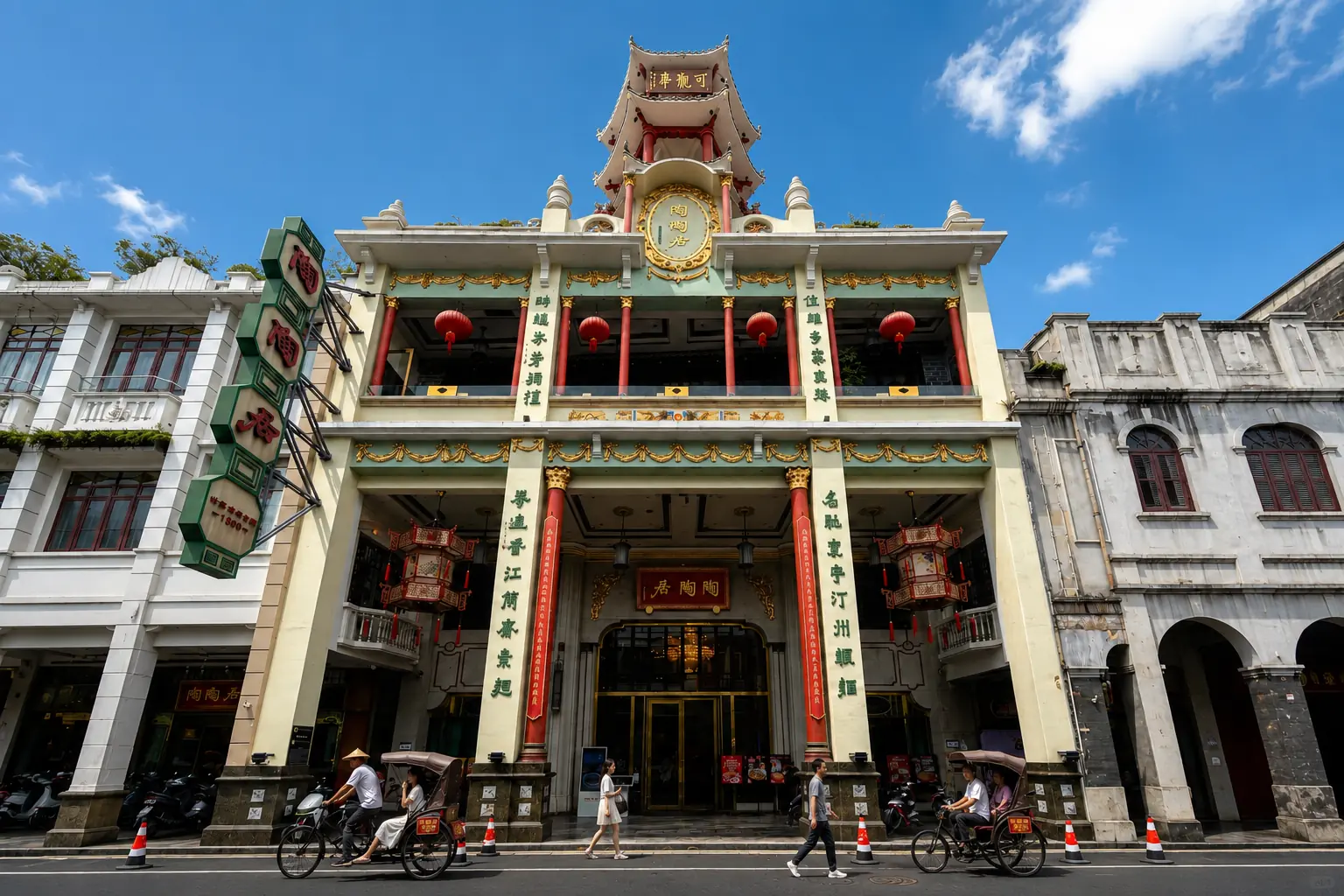
A Guangzhou state-owned enterprise source traces the brand to 1880, and the Dishifu Road flagship gives the meal an old Xiguan setting. Go early if you want atmosphere without losing the whole morning to waiting.
Guangzhou Restaurant dates to 1935 according to official Guangzhou government information. It is useful when you want broad menu coverage, reliable service, and a more formal dining-room feel.
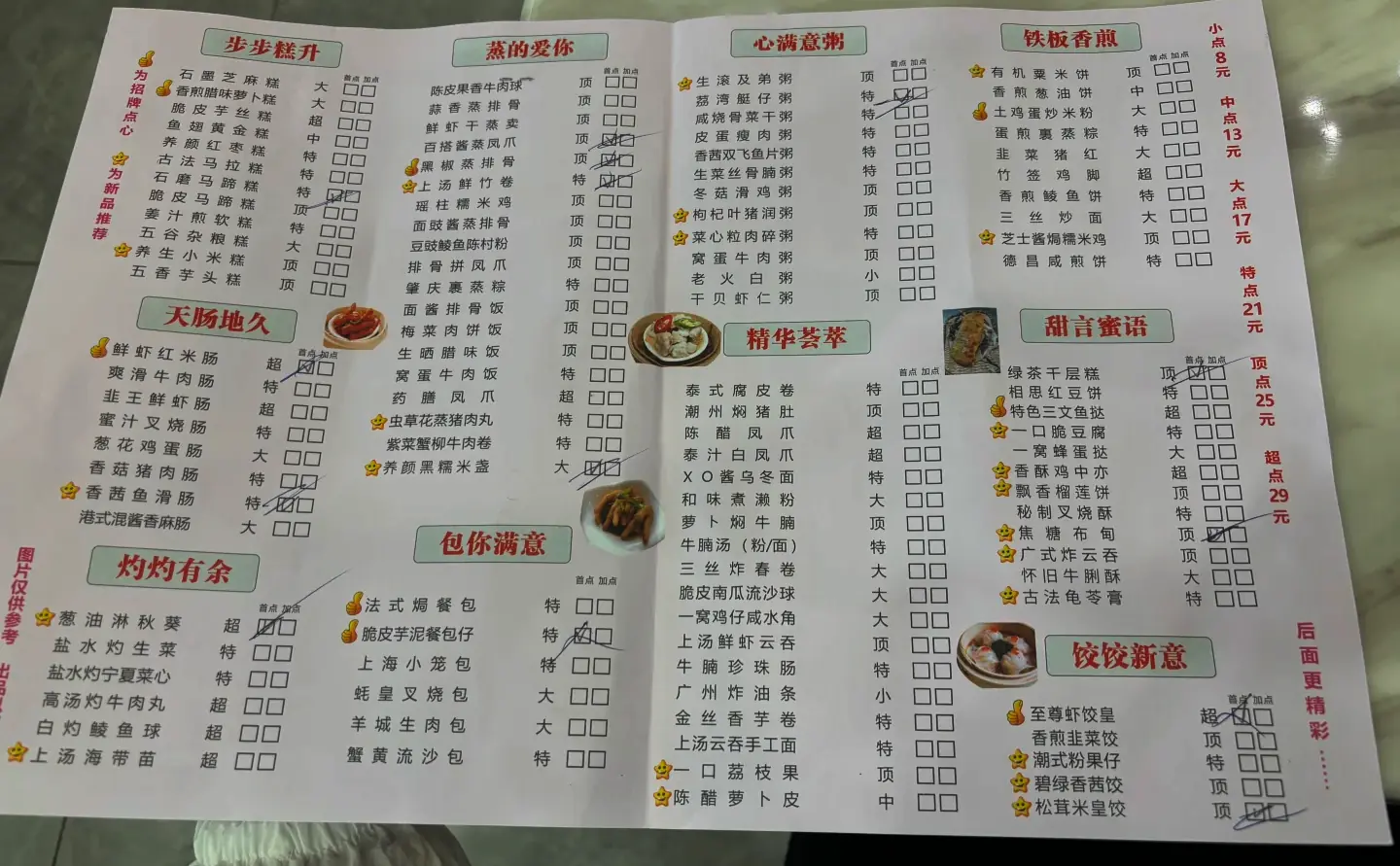
Dian Du De is less historic than Tao Tao Ju or Guangzhou Restaurant, but branch choice, photo menus, and traveler-friendly ordering can make the meal less stressful.

Panxi Restaurant sits beside Liwan Lake and dates to 1947 in Guangzhou municipal place-name records. Choose it when the setting matters: garden-style dining, old Liwan atmosphere, and a natural pairing with Xiguan walks.
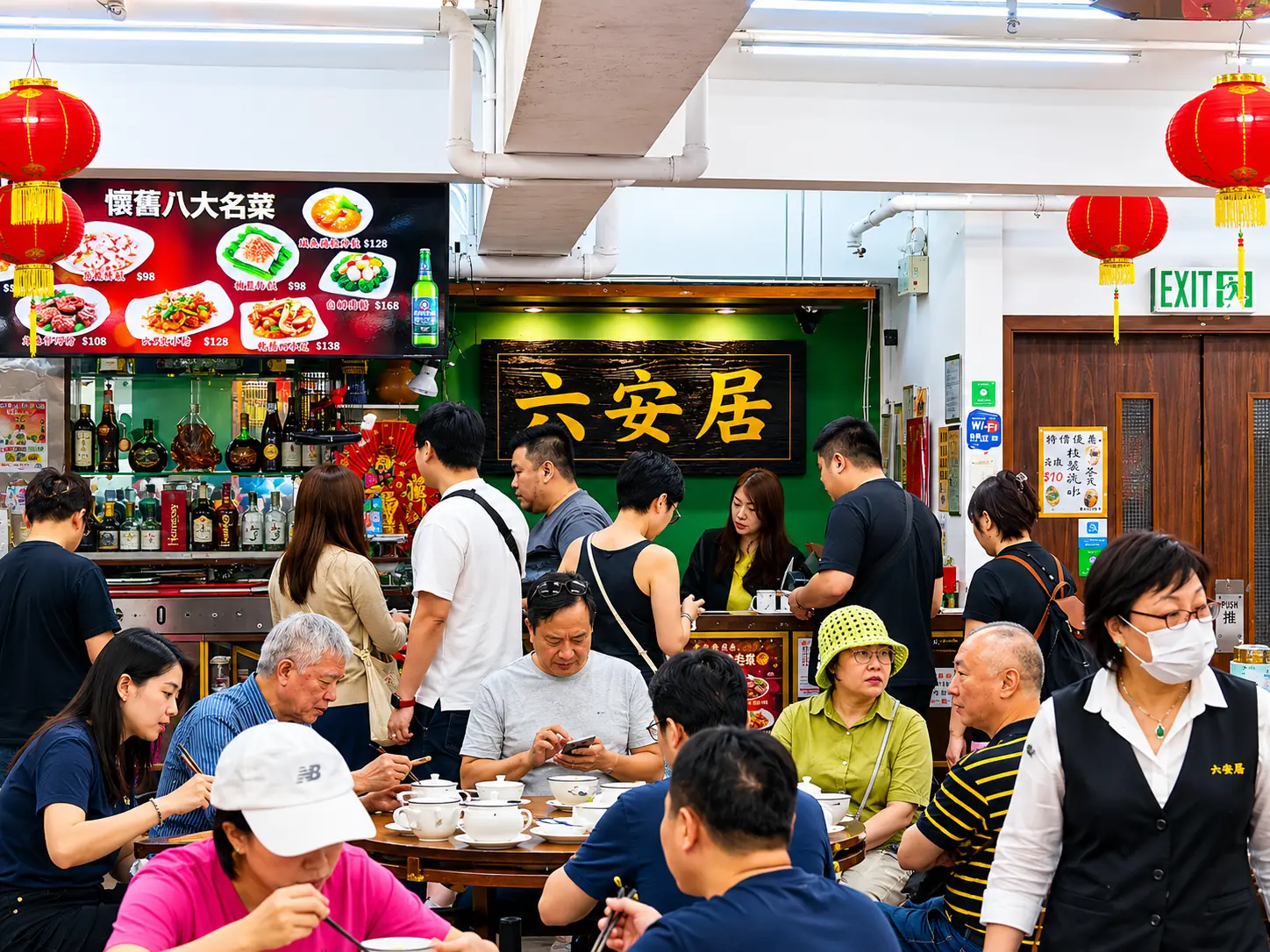
Luk On Kui is connected in many traveler memories with the former Lin Heung Kui name. Because historic Hong Kong teahouses can close, move, rename, or change service style, check current listings before building your day around it.
One Dim Sum is useful when you want a straightforward dim sum meal without committing to a grand teahouse. It works well for Prince Edward or Kowloon-side routes.
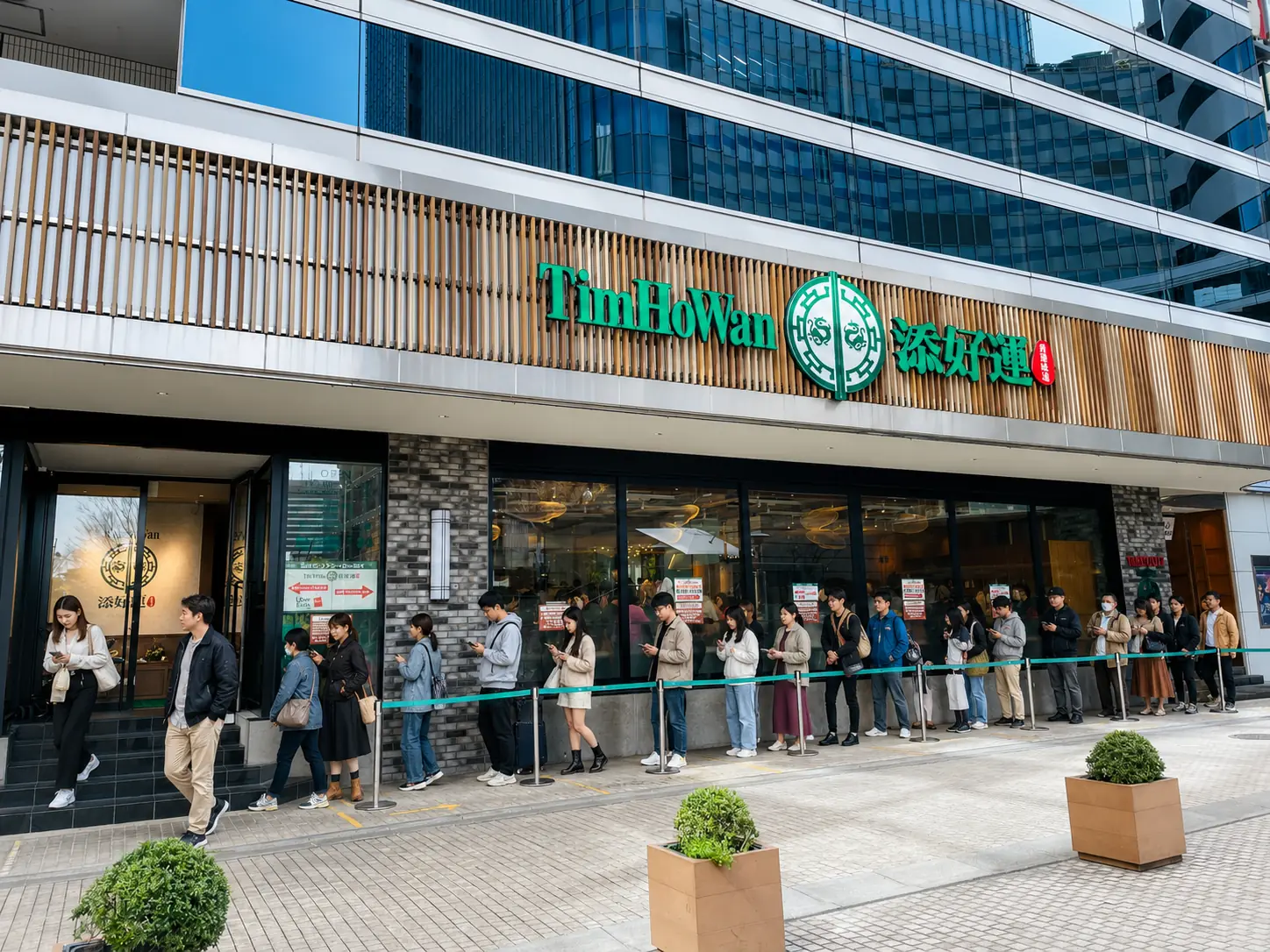
Tim Ho Wan is famous as an affordable Hong Kong-born dim sum name. Its Sham Shui Po store received a Bib Gourmand distinction in the 2026 Michelin Guide, which is recognition for value rather than a current Michelin star. The branch pairs well with a market or neighborhood walk.
Ordering, Bills, and Teahouse Etiquette Tips
Ordering systems vary, and none are hard once you know what you are seeing.
| System | How It Works | Best Move |
|---|---|---|
| Push cart | Staff roll carts with baskets and plates | Stop the cart, look, point, and confirm |
| Tick sheet | You mark items and quantities on paper | Use the dish list in this guide first |
| QR code | You scan and order from a phone menu | Use photos and translate screenshots |
| Verbal order | Staff take dishes at the table | Show Chinese names if pronunciation fails |
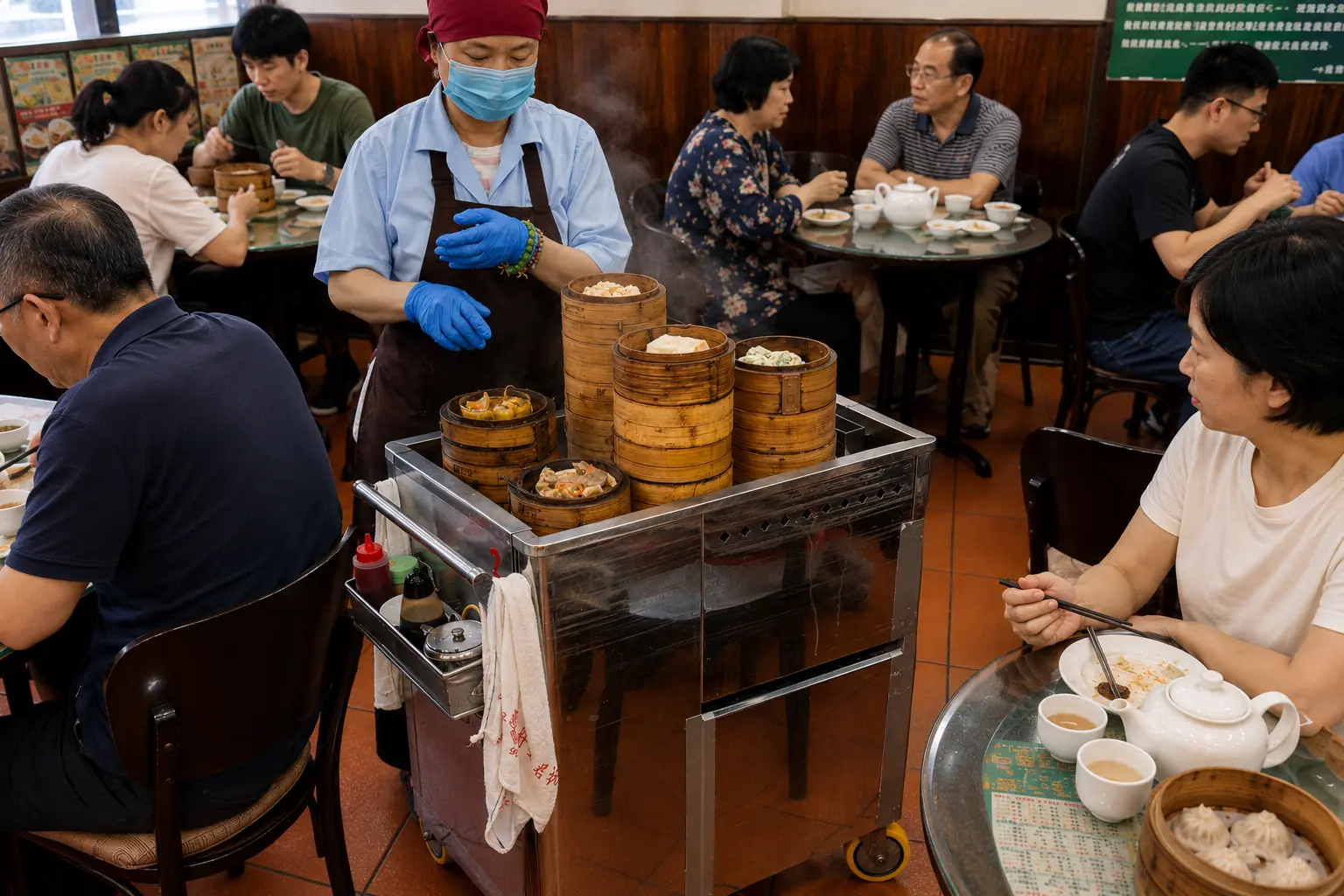
Check the bill for tea cover, service charge, napkins, small table snacks, takeaway boxes, or per-person fees. None of these automatically means you are being cheated, but you should know what you are paying for.
| English | Chinese | Pinyin | Say It Like… |
|---|---|---|---|
| I would like a pot of pu'er tea. | 我要一壶普洱茶。 | wo yao yi hu pu'er cha | woh yow ee hoo poo-er cha |
| Does this have pork? | 这个有猪肉吗? | zhe ge you zhu rou ma | juh guh yo jo ro ma |
| Does this have shrimp? | 这个有虾吗? | zhe ge you xia ma | juh guh yo shya ma |
| We will order these first. | 我们先点这些。 | wo men xian dian zhe xie | woh mun shyen dyen juh shyeh |
| Could you add hot water? | 可以加水吗? | ke yi jia shui ma | kuh ee jya shway ma |
| Please pack this to go. | 请打包。 | qing da bao | ching da bow |
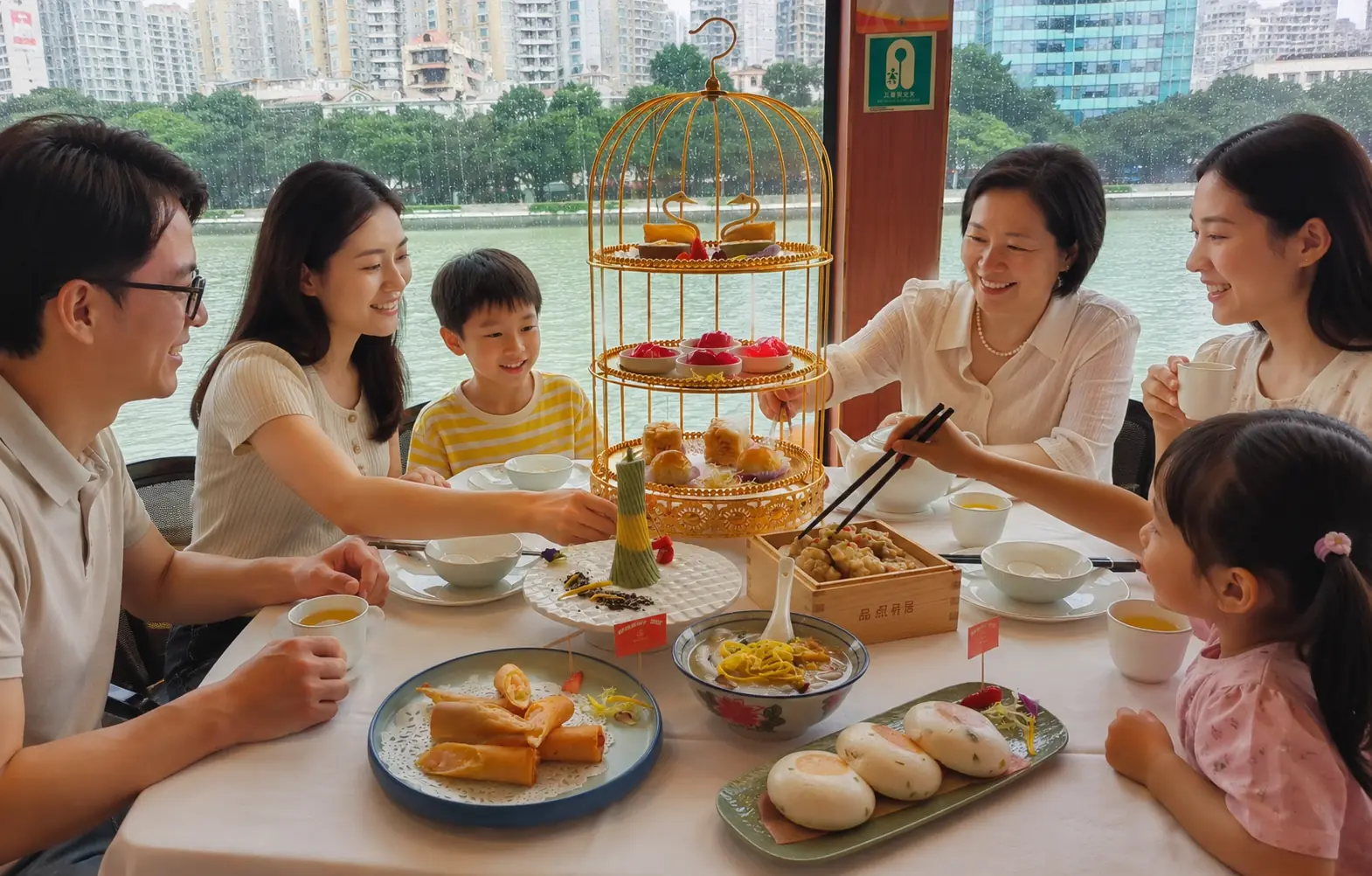
Yum cha makes most sense when plates are shared instead of guarded individually.
Pointing is completely acceptable
In Hong Kong, Cantonese is the main local language. In Guangzhou, Mandarin works well for visitors. In both places, pointing at Chinese names or photos is normal and often clearer than forcing pronunciation.
Dietary Notes for Dim Sum Allergies
Dim sum is not simple for strict diets. Many dishes hide pork, shrimp, lard, wheat, egg, dairy, sesame, peanuts, oyster sauce, or seafood stock.
Serious allergies need written Chinese
If an allergy is severe, prepare a written Chinese allergy card and confirm with staff. Do not rely on English dish names, photos, or assumptions about a filling.
| Diet or Allergy | Common Risk Areas | Traveler Move |
|---|---|---|
| No pork | Siu mai, barbecue pork buns, sticky rice with sausage, pastries, pork-lard crusts, and some broths | Ask directly about pork and lard, not only visible meat |
| Shellfish allergy | Shrimp dumplings, siu mai, shrimp rice rolls, XO sauce, crab roe toppings, and seafood-stock sauces | Avoid mixed dumplings unless staff can confirm every filling |
| Vegetarian | Lard, oyster sauce, shrimp paste, dried shrimp, chicken stock, and meat broth | Do not assume vegetable dumplings are vegetarian |
| Gluten or wheat | Soy sauce, wrappers, buns, pastries, fried coatings, and many sauces | Use a written allergy card and keep choices simple |
| Egg or dairy | Egg tarts, custard buns, sponge cakes, milk puddings, and some baked crusts | Watch both desserts and pastry dough |
| Sesame or peanut | Dessert fillings, dipping sauces, fried items, and shared kitchen surfaces | Ask about fillings and cross-contact before ordering sweets |
- Use Chinese dish names and allergy cards.
- Choose plain steamed greens, rice, or congee only after confirming broth and sauce.
- Do not assume vegetable dumplings are vegetarian.
- Do not assume dim sum is safe for halal or kosher diets.
Frequently Asked Questions
No. Dumplings are one part of dim sum, but dim sum also includes rice rolls, buns, cakes, fried pastries, chicken feet, ribs, sticky rice, congee, and sweets.
Beyond This Guide
Use this page as your yum cha playbook inside the broader Chinese tea-culture thread. For nearby tea experiences, continue with the Gongfu Tea Ceremony Guide, Chengdu Teahouse Guide, and Hangzhou Teahouse Guide. For the wider food map, use the Guangzhou food guide, Hong Kong food guide, and Macau food guide.
For a single-ingredient deep dive, read the char siu guide before ordering barbecue pork buns, barbecue pork pastries, or roast-meat rice.
© gochinafreely.com — Original guide by Go China Freely.