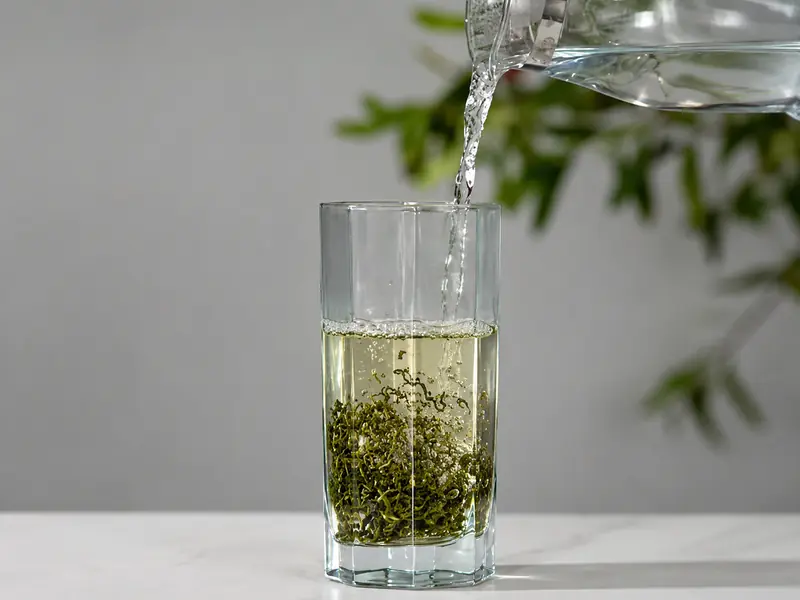
Chinese green tea is easy for travelers to underestimate. It can look pale, restaurant menus may simply say "green tea," and the best cups rarely shout for attention. But a good Longjing or Biluochun cup can make Hangzhou's tea hills and Suzhou's Taihu Lake spring feel surprisingly clear, even if you are not trying to become a tea expert.
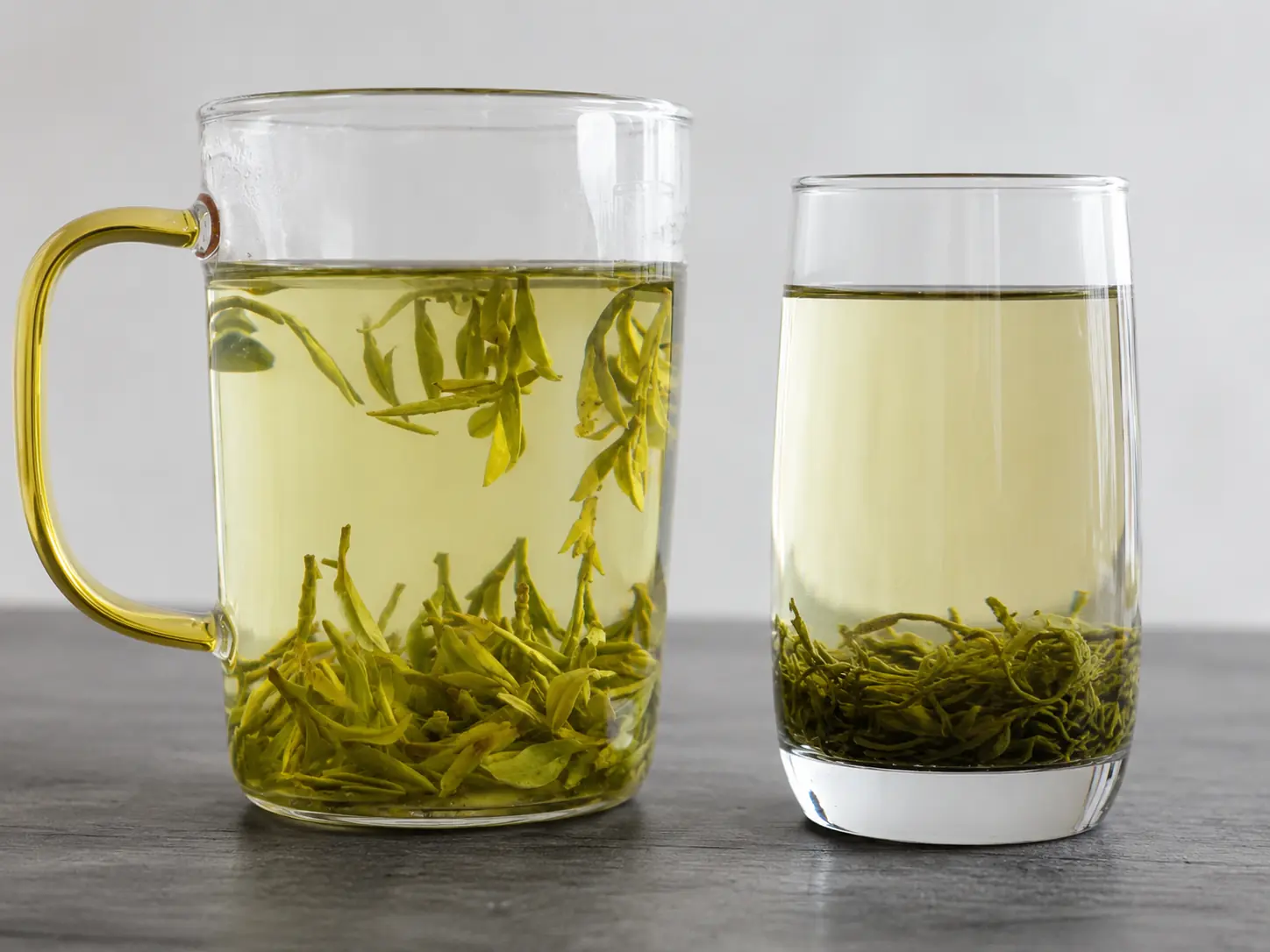
Executive Summary
What this guide covers
How Longjing and Biluochun taste, what green tea means on menus, where to drink them in Hangzhou and Suzhou, and how to buy small amounts without pressure.
Best first choice
Drink Longjing in Hangzhou and Biluochun in Suzhou. That gives each tea its proper place context before you compare leaves and prices.
Main traveler trap
A teahouse cup, a restaurant house tea, and a tea-shop tasting are different situations. Know which one you are in before ordering or buying.
Longjing
Flat leaves
Biluochun
Curled leaves
80-85 C
Easy brew range
50-100 g
First buy
Two Famous Green Teas, Two Travel Moods
Longjing tea, also called Dragon Well tea (龙井茶), and Biluochun tea (碧螺春) are two of China's most famous green teas, but they do not give the same travel feeling. Longjing feels more like Hangzhou (杭州): clean, steady, lightly toasted, with a chestnut or roasted-bean note when it is good. Biluochun feels more like spring around Suzhou (苏州): curled, delicate, floral, fruity, and softer on the first sip.
If you want to understand only two Chinese green teas on a first trip, start here. Both are unoxidized green teas, both are associated with spring, and both can be brewed simply in a glass cup. The difference is what they teach you: Longjing shows the pleasure of clarity and pan-fired aroma; Biluochun shows how gentle green tea can carry a flower-and-fruit fragrance without being scented.
The place context matters. Longjing makes the most sense around West Lake (西湖), Longjing Village (龙井村), Meijiawu (梅家坞), and the China National Tea Museum (中国茶叶博物馆). Biluochun makes more sense around Suzhou's Taihu Lake (太湖) side, especially Dongshan (东山) and Xishan/Jinting (西山/金庭), or in a Suzhou old-town teahouse where the tea fits the city's slower rhythm.
When Menus Just Say Green Tea
For foreign travelers, "green tea" can mean several different things in China. It may be a loose-leaf cup in a teahouse, a free or low-cost house tea in a restaurant, a bottled drink from a convenience store, or a tasting in a shop that mainly wants to sell leaves. The same English phrase does not promise the same experience.
| Setting | What "Green Tea" Usually Means | Best Traveler Move |
|---|---|---|
| Restaurant | House tea, sometimes generic and not named | Accept it as a meal drink; ask for Longjing only if the menu lists it. |
| Teahouse | A named tea ordered by pot, cup, or person | Choose by name and check whether there is a per-person tea charge. |
| Tea shop | A tasting that may lead to a purchase | Taste politely, ask price per 50 grams, and decide before gift boxes appear. |
| Convenience store | Bottled tea, sometimes sweetened | Check the label. 无糖 means unsweetened; 低糖 means low sugar. |
Do not over-read a free cup
If a restaurant gives you a plain green tea cup without a tea name, treat it like table water with flavor. It may be pleasant, but it is not a serious Longjing or Biluochun tasting.
Longjing: Toasted Flat Leaves, Clear Cup
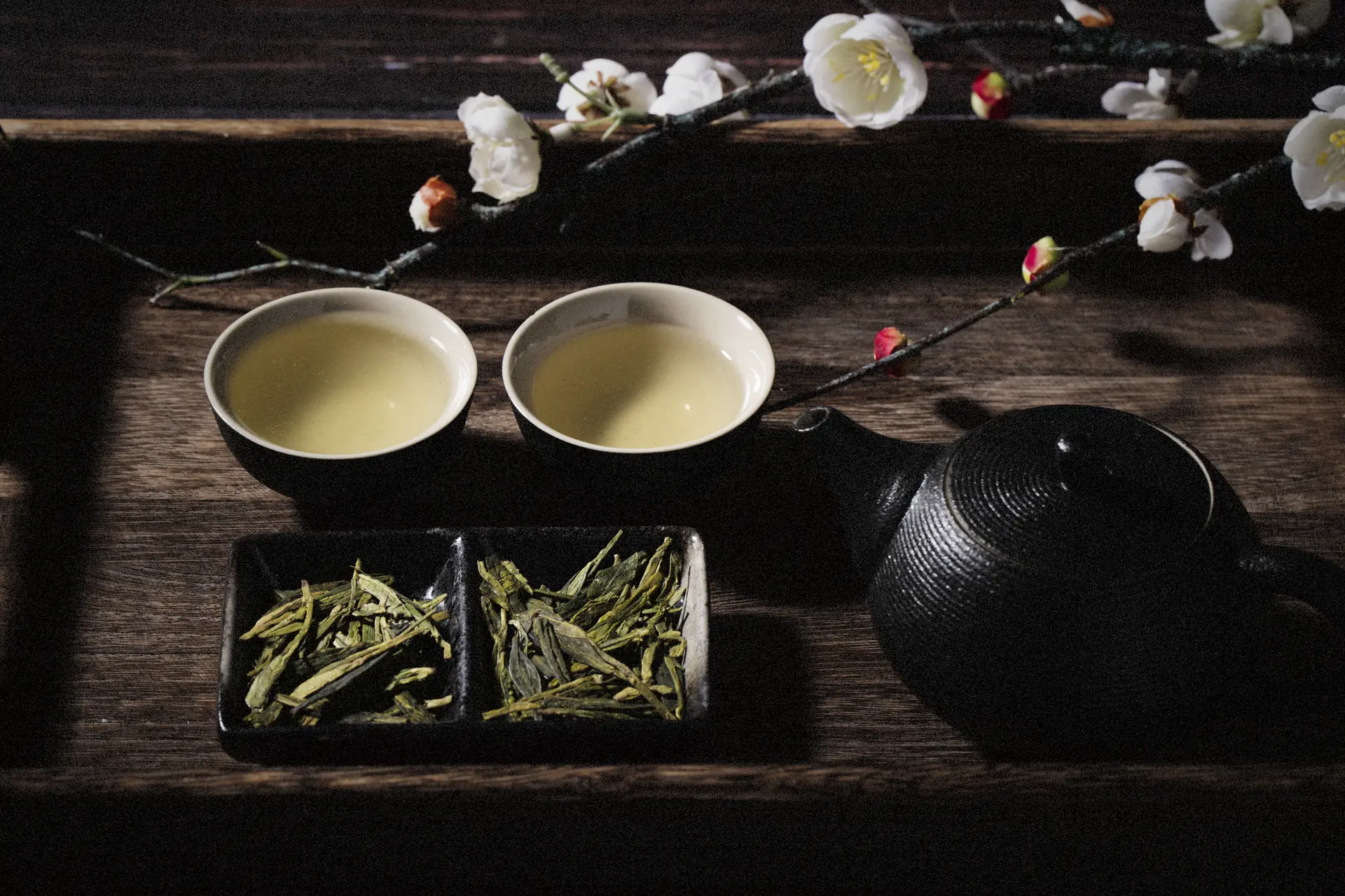
Longjing is easiest to recognize by the leaf shape. Good dry leaves are usually flat, smooth, and green to yellow-green rather than dark, wiry, or tightly curled. In the cup, the flavor should feel clean and gentle: light roasted bean, chestnut, fresh grass, and a sweet finish if the tea is well handled.
Hangzhou's official English tourism information describes West Lake Longjing as Dragon Well tea and connects it with the city's spring harvest. A 2025 Hangzhou report said West Lake Longjing officially started picking around the Spring Equinox, while a 2026 Zhejiang report said the first batch was harvested on March 17 in the Wengjiashan protected area. Treat these as dated examples, not a permanent calendar. For travelers, the safe rule is: mid-March to April is the core spring-tea window, and weather shifts the exact start each year.
Do not judge Longjing by bright green color alone. Some excellent Longjing looks more tender yellow-green than neon green. A cup that smells artificial, turns sharply bitter, or tastes like generic hot grass is not the Longjing experience you came for.
Best first Longjing cup
Do not start with the most expensive pre-Qingming tea. First drink a clear mid-range Longjing in Hangzhou, remember the flat leaf shape and gentle roasted aroma, then decide whether buying leaves makes sense for you.
Hangzhou Longjing Stops (Google | Amap) (Google | Amap) (Google | Amap)
Biluochun: Curled Leaves and Floral Softness
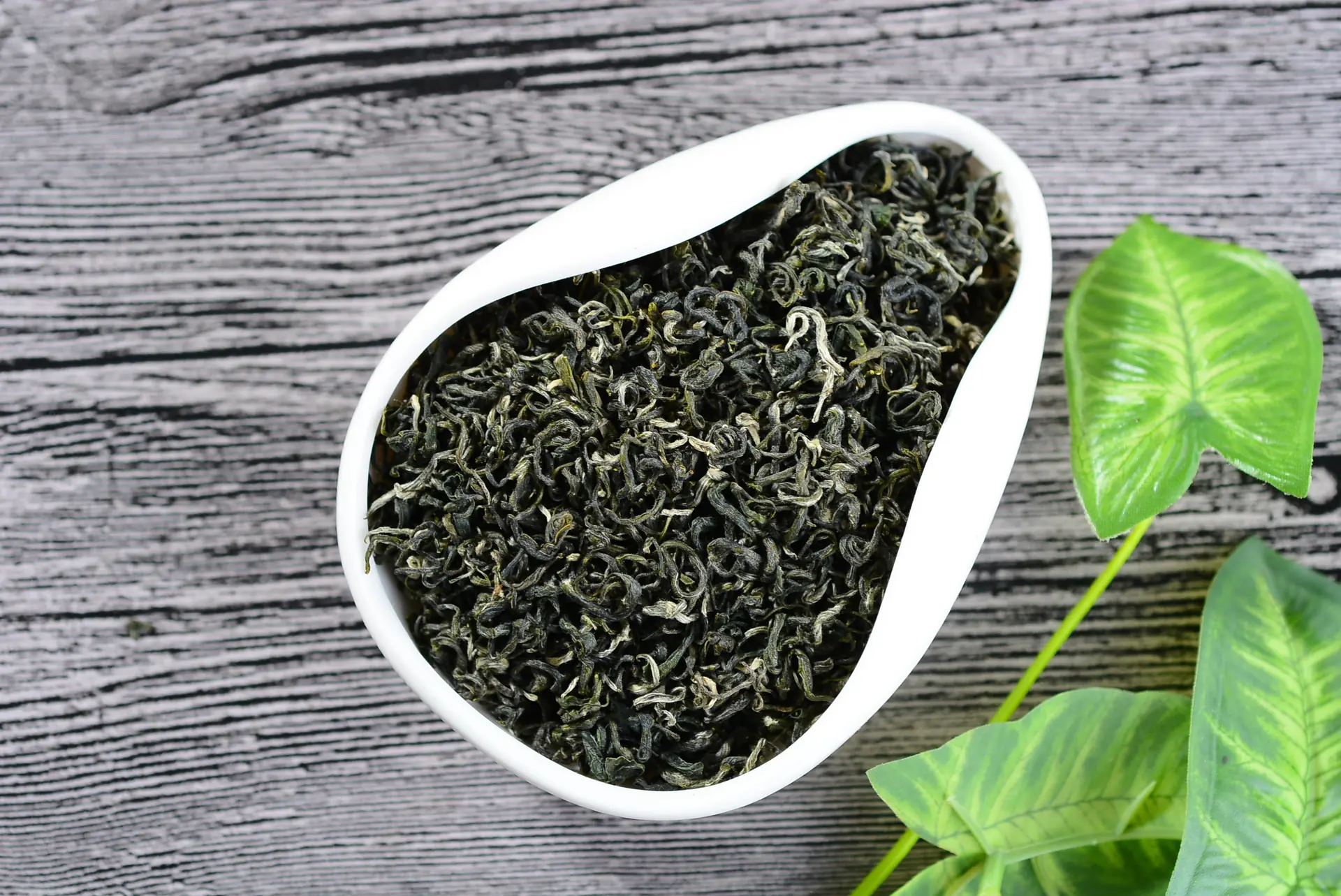
Biluochun has a very different visual clue: the leaves are fine, curled like tiny spirals, and often show pale fuzz from tender buds. The name points to that identity: green color, snail-like curl, and spring. The Suzhou municipal government describes Dongting Biluochun from Wuzhong District as one of China's top famous tea brands, with a long tea-growing history around Jinting, tender spring buds, and fruity aroma from tea trees planted near loquat and waxberry trees.
If Longjing is a clear cup with a toasted edge, Biluochun is a softer spring cup with more obvious fragrance. That makes it friendly for beginners, but it is also more sensitive to water temperature. Very hot water and long steeping can turn its tenderness into bitterness.
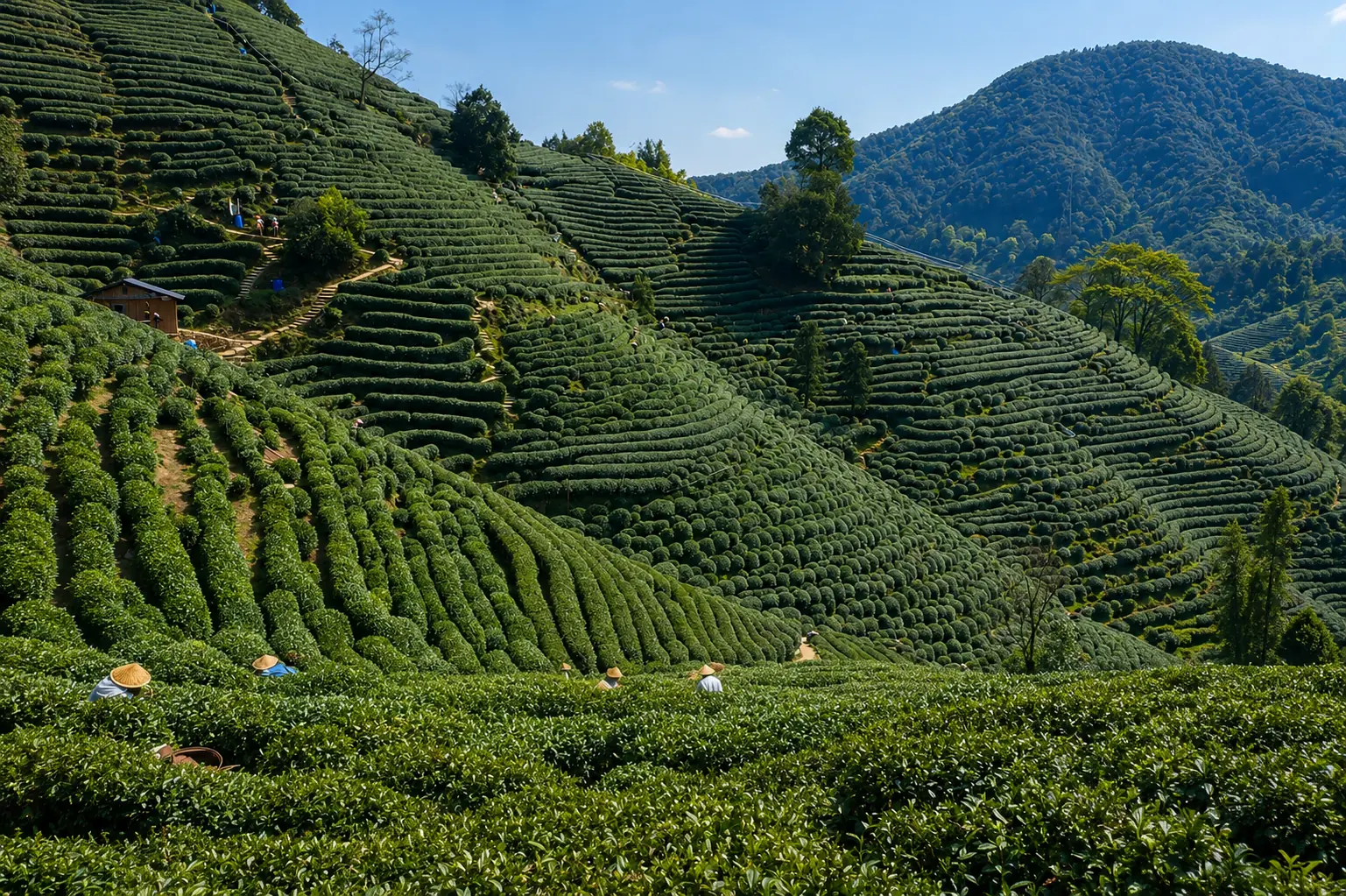
The most common traveler mistake is confusing Dongting Biluochun with Hunan's Dongting Lake. For this tea, "Dongting" refers to Suzhou's Taihu Lake tea geography, especially the Dongshan and Xishan areas. A Suzhou government page on Dongshan Town calls Dongshan a hometown of Biluochun tea and notes the area's geographical-origin status for Dongting Biluochun.
The garden setting is not just scenery. Tea trees around Dongshan and Xishan/Jinting often grow near fruit trees, which is why good Biluochun is so often described through soft floral and fruity spring notes rather than roasted depth.
Longjing vs Biluochun at a Glance
Do not ask which one is "better" in the abstract. Ask where you are, what aroma you like, and whether you are drinking for experience, meal pairing, or a souvenir.
| Choice | Longjing | Biluochun |
|---|---|---|
| Best city context | Hangzhou, especially West Lake tea hills | Suzhou, especially Taihu Lake and old-town teahouses |
| Leaf look | Flat, smooth, spear-like leaves | Fine, curled, spiral leaves with tender fuzz |
| Aroma | Roasted bean, chestnut, clean green notes | Floral, fruity, tender spring notes |
| Beginner appeal | Very approachable, though some people find it subtle | Very approachable because the fragrance is easier to notice |
| Buying risk | Famous name, high price gap, many lookalikes | Origin confusion, gift-box markup, fragile freshness |
If you are in Hangzhou, drink Longjing first. If you are in Suzhou, drink Biluochun first. If you are sitting in a general restaurant and just want tea with food, choose the tea that is clearly priced, freshly made, and easy to explain.
Decision shortcut
Which green tea should I order?
I am in Hangzhou
Order Longjing or West Lake Longjing if the menu gives clear names and prices.
I am in Suzhou
Order Biluochun, especially in an old-town teahouse or after a garden walk.
I dislike bitterness
Ask for lighter tea, use cooler water, and choose Biluochun or a mild Longjing rather than strong house tea.
I want a souvenir
Taste first, then buy 50-100 grams of loose tea instead of a large gift box.
How to Brew Green Tea While Traveling
You do not need a full tea ceremony to enjoy either tea. A clean glass, mug, or hotel cup can work. The important rule is simple: do not pour freshly boiling water over tender green tea and leave it trapped for a long time.
Water temperature
Aim for about 80-85 C. If you have only a kettle, wait 2-3 minutes after boiling.
Leaf amount
Start with a small pinch. Biluochun is delicate, and too many leaves turn the cup sharp fast.
Taste early
Try the first cup after 1-2 minutes, then adjust. Cooler water fixes bitterness better than adding sugar or waiting longer.
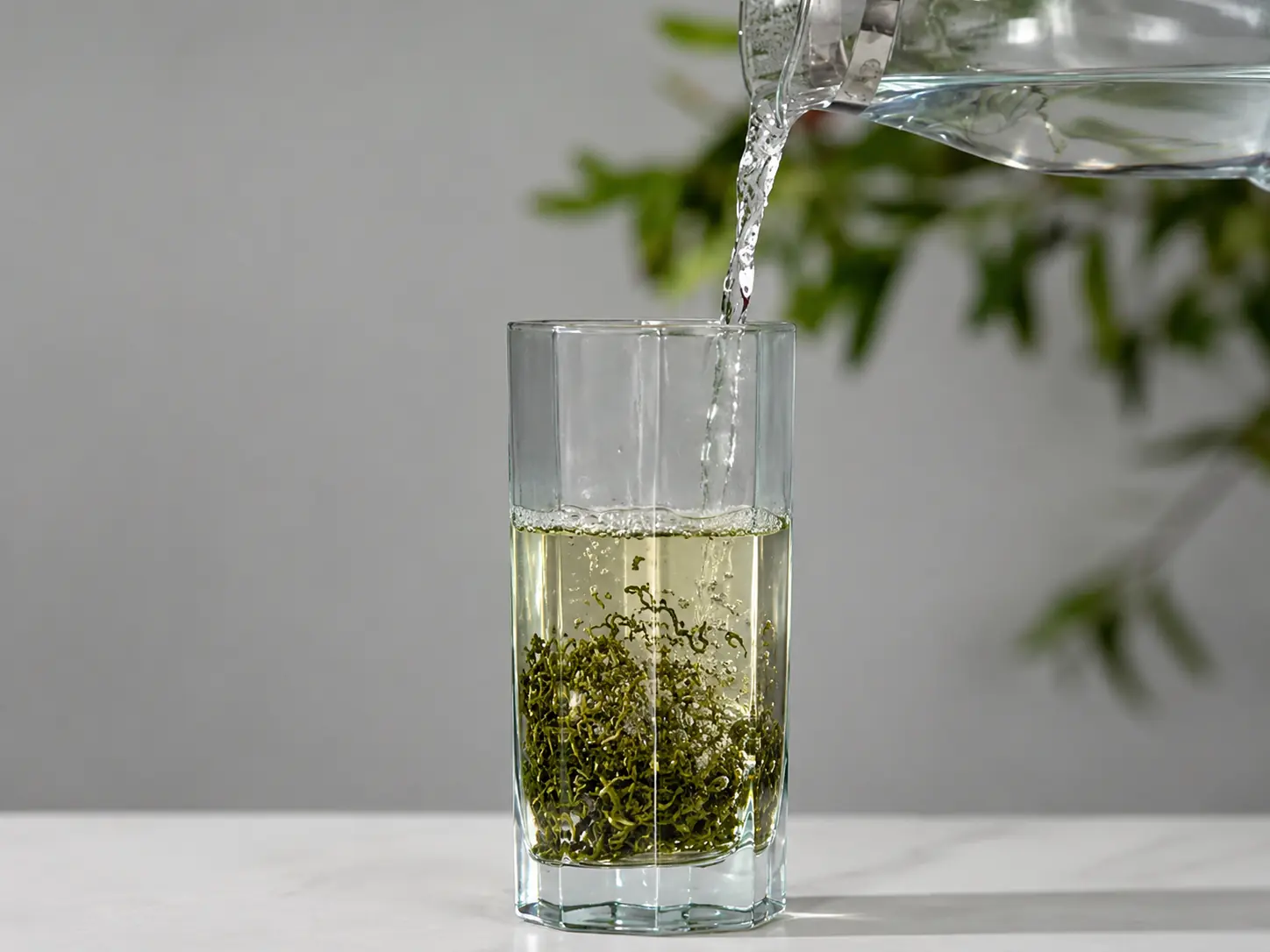
- Let boiled water cool- Aim for about 80-85 C. Without a thermometer, open the kettle and wait 2-3 minutes.
- Use fewer leaves first- A small pinch is safer than a packed cup, especially with tender Biluochun.
- Add water before leaves- This gentle travel method works well for fine green teas and reduces harshness.
- Taste early- Try the first cup after 1-2 minutes before it turns too strong.
- Adjust slowly- If it is bitter, use cooler water or fewer leaves. If it is weak, wait 30 seconds before adding more tea.
Longjing can be a little more forgiving. Biluochun is more delicate. This simplified "water first, tea second" method is not the only correct way to brew green tea, but it works well when you have a hotel kettle, no thermometer, and a cup you do not want to ruin with bitterness.
Thermos cups can ruin green tea
If you use a thermos, do not trap the leaves in hot water for hours. Brew a light cup, drink or pour it out, then refill. Long steeping makes both Longjing and Biluochun bitter.
Where to Drink Them in China
Hangzhou Longjing Hills
Longjing Village, Meijiawu, Tea Museum
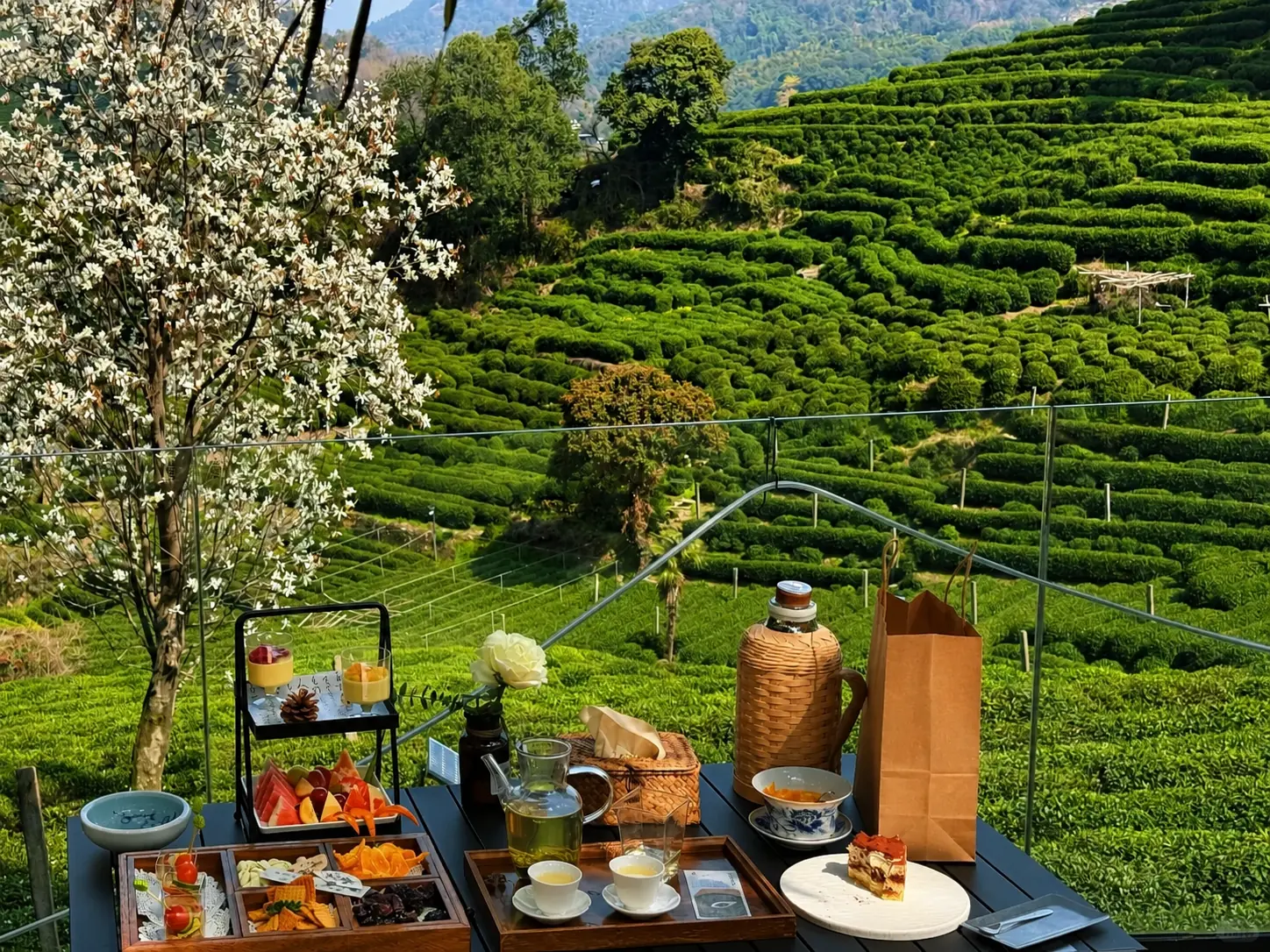
In Hangzhou, the easiest Longjing route is west of West Lake. Longjing Village is the simplest first stop, Meijiawu is better for sitting down over tea and a farm-style meal, and the China National Tea Museum is the best low-pressure choice if you want tea context before shopping.
Suzhou Old-Town Teahouses
Pingtan, gardens, and Taihu context
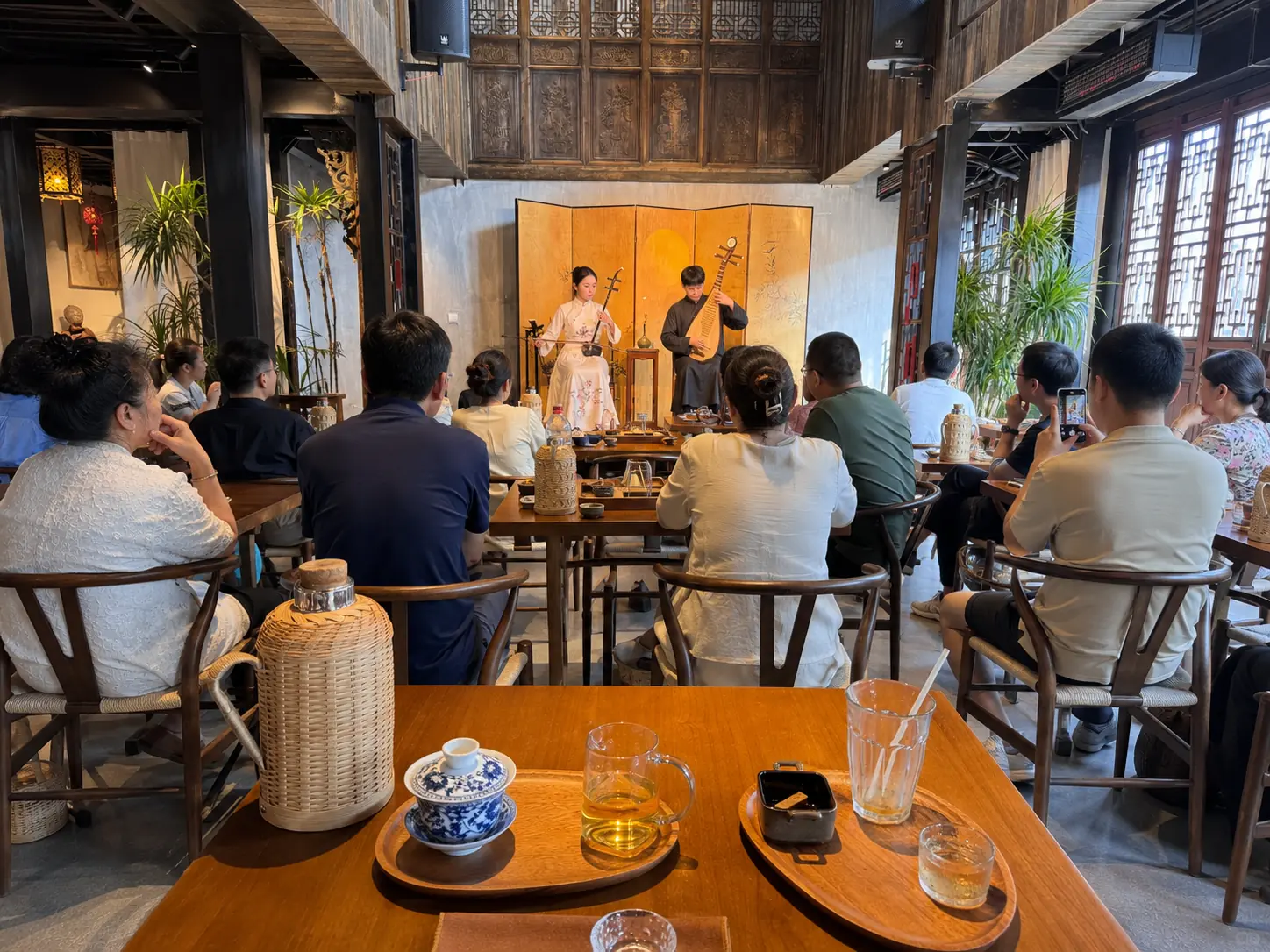
In Suzhou, the easiest Biluochun moment is often an old-town teahouse rather than a full tea-country excursion. Drink it along Pingjiang Road, in a performance teahouse, or after a garden walk when you want the city to slow down.
The museum's official English introduction says its Shuangfeng site is at 88 Longjing Road and its Longjing site is at 268 Wengjiashan, with exhibitions and public education focused on tea culture. If your Suzhou route already goes toward Taihu Lake, Dongshan or Xishan/Jinting gives Biluochun stronger origin context.
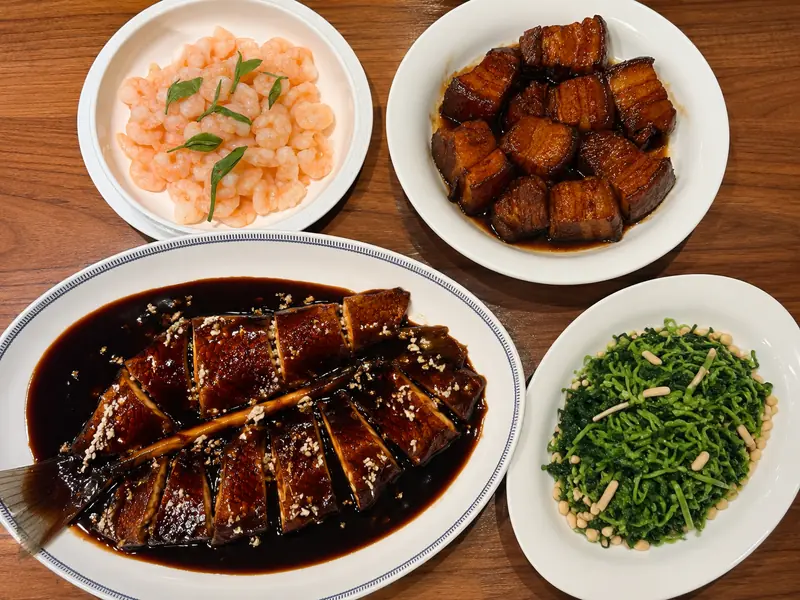
Ordinary restaurants may also serve green tea, but do not assume the house "green tea" is Longjing or Biluochun. In Hangzhou, Longjing can also appear through dishes such as Longjing Shrimp (龙井虾仁). In Cantonese yum cha (饮茶), some teahouses offer Longjing alongside pu'er tea (普洱茶), tieguanyin oolong tea (铁观音), chrysanthemum tea (菊花茶), and jasmine tea (茉莉花茶), but the local table rhythm matters more than chasing one tea name.
For first-timers, the best tea stop is often the one that fits your route naturally. A 30-minute cup after Lingyin Temple (灵隐寺), a slow pot after a Suzhou garden, or a museum visit before shopping will usually beat a long detour to a famous-sounding tea shop.
How to Buy Green Tea Without Overpaying
Longjing and Biluochun are famous enough to attract confusing labels, inflated gift boxes, and pressure sales. You do not need to become a tea inspector, but you do need a few defensive habits.
Read the origin wording
West Lake Longjing is a tighter promise than generic Longjing. Dongting Biluochun should point to the Suzhou Taihu Lake origin area.
Buy from calmer places
Museum shops, established tea stores, clearly priced teahouses, and small producers you tasted with are safer than pressure pitches.
Keep the first purchase small
For a first souvenir, 50-100 grams is plenty. Packaging, tins, certificates, and gift bags do not prove the tea is right for you.
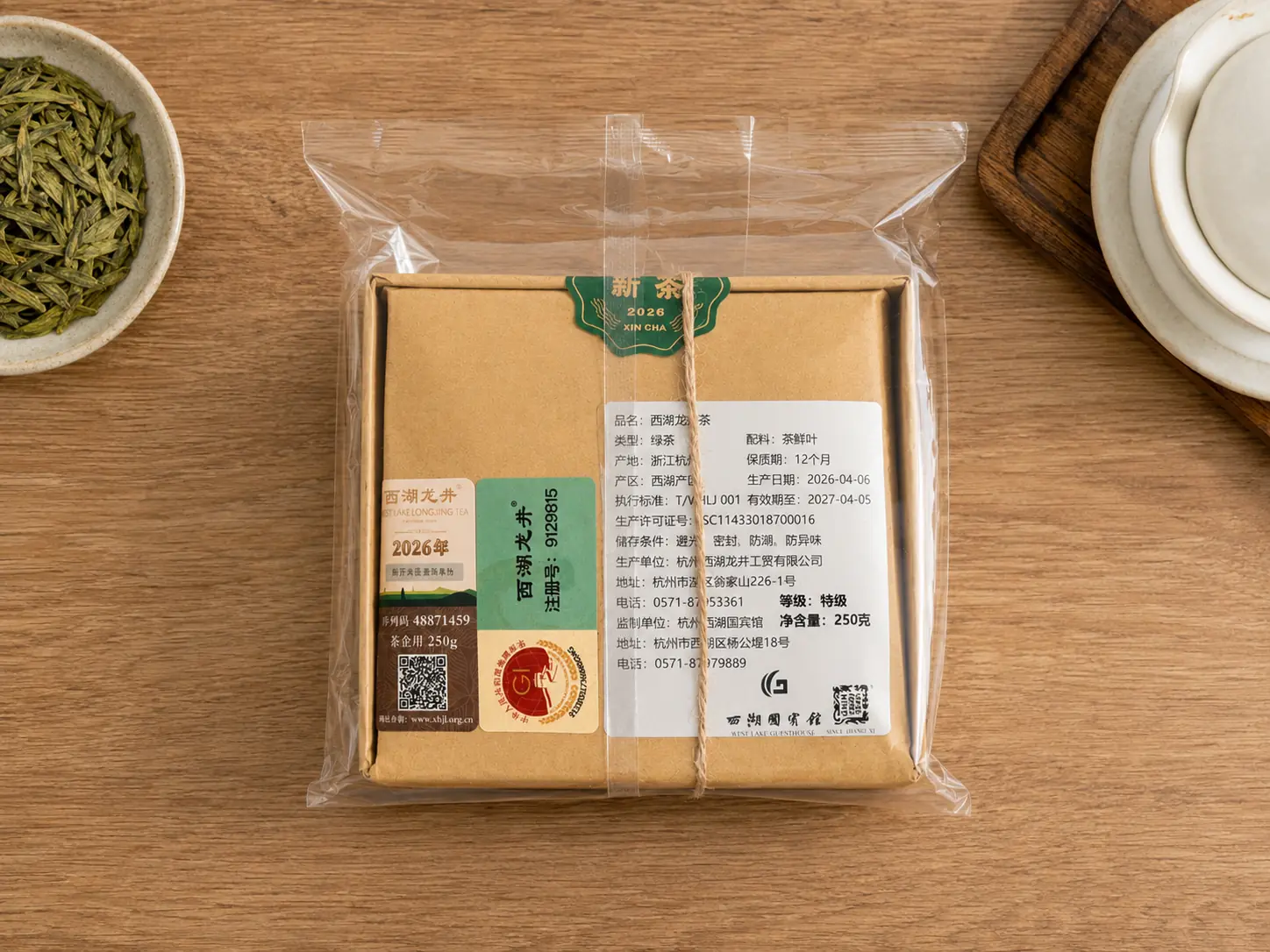
If the seller will not state the origin, harvest season, unit price, and package weight clearly, keep the purchase small or leave.
- Ask the origin: West Lake Longjing, Longjing, Dongting Biluochun, and Biluochun-style tea are not the same buying promise.
- Ask the unit price: Confirm whether the price is per 50 grams, 100 grams, 500 grams, box, pot, or person.
- Buy small first: 50-100 grams is enough for a first tea souvenir.
- Avoid pressure sales: Walk away if the seller pushes expensive gift boxes before you taste.
- Do not chase earliest harvest blindly: Pre-Qingming tea can be excellent, but it is expensive and easy for beginners to overpay for.
Useful Green Tea Ordering Phrases for Travelers
Show the Chinese if pronunciation feels awkward. In a busy teahouse or store, pointing to the phrase is often clearer than trying to explain the tea in English.
| English | Chinese | Pinyin | Say It Like… |
|---|---|---|---|
| Longjing / Dragon Well tea | 龙井茶 | lóng jǐng chá | lohng jing chah |
| Biluochun green tea | 碧螺春 | bì luó chūn | bee lwaw chun |
| I would like a cup of Longjing. | 我想喝一杯龙井。 | wǒ xiǎng hē yì bēi lóng jǐng | woh shyahng huh ee bay lohng jing |
| Is this West Lake Longjing? | 这个是西湖龙井吗? | zhè ge shì xī hú lóng jǐng ma? | juh-guh shir shee hoo lohng jing mah |
| Is this Dongting Biluochun? | 这个是洞庭碧螺春吗? | zhè ge shì dòng tíng bì luó chūn ma? | juh-guh shir dohng ting bee lwaw chun mah |
| May I smell it first? | 可以先闻一下吗? | kě yǐ xiān wén yí xià ma? | kuh yee shyen wun ee shyah mah |
| How much is this per 50 grams? | 这个多少钱一两? | zhè ge duō shǎo qián yì liǎng? | juh-guh dwaw-shaow chyen ee lyahng |
| No gift box needed. | 不用礼盒。 | bù yòng lǐ hé | boo yohng lee huh |
| I will buy just a small amount first. | 我先买一点点。 | wǒ xiān mǎi yì diǎn diǎn | woh shyen my ee dyen dyen |
Chinese Green Tea Frequently Asked Questions
Yes. Dragon Well is the common English translation of Longjing. In this guide, Longjing tea and Dragon Well tea both refer to 龙井茶.
Beyond This Chinese Green Tea Guide
Once Longjing and Biluochun make sense, Chinese tea menus become less intimidating. Pair this guide with the Longjing tea picking and roasting experience, Hangzhou Food Guide, Suzhou Food Guide, and Cantonese Dim Sum and Yum Cha Guide for more ways tea shows up in real travel days.
© gochinafreely.com — Original guide by Go China Freely.