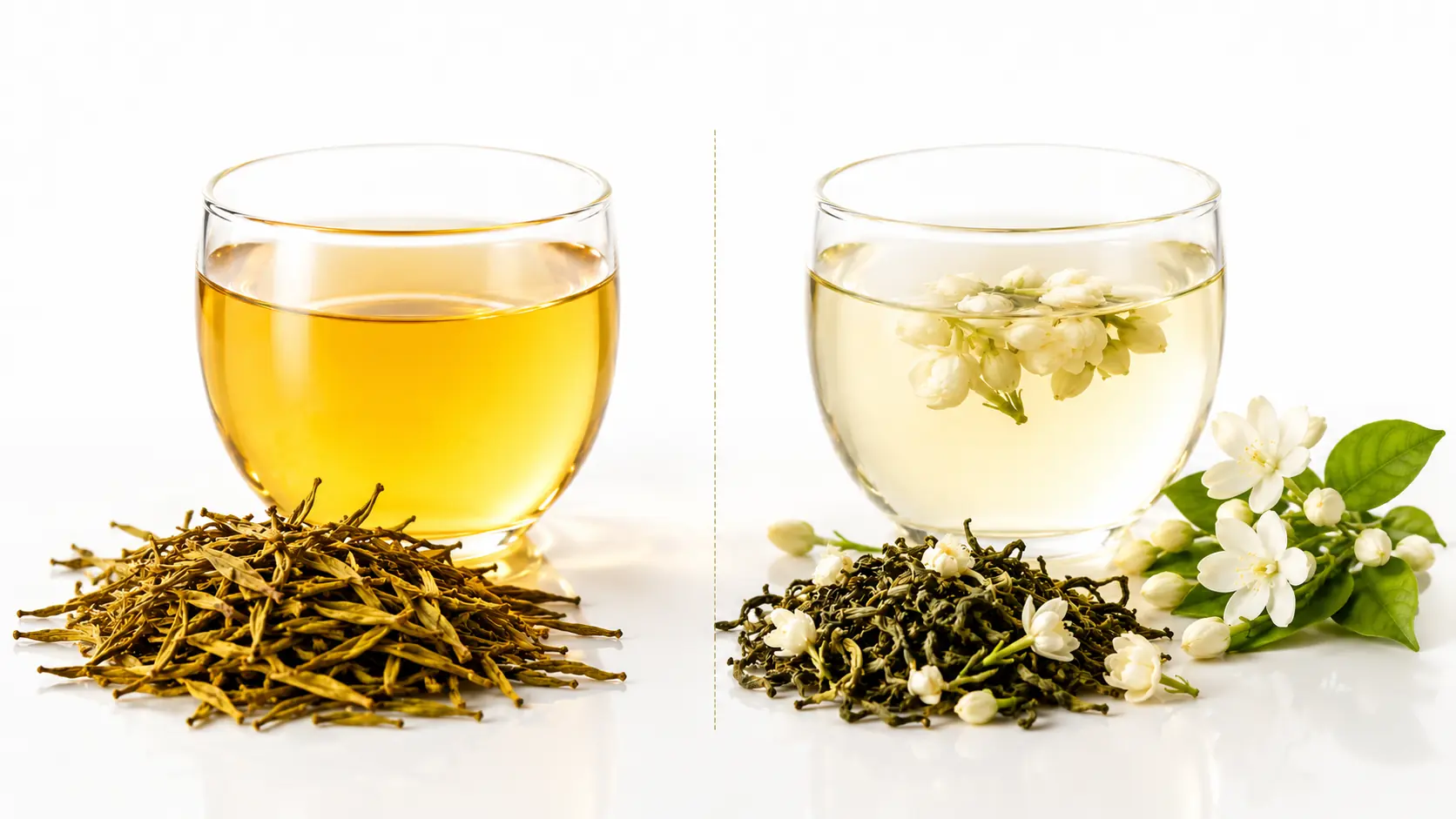
Yellow tea and jasmine tea often sit in the same "I've heard of it, but never ordered it" corner for travelers. They are not the same kind of thing: yellow tea is one of China's six main tea categories, while jasmine tea is a famous scented flower tea made by letting tea absorb fresh jasmine fragrance. This guide puts them together because they fill two different gaps on a China tea menu: the rare mellow one, and the fragrant everyday one.
Executive Summary
What this guide covers
How yellow tea and jasmine tea differ, why yellow tea is rare, how Fuzhou jasmine tea is scented, where travelers meet both teas, and how to buy without paying for vague rarity or perfume-like aroma.
Best first choice
Choose jasmine tea if you want the easiest first cup in a teahouse. Try yellow tea later in a specialist tea room when you want to complete China's six-tea map.
Main traveler trap
Yellow liquor does not prove yellow tea, and visible flowers do not prove better jasmine tea. Ask the exact tea name, base tea, scenting method, and unit price.
Yellow tea
Rare base category
Jasmine
Scented flower tea
Fuzhou
GIAHS since 2014
25-50 g
Yellow tea first buy
Yellow Tea and Jasmine Tea Are Different
Yellow tea (黄茶) is one of China's six main tea categories. A Chinaculture report on the ISO tea classification standard lists black, green, white, oolong, dark, and yellow tea as the basic tea types, and explains that these can be further processed into scented tea, compressed tea, and other products.
1Yellow tea is a base category
It belongs beside green, white, oolong, dark, and black tea as a main processing type.
2Jasmine tea is scented
It is usually finished tea, often green tea, scented with fresh jasmine flowers.
3Order them differently
Choose yellow tea for rare-category tasting; choose jasmine tea for a fragrant everyday cup.
That is the key distinction. Yellow tea is a base tea category, like green tea or oolong. Jasmine tea (茉莉花茶) is usually a scented or reprocessed tea, so it sits outside the six main processing categories rather than forming another parallel base category.
One is a category, one is a scenting tradition
Yellow tea is a main processing category. Jasmine tea is usually a flower-scented tea made from a base tea, often green tea.
When Menus Just Say Flower Tea
Yellow tea and jasmine tea appear in very different travel situations. Yellow tea is mostly a specialist tea-room or tea-shop order. Jasmine tea appears almost everywhere.
| Setting | What you may meet | Best traveler move |
|---|---|---|
| Specialist tea room | Junshan Yinzhen, Mengding Huangya, Huoshan Huangya, or another yellow tea | Ask for the exact yellow tea name and whether it has the yellowing process. |
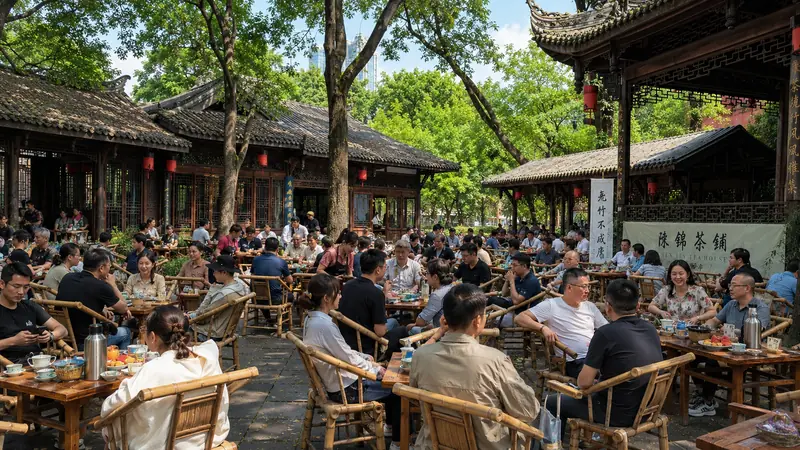
| Chengdu park teahouse | Gaiwan jasmine tea, Sichuan green tea, or other simple table teas | Choose jasmine tea if you want the easiest local-feeling cup. |
| Cantonese yum cha | Jasmine beside Pu'er, oolong, chrysanthemum, and house teas | Pick jasmine if you want a lighter, fragrant table tea. |
| Tea shop | Small tastings that may lead to tins, gift boxes, or rare-tea stories | Ask the price per 50 grams before comparing too many cups. |
| Modern drink shop | Jasmine green tea as a base for fruit tea or milk-free drinks | Check sugar and flavorings before judging jasmine tea itself. |
If a menu says flower tea, ask whether it means jasmine tea. Chinese flower teas can also include rose, chrysanthemum, osmanthus, orchid, magnolia, or other scented or infused drinks. If a menu says yellow tea, ask for the specific name. A tea called "yellow" because of color is not automatically yellow tea.
Decision shortcut
Yellow tea or jasmine tea first?
I want an easy teahouse cup
Choose jasmine tea. It is familiar, fragrant, and common in everyday tea settings.
I want a rare tea category
Choose yellow tea, preferably in a specialist tea room that can explain the exact tea.
I am drinking dim sum
Jasmine tea works well if you want something lighter than Pu'er or roasted oolong.
I am buying a souvenir
Buy a tiny yellow tea sample or a small jasmine tea bag before any large tin or gift box.
Yellow Tea: Rare, Mellow, and Easy to Miss
Yellow tea is rare enough that many tea drinkers in China do not meet it often. China Daily's yellow tea overview says it is found only in a few locations in China, mainly because it is difficult to process, and names Meng Ding from Sichuan, Junshan Silver Needle from Hunan, and Huoshan Yellow Buds from Anhui as well-known varieties.
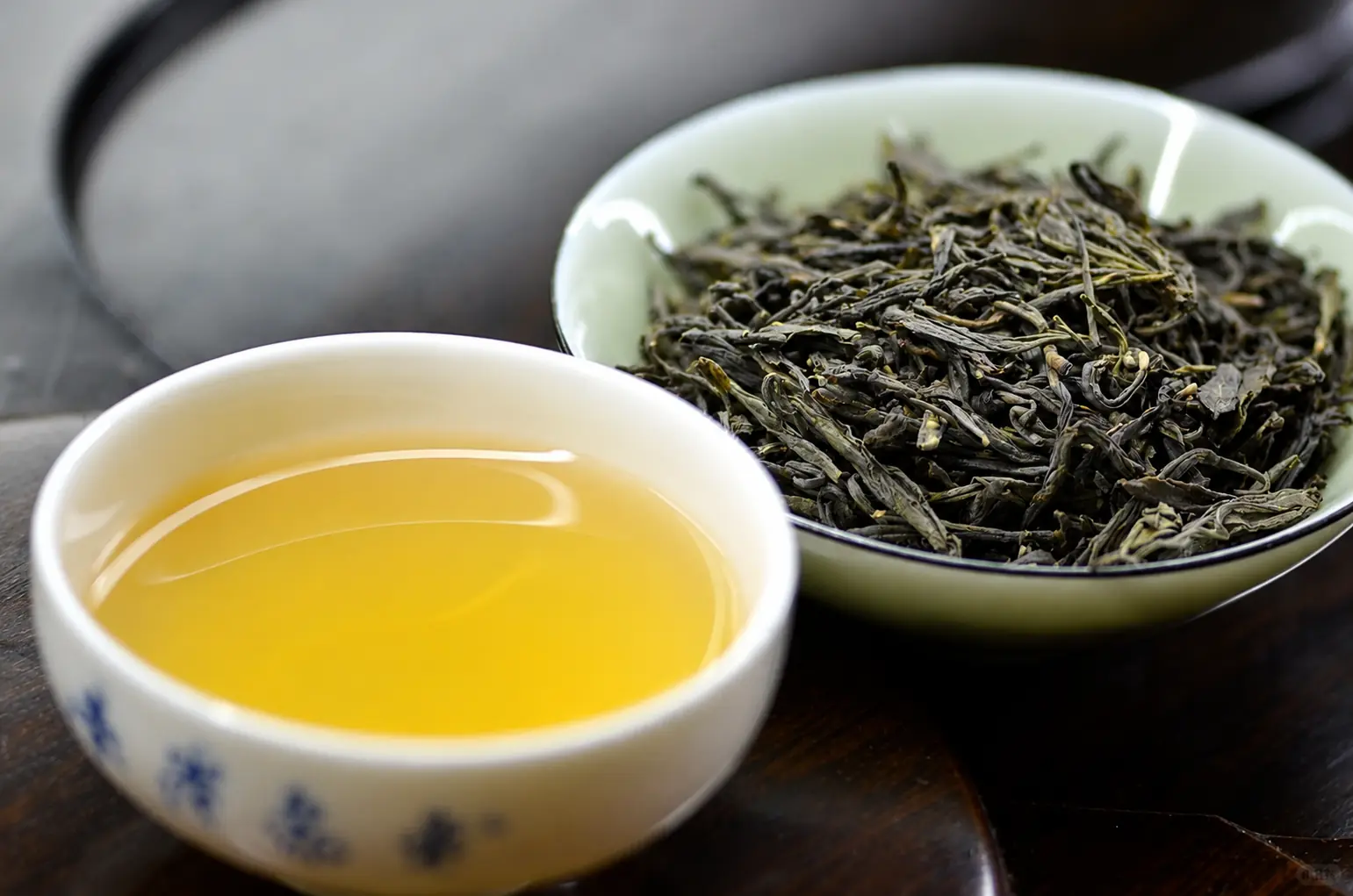
The easiest way to understand yellow tea is as a gentler cousin of green tea, though that is only a shortcut.
The processing begins close to green tea, but includes an additional warm, humid yellowing stage often called menhuang (闷黄). This stage softens the greener edge and helps create a smoother, more yellow-toned cup.
Good yellow tea can suggest sweet corn, soft chestnut, grain, bean, pale flowers, or a gentle cooked-vegetable sweetness. It should not taste harsh, stale, or muddy.
Yellow color is not enough
Many teas brew yellow. Yellow tea means a specific processing category, not just a yellow-looking cup.
Three Yellow Teas to Recognize
You do not need a full yellow tea encyclopedia. Start with three names.
Junshan Yinzhen
君山银针 · Yueyang, Hunan
The famous story tea: beautiful buds, high price, and a strong local identity around Junshan Island and Dongting Lake.
Mengding Huangya
蒙顶黄芽 · Ya'an, Sichuan
A Sichuan tea-culture name: delicate, rare, and better tried in a serious tea room than bought blind.
Huoshan Huangya
霍山黄芽 · Anhui
A useful buying name, but do not confuse it with Huangshan Maofeng green tea or any yellow-looking liquor.
Hunan's official English site describes Yueyang Yellow Tea as a national geographical indication product and says Junshan Yinzhen is a highest-grade yellow bud tea from Yueyang's yellow tea tradition. It also calls Junshan Yinzhen the only yellow tea among the Top 10 Chinese Teas. Treat that as local and official positioning, not a reason to buy any packet blindly.
The buying warning is simple: if a seller cannot name the tea beyond "yellow tea," cannot explain where it is from, or charges a premium only because it is "rare," slow down.
Jasmine Tea: China's Famous Flower Tea
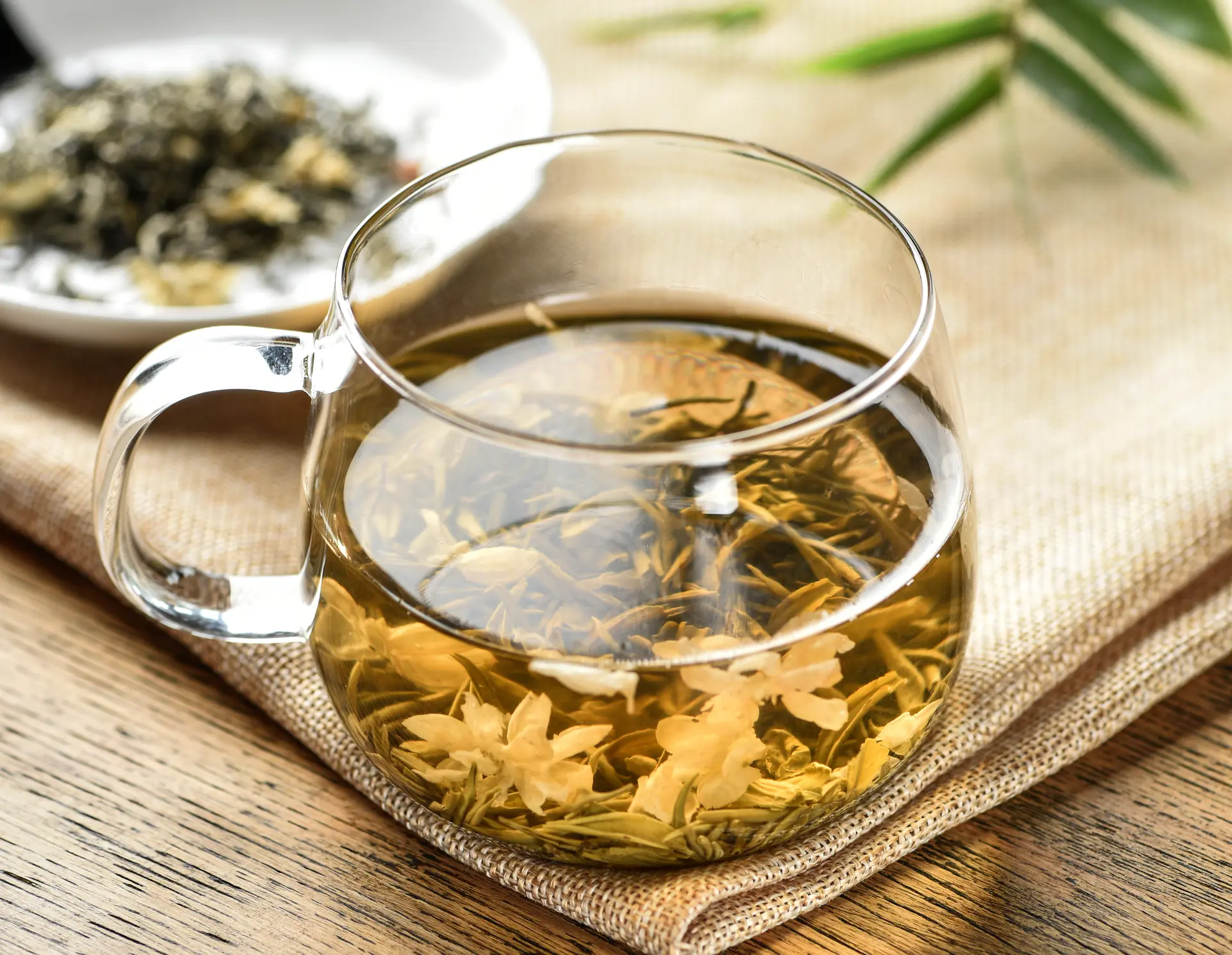
Jasmine tea is China's most famous scented flower tea. It is not just dried jasmine petals floating in hot water. Traditional jasmine tea depends on scenting: fresh jasmine flowers release fragrance, and the tea leaves absorb it.
Fuzhou (福州) is the key city for understanding this tradition. The Fujian provincial government page on Fuzhou jasmine tea scenting technique says the craft is a national-level intangible cultural heritage item.
FAO also lists the Jasmine and Tea Culture System of Fuzhou City as a Globally Important Agricultural Heritage System since 2014.
That heritage does not mean every jasmine tea on a menu is precious. It means the best examples are a craft, not a perfume shortcut.
Jasmine tea is tea first
Good jasmine tea should still taste like tea. If all you notice is a sharp air-freshener smell, keep your money in your pocket.
Scented, Flavored, or Just Decorated
The most useful jasmine tea skill is learning not to be fooled by the flowers.
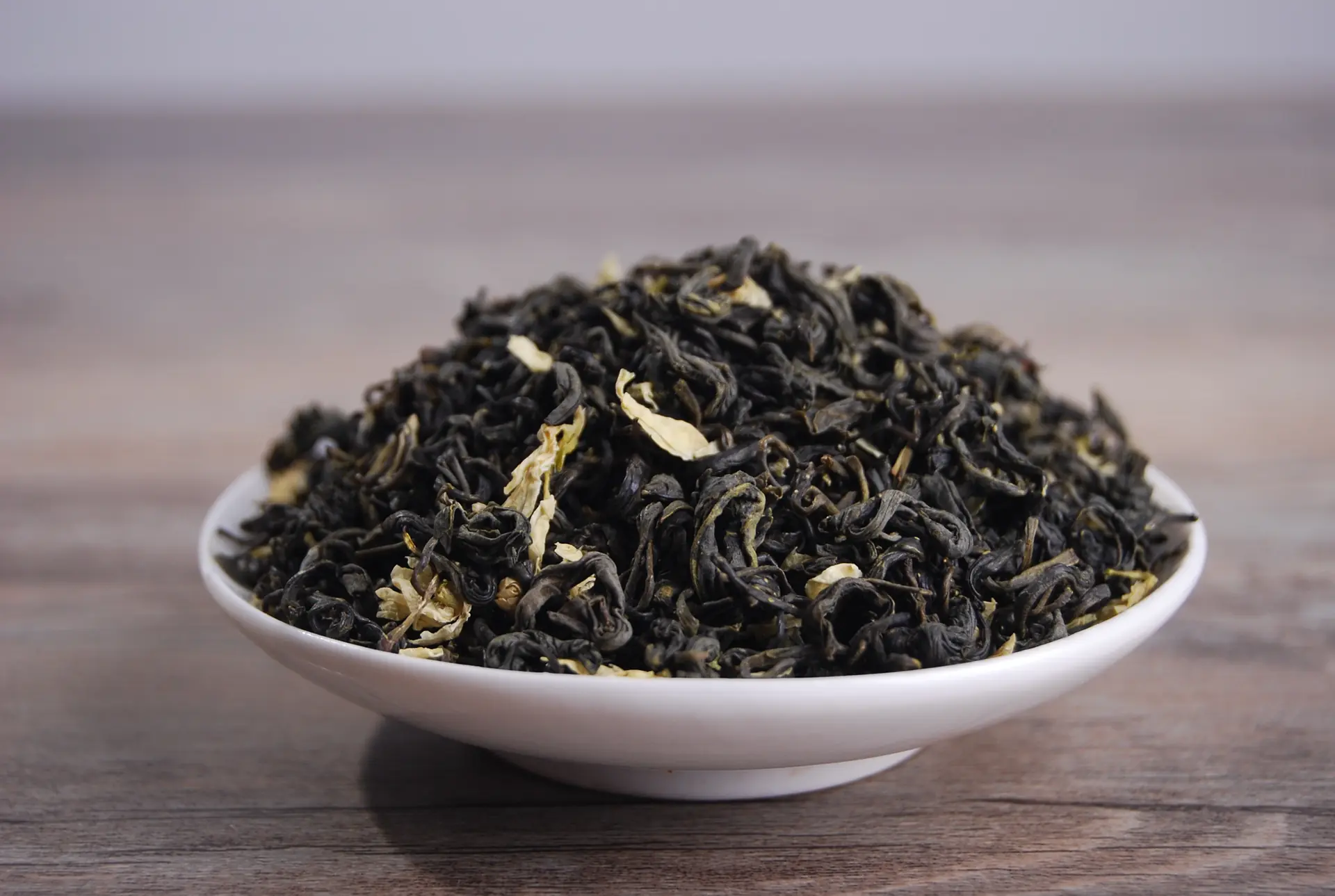
In traditional scenting, fresh jasmine blossoms are mixed with tea so the leaves absorb the fragrance. After scenting, the spent flowers are often removed and the tea is dried.
Visible dried flowers are not proof of better tea. Sometimes petals are left for appearance or added to make a cheap tea look more floral.
The aroma should feel alive and integrated. It should not smell like cheap perfume, candy, soap, or air freshener, then vanish by the second sip.
Flowers are not the quality test
Judge jasmine tea by how the aroma sits inside the tea liquor. Petals in the cup can be pretty, but they are not the proof.
Where Travelers Meet These Teas
Yellow tea belongs mostly to origin stories and specialist tea rooms. Jasmine tea is much easier to meet in ordinary travel settings.
Yellow tea origins
Yueyang, Ya'an, Huoshan
Junshan Yinzhen connects with Yueyang (岳阳), Dongting Lake (洞庭湖), and Junshan Island (君山岛). Mengding Huangya belongs to Ya'an (雅安) and Mengding Mountain (蒙顶山); Huoshan Huangya belongs to Huoshan (霍山).
Fuzhou and Chengdu
Origin context + teahouse life
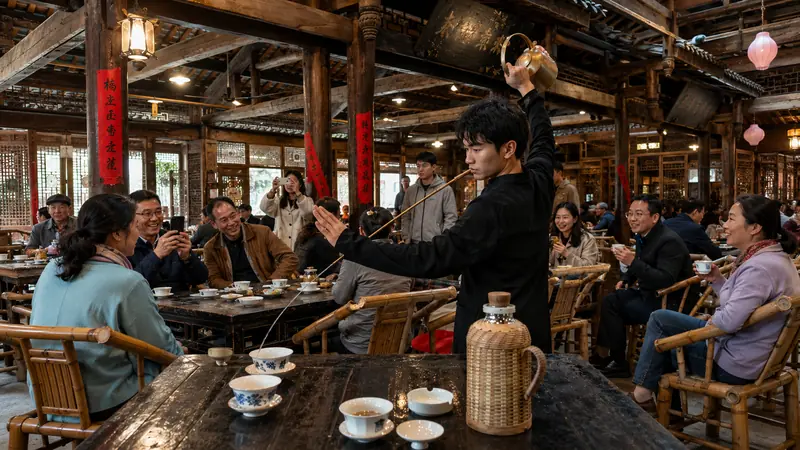
Fuzhou gives jasmine tea its deepest flower-tea context. Chengdu (成都) gives it a living teahouse scene, where a gaiwan of jasmine tea can buy you a slow seat in a park.
Restaurants and tea shops
Everyday jasmine encounters
Cantonese yum cha may list jasmine beside Pu'er, oolong, and chrysanthemum. Big-city tea shops can sell many grades, especially in Beijing, Shanghai, Hangzhou, Guangzhou, and Chengdu.
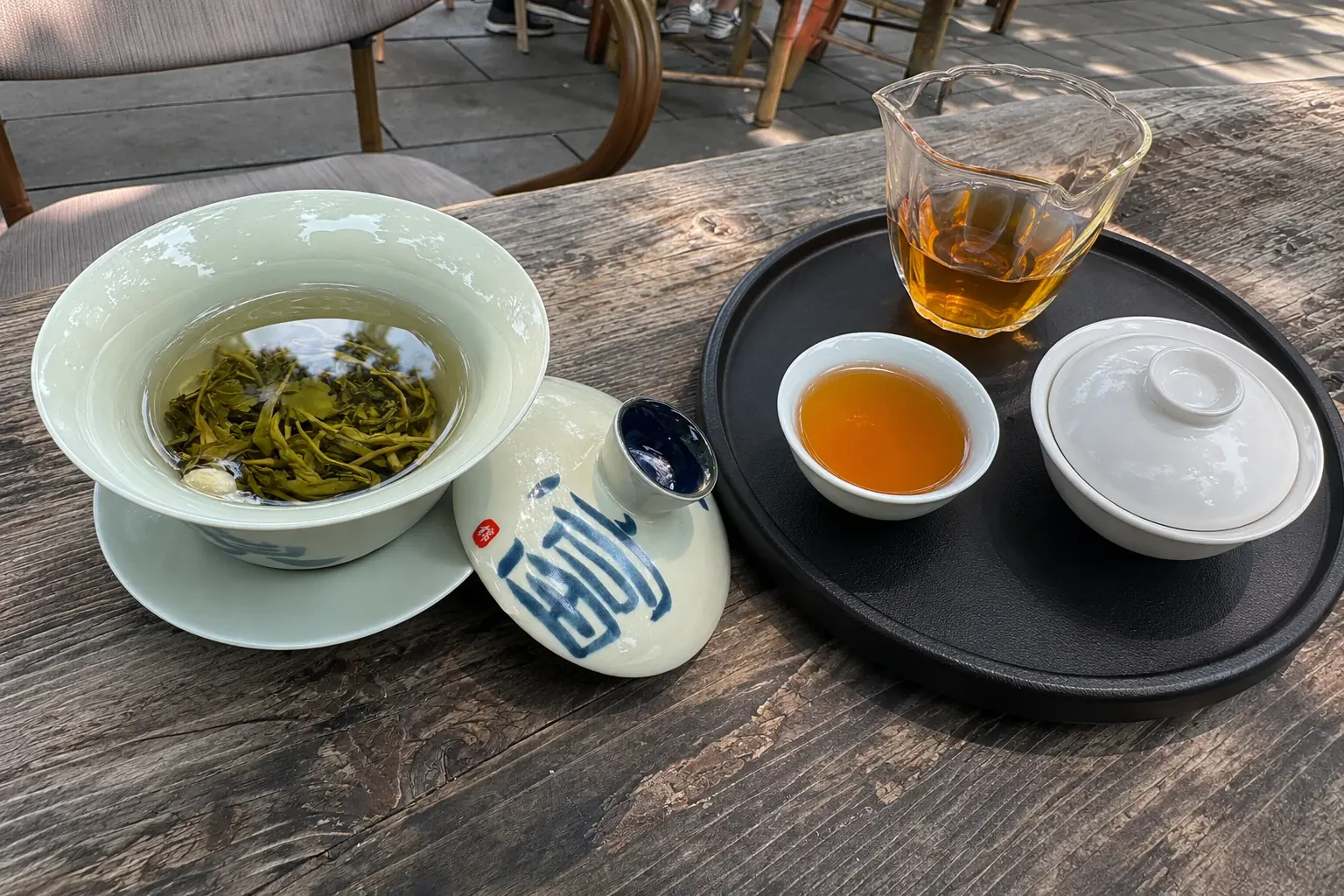
If you have limited time, do not force a yellow tea detour. Drink jasmine tea in a real teahouse, then try yellow tea in a specialist setting if curiosity remains. That gives each tea the right pressure level.
How to Brew Without Flattening Aroma
Yellow tea and jasmine tea can both become dull if you treat them like generic tea bags. Too much leaf, water that is too fierce, and long soaking can flatten the aroma.
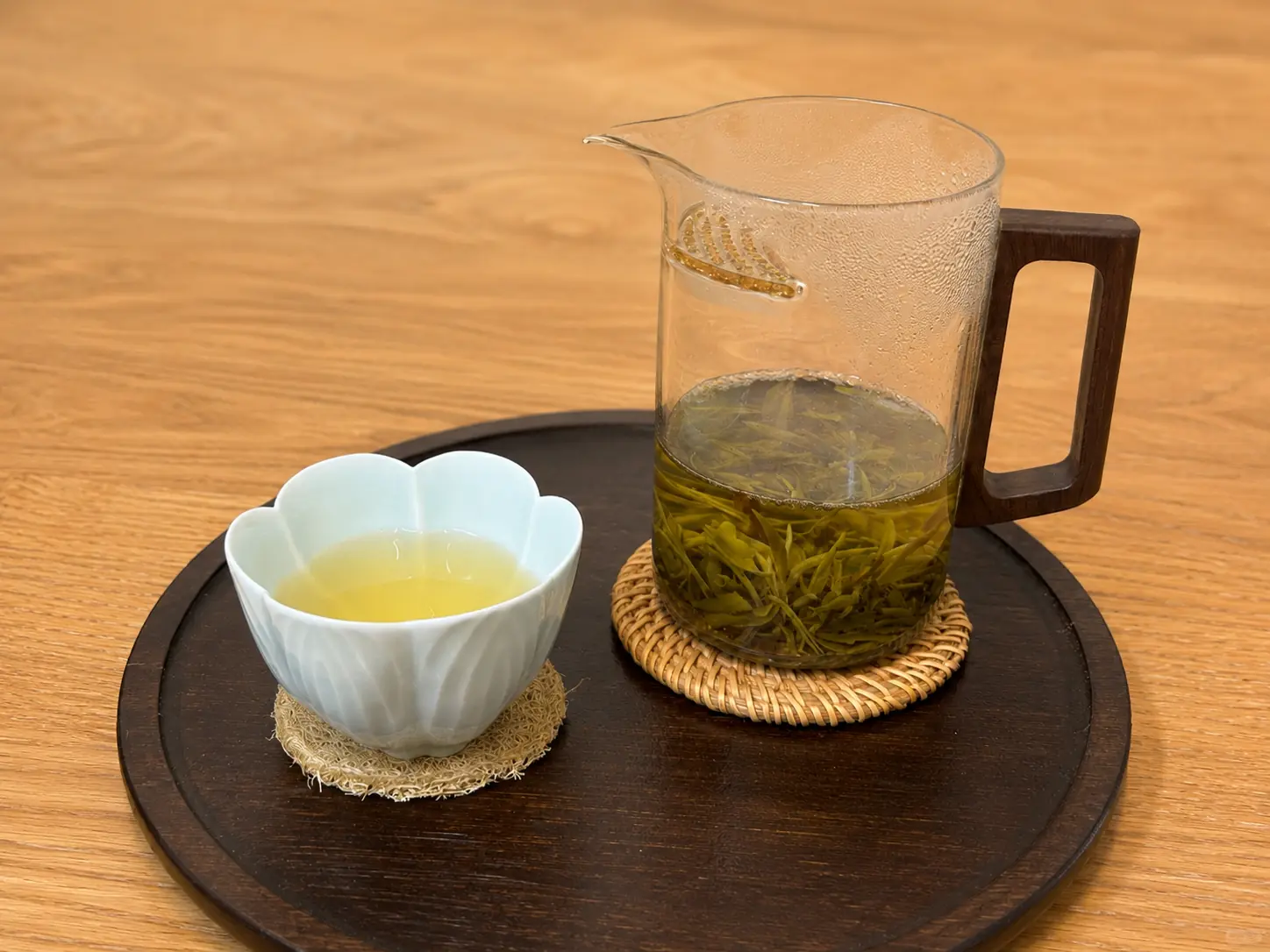
- Use a light hand- Start with less leaf than you think. Both teas can turn bitter or flat when over-concentrated.
- Cool the water slightly- Around 80-85 C is a safe starting point for many yellow teas and jasmine green teas.
- Taste after 1-2 minutes- Do not wait for a dark liquor. These teas should stay clear and fragrant.
- Adjust by aroma- If jasmine smells sharp or yellow tea tastes muddy, use less leaf, cooler water, or shorter time.
- Refill gently- Good yellow tea and jasmine tea can give several infusions, though the fragrance changes with each pour.
In a Chengdu park teahouse, the rules are simpler: order jasmine tea, let staff refill the gaiwan with hot water, and use the lid to hold back the leaves. You are not trying to run a tasting exam. You are joining the rhythm of the room.
Buying Without Paying for Perfume
Yellow tea and jasmine tea have different traps. Yellow tea sells rarity. Jasmine tea sells aroma.
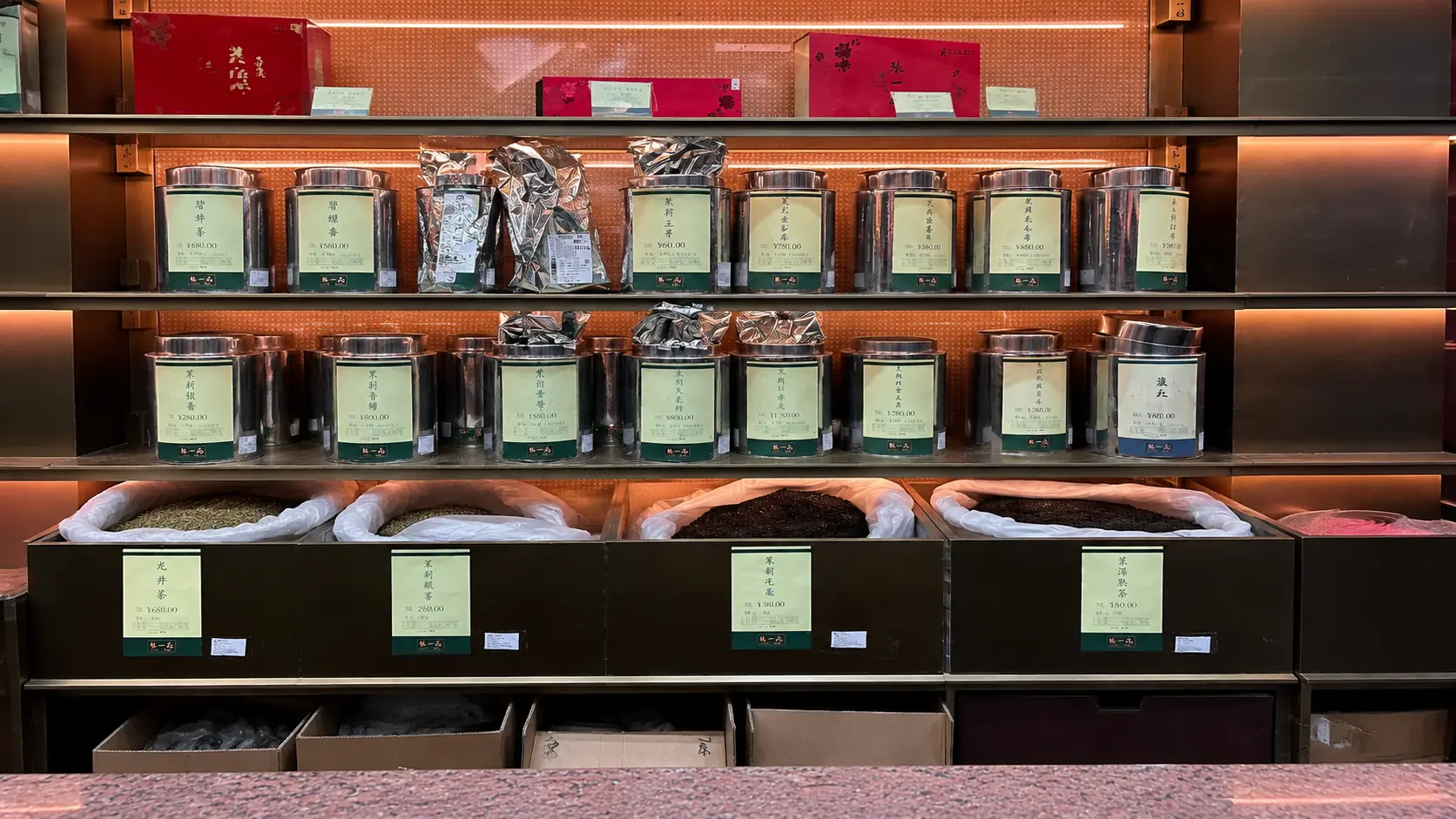
For yellow tea, ask the exact name, origin, unit price, and whether it is truly yellow tea rather than a green tea with a yellow name or yellow liquor.
Buy tiny amounts first: 25-50 grams is enough. Yellow tea is subtle, and you may discover that you admire it more than you drink it.
For jasmine tea, smell calmly. Ask what the base tea is, whether it was traditionally scented, and the price per 50 grams.
- Buy tiny yellow tea samples: 25-50 grams is enough for a first rare yellow tea purchase.
- Ask the real name: Junshan Yinzhen, Mengding Huangya, Huoshan Huangya, or another specific yellow tea.
- Smell jasmine calmly: natural jasmine should feel fresh and integrated, not like sharp perfume.
- Do not pay for color alone: yellow liquor does not prove yellow tea.
- Do not pay for flowers alone: visible dried flowers do not prove better jasmine tea.
Useful Yellow and Jasmine Phrases
Show the Chinese if pronunciation feels awkward. These phrases help you confirm the category, scenting method, and unit price.
| English | Chinese | Pinyin | Say It Like… |
|---|---|---|---|
| Yellow tea | 黄茶 | huáng chá | hwahng chah |
| Junshan Yinzhen yellow tea | 君山银针 | jūn shān yín zhēn | jwin shahn yin jun |
| Mengding Huangya yellow tea | 蒙顶黄芽 | méng dǐng huáng yá | mung ding hwahng yah |
| Huoshan Huangya yellow tea | 霍山黄芽 | huò shān huáng yá | hwaw shahn hwahng yah |
| Jasmine tea | 茉莉花茶 | mò lì huā chá | mwaw lee hwah chah |
| Is this real yellow tea? | 这个是真黄茶吗? | zhè ge shì zhēn huáng chá ma? | juh-guh shir jun hwahng chah mah |
| Is this traditionally scented? | 这是窨制的吗? | zhè shì xūn zhì de ma? | juh shir shwin jir duh mah |
| How much is this per 50 grams? | 这个多少钱一两? | zhè ge duō shǎo qián yī liǎng? | juh-guh dwaw-shaow chyen ee lyahng |
Frequently Asked Questions
No. Yellow tea starts close to green tea in processing, but it includes an added yellowing step that usually makes the flavor smoother, warmer, and less grassy.
Beyond This Guide
Yellow tea and jasmine tea fill two easy-to-miss spaces on the Chinese tea map: a rare main category and an everyday flower-scented tradition. Pair this guide with the Chinese Green Tea Guide, White Tea in China, Oolong Tea Guide, Black Tea in China, Pu'er Tea Guide, Gongfu Tea Ceremony Guide, Chengdu Teahouse Guide, and Cantonese Dim Sum and Yum Cha Guide.
© gochinafreely.com — Original guide by Go China Freely.