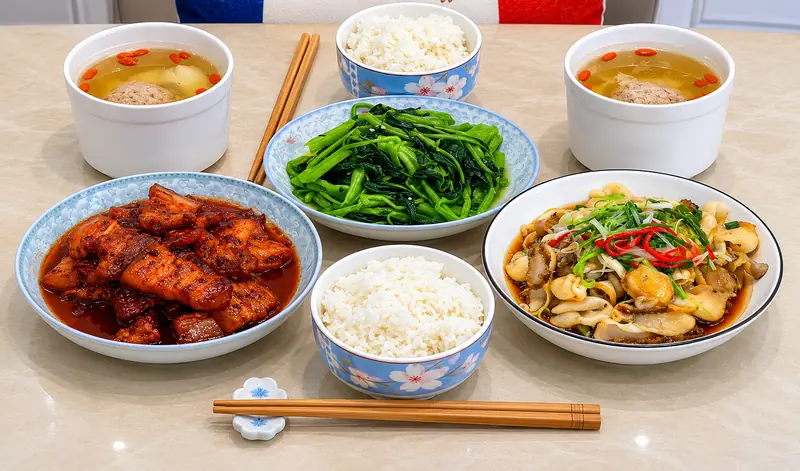
Fujian cuisine (闽菜) is easy to misread from the outside. Many travelers meet it first through Xiamen satay noodles, oyster omelets, Gulangyu snacks, or Quanzhou ginger duck. Those dishes matter, but they are only the loudest doorway into a quieter, deeper cuisine built on soups, seafood, wine lees, mountain ingredients, and the patient work of drawing flavor out rather than covering it up.
Use this guide as a province-level flavor map. Our Xiamen Food Guide, Xiamen Eighth Market Guide, and Quanzhou Food Guide are better for city-by-city routes. This article explains what makes Fujian food wider than those two cities: Fuzhou broths, red vinasse, Putian seafood noodles, western Fujian Hakka meals, and Wuyishan tea-region food.
Executive Summary
What this guide covers
Fujian cuisine as a province-level tradition: Fuzhou soups, seafood, red vinasse, Southern Fujian snacks, Putian noodles, Hakka mountain dishes, Wuyi tea, and ordering strategy.
Best first table
Build contrast: one soup, one seafood dish, one red-vinasse or sweet-sour dish, one vegetable or tofu dish, and one local starch or snack.
Main traveler challenge
Fujian food often looks gentle, but seafood, pork, chicken stock, ham, rice wine, peanuts, satay sauce, wheat, lard, and luxury seafood can be hidden in light-looking dishes.
8 cuisines
Min cuisine status
Soup first
Fuzhou core logic
Sea + mountain
Ingredient map
Ask first
Seafood and stock risks
Start With Soup, Sea, Lees, Mountain
Fujian cuisine is commonly counted among China's Eight Great Cuisines. A Fujian provincial foreign-affairs page describes it as one of China's top eight cuisines and notes seafood ingredients, red koji rice, sugar, vinegar, and soup as defining features. For travelers, four words are easier to remember than a long dish list: soup, sea, lees, and mountain.
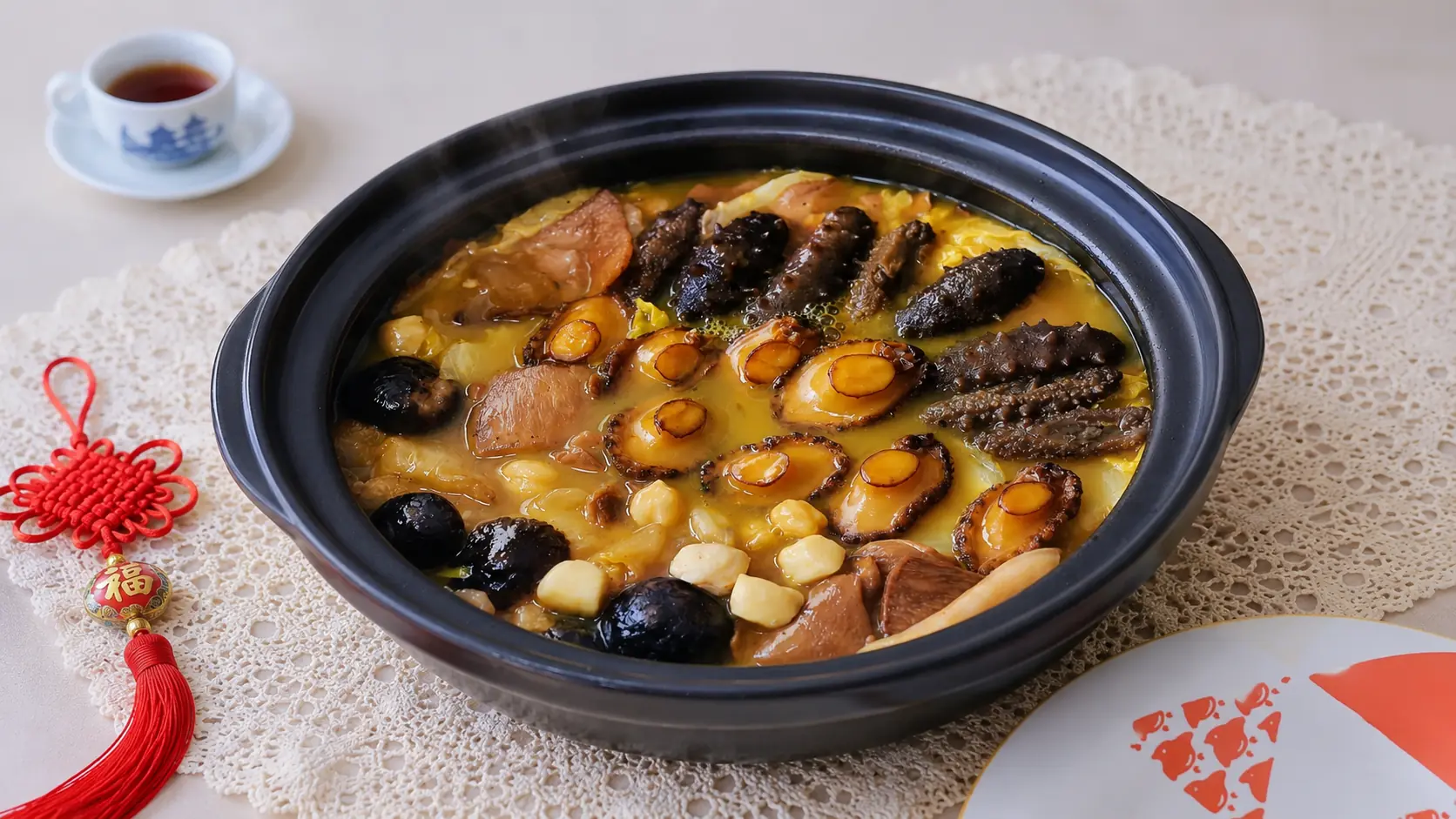
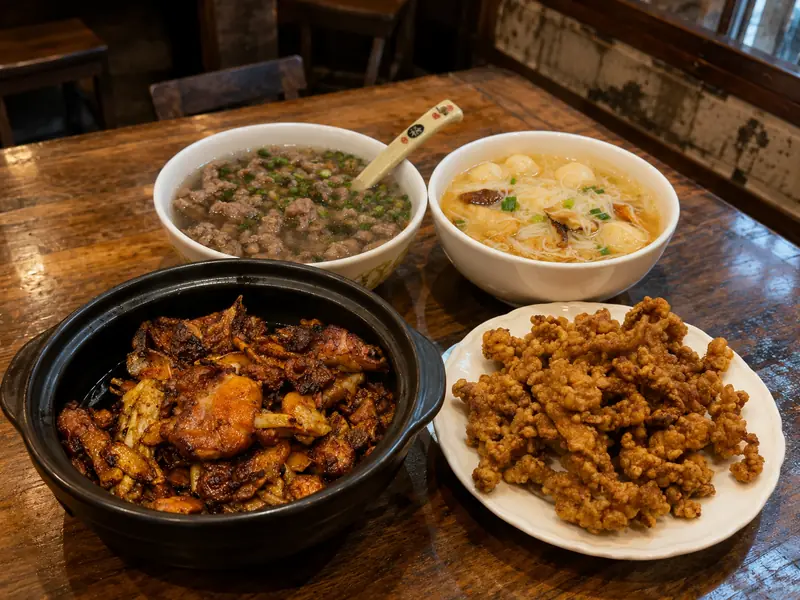
Soup is the Fuzhou (福州) signal. Buddha Jumps Over the Wall (佛跳墙), Fuzhou fish balls (福州鱼丸), meat swallow dumplings (肉燕), Taiping Yan (太平燕), clear seafood soups, chicken broth, and slow-simmered banquet dishes all teach the same idea: Fujian umami is often carried by broth.
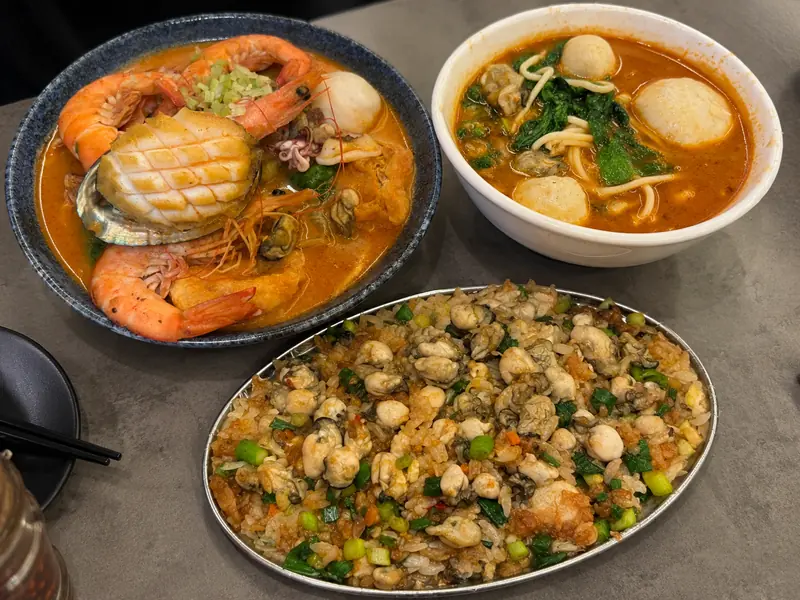
Sea is the coastal signal. Fish, shrimp, crab, oysters, clams, squid, fish balls, seafood noodles, shellfish soups, and market seafood appear across Fuzhou, Xiamen, Quanzhou, Putian, Ningde, Zhangzhou, and smaller coastal towns. The cooking is not always spicy or heavy. Steaming, boiling, braising, quick-poaching, and soup-making are often more important.
Lees means fermented aroma: red vinasse, rice wine, yellow wine, vinegar, sugar, and wine-based sauces. Red-vinasse chicken, red-vinasse eel, lychee pork (荔枝肉), drunken pork ribs, and rice-wine dishes add the red color, gentle sweetness, acidity, and fermented depth that make Fujian food more complex than the word "light" suggests.
Mountain is the inland counterweight. Longyan (龙岩), Sanming (三明), Yongding Tulou (永定土楼), and Wuyishan (武夷山) bring Hakka-style tofu, pork, preserved vegetables, bamboo shoots, mushrooms, rice wine, smoked goose, tea, and hearty family meals into the Fujian picture.
Fresh, Not Flat
Fujian food often protects the ingredient: springy fish balls, clear broth, sweet shellfish, tender seafood, bamboo shoots, and clean vegetables. Mild does not mean bland.
Umami, Not Only Seafood
The depth can come from dried scallops, ham, chicken, pork bones, mushrooms, red vinasse, rice wine, fish sauce, shrimp paste, and slow stock. This is also why allergies and dietary limits need care.
Fuzhou Soup Is the Core of Fujian Cuisine
If you need one city to understand classic Fujian cuisine, start with Fuzhou. A Fujian government English article traces much of the province's culinary foundation to Fuzhou techniques in soup-making, knife skills, heat control, and presentation. That does not make Fuzhou the only Fujian food city. It does make it the best starting point for the cuisine's old-school logic.

Buddha Jumps Over the Wall is the famous banquet icon. The Fujian provincial government page on Juchunyuan Buddha Jumps Over the Wall says the recipe originated in Fuzhou, is recognized as national-level intangible cultural heritage, and is typically prepared with more than 30 ingredients and seasonings in a Shaoxing wine jar.
For most first-time travelers, though, Fuzhou fish balls are a better entry point. They usually have a fish-paste wrapper with a pork filling inside, so the first bite gives you broth, fish, meat, and bounce at once. Meat swallow dumplings are also important because the wrapper is made from pounded meat, not ordinary wheat dough. If you have read our Chinese wonton guide, think of Fuzhou meat swallow as a local cousin, not just another name for wontons.
Lychee pork is another Fuzhou classic. It is not pork stuffed with lychee. The pork is cut and fried so it curls into a lychee-like shape, then dressed in a sweet-sour sauce that may include red wine lees. The city's official gastronomy site lists Buddha Jumps Over the Wall, instant-boiled sea clam in chicken broth, red rice-wine dishes, lychee pork, fish balls, and pork wontons among classic Fujian dishes.
Do not start with the most expensive soup
Buddha Jumps Over the Wall can be memorable, but it is not the only way to understand Fujian cuisine. Fish balls, meat swallow dumplings, lychee pork, red-vinasse dishes, and clear seafood soup often teach more for less money.
Fujian Seafood Goes Far Beyond Xiamen
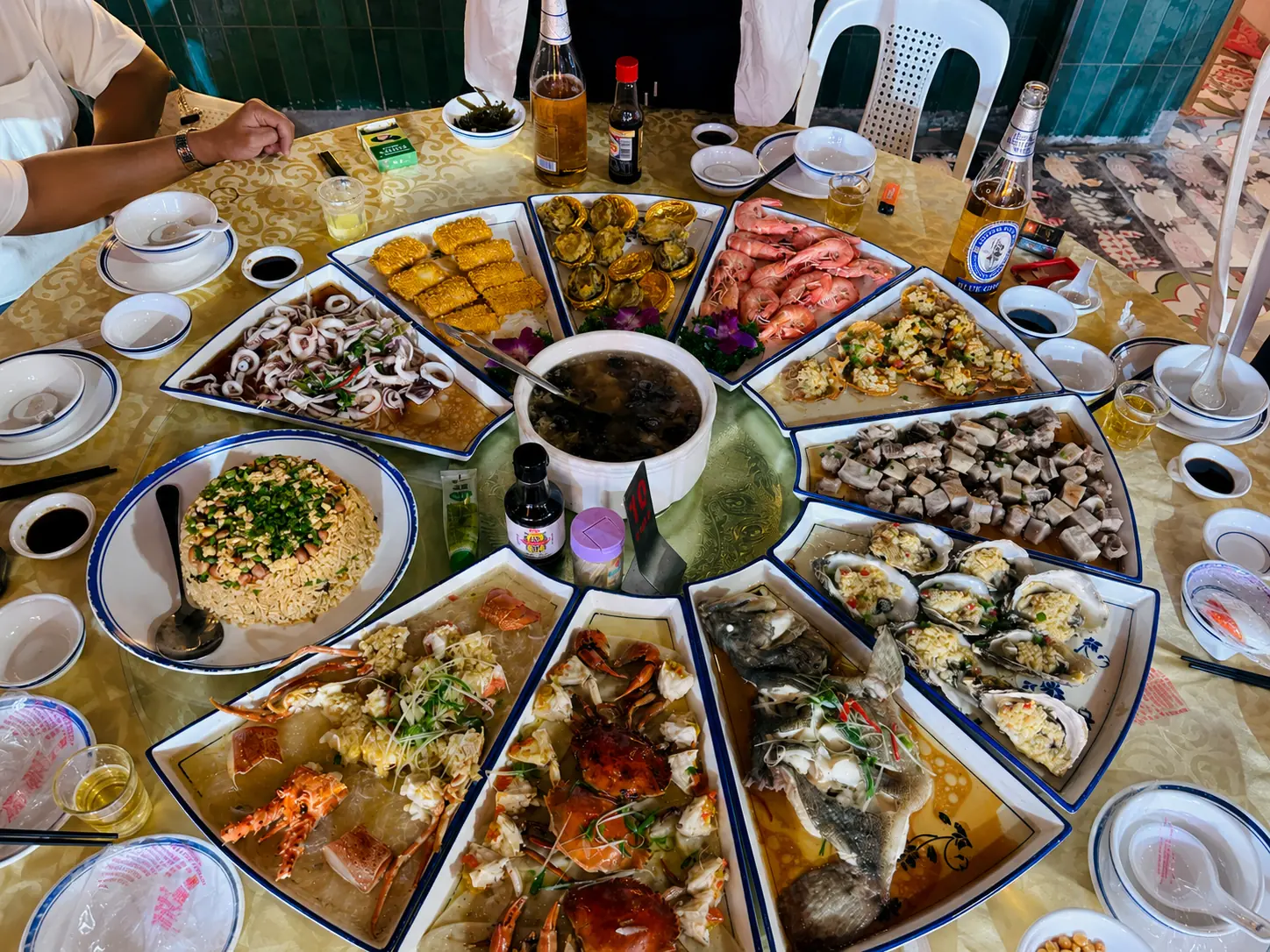
Xiamen is the most visible Fujian food city for many English-speaking travelers, but Fujian seafood is not only Xiamen seafood. Fuzhou, Putian, Quanzhou, Zhangzhou, Ningde, Pingtan, and smaller coastal areas all have their own seafood habits. The difference is not only what comes from the sea, but what happens next: soup, noodles, red vinasse, satay, ginger, vinegar, rice wine, or a plain steam.
Think by cooking method before fame. Steamed fish shows freshness. Poached shrimp and clams show sweetness. Oyster omelet gives you street-snack texture. Seafood noodle soup is a good travel-day meal. Xiamen satay noodles explain Southern Fujian sauce logic. Putian braised noodles show how seafood and starch can become one thick, comforting bowl.
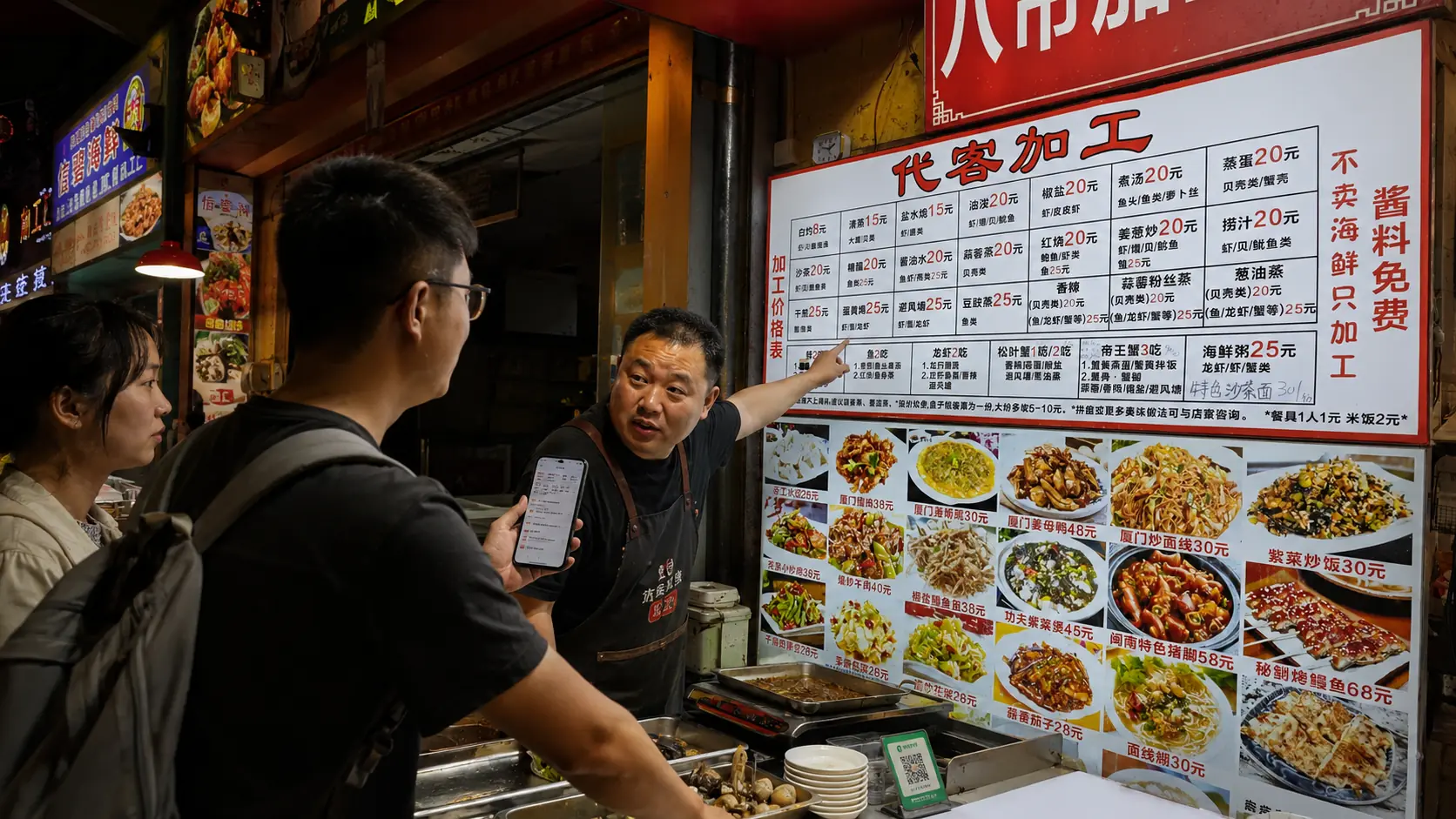
A Fujian government dining feature describes Fujian cuisine as seafood-centric and notes that daily catches and prices can vary in seafood restaurants. That matters on the ground. At seafood stalls, ask about price, weight, live versus chilled seafood, cooking method, and whether the dish includes shellfish or hidden stock.
- Safer first moves: steamed fish, cooked shrimp, cooked clams, seafood soup noodles, fish balls, and clearly priced set dishes.
- More local but trickier: sea worm jelly, raw-marinated shellfish, unusual live seafood, and banquet seafood with no clear price.
- Do not judge by color: white soup, tofu, greens, noodles, and rice dishes may still contain dried shrimp, fish sauce, crab, shellfish, pork bones, or chicken stock.
Red Vinasse Is the Hidden Signature
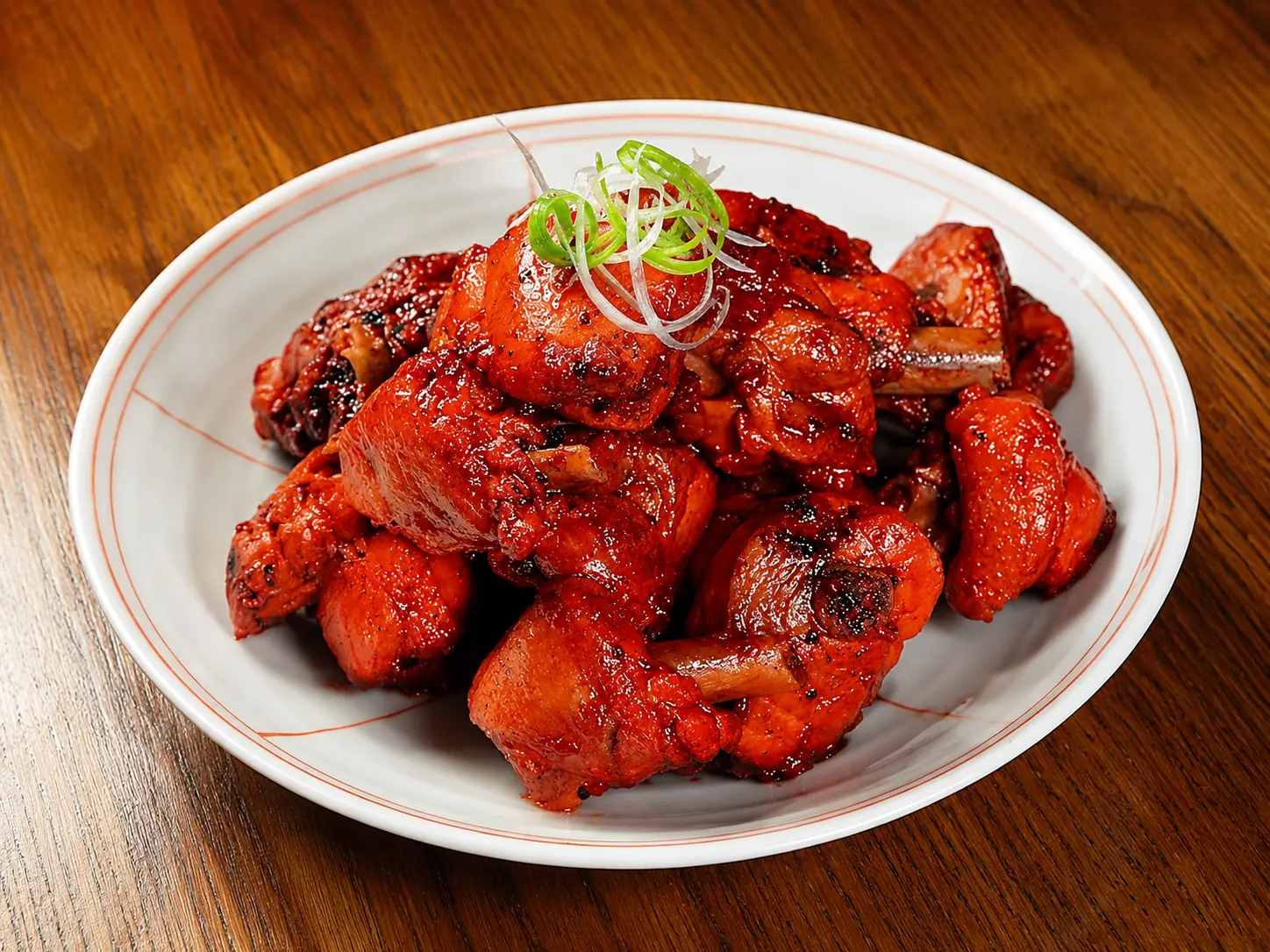
If you describe Fujian cuisine only as light, you miss the red line running through it: red vinasse and rice-wine aroma. Red vinasse comes from the red-rice wine system and brings color, sweetness, acidity, and a mellow fermented smell. It can appear in red-vinasse chicken, red-vinasse eel, red-vinasse pork, conch in rice-wine sauce, lychee pork, and other Fuzhou dishes.
The Fuzhou gastronomy site describes sauteed sliced conch in rice-wine sauce as using fermented red glutinous rice residue, and it notes that lychee pork uses red yeast rice wine, soy sauce, sugar, and vinegar for color and flavor. This is the part of Fujian cooking that does not look dramatic in a photo but often makes the table feel specific.
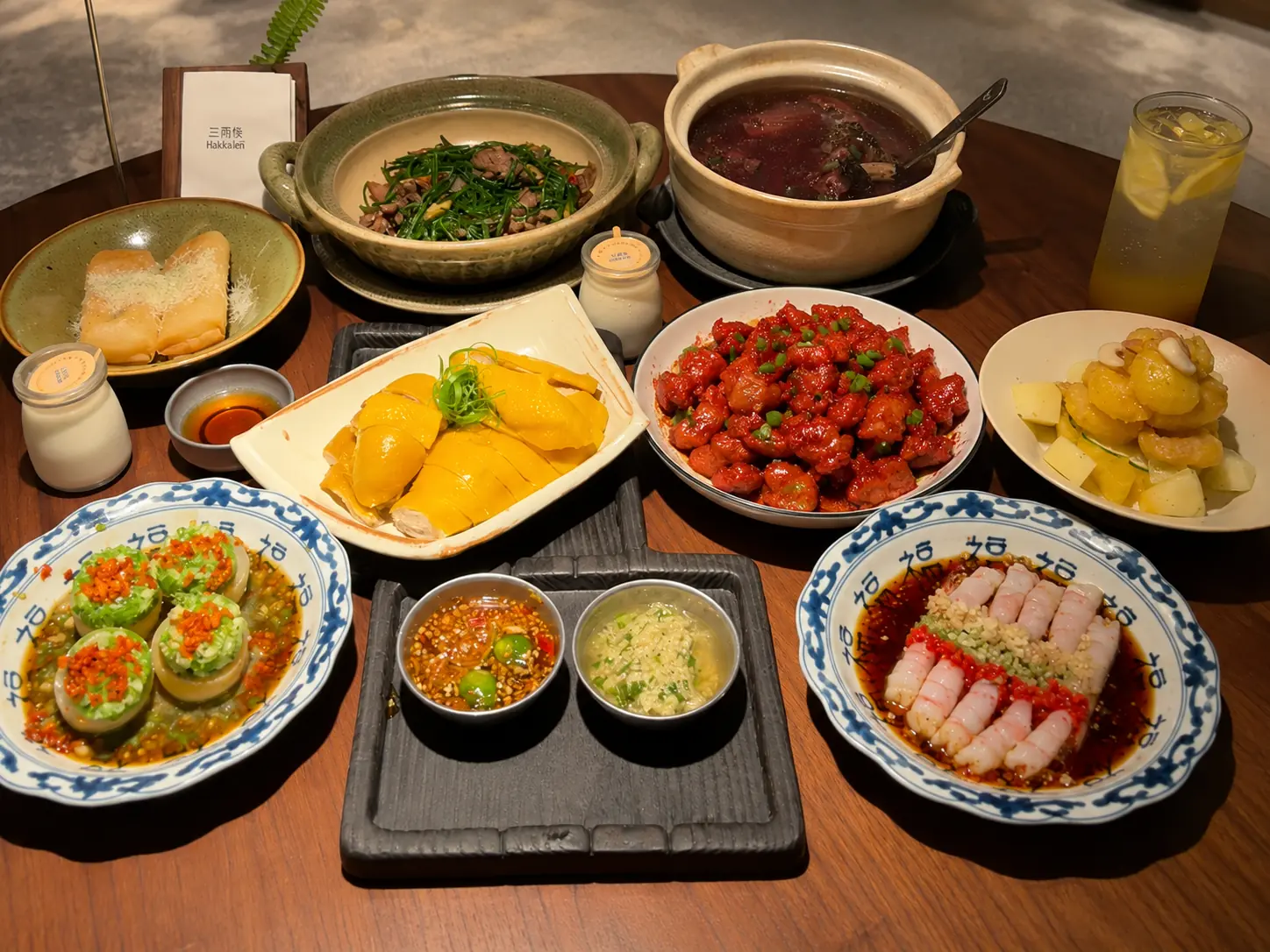
Sweet-sour dishes work best with contrast. Do not order three red, glossy meat dishes at once. Pair one red-vinasse or sweet-sour dish with a clear soup, a seafood dish, a green vegetable, and rice or noodles.
Rice wine can be hidden
If you avoid alcohol strictly, ask about rice wine, yellow wine, and red vinasse. They may appear in broths, marinades, drunken dishes, red-vinasse dishes, seafood, and poultry even when no drink is served.
Southern Fujian Is the Traveler's Doorway
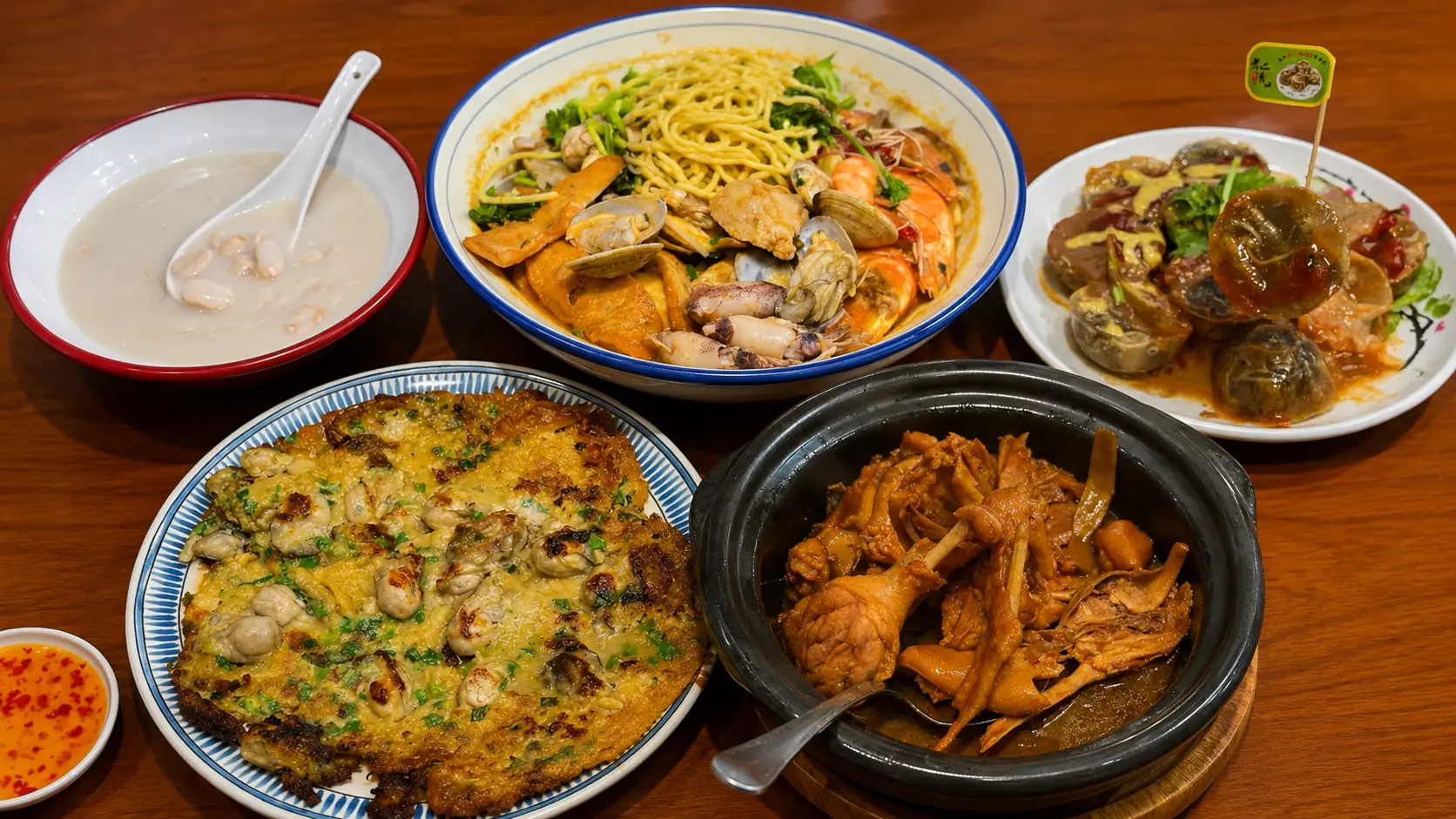
Southern Fujian (闽南), especially Xiamen (厦门), Quanzhou (泉州), and Zhangzhou (漳州), is the easiest Fujian flavor for travelers to meet. It is snack-heavy, sauce-rich, and very visible in old streets, breakfast stalls, markets, and night eating. Satay noodles, oyster omelet, ginger duck, sea worm jelly, peanut soup, five-spice rolls, rice dumplings, beef soup, misua soup, vinegar pork, and spring rolls all belong in this traveler-facing doorway.
The key is not to mistake the doorway for the whole house. Xiamen's official English page describes satay noodles as a traditional Xiamen dish and notes that the sauce can include sesame, peanut oil, shrimp sauce, chili powder, onion, garlic, and herbs. Quanzhou's city gastronomy website highlights ginger duck, oyster omelet, vinegar pork, rice noodles, beef dishes, and other local foods as part of the city's tourism appeal.
That tells you how Southern Fujian feels: more street-level, more snackable, often more sauce-driven, and strongly shaped by maritime trade and overseas connections. It is also where dietary risks become more visible. Satay sauce can involve peanuts and shrimp sauce. Oyster omelet is a shellfish dish. Sea worm jelly is exactly the kind of local specialty some travelers need to understand before ordering. Ginger duck is warming, oily, and aromatic, not a neutral poultry dish.
If your trip only includes Xiamen and Quanzhou, read this article for context, then use the city guides for actual eating routes. If you continue to Fuzhou, Putian, Yongding Tulou, or Wuyishan, keep reading because Fujian changes quickly once you leave the most famous snack streets.
Putian and Hakka Food Add Inland Depth
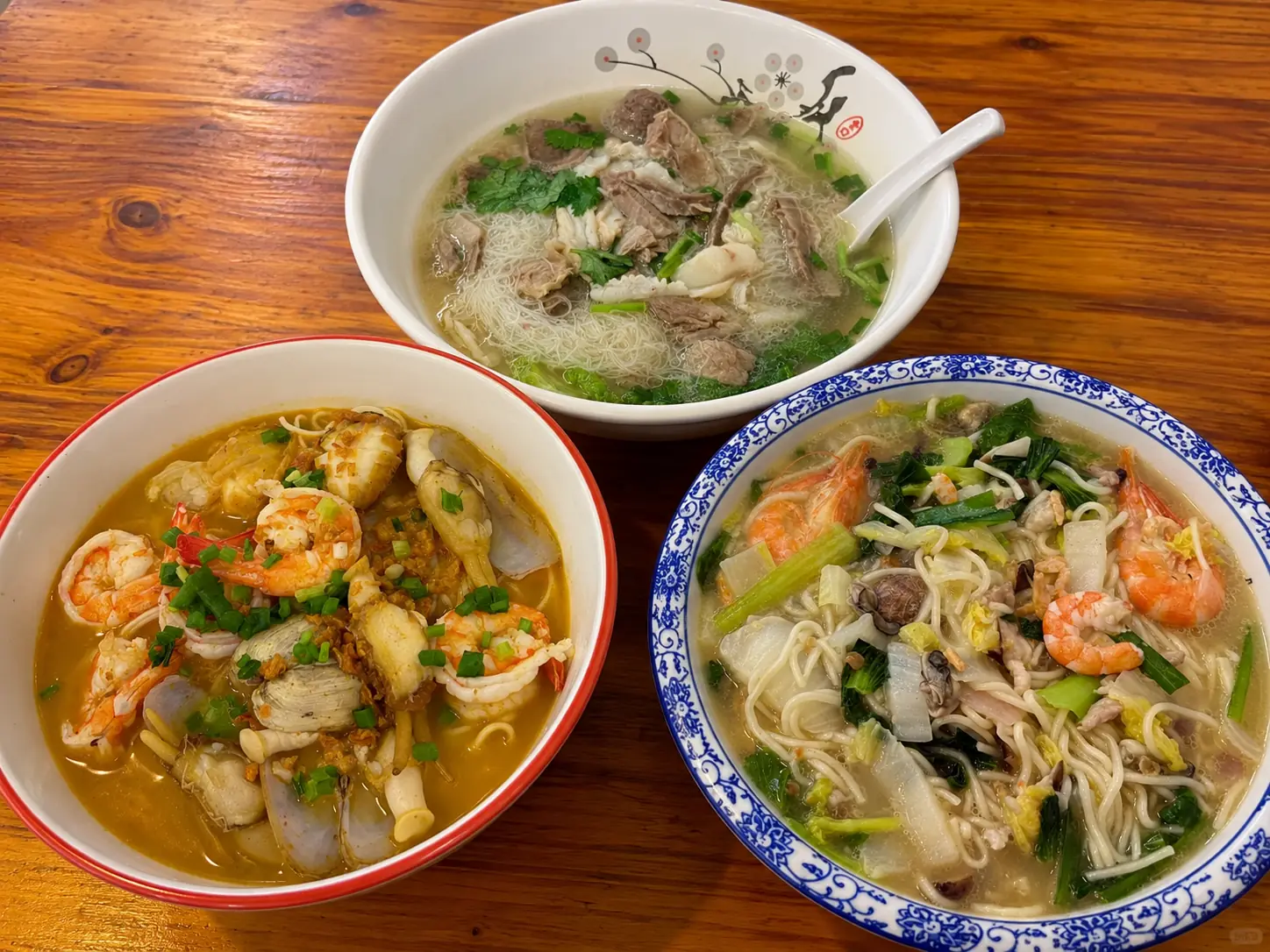
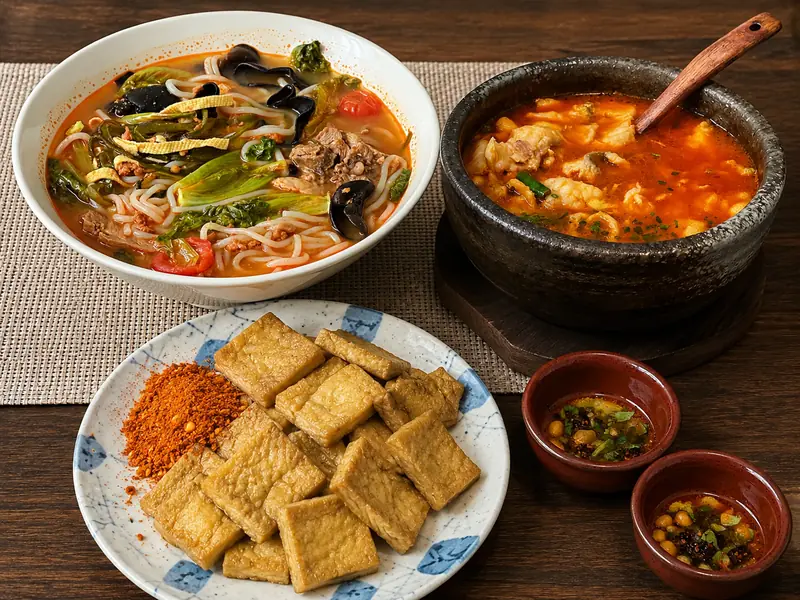
Putian (莆田), historically tied to Xinghua (兴化), is one of the most useful places for seeing Fujian food between Fuzhou and Southern Fujian. A Fujian official news-portal article on Putian snacks lists Putian braised noodles (莆田卤面), Xinghua rice noodles (兴化米粉), braised tofu (焖豆腐), red rice cakes, pork slices in soup, meat dumplings, and oyster cakes. It also notes that proper Putian braised noodles depend on broth, ingredients, and heat control, with ingredients such as lean pork, mushrooms, dried shrimp, dried scallops, oysters, razor clams, and chives.
That is why Putian food often feels comforting rather than flashy. The noodles absorb broth. Seafood disappears into the base instead of sitting on top as decoration. A tofu dish may look gentle but still carry pork, dried shrimp, razor clams, oysters, or scallops.
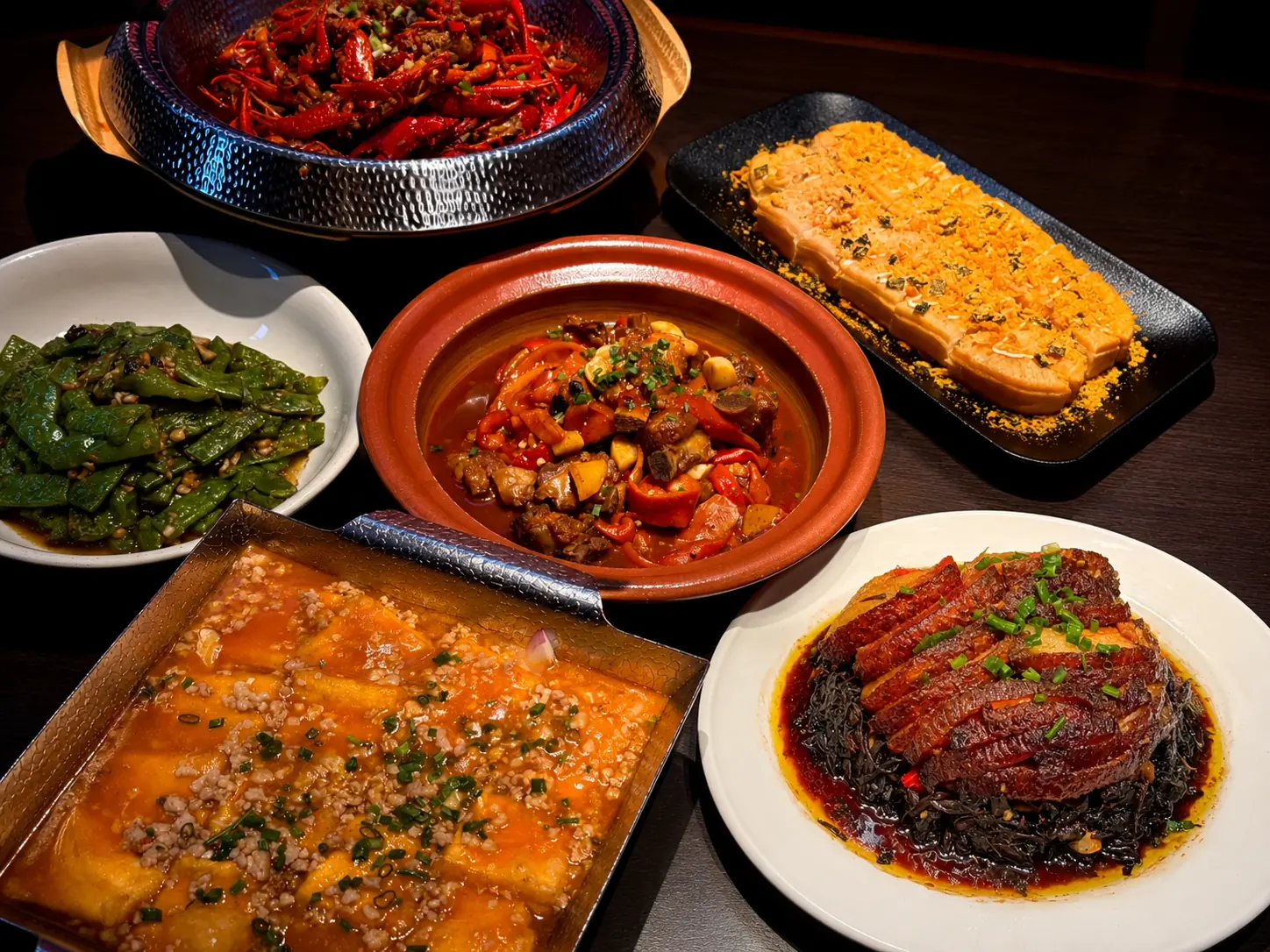
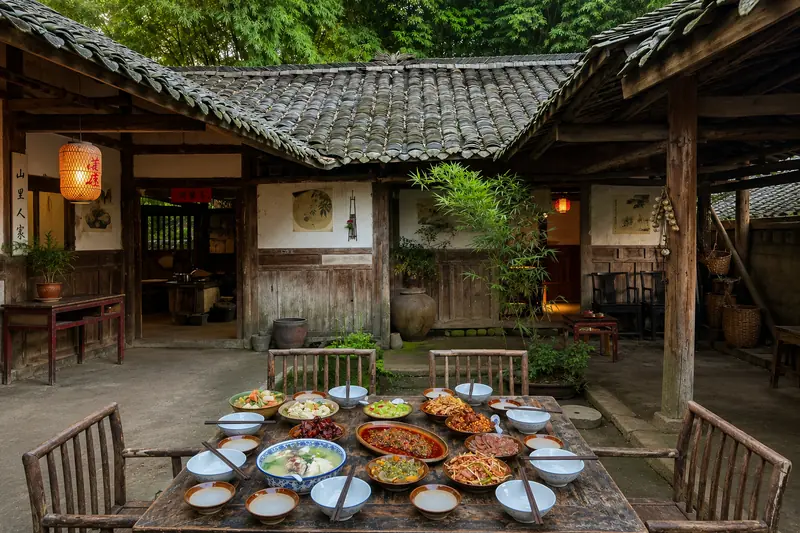
Western Fujian is a different turn. Longyan and parts of Sanming are Hakka areas; a Fujian provincial page on Longyan describes tulou as Hakka ancestral homes and notes the large Yongding tulou concentration. For travelers, this means Yongding Tulou meals and western Fujian restaurants may lean toward Hakka-style stuffed tofu, preserved-vegetable pork, bamboo shoots, pork, rice wine, chicken, rice cakes, and homestyle soups.
Be careful with phrasing: stuffed tofu and preserved-vegetable pork are Hakka classics, not uniquely Fujian inventions. In this guide, they are important because travelers actually meet them in western Fujian Hakka communities, especially around tulou routes and Longyan-area meals.
If your itinerary includes the Yongding Tulou, do not expect the table to feel like Xiamen seafood snacks. Treat it as Fujian's mountain and Hakka side: tofu, pork, preserved vegetables, bamboo shoots, rice wine, and a more family-style rhythm.
Wuyishan Brings Tea and Mountain Food
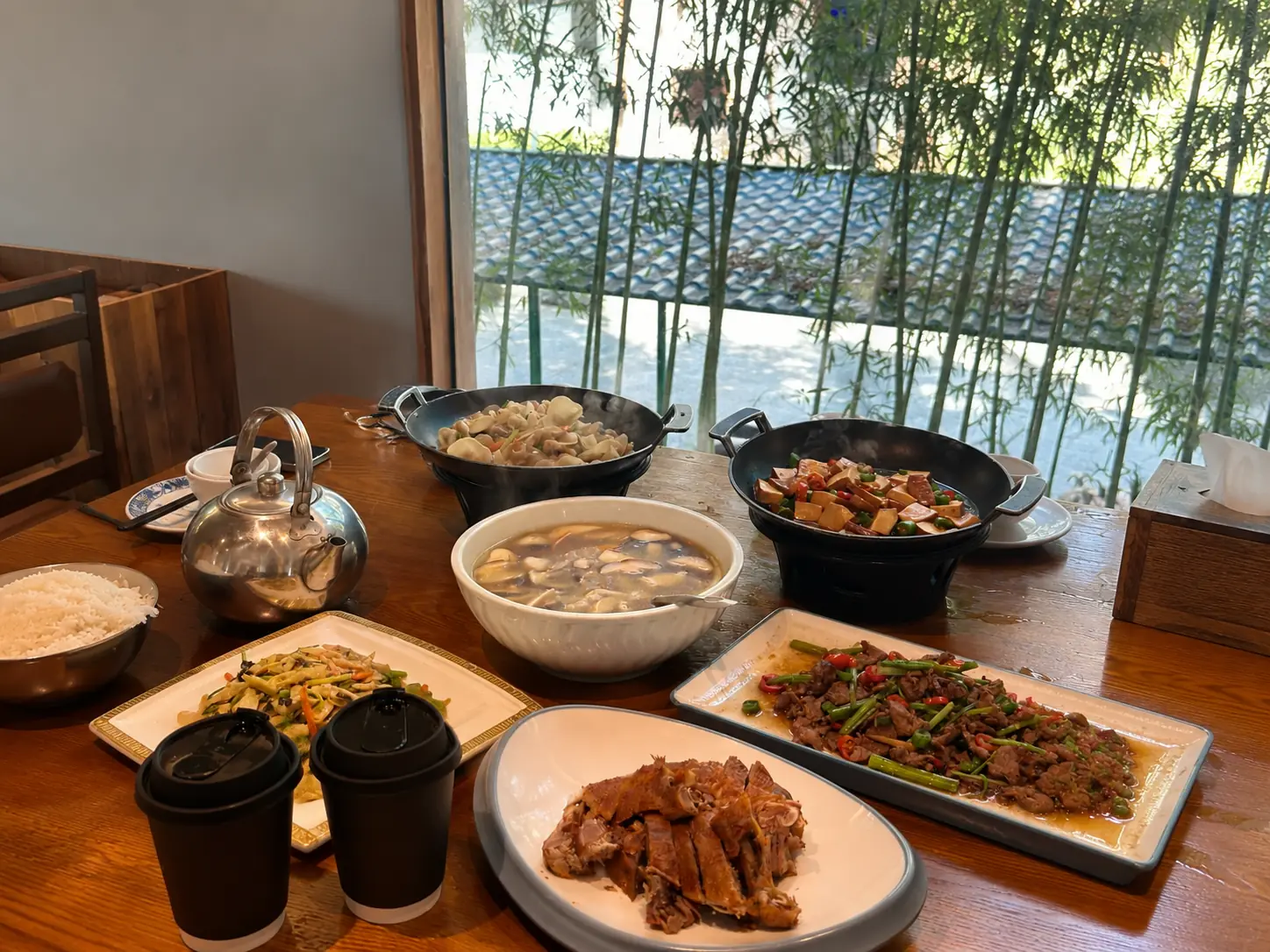
Wuyishan is not the first city people name when defining classic Fujian cuisine, but it matters for travelers because many Fujian routes combine Xiamen, tulou, Fuzhou, and Mount Wuyi. Here the table feels more inland: rock tea, smoked goose, bamboo shoots, mushrooms, river fish, greens, rice wine, and mountain snacks.
A Fujian provincial page on Wuyi rock tea craftsmanship calls Wuyishan the birthplace of rock tea and notes its UNESCO World Heritage setting. Tea is not just an attraction stop; it shapes the food day. A good Wuyishan day might include a tea tasting, a lighter lunch, and a dinner with smoked goose, bamboo shoots, mushrooms, tofu, greens, or river fish.
Langgu smoked goose (岚谷熏鹅) is one local dish to know. A Fujian Daily report carried by CCTV describes it as a Wuyishan specialty made with glutinous rice, tea leaves, rice wine, smoking, braising, and chili spices, and notes that different spice levels are now offered for visitors.
The practical point: do not make every Wuyishan meal tea-flavored. Tea is best as a separate experience, while the food table should show mountain produce, goose, bamboo shoots, mushrooms, and something simple enough to keep the day balanced.
How to Order a First Table
For two people, do not chase every famous Fujian dish at once. Order by flavor logic: one soup, one seafood dish, one red-vinasse or sweet-sour dish, one vegetable or tofu dish, and one local starch or snack.

| Where You Are | First Table Logic | Good Examples | Watch For |
|---|---|---|---|
| Fuzhou 福州 | Soup first, then red-vinasse or sweet-sour contrast | Fish balls, meat swallow dumplings, Taiping Yan, lychee pork, red-vinasse chicken | Pork fillings, wine lees, chicken stock, expensive banquet soups |
| Xiamen 厦门 | Snack sampler plus one clean seafood dish | Satay noodles, oyster omelet, peanut soup, sea worm jelly, steamed seafood | Peanuts, shrimp sauce, shellfish, tourist-market seafood pricing |
| Quanzhou 泉州 | Old-city snacks with one deeper meat or soup dish | Ginger duck, beef soup, misua soup, vinegar pork, oyster omelet | Duck oil, ginger heat, pork, beef, starch-thickened soups |
| Putian 莆田 | Seafood broth and noodles | Braised noodles, Xinghua rice noodles, braised tofu, clams, oyster cakes | Seafood inside broth, pork bones, dried shrimp, scallops, shellfish |
| Longyan / Tulou 龙岩 / 土楼 | Hakka-style mountain table | Stuffed tofu, preserved-vegetable pork, bamboo shoots, rice-wine chicken | Pork, rice wine, stronger homestyle sauces, limited vegetarian clarity |
| Wuyishan 武夷山 | Tea plus mountain ingredients | Rock tea, smoked goose, bamboo shoots, mushrooms, river fish, greens | Chili spice on smoked goose, tea-shopping pressure, uneven tourist menus |
Two-Person First Table
balanced and realistic
Choose one soup, one seafood or fish dish, one red-vinasse or sweet-sour dish, one vegetable or tofu, and rice, noodles, rice vermicelli, or a local snack. Save luxury soup for a trusted restaurant.
Four-Person First Table
more room for contrast
Add one local snack set and one regional specialty from where you are: Fuzhou broth, Xiamen satay, Quanzhou ginger duck, Putian noodles, Hakka tofu, or Wuyi smoked goose. Keep the rest simple.
Dietary Risks Hide in Clear Fujian Broths
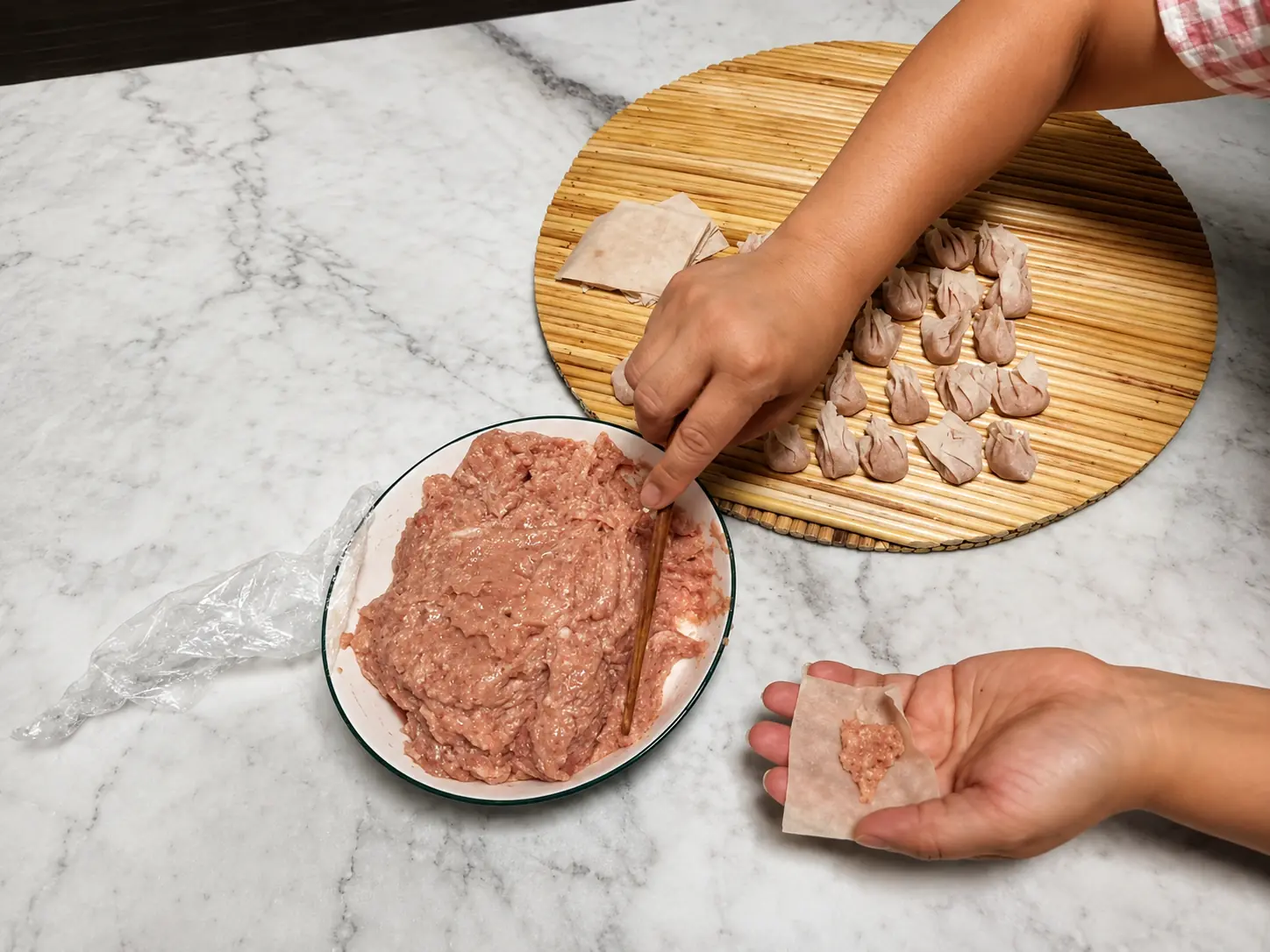
Fujian food can look gentle while hiding complicated ingredients. Seafood, shellfish, pork, lard, chicken stock, ham, rice wine, red vinasse, peanuts, satay sauce, shrimp paste, wheat wrappers, fish bones, sugar, and luxury seafood can appear in dishes that look clear or mild.
Vegetarians need to be especially direct. Stir-fried greens may use lard or dried shrimp. Tofu may contain pork, dried scallops, oysters, razor clams, or shrimp. Soups may use chicken, pork-bone, or seafood stock. Fish balls often contain pork filling. Meat swallow dumplings use meat-based wrappers.
Buddha Jumps Over the Wall needs extra care. Traditional and high-end versions may include sea cucumber, abalone, fish maw, dried scallops, poultry, pork, and sometimes shark fin. Many modern restaurants offer versions without shark fin, but do not assume. Ask about ingredients, price, portion size, and whether shark fin is included before ordering.
- Good question: Does this soup use chicken, pork, or seafood stock?
- Good question: Is this seafood priced per portion, per jin, or per piece?
- Good question: Does the satay sauce contain peanuts or shrimp sauce?
- Avoid assuming: Clear soup, tofu, vegetables, and mild sauces are automatically vegetarian or allergy-safe.
Useful Fujian Ordering Phrases for Travelers
Use these when menus or translation apps do not give enough detail.
Confirm the hidden base
Light soups, tofu, greens, and noodles can still use chicken, pork-bone, seafood, dried shrimp, or shellfish stock.
Confirm seafood pricing
Ask whether the price is per portion, per jin, or per piece before the kitchen cooks live or market seafood.
Show the exact Chinese line
Translation apps are useful, but showing one short Chinese question is clearer than explaining a full dietary history.
| English | Chinese | Pinyin | Say It Like… |
|---|---|---|---|
| Does this contain seafood? | 这里面有海鲜吗? | zhè lǐ miàn yǒu hǎi xiān ma | juh lee myen yo hi shyen mah |
| Is the soup base chicken stock, pork-bone stock, or seafood stock? | 这个汤底是鸡汤、猪骨汤还是海鲜汤? | zhè ge tāng dǐ shì jī tāng, zhū gǔ tāng hái shì hǎi xiān tāng | juh guh tahng dee shir jee tahng, joo goo tahng, hi shir hi shyen tahng |
| Can you make it without peanuts or satay sauce? | 可以不放花生或沙茶酱吗? | kě yǐ bù fàng huā shēng huò shā chá jiàng ma | kuh yee boo fahng hwa shung hwoh shah chah jyahng mah |
| How much is this seafood per jin? | 这个海鲜多少钱一斤? | zhè ge hǎi xiān duō shǎo qián yì jīn | juh guh hi shyen dwor shaow chyen ee jin |
| Please do not add shark fin. | 请不要放鱼翅。 | qǐng bú yào fàng yú chì | ching boo yaow fahng yoo chir |
Frequently Asked Questions
Usually not in the chili-forward way of Sichuan or Hunan cuisine. Fujian flavor is more often built from soup, seafood, red vinasse, rice wine, vinegar, sweetness, ginger, and umami. Some Southern Fujian sauces and Wuyishan smoked goose can still have heat.
Beyond This Guide
Fujian is best planned by rhythm, not by trophy dishes. Let Fuzhou carry the soup day, Xiamen and Quanzhou carry the snack days, Putian carry a seafood-noodle stop, tulou country carry the Hakka-style meal, and Wuyishan carry the tea-and-mountain finish. That way the cuisine feels like a province, not a checklist.
© gochinafreely.com — Original guide by Go China Freely.