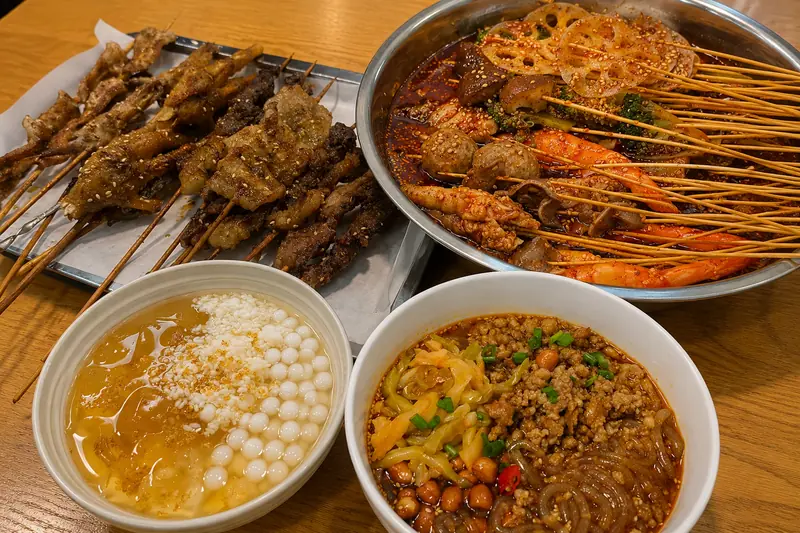
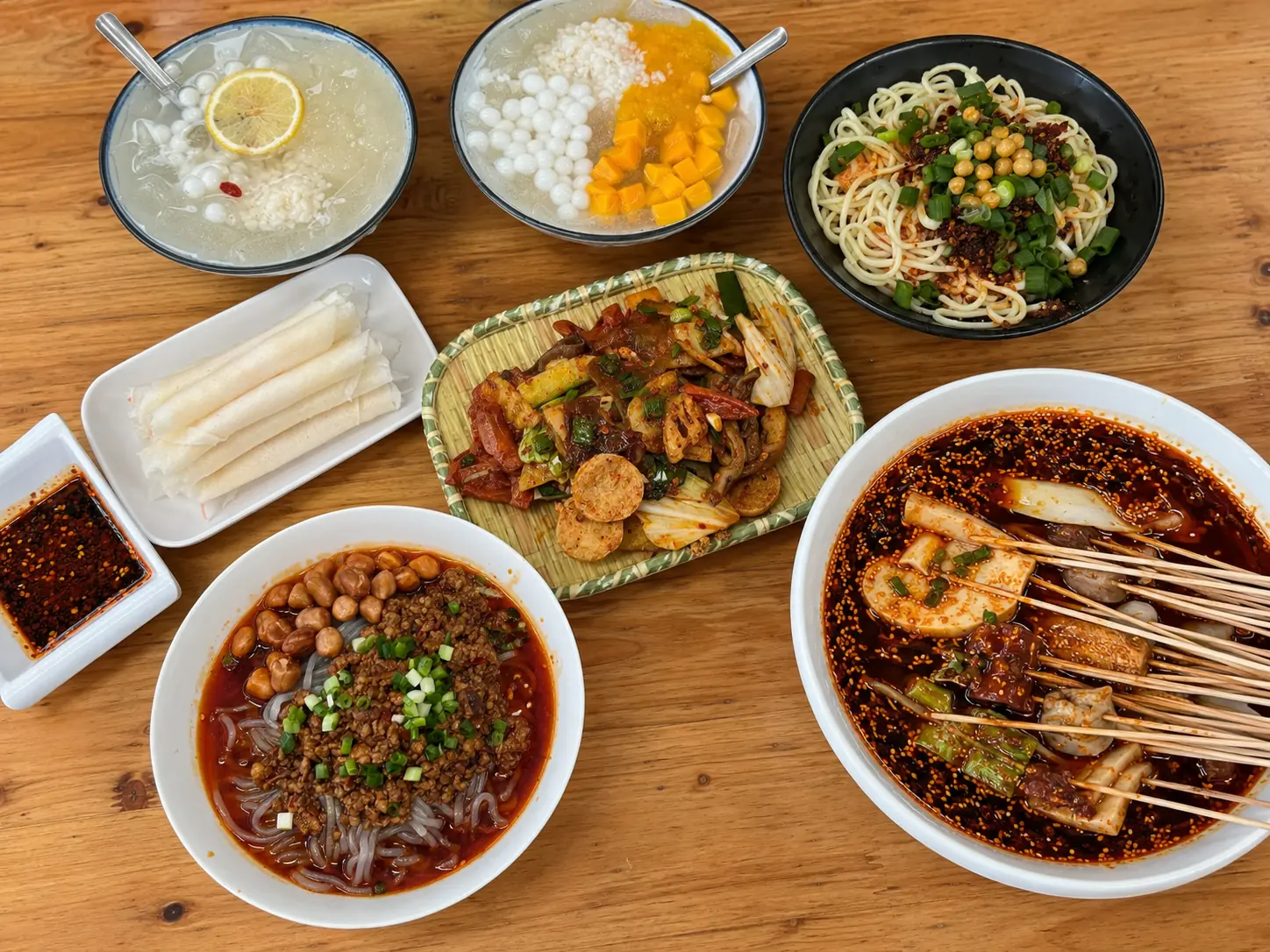
Bingfen (冰粉) is the cold, glass-clear dessert you want after a Sichuan or Chongqing meal starts getting louder than you planned. A small bowl of trembling jelly, brown sugar syrup, crushed toppings, and ice will not magically erase chili heat, but it gives your mouth a sweet pause before the next hotpot, noodle bowl, or skewer.
Executive Summary
What this guide covers
What Bingfen is, how it tastes, hand-rubbed versus powder versions, classic toppings, where to find it in Chengdu and Chongqing, and how to order around sugar and allergies.
Best first bowl
Start with red sugar Bingfen or hand-rubbed Bingfen before choosing fruit-heavy, milk-based, taro-ball, or glutinous-rice versions.
Main traveler trap
Do not treat it as a chili cure, a guaranteed vegan dessert, or a fixed restaurant pilgrimage. It is a flexible street dessert with changing toppings and stalls.
冰粉
Chinese name
Cold jelly
Core texture
Brown sugar
Classic syrup
Southwest
Best travel context
A Southwest Cool-Down Dessert
Bingfen is best understood as a Southwest China summer dessert and spicy-food companion. A China Daily regional page describes Bingfen as a traditional dessert mainly found in Southwest China, especially Sichuan (四川), Guizhou (贵州), and Yunnan (云南), with a smooth, transparent, jelly-like texture. Chongqing (重庆) belongs to the same eating world for travelers: hot weather, hotpot, snack streets, and cold sweet bowls.
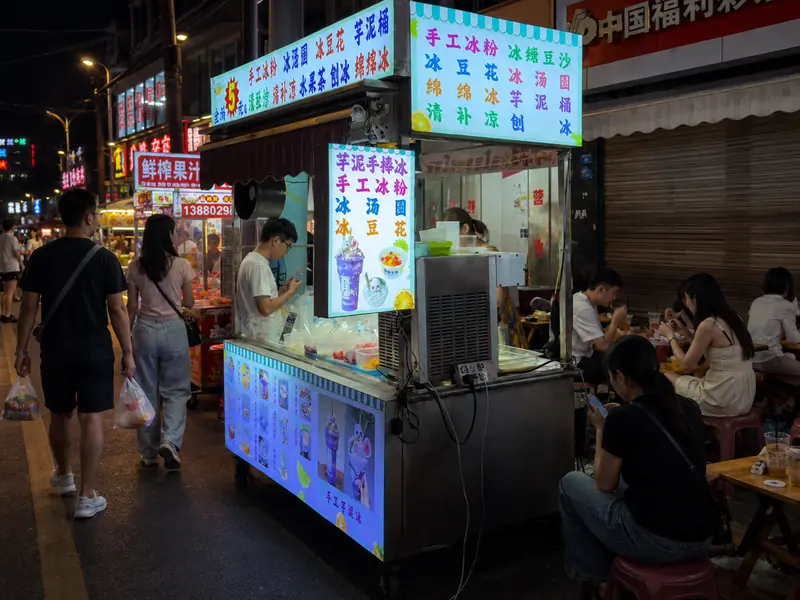
In Chengdu (成都) and Chongqing, Bingfen is not usually a formal plated dessert. It is a small bowl from a hotpot restaurant, night market, snack counter, tourist street, or neighborhood stall. A CQNEWS English feature framed it as one of the foods Chongqing people reach for in summer, and listed local bowls with roses, haw flakes, raisins, glutinous rice cake, strawberries, taro balls, tangyuan, pineapple, sesame, dates, and wolfberries.
That variety matters. Bingfen is a format, not one fixed recipe. The useful travel question is not "Where is the one real Bingfen?" It is "Which version should I order after a spicy meal, and what should I avoid if I have allergies or diet limits?"
Do not over-romanticize one origin story
You may see stories linking Bingfen to Sichuan Pengshan or older Southwest food traditions. For a traveler, the safer point is practical: it is now a common Southwest dessert, especially useful in Chengdu and Chongqing food days.
What Bingfen Tastes Like
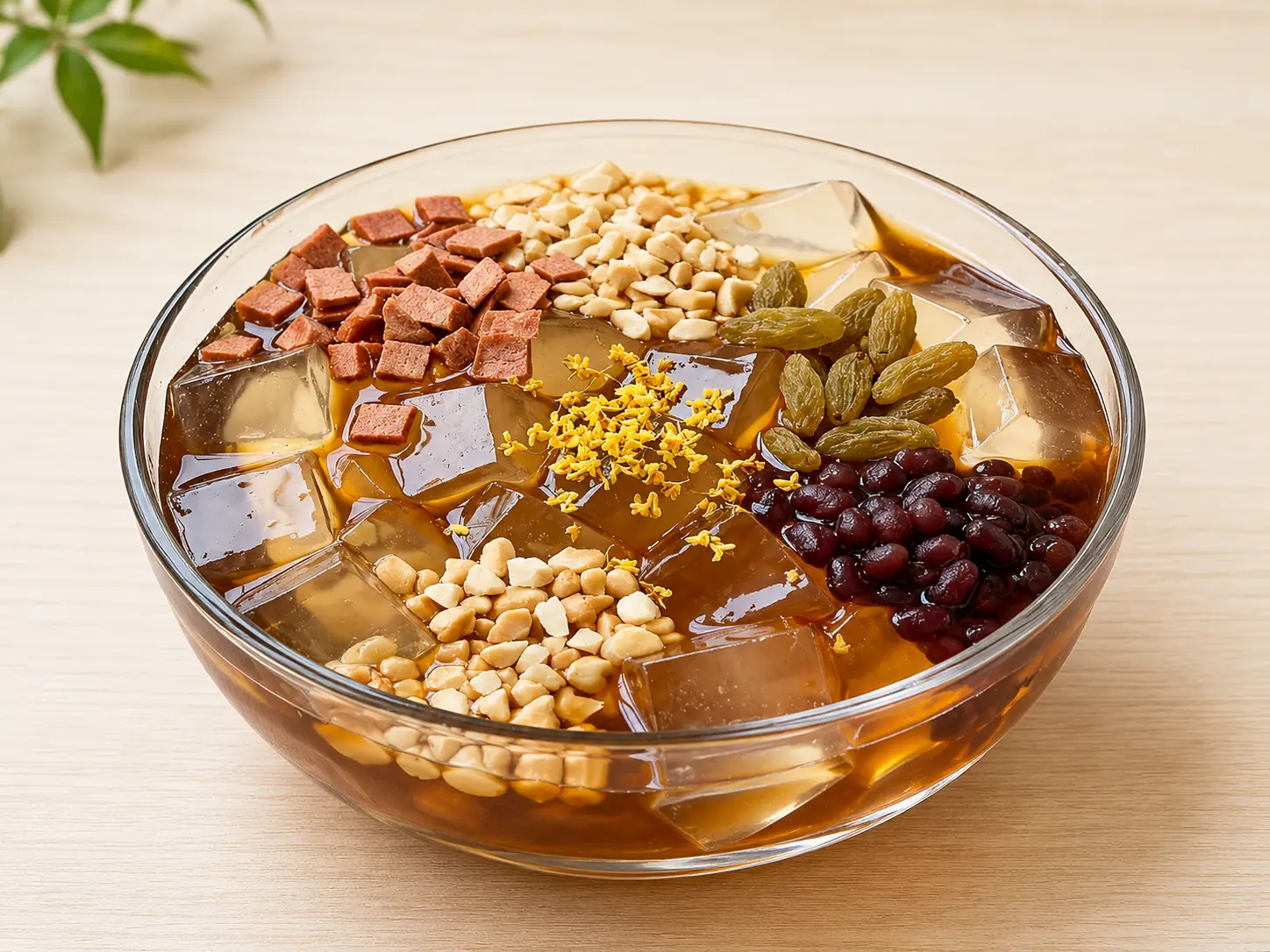
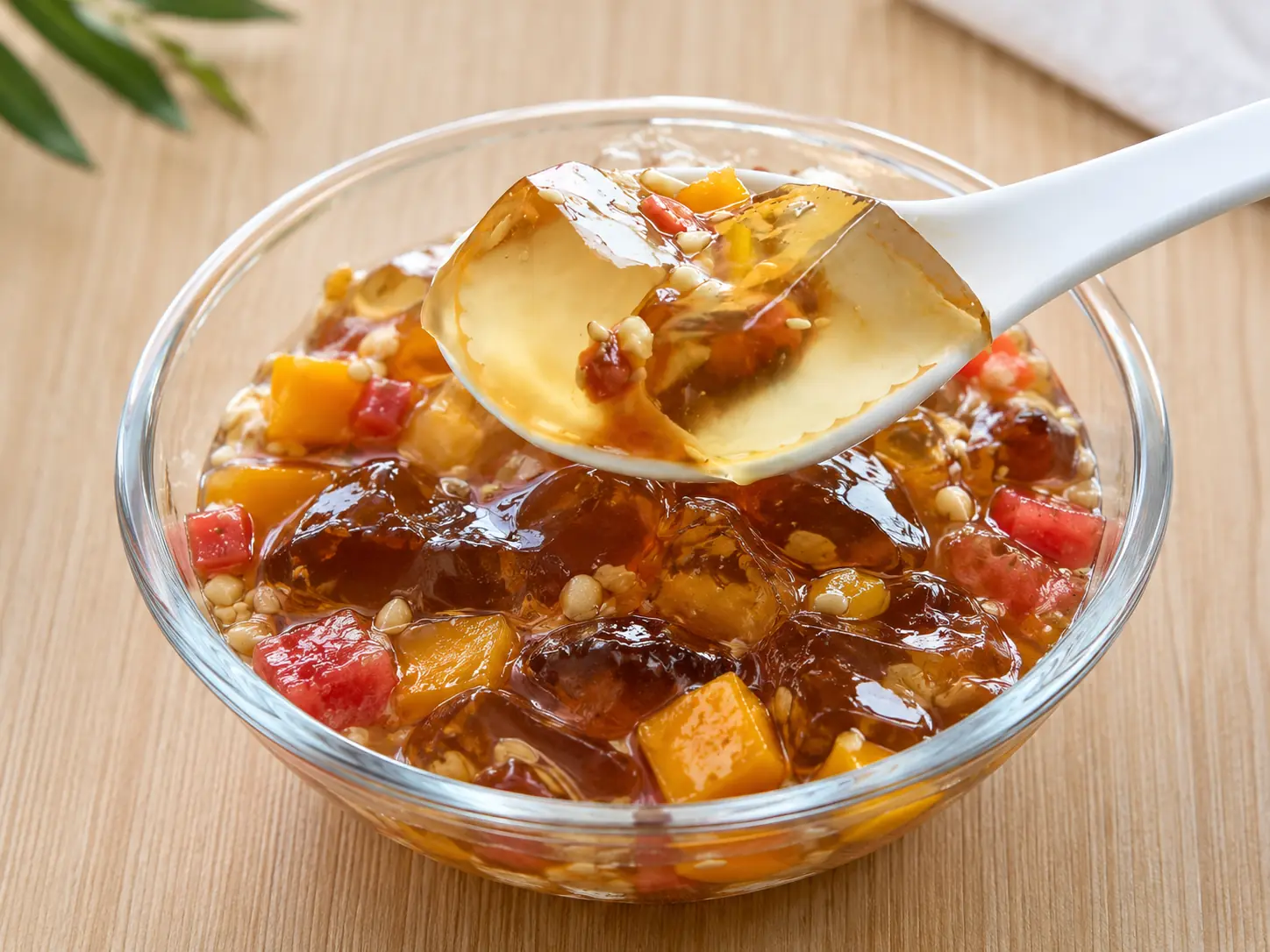
Plain Bingfen is almost neutral. The jelly is cold, slippery, and lightly bouncy, with less body than grass jelly and less richness than milk pudding. The flavor comes from what surrounds it: brown sugar syrup for caramel depth, crushed peanuts and sesame for aroma, haw flakes or raisins for tart sweetness, and fruit or taro balls for modern texture.
The best bowl feels clean rather than heavy. The jelly should hold together but break easily under a spoon. The syrup should taste like brown sugar, not just sweet water. Toppings should look fresh, especially peanuts and sesame, because stale nuts can ruin an otherwise good bowl fast.
| Quality Cue | Good Sign | Weak Sign |
|---|---|---|
| Jelly texture | Clear, cold, soft, spoonable | Watery, broken, rubbery, or too firm |
| Brown sugar syrup | Caramel-like, fragrant, not flat | Only sweet, no aroma, too diluted |
| Toppings | Fresh nuts, haw flakes, fruit, or chewy add-ons | Stale peanuts, soggy fruit, random overloaded mix |
| Travel use | Light reset after spicy food | So many toppings it becomes a heavy dessert meal |
Hand-Rubbed Seeds vs Powder
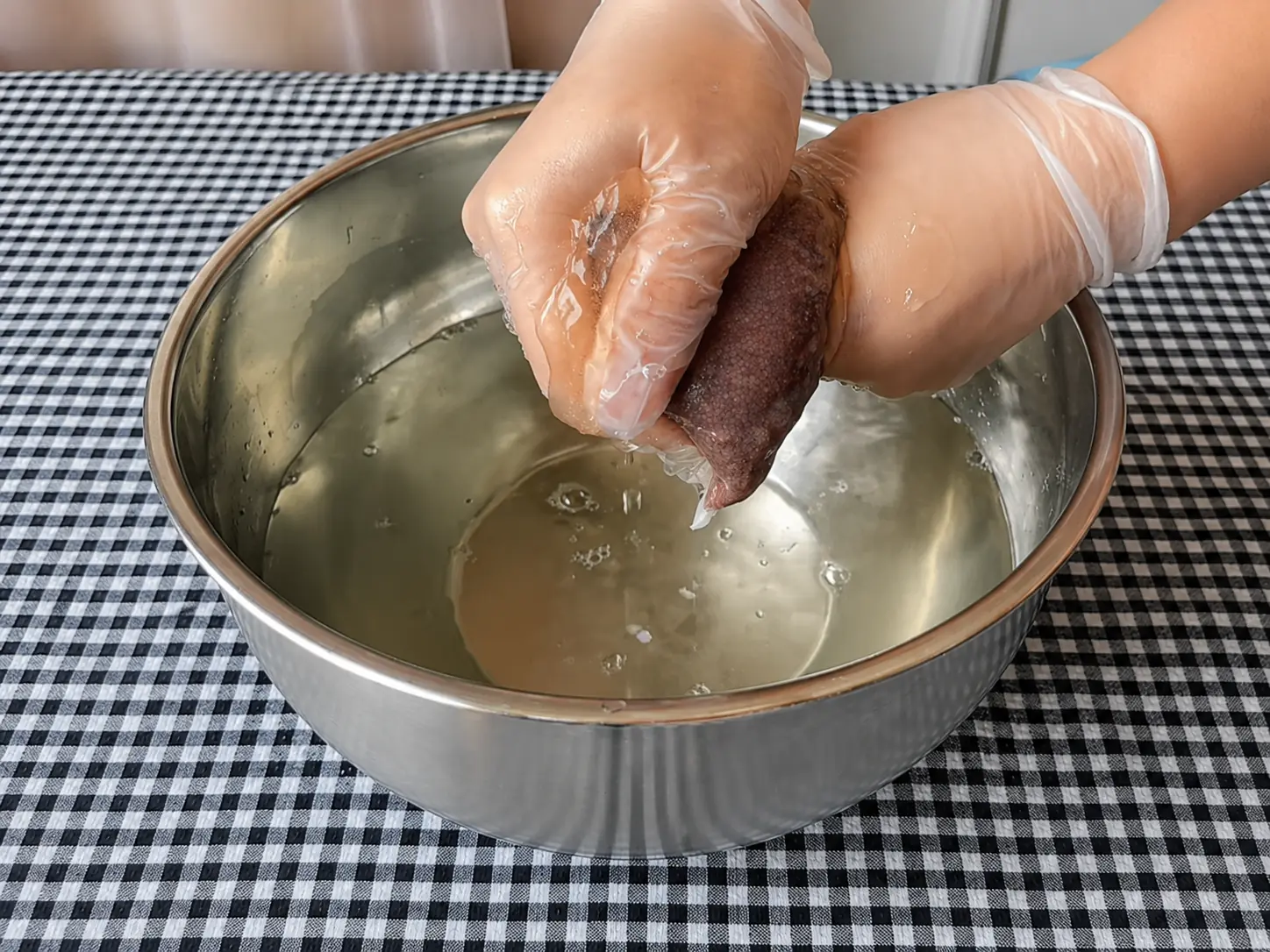
Traditional-style Bingfen is often sold as hand-rubbed Bingfen (手搓冰粉). The basic idea is that ice-jelly seeds (冰粉籽), often described as false-physalis seeds (假酸浆籽), are wrapped in cloth and rubbed in water so the natural gelling material releases into the liquid. Food-grade setting water helps it firm into a delicate jelly. A 2025 iChongqing article also describes Bingfen as a plant seed-based jelly when explaining Chongqing summer flavors.
Modern Bingfen can also be made from instant ice-jelly powders or starch and plant-gel bases, depending on the product. That does not automatically make it bad. Powder versions are stable, clear, fast, and common in shops. Hand-rubbed versions usually feel softer and more traditional, but the final bowl still depends on syrup, toppings, freshness, and how long it has been sitting.
Hand-rubbed Bingfen
Softer, more traditional texture
- ✓Made by rubbing ice-jelly seeds in water before setting.
- ✓Best when the stall makes it fresh and keeps toppings simple.
- —Quality varies more from stall to stall.
Powder Bingfen
Stable, clear, and common in shops
- ✓Often uses instant powder or starch and plant-gel bases.
- ✓Can still be a good bowl if syrup and toppings are fresh.
- —Texture usually feels less delicate than hand-rubbed versions.
Decision shortcut
Which Bingfen should I order first?
I want the classic feel
Choose red sugar Bingfen or hand-rubbed Bingfen with simple toppings.
I want the safest first dessert
Choose a small plain brown sugar bowl before upgrading to fruit or chewy toppings.
I want the most photogenic bowl
Choose a fruit or taro-ball version, but treat it as a modern dessert rather than the baseline.
I have allergies
Start plain, ask about peanuts, sesame, milk, fermented rice, and shared tools before paying.
Classic Toppings and Modern Bowls
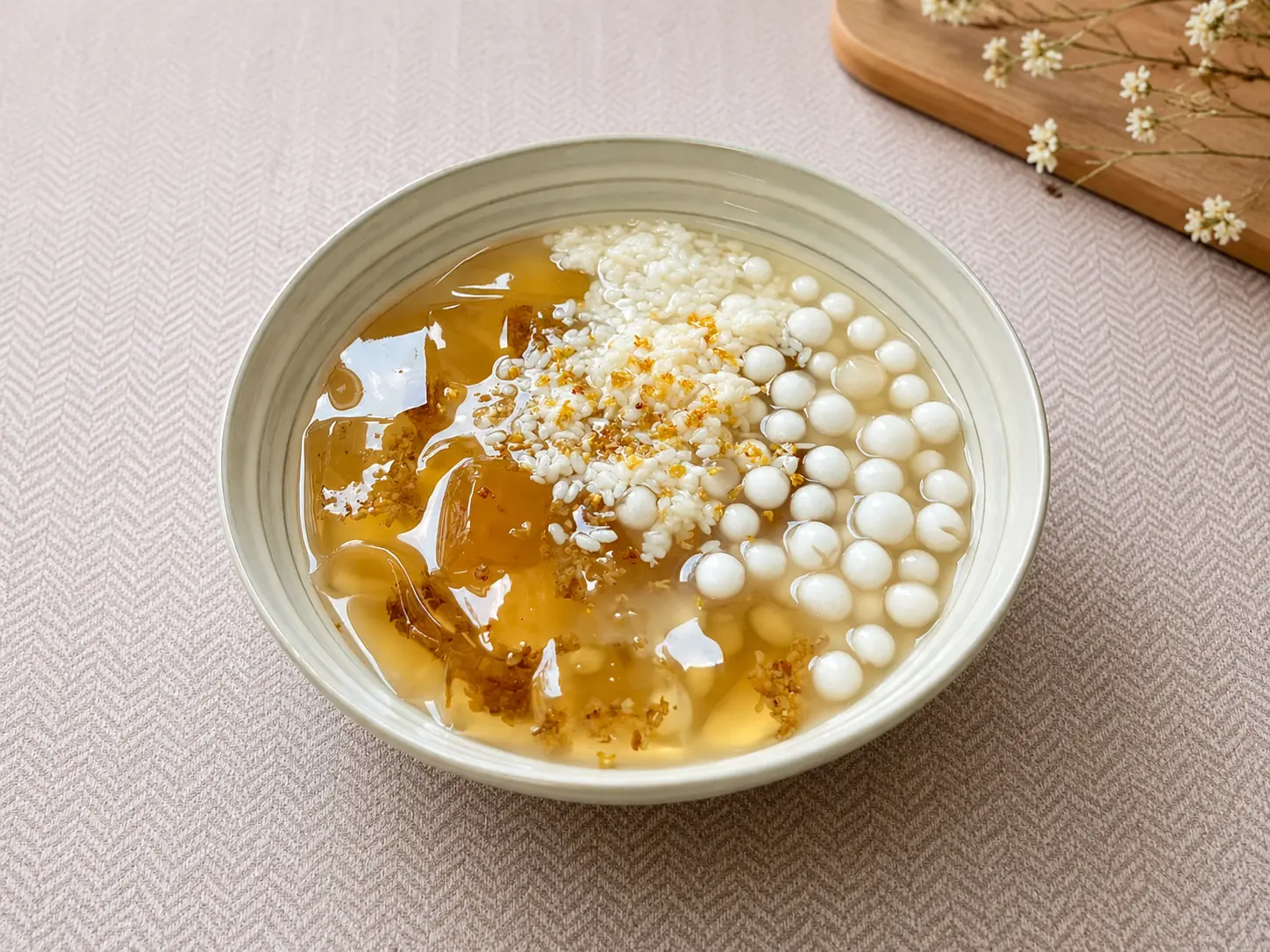
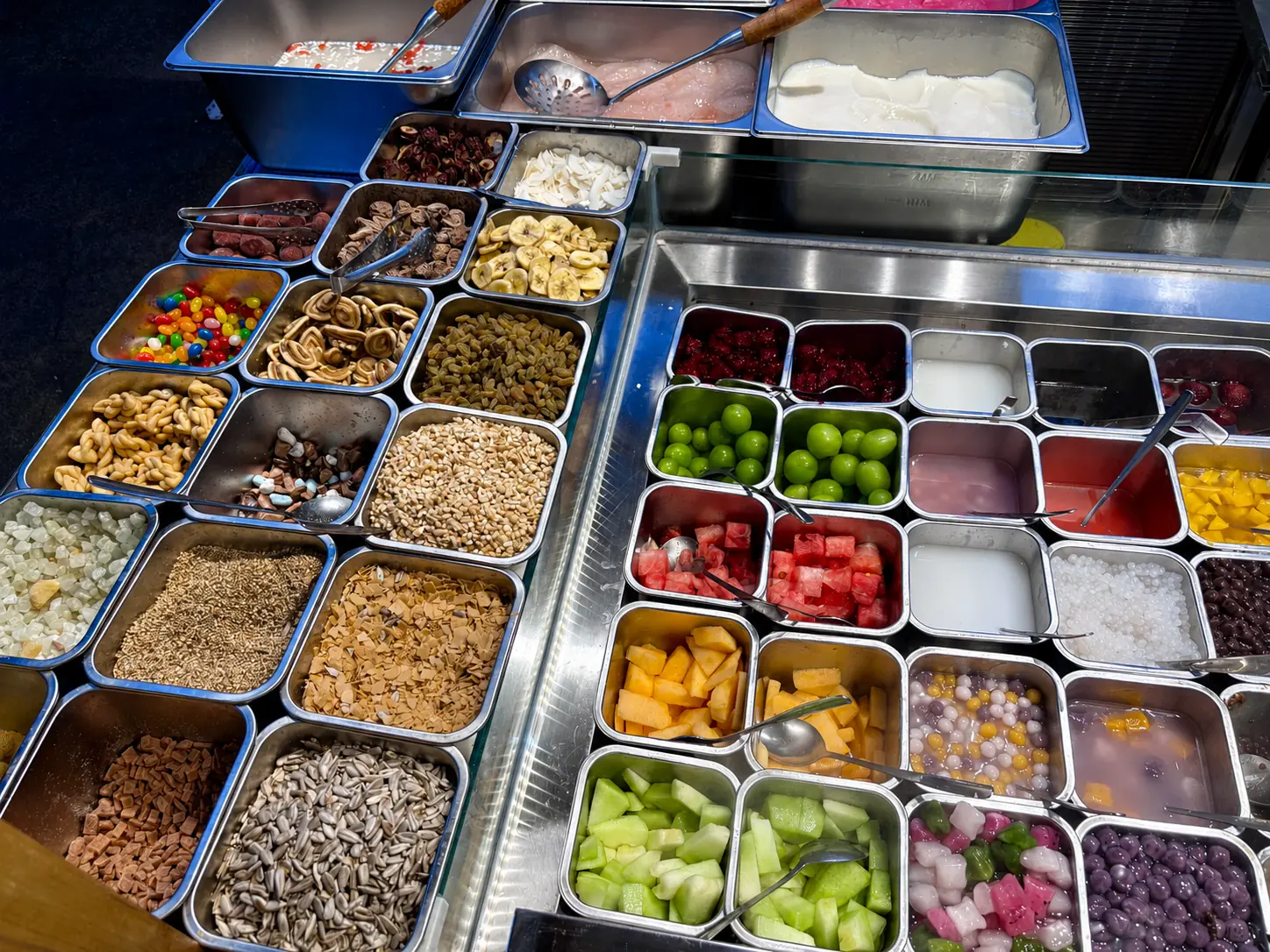
Classic Bingfen is usually built around clear jelly and brown sugar syrup. From there, the bowl can stay very simple or turn into a small dessert construction project. Classic toppings include crushed peanuts (花生), sesame (芝麻), haw flakes (山楂片), raisins (葡萄干), wolfberries (枸杞), red dates (红枣), and fermented rice (醪糟). Modern or loaded bowls may add small tangyuan (小汤圆), taro balls (芋圆), glutinous rice cake pieces (糍粑), coconut jelly, watermelon, mango, strawberry, or other fruit.
For a first bowl, keep it restrained. Red sugar Bingfen with one or two crunchy or tart toppings teaches you the dessert faster than a bowl loaded with every chewy add-on. If you are sharing snacks across a Chengdu or Chongqing food walk, a lighter bowl also leaves room for the next stop.
| Version | Chinese | Best For | Watch For |
|---|---|---|---|
| Red sugar Bingfen | 红糖冰粉 | Best first order | Can be too sweet if syrup is heavy |
| Hand-rubbed Bingfen | 手搓冰粉 | Traditional texture | Quality varies by stall |
| Fruit Bingfen | 水果冰粉 | Photos and lighter sweetness | Fruit freshness matters |
| Fermented rice Bingfen | 醪糟冰粉 | Sweet rice aroma | Not ideal if avoiding alcohol flavor |
| Milk or snow-style Bingfen | 奶冰粉 / 雪花冰粉 | Modern dessert shops | May contain dairy |
Why It Helps After Spicy Food
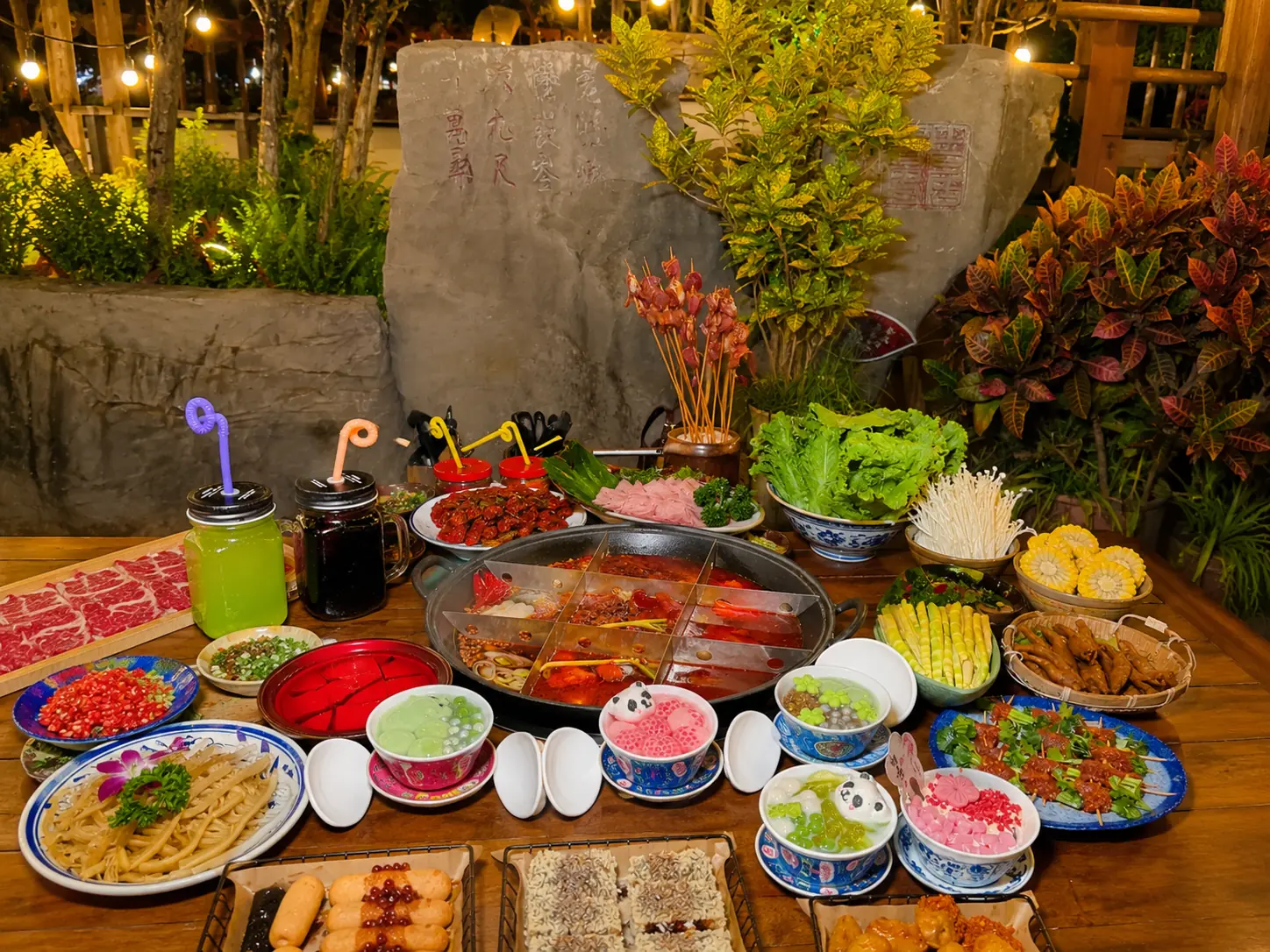
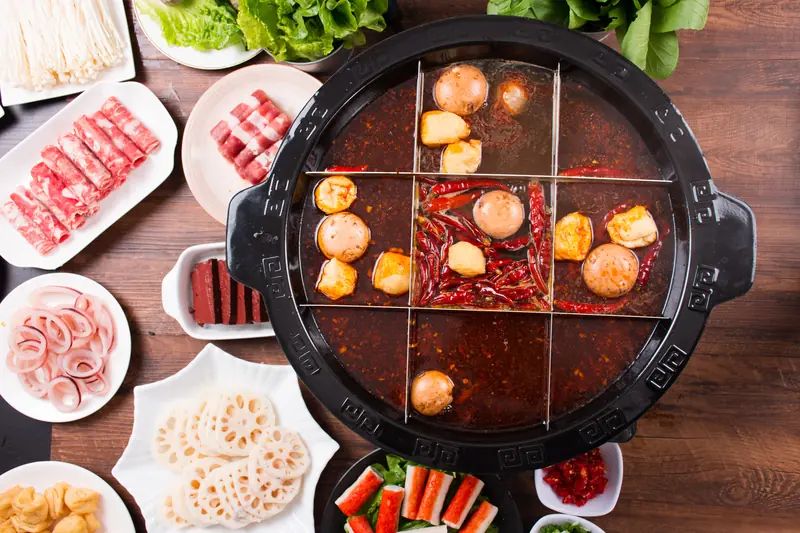
Bingfen is not a scientific antidote to chili oil. The help is more practical: cold temperature, sweet syrup, water, soft texture, and a momentary break from hot oil, Sichuan pepper, vinegar, garlic, smoke, and salt. After hotpot (火锅), Suan La Fen (酸辣粉), Mapo tofu (麻婆豆腐), or late-night skewers, that pause can be exactly what your table needs.
Use it as pacing. If the meal is getting too hot, take a few spoonfuls, slow down, and restart with rice, vegetables, or a milder bite. If you already feel uncomfortably full, order a smaller bowl or share one. A fully loaded Bingfen with taro balls, tangyuan, rice cake, fruit, and extra syrup can become heavier than the spicy snack you were trying to recover from.
- Use Bingfen as a pause between spicy dishes, not as permission to order beyond your spice tolerance.
- Share one bowl if you are already deep into hotpot or a snack crawl.
- Choose plain red sugar Bingfen when you want the lightest reset.
- Avoid milk, nut, sesame, or fermented-rice versions if those ingredients matter to your group.
Where to Try Bingfen
Do not chase Bingfen like a once-in-a-lifetime restaurant reservation. The better strategy is to pair it with food areas you already want to visit. In Chengdu, look around hotpot restaurants, snack streets, and evening food walks. In Chongqing, look around downtown snack streets, old-town walks, and commercial districts with heavy street-food traffic.
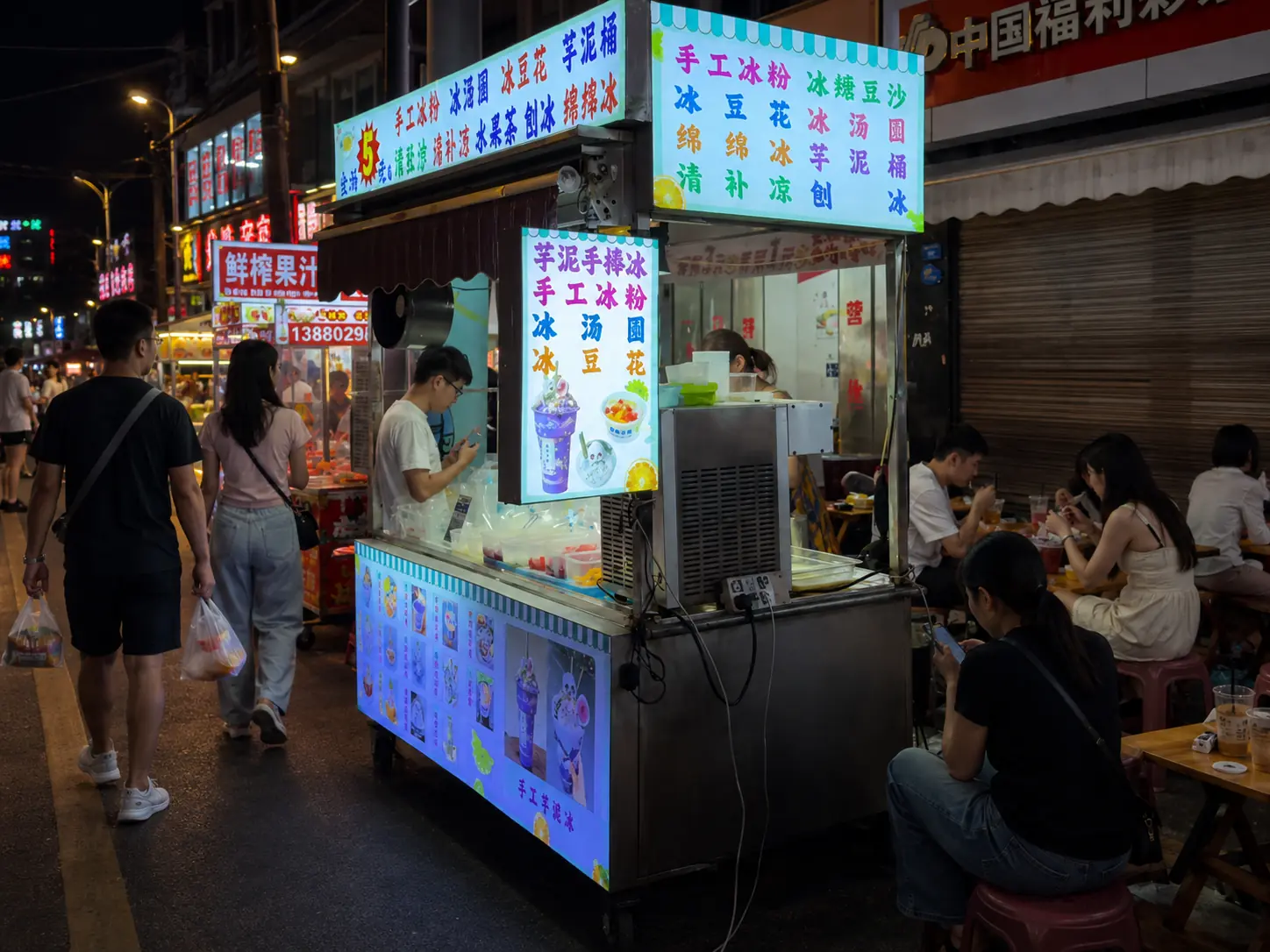
Best when Bingfen is part of a Chengdu neighborhood food night: hotpot, skewers, local restaurants, then a light dessert stop nearby.
Touristy but easy for first-timers. Use it to recognize the dessert, then compare with a less scenic neighborhood bowl later.
Convenient if your day already includes the alleys. Expect a visitor-facing snack context rather than the deepest local price.
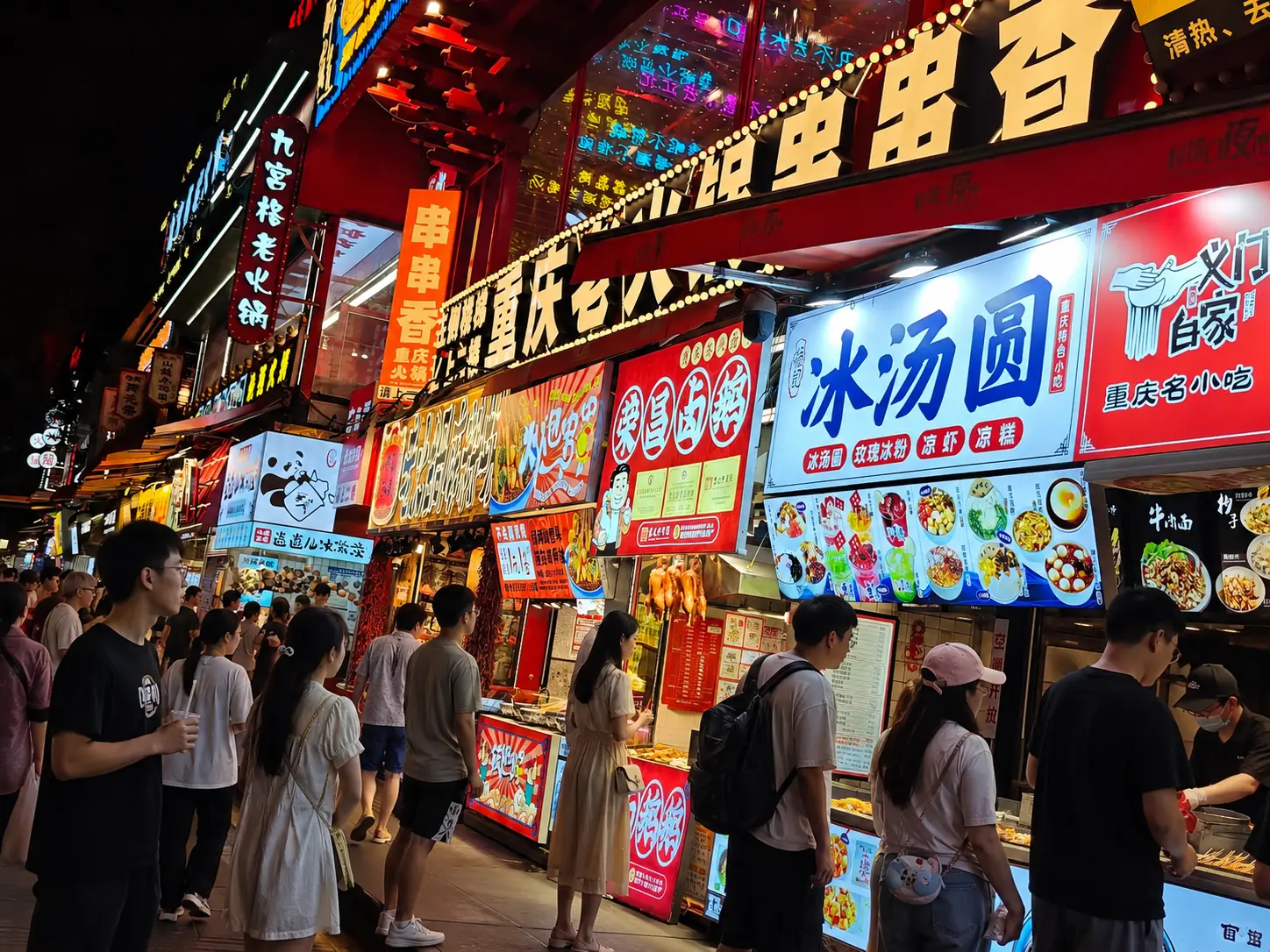
The simplest downtown snack-street pairing near Jiefangbei: Suan La Fen, small noodles, skewers, and Bingfen in one walk.
Useful when you want old-town browsing and snack density together. Go earlier if food quality matters more than atmosphere.
Better for a commercial-district food stop north of the river, especially if your hotel or evening route is already nearby.
Ask price first in tourist zones
Ordinary Bingfen is generally a low-cost snack, but prices vary by city, toppings, mall setting, and scenic-area markup. In tourist streets, point to the bowl and ask the price before adding every topping.
How to Order Your First Bowl
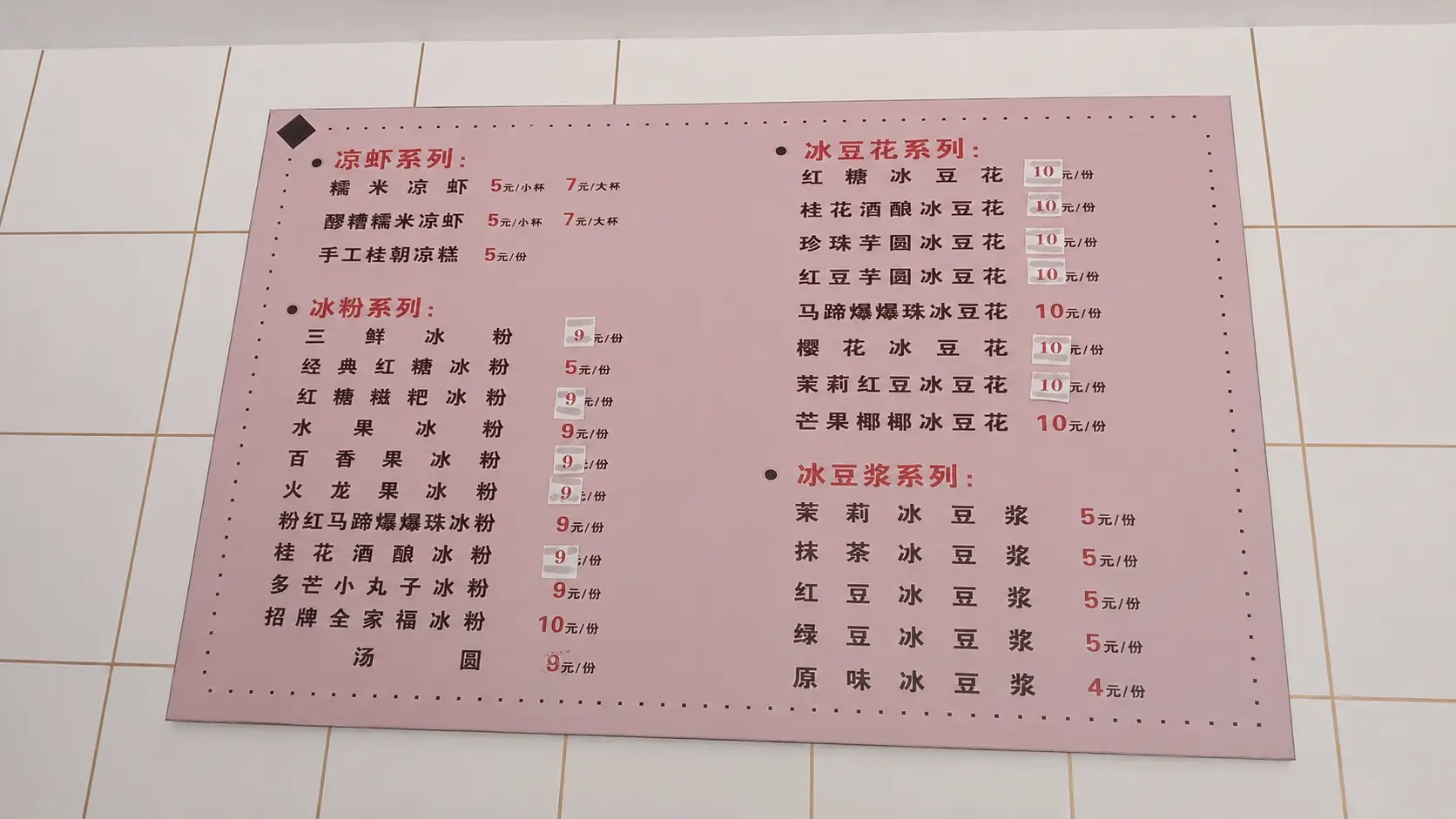
The first order should be boring on purpose: red sugar Bingfen, small bowl, simple toppings. Once you know the texture and sweetness level, upgrade to fruit, taro balls, tangyuan, fermented rice, or milk-style versions.
Use this ordering sequence when the stall has too many choices:
- Find the basic bowl(红糖冰粉)- This is the easiest first order and the baseline for flavor.
- Check hand-rubbed if available(手搓冰粉)- Choose it if you want the traditional texture and the price looks reasonable.
- Limit toppings- Pick one crunchy topping and one tart or fruity topping before trying loaded versions.
- State allergies early- Say no peanuts, sesame, milk, or fermented rice before the vendor scoops toppings.
- Eat it soon- The jelly and ice taste best before the syrup thins and the bowl gets watery.
If the menu is all Chinese, look for 冰粉, 红糖冰粉, 手搓冰粉, 水果冰粉, 醪糟冰粉, and 奶冰粉. If you are unsure, point to the smallest plain-looking bowl and ask for less sugar.
Ice Jelly, Liangxia, and Lianggao
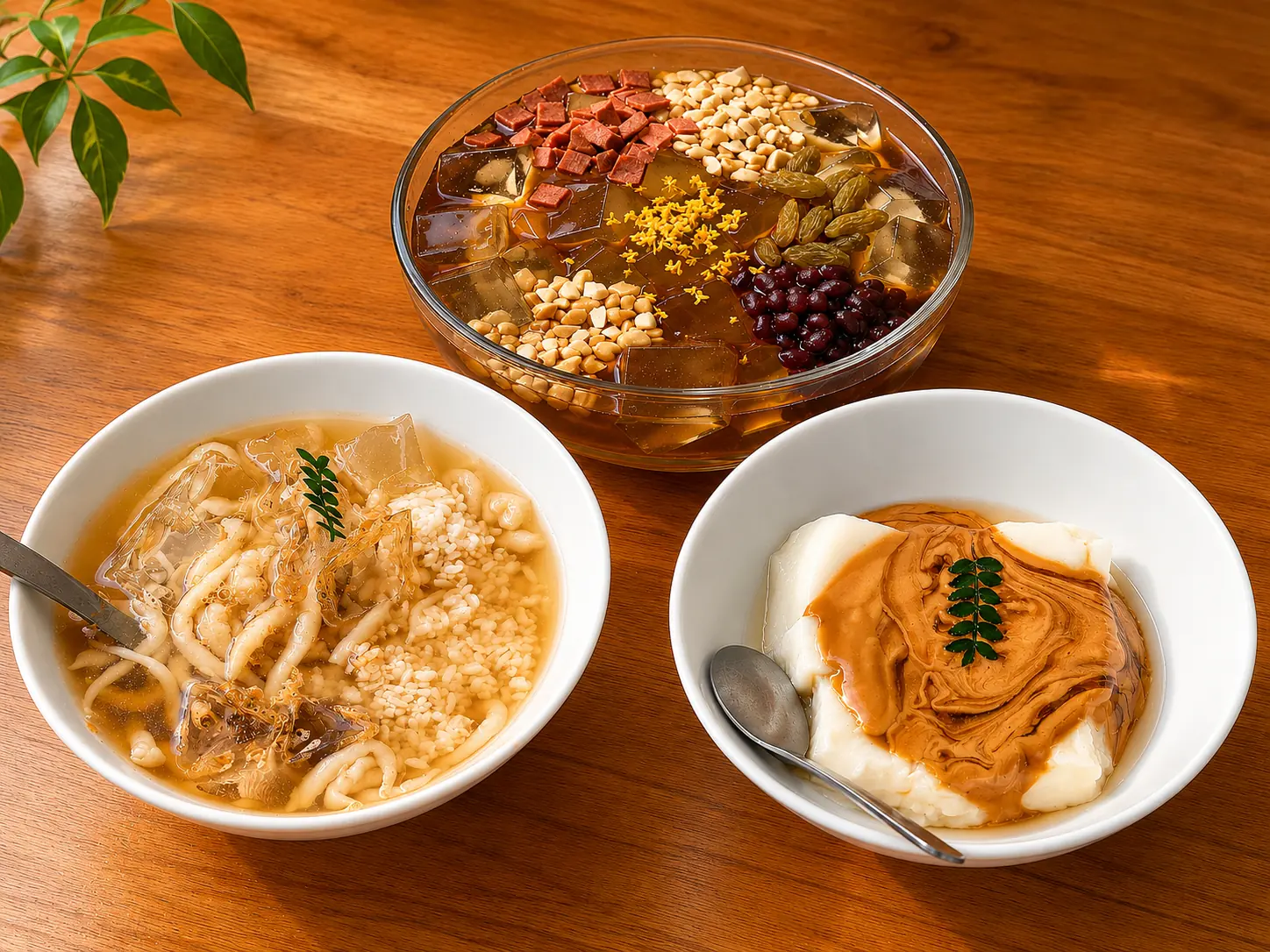
China has many cold jelly-like foods, and English translations can blur them together. In Chongqing and Sichuan, you may see Bingfen beside liangxia (凉虾), lianggao (凉糕), grass jelly, herbal jelly, or savory liangfen (凉粉). They are not the same dish.
| Name | What It Is | Travel Use |
|---|---|---|
| Bingfen (冰粉) | Clear cold jelly, usually with brown sugar syrup and toppings | Lightest post-spice dessert |
| Liangxia (凉虾) | Small rice-based pieces shaped like tiny shrimp in sweet water | More rice aroma, still cooling |
| Lianggao (凉糕) | Rice-based cold cake, often served with brown sugar syrup | Thicker and more filling |
| Savory liangfen (凉粉) | Starch jelly served with chili, vinegar, garlic, and sauce | Snack dish, not a cooling dessert |
If you are trying to recover from hotpot heat, choose Bingfen first. If you want something more substantial, try liangxia or lianggao. If the word "liangfen" appears on a spicy menu, expect a savory cold jelly dish, not this sweet dessert.
Diet and Allergy Notes
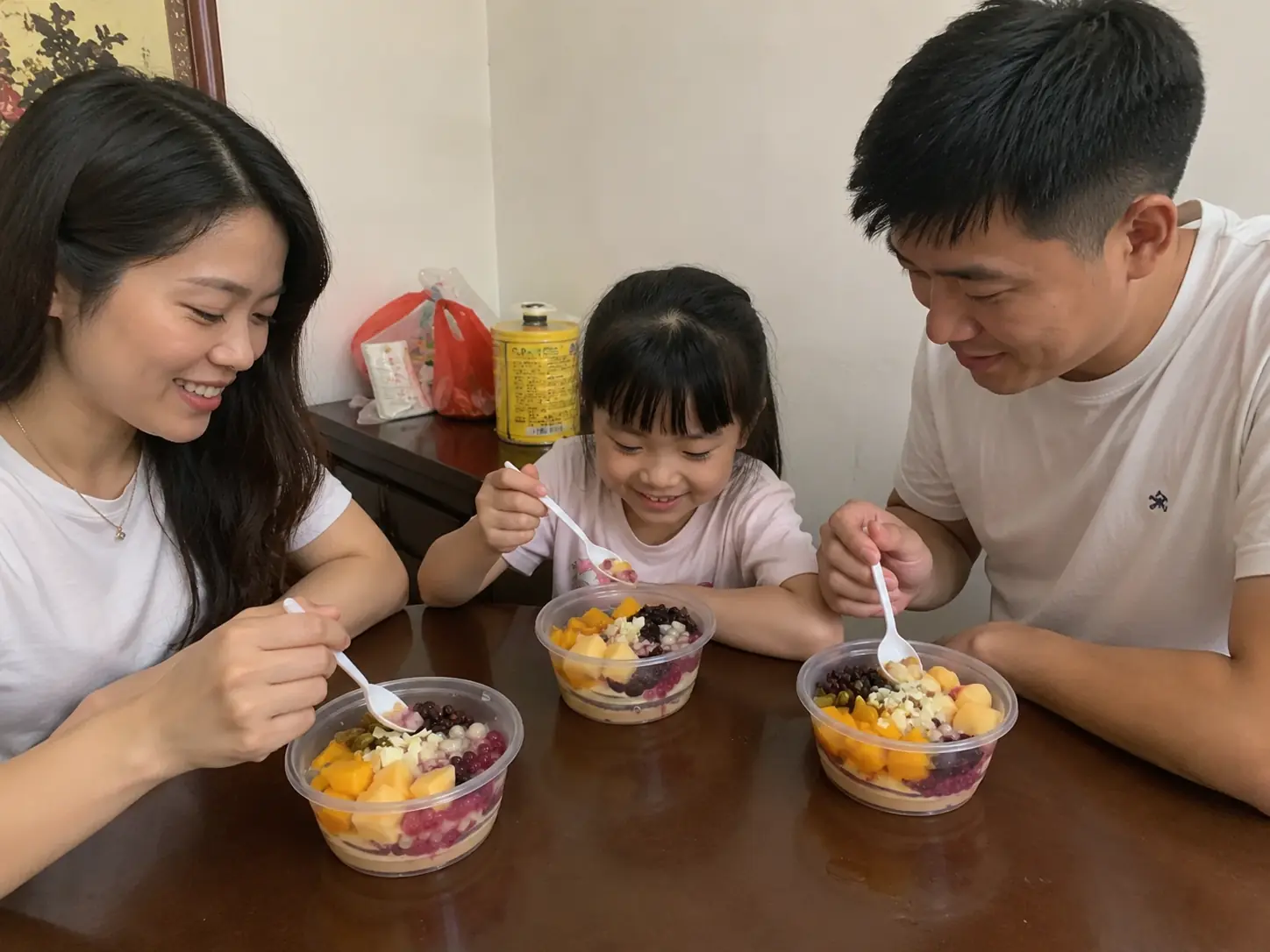
Bingfen looks simple, but the bowl can hide common allergy and diet problems. The jelly may be plant-based, yet toppings can include peanuts, sesame, dairy, fermented rice, red beans, fruit, taro balls, tangyuan, coconut jelly, and shared scoops. Strict vegetarian, vegan, halal, kosher, gluten-free, nut-free, or alcohol-free travelers should not rely on the clear appearance alone.
Serious allergies need written Chinese
For peanut, sesame, dairy, wheat, alcohol, or severe fruit allergies, use a written Chinese allergy card and assume shared scoops unless the stall can clearly explain the ingredients.
- Peanuts and sesame: common toppings and common cross-contact risks.
- Fermented rice: 醪糟 versions may matter if you avoid alcohol flavor.
- Milk-style versions: 奶冰粉 or snow-style bowls may contain dairy.
- Children: choose small spoonfuls and avoid large jelly chunks, taro balls, tangyuan, and nuts for very young kids.
- More help: carry phrases from our China food allergies and dietary restrictions guide.
Useful Bingfen Ordering Phrases
Keep the request short. In a busy snack street, one clear phrase and pointing works better than a long explanation.
| English | Chinese | Pinyin | Say It Like… |
|---|---|---|---|
| Bingfen / ice jelly | 冰粉 | bīngfěn | bing-fun |
| Brown sugar Bingfen | 红糖冰粉 | hóngtáng bīngfěn | hong-tahng bing-fun |
| I would like one bowl of Bingfen. | 我要一碗冰粉。 | wǒ yào yì wǎn bīngfěn | waw yaow ee wahn bing-fun |
| Less sugar. | 少放糖。 | shǎo fàng táng | shaow fahng tahng |
| No peanuts. | 不要花生。 | bù yào huāshēng | boo yaow hwah-shung |
| No sesame. | 不要芝麻。 | bù yào zhīma | boo yaow jir-mah |
| No fermented rice. | 不要醪糟。 | bù yào láozāo | boo yaow laow-dzaow |
| Does this contain milk? | 这个里面有牛奶吗? | zhège lǐmiàn yǒu niúnǎi ma? | juh-guh lee-myen yo nyoh-nye mah |
| Is this hand-rubbed? | 这个是手搓的吗? | zhège shì shǒucuō de ma? | juh-guh shir show-tswaw duh mah |
Frequently Asked Questions
Yes. Ice jelly is the most useful English translation for Bingfen, though menus may also call it crystal jelly, cold jelly, or simply Bingfen.
Beyond This Guide
Bingfen is a small bowl, but it teaches the bigger Sichuan-Chongqing eating rhythm: heat, pause, reset, continue. Use the Chengdu food guide, Chongqing food guide, and Sichuan and Chongqing hotpot guide to place it inside a full food day.
For the spicy dishes that make Bingfen useful, compare Suan La Fen, Mapo tofu, and Dan Dan Noodles. The best Sichuan or Chongqing meal is not the hottest one. It is the one your table can finish happily.
© gochinafreely.com — Original guide by Go China Freely.