In South China, one of the most memorable drinks may not be sweet, fizzy, or photogenic. It may be a small dark cup of Cantonese herbal tea (凉茶), handed to you across a counter by someone who expects you to drink it quickly and keep your face under control.
That first sip can be bitter. Sometimes very bitter. But it also opens a door into Cantonese everyday culture: the way people talk about hot weather, fried food, late nights, barbecue, dim sum, and internal heat (热气). For travelers, Cantonese herbal tea is not something to chase as a miracle cure. It is something to taste carefully because it explains a whole local food logic.
Executive Summary
What this guide covers
Cantonese herbal tea as a South China drink tradition: what cooling means, why some cups taste bitter, which versions to try first, and when to be cautious.
Best first order
Start mild with canned herbal tea, sugarcane and cogon grass root water, or five-flower tea before ordering very bitter twenty-four flavor tea.
Main traveler caution
Strong shop-brewed herbal tea is not the same as a sweet canned drink. Treat concentrated versions as herbal products, especially if pregnant, unwell, or taking medication.
2006
National heritage listing
Guangdong + HK
Core travel context
Sweet to very bitter
Flavor range
Ask first
Herbal safety rule
A Bitter Drink Built for Humid South China
Cantonese herbal tea (凉茶) is strongest in the Lingnan (岭南) cultural world: Guangdong (广东), Hong Kong (香港), Macau (澳门), and Cantonese communities beyond them. The word tea can mislead English speakers. This is usually not tea made from tea leaves. It is closer to a herbal decoction or tisane, made by boiling plants, flowers, roots, leaves, fruits, or prepared herbal ingredients in water.
The China Intangible Cultural Heritage database lists Cantonese herbal tea (凉茶) as a national-level intangible cultural heritage item, project VIII-89, in the first batch published in 2006. The listing frames it as a traditional craft from Guangdong, with Guangdong, Hong Kong, and Macau appearing in the broader project context.
The Hong Kong Tourism Board explains the local Cantonese idea as cooling tea and describes it as part of everyday wellness culture in Hong Kong. For travelers, the key is to read cooling as a cultural idea, not the serving temperature. Cantonese herbal tea can be warm, hot, chilled, sweet, bitter, light, or extremely intense.
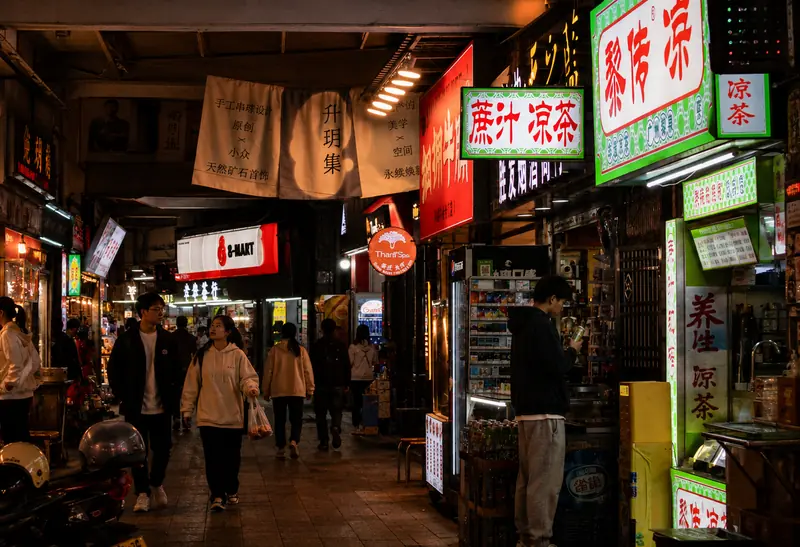
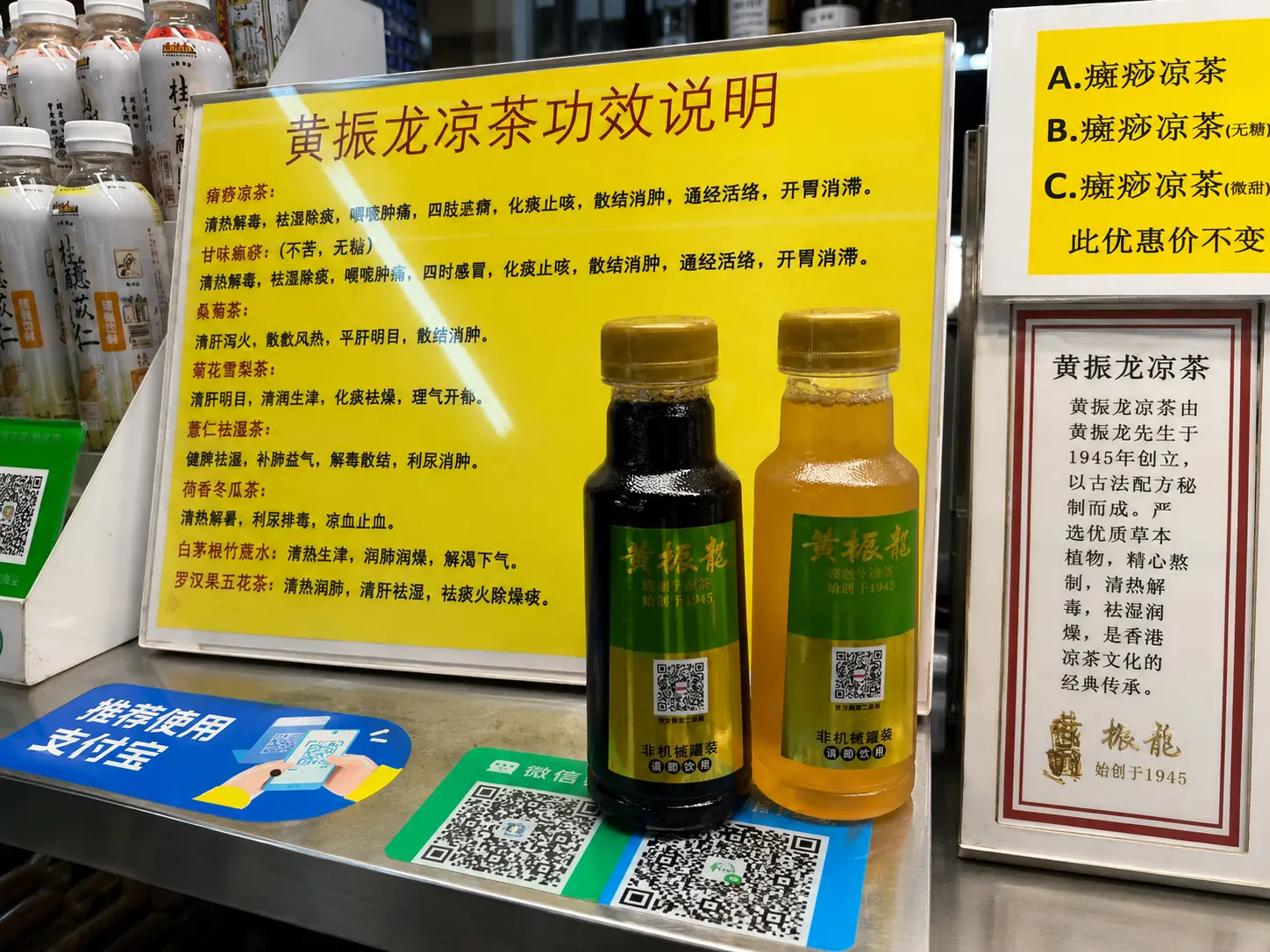
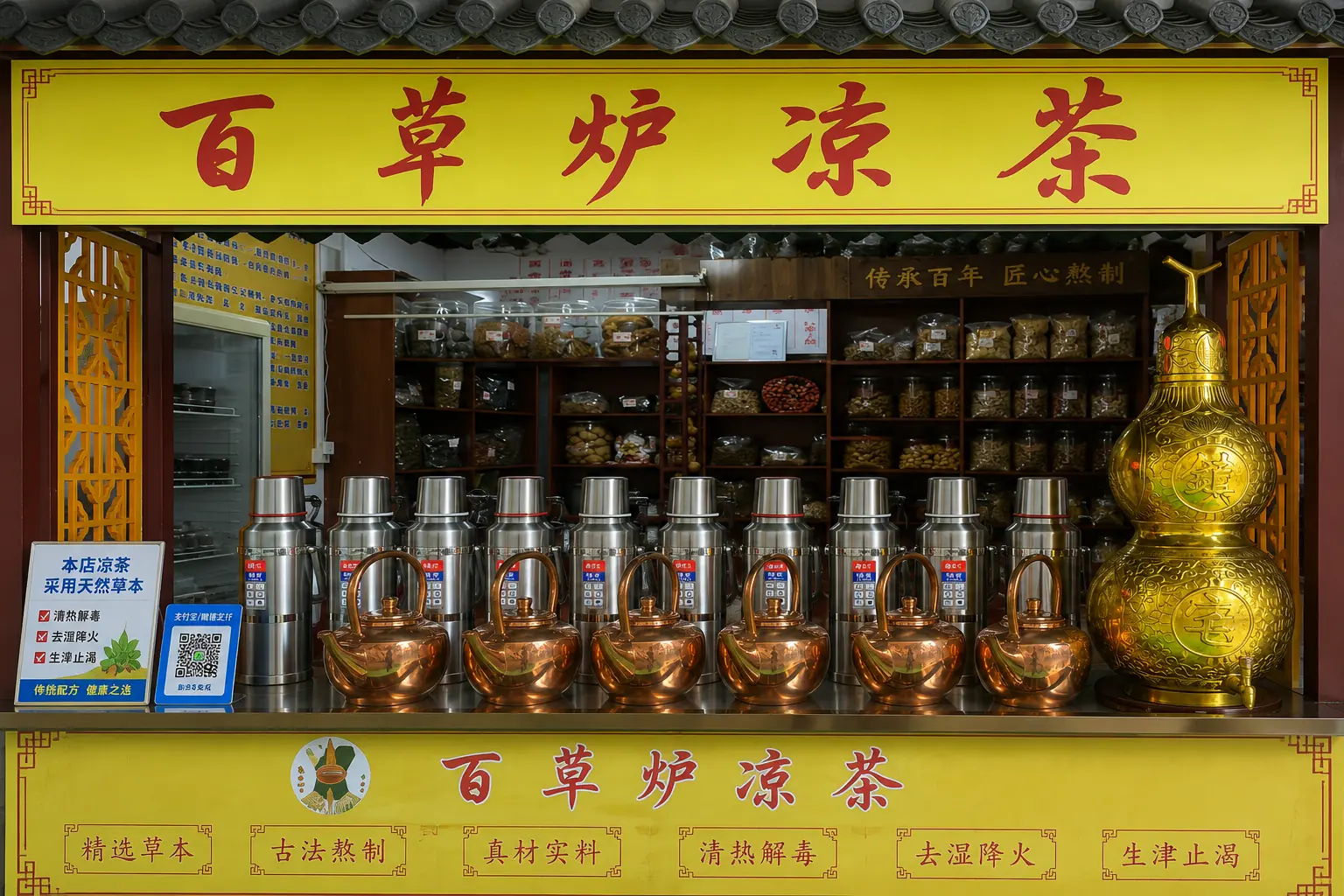
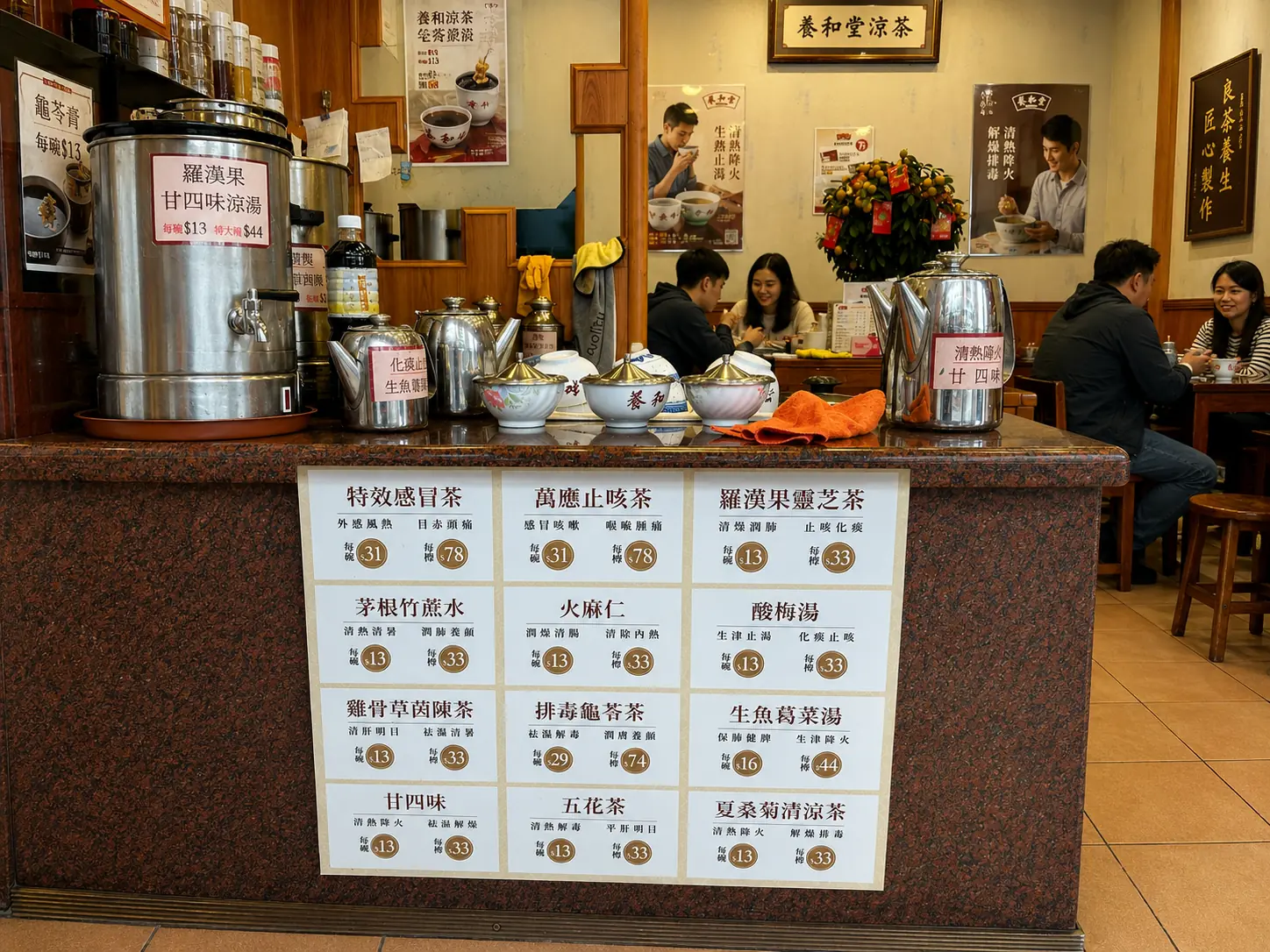
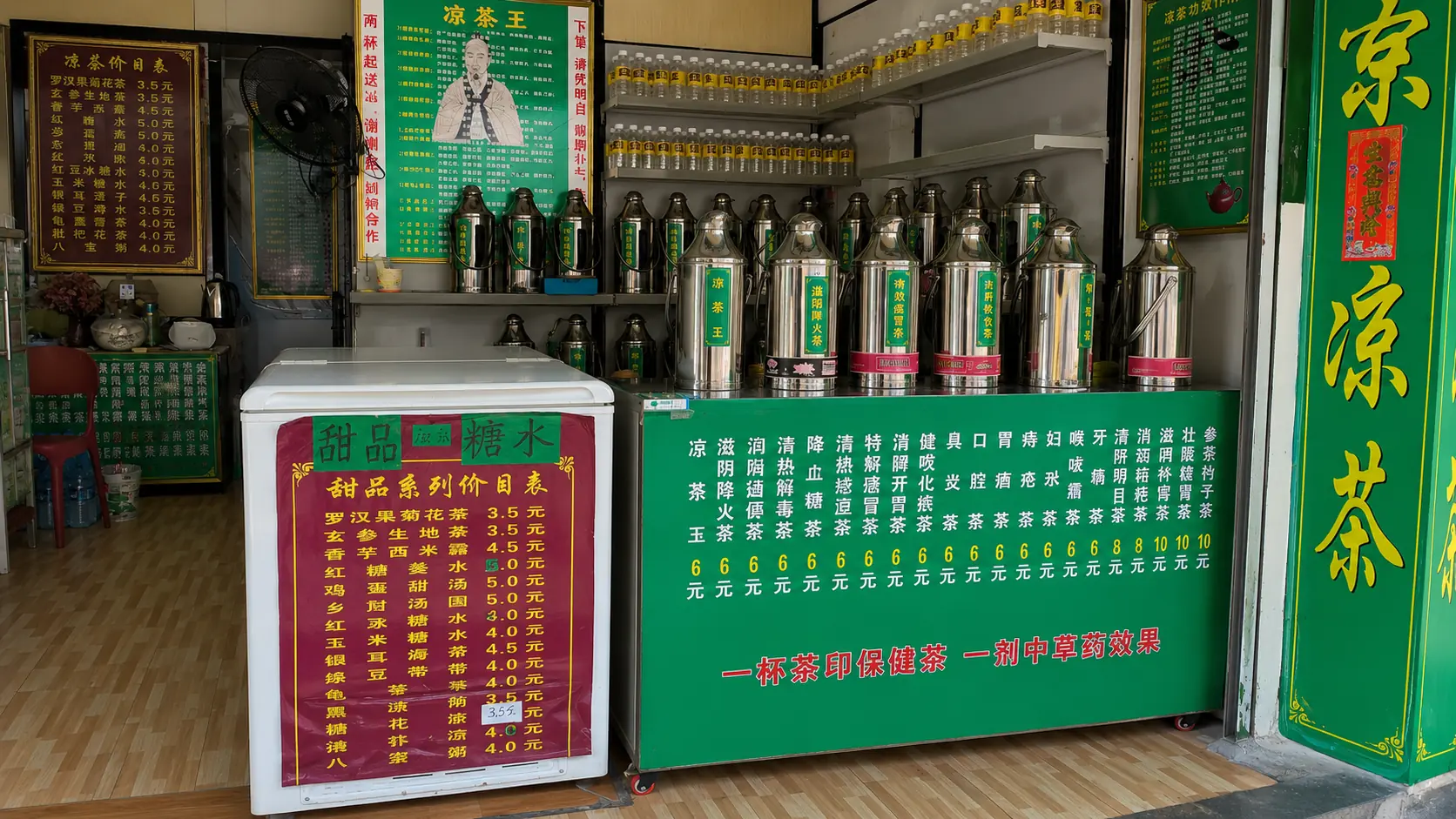
In Guangzhou (广州), you may see old shops with brass kettles, small cups, handwritten menus, and bitter dark brews. In Hong Kong, you may find old herbal tea counters, chain stores, bottled versions, and shop windows selling tortoise-herb jelly (龟苓膏) beside liquid herbal teas. In convenience stores across China, the red cans are much easier and sweeter.
Cooling Does Not Mean Medical Cure
In Cantonese food culture, people often describe fried, grilled, spicy, late-night, or heavy foods as creating internal heat (热气). Cooling drinks are traditionally believed to balance that feeling. This is part of traditional medicine and food culture language, not a travel prescription.
The safest way to write and use this idea is simple: Cantonese herbal tea is a cultural drink to understand and taste, not a treatment plan. Do not use it as a cure for a sore throat, fever, stomach trouble, heatstroke, flu, or anything else that needs medical judgment.
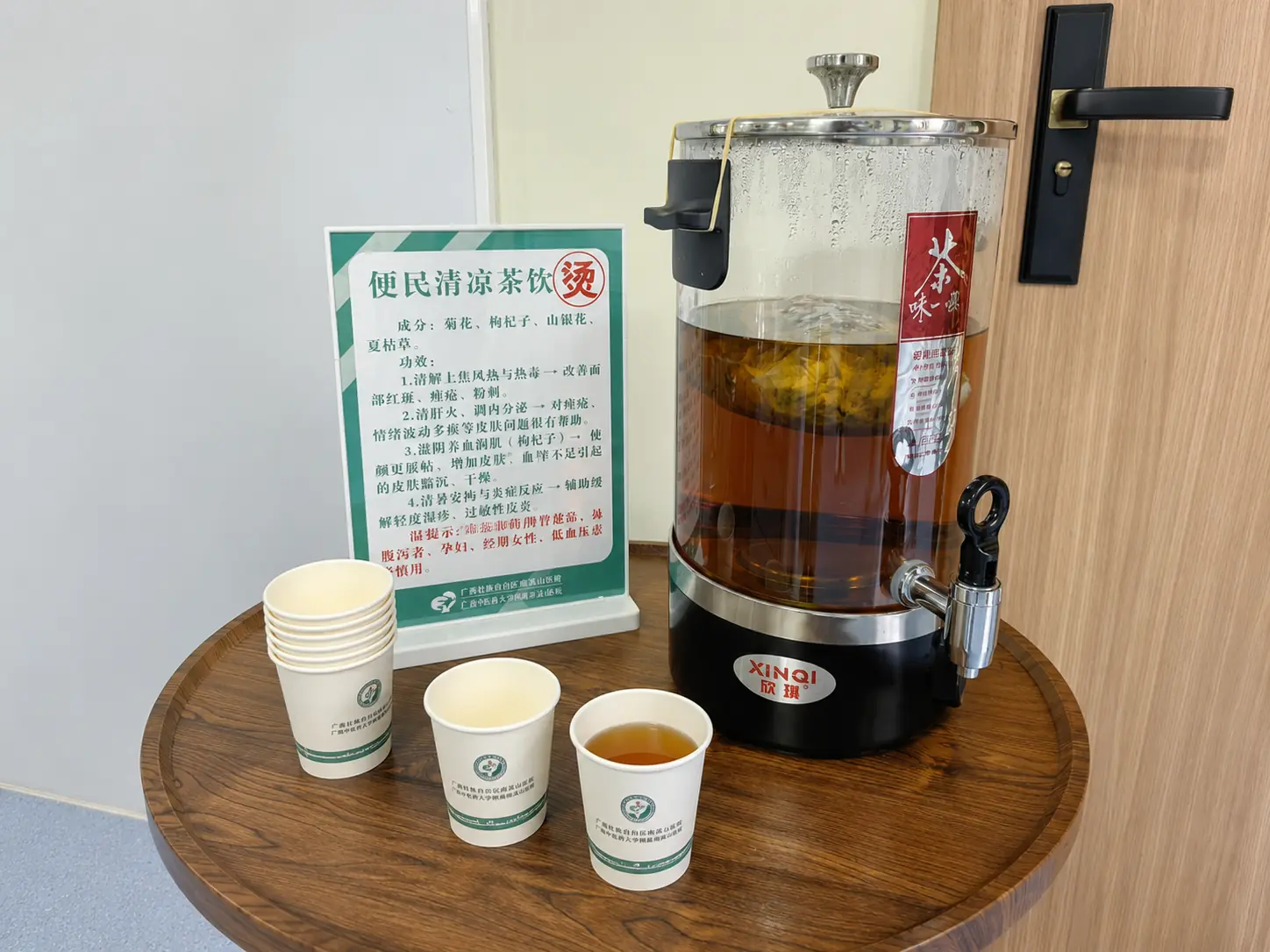
Taste it as culture, not as medical advice
Many locals drink Cantonese herbal tea as part of everyday food culture, especially in hot and humid weather. Travelers should avoid disease claims, dosage rules, and self-treatment. If you feel unwell, get proper medical advice.
That caution matters because the drink can range from sweet soft-drink territory to strong multi-herb brews. A canned Wanglaoji (王老吉) from a convenience store and a dark cup of twenty-four flavor tea (廿四味) from a traditional counter are not the same experience.
What First-Time Travelers Should Order First
Do not make your first order the bitterest thing on the menu just because it sounds authentic. Cantonese herbal tea works better if you climb the ladder slowly.
| Order | Chinese | Taste | First-Timer Use |
|---|---|---|---|
| Canned sweet herbal tea | 王老吉 / 加多宝 | Sweet, mild, soft-drink-like | Easiest supermarket or convenience-store version. |
| Sugarcane and cogon grass root water | 竹蔗茅根水 | Sweet, grassy, refreshing | Good mild shop order if available. |
| Five-flower tea | 五花茶 | Floral, lightly bitter, sometimes sweetened | Best bridge into real herbal tea. |
| Twenty-four flavor tea | 廿四味 | Dark, bitter, medicinal | Try only if you are curious about the classic bitter cup. |
| Very strong bitter formulas | 癍痧凉茶等 | Very bitter, intense, herbal | Not a casual first drink. |
Formulas vary. A study of five-flower tea samples in Hong Kong found varied compositions among samples, including different herbs and quality-control concerns. That supports the practical traveler rule: do not assume every shop uses one fixed recipe.
The same is true for twenty-four flavor tea. The name does not guarantee exactly twenty-four ingredients. Treat it as shorthand for a strong mixed-herb bitter tea, not as a numbered ingredient promise.
Bitter Shop Brew Versus Sweet Cans
The biggest traveler misunderstanding is simple: someone drinks a sweet red can from a convenience store, then assumes all Cantonese herbal tea tastes like that. The traditional shop version can be much darker, stronger, and more bitter.
← swipe to compare all options →
Canned Versions
王老吉 / 加多宝
- ✓Best for a low-risk first taste from a supermarket or convenience store.
- —Often closer to a soft drink than a bitter herbal shop brew.
- —Check sugar if you are limiting sweet drinks.
Sweet, standardized, easy to buy
Shop-Brewed Versions
五花茶 / 廿四味 / other formulas
- ✓Best for understanding old-school Cantonese herbal tea culture.
- —Taste and strength vary by shop and formula.
- —Start small if you are sensitive to herbs or bitter drinks.
Stronger, darker, more local
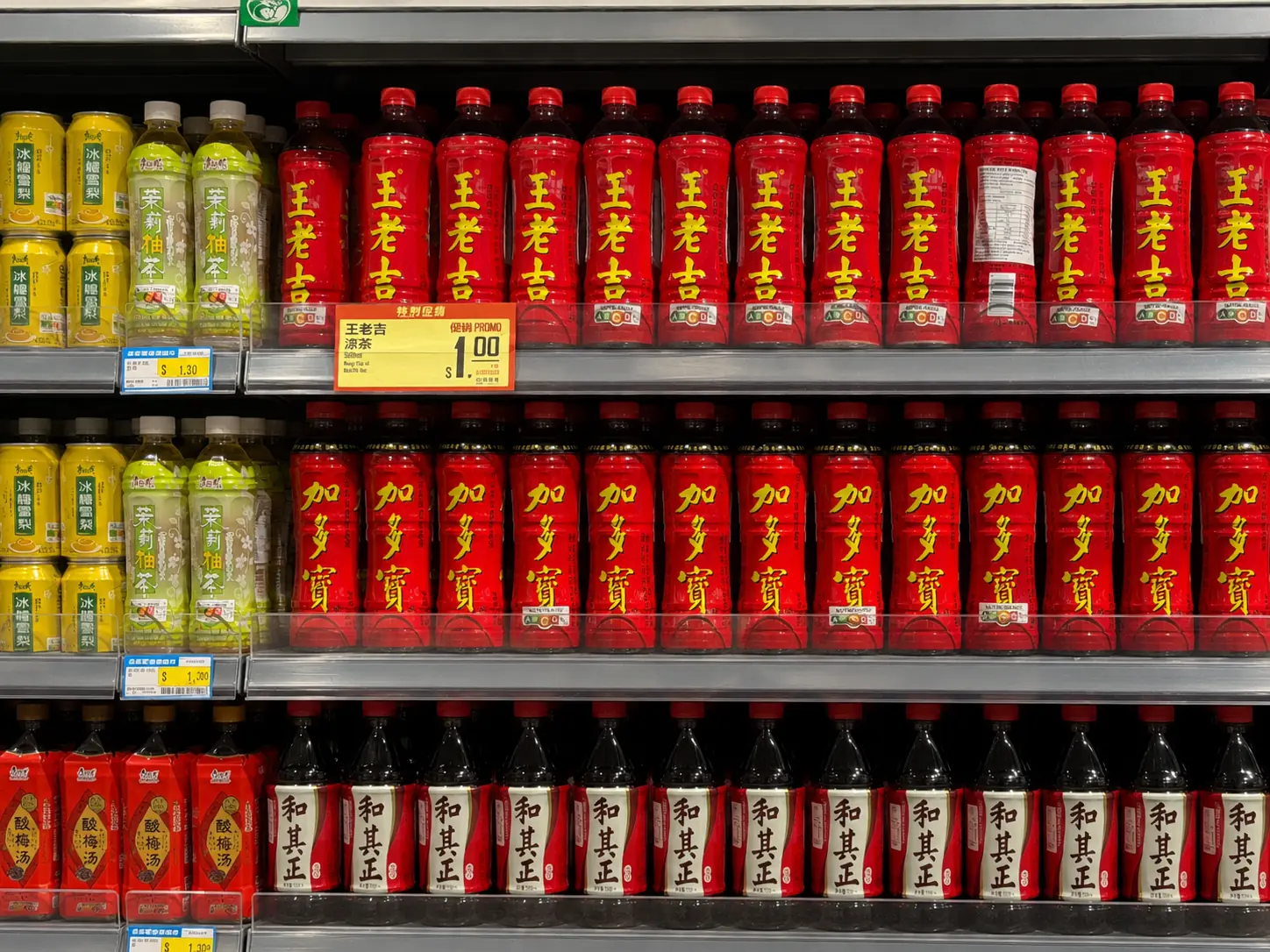
Wanglaoji (王老吉), also known by the Cantonese brand name Wong Lo Kat, is one of the most recognizable commercial herbal tea brands. Guinness World Records lists Wanglaoji as the oldest Chinese herbal tea brand, formally registered in 1897, and notes that the drink is widely recognized as first sold in Guangdong in 1828. Use that as brand-history context, not a reason to treat the canned drink as medicine.
Where Travelers Meet Herbal Tea Shops
You do not need a famous shop to meet this drink. Location type matters more than a single name.
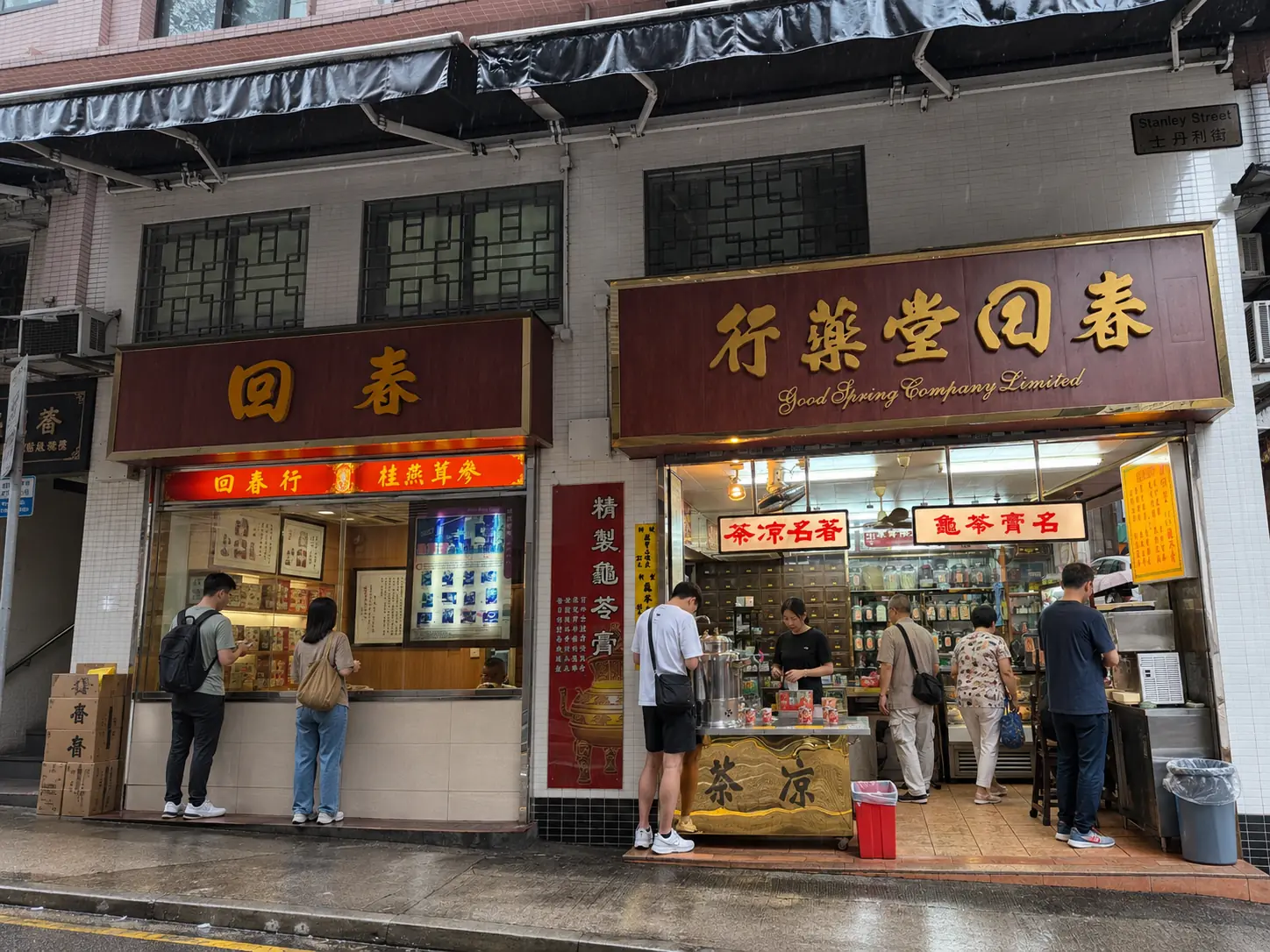
In Guangzhou, look around older neighborhoods, residential streets, market edges, Yuexiu (越秀), Liwan (荔湾), and old shopping streets. The Guangzhou government portal describes a living street culture of herbal tea shops, from small counters with dark cups to larger shops with brass kettles, tortoise-herb jelly, and old neighborhood regulars.
In Hong Kong, herbal tea shops appear in older commercial districts, market streets, and areas where traditional medicine shops and Cantonese food culture cluster. The Hong Kong Tourism Board notes that herbal teas are integrated enough into local culture that visitors can find them in traditional shops, chain stores, and bottled forms.
In Macau, the same Cantonese food logic appears around old streets and everyday dining areas. Overseas Chinatowns may carry canned or packaged versions, but the flavor may lean more commercial and less bitter than a South China shop brew.
Do not chase the strongest cup first
If the menu has several levels, begin with five-flower tea, sugarcane and cogon grass root water, or another mild option. The bitter classic will still be there after your tongue has gathered courage.
How to Order Without Overdoing It
The most useful sentence is not "What cures a sore throat?" It is "I want to try something mild." That keeps the interaction in food-culture territory instead of turning a travel snack into self-treatment.
- Scan the menu first- Look for canned herbal tea, five-flower tea, sugarcane and cogon grass root water, chrysanthemum-style drinks, or twenty-four flavor tea.
- Ask for mild- Tell the staff you only want to taste something mild and not too bitter.
- Start small- Choose a small cup if available. A few sips teach you enough.
- Check sweetness and bitterness- Ask whether it is sweet or bitter before ordering a full cup.
- Stop if it feels wrong- Do not force a strong herbal drink for authenticity points.
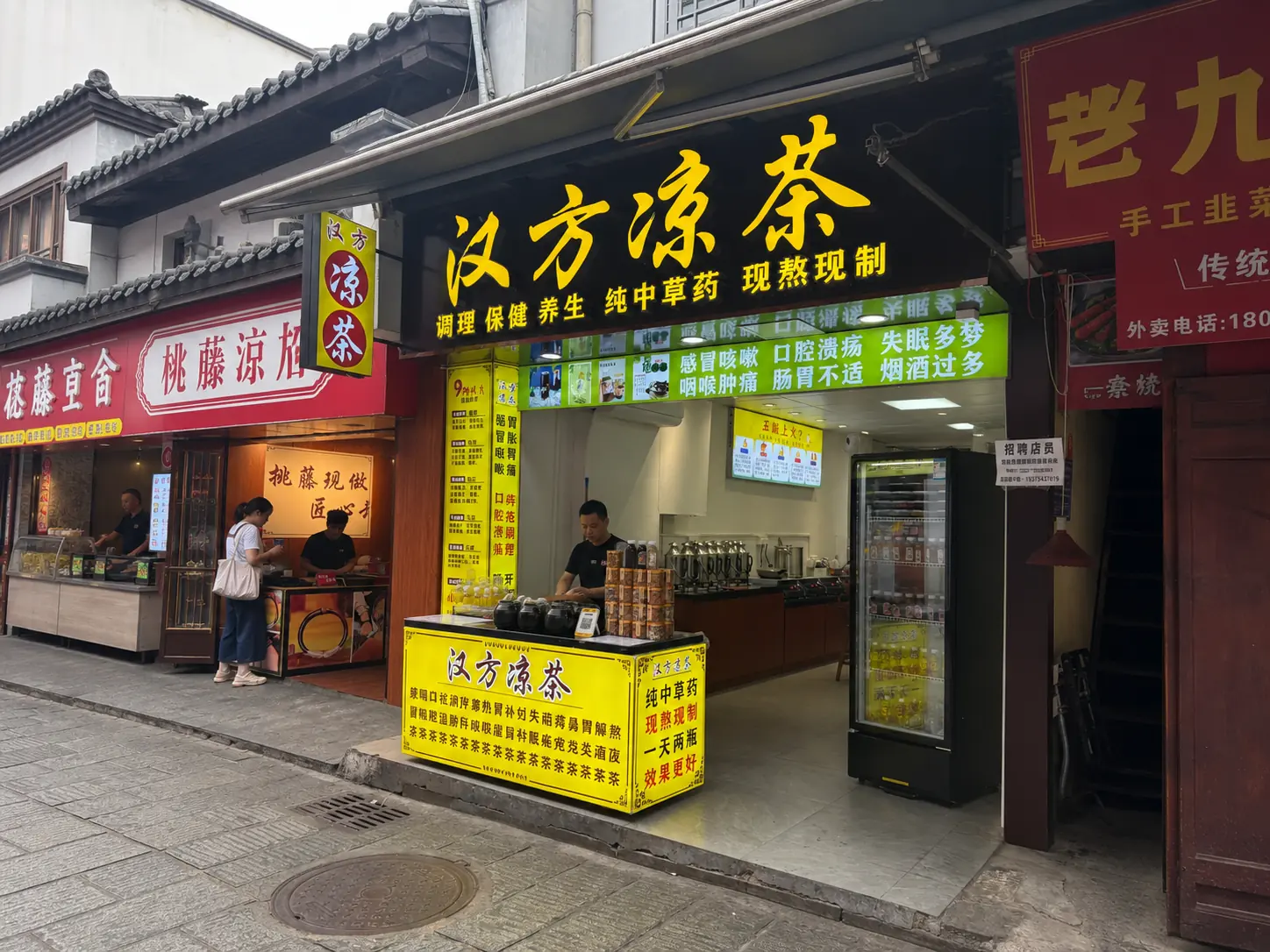
If a shopkeeper starts asking about symptoms, keep your answer simple. You are not there for diagnosis. Say you are a traveler and want to taste a mild local drink. If you are pregnant, on medication, or unsure about ingredients, skip the strong versions.
Safety Notes for Herbs and Bodies
Cantonese herbal tea sits between food, drink, and traditional medicine. That is exactly why travelers should handle it with respect.
- Pregnancy or breastfeeding: avoid strong herbal decoctions unless your healthcare professional says they are safe for you.
- Children: do not give young children bitter medicinal-strength formulas casually.
- Medication: be careful if you take blood thinners, blood pressure medicine, diabetes medicine, immunosuppressants, or other regular prescriptions.
- Chronic illness: liver, kidney, heart, autoimmune, and stomach conditions deserve extra caution.
- Allergies: formulas can contain many herbs. If the shop cannot explain ingredients clearly, skip it.
- Sugar: canned versions and some shop drinks can be sweetened.
The National Center for Complementary and Integrative Health notes that herbal products can raise concerns around drug interactions and contamination. MotherToBaby's herbal products fact sheet also warns that many herbal products have not been well studied in pregnancy or breastfeeding and may contain ingredients or contaminants not obvious to the user.
For a traveler, the practical advice is not dramatic. If you are healthy and curious, try a small mild cup. If you are in a medically sensitive category, skip the strong dark brew. China has many excellent drinks that do not require this much fine print.
What Foods Pair Naturally With Herbal Tea
Locals often reach for herbal tea around rich, fried, grilled, roasted, or late-night foods because those foods are described as heaty (热气) in Cantonese food language. That does not mean the tea neutralizes the meal in a medical sense. It means the pairing makes cultural sense.
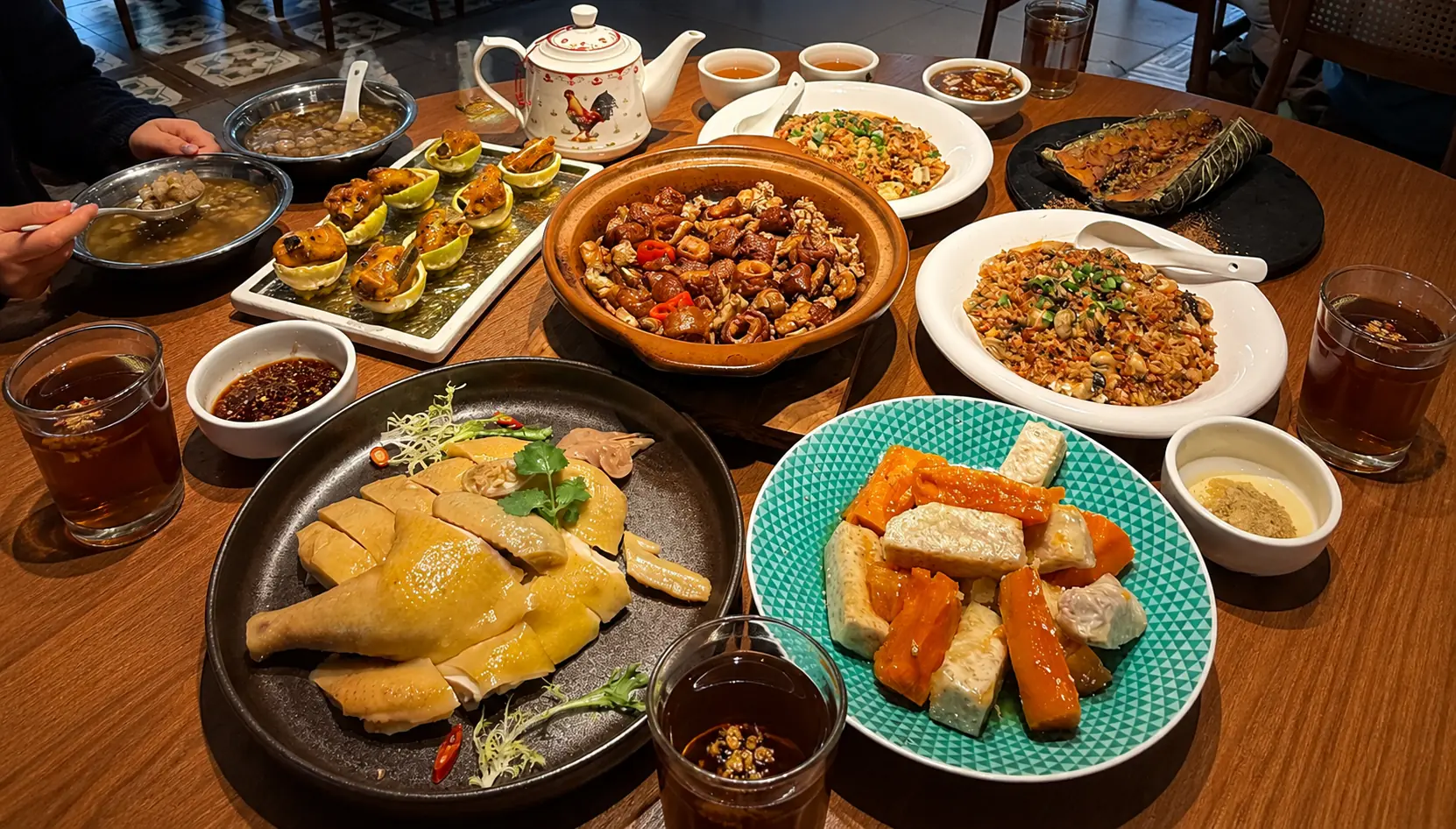
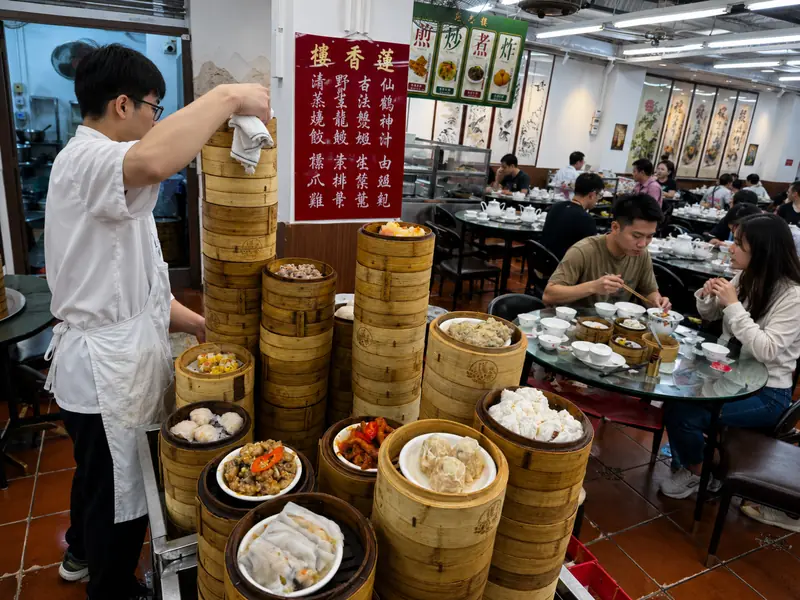
It feels most natural after or beside foods like roast goose (烧鹅), char siu (叉烧), hotpot (火锅), claypot rice (煲仔饭), fried dim sum, late-night barbecue, fried wontons, curry fish balls, and heavy cha chaan teng (茶餐厅) meals. A sweet canned version can sit on a casual table like a soft drink. A bitter shop brew is usually more of a deliberate stop.
If you are building a food day in Guangzhou or Hong Kong, use herbal tea as a short pause rather than a destination. Morning dim sum, roast-meat lunch, market snacks, and one small herbal tea stop teach more than crossing town for one cup.
Useful Phrases for Ordering Herbal Tea
Show the Chinese if pronunciation feels awkward. At a traditional counter, short phrases are better than a long explanation.
| English | Chinese | Pinyin | Say It Like… |
|---|---|---|---|
| Cantonese herbal tea / cooling tea | 凉茶 | liang cha | lyahng chah |
| Five-flower tea | 五花茶 | wu hua cha | woo hwah chah |
| Twenty-four flavor tea | 廿四味 | nian si wei | nyen suh way |
| Sugarcane and cogon grass root water | 竹蔗茅根水 | zhu zhe mao gen shui | joo juh maow gun shway |
| Not too bitter | 不要太苦 | bu yao tai ku | boo yow tie koo |
| Do you have a sweet one? | 有甜的吗? | you tian de ma? | yo tyen duh mah |
| I only want to try a little | 我只想尝一点 | wo zhi xiang chang yi dian | woh jir shyahng chahng ee dyen |
| What herbs are in this? | 这个有哪些草药? | zhe ge you na xie cao yao? | juh-guh yo nah shye tsaow yaow |
| Can pregnant people drink this? | 孕妇可以喝吗? | yun fu ke yi he ma? | yoon foo kuh yee huh mah |
Frequently Asked Questions
No. Cooling refers to traditional food logic, not necessarily serving temperature. Some shop versions are served warm or hot.
Beyond This Guide
Use this page with Guangzhou Food Guide, Hong Kong Food Guide, Chinese Dining Etiquette, Sichuan and Chongqing Hotpot, and Beijing Teahouses. For other Chinese drink culture, compare it with Baijiu, Baijiu Flavors, and Yixing Zisha Teapots.
© gochinafreely.com — Original guide by Go China Freely.