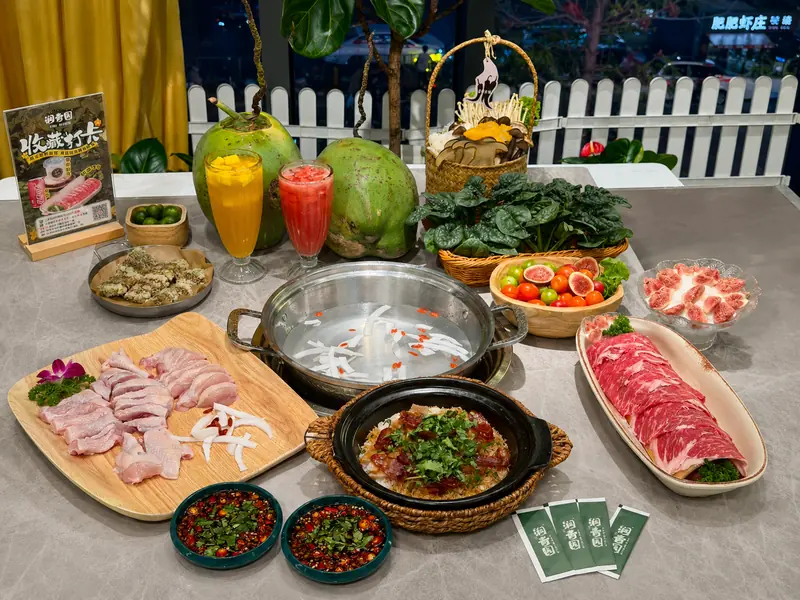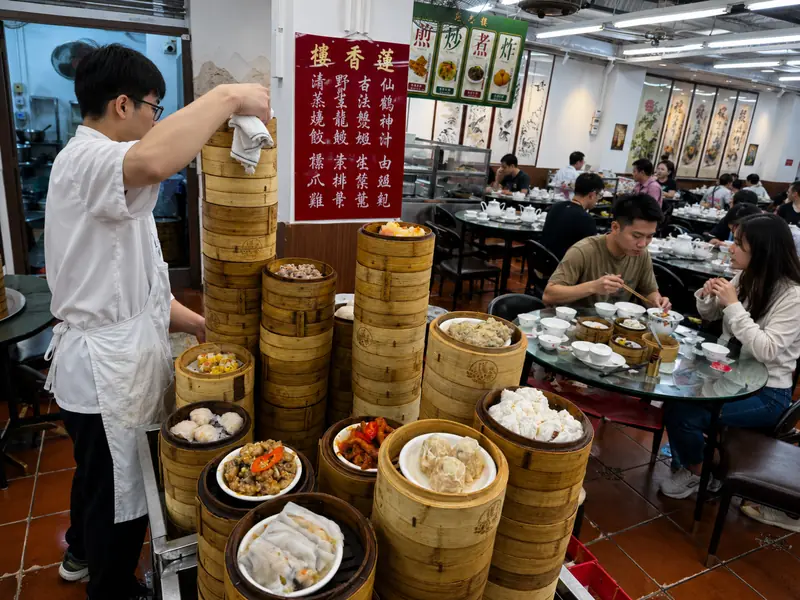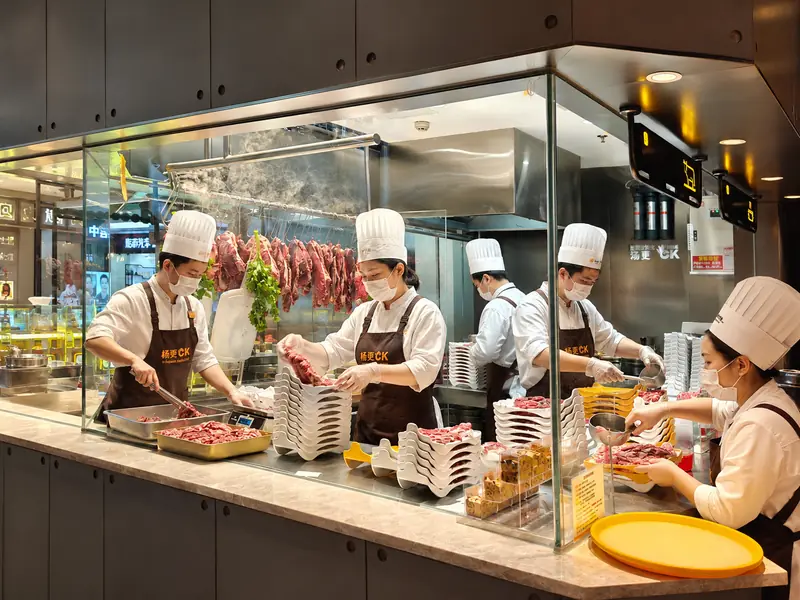
Chaoshan beef hotpot (潮汕牛肉火锅) looks quieter than Sichuan or Chongqing hotpot: clear broth, fresh-cut beef, a few dipping sauces, and no red-oil surface. The drama is in the timing. For first-time travelers, it may be China's easiest hotpot style to enjoy and one of the clearest tests of ingredient freshness.
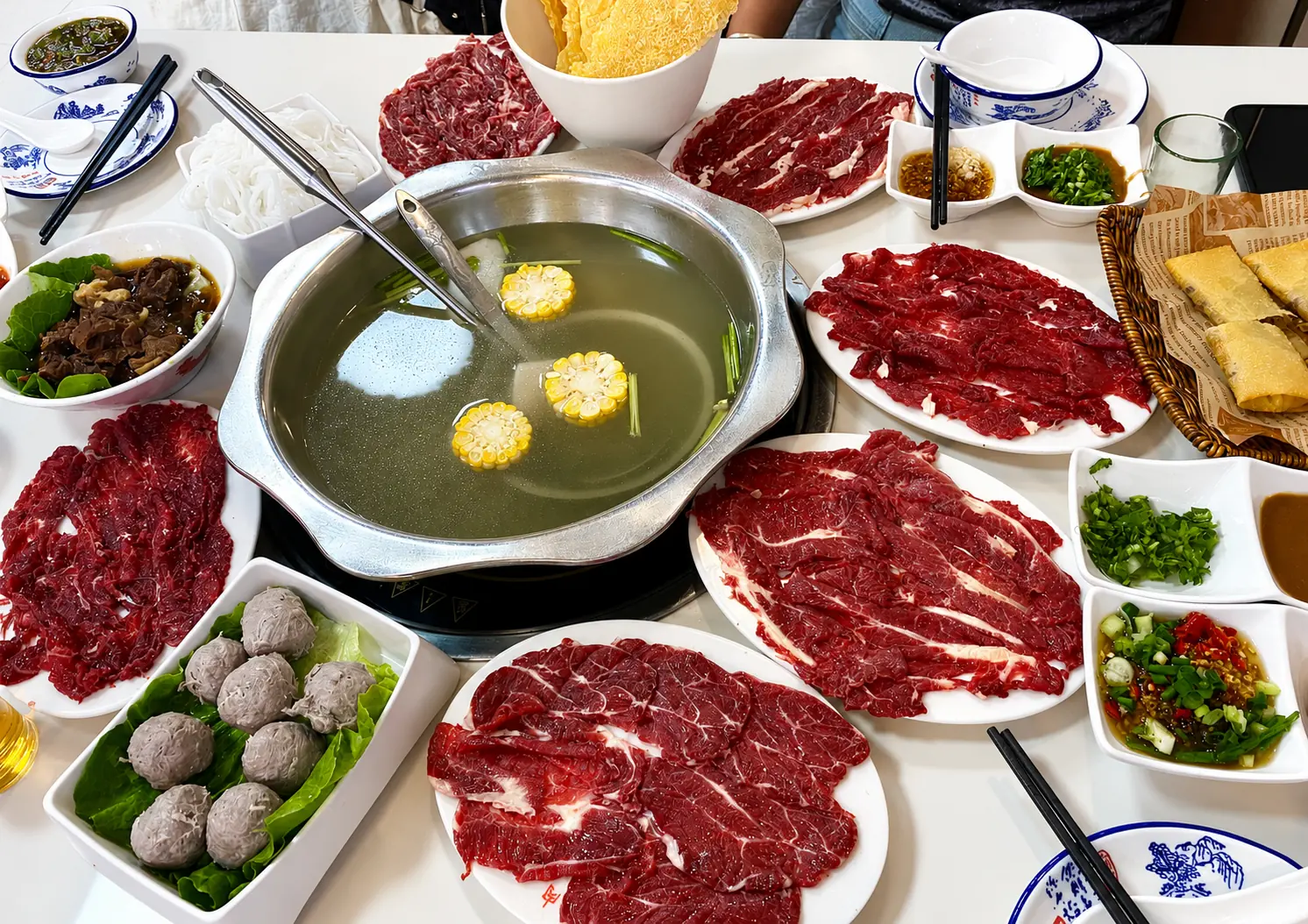
Executive Summary
What this guide covers
Clear broth, fresh beef cuts, beef balls, shacha sauce, first-order templates, cooking rhythm, where to eat it, and safety notes.
Best first order
Clear broth, a mixed beef platter, beef balls or beef tendon balls, tofu skin, radish, greens, rice noodles or noodles, and shacha sauce.
Main mistake to avoid
Do not dump all the beef into the pot at once. Cook a few slices at a time, pull them out as soon as they are done, and eat immediately.
60-90 min
Comfortable meal pace
2-3 people
Best first table
Clear broth
Default style
Seconds
Thin-slice timing
Fresh Beef Is the Whole Point
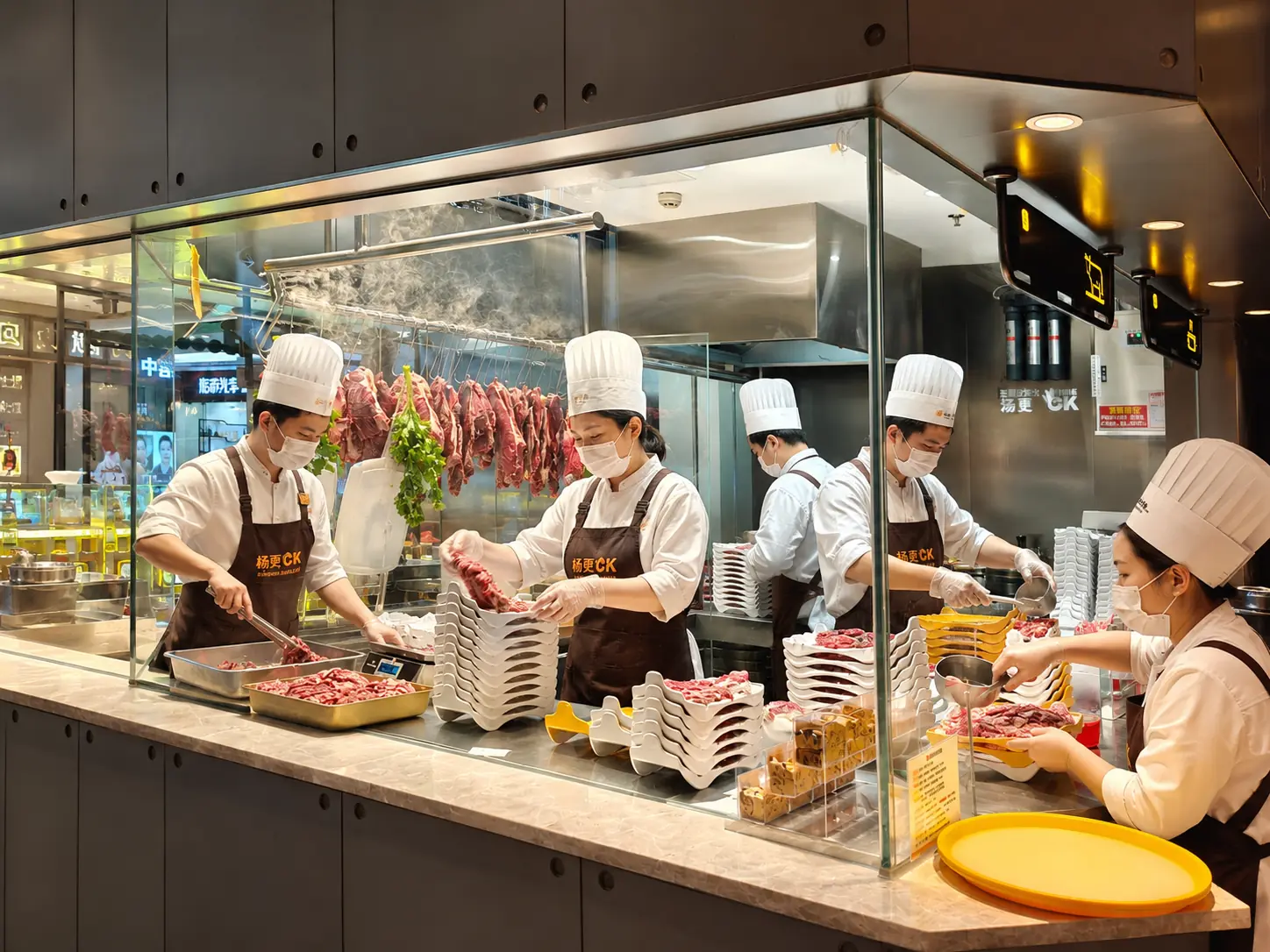
Chaoshan beef hotpot is not a broth-first meal. It is a beef-first meal. In a good restaurant, the cutting station is part of the show: cooks slice different parts of the cow into separate plates, and each plate is meant to cook quickly in a clear, simmering broth.
The useful traveler mindset is this: Chaoshan beef hotpot turns beef cuts into an ordering language. Instead of one vague plate of "sliced beef," menus may list tender lean cuts, springy cuts, fatty-crunchy cuts, tripe, aorta, beef balls, and beef tendon balls. The World of Chinese describes the Chaoshan region as Chaozhou (潮州), Shantou (汕头), and Jieyang (揭阳), and notes that diners can see menus with many distinct beef cuts, including the prized tender back cut 吊龙.
You do not need to memorize every cut before dinner. Look for three practical signs: a busy cutting station, freshly sliced plates moving quickly, and strong table turnover. A famous name matters less than freshness and rhythm.
Do not start by memorizing the menu
For a first meal, order a mixed beef platter, then add one direction you liked: tender, springy, fatty-crunchy, or extra beef balls. That is more useful than trying to decode every cut name at once.
Clear Broth Keeps the Beef Honest
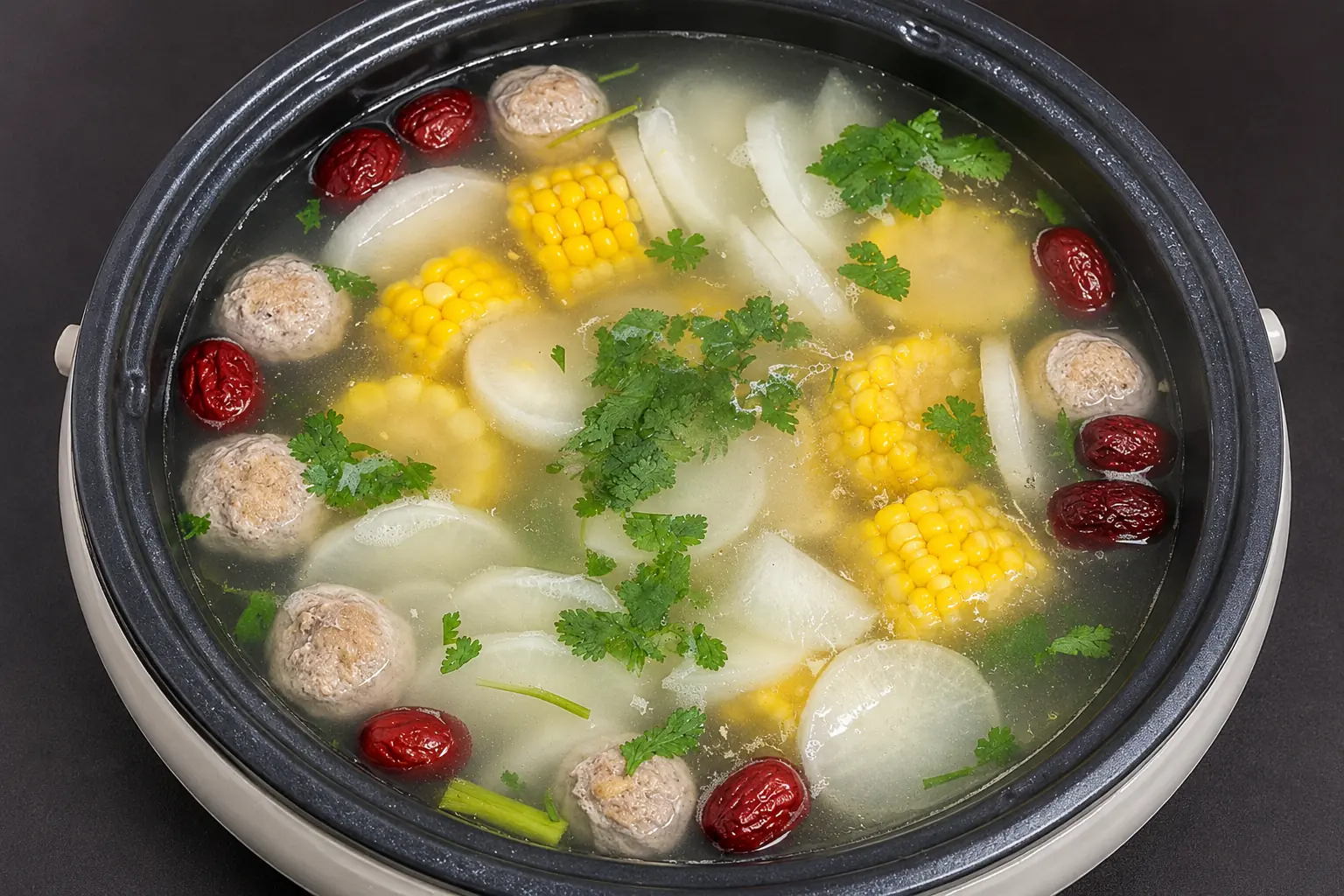
The broth is usually light and clear, often built from beef bones or water with quiet aromatics and vegetables. Some restaurants use white radish, celery, corn, carrots, ginger, galangal, beef balls, or other small additions. Exact formulas vary, so treat those ingredients as a style family rather than a fixed recipe.
That restraint is the point. EyeShenzhen contrasts Chaoshan beef hotpot with spicy Sichuan-style hotpot and describes its clear broth base, thin slices of different beef parts, quick dipping, and shacha sauce. The clear pot cooks the beef without hiding it.
If someone at your table does not eat beef, confirm the broth before ordering. A clear-looking pot may still use beef bones, beef fat, or beef balls. For strict vegetarians, this is rarely an easy meal to control.
Beef Cuts: What to Order First
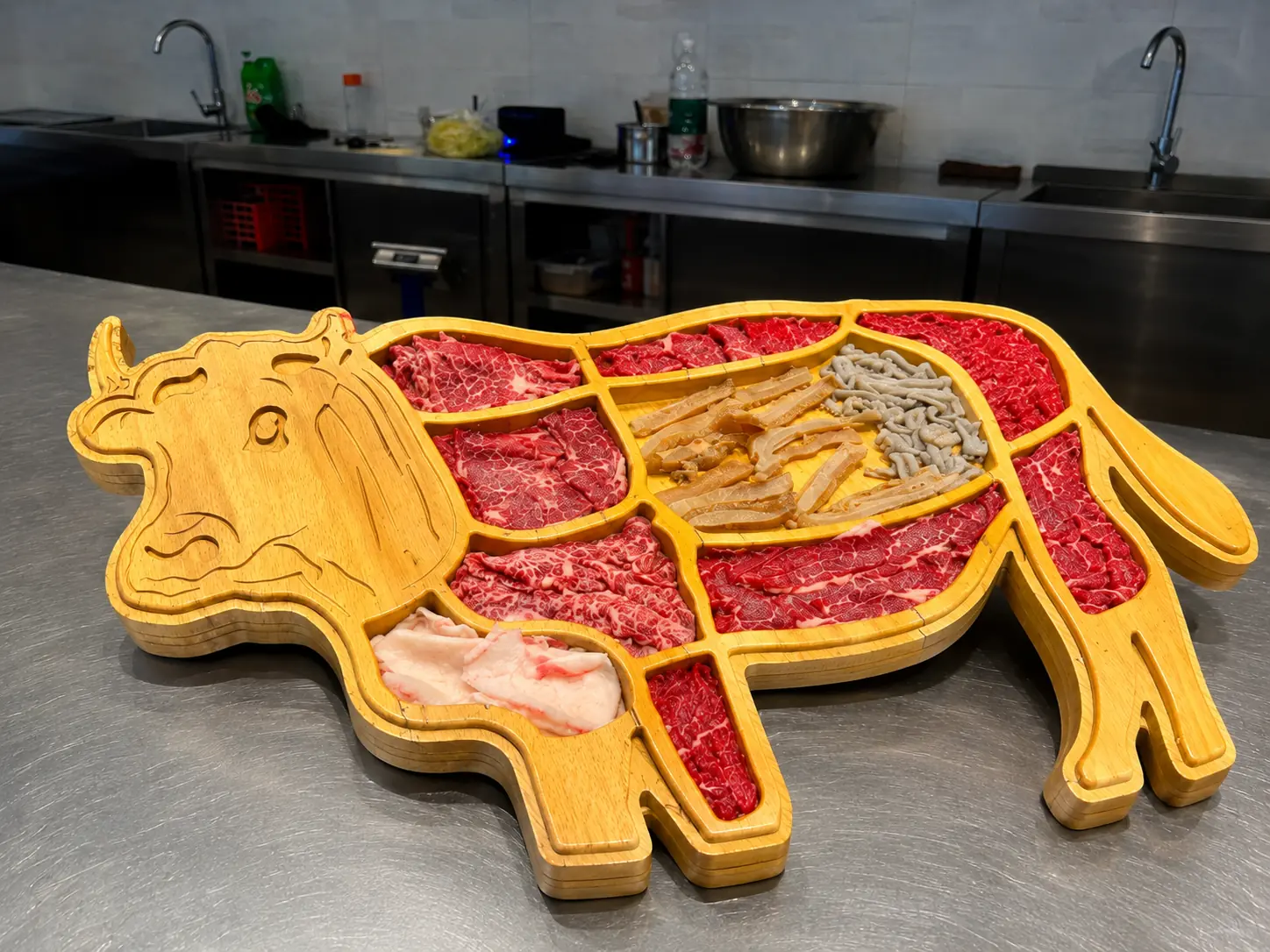
The safest first move is a mixed beef platter. It lets the restaurant choose several common cuts and gives the table a quick texture map. After that, you can add based on what you actually liked.
The tender back cut 吊龙 and other lean cuts are good first bites because they show whether the beef tastes clean and sweet. Five-flower toe (五花趾) and three-flower toe (三花趾) are more elastic and textured. Spoon-handle and spoon-center cuts (匙柄 / 匙仁) often sit in the tender, beefy middle. Chest fat (胸口朥) and related fatty-crunchy cuts can be rich and distinctive, but they are not for every table.
| Ordering Role | Chinese Names | Best For | First-Time Strategy |
|---|---|---|---|
| Safe first bite | 吊龙 / 嫩肉 | Travelers who want tenderness first | Order early and eat as soon as it cooks |
| Springy texture | 五花趾 / 三花趾 | People who like chew and snap | Add a small portion, not a full table of it |
| Fatty crunch | 胸口朥 | Adventurous eaters | Try a small order; the texture is distinctive |
| Classic bounce | 牛肉丸 / 牛筋丸 | Almost every first table | Order at least one plate |
Beef Balls and Crunchy Texture Cuts
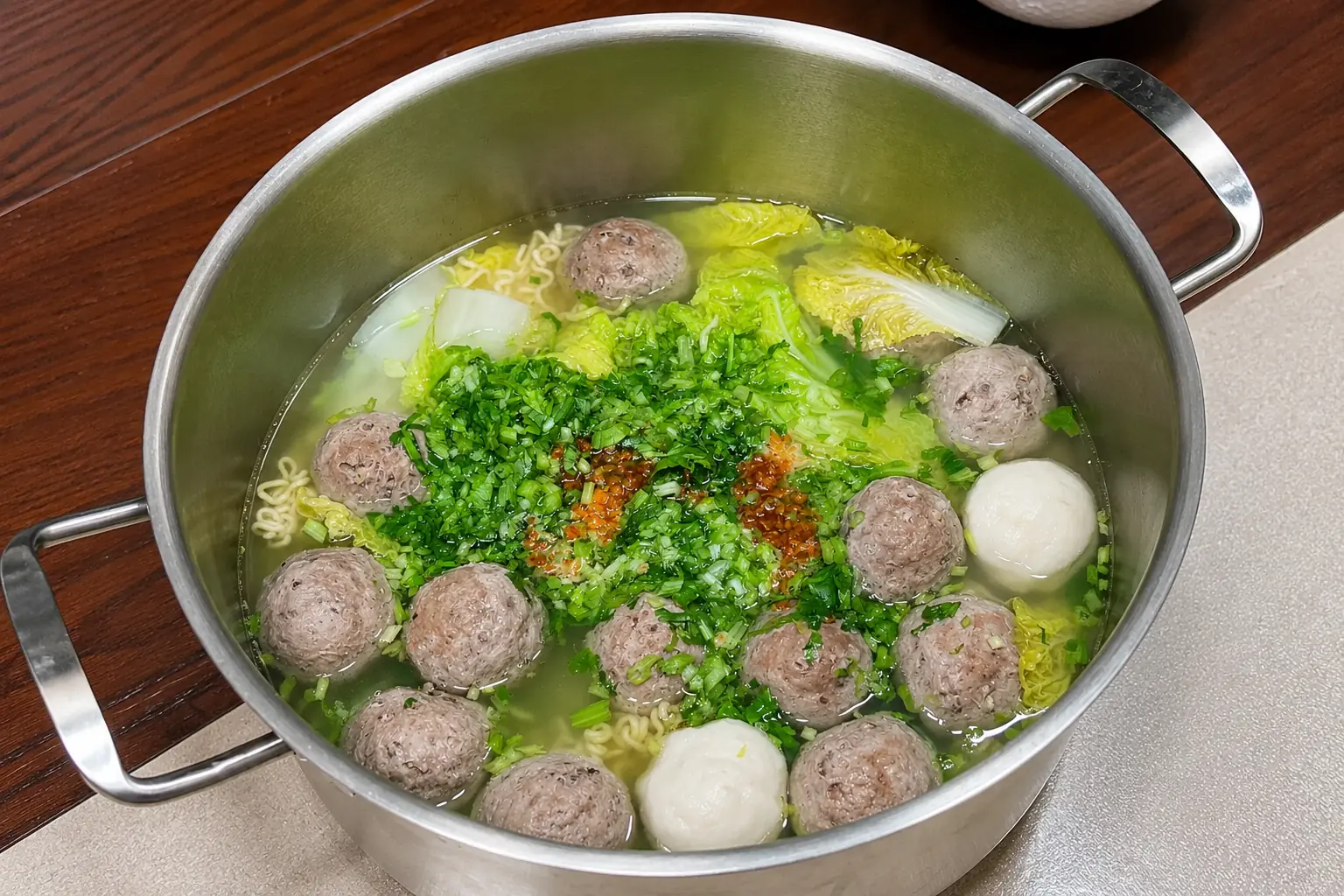
Beef balls (牛肉丸) and beef tendon balls (牛筋丸) are the easiest Chaoshan hotpot items for travelers to recognize. A good beef ball is not a soft Western-style meatball. It should feel springy, juicy, and tightly bound, with a clear beef flavor.
China Southern Airlines' Shantou food page describes Chaoshan beef balls as a long-standing local snack, usually divided into beef balls and beef tendon balls: the first smoother, the second more elastic. It also links beef balls with hotpot and shacha sauce, which matches how travelers usually meet them in Shantou.
Tripe (牛百叶), aorta or yellow throat (黄喉), and other crisp-textured items are more local in feel. Pick one at first. Many travelers expect a strong offal taste, but in a good shop the point is clean crunch, not funk.
Shacha Sauce and Puning Bean Paste
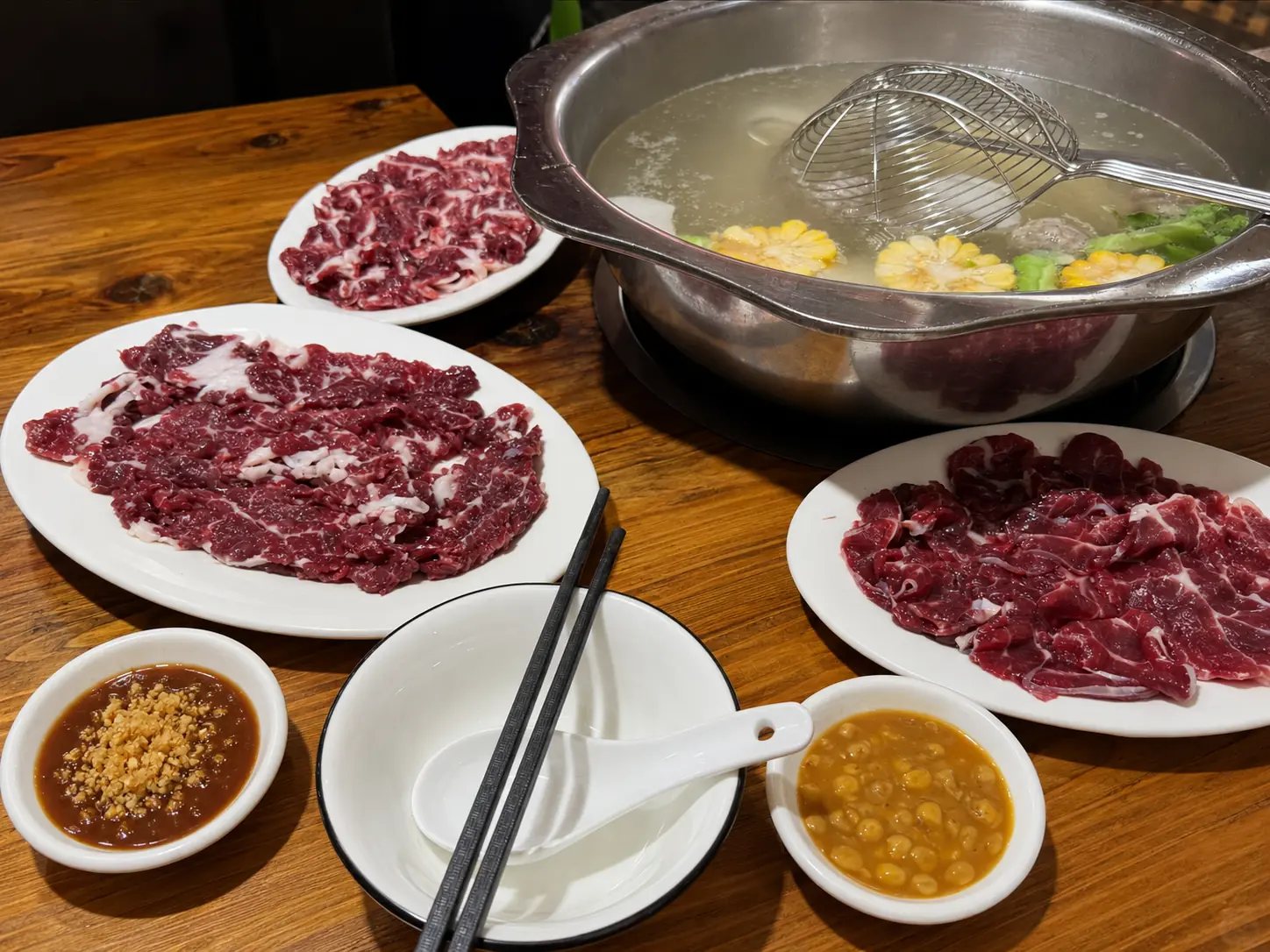
Shacha sauce (沙茶酱) is the classic first dipping sauce for Chaoshan beef hotpot. It is savory, oily, sweet-salty, and aromatic, often with seafood umami in the background. The Woks of Life describes shacha as a Chinese condiment made with oil, garlic, shallots, chilies, and seafood such as dried fish and dried shrimp, and notes its use in Teochew or Chaozhou cooking and hotpot dipping sauces.
Some restaurants also offer Puning bean paste (普宁豆酱), chili sauce, garlic, celery bits, cilantro, soy sauce, or house blends. Start simple. If you mix everything into one heavy bowl, you lose the difference between cuts.
Decision shortcut
First Sauce Decision
Safest first bowl
Use shacha sauce by itself for the first few slices.
More salty-savory
Add a small amount of Puning bean paste, but keep it controlled.
More heat
Keep chili sauce on the side so it does not take over the whole bowl.
Cooking Rhythm for Thin Beef Slices
Basic rhythm
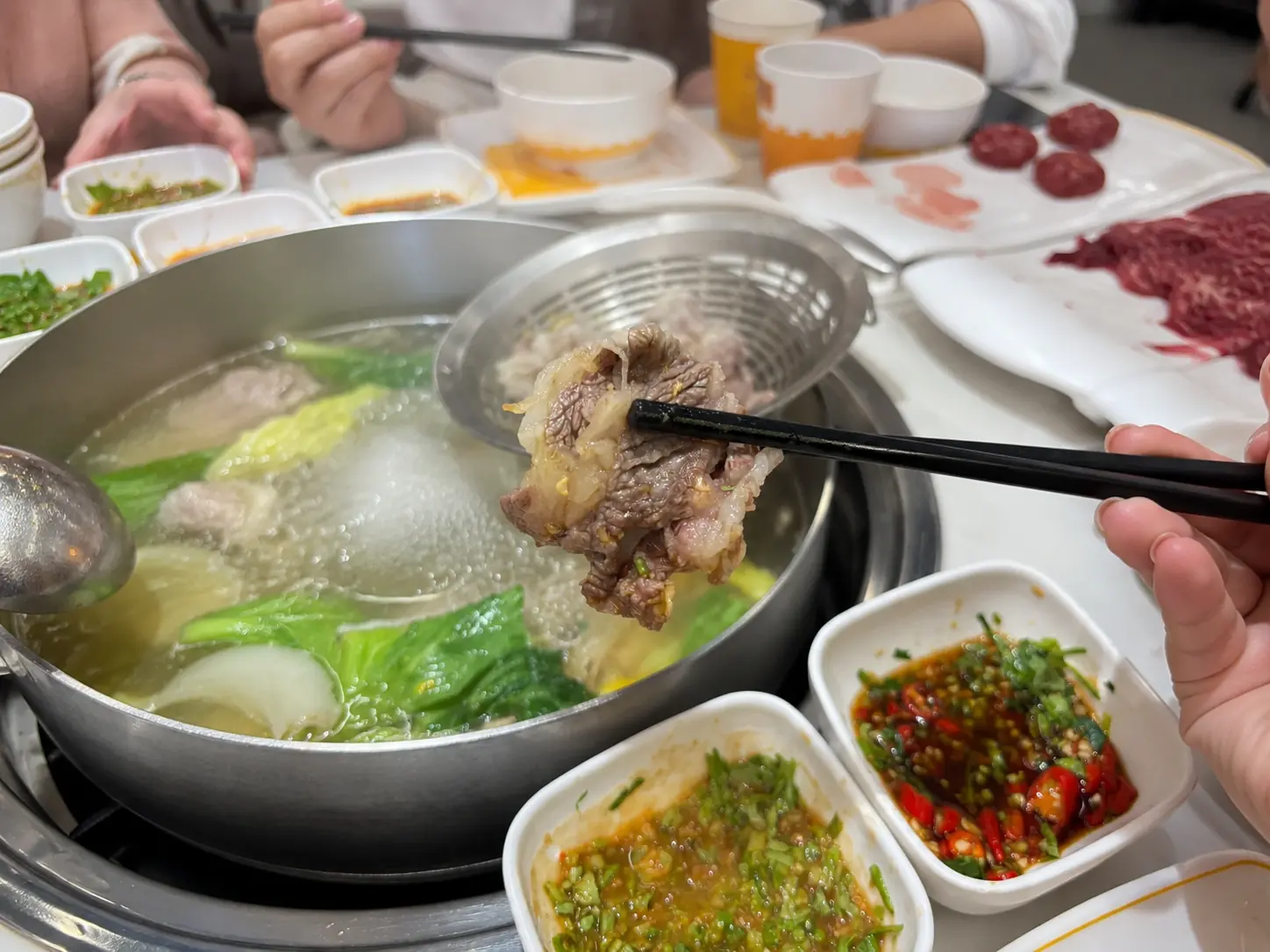
Wait until the pot is fully boiling, cook only a few slices at a time, and pull beef out once the color changes and the texture firms. Follow staff timing if they give it.
Traveler safety adjustment
If your stomach is sensitive, the restaurant looks less controlled, or the slice is thicker than expected, cook it a little longer. Beef balls, radish, tofu skin, greens, and rice noodles can stay in the pot longer.
- Start only after the pot returns to a steady boil.
- Cook thin beef in small batches and eat it immediately.
- Put beef balls, radish, and tofu skin in earlier.
- Do not dump an entire plate of fresh beef into the pot.
- Do not use chopsticks that touched raw beef as eating chopsticks.
Where to Eat Chaoshan Beef Hotpot
Origin Cities
Shantou, Chaozhou, Jieyang
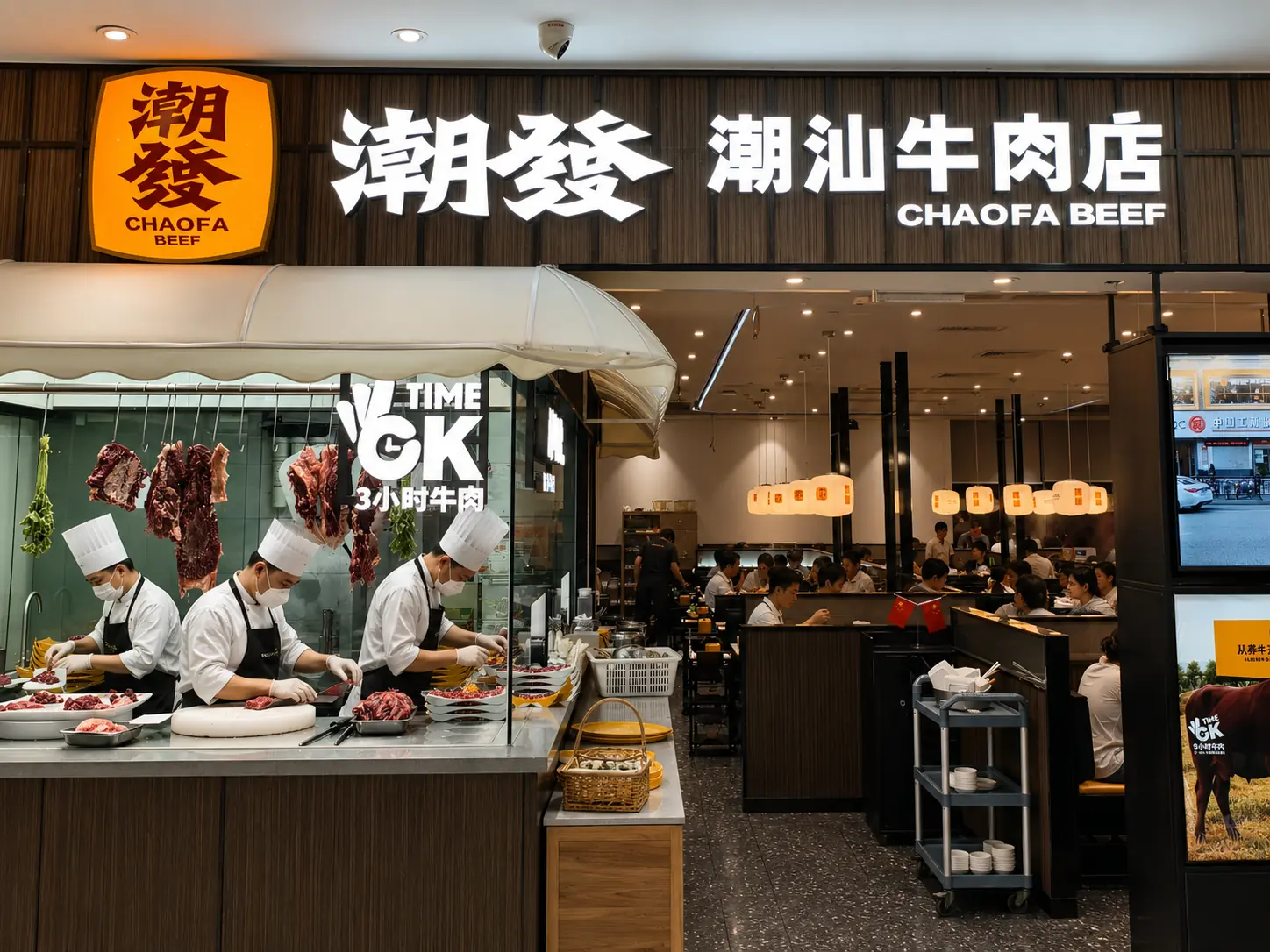
The strongest origin context is the Chaoshan region itself. Shantou gives the densest beef-hotpot environment for most travelers, and it is easy to connect the meal with beef balls, rice noodle rolls, braised goose, late-night porridge, and other Chaoshan foods. Chaozhou works well if you want to combine beef hotpot with gongfu tea, Phoenix Dancong oolong, and old-city walking.
Big-City Versions
Shenzhen and Guangzhou
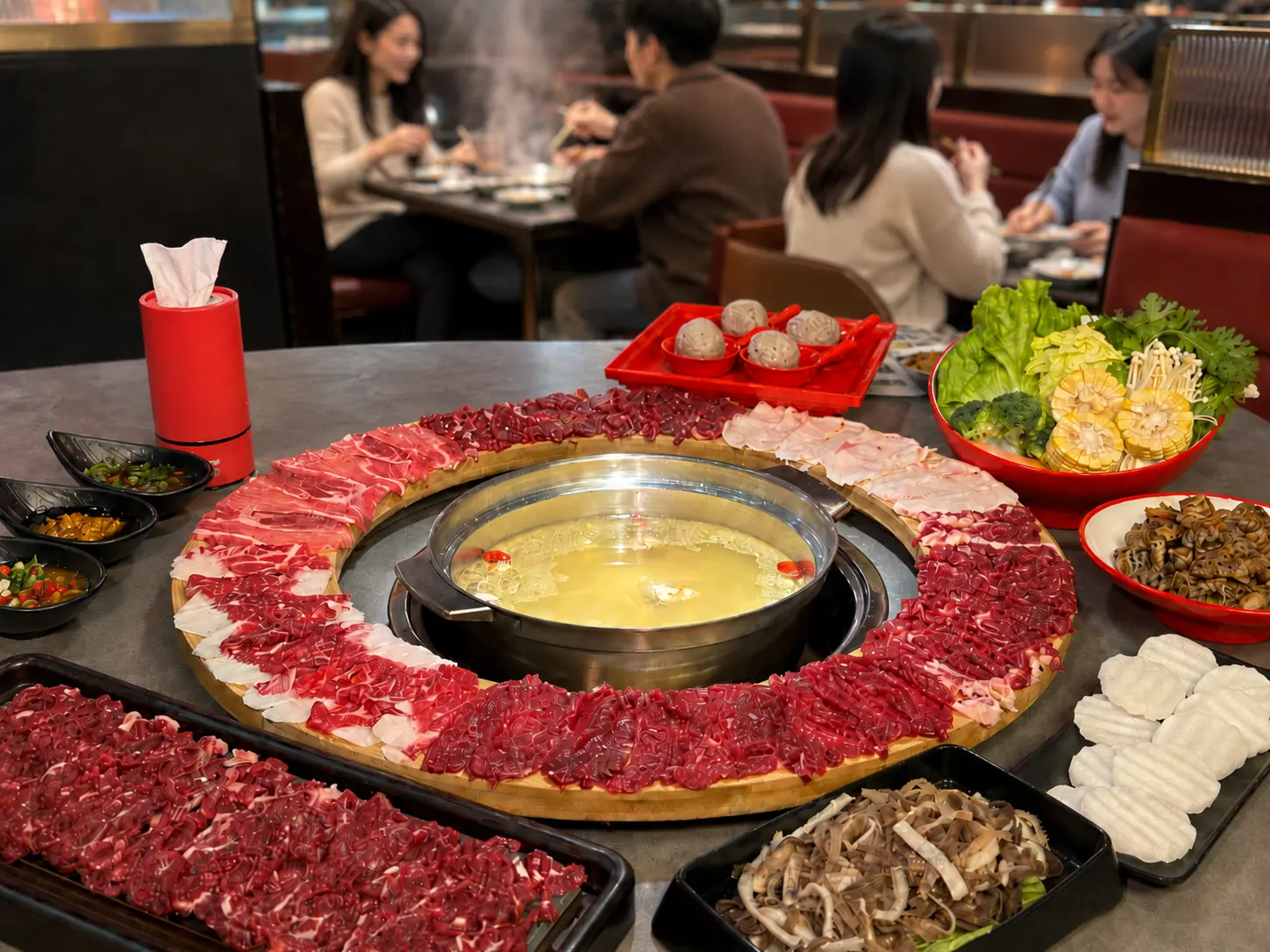
You do not have to detour to Chaoshan to taste the style. Shenzhen (深圳) is especially practical: it has a large migrant-city food mix, and EyeShenzhen lists Chaoshan beef hotpot as a recognizable Shenzhen food experience with clear broth, quick-cooked beef slices, and shacha sauce. Guangzhou (广州) is also a useful big-city option if your route already centers on Cantonese and regional Guangdong food.
Origin cities usually give you more visible cutting stations and local table rhythm. Big cities usually give you easier transport, clearer environments, and more predictable service. Choose the version that fits your route instead of building a whole trip around one dinner.
Before the first platter arrives, review Chinese shared-table etiquette so serving chopsticks, ordering pace, and paying customs do not interrupt the cooking rhythm.
First Order Templates for New Travelers
For two first-timers, keep the table focused: clear broth, one mixed beef platter, beef balls or beef tendon balls, tofu skin, white radish or winter melon, one green vegetable, rice noodles or noodles, and shacha sauce. That gives you beef, bounce, vegetables, and starch without turning the table into a menu test.
For four people, add one springy cut such as five-flower toe (五花趾) or three-flower toe (三花趾), one small order of chest fat if the table is curious, one crisp item such as tripe or yellow throat, and another rice noodle order. Still do not order every famous cut in the first round. Chaoshan beef hotpot is designed for adding more after the table finds its pace.
| Table Size | First Round | Add Later |
|---|---|---|
| 2 people | Mixed beef platter, beef balls, tofu skin, radish, greens, rice noodles | Add 吊龙 if you like tenderness; add tripe or toe cuts if you like snap |
| 4 people | Two beef plates, beef balls, one crisp item, vegetables, tofu, starch | Add chest fat, tendon balls, more greens, or more rice noodles |
Allergy and Safety Notes for Hotpot
Chaoshan beef hotpot looks mild, but allergy risk can be high. Shacha sauce may contain dried seafood, garlic, oil, chili, peanuts, sesame, soy, or other aromatics depending on the brand or restaurant blend. Sauce bars may use shared spoons. Beef balls, tendon balls, broths, and shared pots can all create cross-contact.
Vegetarians should be careful: the meal is usually beef-centered, the broth may be beef-based, and a shared hotpot table is difficult to control. Halal travelers should confirm halal certification, meat sourcing, and whether the restaurant serves pork before sitting down. Most ordinary Chaoshan beef hotpot restaurants are not designed around strict halal or vegetarian requirements.
Clear broth does not mean low risk
If you have a serious allergy, the main risks are dipping sauces, beef balls, shared pots, and raw-meat utensils. Pause the table, confirm the broth and sauce, and ask for serving chopsticks before cooking starts.
Useful Phrases for Ordering Beef Hotpot
These phrases are for the ordering stage. If speaking feels awkward, show the Chinese column to the server and point at what you need.
| English | Chinese | Pinyin | Say It Like… |
|---|---|---|---|
| Chaoshan beef hotpot | 潮汕牛肉火锅 | chao shan niu rou huo guo | chaow shan nyoh-roh hwaw-gwaw |
| Clear broth pot | 清汤锅 | qing tang guo | ching tahng gwaw |
| Mixed beef platter | 牛肉拼盘 | niu rou pin pan | nyoh-roh pin pan |
| Beef balls | 牛肉丸 | niu rou wan | nyoh-roh wahn |
| Beef tendon balls | 牛筋丸 | niu jin wan | nyoh jin wahn |
| Shacha dipping sauce | 沙茶酱 | sha cha jiang | shah-chah jyahng |
| Please recommend cuts suitable for first-timers | 请帮我们推荐适合第一次吃的部位 | qing bang wo men tui jian shi he di yi ci chi de bu wei | ching bahng waw-men tway-jyen shir-huh dee-ee tsuh chir duh boo-way |
| Please give me serving chopsticks | 请给我公筷 | qing gei wo gong kuai | ching gay waw gong-kwye |
Frequently Asked Questions
Usually no. The default broth is clear and mild, and spice mainly comes from dipping sauce or chili added at the table.
Beyond This Guide
Chaoshan beef hotpot works best when it fits your wider Guangdong route. In Shenzhen, use it as an easy default dinner after sightseeing or shopping; in Chaozhou, pair it with gongfu tea and Phoenix Dancong oolong; in Guangzhou, compare it with dim sum, roast meats, and broader Guangdong regional cooking.
Next, use the Shenzhen food guide, Guangzhou food guide, Cantonese cuisine guide, gongfu tea guide, oolong tea guide, and Sichuan and Chongqing hotpot guide to place the meal inside a real itinerary.
© gochinafreely.com — Original guide by Go China Freely.