The name Huangsha Seafood Market still points many travelers toward old Guangzhou: the Pearl River edge, Shamian Island, Qingping Market, and rows of live seafood tanks in a famously busy trading zone. But if you follow an old blog straight to Huangsha Station now, you are using the wrong map.
Guangzhou has moved the main Huangsha seafood operation to the new Huangsha Aquatic Products Center (黄沙水产中心) in Dongsha, Liwan District. It is bigger, cleaner, more logistics-driven, and less like a casual snack street than visitors often expect, so this guide focuses on the practical question: should you go, and how do you make the market visit work?
Visit snapshot
Go for a working live-seafood hub, not an easy old-town snack crawl.
Good to know
Line 10 to Dongsha Exit C. Walk about 300 m to Gate 2.
Search the new name. Use Huangsha Aquatic Products Center (黄沙水产中心).
Confirm total cost first. Ask weight, cooking fee, cooking style, and total.
Quick decision for travelers
- Use the new Dongsha target: the main Huangsha seafood operation has relocated from the old riverside site to the new Huangsha Aquatic Products Center.
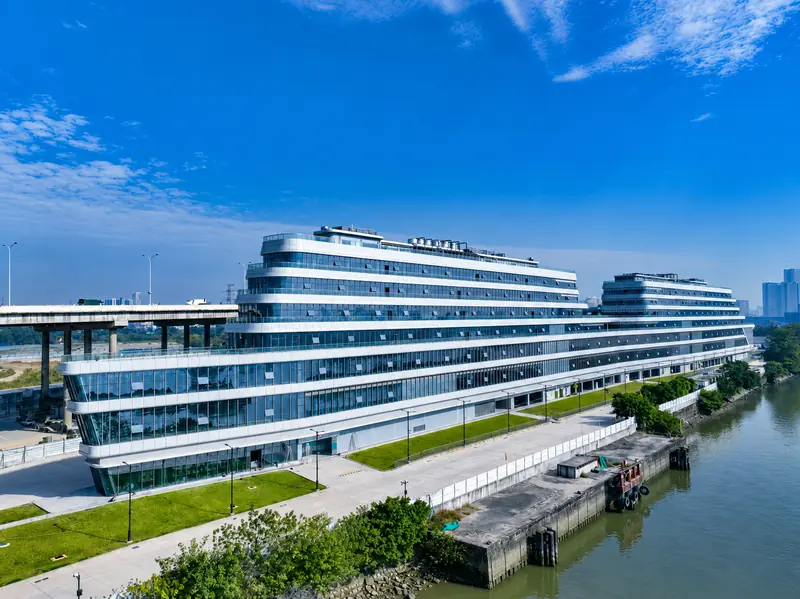
- Expect a working market: official local reports describe a roughly 110,000-square-meter smart aquatic-products hub, not a polished tourist night market.
- Take the simple route: use Metro Line 10 to Dongsha Station, Exit C, then walk about 300 meters to Gate 2.
- Keep the first visit focused: do a 60-90 minute market loop, then eat in old Liwan or Haizhu unless the seafood price, weight, cooking fee, cooking style, and total are clear.
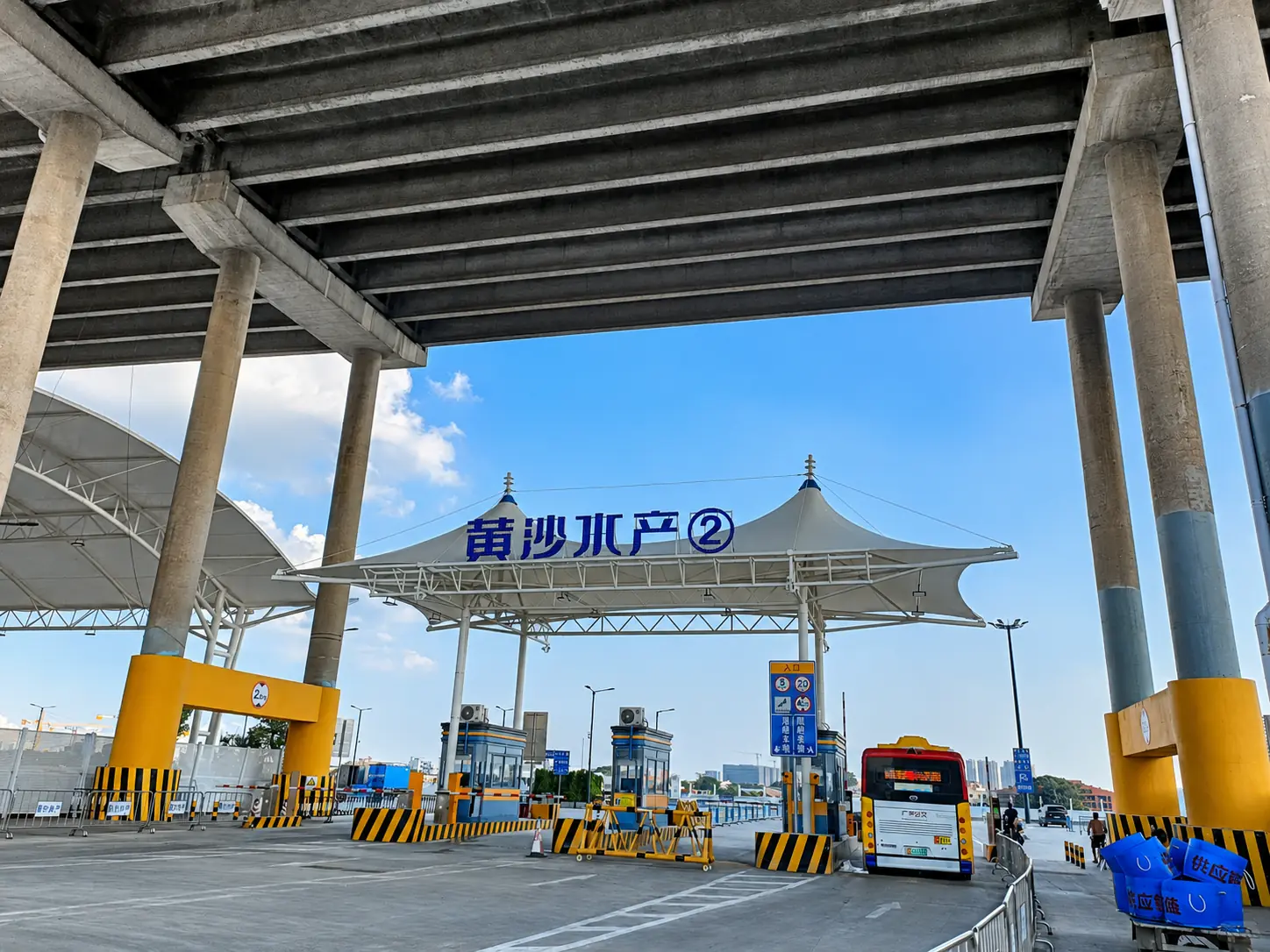
Gate 2 is the practical landmark to use when arriving at the new Huangsha center.
2025
New Center Opening
110,000 sqm
Reported Market Scale
Line 10
Dongsha Station
300 m
Exit C to Gate 2
Huangsha Seafood Market Has Moved
The most important Huangsha update is simple: the famous seafood market name survived, but the main market address changed.
For decades, Huangsha was known as a huge live seafood market near the Pearl River in old Liwan. It began in the 1990s and became one of South China's best-known aquatic-products trading hubs. Travelers often folded it into the same day as Shamian Island (沙面岛), Qingping Market (清平市场), and older Xiguan lanes.
The new Huangsha Aquatic Products Center (黄沙水产中心) opened in 2025 at No. 188 Shaluo Longwan Street, Dongsha Subdistrict, Liwan District. Official city coverage describes it as a relocation and upgrade of the old Huangsha market, with more space, cold-chain systems, digital traceability, and modern trading infrastructure.
That makes the new Huangsha useful, but it also changes the travel decision. The old site was easy to fold into a Shamian walk. The new site is more deliberate: worth it if seafood markets interest you, less essential if you only want a pretty old-town stroll and one easy meal.
Use the new name in maps
Search for Huangsha Aquatic Products Center (黄沙水产中心), not only "Huangsha Seafood Market." Old search results, old blogs, and some map pins may still point travelers toward the former riverside market area.
Old Huangsha vs New Dongsha Center
The new center is not just the old market moved a few blocks away. The visitor feel is different, and this is where many outdated guides mislead first-timers.
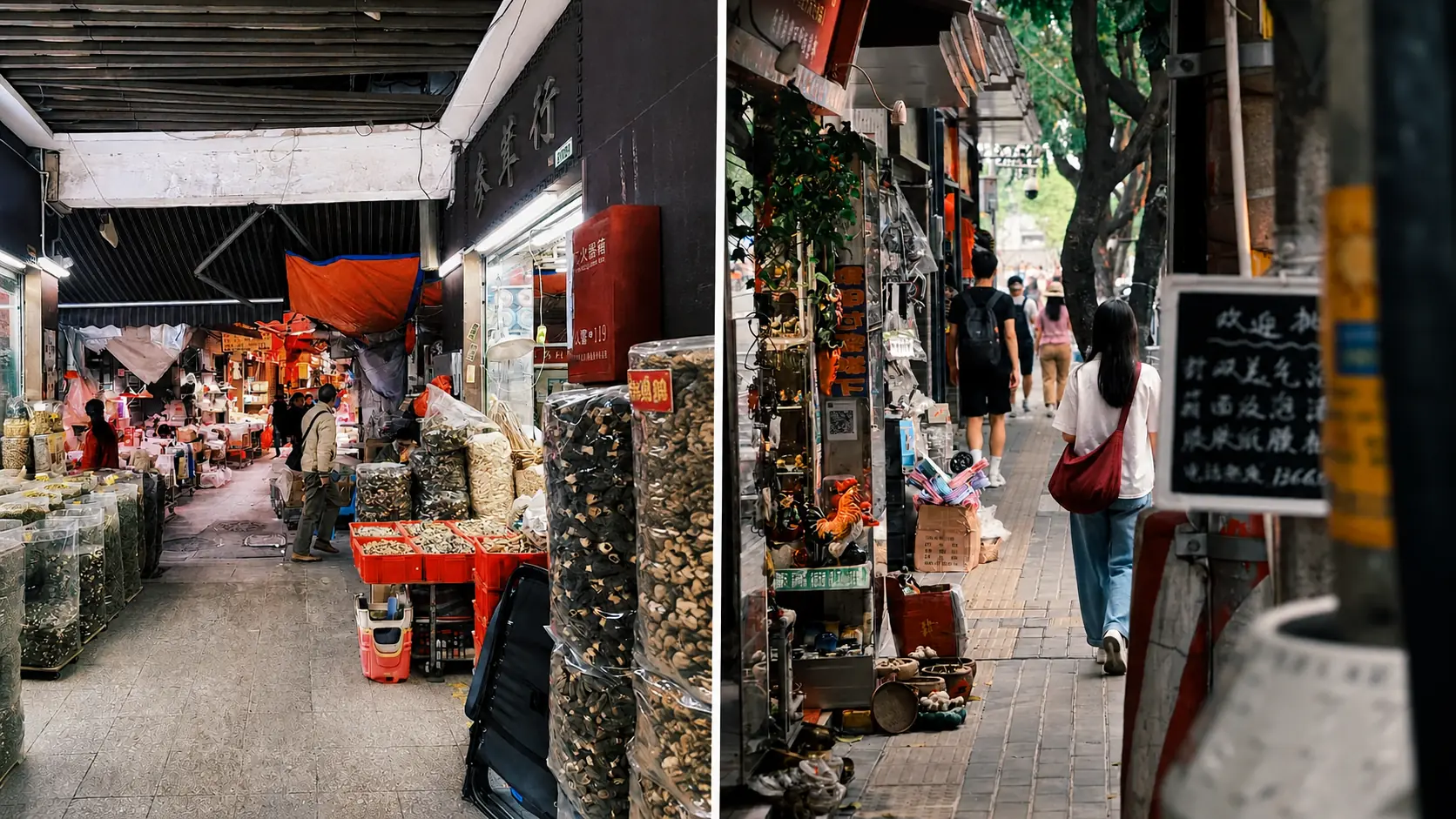
Swipe to compare old and new Huangsha
Old Huangsha area
Former riverside cluster
- ✓Historic riverside seafood-market zone with dense old-city energy.
- —Still useful as Guangzhou food memory and Liwan atmosphere.
- ✗Many older guides now point to the wrong main seafood-market target.
Best with Shamian
Qingping
Xiguan lanes
New Dongsha center
Current Huangsha target
- ✓Modern aquatic-products trading center with larger managed infrastructure.
- ✓Shows how Guangzhou seafood supply now works at scale.
- —Less romantic than the old riverside zone, so visit deliberately.
Best for food-market fans
modern supply-chain view
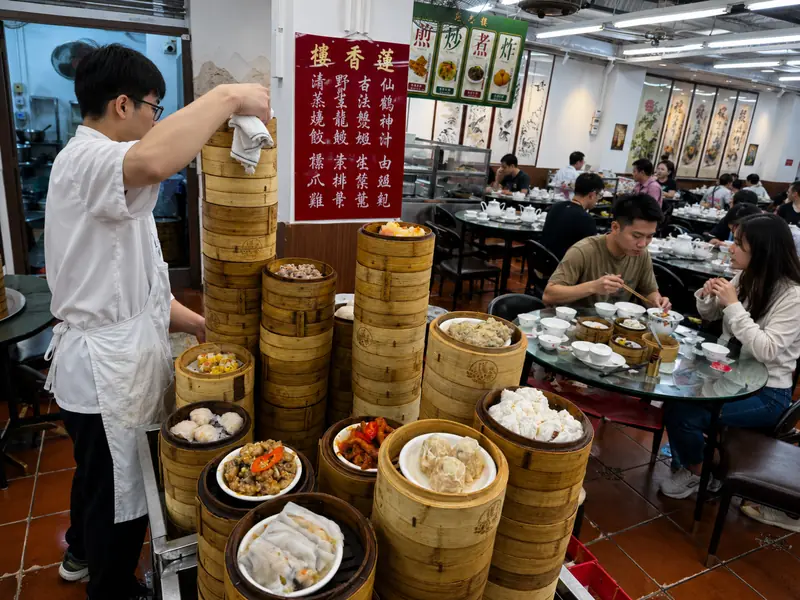
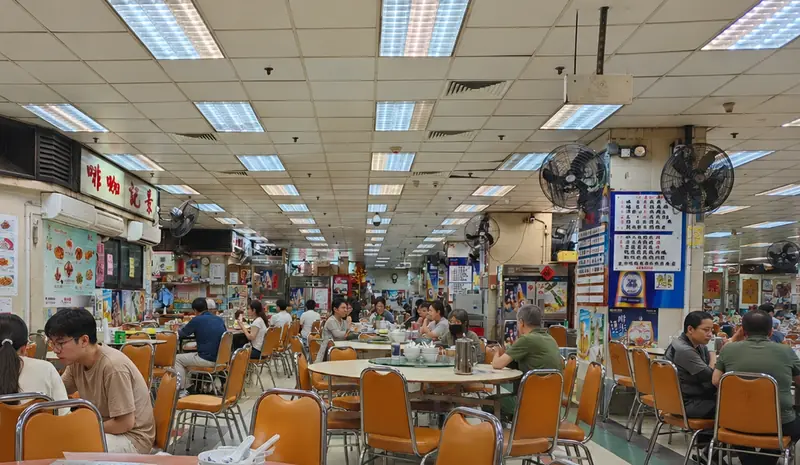
If your Guangzhou day is only one day long, the old-city route may still matter more: dim sum, Shamian, Qingping, Xiguan snacks, and Canton Tower at night. If your theme is food markets, though, the new Huangsha deserves a focused visit because it shows how a legendary local market has been rebuilt for a larger, modern city.
Your First Huangsha Market Loop
For a first visit, treat Huangsha as a 60-90 minute seafood-market loop rather than an open-ended food crawl. That keeps the visit practical even if individual stalls, cooking partners, or retail areas change.
- Dongsha Station Exit C(东沙站C口)- Follow signs or navigation toward Gate 2 of Huangsha Aquatic Products Center. This is the key correction to old Huangsha Station advice.
- Gate 2 and Main Signage- Pause at the entrance, confirm you are at the new Dongsha center, and use this as your meeting point if the group separates.
- Live Tank Aisles- Walk one full loop before buying. Compare tank condition, crowd level, species, and whether a stall seems comfortable with casual retail visitors.
- Weighing and Price Check- If you want to buy, confirm per-jin price, total weight, and whether the vendor or a cooking partner will handle the next step.
- Cooking or Dining Decision- Only continue if the cooking fee, cooking style, dish count, and total price are clear. Otherwise enjoy the market as a visit and eat elsewhere.
- Exit Toward Liwan or Haizhu- After the market, return by metro or taxi. Pair with old Liwan for heritage atmosphere or Haizhu for an easier evening meal.
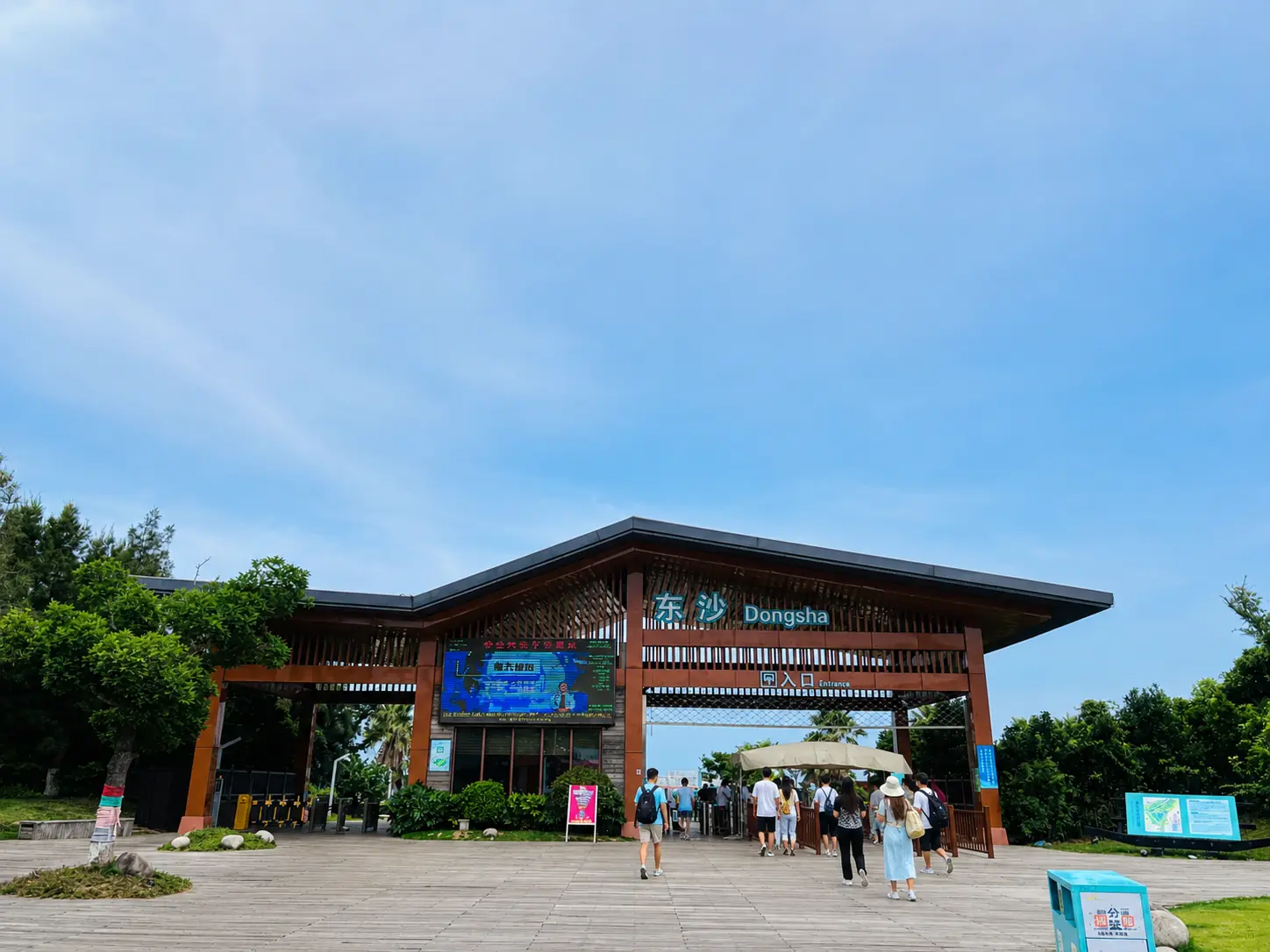
Dongsha Station is the metro target for the new Huangsha seafood market route.
Inside Huangsha Aquatic Products Center
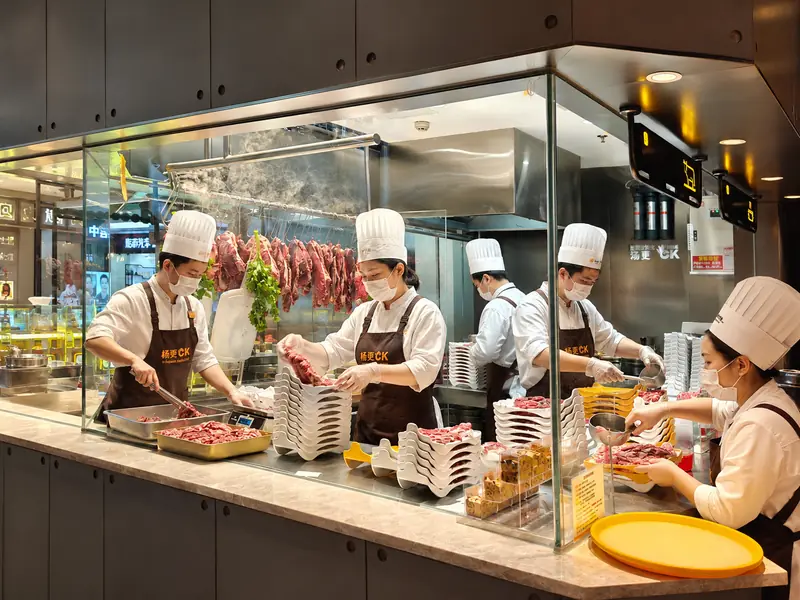
Expect a working seafood center first and a tourist attraction second. The most interesting parts are not necessarily decorative; they are the systems that keep live seafood moving through Guangzhou.
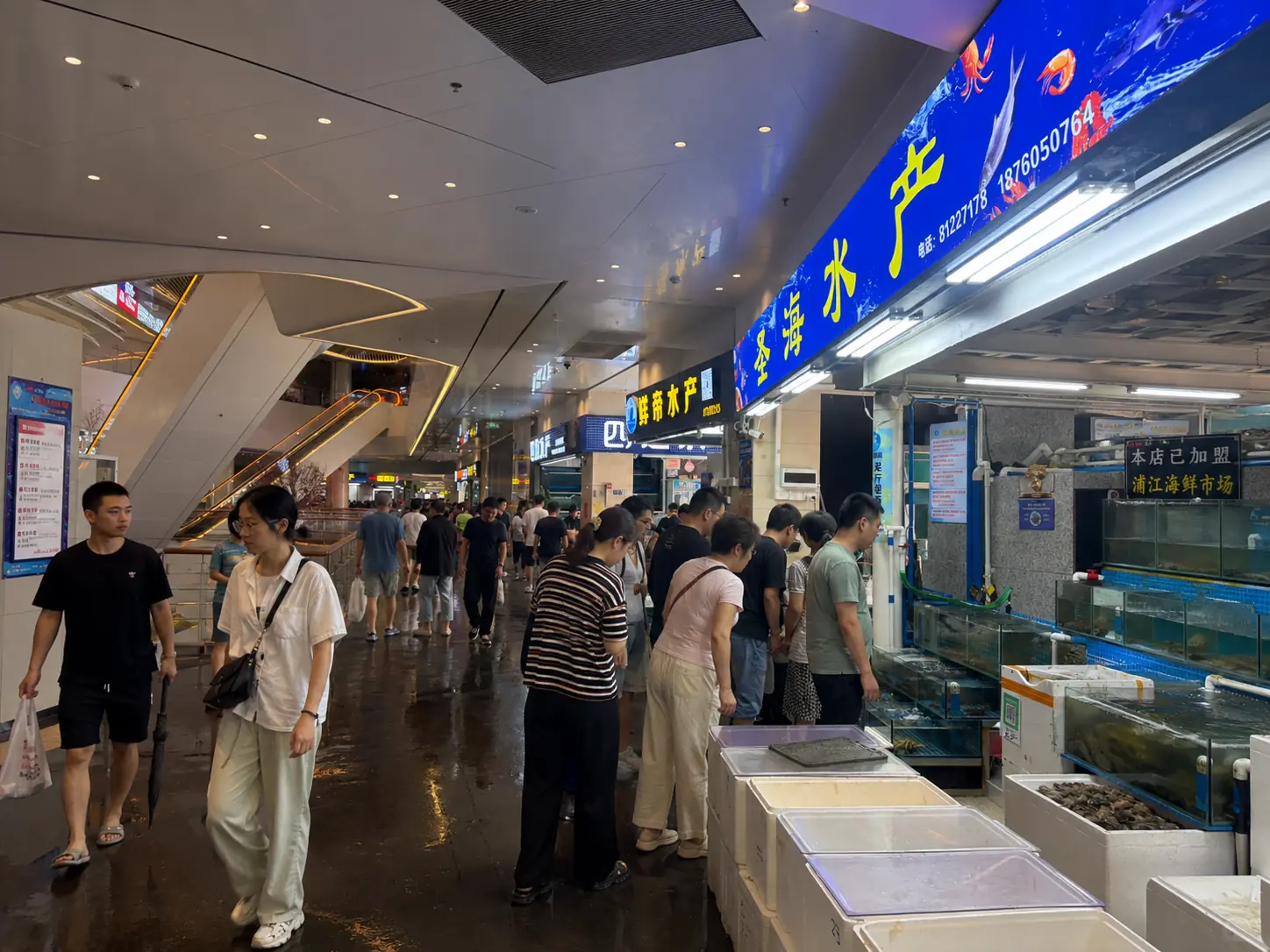
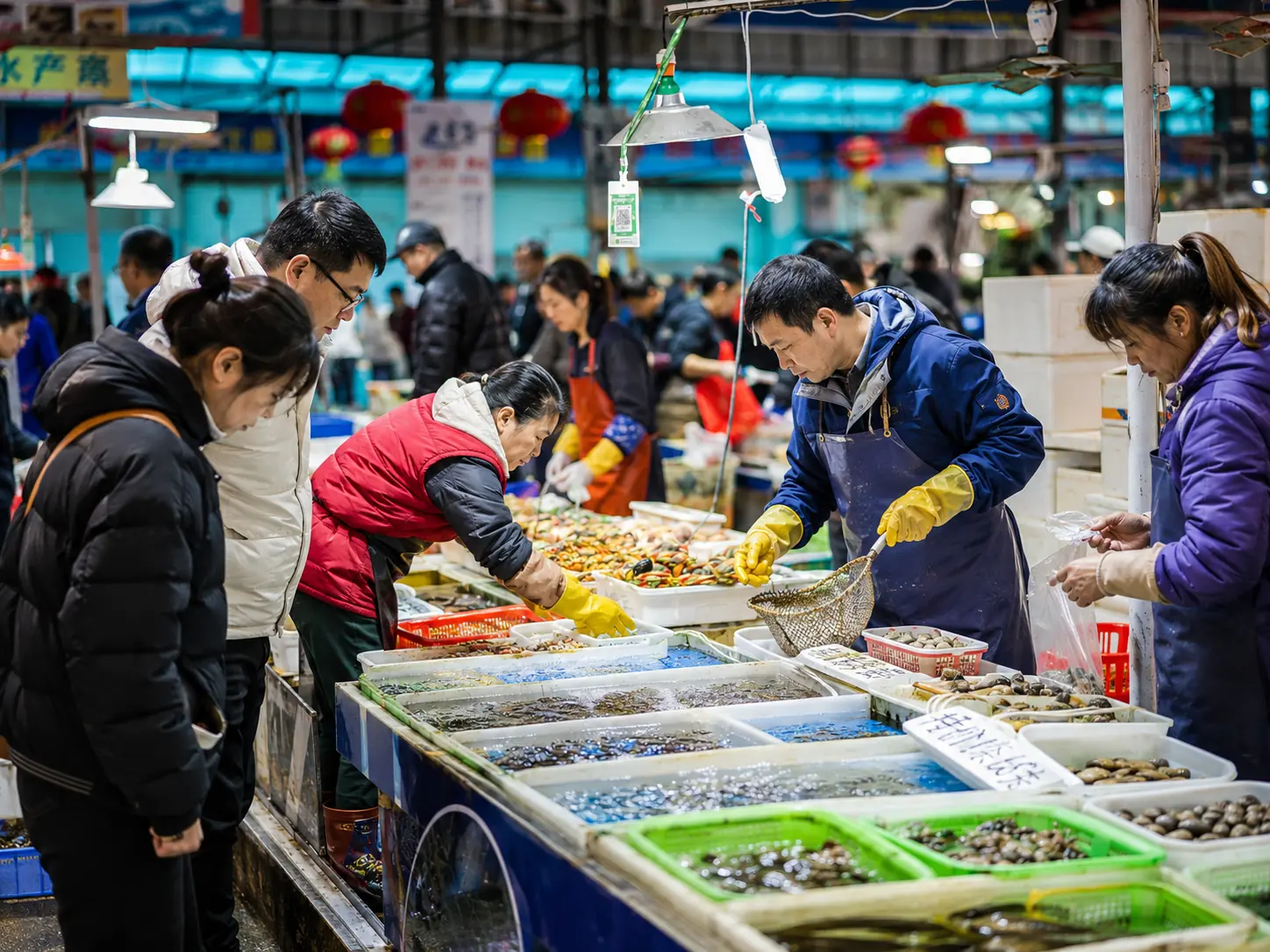
Retail-facing aisles mix live tanks, clear signage, and the controlled feel of a modern seafood hub. That makes the new Huangsha easier to navigate than the old market, but also less spontaneous.
🦀Live tanks everywhere
The visual heart is still the seafood itself: fish, shellfish, crustaceans, oxygenated tanks, weighing stations, and staff moving quickly through wet-market routines.
❄️Smarter infrastructure
Official reports emphasize cold-chain logistics, seawater systems, cooling systems, and digital traceability. That is the new center story: not just more stalls, but a more controlled supply chain.
🍽️Retail and dining edges
The center has wholesale DNA, but visitors should look for clearly marked retail-facing stalls, dining areas, or cooking partners. Treat exact shops and hours as changeable.
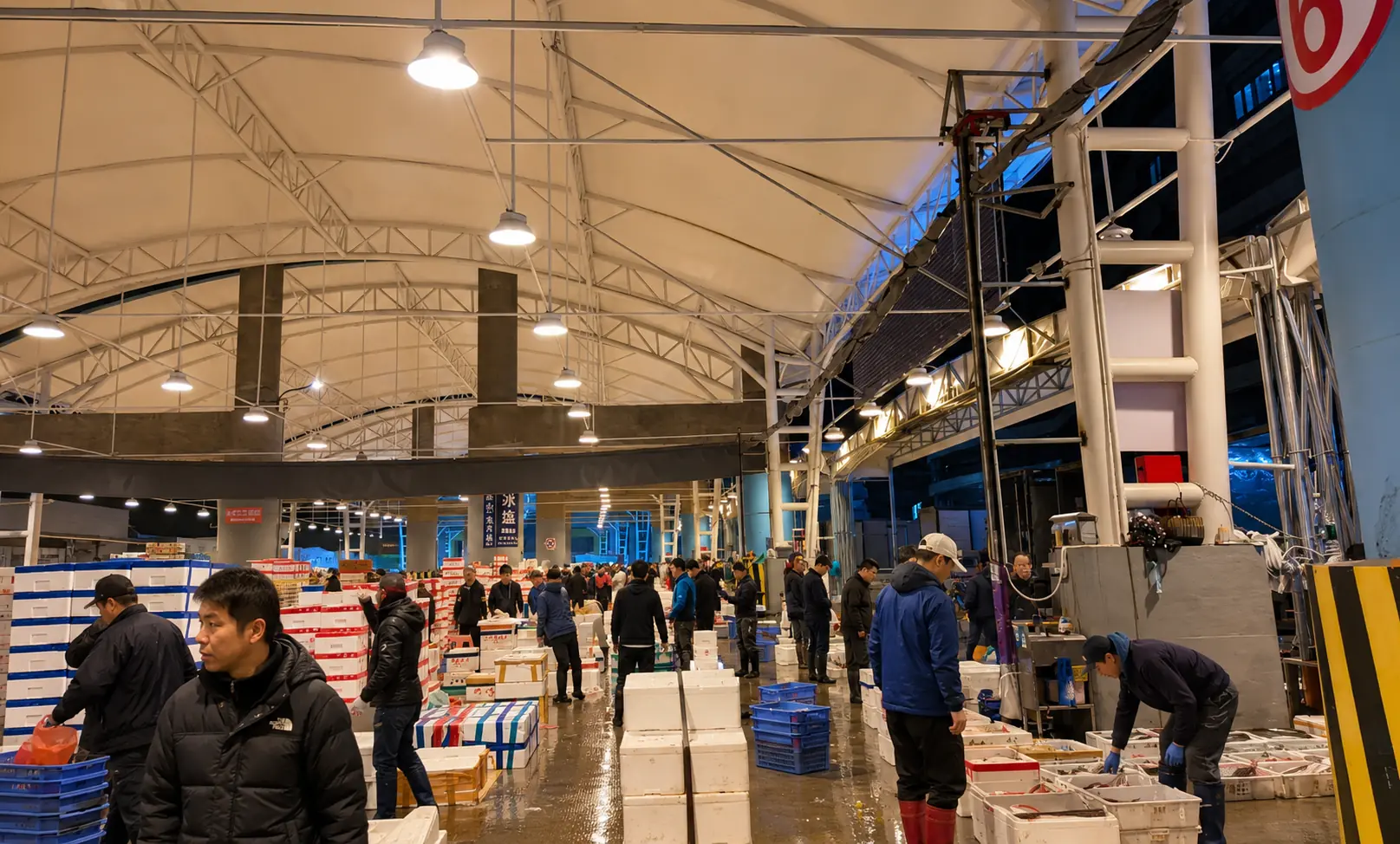
The atmosphere can be fascinating if you like real food infrastructure: vendors calling out prices, tanks bubbling, staff sorting orders, delivery carts moving through the building, and shoppers checking freshness by eye.
It can also feel intense if you expected a polished seafood mall. Huangsha is still a working seafood market, with wet aisles, boxes, and active trading routines.
Think market, not night bazaar
Huangsha works best when you want to understand Guangzhou seafood culture at the source. If your goal is a low-effort snack crawl with neon, desserts, and easy grazing, choose a neighborhood food street instead.
For photography, keep the camera respectful. Wide scenes, signage, tanks, and cooked food are easier than close-up images of workers or messy slaughter moments. If a vendor signals no photos, lower the camera immediately.
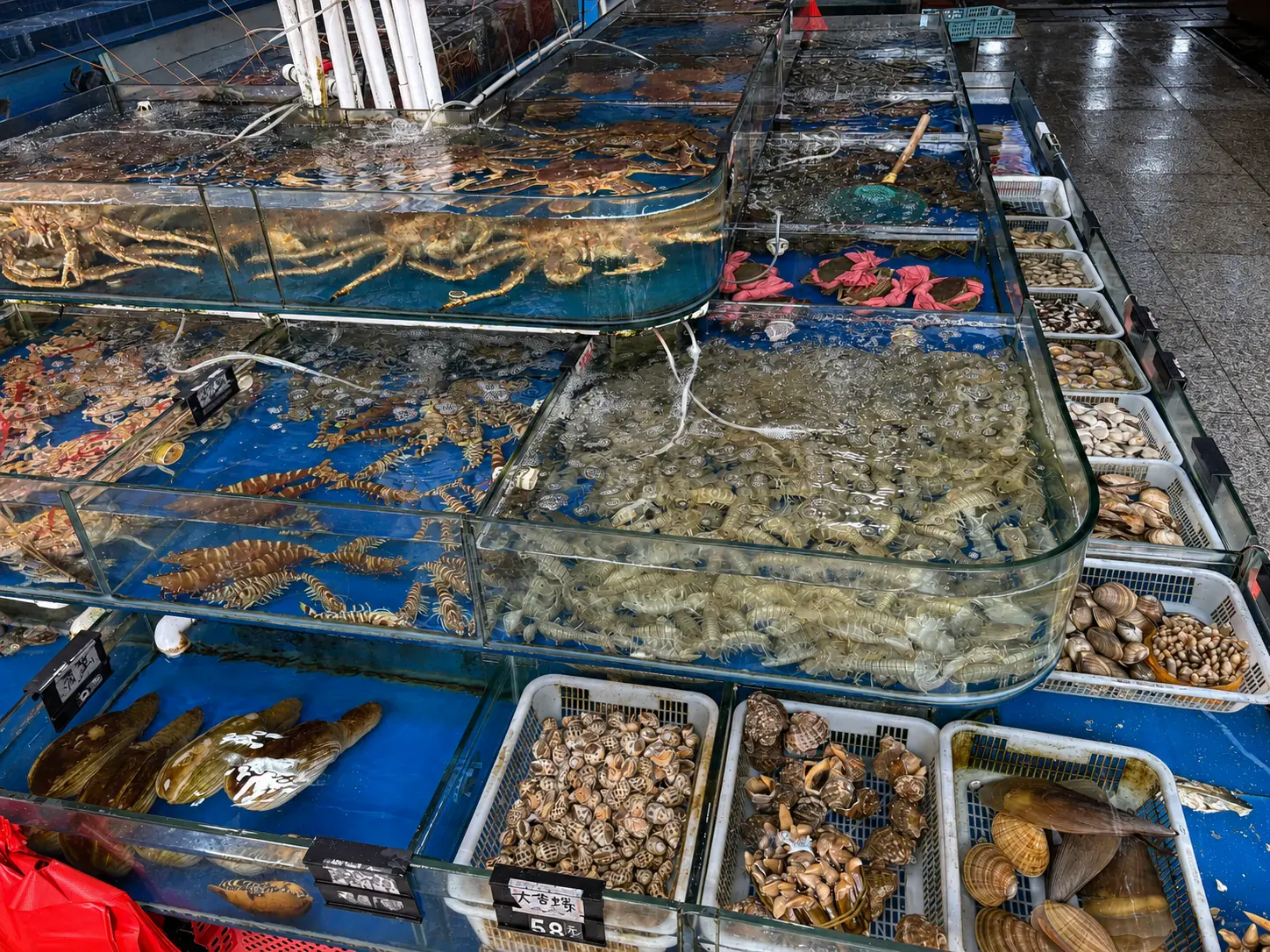
Live tanks remain the visual core of a Huangsha market visit.
How to Eat Seafood at Huangsha
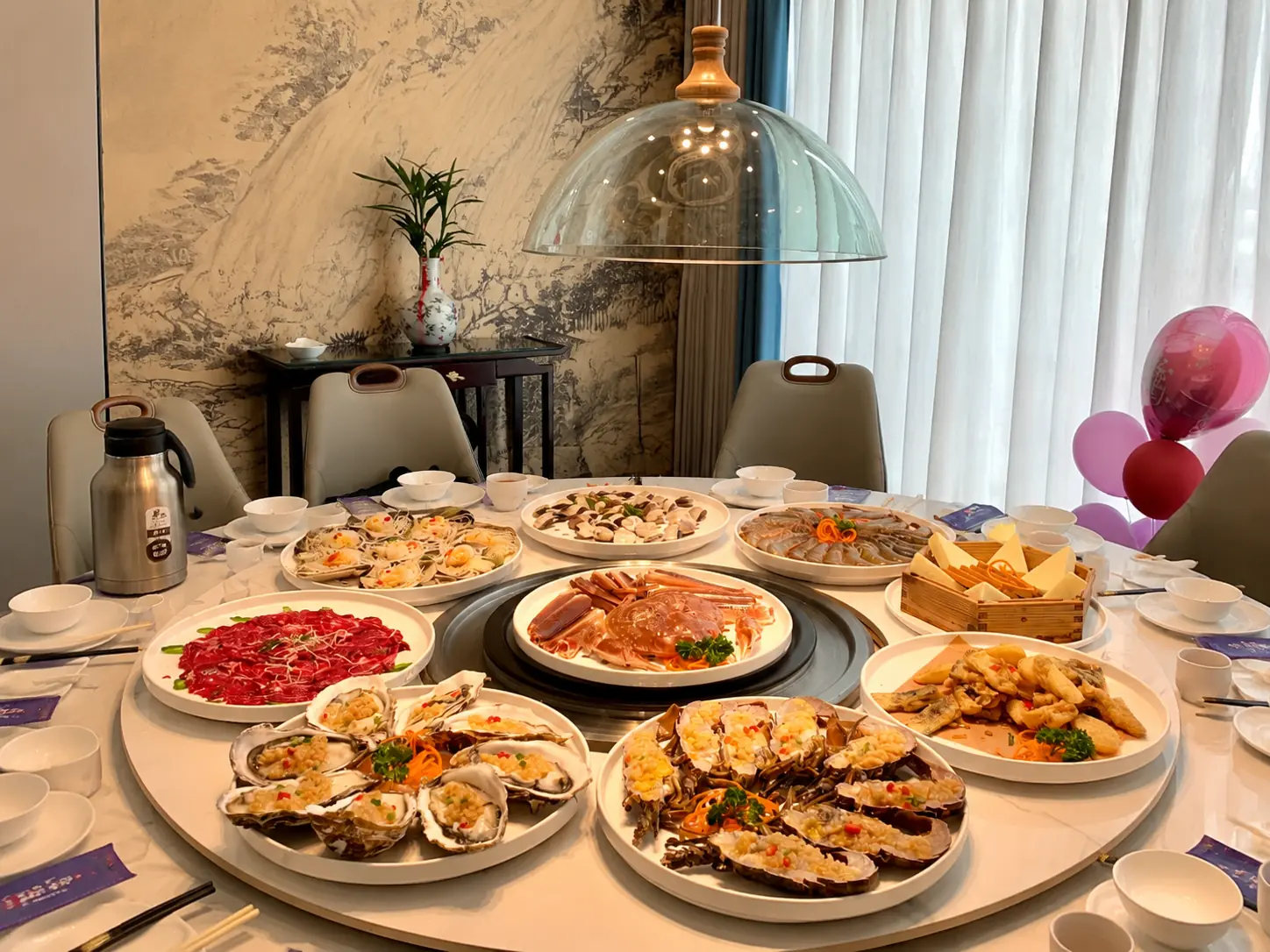
Huangsha is easiest to enjoy when you treat the meal like a small negotiation rather than a fixed-menu restaurant. The goal is not to bargain aggressively; it is to make sure everyone agrees on the unit, weight, cooking method, and final bill before the seafood leaves your sight.
Walk one loop before buying. Look at tank condition, crowd level, weighing behavior, and whether a stall seems comfortable serving casual retail customers.
Do not rush unclear prices. If you cannot communicate prices clearly, do not take the first offer just because the seafood looks good.
Ask three separate questions. Confirm the seafood price by weight, the cooking or processing fee, and the cooking style before the seafood leaves your sight.
For Cantonese seafood, the safest styles are often the simplest ones: steamed fish, garlic steamed scallops, salt-and-pepper shrimp, blanched shellfish, ginger-scallion crab, or a light soy-based preparation. If the seafood is very fresh, heavy sauce is usually not the point.
- Why it suits Guangzhou seafood
- Clean flavor, good freshness test, very Cantonese
- What to confirm first
- Fish weight, steaming fee, whether the fish is priced alive or after cleaning
- Why it suits Guangzhou seafood
- Simple, fast, and easy to share
- What to confirm first
- Per-jin price, dipping sauce, whether the portion is enough for the group
- Why it suits Guangzhou seafood
- Familiar to many visitors and visually clear
- What to confirm first
- Price per piece, minimum order, cooking fee
- Why it suits Guangzhou seafood
- Classic Cantonese seafood-table energy
- What to confirm first
- Crab weight, whether the quoted price includes cooking
- Why it suits Guangzhou seafood
- Stronger flavor, good for a beer-style meal if available
- What to confirm first
- Whether shell-on preparation is expected and how many pieces you get
| English | Chinese | Pinyin | Say It Like… |
|---|---|---|---|
| How is this sold or priced? | 这个怎么卖? | zhe ge zen me mai | juh guh dzun-muh my |
| How much per jin? | 是一斤多少钱? | shi yi jin duo shao qian | shrr ee jin dwaw shaow chyen |
| How is the cooking fee calculated? | 加工费怎么算? | jia gong fei zen me suan | jyah gong fay dzun-muh swan |
| How much is it in total? | 一共多少钱? | yi gong duo shao qian | ee gong dwaw shaow chyen |
One jin is not one kilogram
In mainland China, one jin (斤) is 500 grams. If you compare seafood prices mentally, double the per-jin price to estimate the per-kilogram price.
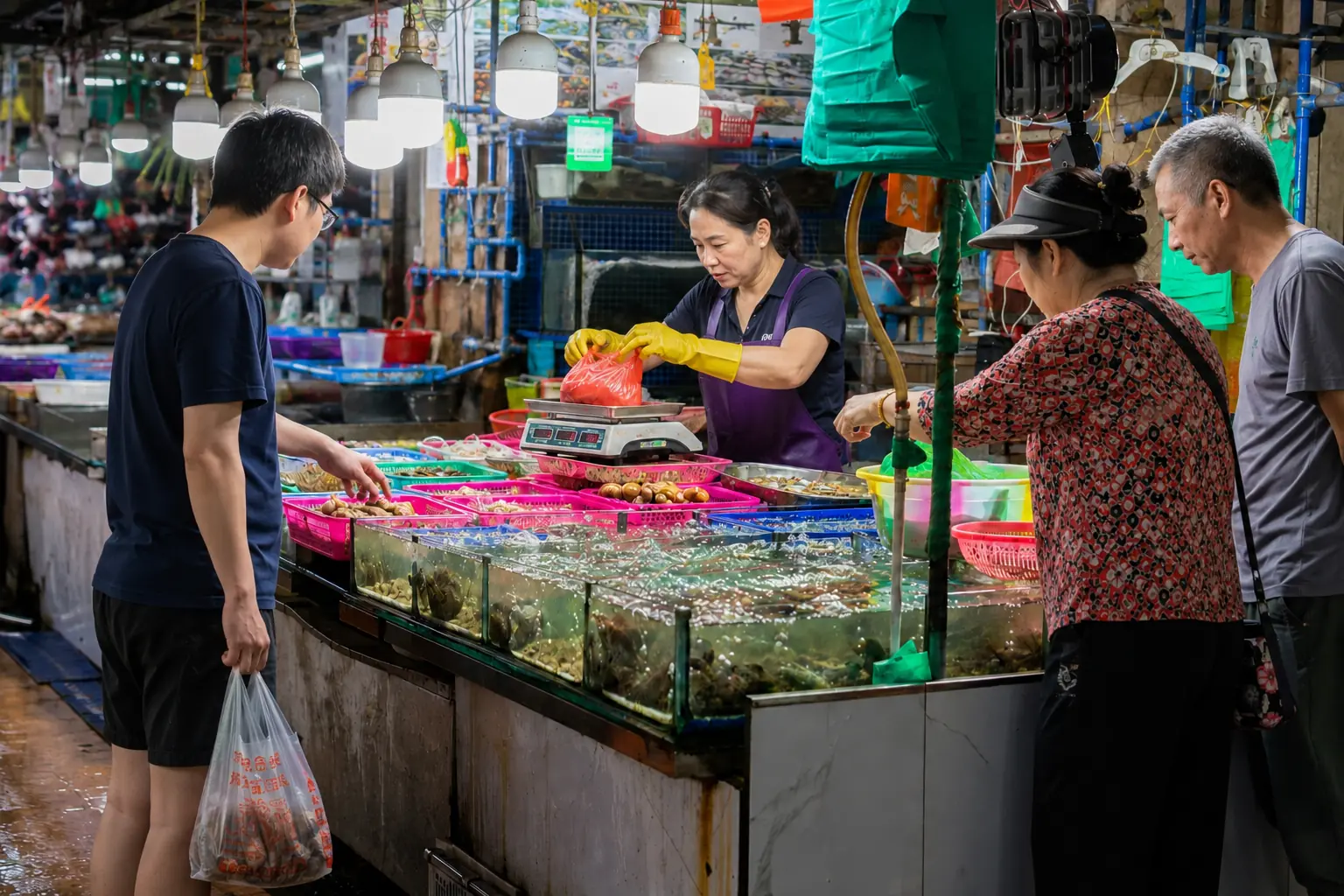
Best Time for Huangsha Market
Market timing depends on what you want from Huangsha.
For market energy, go earlier in the day when trading is more active and the seafood selection feels alive. For a meal, late afternoon to dinner can work better if retail dining areas are active, but individual shop hours can change. Do not build a whole evening around one unverified stall unless you have called ahead or checked a fresh local listing that day.
Comfort matters here more than in a normal restaurant district:
Wear shoes with grip. Wet floors and tank water are part of the experience. Avoid thin sandals.
Bring patience for smells and noise. A real seafood market smells like a real seafood market. That is not a flaw, but it may not suit every traveler.
Carry small essentials. Tissues, hand sanitizer, and a backup payment method make the visit easier.
Keep the group small. Two to four people is easier than a large group when choosing seafood, confirming prices, and moving through busy aisles.
Families can visit if everyone is comfortable with wet-market conditions, but this is not the first Guangzhou food stop I would choose for very young children. For a gentler family meal, dim sum or a neighborhood Cantonese restaurant is easier.
Choose Huangsha when seafood systems, market atmosphere, and relocation context are part of the fun. Skip it when your Guangzhou food day needs to be simple, scenic, stroller-friendly, or mostly about grazing.
Getting to Huangsha Aquatic Products Center
The new center is in Dongsha, Liwan District, not beside the old Huangsha Station riverside cluster.
Primary route
Metro Line 10 to Dongsha Station
Use Exit C, then walk about 300 meters to Gate 2 of Huangsha Aquatic Products Center. This is the cleanest route to explain to a traveler.
Map target
Huangsha Aquatic Products Center (黄沙水产中心)
No. 188 Shaluo Longwan Street, Dongsha Subdistrict, Liwan District
Official local guidance has also mentioned a shuttle between Dongsha (Health Harbor) Terminal and Gate 2 of the center, with daytime and early evening windows around 9:00-12:00 and 16:00-20:00. Treat that as a helpful local option, but check the on-site sign or a fresh map listing before you depend on it.
Show this screen to your driver · 出示给司机看
你好,请带我去荔湾区东沙街沙洛龙湾街188号黄沙水产中心。请注意是东沙的新黄沙水产中心,不是黄沙地铁站旧址。
Hello, please take me to Huangsha Aquatic Products Center at No. 188 Shaluo Longwan Street, Dongsha Subdistrict, Liwan District. Please note this is the new Dongsha site, not the old Huangsha Station area.
Show this if a driver or hotel staff member defaults to the old Huangsha market location.
Map links: Huangsha Aquatic Products Center (黄沙水产中心) (Google | Amap)
Huangsha Market Mistakes to Avoid
The biggest Huangsha mistake is not about seafood. It is about geography.
Using old Huangsha Station directions
Many older articles and videos still describe the former riverside market. For the current main center, navigate to Huangsha Aquatic Products Center (黄沙水产中心) in Dongsha.
Treating it like a snack street
This is a large seafood trading hub with retail and dining layers, not a compact night market where every stall is built for tourists.
Agreeing before the total is clear
Seafood price, weight, cooking fee, and cooking style should all be confirmed before the order starts.
Planning around one stale listing
Individual restaurants and stalls can change. Use recent map reviews or phone confirmation if a specific meal matters.
Frequently Asked Questions
The famous Huangsha market has been relocated and upgraded into the new Huangsha Aquatic Products Center in Dongsha, Liwan District. The old Huangsha riverside area is no longer the main visitor target for the seafood market.
Sources checked for this guide
Beyond This Guide
If Huangsha is part of a bigger Guangzhou food plan, use it as one market-focused chapter rather than the whole story.
- Start with the Guangzhou food guide if you are choosing between dim sum, rice rolls, roast meats, and neighborhood snacks.
- Pair old Liwan atmosphere with the Qingping Medicine Market guide and Shamian Island walk.
- For a one-day structure, adapt the Guangzhou dim sum, heritage, and Canton Tower route.
The practical takeaway is this: Huangsha is still a major Guangzhou seafood name, but the traveler route has changed. Go to Dongsha for the new aquatic-products center, go to old Liwan for history and strolling, and do not let a pre-2025 guide quietly mix the two.
© gochinafreely.com — Original guide by Go China Freely.