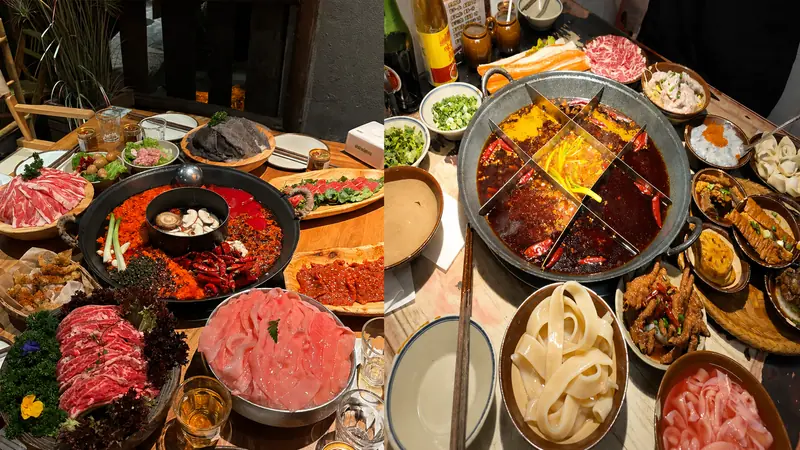
Sichuan and Chongqing hotpot is not just "spicy soup." It is a full table ritual: choose a broth, cook raw ingredients in rounds, build a dipping sauce, manage heat and numbness, and keep the meal moving without turning the pot into a lost-and-found box. This deep guide focuses on the dish itself, not restaurant rankings or neighborhood food routes, so you can use it anywhere from Chengdu (成都) to Chongqing (重庆) once the menu appears.
Executive Summary
What this guide covers
Broths, pot shapes, classic ingredients, dipping sauces, cooking rhythm, spice control, allergies, and first-order templates.
Best first pot
Order a split pot with mild red broth plus mushroom, clear, tomato, or bone broth. It gives the signature experience without trapping the whole table in red oil.
Best first sauce
Start with sesame oil and minced garlic. Add scallion, cilantro, vinegar, or oyster sauce after tasting. Keep dry chili dip separate.
¥80-160
Common casual spend
90-120 min
Comfortable meal pace
2 broths
Safest first setup
No
Do not drink red broth
A Shared Hotpot Table, Not Soup
Sichuan-style hotpot is built around a seasoned broth kept boiling at the table. Diners cook meat, offal, tofu, vegetables, mushrooms, noodles, and other ingredients themselves, then dip each cooked piece into a personal sauce bowl. The red broth seasons and cooks the food; it is not meant to be drunk like a bowl of noodle soup.
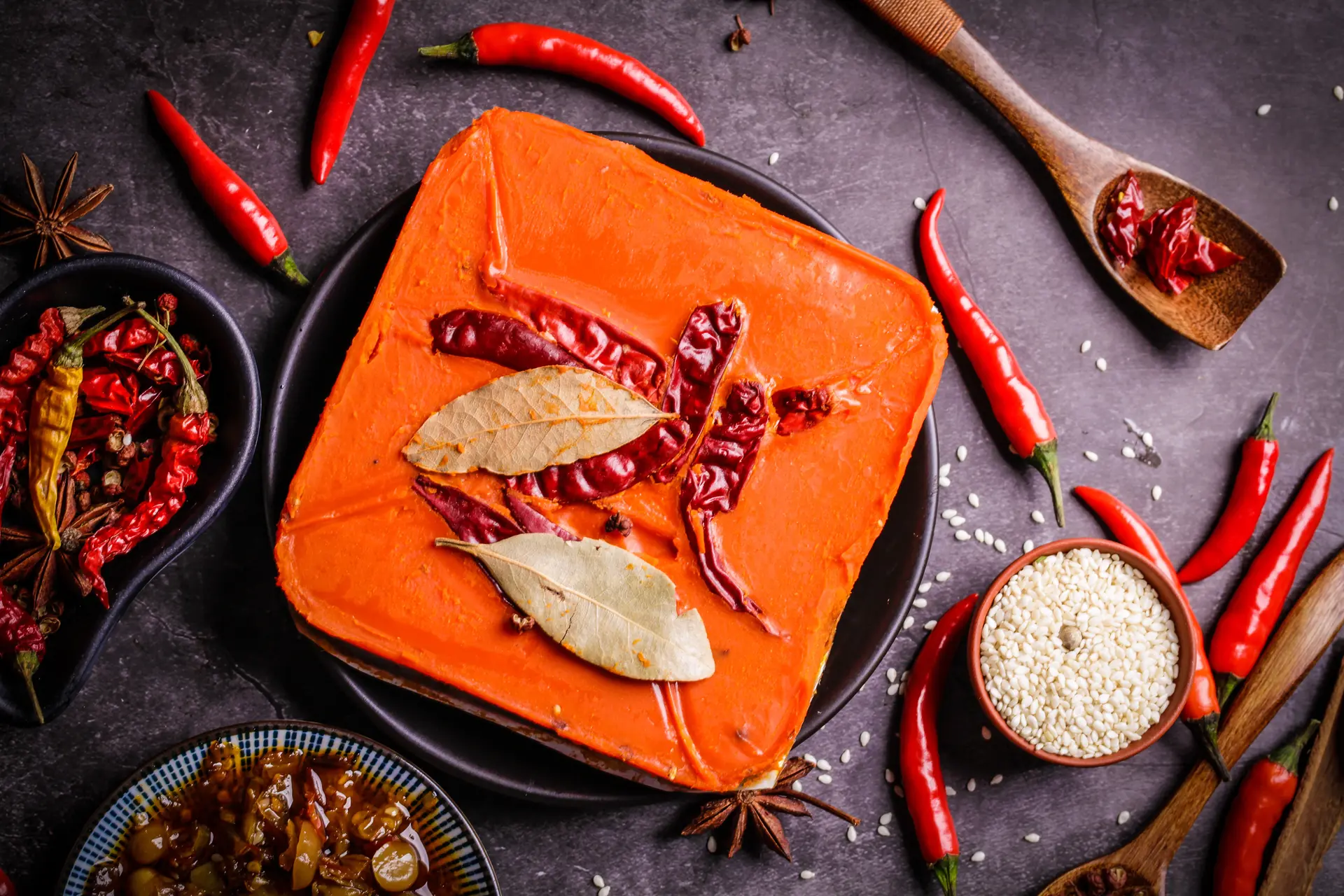
The classic red base usually combines dried chilies, Sichuan peppercorns (花椒), chili-bean paste, fermented black beans, ginger, garlic, spices, beef tallow and/or rapeseed oil, and stock. The exact recipe changes by restaurant, city, and brand. The Mala Market gives a useful cooking-level explanation of how chilies, Sichuan pepper, chili-bean paste, aromatics, fat, and broth work together.
For travelers, the useful mental model is simple: hotpot is a chain of decisions. Broth controls the table's baseline intensity; ingredients control texture and timing; sauce controls heat management; eating rhythm controls whether the meal stays fun.
Red broth is not soup
Do not drink large spoonfuls of the red broth. It is oily, salty, spicy, and designed as a cooking medium. If you want soup, sip from the clear, mushroom, tomato, or bone-broth side of a split pot.
How Numbing-Spicy Sichuan Hotpot Flavor Works
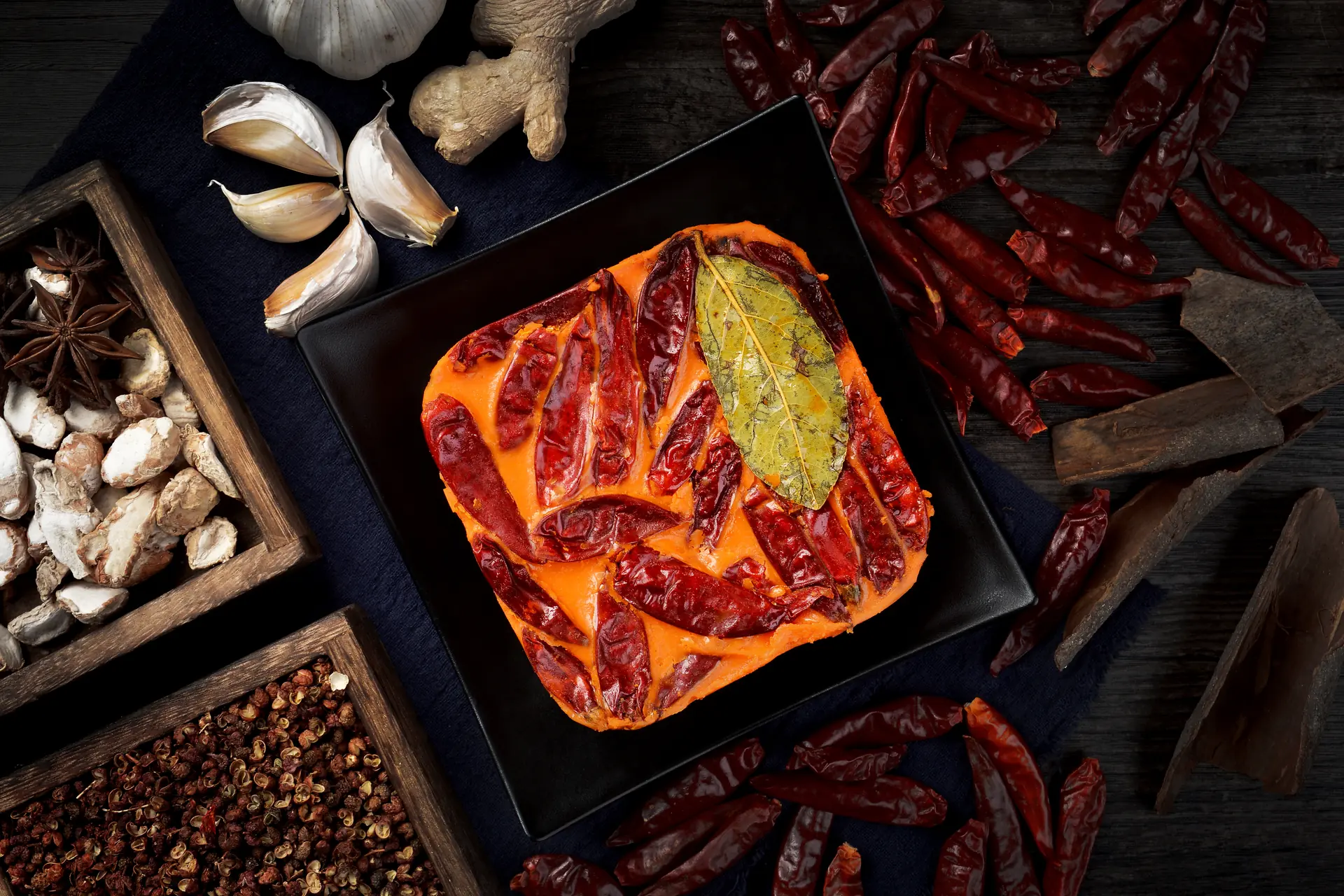
The core flavor is numbing-spicy (麻辣), but "numbing" and "spicy" are different sensations. Chili creates heat (辣). Sichuan peppercorn creates the tingling, citrusy numbness (麻) that can feel more surprising than chili for first-time visitors. A hotpot can be too spicy, too numbing, too oily, or all three at once.
Beef tallow changes the experience. It makes the red broth thicker, rounder, more aromatic, and more coating on the tongue. That richness is part of the appeal, especially in Chongqing-style old hotpot, but it also makes the meal heavier. Rapeseed-oil or mixed-oil bases can feel cleaner and lighter, though every restaurant has its own formula.
This is why "mild" does not mean bland. A mild red broth may still have chili, Sichuan pepper, fermented paste, aromatics, and oil; it simply lowers the burn and gives your stomach more room to finish dinner.
| Flavor Lever | What It Does | First-Timer Strategy |
|---|---|---|
| Chili | Direct heat and red-oil aroma | Ask for mild spice first |
| Sichuan pepper | Numbing tingle and citrusy fragrance | Ask for less peppercorn if you dislike numbness |
| Beef tallow | Richness, coating texture, deeper aroma | Choose split pot if your group is cautious |
| Oil dip | Cools food and softens chili oil | Use sesame oil and garlic before dry dip |
Chengdu and Chongqing Hotpot Styles Compared

Chengdu and Chongqing overlap heavily, so avoid rigid rules. Both cities can serve beef-tallow red broth, split pots, offal, oil dips, modern chains, and old-school local rooms. The difference is a tendency, not a wall.
Chongqing hotpot (重庆火锅) usually feels heavier, louder, and more direct. The Chongqing Culture and Tourism Commission describes Chongqing hotpot as also known as numbing-spicy hotpot or tripe hotpot, with split pots, red-soup pots, mild, medium, and extra-spicy levels, diverse ingredients, distinctive seasoning, and a bold eating style.
Chengdu hotpot often feels more adjustable for first-timers. Chengdu is a UNESCO Creative City of Gastronomy, and the city is proud of layered flavors rather than heat alone. Many Chengdu restaurants have fuller sauce bars, easier split-pot choices, and a dining rhythm that works well for mixed-tolerance groups.
← swipe to compare all options →
Chengdu
Aromatic and easier to tune
- ✓Usually easier for mixed groups and first-timers
- ✓Common textures include beef, tofu skin, vegetables, offal, and marinated items
- —Layered flavor often matters more than heat alone
Broth: rounded and adjustable
Sauce: fuller sauce-bar mixing
Chongqing
Heavier, oilier, more direct
- ✓More intense if you choose old-style red broth
- ✓Classic textures include tripe, duck intestine, yellow throat, and duck blood
- —Best when the whole table accepts a louder, stronger meal
Broth: thicker red oil
Sauce: often sesame oil and garlic
These are tendencies, not fixed rules; individual restaurants vary a lot.
Where to Try It Without Turning This into a Restaurant List
For a first hotpot meal, choose the eating context before you chase a famous name. A busy neighborhood restaurant is usually better for learning the dish than a random tourist-street storefront. Modern chains are useful when your group needs clearer menus, cleaner sauce bars, and more predictable service; old-style rooms are better when everyone accepts noise, oil, smoke, and less hand-holding.
Chengdu neighborhood hotpot
Best for: adjustable spice and a fuller sauce bar
Ask for a split pot and mild red broth before the table gets ambitious.
Chongqing old hotpot
Best for: louder, heavier, more direct red-oil flavor
Do not start extra-spicy unless everyone already eats strong numbing-spicy food.
Modern chain or mall branch
Best for: mixed groups, families, and nervous orderers
The atmosphere can feel less local, but logistics are much easier.
Late-night local room
Best for: the social side of hotpot after sightseeing
Keep the first order smaller; add more once the table finds its pace.
For specific neighborhoods and restaurant context, use the Chengdu food guide or Chongqing food guide. This hotpot guide stays focused on how the meal works once you sit down.
Broths and Pot Shapes for First-Timers
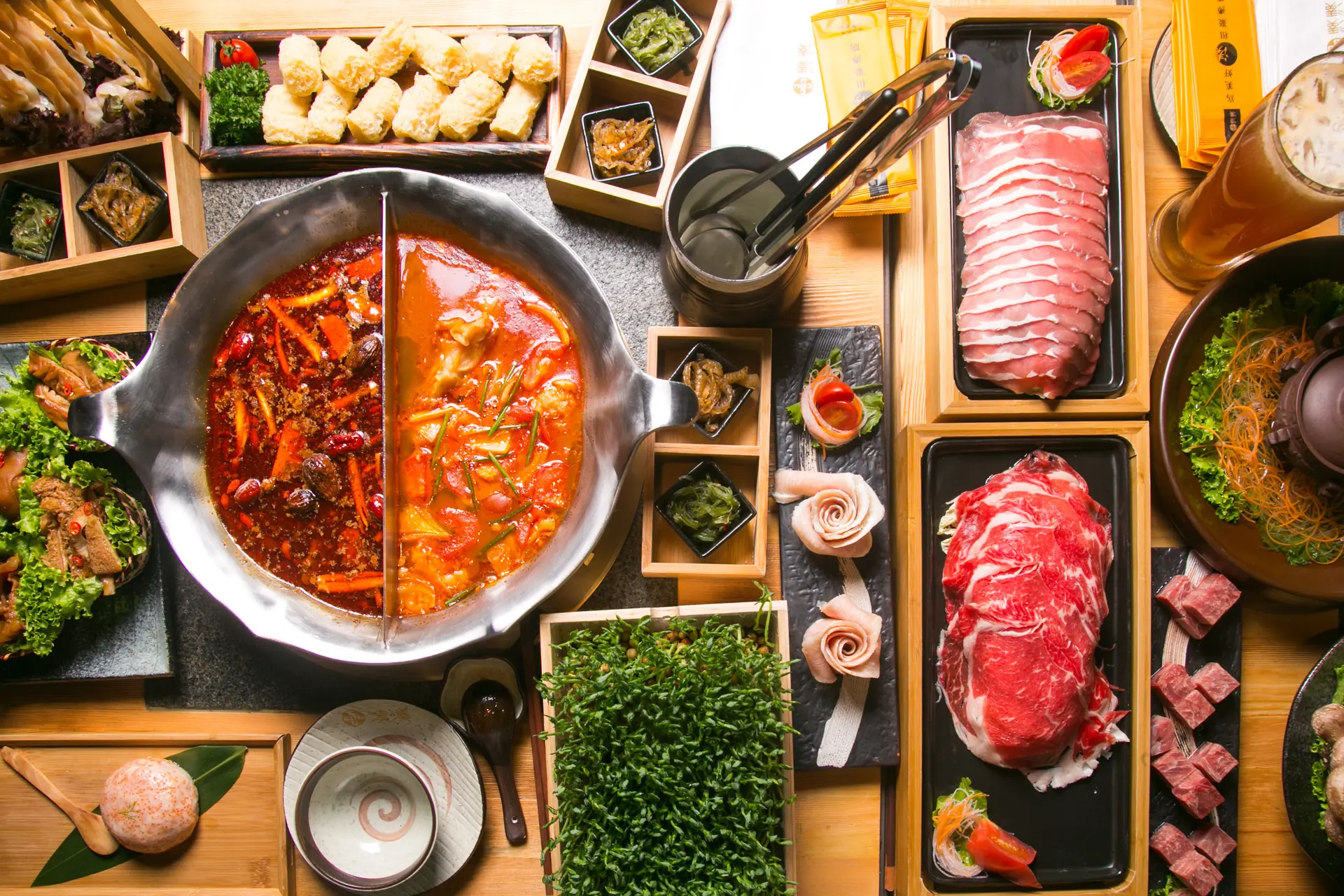
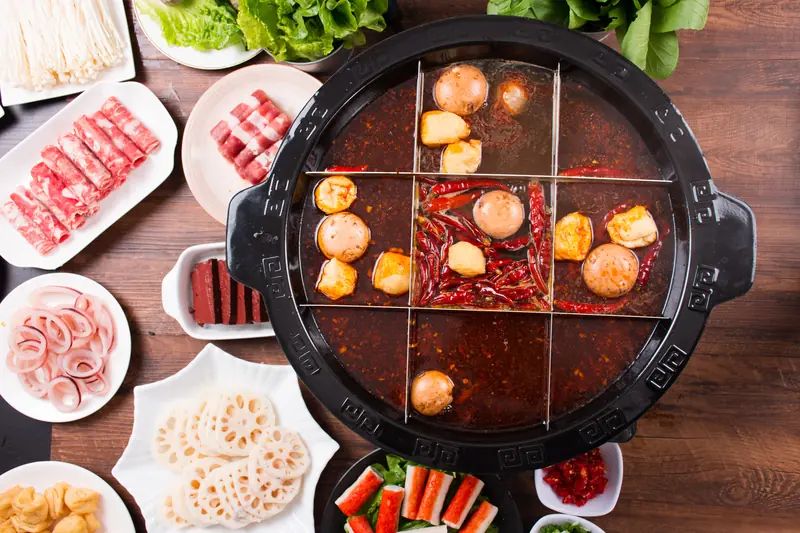
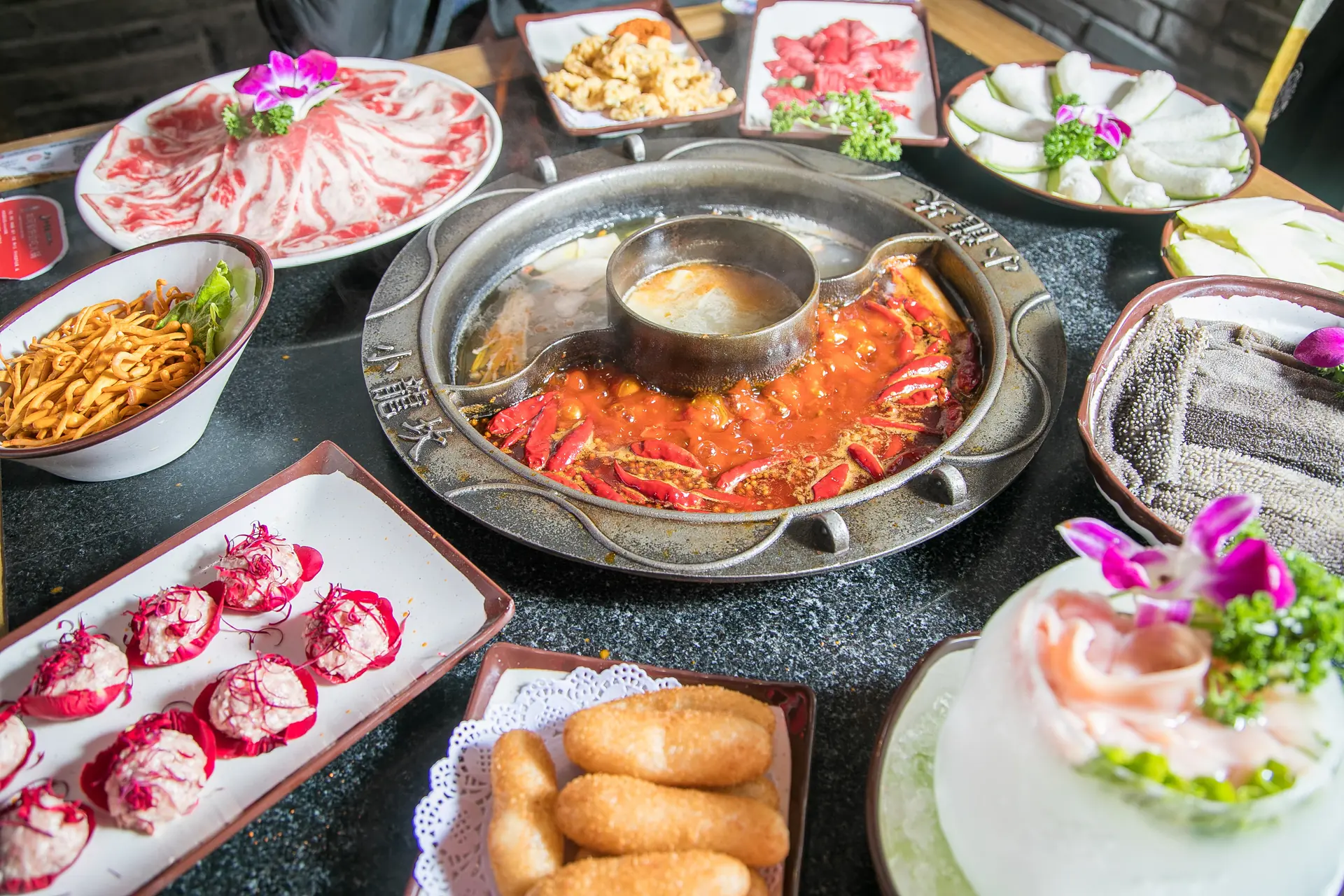
For a first Sichuan or Chongqing hotpot meal, order a split pot (鸳鸯锅): one side red broth, one side clear, mushroom, tomato, or bone broth. The red side gives you the signature experience. The mild side keeps the table functional for spice-sensitive companions, children, tofu, vegetables, and ingredients whose natural flavor you want to taste.
Do not start with a full red extra-spicy pot unless everyone at the table already eats strong chili and Sichuan pepper comfortably. Mild red broth is not a compromise for people who "failed" hotpot. It is the most practical first setup.
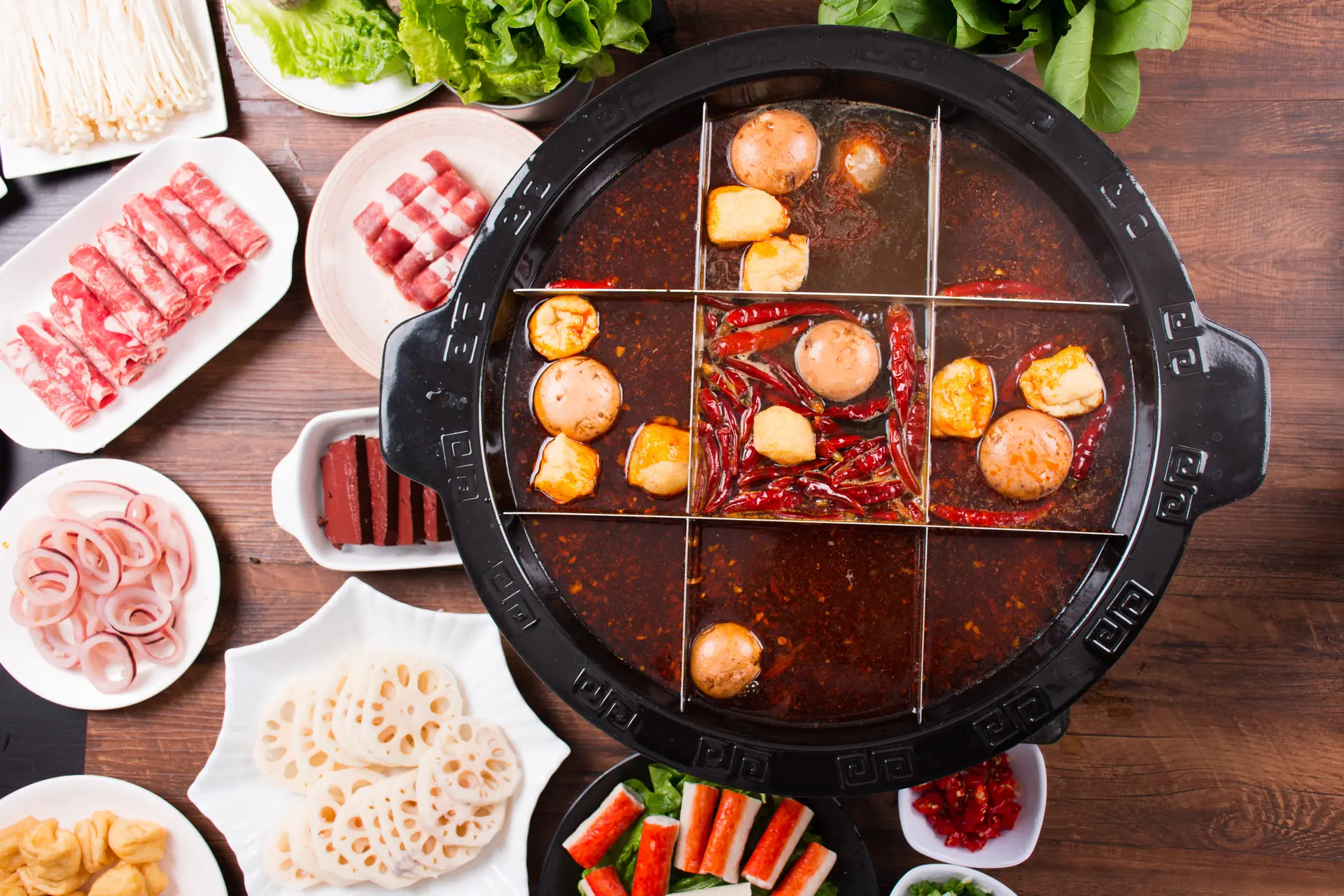
Nine-grid hotpot (九宫格) is often associated with Chongqing. The grid does not mean nine different broths; it is usually one red broth divided into compartments.
The practical value is organization: small pieces are easier to find, ingredients can be kept separate, and a group can manage the pot without everything disappearing into the same red surface. Some restaurants describe different heat zones, but do not treat that as precise science.
Decision shortcut
First Broth Decision
Mixed group
Order a split pot: mild red broth plus mushroom, tomato, clear, or bone broth.
Everyone eats strong spice
Order red broth at mild or medium heat first, then adjust on a second meal.
One person cannot eat chili
Ask for a true non-spicy side and keep that person's ingredients out of the red broth.
Sichuan Hotpot Ingredients by Cooking Role
Do not think of the menu as a list of famous items to collect. Think of ingredients by job: quick protein, texture challenge, soy bridge, vegetables, mushrooms, and starch. A good first order covers those roles without flooding the pot.
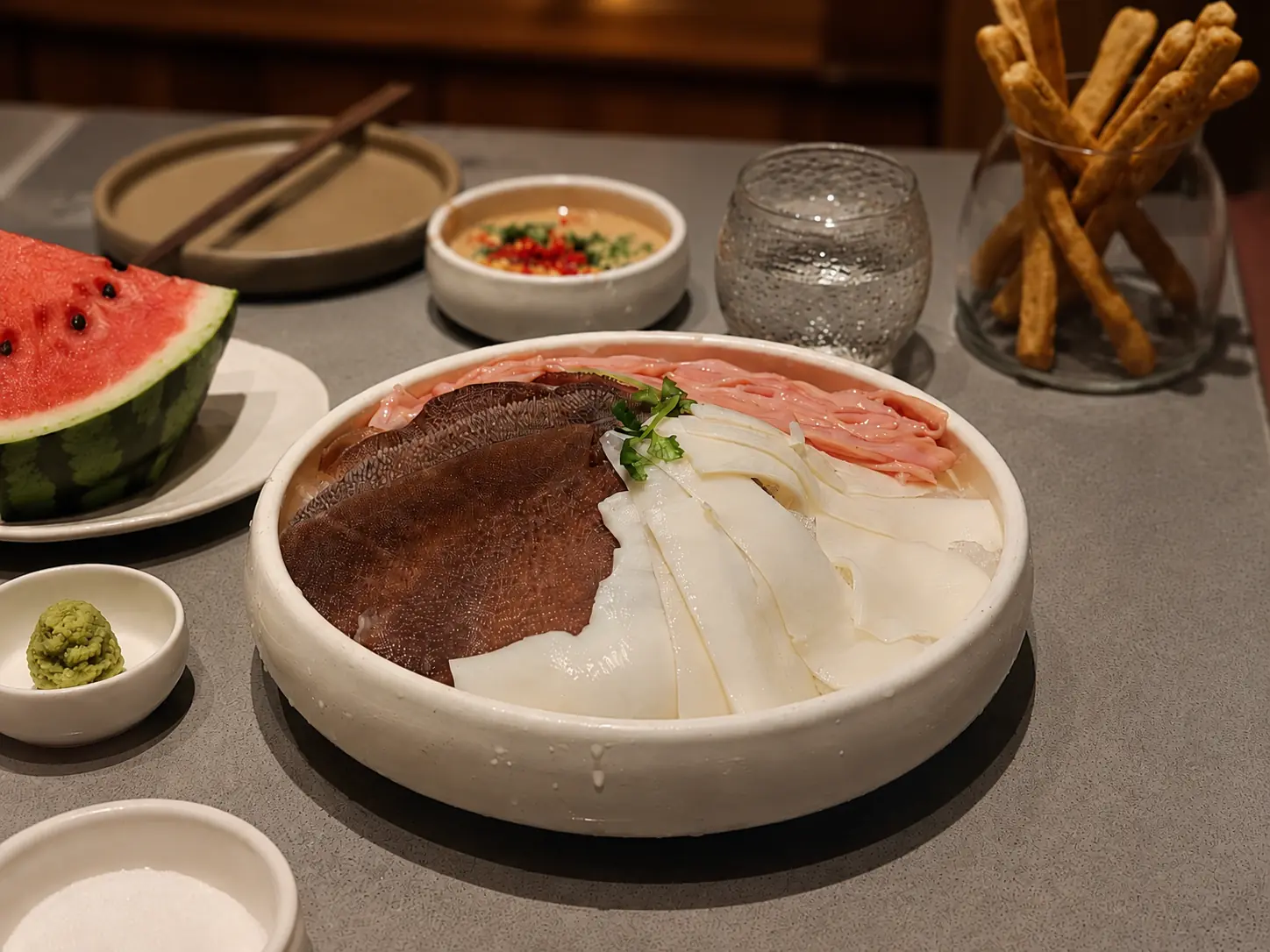
Tripe (毛肚), duck intestine (鸭肠), and yellow throat (黄喉) are loved because they stay crisp or springy when flash-cooked. They are also the ingredients most likely to scare first-timers.
Choose one texture challenge first, then decide whether your table actually wants more.
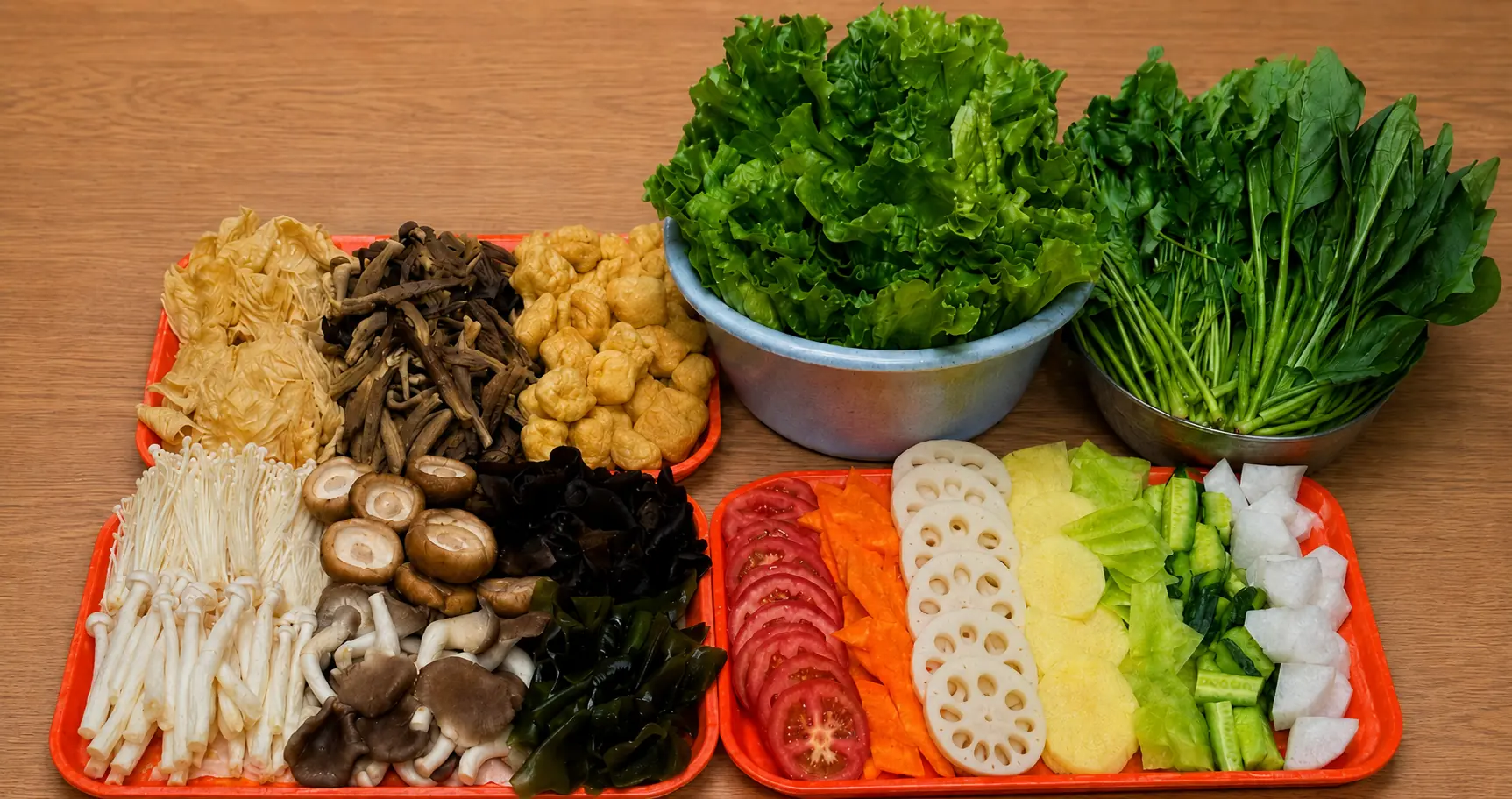
Safer first-time ingredients include sliced beef, tender beef, tofu skin, frozen tofu, lotus root, potato slices, winter melon, enoki mushrooms, oyster mushrooms, napa cabbage, greens, and wide noodles.
Luncheon meat and meatballs are easy, but they fill you quickly. Duck blood is soft and mild in texture, but only order it if your group is comfortable with blood products.
| Order Role | Chinese | Good Choices | How to Use It |
|---|---|---|---|
| Quick protein | 肥牛 / 嫩牛肉 | Sliced beef or tender beef | Cook in small batches until the color changes |
| Texture challenge | 毛肚 / 黄喉 / 鸭肠 | Tripe, yellow throat, or duck intestine | Pick one first; add more only if the texture works for your table |
| Soy bridge | 豆皮 / 千张 / 冻豆腐 | Tofu skin, thin tofu sheets, frozen tofu | Soaks up broth without feeling as risky as offal |
| Crunch and starch | 莲藕 / 土豆片 | Lotus root or potato slices | Put them in early and remember where they are |
| Mild balance | 金针菇 / 白菜 / 青菜 | Mushrooms, napa cabbage, greens | Use the mild side if anyone needs a break from red broth |
| End filler | 宽粉 / 面 | Wide noodles or regular noodles | Add late; noodles get heavy and soak up a lot of oil |
First Order Templates for Your Table
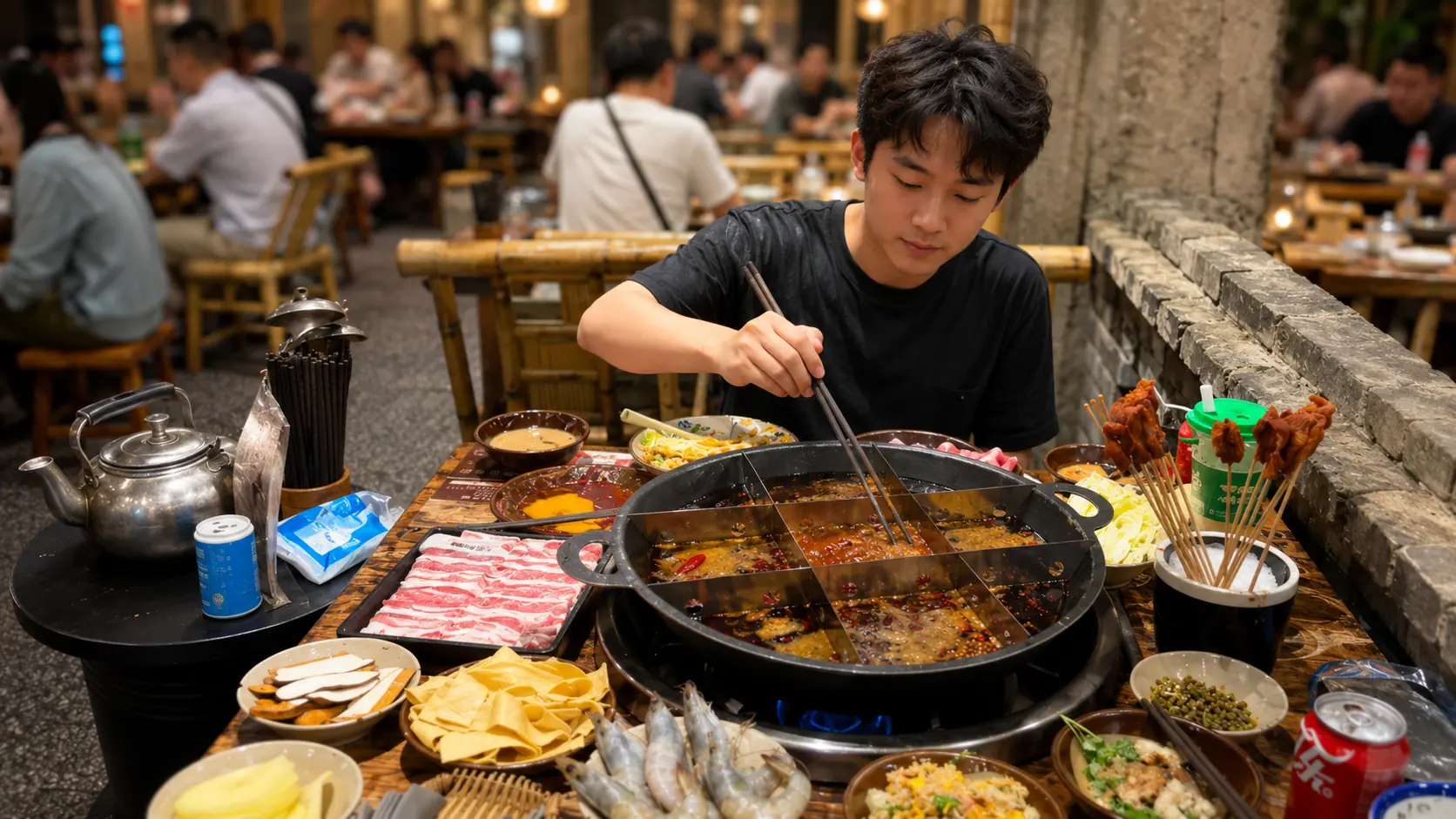
For two first-timers, order a split pot: mild red broth plus mushroom, clear, tomato, or bone broth. Add one sliced beef, one tofu skin, one lotus root or potato, one mushroom, one green vegetable, one wide noodle or sweet-potato noodle, and one classic texture item such as tripe or yellow throat.
Build oil dip with sesame oil and garlic, then taste before adding anything else. For four people, add duck intestine, duck blood, fried pork strips, luncheon meat, meatballs, and a second vegetable. Still do not order every signature item in the first round. Hotpot is designed for adding more after the table finds its rhythm.
- Start with a split pot if anyone is uncertain about spice.
- Order one adventurous ingredient, not a whole table of offal.
- Add noodles late, not at the beginning.
- Do not drink the red broth.
- Do not dump all ingredients into the pot at once.
Oil Dip, Dry Dip, Sauce Bar
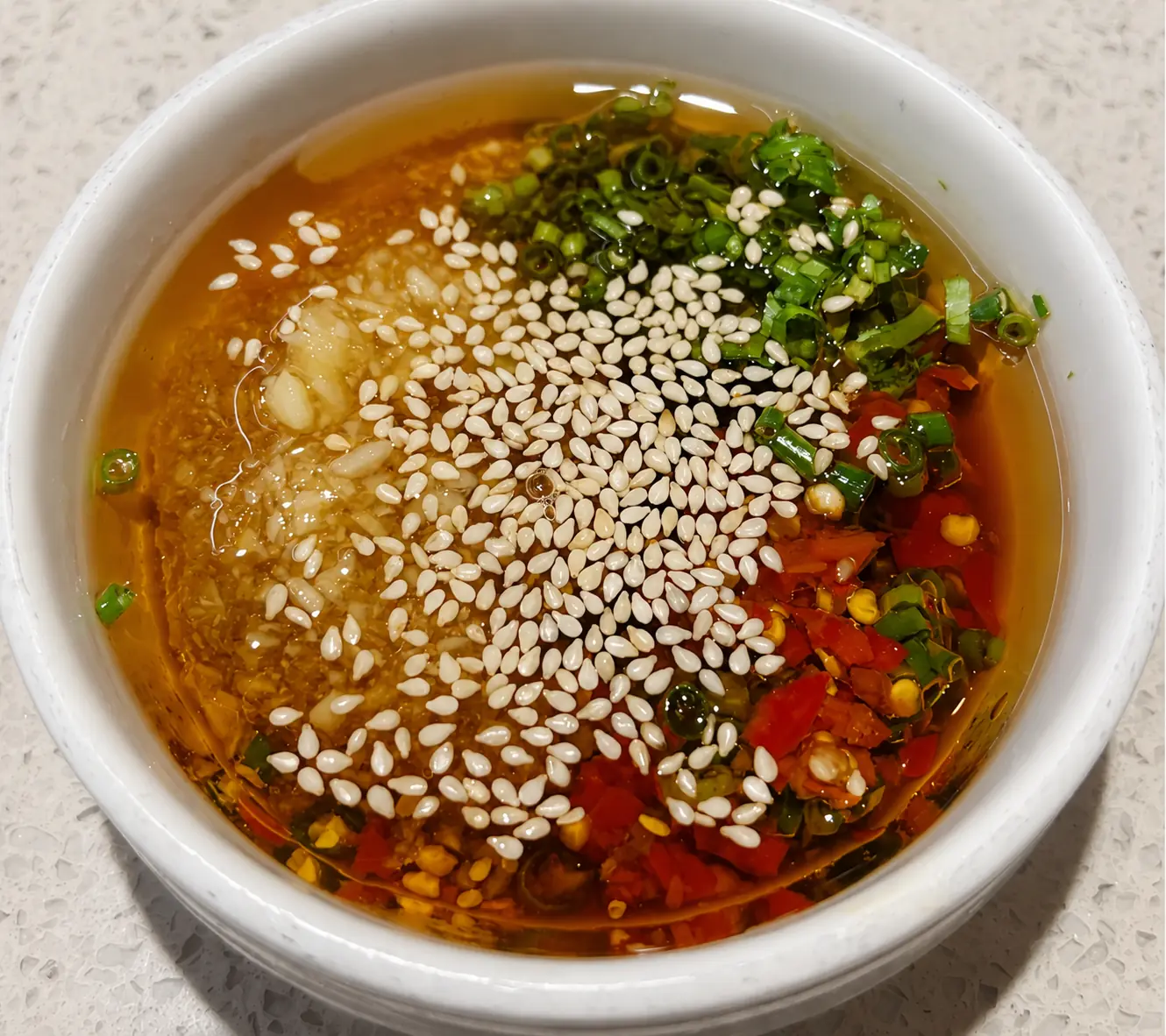
Oil Dip First
The default Sichuan and Chongqing hotpot sauce is not the thick sesame-paste sauce used for Beijing lamb hotpot. The safer first bowl is oil dip (油碟): sesame oil with minced garlic.
Think of it as a heat-control tool first and a flavor booster second.
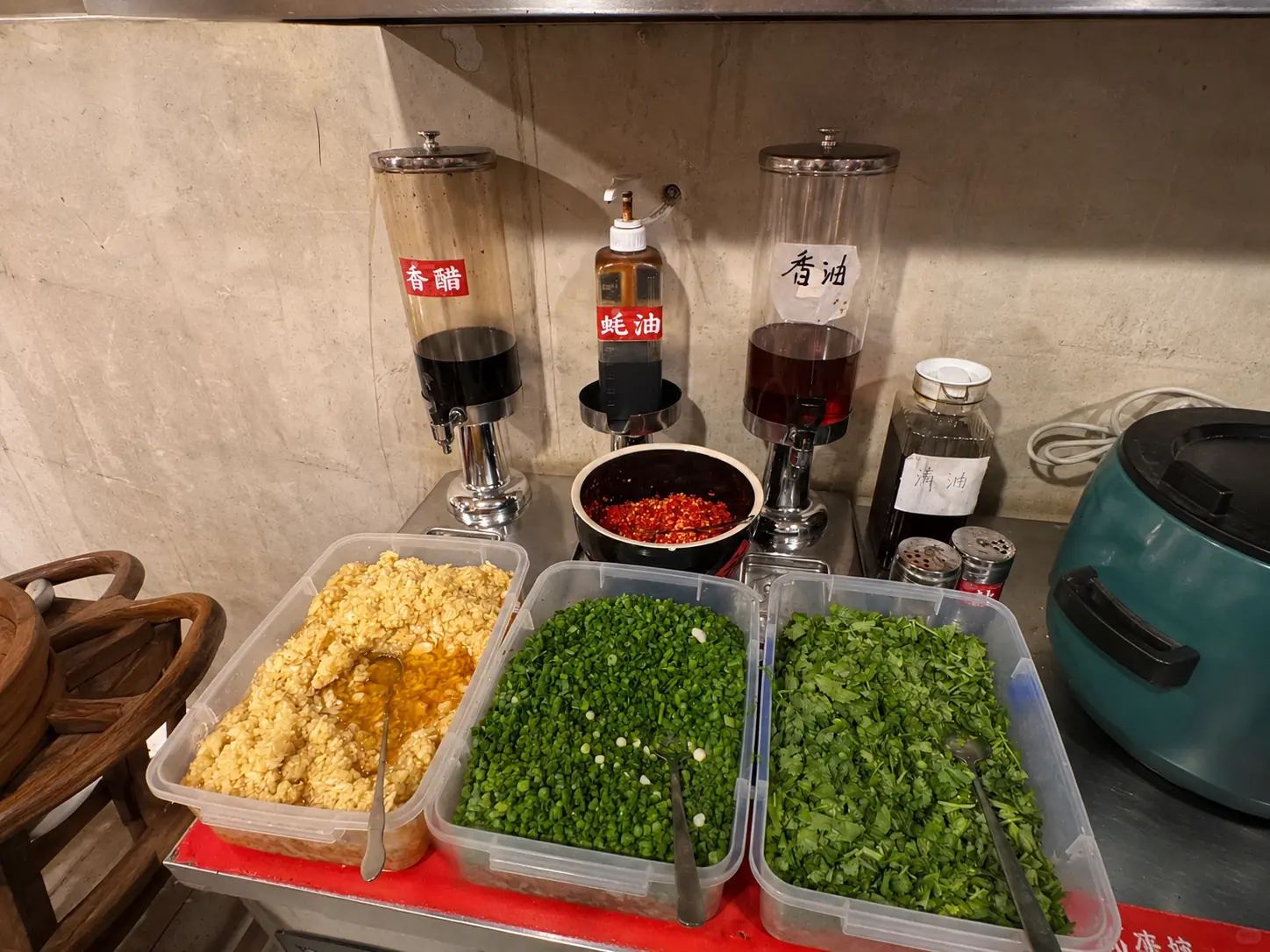
Build Slowly
Oil dip cools the ingredient, coats the chili oil, softens the burn, and gives raw garlic aroma.
Start with sesame oil and garlic, then add scallion, cilantro, vinegar, or oyster sauce only after you taste the first few bites.
If you add every sauce-bar ingredient at once, you lose the point of hotpot: broth flavor and ingredient texture.
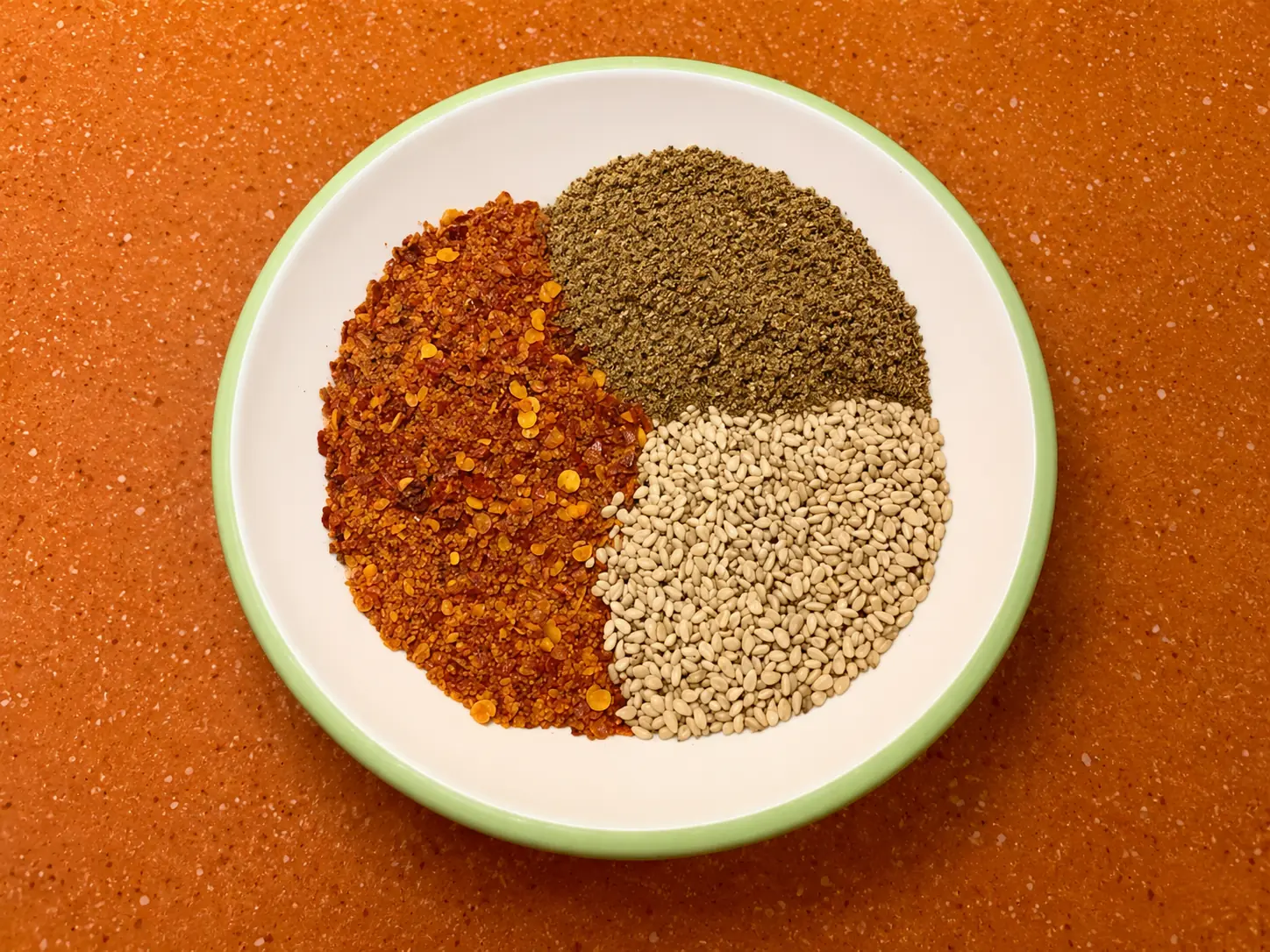
Dry Dip as a Side
Dry dip (干碟) is a mix of chili powder, Sichuan pepper powder, sesame, salt, and sometimes cumin or crushed peanuts.
It is excellent with fried pork strips, potato, tofu, or mild ingredients, but it is not gentle. Use it as a side experiment, not your only sauce on the first meal.
Decision shortcut
Sauce Ladder
First bowl
Sesame oil plus minced garlic. Taste this before adding anything else.
Second adjustment
Add scallion, cilantro, vinegar, or oyster sauce if you want brightness or sweetness.
Side experiment
Keep dry chili dip separate so one person can test it without making the whole table suffer.
Skip sesame paste first
Sesame paste is delicious, but it belongs more naturally to northern lamb hotpot. In Sichuan or Chongqing, start with sesame oil and garlic before you build a heavier sauce.
Cooking Rhythm at the Hotpot Table
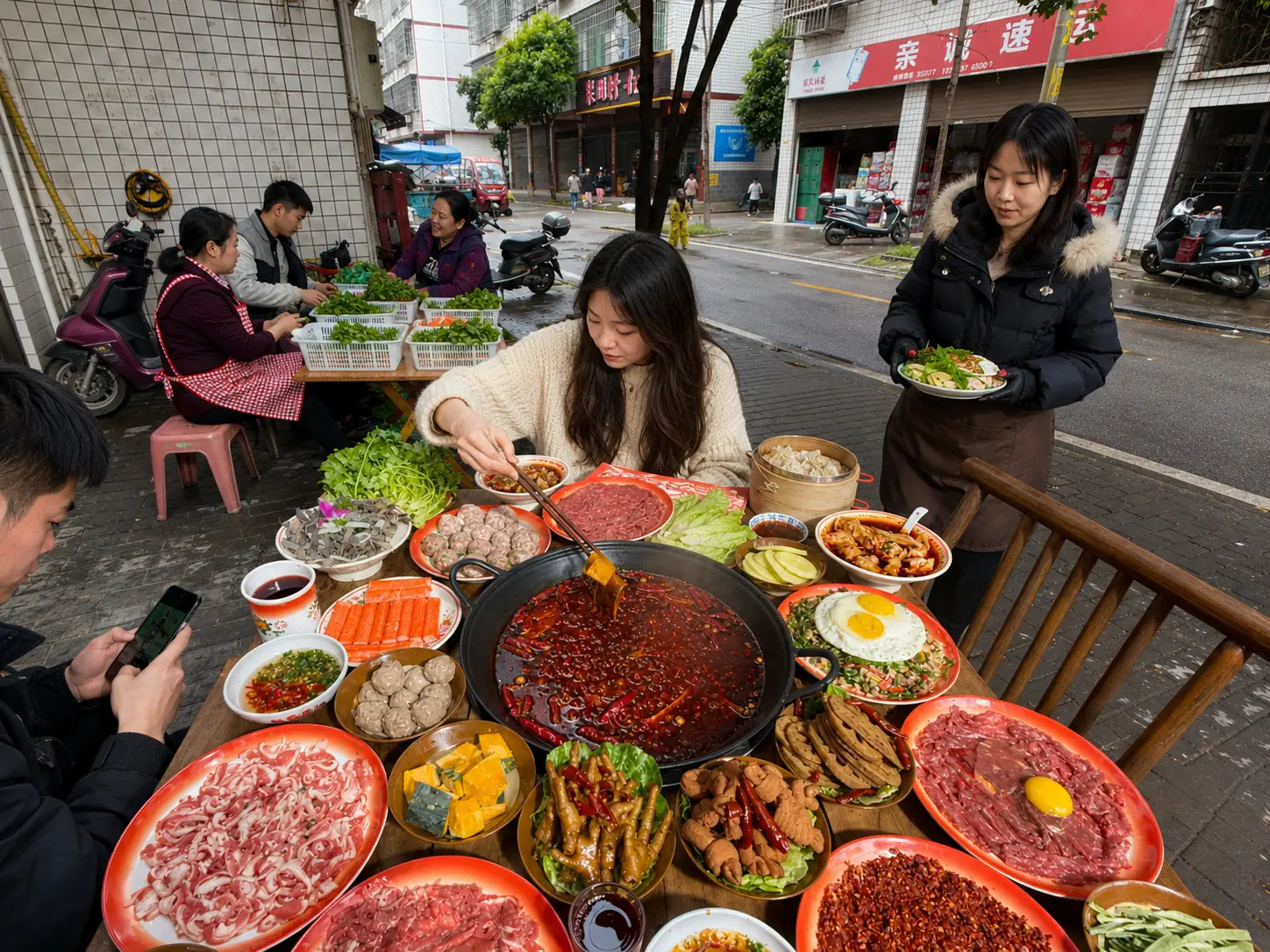
Wait until the pot is fully boiling before you start. Put longer-cooking items in first: potato, lotus root, tofu, mushrooms, meatballs, and wide noodles. Then cook quick items in rounds: sliced beef, tripe, duck intestine, and leafy greens. Do not dump everything in at once.
Use separate utensils for raw meat when possible. Serious restaurants often provide tongs, ladles, or serving chopsticks. If your table has only one pair of chopsticks per person, be disciplined: do not move raw meat with the same tips you put in your mouth.
Locals may flash-cook some offal for only a few seconds to keep it crisp. That is part of the texture culture, but travelers with a sensitive stomach should cook a little longer and choose a reputable, busy restaurant. The goal is a good dinner, not winning a local timing challenge.
| Timing Bucket | Examples | Practical Rule |
|---|---|---|
| Longer cooking | Potato, lotus root, tofu, mushrooms, meatballs | Add early and track where they go |
| Quick cooking | Sliced beef, tripe, duck intestine, greens | Cook in small batches and eat immediately |
| Late additions | Wide noodles, regular noodles, extra starch | Add near the end so the meal does not become too heavy |
Balance Spice, Numbing, and Cooling Drinks
You can still enjoy hotpot if you cannot eat much chili, but you need to decide before ordering. Ask for a split pot, put your ingredients in the mild side, and keep your sauce simple. Mild red broth can still feel hot if you rarely eat chili, so do not trust the color or the word "mild" too much.
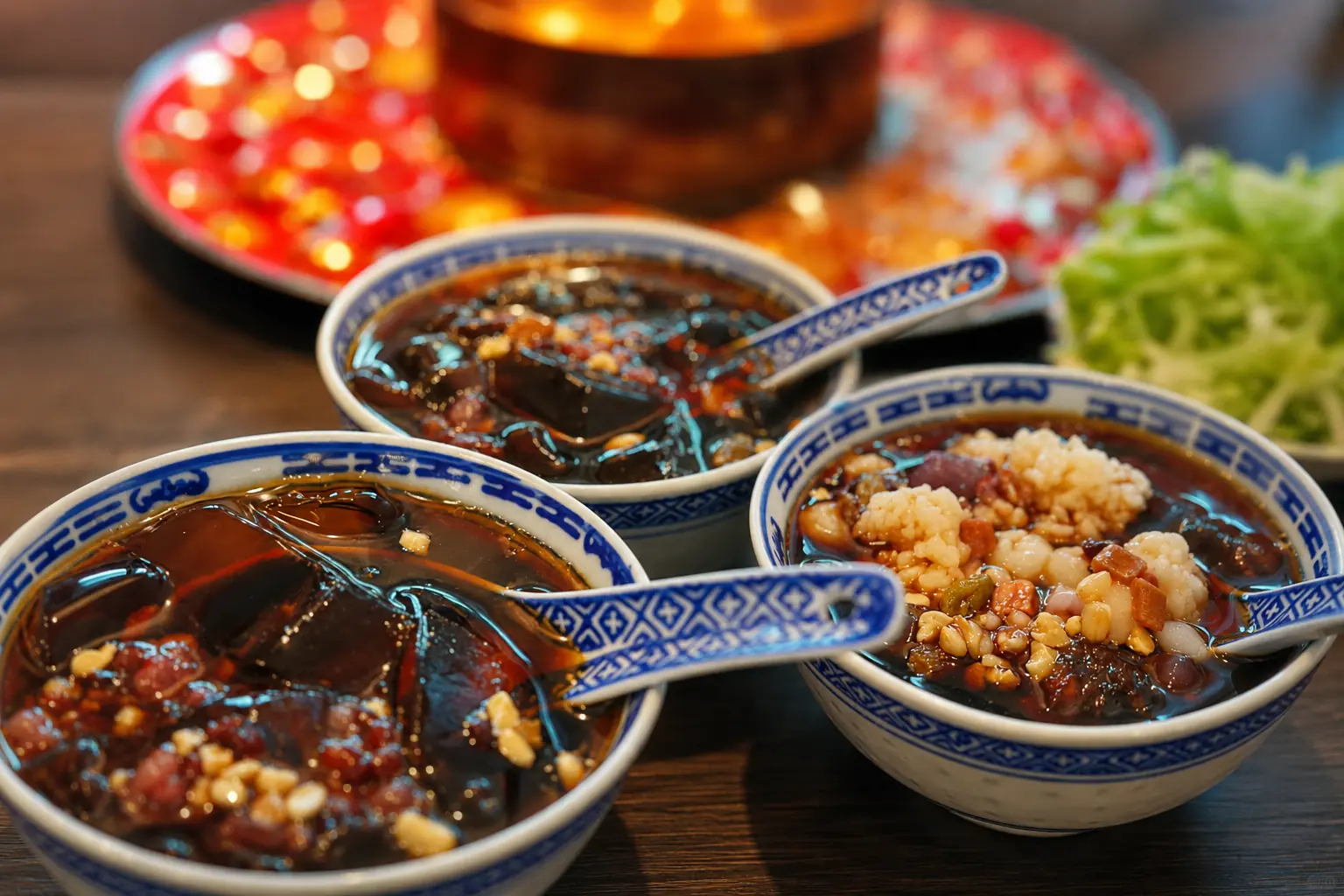
Sweet drinks, ice jelly (冰粉), rice, and short breaks help more than gulping ice water. Avoid making your first Sichuan hotpot meal the same night you arrive jet-lagged, dehydrated, and overconfident.
| English | Chinese | Pinyin | Say It Like… |
|---|---|---|---|
| Split pot with two broths | 鸳鸯锅 | yuan yang guo | ywen yahng gwoh |
| Mild spice | 微辣 | wei la | way lah |
| Less chili heat | 少辣 | shao la | shaow lah |
| Less Sichuan peppercorn | 少花椒 | shao hua jiao | shaow hwah jyow |
| No Sichuan peppercorn | 不要花椒 | bu yao hua jiao | boo yao hwah jyow |
| No cilantro | 不要香菜 | bu yao xiang cai | boo yao shyahng tsai |
| No sesame | 不要芝麻 | bu yao zhi ma | boo yao jir mah |
Diet, Allergy, and Hotpot Safety Risks
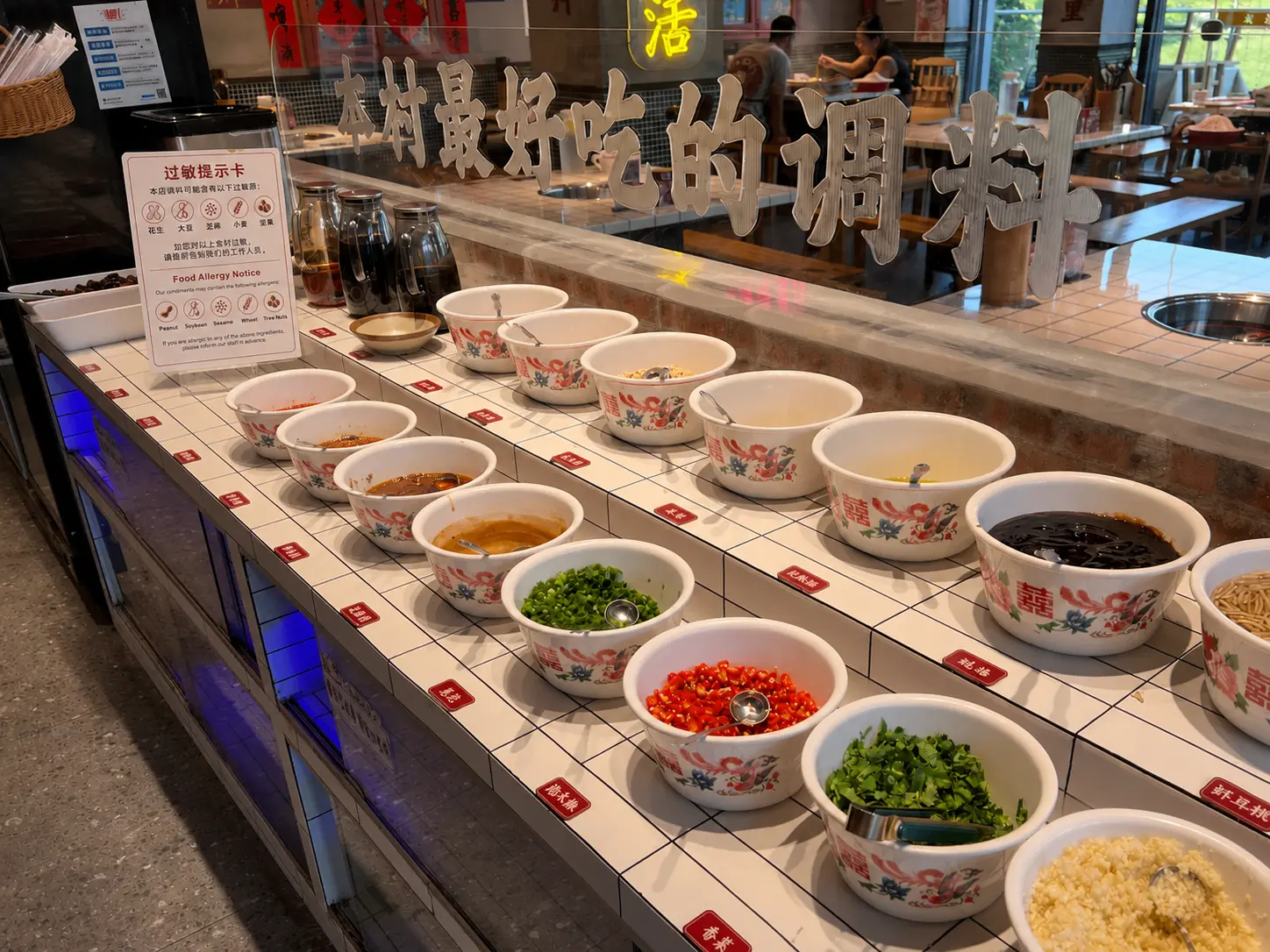
Hotpot looks flexible because you choose ingredients, but the hidden risks are in the broth, sauce bar, and shared pot. Red broth may contain beef tallow, pork bone stock, chicken stock, fermented soybean products, chili-bean paste, and alcohol-based cooking wine. Clear, mushroom, tomato, or bone broth may still use animal stock.
Vegetarians should ask about animal oil and stock, not just order vegetables. Halal travelers should confirm broth fat, meat sourcing, and shared utensils. People with sesame, peanut, soy, wheat, shellfish, cilantro, or oyster-sauce allergies should treat self-service sauce bars as cross-contact zones.
If your allergy is severe, hotpot is one of the harder Chinese meals to control. A separate small pot, plain ingredients, and staff confirmation can reduce risk, but a shared table with mixed meats and sauces is never zero-risk.
Shared pots are high cross-contact meals
Serious allergies are difficult to manage at hotpot. Everyone cooks in the same broth, sauce-bar spoons move around, and sesame, peanuts, soy, wheat, seafood, beef tallow, and oyster sauce may all be present.
Frequently Asked Questions
They overlap, but they are not identical. Chongqing hotpot often feels heavier, oilier, and more direct; Chengdu hotpot is often more adjustable and aromatic. Individual restaurants vary a lot.
Beyond This Guide
Once you understand the broth, ingredient roles, dipping sauces, and table rhythm, hotpot becomes much less chaotic. Use the Chengdu food guide for neighborhoods, snack routes, and restaurant context; use the Chongqing food guide for nine-grid culture, Chongqing small noodles (小面), and the city's broader eating map.
Then compare hotpot with other Sichuan dishes such as mapo tofu and Kung Pao chicken. The best hotpot meal is not the hottest one. It is the one your table can finish happily.
© gochinafreely.com — Original guide by Go China Freely.