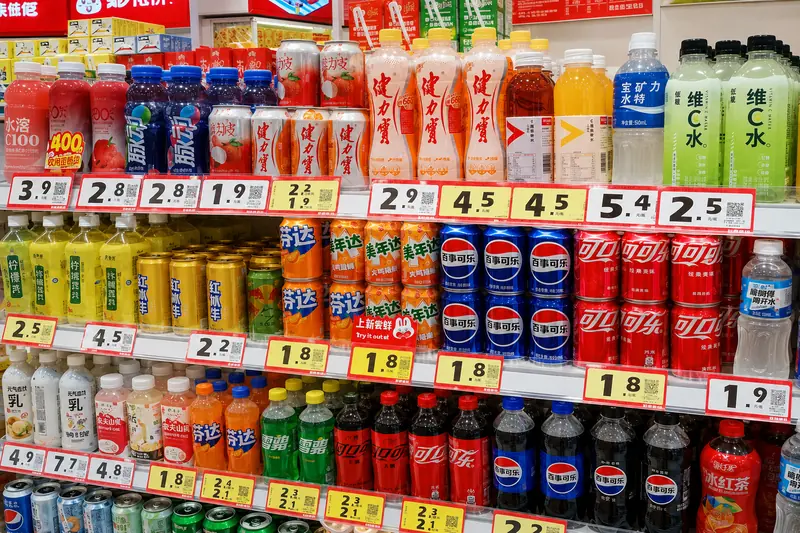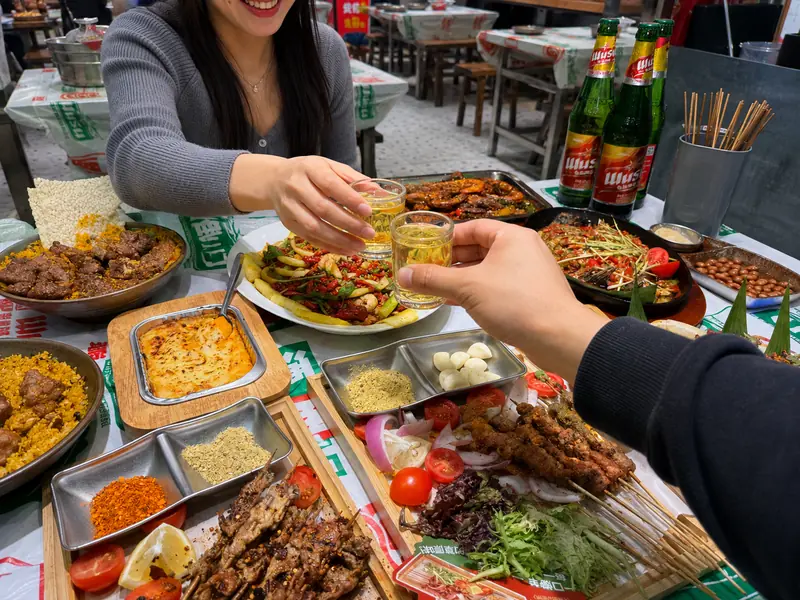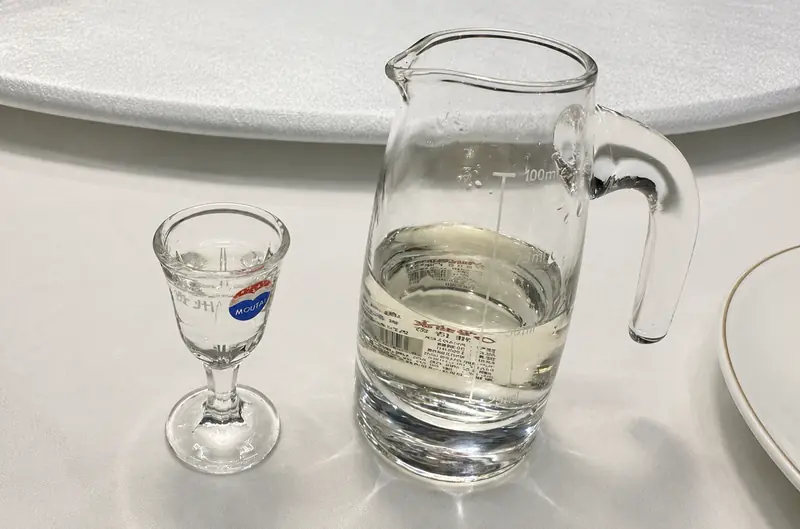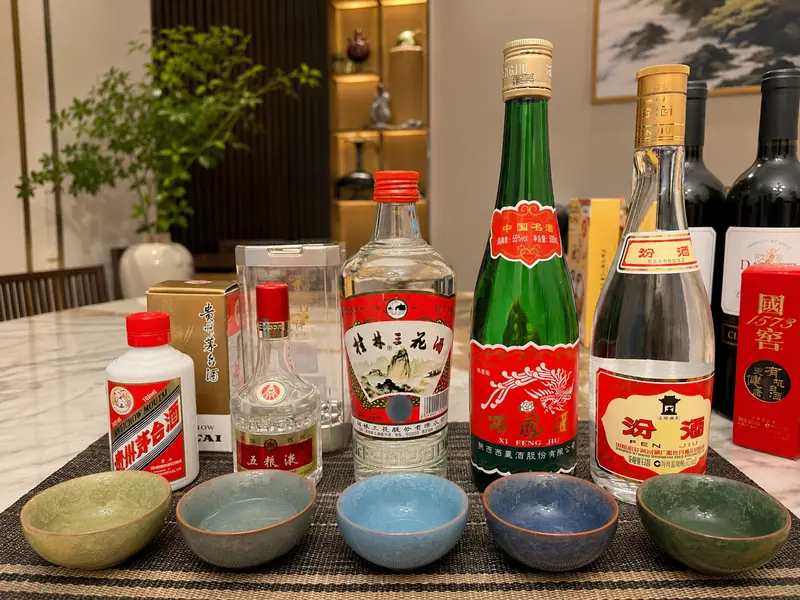
If the first baijiu guide answers "How do I survive a toast?", this one answers "What does this bottle probably taste like?" Many foreign travelers learn the names Maotai (茅台) and Wuliangye (五粮液) before they understand that the two bottles point in very different flavor directions: one savory, fermented, and sauce-aroma; the other fuller, fruitier, and strong-aroma. Learn the four main aroma families first, and a Chinese liquor shelf stops looking like a wall of expensive mystery bottles.
Executive Summary
What this guide covers
Baijiu aroma types, the four most useful flavor families, benchmark brands, beginner choices, label reading, and food pairing logic for travelers.
Best first move
Choose by aroma type before brand. Light aroma or a softer strong-aroma pour is often easier than starting with a full-strength prestige sauce-aroma bottle.
Main traveler trap
Do not assume famous or expensive means beginner-friendly. Aroma type predicts the first sip better than the brand name alone.
4
Core aroma map
40-60%
Common ABV context
Brand + style
Read both
Small pour
Best first taste
A Flavor Map for Baijiu Labels
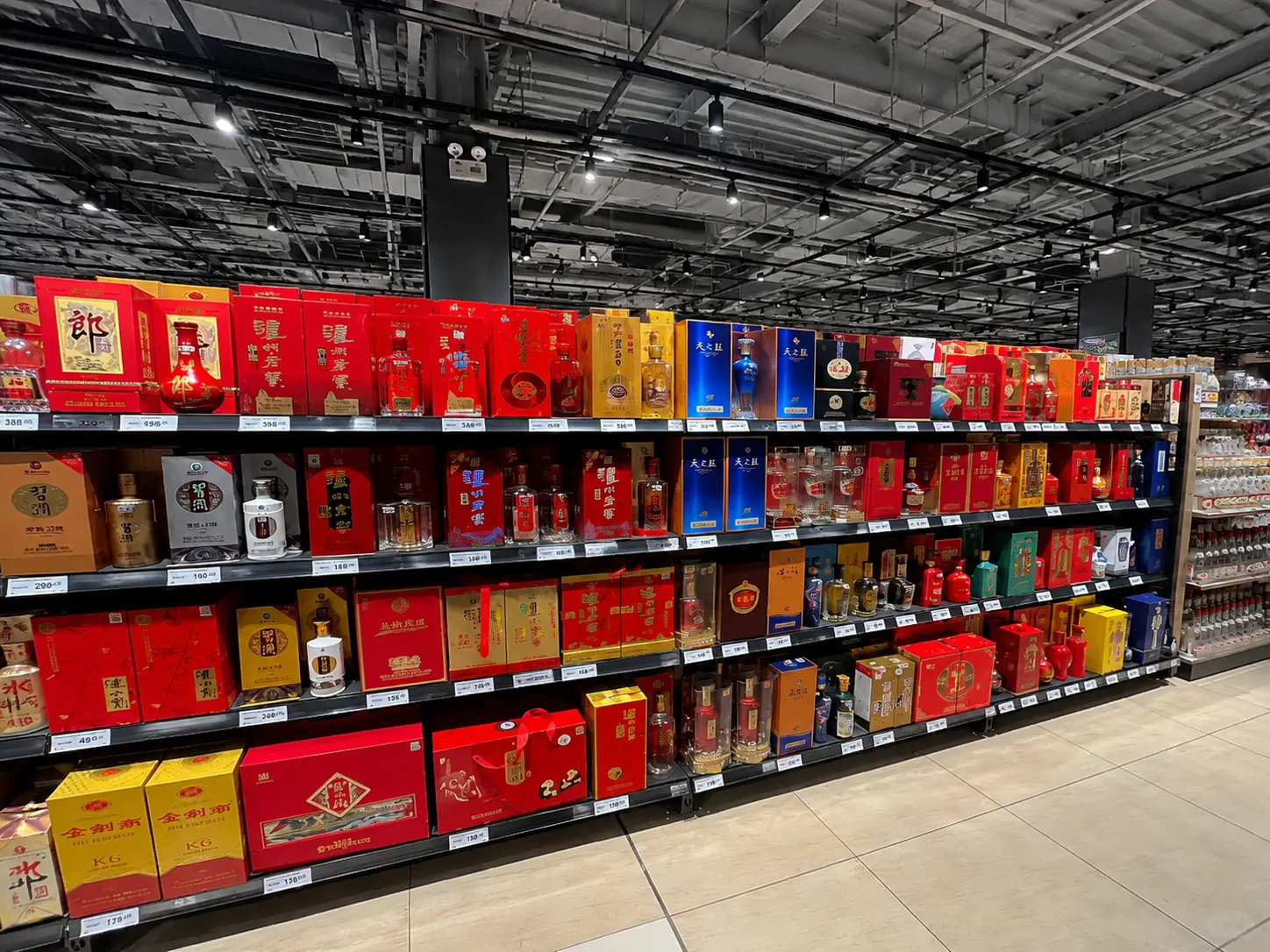
Baijiu shelves make more sense once you read aroma type before brand name.
Baijiu (白酒) is hard for travelers because the label language is unfamiliar. Wine often leads with grape variety, whisky with region or cask, and beer with lager, IPA, or stout. Baijiu labels often foreground brand, origin, alcohol strength, and aroma type. If you only recognize Maotai (茅台), Wuliangye (五粮液), Fenjiu (汾酒), or Erguotou (二锅头), you miss the word that best predicts the flavor: aroma type.
Aroma type is the baijiu version of a flavor family. It is not a single taste and it is not a perfect rule, but it tells you whether a bottle will likely lean savory and fermented, fruity and full, clean and direct, or softer and rice-led.
This guide focuses on four starting points: sauce aroma (酱香型), strong aroma (浓香型), light aroma (清香型), and rice aroma (米香型). They are not all of Chinese baijiu, but they are the quickest way to make menus, liquor shelves, and dinner-table bottles less opaque.
Aroma Type Beats Brand Name
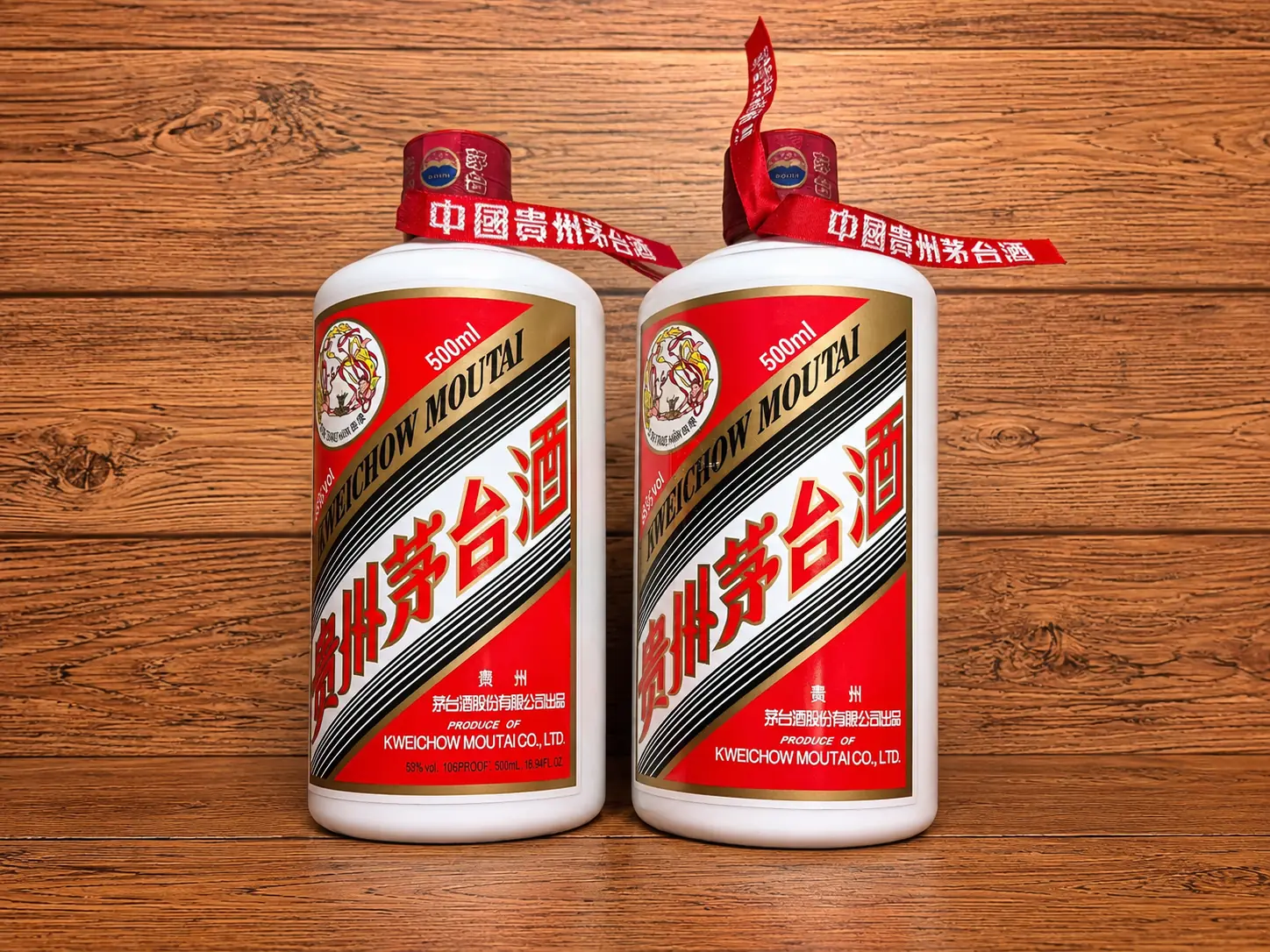
The label's aroma-style line is the shortcut to predicting the first sip.
The same brand can have multiple product lines, and the same aroma family can contain cheap bottles, serious banquet bottles, and luxury gift bottles. Aroma type is still the best first filter because it predicts the first impression: thick or light, savory or fruity, fermented or clean, food-friendly or challenging.
If you choose only by brand, two problems appear. First, you may assume the most expensive bottle is the easiest first sip, then discover that a prestige sauce-aroma pour is intense and savory. Second, you may see a cheap bottle of Erguotou (二锅头), assume it is casual and mild, then drink a clean but high-proof spirit too quickly.
| Label Detail | First Question | Traveler Meaning |
|---|---|---|
| Brand | Which aroma family is it? | The brand is the landmark; the style predicts the flavor. |
| ABV | Is it 38%, 42%, 52%, 53%, or higher? | A tiny glass can still be powerful. |
| Origin | Which regional food culture is behind it? | Guizhou, Sichuan, Shanxi, Beijing, and Guangxi carry different associations. |
| Price | Daily drinking, banquet, gift, or collection? | Expensive does not automatically mean easier. |
Sauce Aroma: Maotai's Savory Punch
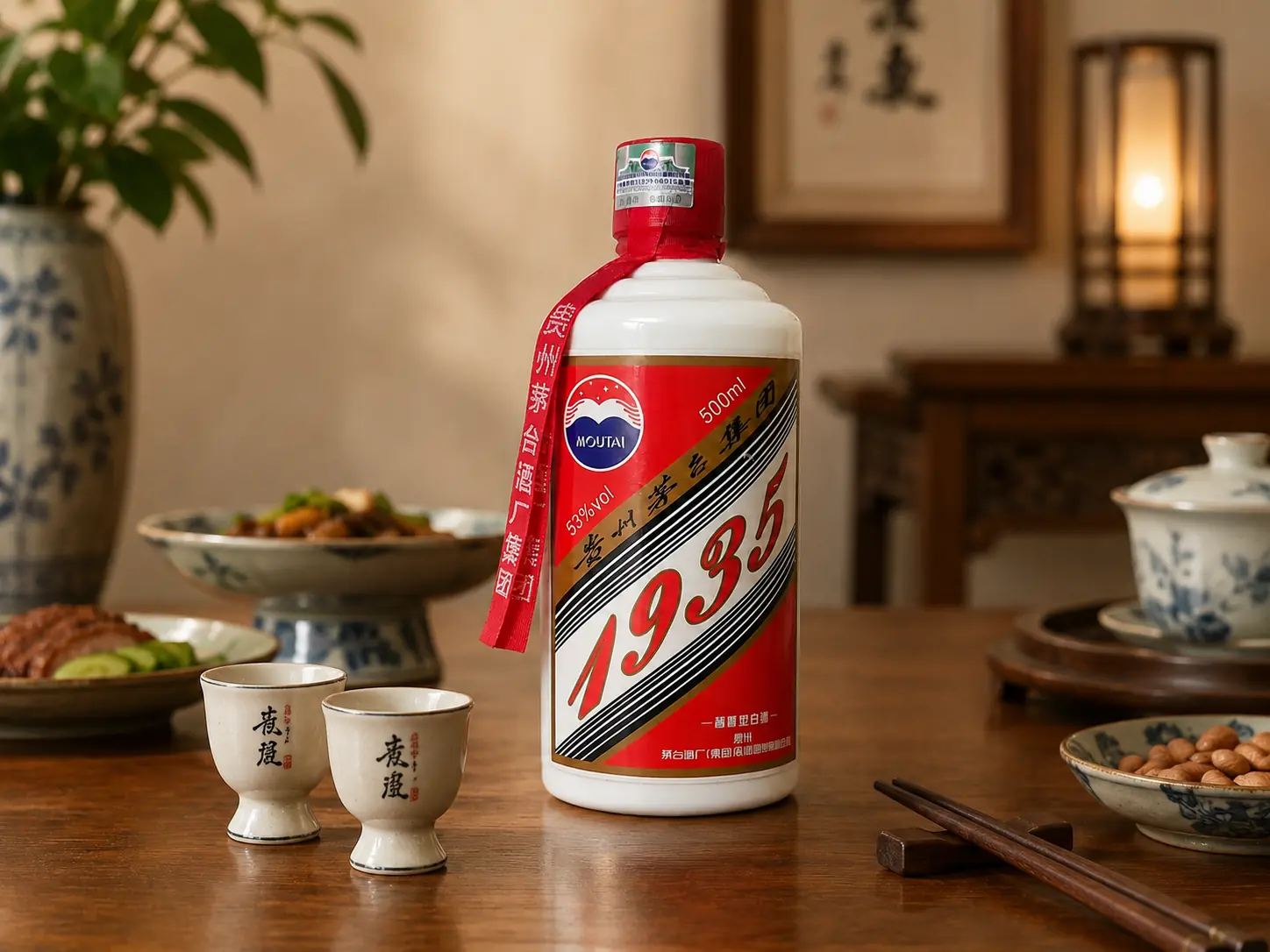
Sauce aroma is culturally important, savory, and often intense for first-timers.
Sauce aroma (酱香型) is the family most foreign visitors associate with Maotai (茅台), Guizhou (贵州), high-end banquets, business dinners, gifts, and collecting. It is not always the smoothest first sip. It can smell savory, roasted, nutty, fermented, soy-sauce-like, earthy, herbal, or grain-heavy.
That intensity is the point. Sauce-aroma baijiu belongs well with bold food: Guizhou dishes, Sichuan food, grilled meat, spicy cold dishes, roasted dishes, and banquet tables where the food can stand up to the glass. The Decanter guide to baijiu basics treats sauce aroma as one of the principal flavor categories and links Maotai with the style.
For travelers, the right expectation is not "the most famous one must be easy." Sauce aroma explains a lot about Chinese prestige liquor culture, but it may taste strange before it tastes good.
Strong Aroma: Wuliangye's Banquet Fruit
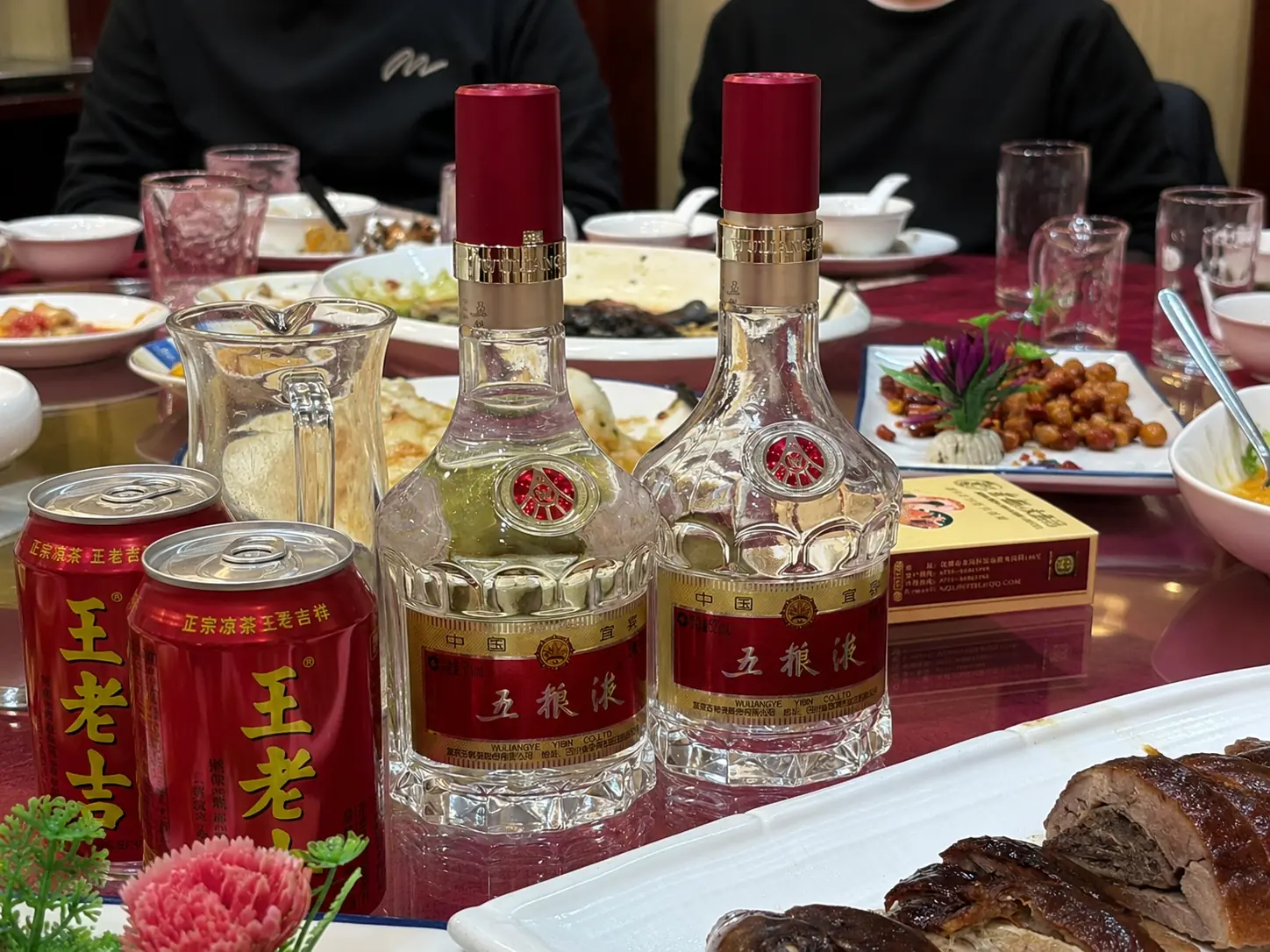
Strong aroma is a common dinner-table style, often fuller and fruitier than sauce aroma.
Strong aroma (浓香型) is one of the styles travelers are most likely to meet at banquets, restaurants, gift counters, and business meals. Wuliangye (五粮液) and Luzhou Laojiao (泸州老窖) are the usual reference points. Compared with sauce aroma, strong aroma often feels fuller, fruitier, grainier, sweeter-smelling, and more banquet-like.
If you want to understand a mainstream Chinese dinner-table bottle, strong aroma is often a more practical first stop than sauce aroma. The official Wuliangye product page presents Wuliangye as a benchmark strong-aroma baijiu crafted from five grains.
Do not let the word "strong" mislead you. It refers to the fullness of aroma, not a promise that the drink is more alcoholic than every other style.
Light Aroma: Fenjiu and Erguotou
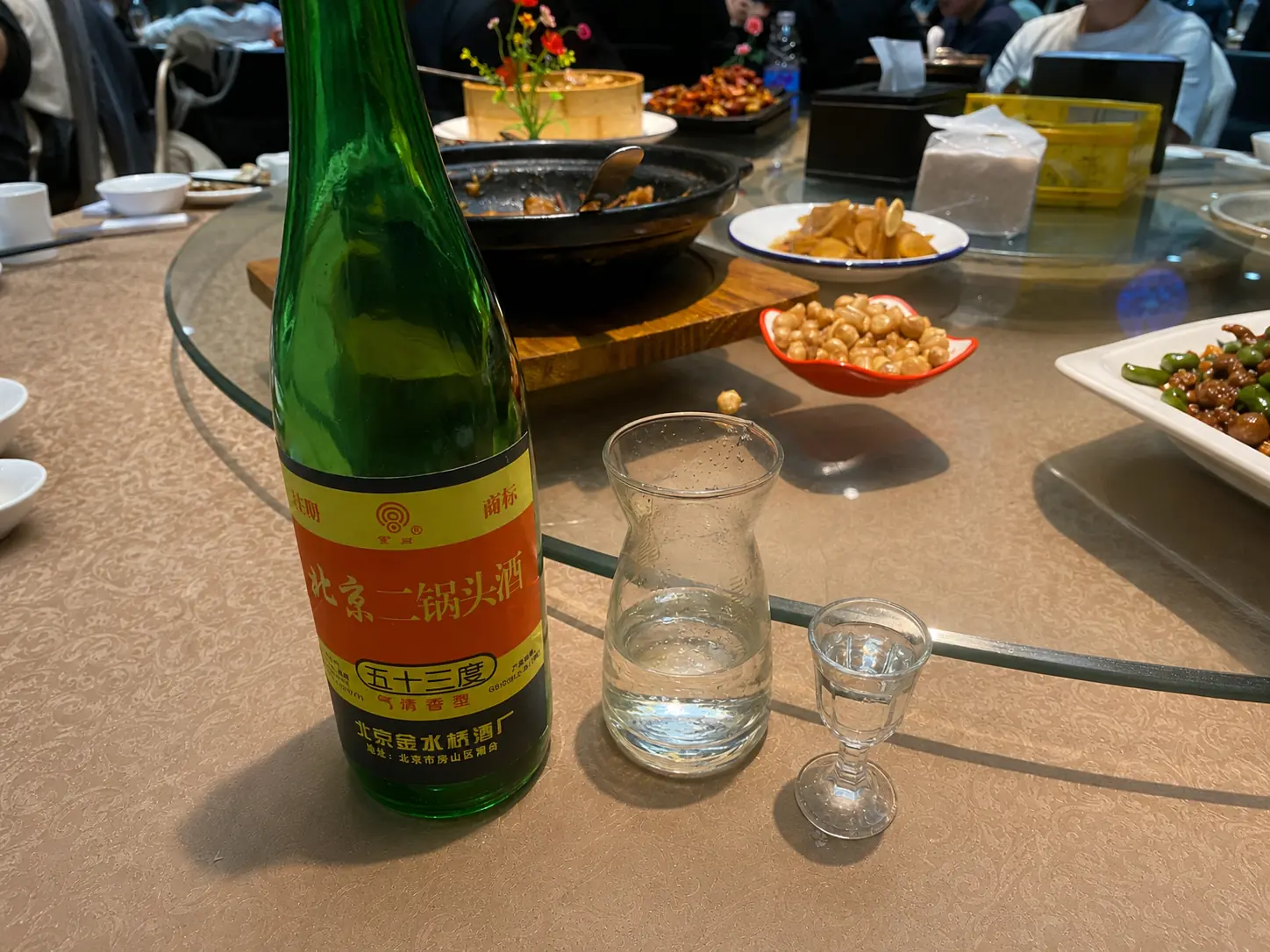
Light aroma can taste cleaner, but it can still be high-proof.
Light aroma (清香型) is easiest to understand through Fenjiu (汾酒). The style is cleaner, more direct, and more grain-forward than sauce aroma or heavy strong-aroma bottles. Fenjiu is the classic Shanxi (山西) reference point; Erguotou (二锅头) is the Beijing and northern China bottle travelers may see in casual restaurants, local shops, and budget meals.
This is the style that can trick visitors in both directions. It can be easier to understand because the flavor line is cleaner. It can also be easier to overdrink because "clean" does not mean "low alcohol." A plain small glass in a Beijing noodle shop or lamb hotpot restaurant can still be high-proof baijiu.
If you like direct spirits and dislike heavy fermented aromas, light aroma may be the best first category to understand. Just do not use it to prove your tolerance.
Rice Aroma: Southern and Softer
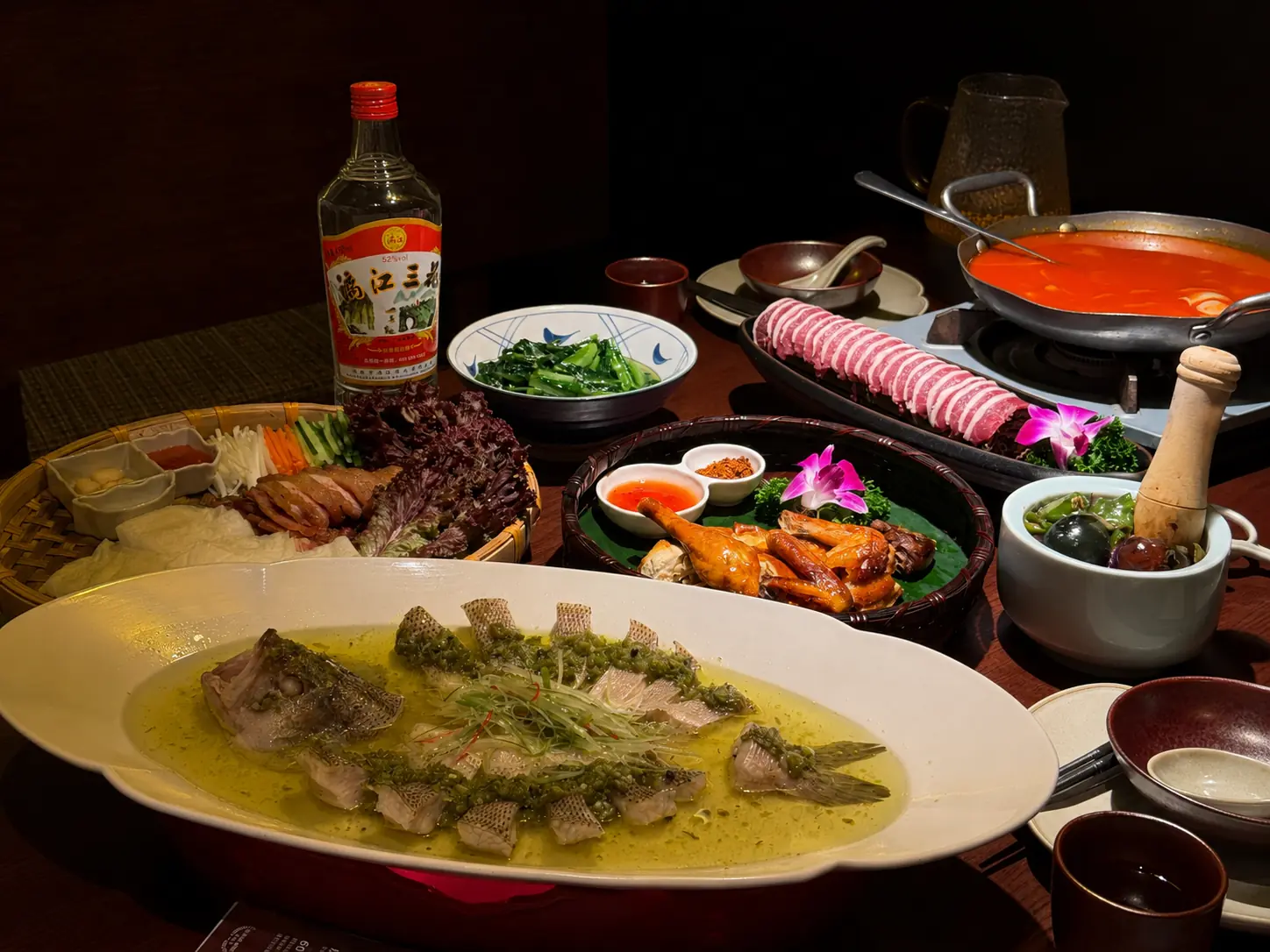
Rice aroma is still distilled baijiu, but its flavor profile is usually softer and rice-led.
Rice aroma (米香型) appears less often on the typical foreign tourist table, but it is easy to explain: rice-led, lighter, cleaner, and often associated with southern China. Guilin Sanhua (桂林三花) is a useful reference point. It is not sweet rice wine and it is not yellow wine. It is still distilled baijiu, just with a softer rice profile than many sorghum-led styles.
If you dislike the savory fermented edge of sauce aroma and do not want a heavy banquet style, rice aroma can be approachable when you find it. It makes sense with lighter southern food, rice noodles, stir-fries, and everyday dishes.
The practical challenge is availability: travelers meet sauce, strong, and light aroma more often.
Beyond the Four Main Styles
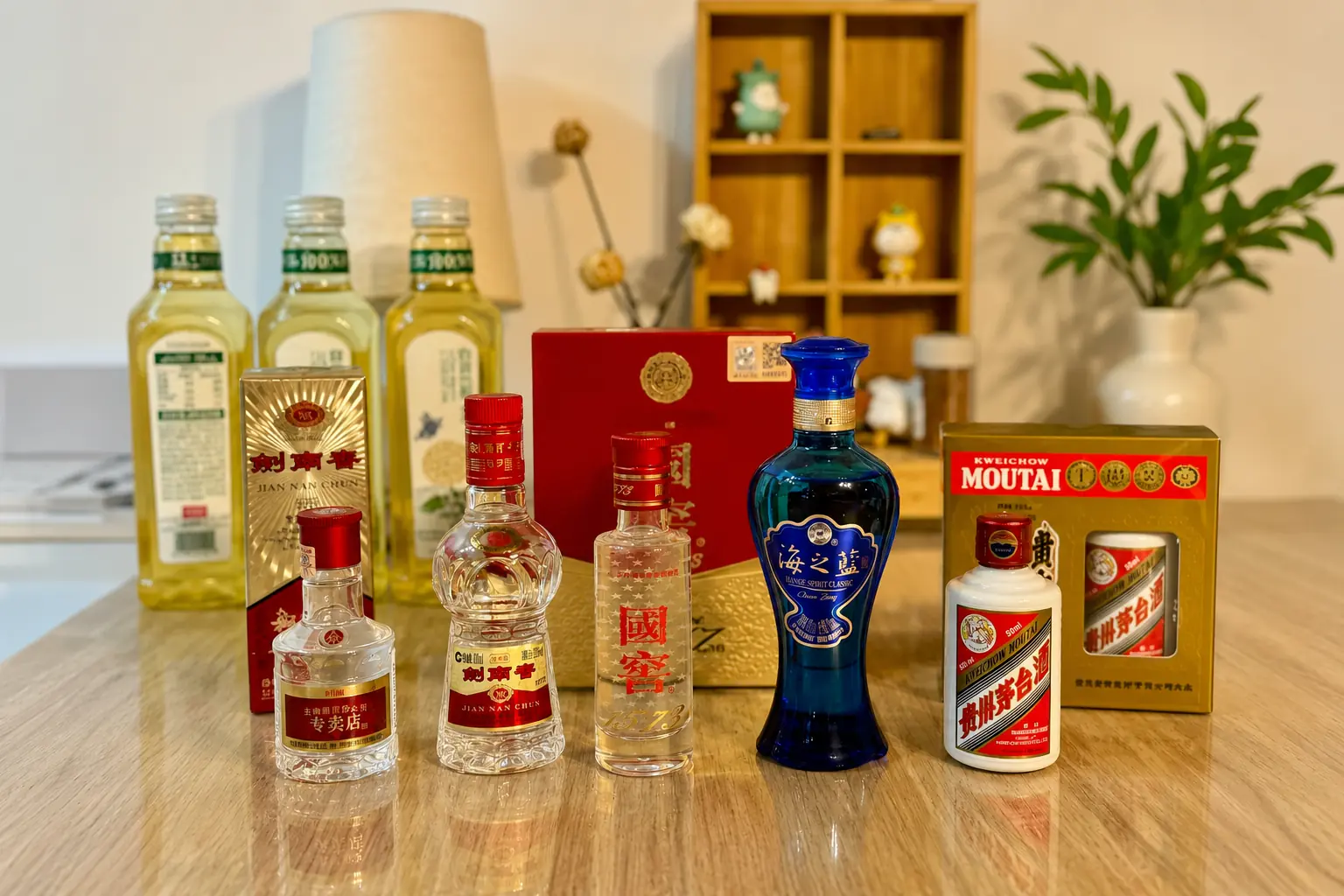
Beyond the main four, regional aroma styles add another layer to baijiu culture.
The four-style map is a beginner tool, not the full universe. Spirits Selection notes that baijiu has a wider Chinese aroma classification system with more sub-categories.
Chinese baijiu also includes additional or regional styles such as phoenix aroma (凤香型), mixed aroma (兼香型), medicinal aroma (药香型), sesame aroma (芝麻香型), special aroma (特香型), soybean aroma (豉香型), and Laobaigan aroma (老白干香型), among others. Different classification lists do not always use exactly the same boundaries.
You do not need to memorize them before dinner. Use the four main families to build your coordinate system, then treat the others as regional branches. Curiosity is useful; homework is optional.
What Travelers Should Try First
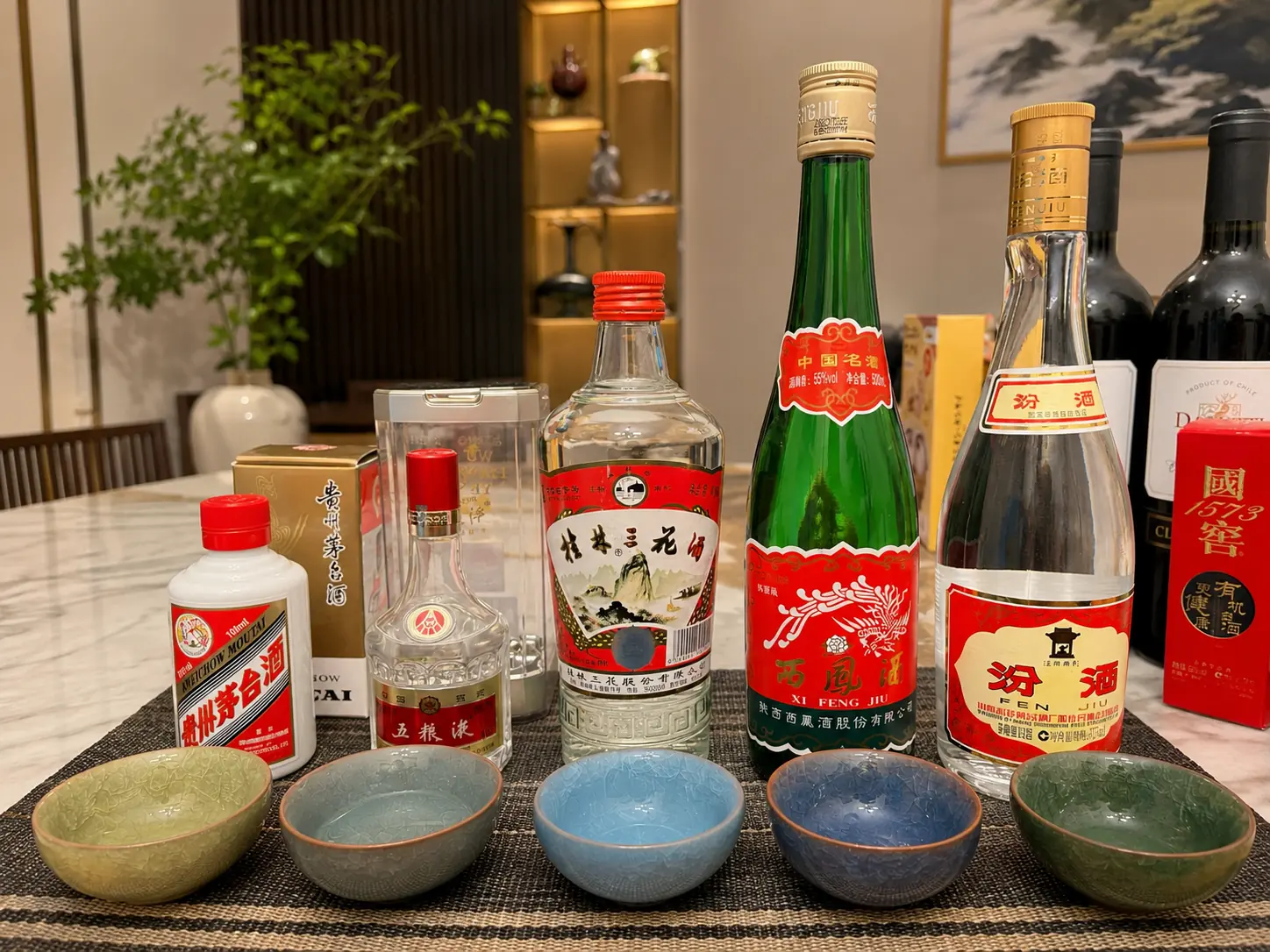
A small pour is the best way to compare baijiu styles without overcommitting.
If you simply want to taste baijiu for the first time, do not begin by buying a full bottle of expensive sauce aroma. Start with a small pour, a small bottle, a reputable source, and food on the table. Then choose by your own taste preference.
The question is not which baijiu is objectively best. It is which one gives you a fair first sip. Choose aroma first, then check ABV, bottle size, and meal context.
← swipe to compare all options →
I like clean spirits
Start with light aroma
- ✓Best if you want direct grain flavor without heavy fermented notes.
- —Do not drink it quickly just because it tastes cleaner.
清香型
Fenjiu or careful erguotou
I want banquet context
Try strong aroma
- ✓Best for understanding many mainstream dinner and gift-table bottles.
- —Fruit and grain aroma can hide serious alcohol strength.
浓香型
Wuliangye-style reference
I want the prestige taste
Try sauce aroma slowly
- ✓Best for understanding why Maotai-style baijiu matters culturally.
- —Start with a small pour; it can feel savory and strange at first.
酱香型
Maotai-style reference
I want something softer
Look for rice aroma
- ✓Best if you want a lighter rice-led profile when available.
- —Less common on tourist tables than the first three styles.
米香型
Southern rice styles
How to Read Baijiu Labels
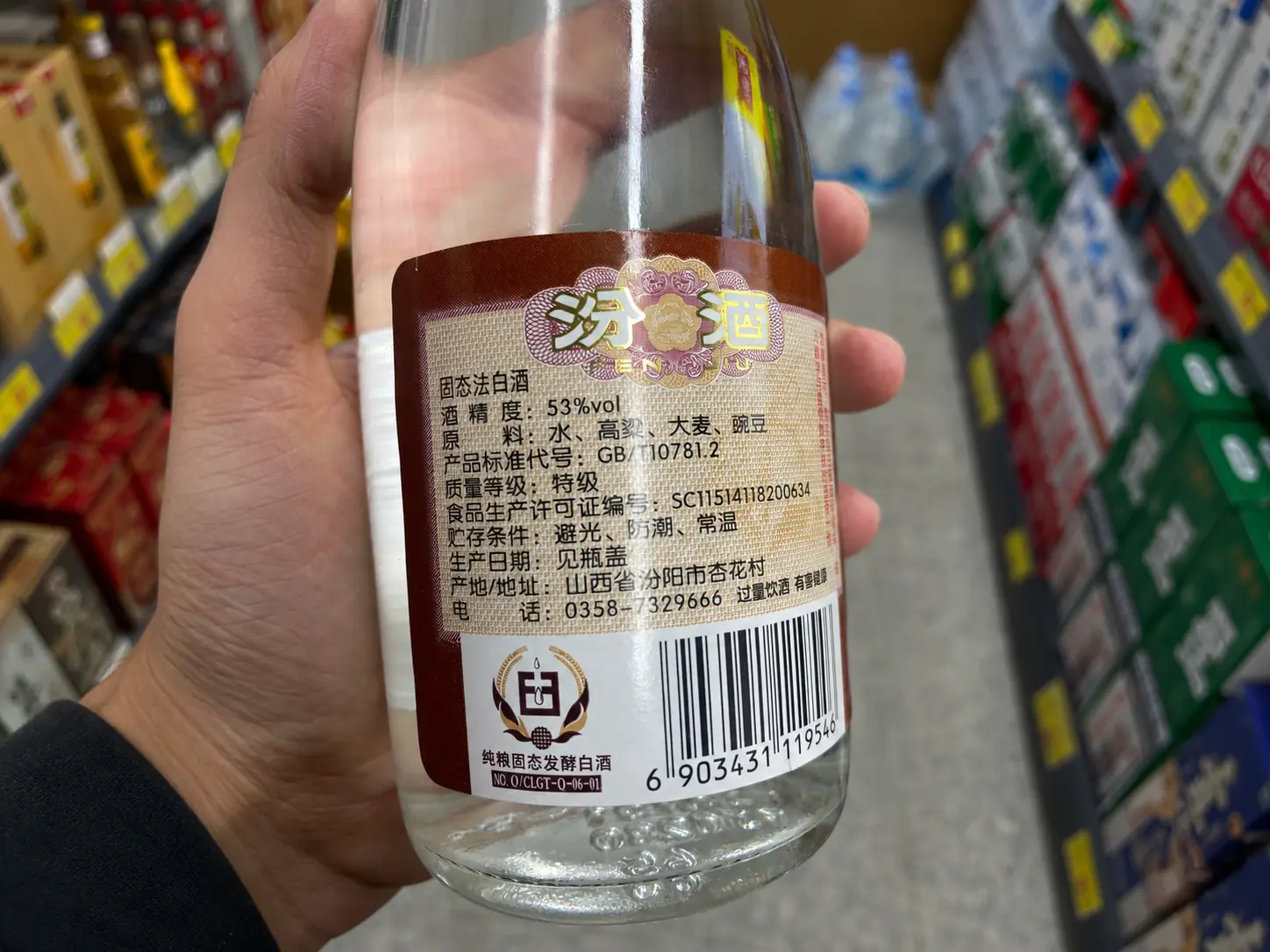
For travelers, aroma type and ABV matter more than packaging alone.
The four label details that matter most are aroma type, ABV, bottle size, and origin. Brand matters too, but brand tells you what the bottle signals socially. Aroma type and ABV tell you what your first sip may feel like.
If you are buying a gift or attending a formal banquet, do not rely only on your own taste. Baijiu carries social signals in China: brand, box, price tier, channel, and relationship all matter. Buying a small bottle for yourself is easy. Buying a bottle for someone important deserves local advice.
| Label Detail | Chinese to Spot | Why It Matters |
|---|---|---|
| Aroma type | 酱香型, 浓香型, 清香型, 米香型 | Predicts the basic flavor direction. |
| Alcohol strength | 38%, 42%, 52%, 53% | Controls drinking pace. Small cups still count. |
| Bottle size | 100ml, 375ml, 500ml | Travelers should prioritize small bottles or shared pours. |
| Origin | 贵州, 四川, 山西, 北京, 广西 | Helps you read regional food and banquet context. |
Pairing Baijiu With Food
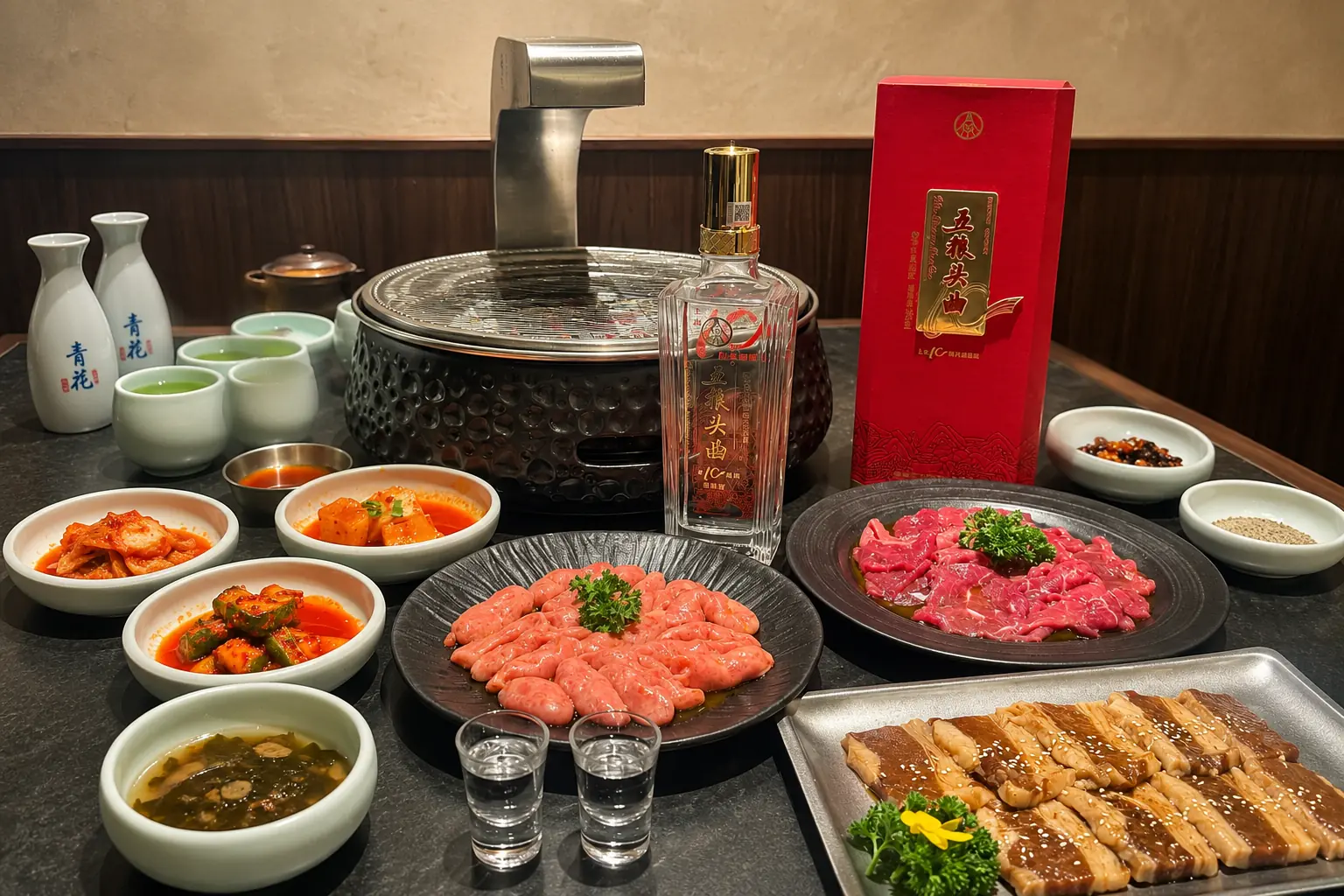
Baijiu usually works better with food than as a stand-alone shot.
Baijiu is usually easier with food than alone. These are not strict rules, but food context gives the spirit somewhere to go: heat, fat, grain, smoke, and savory dishes all change the first sip.
You can drink beer with barbecue, tea with hotpot, or wine in a refined restaurant. Baijiu matters because it teaches you one branch of Chinese dining culture, not because it should replace every other drink.
| Aroma Style | Food Context | Traveler Logic |
|---|---|---|
| Sauce aroma | Guizhou dishes, Sichuan food, grilled meat, spicy cold dishes | Bold food stands up to the savory, fermented edge. |
| Strong aroma | Hotpot, banquet dishes, shared restaurant meals | Fuller fruit and grain notes suit busy dinner-table flavors. |
| Light aroma | Northern noodles, lamb, dumplings, simple drinking snacks | Cleaner grain flavor works with direct, salty, everyday food. |
| Rice aroma | Rice noodles, stir-fries, lighter southern dishes | A softer rice-led profile feels more natural with lighter meals. |
Useful Baijiu Flavor Phrases
Use these when reading a bottle, talking to restaurant staff, or asking a Chinese friend what is on the table. Pinyin belongs here because this is a speakable phrase table; in normal prose, just recognize the Chinese characters.
| English | Chinese | Pinyin | Say It Like… |
|---|---|---|---|
| Aroma type or flavor style | 香型 | xiang xing | shyahng-shing |
| Sauce-aroma baijiu | 酱香型 | jiang xiang xing | jyahng shyahng-shing |
| Strong-aroma baijiu | 浓香型 | nong xiang xing | nohng shyahng-shing |
| Light-aroma baijiu | 清香型 | qing xiang xing | ching shyahng-shing |
| Rice-aroma baijiu | 米香型 | mi xiang xing | mee shyahng-shing |
| What aroma type is this? | 这个是什么香型? | zhe ge shi shen me xiang xing | juh-guh shir shun-muh shyahng-shing |
| Do you have a small bottle? | 有没有小瓶? | you mei you xiao ping | yo may-yo shyaow ping |
| I want to taste a little first | 我想先尝一点 | wo xiang xian chang yi dian | woh shyahng shyen chahng ee dyen |
Frequently Asked Questions
No. Sauce, strong, light, and rice aroma are the most useful first map for travelers, but baijiu has more recognized styles and regional sub-styles.
Beyond This Guide
Use this page to read aroma types, then use the Baijiu Guide to handle toasts, refusal phrases, and dinner etiquette. For meal context, pair baijiu knowledge with Chinese Dining Etiquette, Sichuan and Chongqing Hotpot, Chinese BBQ Skewers, Peking Duck in Beijing, and Zhejiang Cuisine.
© gochinafreely.com — Original guide by Go China Freely.