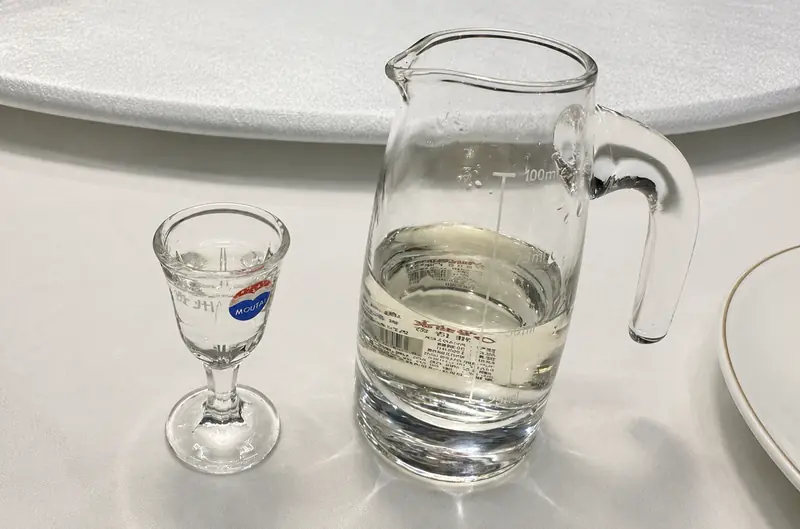
Baijiu (白酒) is the Chinese strong spirit travelers are most likely to meet at a hosted dinner, wedding, family meal, or business-style banquet. It usually appears around a round table rather than at a bar: tiny glasses, hot dishes, someone raising a toast, and the call 干杯 moving around the room. This guide shows you what baijiu is, why it tastes intense, how Chinese toasts work, and how to taste, toast, or decline politely without drinking more than you want.
Executive Summary
What this guide covers
Baijiu basics, aroma styles, Chinese toasting etiquette, first-timer tasting strategy, refusal phrases, and where travelers are most likely to encounter it.
Best first approach
Taste a small pour with food, never on an empty stomach. If you do not want to drink, toast with tea or ask for only a little in your glass.
Main traveler trap
Do not treat baijiu like neutral vodka. Its flavor comes from grains, starter culture, fermentation, aroma styles, and the social rhythm of Chinese dining.
40-60%
Common ABV range
Tiny cups
Typical serving
Neat
Traditional style
Nationwide
Where it appears
China's Clear Spirit With a Social Job
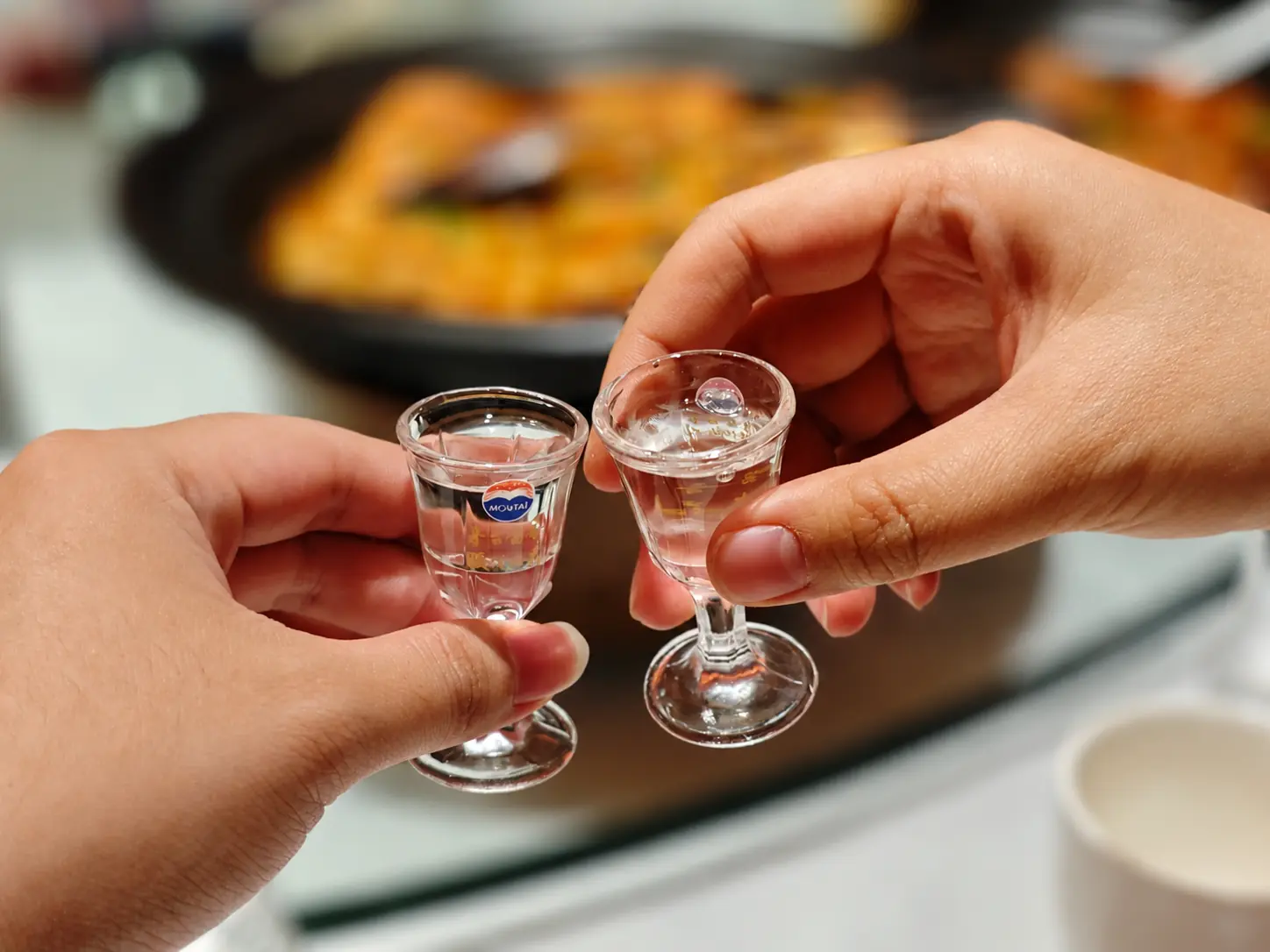
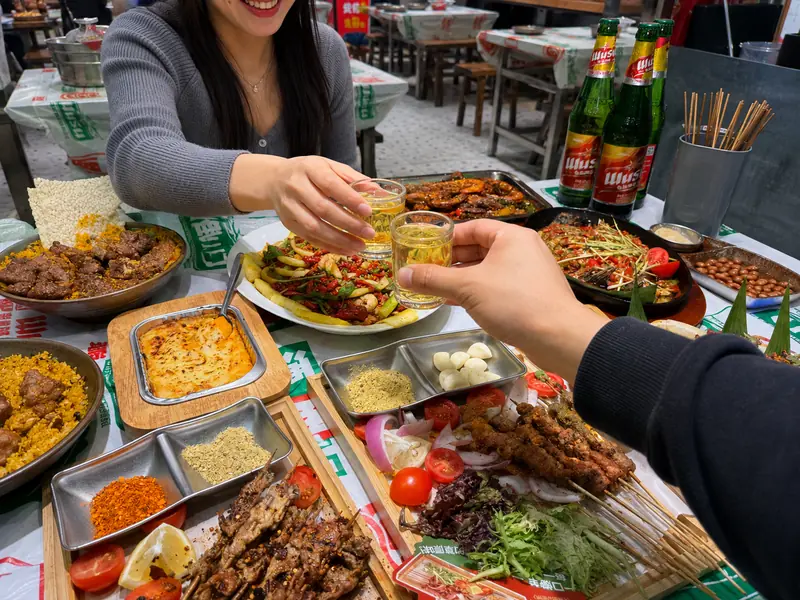
The first lesson is social: tiny cups, raised glasses, and a toast moving around the table.
Baijiu (白酒) literally means "white liquor" or "clear liquor," but it is not Chinese yellow wine, and it is not simply Chinese vodka. It is a traditional Chinese distilled grain spirit, commonly made with sorghum and sometimes with rice, glutinous rice, wheat, corn, or other grains. For travelers, the shorter version is this: baijiu is high-proof, clear, grain-based, and built for the table.
That table matters. Baijiu often appears at formal dinners, welcome meals, weddings, business banquets, family celebrations, and meals where a host wants to show warmth. The host pours, raises a glass, says a short blessing or thanks, clinks glasses, and drinks.
For a visitor, the useful question is not only "What does baijiu taste like?" It is also "What do I do when someone pours me a glass?"
If you understand the ritual, you can participate politely, taste a little, and still protect your limits.
Why Baijiu Tastes So Strong at Dinner
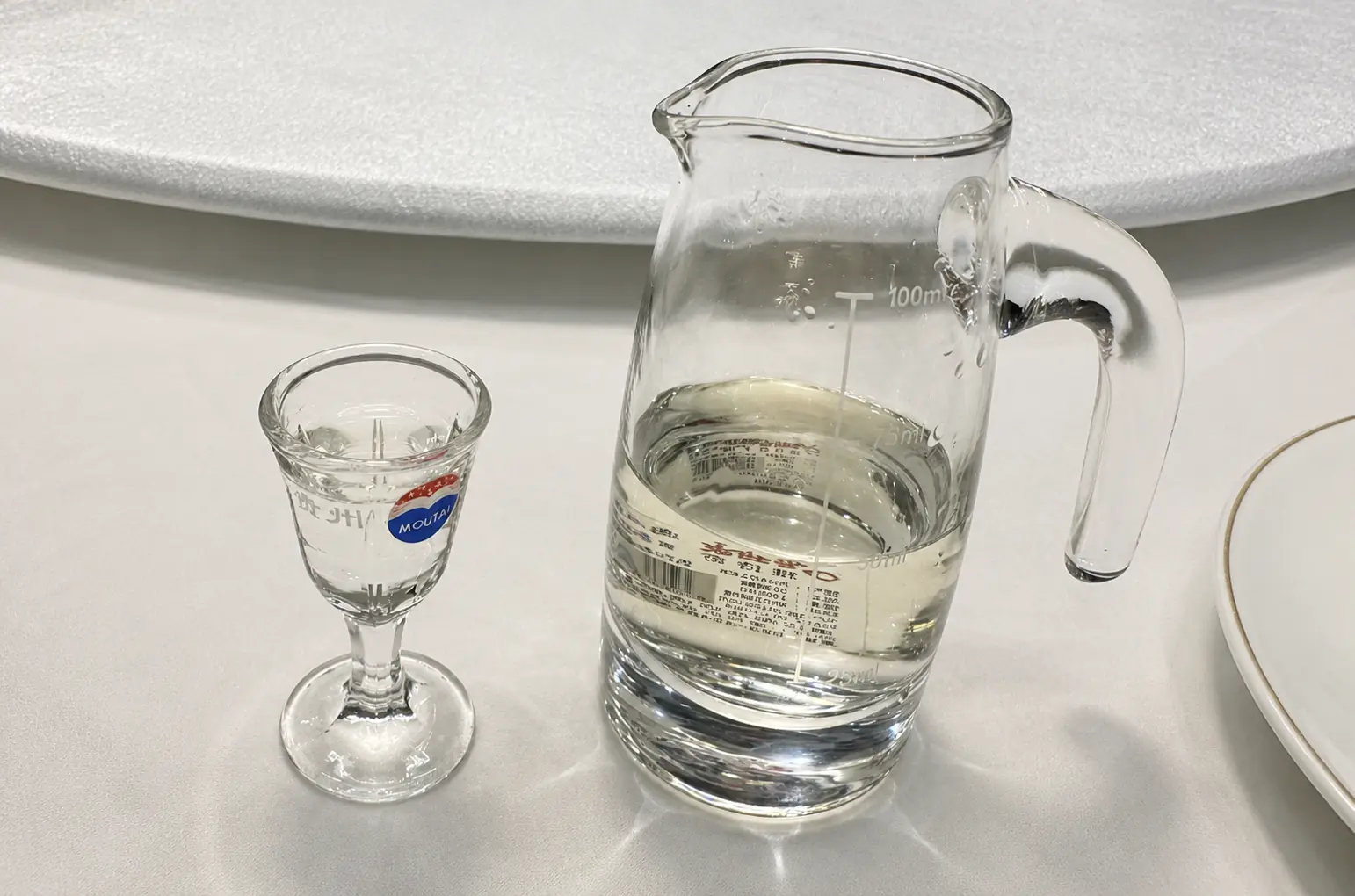
A clear spirit in a tiny glass can still carry strong aroma, high ABV, and social weight.
Baijiu feels strong for two reasons. First, many common bottles sit around 40-60% ABV, while the broader category can run roughly 38-68%. Read the label instead of judging by cup size.
For anyone used to beer, wine, low-proof cocktails, or soju, a tiny glass can still hit hard. Second, baijiu's flavor is unfamiliar: grain, starter culture (曲), fermentation, distillation, aging, and blending all shape what lands in the cup.
Depending on the style, you can notice grain, fruit, flowers, soy-sauce-like savoriness, roasted notes, earth, nuts, herbs, or a fermented edge. Those flavors do not mean the drink has gone bad. They are part of the category.
| What You Notice | Likely Reason | Traveler Translation |
|---|---|---|
| Heat and burn | High alcohol strength, often served neat | Eat first, sip slowly, and do not chase toasts on an empty stomach. |
| Savory or soy-like aroma | Common in sauce-aroma styles | This can be intentional, especially with richer food. |
| Fruit, grain, or sweet perfume | Common in strong-aroma and mixed styles | This is the banquet style many travelers meet first. |
| Clean, direct, dry finish | Often associated with light-aroma styles | Simple does not always mean gentle. Watch the ABV. |
First sip rule
Do not judge baijiu from a rushed first shot. Smell it, take a small sip, eat something warm, then decide whether you want more.
Four Main Baijiu Aroma Styles to Know
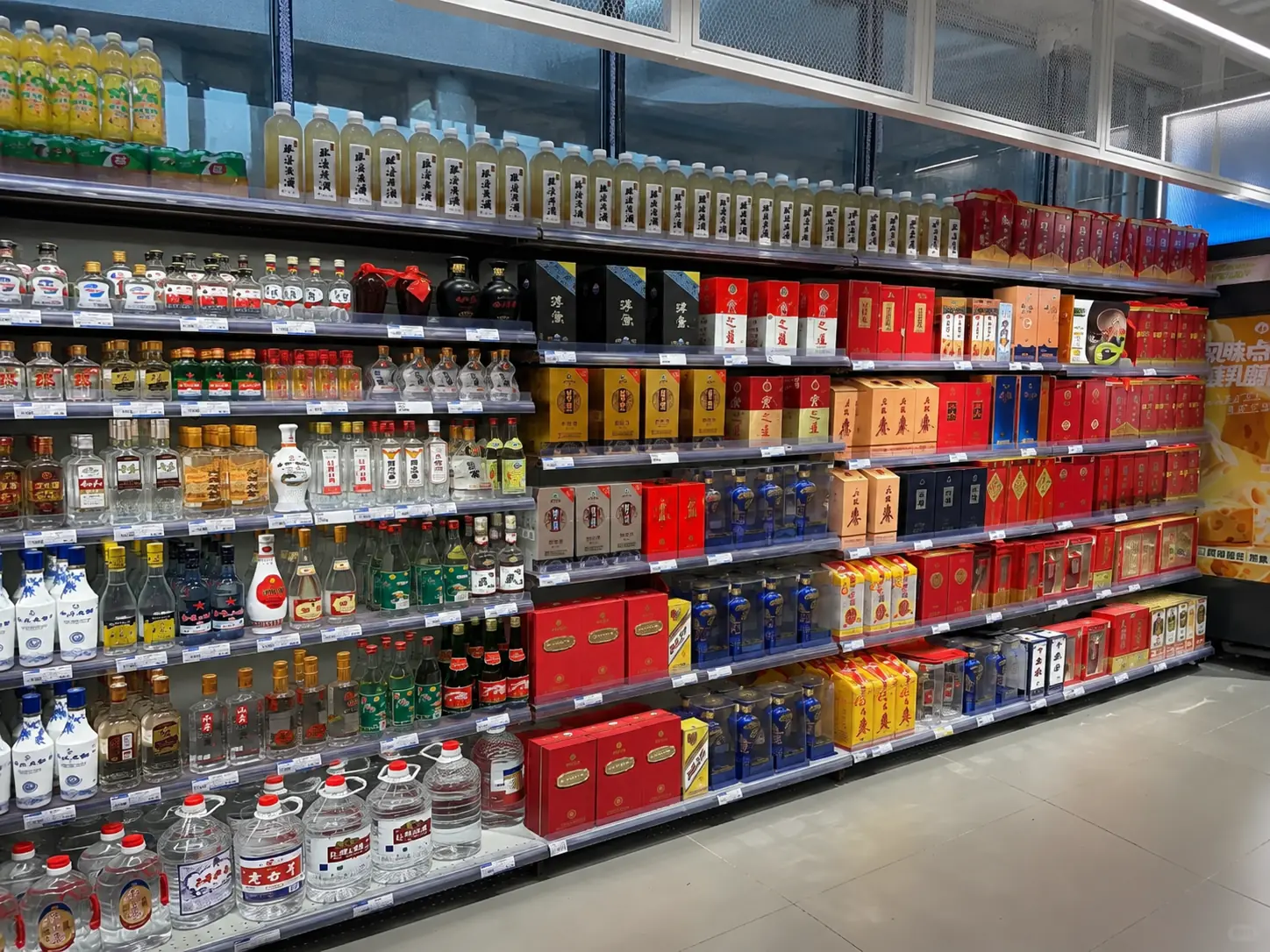
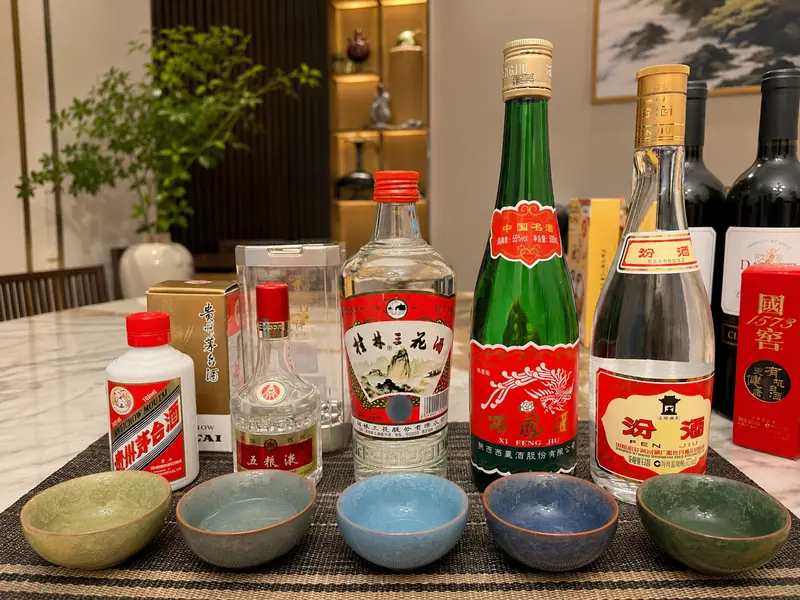
Use shelves as a map of aroma styles, ABV, bottle sizes, and price tiers.
Baijiu has many recognized styles and regional sub-styles. First-time travelers only need a simple map: four main aroma categories are the ones you will hear most often. If you want a deeper bottle-by-bottle map, use our baijiu flavor guide.
For a first pass, treat strong, light, rice, and sauce as the four principal aroma categories. The broader baijiu world is more complex, but this map is enough to make a restaurant bottle or supermarket shelf less confusing.
← swipe to compare all options →
Sauce Aroma
酱香型
- ✓Savory, roasted, fermented, nutty, sometimes soy-sauce-like.
- —Culturally important, but not always the easiest first sip.
Moutai benchmark
Strong Aroma
浓香型
- ✓Full, fruity, grainy, and common at banquets and gift tables.
- —Can feel both sweet-smelling and powerful at the same time.
Wuliangye and Luzhou
Light Aroma
清香型
- ✓Cleaner, drier, and more direct than many heavy styles.
- —Cheap Beijing erguotou can still be very strong.
Fenjiu and erguotou
Rice Aroma
米香型
- ✓Usually more delicate, rice-led, and approachable with lighter food.
- —Travelers see it less often than the first three categories.
Southern rice styles
Use brands as landmarks, not homework. Moutai (茅台) is the famous sauce-aroma name from Guizhou (贵州). Wuliangye (五粮液) and Luzhou Laojiao (泸州老窖) are strong-aroma reference points. Fenjiu (汾酒) is a classic light-aroma example. Erguotou (二锅头) is the Beijing and northern China bottle many travelers meet in casual or budget settings. You do not need a separate encyclopedia entry for every brand before you can handle a dinner politely.
How Baijiu Toasting Works at Dinner
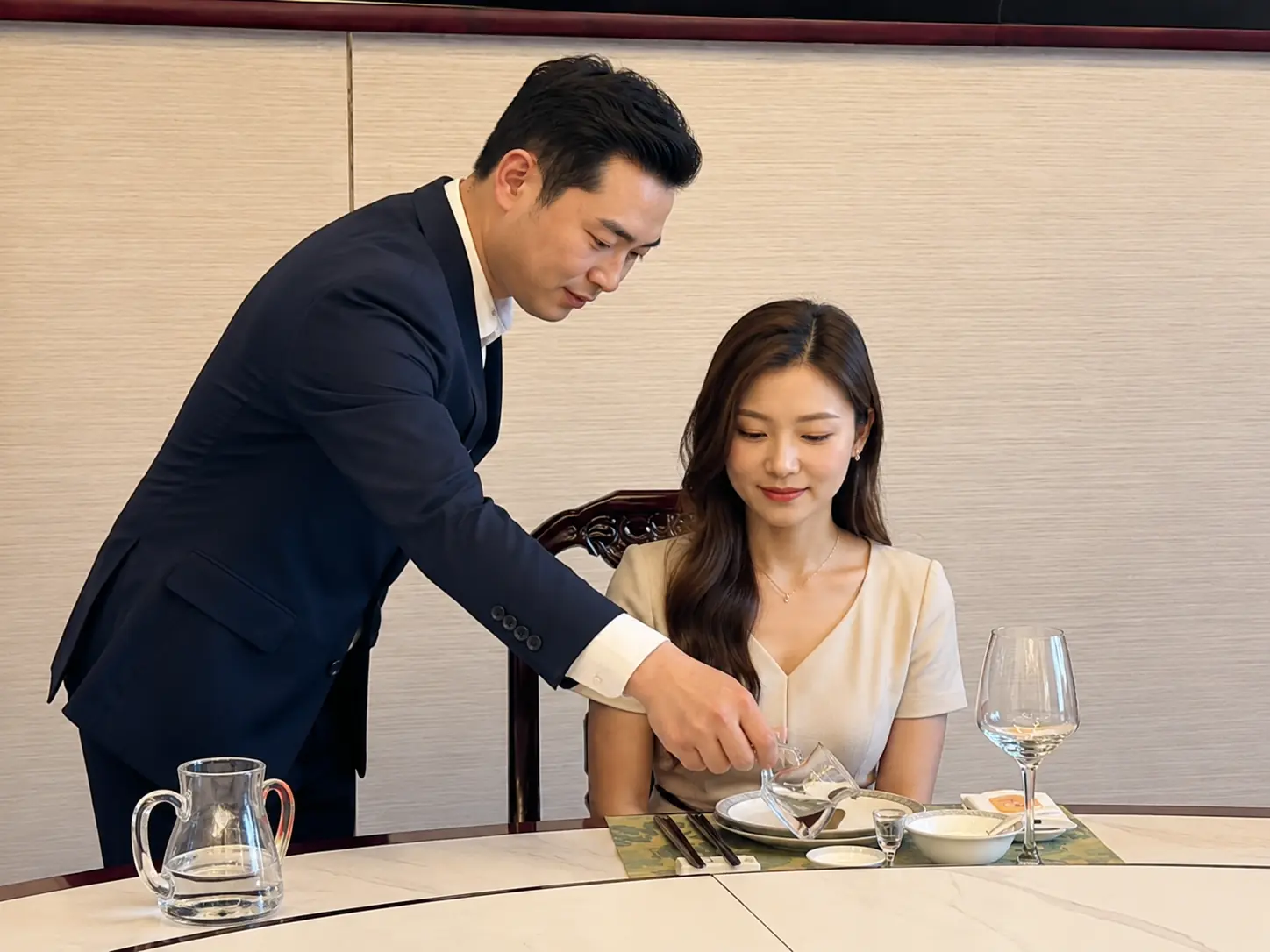
At hosted meals, the pour often comes before the toast.
The etiquette is often more useful to understand than the flavor notes. Baijiu is traditionally served neat in small glasses and drunk during communal toasts.
The old-school rules are simple enough for a traveler: fill or accept a small pour, raise your glass with the table, clink politely, say thanks, and drink only what you have already agreed to drink.
In practice, the strictness depends on the table. A formal banquet with older hosts is more ritual-heavy. A meal with younger friends is usually relaxed. Tourist-facing restaurants usually expect only basic politeness.
Still, the basic sequence helps you read the room.
- Host opens the meal- The host pours, raises a glass, and says a welcome or blessing.
- Everyone raises a glass- You can join even if your glass holds tea, water, beer, or a tiny pour.
- Formal toast usually means finish(干杯)- In formal baijiu rounds, 干杯 usually means finishing the small pour. In casual speech, it can simply mean cheers.
- Keep the pour small- If you do not want to finish a round, ask for a small pour early or raise tea instead.
One small gesture is worth knowing: when clinking glasses, the person showing respect often holds the rim slightly lower than the other person's glass. You do not need to overthink it; just lower your glass a little for an older host, senior person, or someone you want to thank.
How to Drink Without Overdoing It
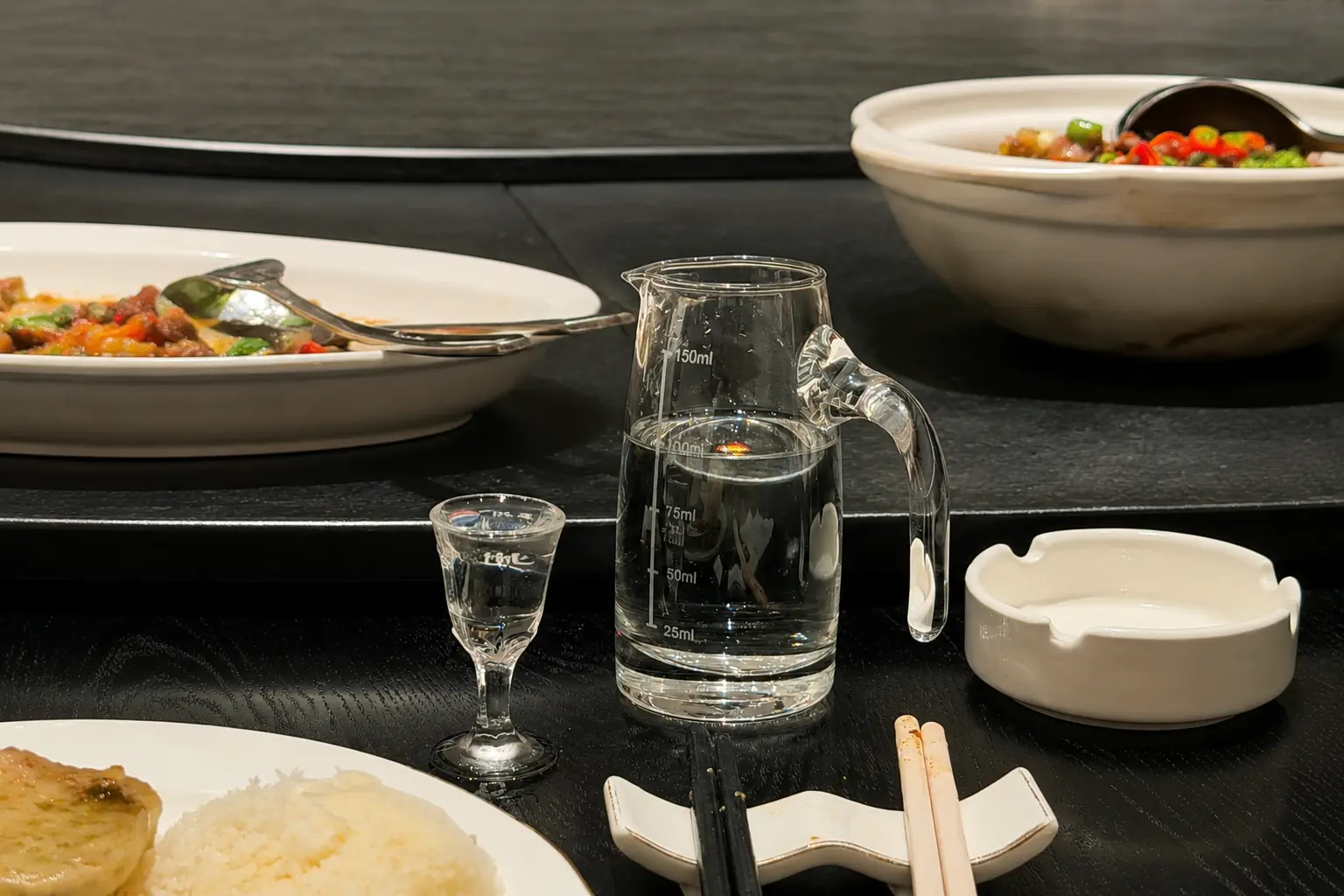
Food, water, and a small pour make baijiu easier to pace.
The best baijiu strategy is set before the first toast. If you cannot drink much, say so early and lightly. "I cannot drink much" lands better before someone has already poured several rounds.
If the host wants to fill your glass, ask for only a little, keep water nearby, and eat between sips.
- Eat first: Baijiu on an empty stomach feels strong fast, even when the glass is tiny.
- Ask for less: A small pour creates room to join the toast without committing to a full glass.
- Use tea: The phrase 以茶代酒 means to substitute tea for alcohol during a toast.
- Pace the table: Sip, eat, drink water, and do not match every enthusiastic drinker one for one.
- Avoid fast mixing: Baijiu, beer, wine, and cocktails in quick rotation can make the alcohol harder to judge.
- Do not drive: After drinking baijiu, do not drive, cycle, ride an e-bike or scooter, or do anything that needs balance and quick reactions.
If you truly cannot drink, use a clear reason: medication, health, early train or flight, allergy, religion, training, driving, or simply "I cannot drink today." Most hosts accept a firm, polite answer better than repeated hesitation.
Set the boundary early
Chinese hosts often encourage drinking as a way of showing welcome. That does not mean you need to match every round. A warm smile, a raised glass, and a clear answer usually work better than changing your response after several pours.
Where Travelers Usually Meet Baijiu in China
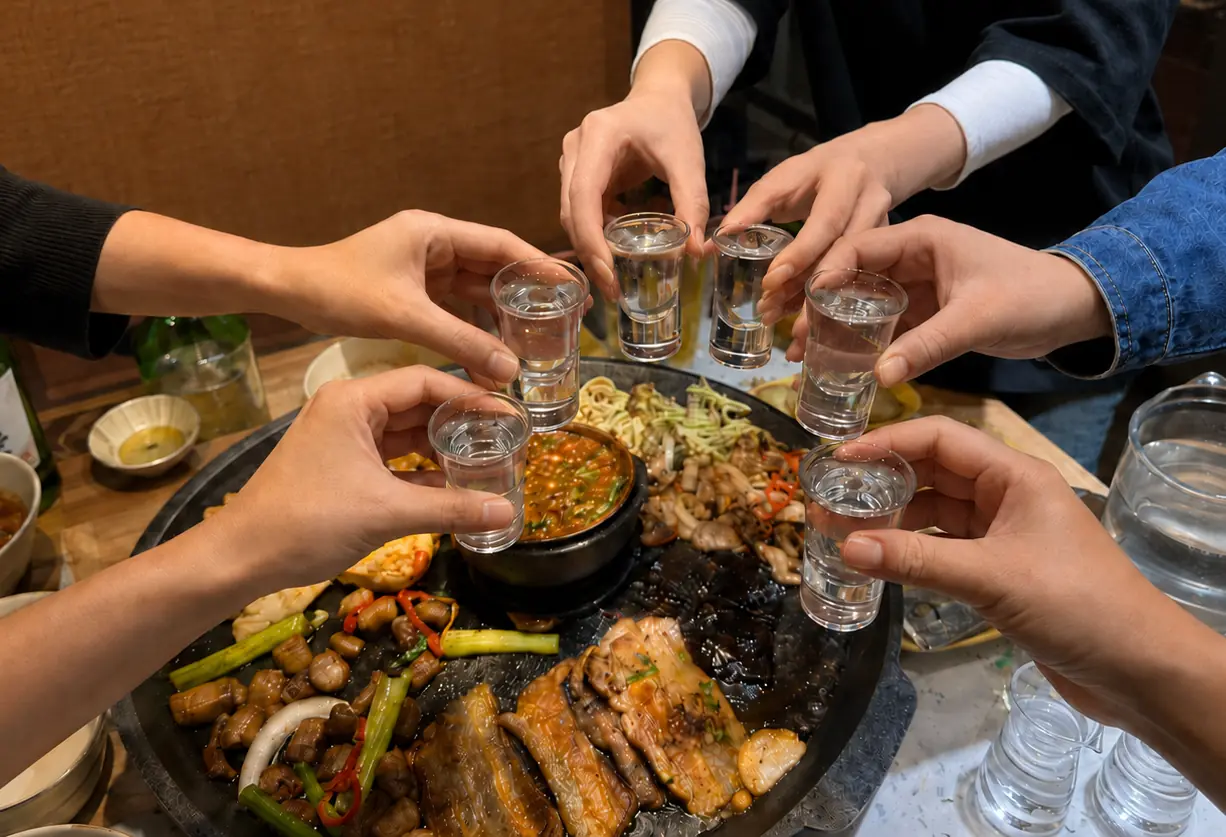
Bold food settings are where travelers are most likely to meet baijiu casually.
Most independent travelers meet baijiu in three realistic settings. The first is a hosted dinner: business, wedding, family, or a welcome meal arranged by local friends.
The second is a local night-food table with friends: Sichuan or Chongqing hotpot, barbecue skewers, northeastern dishes, Guizhou food, Shanxi noodles, or banquet-style regional cooking. Beer is more common at many casual hotpot or barbecue meals, so baijiu usually appears when someone specifically orders it or brings a bottle.
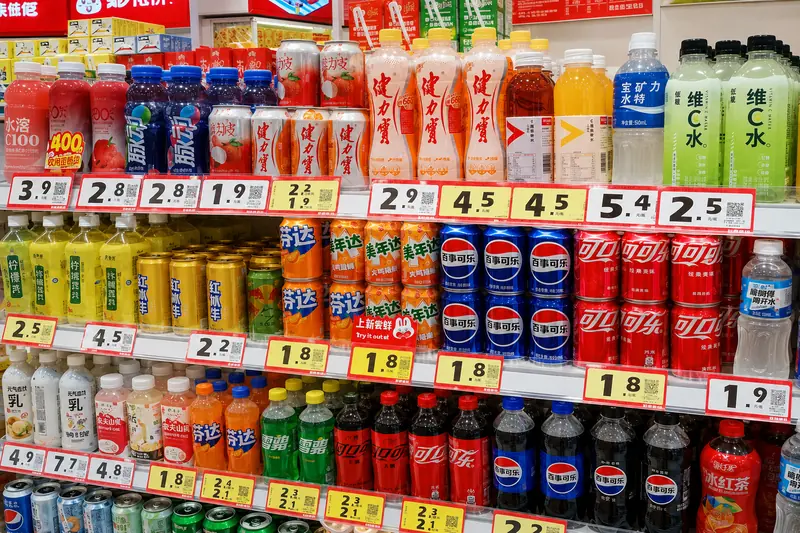
The third is shopping: supermarket liquor shelves, airport duty-free shops, gift boxes, and specialty stores.
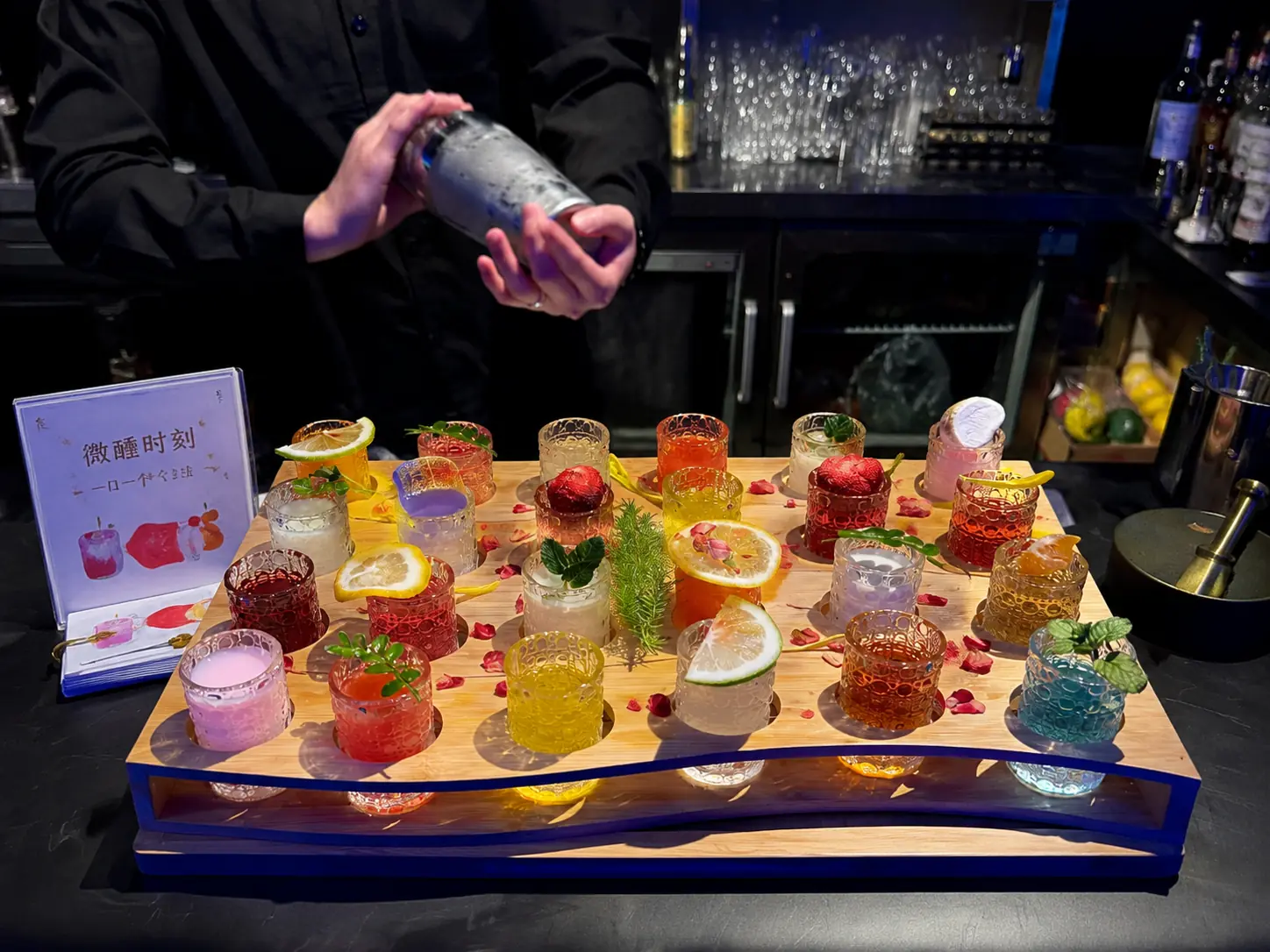
Modern bars increasingly use baijiu in cocktails and lower-pressure tastings.
In major cities, a fourth setting is the modern bar world, where some bartenders use baijiu in cocktails or lower-proof mixed drinks.
If you are traveling independently and not attending a hosted dinner, treat baijiu as an optional cultural tasting, not a required task.
A small bottle with friends, a shared restaurant bottle, or a baijiu cocktail in a reputable bar is usually a better first encounter than a high-pressure table where you do not understand the rhythm.
How to Buy or Try a Bottle
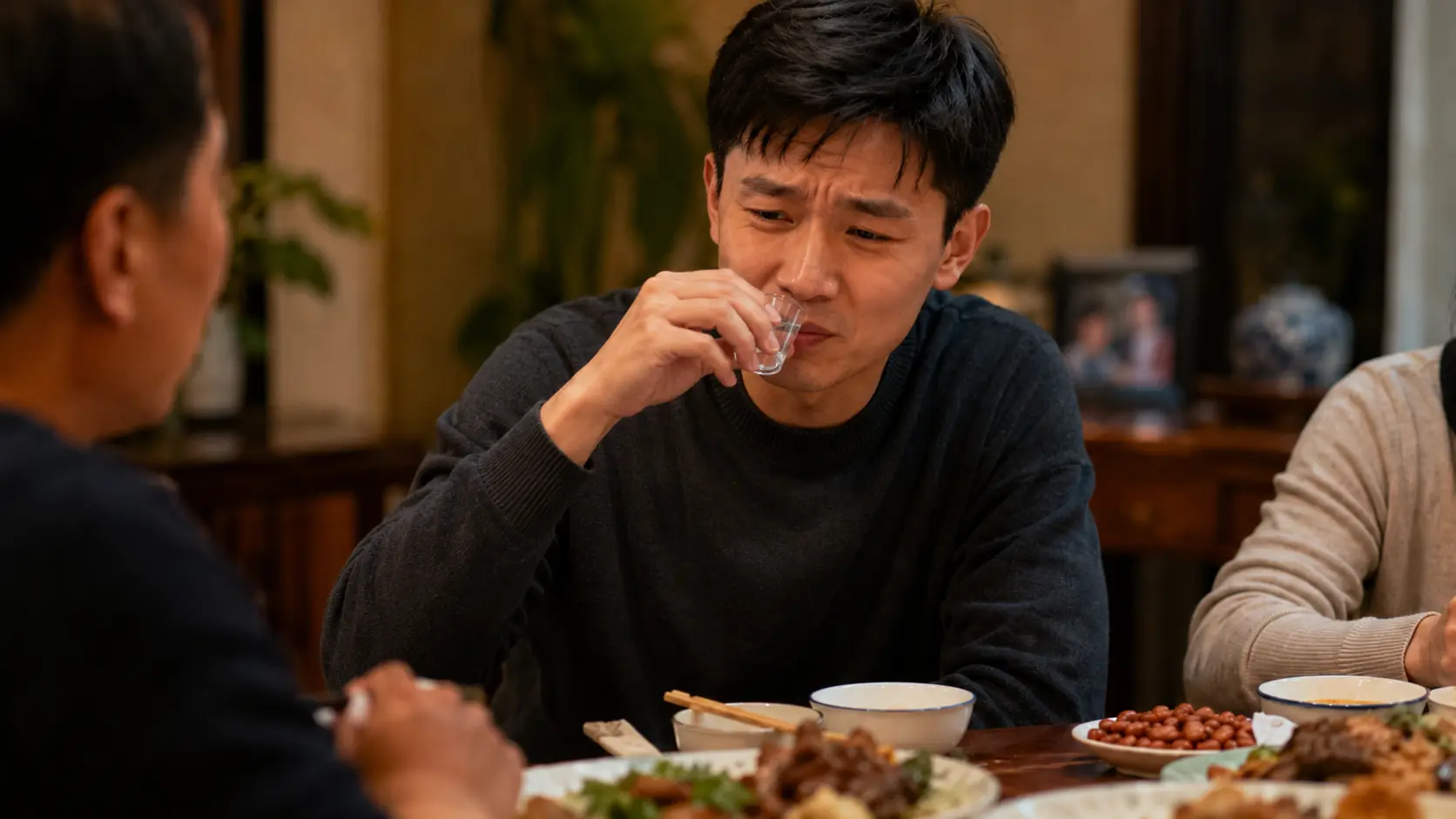
A small bottle or careful shared sip is smarter than committing to a full-size bottle first.
Do not buy your first baijiu by packaging alone. Expensive does not always mean approachable, and famous does not always mean beginner-friendly.
Look for three things first: alcohol percentage, aroma style, and bottle size. On a label, scan for 酒精度 or %vol, 香型 for aroma type, and 净含量 for the bottle size. Smaller bottles are smarter than a large gift box for a first try.
| Traveler Goal | Better Choice | Watch For |
|---|---|---|
| Just taste it once | Small bottle, baijiu cocktail, or one shared restaurant bottle with friends | Do not buy a full-size bottle before you know the style. |
| Understand banquet baijiu | Common strong-aroma or light-aroma bottle with a hot meal | Read the ABV. Tiny cups can still be powerful. |
| Try a prestige style | Small pour of sauce-aroma baijiu at a trusted dinner, tasting, or bar | Do not expect Moutai-like styles to be instantly easy. |
| Bring a bottle home | Factory-sealed bottle from a reliable shop | Check airline, customs, ABV, and checked-luggage rules first. |
| Give a gift | Ask a local contact or shop staff before choosing | Brand, box, price tier, and relationship all send signals. |
At a restaurant, it is perfectly fine to ask for beer instead. Baijiu is culturally important, but the best travel memory is not always the strongest drink. One good sip in the right food context is enough.
Useful Baijiu Phrases for Toasts and Refusals
Use these when you want to join a toast, slow the pace, or decline without making the moment awkward.
| English | Chinese | Pinyin | Say It Like… |
|---|---|---|---|
| Baijiu; Chinese distilled grain liquor | 白酒 | bai jiu | bye-jyoh |
| Cheers; literally dry the cup | 干杯 | gan bei | gahn-bay |
| I cannot drink much | 我酒量不行 | wo jiu liang bu xing | woh jyoh lyahng boo shing |
| I will toast with tea instead of alcohol | 我以茶代酒 | wo yi cha dai jiu | woh ee chah dye jyoh |
| Just pour a little is enough | 少倒一点就行 | shao dao yi dian jiu xing | shaow daow ee dyen jyoh shing |
| I cannot drink very much | 我喝不了多少 | wo he bu liao duo shao | woh huh boo lyaow dwaw shaow |
| I cannot drink alcohol today | 我今天不能喝酒 | wo jin tian bu neng he jiu | woh jin tyen boo nung huh jyoh |
| I took medicine, so I cannot drink today | 我吃药了,今天不能喝 | wo chi yao le, jin tian bu neng he | woh chir yaow luh, jin tyen boo nung huh |
| I have early transport tomorrow, so only a little today | 我明早赶车,今天少喝一点 | wo ming zao gan che, jin tian shao he yi dian | woh ming zaow gahn chuh, jin tyen shaow huh ee dyen |
| Can I switch to beer? | 可以换啤酒吗? | ke yi huan pi jiu ma | kuh yee hwan pee-jyoh mah |
Baijiu Safety and Etiquette Notes for Travelers
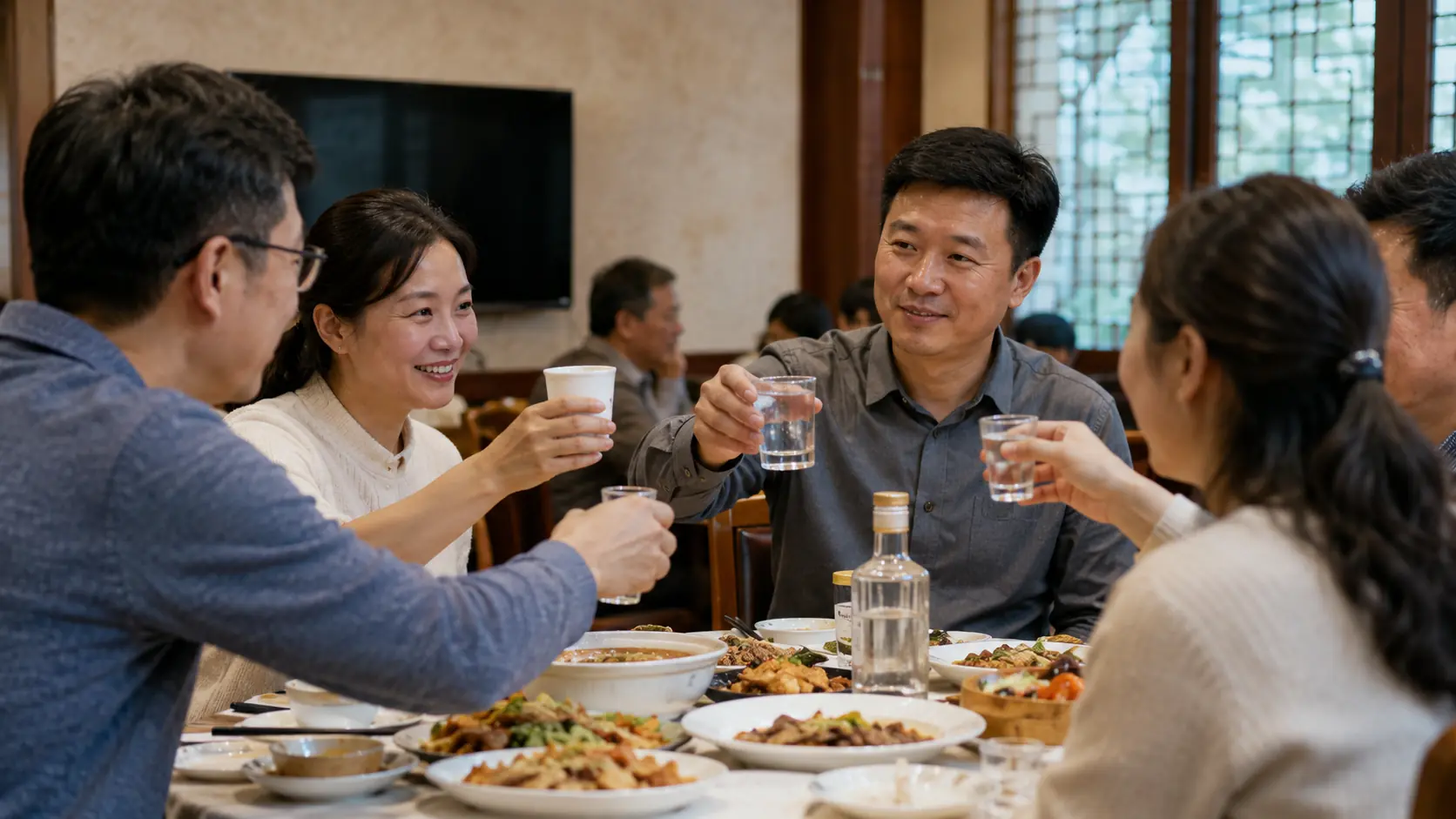
Toasting with tea is a polite way to join the moment without drinking much alcohol.
Baijiu is easy to underestimate because the glass is small, the table is lively, and toasts arrive quickly.
You can respect the ritual without drinking much.
- Avoid unlabeled homemade liquor: Choose reputable restaurants, sealed bottles, and trusted brands.
- Skip it when unwell: Jet lag, long travel days, altitude, heat, or stomach trouble all make strong alcohol harder to handle.
- Do not drink with medication: If you are taking medicine or have health limits, say clearly that you cannot drink.
- Politeness matters more than volume: Smile, raise your glass, thank the host, and set your boundary early.
- Younger tables are often flexible: Many urban Chinese diners choose beer, tea, low-proof drinks, or no alcohol at all.
Frequently Asked Questions
No. Baijiu is important in some Chinese dining and banquet settings, but tourists do not have to drink it. Join the toast with tea, water, beer, or a tiny sip if alcohol is not right for you.
Beyond This Guide
Baijiu makes more sense when you place it inside the meal. Pair this guide with Chinese Dining Etiquette, the Baijiu Flavor Guide, Sichuan and Chongqing Hotpot, and Chinese BBQ Skewers to understand when a toast belongs at the table, when beer makes more sense, and when tea is the smartest glass to raise.
© gochinafreely.com — Original guide by Go China Freely.