Table map
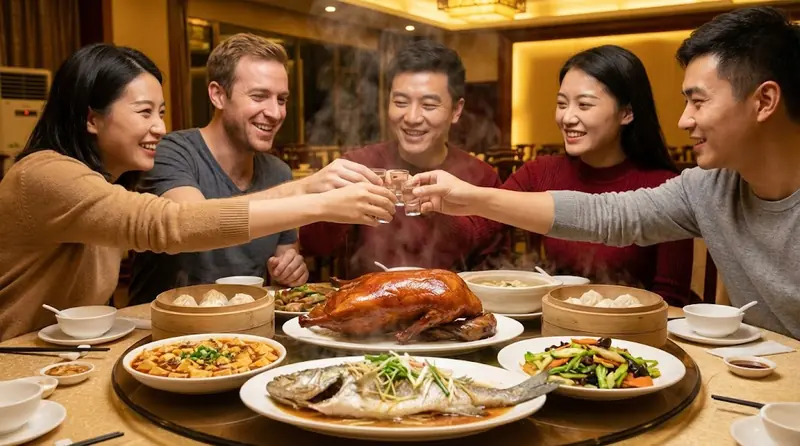
Chinese dining etiquette is less about perfect manners than reading the table: shared dishes, host-led seating, chopstick taboos, tea signals, and toasts all happen at once. Put chopsticks upright in rice, clink too high, or refuse food too sharply and the moment can feel awkward, but most Chinese hosts are forgiving when a foreign guest is clearly trying.
Table cue stack
Read the table
Shared dishes, host-led seating, tea signals, and toasts all happen at once.
Avoid sharp cues
Upright chopsticks, high clinks, and abrupt refusals are the main pressure points.
Recover calmly
A small correction, a smile, and returning to the meal rhythm usually solve the moment.
How to use this guide
Use this guide as a calm table map: what to do first, what to avoid, and how to recover when you miss a cue.
Reality check
You do not need perfection
Most hosts care more that you are trying than that you know every custom.
Follow the host
Seat choice, first bites, ordering, and toasts usually have a visible lead.
Small repairs work
A quick correction and a smile are better than stopping the meal to over-apologize.
3
Chopstick Taboos
40-60%
Baijiu ABV
8-12
Banquet Courses
Chinese Dining Etiquette: Shared Tables
Shared table logic
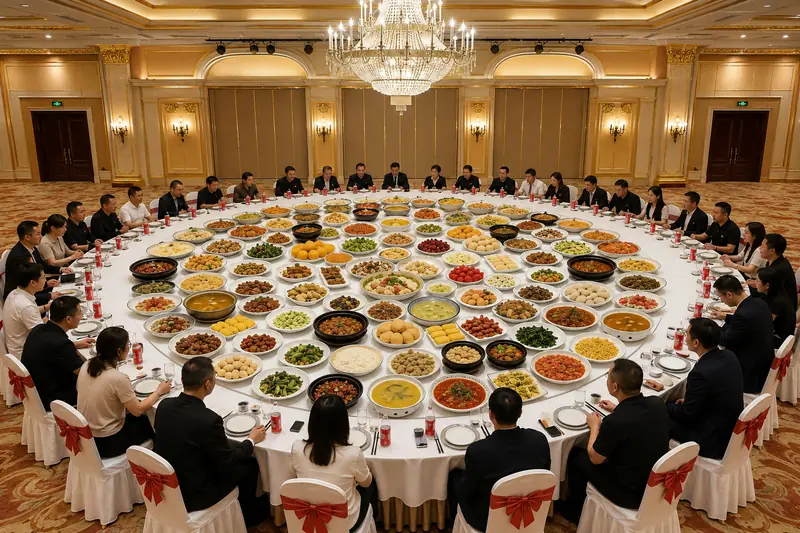
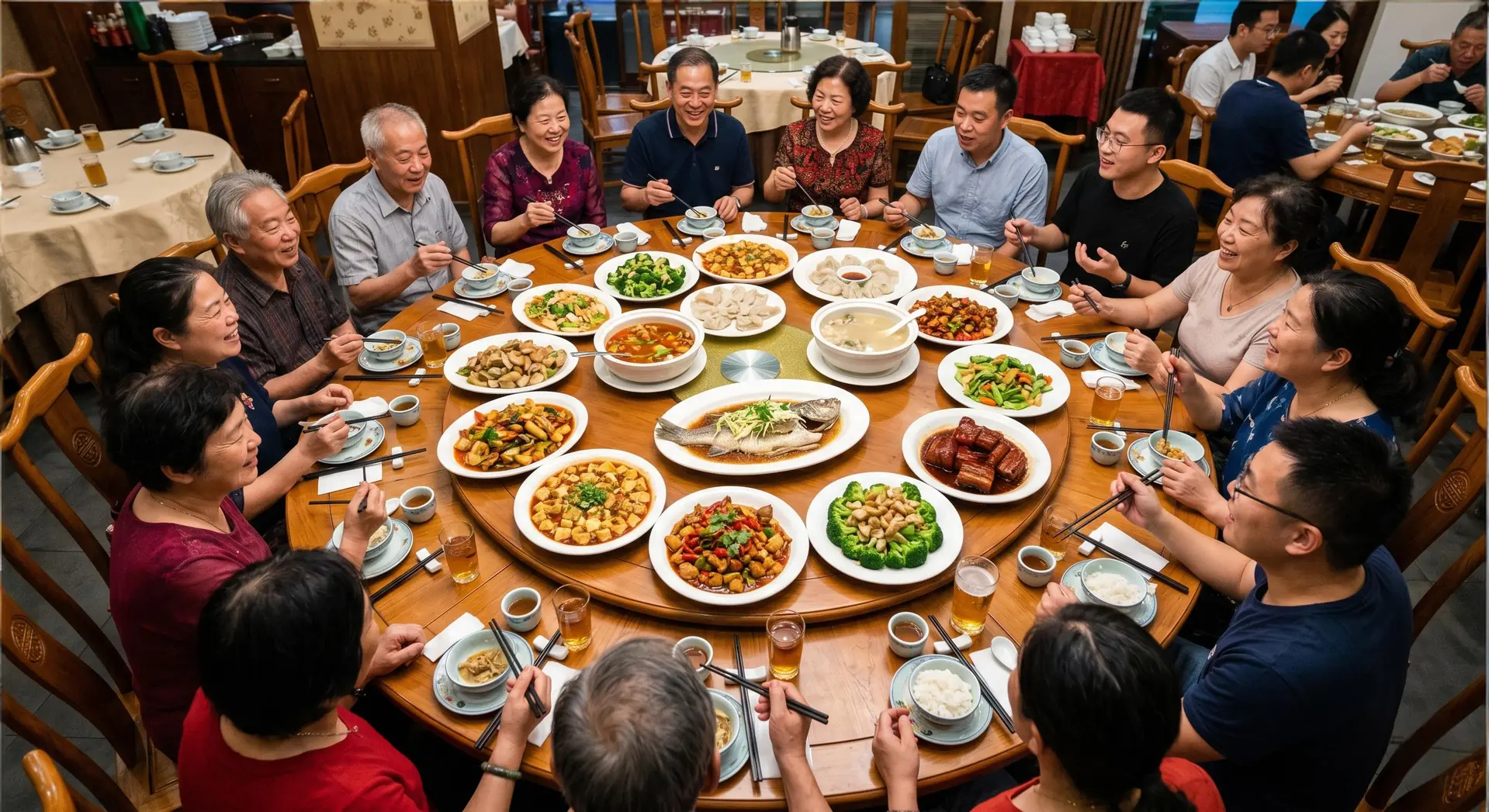
Western meals often arrive as individual portions. Chinese restaurant meals usually arrive as a spread of shared dishes in the center of the table, and each person takes small bites into a personal bowl or plate. This is not a hygiene oversight; it is the social structure of the meal. Eating from the same dishes signals closeness, trust, and group rhythm.
What belongs where
Shared dishes stay in the center; your small bowl or plate is where the bite lands.
What looks rude fastest
Rummaging through a shared plate, moving the dish toward yourself, or spinning the table mid-pick.
Dishes belong to the table
Do not drag your favorite plate closer. Take a small portion, move it to your bowl, and return to the conversation.
Spin gently
The lazy Susan often moves clockwise. Wait until the person beside you finishes picking before you turn it.
Take what is on top
Do not rummage through a dish hunting for the best pieces. Choose before your chopsticks enter the shared plate.
Let the host begin
Wait for the host, eldest person, or most senior person to start eating before you pick up your chopsticks.
If shared dishes make you nervous
Choose set meals, small-portion dishes, individual noodles, rice bowls, dumplings, or personal hotpot formats for your first few meals. You do not need to force yourself through a formal banquet on your first night in China.
Seating, Ordering, and First Bites
Chinese table manners start before the first dish arrives. The safest traveler habit is simple: let the host lead the seat, the order, and the first bite.
Host-led cues
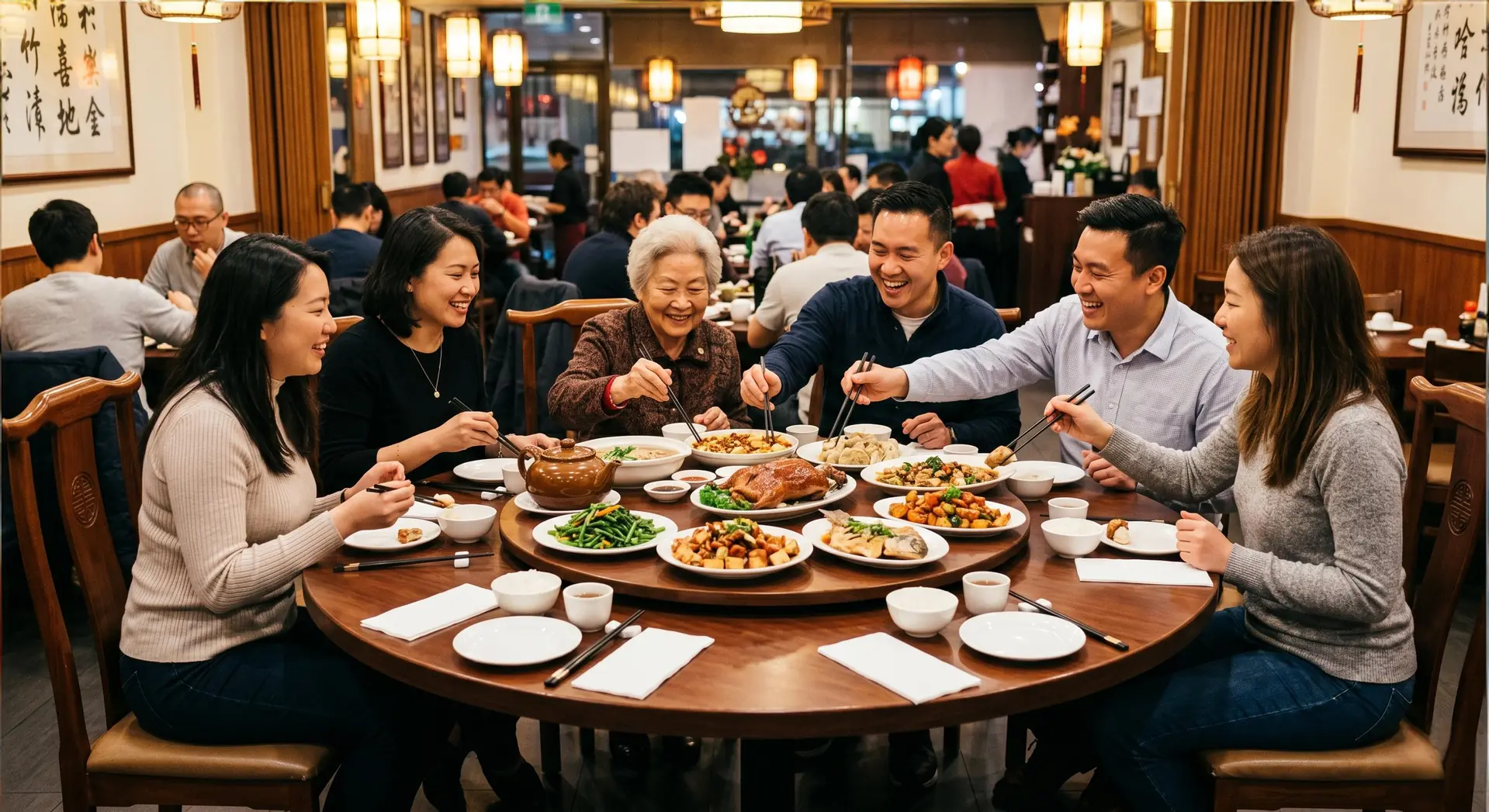
Hosted seating at a glance: at a casual meal, the host usually just points you to a chair. Formal banquets can have a clearer seat order: the host often faces the door, and the important guest is usually seated near the host. When in doubt, wait for the host to wave you to a chair. Asking "Where should I sit?" is always polite.
Safest move
Wait for the host to wave you to a chair before choosing a seat.
Polite question
"Where should I sit?" is always smoother than guessing.
Seating
At a hosted meal, pause before sitting and let the host point you to a seat. This matters most at family meals, business dinners, and formal banquets.
Ordering
The host or most senior person typically orders. If asked what you want, "Whatever you recommend" is often more gracious than building a full spread around your own favorites.
First bites
The host or eldest person picks up chopsticks first. If a host places food in your bowl, taste a bite unless you have an allergy or dietary restriction.
Ordering balance
The practical ordering rule is balance: dishes usually number roughly one per person, plus one or two extra. Six diners often order seven to eight dishes. Cold dishes arrive first, hot dishes follow, and soup often appears near the end. If you want a safer spread, use the balanced Chinese restaurant order guide before you start adding dishes.
Chopstick Rules and Serving Utensils
Three taboos first
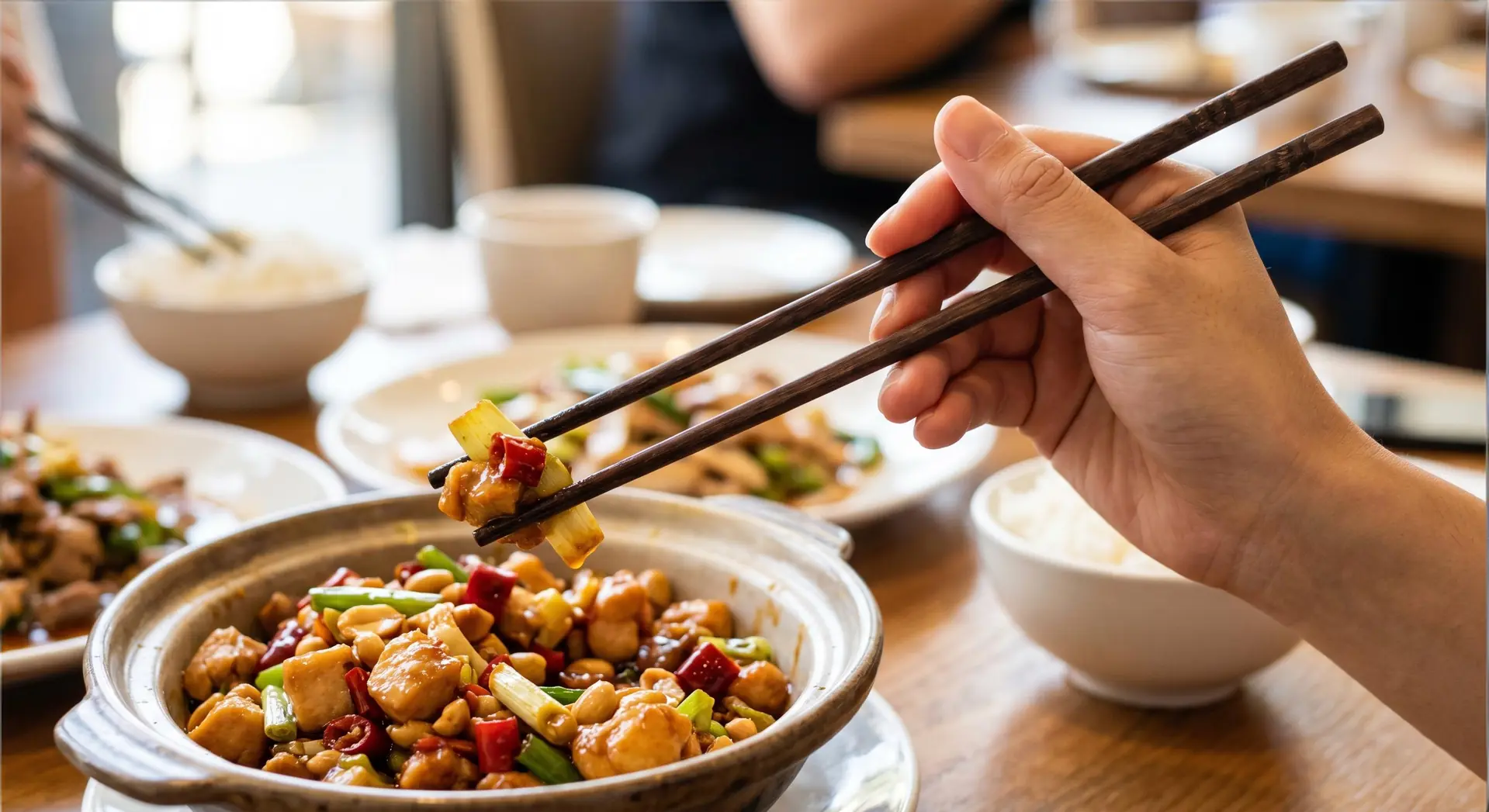
Chopsticks are not just utensils; they carry cultural symbolism. You do not need perfect technique, but a few taboos matter.
Sticking chopsticks upright in rice
This resembles incense sticks used in offerings for the dead. It is the single biggest dining taboo.
Tapping your bowl with chopsticks
This is traditionally associated with begging for food. Avoid drumming even absent-mindedly.
Pointing at people with chopsticks
This reads like pointing a finger. It is rude in almost any context.
Chopstick control
Use chopsticks decisively. Decide what you want before your chopsticks enter the dish. Once your chopsticks touch a piece of food, move it to your bowl instead of putting it back. When you pause, place chopsticks parallel on the bowl rim or chopstick rest rather than crossing them.
Before you reach
Choose the piece before your chopsticks enter the shared plate.
When you pause
Place chopsticks parallel on the bowl rim or chopstick rest rather than crossing them.
Do not spear food
If you cannot grip something, use the spoon. Chopsticks are not forks.
Do not rummage
Poking around for the best piece is one of the fastest ways to draw silent judgment.
Lifting the bowl is fine
Holding a rice bowl close to your mouth is standard practice in many Chinese meals, not bad manners.
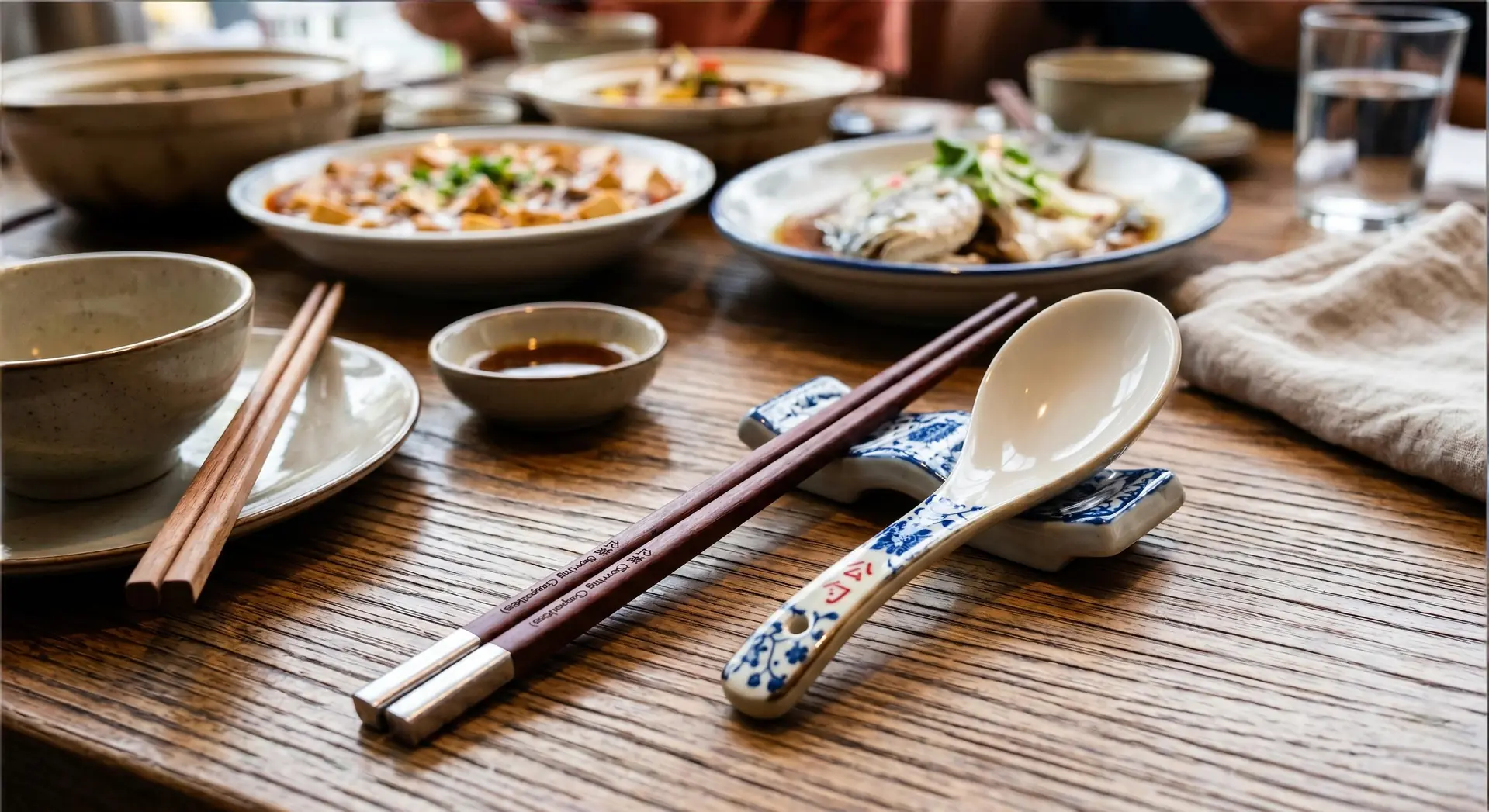
Serving utensils
Many restaurants provide serving chopsticks or communal spoons for shared dishes, especially after China's public-chopsticks campaigns. They may be a different color, length, or placement from your personal pair. Use them to transfer food to your bowl, then eat with your own chopsticks.
Toasting Without Losing Face
Chinese dining culture and alcohol often overlap, especially at formal, business, or family-hosted meals. Baijiu (白酒), a grain-based spirit often around 40-60% ABV, may appear at these tables, while beer is the casual default. You do not need to drink alcohol to be polite; stay in the ritual with tea, water, or a soft drink when alcohol is unsafe or unwanted.
- Raise your glass- When someone toasts you, raise your cup, exchange a brief thanks, and join the moment even if you only sip tea or water.
- Clink lower- Lower your glass rim below the host, elder, or senior person. The polite low-glass dance is part of the etiquette.
- Pace yourself- A full ganbei can mean finishing the glass, but travelers can sip, switch to tea, or use soft drinks when alcohol is unsafe or unwanted.

Pressure release phrases
Not drinking is forgivable; refusing the ritual can feel cold. Join the toast with tea, water, or a soft drink; drain a glass only if you choose to and it is safe. The smooth move is to keep raising your cup when others toast so you stay socially present.
我酒量不好
"I cannot hold my liquor." Say it early; people accept tea or soft drinks more easily before repeated toasts begin.
我明天早起
"I have an early start tomorrow." Useful when you want to keep joining toasts without drinking much.
我在吃药不能喝酒
"I am on medication and cannot drink." Effective and rarely questioned.
我以茶代酒
"I substitute tea for wine." A respected response when pressed repeatedly.
Worst strategy
Refusing to clink at all. Participate with tea if you are not drinking alcohol.
Tea Etiquette and Finger Taps
Tea appears far more often than alcohol in everyday Chinese life. A few small tea habits help you look calm in restaurants, teahouses, and homes. For tea types and easy tea stops, pair this section with the Chinese tea guide.
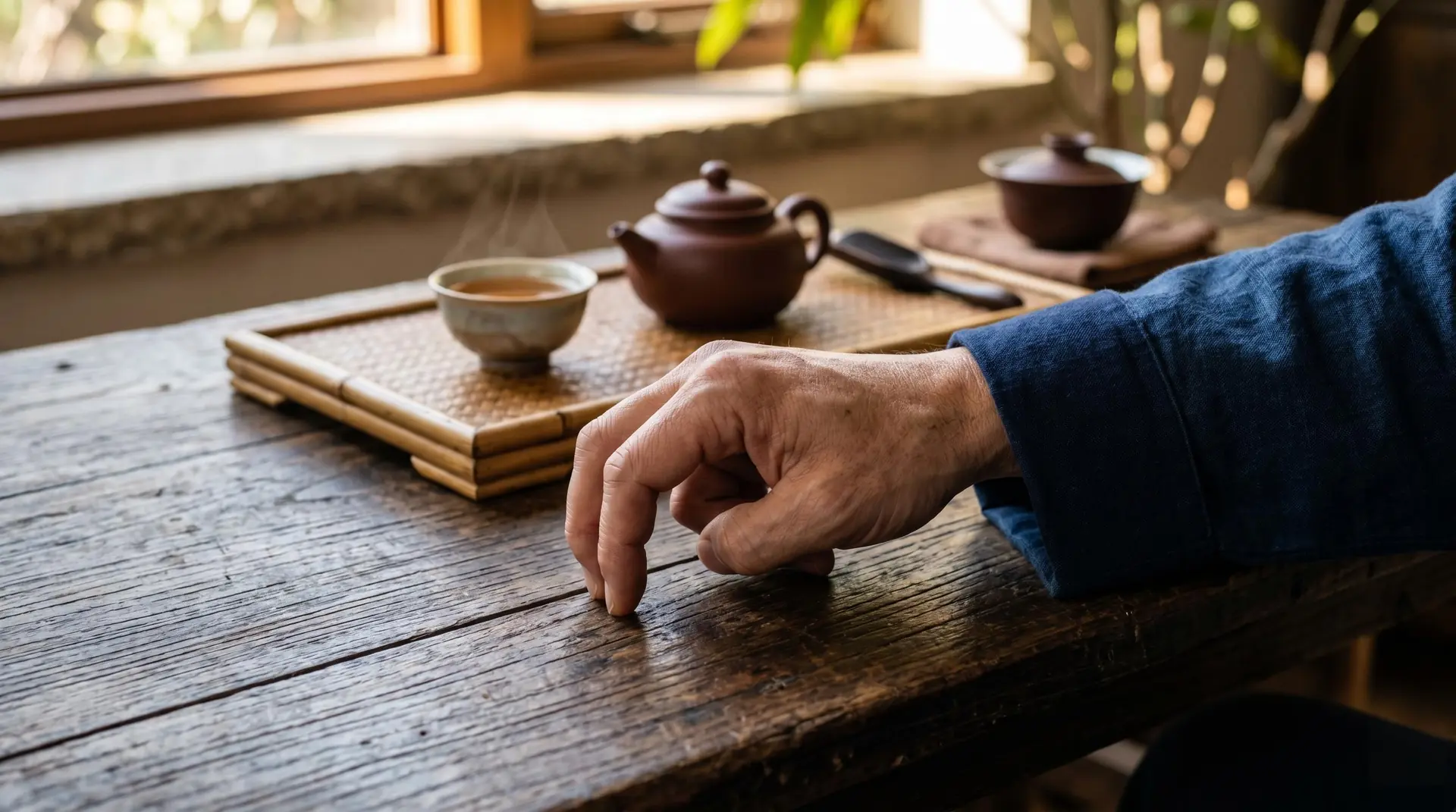
Tea table rhythm
Pour outward first
Younger people often pour for elders, juniors for seniors, and hosts for guests. If you pour, serve others before yourself.
Pour nearby cups first
If you refill tea, pour for the people beside you or elders first, then fill your own cup. It looks natural and polite.
Receive without interrupting
A finger tap lets you thank the person pouring without stopping the table conversation.
Finger tap rule
When someone pours tea for you, tap the table lightly two or three times with your index and middle fingers. It is most familiar in Cantonese yum cha and tea-focused settings; at an ordinary restaurant, a simple "thank you" also works.
Treat the Qianlong story as folklore
The popular origin story says Emperor Qianlong once poured tea for attendants while traveling in disguise, so they tapped the table instead of kneeling. Treat it as folklore and a useful memory hook; the practical point is that finger tapping is common in Cantonese yum cha settings and increasingly recognized elsewhere.
Traditional teahouse cue
In some Chengdu or Sichuan old-style teahouses, an angled gaiwan lid can signal that you want more hot water. It is a local tea-house habit, not a rule for every restaurant.
Simplest traveler move
If you are unsure, call the server or point to the cup and ask for more hot water. Direct requests are more reliable than trying to read every lid position.
Paying, Gifts, and Home Invitations
Money and hospitality can feel more confusing than chopsticks. The rule underneath most of it is face: the host wants to show care, and the guest should show appreciation without turning the meal into a public tug-of-war.
💵Who pays
Among young friends, splitting the bill with the AA system (AA制) is increasingly common. In formal settings, with elders, or at business meals, the person who invited usually pays.
🤝How to offer
Offer once or twice. If the host insists, accept gracefully and say "Next time is on me." Fighting at the table is not smoother than gratitude.
🎁Safe gifts
For a home invitation, packaged fruit, milk, yogurt, wine, or a known host's preferred alcohol are practical choices. Even-numbered quantities are preferred.
🧧Wedding banquets
At wedding banquets, a red envelope (红包) may be expected. Amounts vary sharply by city, relationship, venue, and whether you attend alone or as a couple, so use the Chinese wedding etiquette and red envelopes guide rather than guessing at the table.
🚫Avoid gifting
Skip clocks, pears, green hats, white or black wrapping, and four-item sets. The problem is wordplay and funeral symbolism, not the objects themselves.
The cleanest way to treat
If you truly want to pay, tell the server in advance or slip away to the counter before anyone notices. Pulling out your wallet at the table and arguing usually creates more performance than warmth. For the exact phrases, use the waiter and bill guide.
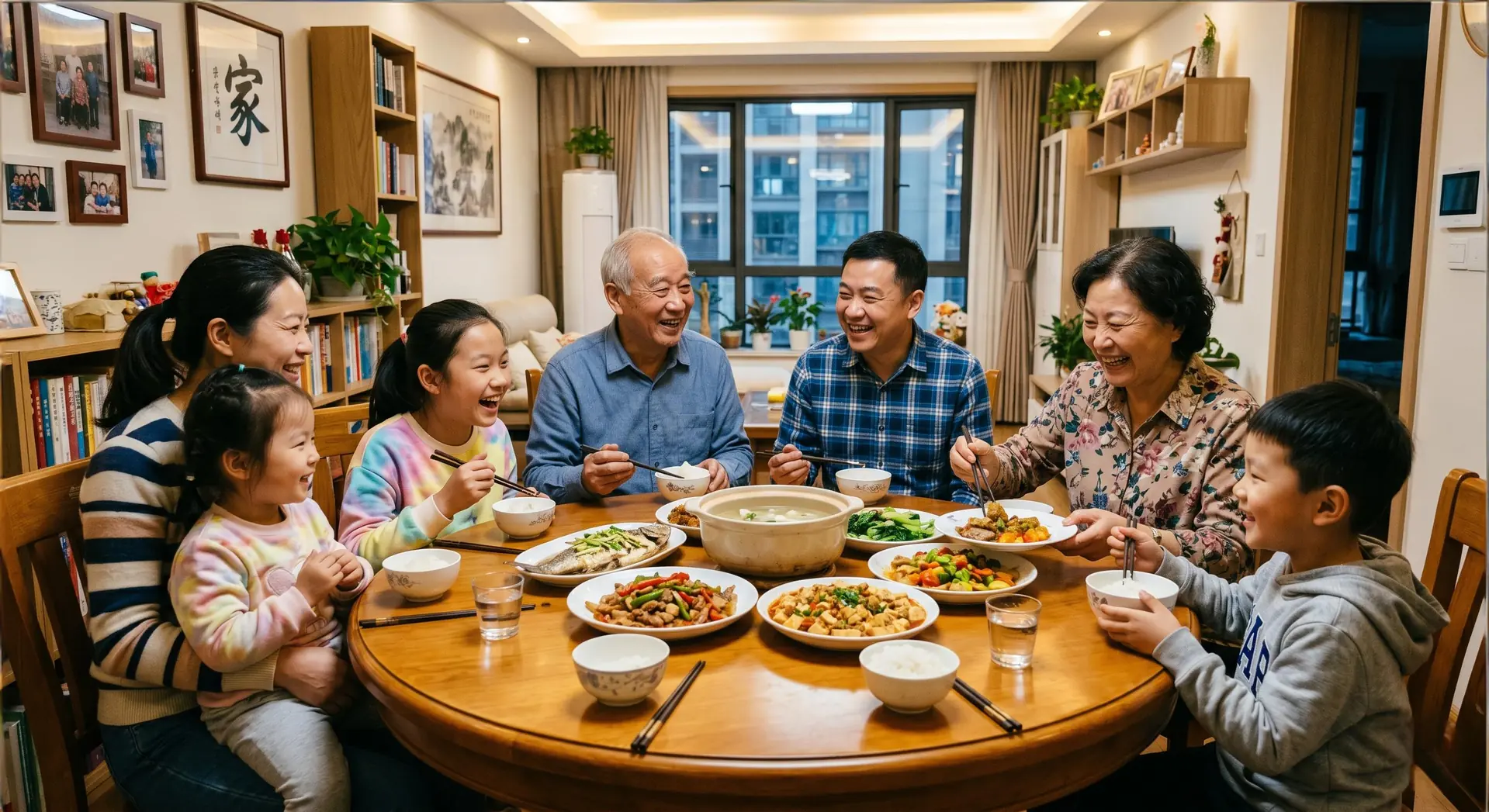
Home invitation
A Chinese home invitation is a meaningful gesture. It often signals the relationship has moved from acquaintance toward "one of us" (自己人). Remove your shoes at the door, accept slippers if offered, ask once if you can help in the kitchen, and try a little of everything unless you have a real dietary reason not to.
Hotpot, BBQ, and Banquets
Different meal formats relax or tighten the rules. Hotpot is collaborative, barbecue is casual, and banquets are choreographed. If you are planning a spicy meal, use the Sichuan and Chongqing hotpot guide for sauce-bar, broth, and pacing details.
Hotpot
Interactive and shared
Use communal tools for raw items, cook what you add, and keep personal chopsticks out of the broth whenever possible.
BBQ skewers
Casual and direct
Eat from the bamboo skewer, add chili or cumin from the table, and expect beer to be the common pairing.
Formal banquets
Structured and slower
Dress slightly up, pace yourself through 8-12 courses, and expect more organized rounds of toasting.
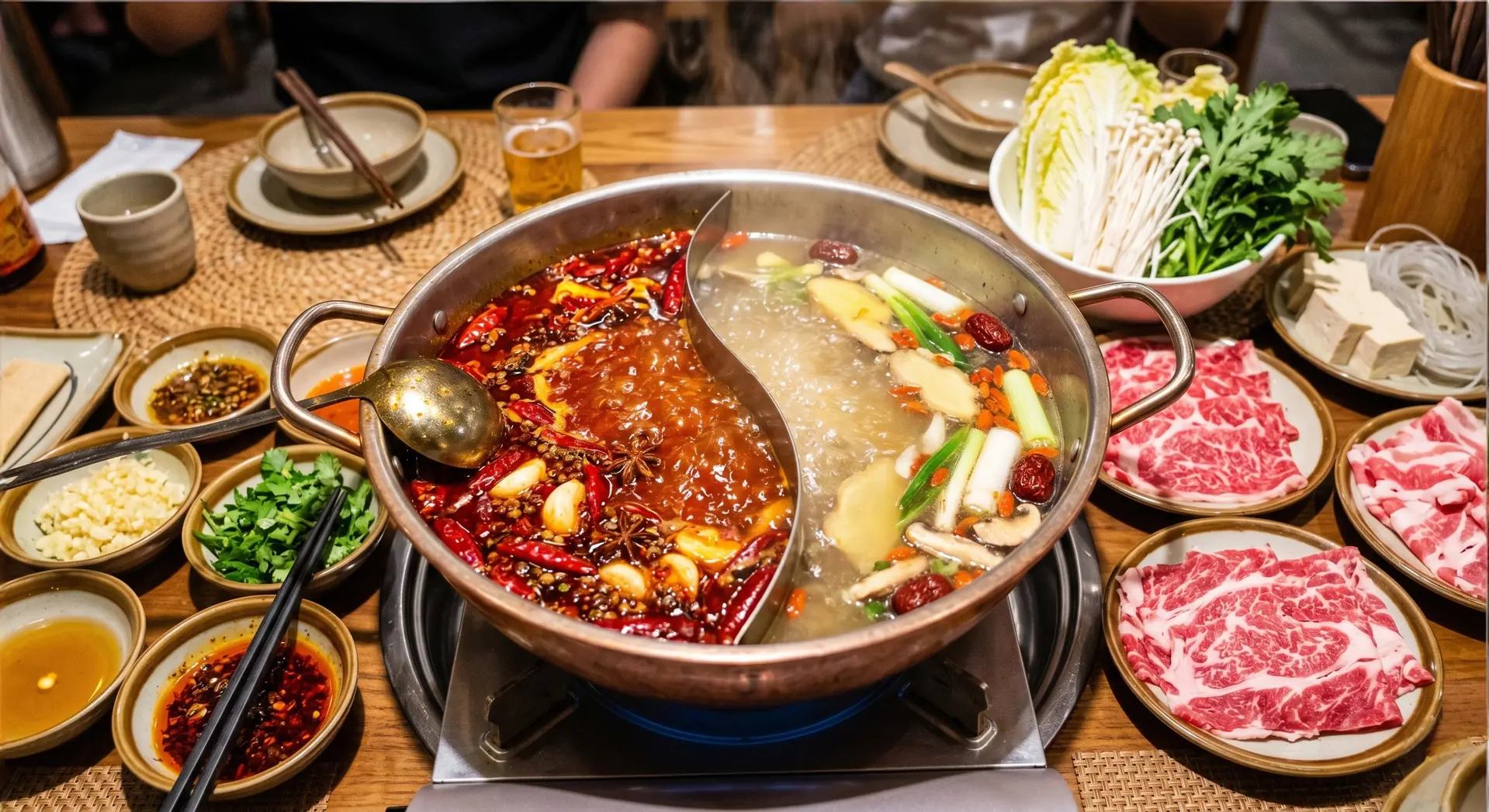
Hotpot rhythm
For first-timers, a split "mandarin duck pot" (鸳鸯锅) gives you half spicy broth and half mild broth. Thin-sliced meat can cook in 10-45 seconds, while vegetables, tofu, mushrooms, and glass noodles usually need 2-5 minutes. Most hotpot restaurants have a self-serve sauce bar; northern classics lean sesame paste, while Sichuan versions often use sesame oil, garlic, and oyster sauce.
Recover From Common Mistakes
Most etiquette mistakes are repairable. The smoother move is not a dramatic apology; it is a small correction, a smile, and a return to the table rhythm.
🚪Leaving
Wait for the host or eldest person to stand first. Rising too early can imply you want to escape.
👏Complimenting
Praise a specific dish instead of giving a generic "that was great." It gives the host something concrete to feel proud about.
🍊After the last bite
Do not rush away. Post-meal conversation over tea or fruit is part of the experience.
Useful Phrases at the Table
| English | Chinese | Pinyin | Say It Like… |
|---|---|---|---|
| I am full, thank you | 我吃饱了,谢谢 | wo chi bao le, xiexie | Wuh chir bow luh, shieh-shieh |
| This is really delicious | 这个真好吃 | zhege zhen hao chi | Juh guh jun how chir |
| I toast with tea instead of wine | 我以茶代酒 | wo yi cha dai jiu | Wuh yee chah dye joe |
| Sit wherever you like | 随便坐 | suibian zuo | Sway-bee-en zwoh |
🥢Chopsticks in the rice
Pull them out and lay them flat on the bowl. No speech needed; over-explaining makes it more awkward.
🍽️Refused the host's food
"Thank you, I will try it in a moment" is better than pushing the bowl away. If you have allergies or dietary restrictions, mention them early.
🍵Poured your own tea first
Next round, pour for the person beside you before yourself. The gesture resets the impression immediately.
💳Fought to pay and won
Congratulations; you now owe a return invitation. Accept gracefully next time the other party treats you.
Bonus: clinked glasses too high. Lower your glass next time. This is the lowest-stakes mistake on the list; most Chinese people do not hold foreign guests to this rule.
Frequently Asked Questions
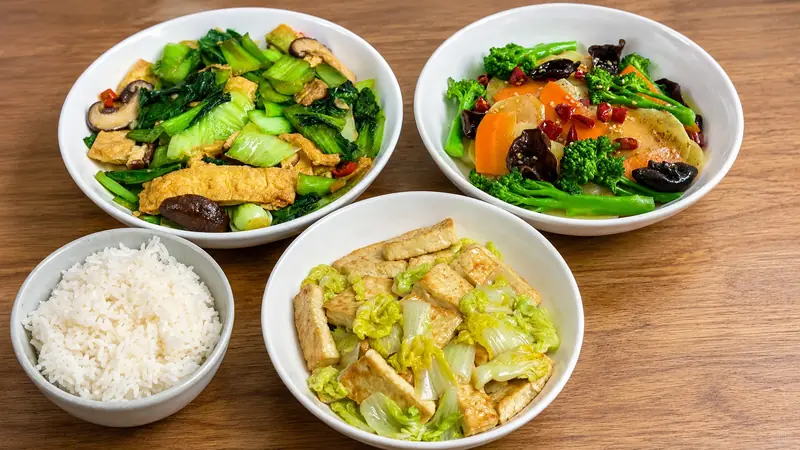
Strict vegetarian or vegan traveler? Restaurant staff may hear "no meat" as no visible meat pieces, not no lard, broth, oyster sauce, dried shrimp, or shared cooking tools. Check the hidden pork, lard, broth, and oyster sauce guide before relying on a normal menu.
Not at all; it is fine to ask. Tourist-facing, hotel, and higher-end restaurants often have forks, but small local places may not. A spoon usually works for rice, noodles, soups, and soft dishes; carry a travel utensil if you strongly prefer one.
Sources Checked
Sources checked for this guide
- ChinaCulture and China Daily checked chopstick etiquette, including upright chopsticks, tapping bowls, pointing, spearing food, and serving chopsticks: ChinaCulture chopstick etiquette and ChinaCulture table manners
- Shanghai Municipal Government table-etiquette guide checked shared-dish habits, personal chopsticks, seating hierarchy, and face-culture framing: Guide to table etiquette in China
- China Daily checked baijiu alcohol range and formal drinking context: The essential guide to baijiu
- China Daily and govt.chinadaily.com.cn checked Cantonese yum cha tea-tapping etiquette and the Qianlong folklore context: Food that touches the heart and Yum Cha
- China Daily checked gift-giving taboos, including clocks, unlucky fours, wrapping colors, and green hats: The art of giving to Chinese
Beyond This Guide
Dining etiquette helps once you are already at the table. Pair it with food safety, ordering language, dietary planning, and region-specific food guides so the whole meal goes more smoothly.
Ordering phrases
Use food, shopping, and directions language when restaurant conversation gets stuck.
Dietary needs
Plan food allergies and dietary restrictions before you sit down.
Safety basics
Check food safety and drinking water before street food, ice, and raw items.
Tea-table practice
See the Cantonese yum cha guide for a real dim sum setting.
City context
Apply these etiquette rules with the Beijing food guide.
- Where Do Bones Go at a Chinese Table? — handle shells, fish bones, and table scrap plates politely without awkwardness
© gochinafreely.com — Original guide by Go China Freely.