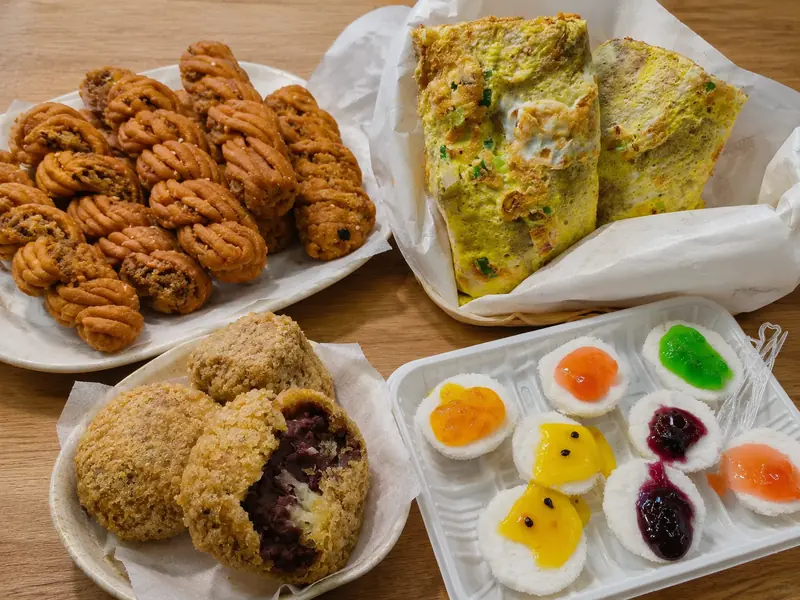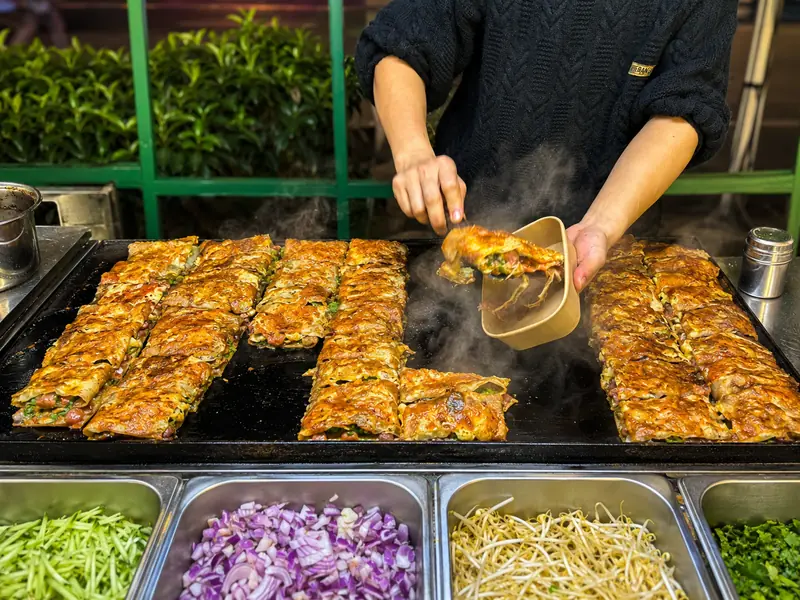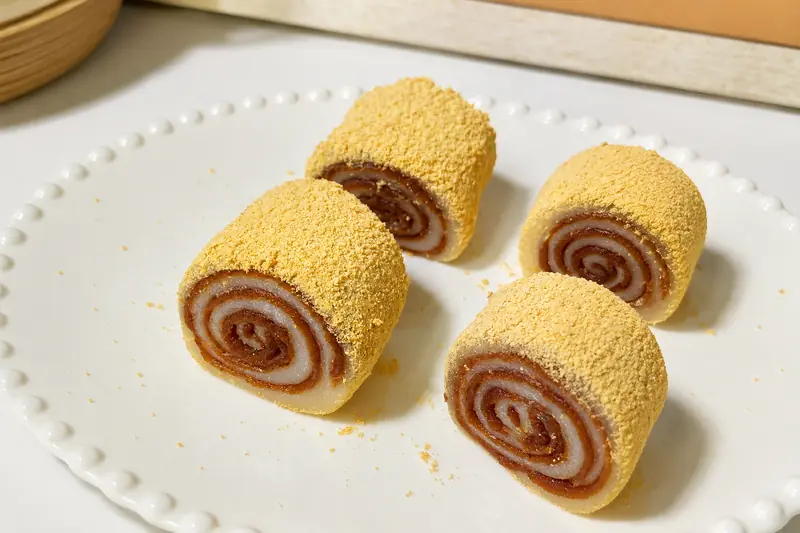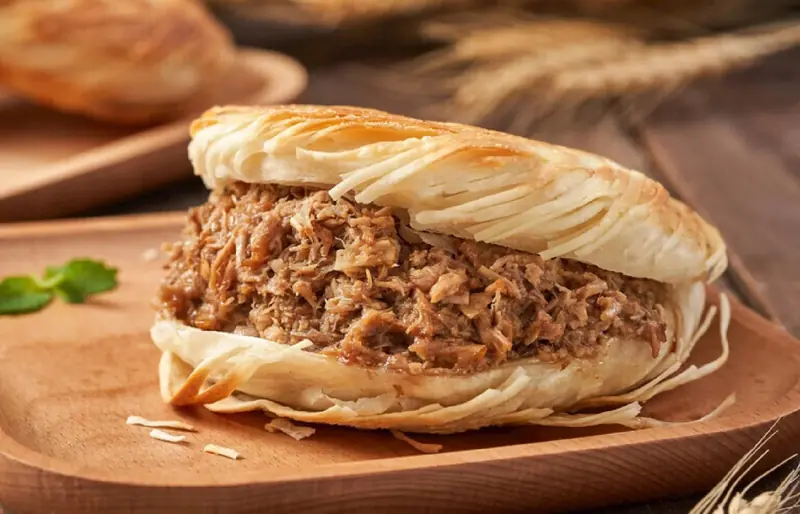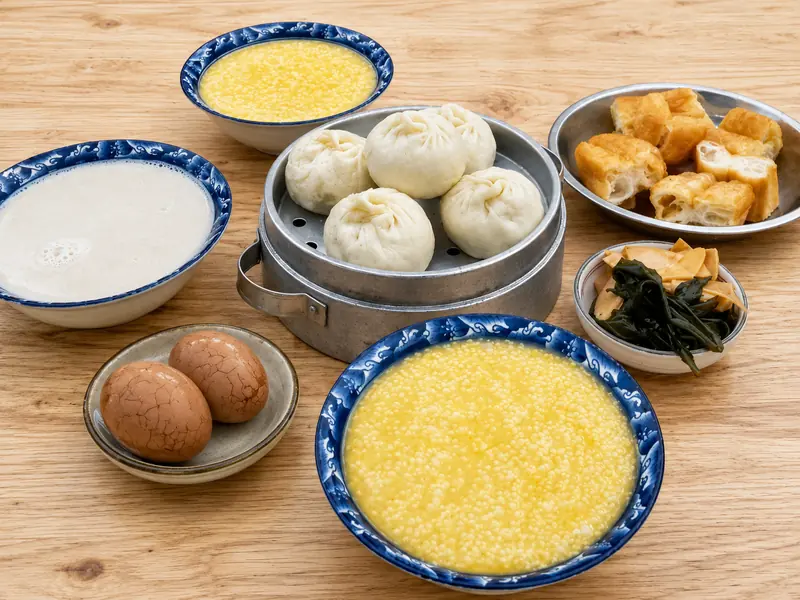
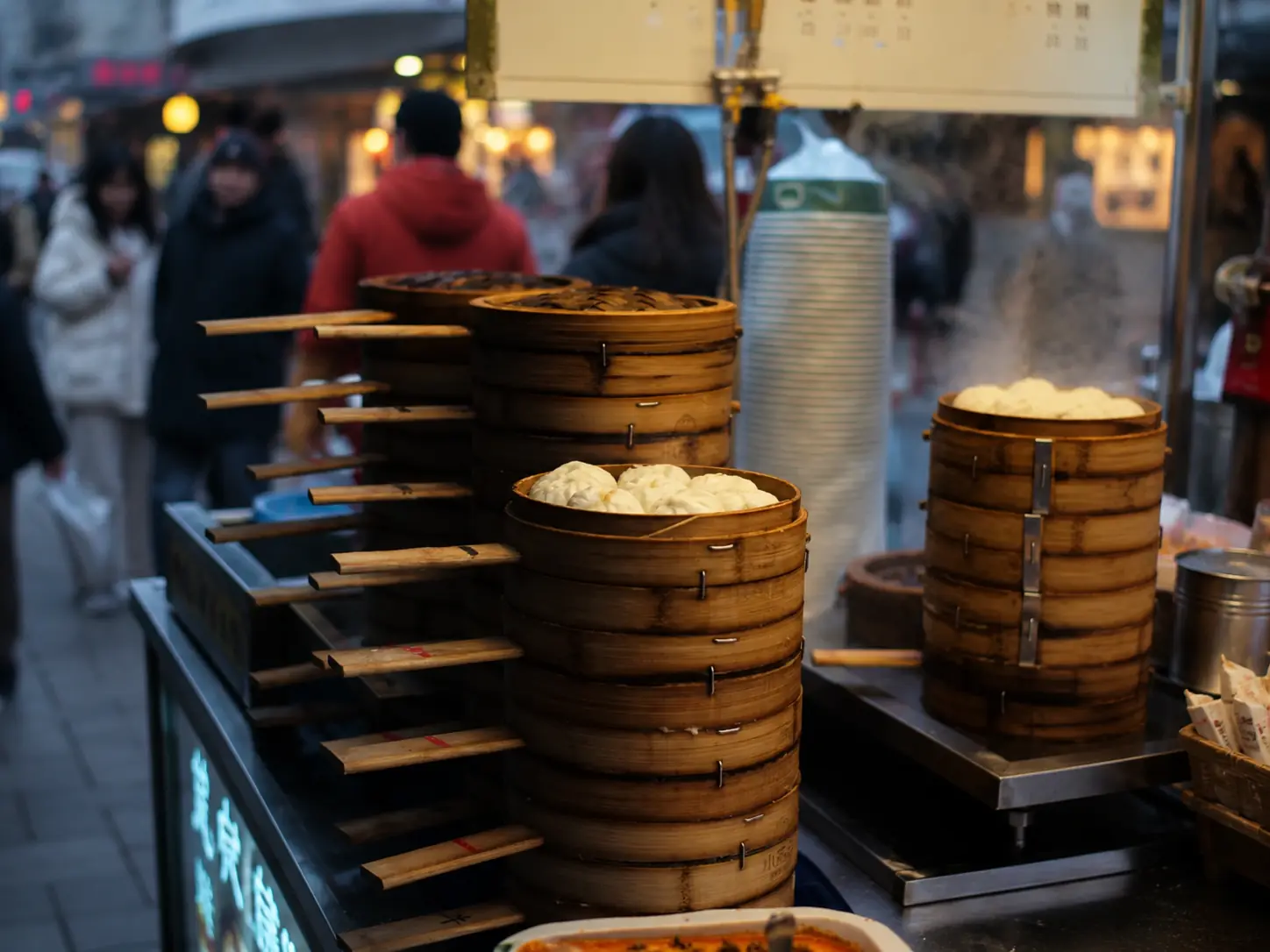
Baozi (包子) are one of China's easiest breakfasts to recognize before you can read the menu: stacked steamers, soft white buns, a quick queue, and people leaving with warm paper bags. They are cheap, filling, fast, and common near residential streets, metro exits, market edges, office streets, and stations. This guide keeps the focus on everyday steamed baozi, not soup dumplings or pan-fried Shanghai buns.
Executive Summary
What this guide covers
Everyday baozi identity, common fillings, baozi vs mantou and dumplings, how to order breakfast buns, where to find them, and diet notes.
Best first order
Start with one or two savory baozi, such as pork and cabbage or vegetable mushroom, plus soy milk, congee, or a tea egg if you want a fuller breakfast.
Key ordering cue
Baozi, mantou, jiaozi, xiaolongbao, shengjianbao, and English-menu bao buns are different orders. The name matters when you point, ask, or search.
Morning
Best timing
Wheat dough
Standard wrapper
Savory or sweet
Common fillings
Takeaway
Easy travel breakfast
China's Most Practical Steamed Breakfast Bun
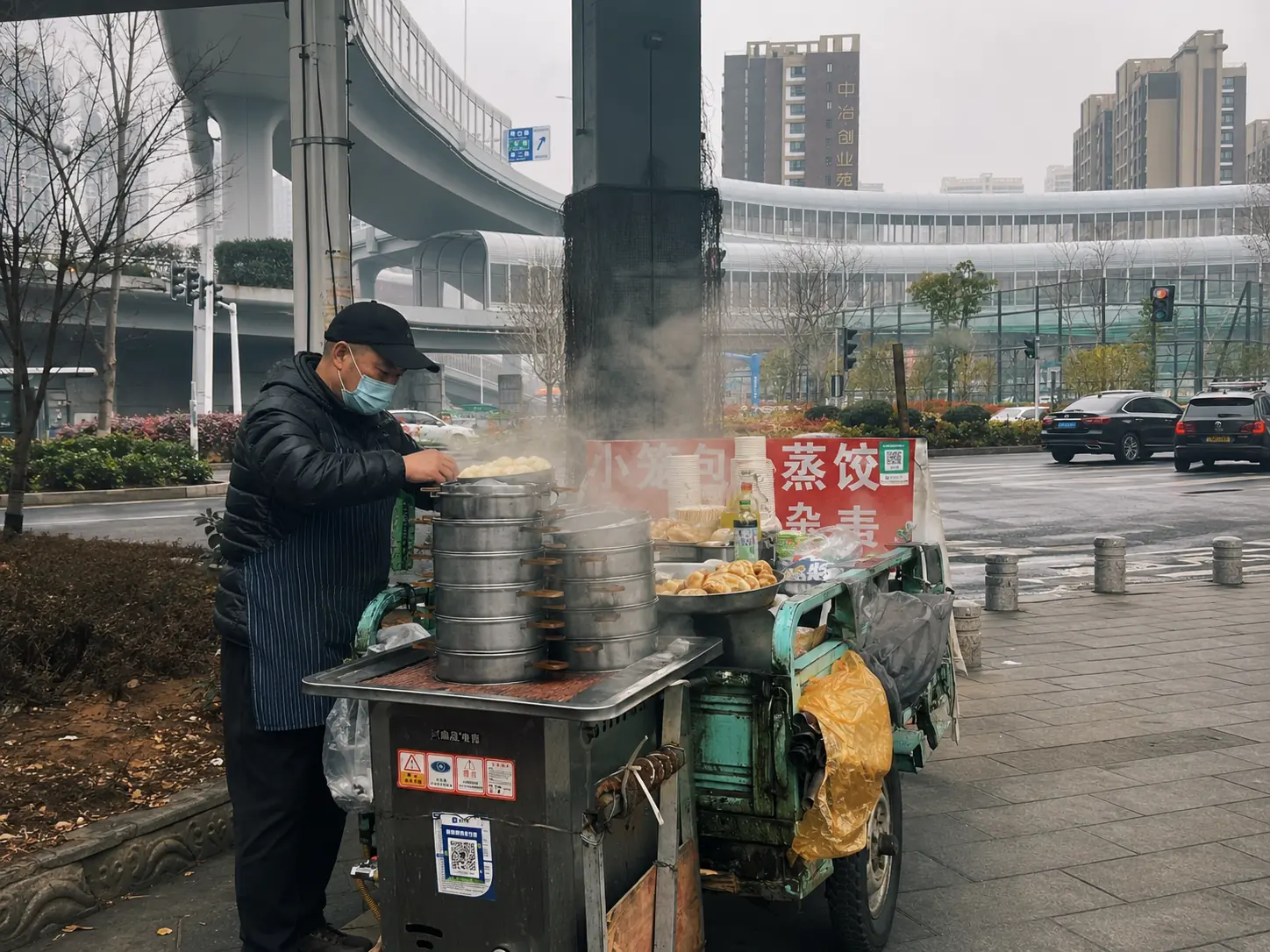
Baozi are steamed, filled buns made with wheat dough and a savory or sweet center. For travelers, the simplest version is exactly what a morning needs: warm, portable, filling, and easy to point at. Most shops sell them by the piece from hot steamer drawers; fillings are shown on a board, written on small labels, or called out by staff.
For this guide, baozi means the ordinary steamed breakfast bun, not every food with the character bao (包) in its name. English menus can flatten different foods into bun, dumpling, or bao, but a breakfast-shop baozi is usually thicker, fluffier, and more bread-like than a dumpling; it is less delicate than xiaolongbao and not crisp-bottomed like shengjianbao.
Use baozi as a breakfast fallback
When you are tired, short on Chinese, or heading to a train station, baozi are one of the easiest local breakfasts to buy quickly. Look for a shop with hot steamers and steady morning turnover.
Baozi vs Mantou, Dumplings, and Bao Buns
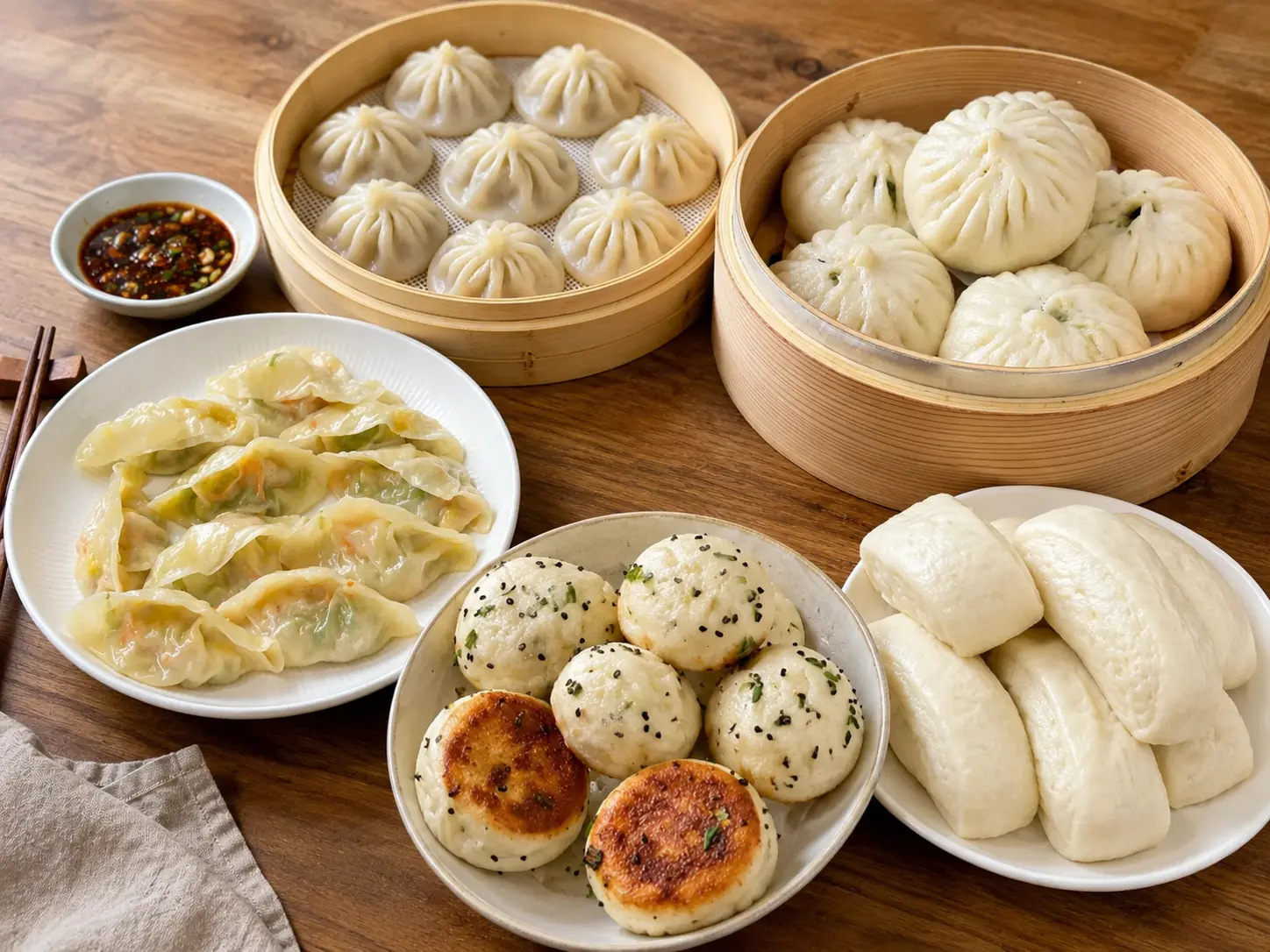
In China, these are separate orders. Baozi are filled steamed buns. Mantou (馒头) are usually plain steamed bread with no filling. Jiaozi (饺子) are dumplings with thinner, unleavened wrappers. Xiaolongbao (小笼包) are soup-filled steamed buns that need a spoon. Shengjianbao (生煎包) are pan-fried Shanghai buns with a crisp bottom.
English-language bao buns usually mean folded gua bao-style steamed bread holding pork belly or other fillings like a sandwich. That is useful food, but it is not the same format as a sealed breakfast baozi from a Chinese steamer.
| Name | Chinese | Key Difference | Traveler Cue |
|---|---|---|---|
| Baozi | 包子 | Filled steamed bun with fluffy wheat dough | Breakfast window, steamer drawer, takeaway bag |
| Mantou | 馒头 | Plain steamed bread, usually no filling | Staple side, not a stuffed bun |
| Jiaozi | 饺子 | Thin dumpling wrapper, usually boiled, steamed, or fried | Plate of dumplings with dipping sauce |
| Xiaolongbao | 小笼包 | Small soup-filled steamed buns | Use a spoon; beware hot broth |
| Shengjianbao | 生煎包 | Pan-fried and steamed Shanghai buns | Crisp bottom, sesame, scallions |
| Gua bao | 刈包 / 割包 | Folded steamed bread used like a sandwich | Often called bao buns in English |
Baozi Fillings to Order on Your First Try
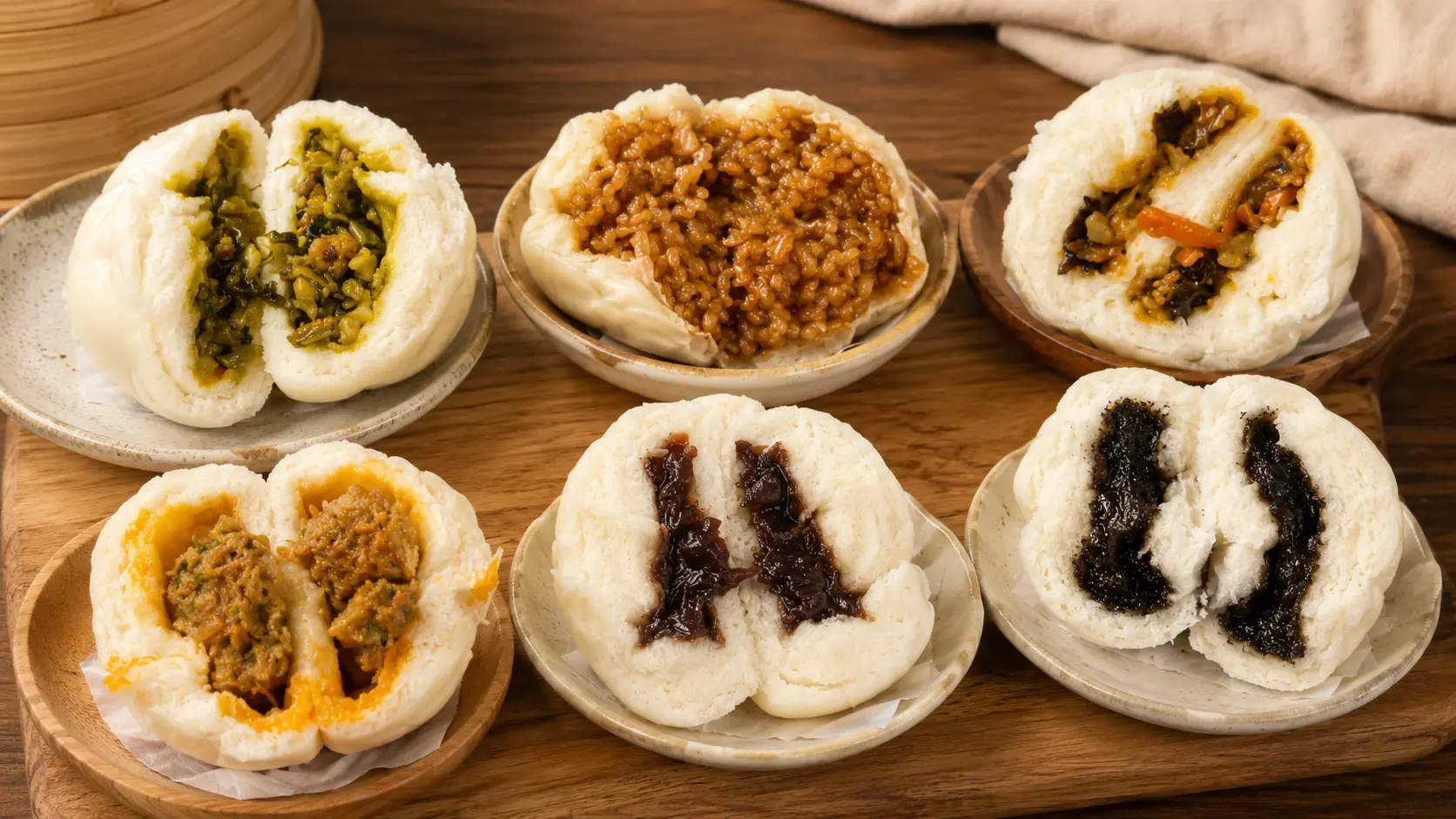
The easiest first order is one or two buns from the freshest batch, then buy more if you like the filling. Pork and cabbage is the classic comfort choice in many northern-style shops. Pork and scallion is stronger. Beef or lamb appears in some northern, halal, and regional contexts. Vegetable, mushroom, egg-and-chive, red bean, sesame, and custard versions can be excellent, but ingredients vary by shop.
| Filling | Chinese Menu Clue | Flavor | Ordering Note |
|---|---|---|---|
| Pork and cabbage | 猪肉白菜 | Juicy, mild, familiar first order | Good first savory choice if you eat pork. |
| Pork and scallion | 猪肉大葱 | Stronger northern breakfast flavor | More aromatic than pork and cabbage. |
| Vegetable or mushroom | 素 / 香菇 / 青菜 | Lighter, often still savory and oily | Ask clearly if you are vegetarian or vegan. |
| Beef or lamb | 牛肉 / 羊肉 | Richer, often found in northern or halal contexts | Use a clearly marked halal shop if halal handling matters. |
| Red bean or sesame | 豆沙 / 芝麻 | Sweet breakfast or snack bun | Often eaten as a sweet breakfast or snack. |
| Char siu bao | 叉烧包 | Cantonese sweet-savory barbecue pork bun | More Cantonese dim sum than mainland breakfast counter. |
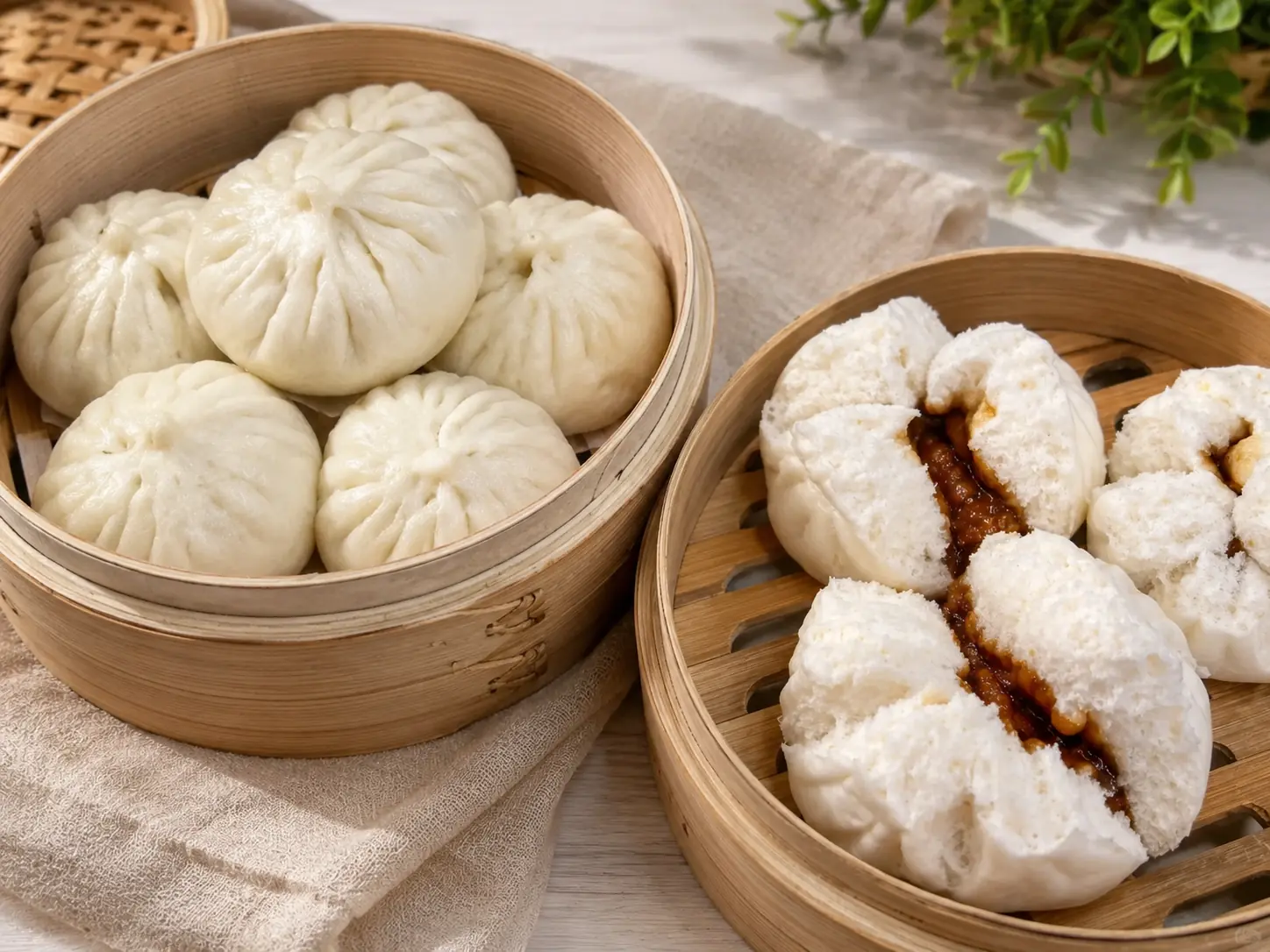
The Cantonese version many English speakers know is char siu bao (叉烧包). It belongs more to a dim sum or Cantonese bakery context, with soft buns and sweet-savory barbecue pork filling. It is a wonderful bao style, but it should not define every baozi you meet in China; ordinary breakfast shops usually sell simpler pork, vegetable, sweet, beef, lamb, or regional fillings.
Decision shortcut
What should I order first?
I want the easiest savory bun
Pork and cabbage baozi, plus soy milk or congee.
I avoid pork
Look for beef, lamb, egg-and-chive, mushroom, or vegetable buns, then confirm the filling.
I want something sweet
Try red bean, sesame, custard, or milk-yellow buns if the shop sells them.
I am unsure
Point at the freshest batch and order one or two first. Repeat only after tasting.
How to Order a Baozi Breakfast
Baozi shops move quickly, but the order logic is simple. Choose the filling, say or show the number, decide whether to eat there or take away, then add a drink or side if you want a fuller breakfast.
- Look at the steamer or board- Labels are not always clear, so point if needed and watch what locals are buying.
- Buy by the piece- Order one or two first. Baozi are filling, especially if you are also trying other breakfast foods.
- Add a normal breakfast side- Soy milk, congee, tea eggs, tofu pudding, or millet porridge make a fuller breakfast.
- Eat it hot- Fresh baozi taste soft and steamy. Takeaway buns get denser as they cool.
- Repeat only what works- If the filling is too oily, sweet, or unfamiliar, change fillings before buying more.
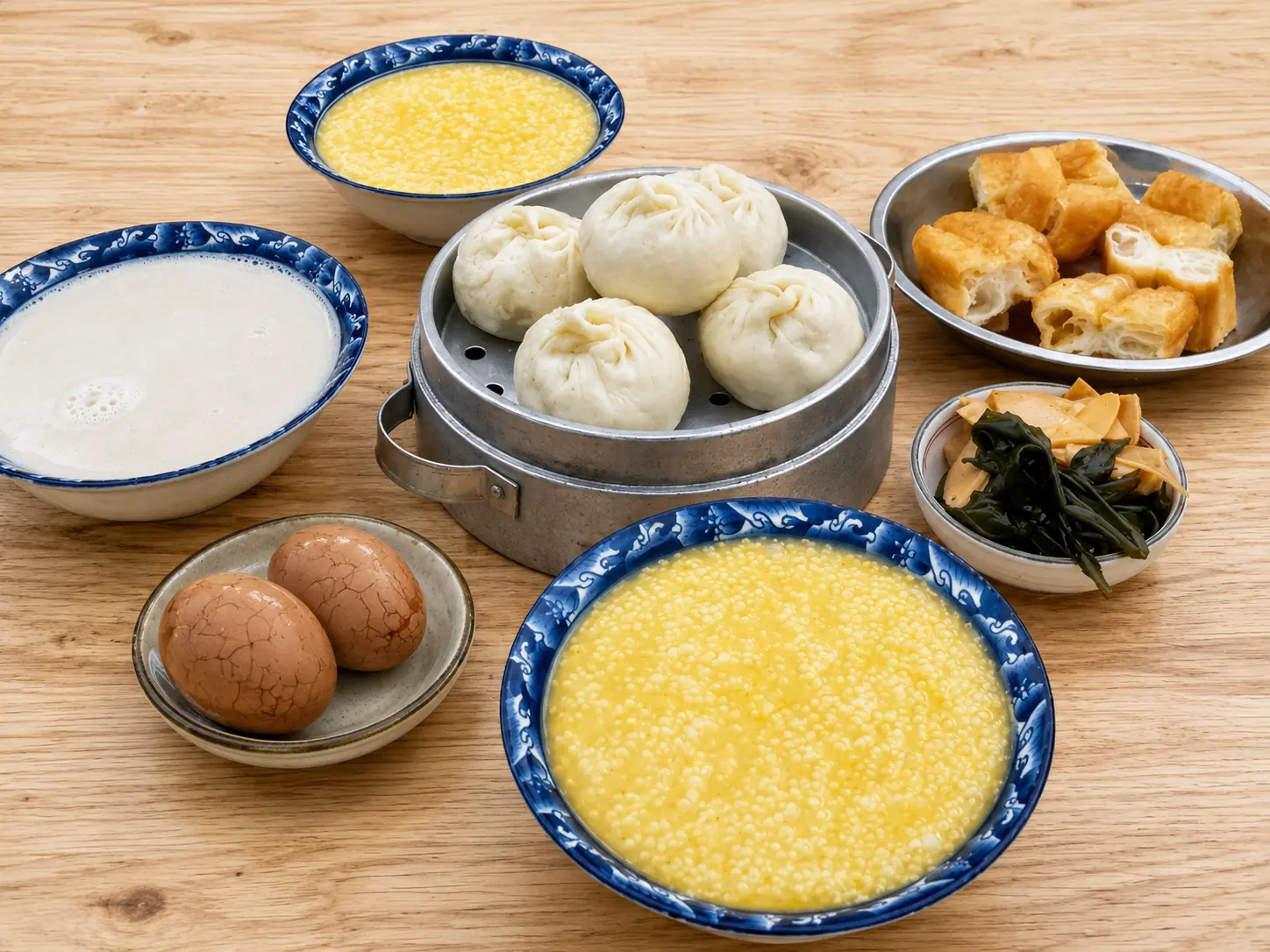
The best add-ons are simple: soy milk, congee, tea eggs, tofu pudding, or millet porridge. If you are heading into a museum, train, or taxi, baozi travel better than fried dough or soup dumplings, but eat them soon; steam softens the skin as they sit in the bag.
Open hot or unfamiliar buns first
Baozi fillings can be hot, juicy, sweet, spicy, oily, or unexpectedly meaty. Tear the first bun slightly if you need to check ingredients or let steam escape.
Where Travelers Can Find Good Baozi
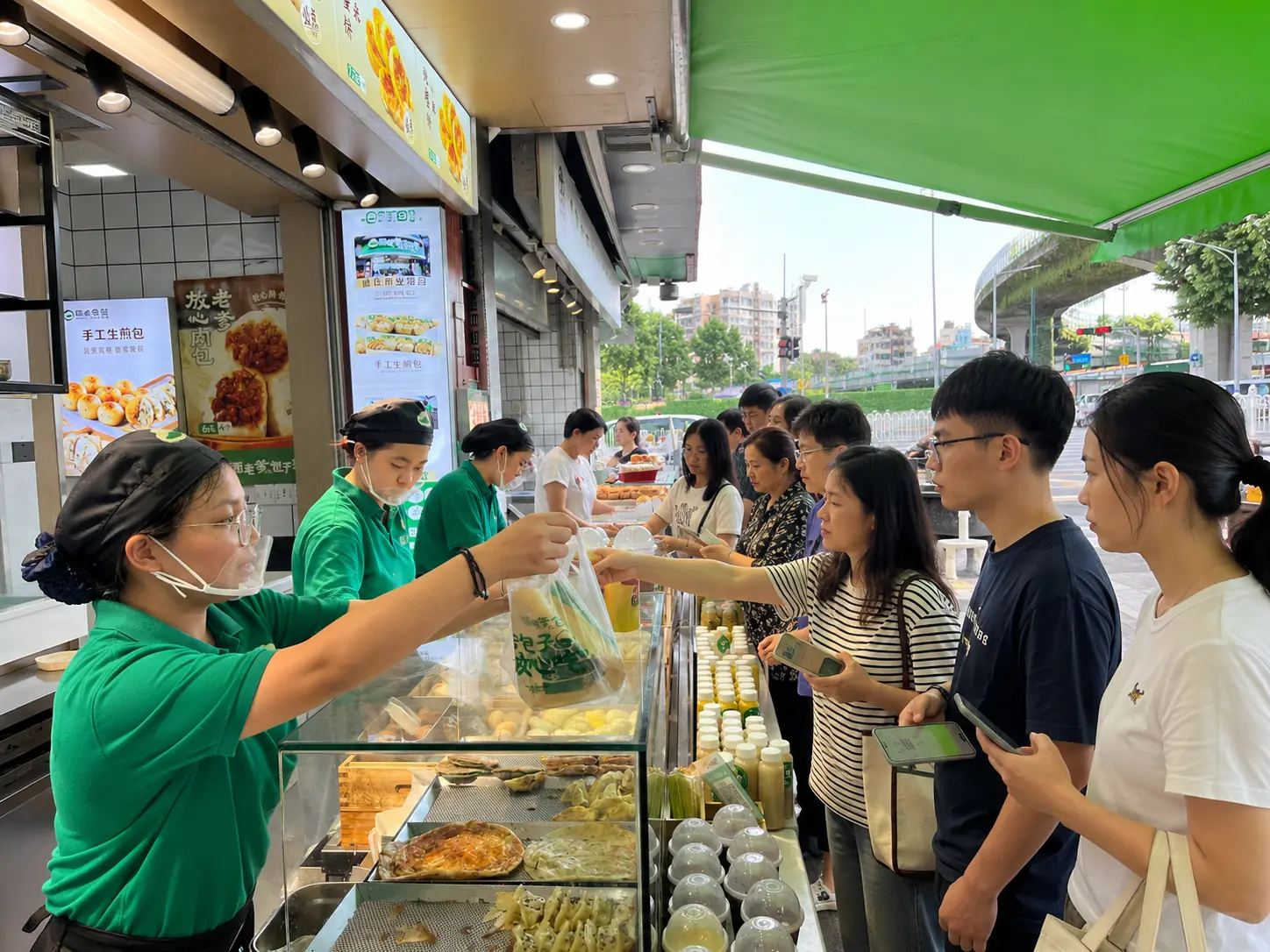
For everyday baozi, location type matters more than famous-shop chasing. Look near residential streets, wet market edges, metro exits, bus stops, office streets, and station-area breakfast rows. Hot steamers plus steady morning turnover is the best sign.
Neighborhood Baozi Shops
Small baozi shops are the most useful version for travelers. They often have no English menu, but the display is visible, the order is fast, and you can point. Choose places where the steamer opens often and the buns do not sit around cooling.
Beijing Breakfast Examples
Beijing (北京) is a helpful first city for practical baozi. Qingfeng Baozi is a recognizable local chain, useful when you want a clear counter-service shop rather than a mystery steamer. Huguosi Snacks (护国寺小吃) is another old-Beijing breakfast context where baozi can sit beside soy milk, congee, fried liver, and other local snacks.
Tianjin Goubuli Context
Tianjin (天津) is the famous-brand reference point because of Goubuli (狗不理). It is worth knowing as a Tianjin specialty, but you do not need to chase the most famous name for a good baozi breakfast. A busy neighborhood shop near your route is usually the better traveler choice.
Everyday First Try
Neighborhood baozi shop
Best for a fast, cheap, normal breakfast near your hotel or metro stop.
Best when you want a recognizable counter-service baozi shop in Beijing.
Best when you want baozi beside a broader local breakfast spread.
How to Eat Baozi Without Surprises
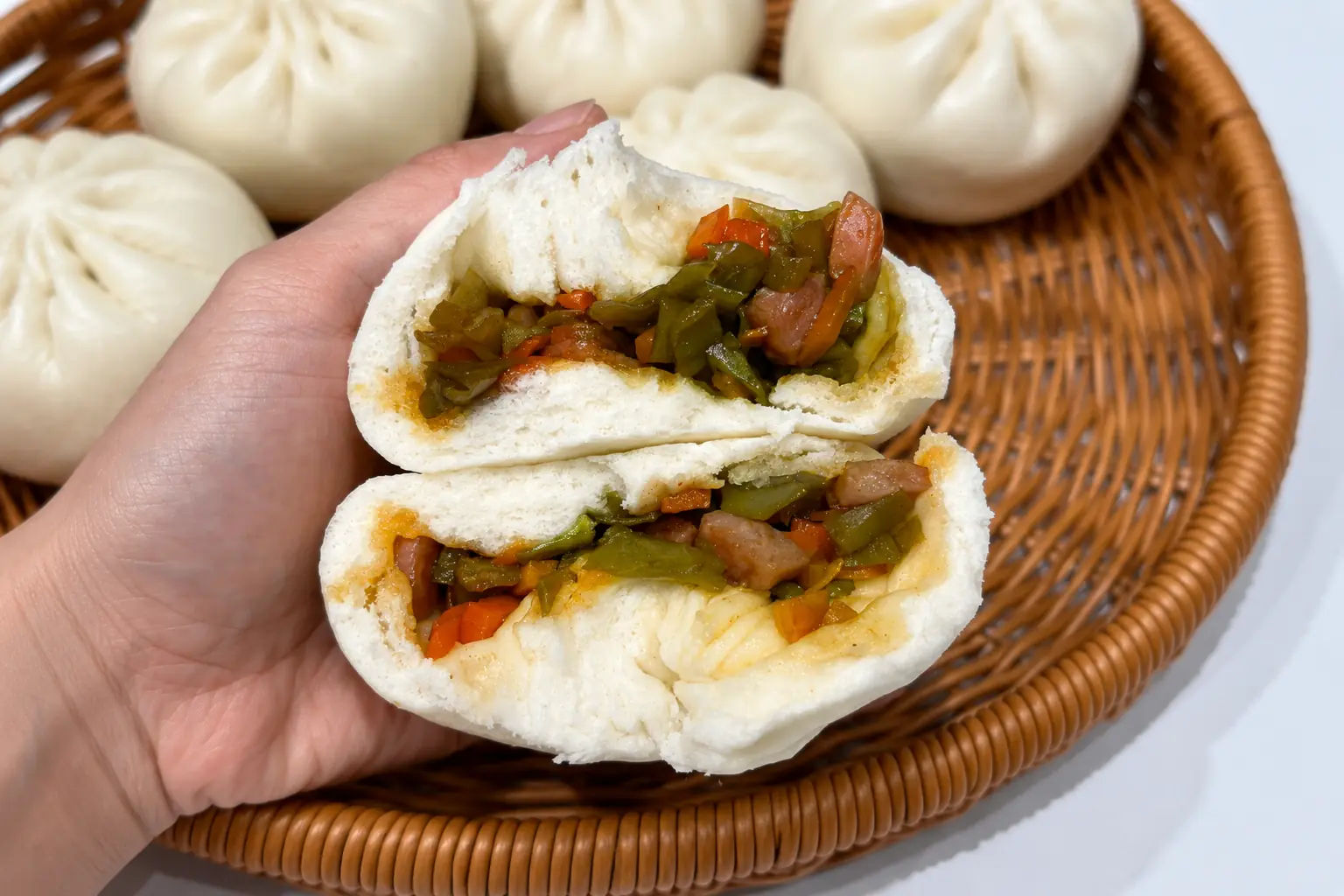
Eat baozi while they are hot enough to be soft but not so hot that the filling burns you. Tear or bite a small opening first if the bun is large, unfamiliar, or juicy. That lets steam out and shows you whether the filling is pork, vegetable, sweet paste, or something else.
Do not judge baozi only by how white and smooth they look. A perfect photo bun can be bland. A slightly rustic breakfast-shop bun can have better filling, more steam, and a better wheat aroma. What you want is a soft skin that springs back slightly, a filling that tastes fresh, and no sour or stale smell from old dough or old meat.
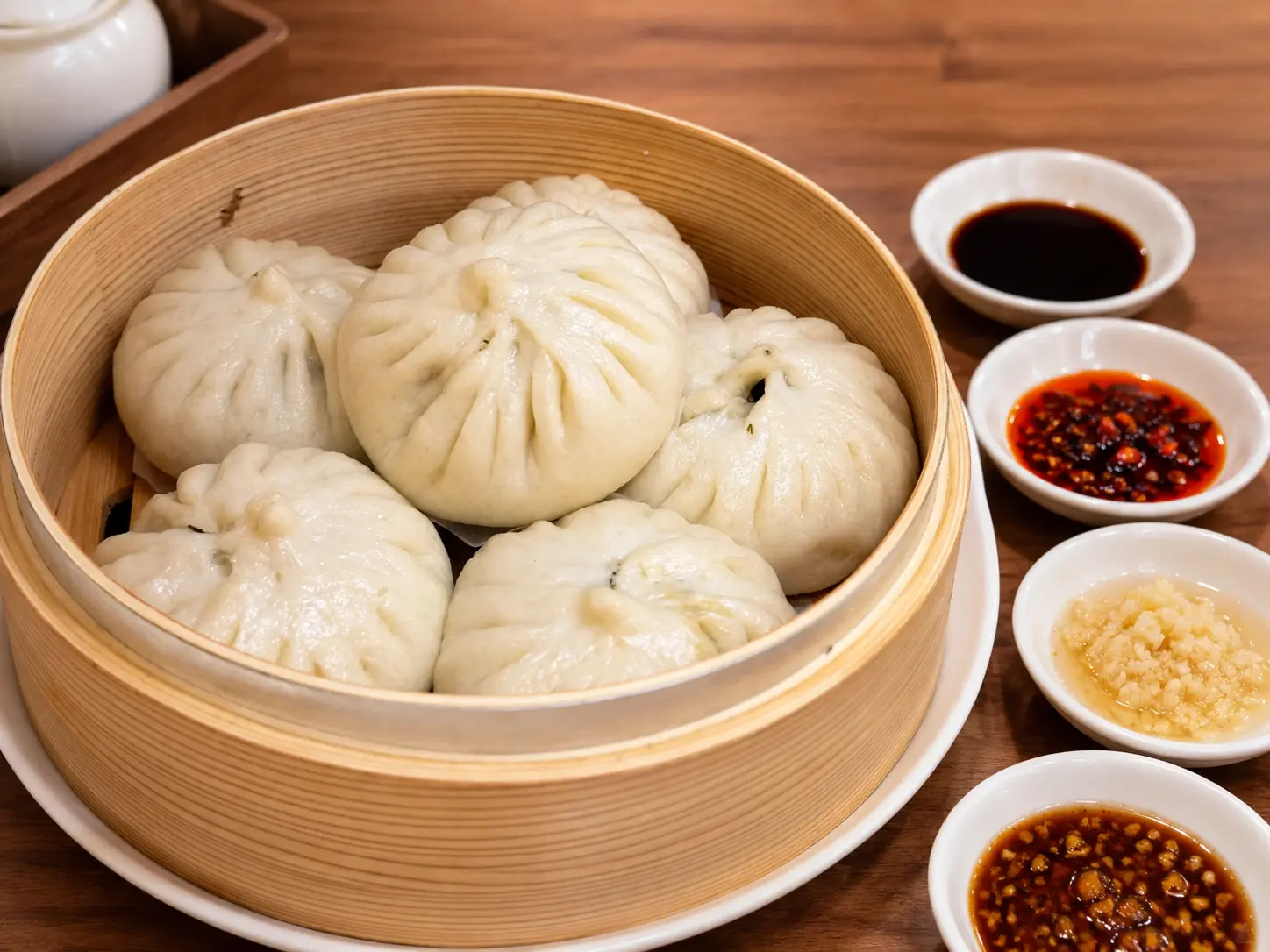
Condiments are optional. Some shops offer vinegar, chili oil, garlic paste, or soy sauce; others expect you to eat the bun plain. Try the first bite without sauce, then adjust. For sweet buns, skip savory condiments entirely.
Baozi are not long-storage snacks
Baozi are convenient for short takeaway, but they get dense as they cool. For a long train ride, choose buns only if you can eat them soon, or pair them with fruit, tea eggs, or packaged snacks.
Baozi Diet and Food-Safety Notes for Travelers
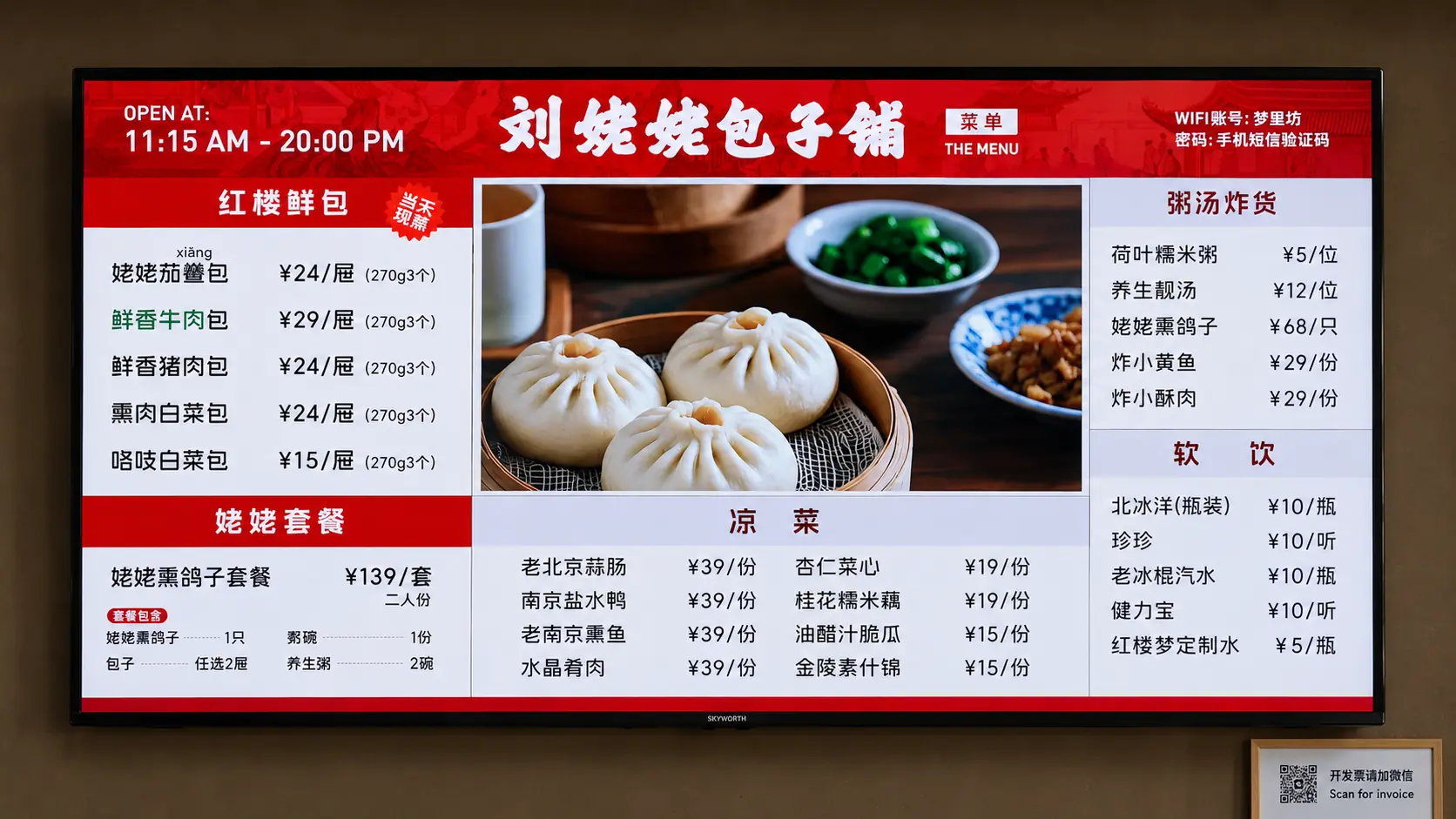
Baozi are wheat-based by default. Standard baozi dough is not gluten-free, and the soft bun can hide ingredients better than a visible dumpling plate. If you have celiac disease or serious gluten sensitivity, ordinary baozi shops are not safe.
Pork is common. Vegetarian does not automatically mean vegan, halal, or allergy-safe; vegetable buns can still use egg, lard, oyster sauce, dried shrimp, or meat stock. For serious allergies, watch wheat, soy, sesame, egg, dairy, peanuts, shrimp, and shared equipment.
Halal travelers should look for clearly marked halal (清真) shops or restaurants and confirm pork-free handling if this matters strictly. In an ordinary baozi shop, pork and non-pork buns can share trays, steamers, tongs, and prep surfaces.
- Gluten: ordinary baozi dough is made from wheat flour.
- Pork: many savory fillings use pork, pork fat, pork stock, or pork-skin jelly.
- Vegetarian: vegetable buns can still contain egg, lard, oyster sauce, dried shrimp, or stock.
- Halal: not automatic. Look for clear halal signage and ask if utensils or steamers are shared.
- Allergies: use the broader allergy guide for serious allergies; small breakfast shops cannot always confirm cross-contact.
Useful Baozi Phrases for Breakfast Counters
Show the Chinese if pronunciation feels awkward. At a morning counter, short phrases beat long explanations.
| English | Chinese | Pinyin | Say It Like… |
|---|---|---|---|
| Steamed filled bun | 包子 | bao zi | baow-dzuh |
| Plain steamed bread with no filling | 馒头 | man tou | mahn-toh |
| I want two pork baozi. | 我要两个猪肉包子。 | wo yao liang ge zhu rou bao zi | woh yow lyahng guh joo roh baow-dzuh |
| I want one vegetable baozi. | 我要一个素包子。 | wo yao yi ge su bao zi | woh yow ee guh soo baow-dzuh |
| Red bean paste bun | 豆沙包 | dou sha bao | doh-shah baow |
| What filling is this? | 这个是什么馅? | zhe ge shi shen me xian | juh-guh shir shun-muh shyen |
| Is this meat? | 这是肉的吗? | zhe shi rou de ma | juh shir roh duh mah |
| Do you have hot/fresh ones? | 有热的吗? | you re de ma | yo ruh duh mah |
| Does it contain pork? | 有猪肉吗? | you zhu rou ma | yo joo roh mah |
| I am vegetarian. | 我吃素。 | wo chi su | woh chir soo |
| Can I take it to go? | 可以打包吗? | ke yi da bao ma | kuh yee dah-baow mah |
Frequently Asked Questions
No. Baozi have fluffy steamed wheat dough, while jiaozi use thinner dumpling wrappers. Use the name on the sign or point at the steamer if you are unsure.
Beyond This Baozi Breakfast Guide
Baozi sit in the same everyday breakfast world as Youtiao and Doujiang, Jianbing, Cong You Bing, and Shouzhua Bing. If you are sorting out the dumpling family, compare Jiaozi, Wontons, Shanghai Xiaolongbao, and Shengjianbao.
For city context, pair this guide with the Beijing Food Guide, Tianjin Day Trip from Beijing, Cantonese Dim Sum Guide, and the China food allergies guide.
© gochinafreely.com — Original guide by Go China Freely.