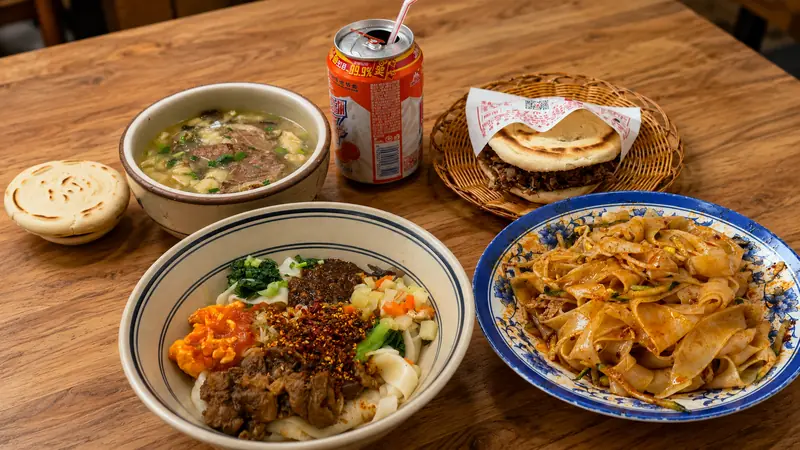
Roujiamo (肉夹馍) is the Xi'an street snack many travelers understand too quickly: yes, it is often called a Chinese hamburger, but the bite is completely different. There is no patty, cheese, lettuce, or sauce stack, just a hot wheat bun, chopped braised meat, a little meat juice, and the kind of street-food efficiency that makes breakfast, lunch, or a late snack feel solved.
Executive Summary
What to expect
A hot Shaanxi meat sandwich: crisp wheat bun outside, soft chew inside, chopped braised meat in the middle, and very little ceremony if you order well.
Best first order
Start with a pork braised-meat roujiamo in an ordinary Xi'an shop, or choose a clearly halal beef or lamb version in the Muslim Quarter if you avoid pork.
Main traveler challenge
Do not treat every roujiamo as the same dish. Pork, beef, lamb, classic white-bun, and Tongguan flaky-bun versions all solve different cravings.
Anytime
Breakfast, snack, or quick meal
Pork / beef / lamb
Common meat choices
RMB 10-25+
Loose traveler budget range
Eat hot
Texture rule
Meat Between Bread, the Xi'an Way
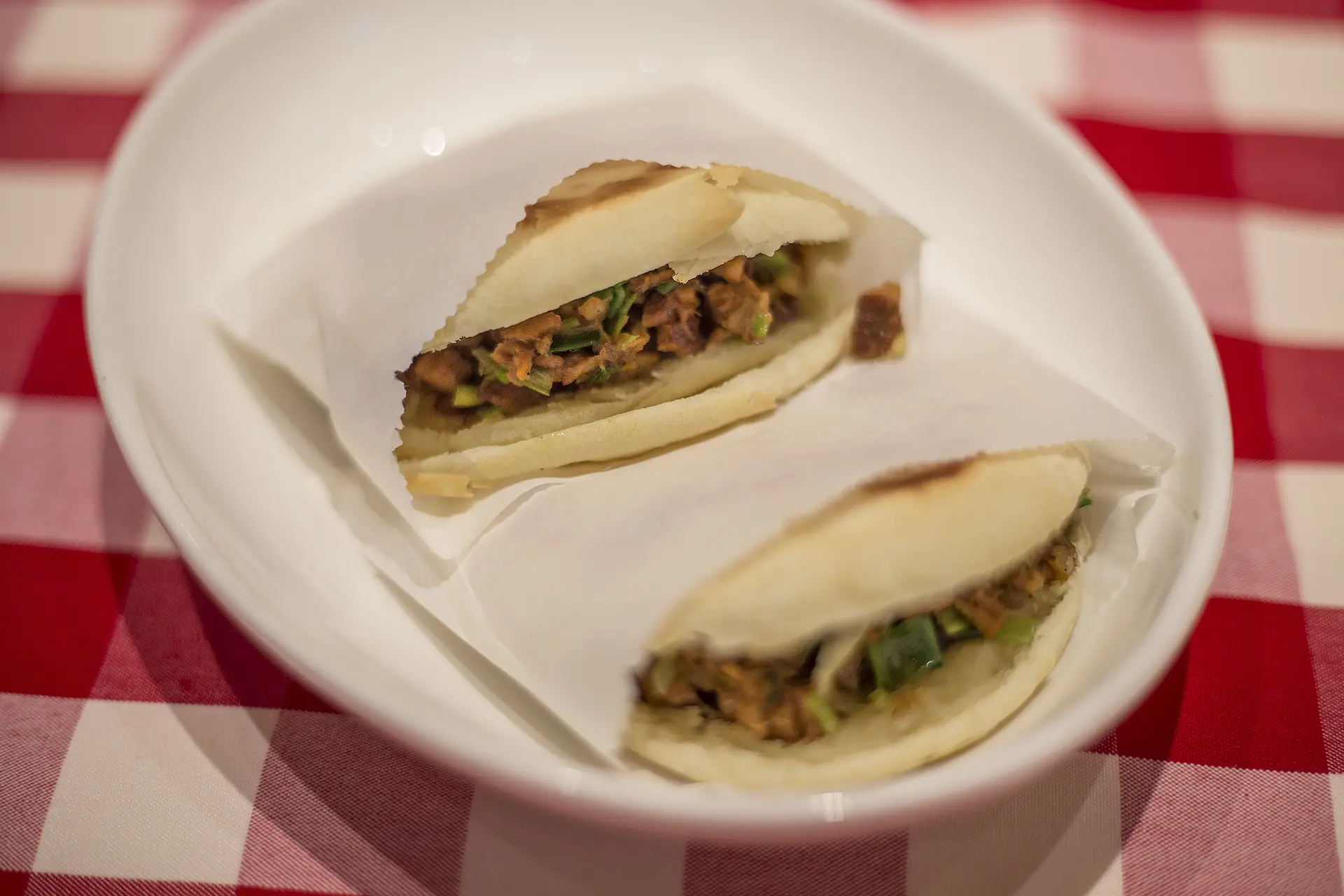
Classic Xi'an roujiamo depends on a hot bun, chopped braised meat, and a little meat juice.
Roujiamo is simple in the way good street food is simple: every part has to work. The bun should be hot, lightly crisp at the edge, and firm enough to hold meat juice without collapsing. The meat should be chopped or shredded right before serving so fat, lean meat, and braising liquid mix into one filling instead of sitting in dry chunks.
The "Chinese hamburger" nickname is useful for orientation, but it is not a technical description. Roujiamo uses a wheat flatbread bun, not a burger bun; the filling is chopped braised meat, not a formed patty; and the default version does not come with salad toppings. Think of it as Shaanxi's own meat-in-bread tradition, not a Chinese copy of a Western sandwich.
China Daily describes Shaanxi roujiamo as a hamburger-like snack with meat stewed for hours and stuffed into a wheat flatbread. A Shaanxi government tourism page also frames meat-filled buns as one of Xi'an's signature local snacks. For travelers, that status matters less than the practical point: eat it hot, choose the right meat, and do not let the bun go limp while you take photos.
What Makes a Good Roujiamo Taste Right
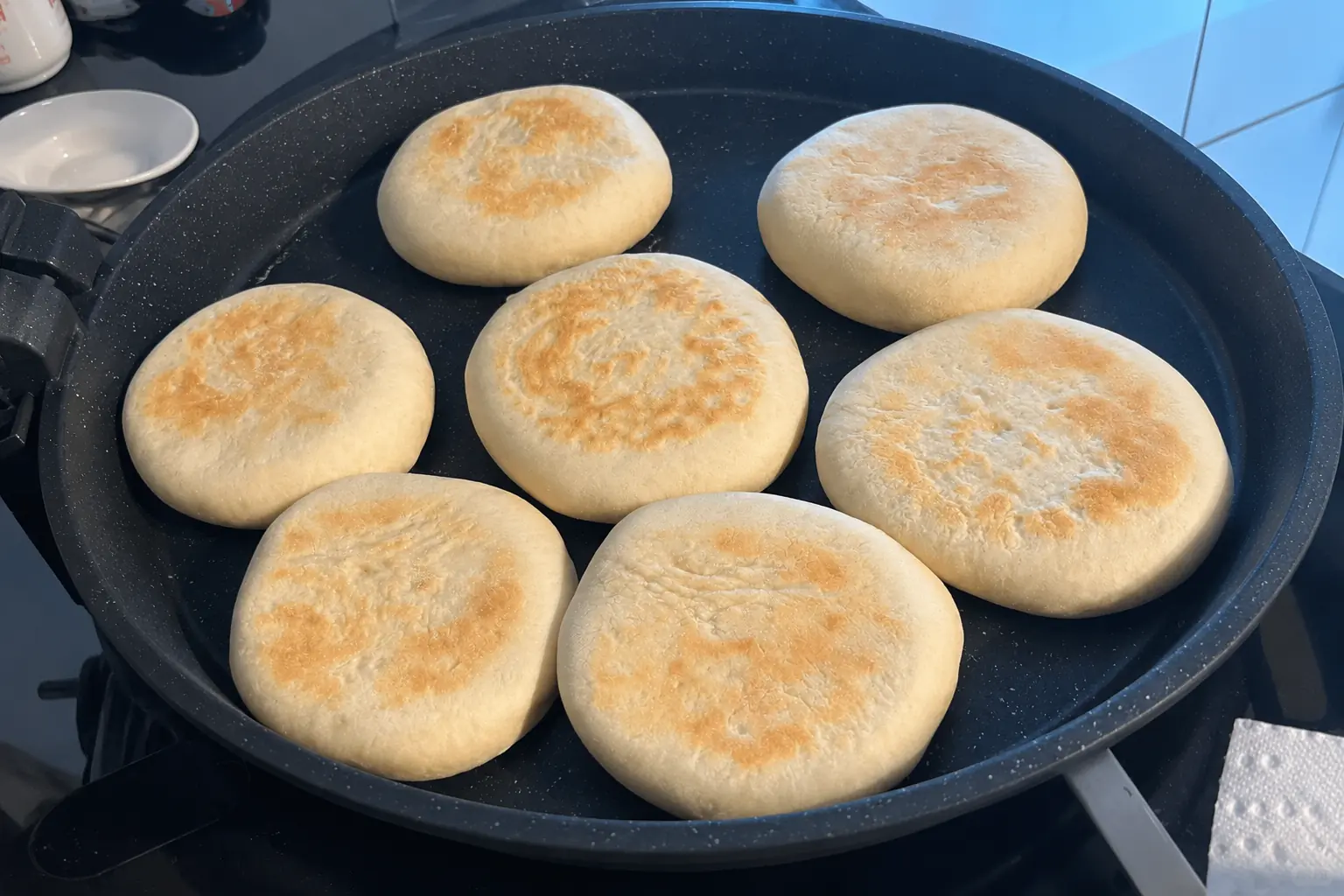
A hot baiji mo bun should stay crisp outside and chewy inside.
Start with the bun. In the classic Xi'an version, the white wheat bun (白吉馍) should be heated or baked so the outside has a dry, crisp bite while the inside keeps enough chew to catch meat juice. If the bun feels cold, rubbery, or soggy before you even bite, the shop has already lost the best part of the dish.
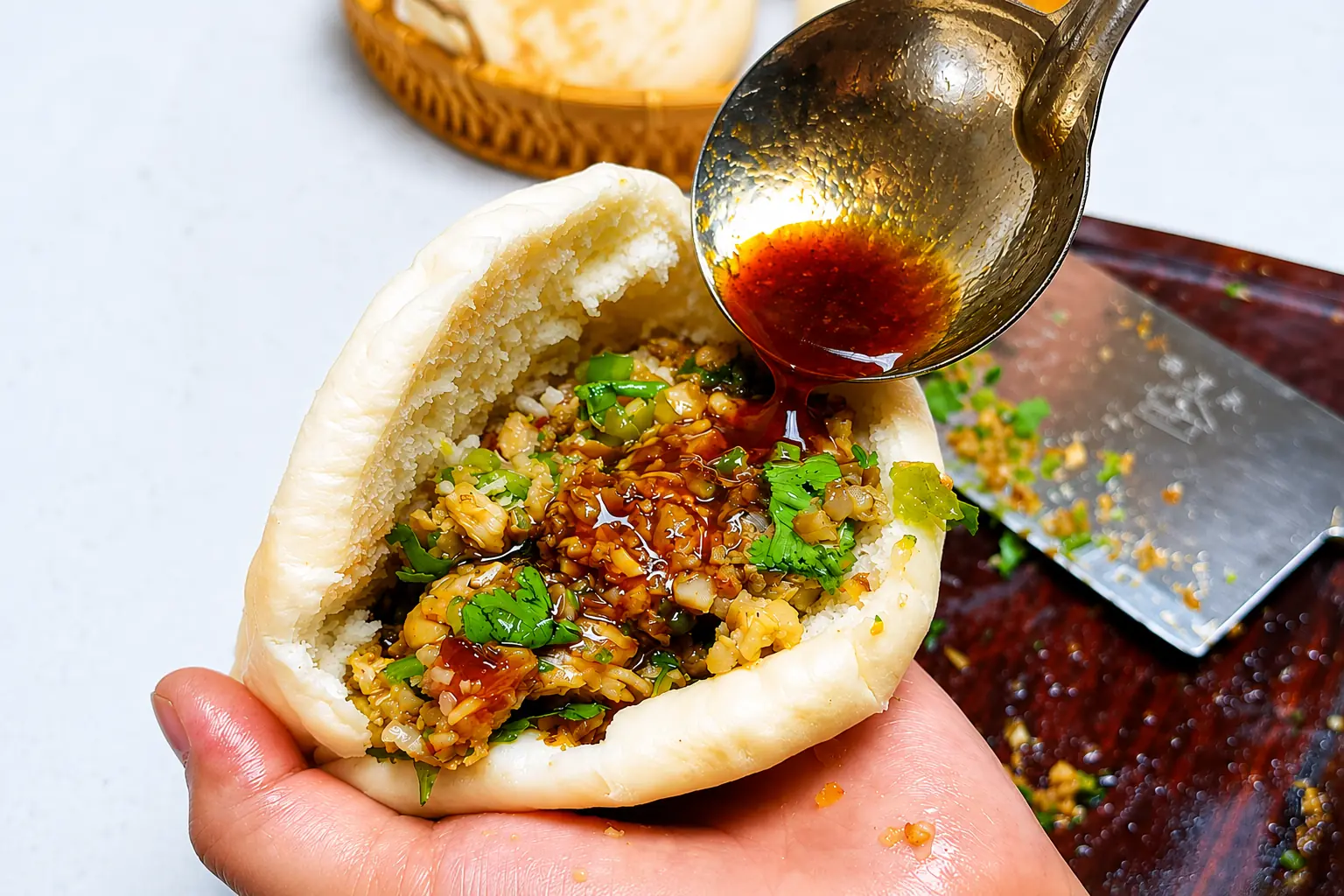
Fresh chopping mixes lean meat, fat, and braising liquid into one filling.
Then watch the meat. Good braised meat is usually chopped to order, not scooped from a tired pile. A little fat is your friend here. It carries the spice aroma and keeps the filling moist. Pure lean meat sounds tidy, but it can make your first roujiamo taste drier than it should.
| What to Check | Good Sign | Weak Sign |
|---|---|---|
| Bun | Hot, crisp edge, wheat aroma, firm enough to hold juice | Cold, soft, oily, or already splitting open |
| Meat | Chopped fresh, mixed with a little braising liquid | Dry pile of meat waiting under a heat lamp |
| Turnover | Steady local traffic and fast assembly | Pretty counter, slow movement, few fresh buns |
| Timing | You eat it within a few minutes | You carry it around until the bun steams itself soft |
First-timer default
Order fatty-and-lean meat unless you strongly dislike fat. It is usually juicier and closer to the way locals judge a satisfying roujiamo.
Pork, Beef, Lamb, and Tongguan Styles
The first real decision is not "best shop." It is style. In ordinary Xi'an snack shops, the classic braised-meat version is often pork. In Hui Muslim and clearly halal settings, especially around the Muslim Quarter (回民街), beef or lamb versions are common instead. The same English word "roujiamo" can therefore point to very different food rules.
← swipe to compare all options →
Braised Pork
腊汁肉夹馍
- ✓Best first choice if you eat pork and want the standard old-city snack.
- ✓Usually uses a white wheat bun and long-braised pork.
- —Ask for lean meat only if you dislike fatty texture.
Classic Xi'an entry point
Beef or Lamb
腊牛肉夹馍 / 腊羊肉夹馍
- ✓Common around Hui Muslim food areas and clearly halal shops.
- ✓Better for pork-free travelers when the venue is clearly halal.
- ✗Do not assume every shop outside the Muslim Quarter has this version.
Halal-context choice
Tongguan Style
潼关肉夹馍
- ✓Known for a crisp, layered bun with a shattering bite.
- —Delicious, but texturally different from white-bun Xi'an roujiamo.
- —Often sold by specialist chains or snack counters.
Flaky-bun route
Use shop context and Chinese signage to confirm the filling. English menu translations are not always precise.

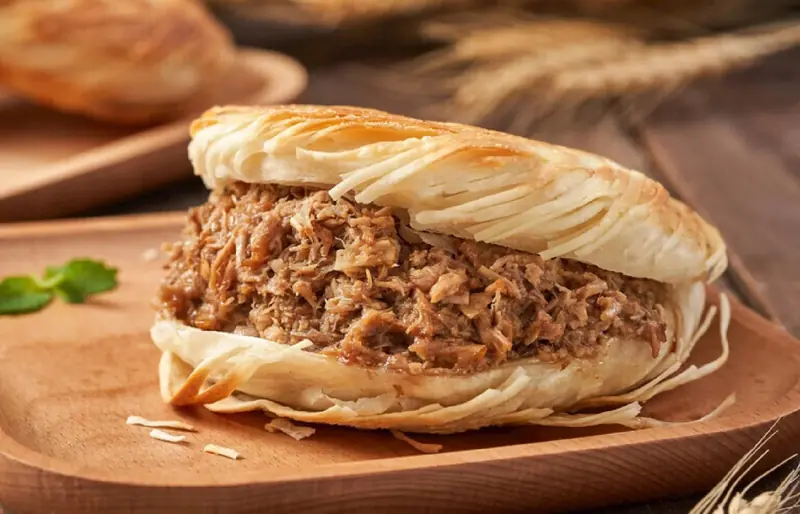
Tongguan-style roujiamo is defined by a crisp, layered bun that flakes when bitten.
Tongguan-style roujiamo deserves its own mental box. The Shaanxi intangible cultural heritage database lists Tongguan roujiamo-making as a provincial traditional craft and describes the style around a crisp bun and fragrant meat. If you bite into one and it flakes like pastry, that is not a mistake. It is a different Shaanxi branch.
Do not use one style to judge all styles
A classic Xi'an white-bun roujiamo should not taste like a flaky Tongguan bun, and a halal beef roujiamo should not taste like pork braised-meat roujiamo. Choose the version you actually want before judging the shop.
How to Order Your First Roujiamo
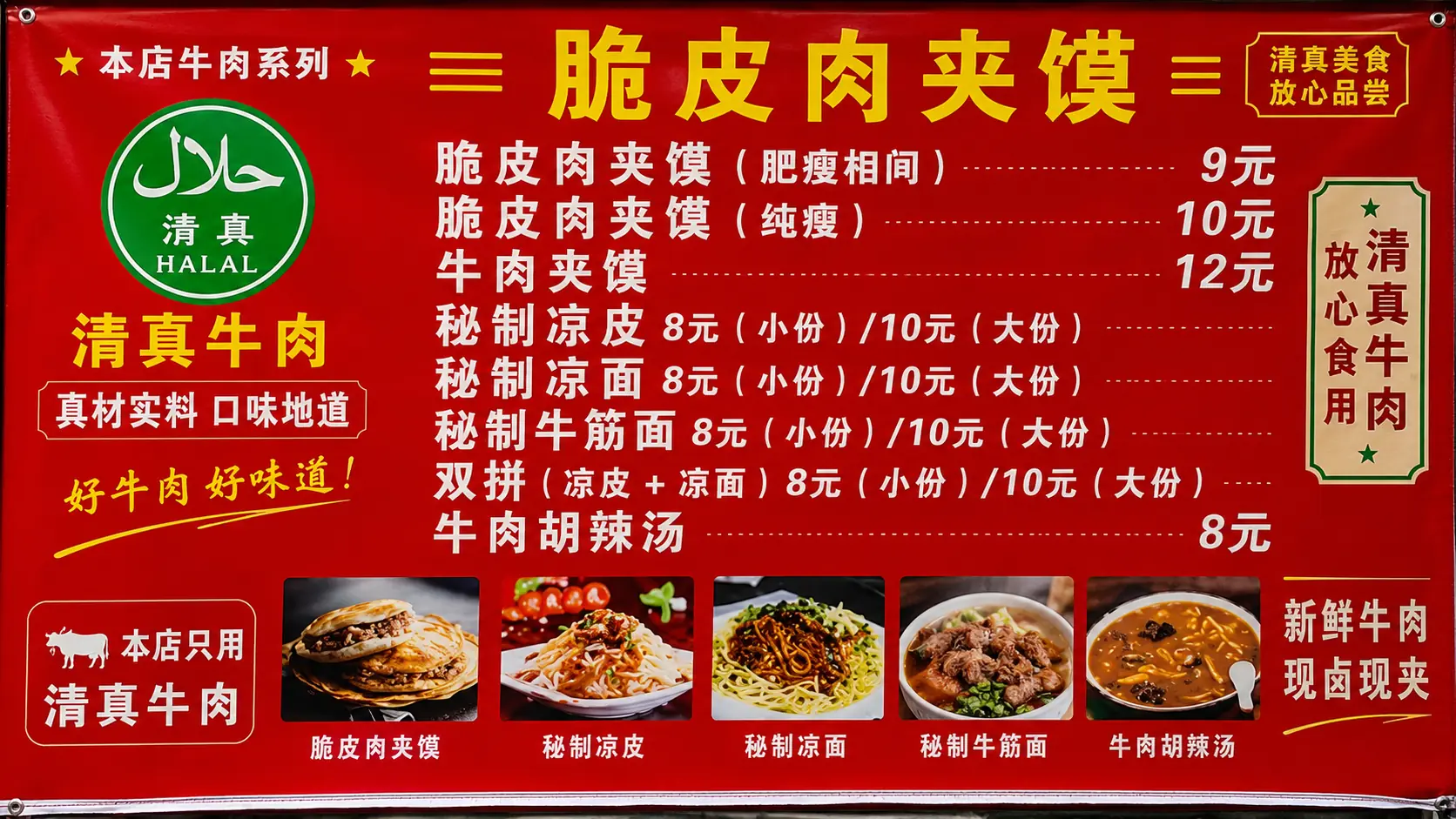
Fatty-and-lean is usually juicier; lean meat is tidier but can taste drier.
If you eat pork and want the standard Xi'an starting point, order one braised-meat roujiamo (腊汁肉夹馍). If the vendor asks whether you want fatty-and-lean or lean, choose fatty-and-lean for the first bite. It usually tastes more balanced because the fat carries the braised-meat aroma into the bun.
If you avoid pork, switch the order of decisions: choose the shop first, then the sandwich. Look for halal signage (清真), Hui-run food lanes, and beef or lamb wording on the menu. Do not rely only on an English "meat sandwich" translation.
- Choose the shop context- Ordinary Xi'an snack shop for pork, clearly halal Hui shop for beef or lamb.
- Point at the version you want- Use the Chinese name or a menu photo if the shop is busy.
- Choose fatty-and-lean or lean- Fatty-and-lean is juicier; lean is drier but easier for cautious eaters.
- Eat it immediately- The bun texture drops quickly once it sits in a bag.
Decision shortcut
Which roujiamo should I order first?
I eat pork and want the classic
Choose braised pork roujiamo in an ordinary Xi'an snack shop. Ask for fatty-and-lean meat unless you dislike fat.
I avoid pork
Choose a clearly halal shop and order beef or lamb roujiamo. Confirm the meat before paying.
I want maximum crunch
Try Tongguan-style roujiamo, which uses a flakier layered bun.
I am sharing snacks
Split one roujiamo, add cold skin noodles, and drink Bingfeng soda so you still have appetite for noodles or paomo later.
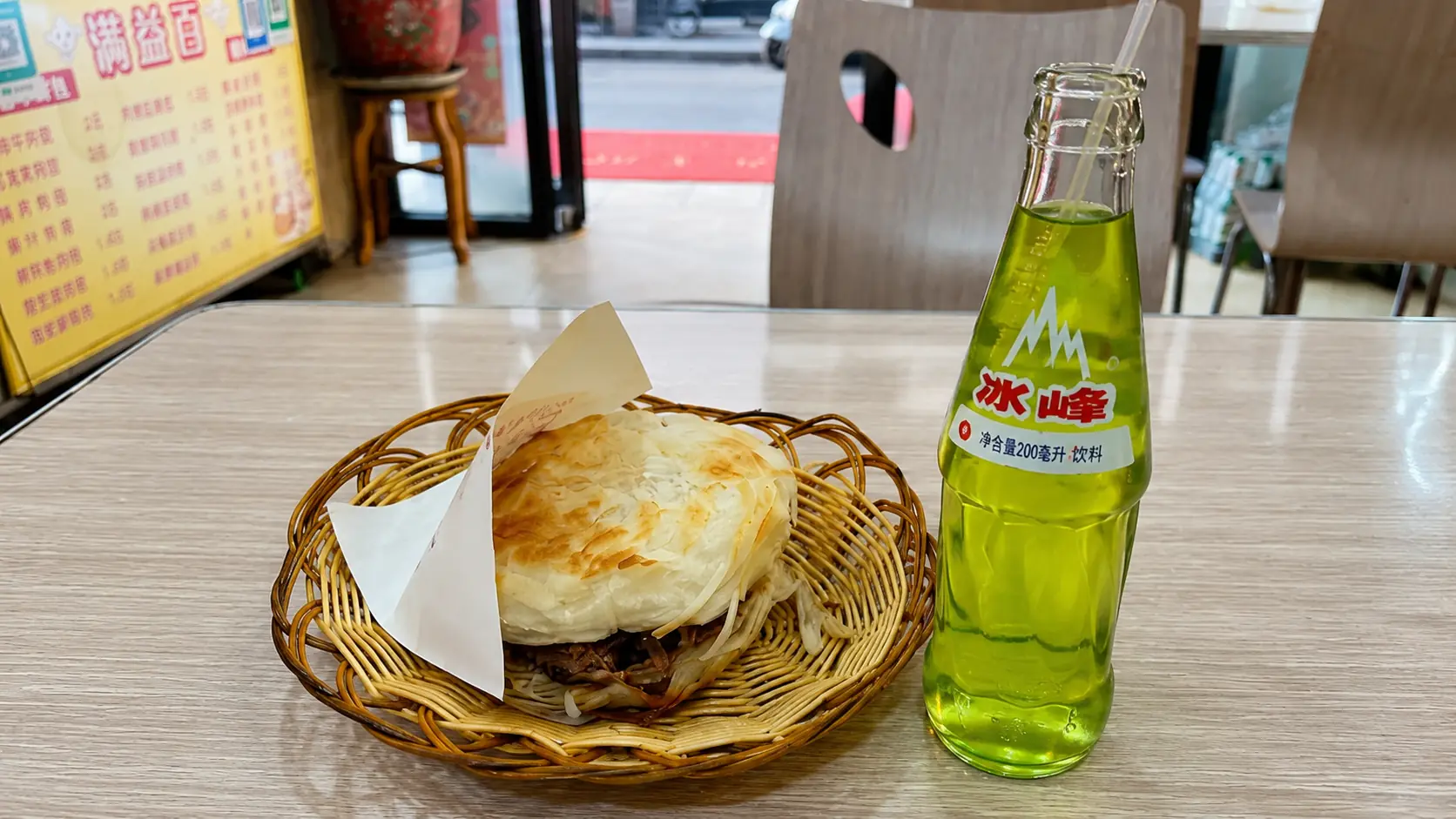
Bingfeng soda is a nostalgic Xi'an pairing for a hot roujiamo.
The easy Xi'an snack combo is roujiamo, cold skin noodles (凉皮), and Bingfeng soda (冰峰汽水). It gives you heat, cold vinegar-chili freshness, and orange-soda nostalgia without turning lunch into a heavy sit-down meal.
Where Travelers Should Try Roujiamo in Xi'an
Use the places below as route anchors, not permanent rankings. Small snack shops change hours, branches vary, and a currently hot bun near your route beats a famous name across town when you are hungry.
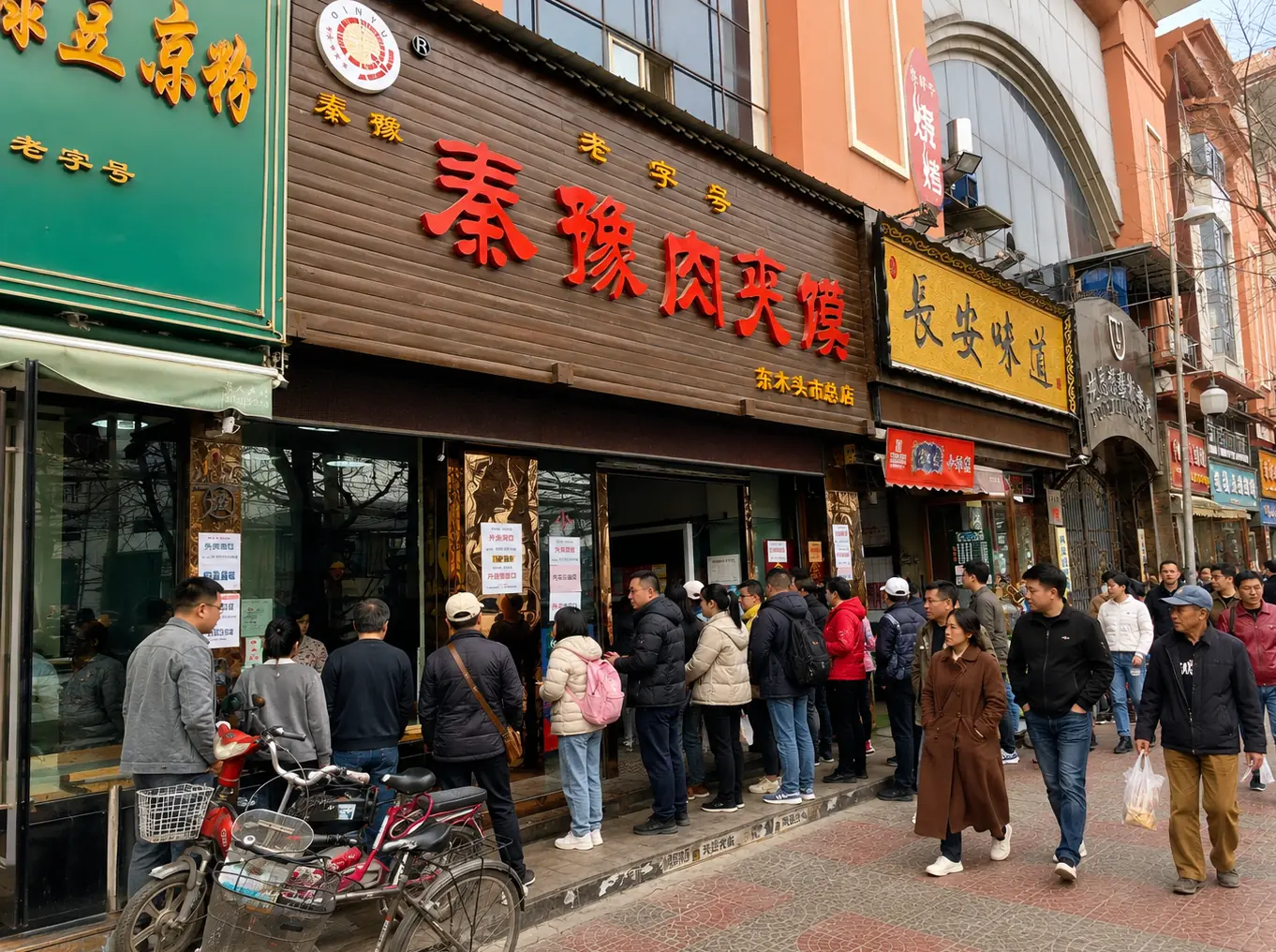
A practical first stop for ordinary Xi'an-style braised-meat roujiamo. It works well when you want the pork version without turning the meal into a long food hunt.
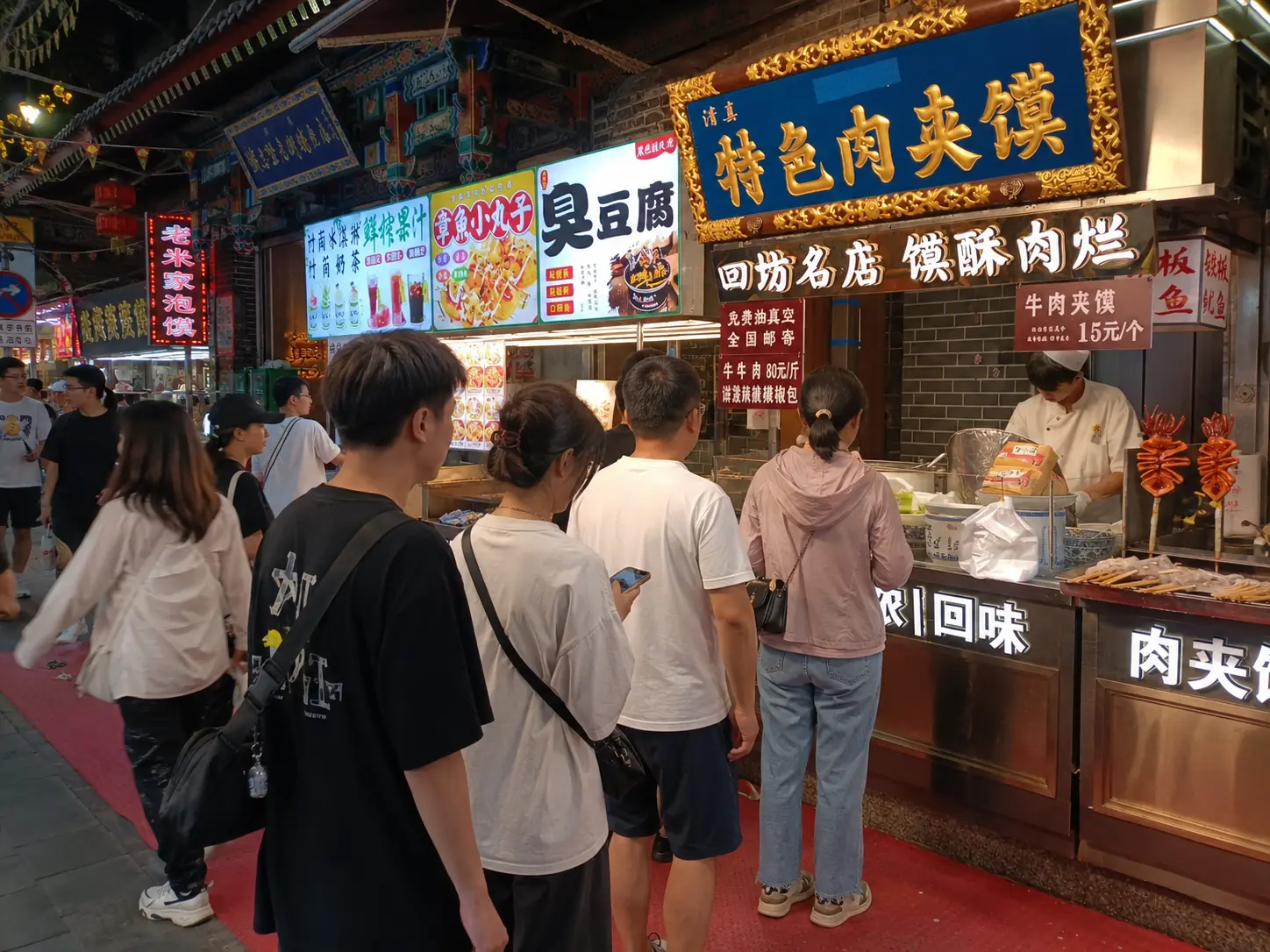
Useful for understanding beef and lamb versions in a Hui Muslim food area. The Shaanxi government page describes the quarter as the hub of Xi'an's Muslim community.
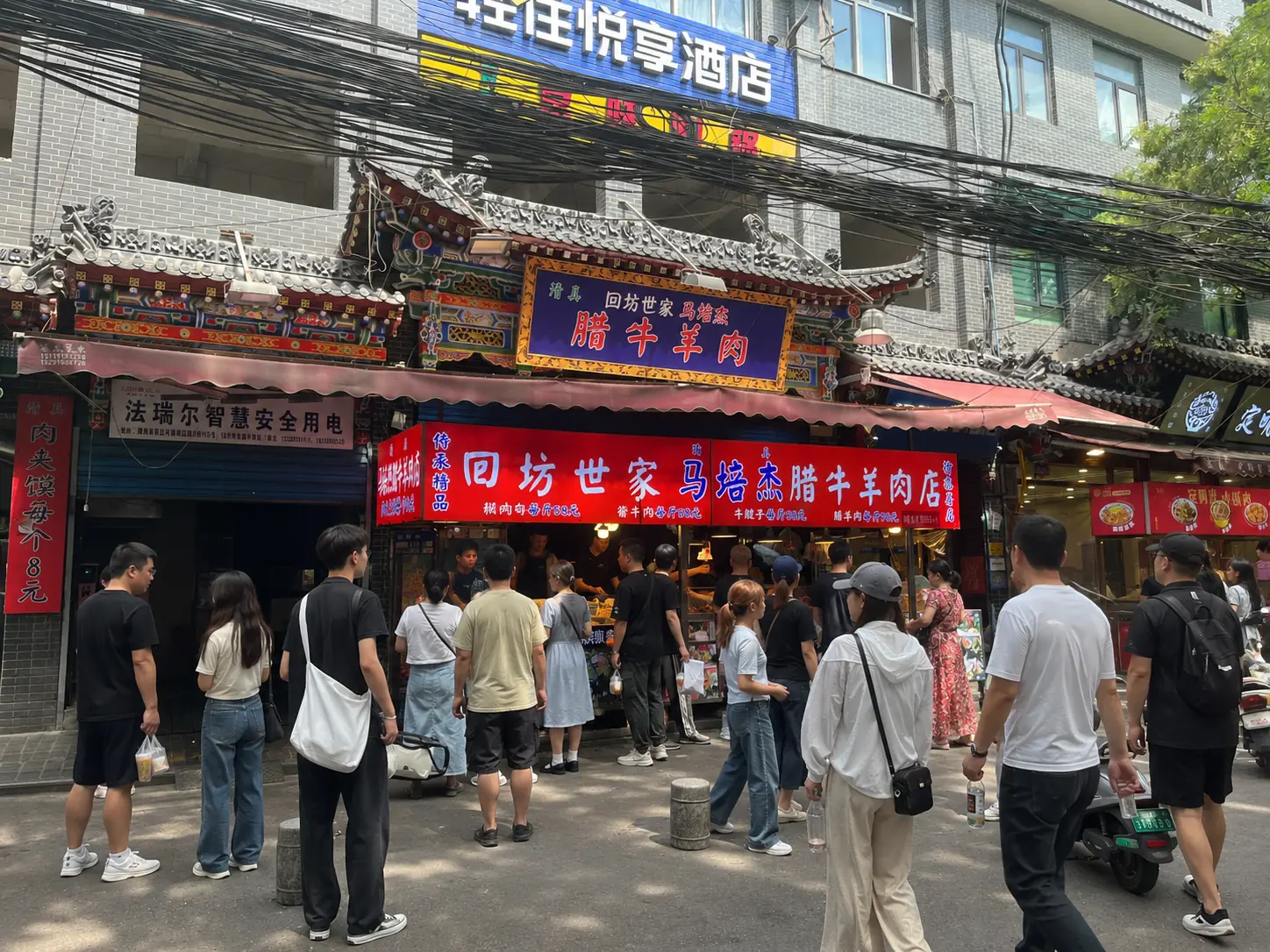
Better than stopping only on the brightest main strip. Use it for a slower food-lane feel and nearby Hui snacks before or after a beef roujiamo.
Convenient if you are already near the Drum Tower and want to compare food lanes without leaving the old-city core.
A better match for travelers who want a daily-life snack street rather than a polished tourist strip. Go earlier in the day for a calmer read.
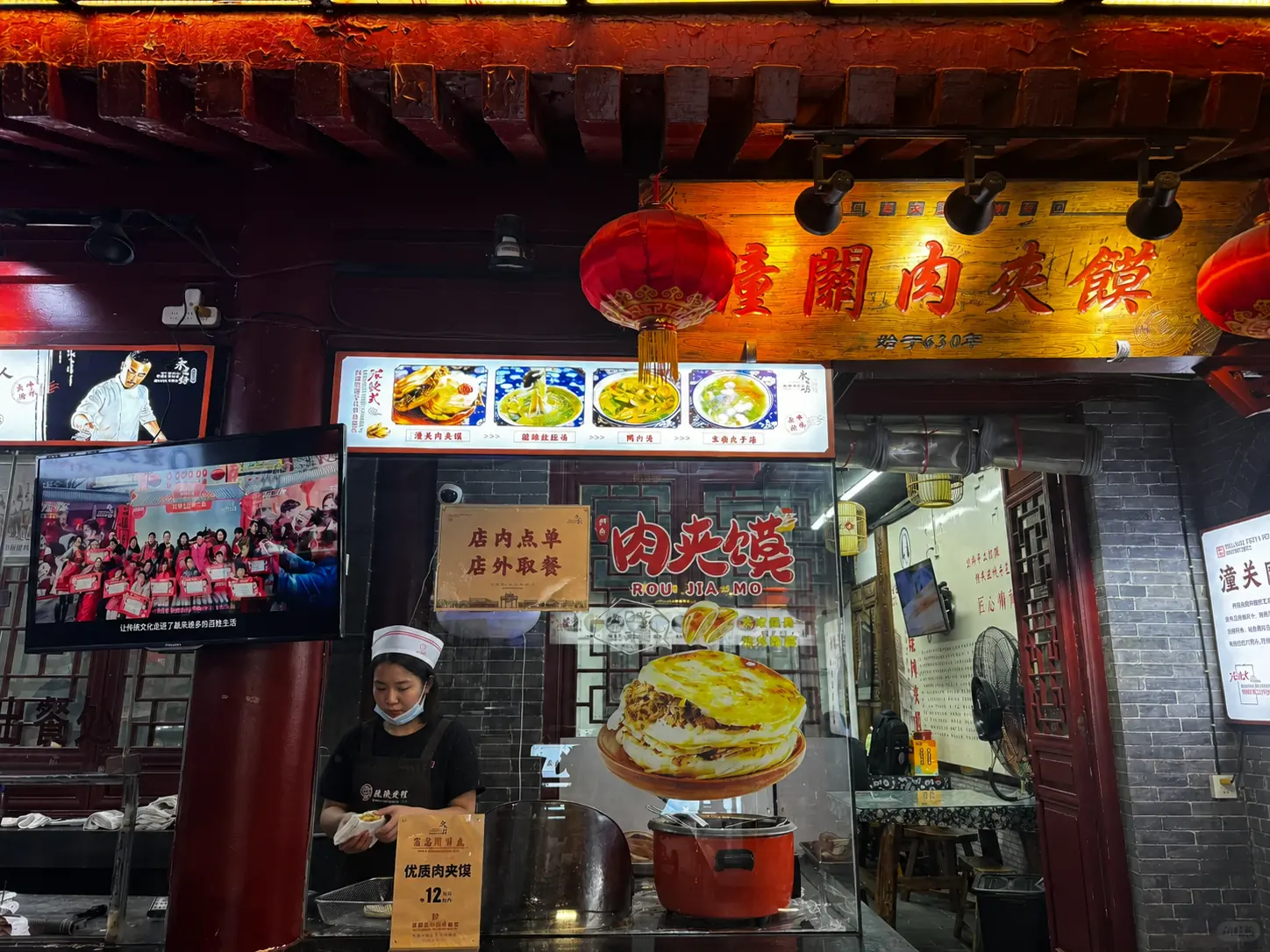
Not the rawest local experience, but convenient if you want roujiamo beside other Shaanxi snacks in one tidy, first-timer-friendly area.
How to Eat It Fresh and Crisp
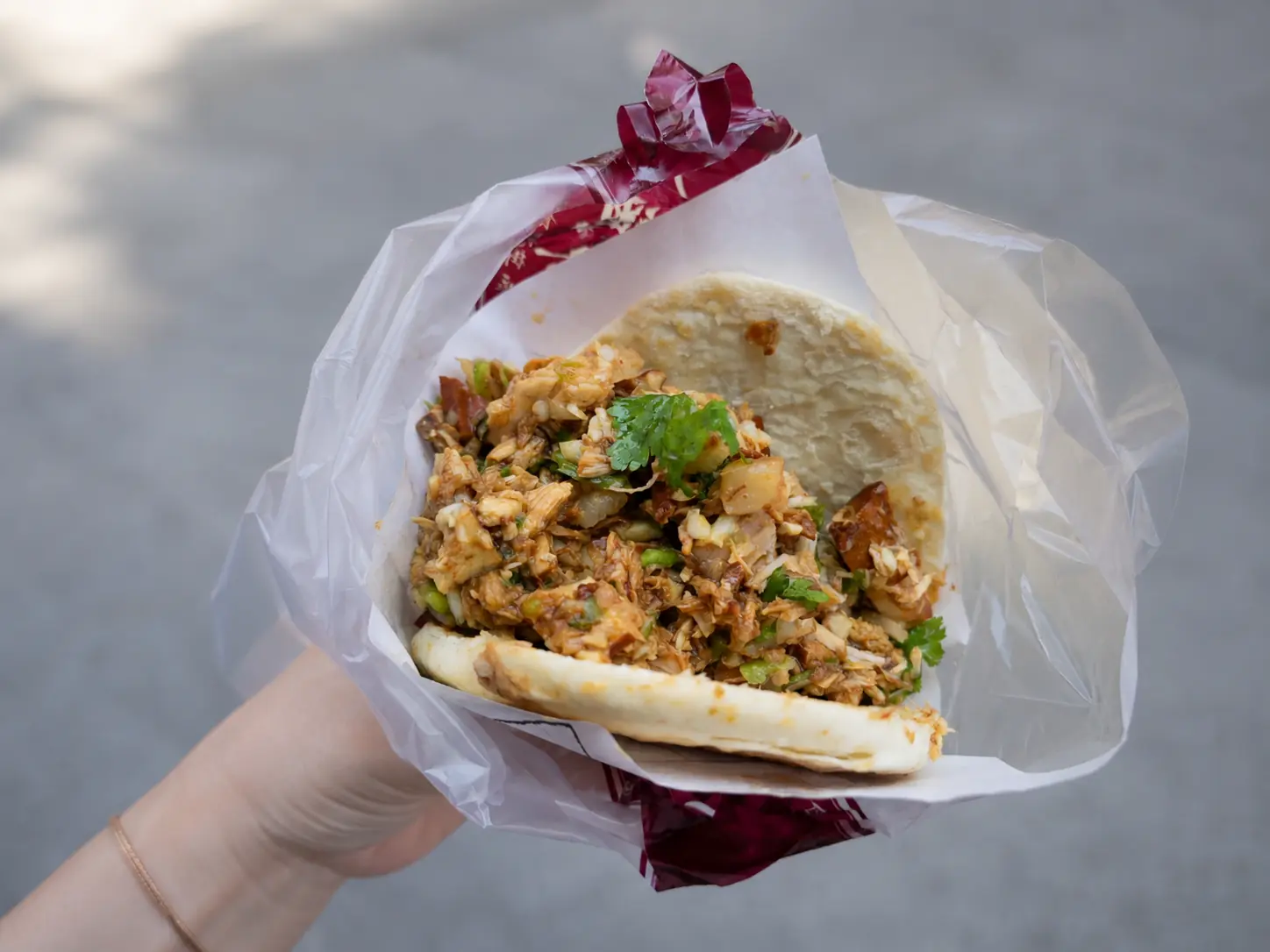
The paper bag catches meat juice while the bun is still crisp.
Eat roujiamo while it is hot. The paper bag is not just packaging; it catches meat juice and keeps your hand clean while the bun is still crisp. If you carry it back to the hotel, the steam trapped inside the bag softens the shell and turns the best part into ordinary bread.
Do not open the sandwich too long for photos. A quick cross-section shot is fine, but the bun cools quickly and the meat dries when exposed. Take the picture, close it, and eat.
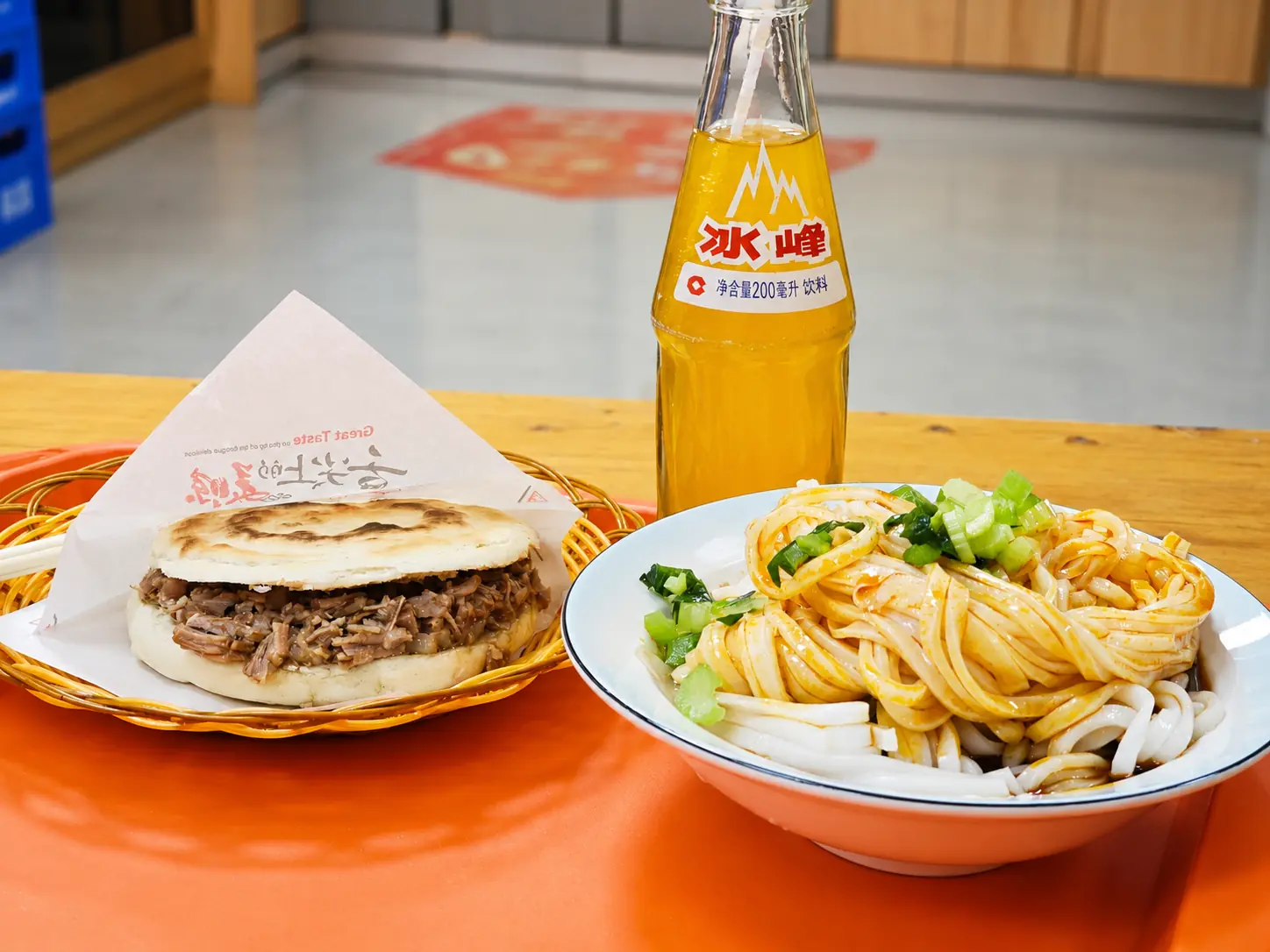
Roujiamo, cold skin noodles, and Bingfeng soda form a classic quick Xi'an snack combo.
If you are grazing through Xi'an, share. One roujiamo, one cold skin noodle bowl, and one soda between two people leaves room for mutton bread soup (羊肉泡馍), oil-splashed noodles (油泼面), or a second snack lane later.
The best roujiamo is often not the most photographed one
For this dish, turnover and temperature matter more than styling. A plain-looking counter that keeps heating buns and chopping meat can beat a prettier tourist stall.
Diet Notes, Halal, and Common Traps
The main dietary trap is meat identity. Ordinary braised-meat roujiamo in Xi'an is often pork. In Hui Muslim lanes and clearly halal restaurants, beef or lamb is more common. Travelers get into trouble when they assume "roujiamo" means one fixed filling everywhere.
- Do not assume every roujiamo is halal. Look for 清真 signage and choose the venue first if halal compliance matters.
- Do not ask for pork in a halal shop. Respect the restaurant context around pork and outside alcohol.
- Do not assume vegetarian versions are easy. Traditional roujiamo is built around meat, and many buns share prep surfaces with meat fillings.
- Gluten-free travelers should skip it. The bun is wheat-based.
- Prices and hours vary. Treat map apps, current queues, and on-the-day opening status as more reliable than a fixed online list.
Chili is not the main issue
Roujiamo itself is usually not a chili challenge. The bigger questions are meat type, bun freshness, and whether the shop adds green pepper, cilantro, or chili by default.
Useful Ordering Phrases for Roujiamo Counters
Keep these phrases for the counter. If the shop is busy, point at the menu photo first, then use one phrase to set your limit.
| English | Chinese | Pinyin | Say It Like… |
|---|---|---|---|
| Roujiamo; meat in a wheat bun | 肉夹馍 | rou jia mo | roh-jyah-maw |
| I want one roujiamo | 我要一个肉夹馍 | wo yao yi ge rou jia mo | woh yow ee guh roh-jyah-maw |
| I want the braised-pork version | 要腊汁肉夹馍 | yao la zhi rou jia mo | yow lah-jir roh-jyah-maw |
| Fatty-and-lean meat, please | 要肥瘦 | yao fei shou | yow fay-show |
| Lean meat only, please | 要纯瘦 | yao chun shou | yow chun-show |
| No chili | 不要辣 | bu yao la | boo yow lah |
| Do you have a beef version? | 有牛肉的吗? | you niu rou de ma? | yo nyoh-roh duh mah |
| Is this halal? | 这个是清真的吗? | zhe ge shi qing zhen de ma? | juh-guh shir ching-juhn duh mah |
| I do not eat pork | 我不吃猪肉 | wo bu chi zhu rou | woh boo chur joo-roh |
Frequently Asked Questions
It is often nicknamed a Chinese hamburger because meat is stuffed into bread, but the structure is different. There is no patty, burger bun, cheese, lettuce, or standard sauce stack. It is better understood as Shaanxi's own meat-filled wheat bun.
Beyond This Roujiamo Guide
Roujiamo is the fastest doorway into Xi'an's wheat-and-meat food culture, but it is not the whole city. Pair it with Xi'an Food Guide for the bigger map, compare it with the bread-and-broth ritual of mutton bread soup, then make room for Biangbiang Noodles when you want the noodle version of the city's wheat obsession.
If you are building a full day, place roujiamo around your route rather than chasing it as a standalone pilgrimage. It fits naturally before a City Wall walk, after a Bell Tower area stroll, or as a quick reset before a Terracotta Warriors and City Wall day.
© gochinafreely.com — Original guide by Go China Freely.