Safety stack
Strict plan beats perfect restaurant luck: the goal is to make each meal boringly clear: written triggers, simpler dishes, staff permission to refuse, and a backup path if the answer is vague.
At a glance
If you have a confirmed food allergy, China is not impossible, but it does require a tighter system than ordinary food travel. Shared dishes, compound sauces, hot oil, broths, and busy kitchens mean the safest plan is to prepare before the first meal, communicate in writing, and keep an emergency path ready.
Best first move
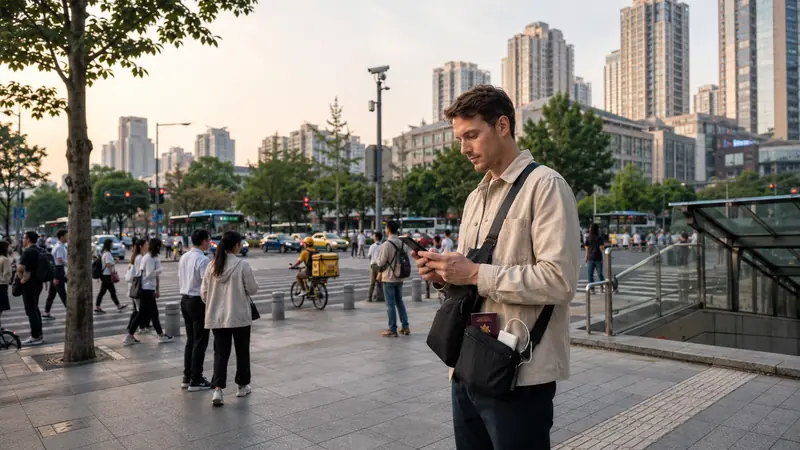
Carry a printed and phone-based allergy card in Chinese and English, plus your medication plan, before you rely on restaurant conversation.
Main dining risk
The hidden problem is usually not the main ingredient. It is sauce, broth, chili oil, shared frying oil, shared woks, or preference-style wording.
Emergency fallback
For serious symptoms, follow your clinician plan first, use prescribed epinephrine/adrenaline if indicated, call 120 immediately, and show your allergy card at hospital intake.
Decision shortcut
How strict should your China food plan be?
Severe allergy
Use written Chinese every meal, avoid shared-pot formats, carry medication, and pre-save hospital and pharmacy routes.
Celiac or gluten-free
Treat standard soy sauce, sauces, marinades, batters, and shared frying oil as high-risk until verified.
Vegetarian, halal, kosher
Confirm broth, lard, oyster sauce, minced pork, alcohol, and shared tools. Vegetable dishes are not automatically compliant.
Preference only
You can be more flexible, but do not use severe-allergy wording unless a medical reaction risk is real.
Food Allergy Risk in China
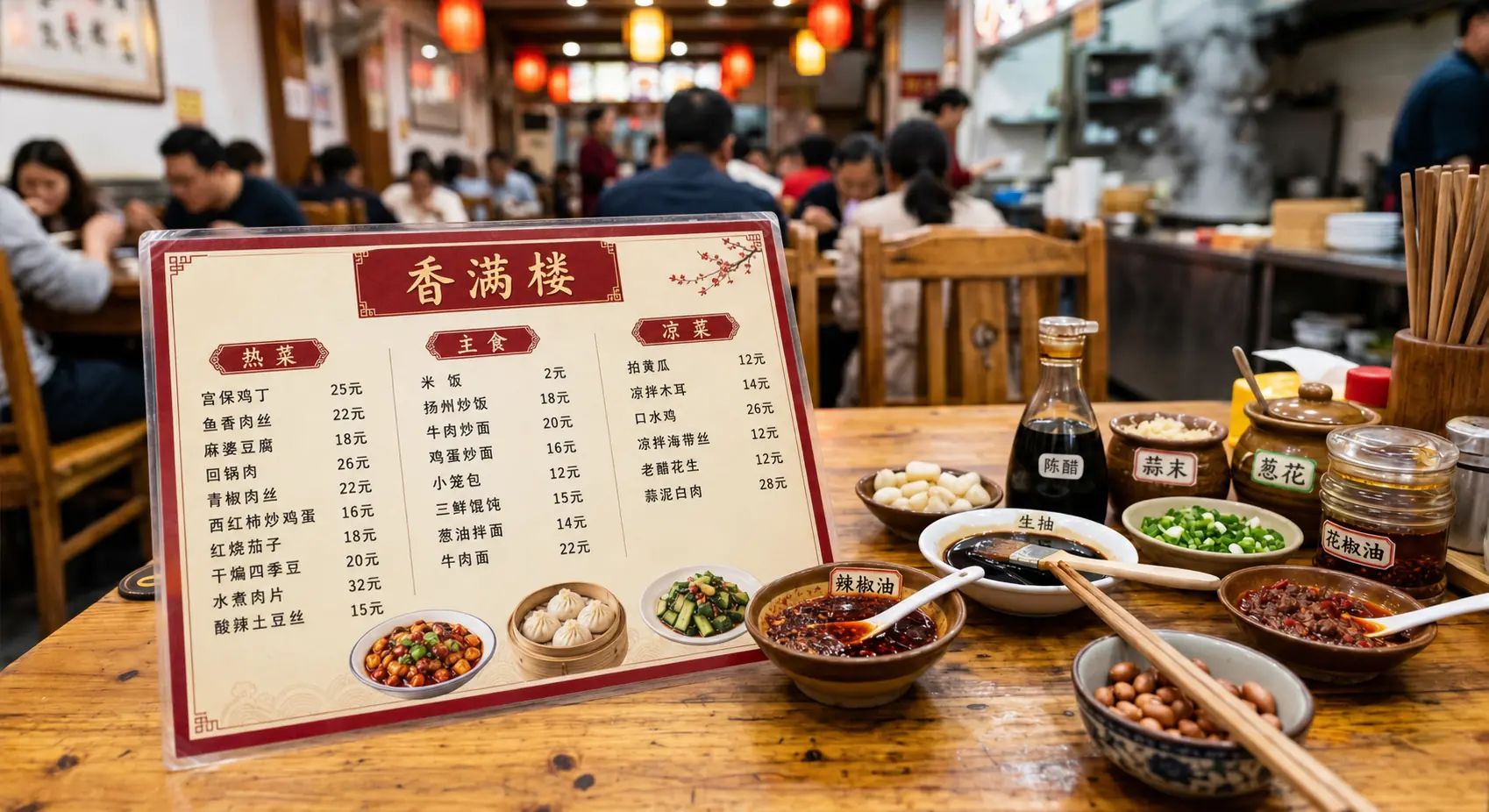
Allergy dining feels harder in China because the risk often sits inside the cooking system rather than on the plate. A dish that looks simple may still use soy sauce (酱油), oyster sauce (蚝油), sesame paste (芝麻酱), shrimp skin (虾皮), meat broth, chili oil, shared frying oil, or a wok that just handled another order.

What changes the risk
Shared dishes, compound sauces, family-style serving, busy peak-hour kitchens, and staff who may interpret "I cannot eat this" as preference rather than medical severity.
This guide gives you a practical system for restaurants, delivery apps, labels, and emergency response. For everyday stomach-risk habits, pair it with our food safety and drinking water tips.
Shared dishes need extra discipline
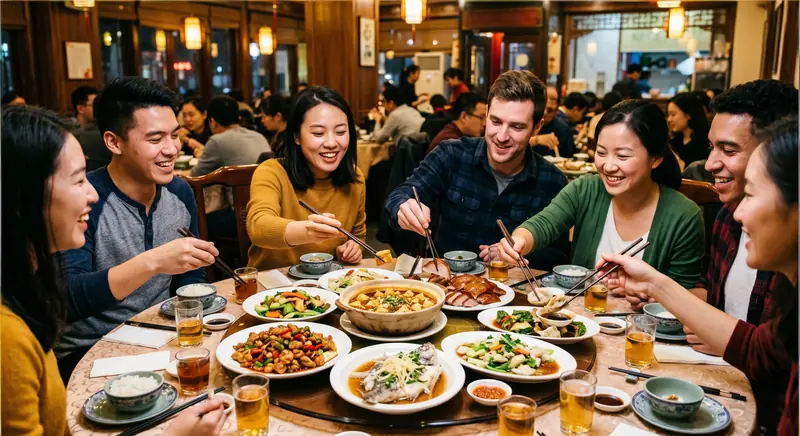
Even if your own order is simple, serving chopsticks, dipping sauces, communal hotpot broth, and family-style plates can move allergens around the table.
When reaction risk is severe
Choose simpler formats, plated meals, international hotel restaurants, or chain restaurants with more standardized staff routines.
Preference language is not allergy language
In Chinese dining culture, "I do not eat this" (我不吃这个) can sound like a preference. For medical risk, write and show "I am severely allergic" (我严重过敏), then list the exact allergens and cross-contact request. The distinction changes how seriously the kitchen may treat the order.
Build Your Allergy Safety Kit
Preparation lowers risk more than any one restaurant choice. Treat your allergy setup like travel health planning, not like a casual note in your phone. For vaccines, insurance, and prescription packing, start with our pre-trip health preparations guide.
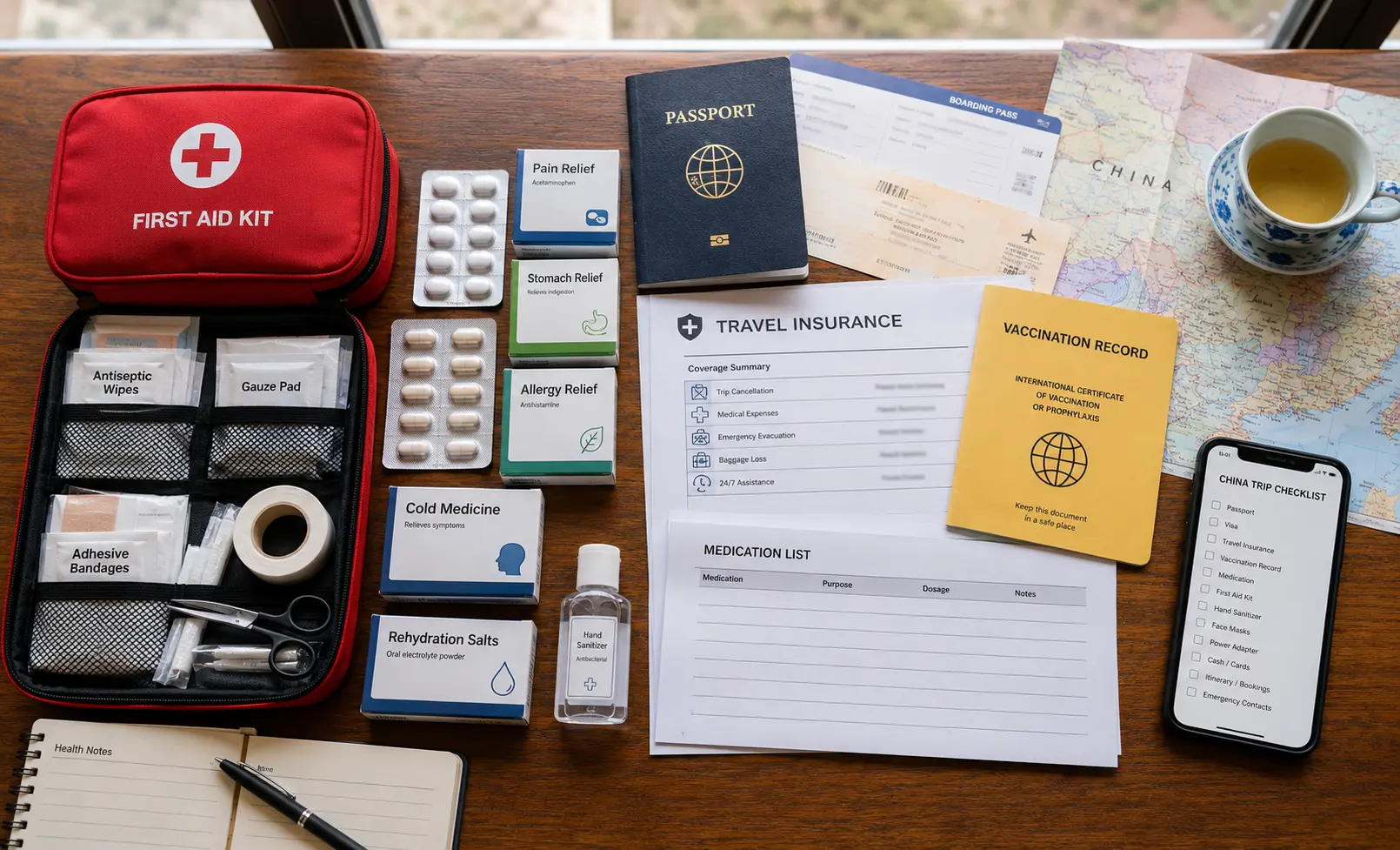
Medication plan
Pack medication in two places, but do not split your daily emergency set. If your clinician prescribed epinephrine/adrenaline auto-injectors, carry the prescribed number with you at all times - many action plans use two auto-injectors - and keep any extra backup separately only after your daily carry set is covered. Check expiry dates, keep English documentation, and make sure a travel partner knows the sequence before the first meal.
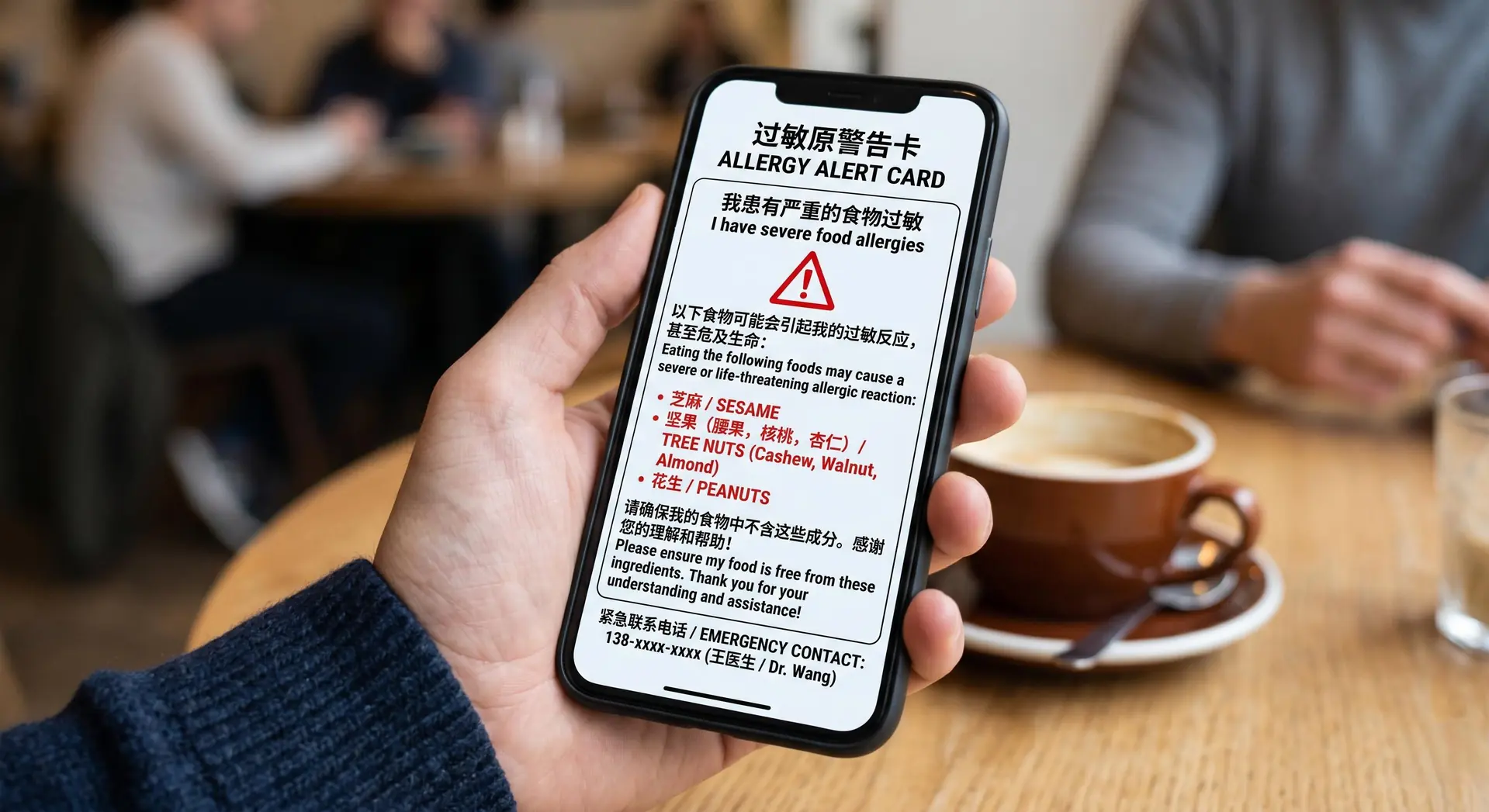
Bilingual card
Prepare a high-clarity bilingual allergy card. Use both digital and printed versions. Include your exact allergens, a statement that even a small amount can cause a dangerous reaction, a request to avoid shared oil and cross-contact, and a line that allows staff to say they cannot guarantee safety.
Card-ready line: 我对花生和坚果严重过敏,少量也可能引发严重过敏反应。请不要使用同一锅油、同一口锅或同一套工具。如果不能保证,请直接告诉我。 - I have a severe peanut and tree nut allergy. Even a small amount can cause a serious reaction. Please do not use shared oil, a shared wok, or shared tools. If you cannot guarantee this, please tell me directly.
- Save offline tools: a translation app that works in China, essential Chinese phrases, hospital map pins, insurer hotline, hotel address, and allergy phrases.
- Carry a paper backup: phone batteries die, screens crack, and some kitchens work better from a printed card.
- Let staff decline: include a sentence that says "If safety cannot be guaranteed, please tell me directly."
- Plan arrival meals: make day-one meals boring and controlled before you experiment with complex dishes.
High-Risk Ingredients and Diet Traps
Most mistakes happen in seasoning systems, not the obvious main ingredient. Your personal trigger list should include Chinese ingredient names, hidden forms, and high-risk cooking formats.
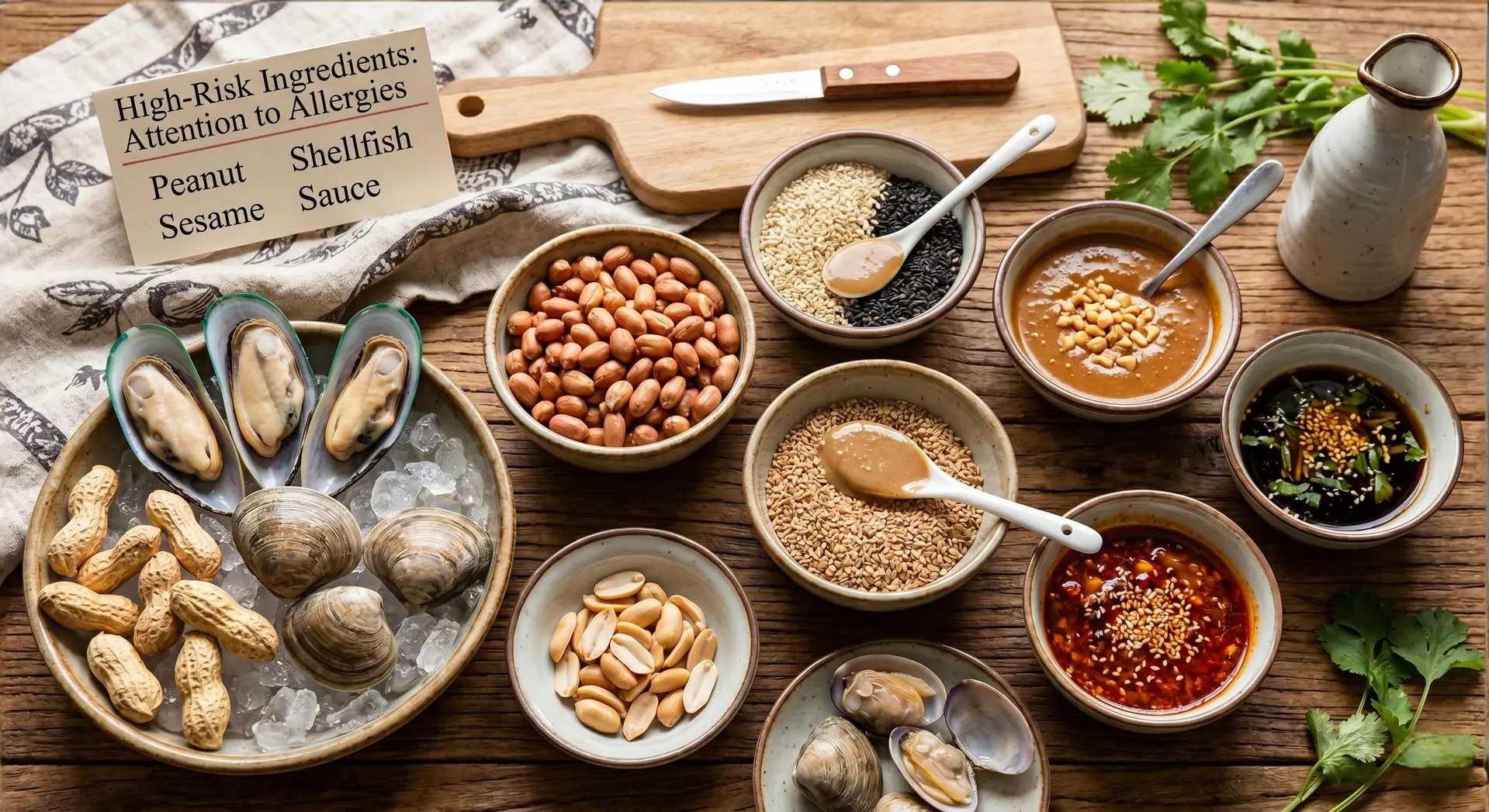
Build the list before each meal
For nuts, ask about peanut oil (花生油), peanuts (花生), tree nuts (坚果), sesame (芝麻), sesame oil (芝麻油 / 香油), sesame paste (芝麻酱), and nut crumbs. For shellfish, ask separately about shrimp (虾), crab (蟹), shellfish (贝类), oyster sauce (蚝油), shrimp skin (虾皮), dried seafood, and seafood seasoning blends.
For gluten, treat standard soy sauce (酱油), marinades, batter, vinegar blends, and shared frying oil as high-risk until checked.
Common Allergy Patterns
Peanut and tree nuts
Watch for: Gongbao-style dishes (宫保), cold mixed dishes, chili oils, desserts, nut crumbs, peanut oil (花生油), peanuts (花生), and tree nuts (坚果).
Response: show exact names and ask about oil, sauce, and topping separately.
Shellfish and fish
Watch for: shrimp (虾), crab (蟹), shellfish (贝类), oyster sauce (蚝油), shrimp skin (虾皮), fish sauce (鱼露), fish stock (鱼汤), fish powder (鱼粉), dried seafood, and seafood seasoning blends.
Response: ask even for non-seafood dishes, especially stir-fries and sauces.
Gluten or celiac disease
Watch for: wheat (小麦), flour (面粉), noodles (面条), wheat gluten (面筋), standard soy sauce (酱油), battered foods, marinades, and shared fryer oil.
Response: rice-based dishes are not gluten-safe if the sauce system or fryer is unknown.
Dairy, egg, soy, and sesame
Watch for: milk (牛奶), milk powder (奶粉), cream (奶油), butter (黄油), whey (乳清), egg (鸡蛋), egg wash (蛋液), mayonnaise (蛋黄酱), soybeans (大豆 / 黄豆), soy products (豆制品), soy sauce (酱油), doubanjiang (豆瓣酱), sesame (芝麻), sesame oil (芝麻油 / 香油), and sesame paste (芝麻酱).
Response: drinks, bakery items, sauces, and "plant milk" counters still need strict separation checks.
Gluten / celiac card line
我不能吃含麸质的食物,包括小麦、面粉、面条、面筋、普通酱油、裹粉和共用炸油。请问这个菜能确认安全吗?如果不能确认,请直接告诉我。
Use this as written text, not only spoken audio. Celiac travelers should prioritize a clinician-reviewed card and avoid relying on a server's memory of the sentence.
Strict Diet Restrictions
Vegetarian, vegan, halal, kosher, and religious dietary restrictions need their own questions. Vegetable dishes can still use lard, chicken stock, meat broth, minced pork, oyster sauce, fish sauce, or shared tools. Halal travelers should look for clearly Muslim-run restaurants or dedicated halal signs, then still confirm alcohol, broth, and shared cooking surfaces if strict compliance matters.
Do not rely on the English menu alone
English menu words like "vegetable," "tofu," "rice," or "noodles" describe the main item, not the broth, oil, sauce, topping, or kitchen separation. Show the Chinese trigger terms before ordering, then ask staff to say no if they cannot check.
Restaurant Communication Script
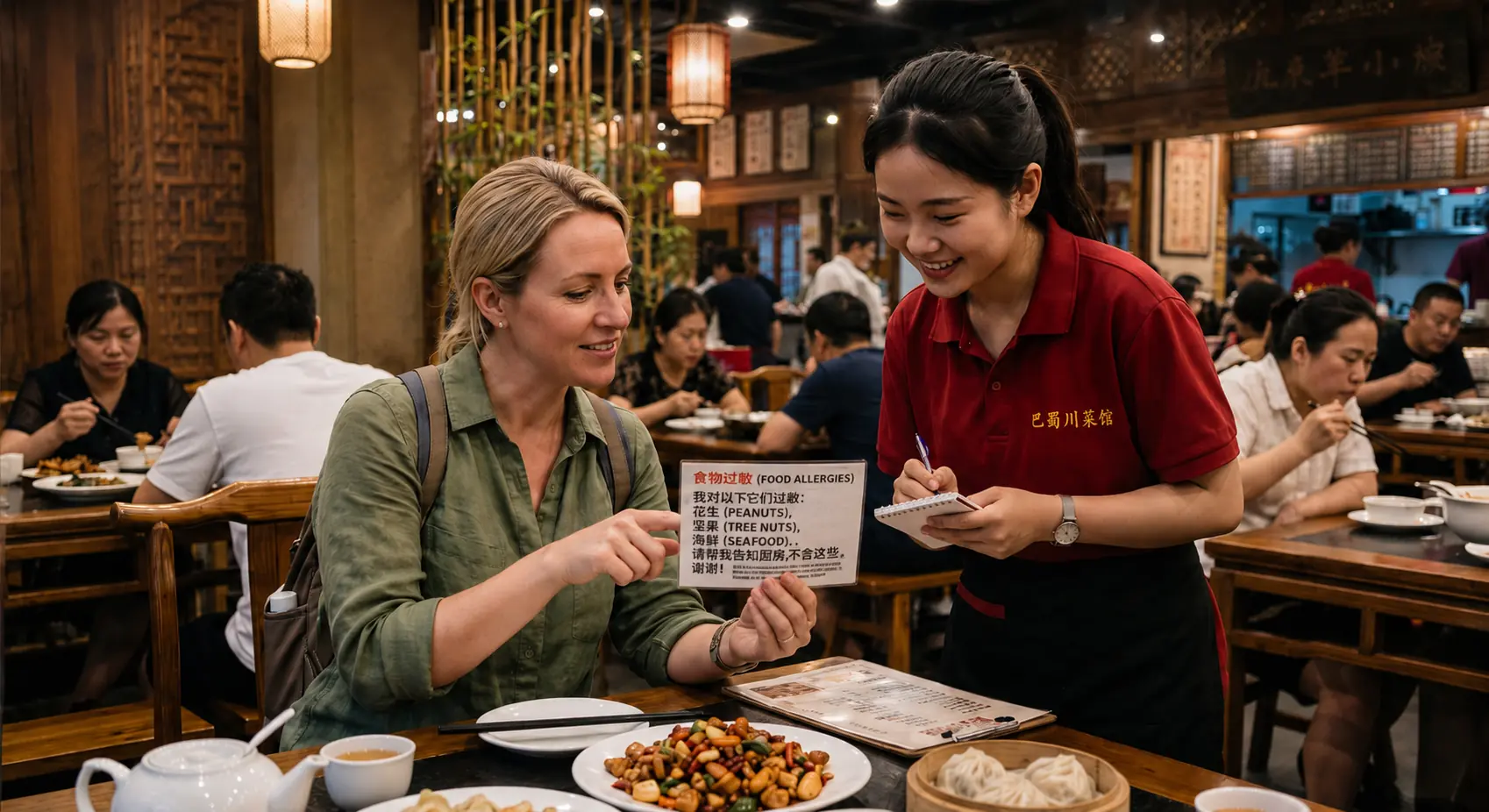
A short written script works better than a long verbal explanation. Show the card before ordering, point to the exact allergens, and ask one safety question at a time.
- State severity first- This is a severe allergy, not a preference. Even a small amount is dangerous.
- Name trigger ingredients- List the exact allergens in Chinese and English. Include oils, sauces, powders, broths, and toppings.
- Ask about cross-contact- Ask whether separate tools, oil, wok, and preparation surfaces can be used.
- Give staff permission to refuse- If safety cannot be guaranteed, ask them to tell you directly.
- Choose a simpler backup- Move to ingredient-verified packaged food, hotel dining, or another restaurant when the answer is vague.
Before the rush
Communicate before peak rush when possible.
Test order
Test with one low-risk dish before placing a bigger order.
Standardized routines
Chain restaurants and international hotels often have more standardized process language.
Higher-risk formats
Treat hotpot (火锅), mala tang (麻辣烫), night-market stalls, buffet lines, and shared griddles as higher-risk formats.
| English | Chinese | Pinyin | Say It Like… |
|---|---|---|---|
| I have a severe food allergy. | 我有严重的食物过敏。 | wǒ yǒu yán zhòng de shí wù guò mǐn | waw yo yen-jong duh shir-woo gwaw-min |
| I am allergic to peanuts. | 我对花生过敏。 | wǒ duì huā shēng guò mǐn | waw dway hwah-shung gwaw-min |
| I am severely allergic to shrimp, crab, and shellfish. | 我对虾、蟹、贝类严重过敏。 | wǒ duì xiā, xiè, bèi lèi yán zhòng guò mǐn | waw dway shyah, shyeh, bay-lay yen-jong gwaw-min |
| I am also allergic to fish. | 我对鱼也过敏。 | wǒ duì yú yě guò mǐn | waw dway yoo yeh gwaw-min |
| Does this dish contain peanut oil, sesame paste, or oyster sauce? | 这个菜里面有花生油、芝麻酱或蚝油吗? | zhè ge cài lǐ miàn yǒu huā shēng yóu, zhī ma jiàng huò háo yóu ma | juh-guh tsai lee-myen yo hwah-shung yo, jir-mah jyahng hwaw haow yo mah |
| Please do not use shared oil or shared cookware. | 请不要使用共用油或共用锅具。 | qǐng bú yào shǐ yòng gòng yòng yóu huò gòng yòng guō jù | ching boo yaow shir-yong gong-yong yo hwaw gong-yong gwaw-jyoo |
| If safety cannot be guaranteed, please tell me directly. | 如果不能保证安全,请直接告诉我。 | rú guǒ bù néng bǎo zhèng ān quán, qǐng zhí jiē gào sù wǒ | roo-gwaw boo nung baow-jung ahn-chwen, ching jir-jyeh gaow-soo waw |
Apps, Labels, and Backup Food
Apps and labels improve visibility, but they do not remove allergen risk. Treat them as written evidence and screening tools, then still confirm with staff when a kitchen is involved.
Delivery note
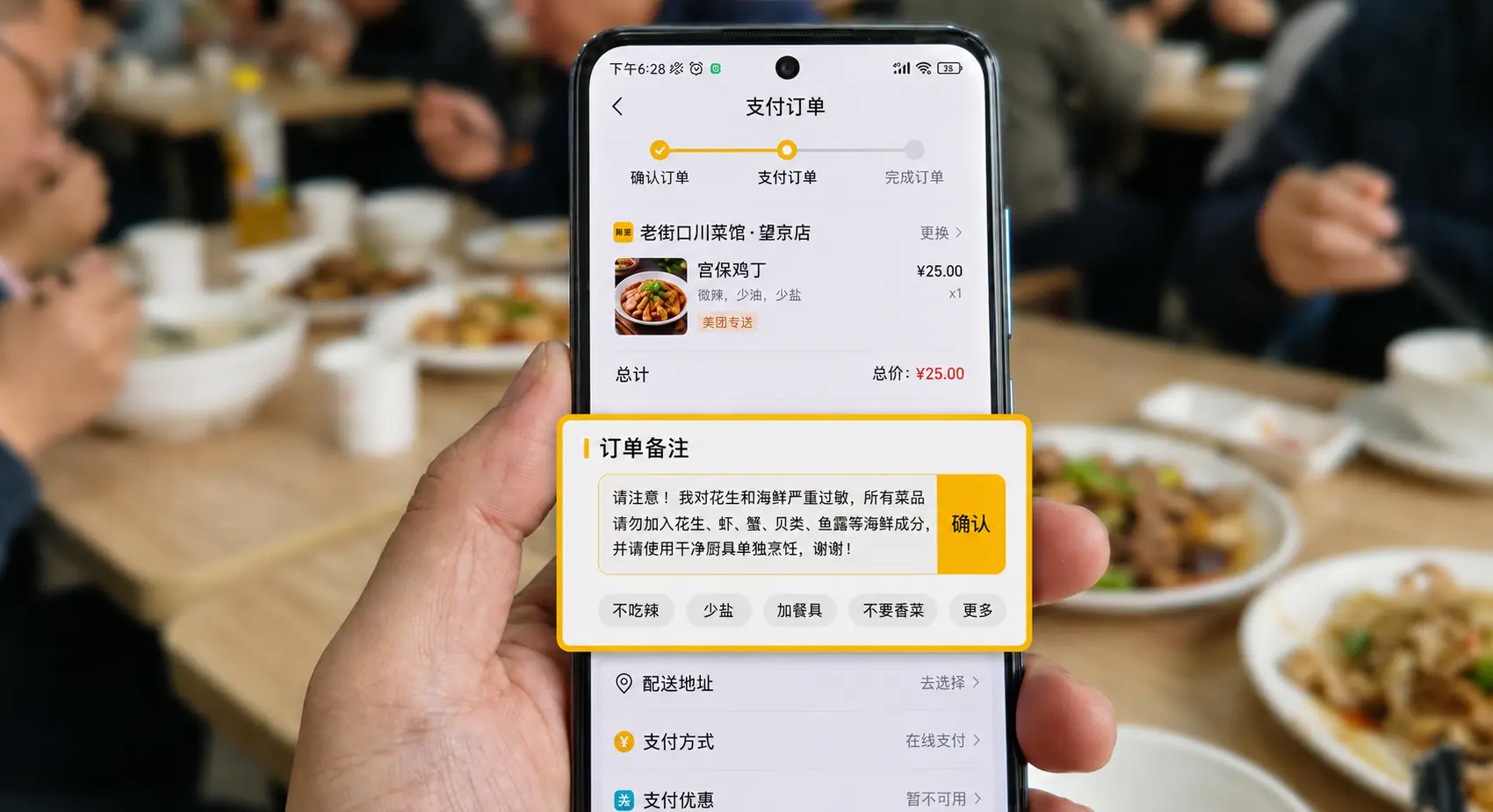
For severe allergies, confirm before the order is accepted or before preparation starts whenever the app allows it.
Vague reply
Cancel if the answer is generic, delayed, or avoids the exact allergen question.
Lower-risk app sequence
Shortlist stores with detailed menus, prefer simple dishes, send a strict written note, reconfirm before preparation when possible, and choose a backup if the response is unclear.
- Good backup foods: ingredient-verified sealed snacks you already know are safe, fruit you can wash and peel, plain yogurt if dairy is safe, and rice crackers only after checking ingredients and allergen warnings.
- Do not assume clean separation: bakery tongs, tea-drink shakers, shared fryers, and deli counters can move allergens between products.
- Keep the hotel base stocked: a safe snack box prevents risky last-minute ordering after trains, late flights, or long sightseeing days.
Packaged food label routine
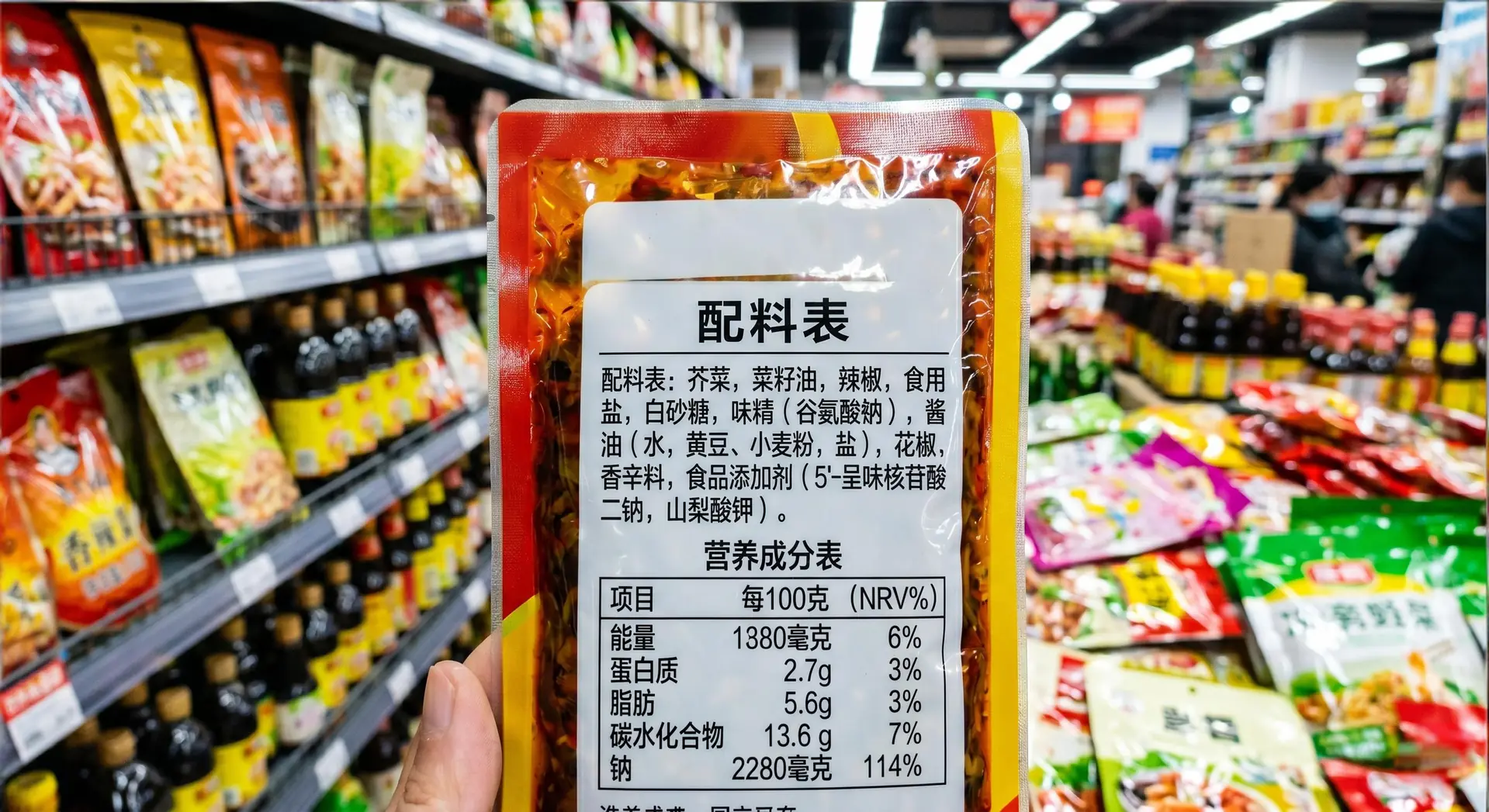
For packaged food, start with the ingredient list. Look for the ingredient list (配料表), allergen or warning wording when present, compound flavor powders, sauces, and unfamiliar additives. Prepackaged labels are useful screening tools, not safety guarantees. Label quality varies by product and brand, so translate unknown terms before purchase, buy small packs first, and build a verified snack box at your hotel for tired or hungry moments.
Emergency Response in China
Pre-decide your response flow before the trip so you do not improvise under stress. For hospitals, pharmacies, payment, and claim paperwork, see our doctors, pharmacies, and healthcare guide.
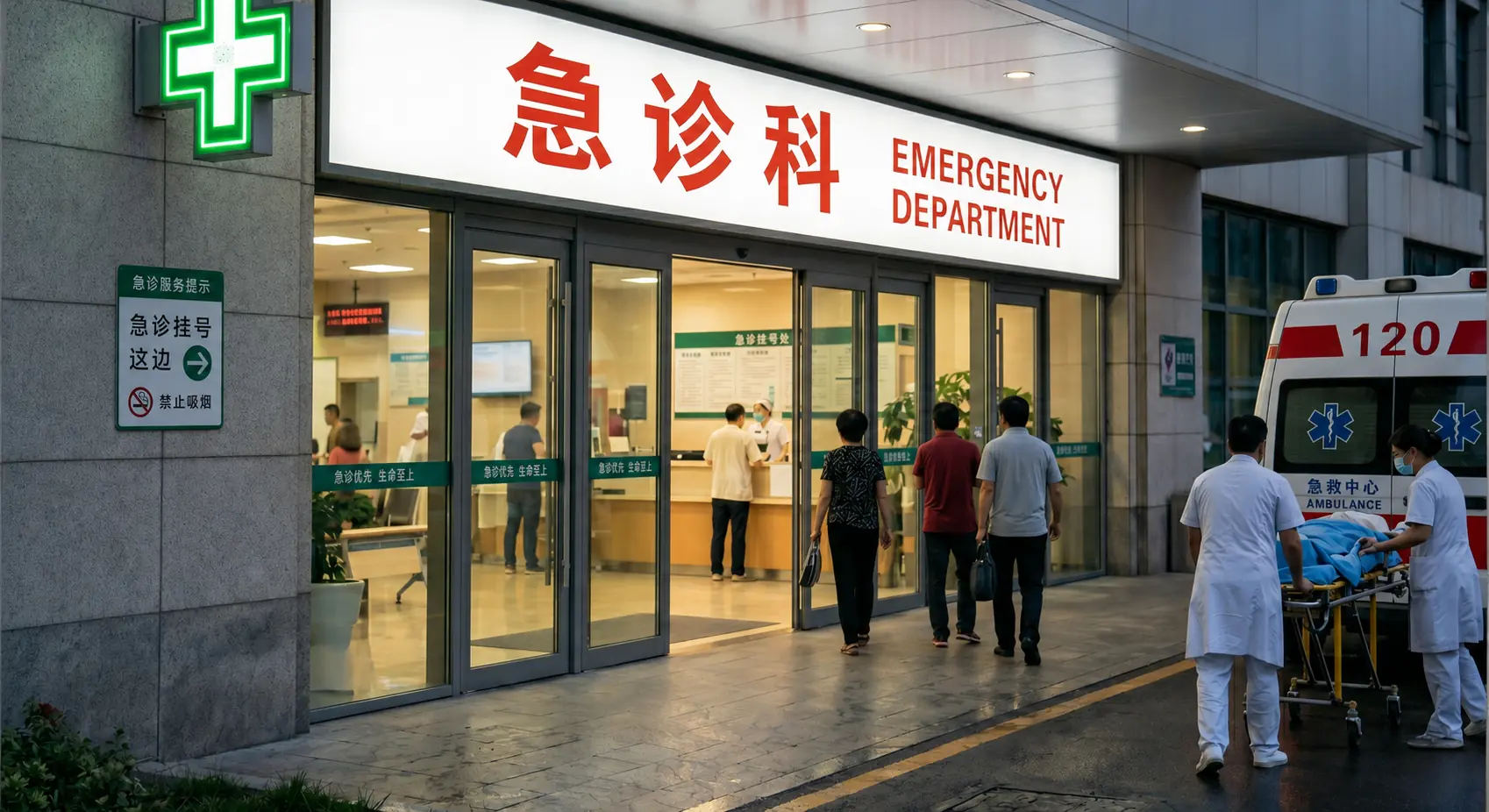
Emergency number
120
Call for ambulance help if symptoms are severe, fast-worsening, or match your emergency action plan. Give the location clearly and show the Chinese address from your maps app or hotel card. Use 120 for urgent medical rescue, not stable health questions or routine consultation.
Show at intake
Your allergy card, medication list, passport, insurer hotline, and the exact food or ingredient suspected.
Pre-save before you need it
Pre-save these in your maps app: nearest general hospital emergency department (急诊), nearest 24-hour pharmacy (24小时药房), your hotel front desk contact, and your hotel address in Chinese.
General emergency sequence, always following your own clinician plan first:
Call 120 immediately for red-flag symptoms
Throat or tongue swelling, trouble breathing or swallowing, wheezing, fainting, confusion, blue/grey/pale lips or tongue, or symptoms that match your personal emergency plan need urgent help. This is not diagnosis; follow your clinician plan.
- Stop eating immediately- Keep the suspected food, receipt, or photo if it can help clinicians later.
- Use prescribed epinephrine/adrenaline and call 120- Follow your personal action plan, use prescribed auto-injector medication if indicated, then call 120 immediately or ask someone nearby to call.
- Do not wait for translation clarity- If breathing, throat, fainting, confusion, or fast-worsening symptoms appear, prioritize emergency response over perfect wording.
- Monitor symptoms in transit- Follow your clinician plan for additional medication timing and keep the auto-injector packaging if clinicians need to see it.
- Show the allergy card- At hospital intake, show allergens, medicines used, current symptoms, passport, insurer details, and Chinese address.
Medical note: this article is travel risk guidance, not a substitute for professional medical diagnosis or treatment.
City Strategy and Common Mistakes
China is not one uniform dining environment. Your allergy or dietary strategy should shift by city size, cuisine complexity, kitchen format, and how tired you are on that travel day.
Big-city arrival days
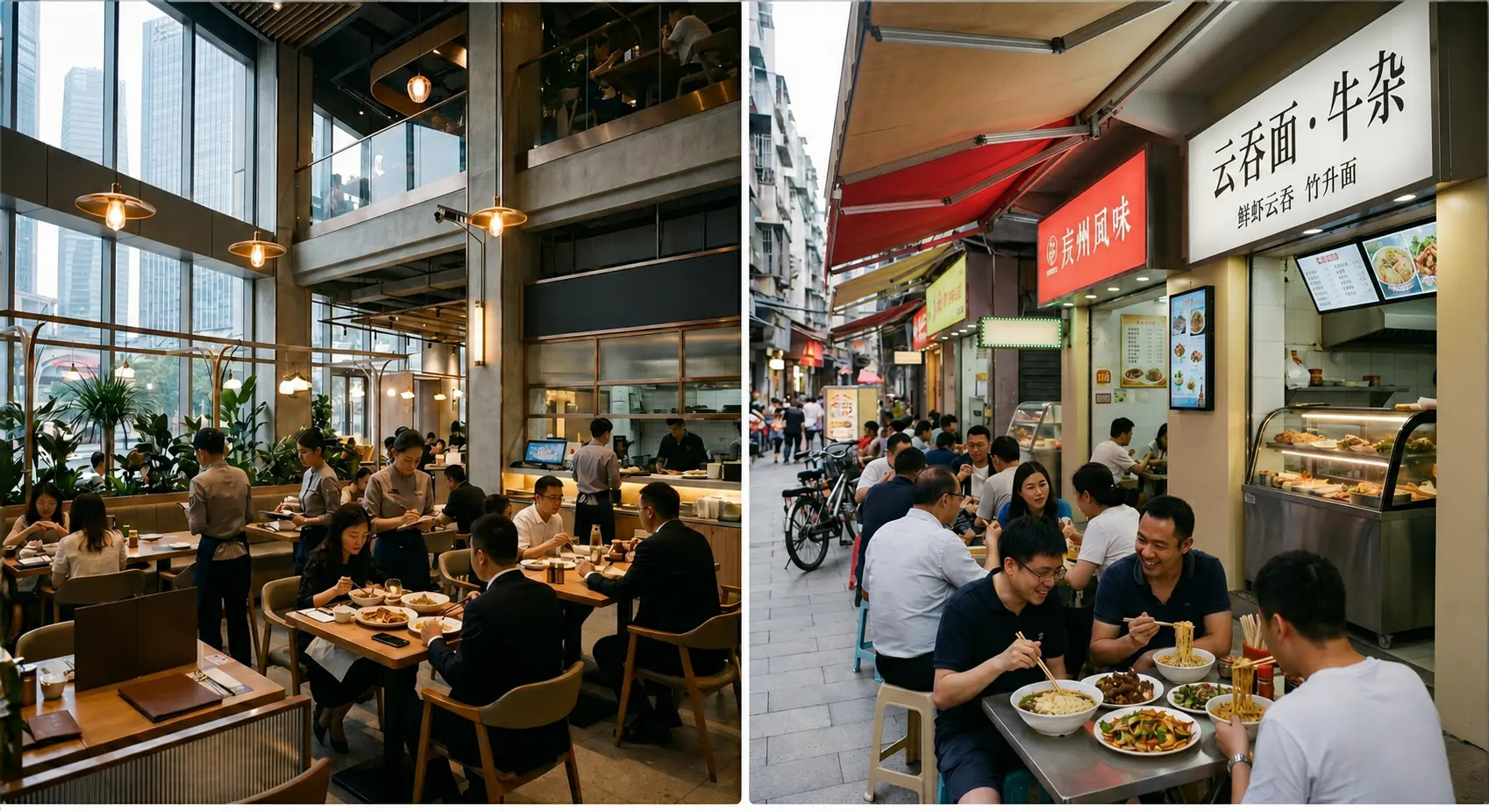
Beijing (北京), Shanghai (上海), Guangzhou (广州), and Shenzhen (深圳) usually give you more international hotels, chains, malls, and staff exposure to foreign dietary requests.
Complex flavor cities
Chengdu (成都), Chongqing (重庆), and similar food cities are workable, but sauces, chili oils, broths, shared pots, and spice blends need stricter checks.
Smaller stops
In lower-tier cities and county stops, increase your ratio of self-controlled snacks, pre-checking, and off-peak meals.
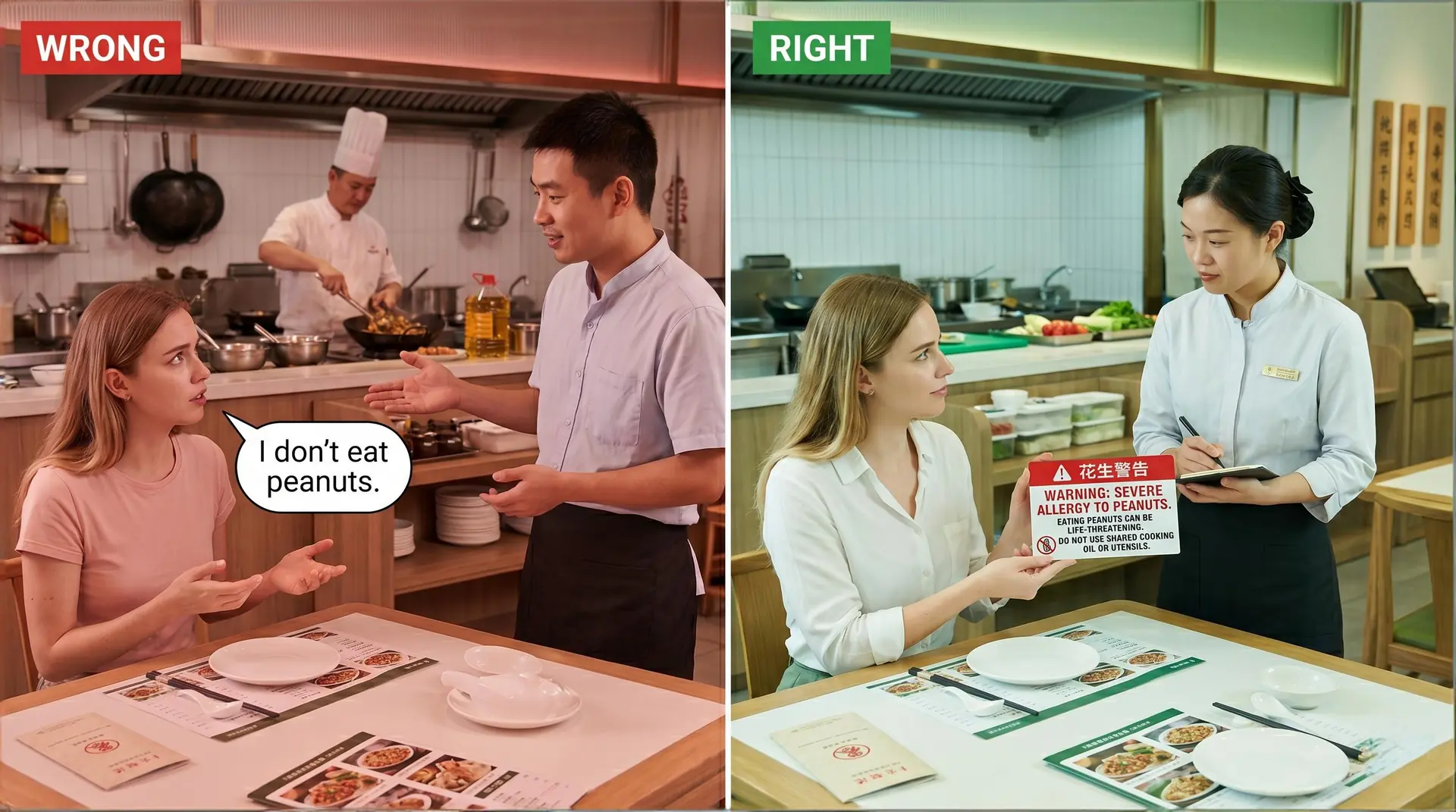
Mistakes to avoid
- Saying "I do not eat this" without saying "severe allergy"
- Asking only about main ingredients instead of oils, sauces, broths, or powders
- Trying complex safety communication at peak service hours
- Treating "not listed" as "not present"
- Relying only on speech and skipping written card backup
- Starting day one with hotpot, mala tang, buffet, or night-market formats
- Leaving delivery notes but skipping final message confirmation
- Traveling without a pre-saved ER and pharmacy route
Frequently Asked Questions
Usually yes for personal medical use, but keep them in original packaging, carry a prescription or clinician letter with generic names and dose, and keep a Chinese allergy and medication card. Carry the prescribed number with you at all times - many action plans use two auto-injectors - and verify with your airline or embassy if carrying large quantities or other restricted medicines.
Sources checked for this guide
- CDC China traveler guidance checked for carrying a local-language card with serious allergies, chronic conditions, and generic medication names: CDC Travelers Health: China
- CDC medicine-abroad guidance checked for prescription documentation, original labeled containers, and planning for restricted medications: CDC Yellow Book: traveling with medications
- NHS anaphylaxis guidance checked for red-flag symptoms, using adrenaline auto-injectors, calling emergency services, carrying two auto-injectors, and checking expiry dates: NHS: anaphylaxis
- FARE dining-out guidance checked for chef cards, cross-contact language, carrying epinephrine, and the need to be prepared even after careful planning: FARE dining out
- FARE emergency care plan checked for physician-signed allergy action plans and emergency contact information: FARE food allergy emergency care plan
- CDC restaurant allergy research checked for staff misunderstanding that small amounts of an allergen can be safe: CDC restaurant food allergy reactions
- Celiac Disease Foundation guidance checked for soy sauce, marinades, shared frying oil, and cross-contact risks for gluten-free travelers: Celiac Disease Foundation: sources of gluten
- Beijing official emergency-number guide checked for 120 first-aid calls and reporting patient symptoms clearly: Beijing emergency numbers
- Beijing Municipal Health Commission guidance checked for 120 as the unified national medical emergency rescue number and not a health-consultation line: Beijing 120 emergency guidance
Beyond This Guide
This guide gives you a safety framework, but your real trip still depends on your exact triggers, city route, dining style, and medical plan. Use these next-step guides to tighten the rest of your health and food setup:
- Seafood & shellfish allergy in China - oyster sauce, dried shrimp, broths, and Chinese allergy phrases for coastal and Cantonese dining.
- Food safety & drinking water tips - everyday stomach-risk prevention beyond allergy management.
- Emergency assistance & insurance claims - call order, claim files, and reimbursement rhythm.
- Translation apps that work in China - keep Chinese text, OCR, and offline packs ready for menus and labels.
- Essential Chinese phrases - save short written phrases as backup when voice translation is not enough.
Use these guides to choose simpler restaurant styles and lower-risk backup meals before you travel. Always verify ingredients directly with kitchen staff, and keep medical treatment and clinical decisions with licensed clinicians.
© gochinafreely.com — Original guide by Go China Freely.