Shanghai soup dumplings (小笼包) are easy to love and easy to eat wrong. A good basket should look delicate, hold a hot spoonful of broth inside, and collapse into pork, soup, vinegar, and ginger only after you control the first bite. This guide focuses on the dish itself: what to order, how to eat it, where to try it in Shanghai, and how to avoid the classic burnt-mouth mistake.
Executive Summary
What this guide covers
The soup-filled technique, first-order strategy, eating method, Shanghai shop contexts, queue timing, fillings, and dietary risks.
Best first order
Order one basket of classic pork soup dumplings first, then add crab roe or shrimp only after you understand the basic pork version.
Best first area
Yu Garden is easiest for heritage context; Huanghe Road and People's Square are better when the meal matters more than the sightseeing backdrop.
¥25-120
Common casual spend
Morning-lunch
Best eating window
Pork first
Safest baseline order
Use a spoon
Burn-avoidance rule
What Shanghai Soup Dumplings Are and Why
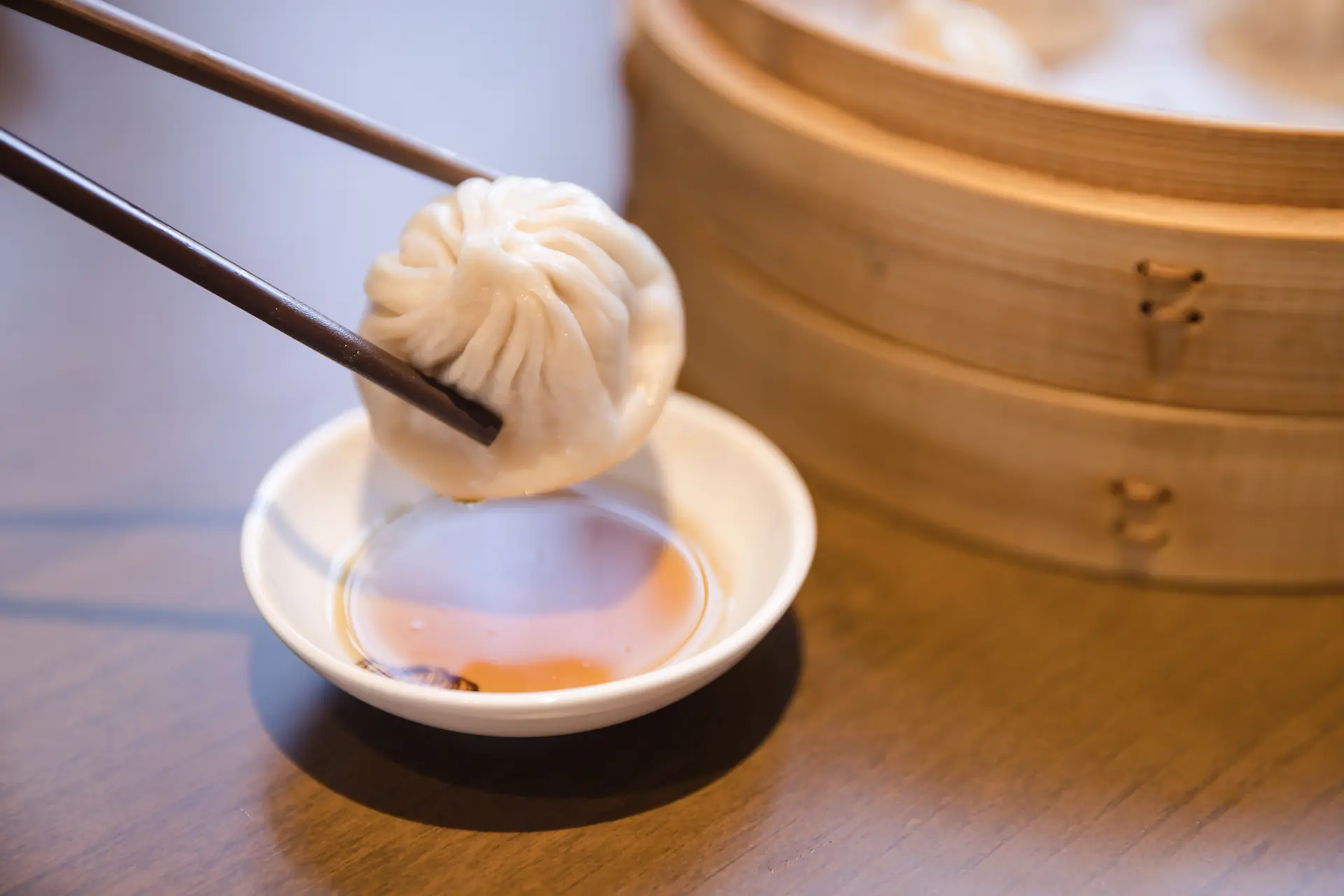
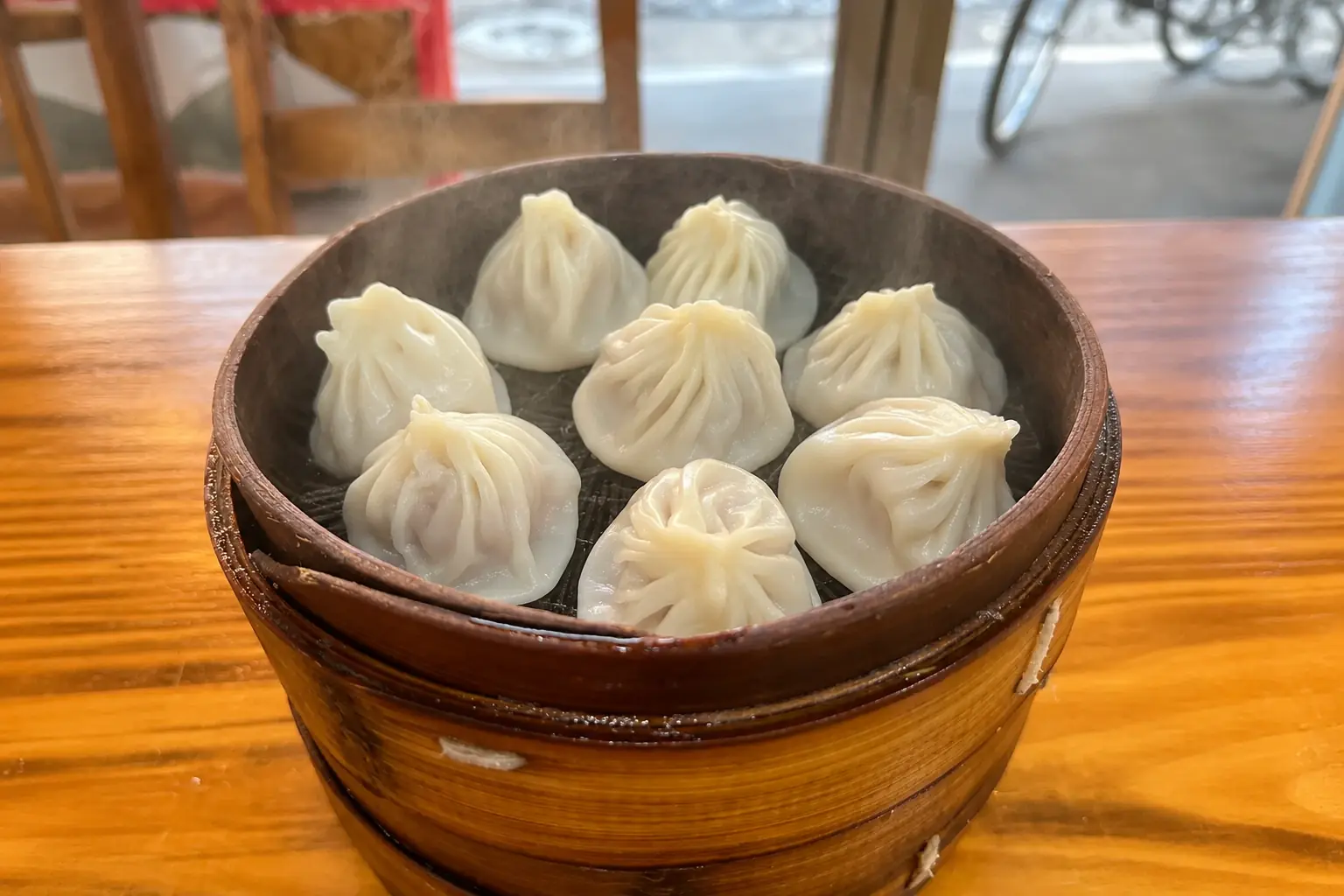
Shanghai soup dumplings (小笼包) are small steamed buns served in bamboo baskets. English menus often call them soup dumplings, but do not confuse them with northern boiled dumplings, wontons, or fluffy baozi. They are thin-skinned, sealed at the top, filled with minced meat and broth, and eaten hot with a spoon.
The Shanghai municipal government describes Nanxiang soup dumplings as a specialty from Nanxiang town in Jiading district, known for thin skin, generous filling, savory juice, and delicate shape. Its 2026 food feature also traces the modern Nanxiang style to Huang Mingxian in 1871, when meat jelly in the filling helped create the signature soup pocket.
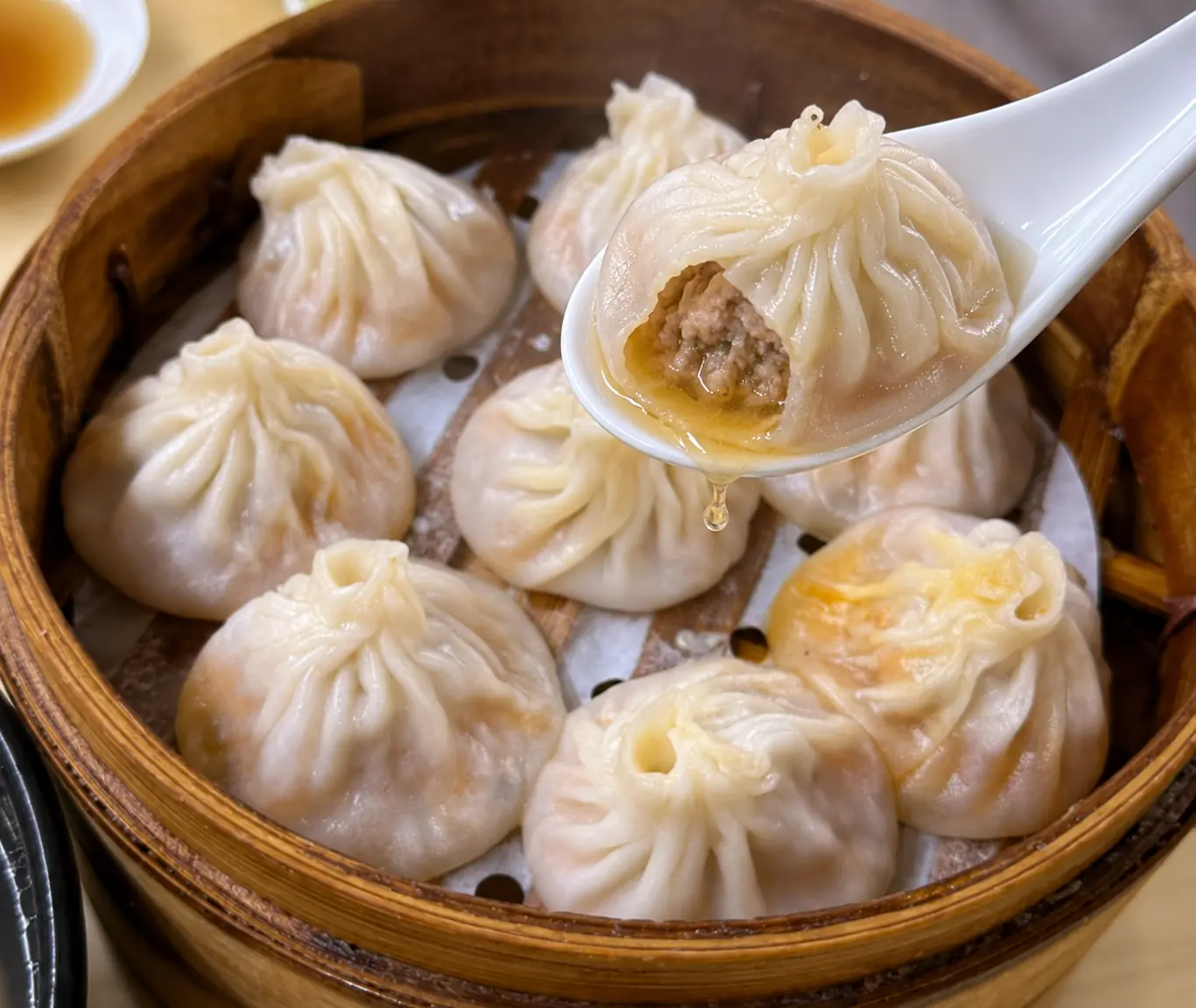
That origin story matters less to a hungry traveler than the eating logic. A good basket is not just "juicy." The wrapper must be thin but strong, the filling should taste rich without turning greasy, and the broth should feel hot, clean, and savory rather than muddy.
Do not judge them like jiaozi
If your mental image of Chinese dumplings is a plate of boiled jiaozi, reset it here. Soup dumplings are steamed buns with hot broth inside, so the eating method, texture, and failure points are completely different.
How Soup Gets Inside Shanghai Xiaolongbao
The soup is not poured into each dumpling after wrapping. The classic method is to mix chilled meat jelly or pork-skin jelly into the filling. When the dumplings steam, that jelly melts into broth inside the wrapper.
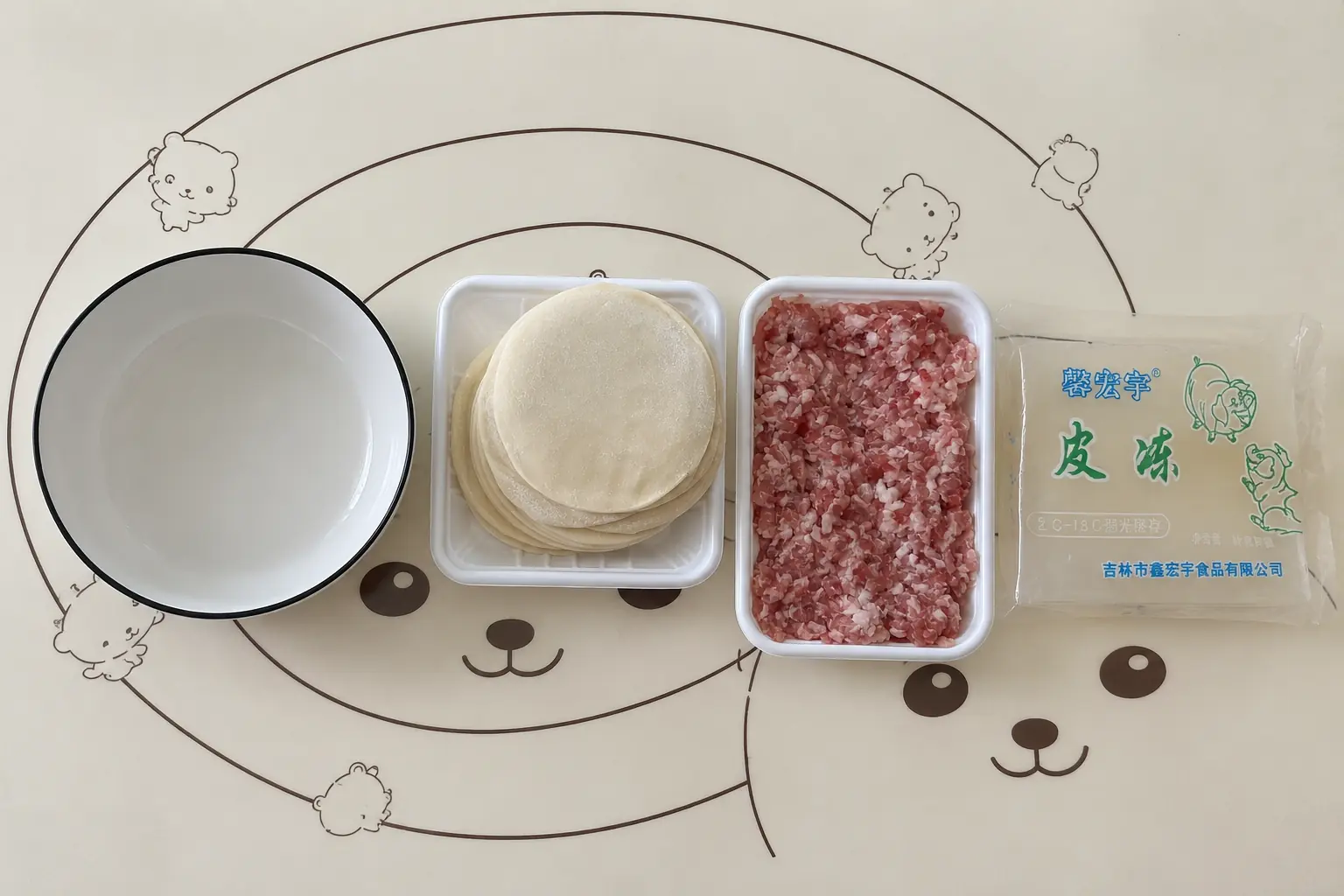
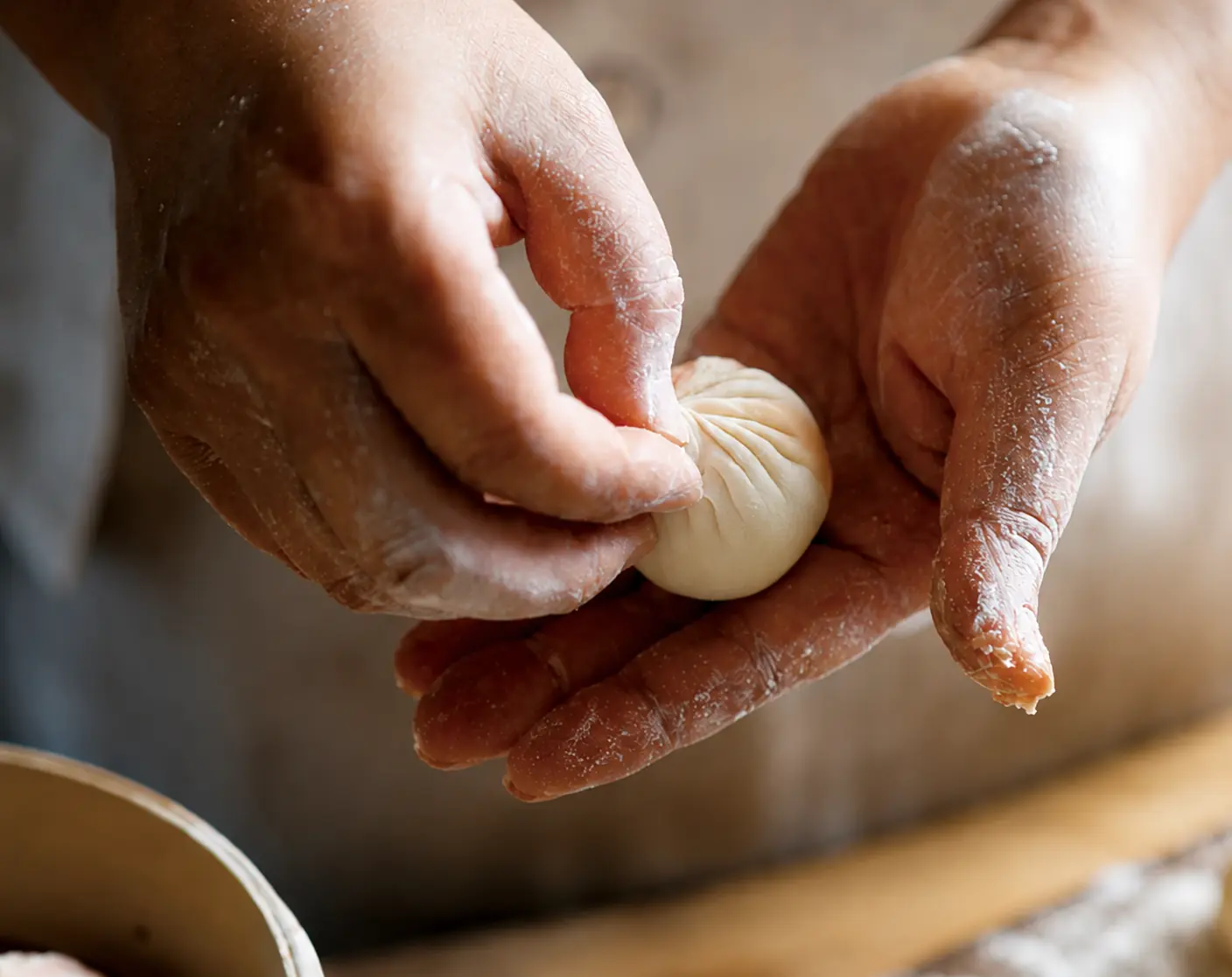
That is why the wrapper matters so much. Too thick, and the dumpling feels like a small baozi. Too thin or weak, and the soup leaks before it reaches your spoon. Shanghai's official 2026 specialty-food page says Nanxiang soup dumplings have at least 18 pleats and turn semi-translucent when steamed. You do not need to count folds at the table, but you should notice whether the skin looks delicate and intact.
The filling is usually pork-based. Even crab roe versions often use pork as a base, with crab added for sweetness and aroma. That detail matters for travelers avoiding pork or seafood.
| Part | What It Does | What to Notice |
|---|---|---|
| Wrapper | Holds the soup without turning bready | Thin, slightly translucent, not torn |
| Filling | Gives pork, crab, shrimp, or seasonal flavor | Juicy but not loose or grainy |
| Meat jelly | Melts into hot broth during steaming | Soup should taste savory and clean |
| Ginger vinegar | Cuts richness and cools the bite | Use lightly after tasting one plain |
How to Eat Soup Dumplings Without Burns
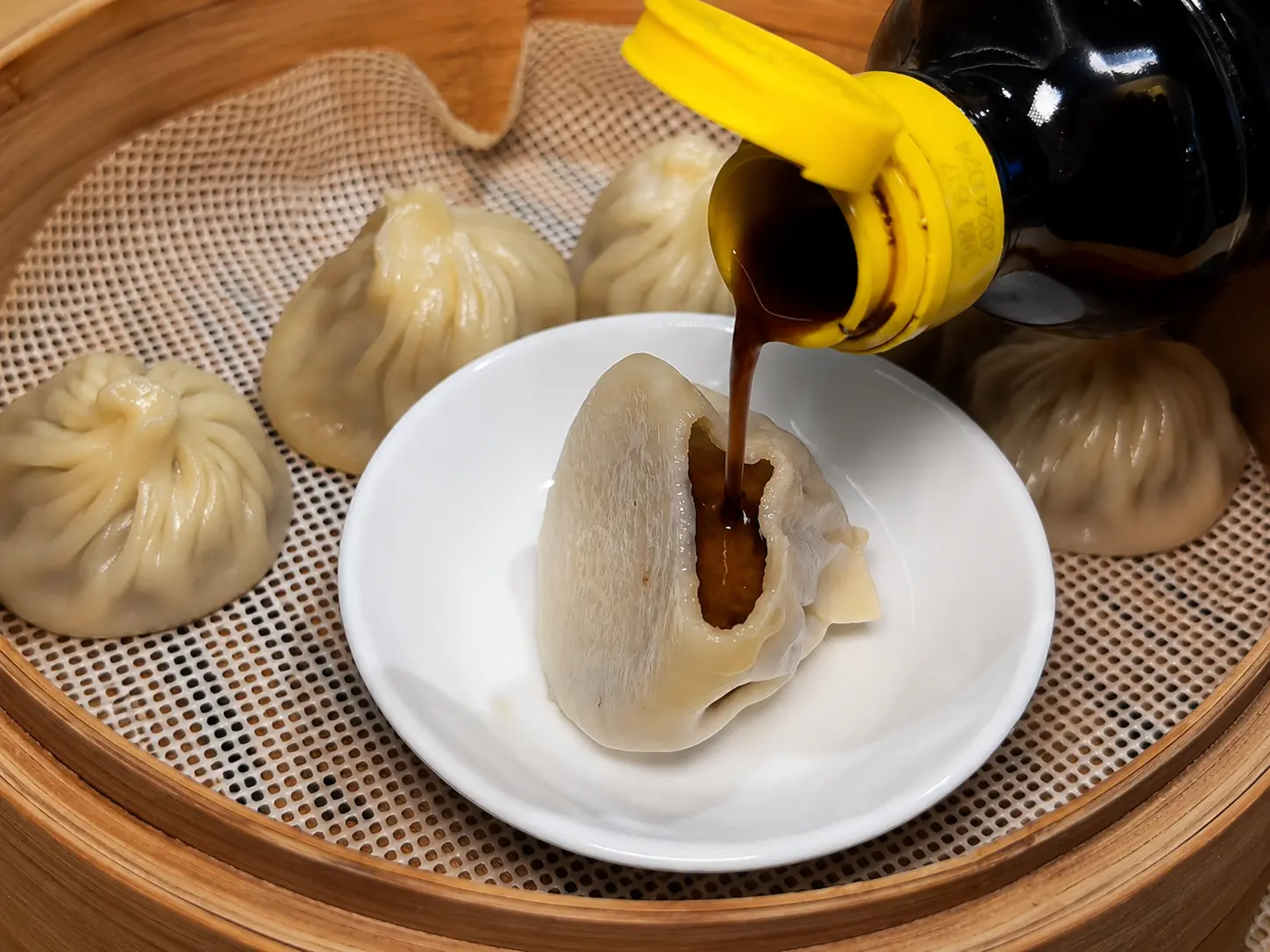
The worst first-timer move is biting through a whole soup dumpling as if it were a regular dumpling. Freshly steamed broth can be extremely hot, and the skin may burst exactly when you are least ready.
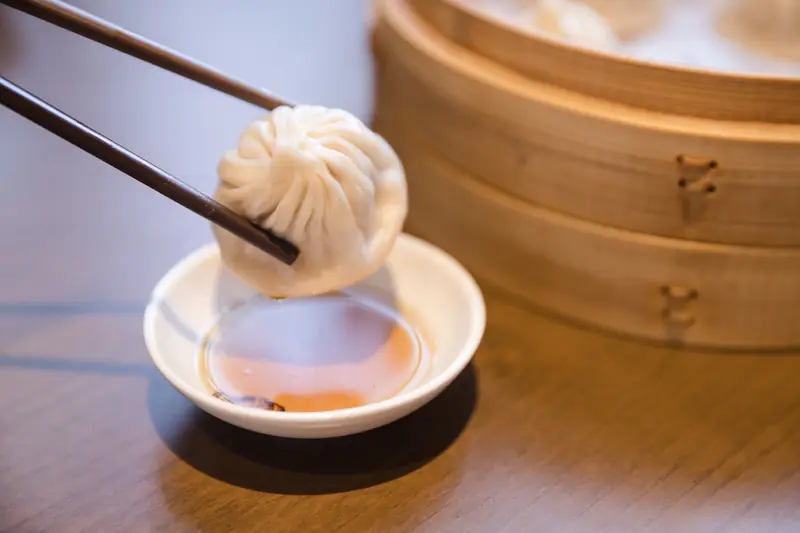
Shanghai's official English page gives a useful rule of thumb: lift gently, move slowly, make a small opening, then sip the soup. In practice, the method is simple:
- Lift gently- Pick up the dumpling by the folded top, not by squeezing the belly.
- Set it on a spoon- The spoon catches broth if the skin opens.
- Open a small window- Nibble or poke a small hole to release steam.
- Sip the broth- Let it cool for a moment before drinking.
- Add vinegar and ginger- Dip lightly, then eat the wrapper and filling.
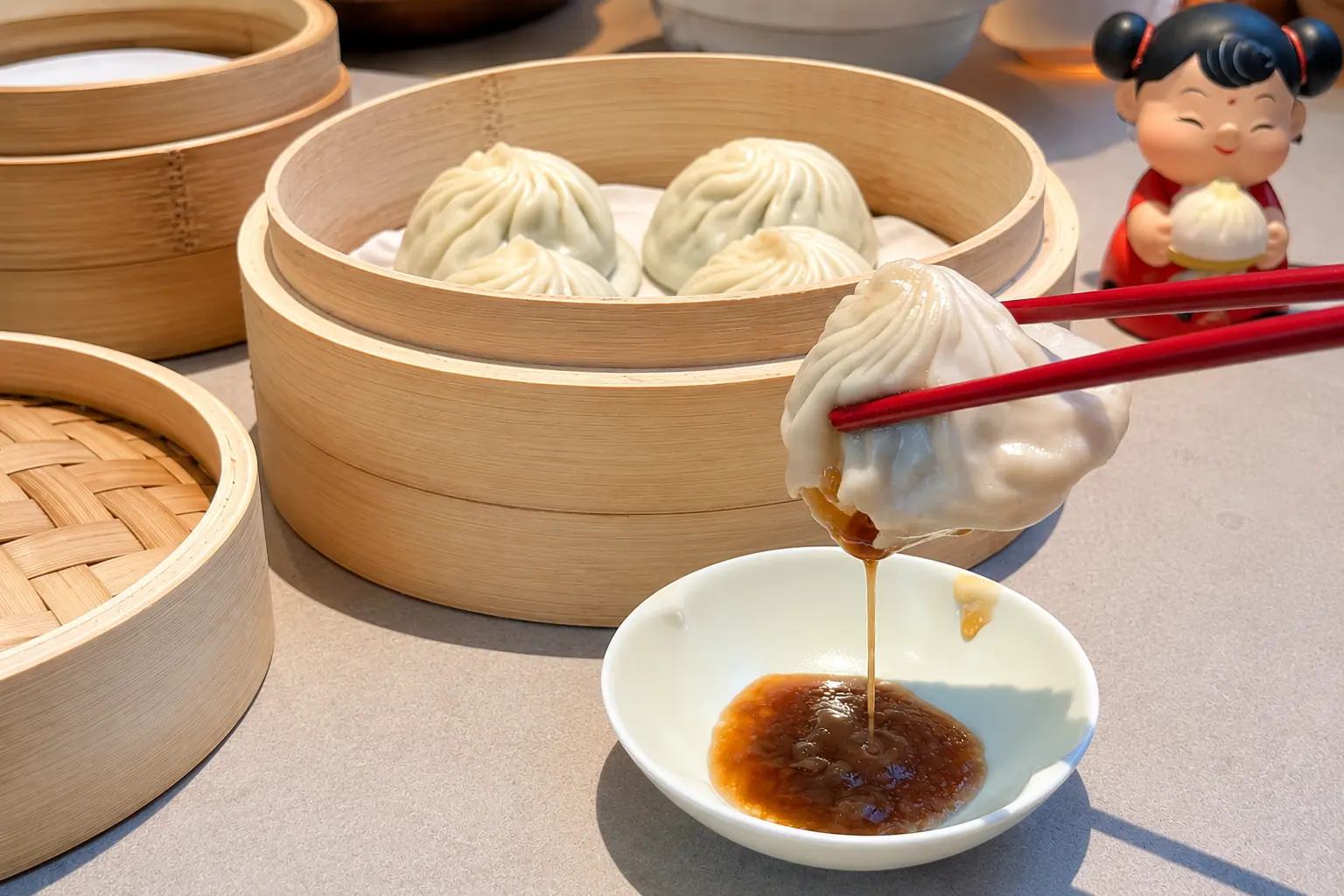
Do not flood the dumpling with vinegar before the first bite. Taste one plain or with very little ginger vinegar so you understand the broth. After that, adjust.
Hot soup is the real hazard
Soup dumplings are safest when you slow down. Children, older travelers, and anyone sensitive to heat should let the dumpling sit on the spoon for a few seconds before opening it.
Pork, Crab Roe, and Seasonal Fillings
Classic pork soup dumplings are the baseline. Order them first because they reveal whether the restaurant can balance wrapper, broth, and filling without relying on expensive seafood.
Crab roe soup dumplings (蟹粉小笼) are richer, sweeter, more aromatic, and usually much more expensive. Autumn is the strongest season because hairy crabs are at their peak, though restaurants may sell crab versions year-round. Shrimp or three-delicacy versions can be lighter, but the exact filling changes by shop.
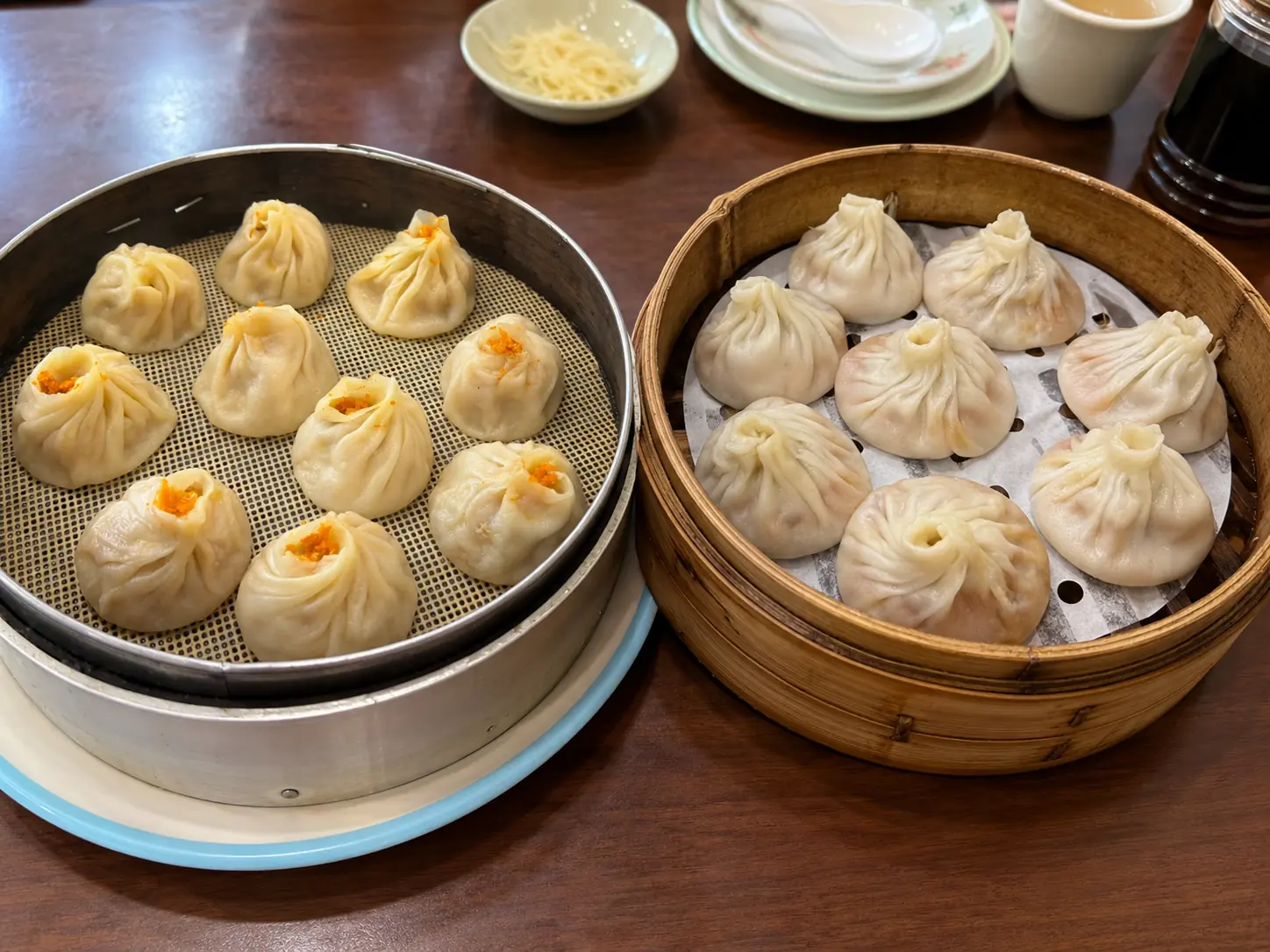
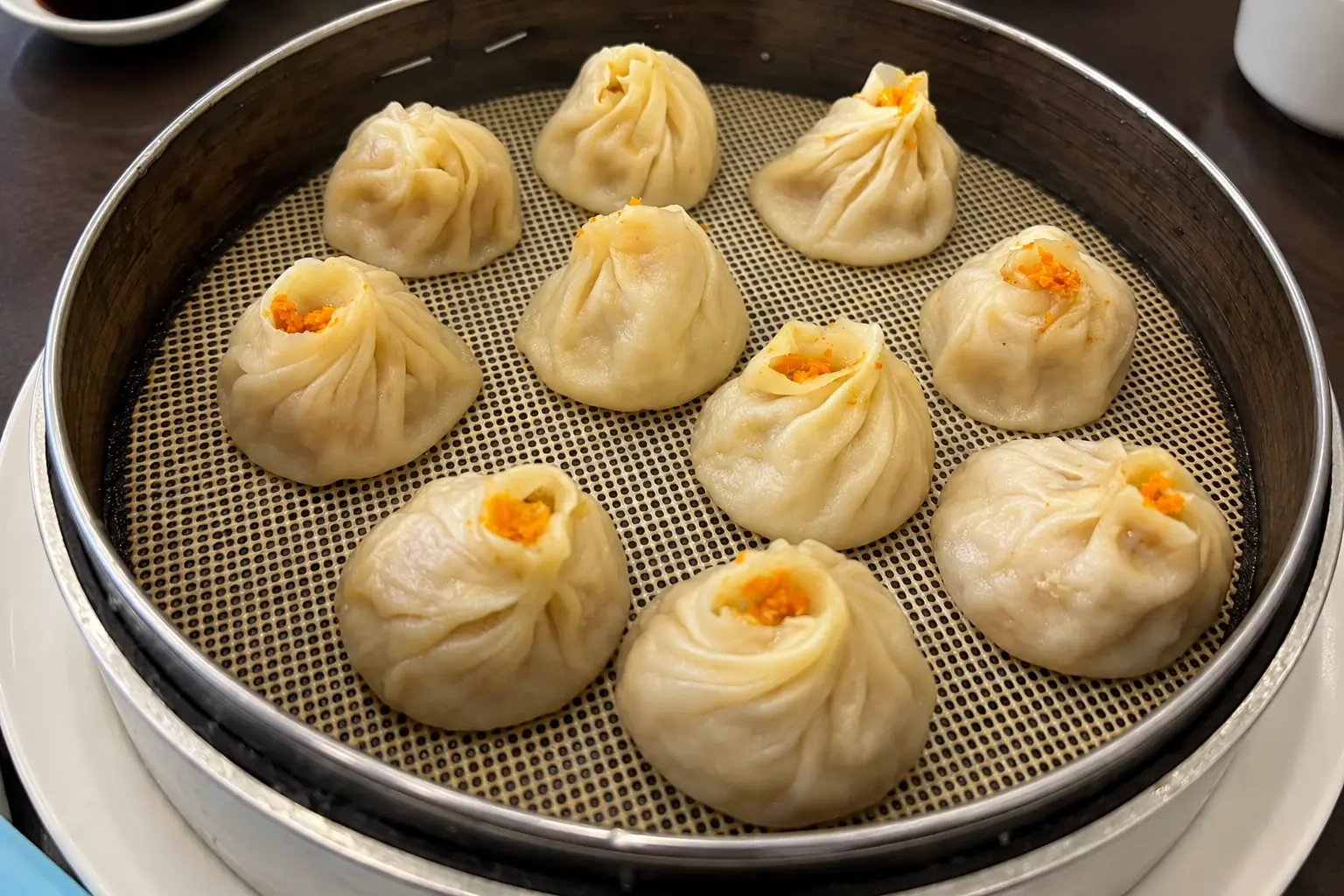
For two first-timers, a smart order is one basket of pork and one basket of crab roe or shrimp, plus a light soup or wonton if the shop serves one. Do not order four premium baskets before you know whether the style suits you.
Decision shortcut
First Basket Strategy
Want the classic baseline
Start with pork soup dumplings. They show the wrapper, broth, and filling balance most clearly.
Want the famous upgrade
Add crab roe soup dumplings if budget allows, especially in autumn.
Eating with children
Order pork first, open each dumpling on a spoon, and let the broth cool before eating.
Where to Try Them in Shanghai
This is not a restaurant ranking. Think in contexts: heritage and sightseeing, local quick meal, upgraded crab-focused basket, or old-neighborhood breakfast. Use the map links below as starting points, then confirm current hours and queues on your travel day.
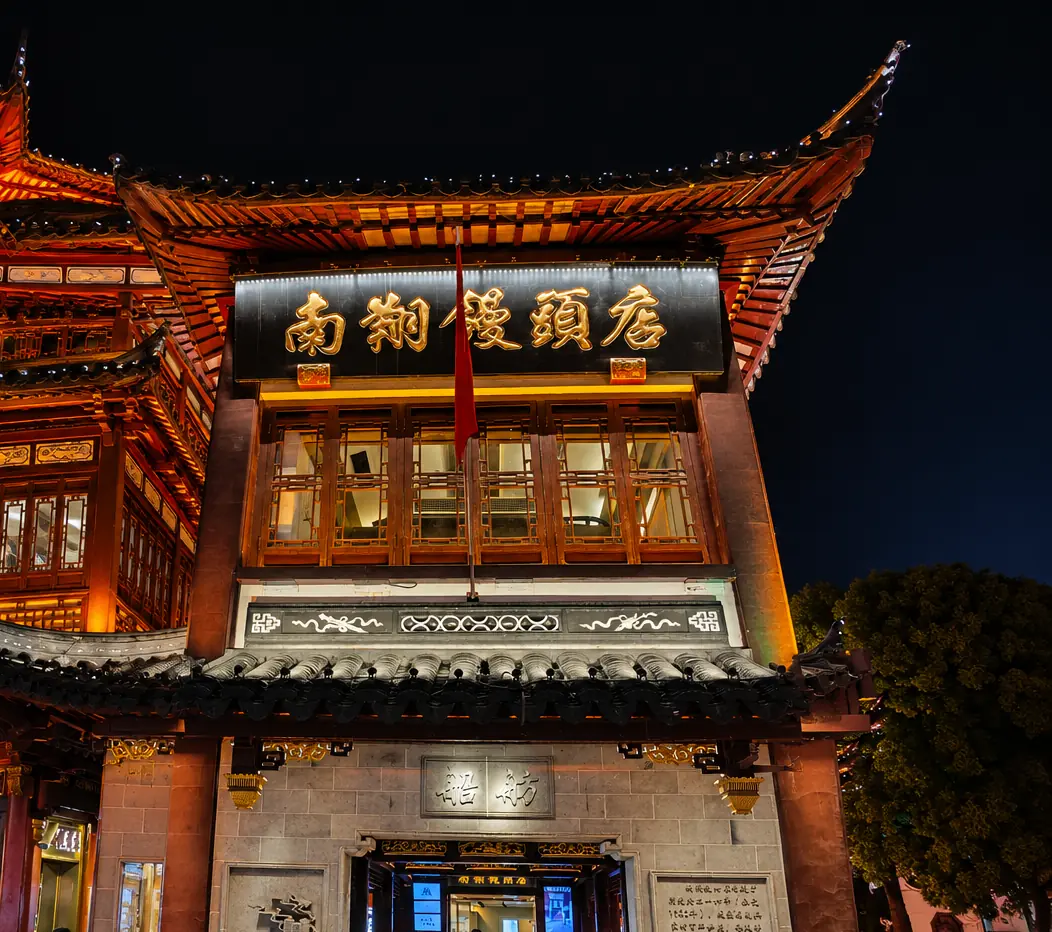
Nanxiang Steamed Bun Restaurant (南翔馒头店) is the most famous name for visitors because it sits inside the Yu Garden area and dates to 1900. Shanghai's 2026 official food feature lists it as a China Time-honored Brand and an easy stop while visiting Yu Garden. Go here for heritage context, then consider an upper-floor table or another neighborhood if the ground-floor queue is punishing.
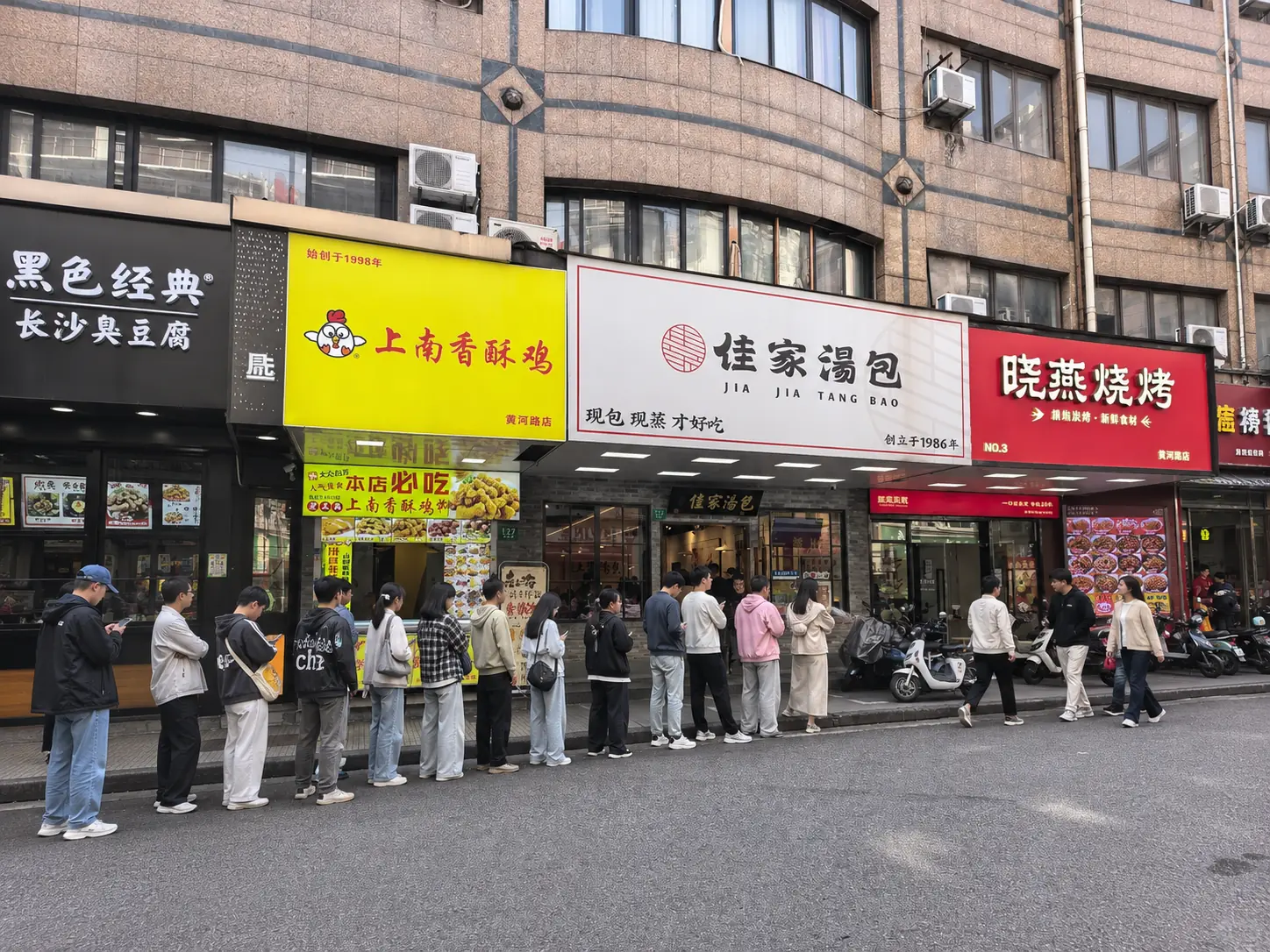
Jia Jia Tang Bao (佳家汤包) is a better fit when you want the meal to be about soup dumplings rather than the Yu Garden backdrop. The Huanghe Road branch is convenient for People's Square and Nanjing Road, and Shanghai's official 2026 page describes it as a popular chain founded in 1986. Go early, especially if you want popular fillings.
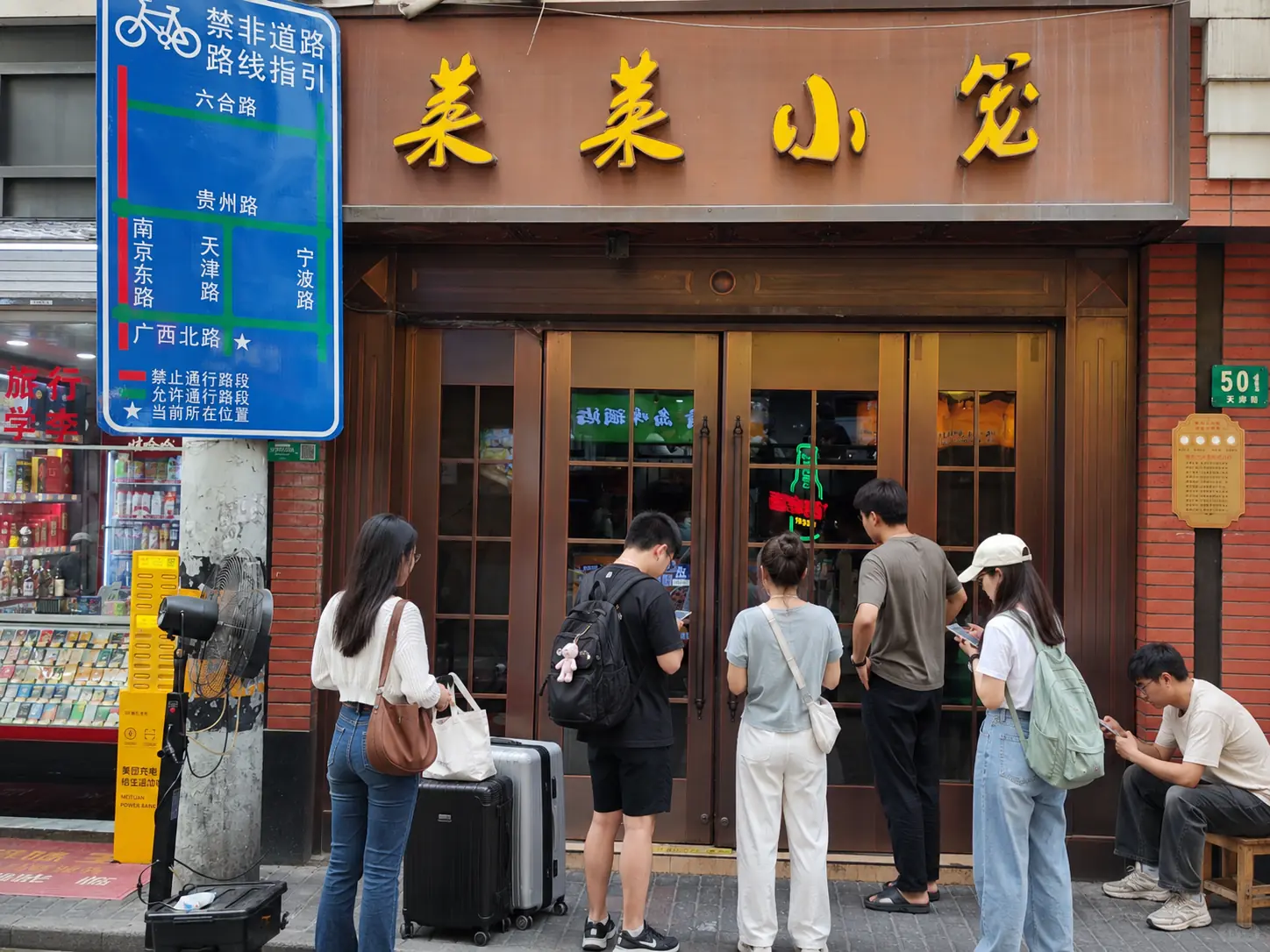
Lai Lai Xiao Long (莱莱小笼) is useful if you want a more filling-focused experience. Shanghai's 2026 official page says it received Michelin Bib Gourmand recognition in both 2024 and 2025 and is known for crab roe soup dumplings. Treat crab roe, crab meat, mushroom, or other richer fillings as the point of the meal here.
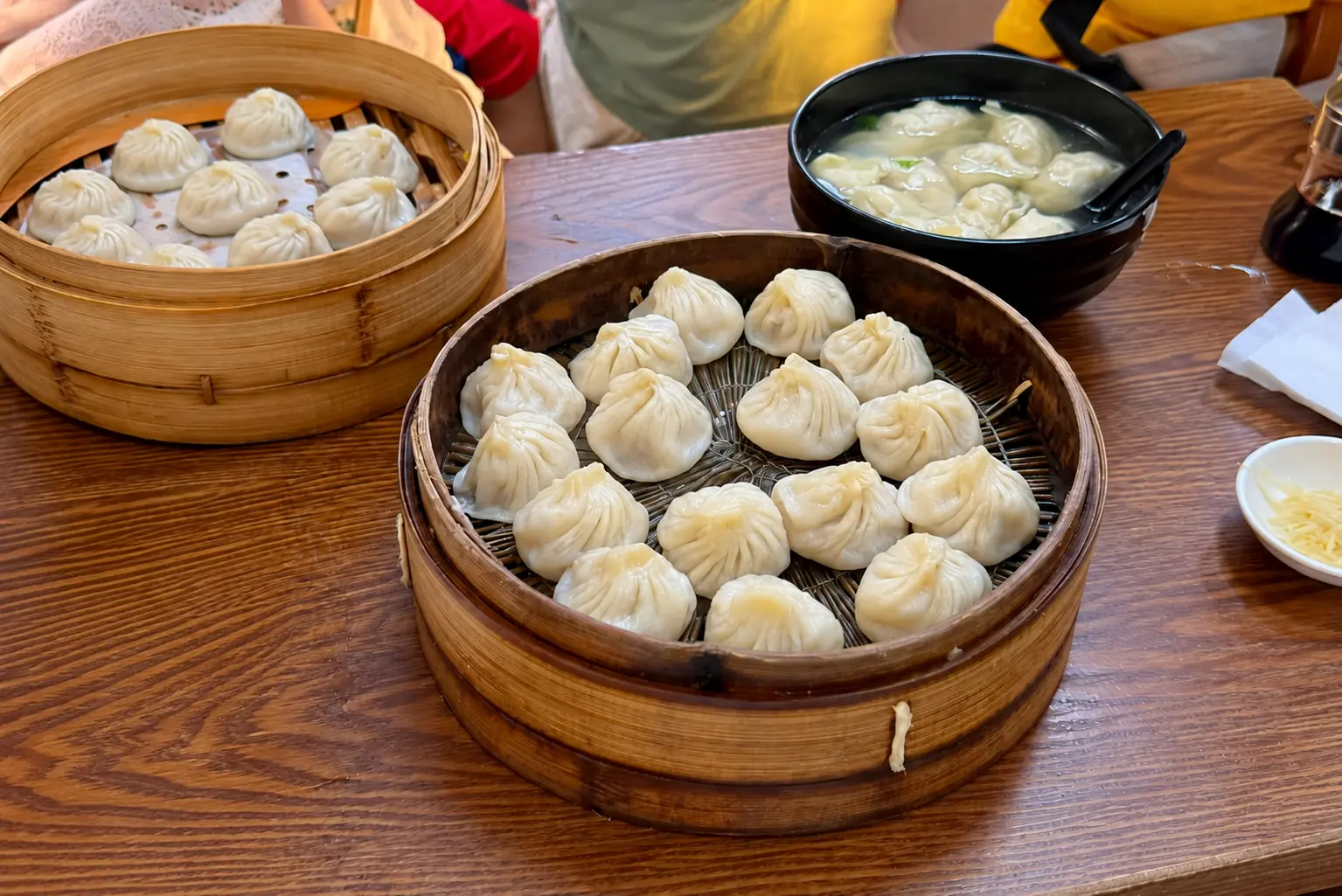
Wanshou Zhai (万寿斋) works for travelers who want an older neighborhood feel in Hongkou rather than a polished tourist stop. Its appeal is not only soup dumplings; it belongs to the everyday Shanghai breakfast and snack-shop world, where soup dumplings, wontons, and simple bowls share the table.
If you are short on time, do not chase all four places. Pick one that fits your route: Nanxiang for Yu Garden, Jia Jia or Lai Lai for central convenience, Wanshou Zhai for a more local-feeling detour.
| Place Type | Best For | Tradeoff |
|---|---|---|
| Yu Garden heritage stop | First visit, photos, classic Shanghai context | Crowds, queues, tourist pricing layers |
| Central soup-dumpling shop | Fast, focused meal near People's Square | Smaller space, limited English, popular items can sell out |
| Crab-focused specialty shop | Seasonal fillings and richer baskets | Higher spend and stronger seafood risk |
| Neighborhood breakfast shop | Local rhythm, wontons, simple sides | Less polished, less English, easier to mis-order |
Soup Dumplings vs Shengjian: Shanghai Snack Contrast
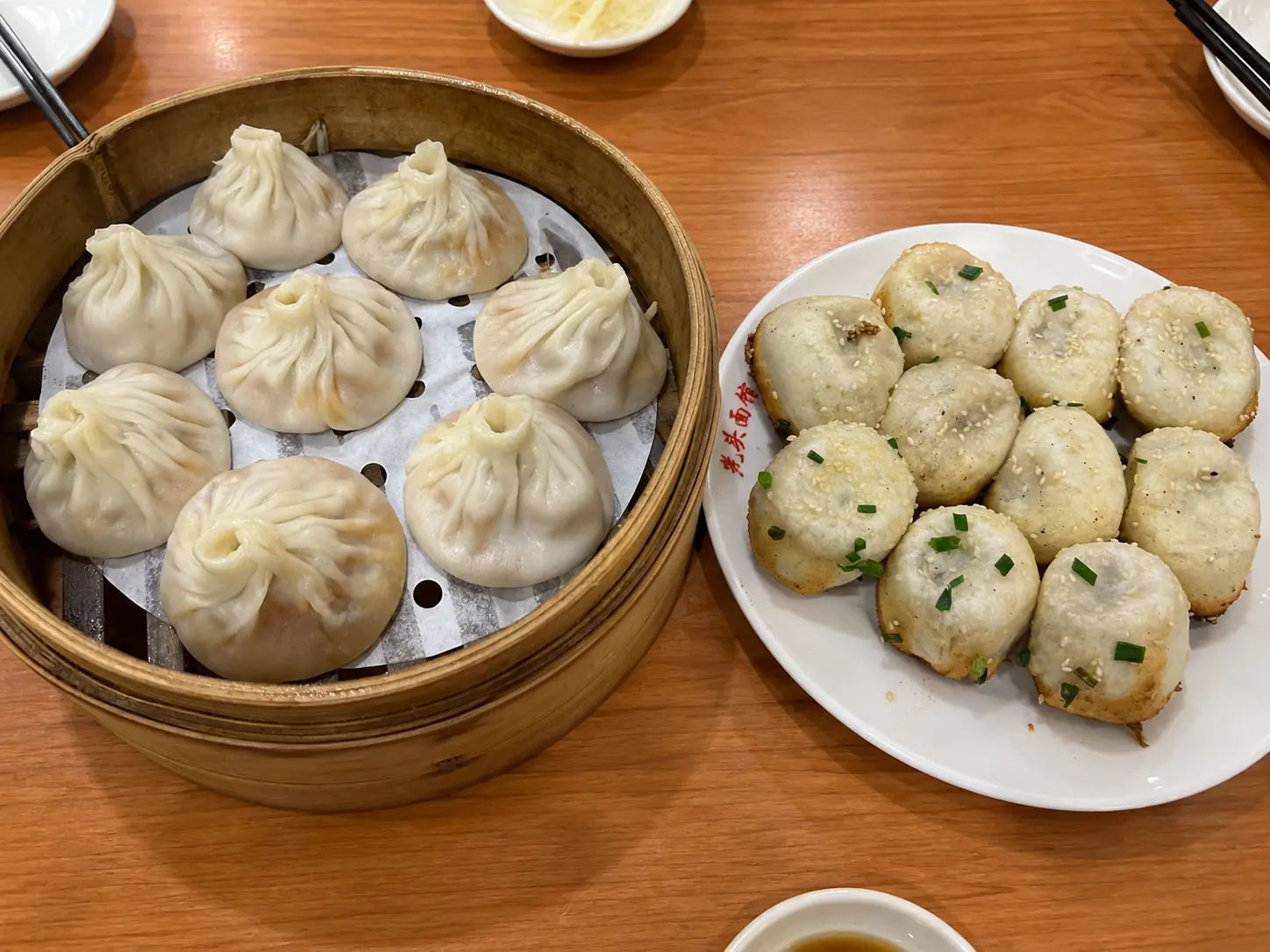
Soup dumplings and shengjian (生煎馒头) both belong on a Shanghai food trip, but do not judge one by the other. Soup dumplings are steamed in a basket, thin-skinned, spoon-supported, and built around a controlled broth pocket. Shengjian are pan-fried and steamed, with thicker dough, a crisp bottom, sesame, scallions, and a more street-snack feel.
If you have only one meal, choose soup dumplings. If you have two, eat soup dumplings at breakfast or lunch, then shengjian separately. The contrast teaches you more than ordering both at the same table and rushing through them.
| Question | Soup Dumplings | Shengjian |
|---|---|---|
| Cooking method | Steamed in bamboo baskets | Pan-fried bottom, then steamed through |
| Wrapper | Thin and delicate | Thicker, breadier, crisp at the base |
| Eating tool | Spoon first, then chopsticks | Chopsticks and careful biting |
| Best moment | Controlled soup sip | Crispy bottom plus juicy filling |
How to Order Shanghai Soup Dumplings
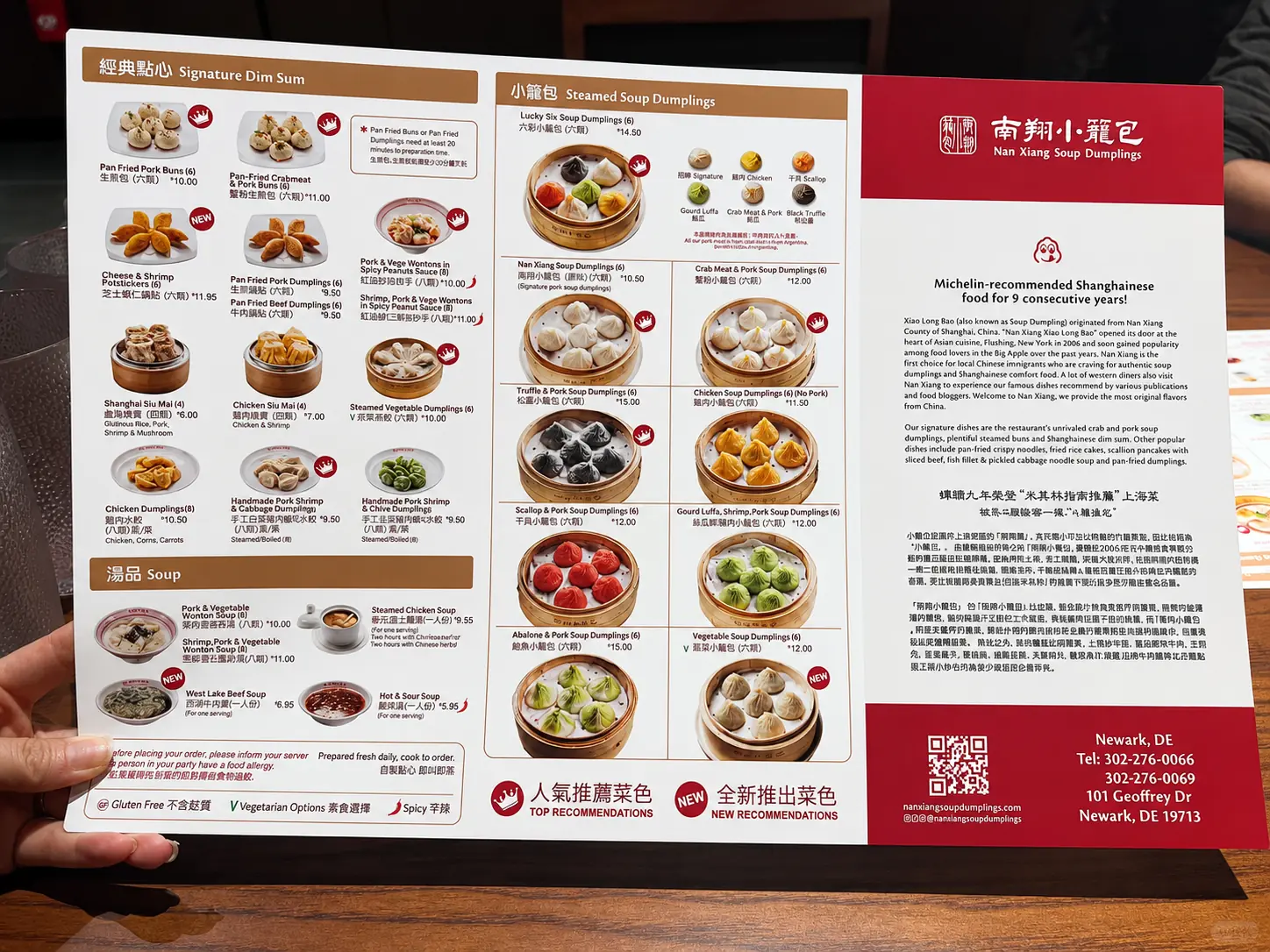
Start by reading the filling, then the basket size. Common menu words include pork (鲜肉), crab roe (蟹粉), crab meat (蟹肉), shrimp (虾仁), and three-delicacy (三鲜). Some restaurants sell 6 per basket, others 8, 10, or 12. A solo traveler can often make one basket a light meal; two people should share two baskets if soup dumplings are the main event.
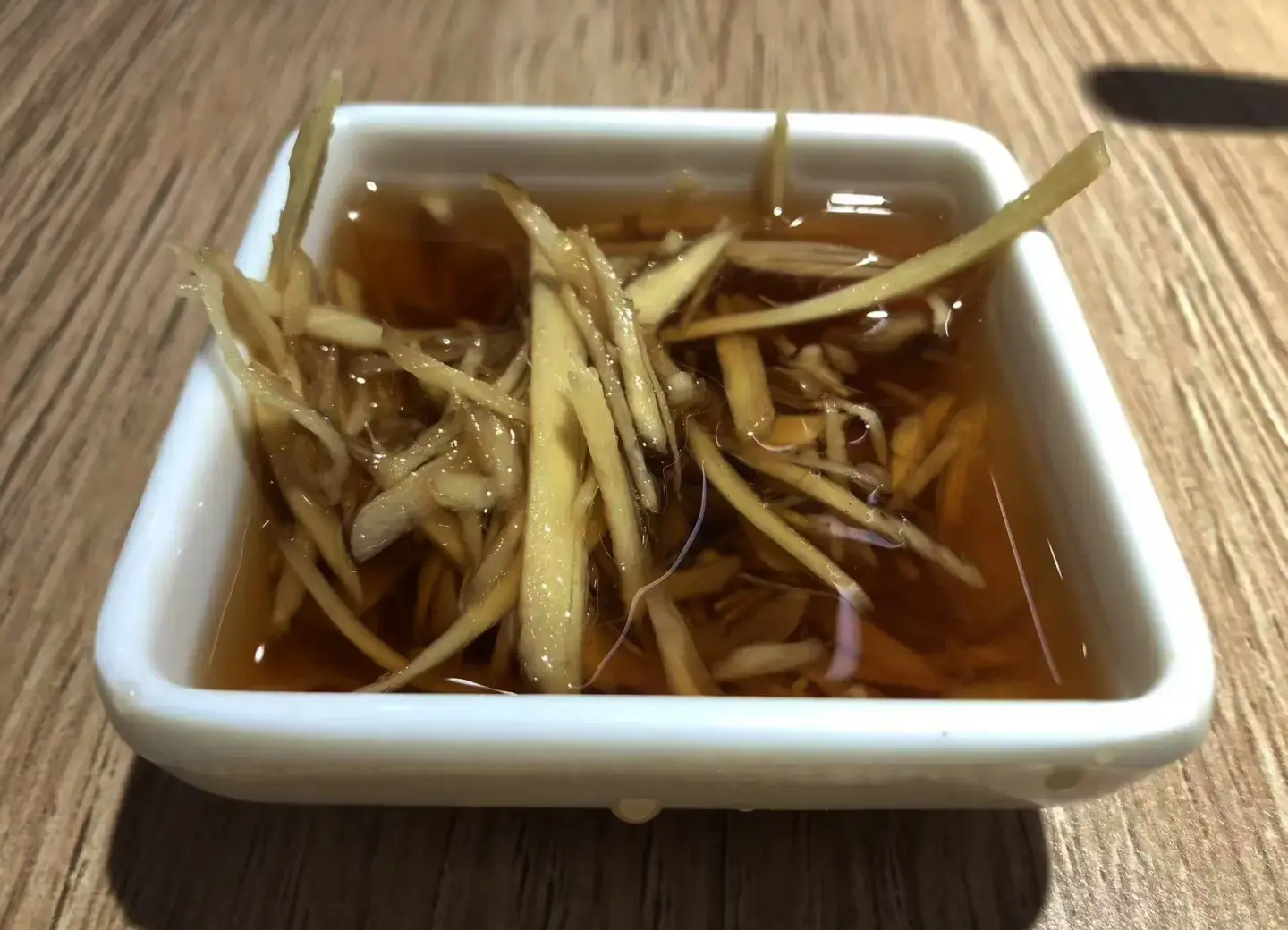
Most shops bring ginger and black vinegar separately. Use them as support, not camouflage. If the dumpling is good, the broth should taste clear enough that you do not need to drown it.
- Order classic pork first if this is your first Shanghai basket.
- Add crab roe as a second basket when the season and budget make sense.
- Ask staff which filling is still available before committing to a long queue.
- Do not order takeaway if you care about the full soup texture.
- Do not assume "vegetable" means vegetarian-safe broth or filling.
Cost, Queues, and Best Eating Timing
Soup dumplings are best as a morning, brunch, or lunch food. Many places serve them later, but the ideal version is freshly steamed, high-turnover, and eaten immediately. If a shop is quiet, ask what is being steamed now rather than ordering a basket that has sat too long.
Prices vary widely. A small local basket can be a budget snack; famous or crab-heavy baskets cost much more. Shanghai's official 2026 food page listed average spending examples from about ¥27 at Wanshou Zhai to about ¥93 at Nanxiang Steamed Bun Restaurant and about ¥130 at a refined crab-focused restaurant. Treat those as planning signals, not fixed promises.
Queues are part of the dish but should not own your day. Around Yu Garden, a 20-minute wait can be reasonable; an hour-long tourist queue may not be. Around People's Square, a backup shop within walking distance is often smarter than waiting out of pride.
Best Window
Morning, brunch, or lunch gives you the best chance of fresh steaming and high turnover.
Budget Signal
Use ¥25-120 as a casual planning band, then expect crab-heavy or refined baskets to cost more.
Queue Rule
A short Yu Garden wait can be worth it; an hour-long line needs a backup near People's Square.
Diet, Pork, Shellfish, and Allergy Notes
Classic Shanghai soup dumplings are not vegetarian. Pork is the usual base, and the soup often comes from pork-skin jelly or meat jelly. Crab roe, crab meat, shrimp, and three-delicacy fillings add shellfish risk. The wrapper is wheat-based, so this is not a gluten-free food.
Travelers avoiding pork should not assume shrimp, crab, or vegetable words make a basket safe; pork may still be mixed into the base. Halal travelers should look for explicitly halal restaurants instead of ordinary soup-dumpling shops. Severe allergy travelers should treat small shops as high cross-contact environments.
Ask about the filling, not only the topping
A crab roe soup dumpling may still contain pork. A shrimp dumpling may still use pork jelly. If the restriction matters, show the Chinese phrase and confirm before ordering.
Useful Shanghai Soup Dumpling Ordering Phrases
Use the Chinese column when pointing at a menu. The pronunciation helps if you want to say the phrase aloud, but showing the characters is usually safer in a busy shop.
| English | Chinese | Pinyin | Say It Like… |
|---|---|---|---|
| Soup dumplings / small basket buns | 小笼包 | xiǎolóngbāo | shyow-long-baow |
| Classic pork soup dumplings | 鲜肉小笼 | xiān ròu xiǎolóng | shyen roh shyow-long |
| Crab roe soup dumplings | 蟹粉小笼 | xièfěn xiǎolóng | shyeh-fun shyow-long |
| Shrimp soup dumplings | 虾仁小笼 | xiārén xiǎolóng | shyah-run shyow-long |
| Shredded ginger | 姜丝 | jiāngsī | jyahng-suh |
| Vinegar | 醋 | cù | tsoo |
| No crab | 不要蟹 | bù yào xiè | boo yow shyeh |
| No pork | 不要猪肉 | bù yào zhūròu | boo yow joo-roh |
| Do you have vegetarian ones? | 有素的吗? | yǒu sù de ma | yo soo duh mah |
| Are these steamed fresh now? | 现在现蒸的吗? | xiànzài xiàn zhēng de ma | shyen-zai shyen jung duh mah |
Frequently Asked Questions
No. Jiaozi are usually crescent-shaped wheat dumplings that are boiled, steamed, or pan-fried. Shanghai soup dumplings are small steamed buns with hot broth inside.
Beyond This Guide
Once you understand the soup-dumpling method, Shanghai eating becomes easier to navigate. Use the Shanghai food guide for the full city food map, the jiaozi guide to separate soup dumplings from northern dumplings, and the Yu Garden guide if you want to pair Nanxiang Steamed Bun Restaurant with a real sightseeing plan. The best first basket is not the fanciest one. It is the one you lift gently, open slowly, and actually taste before the soup burns away the lesson.
Useful next reads:
© gochinafreely.com — Original guide by Go China Freely.