Eating halal in China is less mysterious once you know the two characters that matter: Qingzhen (清真). Look for them before you trust an English menu, a beef label, or a lamb skewer photo. The safest China halal strategy is simple: find the right restaurant environment first, then order the dish.
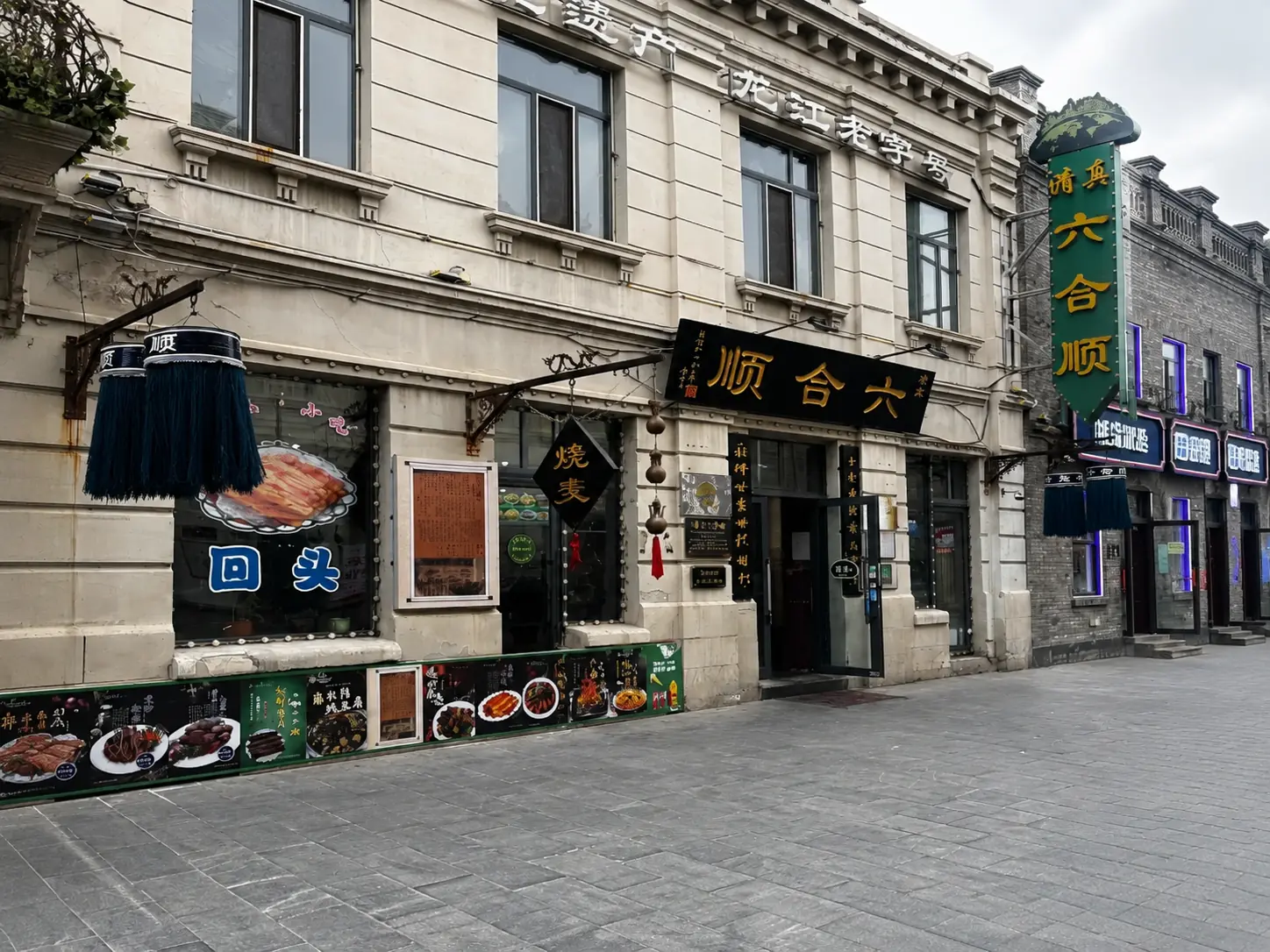
Start outside: the Qingzhen sign, restaurant name, and storefront context matter more than an English meat label.
Executive Summary
Best rule
Look for Qingzhen (清真) on the sign, restaurant name, packaging, or in-store certificate before treating a meal as halal.
Main traveler trap
Beef, lamb, chicken, or seafood at an ordinary Chinese restaurant is not automatically halal. The kitchen, oil, broth, alcohol, and handling matter.
Safer path
Use local apps to search 清真 or 清真餐厅, prioritize mosque areas and Muslim neighborhoods, and keep backup meals for remote or transport days.
Halal in China Starts With Qingzhen
Qingzhen (清真) is the China travel word you want to recognize on sight. It appears on restaurant signs, food packaging, menu labels, delivery app listings, and in-store certificates. You do not need to read a full Chinese menu to begin eating more safely, but you do need to recognize these two characters.
Where it appears
Restaurant signs, packaging, delivery listings, menu labels, and in-store certificates may all show Qingzhen (清真).
What it signals
It points you toward a Muslim dietary context, not just a dish name that happens to include beef, lamb, chicken, or seafood.
What still depends on you
Certification, alcohol, shared tools, gelatin, and ownership standards can matter differently for different Muslim travelers.
The WildChina halal food guide describes halal dining in China as part of the country's long Muslim heritage and notes that halal food generally excludes pork and alcohol while following Islamic slaughter practices. It also points travelers toward the Qingzhen (清真) mark, often shown with a green logo at restaurant entrances or on packaging.
This guide does not make religious rulings for every traveler. Muslim travelers vary in how strictly they treat certification, slaughter method, alcohol, shared equipment, gelatin, and ownership. The goal here is practical travel judgment: look for the halal context first, ask clearly when needed, and avoid treating a translated meat name as enough evidence.
Read the Sign Before the Menu
Use a sign-first rule
Start with the storefront and restaurant context, then read the menu. An English beef or lamb label is a dish translation, not a halal guarantee.
The most common mistake is starting with the menu. An English menu may say beef noodles, lamb skewers, chicken rice, or seafood soup, but that does not tell you whether the restaurant is halal. The meat may be handled in an ordinary kitchen, cooked with alcohol, fried in shared oil, simmered in non-halal stock, or prepared near pork.
Use this order instead:
- Check the storefront- Look for 清真, a green sign, Arabic script, crescent imagery, or an in-store halal certificate.
- Check the restaurant context- Hui, Uyghur, Lanzhou beef noodle, Xinjiang, Niujie, Muslim Quarter, and mosque-adjacent restaurants are more promising than random beef or lamb dishes.
- Then choose the dish- Once the restaurant context is clear, order noodles, skewers, pilaf, dumplings, naan, soup, or other dishes that fit your own standards.
If a place only says "beef noodle" in English but has no Qingzhen (清真) sign, do not treat it as a halal restaurant. If a place is clearly marked Qingzhen and you still have a strict concern, ask politely rather than guessing.
Meat name is not halal proof
In China, beef, lamb, chicken, and seafood describe ingredients. They do not prove halal sourcing, oil, broth, alcohol use, or kitchen handling unless the restaurant itself is clearly Qingzhen.
Where Halal Food Is Easier to Find
Halal food is not rare in China, but it is uneven. Your confidence should rise in places with long-established Muslim communities, mosques, university districts, international trading communities, and northwestern Chinese food traditions.
← swipe to compare all options →
Known Muslim neighborhoods
Highest confidence
- ✓Beijing Niujie (牛街), Xi'an Muslim Quarter (回民街), and old Hui community areas often have multiple Qingzhen options.
- —Still choose the specific restaurant by sign, certificate, and current storefront photos.
Niujie
Muslim Quarter
mosque streets
Northwest food cities
High confidence
- ✓Lanzhou (兰州), Gansu (甘肃), Ningxia (宁夏), Xinjiang (新疆), and parts of Yunnan (云南) have stronger Muslim food traditions.
- —Expect more choices, but do not turn a regional food reputation into a blanket guarantee.
Lanzhou
Ningxia
Xinjiang
Large trade cities
Moderate to high
- ✓Major coastal and trading cities often have halal restaurants if you search with 清真 or 清真餐厅.
- —Plan the meal before you are hungry, especially if your hotel is far from a mosque area.
Shanghai
Guangzhou
Shenzhen
Yiwu
Remote travel days
Variable confidence
- —Plan one meal anchor before you go, then carry backup food for early starts, scenic areas, trains, and late arrivals.
- —Do not rely on ordinary tourist-town menus that only translate meat names into English.
Scenic areas
train days
late arrivals
Confidence still depends on the actual storefront, recent photos, and your own halal standard.
WildChina notes that major cities such as Beijing, Xi'an, and Shanghai offer halal restaurants and food stalls, while regions such as Ningxia and Yunnan connect halal dining to long-standing Muslim communities. Experienced Muslim travelers in China follow the same practical routine: look for Qingzhen (清真) signage first, use Hui and Uyghur restaurants as your primary meal anchors, and carry sealed backup snacks for remote scenic areas or long train rides.
What Qingzhen Usually Covers and Misses
Treat Qingzhen as strong context, not a personal ruling
Qingzhen is the best travel signal to start with, but certification style, alcohol, gelatin, and shared-equipment standards can still vary by city, restaurant, and traveler.
In everyday travel use, a Qingzhen restaurant usually signals a kitchen that avoids pork, pork fat, and alcohol, and serves food within a Muslim dietary context. Some restaurants also display a paper certificate or local halal license inside the shop.
The important caution is that China does not have one uniform halal-certification experience for every traveler in every city. China Briefing explains that halal food licensing in China is governed through various local regulations, and that once a business obtains a Halal Food License, it can use the Qingzhen label on premises and products. A Xinjiang regional regulation text hosted by FAOLEX similarly frames Qingzhen food management as a local regulatory matter involving supervision, dedicated facilities, and sign control.
That means the safest wording is conservative:
- Strong signal: Qingzhen signage, a restaurant certificate, Muslim neighborhood location, and a clear Hui or Uyghur food context.
- Still confirm: alcohol in sauces, gelatin in desserts, shared equipment, packaged foods, and whether the venue matches your own halal standard.
- Do not assume: vegetarian, vegan, gluten-free, allergy-safe, or no cross-contact just because the restaurant is halal.
If your standard is strict, ask to see the certificate or choose restaurants near mosques and Muslim community areas. If your standard is "no pork or pork fat," your phrase needs are simpler, but you still should not rely on ordinary restaurant translations.
Use Apps Like a Local Muslim Traveler
Search before you are hungry
Local apps work best when you use Chinese search terms, check storefront photos, and save one realistic meal anchor before a train day, scenic-area visit, or late arrival.
In China, local apps usually work better than Google Maps. Search in Amap (高德地图), Baidu Maps (百度地图), Meituan (美团), Dianping (大众点评), or a WeChat mini program before you get hungry.
Copy and paste these search terms:
| Search Term | Meaning | Best Use |
|---|---|---|
| 清真 | Halal / Qingzhen | Broadest search term for nearby halal food. |
| 清真餐厅 | Halal restaurant | Useful in maps, food apps, and hotel concierge messages. |
| 清真寺 | Mosque | Search nearby streets for Muslim restaurants and shops. |
| 兰州牛肉面 | Lanzhou beef noodles | Common China-wide option, but still check for 清真 signage. |
| 新疆菜 清真 | Xinjiang food + halal | Good for lamb, noodles, pilaf, naan, and grilled dishes. |
The Shenzhen halal guide from ET Food Voyage gives a practical example of this approach: search 清真 in Meituan, then look for Qingzhen signs or the word 清真 in the restaurant name. That same method works well beyond Shenzhen.
Do not stop at the search result. Check recent photos, store name, reviews, distance, opening status, and whether the storefront photo clearly shows Qingzhen (清真). On long travel days, save one dinner option before you leave the hotel.
Decision shortcut
How sure is this restaurant?
Clear 清真 sign and certificate
Best normal choice. Order according to your spice, allergy, and alcohol needs.
Only beef or lamb in English
Not enough. Look for Qingzhen signage or ask before eating.
Near a mosque but no clear sign
Promising, but verify on arrival. Do not assume every nearby shop is halal.
Remote area or train day
Carry backup food and identify one halal anchor before travel.
Good First Orders at Halal Restaurants
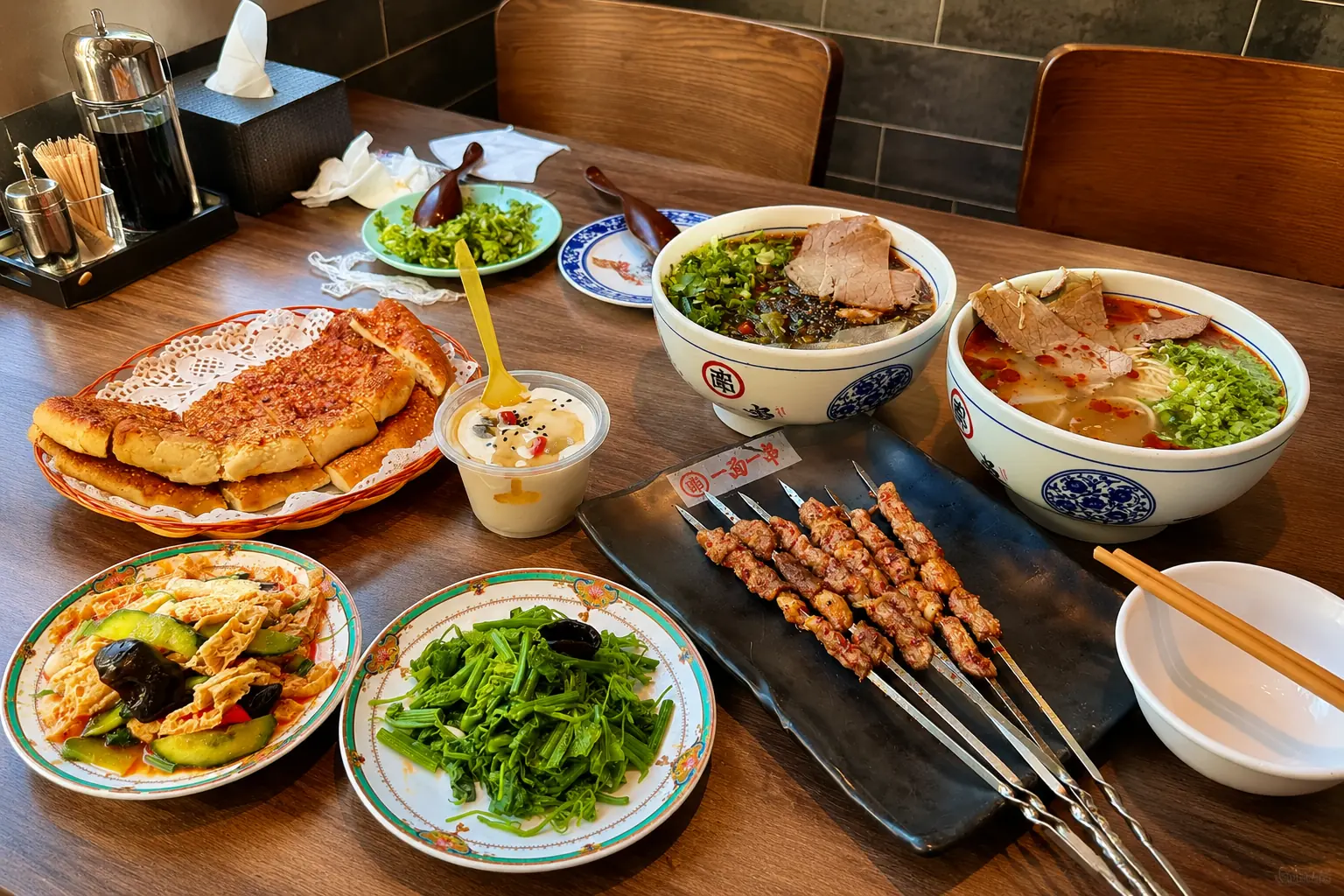
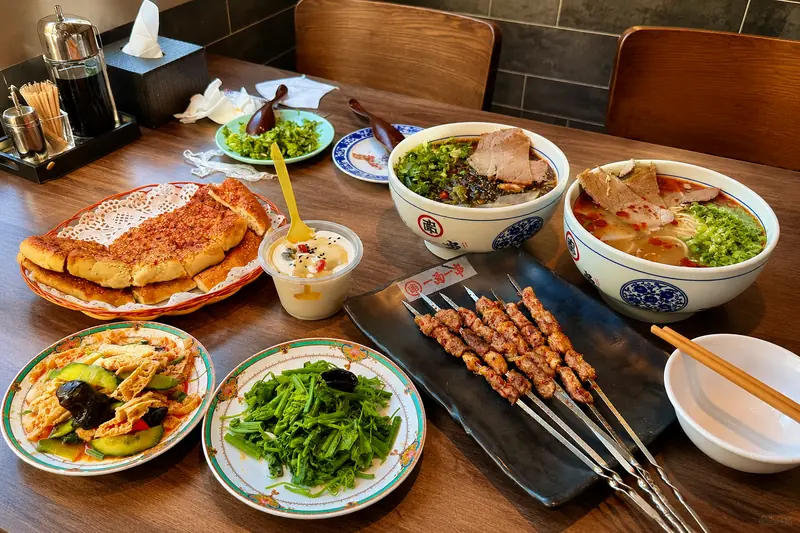
Once the restaurant context is clearly Qingzhen, recognizable dishes like noodles, skewers, flatbread, and cold plates become easier first orders.
Once you are in a clearly Qingzhen restaurant, start with dishes that are easy to recognize and widely available:
Lanzhou beef noodles
兰州牛肉面
Fast, common, filling, and often tied to a Qingzhen shop context. Check the sign and ask for no chili if needed.
Lamb skewers
羊肉串
Easy to point at, especially in Xinjiang or Hui-style restaurants. Watch the spice, cumin, shared grill items, and doneness.
Pilaf
手抓饭
A comforting rice-and-meat plate in many Xinjiang restaurants. Expect lamb fat, carrots, raisins, and large portions.
Naan or flatbread
馕 / 饼
Useful with soup, skewers, and shared dishes. Texture can be dry, so ask for fresh if possible.
Mutton bread soup
羊肉泡馍
A classic Xi'an Hui Muslim meal and a good sit-down experience. It is wheat-heavy, rich, and intentionally slow.
Beef or lamb dumplings
牛肉饺子 / 羊肉饺子
Familiar if you want something simple. Watch vinegar, chili oil, garlic, and shared condiments.
If you avoid spice, say no chili before the bowl is made. If you avoid offal, watch for words such as tripe, intestines, liver, or mixed lamb parts. If you are vegetarian, Qingzhen is not your solution by itself; beef, lamb, broth, and meat oil are still central to many halal restaurants.
Respect the Kitchen and the Community
Respect the venue, not just the menu
In a clearly Qingzhen restaurant, the kitchen rules are part of community trust. Ask practical questions politely, and do not bring pork, alcohol, or outside non-halal food inside.
A halal restaurant is not just a "no pork menu." For many owners and diners, Qingzhen connects food, faith, community identity, and trust. Treat that seriously.
- Do: ask politely if you are unsure, point to the sign, and show Chinese phrases rather than debating in English.
- Do: ask about alcohol in a sauce if your standard requires it.
- Do not: bring pork, alcohol, or outside non-halal food into a halal restaurant.
- Do not: joke about pork or repeatedly ask whether a clearly Qingzhen restaurant serves pork.
If you only avoid pork, the phrase "I do not eat pork or pork fat" is useful. If you need halal, ask whether the restaurant is Qingzhen. In a clearly marked restaurant, a better strict question is "May I see the Qingzhen certificate?" or "Does this dish contain alcohol?" rather than treating the staff as if they may be hiding pork.
Halal does not solve every diet
Qingzhen restaurants are useful for Muslim travelers, but they are not automatically vegetarian, vegan, gluten-free, nut-free, sesame-free, or shellfish-free. If allergies matter, use a dedicated allergy card.
Useful Chinese Phrases for Halal Dining
Show the characters
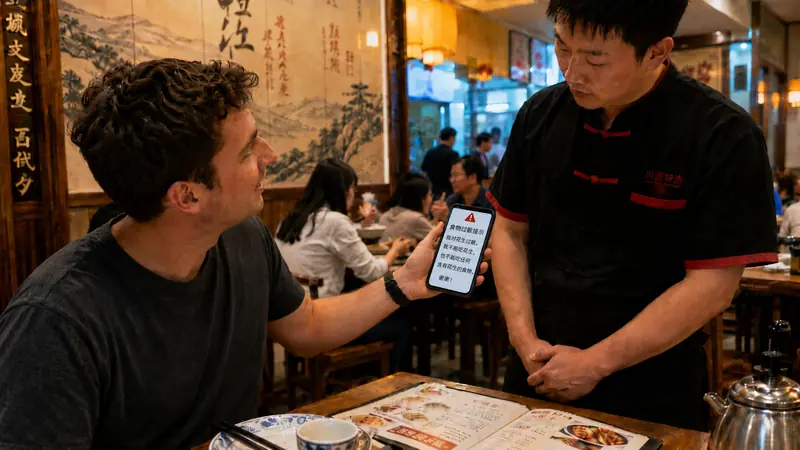
If pronunciation feels stressful, show the Chinese text on your phone. Staff can read 清真 and no-pork requests faster than they can guess from English.
Save these in your phone. Showing the characters is usually more reliable than trying to pronounce them in a busy restaurant.
| English | Chinese | Pinyin | Say It Like… |
|---|---|---|---|
| Halal / Qingzhen | 清真 | qīng zhēn | Ching-juhn |
| Halal restaurant | 清真餐厅 | qīng zhēn cān tīng | Ching-juhn tsahn-ting |
| Mosque | 清真寺 | qīng zhēn sì | Ching-juhn suh |
| Is this restaurant halal? | 这里是清真的吗? | zhè lǐ shì qīng zhēn de ma | Juh lee shir ching-juhn duh mah |
| I only eat halal. | 我只吃清真。 | wǒ zhǐ chī qīng zhēn | Woh jir chir ching-juhn |
| I do not eat pork, and no pork fat please. | 我不吃猪肉,也不要猪油。 | wǒ bù chī zhū ròu, yě bù yào zhū yóu | Woh boo chir joo roh, yeh boo yow joo yo |
| Does this dish contain alcohol? | 这道菜有酒吗? | zhè dào cài yǒu jiǔ ma | Juh dow tsai yo jyoh mah |
| May I see the halal certificate? | 可以看一下清真证书吗? | kě yǐ kàn yī xià qīng zhēn zhèng shū ma | Kuh yee kahn ee shyah ching-juhn jung-shoo mah |
For a quick no-pork card, use this:
Show this sentence
我不吃猪肉,也不要猪油。 - I do not eat pork, and no pork fat please.
For a stricter halal request, use this:
Stricter halal request
我只吃清真。这里是清真的吗? - I only eat halal. Is this restaurant halal?
Frequently Asked Questions
For travelers, Qingzhen (清真) is the most useful Chinese word for halal food in China. Still, strict travelers should verify the specific restaurant, certificate, alcohol use, and kitchen handling if those details matter.
Sources checked for this guide
- Provincial/regional legal framework for Qingzhen (清真) food signage, dedicated storage/transport/utensil separation, and market supervision: UN FAO FAOLEX — Xinjiang Qingzhen Food Management Regulations
- Local Halal Food License administration and premise/product Qingzhen labeling rules across China: China Briefing — Halal Certification Procedures in China
- Halal/Muslim dining districts and restaurant navigation for international visitors: Beijing Municipal Government official dining guide
- GB 7718-2025 prepackaged ingredient-list (配料表) descending-weight disclosure rules for screening animal fats, gelatin, and alcohol on packaged foods: Quanzhou Market Supervision Administration — GB 7718-2025 compliance guide
Beyond This Guide
Halal planning works best when it is attached to your route, not treated as a last-minute search at every meal. For food-first routes, read our Xinjiang Food Guide, Lanzhou Beef Noodles Guide, Xi'an Muslim Quarter Guide, and Yangrou Paomo Guide. If you are avoiding pork but not necessarily eating halal, pair this with Hidden Pork and Broth in Chinese Veggie Dishes.
© gochinafreely.com — Original guide by Go China Freely.