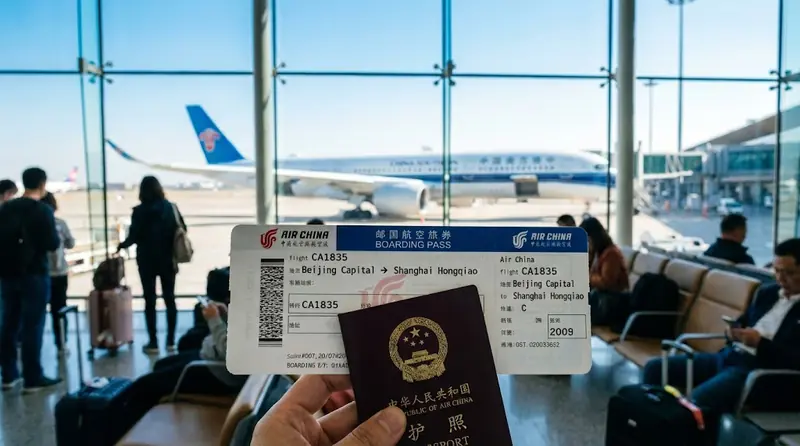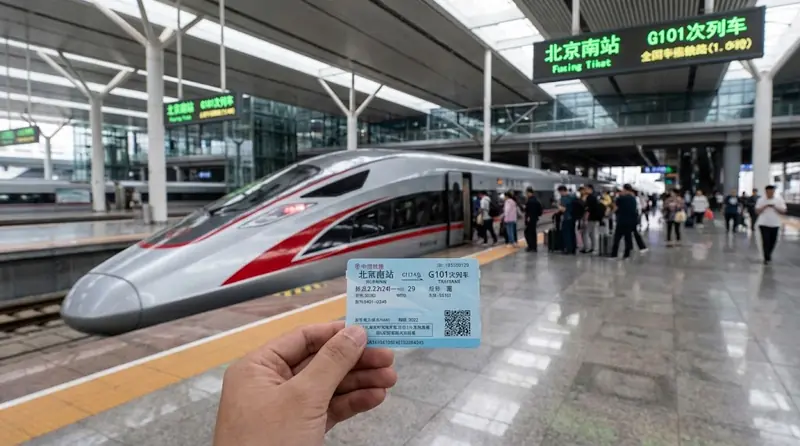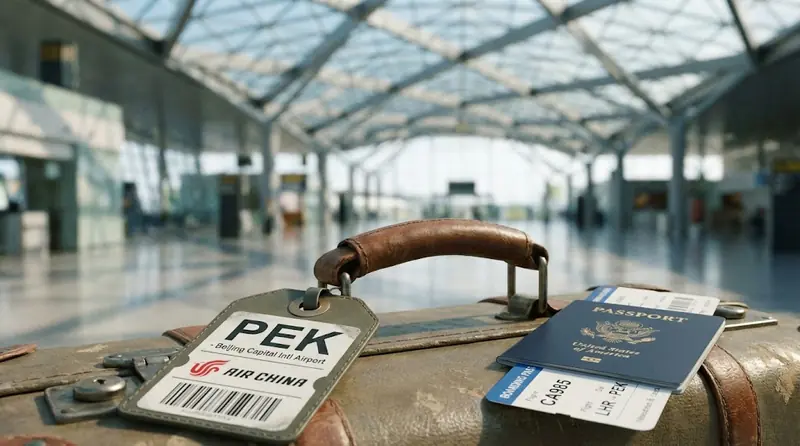
Flying to China is no longer just a question of "which ticket is cheapest." Dual-airport cities, visa-free or transit rules, domestic flight security checks, and high-speed rail handoffs can all change your first day. Use this guide to choose the right entry airport, book with fewer surprises, and get through the first arrival steps after landing.

Flight planning stack
The fast answer
Best logic
Pick the airport that matches your first real destination, not the lowest fare on the first search screen.
Code traps
Beijing uses PEK and PKX. Shanghai uses PVG and SHA. The difference can change your transfer by more than an hour.
Arrival day
Save your hotel address, onward proof, payment setup, and transport fallback before boarding.
Rule of thumb
A cheap fare into the wrong hub can disappear once you add a domestic flight, airport transfer, hotel night, or missed rail connection.
6 hubs
Core entry airports
3-5 mo
Useful fare window
3-4h
Separate-ticket buffer
100Wh
Power-bank no-approval limit
China Gateway Airports: Pick Your Entry
China's main international gateways sit around Beijing, Shanghai, Guangzhou, and Chengdu. Pick the airport that matches your first real destination, not just the lowest fare on the search screen.
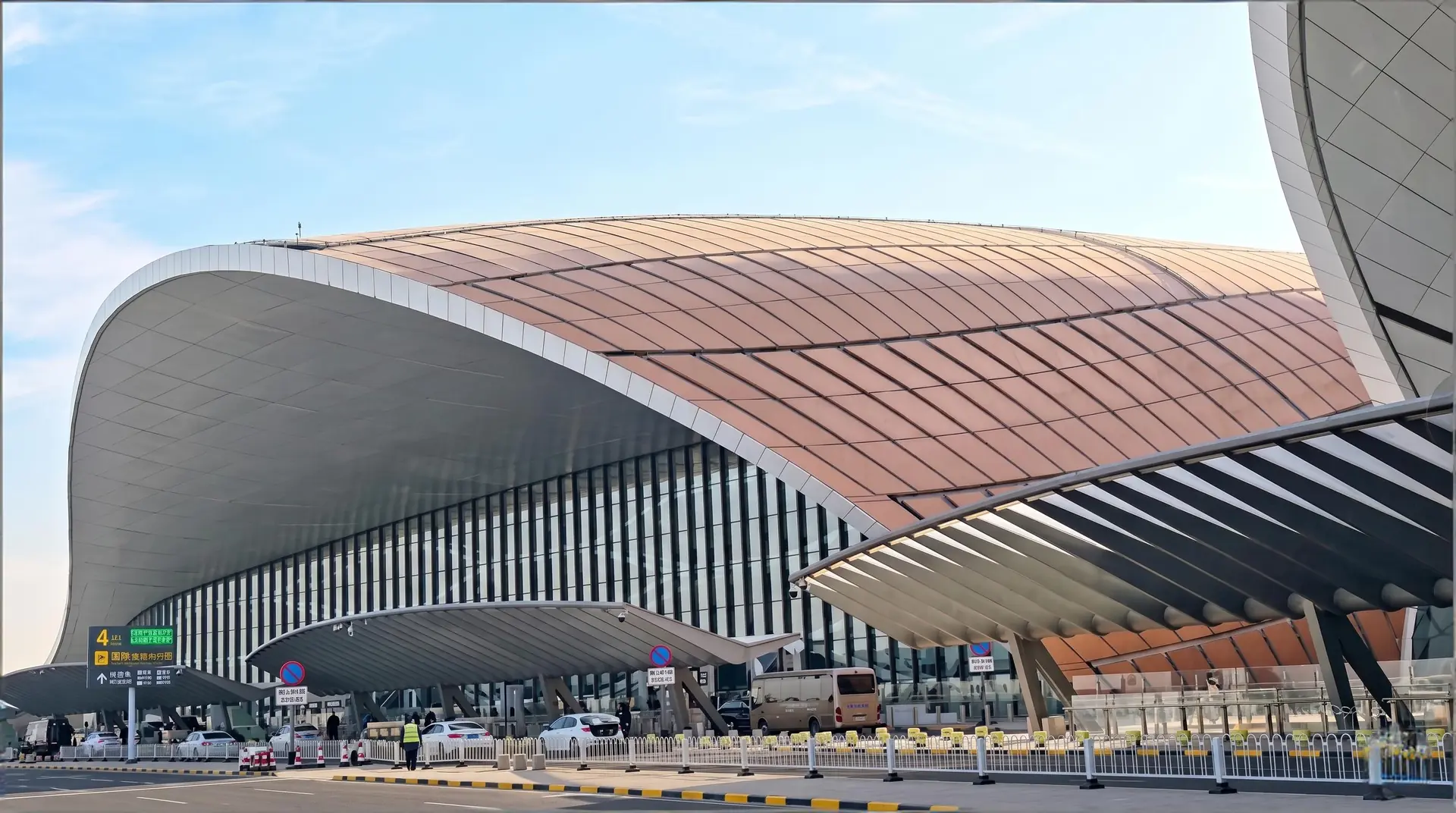
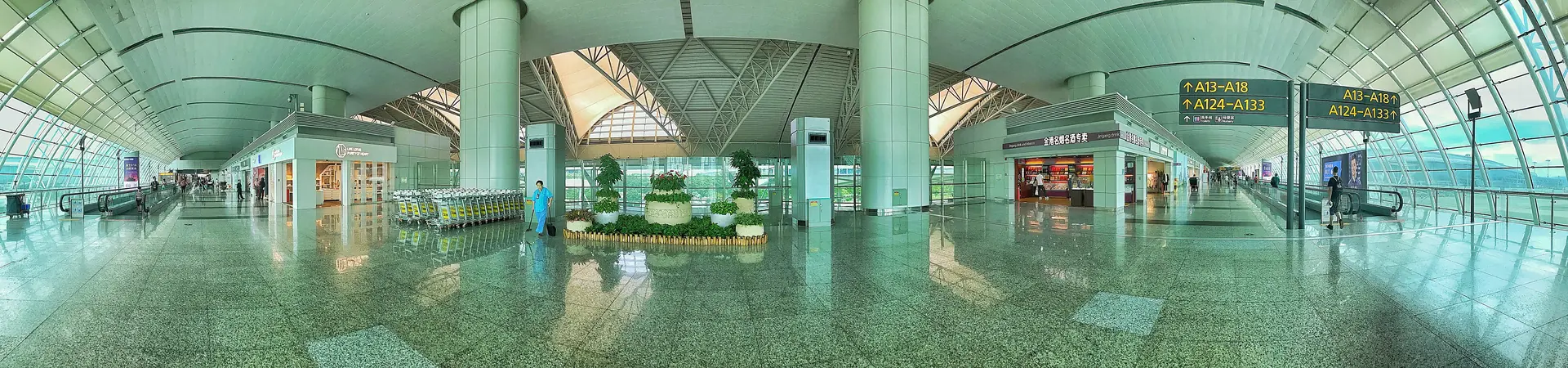
Shanghai Pudong (PVG)
Pudong (浦东), east of downtown
China's busiest international gateway and the strongest first stop for Shanghai, Hangzhou, Suzhou, Nanjing, and the Yangtze River Delta. Use the Maglev, Metro Line 2, taxi, or shuttle transfer to Hongqiao Railway Station depending on your next leg.
City transfer
Maglev 8 min to Longyang Road; Metro Line 2 about 70 min to central Shanghai; taxi often 40-90 min.
Best first stop
Shanghai, Hangzhou, Suzhou, Nanjing.
Shanghai Hongqiao (SHA)
Hongqiao (虹桥), west of downtown
Mostly domestic and short-haul international, but extremely useful when your flight uses the Hongqiao transport hub beside Hongqiao Railway Station (虹桥火车站). If your plan is flight plus high-speed rail, Hongqiao can save the cross-city transfer from Pudong, but confirm the terminal and walking, metro, or shuttle path before booking a tight train.
City transfer
20-30 min taxi or metro to central Shanghai; Terminal 2 is the cleanest walking handoff to Hongqiao Railway Station.
Best first stop
Shanghai plus immediate high-speed rail.
Beijing Capital (PEK)
Beijing's traditional long-haul hub
Best for many Air China, Star Alliance, North America, Europe, and northeast-side Beijing arrivals. The Airport Express reaches Dongzhimen (东直门), then you can transfer to the metro or take a short taxi ride.
City transfer
Airport Express about 20-25 min to Dongzhimen; taxi often 45-90 min.
Best first stop
Beijing core sights, northern Beijing hotels.
Beijing Daxing (PKX)
Daxing (大兴), south of the city
Modern, efficient, and expanding, but farther from northern Beijing neighborhoods. If your hotel is near the Forbidden City, Houhai, or Olympic Park, compare transfer time carefully before choosing PKX over PEK.
City transfer
Daxing Airport Express about 20-25 min to Caoqiao (草桥); taxi often 50-90 min.
Best first stop
Southern Beijing, some SkyTeam and China Southern routes.
Guangzhou Baiyun (CAN)
Baiyun (白云), South China hub
A strong entry point for Guangdong, Shenzhen, Guilin, Guangxi, and trade-fair travel. It is home base for China Southern and links well into the Pearl River Delta by metro, taxi, and high-speed rail.
City transfer
Metro Line 3 north extension about 40 min to Guangzhou East Station (广州东站); taxi often 40-70 min.
Best first stop
Guangzhou, Shenzhen, Guilin, South China.
Chengdu Tianfu (TFU)
Tianfu (天府), western gateway
The cleanest international gateway for Sichuan, pandas, Jiuzhaigou, Mount Emei, and many Yunnan routes. Flying straight to Chengdu can save a full domestic connection day compared with starting in Beijing or Shanghai.
City transfer
Metro Line 18 to Chengdu; express services can be faster with transfer.
Best first stop
Chengdu, Sichuan, western China.
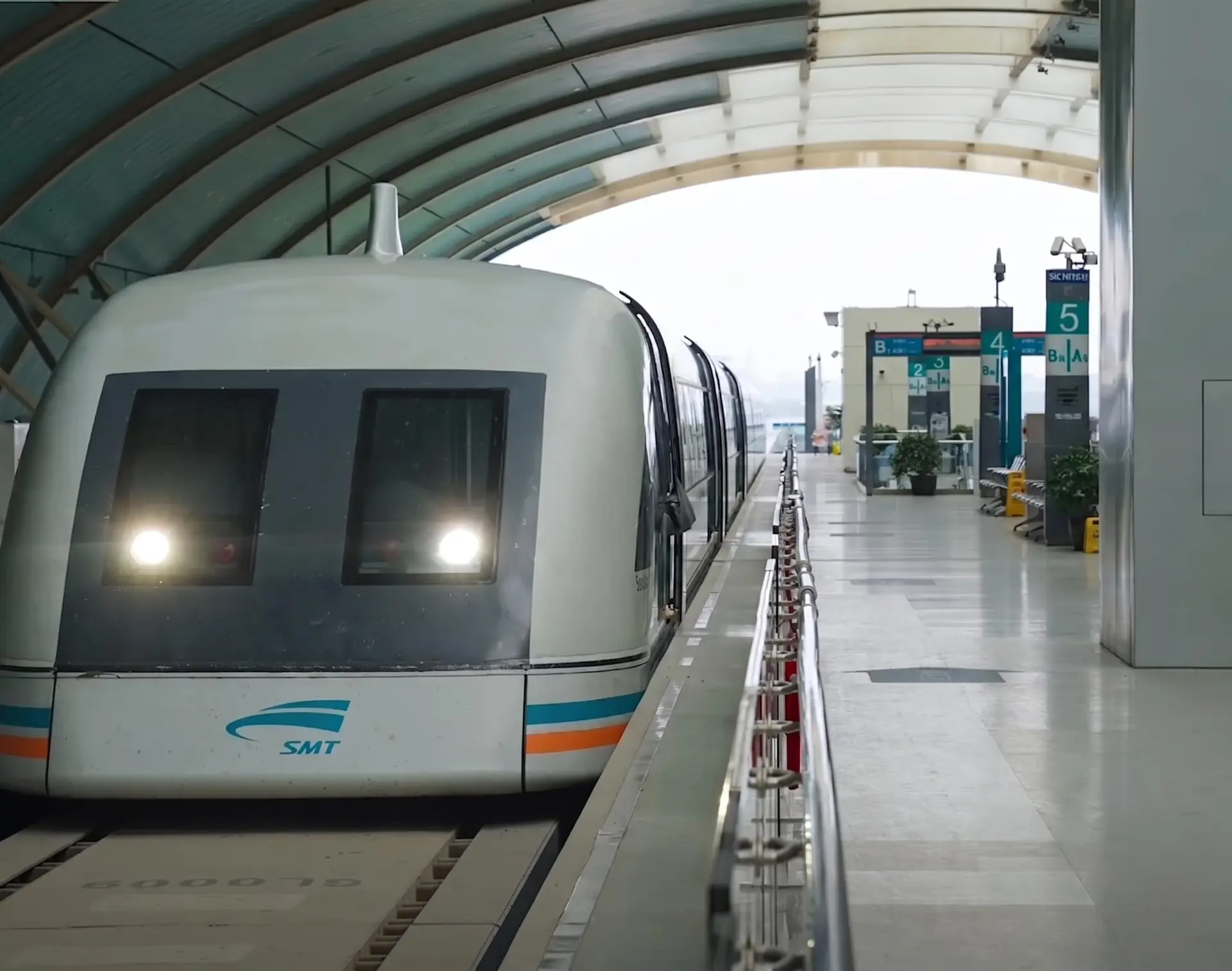
Shanghai is the clearest example of why the airport code matters. Pudong has the big international network and the Maglev to Longyang Road (龙阳路), while Hongqiao is the air-rail hub for fast onward trains.
Beijing has the same trap in reverse: Capital is north-east of the city, Daxing is far south. The same airline may use different airports on different routes, so check PEK, PKX, PVG, SHA, CAN, and TFU before you pay.
Other useful entry airports
Plan Your China Flight Route
Route planning should start from your first destination, not your home airport. A cheap fare into the wrong hub can disappear once you add a domestic flight, a second airport transfer, or a missed rail connection.
- Choose your first real stop- Great Wall and hutongs -> Beijing; the Bund and water towns -> Shanghai; Cantonese food and Shenzhen -> Guangzhou; pandas and Sichuan -> Chengdu; Yunnan -> Kunming.
- Search direct flights first- If your city has a direct flight into the right Chinese hub, that is usually the simplest option for luggage, delays, and check-in documents.
- Compare one-stop routes- Hong Kong, Singapore, Seoul, Doha, Tokyo, and Bangkok can be cheaper gateways. Avoid transit countries that require a visa unless you already have one.
- Check the onward leg- If you must connect inside China, leave time for immigration, baggage claim, customs, re-check-in, and security. For separate tickets, treat 3-4 hours as a minimum.
The Hong Kong shortcut
Flying into Hong Kong (HKG) and taking high-speed rail into mainland China can be a smart alternative. Hong Kong West Kowloon to Shenzhen takes about 20 minutes, and Guangzhou is roughly 1 hour by high-speed rail. You still need a valid mainland China visa or visa-free eligibility for the mainland portion.
Airlines and Booking Platforms
Airline choice matters most when it affects airport code, alliance benefits, checked-bag rules, or your ability to change the ticket. The cheapest seller is not always the best place to buy.
Air China (国航)
Beijing Capital PEK
Strength: strong Beijing, Europe, and North America network; Star Alliance.
Watch out: some routes use older cabins.
China Eastern (东航)
Shanghai Pudong PVG
Strength: strong Shanghai base and SkyTeam links.
Watch out: check aircraft and seat map on long-haul routes.
China Southern (南航)
Guangzhou CAN, Beijing Daxing PKX
Strength: strong South China, Southeast Asia, and Oceania network.
Watch out: no longer in SkyTeam; check mileage compatibility.
One-stop routes can still win
International airlines can be better when your home city has strong one-stop service. Cathay Pacific via Hong Kong, Singapore Airlines via Singapore, Korean Air or Asiana via Seoul, Qatar Airways via Doha, and major European carriers through their hubs can price well, but transit-country rules still matter.
From North America, Delta and United are the common direct-flight names to check alongside Chinese carriers.
Where to research fares and book
Google Flights
Fast fare-calendar and routing-research screen. Use it for comparison, then verify the final ticket rules with the airline or approved booking channel.
Skyscanner
Useful for flexible-date route research and budget-airline discovery. Verify baggage, seller reputation, and refund terms before paying elsewhere.
Trip.com(affiliate link · may earn commission, no extra cost)
China routes, domestic add-ons, and English interface. Useful for mixing international flights, domestic flights, and trains.
Airline website
Best for changes, refunds, mileage, and disruption handling. Usually safest for complex or expensive tickets.
Fare Timing and Holiday Spikes
Practical planning window
For long-haul international flights into China, a practical planning window is often 3-5 months before departure. If your dates are flexible, compare nearby weekdays and keep your first night simple so a delay does not break the whole trip.
Chinese New Year (春节)
Why fares jump: late January to mid-February, varies yearly; global Chinese travel demand rises.
Planning move: avoid if possible, or book much earlier.
Labor Day (五一)
Why fares jump: around May 1, often a multi-day holiday depending on the official calendar.
Planning move: avoid tight domestic connections near the holiday.
National Day Golden Week (国庆)
Why fares jump: October 1-7, one of China's biggest travel weeks.
Planning move: avoid airport-to-rail same-day plans.
Summer break
Why fares jump: July-August family travel and weather disruption season.
Planning move: build more buffer for delays and typhoons.
Money-saving basics
Compare Tuesday and Wednesday departures.
Check shoulder seasons such as March-April and late October-November.
Price both direct and one-stop routes.
Compare the airline's own site before buying from an online travel agency.
Booking Checks Before You Pay
Before you click "pay," do a last pass on the details that cause real airport problems in China.
- Passport name matches exactly, including order, spaces, and middle names where the airline requires them.
- Airport code is correct: PEK vs PKX in Beijing, PVG vs SHA in Shanghai.
- Entry eligibility is clear: visa, unilateral visa-free stay, or 240-hour transit visa-free route.
- Onward or return proof is saved, especially for visa-free and transit cases.
- Baggage allowance is checked for both the international and domestic legs.
- Separate-ticket connections leave enough time for baggage, customs, check-in, and security.
If you need a Chinese visa, do not lock yourself into a nonrefundable ticket unless the visa process and cancellation terms make sense. Some travelers use a cancellable reservation or airline hold as itinerary proof where accepted, then pay for the final ticket once the visa is secure.
Before Departure: Apps, SIM, Bags
The easiest China arrival is built before boarding. Some apps, payment tools, and connectivity choices are awkward to fix after you land.
Install and test before departure
VPN: download, pay, and test before departure; many VPN websites and Western services are blocked in China. See our VPN guide.
Translation: Baidu Translate, Youdao, or another offline-ready app. See our translation app guide.
Navigation: Amap (高德地图), Apple Maps, and/or Maps.me offline maps. See our navigation app guide.
Payments: set up Alipay or WeChat Pay and link an international card before flying. See our mobile payments guide.
Trip.com: useful for domestic trains, flights, hotels, and attraction tickets in English when the live checkout supports your passport, card, and product. See our Trip.com guide.
Save these offline
Hotel address in English and Chinese, plus a screenshot for immigration, taxi, and first-night check-in use.
Passport photo page photographed and saved offline.
Return or onward booking confirmation saved offline.
eSIM installed or airport SIM pickup details saved.
Payment app tested with your card if possible.
Offline maps and translation packs downloaded.
Power bank rules changed in 2025
Power banks must stay in carry-on baggage, never checked luggage. CAAC also tightened domestic-flight checks from June 28, 2025: power banks without clear CCC/3C markings, with unclear markings, or from recalled models/batches are not allowed on domestic flights in China. Usual battery limits still apply: up to 100Wh is the normal no-approval limit; 100-160Wh needs airline approval and is limited to two per passenger; above 160Wh is prohibited. If the Wh rating is unclear and cannot be calculated from the label, security can refuse it. Do not use a power bank to charge devices during the flight.
Security reminder: China is also strict on lighters and matches, so do not pack them in checked or carry-on luggage for Chinese flights. Liquids, gels, and aerosols are checked by container capacity and airport security rules. Keep medicines in original packaging, carry prescriptions or doctor notes for important medication, and check whether any medication is restricted in China or your transit country.
Arrival: First Steps After Landing
Your first airport task is simple: stay in the official flow until you reach the arrivals hall. Do not stop for ride offers or SIM sellers before you have cleared immigration and customs.
Official arrival flow
Stay in sequence until you are outside customs.
Arrival card
Foreign nationals may submit entry information online before arrival. If you have not done it, complete it at the port by QR code, self-service device, or paper card before border inspection.
Border
Follow Arrival signs, then join the foreign passport lane or the 240-hour transit counter if it applies. Have your passport, first hotel address, and onward or return proof ready.
Bags and customs
Collect checked luggage, then use the green channel if you have nothing to declare. Use the red channel for foreign currency above the current USD-equivalent declaration threshold, RMB cash above CNY 20,000, or goods that customs rules require you to declare.
Arrivals hall
Activate mobile data first. If your trip depends on a VPN or overseas services, test it after the data connection is stable; otherwise go straight to official taxi queues, metro signs, airport buses, or your ride-hailing pickup point.
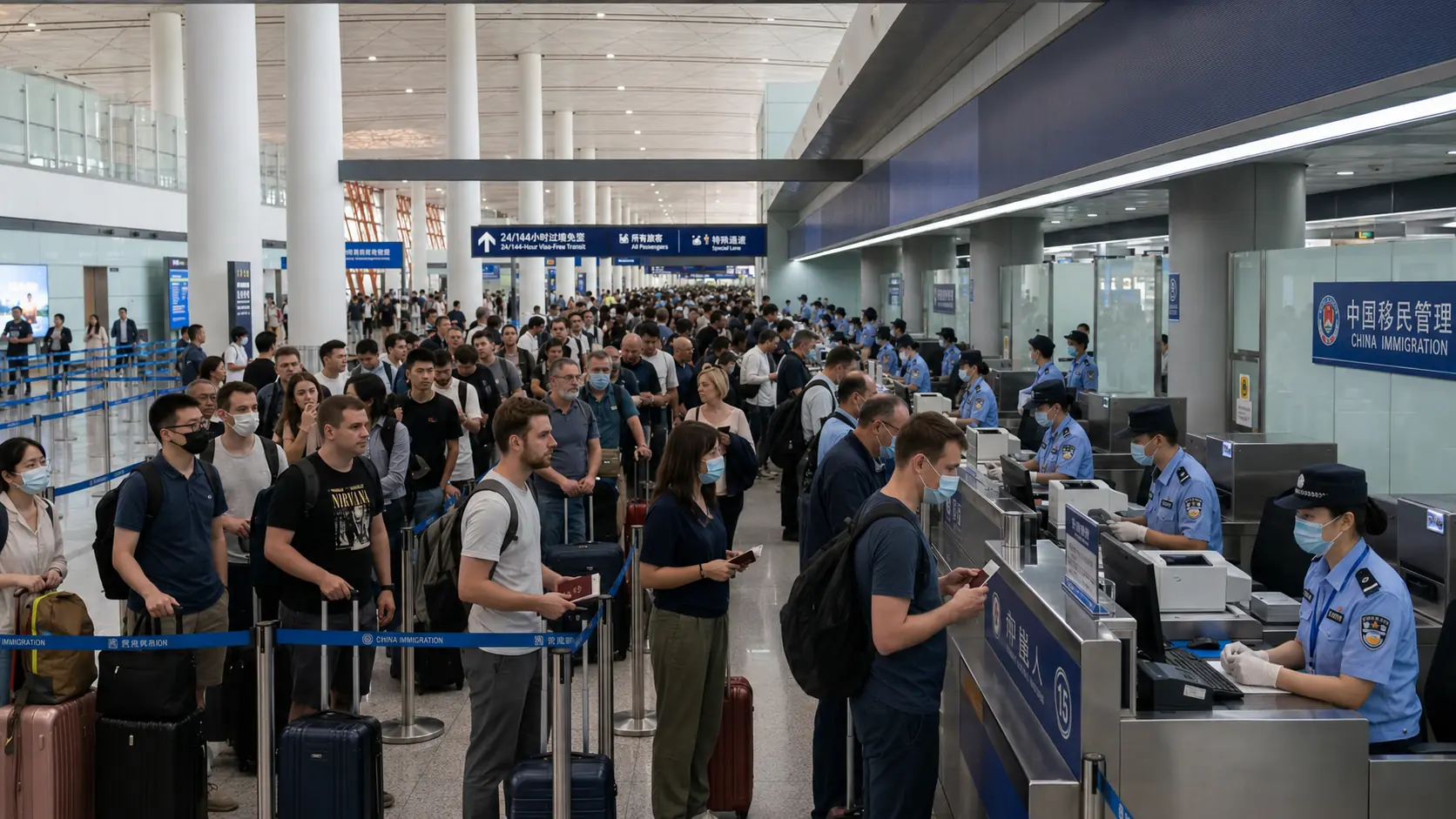
After customs
Data First
Airport Wi-Fi exists, but verification can be awkward without a Chinese phone number. If you bought an eSIM, activate it before trying to solve everything else; the China eSIM guide explains the pre-trip setup.
Official Transport Only
Do not engage with people who approach you in the arrivals hall offering rides. Use the official taxi queue, metro, airport bus, or a clearly marked ride-hailing pickup.
ATMs Beat Exchange Counters
Arrivals-hall ATMs usually beat airport exchange counters. Keep some cash for backup, but Alipay and WeChat Pay will handle most daily payments once set up.
First-night check-in
Keep the original passport and entry stamp ready. At most hotels, the front desk checks your passport, registers the stay, and returns the passport after check-in; some hotels also take a deposit. The hotel check-in guide explains the paperwork.
Onward Connections by Air or Rail
Many travelers clear immigration in one city and sleep in another. The safest plan is to assume you must personally handle immigration, baggage claim, customs, and security before the onward leg.
Same airline or through-ticket domestic flight
What usually happens: luggage may be tagged through, but you still clear immigration and customs at first entry.
Minimum buffer: ask the airline; leave meaningful buffer.
Different airline or separate tickets
What usually happens: collect all bags, exit, re-check in, and pass domestic security.
Minimum buffer: 3-4 hours minimum.
Dual-airport transfer
What usually happens: PEK to PKX or PVG to SHA can take 60-90+ minutes before check-in.
Minimum buffer: avoid same-day tight transfers.
Airport to high-speed rail
What usually happens: often faster than a domestic flight for short and medium routes.
Minimum buffer: leave time for airport exit and station security.
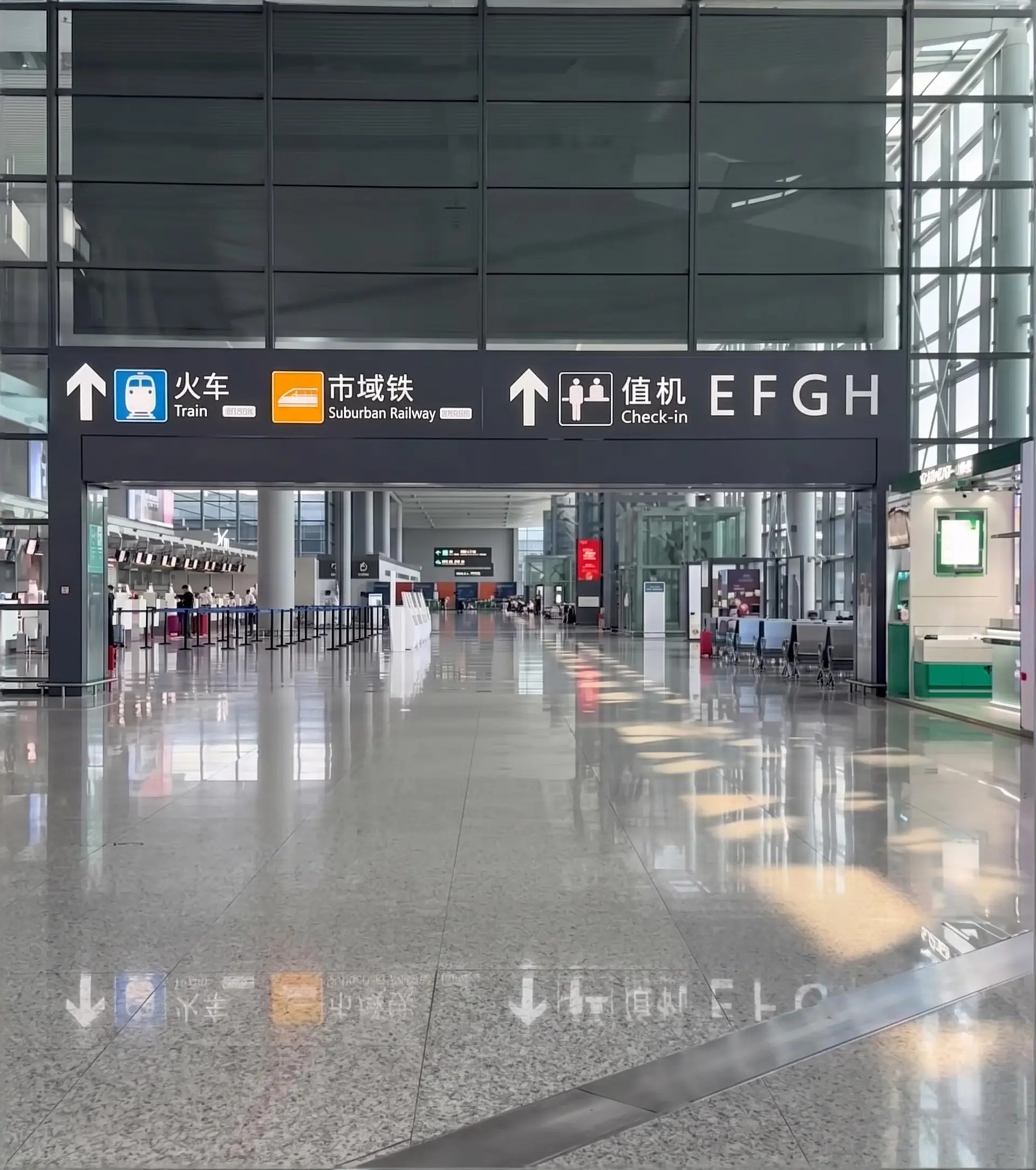
Hongqiao is the clean example
Terminal 2, the metro, and Hongqiao Railway Station sit in one transport hub, so it is Shanghai's cleanest air-to-rail handoff. Confirm your terminal if the train timing is tight.
Pudong is different
If you land at PVG and need a train, you still have to cross to Hongqiao Railway Station. For domestic trains and flights, use Trip.com or the official 12306 rail app where it works for your passport and phone setup. See our China train ticket guide for the booking workflow.
Common air-to-rail handoffs
These estimates start after exiting customs or reaching the arrivals hall, not from aircraft touchdown. For a separately booked train after an international arrival, add 60-120+ minutes before these transfer estimates; add more during holidays, visa or transit checks, checked-bag delays, or late-night arrivals.
Shanghai Pudong -> Hangzhou
PVG to Hongqiao Station, then high-speed rail. Typical time after customs: 2.5-3 hours.
Shanghai Hongqiao -> Hangzhou
From Terminal 2, walk to Hongqiao Railway Station, then high-speed rail. Typical time after customs: about 1.5 hours.
Shanghai Pudong -> Suzhou
PVG to Hongqiao Station, then high-speed rail. Typical time after customs: 2-2.5 hours.
Guangzhou Baiyun -> Shenzhen
Metro, bus, or taxi to Guangzhou South, then high-speed rail. Typical time after customs: about 2 hours.
Guangzhou Baiyun -> Guilin
Airport to Guangzhou South, then high-speed rail. Typical time after customs: 3.5-4 hours.
Beijing Capital -> Tianjin
Airport Express or taxi to a Beijing rail station, then intercity train. Typical time after customs: about 1.5-2 hours.
Do not trust a short map distance
Airport-to-station transfers include walking, queues, luggage, security, and ticket gates. If your train is expensive or late at night, book a later departure and treat the extra time as insurance.
Common Mistakes
Passport Name Mismatch
Chinese check-in and security can be strict about name matching. Copy your name from the passport and check the order before paying.
Wrong Airport
Beijing has PEK and PKX; Shanghai has PVG and SHA. Always confirm the three-letter code on the ticket and the onward leg.
Apps Not Ready
Downloading a VPN, payment app, or offline map after arrival is much harder. Set them up before your flight.
Power Bank Confiscated
For China domestic flights, check Wh capacity, CCC/3C marking, and recall status before packing your power bank. Keep it in carry-on only and do not use it during the flight.
Too Little Connection Time
International-to-domestic transfers can require immigration, bags, customs, re-check-in, and security. Tight separate tickets are risky.
Unofficial Ride Offers
Anyone approaching you inside arrivals with a ride offer is not the official taxi queue. Follow airport signs instead.
Frequently Asked Questions
For classic first trips, Beijing Capital or Daxing works best for Beijing and the Great Wall, while Shanghai Pudong works best for Shanghai plus Hangzhou, Suzhou, or Nanjing. Guangzhou is better for South China, and Chengdu Tianfu is better for Sichuan and much of western China.
Sources checked for this guide
- CAAC 2025 airport statistics bulletin for China airport passenger throughput, hub airport scale, and international-route recovery context.: CAAC 2025 airport statistics
- State Council/NIA policy update for 240-hour transit visa-free ports, unilateral visa-free extension to Dec. 31, 2026, and online entry-card availability.: NIA visa-free and entry-card update
- State Council 2025 Guide to Working and Living in China for RMB cash limits, hotel registration, mobile payment, rail ticketing, metro, and domestic flight payment context.: State Council 2025 visitor services guide
- CAAC notice banning power banks without clear CCC markings or from recalled models/batches on China domestic flights from June 28, 2025.: CAAC 2025 power bank notice
- CAAC passenger notice on power-bank watt-hour limits: no approval up to 100Wh, airline approval from 100Wh to 160Wh, no more than two in that approval range, and no in-flight use for charging devices.: CAAC power bank Wh limits
Beyond This Guide
Flying gets you into China; the next layer is making the first week work smoothly. Use these guides when you are ready to connect flights, trains, apps, payments, and arrival logistics into one plan:
- Domestic Flights in China: Intercity Air Travel Guide - when a domestic flight beats high-speed rail
- China High-Speed Rail Guide - routes, seats, boarding, and station-day rhythm
- China Train Tickets: 12306 & Trip.com - step-by-step rail booking
- China eSIM Data Plans - connectivity before airport Wi-Fi becomes the fallback
- Essential China Travel Apps Toolkit - app setup before arrival
- Checking into Chinese Hotels - passport registration, deposits, and first-night front-desk basics
- China Visa Guide - visa, visa-free, and transit eligibility context
© gochinafreely.com — Original guide by Go China Freely.