China Domestic Flights: Quick Decision
Domestic air network
Use flights for big China jumps, not every city pair.
China's domestic air network is huge: mainland China had 270 certified transport airports by the end of 2025, and mainland airport passenger throughput reached 1.529 billion passenger trips for the year.
Use this guide to decide when to fly, book with a passport, clear domestic security, and handle delays without guessing at the airport.
270
Certified Mainland Airports
1.529B
2025 Airport Throughput
91.09%
Domestic Flight Regularity
Fly when it is a real long jump
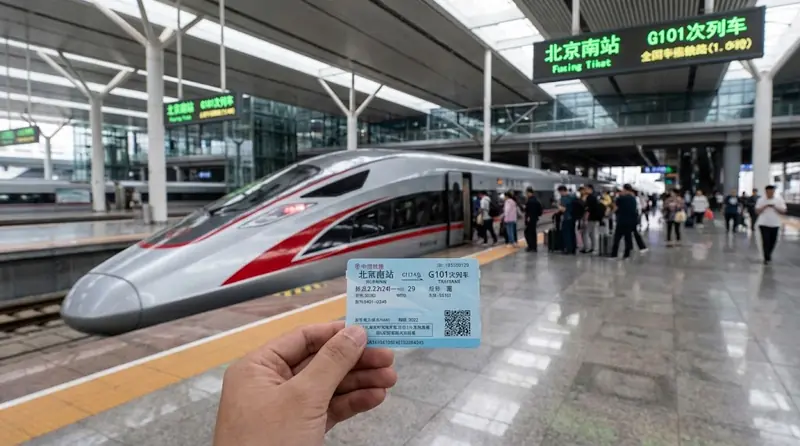
Choose a domestic flight when the journey is over 1,000 km, has no direct high-speed rail, or saves you a hotel night on a multi-city trip.
Take high-speed rail when it is simpler
High-speed rail is still better for many 300-800 km trips, especially when city-center access or punctuality matters.
Treat 800-1,200 km as the grey zone
Compare door-to-door time, not just flight time. Airports are usually outside the city, domestic security is strict, and weather delays can erase the time advantage.
Build extra buffer in summer
The 2025 domestic passenger flight regularity rate was 91.09%, but thunderstorm season still creates messy airport days.
Where flying makes sense
Flying is often the only practical choice for Shanghai to Kunming, Beijing to Sanya, Chengdu to Lhasa, or any multi-city route that jumps across 1,000+ km.
Airport buffer to plan around
A normal domestic flight usually needs about 2 hours at the airport before departure, plus city transfer time after landing. Add more for first-time passport check-in, checked bags, huge terminals, holidays, storm season, or Tibet/Xinjiang routes. Beijing to Shanghai often works better by high-speed train, while Beijing to Guangzhou or Shanghai to Kunming usually works better by air.
Flight vs Train: When to Fly
This is the decision every independent traveler faces when building a China route. Use the high-speed rail guide to test reliable city-to-city corridors; use flights for big geographic jumps, island or plateau routes, and cities where rail would force an awkward transfer.
Domestic flight
Best for long geographic jumps.
High-speed rail
Best for clean city-to-city corridors.
Best distance
Flight: 1,000+ km. / Rail: 300-800 km.
Lead time
Flight: about 2 h at the airport for ordinary trips; 2.5 h+ for first-timers, checked bags, holidays, big airports, or security-heavy routes. / Rail: 30-45 min for ordinary trips; about 60 min for first-timers, holidays, or mega-stations.
Delay risk
Flight: moderate; weather and flow control matter. / Rail: very low on G/D high-speed services.
Baggage
Flight: common full-service economy is 20 kg checked, but fare family controls the rule. / Rail: no formal weigh-in for normal luggage.
City access
Flight: airports are often suburban. / Rail: major rail stations are often metro-connected.
Meals
Flight: often included on full-service airlines. / Rail: bring your own or buy onboard.
Grey-zone test
The grey zone is where most mistakes happen. Beijing to Shanghai is a good example: the flight is about 2 h 15 min, but check-in, security, boarding, baggage claim, and airport transfers can make the total closer to 5-6 hours. The high-speed train takes about 4.5 hours and runs city center to city center.
Price check
Price does not settle the question by itself. Discount airfares can beat second-class rail on some routes, especially red-eyes and midweek flights. Full-fare flights, holiday flights, airport transfers, and paid baggage can quickly make the train cheaper.
Compare the first and last kilometer
Before choosing the cheaper ticket, map hotel-to-airport and station-to-hotel time. In China, the transfer at each end often decides whether flying actually saves time.
Domestic Airlines and Fare Types
China had 65 commercial airlines by the end of 2025, but first-time visitors mostly encounter the national full-service carriers, a few strong regional airlines, and two budget or budget-plus options. The names you will see most often are Air China (中国国际航空), China Eastern (中国东方航空), China Southern (中国南方航空), Hainan Airlines (海南航空), Shenzhen Airlines (深圳航空), XiamenAir (厦门航空), and Sichuan Airlines (四川航空).
Full-service airline quick map
Use this as a route-or-hub clue, then check the fare family before payment.
Air China
Beijing; Star Alliance. Commonly 20 kg; verify fare.
China Eastern
Shanghai; eastern China. Commonly 20 kg; verify fare.
China Southern
Guangzhou, Shenzhen, Daxing. Commonly 20 kg; verify fare.
Hainan Airlines
Haikou, Beijing; stronger service. Usually 20 kg; verify fare.
Shenzhen Airlines
Pearl River Delta. Usually 20 kg; verify fare.
XiamenAir
Xiamen, Fuzhou, Fujian coast. Usually 20 kg; verify fare.
Sichuan Airlines
Chengdu; southwest China. Usually 20 kg; verify fare.
Budget fares: read the fare family first
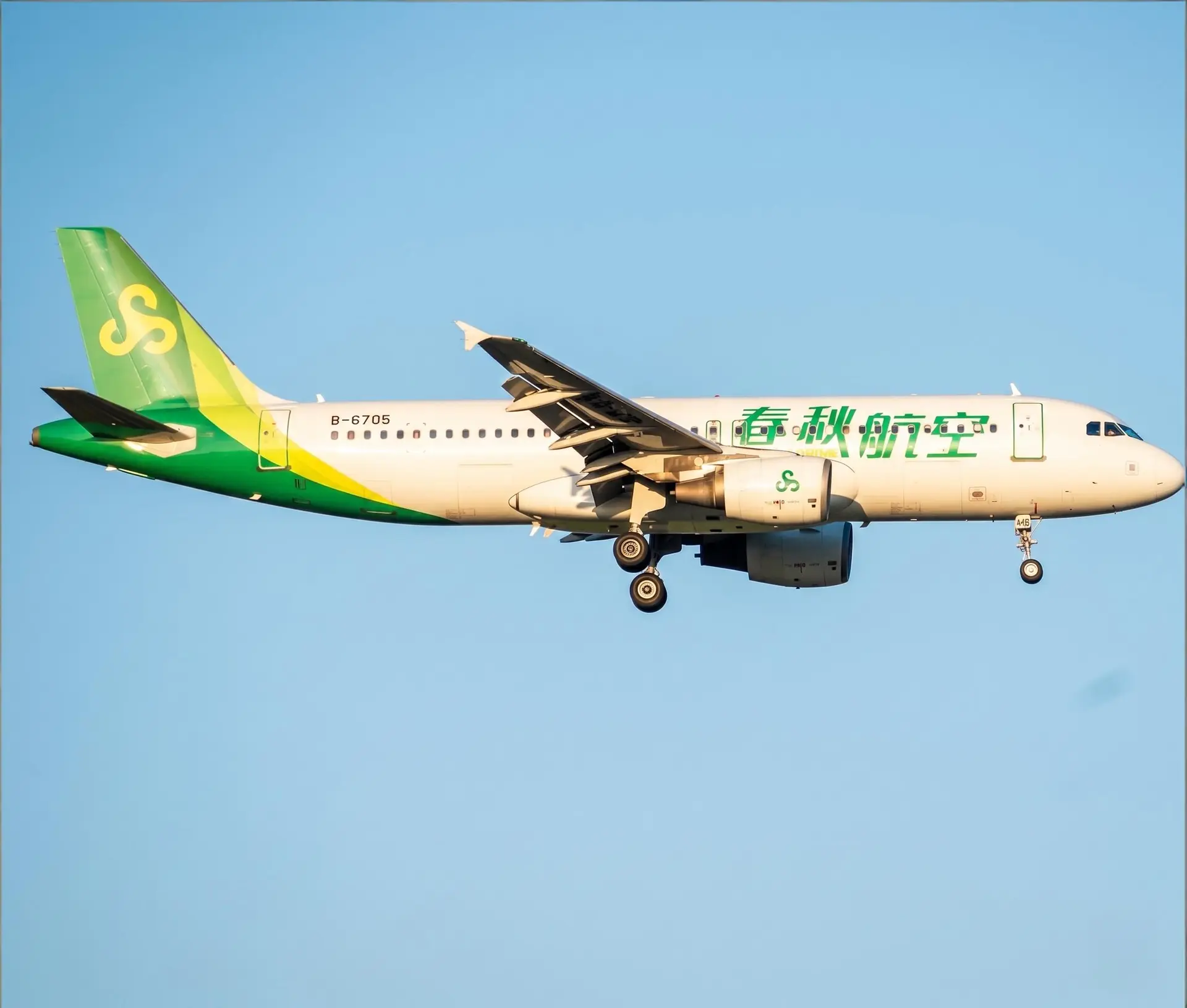
Spring Airlines (春秋航空) is the true low-cost carrier to watch. Its base fares can be very cheap, but the lowest fare families can include no checked baggage, a smaller carry-on allowance, no free meal, and paid seat selection.
Juneyao Airlines (吉祥航空) is closer to budget-plus: it often keeps the comfort and baggage rules of a full-service carrier while still pricing aggressively on Shanghai routes.
Spring Airlines
Lowest base fare
Often the cheapest option from Shanghai Pudong; buy checked baggage online before the airport; do not expect a free meal or standard full-service comfort.
Carry-on: 7 kg, 20 x 30 x 40 cm. SpringSaver has no free checked bag.
Juneyao Airlines
Budget-plus
Good Shanghai coverage, including Pudong and Hongqiao, with more comfortable rules than a true low-cost ticket. Lowest promotional fares still need a baggage check.
Regular economy: often 20 kg checked, but confirm the fare family. Carry-on commonly 5 kg.
Cabin reality
Domestic cabins are functional rather than luxurious. Full-service airlines usually include a simple snack or meal on many routes, while Spring-style low-cost fares do not.
Seat and meal rhythm
Domestic economy seat pitch is usually around 30-31 inches on full-service carriers. Short flights often only offer a snack pack; flights over about 2 hours are more likely to serve a meal box with rice, noodles, meat, or vegetables.
Before boarding
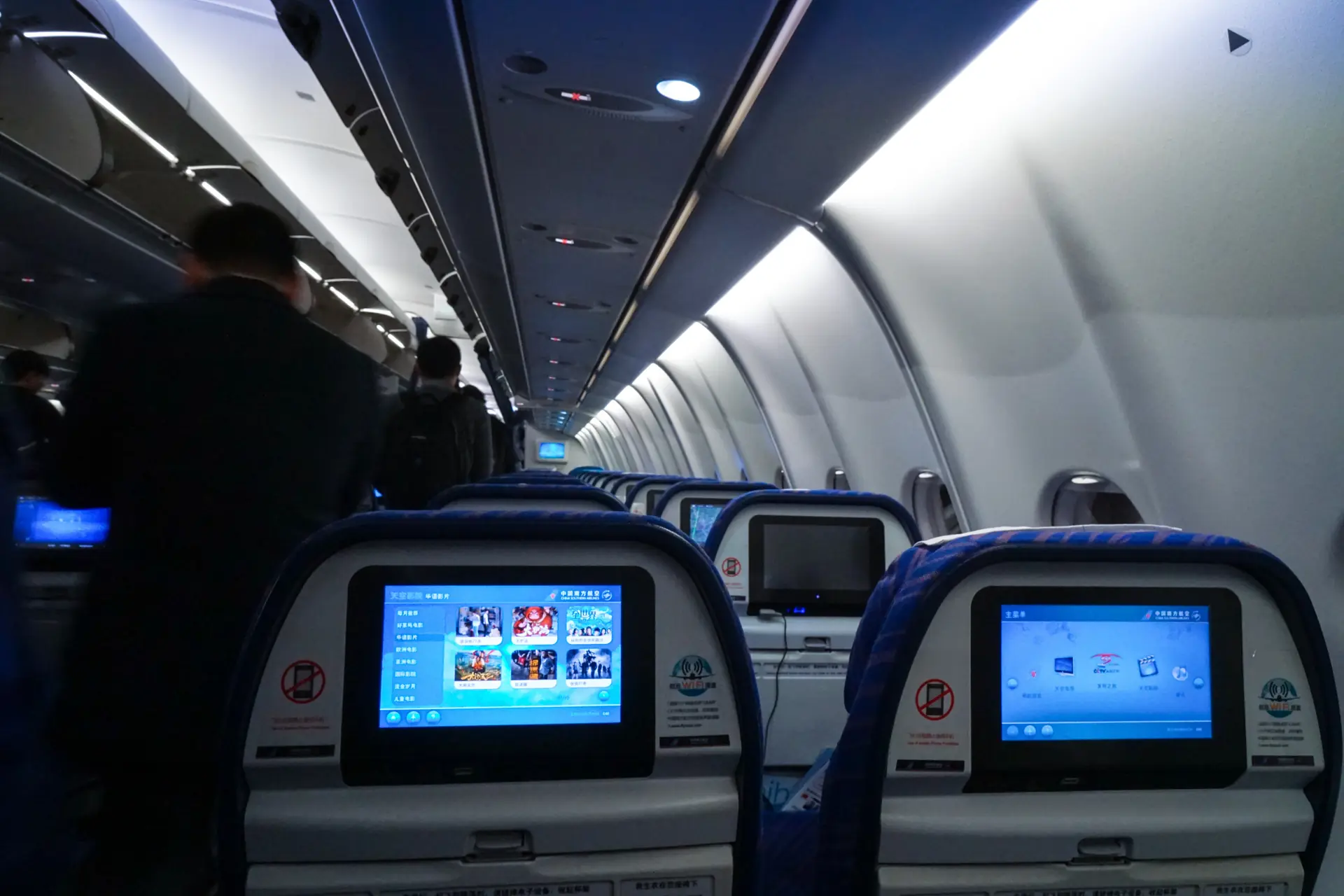
WiFi is still uncommon and unreliable on most domestic flights, so download maps, hotel addresses, and entertainment before boarding.
Domestic business class is usually a wider recliner seat in a 2+2 layout, not the lie-flat international long-haul product.
Booking China Domestic Flights
The easiest booking channel for most foreign travelers is Trip.com(affiliate link · may earn commission, no extra cost) because it has an English interface, accepts many international cards, supports passport booking, and provides flight alerts and English customer support. Airline websites can be better for direct refunds or changes, but some English sites are clunky and foreign-card payment is inconsistent. For multi-leg routings, check whether the itinerary is one protected ticket or an OTA combo/self-transfer; separate tickets are not automatically protected if one flight disrupts the next.
Trip.com
Best for: English booking, foreign cards, passport entry, alerts, and support.
Watch: baggage and refund rules before payment.
Airline website/app
Best for: direct changes, direct refund handling, and loyalty miles.
Watch: payment and English interfaces can be inconsistent.
Skyscanner / Google Flights
Best for: pre-arrival price sense and flexible-date comparison.
Watch: they are not the best place to manage the ticket once you are traveling in China. Keep Trip.com, the airline app, and airline SMS or email alerts as the practical tools after purchase.
Official airline sites
Booking rhythm
Best booking window: 3-6 weeks before departure is usually a sensible balance for domestic routes. Two months out can be cheaper on some city pairs, but it also locks you into plans before hotel, weather, or itinerary details are stable.
Within 3 days: expect higher fares unless the route has heavy competition.
Cheapest days: Tuesday and Wednesday flights are often cheaper. Red-eyes and very early flights can be 20-40% cheaper, but only choose them if your hotel transfer still works.
Dates to avoid when possible
Chinese New Year (late January to mid-February): China's largest travel migration; popular routes sell out early.
National Day Golden Week (October 1-7): nationwide travel surge.
Labor Day (May 1-5): short holiday, strong city-break demand.
Summer (July-August): family travel peak plus thunderstorm delays.
Qingming and Dragon Boat Festival (April and June): short holidays that raise prices on popular routes. Check exact dates in the China public holidays calendar.
Passport and ticket must match
Use the same passport for booking, check-in, security, and boarding. After payment, check passport number, expiry, surname/given-name order, middle names, spaces, and hyphens immediately. If any detail is wrong, fix it before travel day rather than hoping the airport counter can solve it.
Keep the booking record handy
You do not need an e-ticket itinerary receipt to board. Keep the Trip.com or airline order page, PNR, ticket number if shown, and airline SMS or email. Use the original booking channel for changes, refunds, delay certificates, or insurance documents.
Check-In, Security and Boarding
This is where domestic flights in China surprise foreign travelers most. Counters, passport handling, liquid rules, power bank checks, and gate timing can feel stricter than comparable domestic flights elsewhere.
Arrival buffer
For ordinary domestic flights, arrive about 2 hours before departure at the terminal. Use 2.5 hours or more if you are at a major airport for the first time, checking luggage, traveling during holidays or summer storm season, or flying Tibet/Xinjiang and other security-heavy routes. Three hours is a high-risk buffer, not the everyday rule.
Also check the airline and airport check-in or bag-drop cutoff. Domestic counters close well before departure, and the exact cutoff varies by airport, terminal, airline, and baggage needs.
Why it takes time
The walking distance from entrance to gate can be long, and security queues during morning rush can take real time.
Passport traveler move
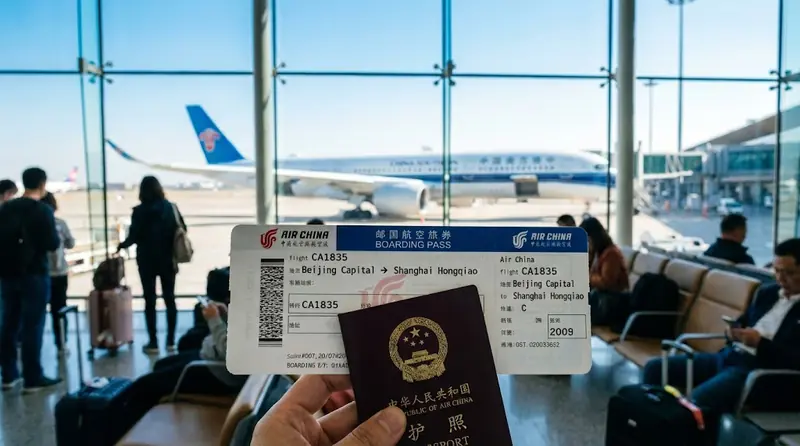
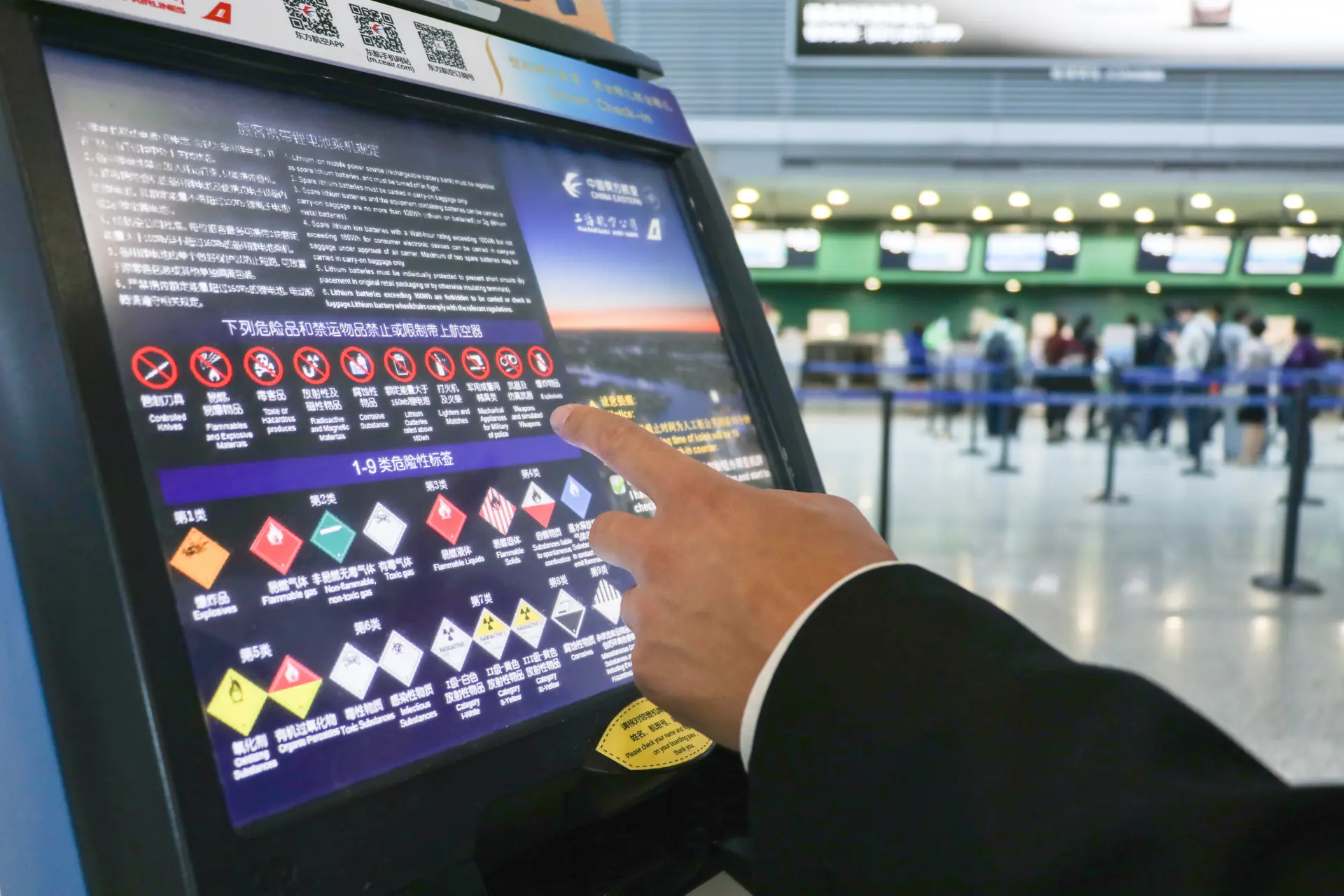
With a foreign passport, the staffed counter is still the safest fallback when you have checked baggage, Tibet documents, a first-time route, or a kiosk/app that rejects your passport. If you have no checked baggage and the airline app issues a boarding QR code, major airports often let you use electronic boarding.
Keep enough time for a counter fallback, bring your passport, verify the boarding pass or QR code, and keep the baggage claim tag if you check luggage.
- Find the counter- Use the flight information screen to match your flight number with the airline counter zone.
- Show passport and ticket- Counter staff issue the boarding pass and handle baggage drop.
- Check the boarding pass- Verify name, flight number, gate, boarding time, and seat before leaving the counter.
- Clear security- Remove laptops, tablets, power banks, and other electronics when asked.
- Recheck the gate screen- Gate numbers can change late, especially during delays or flow control.
- Board with passport ready- Domestic boarding normally checks both boarding pass and passport again.
Security Rules That Matter Most
No Ordinary Carry-On Liquids on Domestic Flights
On Chinese domestic flights, ordinary liquids are not allowed through security in carry-on baggage. Water, drinks, shampoo, sunscreen, and larger toiletries should go in checked baggage. The main exception is a small amount of personal-use cosmetics, toothpaste, or shaving cream: one item per type, each container no larger than 100 ml or 100 g, and subject to inspection. Infant milk, necessary liquid medicines, sealed duty-free transit liquids with receipts, and drinks bought after security can be handled differently, but they still depend on security confirmation and airport-control-area rules.
Power banks
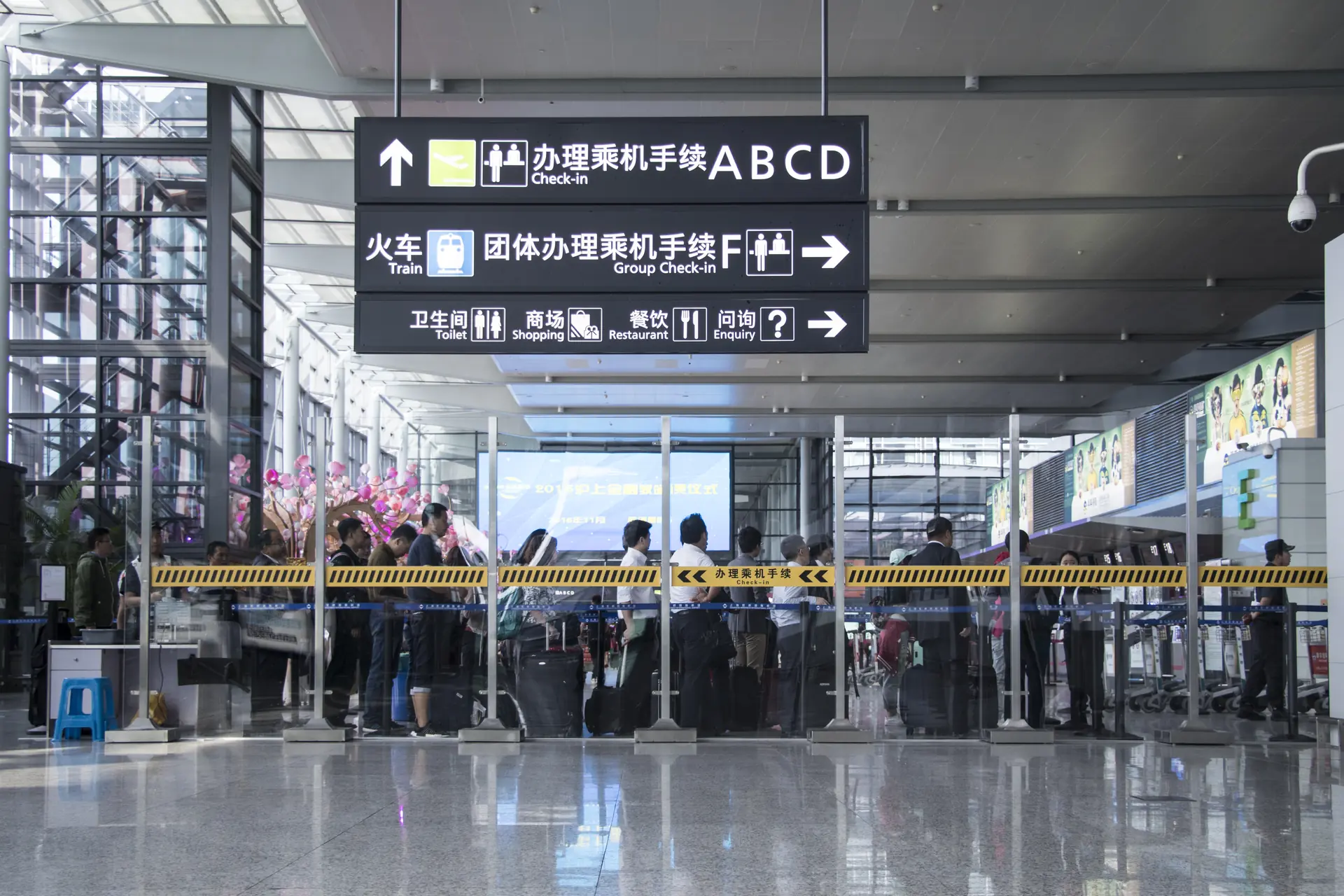
Power banks and spare lithium batteries are carry-on only, never checked. As of June 28, 2025, passengers on domestic flights may not carry power banks without a clear CCC (3C) mark, unclear CCC marking, or recalled models. Keep the label visible; if airport security cannot verify it, the power bank can be confiscated.
Gate closure
Many domestic gates close 10-15 minutes before departure, and late passengers are usually not boarded.
Lighters and matches
Banned from both carry-on and checked baggage.
Power bank capacity
Up to 100 Wh is normally allowed in carry-on. 100-160 Wh needs airline approval and is limited to two per passenger; over 160 Wh is prohibited.
E-cigarettes
Carry-on only, never checked. Do not use or charge them onboard; e-liquid follows liquid rules.
Spare lithium batteries
Protect terminals against short circuit, keep labels clear, and do not place spares in checked baggage. Installed batteries in devices are handled separately from loose spares.
After Landing
Baggage hall
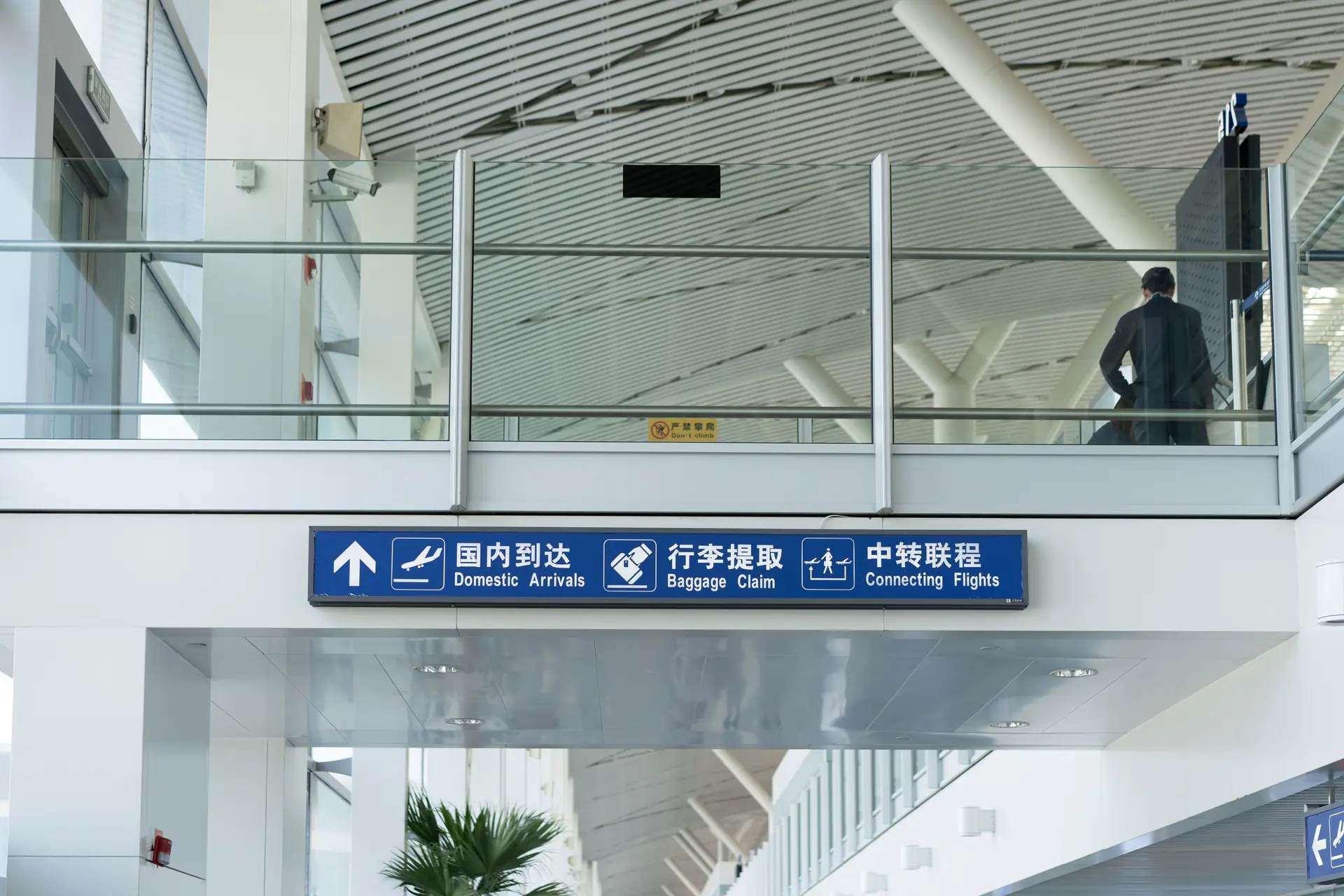
Follow signs for "Arrivals" (到达) and "Baggage Claim" (行李提取). Match your flight number to the carousel, keep your baggage claim tag ready, and do not leave the baggage hall before reporting lost or damaged luggage.
City transfer
Use the official taxi queue, metro, airport shuttle bus, or the designated online ride-hailing pickup point for Didi. Ignore anyone approaching you inside the terminal offering a private ride.
Baggage Rules and Carry-On Limits
Chinese domestic baggage rules usually use a weight system, not the international "one checked bag up to 23 kg" habit. If your fare family says the economy allowance is 20 kg, that usually means 20 kg total checked baggage, not one piece per passenger regardless of weight. Always confirm the airline and ticket-type rule before payment.
Full-service economy
Checked: commonly 20 kg total, not guaranteed.
Carry-on: commonly 1 piece, 5 kg; some airlines/cabins allow more.
Meaning: weigh your checked luggage before the airport.
Spring Airlines basic fare
Checked: often no free checked baggage.
Carry-on: 7 kg, 20 x 30 x 40 cm on basic fares.
Meaning: buy baggage online in advance.
Juneyao regular economy
Checked: commonly 20 kg total, not guaranteed.
Carry-on: economy commonly 1 piece, 5 kg.
Meaning: check the fare family before payment.
Total checked weight
The key difference from many international tickets is the total checked weight. If your ticket includes 20 kg checked baggage, a 12 kg suitcase plus a 10 kg duffel is 22 kg total, so it can trigger an overweight charge even if each individual piece looks reasonable.
Overweight charges
Overweight fees are usually calculated by kilogram and can be expensive at the counter. Some airline rules use a percentage of the applicable adult economy fare per kilogram, while low-cost carriers use route and weight bands.
If you know you will check luggage on Spring Airlines, buy the allowance in the app or booking channel before arriving at the airport.
Keep valuables and batteries with you
Passport, camera, laptop, medication, money, power banks, spare lithium batteries, and important documents belong in carry-on. Do not put them in checked baggage.
Delays, Cancellations and Transfers
Headline reliability
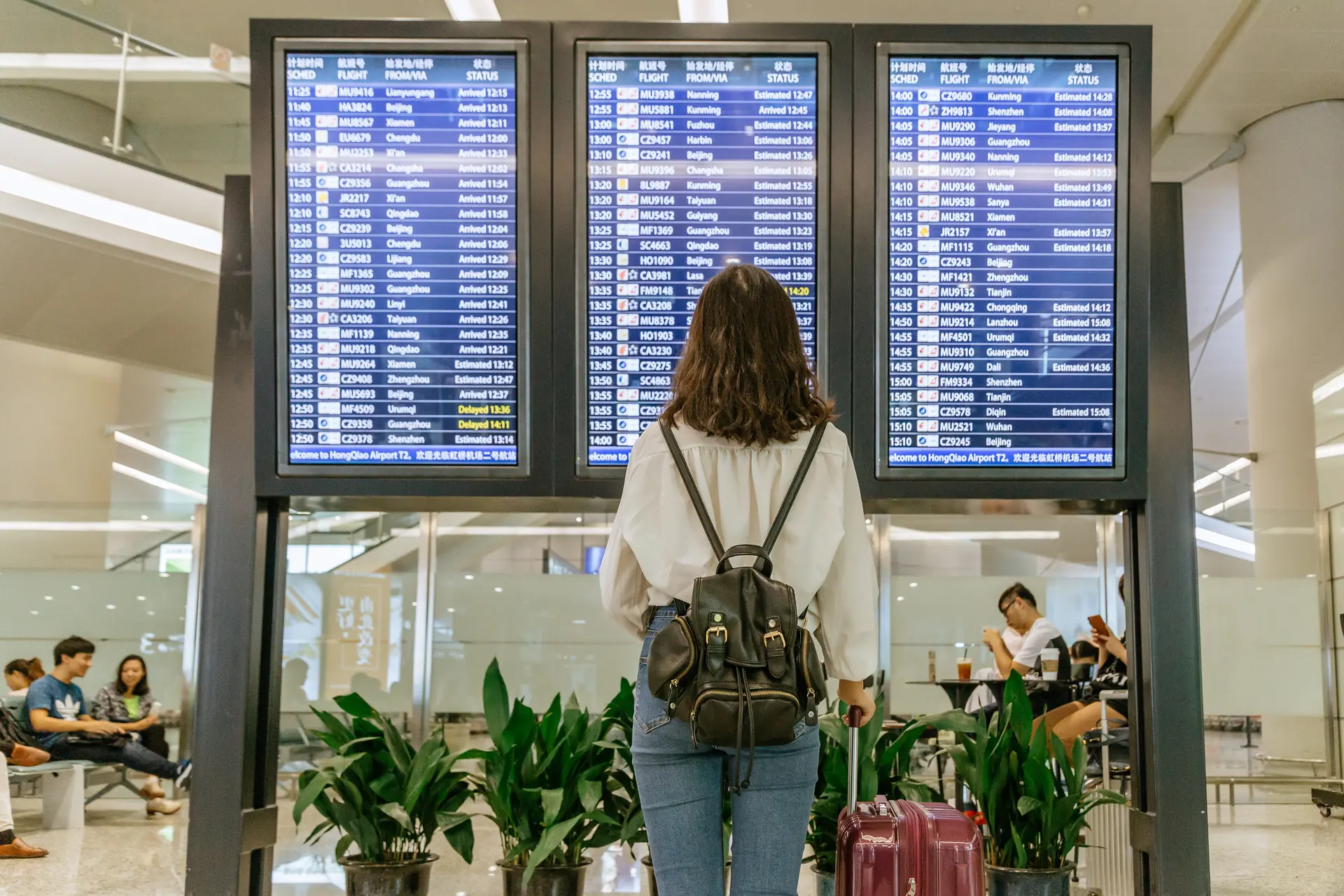
China's 2025 domestic passenger flight regularity rate was 91.09%, with an average delay of 7 minutes.
Why buffers still matter
That headline number is useful context, but it does not mean every travel day is smooth. Summer thunderstorms, air traffic flow control, winter fog, and holiday congestion can still create long airport waits.
First move during a delay
If a flight is delayed, act early. Check the airline app or Trip.com, then go to the airline counter before the queue grows. Keep boarding passes, delay certificates, and receipts if you plan to claim through travel insurance.
Delay handling map
Ask the cause first, because the cause controls what support is realistic.
Carrier-caused delay or cancellation
Airline handles rebooking and usually provides meals/accommodation when required.
Weather, ATC, security, or passenger-caused delay
Airline assists, but passengers often bear meal or accommodation costs.
Cancellation
For the cancelled flight itself, involuntary refund or rebooking is normally handled through the airline or original seller. Separate onward flights are not automatically protected unless the itinerary is a protected connection.
Carrier-caused long delay
Cash compensation depends on the airline policy, delay cause, and actual handling. Ask first about rebooking, refund, meal or accommodation support, and a delay certificate.
Long tarmac delay
Food/water and deplaning rules apply under flight regularity regulations.
What to do at the airport:
- Check rebooking options- Open the airline app or Trip.com and check available rebooking options.
- Queue early- Go to the airline counter as soon as a major delay appears.
- Ask the cause- Confirm whether the cause is carrier-related, weather, air traffic control, or security.
- Ask about support- For a long delay, ask about rebooking, refund, meal vouchers, accommodation, delay certificate, and the airline-specific policy.
- Keep documents- Keep receipts and documents for travel insurance at home.
Delay insurance: read the trigger
If your route is time-sensitive, consider delay insurance only after checking covered causes, delay threshold, required documents, payout method, and claim language. It is a backup tool, not a guarantee that every delay pays out.
Connecting Flights and Airport Transfers
Same-airport transfer
For same-airport domestic-to-domestic connections, follow "Transfer" (中转) signs after landing. If both flights are on one booking and baggage is checked through, you can usually stay airside.
Separate bookings
If the flights are separate bookings, assume you must collect baggage, exit, check in again, and clear security again. Treat OTA combo or self-transfer itineraries as separate unless the seller clearly states they are protected.
Connection buffer
Allow at least 1.5-2 hours for a protected same-airport domestic connection. Allow 3-4 hours if you need to collect and re-check baggage. Avoid same-day cross-airport self-connections where possible; if unavoidable, plan 5-6+ hours in good conditions, longer with checked bags, rush hour, holidays, or separate tickets.
International arrival to domestic flight
If your long-haul flight arrives from abroad and the next leg is domestic, plan for immigration, baggage claim, customs, re-check, and security. For separate tickets, a 4-6 hour buffer or an overnight stay is often safer.
Baggage through-check
Baggage through-check is most likely on the same booking and same airline. Same alliance or partner airline transfers sometimes work, but you must confirm at the first counter. Separate bookings usually require collecting and re-checking baggage.
Beijing
Capital (PEK) to Daxing (PKX): 70+ km; about 1-1.5 h by car in good traffic.
Shanghai
Pudong (PVG) to Hongqiao (SHA): 50+ km; about 1-1.5 h by car or longer by metro.
Chengdu
Shuangliu (CTU) to Tianfu (TFU): 50+ km; about 1 h by car.
Chongqing
Jiangbei T2 to T3: same airport; shuttle or terminal transfer, about 10-25 min.
Tibet, Xinjiang and Special Routes
Tibet Travel Permit Required
Foreign travelers must arrange a Tibet Travel Permit (入藏旅游批准函) through a licensed Chinese travel agency in advance and travel with a guide. Without the required permit arrangements, you should not assume you can buy or board a flight to Lhasa.
🎫Document checks
Tibet is different from ordinary domestic routes: the Tibet Travel Permit is a precondition and can be checked at booking, check-in, security, or boarding.
After the main checkpoint, you can face a second inspection near the gate. Keep your passport, permit documents, and booking records easy to reach.
🛂Xinjiang airports
Xinjiang generally does not require a special travel permit for foreign independent travelers, but security checks can still be more frequent than in eastern China.
Build extra time at airports such as Urumqi, Kashgar, and Hotan.
✈️Routes worth flying
These routes are often worth flying even if you normally prefer rail.
Chengdu to Lhasa is about 2.5 hours by air, while the Qinghai-Tibet Railway is a long scenic journey rather than a time-saving transfer. Beijing to Sanya, Shanghai to Sanya, and many Yunnan or Xinjiang routes also favor flying because direct rail is slow, indirect, or unavailable.
Popular Routes: Flight vs Rail
Use this route board as 2026 reference ranges, not a fixed price list. Confirm the exact flight or train, airport or station, baggage rule, and final fare before booking. Domestic airfares change heavily by season, weekday, booking window, baggage, and holiday demand.
Train usually simpler
Beijing to Shanghai
Flight: 2 h 15 min; ¥350-900 off-peak.
Rail: 4 h 30 min; ~¥553 second class.
Recommendation: train is usually simpler.
Usually fly
Beijing to Guangzhou
Flight: 3 h; ¥500-1,200 off-peak.
Rail: 8 h; ~¥862 second class.
Recommendation: fly.
Beijing to Chengdu
Flight: 2 h 40 min; ¥500-1,000 off-peak.
Rail: 7 h 30 min; ~¥778 second class.
Recommendation: fly if time matters.
Shanghai to Chengdu
Flight: 3 h; ¥450-900 off-peak.
Rail: direct high-speed or EMU trains run roughly 10.5-16 h, with many options around 12-14 h.
Recommendation: fly if time matters.
Shanghai to Kunming
Flight: 3 h 30 min; ¥500-1,100 off-peak.
Rail: 10 h 30 min; ¥700+ second class.
Recommendation: fly.
Shanghai to Sanya
Flight: 3 h; ¥600-1,500 off-peak.
Rail: no direct high-speed rail; second-class rail price not applicable.
Recommendation: fly.
Guangzhou to Chengdu
Flight: 2 h 20 min; ¥400-900 off-peak.
Rail: about 9 h; ¥800+ second class.
Recommendation: fly.
Chengdu to Lhasa
Flight: 2 h 30 min; ¥600-1,500 off-peak.
Rail: no high-speed rail; long conventional rail.
Recommendation: fly unless taking the scenic train.
Beijing to Sanya
Flight: 4 h; ¥700-2,000 off-peak.
Rail: no direct high-speed rail; second-class rail price not applicable.
Recommendation: fly.
Grey zone or fare-dependent
Beijing to Xi'an
Flight: 2 h; ¥400-900 off-peak.
Rail: 4 h 30 min; ~¥515.5 second class.
Recommendation: grey zone.
Shanghai to Xi'an
Flight: 2 h 30 min; ¥400-900 off-peak.
Rail: about 6 h; ~¥669.5 second class.
Recommendation: depends on fare and station access.
Guangzhou to Kunming
Flight: 2 h; ¥350-900 off-peak.
Rail: about 5 h; ¥430+ second class.
Recommendation: grey zone.
Fare swing reminder
During Chinese New Year, National Day, and peak summer weekends, popular routes can jump to 2-3 times the low-season fare. Use the China public holidays travel calendar before locking flights. On the other hand, midweek flights outside holidays can sometimes be cheaper than high-speed rail.
Frequently Asked Questions
Sometimes. Use the staffed counter if you have checked baggage, Tibet permit documents, a first-time route, or a kiosk/app that rejects your passport. At major airports, some airline apps and machines can issue a boarding pass or boarding QR code for passport passengers, especially with no checked bag, but leave time for a counter fallback.
Sources checked for this guide
- CAAC 2025 civil aviation statistical bulletin used for domestic flight regularity, passenger volume, aircraft movements, and industry context: CAAC 2025 industry bulletin
- CAAC 2025 airport production bulletin used for the 270 certified mainland transport airports and 1.529 billion airport passenger throughput: CAAC airport statistics
- CAAC power bank notice used for the June 28, 2025 CCC-marking rule on domestic flights: CAAC power bank notice
- CAAC passenger guidance used for passport-document consistency, e-ticket itinerary receipts, check-in cutoff reminders, non-through OTA combo tickets, and domestic/international transfer flow: CAAC ticketing guidance and CAAC check-in and transfer guidance
- CAAC air travel guidance and China Eastern carry-on guidance used to cross-check domestic liquid and cosmetics rules: CAAC air travel guidance and China Eastern carry-on rules
- Airline baggage pages used to cross-check domestic checked and carry-on baggage limits: Air China baggage rules, China Eastern baggage rules, China Southern domestic terms, Spring Airlines terms and Juneyao checked baggage
- Flight delay service and compensation context checked against CAAC flight regularity provisions and major-airline policies: Flight regularity provisions, Air China delay compensation standard and China Eastern domestic conditions
Beyond This Guide
Once you know when flying makes sense, use these guides to finish the rest of the route plan:
How to Book China Train Tickets via 12306 and Trip.com
Handle the train legs that pair with your flights.
Flying to China: International Flights Guide
Plan the long-haul arrival before your first domestic connection.
Getting Around Chinese Cities
Finish airport-to-hotel transfers by metro, taxi, Didi, or shuttle bus.
China Packing List
Check liquid, battery, luggage, and weather gear before a domestic flight leg.
China Public Holidays Travel Calendar
Avoid the dates when fares, delays, and airport crowds spike.
China Mobile Payments Guide
Prepare airport transport, food, baggage purchases, and app payments.
China Price Guide
Sense-check flight add-ons, airport transport, and baggage costs in RMB.
China Essential Travel Apps Toolkit
Set up the apps you will use for tickets, flight alerts, maps, payments, and translation.
© gochinafreely.com — Original guide by Go China Freely.