Morning air check
Quick planner
Best window: late September to mid-October.
Higher risk: northern and basin winter routes.
Mask type: well-fitting N95 or KN95.
Traveler reality check
Many first-time visitors still picture China through the lens of Beijing's infamous 2013 smog. The reality has shifted dramatically: Beijing's annual PM2.5 fell from about 89.5 μg/m³ in 2013 to 27.0 μg/m³ in 2025, and most tourist cities now have acceptable air for most of the year. Pollution has not vanished, though, so this guide shows you which number to trust, when a mask helps, and how to keep your itinerary flexible on grey days.
First number
Check the AQI category and primary pollutant, then read PM2.5, PM10, or O3 as needed.
Mask call
Carry an N95 or KN95 for high-pollution days, sand, and sensitive travelers.
Route call
Keep one indoor list and one outdoor list, then choose after the morning reading.
China AQI: Check the Primary Pollutant First
What AQI is
AQI (Air Quality Index) is a color-coded shortcut for pollution risk, but it is not a universal scientific unit.
Why scores differ
China, the United States, and app companies can convert the same pollutant concentration into different AQI scores.
Traveler habit
Open your app, check the AQI category and primary pollutant, then read PM2.5, PM10, or ozone values before deciding what to do.
1-50
Excellent / 优
Outdoor plans are fine.
51-100
Good / 良
Most travelers keep a normal schedule; very sensitive people may shorten intense outdoor exercise.
101-150
Lightly polluted / 轻度污染
Sensitive groups should reduce long outdoor exertion.
151-200
Moderately polluted / 中度污染
Healthy adults should cut back strenuous outdoor time; sensitive travelers should move plans indoors.
201-300
Heavily polluted / 重度污染
Use indoor attractions. Sensitive groups should stay indoors and avoid outdoor exercise; healthy adults should minimize outdoor exposure and wear a well-fitting particulate respirator if they must go out.
300+
Severely polluted / 严重污染
Avoid outdoor plans. Sensitive travelers should use a strict indoor day; healthy adults should go outside only when necessary and keep exposure brief.
China standard
China's current AQI technical standard is HJ 633-2026, implemented on March 1, 2026. AQI is based on the highest individual pollutant index among pollutants such as PM2.5, PM10, ozone, NO2, SO2, and CO. For PM2.5, the major category endpoints are 35 / 60 / 115 / 150 / 250 / 500 μg/m³; the full interpolation table also includes 350 μg/m³ for IAQI 400.
Why apps disagree
By contrast, current US EPA PM2.5 AQI breakpoints are tighter at the low end, so an American-style AQI app can look more alarming than a Chinese official display for the same air.
Use PM2.5 as your cross-app anchor
PM2.5 uses the same unit, but readings can still differ by station, averaging window, sensor/model, and AQI scale. Use it as a rough anchor, not an exact cross-app truth. Below 35 is generally within China's lower AQI bands, but it is not a medical safety threshold; unusually sensitive travelers should follow clinician-set limits.
A quick visual test still helps
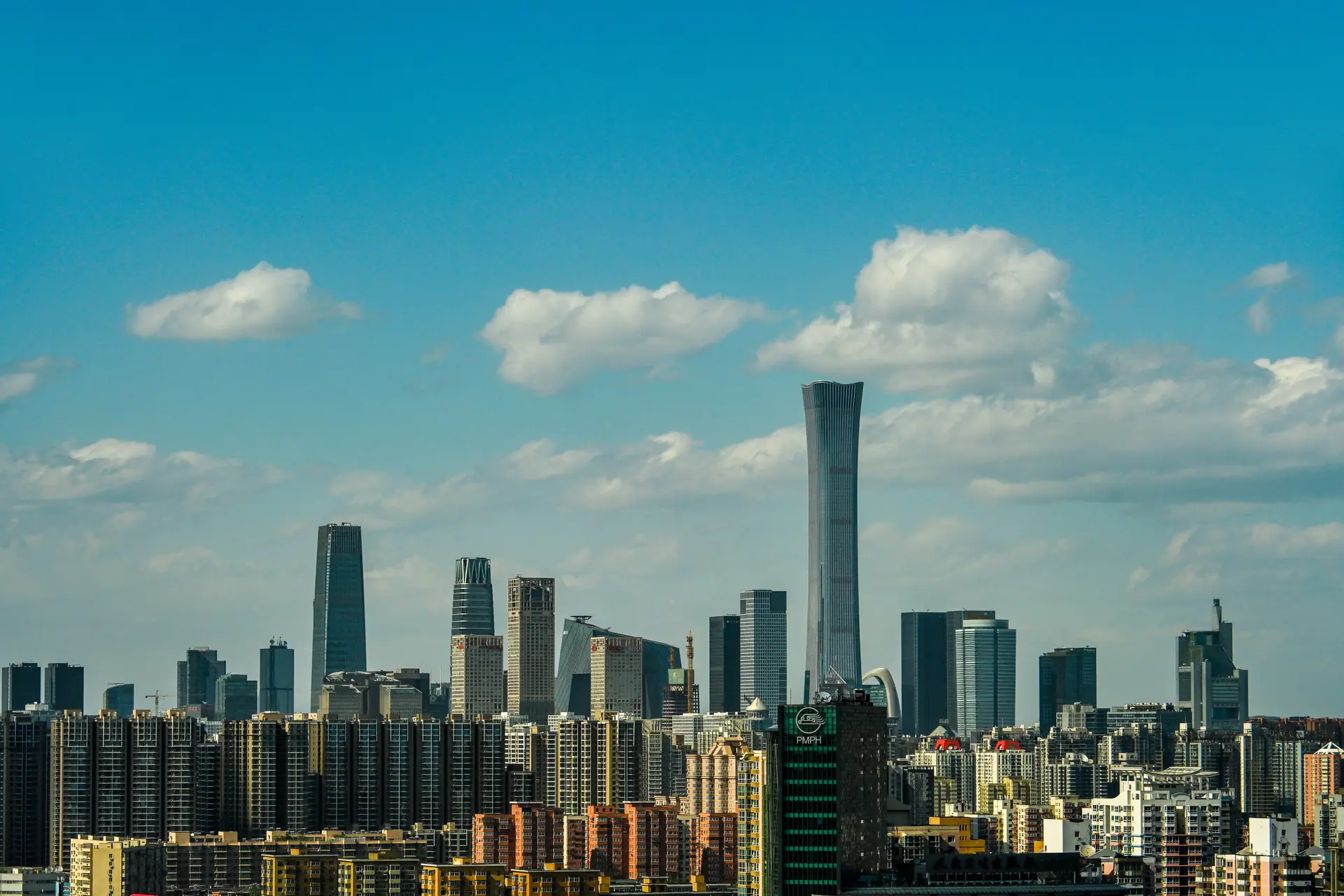
Visibility is only a cue to check your app, not a clearance test. Ozone can be invisible, and humidity or dust can distort what you see. If the skyline looks like it is behind a grey veil, check AQI, the primary pollutant, and PM2.5 or PM10 before heading out.
What Changed Since the Smog Years
Air-quality shift
89.5
Beijing PM2.5 in 2013, μg/m³
27.0
Beijing PM2.5 in 2025, below 30 for the first time
28.0
2025 national average across 339 cities
28
Shanghai (上海) annual PM2.5 in 2024
The practical change
China's air has improved substantially since the early 2010s, especially in the cities most foreign travelers visit. In 2025, the Ministry of Ecology and Environment reported a national PM2.5 average of 28.0 μg/m³ across 339 prefecture-level-and-above cities.
Beijing and Shanghai
Beijing reached 27.0 μg/m³ for the year, down 11.5% from 2024 and below 30 for the first time. Shanghai (上海) also held a "2-digit starting with 2" annual PM2.5 level in 2024, at 28 μg/m³.
Health-guideline context
That does not make China's air pristine by WHO health-guideline standards, but it does mean the old "China equals constant smog" mental picture is outdated for most short tourist trips.
What this means for visitors
If you came to China before 2015 and remember the smog, you will notice the change. Most of the time, especially from April through October, popular tourist cities have acceptable air quality for normal sightseeing.
Still check each morning
The improvement trend is real, but it is not a straight line. Weather patterns, winter heating, dust events, and regional transport still create bad days; some years rebound even after long-term improvement. Treat air quality like rain: usually manageable, occasionally itinerary-shaping, and worth checking each morning.

The old mental picture is out of date.
Use the cleaner trend as context, then let the day's AQI category, primary pollutant, and raw particle or ozone readings decide your outdoor schedule.
Clean-Air Cities and Winter Risk

If air quality is a major constraint because of asthma, young children, older travelers, or personal comfort, city choice matters more than packing a suitcase full of masks. The cleanest mainstream travel picks are usually southern, coastal, or high-plateau cities.
A clean-air route is possible without skipping China. Haikou, Shenzhen, Xiamen, Zhuhai, Kunming, and parts of Yunnan give sensitive travelers more margin than a winter-only northern itinerary.
🌴Haikou and Hainan
Haikou (海口) and the wider Hainan (海南) island route are among China's easiest choices for cleaner air: sea breeze, tropical weather, and limited heavy industry. Build a winter beach leg here if respiratory comfort is a priority.
⛰️Kunming and Yunnan
Kunming (昆明) sits at about 1,890 meters with mild weather and generally cleaner air than most inland megacities. It works well for travelers who want culture and nature without northern winter haze.
🏙️Shenzhen and Xiamen
Shenzhen (深圳), Zhuhai (珠海), and Xiamen (厦门) are strong coastal choices. Xiamen reported PM2.5 of 19 μg/m³ in 2024 and ranked third among China's 168 key cities by comprehensive air-quality index.
🏔️Lhasa with a caveat
Lhasa (拉萨) often ranks near the cleanest end for PM2.5, but the air is thin. At 3,650 meters, altitude sickness is a bigger practical risk than pollution for many visitors.
The hardest winter air usually appears in northern and basin geographies:
North China Plain
Beijing (北京), Tianjin (天津), Shijiazhuang (石家庄), Baoding (保定), and nearby industrial cities can see stagnant winter episodes. Beijing is much cleaner than it used to be, but a multi-day haze stretch can still happen.
Fenwei Plain
Xi'an (西安), Taiyuan (太原), and Linfen (临汾) sit in terrain where temperature inversions can trap pollution. Basin geography is the reason Xi'an can feel much worse in winter than its spring or autumn reputation suggests.
Northeast
Harbin (哈尔滨) and Shenyang (沈阳) can swing sharply in cold months because heating demand is high. Harbin is still worth visiting for winter scenery and ice festivals; just build in indoor backup time.
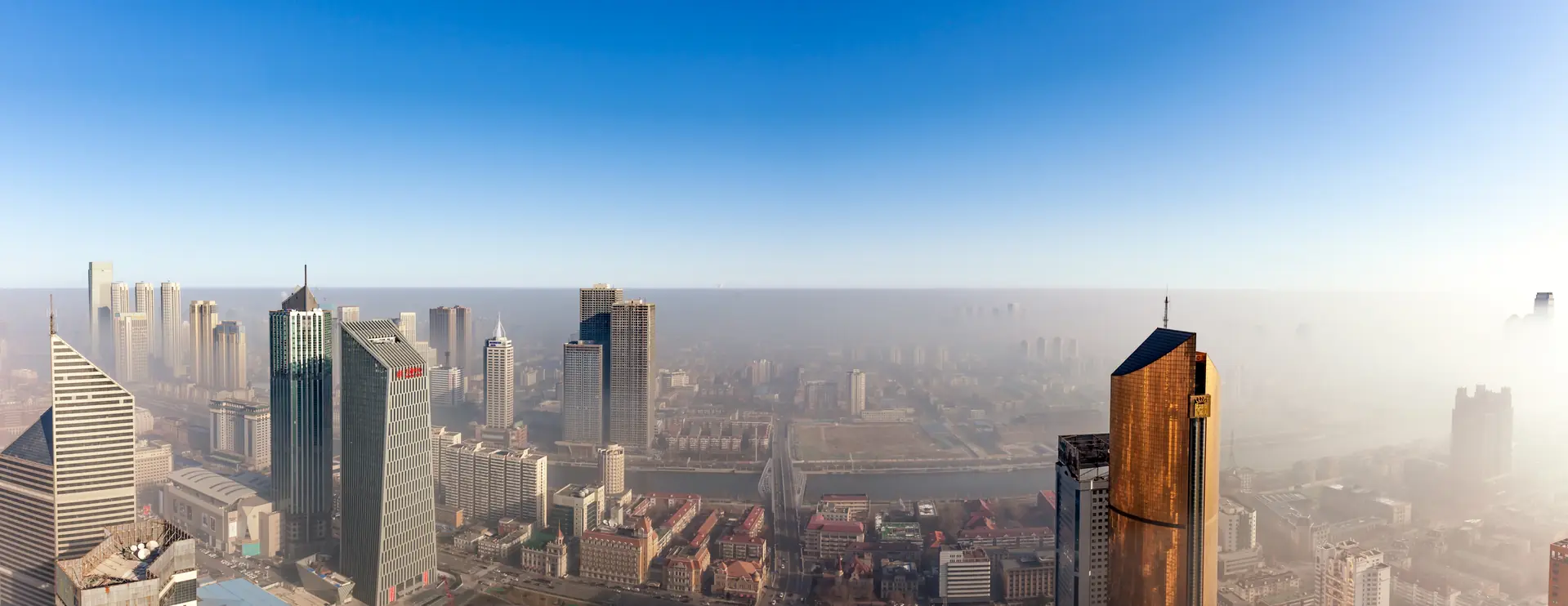
This does not mean "avoid the north in winter."
Beijing has crisp blue-sky winter days too; you just cannot count on them. If your schedule is flexible, check the AQI forecast before choosing the Great Wall day.
Best Seasons for Clear Air
Air quality depends as much on timing as location. For clear skies, the strongest first-trip window is often late September to mid-October: rainy-season humidity has eased, northern heating has not fully started, and visibility is often excellent. Just separate the air-quality answer from the travel-experience answer, because National Day around October 1 brings heavy crowds and higher hotel prices.
🌸Spring (March-May)
Generally workable, but northern China and the northwest can get sandstorms (沙尘暴). Sand events spike PM10 and visibility, and they usually show up in weather apps a day or two ahead.
☀️Summer (June-August)
Often the best PM2.5 season nationwide because rain and stronger atmospheric mixing clear fine particles. The trade-off is heat, humidity, and occasional ozone-focused poor-air days.
🍂Autumn (September-November)
September and October are the sweet spot for comfort and visibility. Beijing's 秋高气爽 ("crisp autumn air") is a real seasonal feel, though National Day (October 1-7) brings heavy crowds.
❄️Winter (December-February)
The riskiest season for northern cities. Southern and coastal cities are much less affected, so a winter itinerary can still work well if you route intelligently.
Best air quality window: late September to mid-October
For clean air plus comfortable walking weather, late September to mid-October is hard to beat across Beijing, Xi'an, Chengdu (成都), and much of eastern China. If you dislike crowds or price spikes, aim for the days after the National Day holiday rather than October 1-7 itself.
Mask Rules: N95 or KN95
Short answer
Most travelers do not need a mask most days. Healthy adults visiting outside northern winter can usually keep a normal sightseeing rhythm when PM2.5 is low to moderate.
Carry or wear a respirator when
- PM2.5 or PM10 is high and you will be outdoors for hours.
- Your app category reaches polluted / unhealthy levels, especially for repeated exposure.
- You have asthma, COPD, chronic bronchitis, heart disease, pregnancy-related concerns, or strong pollution sensitivity.
- You are traveling with young children or older family members with respiratory risk.
- You are caught in a sandstorm or visibly dusty wind.
Where to buy
KN95 masks follow a Chinese standard and are widely sold in pharmacies (药房), convenience stores, and online platforms such as JD.com and Taobao.
Local reality check
Post-COVID, you will not see most locals masking for air quality on ordinary days, which is a useful reality check.
Fit matters more than the label
Choose a well-fitting N95, KN95, FFP2, or equivalent particulate respirator. These can help with PM2.5, PM10, dust, and smoke, but they do not protect against ozone, CO, NO2, or other gases. Cloth masks and loose surgical masks are not reliable particle protection because air leaks around the edges.
What to expect
Expect simple adult KN95 masks to cost a few RMB each, while branded or children's versions cost more. 3M, Honeywell, and local brands are easy to find in big cities.
Children's fit
Do not rely on a mask as the main fix for young children. Prioritize indoor plans, shorter exposure, and clinician guidance; use child respirators only if they fit well and the child tolerates them.
A mask is not a magic fix
Even a good respirator only reduces particle exposure; it does not make a heavily polluted day comfortable. When pollution is high, the better move is to reduce outdoor time, choose indoor attractions, and avoid hard exercise.
Bad-Air Day Plan B
Hit a bad-air morning? Do not cancel the day automatically. Most large Chinese cities have enough indoor options to keep the trip moving.
🏛️Museums and galleries
Use half-day anchors such as the National Museum (国家博物馆) in Beijing, Shanghai Museum (上海博物馆), or Shaanxi History Museum (陕西历史博物馆) in Xi'an. Many require free timed-entry reservations through WeChat.
🛍️Malls and food floors
Large Chinese malls often reduce exposure compared with the street and have excellent restaurant floors. They are a practical reset, not just shopping filler, but indoor air still varies by smoking, cooking fumes, ventilation, and crowding.
🍵Tea houses and cafes
Chengdu's tea house culture is a real travel experience. On a grey day, a slow indoor afternoon can beat forcing a scenic walk.
🎭Shows and bathhouses
Evening shows, tea houses, malls, museums, hot springs, and larger bath centers can all work as swaps, depending on the city and your comfort level. For a first-time visitor, start with museums, shows, and malls; treat bathhouse-style options as a bonus if they fit your route.
Indoor is a reduction, not a guarantee
If your lungs are sensitive, choose a newer hotel with clearly enforced non-smoking rooms or floors, close windows on bad-air days, and ask about air purifiers as a bonus rather than an assumed amenity. Avoid heavy smoke, cooking fumes, strong fragrance, and humid bathhouse-style spaces if they bother you.
Exposure hotspots
Outdoor queues, open-air platforms, roadside ride-hailing points, exposed scenic viewpoints, and windy Great Wall ridges can add more exposure than a museum, mall, metro hall, airport terminal, or closed-window vehicle.
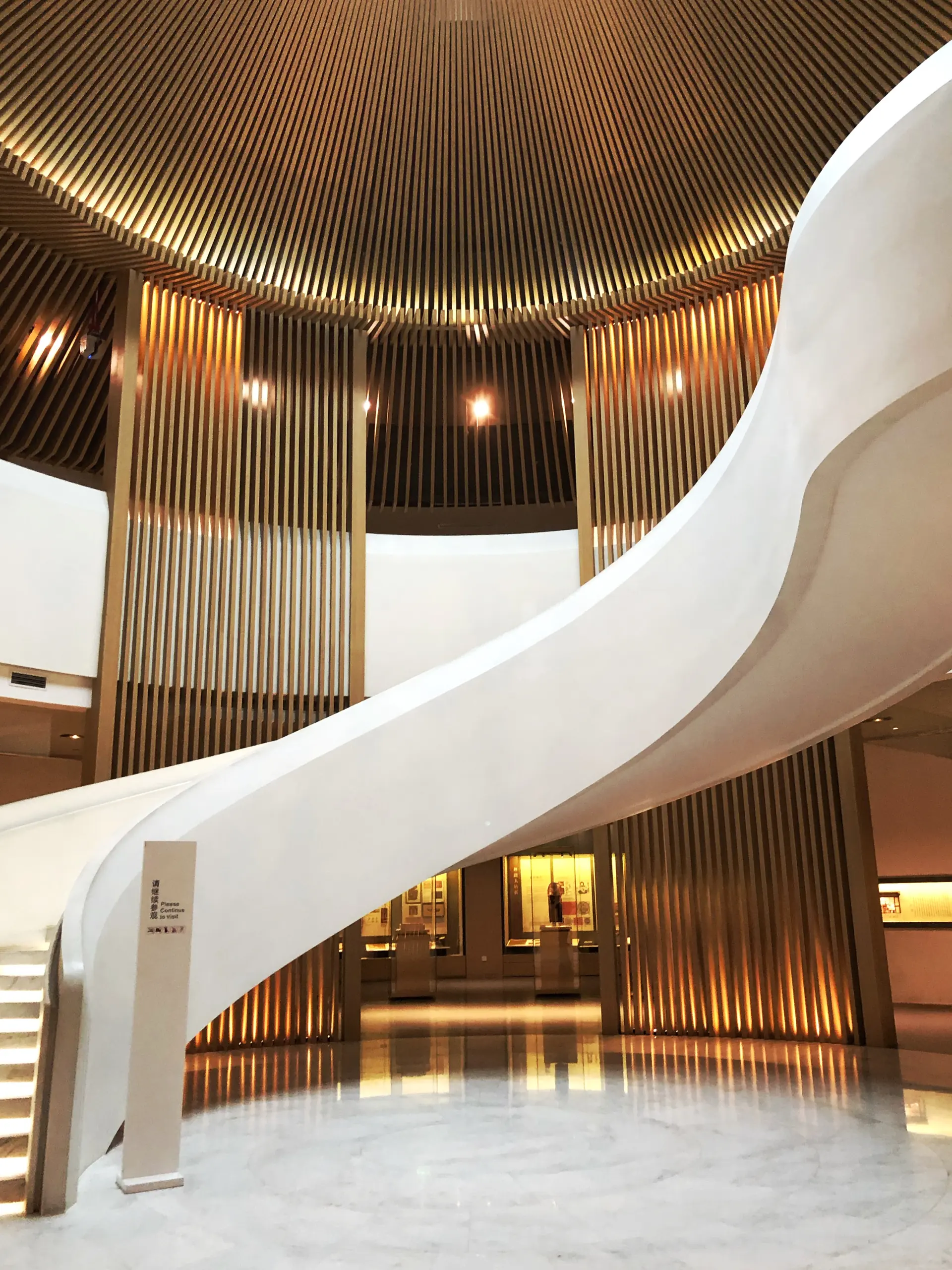
Grey sky outside? Head for a museum.
Popular free museums often use timed-entry reservations, so book the night before if the forecast looks poor or if you are traveling on a weekend.
Time the outdoor swap
For PM2.5 haze, midday can improve after mixing. For ozone-focused days, avoid hard outdoor activity in hot, sunny afternoon conditions and check O3 specifically before moving the day outside.
Watch for north wind
The one or two days after a north-wind front can bring the clearest skies of the week. If a Chinese weather app mentions north wind force 4-5, tomorrow may be the day for the Great Wall or a skyline viewpoint.
Morning rule
Keep one indoor list and one outdoor list, then check the AQI category, primary pollutant, and PM2.5 / PM10 / O3 values every morning before locking the day.
AQI Apps That Work in China
Checking air quality in China should not become a daily research project. For normal sightseeing, a phone weather app or a China-friendly weather app is enough to decide whether to keep the plan, move a long outdoor walk later, or switch to an indoor backup. Use official or station-level data when the decision matters for asthma, older travelers, young children, pregnancy, or a major outdoor day such as the Great Wall. Set up your phone before arrival with the essential China apps toolkit and the China internet, SIM, eSIM, and pocket Wi-Fi guide.
Scale and source are two different problems
Two things can differ: the AQI scale and the underlying data source. For decisions, compare the category, primary pollutant, and raw concentration instead of trusting one app's headline number.
📊Official China source
For sensitive travelers or a high-stakes outdoor day, compare your app with an official or local China AQI source such as CNEMC, a city ecology bureau feed, or a China-focused weather app that shows monitoring-station data and the primary pollutant.
🌍IQAir / AirVisual
Useful if you want an English-first interface, maps, and forecasts. Treat it as a visitor-friendly option rather than the only source; it often uses US-style AQI by default, and access can depend on stable international connectivity.
📱Apple / Google Weather
Apple Weather is convenient for a quick iOS check. Google Weather may not work reliably in mainland China without VPN or Google services. Use these for a fast read, then switch to a local app or official source if the number affects your route.
🌤️Moji Weather (墨迹天气)
One of China's most popular weather apps, with AQI and hourly weather integrated. The interface is mostly Chinese and ad-heavy, but numbers, colors, and city names are still useful.
📊Zai Yi Kong Qi (在意空气)
A China-focused air-quality app with monitoring-station-style data and maps. It is Chinese-first, but the PM2.5 number and color bands are readable once you know what to look for.
Download apps and add cities before you leave
Install or test at least one China-friendly weather or AQI app before departure. Add Beijing, Shanghai, Xi'an, Chengdu, Guangzhou, Shenzhen, and any smaller cities on your route so checking air becomes as easy as checking rain. Add IQAir too if you prefer an English interface.
Asthma, Kids, and Respiratory Risk
This article is not medical advice. If you or a travel companion has asthma, COPD, chronic bronchitis, heart disease, pregnancy, or another condition affected by air quality, ask your clinician how to set personal thresholds before the trip.
Before departure
- Pack extra medication, with a buffer for delays.
- Carry your rescue inhaler and key medicine in your day bag, not checked luggage.
- Ask your doctor about winter northern routes, high altitude, and mask use.
- Buy travel insurance that covers relevant respiratory conditions and care abroad.
During the trip
- Check AQI, primary pollutant, and PM2.5 / PM10 / O3 every morning like weather.
- Shift to indoor plans when readings rise above your personal threshold.
- Wear a well-fitting KN95 or N95 outside on high-pollution days.
- Pregnant travelers should use clinician-set thresholds, especially if already advised to avoid pollution or heat stress.
- Ask hotels about air purifiers if your condition is sensitive.
- Watch for indoor smoke in smaller venues, even though major-city rules and habits have improved.
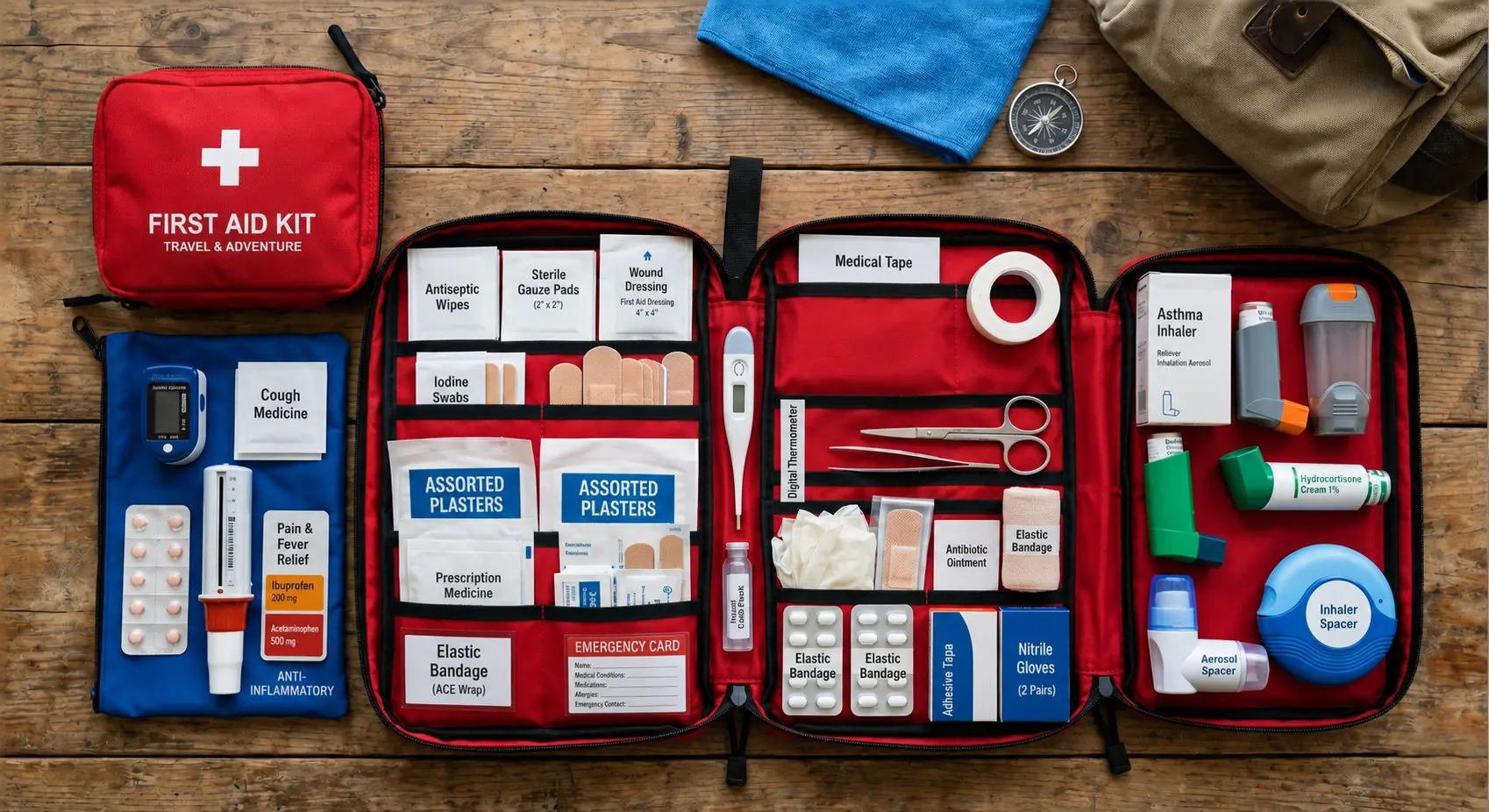
Pharmacy backup
Some larger pharmacies or hospital pharmacies may carry common inhalers, antihistamines, and KN95 masks, but availability, brand names, prescription rules, and language support vary. Bring your own supply plus a prescription or doctor note, and keep medication, a short condition note, and insurance details offline.
Family trips
Children's lungs are still developing, and kids may wear masks incorrectly or pull them down when uncomfortable. For family trips, use child respirators only if they fit well and the child tolerates them; prioritize indoor plans, shorter exposure, and hotels with indoor play areas or easy indoor backups.
Broader health planning
For broader health planning, see our guide for families, seniors, and pregnant travelers.
Pollution can feel like allergies
Even without asthma, PM2.5 can irritate mucous membranes and trigger sneezing, runny nose, dry eyes, or throat irritation. Travelers with pollen allergies may feel it more. Loratadine / Claritin is commonly available in China as 开瑞坦 (氯雷他定), but bring familiar medicine if you rely on it.
Frequently Asked Questions
Usually no. China's air quality has improved dramatically since 2013, and most popular tourist cities are manageable outside northern winter. Adjust your schedule on bad days rather than canceling the whole trip.
Air quality and mask guidance reviewed
- 2025 national air-quality data for 339 Chinese cities, Beijing PM2.5, regional winter-risk context, and heavy-pollution day shares: Ministry of Ecology and Environment 2025 air-quality release
- Current China AQI technical standard, implemented March 1, 2026, replacing HJ 633-2012: MEE HJ 633-2026 AQI standard
- Official announcement that HJ 633-2026 and HJ 663-2026 took effect on March 1, 2026: MEE 2026 standard announcement
- US AQI category meanings and health language for 0-50 through 301+ bands: AirNow AQI Basics
- US EPA PM2.5 AQI breakpoints used to compare app-scale differences: US EPA AQI breakpoints
- Respirator and mask filtration, fit, KN95 / N95 standards, children, and medical-condition cautions: CDC / NIOSH community respirator guidance
- Global PM2.5 health-guideline context and reminder that lower pollution remains healthier: WHO global air quality guidelines
- Shanghai 2024 PM2.5 annual average and air-quality bulletin context: Shanghai Municipal Government 2024 environment bulletin
- Xiamen 2024 PM2.5 annual average and national key-city ranking context: Xiamen official English news
Beyond This Guide
Air quality is one layer of a health-aware China plan. Continue with emergency assistance and travel insurance claims, food safety and drinking water, traveling with seniors, kids, and pregnant travelers, and food allergies and dietary restrictions.
For practical trip setup, pair this guide with the best time to visit China, China packing list, essential travel apps, public Wi-Fi and internet setup, and city transport guide. Bad-air decisions depend on season, routes, app access, and how long you spend in exposed queues or traffic.
If clean-air timing, respiratory comfort, or indoor backup planning shapes your route, we can recommend seasons, city order, hotel locations, and daily pacing. We do not sell masks, prescribe medicine, book medical appointments, or handle money on your behalf.
© gochinafreely.com — Original guide by Go China Freely.