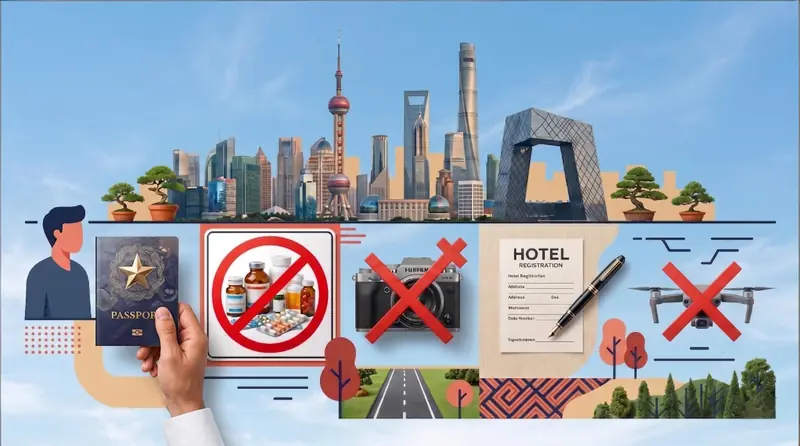
Most first-time visitors ask the same question before booking: is China safe for tourists? The honest answer is yes for ordinary city travel, but the risks are not the ones people usually imagine.
Violent street crime is rare; the problems to prepare for are tourist scams, traffic habits, phone/payment dependence, and knowing what to do when language gets in the way.
China Tourist Safety: Fast Answer
For independent travelers, China usually feels safer on the street than many large Western destinations. Violent street crime is uncommon in everyday tourist areas; the practical risks are more often scams, traffic habits, phone/payment dependence, and knowing what to do when language gets in the way.
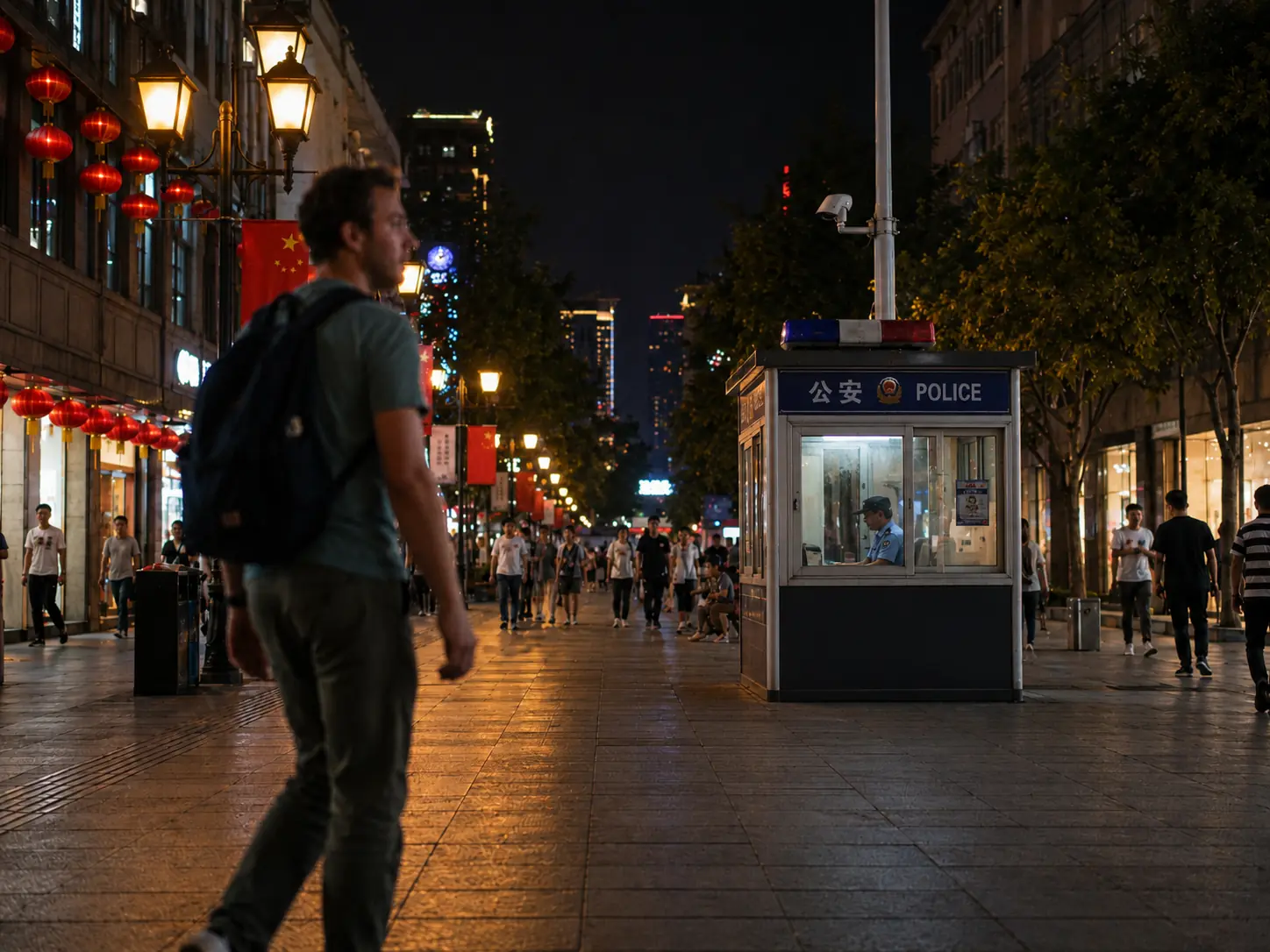
Major cities also have visible security, metro bag checks, CCTV coverage, and street-level security points such as police service stations (警务站), police rooms (警务室), and security posts (治安岗亭). Local police stations are 派出所.
That does not mean every situation is frictionless: foreign travel advisories still emphasize road safety, local-law compliance, digital caution, and scams that target visitors' wallets rather than their bodies.
Street cues
Reassuring
Violent crime against ordinary tourists is uncommon, firearms are tightly controlled, late-night commercial areas stay busy, and police response points are visible in major cities.
Watch instead
Scam invitations, silent electric scooters, unlicensed taxis, dead phone batteries, passport-ID confusion, and language barriers cause far more travel stress than street violence.
Visible safety layer
Police service points, metro security checks, and CCTV coverage are part of the everyday city landscape.
Most visitors notice the security infrastructure within hours of arrival.
The practical travel skill is still self-management: choose your own venues, cross roads defensively, keep your phone charged, and know the emergency numbers before you need them.
First-day operating rules
Use metro and registered ride-hailing when possible; both reduce traffic and taxi-dispute risk. See the city transport and Didi guide before your first transfer.
Carry your physical passport securely when you are outside your hotel. A phone photo is useful backup, not a legal substitute for police, transport, hotel, or attraction ID checks.
Treat unsolicited English-language invitations near famous sights as scam attempts until proven otherwise.
Build every day around your phone battery: payment, maps, translation, ride-hailing, and emergency contact all depend on it.
Tourist Scams: The Stranger Rule
The stranger rule
If a stranger approaches you near a tourist site and suggests going somewhere together, decline and keep walking.
It does not matter whether the invitation is for tea, a bar, an art gallery, a massage shop, a restaurant, or a "local culture" experience.
Choose your own venue, open the prices yourself, and keep control of the route.
Tea House Scam
Tea house scam anatomy
Where it starts: near famous landmarks, pedestrian streets, scenic-area approaches, English-speaking tourist corridors, or other places where visitors slow down and look approachable.
How it opens: one or two friendly English-speaking "students" start a conversation.
How it moves: after a few minutes, they suggest a tea house so you can "experience Chinese tea culture."
How it ends: several rounds of tea and snacks appear, then the bill is inflated into hundreds or thousands of yuan. Staff may turn aggressive about payment.
The warning sign
The invitation is the warning sign.
Real tea culture is worth exploring, but you should pick the tea house yourself on Dianping (大众点评), Amap, or another review app where prices and recent reviews are visible. For map and venue checks, use the China navigation apps guide.

High-risk approach points
A friendly conversation is not the problem; the move to a venue chosen by the stranger is the problem.
Want tea? Pick your own spot
Open Dianping (大众点评), search for a tea house with visible prices and recent reviews, and go on your own terms.
If a stranger insists their friend's place is better, that is the exact moment to leave.
Other Common Tourist Traps
🙏Fake Monks
People in monks' robes hand you bracelets or amulets at tourist areas, then demand a "donation."
Treat street solicitation in robes near tourist areas as unofficial. Do not accept bracelets or amulets handed to you; if you choose to donate, use an official temple donation box or counter.
🎨Art Student Scam
Self-described art students invite you to their "exhibition," which is usually a shop selling mass-produced prints as original art. If someone approaches you to see their art, decline.
🍸Bar and Nightclub Scams
Someone invites you to a specific bar, drinks arrive quickly, and the final bill becomes hundreds or thousands of yuan. Pick your own bar and keep your drink in sight.
📸Photo Charging
At scenic spots, people in costume invite you into a photo, then demand money afterward. Ask the price before any posed or costumed photo, decline unsolicited photos, and if someone pressures you afterward, move toward attraction staff, security, or a police service point. Keep evidence and avoid arguing in an isolated place.
🏺Fake Antiques and Jade
Tourist markets near Panjiayuan (潘家园) in Beijing and the Muslim Quarter (回民街) in Xi'an sell plenty of fun souvenirs, but do not treat "antiques" or jade as investments unless you are an expert.
📱QR and Payment Tricks
Check the merchant name and amount before approving a mobile payment. A legitimate QR code should show the business or person you expect, not a rushed screen someone hides from view.
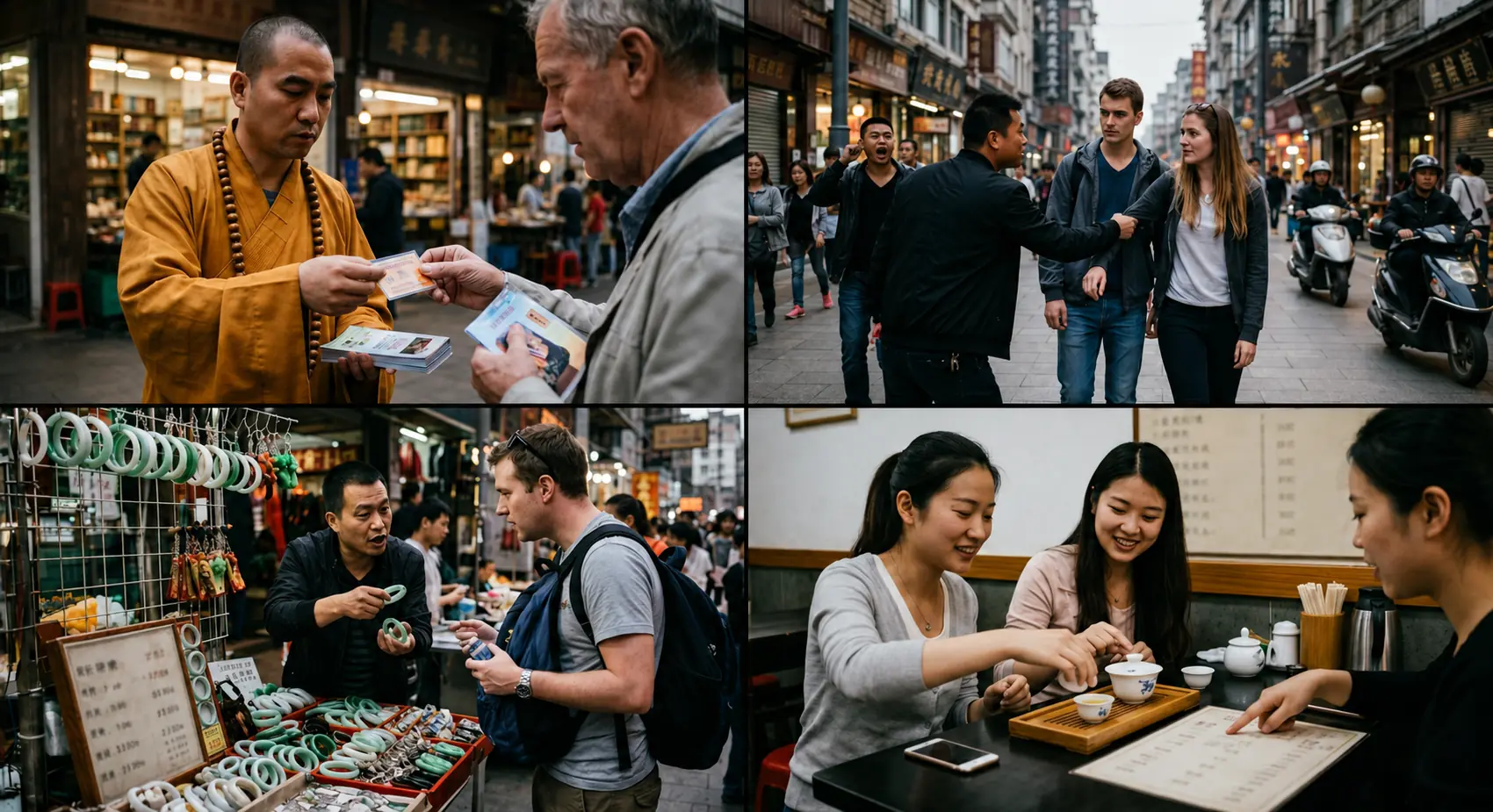
The common lever
Every street scam needs one moment of cooperation.
The stranger has to move you into a venue, put an object in your hand, make you scan a code, or make you feel rude for leaving.
Your exit line
A calm "No, thank you" plus walking away is more effective than debating.
Taxis, Traffic, and Street Risk
Transport is where many travelers underestimate China. The metro is usually the easiest safety choice in large cities: clean, predictable, inexpensive, and free from fare disputes.
Taxis and ride-hailing are also normal, but you need to avoid the station-exit touts and recalibrate your road-crossing habits.
Unlicensed cabs
Where: airport and train station exits, especially where touts call "Need a ride?" or "Going to the city?"
Risks: inflated prices, longer routes, no useful receipt, and unknown vehicle standards.
Safer path: use Didi (滴滴), the Didi mini-program inside Alipay or WeChat, or the official taxi queue.
Street taxi checks: confirm the meter before the car moves, keep the receipt, and ask the driver to remove luggage from the trunk before you pay and leave.
Meter and route disputes
Most common issue: meter tampering is less common than simple route or fare confusion.
Best defense: keep your map open, save the receipt, and avoid arguing inside the car.
Why receipts matter: they show the vehicle and trip details you need for a complaint.
If it feels tense: go to a hotel front desk, station service counter, or police booth rather than escalating on the curb.
Traffic: The Daily Safety Risk
Electric scooters (电瓶车) are quiet, fast, and often use sidewalks, bike lanes, and wrong-way shortcuts. Look behind you before stepping sideways.
Right turns on red are common. Even when your pedestrian signal is green, check for turning cars and scooters before stepping out.
Even where drivers should yield, check for turning cars, scooters, delivery riders, and wrong-way e-bikes before stepping out.
Metro is usually the lowest-stress option when it reaches your destination.
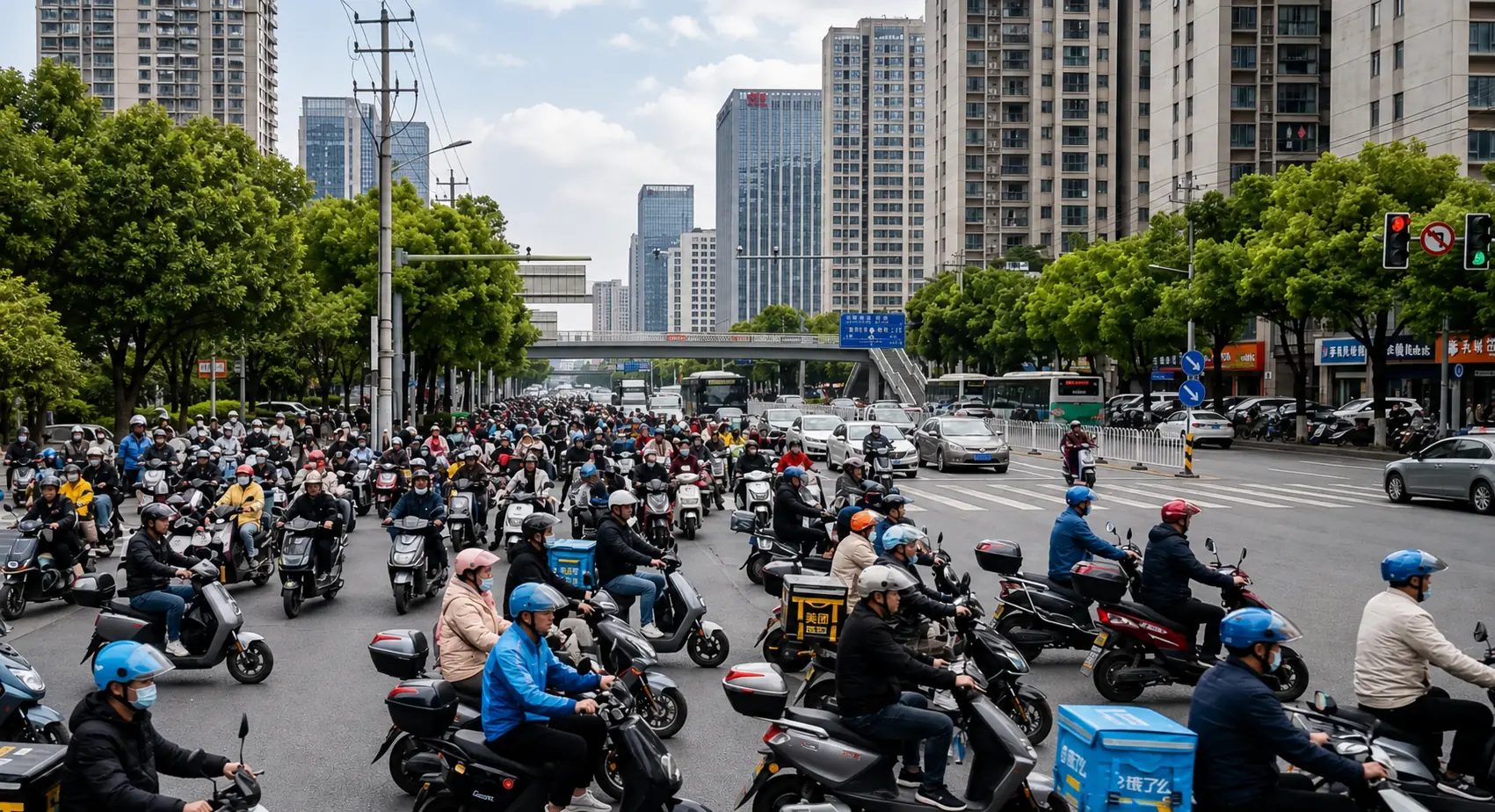
Your instincts from home may not transfer.
In many Chinese cities, sidewalks are shared space, scooters approach silently, and delivery riders weave through gaps.
On day one, make a habit of pausing before every crossing and scanning both the road and the sidewalk.
Cross like the scooter is already there
Before stepping off a curb or changing direction on a sidewalk, pause for one second and check both directions. That tiny delay prevents most tourist traffic scares.
Night Safety and Solo Travelers

After dark
Busy Chinese city districts often feel calm at night because restaurants, convenience stores, night markets, shopping streets, delivery riders, security guards, and transit stations keep public areas active late.
Solo travelers, including solo women, commonly report that central districts feel comfortable after dark.
Commercial streets stay active late in many Chinese cities, which is one reason visitors often feel comfortable walking after dinner.
Choose that kind of environment for evening movement: bright, populated, easy to exit, and close to metro, taxi, or hotel help.
Solo-travel safety stack
The limit
That reassurance has limits. Stay in lit commercial areas, avoid deserted construction zones and riverfront edges late at night, and keep your drink in sight.
Do not accept food, drinks, rides, or venue invitations from strangers. In bars and nightlife areas, keep your drink in sight, choose your own venue, and leave early if a stranger, promoter, or staff member starts pressuring you about a bill or room.
Keep your phone charged. It is your payment method, map, translator, ride-hailing tool, and emergency contact list.
Download translation tools before you need them. In an emergency, type your situation and show it to police, hotel staff, or station staff.
Choose chain hotels, licensed hostels, or well-reviewed stays with front desks if traveling alone.
Share a rough daily route with someone you trust, especially for long-distance transfers or remote day trips.
Use the appropriate official, legal, insurer, or payment-provider channel for next steps. This guide does not replace police, lawyers, insurers, payment agents, or dispute-recovery services, and no refund or case outcome is guaranteed.
Digital, Payment, and ID Safety
China travel depends heavily on your phone. Payment, maps, translation, ride-hailing, train tickets, hotel addresses, and emergency contacts all live there, so digital safety is practical safety.
Mobile payment records help
Why mobile pay helps: Alipay (支付宝) and WeChat Pay (微信支付) are often safer than carrying large amounts of cash because every transaction creates a record.
Before approving: check the amount and merchant name. If a merchant pressures you to scan quickly, slow down.
If there is a dispute: screenshots of receipts and storefronts help if you need police, a platform complaint, or travel-insurance records later.
Cash backup: withdraw from bank ATMs, count change before leaving, and inspect large bills. Cash is useful backup, not the main safety strategy.
Passport and ID checks
Rule: Chinese law requires foreigners aged 16 and above to carry their passport or valid stay/residence document and accept public-security inspection.
Photo backup: useful if your passport is lost or if a hotel desk just needs to confirm details.
Not a substitute: a phone photo is not the same as the physical document for police checks, train travel, hotel check-in, and many attraction entries.
Practical compromise: carry it securely and keep it accessible when you are outside your hotel, especially on station days, hotel check-ins, and major attraction days.
Store photos of your passport data page, visa or entry stamp, insurance policy, and bank-card emergency contacts in secure cloud storage so you can recover quickly if originals are lost.
Phone and internet precautions
Set a strong screen lock and enable device-finding tools before departure.
Update your phone and important apps before entering China. Use the China travel apps toolkit to decide what to install before arrival.
Avoid unknown public Wi-Fi for banking, passport scans, or payment-account changes.
Research internet access before arrival. VPN use can carry legal and practical risk; do not rely on a free VPN as your only plan.
Never log into banking, email, or payment accounts on public computers.
Fake police phone scam
Impersonation: phone scams sometimes impersonate Chinese police, banks, or delivery companies.
Pressure script: the caller may claim you are involved in a crime, ask for passport information, demand a video call, or instruct you to transfer money.
Reality check: real police do not solve a case by asking a tourist to send money over the phone.
Action: hang up, verify through 110 or your hotel front desk, and do not transfer funds.
For a deeper setup before arrival, pair this with our China VPN guide, eSIM and SIM guide, and mobile payments guide.
Emergency Steps and Useful Numbers
Emergency calling logic
Call first
In a real emergency, call first and perfect the wording second.
Core numbers
110 for police, 120 for medical emergencies, 119 for fire, and 122 for traffic accidents. In many places, 110 can also route or triage urgent traffic-related calls.
Language prep
English support varies by city and hotline; Shanghai publishes foreign-language support for 110 and English support for 119 and 120, but you should still prepare a translated address and short explanation.
| Number | Use it for | What to prepare |
|---|---|---|
| 110 | Police (报警): threats, theft, scams, assault, serious disputes | Location, time, photos, receipts, suspect description |
| 120 | Medical emergency / ambulance (急救) | Exact address, symptoms, phone number, preferred hospital if known |
| 119 | Fire and rescue (火警) | Address, fire/rescue details, whether anyone is trapped or injured |
| 122 | Traffic accident reporting | Accident location, injuries, vehicle details, and whether traffic is blocked |
| 12345 | Government service hotline (政务服务便民热线) | Non-emergency city-service issues; English support varies |
| 12315 | Consumer complaints | Merchant name, receipt, payment record, photos |
If You Get Scammed
- Save evidence: photograph receipts, bills, storefront signs, QR codes, payment records, and people involved if it is safe to do so.
- Move to a public, official place: hotel front desk, police booth, station service desk, or a busy shop.
- Call 110 or ask hotel/station staff to help call.
- Contact your card issuer or payment platform if a transaction needs to be frozen or disputed.
- Contact travel insurance and your embassy or consulate for serious losses, threats, passport loss, or personal-safety issues.
If You Lose Your Passport
- File a police report and ask what written proof is issued locally, such as 报警回执, 报案回执, or 护照报失证明.
- Contact your embassy or consulate in China for emergency travel-document instructions.
- Visit the local Exit-Entry Administration Bureau (出入境管理局) if instructed for visa, stay, or departure procedures.
- See our emergency assistance and insurance claims guide for the document sequence.
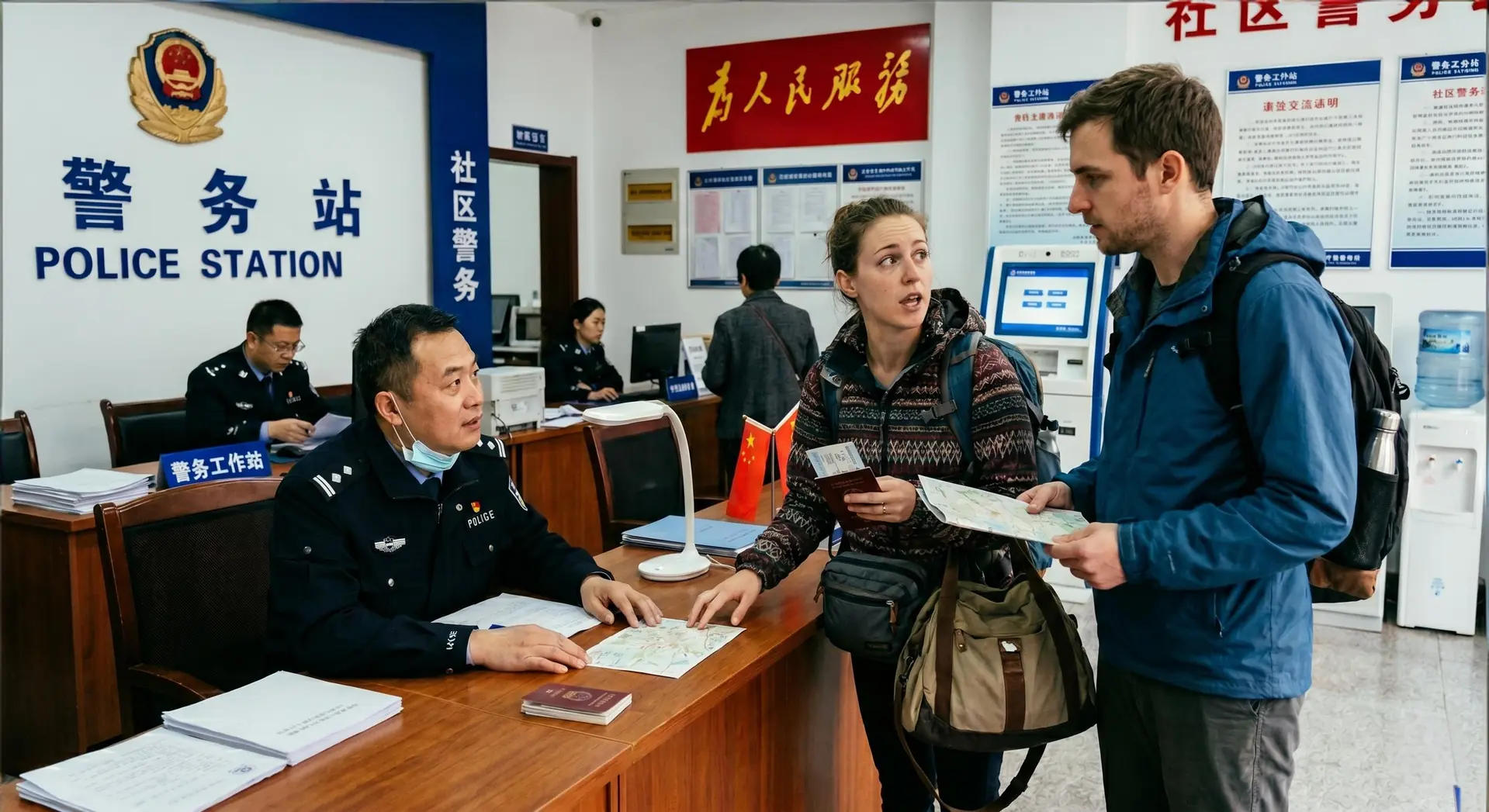
Evidence first, escalation second
Police, hotel staff, insurers, and payment platforms can all act faster when you have photos of receipts, payment records, storefronts, addresses, and the timeline.
If language is the barrier, type the timeline in English and translate it into Chinese before showing it.
Make an emergency folder before departure
Save passport photos, visa or entry-stamp photos, insurance contacts, embassy contacts, hotel addresses in Chinese, and bank-card emergency numbers in secure cloud storage.
A lost phone is bad; a lost phone plus no backup is chaos.
Use police, insurers, hospitals, payment platforms, or consular officers for the relevant next step. This guide cannot guarantee refunds, case outcomes, or official decisions.
Frequently Asked Questions
For ordinary city travel, yes. Violent crime against tourists is uncommon, and major cities have visible security infrastructure. The practical risks to prepare for are scams, traffic habits, phone/payment dependence, local-law compliance, and language barriers if something goes wrong.
Sources Checked
Safety, emergency, and scam guidance reviewed
- China travel advisory covering emergency numbers, scams, unlicensed taxis, road safety, technology use, and local-law cautions: U.S. State Department China travel advisory
- China safety advice covering tea-tasting and massage scams, passport ID checks, taxi cautions, and road-safety risks: GOV.UK China safety and security
- Shanghai official emergency hotline guide for 110, 119, and 120, including foreign-language and English support notes: Shanghai Municipal Government emergency hotlines
- Beijing official emergency-number guide checked for 122 traffic-accident reporting: Beijing Municipal Government emergency numbers
- China Ministry of Public Security 2024 crime-statistics briefing summarized by gov.cn / Xinhua: gov.cn / Xinhua public security statistics
- Xinhua report via People’s Daily noting China homicide rate of 0.44 per 100,000 people in 2024: People’s Daily / Xinhua homicide-rate note
- Exit and Entry Administration Law context for foreigners carrying passports or other valid stay/residence documents: Chinese Embassy Exit and Entry Administration Law
Beyond This Guide
Safety planning is not about being afraid of China.
It is about removing avoidable friction before your trip becomes dependent on a dead phone, an unfamiliar road crossing, or a conversation you cannot explain in Chinese.
Continue with:
- Emergency assistance and insurance claims guide
- City transport, taxi, and Didi guide
- China navigation apps guide
- China travel apps toolkit
- Essential Chinese phrases
- China mobile payments guide
- VPN and internet access guide
- Laws and regulations guide
If your route includes solo travel, late arrivals, remote transfers, or family safety concerns, we can plan a calmer route, recommend safer transport choices, and guide you through emergency preparation.
We do not book tickets, hotels, flights, or handle money on your behalf.
© gochinafreely.com — Original guide by Go China Freely.