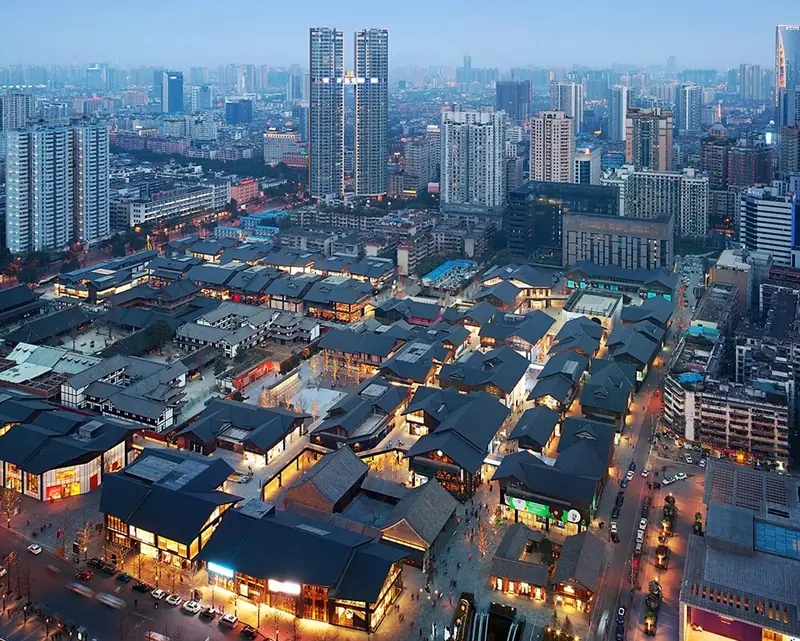
China stretches from the tropical shores of Hainan (18°N) to the far-northern border city of Mohe (漠河, 53°N) near Russia — over 35 degrees of latitude. On the same January day, beachgoers in Sanya (三亚) are surfing in shorts while Harbin (哈尔滨) is locked at -30°C under ice sculptures. Pick the right month and region, and you dodge crowds, bad weather, and inflated prices. This guide breaks it all down.
35°
Latitude Span
Oct 8+
Best General Window
888M
2025 Holiday Tourist Trips
China Seasonal Weather at a Glance
China's landmass rivals Europe's, and climate variation is just as extreme. Use this first section to choose a travel window, then use the region and holiday tables later in the guide to test that choice against your actual route.
Decision shortcut
Choose your China travel window
Flexible dates
For North, East, and Central China, choose October 8 to late October. September can work, but watch Mid-Autumn, typhoons, and lingering southern heat.
Spring trip
Aim for April or early May outside Labor Day. Add a dust backup for North China and a rain backup for East China.
Summer trip
Build the route around altitude, coast, or shade: Qinghai, Yunnan, Guizhou, Inner Mongolia, Qingdao, Beidaihe, or Jiuzhaigou, then book popular family routes earlier.
Lowest prices
Use winter weekdays outside Harbin, Hainan, ski resorts, New Year, and Spring Festival. Do not treat all winter routes as low-cost.
Best weather for first-timers
October 8 to late October for Beijing, Xi'an, Shanghai, Suzhou, Hangzhou, and classic city routes. April to early May also works if you avoid Labor Day.
Lowest crowds and value
November to early December, March, and winter weekdays can be calm and cheaper, except Harbin ice season, Hainan, ski resorts, New Year, and Spring Festival.
Best highland strategy
June to September works for Qinghai, Tibet, western Sichuan, and many Yunnan highlands, but plan altitude, rain, road, and landslide buffers.
Best southern winter-sun route
Hainan, Hong Kong, Macau, and parts of South China are easiest from late autumn into winter. Still avoid holiday surges and monitor tropical-cyclone warnings into November.
Season scorecard: start here, then read the matching season section for weather details and packing notes.
Spring
Best use: blossoms, gardens, old towns, and long city walks.
Weather risk: North China dust and late-May humidity.
Crowds/prices: moderate, except May 1-5.
Summer
Best use: highlands, grasslands, coast, and school-holiday family trips.
Weather risk: heat, heavy rain, plum rain, and typhoons.
Crowds/prices: school-holiday pressure on famous family routes, highlands, beaches, and theme parks.
Autumn
Best use: first-timer routes, foliage, clear skies, and hiking.
Weather risk: Golden Week crush before October 8.
Crowds/prices: peak during October 1-7, then drops sharply.
Winter
Best use: Harbin ice, South China warmth, and low-cost city travel.
Weather risk: extreme northern cold and unheated southern interiors.
Crowds/prices: lowest outside Spring Festival.
Spring in China: Blossoms & Dust
Spring is China's reawakening window, but north and south are in different worlds.
Best for
Mar-May
Flower trips, gardens, old towns, and long city walking days before summer humidity arrives.
Watch out
Crowds and weather
March dust in the north, Qingming crowds, Labor Day around May 1-5, and humid rain building in East China by late May.
Plan around
Simple spring rule
Treat April as the default. Pair one flower target with one city base, then pack layers, an umbrella, and a dust mask for northern March.
Month-by-month spring rhythm:
🌬️March
The north is still cold, with Beijing averaging 5–12°C, and sandstorms can turn skies yellow across North and Northwest China. The south is already warming.
Wuhan (武汉) cherry blossoms run from mid-March to early April; Wuhan University (武汉大学) and East Lake Cherry Garden (东湖樱花园) can host over 100,000 visitors daily. Wuyuan (婺源) rapeseed terraces and Nyingchi (林芝) wild peach blossoms are the other big spring draws.
🌤️April
Much of eastern and central lowland China warms into a comfortable range. Highlands, the Northeast, and parts of the Northwest stay colder, while South China can already feel humid. Qingming Festival, usually April 4–6, is a 3-day break: busy, but not Golden Week busy.
The Luoyang (洛阳) Peony Festival is worth timing for. Beijing, Xi'an (西安), Suzhou (苏州), and Hangzhou (杭州) are at their most pleasant for city walls, gardens, and long walking days.
🌦️May
Temperatures stay comfortable, but East China is approaching plum rain season, and late May already feels humid.
Labor Day, May 1–5, is the next major nationwide travel peak after Spring Festival and National Day. It generated 325 million domestic tourist trips in 2026, so avoid popular sites around May 1 if you can.

Spring field notes
Floral trio: Wuhan cherry blossoms in mid-March, Wuyuan golden rapeseed terraces from March to April, and Nyingchi wild peach blossoms beneath Himalayan snow peaks.
Timing + packing: check annual bloom forecasts and reservation rules; Wuhan, Wuyuan, and Nyingchi are usually late-March to early-April targets, but the exact peak shifts by year and altitude. Treat Labor Day around May 1 as the spring crowd trap. Pack layering + a dust mask in March northern China + umbrella. See our China Packing List for the full spring checklist.
Summer in China: Heat & Highlands
For most eastern, central, southern, and southwestern lowlands, summer is China's hottest and wettest season. The Yangtze valley's three "furnace cities" — Chongqing (重庆), Wuhan, and Nanjing (南京) — regularly top 38°C, with humidity that makes it feel worse. Xinjiang and parts of the Northwest are often dry-hot instead; Qinghai and Tibet are cooler, but high-altitude weather and rain still matter.
Best for
Jun-Aug
Highlands, grasslands, cool lakes, northern coast, and families locked to school-holiday dates.
Watch out
Heat plus disruption
Lowland furnace cities, plum rain, typhoons, and sold-out family sites make summer hard to improvise on popular routes.
Plan around
Build a cool route
Anchor the trip in Yunnan, Qinghai, Guizhou, Inner Mongolia, or a coastal base. In ordinary cities, use early mornings, evenings, and indoor backup blocks.
Plum rain season (usually mid-June to mid-July) — the lower and middle Yangtze, Jianghuai, and Jiangnan areas, including Shanghai, Hangzhou, and Nanjing, can enter a humid rainy spell. Timing and intensity vary by year: expect cloudy damp days, heavy downpours, possible flooding, and occasional dry breaks rather than a perfectly predictable drizzle month.
Typhoon Season (Peak July–September)
Peak tropical-cyclone risk is July to September, but South China, Hong Kong, Macau, Hainan, Fujian, Guangdong, and Zhejiang can still see disruption from May to November. Flights, ferries, cross-sea bridges, beach plans, and island routes can change with little notice. Check official warnings daily and keep buffer nights before flights or ferries.
Best summer escapes: use these as route anchors, not just side trips.
Qinghai Lake (青海湖)
3,200 m plateau lake
Summer highs sit around 15–20°C, and rapeseed flowers ring the lake in July.
Jiuzhaigou (九寨沟)
2,000–3,100 m
Cool, clear, and often at its bluest during summer water season.
Yunnan highlands
Kunming, Dali, Lijiang
Kunming (昆明) stays 15–24°C year-round; Dali (大理) and Lijiang (丽江) run about 18–25°C in summer.
Inner Mongolia grasslands
Hulunbuir peak season
Hulunbuir (呼伦贝尔) peaks in July–August, when the grass is greenest and nights are cool.
Zhangjiajie (张家界)
Mist over heat
Hot at the base, but summer rain and mist make the floating peaks look dramatic.
Guizhou (贵州)
22–25°C average
Cool, humid, and nicknamed "nature's air conditioner" for summer travelers.
Qingdao (青岛)
Coastal city break
A beach town with craft beer and seafood, popular as a northern summer escape.
Beidaihe (北戴河)
Beijing's closest beach
The easiest seaside retreat from Beijing when the capital feels too hot.
Highland Altitude Planning
Any route that sleeps above roughly 2,450 m needs acclimatization planning. Do not schedule strenuous hikes on day one; avoid alcohol at first; add buffer days if flying or driving quickly to Qinghai Lake, Lhasa, Shangri-La, Daocheng Yading, or western Sichuan; and ask a clinician about altitude medication if rapid ascent is unavoidable.
School holidays (July–August) are China's family travel peak. The pressure is strongest at theme parks, museums, famous mountain areas, beaches, highland resorts, and child-friendly hotels; ordinary city routes are still workable if you plan around heat and book key tickets earlier.
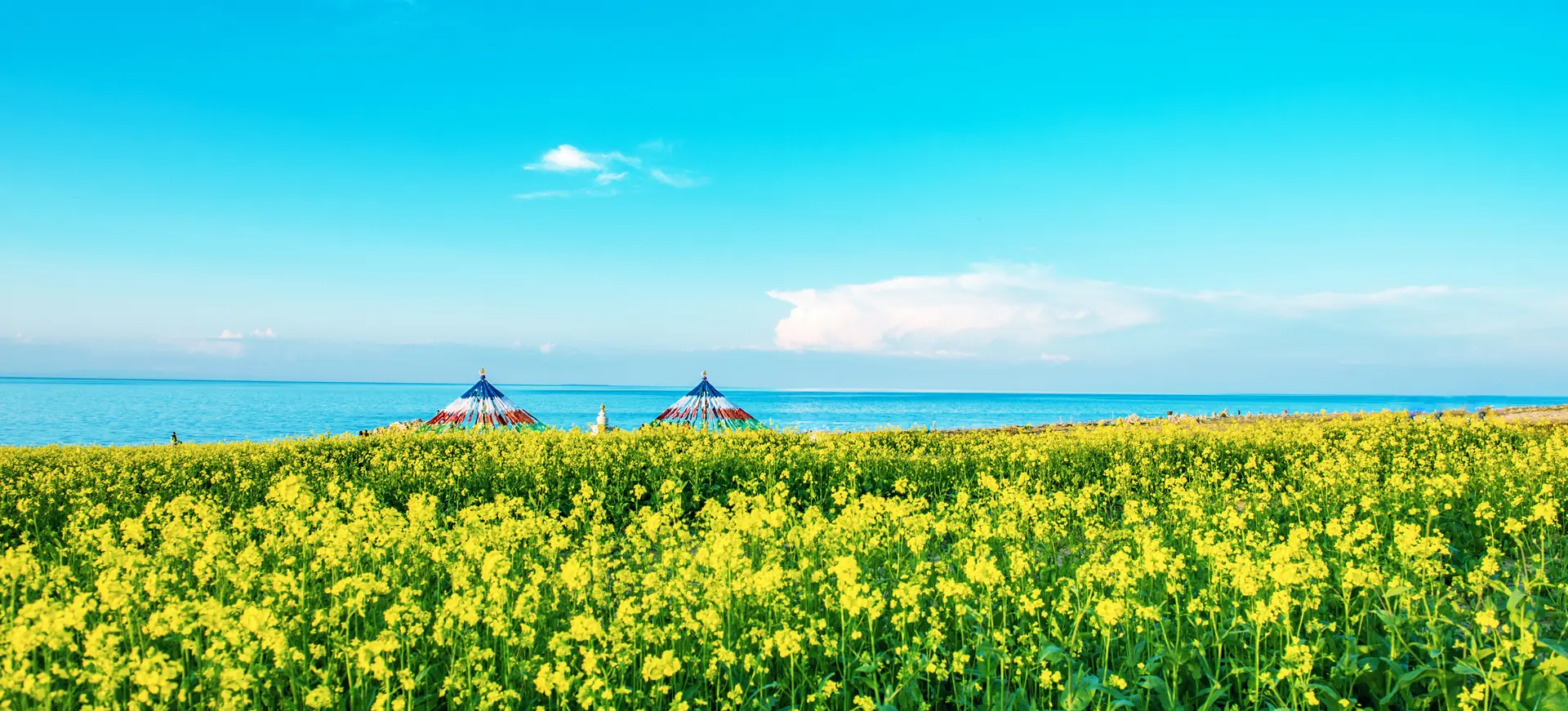
Summer escape notes
Qinghai Lake in July: rapeseed blooms ring the lake at 3,200 m elevation, where summer highs barely touch 20 °C. Combine with the Tibetan Plateau or Zhangye Danxia for a route that skips the lowland heat.
Packing keywords: quick-dry clothing + SPF50 sunscreen + rain jacket + lightweight down for highlands. See our China Packing List for the full summer checklist.
Autumn in China: Best Travel Window
If your dates are flexible and your route is mainly North, East, or Central China, after October 8 is the cleanest first-timer window.
Best for
Sep-Nov
First-timer routes, Great Wall days, foliage, hiking, clear skies, and comfortable city walking.
Watch out
Golden Week first
October 1-7 is the main trap. September can still see late typhoons, and North China turns cold quickly in November.
Plan around
Best sequence
Use late September only with a holiday and typhoon check; after October 8 is the best balance; November works well for South China and much of Yunnan.
September — summer crowds ease, but it is not a national low-risk month. In 2026, Mid-Autumn falls on September 25–27, and South China, Hong Kong, Macau, Hainan, Fujian, Guangdong, and Zhejiang can still face tropical-cyclone disruption. September is excellent for Xinjiang/Kanas and some highland routes; check your exact region before treating it as a universal sweet spot.
Avoid October 1–7 (National Day Golden Week)
China's biggest travel surge. The 2025 combined National Day + Mid-Autumn holiday logged 888 million domestic tourist trips across eight days; in 2026, National Day runs October 1–7. Popular holiday routes and timed-entry attractions can sell out very quickly after release, while hotel prices can jump sharply. Strongly avoid these 7 days unless you are prepared to book early and accept crowds.
Holiday booking survival
For trains, 12306 normally opens tickets 15 days in advance, and foreign-passport users should create the account and complete real-name verification before the release day. For top attractions, check the exact release time: the Palace Museum currently releases tickets from 20:00 seven days before the visit, has no same-day tickets, and requires passport details to match the reservation.
After October 8 — the holiday peak drops sharply, and the weather is at its finest for many classic routes. North China (Beijing, Xi'an) is crisp and clear at 15–22°C, often with some of the year's best visibility after cold fronts. Foliage weekends, Great Wall sections, Jiuzhaigou, Kanas, and popular mountain hotels can still stay busy, so check daily AQI and book key stays early.
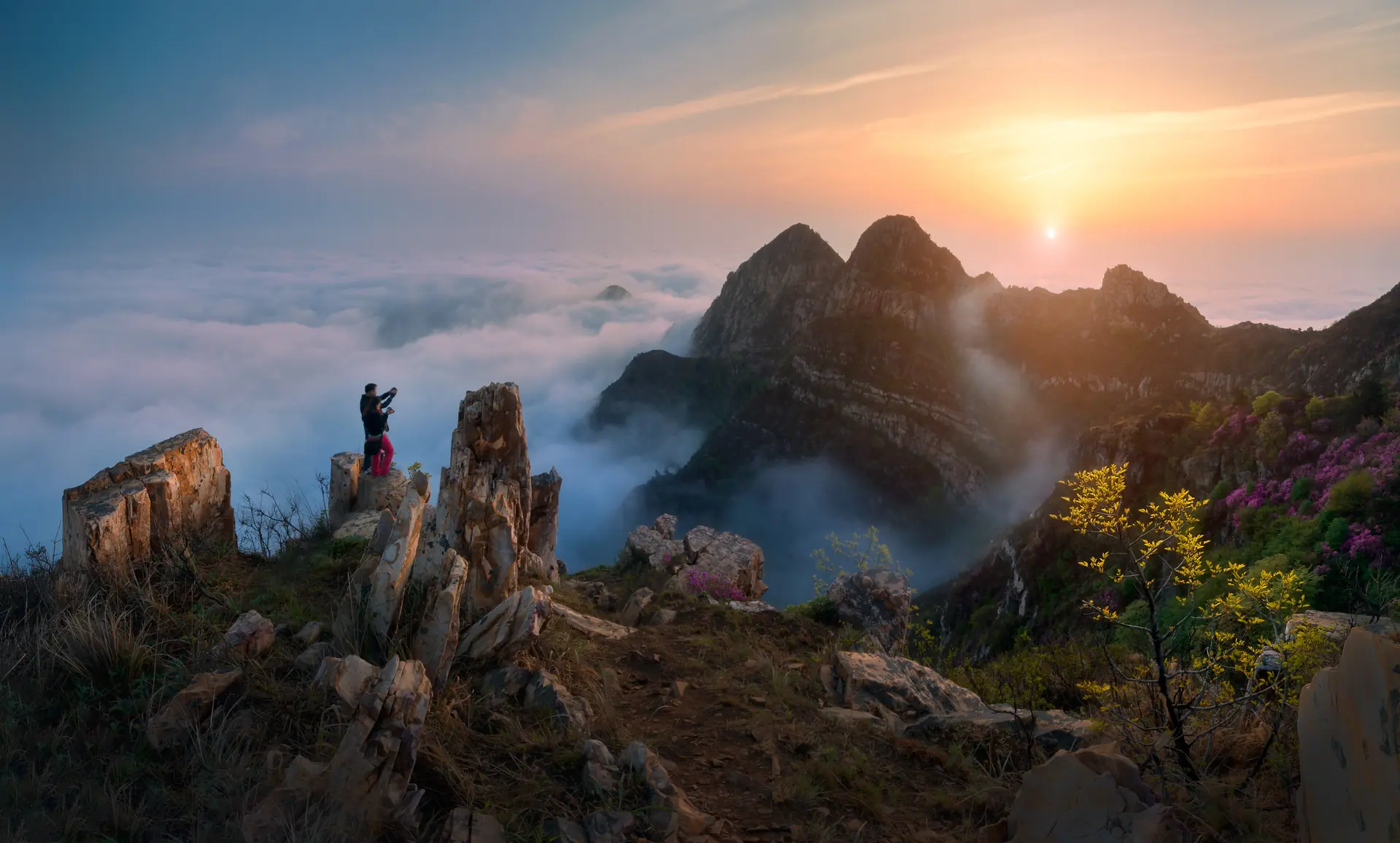
Autumn field notes
October on the Great Wall: the year's best weather and foliage arrive together, with red and gold leaves flanking the ramparts at Mutianyu and Badaling.
After October 8: dry autumn air often brings the clearest North China visibility after cold fronts, while the national holiday surge drops away. Use this window for Beijing, Xi'an, foliage routes, hiking days, and first-timer city walks, but still book popular red-leaf weekends and mountain hotels early.
Foliage season and autumn highlights:
Fragrant Hills (香山)
Beijing, mid-Oct to early Nov
The classic Beijing foliage park; nearby Mutianyu Great Wall is equally striking in autumn colors.
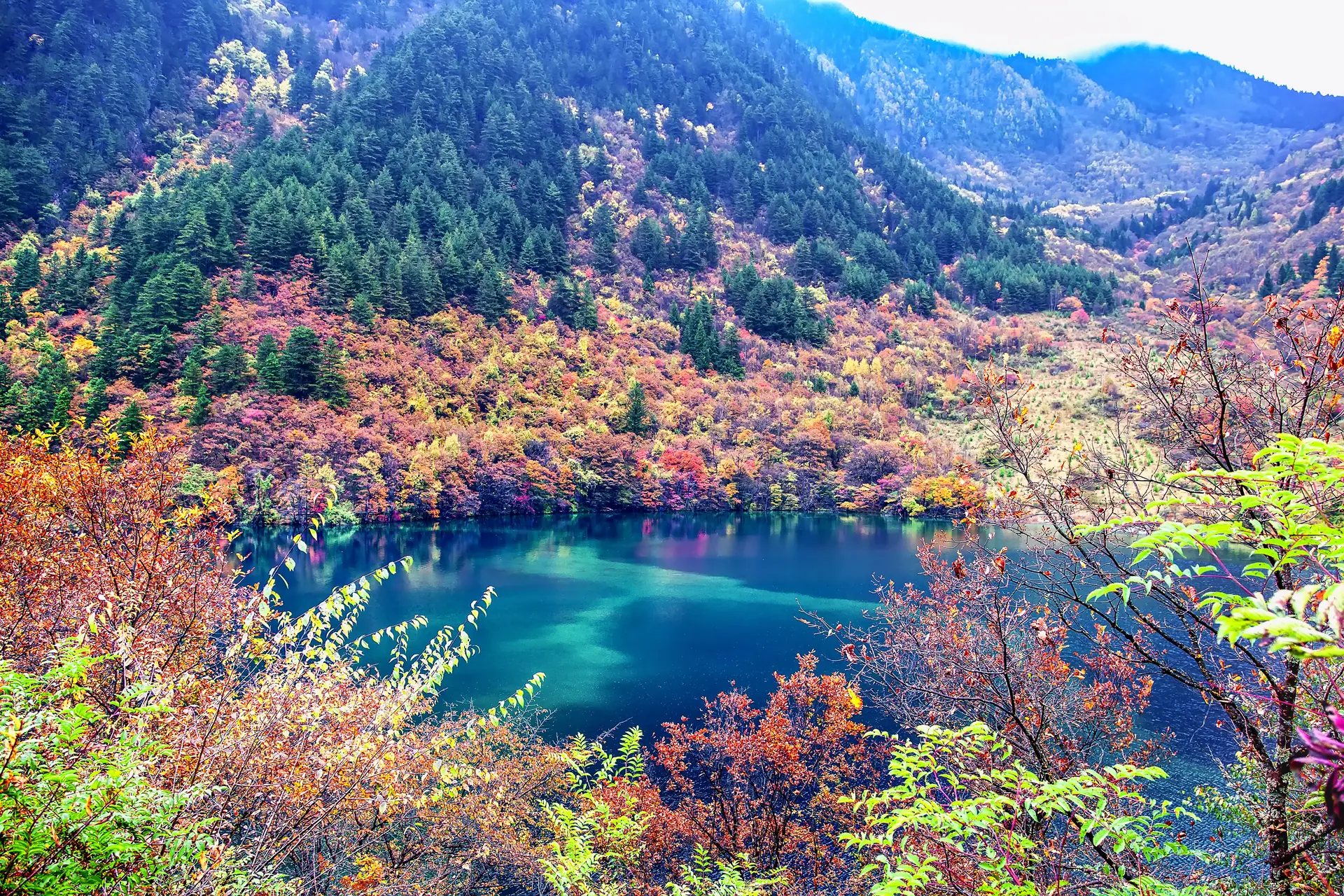
Jiuzhaigou (九寨沟)
Mid-Oct to early Nov
Rainbow forests reflected in turquoise pools, widely considered Jiuzhaigou's most beautiful window.
Kanas Lake (喀纳斯)
Xinjiang, mid-Sep to early Oct
Golden birch forests and morning mist make this Xinjiang's top autumn destination.
Ejina Populus Forest (额济纳胡杨林)
Inner Mongolia, early Oct
Thousands of golden desert poplars standing in the sand. The window is brief and stunning.
Daocheng Yading (稻城亚丁)
October
Snow mountains rise above golden meadows, with the clearest highland atmosphere of the year.
Longji Rice Terraces (龙脊梯田)
Guangxi, Sep to Oct
Golden rice cascades down the mountainside before harvest.
November — North China turns cold fast. The south (Guilin, Xiamen, Yunnan) remains pleasant at 15–22°C — a smart choice to dodge northern cold snaps.
Packing keywords: layering + scarf in November northern China + hiking shoes. See our China Packing List for the full autumn checklist.
Winter in China: North vs South
Winter is China's off-season for many city routes — cheaper, calmer, and far from boring — but Harbin, Hainan, ski resorts, New Year, and Spring Festival are major exceptions.
Best for
Dec-Feb
Harbin ice, skiing, hot springs, South China warmth, and low-cost city days outside Spring Festival.
Watch out
Cold and migration
Northern cold is serious, Spring Festival strains transport, and southern interiors can feel colder than the thermometer suggests.
Plan around
Choose one winter type
Decide between deep-north ice and warm-south escape first. If you combine both, leave flight buffers and pack for two climates.
❄️Northern cold
Harbin drops to -20°C to -30°C daily lows, sometimes hitting -40°C. Beijing winters run -5°C to 5°C, dry and biting but rarely snowy. Xi'an is similar.
🌴Southern warmth, with a catch
Kunming stays 5–17°C with plenty of sun; Sanya is 18–26°C and swimmable; Hong Kong (香港) sits at a comfortable 12–20°C. The catch is indoor cold in many southern cities.
Southern China feels colder indoors
Cities along the Yangtze (Shanghai, Hangzhou, Changsha) often feel damp and chilly in winter, with nights near freezing at times. Many older or budget buildings south of the central-heating line lack municipal central heating, though hotels, malls, restaurants, and newer apartments often use heat-capable air conditioners. Choose lodging with reliable heating or AC and pack thermal layers even for "mild" southern winters.
Winter-only experiences:
Harbin Ice and Snow World (哈尔滨冰雪大世界)
Late Dec to Feb
The world's largest ice-sculpture park, best after dark when the LED-lit ice city turns on.
Jilin rime frost (吉林雾凇)
Dec to Feb mornings
Wusong Island (雾凇岛) is the prime viewing spot for frozen white riverbank trees.
Chongli skiing (崇礼)
1 hour from Beijing
Hebei's 2022 Winter Olympics zone has multiple international-grade resorts by bullet train.
Hot spring season
Tengchong, Jiuhuashan, Emeishan
Natural springs near Tengchong (腾冲), Jiuhuashan (九华山), and Emeishan (峨眉山) are at their best in cold weather.
Huangshan (黄山)
Winter cloud seas
December to February has the highest chance of cloud seas, often paired with rime frost.
Kunming red-billed gulls
Green Lake (翠湖)
Thousands of Siberian gulls migrate to Green Lake every winter, turning a city stroll into a seasonal event.
Xishuangbanna (西双版纳)
15–28°C winter
Tropical rainforest and Dai minority culture make it feel nothing like winter in China.
Chinese New Year (Spring Festival)
Usually late January to mid-February (2026: February 15–23, with February 17 as New Year's Day). The two weeks around it trigger China's largest annual migration — "chunyun" (春运) — with more than 2.8 billion inter-regional passenger trips during the 2026 holiday alone and about 9.5 billion expected across the 40-day rush. The hardest homebound and return routes can sell out quickly, flights and hotels can surge, and small family-run restaurants or shops may close for several days to 1–2 weeks. Major hotels, malls, and attractions often operate, but they may be crowded or ticketed. Do not plan a dense itinerary during the week before and after Spring Festival unless the festival itself is your reason to visit.

Winter field notes
Harbin Ice and Snow World: the world's largest ice-sculpture park is open late December through February; after dark the LED-lit ice city is the main payoff. Last season's 2025/26 reference price was ¥328 adult and ¥240 under-18; verify the 2026/27 official price before booking winter plans.
Packing keywords: heavy down jacket + thermal underwear + hand warmers for the north; light down is enough for the south. See our China Packing List for the full winter checklist.
Best Time to Visit China by Region
China is too large for one "best month." Use these regional cards to test your route against the right climate window:
Beijing & North China
Best: Apr-May, Oct 8-late Oct
Avoid: March dust, July-August heat, and Spring Festival.
Note: autumn visibility is often excellent after cold fronts, but still check AQI day by day.
Shanghai & East China
Best: Apr-May, Oct-Nov
Avoid: June-July plum rain and August heat.
Note: these windows dodge both the rains and the furnace feel.
Xi'an
Best: Apr-May, Sep-Oct
Avoid: July-August scorching heat and dry winter cold.
Note: autumn is ideal for Huashan hiking days.
Chengdu Basin
Best: Mar-Jun, Sep-Nov
Avoid: July-August muggy heat.
Note: use Chengdu as the city base, then treat highland Sichuan separately.
Western/Northern Sichuan Highlands
Best: Jun-Oct
Avoid: winter road and altitude risk unless prepared.
Note: Jiuzhaigou and Daocheng are altitude-sensitive; summer is usable with rain buffers, autumn is best for foliage.
Guilin & Guangxi
Best: Apr-May, Sep-Nov
Avoid: May-June flood/rain risk and peak summer heat.
Note: post-rain mist on the Li River is photogenic, but river trips can be disrupted.
Guangdong, Fujian, Hong Kong & Macau
Best: Mar-Apr, Oct-Dec
Avoid: peak summer heat and May-November tropical-cyclone risk.
Note: watch Hong Kong and Macao warnings; keep ferry, bridge, and flight buffers.
Hainan
Best: Nov-Mar
Avoid: peak summer heat and typhoon/rain risk.
Note: this is China's easiest winter-sun region; rainy-season trips can still work if flexible.
Yunnan: Kunming/Dali/Lijiang
Best: Mar-May, Oct-Nov
Summer works too: it is a real cool-weather escape, but expect rainy-season clouds, afternoon showers, and holiday crowds.
Note: mild does not mean one climate: Dali and Lijiang are cooler and rainier than Kunming, and blue-sky photo days are less predictable in summer.
Yunnan: Shangri-La/Deqin
Best: Jun-Oct
Avoid: winter cold, snow, and altitude risk.
Note: high-altitude routes need acclimatization and road buffers.
Yunnan: Xishuangbanna
Best: Nov-Mar
Avoid: hot, humid rainy season.
Note: this is tropical south, not "always spring."
Xinjiang: Ili Grasslands
Best: Jun-Jul
Avoid: winter and rushed long-distance transfers.
Note: June-July is the greenest grassland window; build distance buffers.
Xinjiang: Kanas/Altay
Best: mid-Sep-early Oct
Avoid: late October onward if you are not ready for cold and snow risk.
Note: the foliage window is short, so book transport early.
Xinjiang: Silk Road/Desert Routes
Best: Apr-May, Sep-Oct
Avoid: Turpan summer heat and winter cold.
Note: dry heat can be intense even when skies are clear.
Tibet
Best: May-Oct
Avoid: November-March high-altitude cold and road closures.
Note: foreign travelers must arrange Tibet through an accredited agency or organized tour; permits and access can change at short notice.
Qinghai/Gansu/Northwest
Best: May-Oct
Avoid: winter cold, altitude strain, and desert heat.
Note: Qinghai Lake flowers peak around July; Hexi Corridor and desert routes are easier in September-October.
Inner Mongolia
Best: Jun-Aug grasslands, Sep-early Oct desert foliage
Avoid: winter unless prepared.
Note: Hulunbuir is a summer escape; Ejina's poplar season is short and crowded.
Harbin & Northeast
Best: Dec-Feb ice, Jul-Aug summer escape
Avoid: only if you are not prepared for the season you choose.
Note: extreme winter is the point.
Holiday Calendar and Crowd Patterns
China has 7 national holiday periods. The statutory leave count is smaller than the travel impact: weekends and make-up workdays create longer travel windows, and popular transport dates often surge before and after the official days off.
- Travel-impact dates
- Jan 1–3
- Crowd note
- Moderate short-break pressure, especially ski resorts, Harbin, Hainan, temples, and city countdowns
- Travel-impact dates
- Feb 15–23
- Crowd note
- Largest travel migration; expect pressure before and after the official holiday
- Travel-impact dates
- Apr 4–6
- Crowd note
- Short-break crowds at gardens, old towns, and family-visit routes
- Travel-impact dates
- May 1–5
- Crowd note
- Major nationwide peak; 325 million domestic tourist trips in 2026
- Travel-impact dates
- Jun 19–21
- Crowd note
- Short-break pressure; lower than Golden Week but still book popular trains
- Travel-impact dates
- Sep 25–27
- Crowd note
- Directly affects the "late September" window in 2026
- Travel-impact dates
- Oct 1–7
- Crowd note
- Avoid for mainstream tourist routes unless the crowd experience is the point
🚨Two Golden Weeks
Spring Festival and National Day are the two largest domestic travel peaks. The 2026 Spring Festival holiday logged 596 million domestic tourist trips, and the 2025 combined National Day + Mid-Autumn holiday logged 888 million domestic tourist trips.
💸Price pressure
Hotel prices can surge during Golden Weeks, and popular holiday train routes can sell out very quickly after release. Set up accounts and passenger details before tickets open.
📅Best short rule
Avoid October 1–7 and the two weeks around Spring Festival unless you have a specific reason and thorough preparation. After those two peaks, Labor Day is the next major nationwide travel surge.
The 3-day holidays, including Qingming, Dragon Boat, and Mid-Autumn, require less caution than Golden Week but still benefit from advance booking. In 2026, Mid-Autumn falls September 25–27, so do not treat late September as automatically low-crowd.
For the complete 2026 calendar — including make-up workday traps, crowd-beating strategies, booking survival tactics, and cultural experiences worth the crowds — see our dedicated China Public Holidays Guide.
Prices and Crowds by Month
- Crowds
- Low outside Jan 1–3
- Hotels
- Usually low, except ski/ice/Hainan hotspots
- Flights / Trains
- Usually low outside New Year
- Rating
- ★★★ (south recommended)
- Crowds
- Extreme (Spring Festival)
- Hotels
- Spike
- Flights / Trains
- Spike
- Rating
- ★ (avoid Spring Festival)
- Crowds
- Low
- Hotels
- Off-season low
- Flights / Trains
- Low
- Rating
- ★★★ (south warm, north dusty)
- Crowds
- Moderate
- Hotels
- Normal
- Flights / Trains
- Normal
- Rating
- ★★★★
- Crowds
- High (Labor Day)
- Hotels
- Double during holiday
- Flights / Trains
- Double during holiday
- Rating
- ★★★ (avoid May 1–5)
- Crowds
- Moderate
- Hotels
- Normal
- Flights / Trains
- Normal
- Rating
- ★★★ (plum rain in east)
- Crowds
- High (school break)
- Hotels
- Peak
- Flights / Trains
- Peak
- Rating
- ★★ (heat + crowds)
- Crowds
- High (school break)
- Hotels
- Peak
- Flights / Trains
- Peak
- Rating
- ★★ (same)
- Crowds
- Moderate–low
- Hotels
- Slightly below normal
- Flights / Trains
- Slightly below normal
- Rating
- ★★★★★
- Crowds
- Extreme → low
- Hotels
- Spike Oct 1–7, normalizes Oct 8
- Flights / Trains
- Same
- Rating
- ★★★★★ (after Oct 8)
- Crowds
- Low
- Hotels
- Off-season
- Flights / Trains
- Off-season
- Rating
- ★★★★ (south still warm)
- Crowds
- Low outside ice/ski hotspots
- Hotels
- Often low, except Harbin, ski resorts, Hainan
- Flights / Trains
- Often low outside holiday routes
- Rating
- ★★★ (ice experiences / south escape)
What to Pack by Season
The golden rule: layer everything. Indoor-outdoor temperature swings are extreme across China — northern winters can run -15°C outside but 25°C inside with central heating, while southern summers hit 35°C on the street and 18°C in air-conditioned malls. For most city shoulder-season travel, packable mid-layers beat one bulky coat; for Harbin, Northeast winter, high-altitude winter, and deep-winter North China, bring serious down, insulated footwear, gloves, a hat, and face protection.
Spring
Layering + dust masks in the north.
Summer
Quick-dry fabrics, SPF50+, and highland fleece if you are heading to altitude.
Autumn
Layering + hiking boots for foliage season.
Winter
Heavy down for the north and thermal layers for the south, where many older or budget buildings lack central heating.
For complete season-by-season checklists — including highland gear, airline luggage rules, tech essentials, and what NOT to pack — see our dedicated China Packing List.
Frequently Asked Questions
For a first-timer route through North, East, and Central China, October 8 to late October is the safest general answer. September can be excellent for Xinjiang and some highlands, but in 2026 Mid-Autumn falls September 25-27 and coastal South China can still face tropical-cyclone risk.
Seasonal weather and holiday data reviewed
- 2026 public holiday dates, including Spring Festival, Labor Day, Mid-Autumn, and National Day travel-impact windows: Beijing public holiday calendar
- 2026 May Day domestic tourist-trip volume and spending: State Council / Xinhua May Day data
- 2026 Spring Festival transport volume across the holiday and 40-day travel rush forecast: State Council / Xinhua Spring Festival transport data
- 2025 combined National Day and Mid-Autumn domestic tourist-trip volume: State Council / Xinhua National Day data
- Tibet permit, organized-tour, agency, and short-notice policy-risk guidance for foreign travelers: Government of Canada China travel advice
- 12306 foreign-passport account verification and normal 15-day train ticket sales window: MTR 12306 ticketing guide
- Palace Museum ticket notice covering no same-day tickets, passport booking/check-in, and seven-day release at 20:00: Palace Museum ticket notice
- Plum rain timing, annual variability, and recent extreme-rainfall context for the Yangtze and Jianghuai regions: China Meteorological Administration plum rain explainer
- Macao typhoon season timing and travel disruption guidance for traffic, marine activities, and facilities: Macao Government Tourism Office typhoon guidance
- High-altitude travel thresholds, acclimatization, and acetazolamide guidance: CDC Yellow Book altitude guidance
- Harbin Ice and Snow World adult and concession ticket prices for the 2025/26 winter season: Harbin Ice and Snow World ticket policy
Beyond This Guide
Now that you know the best travel window for your dates and destinations, two companion guides fill in the details:
- China Packing List — season-by-season checklists, highland gear, airline luggage rules, and what NOT to pack
- China Public Holidays Guide — the 2026 holiday calendar, make-up workday traps, crowd-beating strategies, and booking survival tactics
© gochinafreely.com — Original guide by Go China Freely.