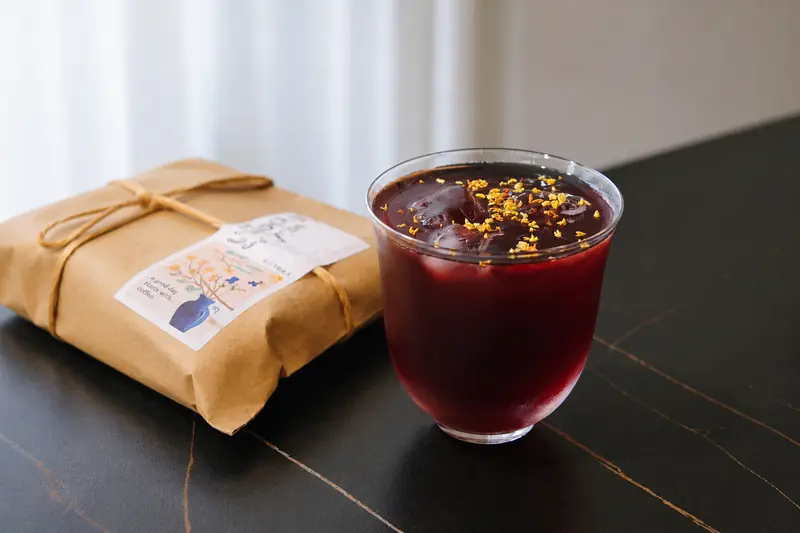
Suanmeitang (酸梅汤) is the dark ruby drink that appears when a Chinese summer meal gets hot, oily, or too spicy: smoked plum, hawthorn, dried citrus peel, rock sugar, and sometimes osmanthus, chilled until it cuts through the table. The name literally contains "soup," but travelers meet it as a drink: in Beijing snack shops, hotpot restaurants, night markets, supermarket bottles, and old-school glass cups sweating beside roast duck or lamb.
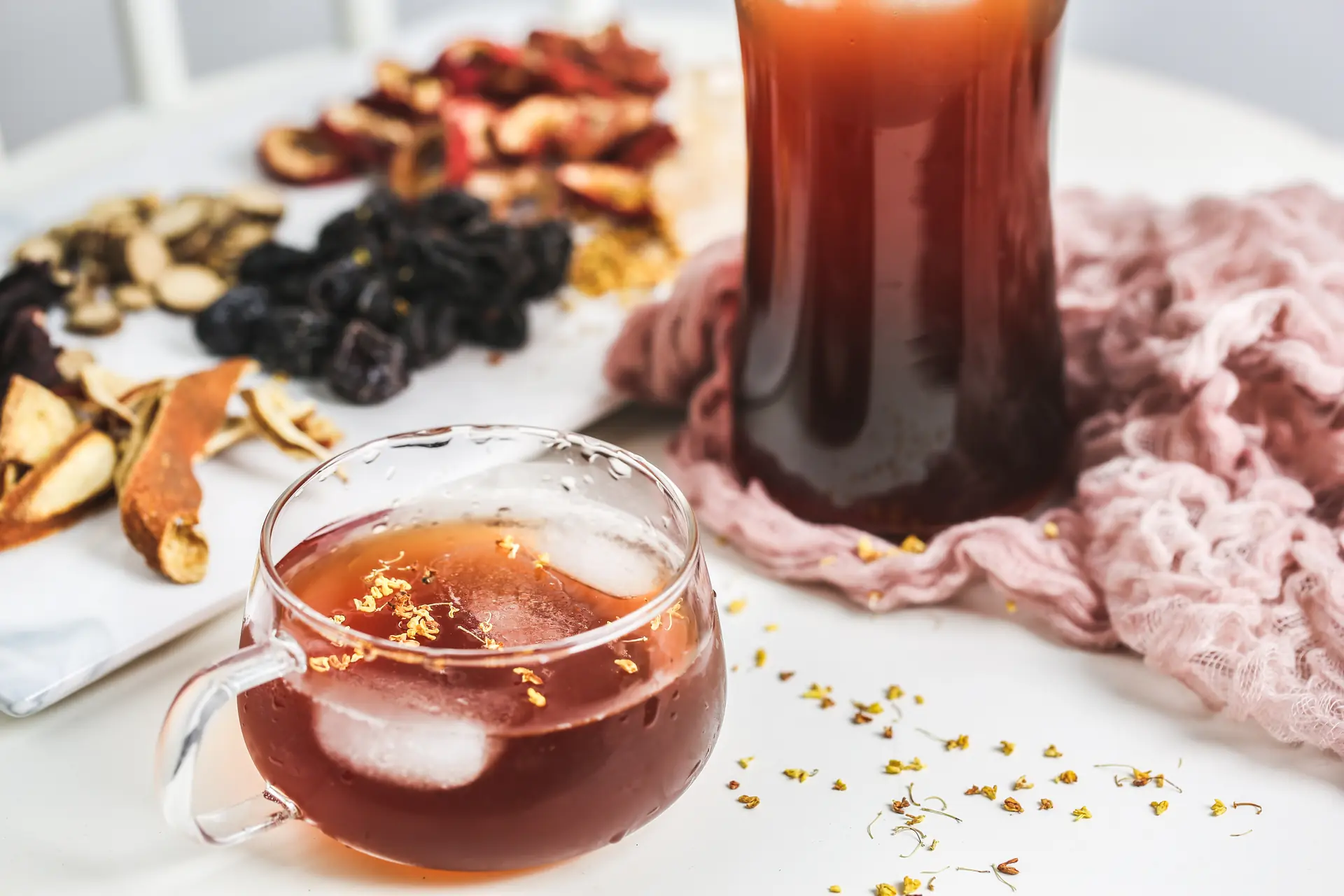
Suanmeitang is best understood as a chilled summer drink, not a bowl of soup.
Executive Summary
What this guide covers
What suanmeitang tastes like, the usual ingredients, house-brewed versus bottled versions, where travelers find it, how to order a first cup, and what to check for sugar, allergies, and children.
Best first cup
Choose iced house-brewed sour plum drink if available. If the shop lets you adjust sweetness, start with less sugar or normal sweetness rather than a heavily sweetened bottle.
Main traveler trap
Do not treat suanmeitang as medicine, tea, or fresh plum juice. Think of it as a sweet-tart Chinese summer drink that works especially well with rich, oily, or spicy food.
酸梅汤
Chinese name
Smoked plum
Core flavor
Iced
Best first try
Summer
Classic season
Old Beijing Roots, Nationwide Summer Drink
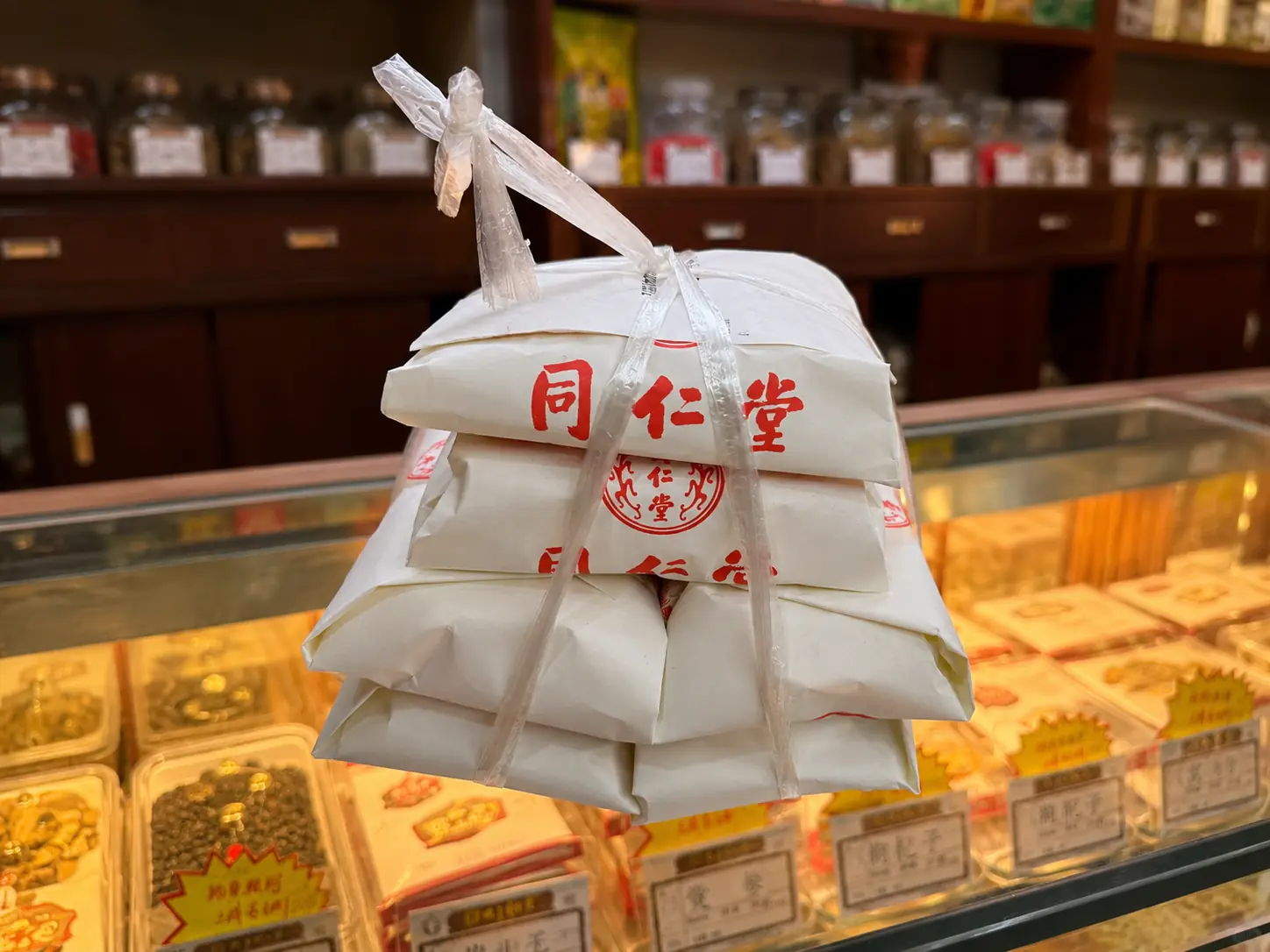
Beijing gives suanmeitang one of its strongest old-brand stories.
Suanmeitang is one of China's classic summer drinks, and Beijing gives it one of its strongest stories. A Visit Beijing feature describes suan mei tang as a traditional Beijing summer beverage and notes the old household pattern of buying smoked plums to simmer it at home before chilling it.
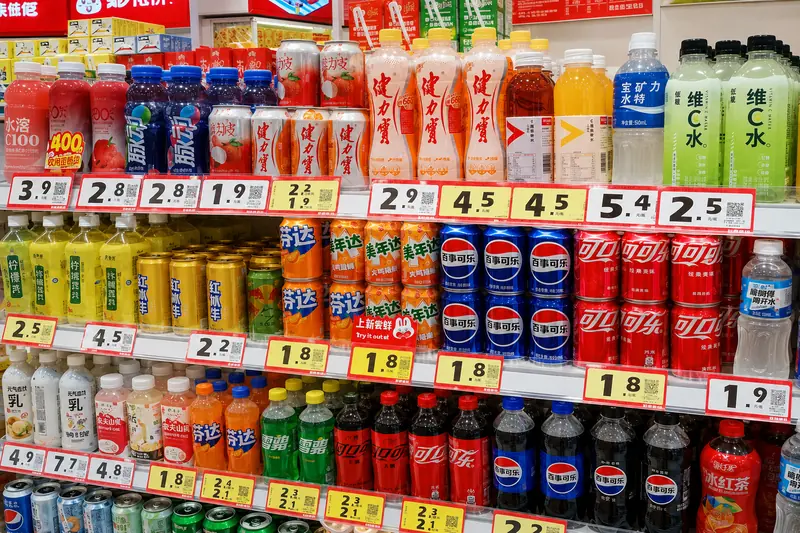
That Beijing connection matters, but the drink is not Beijing-only. Today you may see suanmeitang in Beijing snack shops, Shanghai restaurants, Xi'an street-food areas, Chengdu and Chongqing hotpot meals, convenience stores, supermarkets, and bottled-drink fridges across many cities.
Old brands also shape the drink's reputation. Visit Beijing highlights Xin Yuan Zhai (新源斋) osmanthus sour prune drink as a well-known Beijing version built around smoked plums, osmanthus blossoms, and rock sugar. Treat that as cultural context, not a rule every cup must follow.
The name sounds stranger than the drink
"Sour plum soup" is a literal translation you may see, but "sour plum drink" is clearer for English travelers. It is normally served and ordered as a beverage, not as a bowl of soup.
What Sour Plum Drink Tastes Like
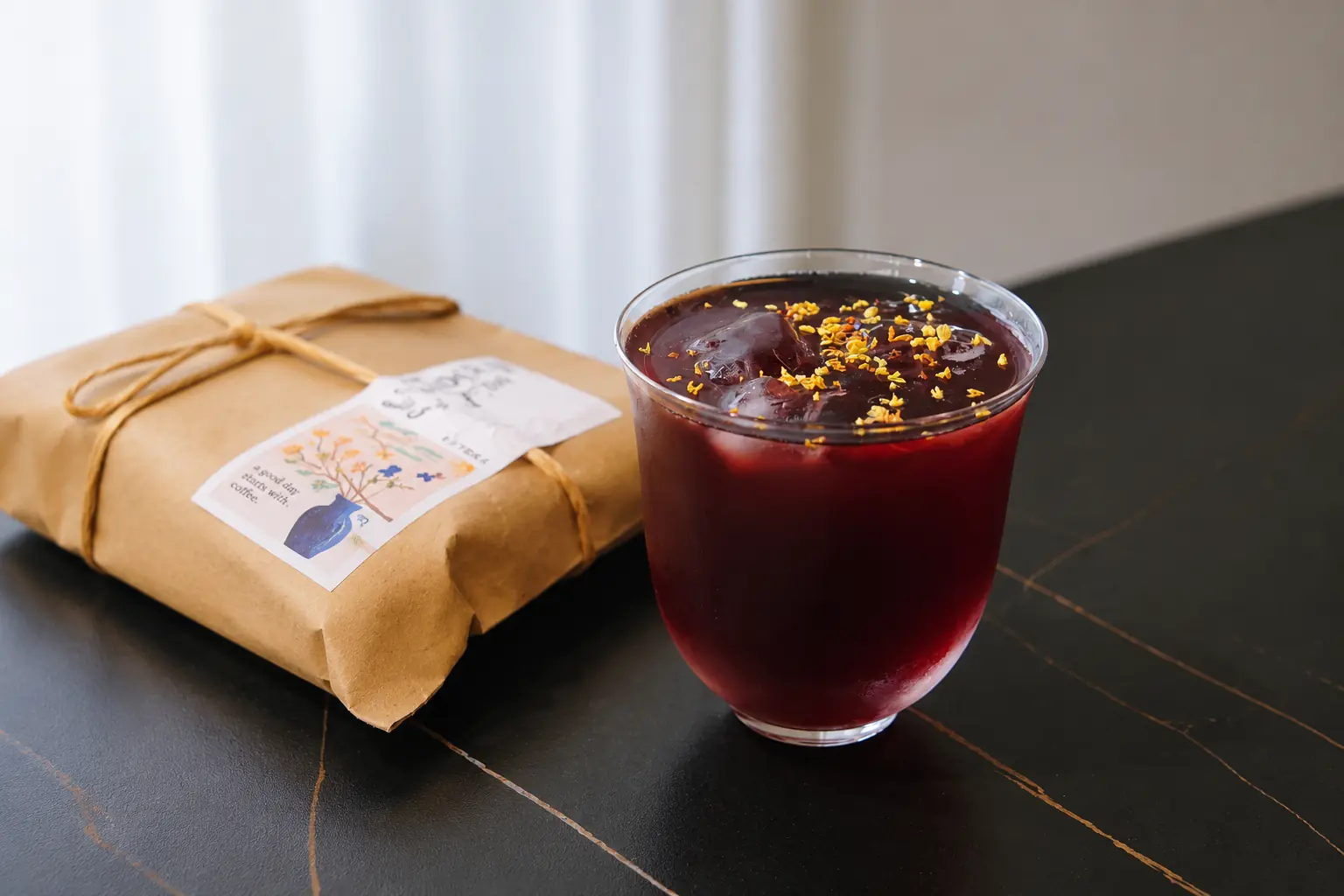
A good cup should taste tart first, then sweet, smoky, and lightly herbal.
Good suanmeitang should taste sour first, sweet second, then lightly smoky, herbal, and floral at the finish. The color is usually deep red, brown-red, or amber-brown; roselle-heavy versions can look brighter red.
If you only know fresh plum juice, suanmeitang will feel darker and more layered. Smoked plum gives the dry, slightly smoky backbone. Hawthorn sharpens the fruit acidity. Dried tangerine peel adds a faint citrus bitterness. Licorice, when used, rounds the aftertaste. Osmanthus adds the old Beijing perfume that makes some cups feel more dessert-like.
| Quality Cue | Good Sign | Weak Sign |
|---|---|---|
| Sweet-sour balance | Clear tartness, smooth sweetness, no throat scratch | Flat sugar water or harsh sourness |
| Smoked plum note | Fruit leather, smoke, and light herbal depth | Generic soft-drink flavor |
| Sweetness | Refreshing after ice | So sweet it makes you thirstier |
| Food role | Cuts grease and resets the palate | Feels sticky beside rich food |
Smoked Plum, Hawthorn, and Osmanthus Base
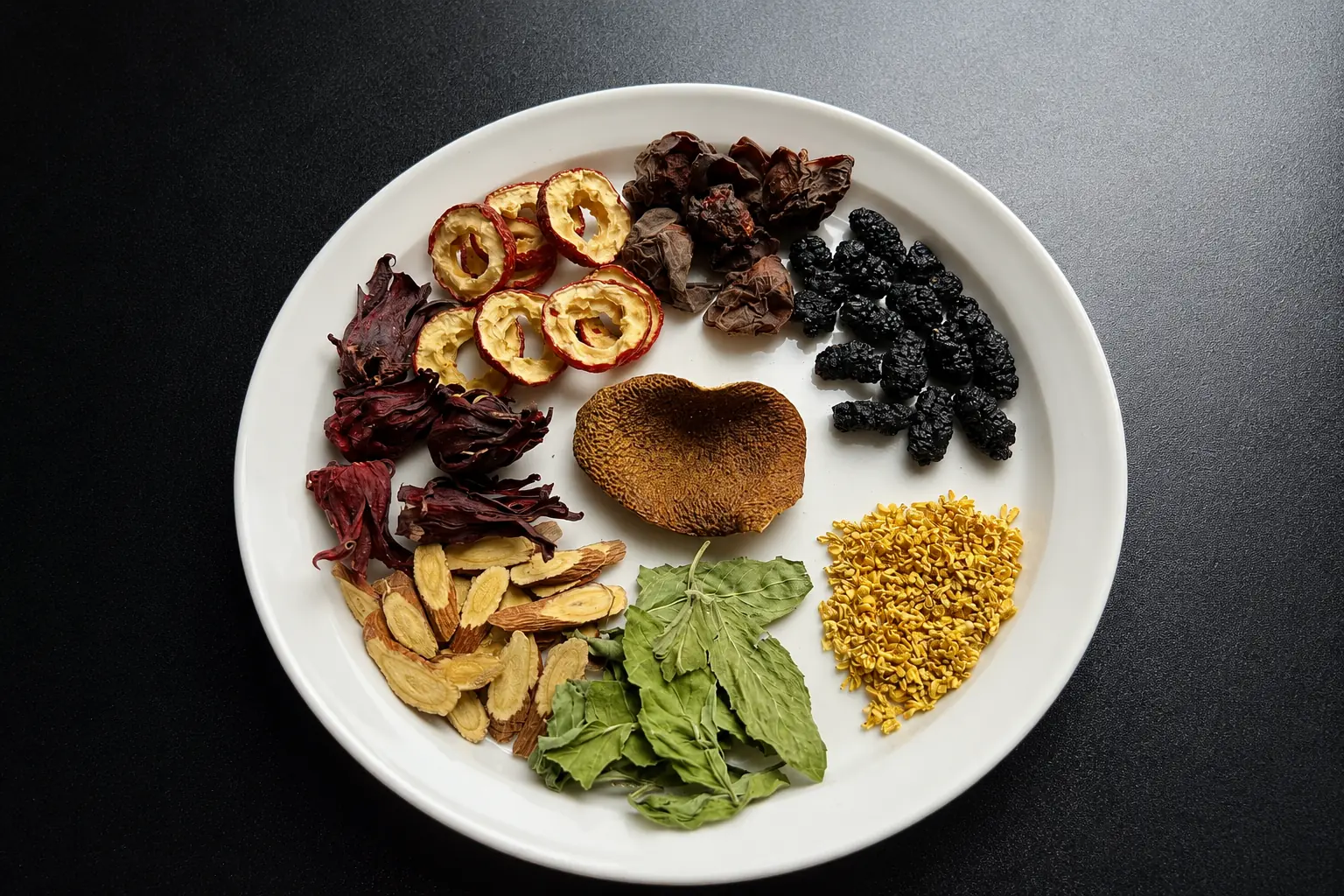
The classic flavor starts with smoked plum, hawthorn, dried citrus peel, sweetener, and aromatics.
The "plum" in suanmeitang is usually wumei (乌梅), smoked or dried mume fruit, not a fresh purple plum from a fruit stall. A Beijing food-industry group standard for traditional old-Beijing brewed sour plum drink defines the base around water, rock sugar, wumei, hawthorn, osmanthus, and dried citrus peel, with a brewed and filtered process.
Recipes vary. Many home, restaurant, and packaged versions also use licorice root, roselle, mulberry, rose, or mint. Do not expect every cup to contain every ingredient. For travel, the useful thing is recognizing the flavor family.
| Chinese | Traveler Meaning | Flavor Role |
|---|---|---|
| 乌梅 | Smoked plum / wumei | Dark sourness, smoke, and depth |
| 山楂 | Hawthorn | Fruit acidity and appetite-friendly tartness |
| 陈皮 | Dried tangerine peel | Citrus aroma and light bitterness |
| 甘草 | Licorice root | Rounded sweetness and herbal finish |
| 桂花 | Osmanthus | Floral aroma, common in old Beijing styles |
| 冰糖 | Rock sugar | Sweetness that softens the acidity |
Look for brewed, not just colored
If a shop advertises 自家熬的 or 现熬酸梅汤, it is claiming the drink is brewed in-house. That does not guarantee greatness, but it is usually more promising than an unmarked syrupy cup.
House-Made, Bottled, and Concentrate Drink Versions
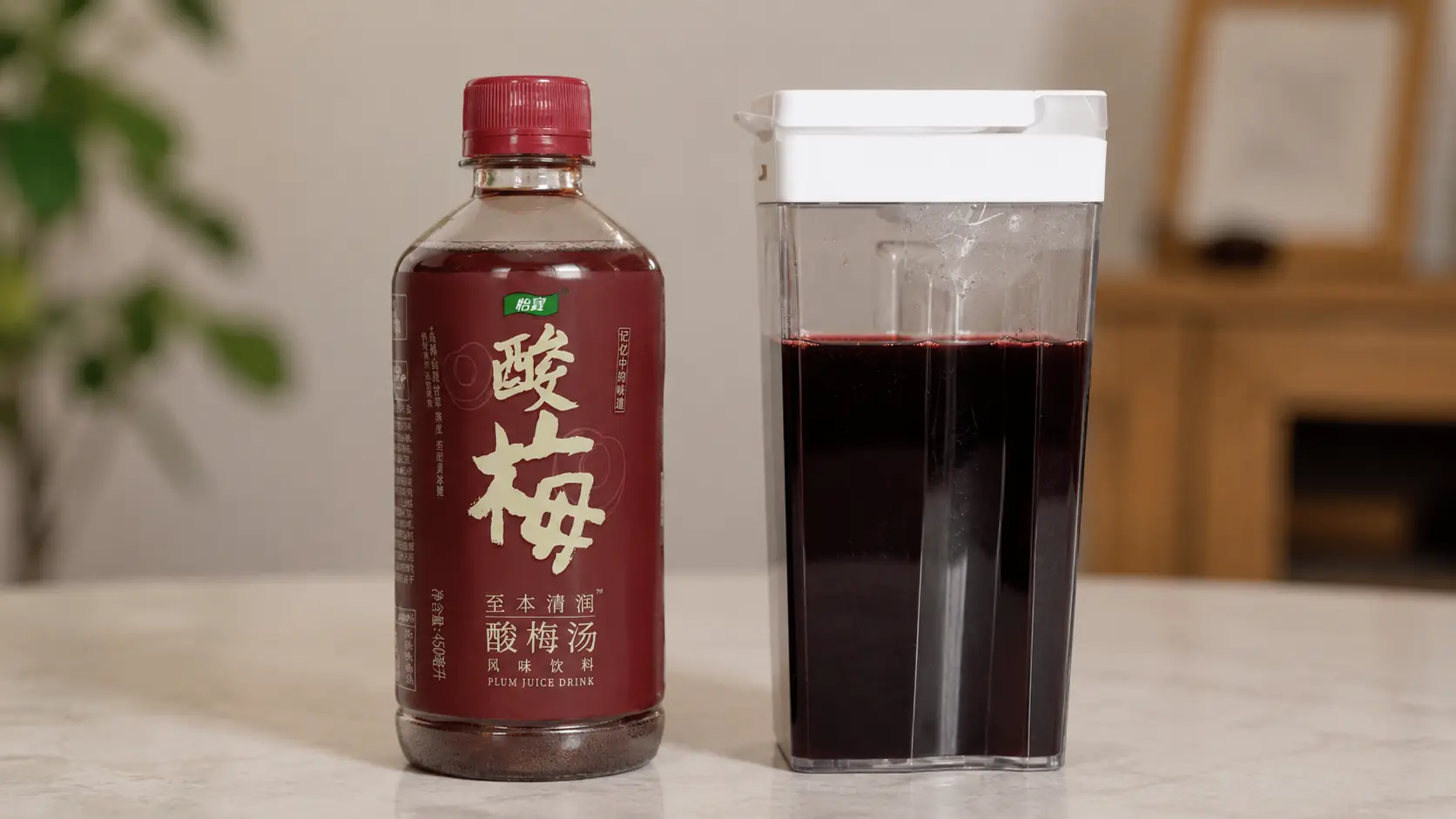
House-brewed, bottled, and concentrate versions solve different travel needs.
Travelers usually meet suanmeitang in three forms: house-brewed, bottled, and packaged for brewing or dilution. All can be useful, but they should not be judged by the same standard.
The simplest rule: if you are seated for a meal, order the house-brewed cup when available. If you are rushing to a train or returning to a hotel, a chilled bottle is perfectly fine.
← swipe to compare all options →
House-Brewed
现熬酸梅汤
- ✓Often deeper, darker, and more layered.
- ✓Best with hotpot, roast duck, lamb, barbecue, and street snacks.
- —Quality varies by shop; some "house" versions are still very sweet.
Best first taste
Bottled
瓶装酸梅汤
- ✓Easy to find in convenience stores and supermarkets.
- —Usually more consistent and soft-drink-like.
- ✓Check sugar and ingredient labels if diet or allergy rules matter.
Easiest backup
Concentrate / Pack
酸梅汤浓缩 / 原料包
- ✓Useful if you are staying in an apartment and want to brew or dilute your own.
- —Not necessary for most short trips.
- ✓Read instructions; some are syrups, some are dried ingredient packs.
Home or restaurant use
Where Travelers Can Find Sour Plum Drink
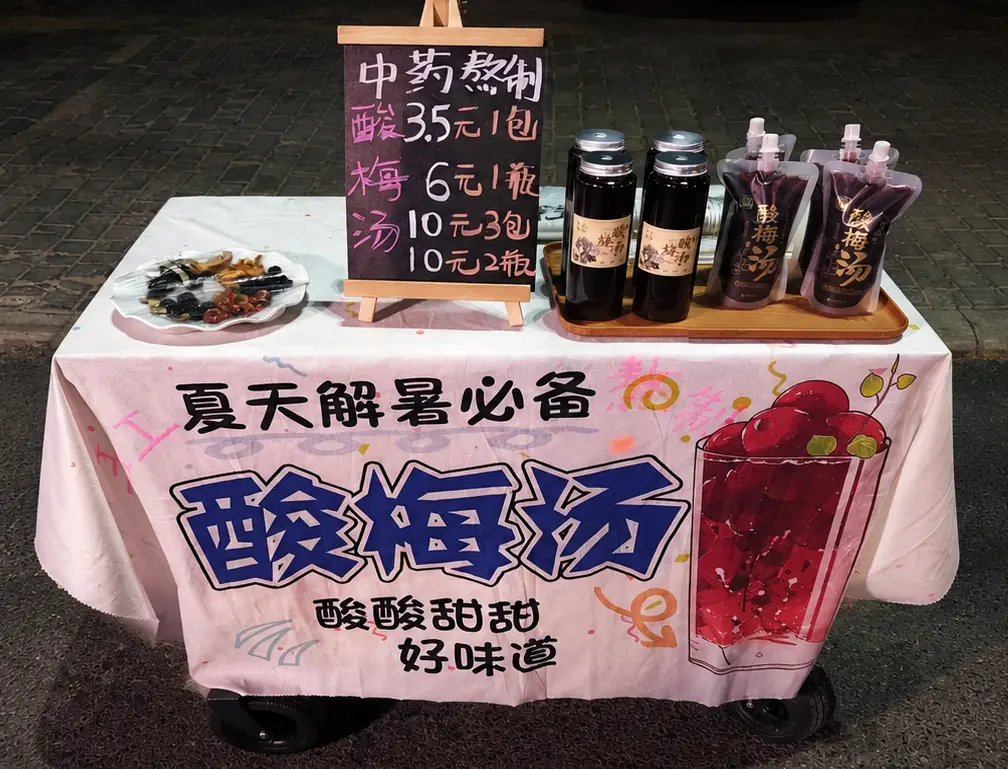
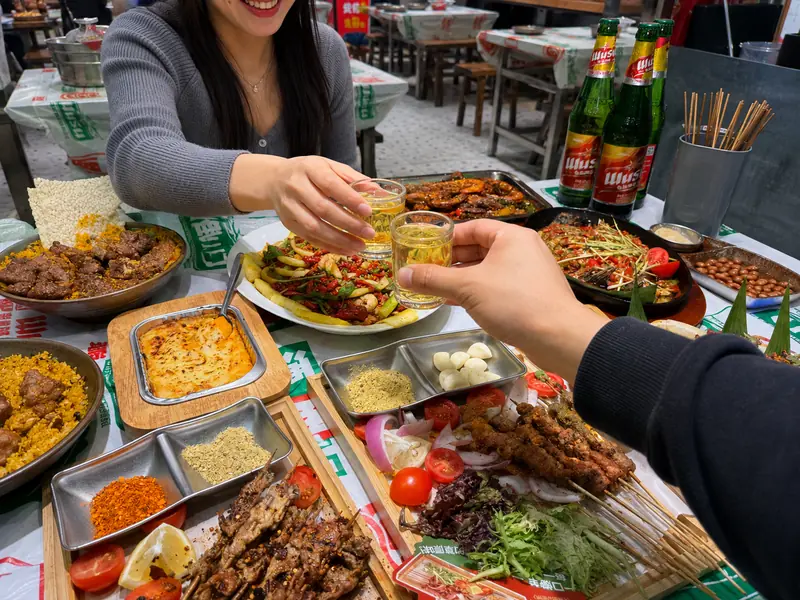
Snack stalls and night markets often make sour plum drink feel like part of the food day.
Do not chase suanmeitang like a destination restaurant. It works best as part of a food day you already want.
For city context, compare the drink inside our Beijing food guide, Shanghai food guide, Chengdu food guide, and Xi'an food guide.
| Travel Setting | How to Spot It | Best Pairing |
|---|---|---|
| Beijing snack shops | 酸梅汤 or 桂花酸梅汤 on the drink menu | Peking Duck, mutton hotpot, and local sweets |
| Hotpot restaurants | Drink fridge, self-serve station, or table-ordering app | Sichuan and Chongqing hotpot, skewers, and barbecue |
| Snack streets and night markets | Dark iced cups, big plastic jugs, or sour plum signs | Roujiamo, fried snacks, lamb skewers, noodles, and liangpi |
| Jiangnan or Shanghai restaurants | Drink or dessert section | Red-braised pork, oily freshwater dishes, and rich local sauces |
| Convenience stores | Bottled or canned sour plum drink in the chilled section | Train rides, hotel backup drinks, and summer walking days |
How to Order Your First Cup
First decision
Choose iced if the weather, stomach, and setting make sense. Suanmeitang is at its best cold.
Best upgrade
Ask whether it is house-brewed: 现熬的吗? Choose it if the shop offers it and the price looks reasonable.
Sweetness check
If made to order, ask for less sugar: 少糖 or 不要太甜. Bottled versions are usually sweeter.
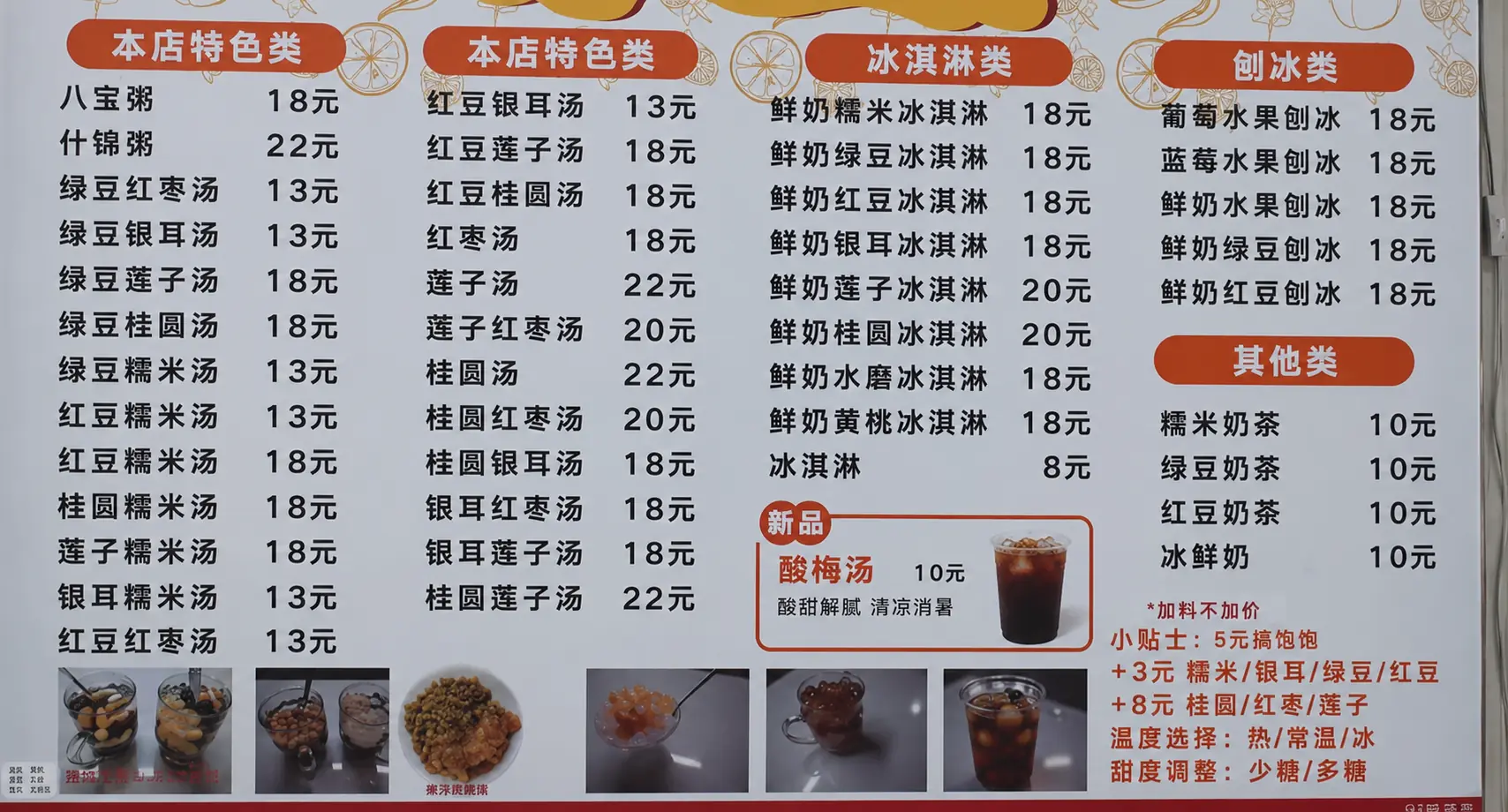
The most useful ordering choices are iced, house-brewed, and less sweet.
Your first order should answer three questions: iced or not, sweet or less sweet, house-brewed or bottled.
- Look for the name(酸梅汤 / 桂花酸梅汤)- These are the two most useful menu words for travelers.
- Choose it iced(冰的)- Suanmeitang is at its best as a cold summer drink.
- Ask about house-brewed(现熬的吗?)- Choose house-brewed if the shop offers it and the price looks reasonable.
- Control sweetness(少糖 / 不要太甜)- Not every shop can adjust it, but asking helps when they make cups to order.
- Pair it with food- It works better beside rich, oily, smoky, or spicy dishes than as a standalone tourist mission.
If a menu says wumei juice (乌梅汁), that can be close in travel terms, though not every wumei drink is brewed exactly like suanmeitang. If a menu says plum wine, ume liquor, or cocktail, that is a different category and may contain alcohol.
Decision shortcut
Which cup should I choose?
I want the classic first taste
Iced house-brewed sour plum drink with no extra toppings.
I am in a convenience store
Choose a chilled bottle, but expect a sweeter soft-drink profile.
I dislike sweet drinks
Ask for less sugar if made to order, or add ice and sip with food instead of drinking it alone.
I am eating hotpot
Order it as a palate reset, not as permission to exceed your spice tolerance.
Food Pairings and Traditional Cooling Claims
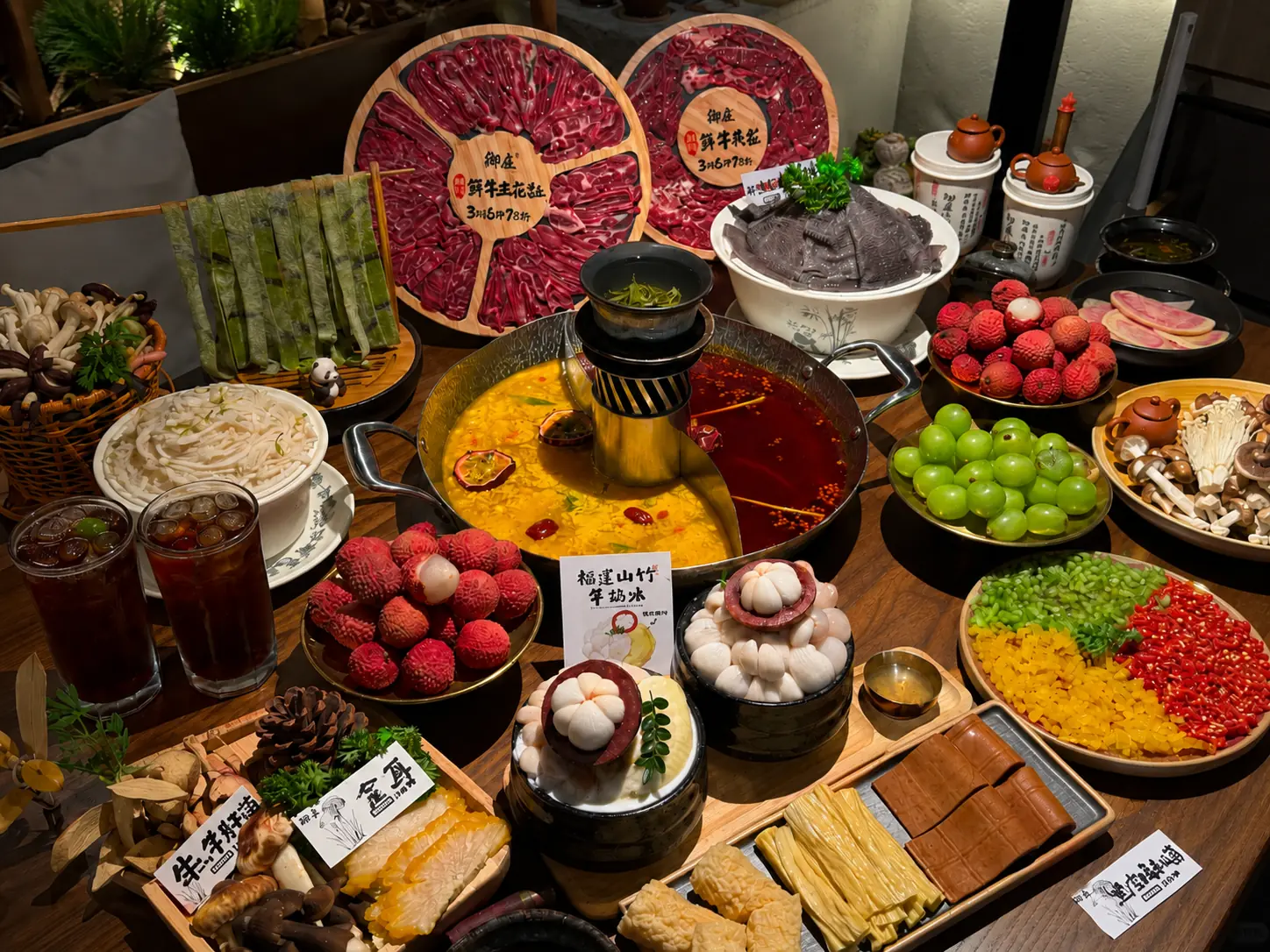
The drink shines beside oily, smoky, spicy, or heavy food.
Suanmeitang's real travel value is pairing. It is excellent beside oily, spicy, salty, smoky, or fried food: roast duck, mutton hotpot, Sichuan-Chongqing hotpot, skewers, barbecue, fried snacks, red-braised pork, and summer street food.
You will often hear Chinese descriptions such as "cooling," "heat-relieving," "appetite-opening," or "good for digestion." Treat those as traditional food-culture language, not medical instructions. A cup of sour plum drink can make a heavy meal feel easier because it is cold, tart, and sweet. It is not a cure, treatment, or health guarantee.
- Use it as a palate reset: sip between oily or spicy bites.
- Share if the meal is already heavy: one cup can be enough for a table to taste.
- Compare with Bingfen: after hotpot, Bingfen gives texture and dessert; suanmeitang gives tart liquid refreshment.
- Do not overuse it for spice: rice, oil dip, milder ordering, and pauses matter more than any one drink.
Diet, Allergy, and Family Notes
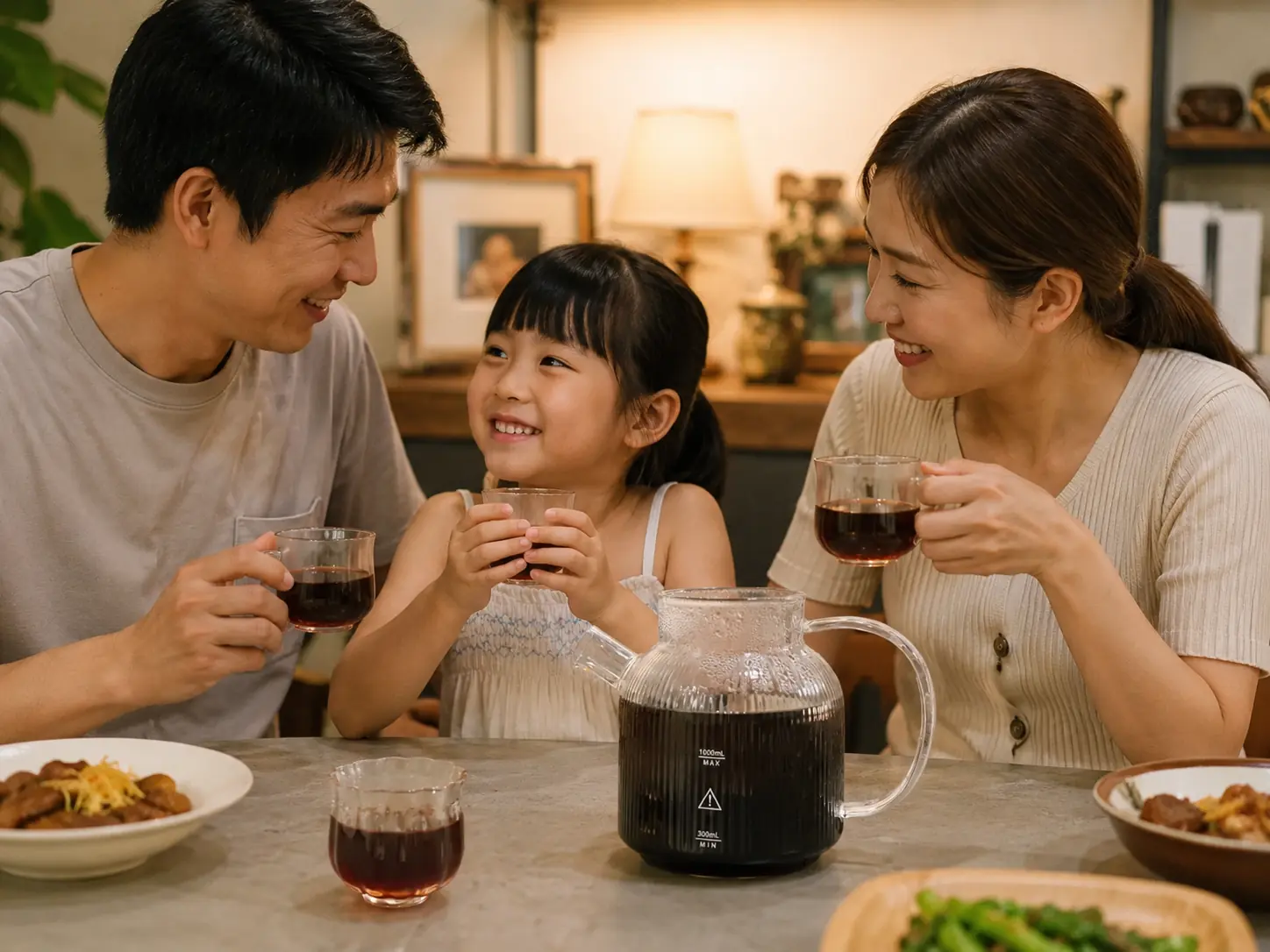
For children or sensitive drinkers, a small cup is usually smarter than a large iced serving.
Suanmeitang looks simple, but the ingredient list can matter. It may contain smoked plum, hawthorn, licorice root, dried tangerine peel, osmanthus, roselle, mulberry, rose, mint, rock sugar, white sugar, sweeteners, or other brand-specific ingredients.
For broader food-risk language, keep our China food allergies and dietary restrictions guide handy when you eat at snack streets or hotpot restaurants.
Do not treat traditional as automatically diet-safe
Traditional does not mean low-sugar, allergy-safe, or suitable for every medical situation. If sugar, acidity, pregnancy guidance, medication restrictions, or serious allergies matter, follow your own medical advice and check the ingredient list.
| Situation | Traveler Advice |
|---|---|
| Blood-sugar control | Assume it is sweetened unless the label or shop clearly says otherwise. Choose a small cup or skip it. |
| Acid sensitivity | It is a tart drink. Try a few sips with food rather than drinking a large cup on an empty stomach. |
| Pregnancy or prescribed diet | Follow your clinician's guidance, especially for herbal ingredients, sugar, and acidity. |
| Children | Choose a small cup, less ice, and less sugar if possible. Do not use iced drinks as a water replacement. |
| Serious allergies | Bottled products are easier to check than street cups. Carry a written allergy card and ask before ordering. |
Useful Sour Plum Drink Ordering Phrases
Use these short phrases at counters, table-ordering screens, and snack stalls. Pinyin belongs here because these are the words you may actually say aloud.
| English | Chinese | Pinyin | Say It Like… |
|---|---|---|---|
| Sour plum drink | 酸梅汤 | suan mei tang | swan may tahng |
| Osmanthus sour plum drink | 桂花酸梅汤 | gui hua suan mei tang | gway hwah swan may tahng |
| Smoked plum drink / plum juice | 乌梅汁 | wu mei zhi | woo may jir |
| I would like one cup of sour plum drink. | 我要一杯酸梅汤。 | wo yao yi bei suan mei tang | waw yaow ee bay swan may tahng |
| Iced / cold. | 冰的。 | bing de | bing duh |
| Less sugar. | 少糖。 | shao tang | shaow tahng |
| Not too sweet. | 不要太甜。 | bu yao tai tian | boo yaow tie tyen |
| Is this brewed in-house? | 这个是现熬的吗? | zhe ge shi xian ao de ma | juh-guh shir shyen ow duh mah |
Frequently Asked Questions
No. Some English menus may say plum tea, but suanmeitang is not made from tea leaves. Sour plum drink is the clearest English travel translation.
Beyond This Guide
Suanmeitang belongs inside a bigger China food rhythm: rich meal, sharp drink, small reset, continue. Pair this guide with Peking Duck, Beijing mutton hotpot, Sichuan and Chongqing hotpot, Bingfen, Chengdu food, and Chongqing food.
For a quieter breakfast-and-drink path, continue with Doujiang, Chinese tea, and the Shanghai food guide. The best drink is not the most famous one; it is the one that fits the meal, weather, and people at your table.
© gochinafreely.com — Original guide by Go China Freely.