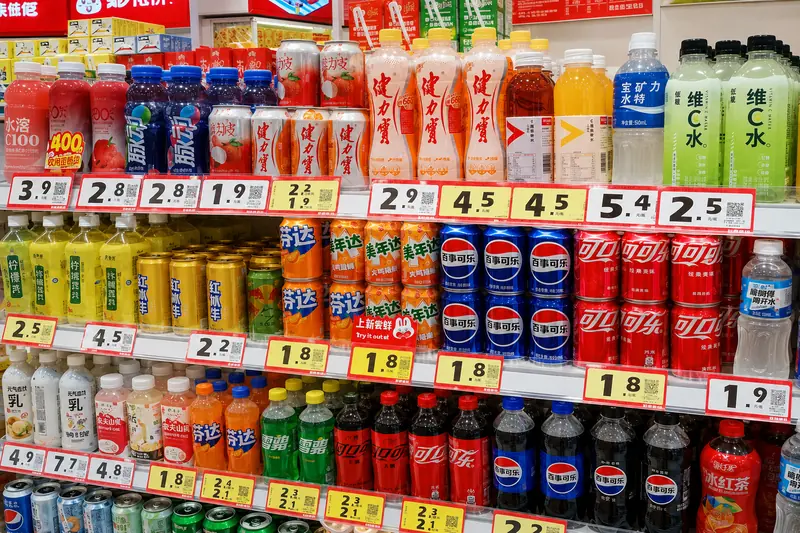
Chinese local sodas are not just orange fizzy drinks. For travelers, bottles like Bingfeng (冰峰), Beibingyang (北冰洋), Jianlibao (健力宝), Dayao (大窑), Laoshan Cola (崂山可乐), and Hankow Er Chang (汉口二厂) work like a map of city memory: Bingfeng beside a Xi'an (西安) Chinese hamburger (肉夹馍), Beibingyang on a Beijing (北京) skewer table, Laoshan Cola beyond Qingdao (青岛) beer, and retro Wuhan (武汉) sodas made new again. This guide is not a ranking. It shows which bottle to try where, what it tastes like, and how to avoid treating sweet soda like drinking water.
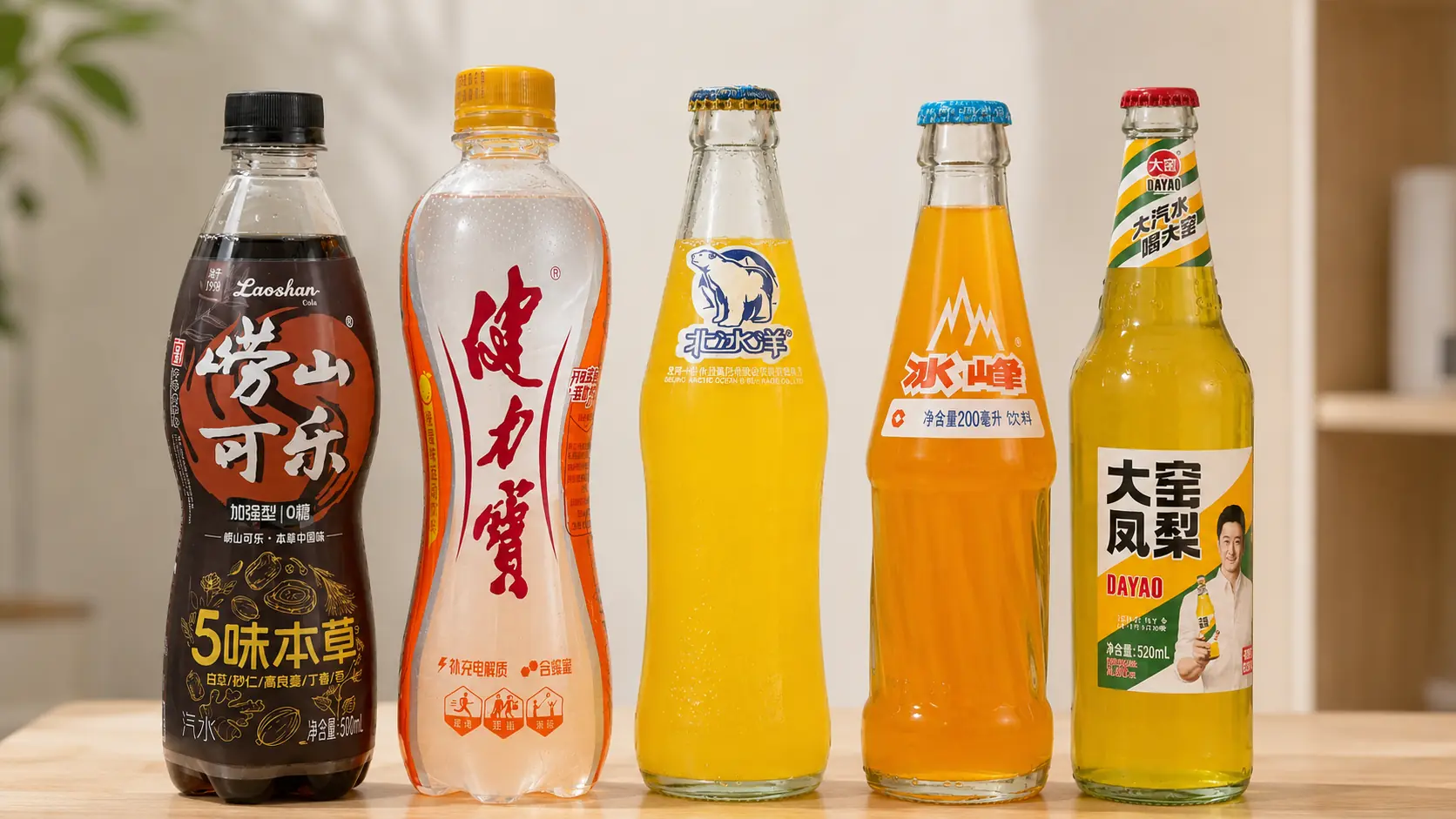
Local sodas make more sense when you match each bottle to its city or restaurant setting.
Executive Summary
What this guide covers
The Chinese local soda brands travelers are most likely to notice, the cities or restaurant settings they belong to, their broad flavor cues, where to buy them, and how to order them.
Best first approach
Drink by place: Bingfeng in Xi\u0027an, Beibingyang in Beijing, Laoshan Cola in Qingdao, Dayao at northern restaurant tables, Jianlibao from convenience stores, and Hankow Er Chang in Wuhan or retro retail settings.
Main traveler trap
Do not assume local means healthier, low sugar, caffeine free, or worth a special detour. These are sweet soft drinks with cultural context, not hydration plans.
Xi\u0027an
Bingfeng baseline
Beijing
Arctic Ocean table
1984
Jianlibao fame
Check label
Sugar and caffeine
City Memory Served in Glass Bottles
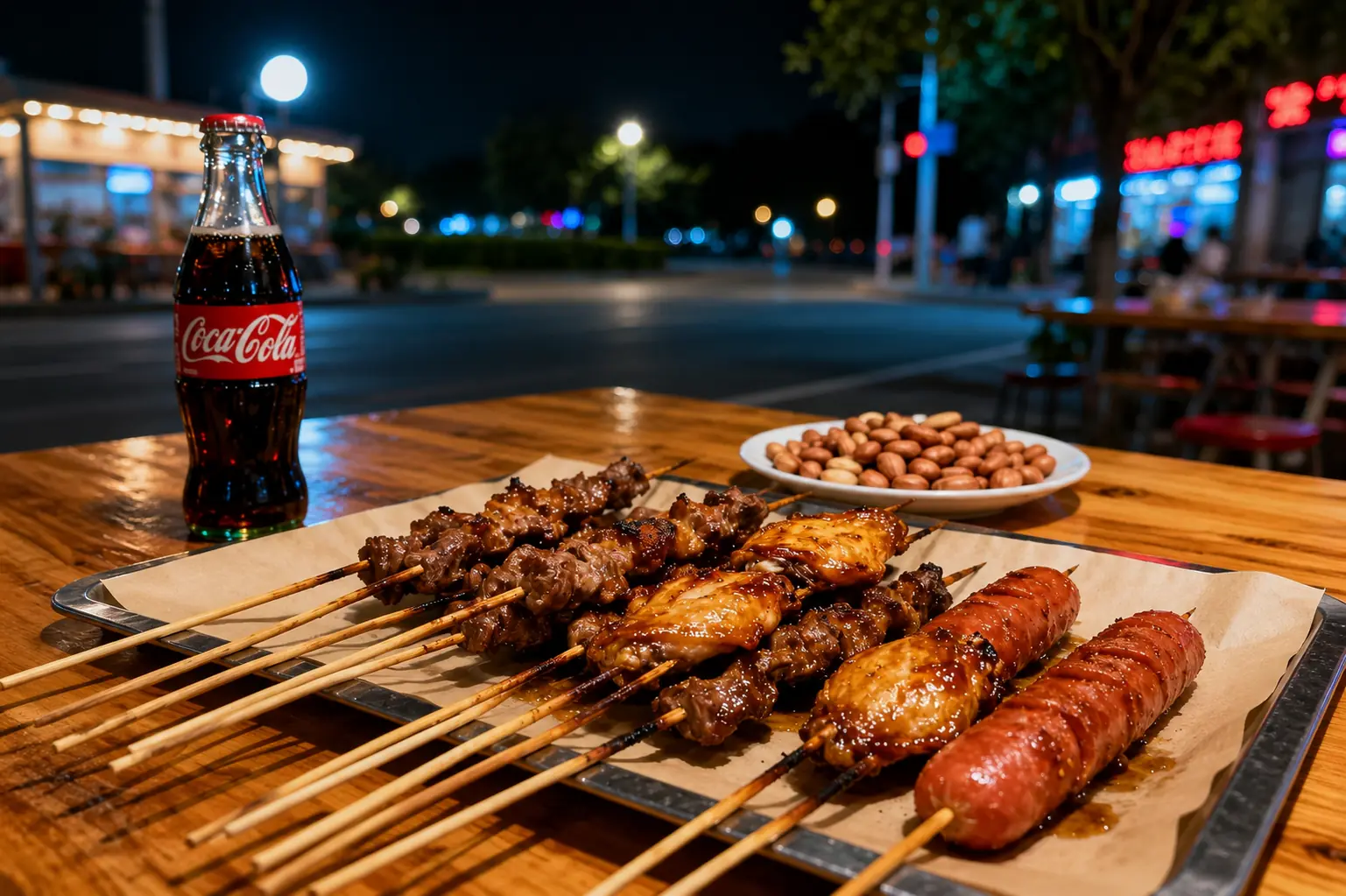
The best local soda moment is usually a cold bottle beside an ordinary meal.
The most interesting thing about Chinese local sodas is not that they are automatically better than Coca-Cola, Fanta, or Sprite. It is that they are tied to restaurant tables. Bingfeng is not an abstract orange soda; it is part of the Xi'an fast-food rhythm. Beibingyang is not just a citrus drink; it is a Beijing polar-bear bottle with old-city nostalgia. Jianlibao is not only a carbonated drink; it carries a 1984 Olympic sports-drink story.
For travelers, these sodas work best as food background music. When you are eating Chinese hamburger and cold skin noodles in Xi'an, a bottle of Bingfeng feels more local than a chain-store milk tea. When you are eating lamb skewers in Beijing, Beibingyang has more table atmosphere than plain water. When you are in Qingdao and do not want beer, Laoshan Cola gives you a non-alcoholic local option.
The practical test is simple: can you find it easily where you are, does it have a clear city or regional link, does it fit the food, and will it help you read the table better? If the answer is yes, it is worth one bottle.
Treat soda as context, not a destination
The best way to try a Chinese local soda is when it naturally appears beside the meal you are already eating. Do not cross a city just for one ordinary bottle.
Which Local Sodas to Try First
You do not need a full encyclopedia of Chinese soft drinks. Start with the bottles that have strong city identity, easy traveler recognition, and a clear place at the table.
| Brand | Chinese Name | City or Region Cue | First-Sip Expectation |
|---|---|---|---|
| Bingfeng | 冰峰 | Xi'an and Shaanxi (陕西) | Sweet orange soda, glass bottle, Chinese hamburger table. |
| Beibingyang / Arctic Ocean | 北冰洋 | Beijing | Tangerine-orange soda with a polar bear logo. |
| Jianlibao | 健力宝 | Guangdong (广东) origin, national nostalgia | Carbonated sports-drink memory with citrus-honey notes. |
| Dayao | 大窑 | Inner Mongolia (内蒙古) roots, northern restaurant tables | Large bottle, sweet fizz, built for sharing. |
| Laoshan Cola | 崂山可乐 | Qingdao and Shandong (山东) | Cola with a herbal, slightly medicinal edge. |
| Hankow Er Chang | 汉口二厂 | Wuhan and Hubei (湖北) | Retro flavors such as orange, lychee, sour plum, and seasonal blends. |
This is not an official top-ten list. China has many provincial and city soft-drink brands, and new retro labels keep appearing. What matters for travel is matching the bottle to the route: Bingfeng in Xi'an, Beibingyang in Beijing, Laoshan Cola in Qingdao, Dayao at a northern barbecue or hotpot table, Jianlibao when you want an old national brand, and Hankow Er Chang when you want to see how nostalgia turns into modern packaging.
Bingfeng, Xi'an's Classic Orange Table Soda
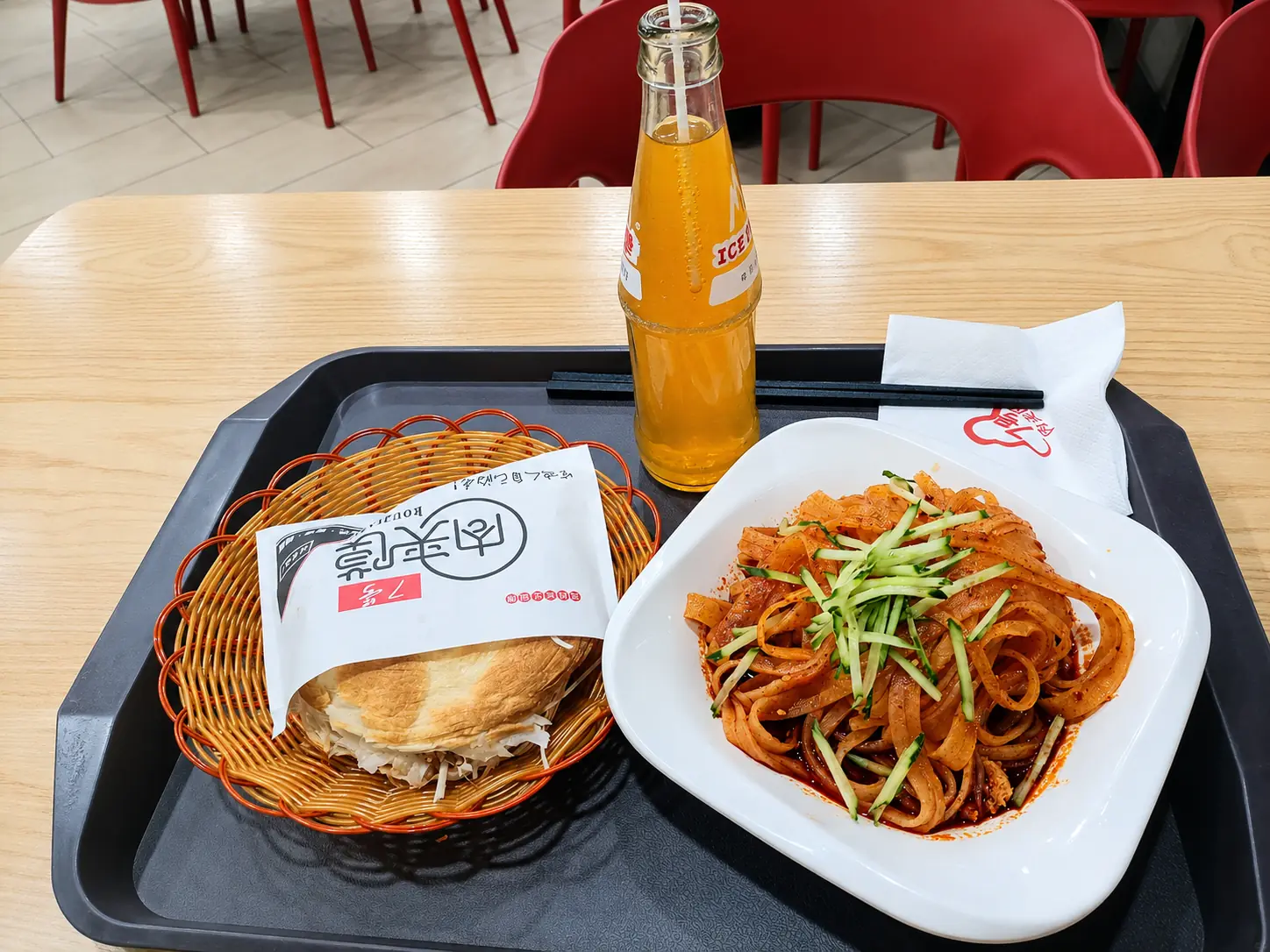
Bingfeng feels most local beside roujiamo and liangpi, Xi'an's classic quick-meal trio.
Bingfeng (冰峰) is the Xi'an soda most foreign travelers are likely to remember. Most local histories trace it back to a state-run soda factory in the early 1950s, though exact dates differ depending on whether they refer to the factory, the company, or the orange soda brand itself. For travelers, the date is less important than its place on the Xi'an table.
The classic local combination is often called the Three Qin meal set (三秦套餐): Chinese hamburger, cold skin noodles, and Bingfeng. Chinese hamburger brings fatty braised meat and bread; cold skin noodles bring vinegar, chili oil, garlic water, and a chewy bite; Bingfeng's sweet orange flavor and bubbles make the whole meal feel lighter. You can see it in snack shops, convenience stores, supermarkets, night markets, and small local eateries. The glass bottle feels the most local.
If you only try one regional Chinese soda in Xi'an, make it Bingfeng. It is not complicated and does not need to be mythologized. Its value is simple, stable, and instantly recognizable: an orange glass bottle that tells you you are eating in Xi'an.
Beibingyang, Beijing's Polar Bear Orange Soda
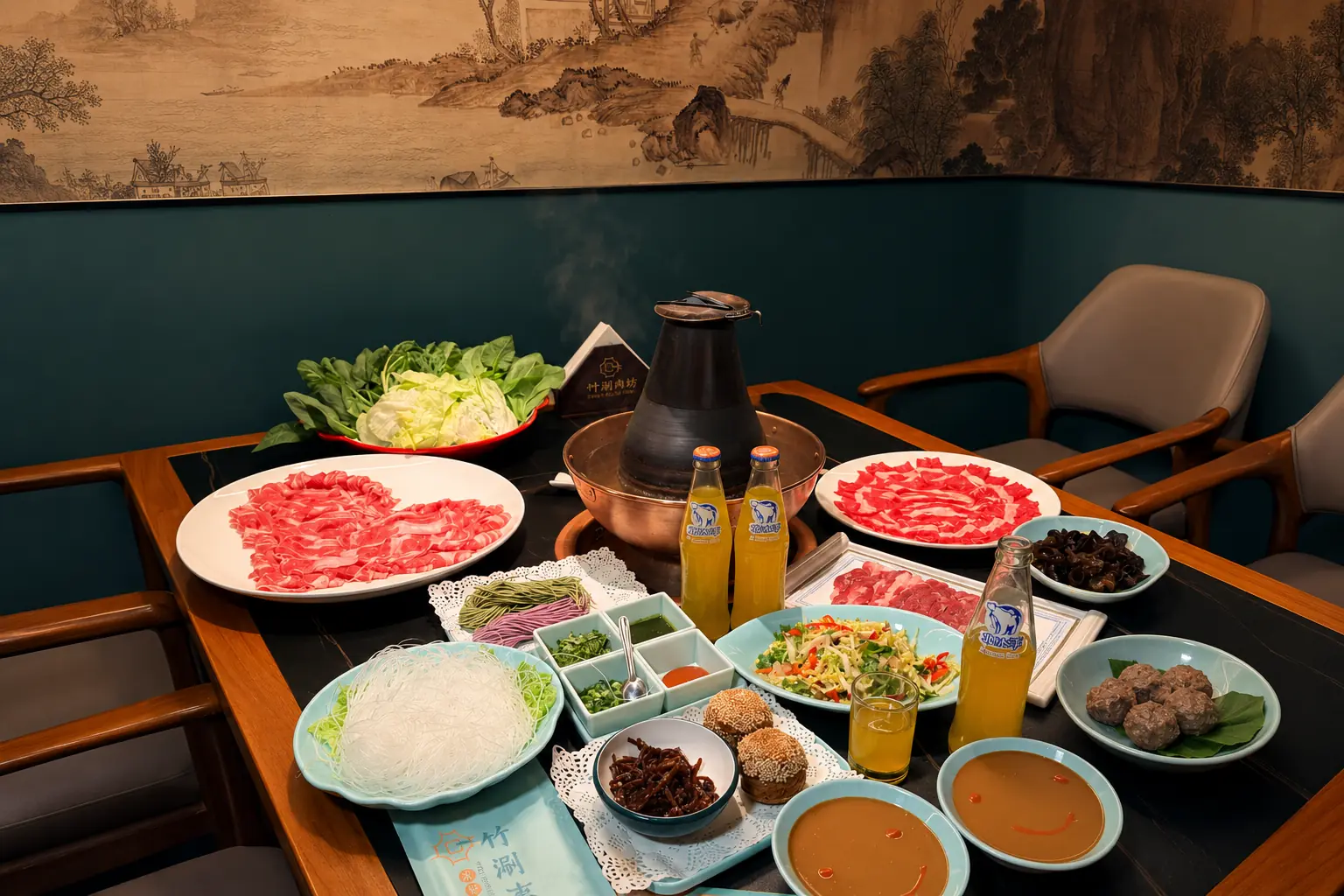
Beibingyang is as much Beijing table nostalgia as it is orange soda.
Beibingyang (北冰洋), often translated as Arctic Ocean, is Beijing's most recognizable local soda: polar bear logo, orange-blue-white design, glass bottle, and tangerine-orange flavor. The Visit Beijing article sourced from China Daily traces the brand to an old Beijing ice-making factory and describes its 1980s heyday before the local brand faded during the mid-1990s Pepsi joint-venture era. It later returned to Beijing shelves in the early 2010s after the brand was revived.
Today, travelers may see Beibingyang in Beijing skewer shops, hotpot restaurants, old-style snack shops, night-market settings, and neighborhood eateries. It is not a serious tasting beverage; it is table atmosphere. A cold bottle beside lamb skewers, chicken wings, sesame-paste hotpot, fried snacks, or Beijing street food does more cultural work than the flavor alone.
If you want a photo, look for the glass bottle. Cans and plastic bottles are more convenient, but much of the Beijing memory sits in the cold glass, bubbles, polar-bear mark, and small-restaurant tabletop.
Jianlibao and the 1984 Sports Drink Story
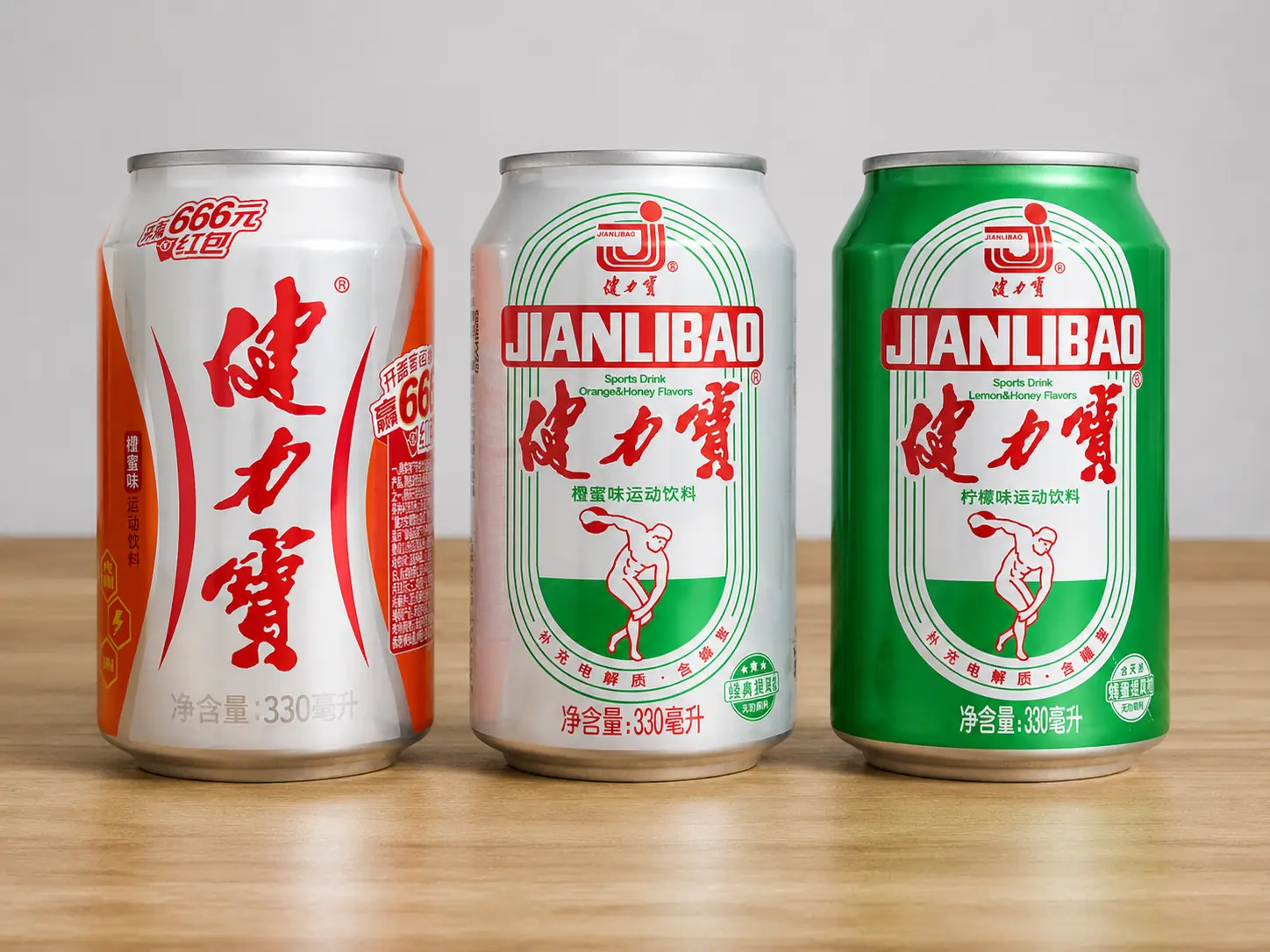
Jianlibao carries a national sports-drink story rather than one single city table.
Jianlibao (健力宝) is different from ordinary city orange soda. It belongs to China's sports-drink memory. The official Jianlibao brand article says the drink was born in 1984, became the dedicated drink of China's delegation at the 23rd Los Angeles Olympic Games, and launched its "Chinese magic water" image. A time-honored brand museum page also links Jianlibao's early sports-drink development to alkaline electrolyte research and the 1984 Olympics.
For travelers, the interesting part is the era and the sports story. Jianlibao is not tied to one city snack table the way Bingfeng is tied to Xi'an. You are more likely to meet it in convenience stores, supermarkets, online shops, nostalgia displays, or cans that use the classic white, green, and orange visual language. The flavor often suggests citrus, honey, and soda, with electrolyte marketing in the background.
Do not read that as a health recommendation. In a travel article, Jianlibao is a cultural drink to taste once, not a medical hydration plan or a performance supplement. Buy a can if you see the classic design and want to understand an old national-brand story.
Dayao, Big Bottles for Northern Tables
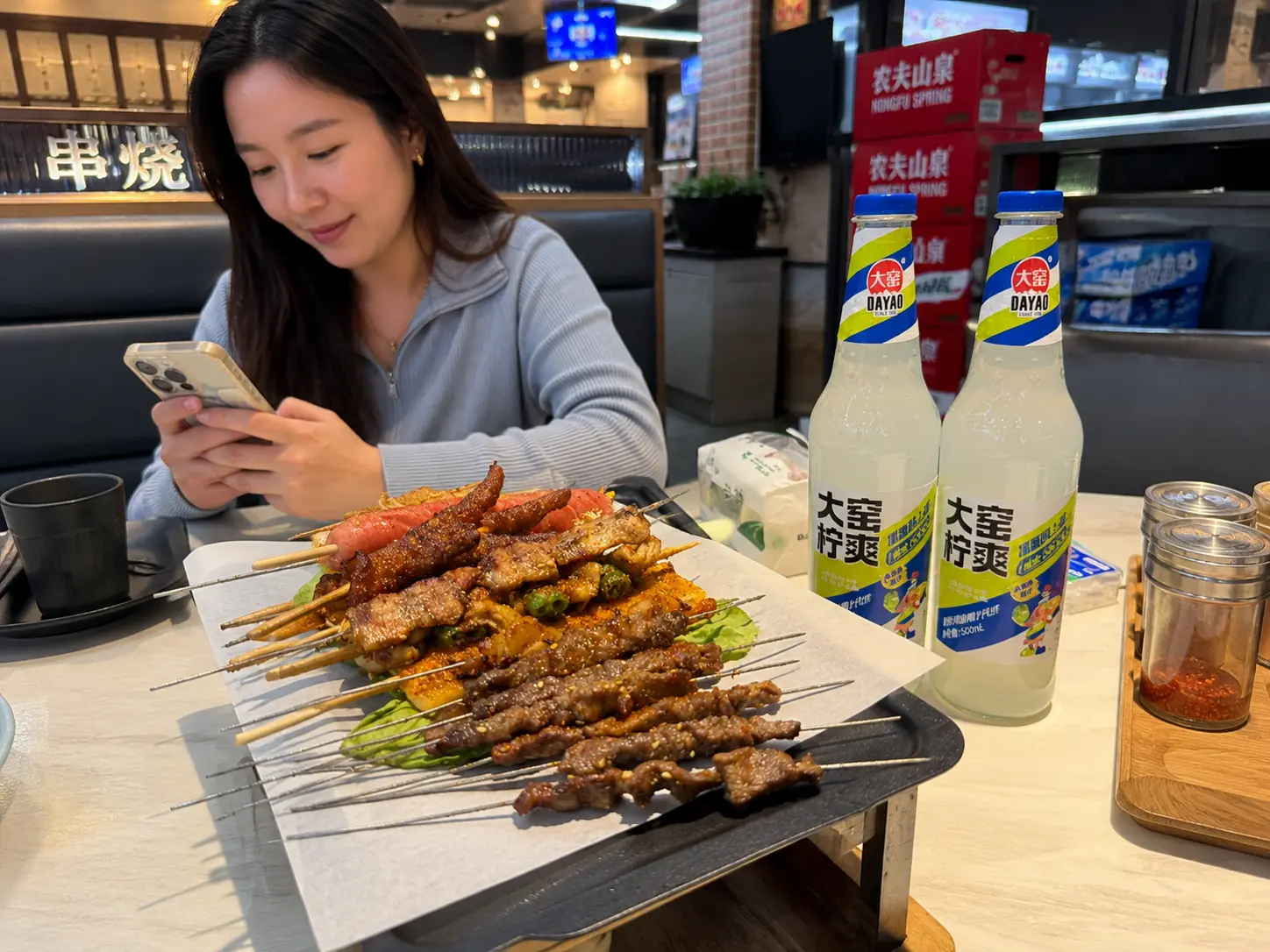
Dayao is built for shared restaurant tables, especially barbecue and hotpot.
Dayao (大窑) is easier to understand at a restaurant table than on a tasting note sheet. The official Dayao website presents the brand as a northern Chinese beverage business with roots in the 1980s and a category built around "big soda." Its current footprint is broader than one city, with multiple production bases serving northern and regional restaurant markets.
For travelers, the brand signal is clear: large glass bottle, restaurant channel, sharing, barbecue, hotpot, northern food, and a lively table. Dayao is not always the bottle you grab from a convenience-store fridge. It is more often the big bottle sitting beside grilled skewers, hotpot, northeastern dishes, Inner Mongolian-style restaurants, or casual northern dining.
Check the size and price before ordering. A big bottle makes sense for a group; it can be too much for one person. It is still a sweet carbonated drink, so families and travelers watching sugar intake should treat it as a shared taste, not a water substitute.
Laoshan Cola and Qingdao's Herbal Twist
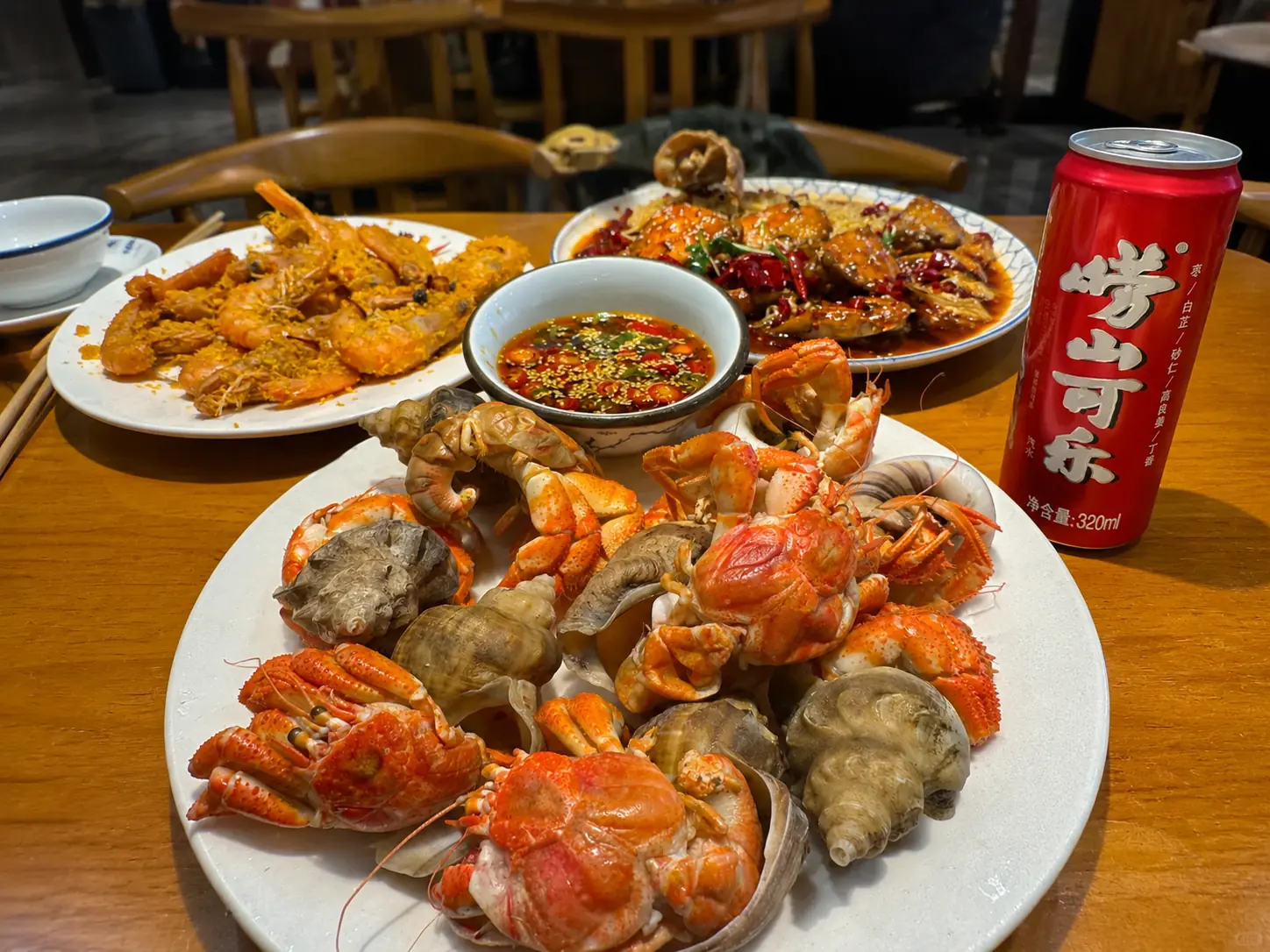
Laoshan Cola is a local non-alcoholic option when Qingdao food does not call for beer.
Laoshan Cola (崂山可乐) is one of Qingdao's most conversation-starting local drinks. A Laoshan brand page traces the Laoshan soda business to 1953, while the later cola-style drink became one of China's early homegrown cola memories connected with Qingdao's beverage history. Many descriptions emphasize its distinctive formula and flavor, which drinkers often describe as cola plus herbs, spice, or a light traditional-medicine note.
Do not expect a copy of international cola. The first sip may feel familiar, then a little strange: sweet cola shape, herbal aroma, spice, and a slightly medicinal edge. Some people love that; others only need one taste. That is exactly why it is useful as a travel drink. It tells you something about Qingdao beyond beer.
If you are in Qingdao eating seafood, dumplings, ribs rice, or a casual local meal and do not want alcohol, Laoshan Cola is a good local alternative. It is a smaller, more divisive memory than Tsingtao beer, but that makes it more fun to try once.
Hankow Er Chang and Retro Soda Revivals
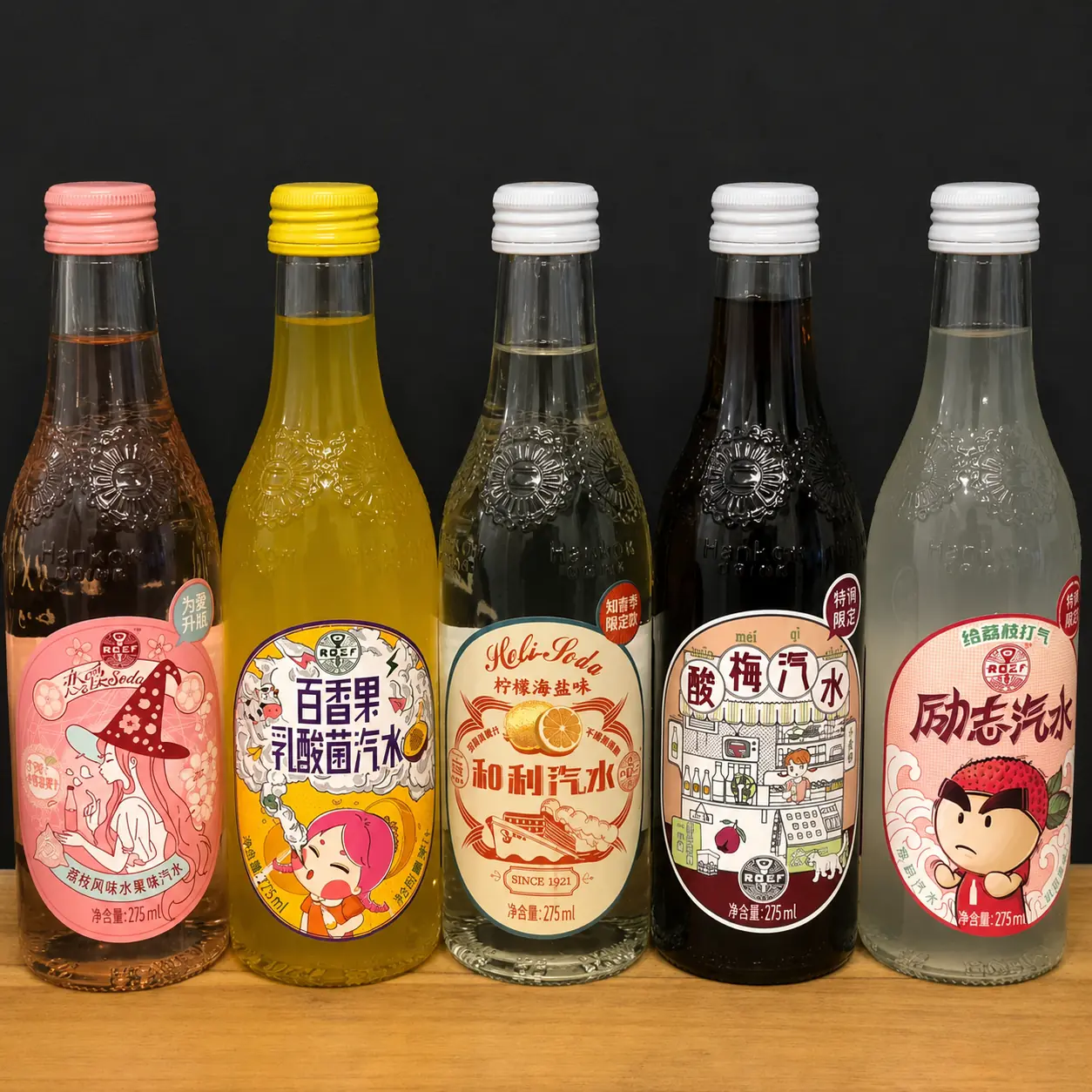
Hankow Er Chang shows how old local soda memories can return with modern packaging.
Hankow Er Chang (汉口二厂) represents a different pattern: an old local soda memory revived for younger consumers. Asia Times reported in 2019 that "Er Chang" means the second factory, and that the old state-run soda brand from Hankou in Wuhan was once a local lifestyle symbol. The original factory story faded around the turn of the millennium, while the modern brand returned as a revival with new packaging, private-company energy, and internet-era marketing.
The point is not that Hankow Er Chang is more traditional than Bingfeng or Beibingyang. It shows how Chinese local soda can move from older memories into modern retail, social media, and city-brand aesthetics. Orange, lychee, sour plum, lactobacillus, peach, cherry blossom, and other creative flavors can sit beside retro fonts and glass-bottle styling.
You will see similar logic in other old or revived local drinks, such as regional fruit sodas, domestic colas, and city-branded beverage lines. Travelers do not need to complete the full checklist. If locals are ordering it, if the restaurant fridge clearly features it, or if the packaging has a strong city link, it is worth one bottle.
← swipe to compare all options →
Most classic city table
Bingfeng or Beibingyang
- ✓Best when the soda appears with the local food already in front of you.
- —Flavor is simple; the city context matters more than complexity.
Xi'an and Beijing
Best nostalgia story
Jianlibao
- ✓Best if you want a national-brand story connected with Chinese sports history.
- —Do not treat it as a travel health drink just because it has sports-drink branding.
1984 sports-drink memory
Best group bottle
Dayao
- ✓Best for barbecue, hotpot, and shared casual meals.
- —Check the bottle size before ordering if you are eating alone.
Northern restaurant tables
Most unusual first sip
Laoshan Cola
- ✓Best if you like trying flavors that feel local, odd, and memorable.
- —Do not expect it to taste like a standard global cola.
Qingdao herbal cola
These bottles make most sense beside a regional snack or casual night meal; the Chinese street-food and dapaidang guide helps you choose the setting before you order.
Where to Buy and How to Order
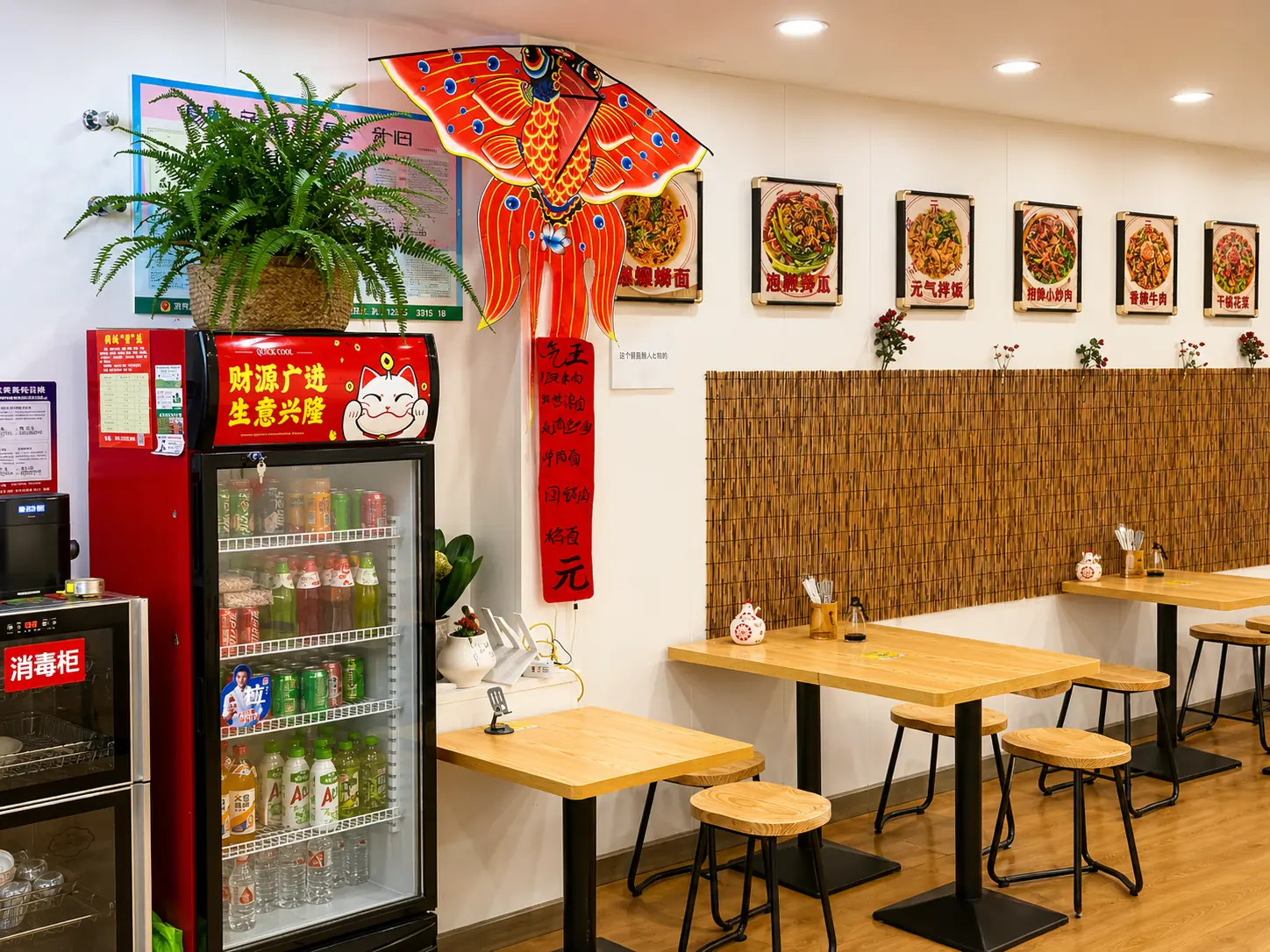
Restaurant fridges are often the easiest place to spot the local bottle.
The easiest places to find local Chinese sodas are snack shops, restaurant fridges, supermarkets, convenience stores, tourist-product shops, and retro beverage counters. Do not ask a server, "Do you have Chinese local soda?" That phrase will not help much. Show the Chinese brand name on your phone, point at the fridge, or ask what cold drinks they have.
| Setting | Most Likely Finds | What to Check |
|---|---|---|
| Xi'an snack shop | Bingfeng | Glass bottles may need to be finished in the shop. |
| Beijing neighborhood eatery | Beibingyang | Cold glass bottles feel the most local. |
| Northern barbecue or hotpot | Dayao | Look at bottle size; it is often made for sharing. |
| Qingdao restaurant or supermarket | Laoshan Cola | Expect herbal notes rather than standard cola flavor. |
| Convenience store or supermarket | Jianlibao, Beibingyang, and some regional brands | Check sugar, caffeine, size, and whether it is chilled. |
| Retro drink shop or trendy local retail | Hankow Er Chang and revived labels | Prices may be higher than ordinary restaurant soda. |
If you can choose between glass bottle and can, choose glass bottle for atmosphere and can for portability. Many old-style glass bottles are return bottles, so small shops may expect you to drink them on site.
Sugar, Caffeine, and Family Safety Notes
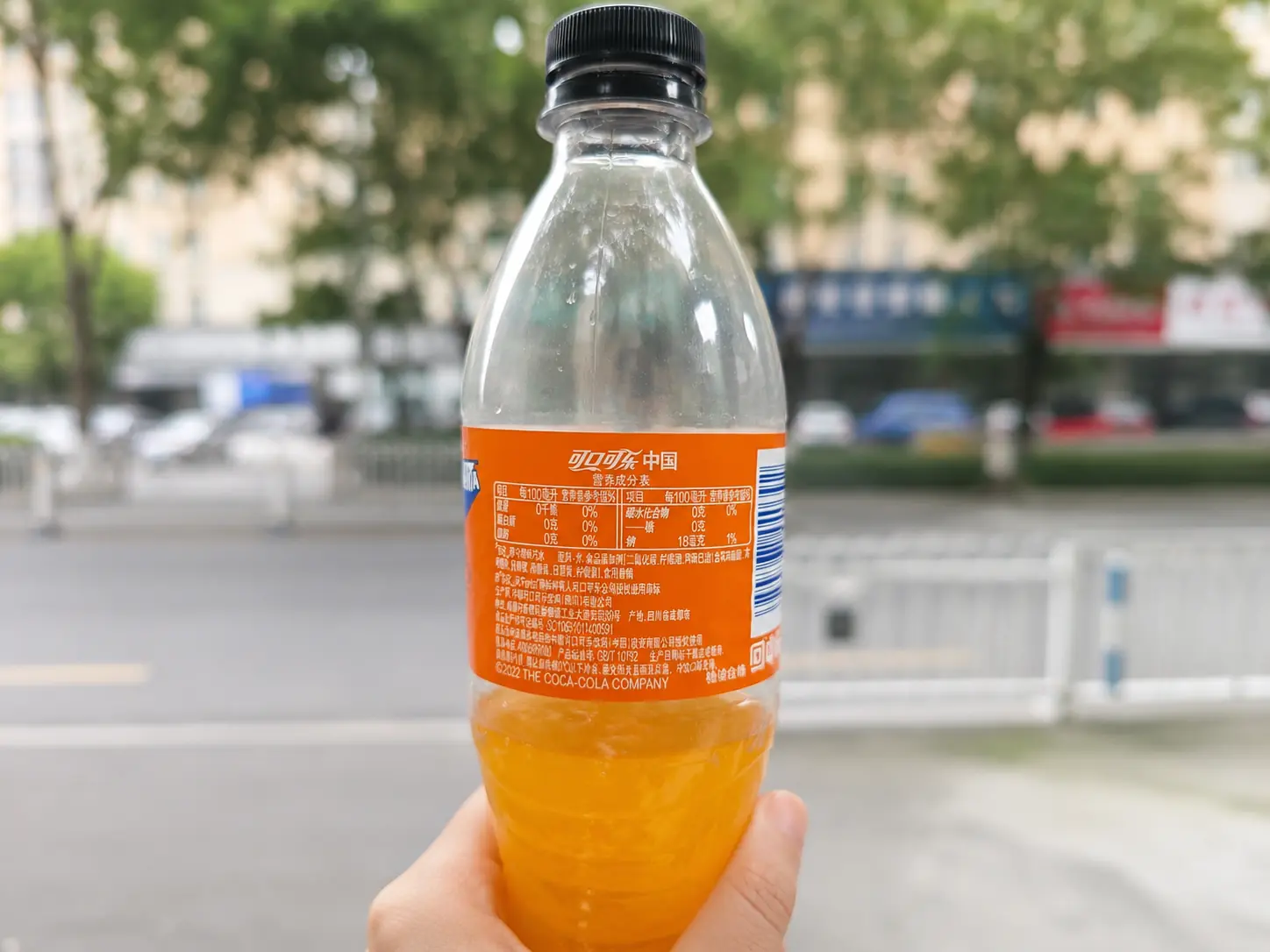
Local and nostalgic still means you should check sugar, caffeine, and bottle size.
Local soda can be culturally interesting and still be a sweet drink. Do not assume "time-honored brand," "domestic brand," "sports drink," or "local specialty" means low sugar, caffeine free, or especially suitable for children. Many orange sodas are sugary; cola-style drinks may contain caffeine; sports-drink branding does not make a bottle a medical hydration solution.
For children or travelers watching sugar intake, treat local sodas as tastes. At a group table, order one bottle and share small pours. You get the city flavor without asking every person to finish a full sweet drink.
If caffeine matters for you, be extra careful with colas, energy-style drinks, tea sodas, and some sports drinks. Check the Chinese ingredient label, look for caffeine-related wording, and choose water or tea if the label is unclear.
Useful Phrases for Ordering Local Soda
Save the Chinese brand names on your phone and point to them. The pronunciation help below is for quick ordering only.
| English | Chinese | Pinyin | Say It Like… |
|---|---|---|---|
| Bingfeng soda | 冰峰 | bing feng | bing fung |
| Beibingyang or Arctic Ocean soda | 北冰洋 | bei bing yang | bay bing yahng |
| Jianlibao | 健力宝 | jian li bao | jyen lee baow |
| Dayao soda | 大窑 | da yao | dah yaow |
| Laoshan Cola | 崂山可乐 | lao shan ke le | laow shahn kuh-luh |
| Hankow Er Chang soda | 汉口二厂 | han kou er chang | hahn koh er chahng |
| Do you have it cold? | 有冰的吗? | you bing de ma | yo bing duh mah |
| The glass-bottle one. | 玻璃瓶的。 | bo li ping de | baw lee ping duh |
| Can I take it away? | 可以带走吗? | ke yi dai zou ma | kuh yee dye dzoh mah |
| Does this contain caffeine? | 这个有咖啡因吗? | zhe ge you ka fei yin ma | juh-guh yo kah-fay-yin mah |
Frequently Asked Questions
Start by city, not by national ranking. Try Bingfeng in Xi'an, Beibingyang in Beijing, Laoshan Cola in Qingdao, Dayao at a northern restaurant table, Jianlibao when you see the classic can, and Hankow Er Chang if you are in Wuhan or a retro drink shop.
Beyond This Guide
Use this article alongside food guides for Xi'an snacks, Beijing restaurants, Qingdao food, Wuhan food, hotpot, barbecue, sour plum drink, soy milk, Chinese beer, and non-alcoholic dining. Its job is to make soft drinks part of the food route, especially for travelers who do not drink alcohol, travel with children, avoid spicy food, or simply want one more local table detail.
© gochinafreely.com — Original guide by Go China Freely.