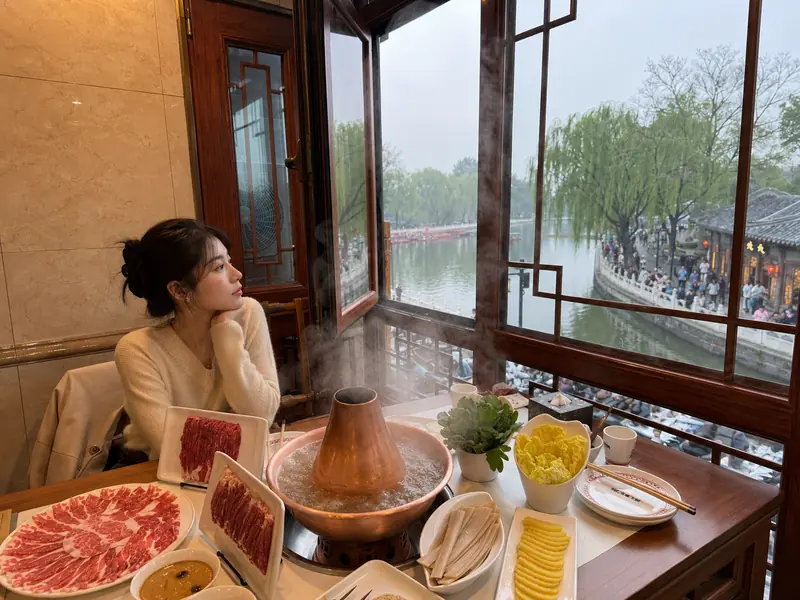
Beijing copper-pot mutton hotpot (涮羊肉) looks almost too simple: a tall copper pot, clear broth, paper-thin lamb, and a bowl of thick sesame sauce. That simplicity is the point. This is northern hotpot at its most direct: the broth stays quiet, the lamb has nowhere to hide, and the dipping sauce carries the old-Beijing flavor.
Executive Summary
What this guide covers
Copper-pot setup, clear broth logic, lamb choices, sesame sauce, first-order templates, cooking rhythm, and dietary risks.
Best first order
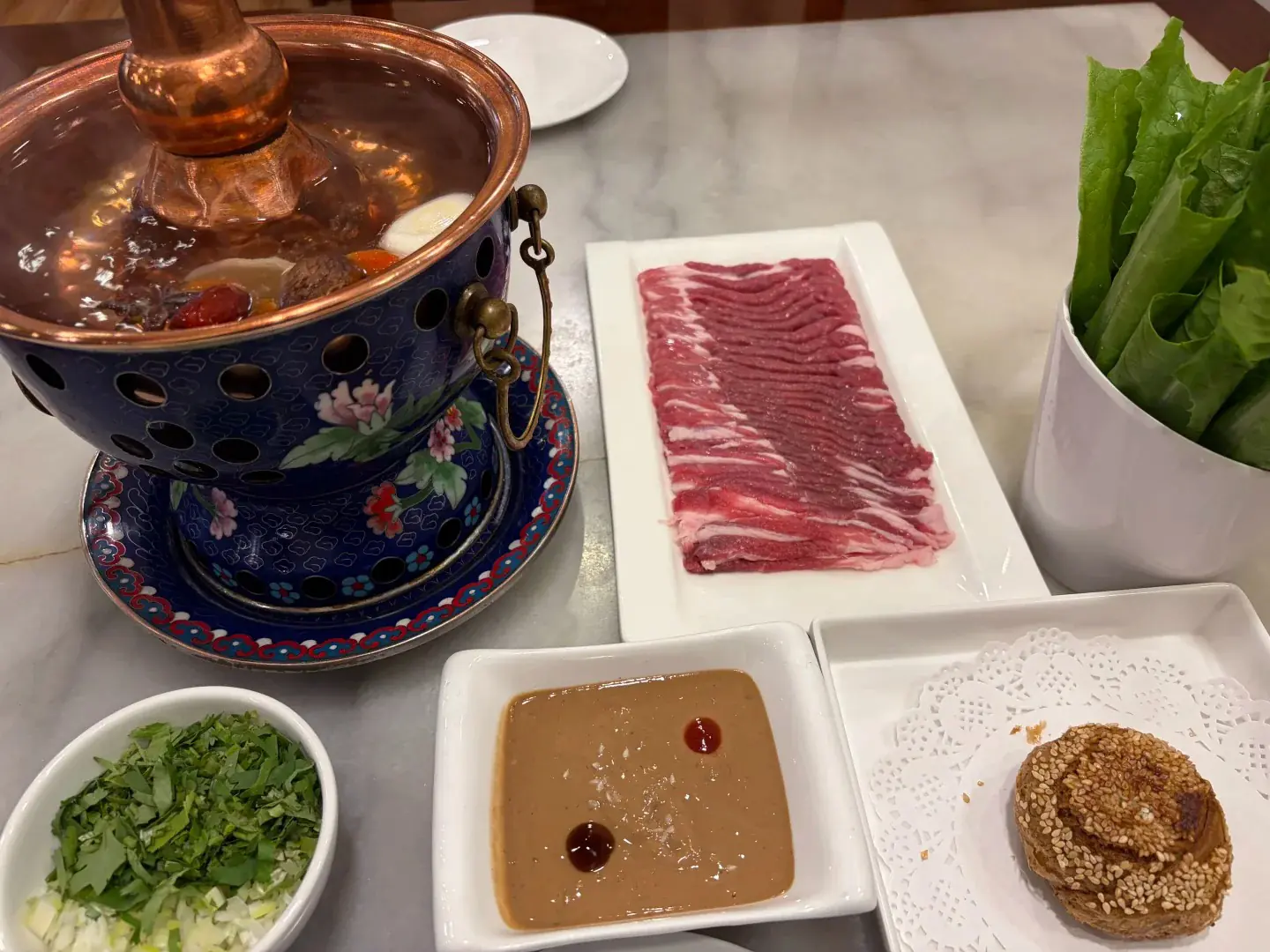
Clear copper pot, two lamb plates, napa cabbage, tofu or frozen tofu, vermicelli or wide starch noodles, mushrooms, sesame sauce, sesame flatbread, and sweet garlic.
Main difference from Sichuan hotpot
Beijing hotpot is not built around chili oil. The pot cooks cleanly, the lamb matters most, and the sesame sauce supplies the main seasoning.
¥80-260
Planning range / person
75-120 min
Comfortable meal pace
Clear
Default broth style
Almost none
Typical spice level
Why Beijing Hotpot Tastes So Plain
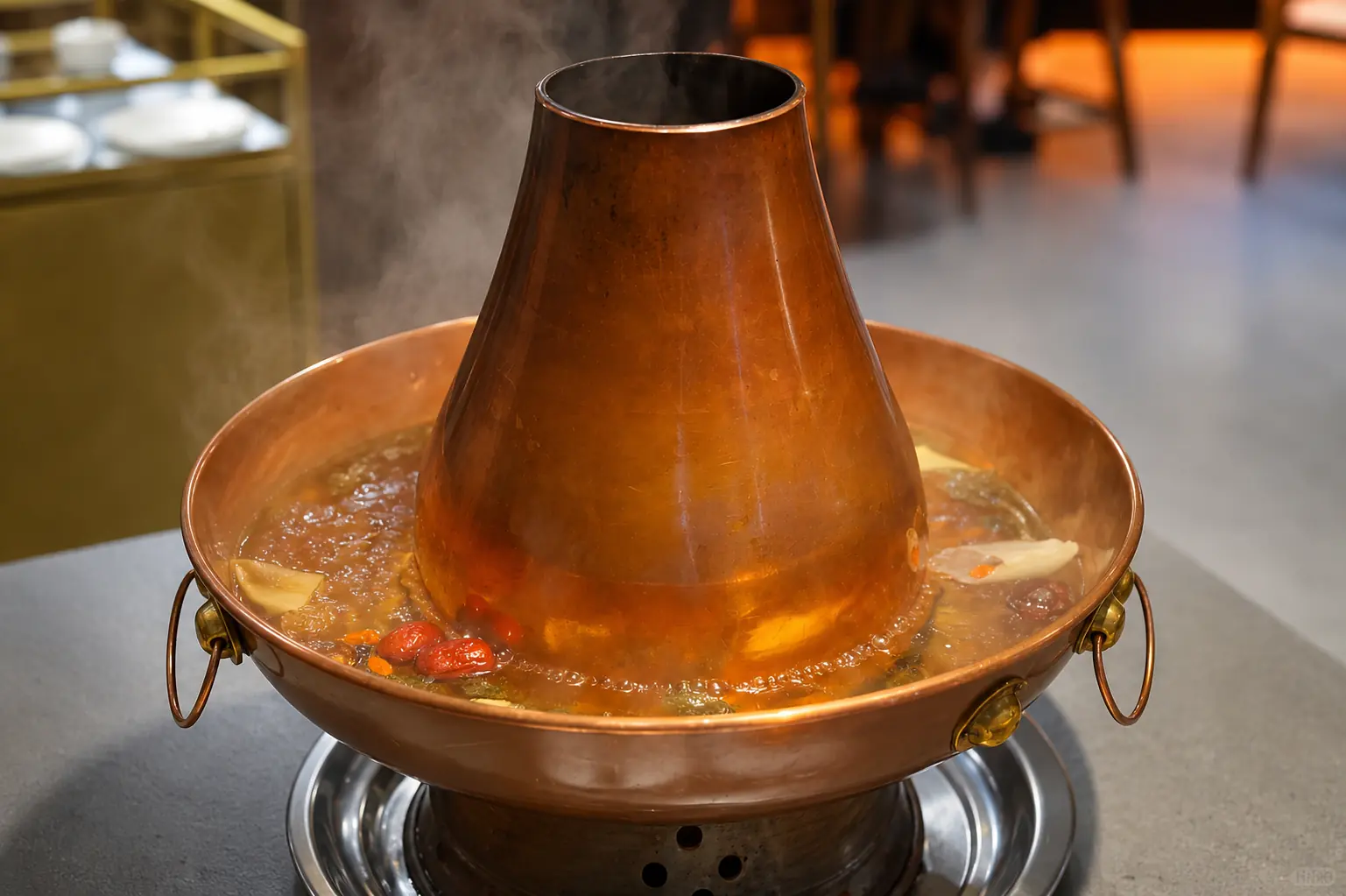
If you arrive after reading about Sichuan or Chongqing hotpot, Beijing mutton hotpot can feel strangely restrained. There is no red-oil surface, no numbing peppercorn hit, and no heavy broth that seasons everything before it reaches your sauce bowl.
That is not a weakness. Old Beijing mutton hotpot works by subtraction: clear broth, thin lamb, a strong sesame-based dip, and a table rhythm that lets everyone cook piece by piece. A Beijing municipal dining page describes tall copper pots as a Beijing icon, and that image still explains the meal better than any menu translation.
Think of it as a lamb dinner, not a soup dinner. The broth heats and cleans; the meat gives the meal its center; the sesame sauce decides how rich each bite becomes.
The Beijing hotpot mindset
Do not judge this meal by broth complexity. Judge it by lamb quality, sauce balance, and whether the table keeps a steady boil without turning the pot into a pile of lost ingredients.
Copper Pots and Clear Broth Logic
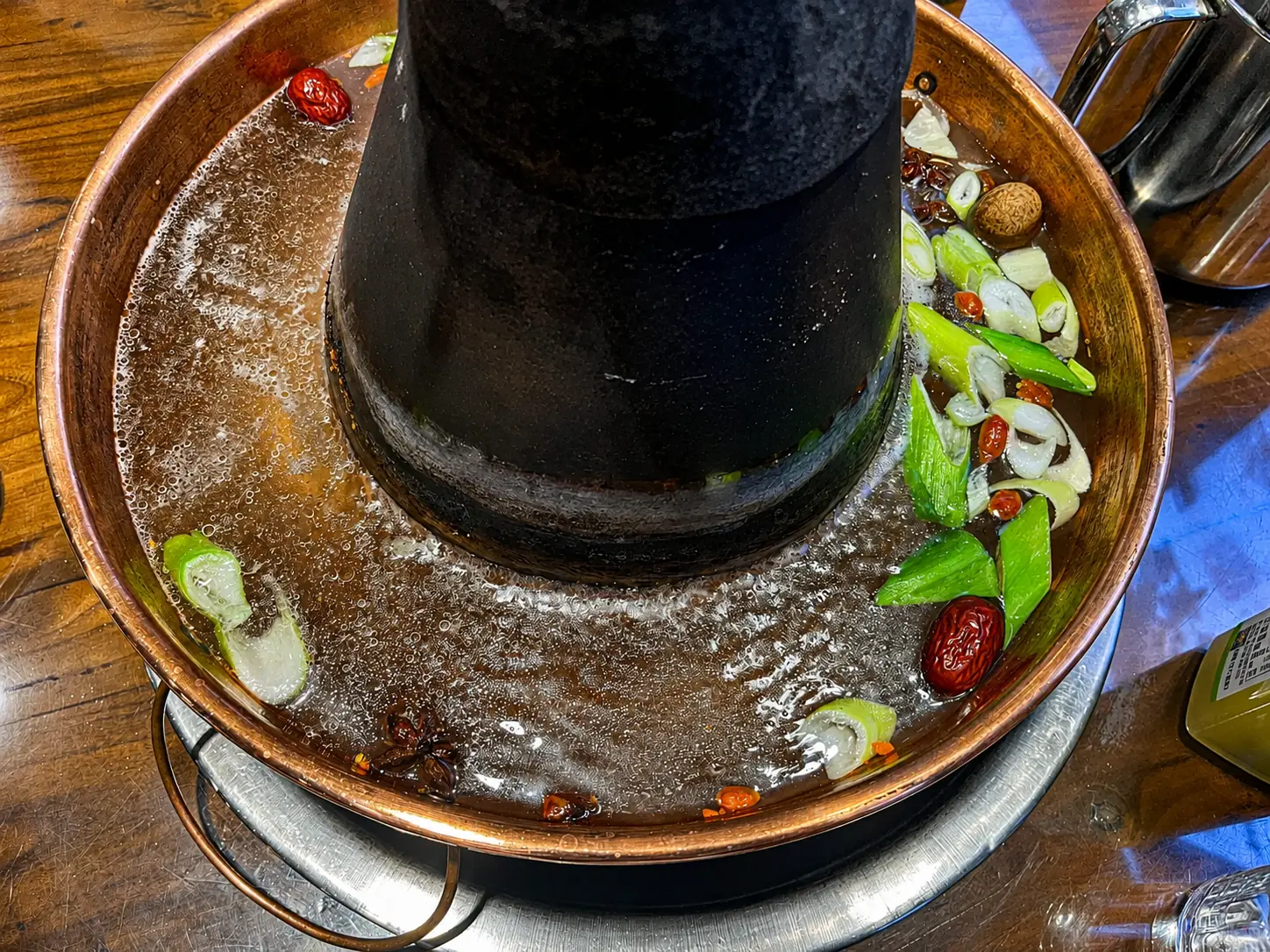
The classic pot is a copper or brass vessel with a central chimney. Traditionally, charcoal heats the middle chamber; many modern restaurants now use electric or induction heat under a copper-style pot. A charcoal pot feels more atmospheric, but an electric setup can still deliver the same basic meal if the broth stays hot and the lamb is good.
The important part is the broth. Traditional Beijing copper-pot hotpot emphasizes clear water with scallions and ginger; some restaurants add goji berries, jujube, or a very light stock. Visit Beijing's copper-pot write-up says this light broth is the real test of lamb quality. In plain English: if the soup is not hiding anything, bad meat becomes obvious.
You can sip a little clear broth if the restaurant serves it that way, especially after lamb has flavored it, but do not treat the pot like a soup course. Its main job is to cook fast and stay clean.
| Element | What It Means | Traveler Tip |
|---|---|---|
| Copper pot | Fast, even heat and old-Beijing table theater | Charcoal is atmospheric; electric heat is common today |
| Clear broth | Usually water or light stock with scallion and ginger | It should not taste like Sichuan red broth or tomato hotpot |
| Central chimney | The visual symbol of northern copper-pot hotpot | Great for photos, but keep sleeves away from steam and heat |
How Lamb Quality Shows Up Clearly
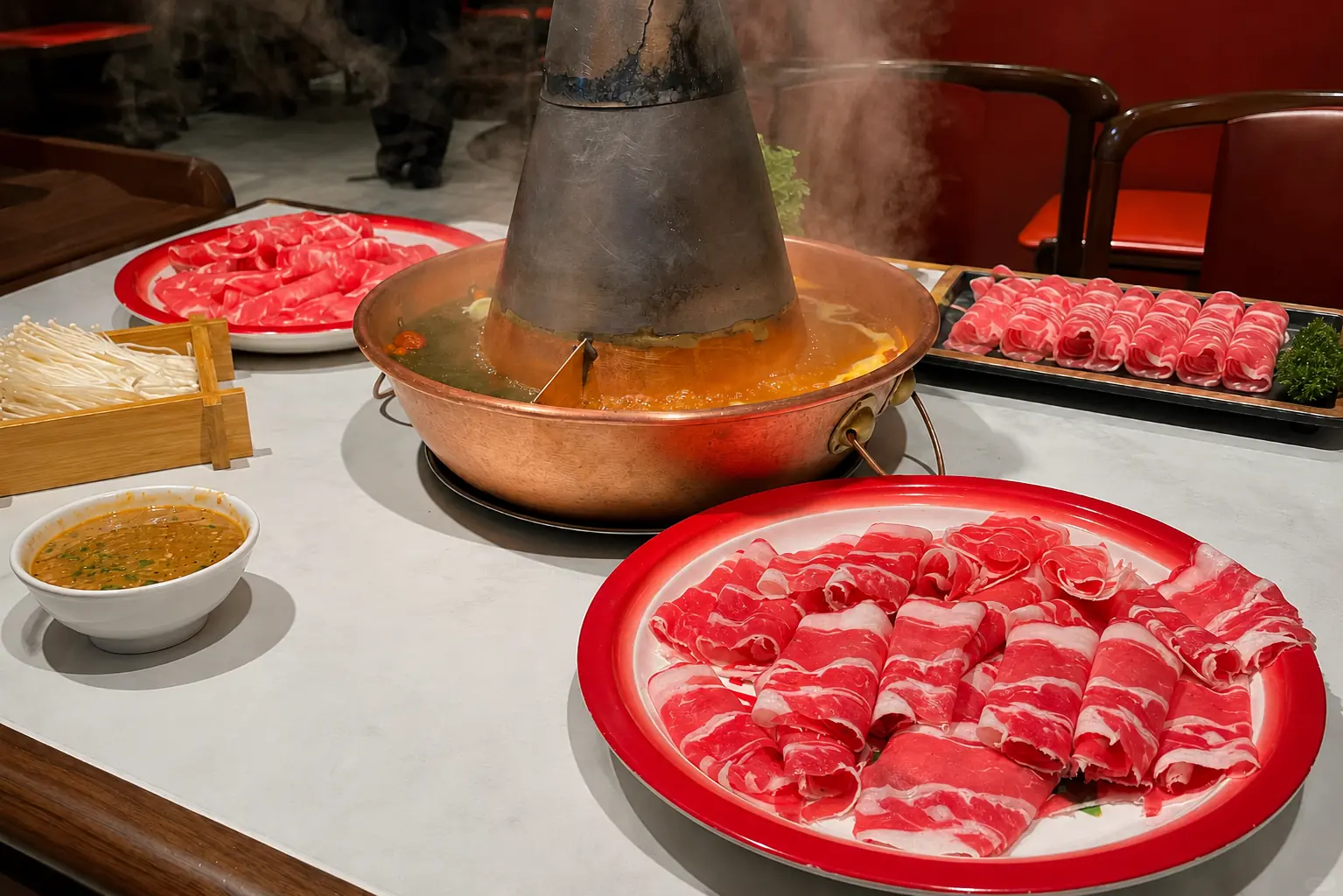
Menus may list hand-cut fresh mutton (手切鲜羊肉), mutton rolls (羊肉卷), upper-shoulder style cuts, leg cuts, or house selections. You do not need to memorize every cut on the first meal. The practical decision is simpler: order one better plate if your budget allows, then add a cheaper roll plate if you need more volume.
Hand-cut lamb usually has clearer texture and a meatier bite. Good slices should look evenly cut, not watery, gray, or covered in freezer frost. Once cooked, they should taste clean and slightly sweet, not muddy or aggressively gamey.
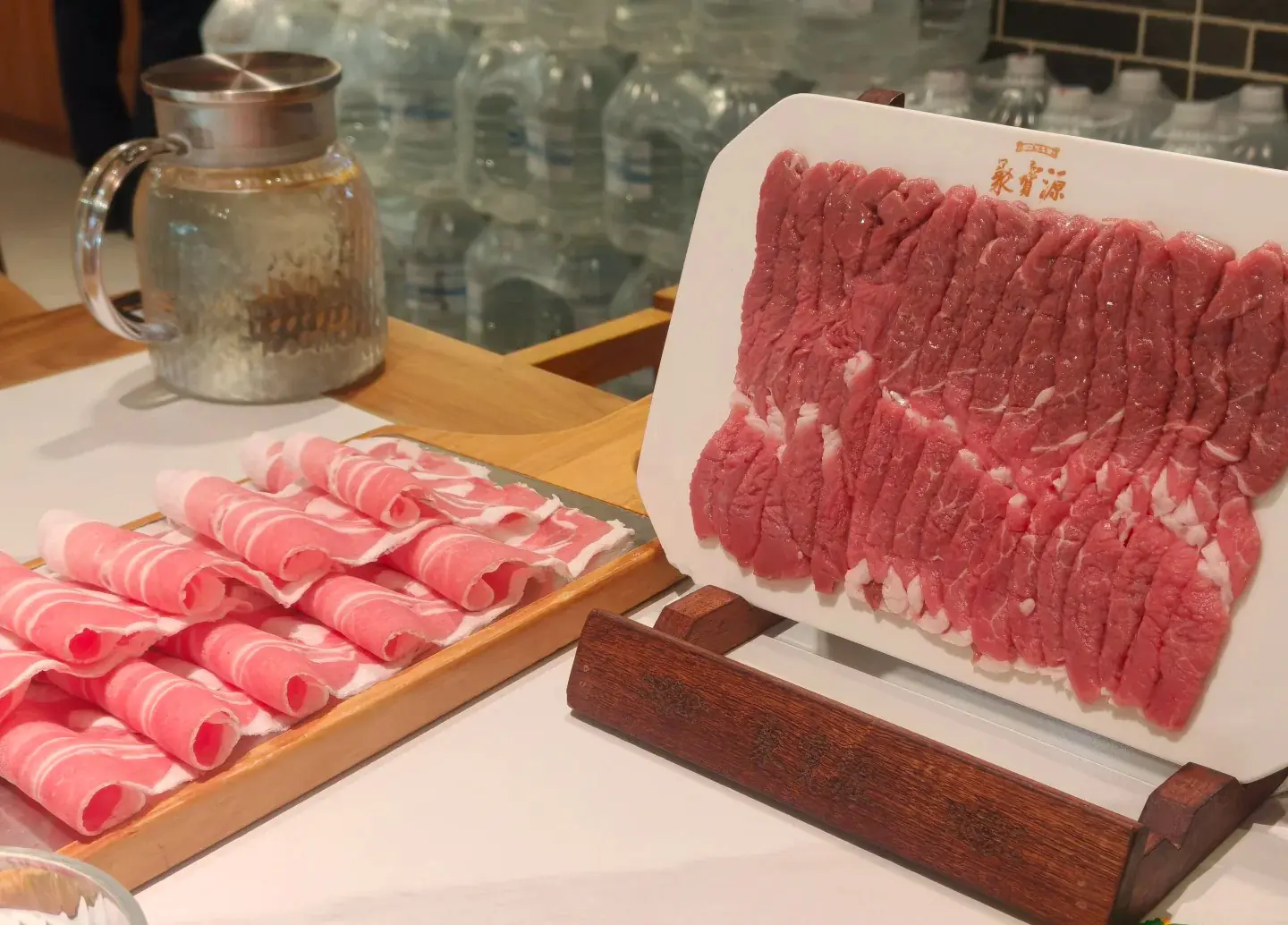
Rolls are cheaper, easy to cook, and completely acceptable for a casual meal. They are useful when you want more food without making the table expensive, but they tell you less about the restaurant than a well-cut fresh plate.
Chinese menus often use 羊肉 broadly, so English translations may say lamb, mutton, or sheep meat. For travelers, the important question is not the English word. It is whether the restaurant sells fresh, well-cut meat and keeps the pot boiling hard enough to cook it quickly.
Decision shortcut
Hand-cut lamb or lamb rolls?
Best first bite
Order one hand-cut lamb plate if the price is comfortable. It shows what the restaurant can actually do.
Best value
Add lamb rolls when you want more food without turning the meal expensive.
Best mixed strategy
For two people, one better lamb plate plus one standard roll plate is usually more useful than one huge premium order.
Sesame Sauce Makes the Whole Meal
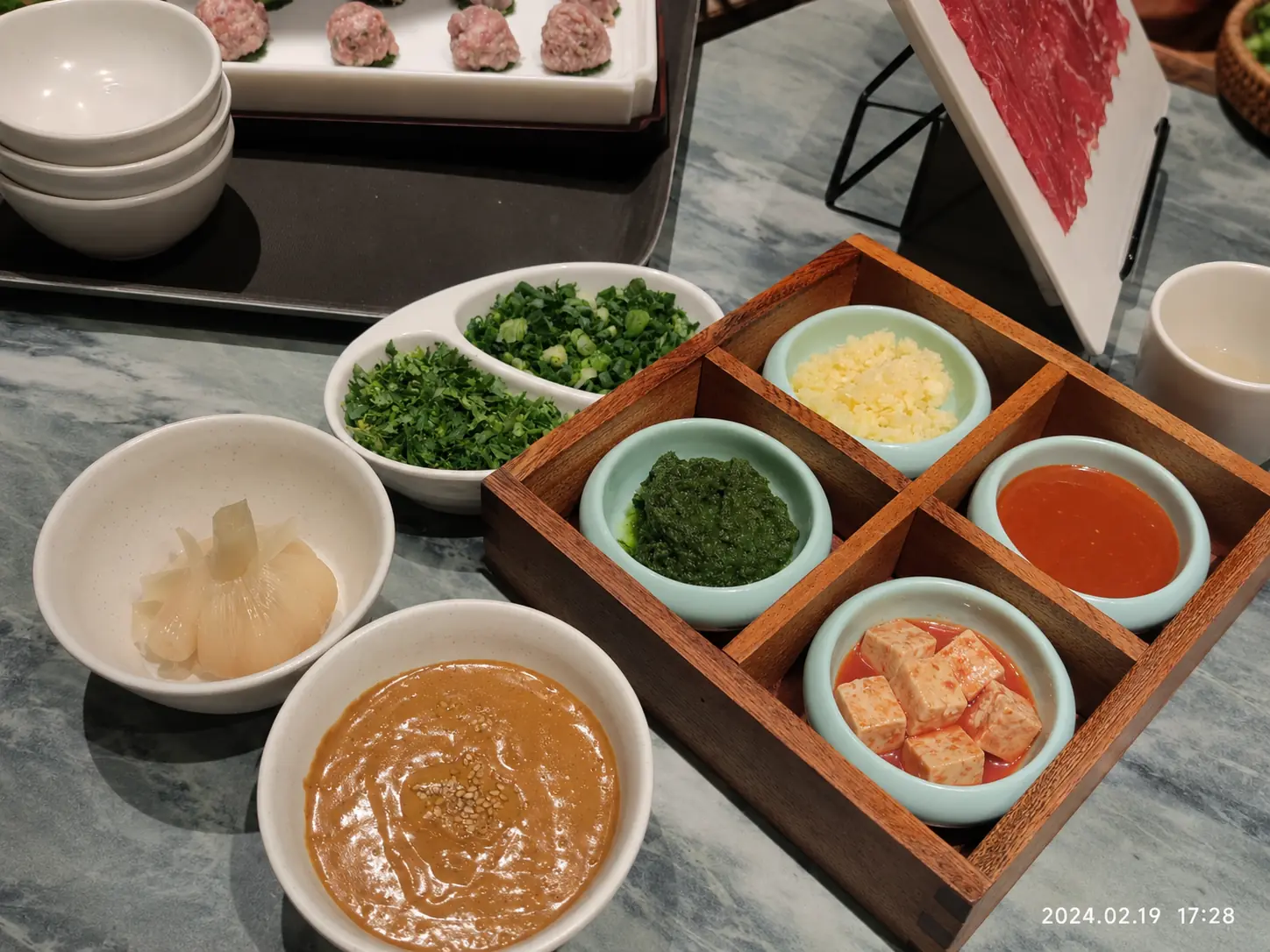
Build the Sauce Base
The base is sesame paste (麻酱), usually loosened with water or stock until it becomes pourable. Fermented tofu (腐乳) and Chinese chive flower paste (韭菜花) add salt, funk, and a sharp northern aroma.
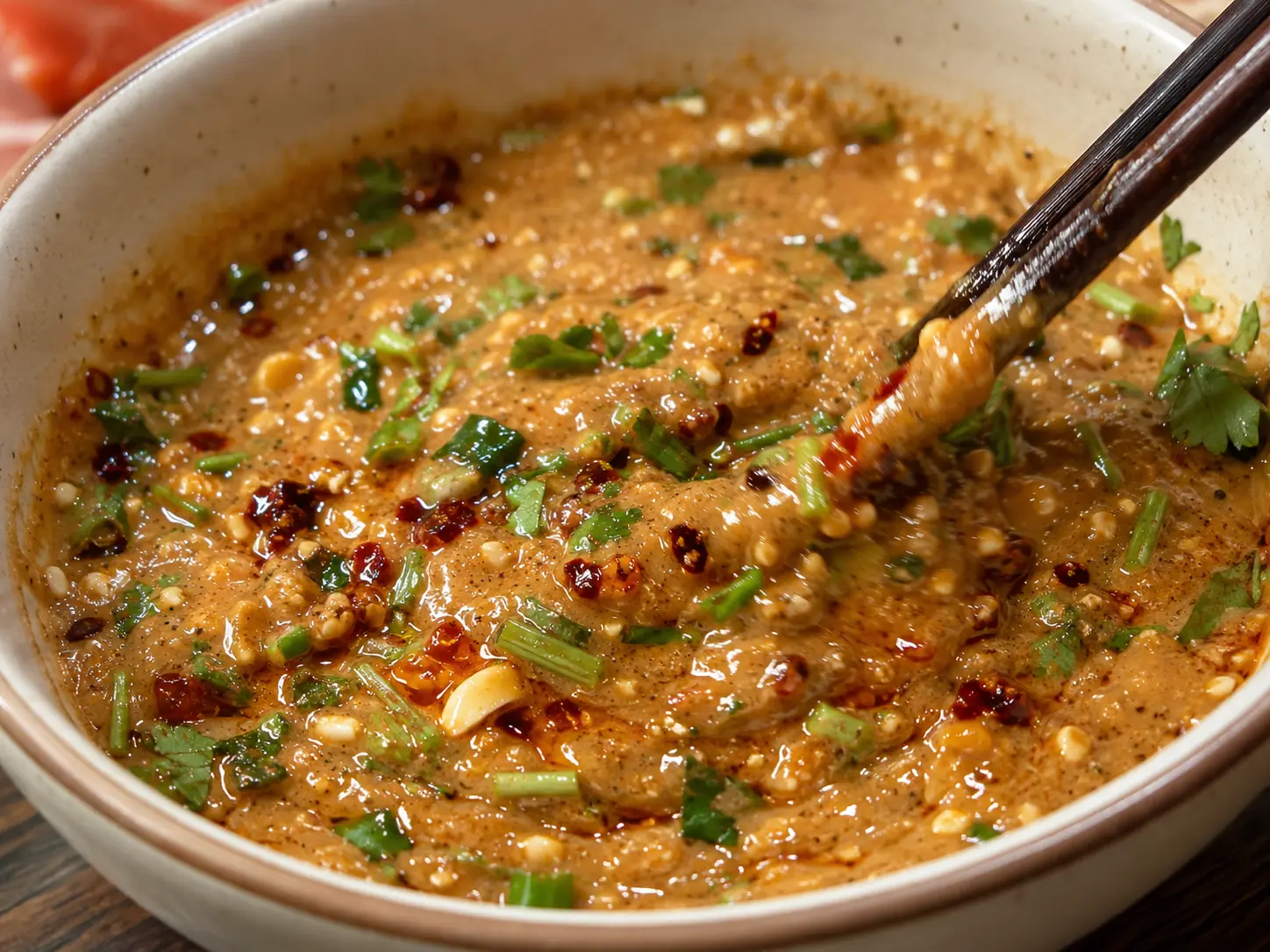
Add Flavor Slowly
Start gently: mix the sesame paste first, then add fermented tofu, chive flower paste, scallion, cilantro, garlic, vinegar, soy sauce, and chili oil in small amounts. If you add everything at once, the sauce masks the lamb.
Sesame is also the biggest allergy flag in this dish. If you cannot eat sesame, Beijing mutton hotpot becomes much harder to enjoy in the classic way. Ask for plain soy-vinegar-garlic sauce only if your allergy risk allows a shared sauce station.
| Sauce Item | Chinese | Role in the Bowl |
|---|---|---|
| Sesame paste | 麻酱 | Richness, body, nutty base flavor |
| Fermented tofu | 腐乳 | Salt, funk, savory depth |
| Chive flower paste | 韭菜花 | Sharp northern grassiness that cuts lamb fat |
| Scallion and cilantro | 葱花 / 香菜 | Freshness and aroma |
| Chili oil | 辣椒油 | Optional fragrance and light heat |
What to Order the First Time
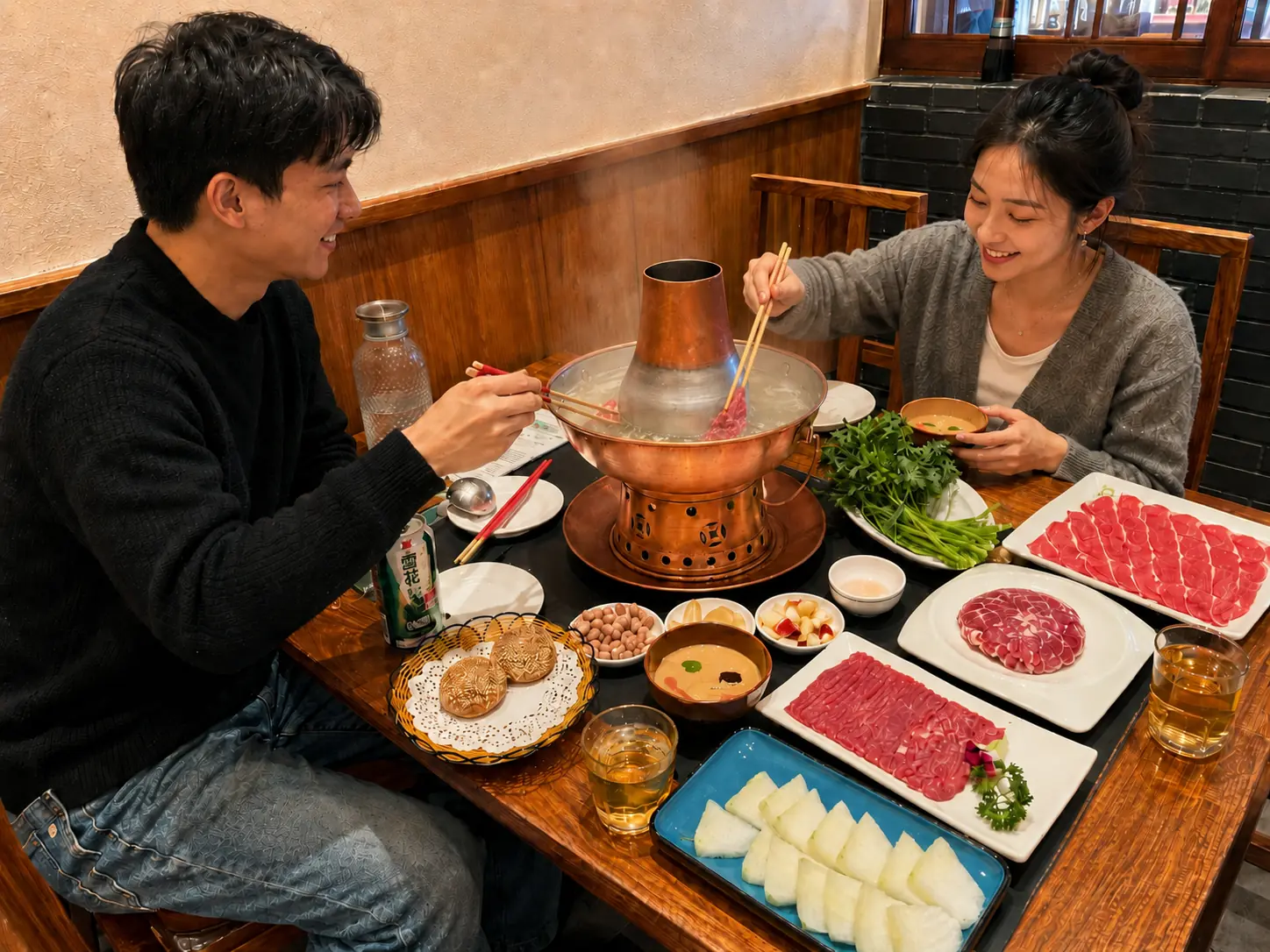
For two first-timers, keep the table focused: clear copper pot, two lamb plates, napa cabbage, tofu or frozen tofu, vermicelli or wide starch noodles, mushrooms, sesame flatbread (烧饼), sweet garlic (糖蒜), and two sesame sauce bowls. That gives you the full structure without burying the pot.
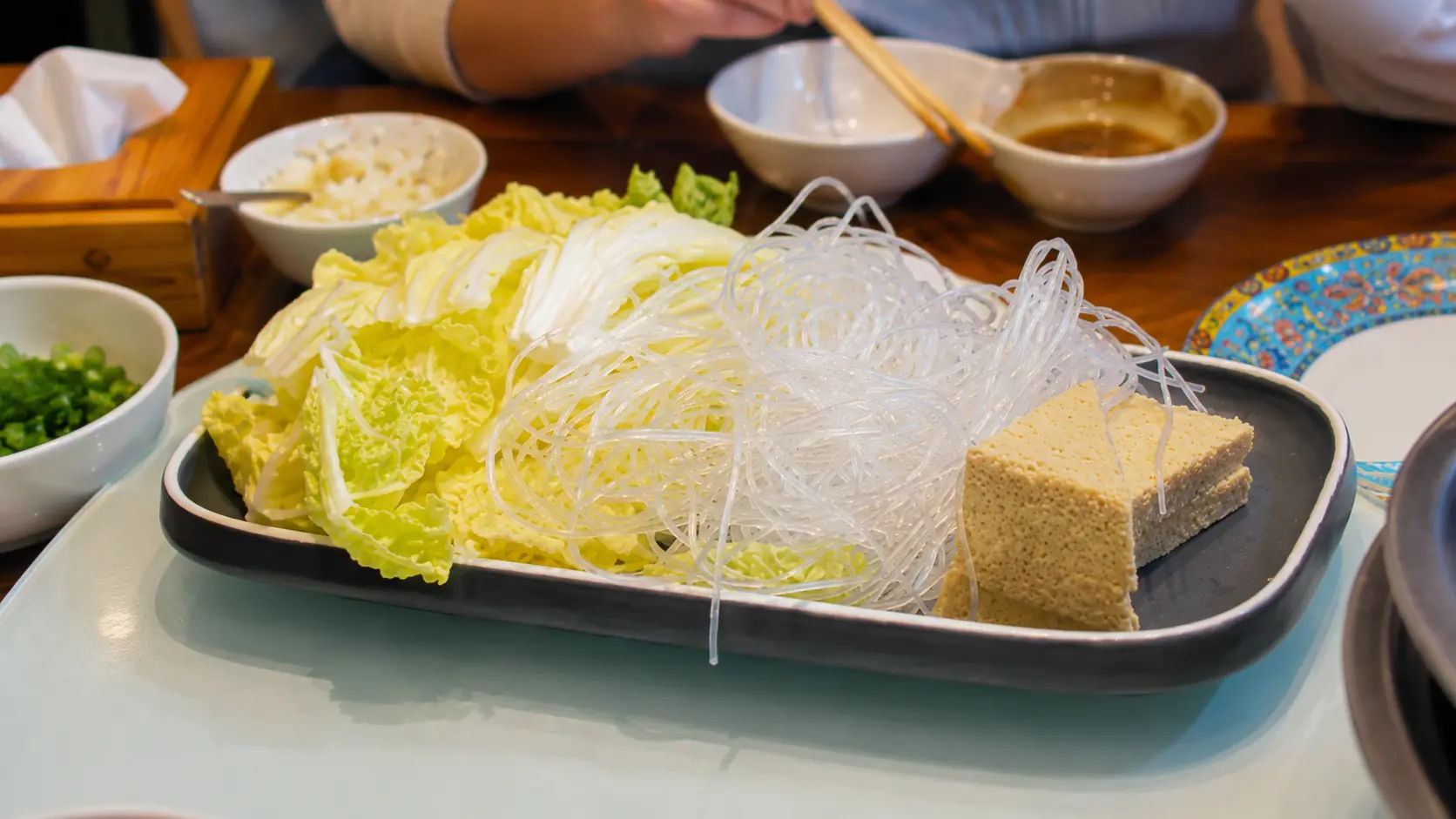
Vegetables and Tofu
Napa cabbage sweetens the broth as it cooks. Frozen tofu soaks up the light lamb flavor. Vermicelli or wide starch noodles are satisfying but should go in late.
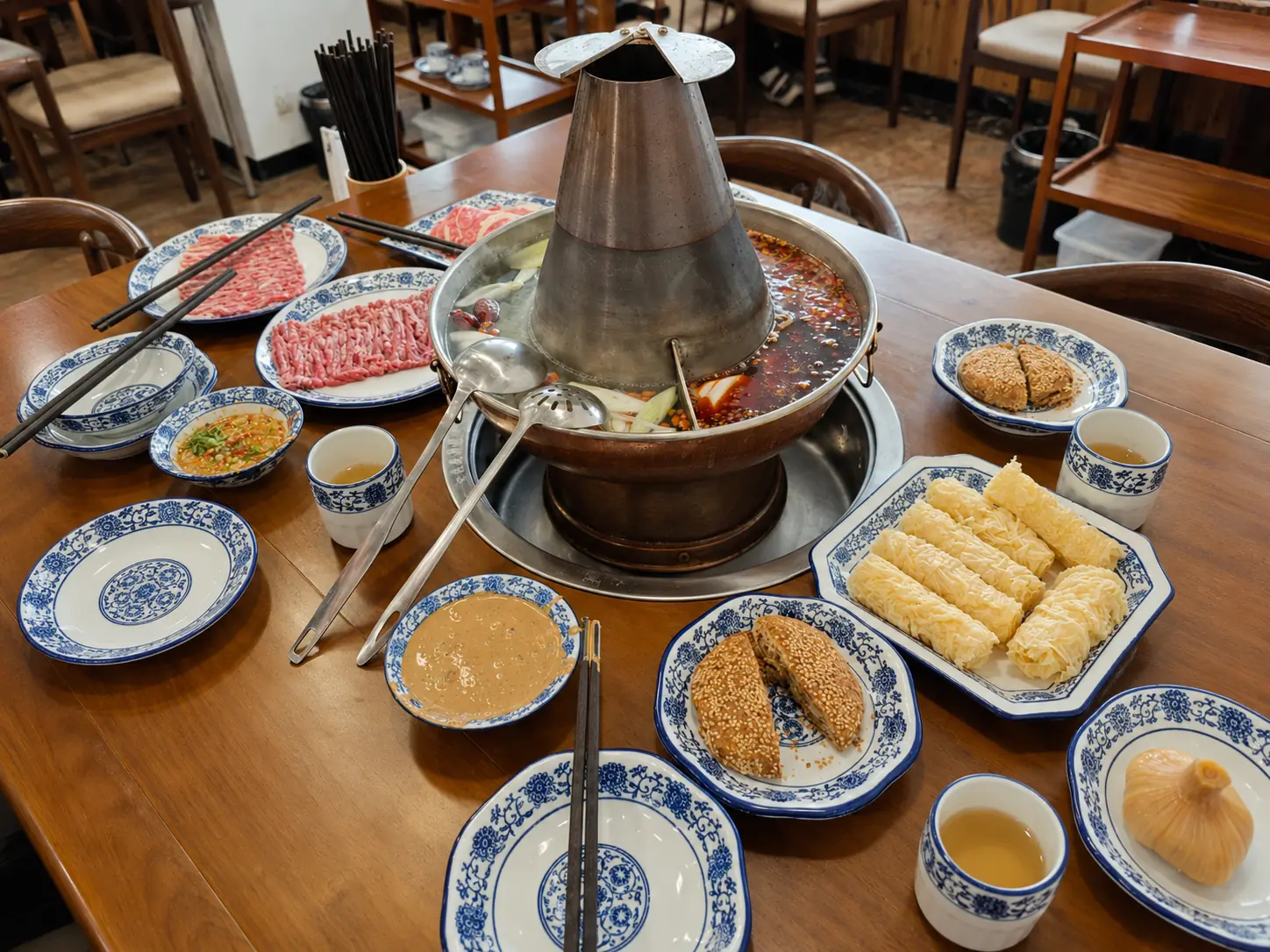
Flatbread and Sweet Garlic
Sesame flatbread and sweet garlic are not decorative extras. They make the meal feel like Beijing rather than generic hotpot, especially when the sauce is rich.
First Order for Two
Start with two lamb plates, one vegetable, one tofu item, one mushroom or starch, sesame sauce, flatbread, and sweet garlic. Add more after you see the table rhythm.
For four people, increase the lamb to four to six plates depending on appetite, then add one beef plate, one mushroom, one tofu item, one leafy vegetable, and one starch. Avoid ordering seafood, heavy meatballs, and every offal item on the first round unless the restaurant is known for them and your table really wants that direction.
- Order one better lamb plate if you want to understand the dish.
- Use cabbage, tofu, mushrooms, and noodles as supporting players.
- Add sesame flatbread and sweet garlic for a more Beijing-style meal.
- Do not dump a dozen unrelated hotpot items into the first order.
- Do not treat the clear broth like a flavor problem to fix with chili.
How to Cook and Eat It
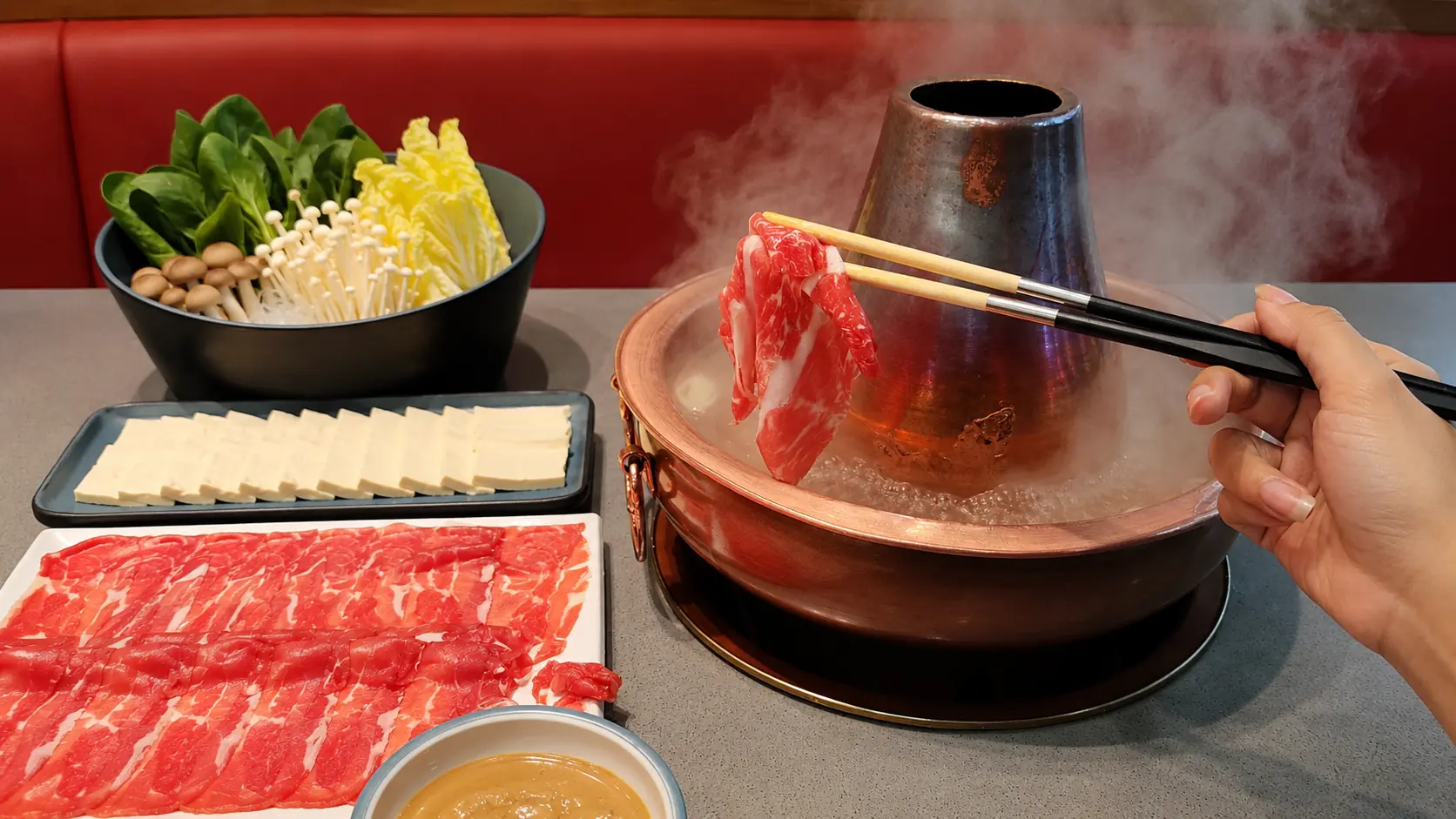
Wait until the pot is fully boiling. Pick up a few slices of lamb with chopsticks or serving chopsticks, swish them in the broth, and pull them out when the red color fades and the edges curl. Thin slices may need only seconds; thicker hand-cut pieces need longer.
Work in small batches. If you drop a full plate of lamb into the pot, the temperature falls, the meat tangles, and everyone starts fishing. Good mutton hotpot is a steady rhythm: swish, dip, eat, talk, repeat.
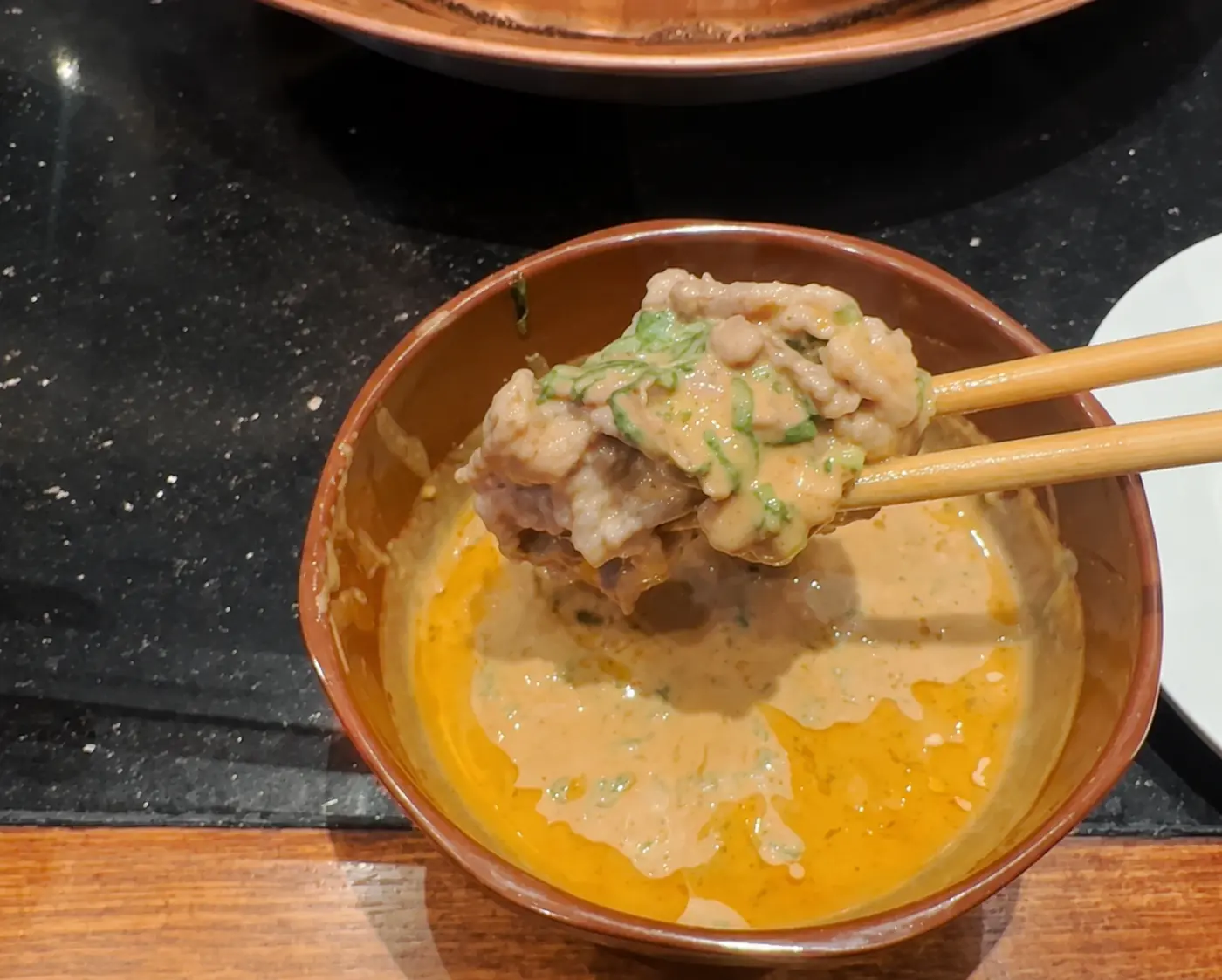
When the lamb is just cooked, take it out and dip it in the sesame sauce before the meat cools. That is where the clean broth and rich sauce meet.
Vegetables can go in after the table has cooked some meat. Cabbage and tofu can stay longer; noodles should go in late; delicate greens need less time. If the restaurant provides raw-meat tongs or serving chopsticks, use them.
| Item | When to Add | How to Judge It |
|---|---|---|
| Thin lamb slices | After a full boil | Color changes and edges curl |
| Napa cabbage | Middle of the meal | Soft but still sweet, not collapsed |
| Frozen tofu | Middle to late | Hot through and full of broth |
| Vermicelli or wide noodles | Late | Soft but not melting into the pot |
If not everyone at the table is careful with raw meat, ask for serving chopsticks (公筷) and keep raw meat away from the tips you put in your mouth.
Beijing Hotpot vs Sichuan and Chongqing
The easiest comparison is this: Sichuan and Chongqing hotpot styles season ingredients in the broth; Beijing mutton hotpot cooks ingredients in the broth and seasons them in the sauce bowl. That one difference changes the whole meal.
Swipe to compare the two hotpot styles
Beijing Mutton Hotpot
Clear-broth lamb logic
- ✓Broth works as a clean cooking medium, not the main seasoning.
- ✓Default spice level is almost none, so lamb quality matters quickly.
- ✓Signature table includes lamb, cabbage, tofu, vermicelli, flatbread, and sweet garlic.
Clean pot, rich sesame sauce
Sichuan and Chongqing
Red-broth seasoning logic
- ✓Broth may include chili, Sichuan peppercorn, beef tallow, fermented bean paste, aromatics, and stock.
- —The default dip often starts with sesame oil and garlic rather than thick sesame paste.
- ✓Common ingredients include beef, tripe, duck intestine, tofu skin, lotus root, and noodles.
Spicy, numbing, oil-driven
Use our Sichuan and Chongqing hotpot guide if you want the spicy version's broth, sauce, and ingredient logic. Use this page when the table is in Beijing and the menu centers on lamb.
Where to Try It in Beijing
This page is about how the dish works, so treat the ideas below as eating contexts, not a ranking. The right choice depends on whether you want old-brand history, halal confidence, hutong atmosphere, or the easiest possible menu.
Donglaishun-Style Brand
History and classic frame
Best for travelers who want a time-honored benchmark, clearer service, and an old-Beijing context. Confirm the branch, wait, and current menu before going.
Niujie Lamb Area
Halal-focused context
Best for halal-focused travelers or anyone who wants a stronger Hui Muslim food setting. Look for clear halal signage and still ask if requirements are strict.
Hutong-Side Copper Pots
Warmer local dinner
Best after a central Beijing walk around Gulou, Shichahai, or nearby lanes. Choose by turnover, clean sauce station, and fresh-looking lamb rather than decor.
Mall or Chain Branches
Easier ordering
Best for families, mixed groups, or travelers who need simpler menus, bathrooms, and service. The tradeoff is usually less atmosphere.
Use the Beijing food guide when you want actual neighborhoods, restaurant names, and a broader dinner plan. For this dish, the better first question is not "Which place is famous?" but "Which setting helps my table order confidently?"
Diet, Halal, and Allergy Safety Notes
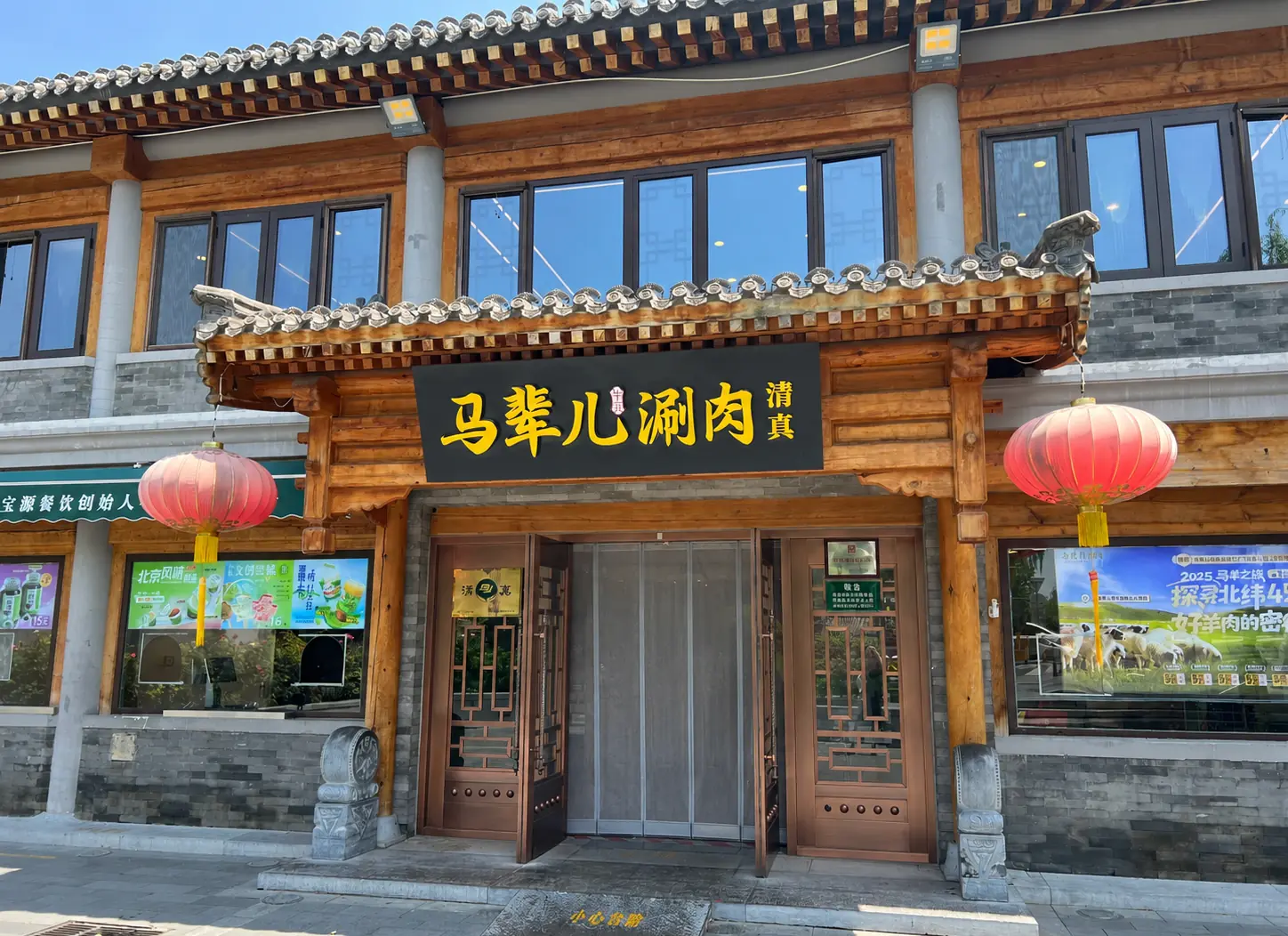
Beijing mutton hotpot has deep ties to Hui Muslim dining, and Beijing's Donglaishun profile describes Donglaishun (东来顺) as a famous time-honored halal brand founded in 1903. The national intangible cultural heritage database also lists Donglaishun instant-boiled mutton technique under beef and mutton cooking techniques, announced in 2008.
That does not mean every copper-pot restaurant is halal. If you need halal food, look for clear halal signage, check whether the menu includes pork, and ask staff before sitting down. Niujie (牛街) is usually the easiest Beijing area for halal-focused lamb meals, but each restaurant still needs confirmation.
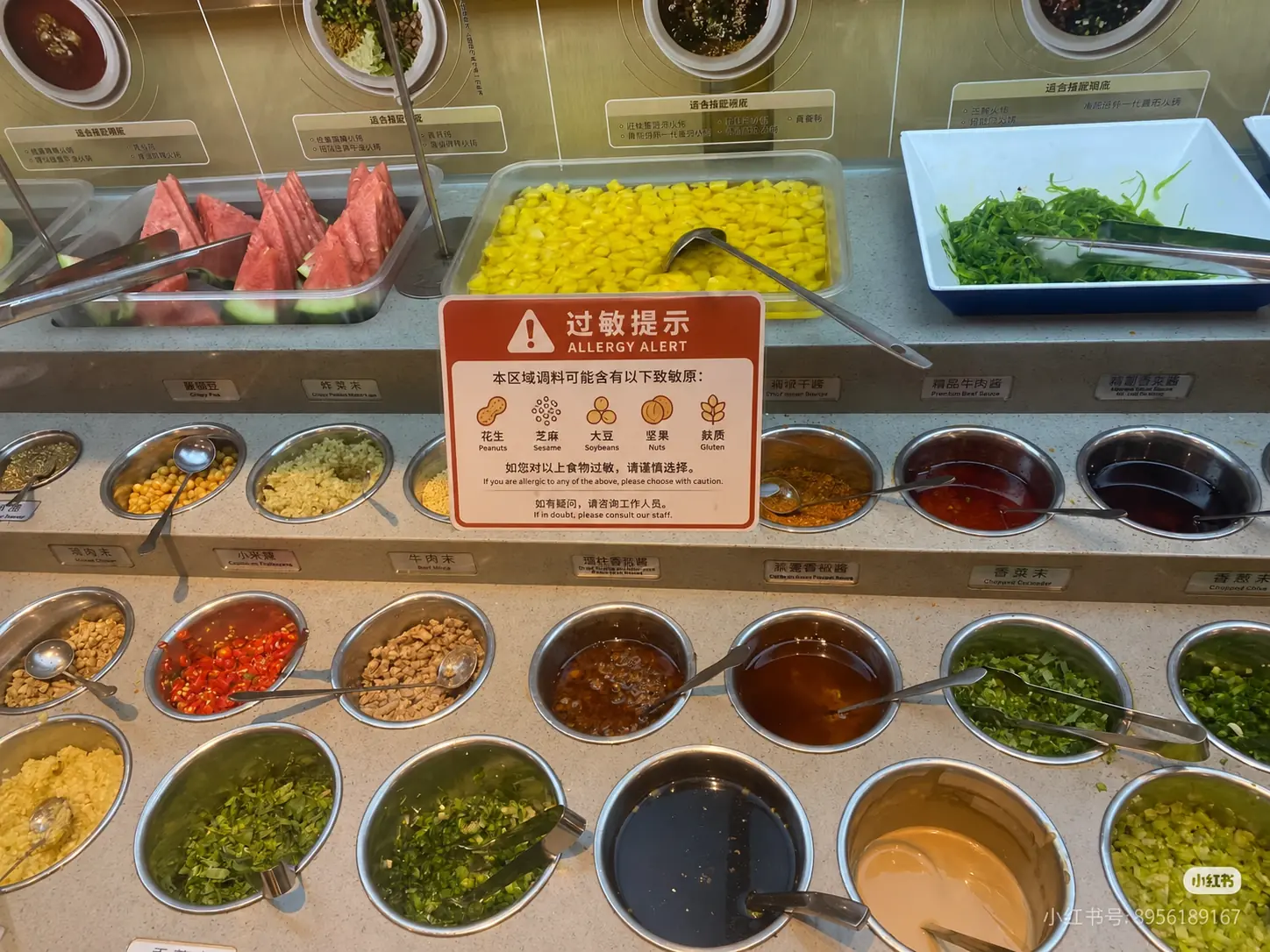
Vegetarians should be careful. A clear-looking pot may still use animal stock, and a shared mutton table is hard to control.
Sesame allergy is the biggest classic-sauce problem; soy, wheat, garlic, cilantro, peanuts, fermented tofu, and shared sauce-bar utensils can also matter.
Classic sesame sauce is not allergy-friendly
If sesame is a serious allergy for you, classic Beijing mutton hotpot is difficult to manage. The main sauce is sesame paste, sauce-bar spoons may be shared, and staff may not be able to guarantee zero cross-contact.
Useful Phrases for Ordering Beijing Hotpot
The table below is the one place where pronunciation helps. If speaking feels awkward, show the Chinese column to the server and point at what you need.
| English | Chinese | Pinyin | Say It Like… |
|---|---|---|---|
| Beijing instant-boiled mutton / copper-pot lamb hotpot | 涮羊肉 | shuan yang rou | shwan yahng-roh |
| Clear-broth pot | 清汤锅 | qing tang guo | ching tahng gwoh |
| Hand-cut lamb or mutton | 手切羊肉 | shou qie yang rou | show chyeh yahng-roh |
| Lamb rolls | 羊肉卷 | yang rou juan | yahng-roh jwen |
| Sesame paste sauce | 麻酱 | ma jiang | mah-jyahng |
| Fermented tofu | 腐乳 | fu ru | foo-roo |
| Chinese chive flower paste | 韭菜花 | jiu cai hua | jyoh-tsai hwah |
| No cilantro | 不要香菜 | bu yao xiang cai | boo yow shyahng-tsai |
| Do you have halal food? | 有清真吗? | you qing zhen ma | yo ching-jen mah |
| Please give me serving chopsticks | 请给我公筷 | qing gei wo gong kuai | ching gay woh gong-kwye |
Frequently Asked Questions
Usually no. The classic version uses clear broth and sesame paste sauce, so it is one of the easiest Chinese hotpot styles for spice-sensitive travelers.
Beyond This Guide

Once you understand the pot, lamb, sauce, and cooking rhythm, Beijing mutton hotpot becomes much less mysterious. Use the Beijing food guide for neighborhoods and restaurant context, the Peking Duck guide for another ritual-heavy Beijing meal, and the Sichuan and Chongqing hotpot guide when you want the red-oil, spicy, numbing version. The best first copper-pot meal is not the biggest order. It is the one where the lamb stays good, the sauce tastes balanced, and the table never loses the boil.
© gochinafreely.com — Original guide by Go China Freely.