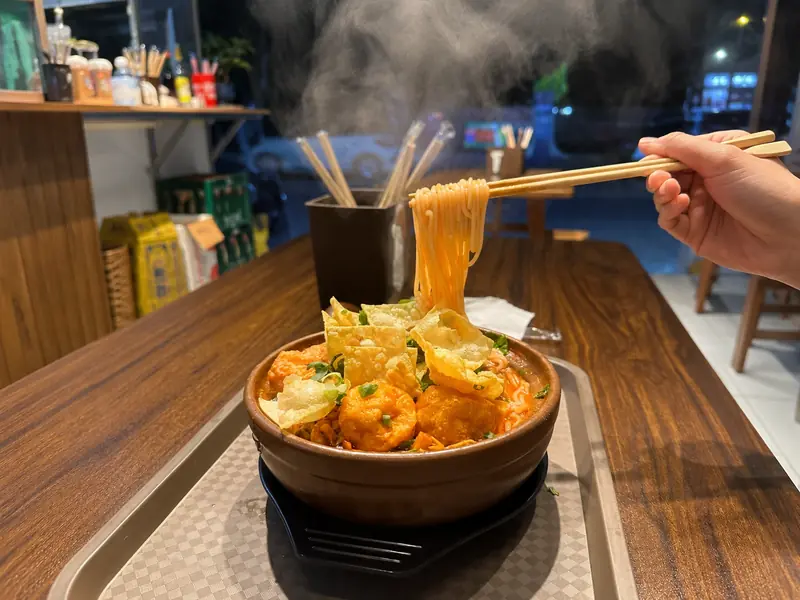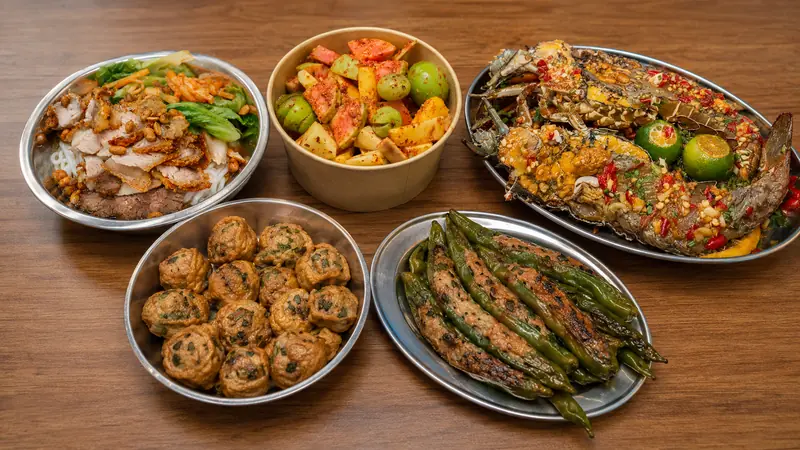
Guangxi cuisine (桂菜) is easy to reduce to one famous bowl: Liuzhou luosifen (柳州螺蛳粉), the sour, spicy river-snail rice noodles with a scent strong enough to announce itself before the first bite. That shortcut is useful for social media, but it is too small for the province.
Use this guide as a Guangxi-wide flavor map. Our Liuzhou luosifen guide is the deeper single-dish article, and the Guilin and Yangshuo food guide is better for city-level eating routes. This article explains the wider system: rice noodles as daily infrastructure, sour bamboo and suanye as the local sour memory, river fish and stuffed dishes in karst country, Beibu Gulf seafood, Wuzhou tea-and-Lingnan edges, and the practical way to order a first Guangxi table without making every dish taste like the same sour-spicy note.
Executive Summary
What this guide covers
Province-level Guangxi food logic: rice noodles, sour bamboo, suanye, Guilin breakfast bowls, Liuzhou luosifen, Nanning Laoyou noodles, Yangshuo beer fish, stuffed dishes, Beibu Gulf seafood, and Wuzhou tea.
Best first table
Build contrast: one rice-noodle anchor, one sour snack or pickled element, one river fish or seafood dish, one stuffed or banquet-style dish, one vegetable, and fruit or tea.
Main traveler challenge
Guangxi food can hide snails, shellfish, pork, lard, peanuts, soy, fish bones, sour bamboo, chili, rice wine, and shared seafood handling inside dishes that look casual.
Rice noodles
Everyday backbone
Sour bamboo
Key aroma clue
River + sea
Ingredient map
Ask first
Shellfish, pork, bones
Start With Rice Noodles
Rice noodles are not one dish in Guangxi. They are breakfast, lunch, late-night comfort food, city identity, export industry, and a practical map of where you are standing.
A Guangxi government English feature says rice noodles play a crucial role in the daily life of Guangxi, where they are eaten for breakfast and quick meals, while also linking Guangxi rice noodles with wider Southeast Asian rice-noodle cultures. The same feature names Guilin rice noodles, Liuzhou luosifen, and Nanning Laoyou rice noodles as different local expressions rather than interchangeable bowls.
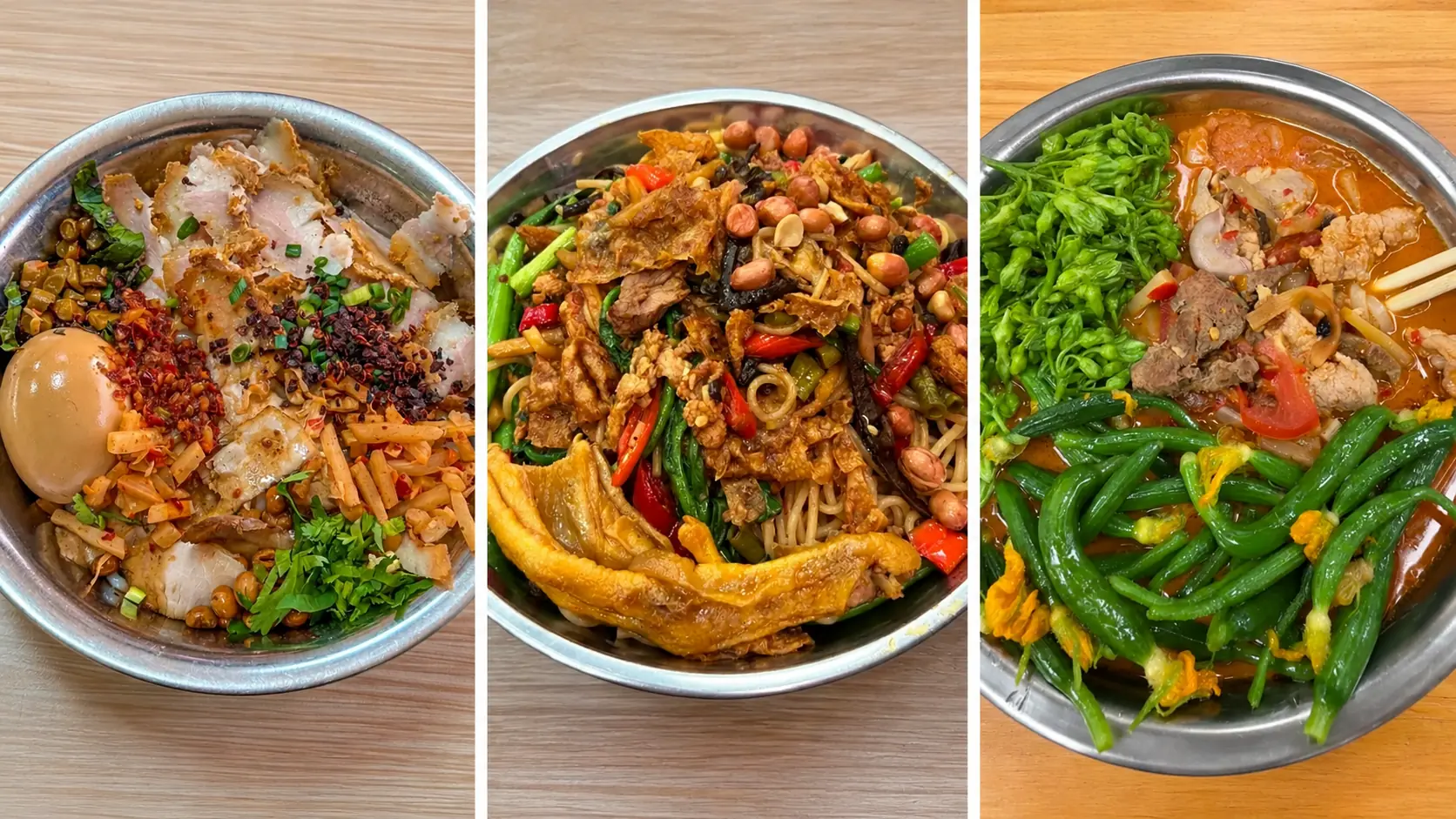
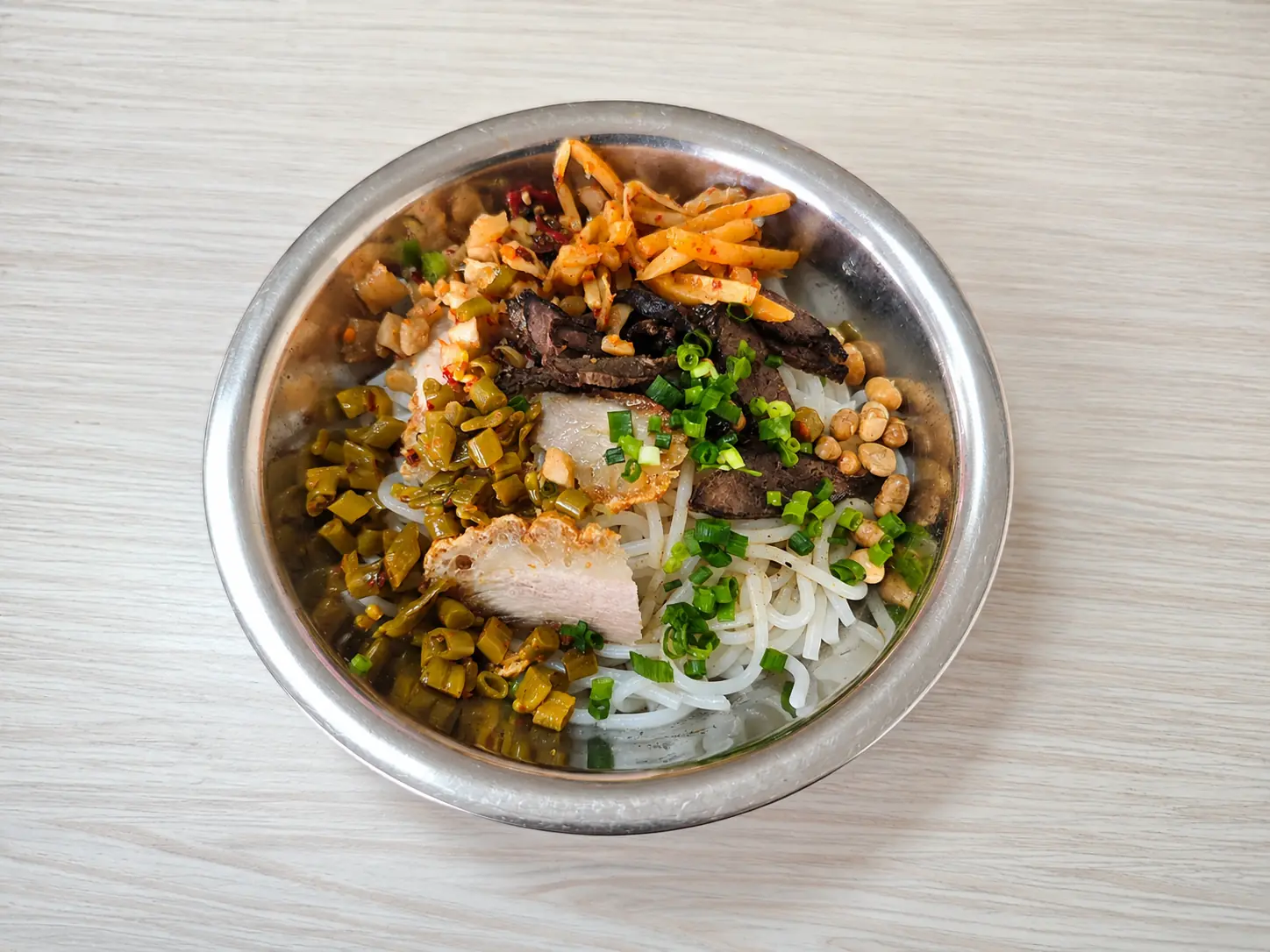
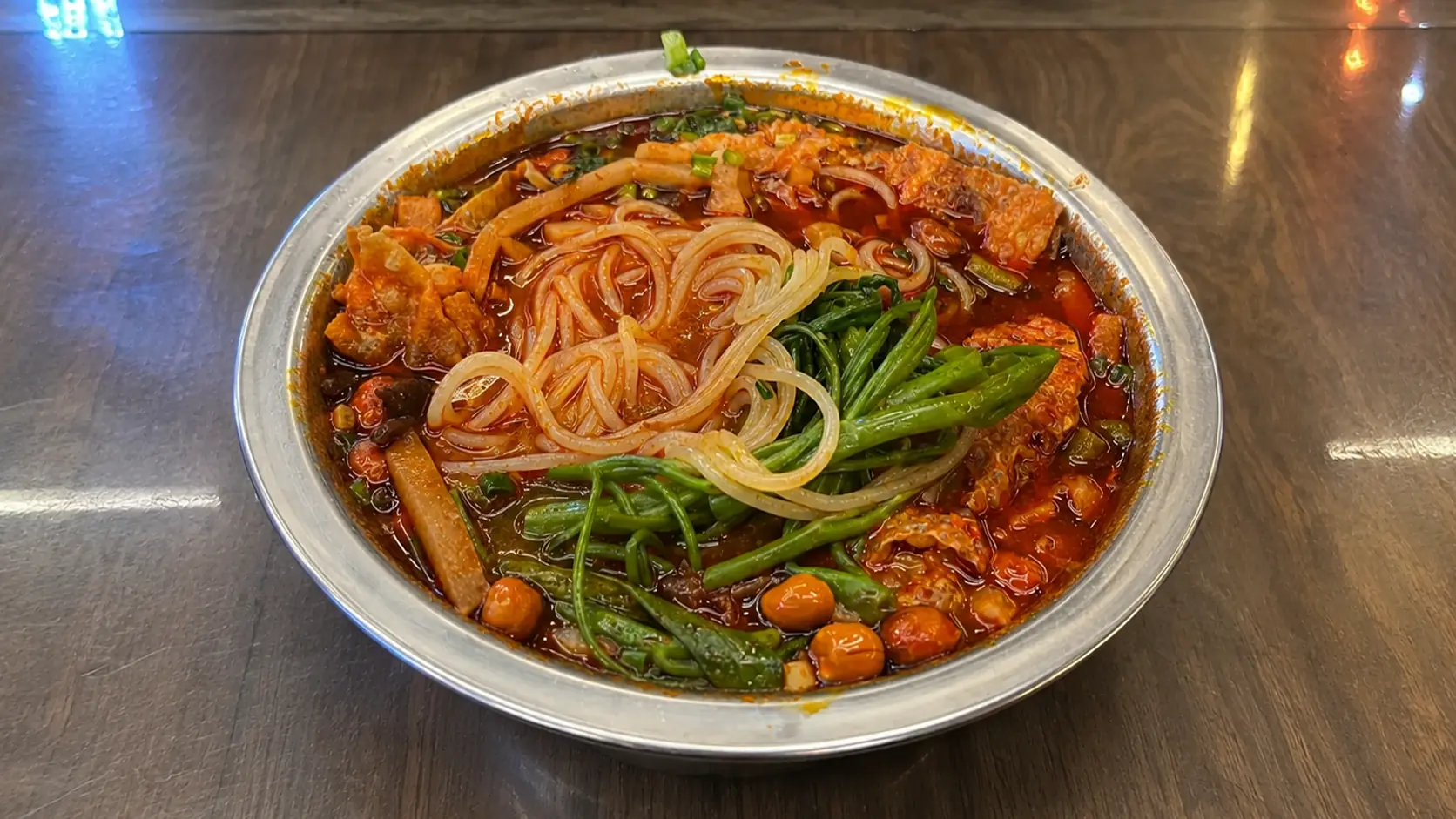
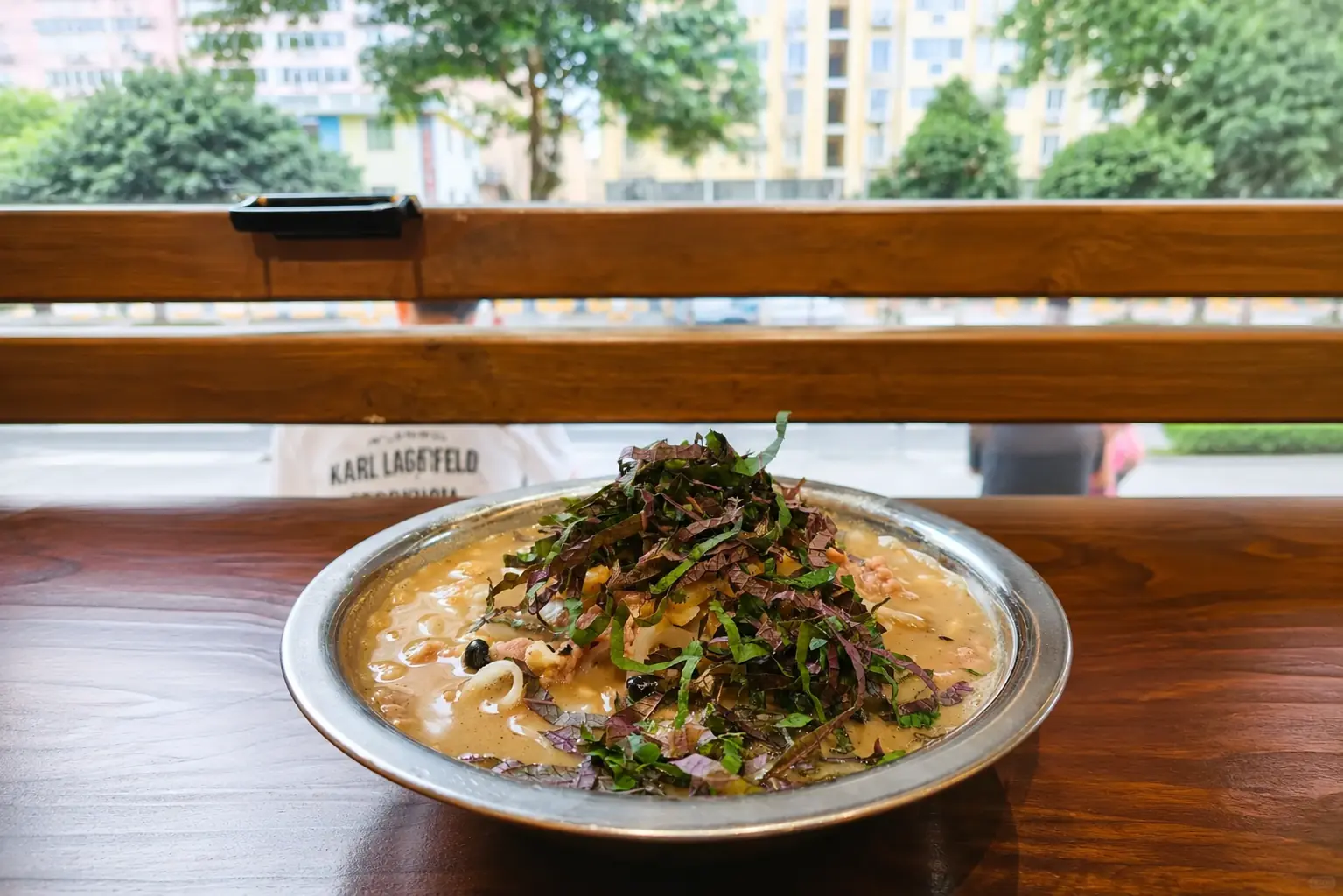
Guilin rice noodles (桂林米粉) are the cleanest northern Guangxi entry point. The State Council English portal noted that Guilin rice noodle cooking skills entered the national intangible cultural heritage list in 2021, and the national ICH database describes the craft as built around fresh rice noodles, brine, toppings, and seasoning. For traveler purposes, that means Guilin rice noodles are not just a cheap breakfast. They are one of the province's most documented food traditions.
Liuzhou luosifen is the loudest Guangxi noodle abroad. It features rice noodles in a spicy river-snail broth, commonly with sour bamboo shoots, peanuts, fried tofu skin, pickled beans or vegetables, chili oil, and other toppings. The sour bamboo aroma is the famous shock, but in this province-level guide the dish matters because it sits inside a bigger Guangxi pattern: rice noodles plus sourness plus heat plus local ingredients.
Nanning Laoyou rice noodles (南宁老友粉) show the capital-city version of the same logic. A Guangxi government English page describes the dish as stir-frying sour bamboo shoots, chili, fermented black beans, and garlic before adding meat, broth, rice noodles, and seasonings. It is sour-spicy, aromatic, and urban, but less internationally famous than luosifen.
Guilin Rice Noodles
桂林米粉
Brine, crispy pork, pickled beans, peanuts, chili oil, and a fast breakfast rhythm. Use it when your route is Guilin, Yangshuo, Longji, or northern Guangxi.
Liuzhou Luosifen
柳州螺蛳粉
Sour bamboo, river-snail broth, chili oil, tofu skin, peanuts, and industrial-era city food. Use it in Liuzhou or when you want the iconic sour-aroma lesson.
Nanning Laoyou Rice Noodles
南宁老友粉
Sour bamboo, fermented black beans, garlic, chili, broth, and a capital-city morning bowl. Use it when you start Guangxi in Nanning.
Local Sour or Fresh-Pressed Styles
酸粉 / 生榨米粉
Cooler, sourer, more local rice-noodle branches may be harder to source in English. Use them when you have a trusted local recommendation.
Do not order three rice-noodle bowls as one meal
Guilin rice noodles, luosifen, and Laoyou rice noodles are different, but they still sit in the same meal role. Spread them across different mornings or cities instead of turning one lunch into a rice-noodle comparison test.
Sour Bamboo, Suanye, Heat
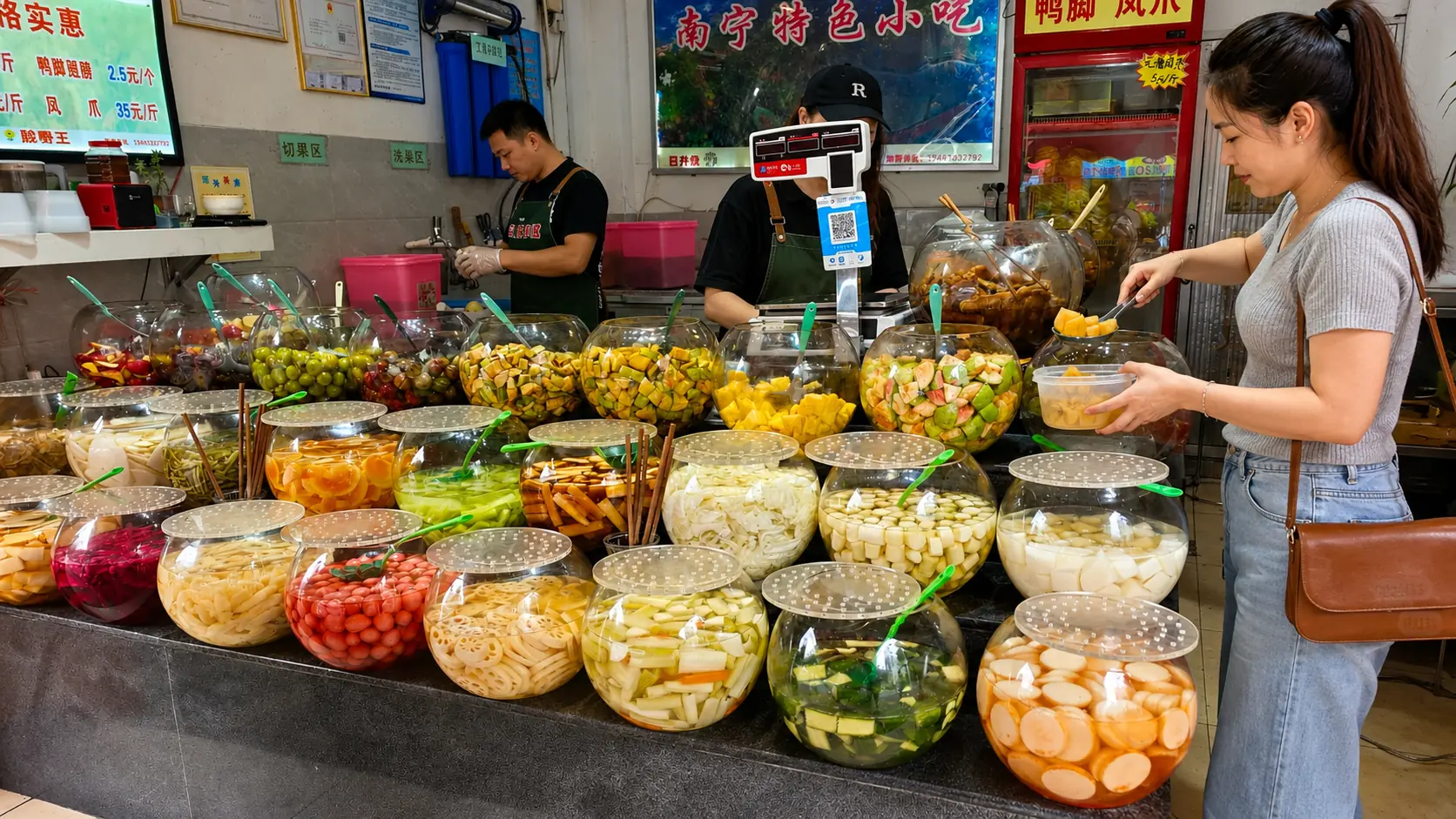
Guangxi sourness is not the same as Guizhou sour soup. In Guizhou cuisine, sourness often appears as fermented soup bases, sour fish, and dipping-sauce systems. In Guangxi, the sour note more often jumps out through sour bamboo shoots (酸笋), pickled beans, pickled vegetables, sour rice-noodle condiments, and suanye (酸嘢), the sour-spicy fresh fruit and vegetable snacks associated with Nanning and other Guangxi cities.
Sour bamboo is the most important flavor clue. It can appear in luosifen, Laoyou noodles, rice-noodle toppings, stir-fries, soups, and small dishes. For people who love it, sour bamboo is refreshing, appetizing, and lightly fermented. For people who do not expect it, the smell can feel like something has gone wrong. It usually has not.
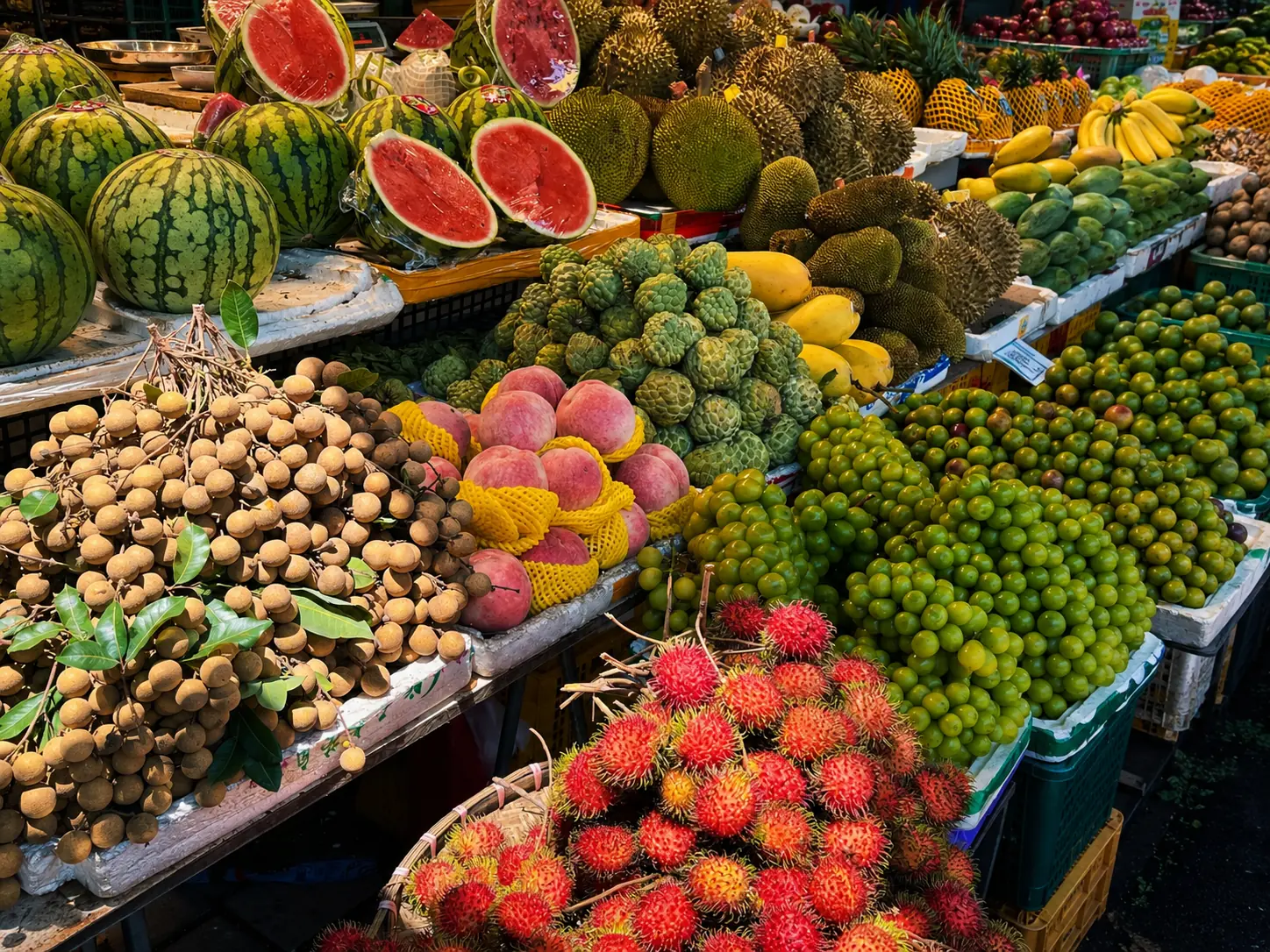
Suanye is the street-snack side of Guangxi sourness. Guangxi official English media describe it as a beloved treat made from fresh fruits and vegetables with a mix of sour and spicy flavors. Think green mango, papaya, radish, cucumber, pineapple, guava, or other crunchy produce dressed with sour, salt, sugar, chili, or plum powder. It is not a full meal and not ordinary pickles; it is a hot-weather snack language.
Heat in Guangxi is usually not Sichuan-style numbing heat. It can be chili oil in rice noodles, fresh chili with fish, sour-spicy condiments in Nanning, or a borderland sense of brightness near Vietnam and the tropics. Compared with Hunan cuisine, the chili often feels more tied to sourness, rice noodles, and fresh produce than to smoked meat or direct fresh-chili intensity.
1Sour Bamboo
The aroma anchor for many Guangxi bowls. Ask for less if you are sensitive, but do not remove it from every dish or the local character disappears.
2Suanye
A sour-spicy fruit and vegetable snack, especially useful on hot days when a heavy noodle bowl feels like too much.
3Tropical Heat
Chili supports sourness, fruit, fish, noodles, and seafood. It is usually sharper and brighter than numbing.
Rivers, Mountains, Coast
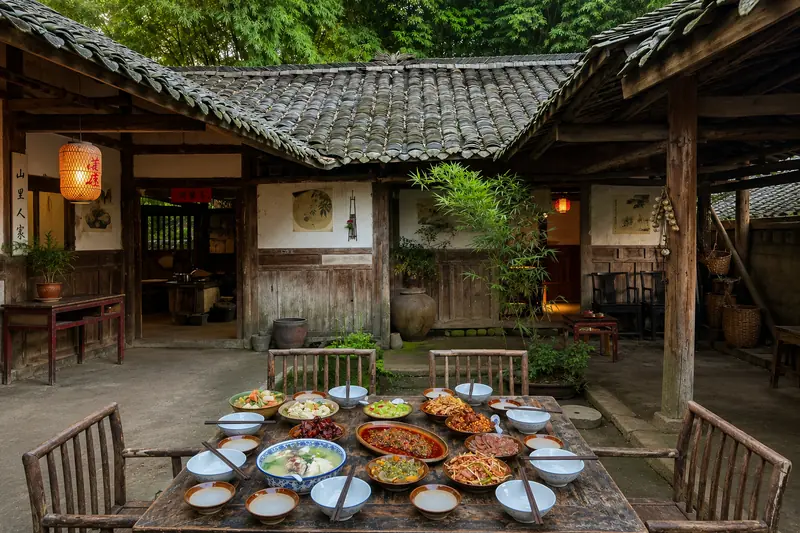
Guangxi is not only inland karst country and not only coastal seafood. The food map holds Li River fish, mountain villages, rice terraces, tropical fruit, Zhuang (壮族), Yao (瑶族), Dong (侗族), Miao (苗族), and Lingnan-influenced edges, plus the Beibu Gulf coast.
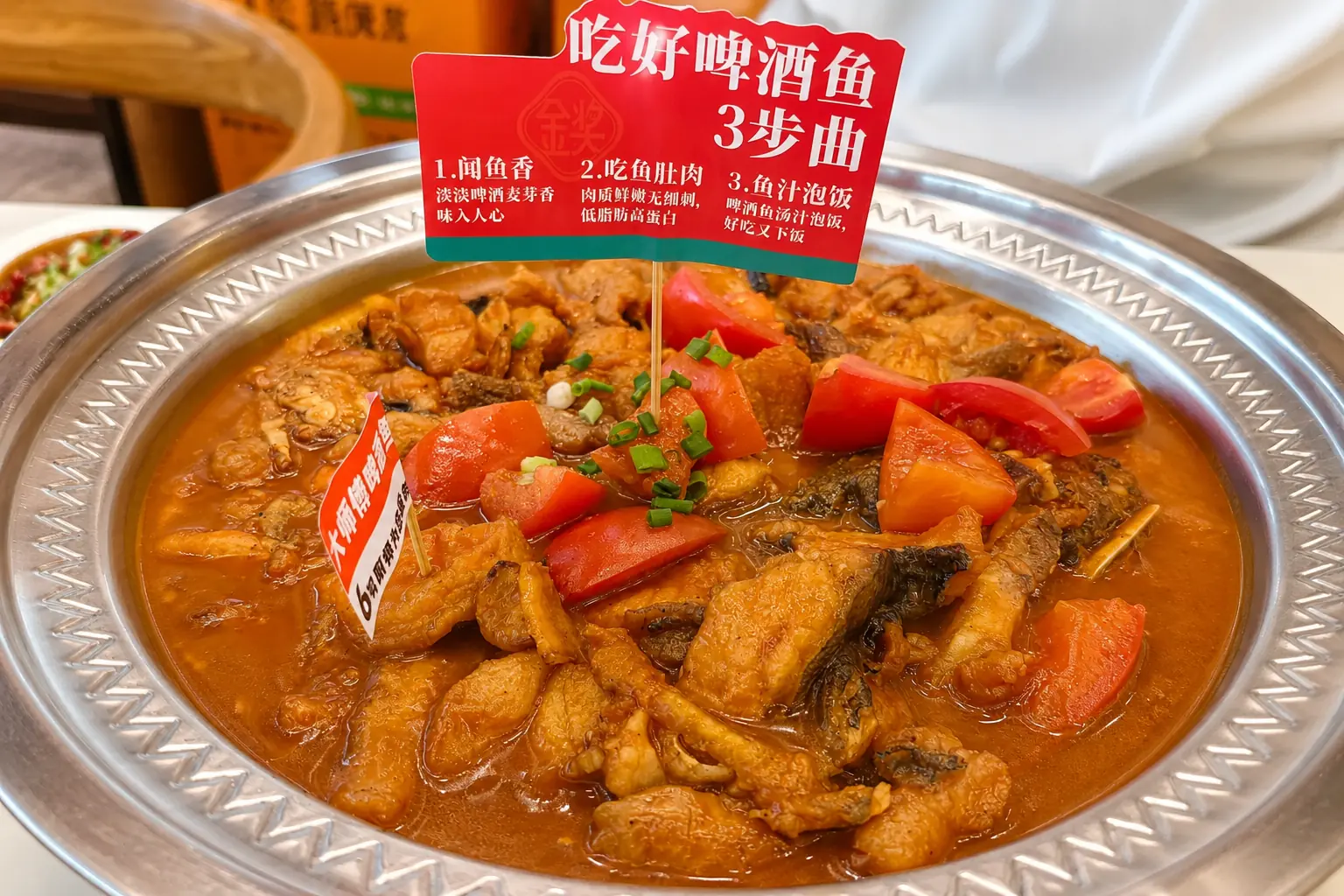
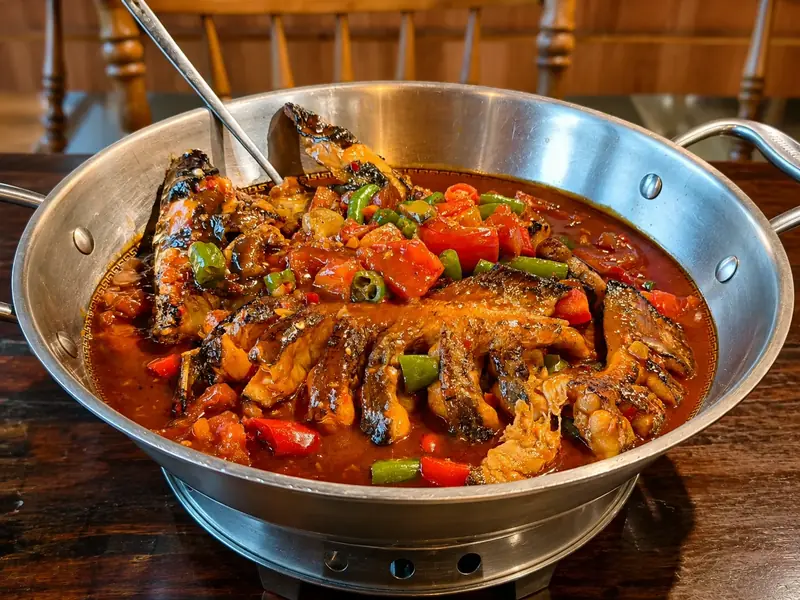
Guilin and Yangshuo make the river side visible. Yangshuo beer fish (阳朔啤酒鱼) is officially described as a signature dish of Yangshuo County, usually associated with local fish, beer, peppers, tomatoes, and reduced sauce.
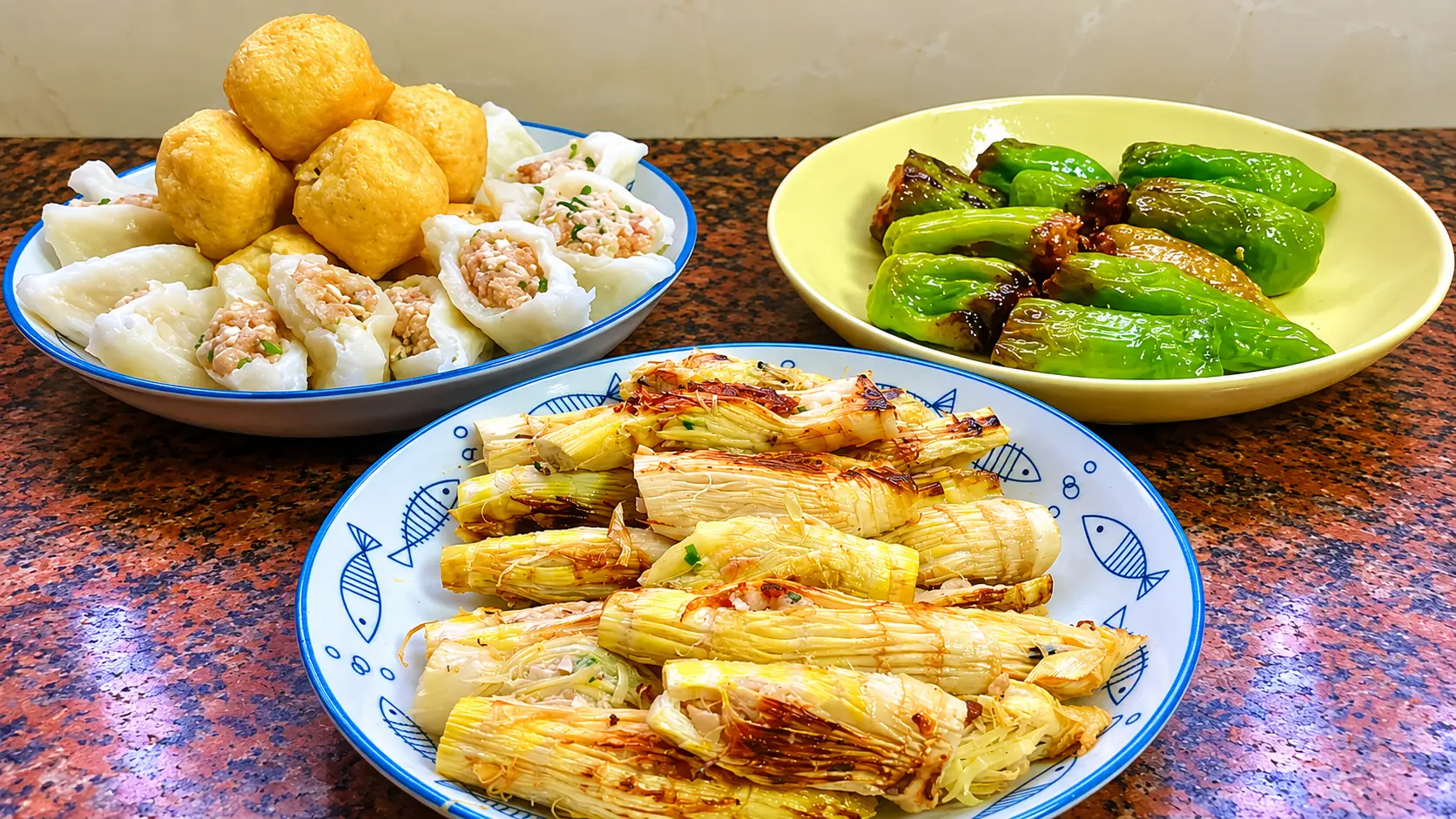
Stuffed dishes are another important local family: stuffed snails, stuffed tofu, stuffed eggplant, stuffed peppers, and other "niang" dishes show the habit of filling vegetables, tofu, or shells with seasoned meat or fish paste.
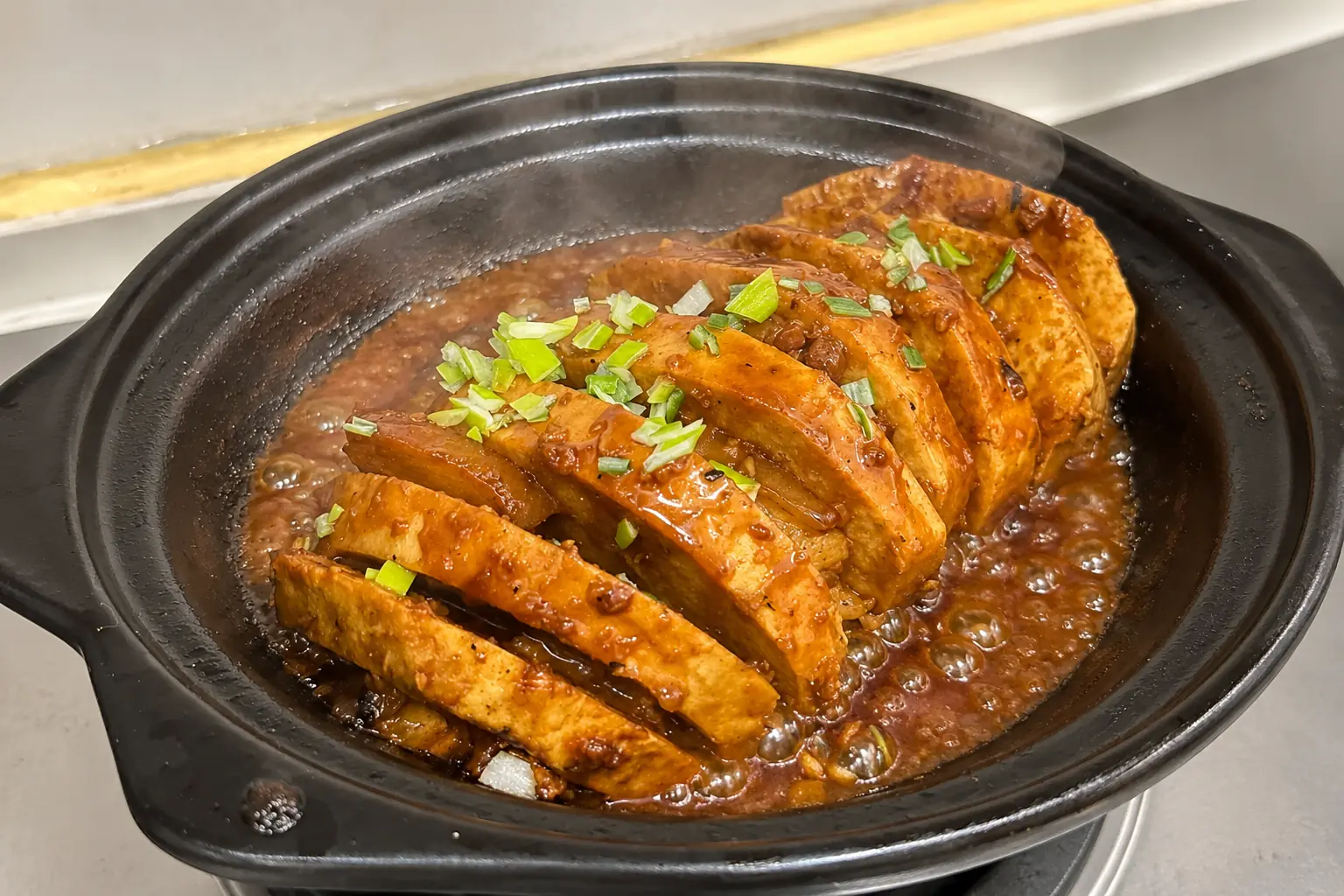
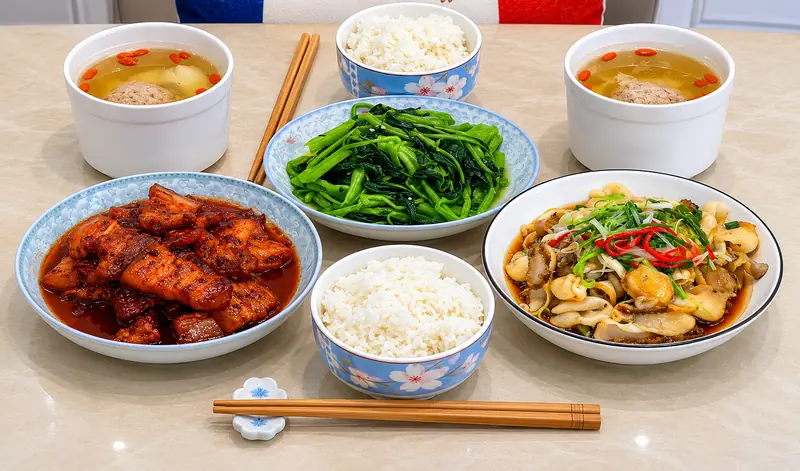
Lipu taro pork (荔浦芋扣肉) gives the banquet side. A Guangxi agricultural source describes it as a well-known traditional dish in northern Guangxi and a major feast dish, with taro and pork belly steamed together in a rich, layered bowl. It belongs in a province-level cuisine guide because it shows that Guangxi is not only noodle shops and sour snacks.
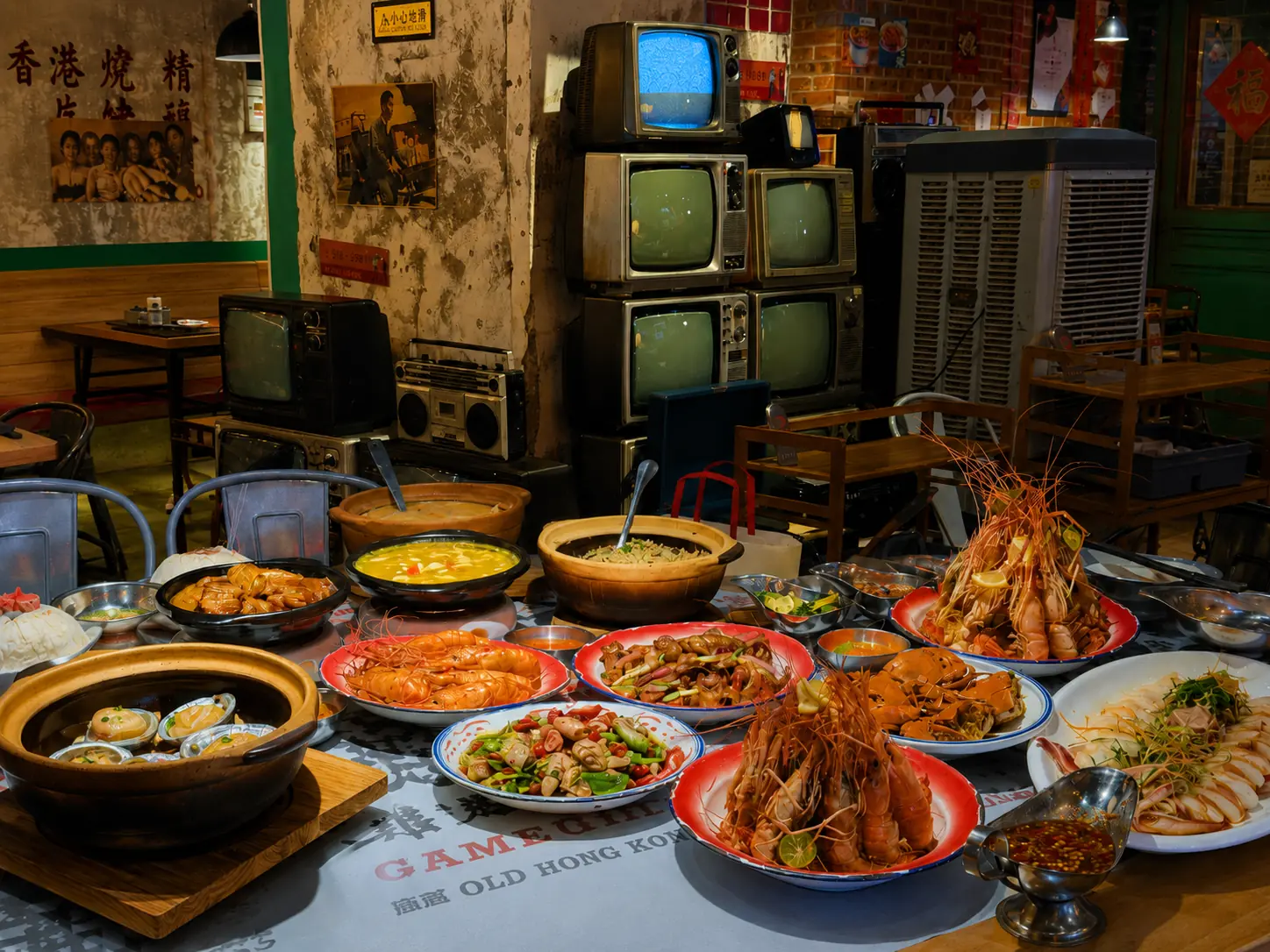
The Beibu Gulf side changes the table again. Beihai (北海), Qinzhou (钦州), and Fangchenggang (防城港) bring oysters, fish, shrimp, crabs, shellfish, and seaside night-market habits. Guangxi official English media list Beihai oysters among Guangxi products protected under the China-EU geographical indications agreement, which makes them a useful coastal marker without turning this article into a Beihai seafood guide.
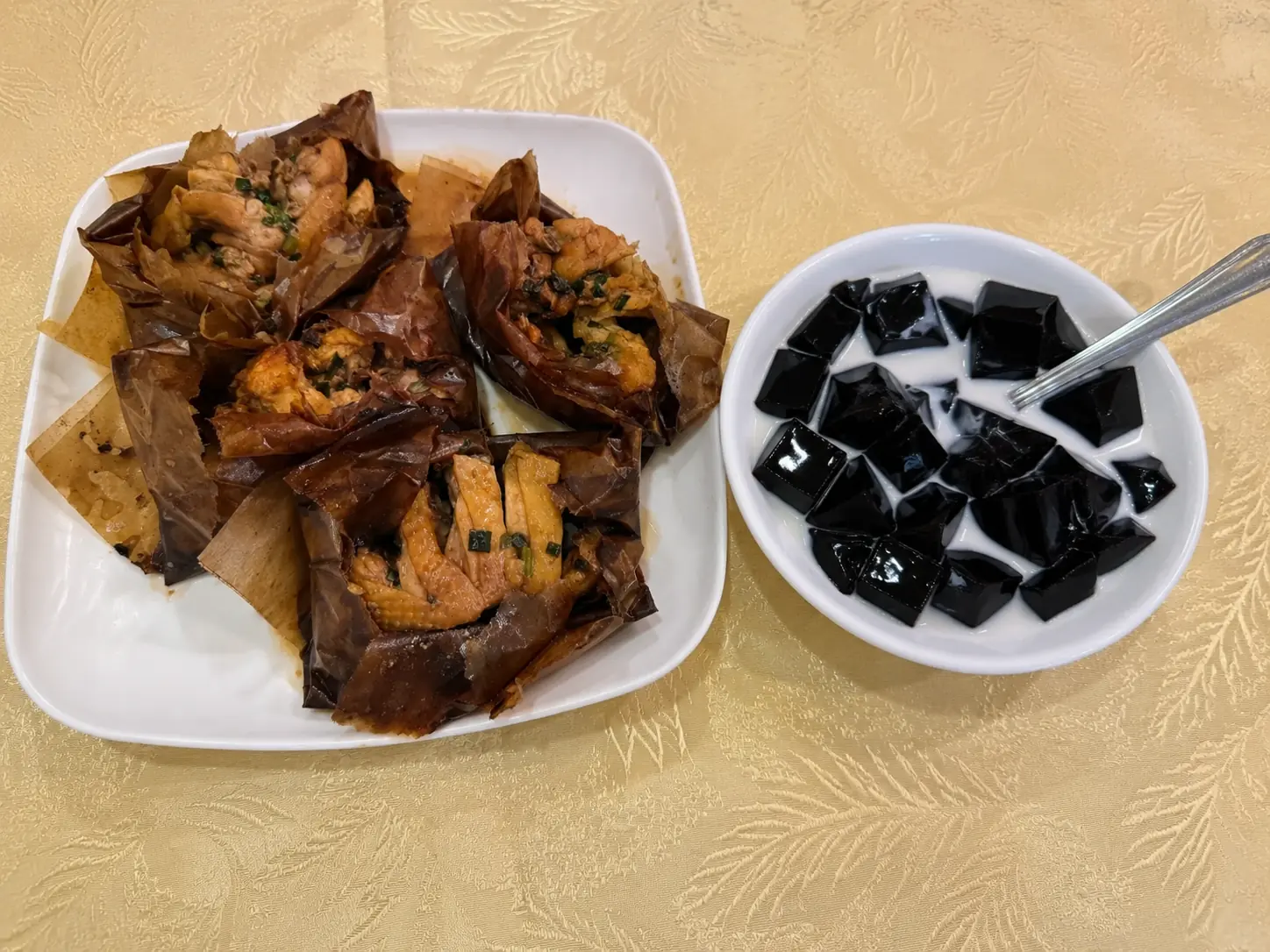
Wuzhou (梧州) and eastern Guangxi sit closer to Lingnan habits. Paper-wrapped chicken (纸包鸡), Liubao tea (六堡茶), Guiling jelly (龟苓膏), soy milk, river fish, and milder Cantonese-influenced flavors make this side softer than the sour-spicy stereotype. Guangxi cultural-tourism sources tie Liubao tea to Wuzhou and also list paper-wrapped chicken and Wuzhou river foods as local specialties.
Classic Foods by Table Role
The easiest way to avoid a repetitive Guangxi article is to stop listing famous foods and start assigning table roles. A good first Guangxi meal needs contrast: noodles, sourness, fish or seafood, something stuffed or banquet-style, greens, and a light finish.
| Table Role | Good Examples | Why It Matters | Overlap to Avoid |
|---|---|---|---|
| Rice-noodle anchor | Guilin rice noodles, luosifen, Laoyou rice noodles | Shows daily Guangxi food better than any banquet dish. | Do not order all three at the same table. |
| Sour snack | Suanye, sour bamboo sides, pickled beans, sour rice noodles | Explains Guangxi sourness without copying Guizhou sour-soup logic. | Keep it as a bright accent, not every dish. |
| River or karst dish | Yangshuo beer fish, Li River fish, stuffed snails | Connects food to Guilin and Yangshuo landscapes. | Use city guides for where-to-eat details. |
| Banquet or family dish | Lipu taro pork, stuffed tofu, paper-wrapped chicken | Prevents the cuisine from feeling only like snacks and noodles. | Watch pork, oil, rice wine, and rich sauces. |
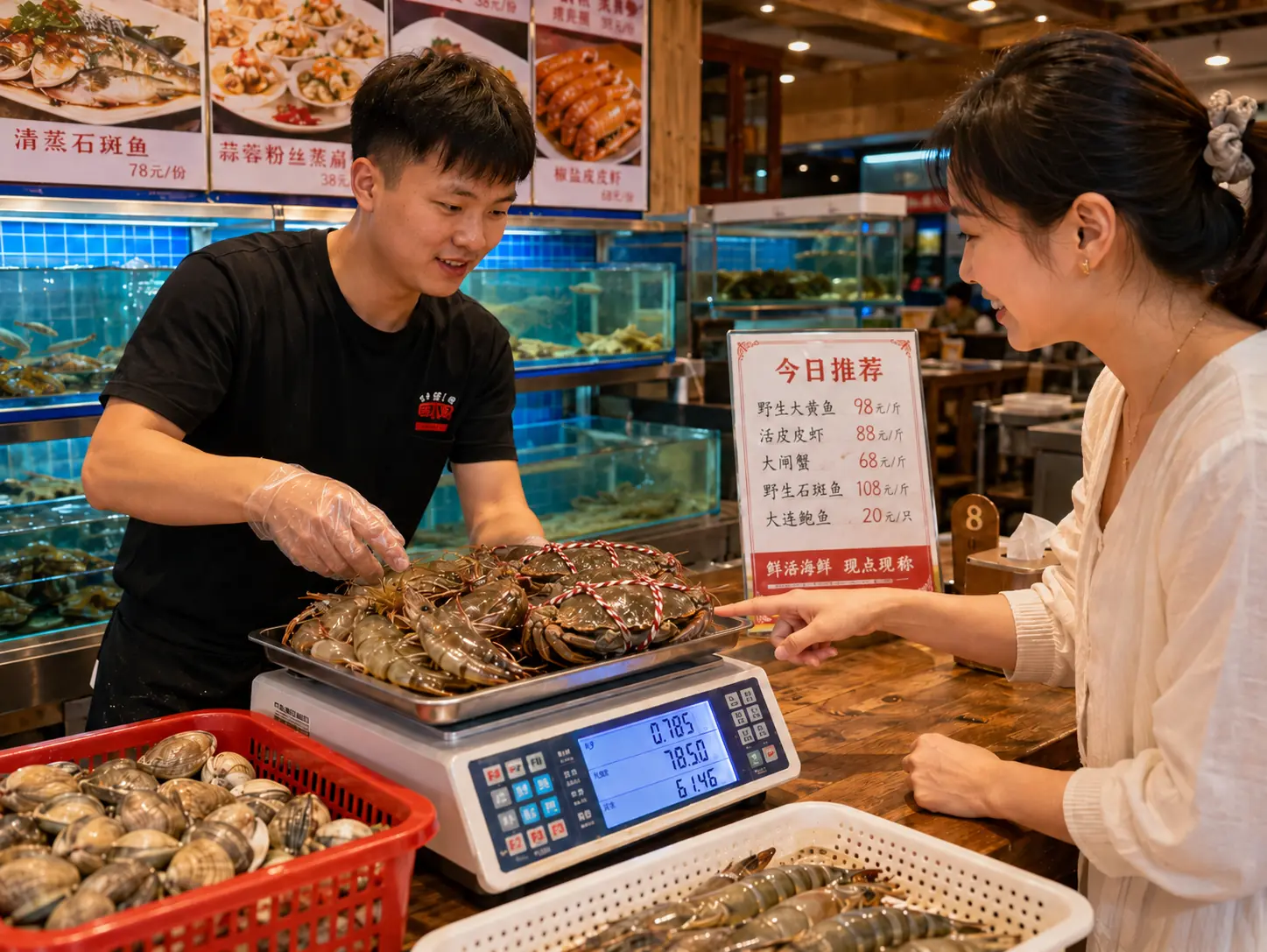
| Coastal seafood | Beihai oysters, fish, shrimp, shellfish, crab | Adds the Beibu Gulf side of Guangxi. | Confirm weight, price, and live versus chilled seafood. |
| Tea, sweets, fruit | Liubao tea, Guiling jelly, luohanguo, mango, kumquat | Gives a softer finish after sour, chili, fish, and pork. | Do not make fruit claims too broad without local context. |
Regional Map for Travelers
Use regions as eating cues, not strict borders. Guangxi changes quickly by route.
| Where You Are | Food Clues | Best Traveler Use |
|---|---|---|
| Nanning 南宁 | Laoyou rice noodles, suanye, fresh-pressed rice noodles, night snacks, tropical fruit. | Use it as the easiest city doorway into Guangxi sour-spicy snacks. |
| Liuzhou 柳州 | Luosifen, sour bamboo, river-snail broth, night eating, packaged noodle culture. | Use the dedicated luosifen guide for the full bowl-by-bowl story. |
| Guilin, Yangshuo, Longji 桂林 / 阳朔 / 龙脊 | Guilin rice noodles, beer fish, stuffed dishes, oil tea, bamboo rice, taro pork. | Use city and activity guides for practical eating routes. |
| Beihai, Qinzhou, Fangchenggang 北海 / 钦州 / 防城港 | Oysters, seafood, fish, shellfish, seaside night markets, tropical fruit. | Use this as the coastal branch; confirm seafood price and weight carefully. |
| Wuzhou and eastern Guangxi 梧州 / 桂东 | Paper-wrapped chicken, Liubao tea, Guiling jelly, soy milk, Lingnan-influenced flavors. | Use it to balance the image of Guangxi as only sour-spicy noodles. |
| Baise, Chongzuo, Hechi 百色 / 崇左 / 河池 | Mango, border flavors, Zhuang foodways, glutinous rice, sour foods, mountain produce. | Treat this as a deeper branch that needs local recommendations. |
Build Your First Guangxi Table
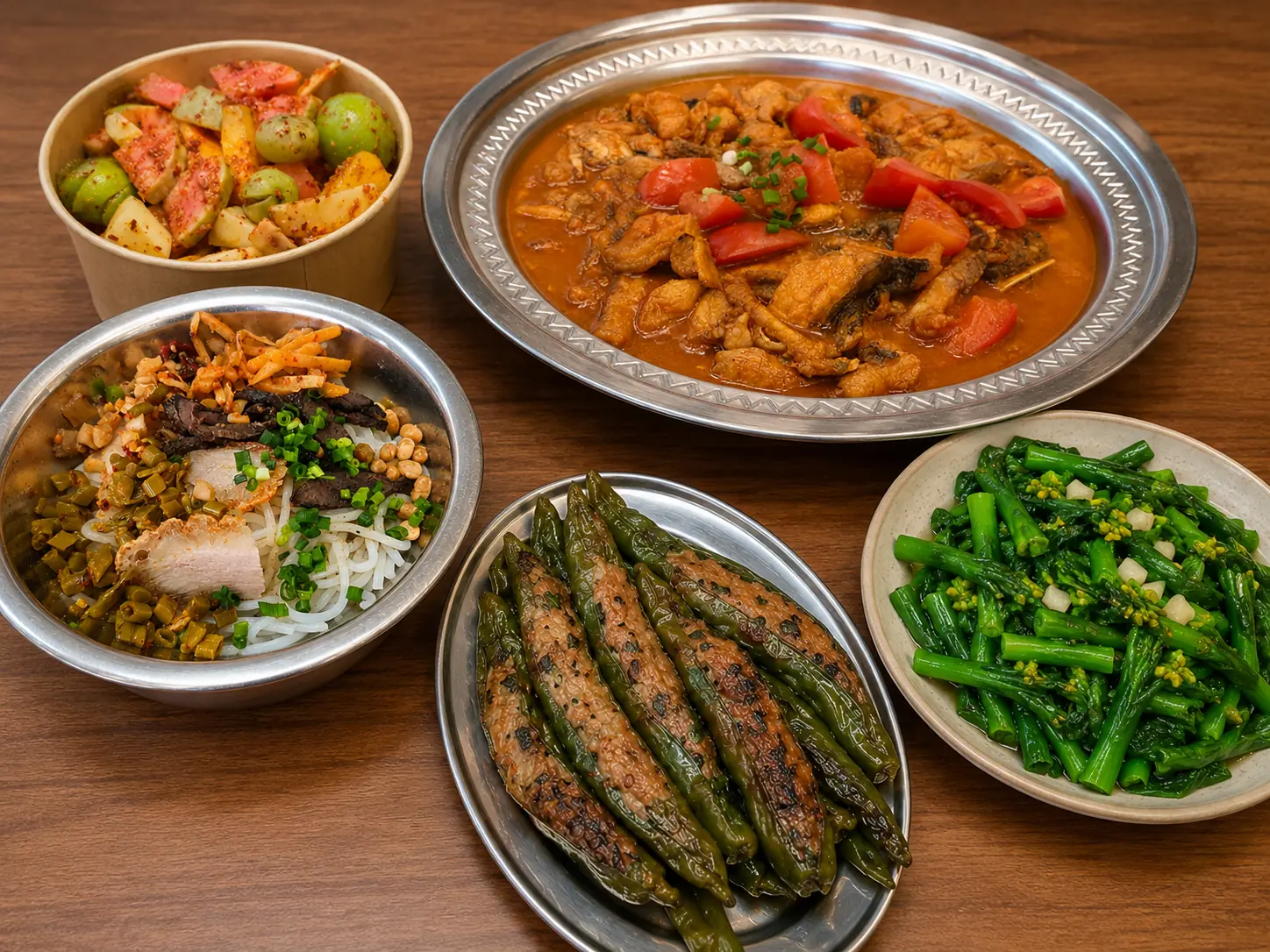
For two people, keep the table focused. Choose one rice-noodle bowl for breakfast or a separate snack stop. At dinner, order one fish or seafood main, one sour or suanye-style side, one vegetable or tofu dish, and one stuffed or pork dish only if you have enough appetite.
For four people, you can open the map wider: one rice-noodle or small snack to share, one river fish or Beibu Gulf seafood dish, one Lipu taro pork or stuffed dish, one vegetable, one sour snack, and fruit, tea, or Guiling jelly at the end.
Two-Person First Table
balanced and realistic
Put rice noodles in a separate breakfast slot. For dinner, choose one fish or seafood dish, one sour snack or sour bamboo accent, one green vegetable, and one tofu or stuffed dish.
Four-Person First Table
more room for contrast
Add one rice-noodle sample, one river or seafood main, one Lipu taro pork or stuffed dish, one vegetable, one suanye plate, and tea or fruit to finish.
If your route includes Liuzhou, save luosifen for Liuzhou. If your route is only Guilin and Yangshuo, do not force a detour for the "most authentic" luosifen; Guilin rice noodles, beer fish, stuffed dishes, and taro pork fit the route better. If you start in Nanning, use Laoyou rice noodles and suanye as your opening lesson.
Use this order logic for a first Guangxi meal:
- Choose one noodle anchor(桂林米粉 / 螺蛳粉 / 老友粉)- Put the rice-noodle bowl in breakfast, a snack stop, or one shared sample; do not let it dominate every meal.
- Add one sour accent(酸嘢 / 酸笋 / 酸豆角)- Use suanye, sour bamboo, pickled beans, or a sour side to show Guangxi sourness without repeating it across the whole table.
- Pick river or sea(啤酒鱼 / 北部湾海鲜)- Choose one river fish or Beibu Gulf seafood main, then confirm bones, weight, and price before cooking.
- Add a family dish(酿菜 / 荔浦芋扣肉 / 纸包鸡)- Use stuffed dishes, taro pork, or paper-wrapped chicken to keep the meal from feeling like only noodles and snacks.
- Finish lighter(青菜 / 水果 / 六堡茶 / 龟苓膏)- End with greens, fruit, Liubao tea, or Guiling jelly after sour bamboo, chili, fish, and pork.
Allergy and Ordering Risks
Guangxi food can look simple while hiding ingredients that matter.
Vegetarians need careful questions. A vegetable dish may be cooked with lard, meat stock, oyster sauce, dried shrimp, or the same wok used for meat and seafood. A rice-noodle bowl may look plant-based but still use bone broth, meat toppings, snail broth, fermented seafood condiments, or chicken powder.
- Snails, shellfish, and seafood: Luosifen broth may involve river snails, and coastal meals may involve oysters, shrimp, crab, clams, sea snails, or shared seafood handling.
- Pork and lard: Guilin rice noodles may include crispy pork, Laoyou noodles may include meat, stuffed dishes often use pork, and Lipu taro pork is pork belly.
- Fish bones: Beer fish, river fish, and many coastal fish dishes may be whole or bone-in. This matters for children and anyone expecting fillets.
- Peanuts, soy, sesame: Rice noodles, cold snacks, suanye seasonings, Guiling jelly toppings, and sauces may use peanuts, soy sauce, fermented black beans, sesame, or shared tools.
- Gluten: Rice noodles are rice-based, but soy sauce, fried toppings, seasoning packets, shared oil, and cross-contact can still create gluten risk.
- Sour bamboo aroma: The smell is a normal part of many Guangxi dishes, especially luosifen and Laoyou noodles. Ask for less if needed, but expect the flavor to change.
- Seafood pricing: In coastal cities, ask whether seafood is priced per portion, per jin, or per piece before it is cooked.
- Alcohol: Beer fish uses beer, and some banquet or meat dishes may use rice wine, cooking wine, or local spirits.
Use City Guides for Execution
This article is the flavor map. Use the more specific guides when you need route-level decisions.
Luosifen
single-dish depth
Read the Liuzhou luosifen guide for the sour bamboo smell, toppings, broth, and how to approach the dish without treating it as a dare.
Guilin and Yangshuo
city food route
Read the Guilin and Yangshuo food guide for rice-noodle breakfasts, beer fish, eating zones, and local meal pacing.
Cooking Class
hands-on context
Read the Yangshuo cooking class guide if you want market ingredients, beer fish, stuffed dishes, and farm-style cooking in context.
For comparison, use the Guizhou cuisine guide for fermented sour soup and dipping sauces, the Yunnan cuisine guide for mushrooms and borderland herbs, the Hunan cuisine guide for fresh chili and smoke, and the Cantonese cuisine guide for Lingnan refinement. Guangxi touches several of those worlds without becoming a copy of any one of them.
Frequently Asked Questions
No. Eastern Guangxi and Wuzhou have Lingnan influence, but Guangxi cuisine is strongly shaped by rice noodles, sour bamboo, suanye, river fish, stuffed dishes, minority foodways, and Beibu Gulf seafood. It is not just a Cantonese branch.
Beyond This Guide
Guangxi food works best when you let each stop do its own job. Let Guilin handle the rice-noodle morning, Yangshuo handle river fish and stuffed dishes, Liuzhou handle luosifen, Nanning handle Laoyou noodles and suanye, the Beibu Gulf handle seafood, and Wuzhou handle tea and softer Lingnan edges. Then the province stops feeling like one pungent bowl and starts looking like a full southern food map.
© gochinafreely.com — Original guide by Go China Freely.