Cantonese cuisine is easy to shrink into dim sum baskets, roast goose windows, and seafood tanks. The real system is quieter and more useful: fresh ingredients, exact heat, clear stocks, texture, and sauces that support rather than hide. Use this guide as the flavor map behind the Guangzhou, Hong Kong, Shenzhen, and Macau food guides, not as another city eating route.
Executive Summary
What this guide covers
Freshness, wok hei, seafood, soups, roast meats, dim sum context, first-table ordering, city differences, and hidden dietary risks.
Best first table
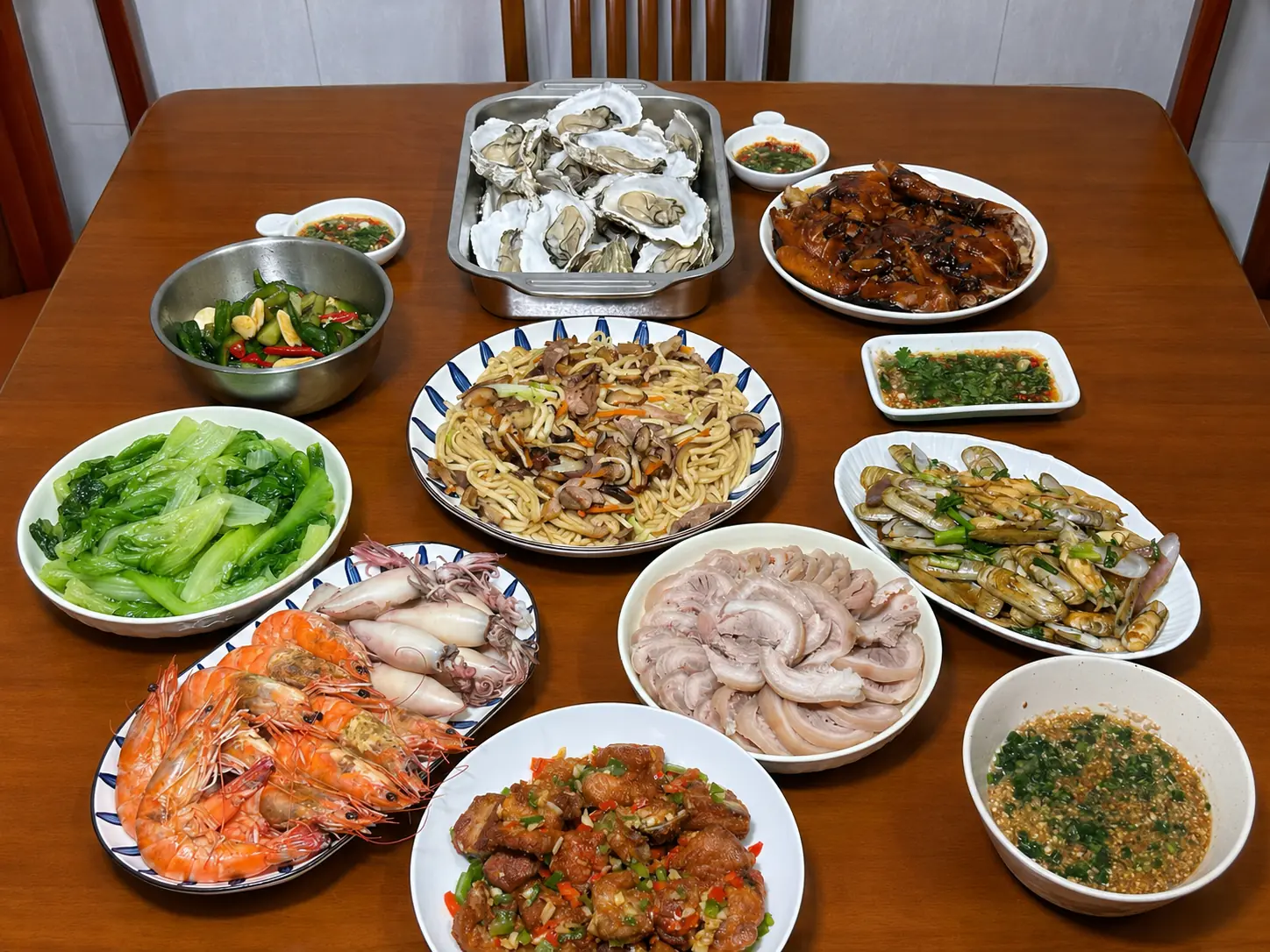
Build balance: one steamed or blanched seafood dish, one wok-fired dish, one roast meat, one green vegetable, soup, and rice or noodles.
Main traveler challenge
Cantonese food is usually not chili-hot. The harder part is reading freshness, cooking method, price units, sauces, stocks, and hidden seafood or pork.
2014
Shunde UNESCO gastronomy
Clear flavors
Core profile
High heat
Wok dishes
Ask first
Seafood and sauces
Cantonese Cuisine Begins With Fresh Ingredients
Cantonese cuisine (粤菜) sits inside the larger food world of Guangdong (广东) and the Pearl River Delta, with Guangzhou (广州) as its classic reference point. Guangzhou's official English site says Cantonese cuisine is made up of Guangzhou, Chaozhou, and Dongjiang traditions, while calling Guangzhou cuisine its quintessential form. That broad umbrella is useful for travelers, though Chaozhou (潮州) and Hakka-influenced Dongjiang (东江) cooking can also be treated as distinct regional traditions.
The same official source emphasizes ingredient selection, polished technique, heat control, texture, fragrance, flavor, and seasonal cooking. That is the key difference from many overseas "Cantonese" menus: good Cantonese food is not trying to be louder. It is trying to keep seafood sweet, chicken silky, vegetables crisp, soup clean, and sauces just strong enough to frame the ingredient.
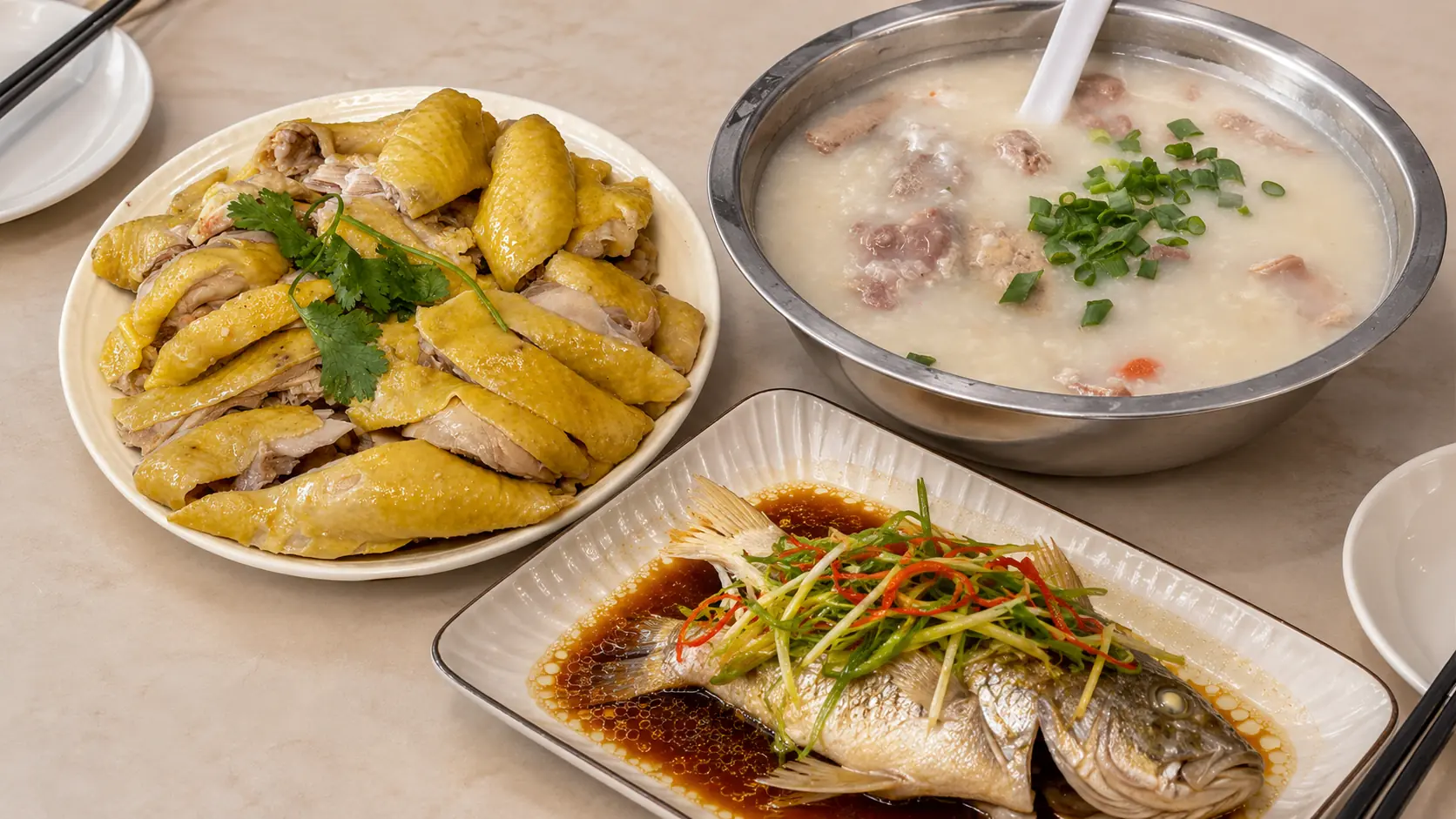
UNESCO's Shunde Creative Cities page calls Shunde (顺德) one of the cradles of Cantonese cuisine and lists it as a Creative City of Gastronomy since 2014. That matters because Shunde shows the cuisine at its most revealing: steamed fish, milk dishes, white-cut chicken, clear broths, and techniques where over-seasoning would ruin the point.
Do not mistake mild for simple
Traditional Cantonese food is often low on chili heat, but it is not low on technique. The flavor is in timing, stock, freshness, knife work, and the way a dish lands on the table still hot.
Wok Hei Is Technique, Not Smoke
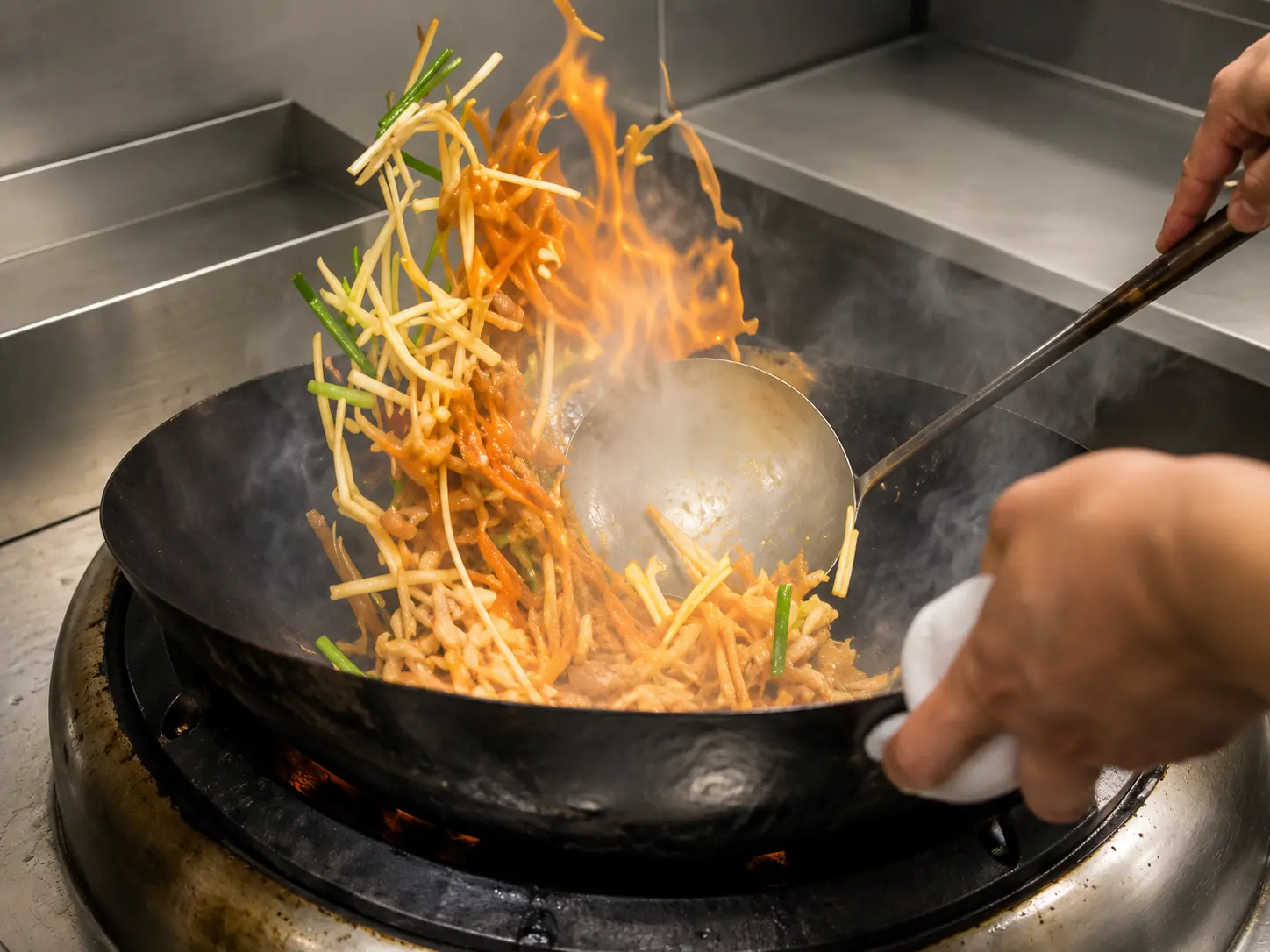
Wok hei (镬气) is often translated as "breath of the wok," but do not read it as a mystical ingredient. It is the aroma, slight char, seared surface, and hot-pan energy created when a cook moves food quickly through very high heat. A good plate should taste lively and roasted at the edges, not burnt, greasy, or smoky in a dirty way.
The easiest traveler test is dry-fried beef rice noodles (干炒牛河), fried rice, stir-fried greens, or a simple seafood stir-fry. These dishes look plain on paper, so the kitchen cannot hide behind heavy sauce. If the noodles are separate, glossy, hot, and lightly smoky without tasting scorched, the wok station is doing its job.
1High Heat
Wok hei depends on intense heat and fast movement. A lukewarm stir-fry turns wet and tired.
2Dry Surface
Ingredients need enough surface contact to sear. Too much water in the wok kills the effect.
3Short Timing
The best wok dishes arrive hot and fast. Letting them sit too long flattens the aroma.
Seafood Shows the Freshness Rule Best
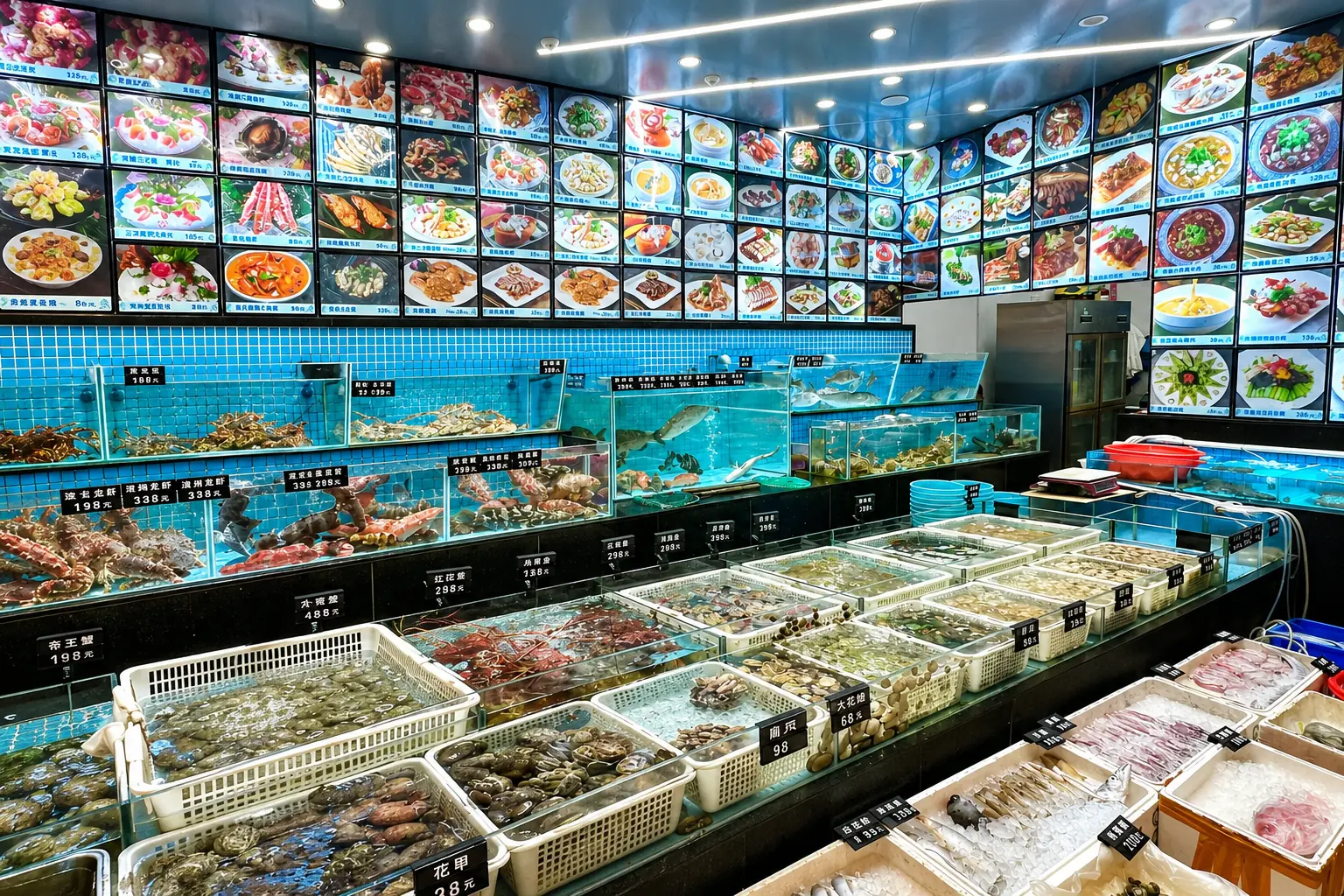
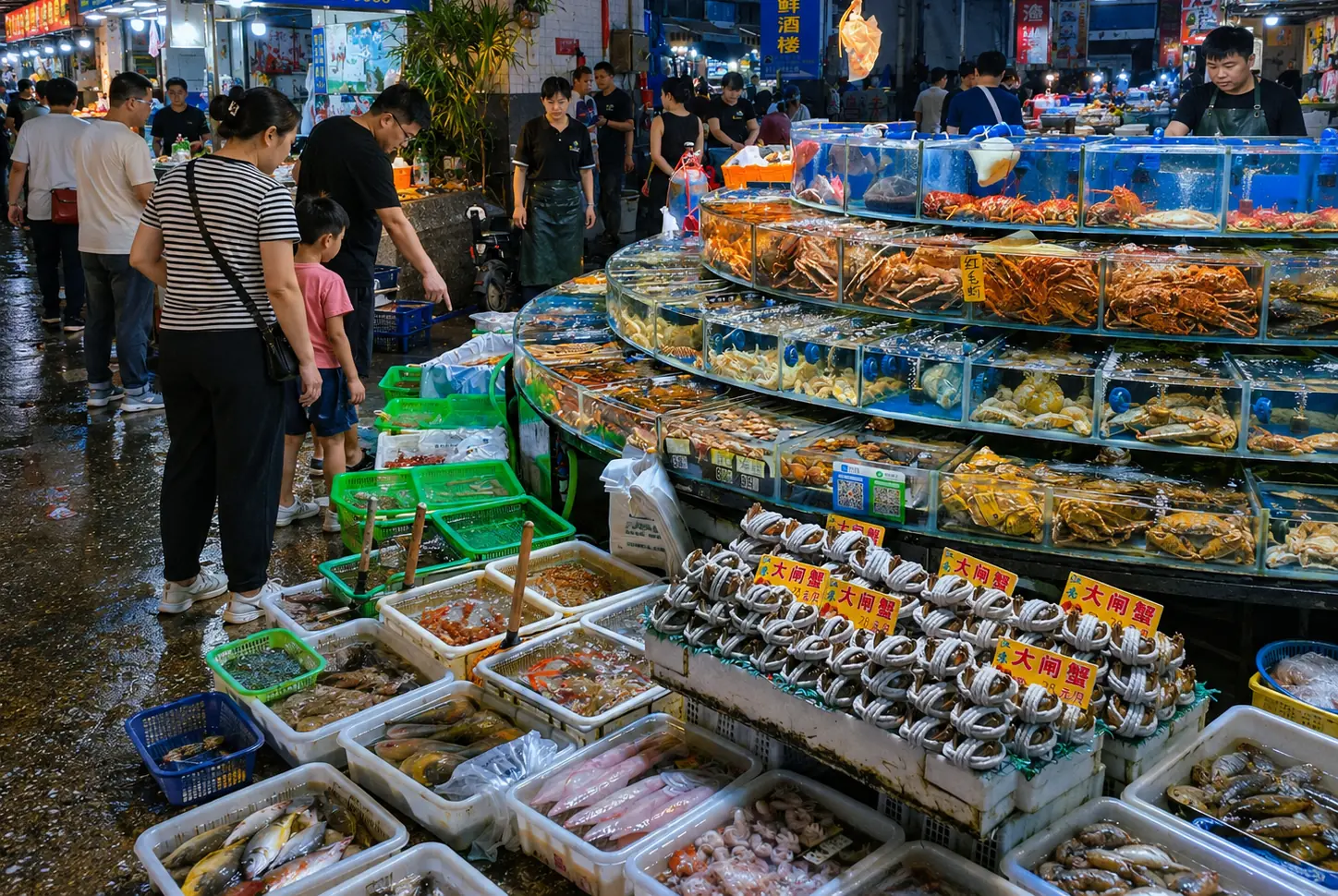
Seafood is the most direct way to understand Cantonese freshness. Clear-steamed fish, white-boiled shrimp, ginger-scallion crab, steamed scallops with garlic, and fish cooked two ways all depend on ingredient quality first. The sauce should brighten the seafood, not rescue it.
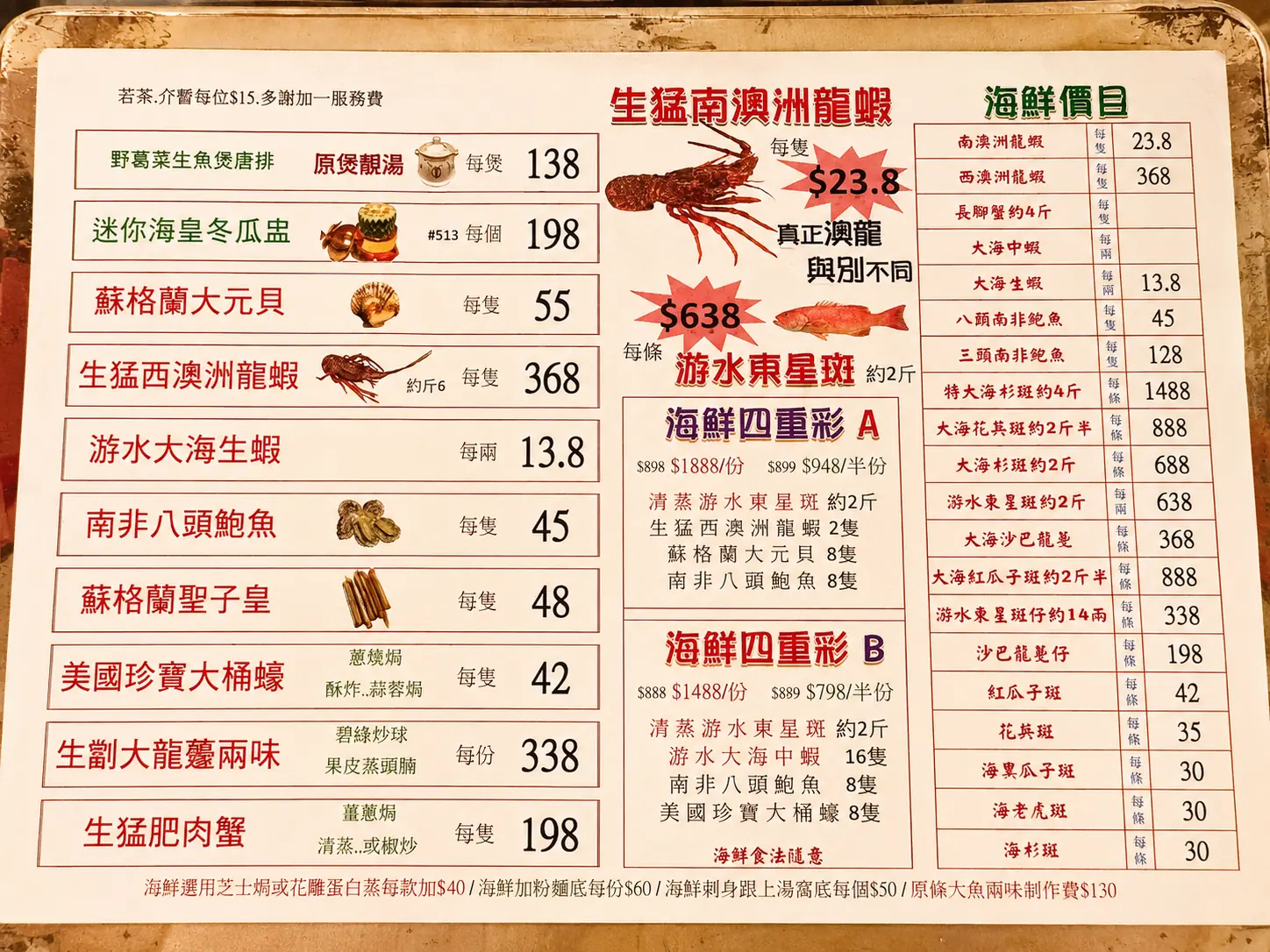
In many Cantonese seafood restaurants, especially live-seafood places, ordering is partly a conversation. Confirm the price unit, the weight before cooking, the cooking method, and whether there is any extra preparation fee. In mainland China this may be priced per 500 g or per piece; in Hong Kong and Macau, menus may use local weight terms. The point is not to memorize every unit, but to make the staff say the unit and total weight before the fish leaves your sight.
| Before You Confirm | What to Ask | Why It Matters |
|---|---|---|
| Price unit | Per piece, per 500 g, per catty, or market price? | The same fish can look cheap or expensive depending on the unit. |
| Weight | How heavy is this exact fish, crab, or shellfish order? | Live seafood bills change with weight, not just dish name. |
| Cooking method | Steamed, blanched, fried, ginger-scallion, garlic, or two courses? | The same ingredient can become a light dish or a heavy sauced one. |
| Extra fees | Any cooking, sauce, side-dish, or tea charges? | Asking early prevents the bill from feeling mysterious. |
Seafood tanks are not automatically better
Choose places with turnover and clear pricing. A tank full of live fish is useful only if the restaurant handles weight, cooking, and freshness honestly.
Soups and Seasonal Eating Set the Pace
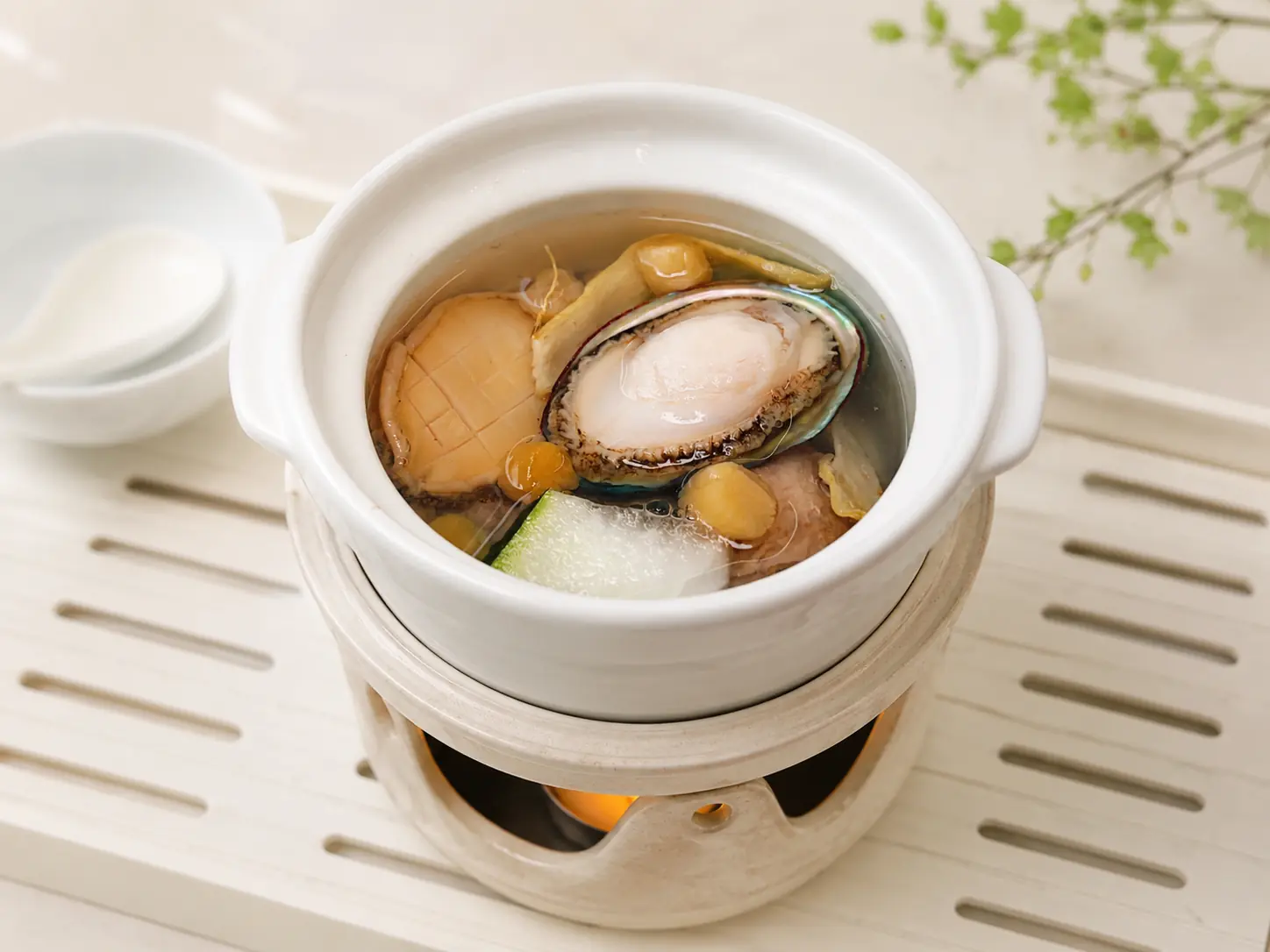
Cantonese meals often feel calm because the table has a rhythm: soup, rice, vegetables, a steamed or blanched dish, something from the wok, and perhaps roast meat. Soup is not filler. Clear broth, double-boiled soup, winter melon soup, watercress soup, herbal chicken soup, and pork-bone broths are part of how the meal balances heat, fat, weather, and appetite.
Seasonality also matters. The Guangzhou official cuisine page says Cantonese recipes stress seasonal flavors, with clearer dishes in summer and autumn and more substantial food in winter and spring. For travelers, that means the "best" order changes by month: lighter steamed seafood and greens in hot weather, deeper soups and richer meats when the air cools.
汤Soup First
Soup gives the table a slower start and softens the heavier dishes that follow.
鲜Freshness First
Steaming, blanching, and poaching make weak ingredients obvious. That is the point.
时Season First
Good Cantonese ordering asks what is fresh now, not what is famous all year.
Roast Meats Anchor Everyday Cantonese Lunches
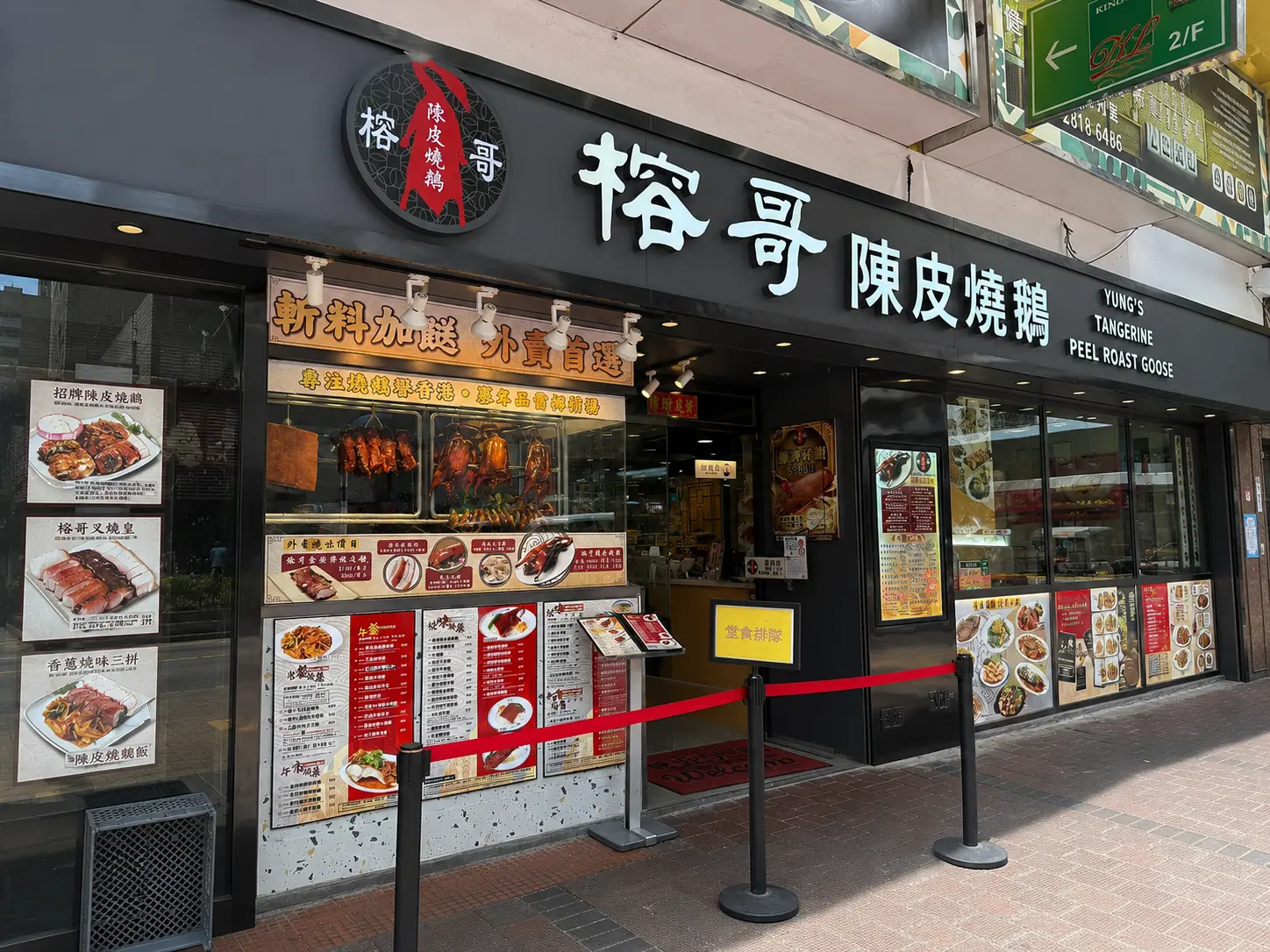
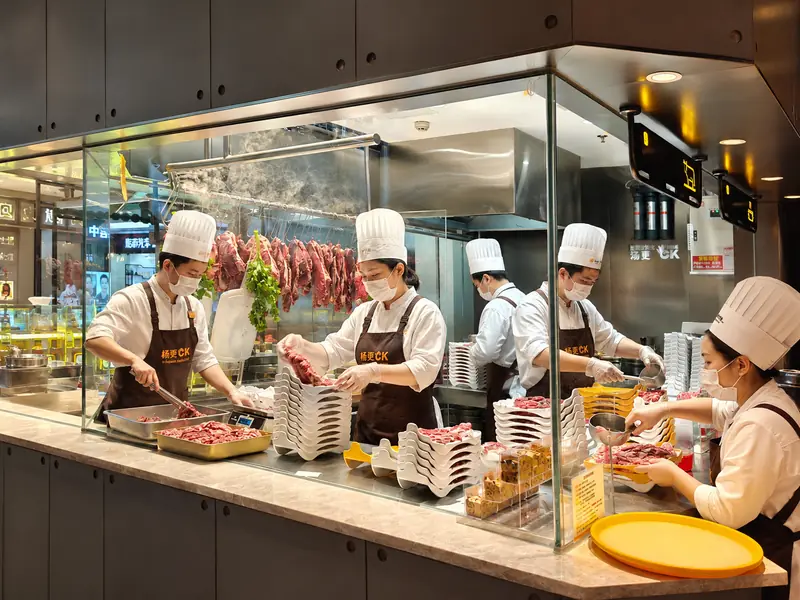
Cantonese roast meats are a daily system, not only a famous-goose moment. The window may hold roast goose (烧鹅), char siu (叉烧), crispy roast pork belly (烧肉), roast duck (烧鸭), soy sauce chicken (豉油鸡), and white-cut chicken (白切鸡). In Guangdong and Hong Kong, travelers often hear this world called siu mei (烧味) or siu laap (烧腊).
This guide will not repeat the Cantonese roast goose guide or the char siu guide. The regional lesson is simpler: roast meats give Cantonese food its fast-lunch backbone. You point at the window, choose rice or noodles, add greens or soup, and learn a lot about fat, glaze, chopping skill, and turnover in one plate.
| Roast-Meat Order | Chinese | Best Role on the Table |
|---|---|---|
| Roast goose | 烧鹅 | Rich, aromatic, bone-in centerpiece or rice plate |
| Char siu | 叉烧 | Sweet-savory pork, easy for first-timers |
| Crispy roast pork | 烧肉 | Crackling skin and fatty contrast |
| Soy sauce chicken | 豉油鸡 | Gentler poultry choice with soy-based depth |
| White-cut chicken | 白切鸡 | Freshness and timing test, usually served with ginger-scallion dip |
Dim Sum Is One Chapter, Not Everything
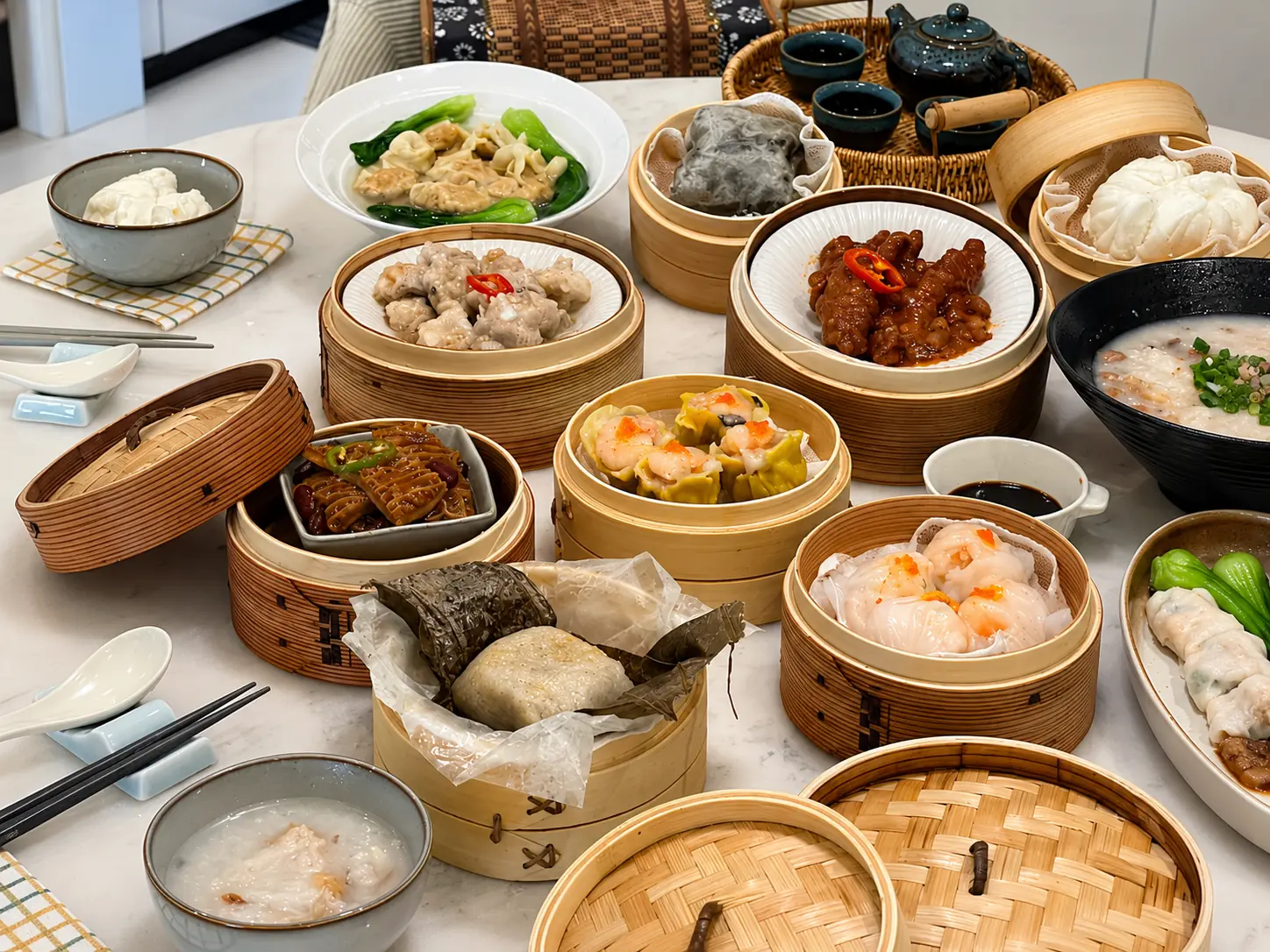
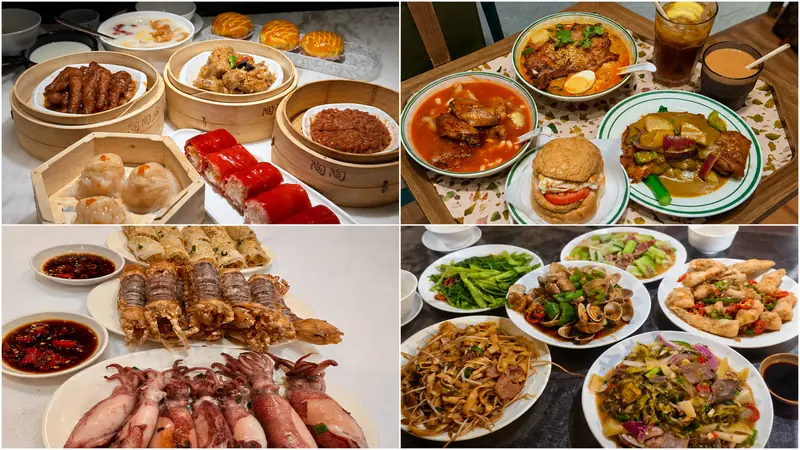
Dim sum and yum cha are central to Cantonese food, but they are not the whole cuisine. The Hong Kong Tourism Board's beginner dim sum guide highlights classic items such as siu mai, barbecue pork buns, shrimp dumplings, sticky rice in lotus leaf, rice noodle rolls, and egg tarts. Those are a strong first table, but they teach only one part of the Cantonese system.
If the city guide tells you where to go, and the Cantonese dim sum and yum cha guide tells you what to order, this article tells you where dim sum belongs. Think of it as the tea-and-craft branch of Cantonese cooking: shared plates, steamers, fried and baked textures, tea cover, table rhythm, and repeated small decisions.
Do not make a whole Cantonese trip all dim sum
One good yum cha meal is enough to learn the ritual. Leave room for seafood, soup, wok dishes, roast meats, sweets, and neighborhood meals.
Build Your First Balanced Cantonese Table
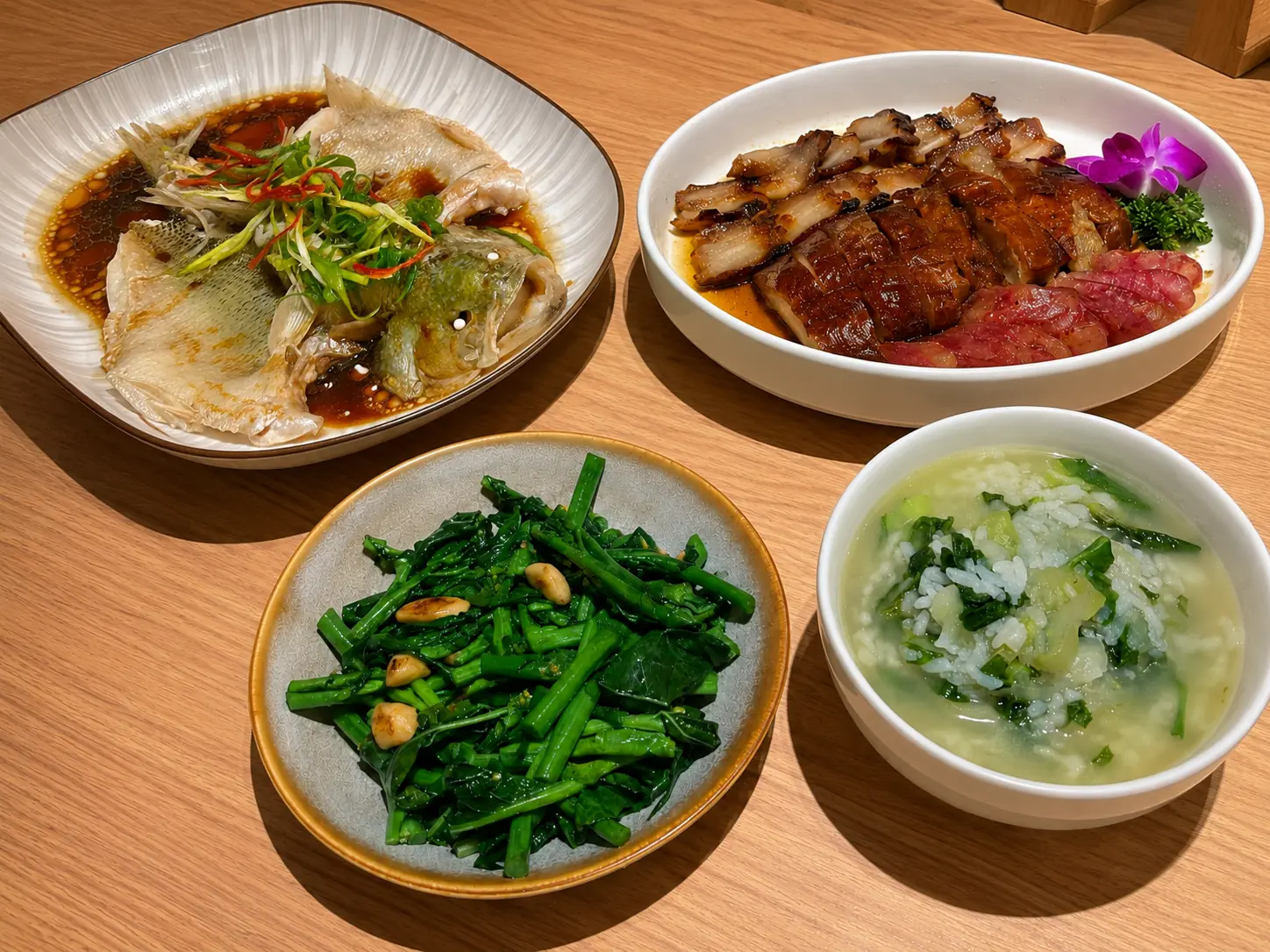
A good first Cantonese meal should not be a greatest-hits pileup. If you order only dim sum, only roast meat, or only live seafood, you miss the balance that makes the cuisine work. Start with one dish from each role, then add more only if your group is still hungry.
- Start with soup(汤)- Clear soup, double-boiled soup, or a simple seasonal broth.
- Add freshness(清蒸 / 白灼)- Steamed fish, white-boiled shrimp, white-cut chicken, or a seasonal vegetable.
- Add wok aroma(镬气)- Dry-fried beef rice noodles, fried rice, stir-fried greens, or a seafood stir-fry.
- Add roast meat(烧味 / 烧腊)- Char siu, roast goose, crispy pork, soy sauce chicken, or a two-meat rice plate.
- Anchor with rice or noodles(饭 / 粉 / 面 / 粥)- Keep the starch simple so the sauces and stocks make sense.
For two people, reduce the plan to soup, one seafood or chicken dish, one wok dish, and rice. For three or four, add roast meat and one vegetable. For a solo traveler, a roast-meat rice plate plus soup or greens may be a better first Cantonese lunch than trying to recreate a banquet alone.
Guangzhou, Hong Kong, Shenzhen, and Macau

This is the section that prevents overlap with the city guides. Each city deserves its own food plan, but the cuisine guide should only explain how the same Cantonese base changes by place.
广Guangzhou: The Deep Base
Guangzhou is the strongest place to understand old Cantonese structure: morning tea, seafood, soups, siu laap, markets, and neighborhood restaurants. Use the Guangzhou food guide for areas and eating routes.
港Hong Kong: The Fast Reference
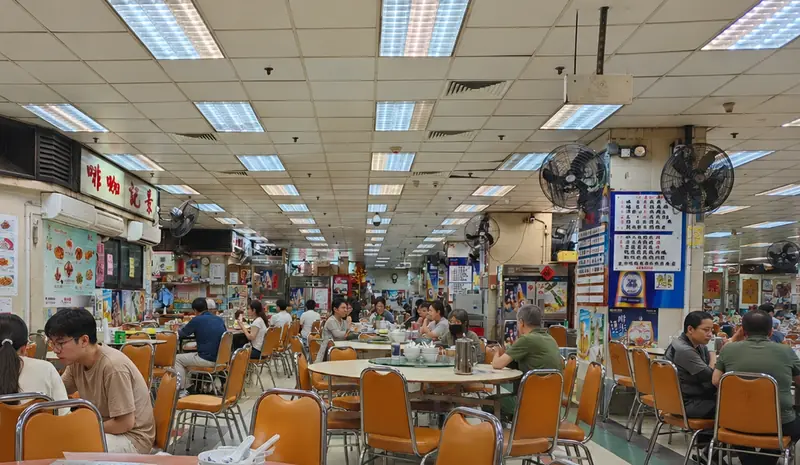
Hong Kong keeps a Cantonese core but adds speed, density, bilingual access, cha chaan teng culture, and international restaurant polish. Use the Hong Kong food guide for neighborhoods and practical choices.
深Shenzhen: The Mixed Table
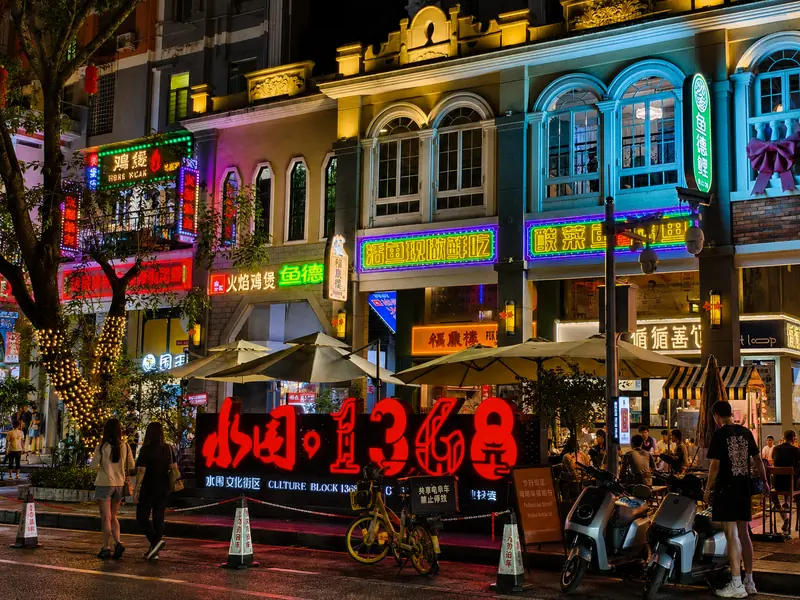
Shenzhen is not a pure Cantonese museum. Cantonese dishes sit beside Chaoshan beef hotpot, Hakka food, migrant-city dining, oysters, coconut chicken, and modern restaurants. Use the Shenzhen food guide for that mix.
澳Macau: The Fusion Edge
Macau shares a Cantonese base, but its stronger traveler story also includes Macanese and Portuguese-Chinese food. Use the Macau food guide for egg tarts, Macanese dishes, old-town snacks, and hotel dining.
Vegetarian, Seafood, and Hidden Sauce Risks
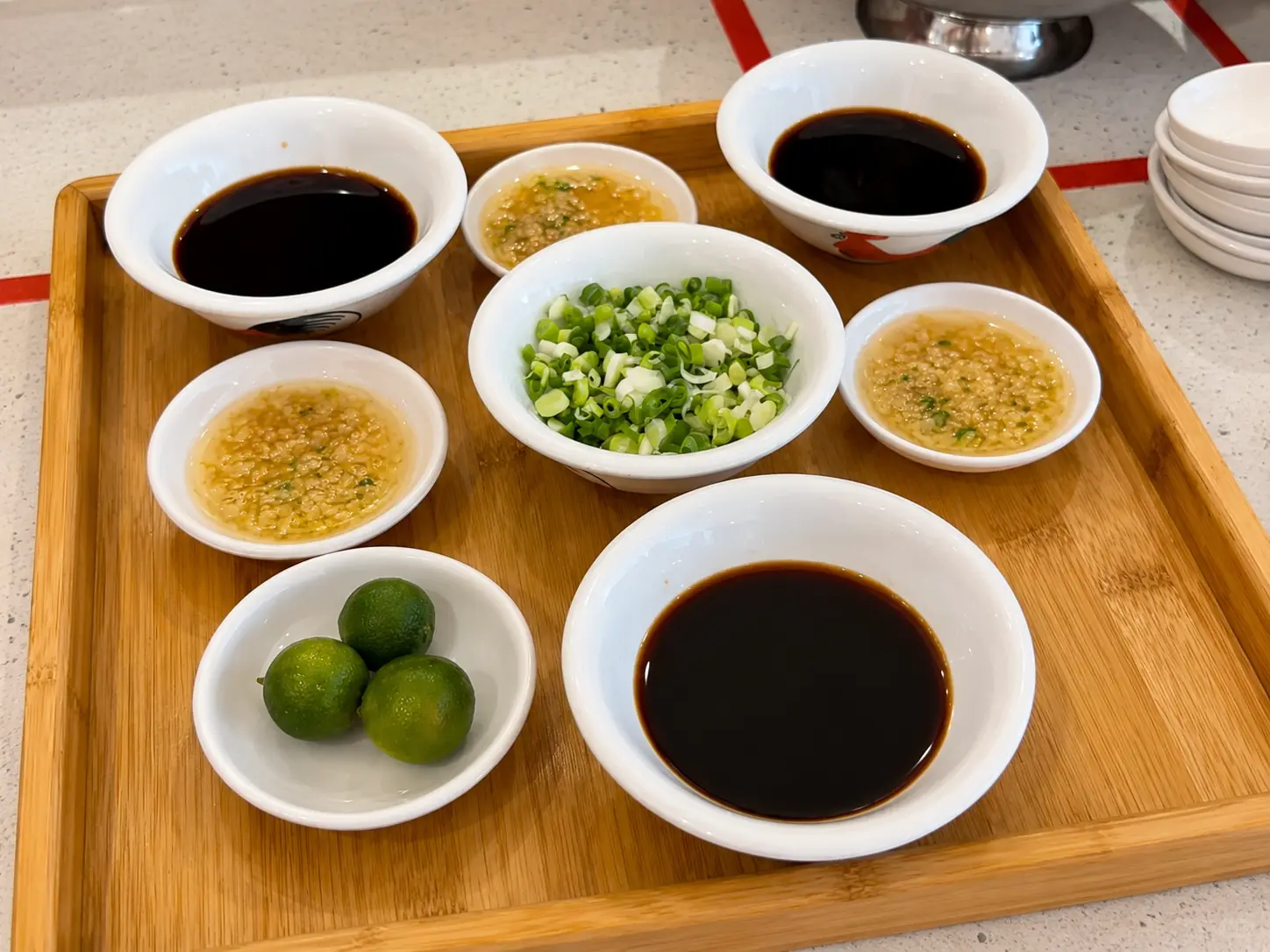
Cantonese food can look gentle and still be difficult for strict dietary needs. A plain green vegetable may be cooked with oyster sauce, lard, chicken powder, superior stock, dried shrimp, or dried scallop. Congee may use meat stock. Tofu may be topped with minced pork or seafood sauce. Noodle sauces often include soy sauce, and many soy sauces contain wheat.
| Risk | Where It Hides | What to Say or Check |
|---|---|---|
| Seafood | Oyster sauce, dried shrimp, dried scallop, fish stock, shrimp paste | Ask staff to check sauces and soup bases, not only visible seafood. |
| Soy and wheat | Soy sauce, marinades, roast-meat glaze, noodle sauces | Gluten-free travelers should not assume soy sauce is safe. |
| Pork or lard | Vegetables, pastries, congee, broth, dim sum fillings, roast counters | Ask about pork fat and stock, not only meat pieces. |
| Chicken stock | Clear soups, vegetable dishes, sauces, rice and noodle bases | Vegetarian travelers should ask whether the dish uses meat stock. |
| Sesame and peanuts | Desserts, sauces, cold dishes, oils, toppings | Check sweets and sauces even when the main dish looks safe. |
State what you cannot eat
In Cantonese restaurants, "vegetarian" or "no seafood" may not be enough. Say the ingredient you must avoid and ask staff to check the kitchen, especially for sauces, stocks, and cross-contact.
Frequently Asked Questions
Traditional Cantonese food is usually mild compared with Sichuan, Hunan, or Chongqing food. Some dishes use chili, but most classic Cantonese cooking focuses on freshness, stock, texture, heat control, and clear seasoning rather than heavy chili heat.
Beyond This Guide
For city routes, use the Guangzhou, Hong Kong, Shenzhen, and Macau food guides. For deeper dish-level help, continue with the dim sum, roast goose, and char siu guides, then return here when you need to build a balanced Cantonese table instead of chasing single famous dishes.
© gochinafreely.com — Original guide by Go China Freely.