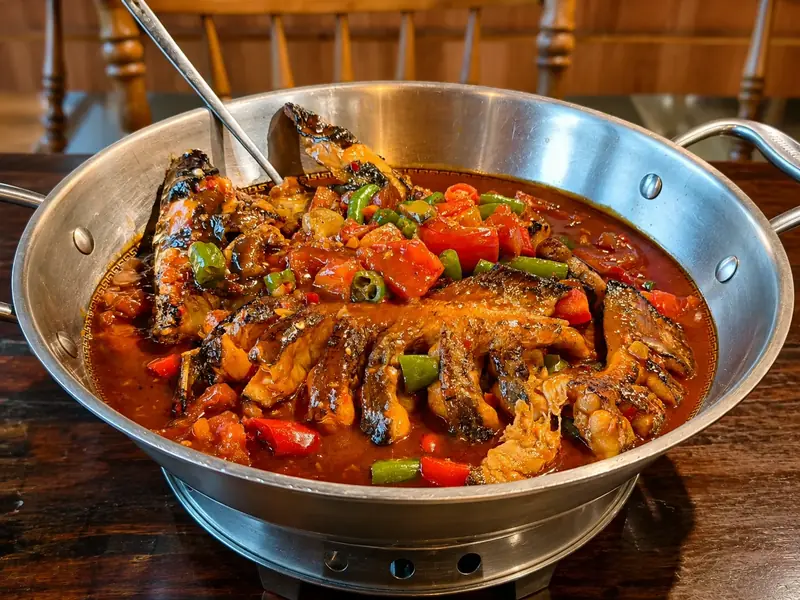
Guilin (桂林) and Yangshuo (阳朔) are usually sold through scenery: karst peaks, slow rivers, bamboo rafts, and the 20-yuan banknote view. The food is quieter but just as tied to the landscape: rice noodles before the first boat, beer-braised fish after a Li River day, stuffed snails, taro pork, chili sauce, and market vegetables from the countryside around Yangshuo.
The trick is not finding food. It is reading the setting. Guilin city is best for rice noodles and practical snack streets; Yangshuo is better for beer fish, stuffed dishes, market cooking, and countryside meals. This guide shows what to order, where each meal makes sense, and how to avoid the tourist-street versions that make Guangxi food feel flatter than it is.
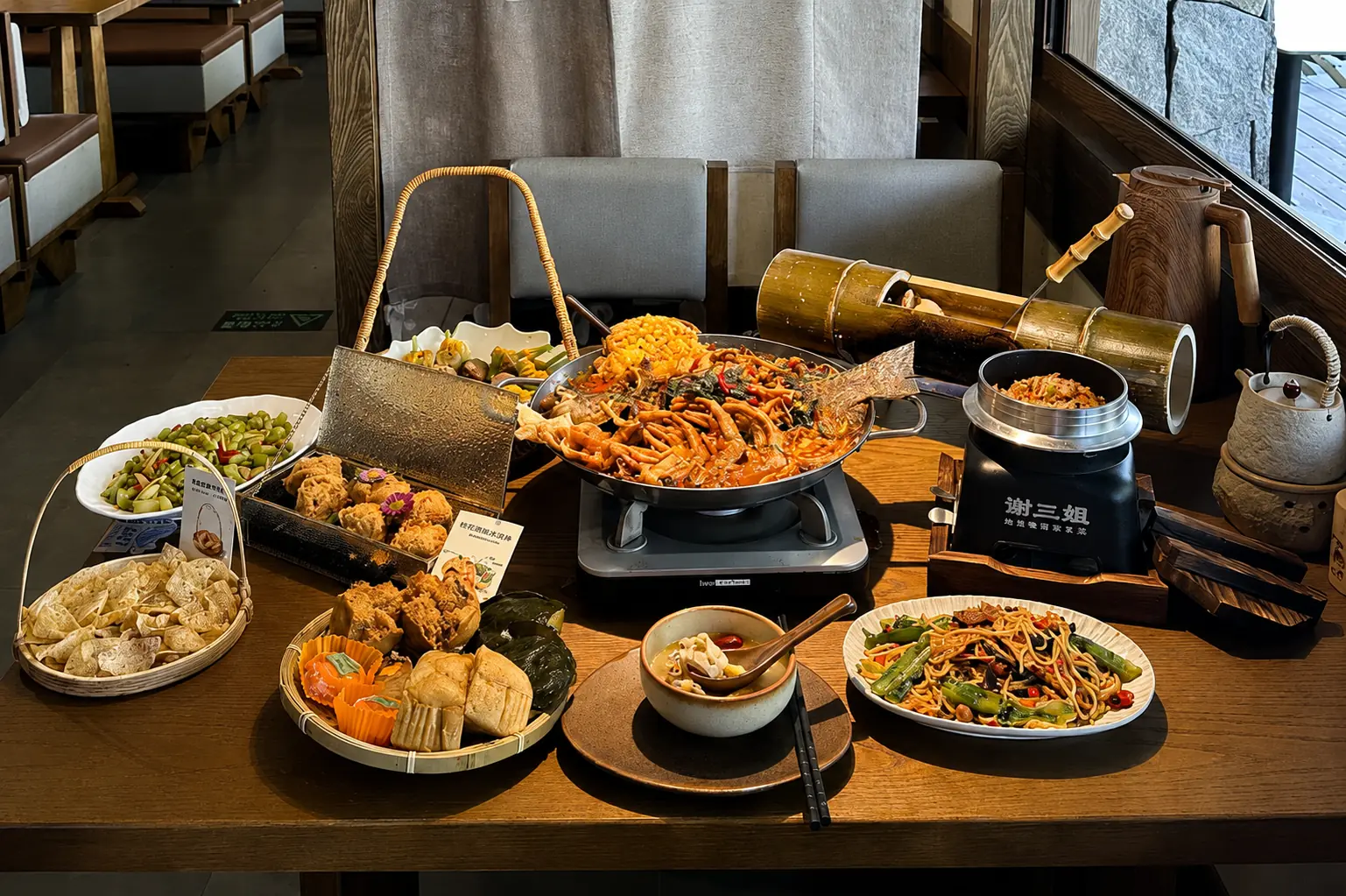
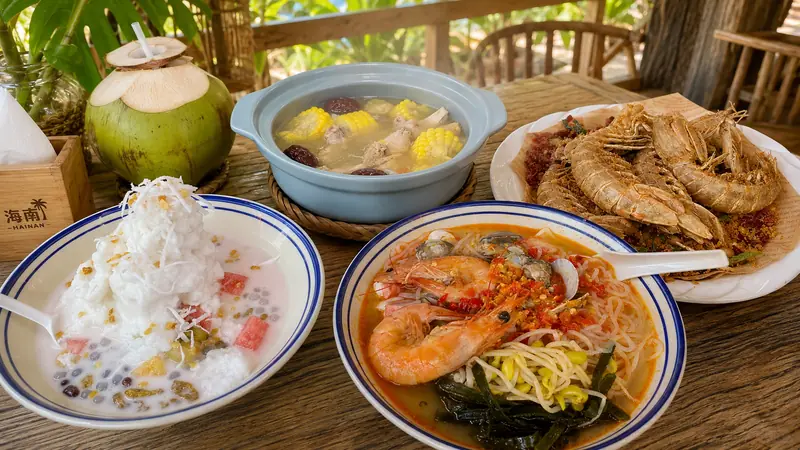
Rice noodles and beer fish frame the Guilin-Yangshuo food route.
Executive Summary
What to expect
Rice-based, river-based, lightly spicy, and more sour-savory than fiery. Guilin and Yangshuo food uses brines, pickles, fermented tofu, chili sauce, river fish, snails, taro, herbs, and market greens.
Best first meal
Eat Guilin rice noodles for breakfast, then save Yangshuo beer fish for dinner after a Li River or Yulong River day. Add one stuffed dish and one green vegetable so the meal does not become only fish.
Main traveler challenge
The most visible food areas are tourist-heavy. Use them for convenience, but check fish prices, order rice noodles at busy local shops, and treat West Street as an entry point rather than the whole food scene.
Karst Rivers, Rice Noodles, Beer Fish
Guilin and Yangshuo food is shaped by water, rice, hills, and travel routes. Rice becomes noodles, cakes, and field meals. Rivers supply fish, shrimp, and snails. Mountain counties add oil tea, bamboo rice, taro, fermented tofu, and minority-style meals. The flavor is usually savory, sour, lightly spicy, herbal, and practical rather than rich or banquet-like.
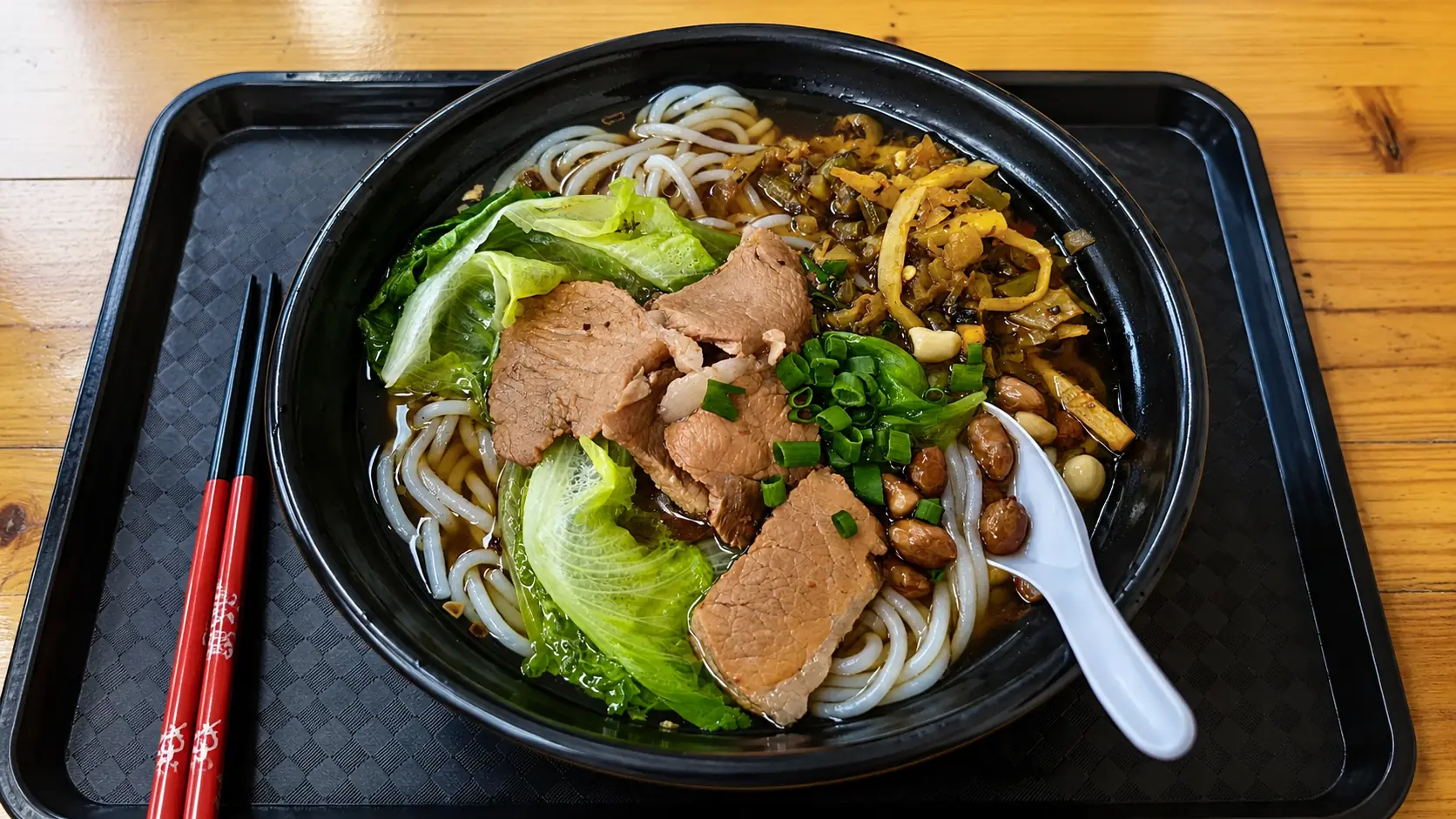
A Guilin rice-noodle bowl is built around brine, pickles, peanuts, and fast breakfast turnover.
Guilin rice noodles (桂林米粉) are the everyday anchor. In 2021, rice-noodle-making skills including Guilin rice noodles were added to China's fifth national intangible cultural heritage list, alongside other local snack traditions. That sounds formal, but the real proof is simpler: locals eat them fast, early, and often, with condiments adjusted at the table. China's State Council information office noted the national heritage-list expansion that included Guilin rice noodles.

Beer fish is a whole-fish dinner dish, not a boneless fillet.
Yangshuo beer fish (阳朔啤酒鱼) is the travel-dinner anchor. It takes a whole fish, cooks it with beer, tomatoes, peppers, garlic, ginger, and chili or chili sauce, then turns the sauce into something made for rice. It is not delicate restaurant food. It is a river-town dish that tastes best when you have been outside all day.
The third layer is stuffed food. Stuffed river snails (田螺酿), stuffed tofu, stuffed eggplant, stuffed peppers, and other "niang" dishes are common around Guilin and Yangshuo. The idea is simple: chop meat, herbs, and seasonings, stuff them into a shell or vegetable, then steam, braise, or fry. For travelers, this is often the bridge between "pretty scenery" and "this place has its own food logic."
The Flavor Profile
Expect brine, pickles, chili oil, fermented tofu, garlic, ginger, scallion, tomato, mint-like herbs, and rice. Guilin food is not as sweet as Hangzhou, not as numbing as Chengdu, and not as direct as Changsha. Spice appears often, but it usually supports sourness, fish, or rice noodles instead of becoming the entire point.
That makes Guilin and Yangshuo a good food stop for travelers who want strong local flavor without committing to constant heavy heat. It also means the food can disappoint if you only eat in places that serve watered-down tourist versions. The best meals usually come from busy rice-noodle counters, market-linked kitchens, and restaurants where local families are eating fish with rice.
Must-Try Foods in Guilin and Yangshuo
Start with these dishes and snacks. They cover both the city and the countryside better than a pure restaurant list.
| Dish or Snack | Chinese | What It Tastes Like | Best Context |
|---|---|---|---|
| Guilin Rice Noodles | 桂林米粉 | Rice noodles, savory brine, pickles, peanuts, chili oil | Breakfast, quick lunch |
| Yangshuo Beer Fish | 阳朔啤酒鱼 | Whole fish with beer, tomato, peppers, garlic, chili | Dinner, groups |
| Stuffed River Snails | 田螺酿 | Snail meat and pork stuffing, herbs, chewy shells | Yangshuo meal |
| Eighteen Stuffed Dishes | 十八酿 | Tofu, eggplant, peppers, mushrooms, or gourds with filling | Shared table |
| Lipu Taro Pork | 荔浦芋扣肉 | Steamed taro and pork belly, fermented tofu depth | Classic Guangxi meal |
| Crispy Li River Shrimp | 漓江虾 | Tiny fried shrimp, crunchy shell, savory snack | River meal, beer |
| Oil Tea | 油茶 | Savory pounded tea soup with rice, peanuts, ginger | Mountain counties, local breakfast |
| Bamboo Rice | 竹筒饭 | Rice roasted in bamboo with meat or vegetables | Longji or minority village meals |
| Water Chestnut Sweets | 马蹄糕 | Clean, lightly sweet, springy rice-flour texture | Dessert or snack |
| Guilin Chili Sauce | 桂林辣椒酱 | Fermented chili, garlic, savory heat | Condiment, souvenir |
Rice Noodles First
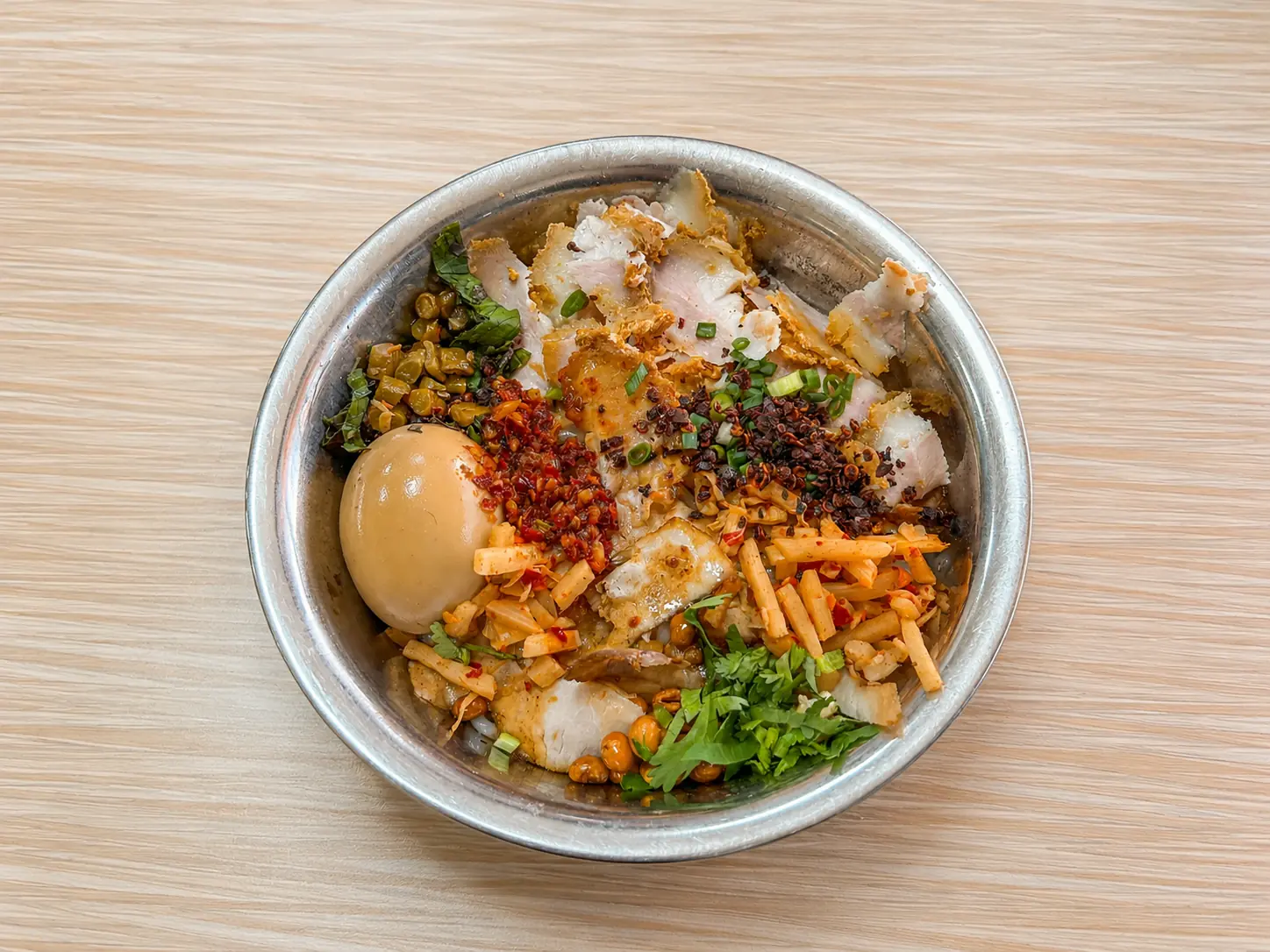
Dry-mixed rice noodles show the local brine and condiment rhythm most clearly.
Guilin rice noodles are not a side dish. They are the local operating system. A classic bowl starts with rice noodles, a dark savory brine, roasted or braised meat, pickled long beans or sour bamboo shoots, peanuts or crispy soybeans, scallions, chili oil, and broth added before or after eating depending on the shop style.
The version most visitors should try first is dry-mixed rice noodles (干捞米粉): noodles tossed with brine and toppings, then finished with broth on the side or at the end. Soup rice noodles (汤粉) are gentler and easier if your stomach wants a softer morning.
Beer Fish Is a Dinner Dish
Yangshuo beer fish is usually cooked as a whole fish, so bones are part of the experience. The sauce should taste savory, slightly malty, tomato-rich, garlicky, and lightly spicy. Some restaurants use carp or other local farmed fish; the exact fish and price can vary by season, weight, and restaurant.
Before ordering, check whether the fish is priced by portion or by weight. If it is priced by weight, ask staff to show you the fish and confirm the approximate cost before it goes to the kitchen. This one habit prevents most beer-fish disappointment.
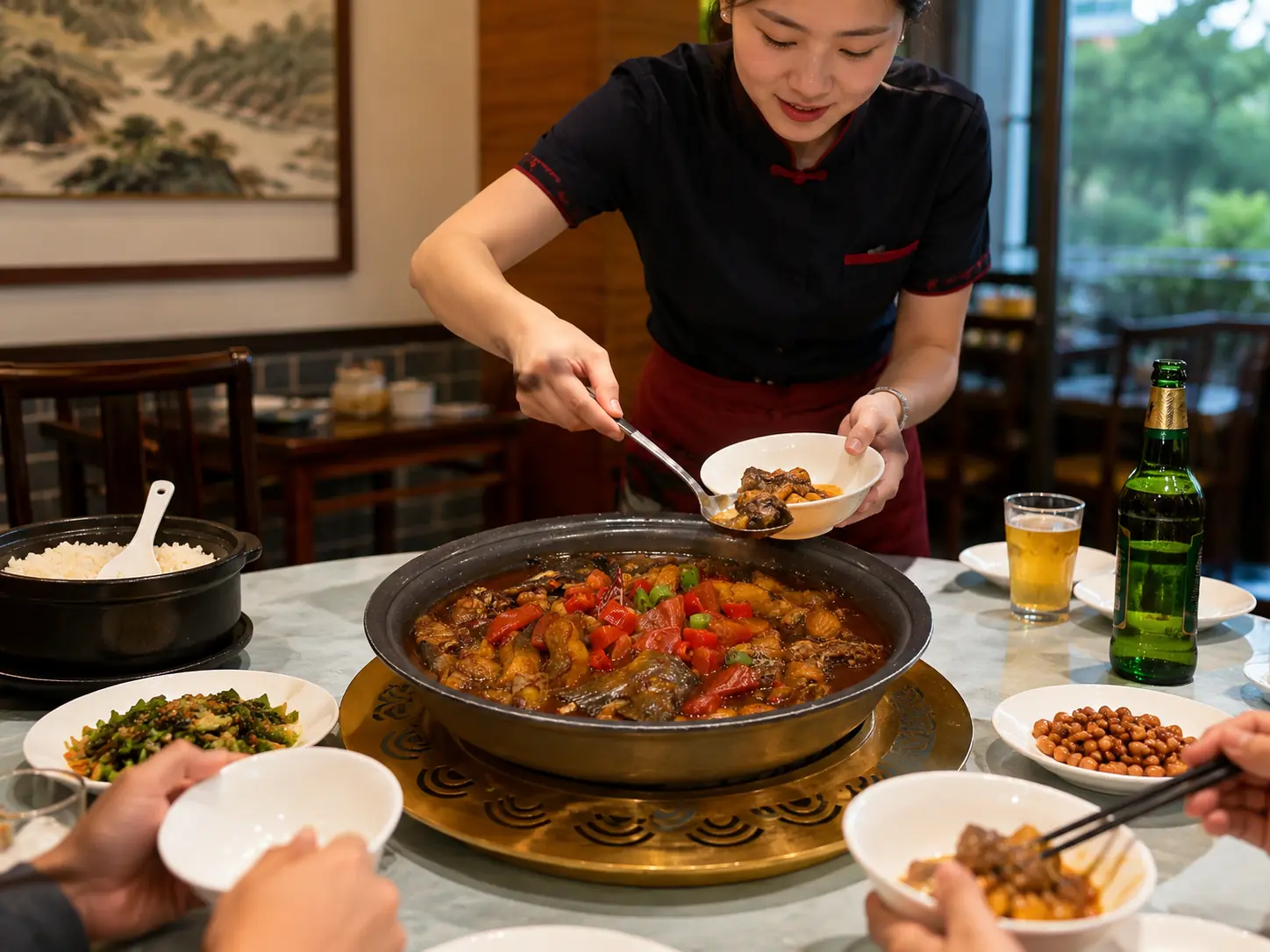
Ask about bones before ordering beer fish, especially with children.
Stuffed Snails and Stuffed Vegetables
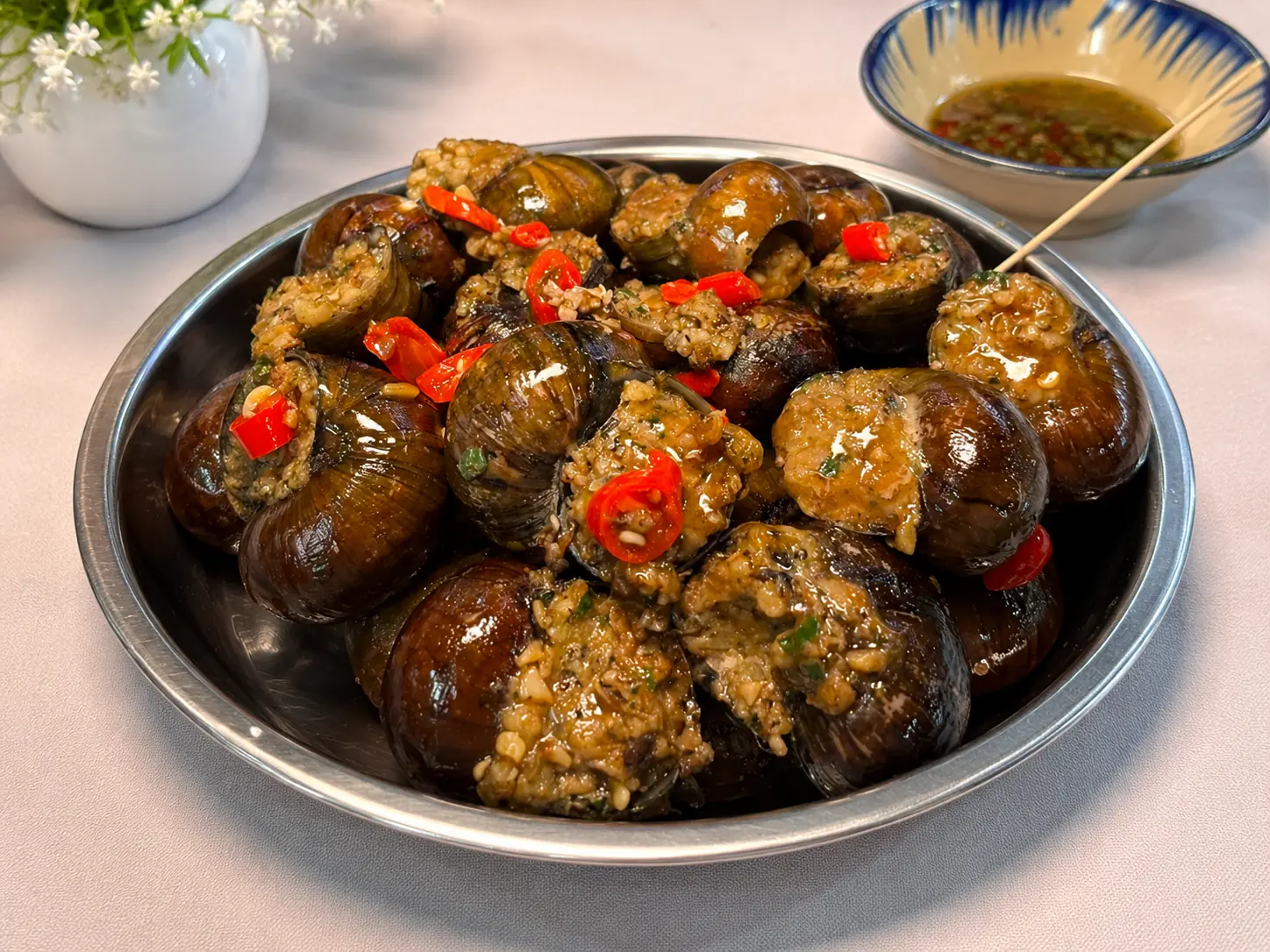
Stuffed river snails are chewy, herbal, and very local to the Yangshuo table.
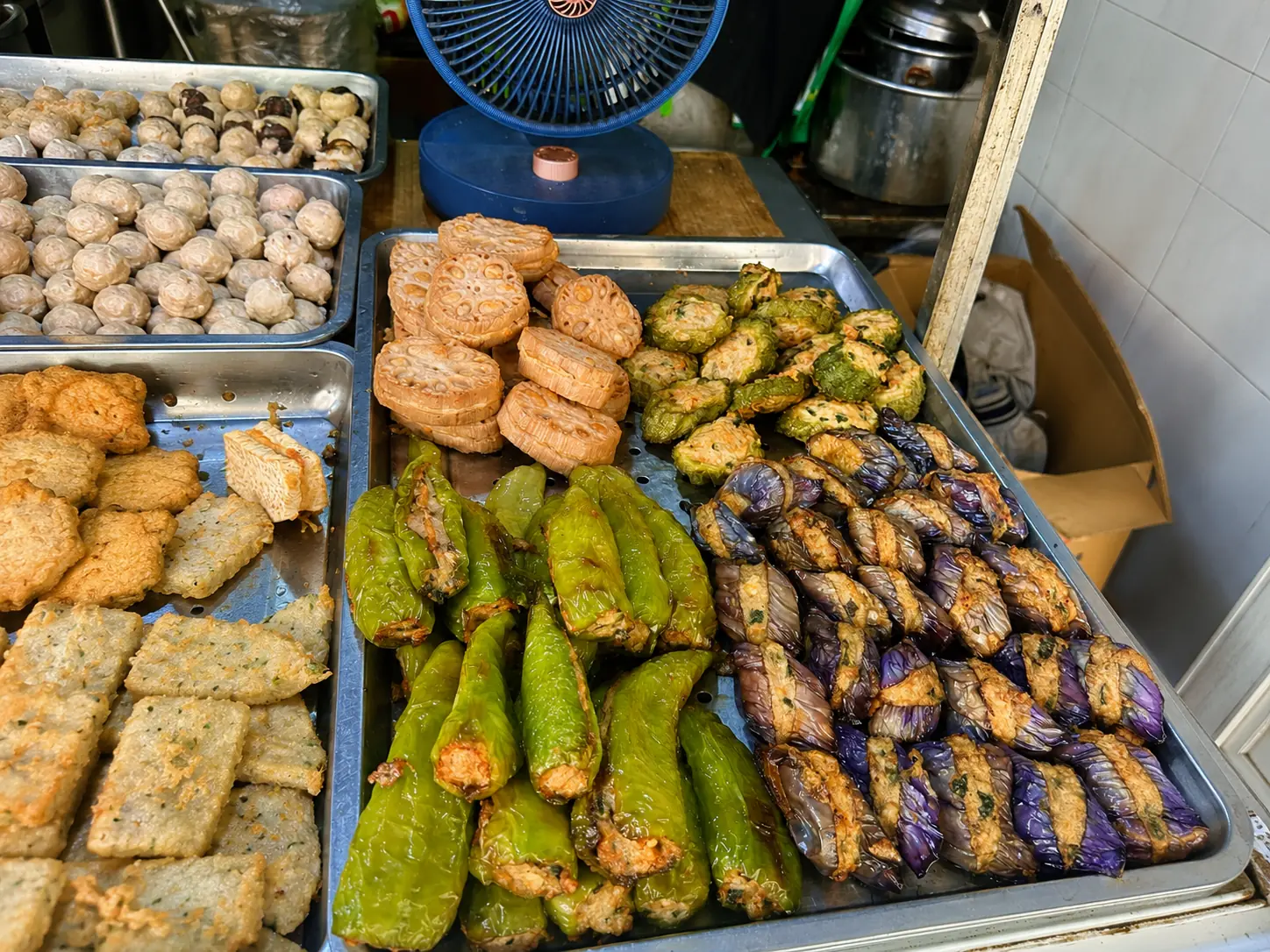
Eighteen stuffed dishes are a family of shared-table plates, not one fixed recipe.
Stuffed river snails (田螺酿) are one of the most distinctive Yangshuo dishes. The snail meat is removed, chopped with pork and seasonings, stuffed back into the shell, then cooked. The texture is chewy, herbal, and saucy. It is delicious if you like shellfish and not the right experiment if you have seafood allergies.
Eighteen stuffed dishes (十八酿) is a family of dishes rather than one fixed plate. Tofu, eggplant, bitter melon, peppers, mushrooms, and other vegetables can be filled with minced meat and seasonings. The best versions taste handmade; the weaker versions taste like generic pork filling.
Taro, Shrimp, Oil Tea, and Sweets
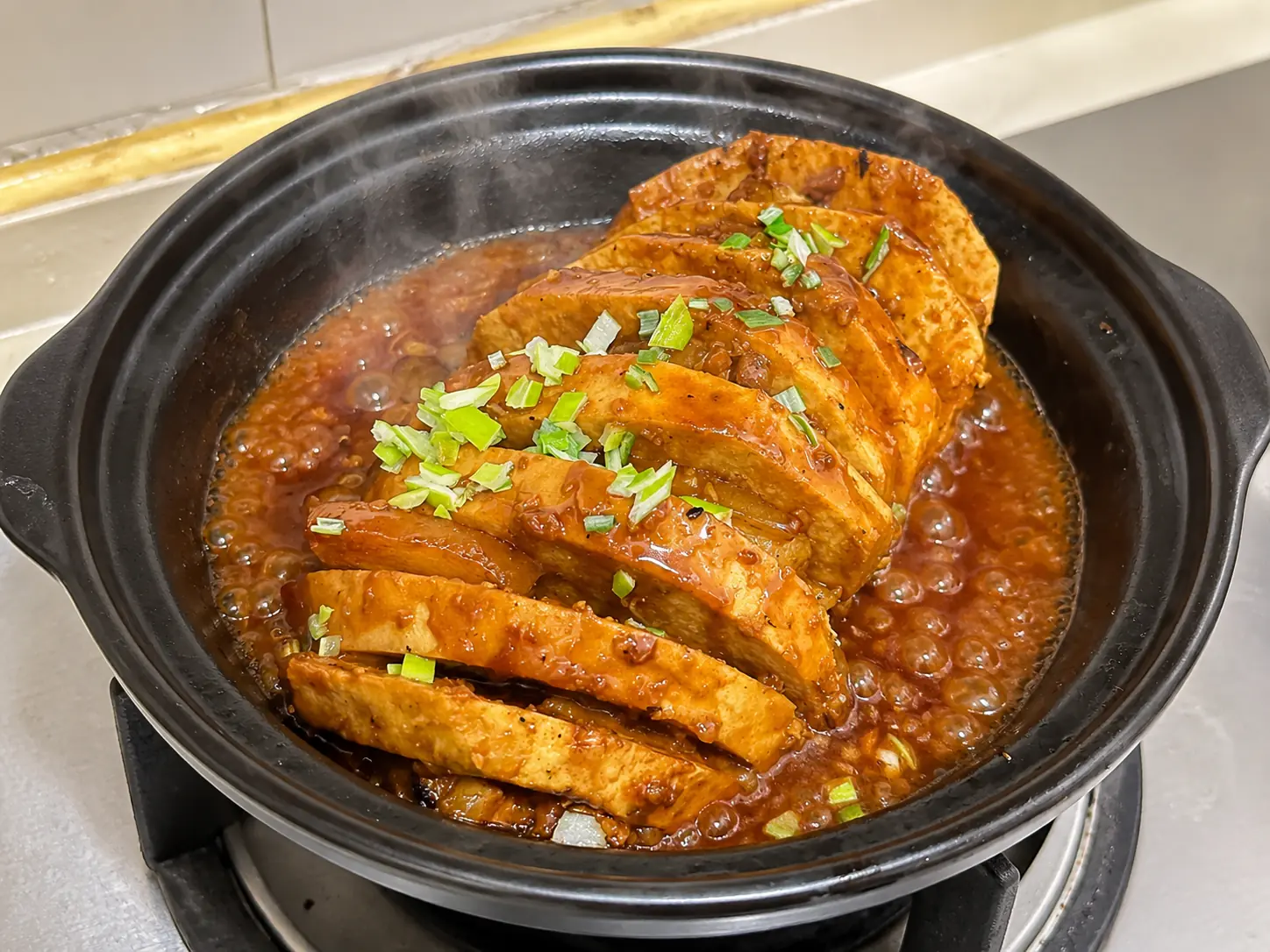
Lipu taro pork is richer than the river dishes, so share it with rice and greens.
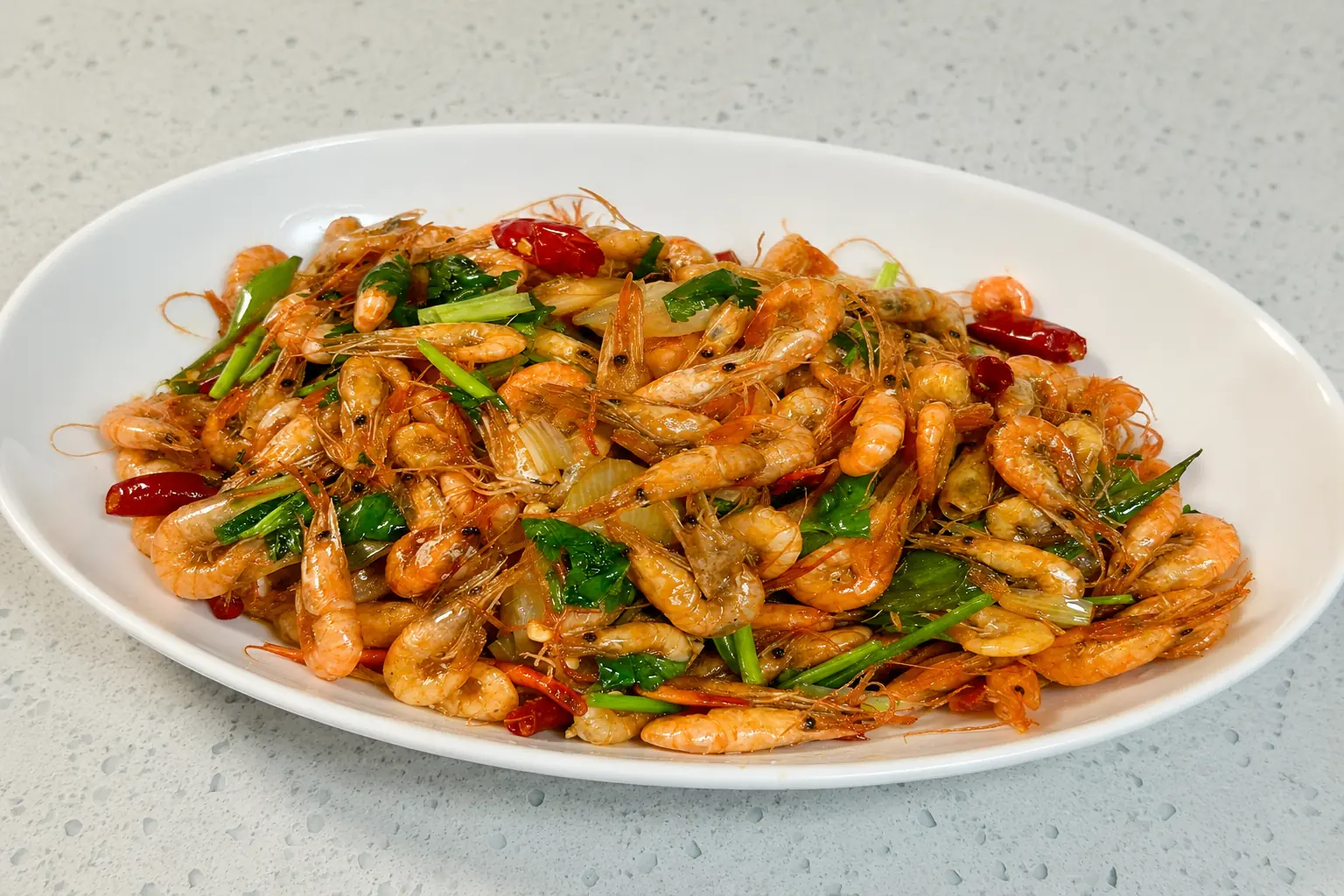
Tiny Li River shrimp are often eaten shell-on, so allergy awareness matters.
Lipu taro pork (荔浦芋扣肉) is richer than most Guilin-Yangshuo food. Slices of pork belly and taro are steamed together, often with fermented tofu and rice-wine flavors, until the taro absorbs the fat and sauce. Share it with rice and vegetables rather than eating it alone.
Crispy Li River shrimp (漓江虾) are small enough that the shell becomes part of the crunch. They work as a table snack or beer dish. If you have a shellfish allergy, treat them as an obvious no.
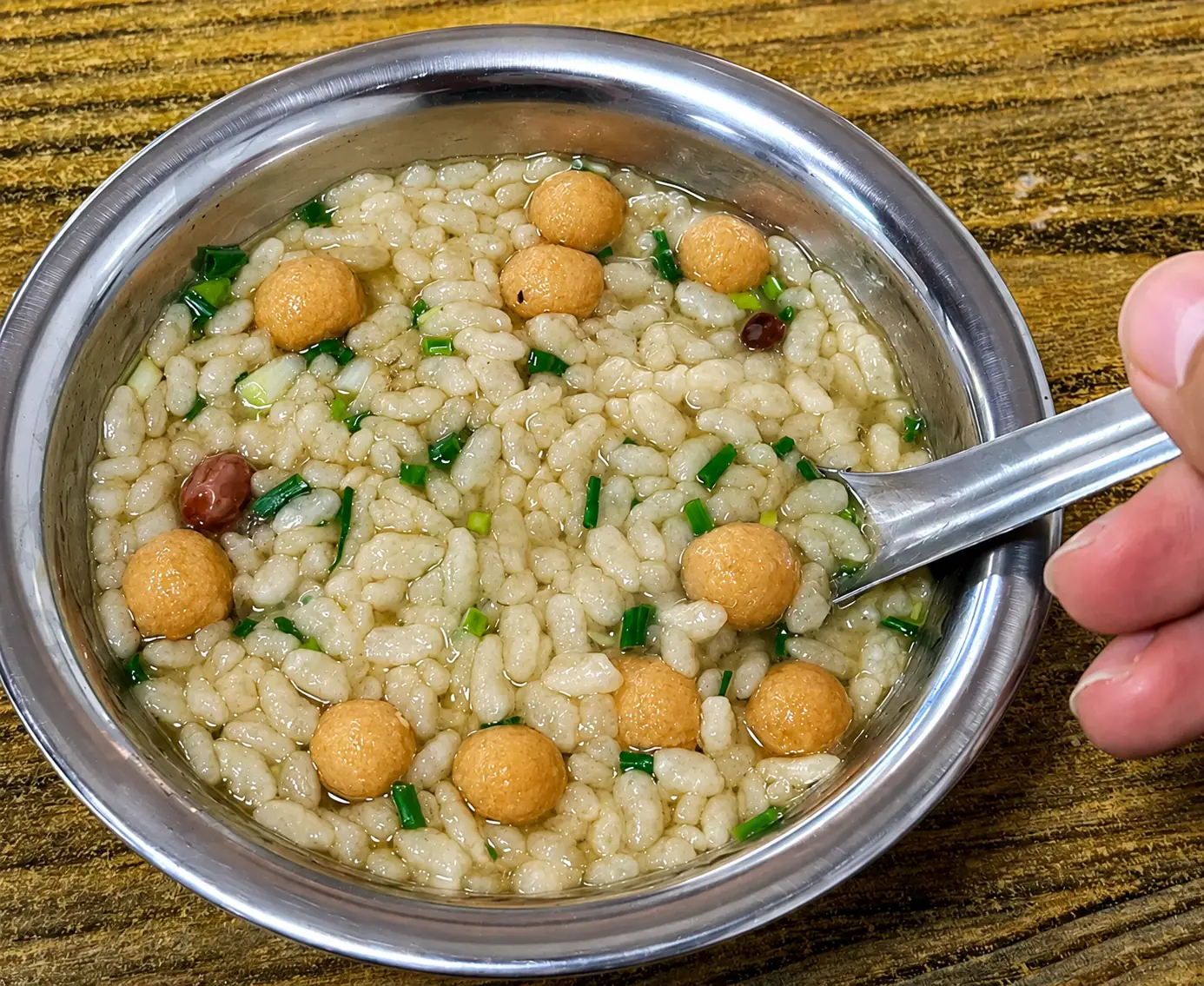
Oil tea is savory, gingered, and more common in northern Guangxi and village settings.
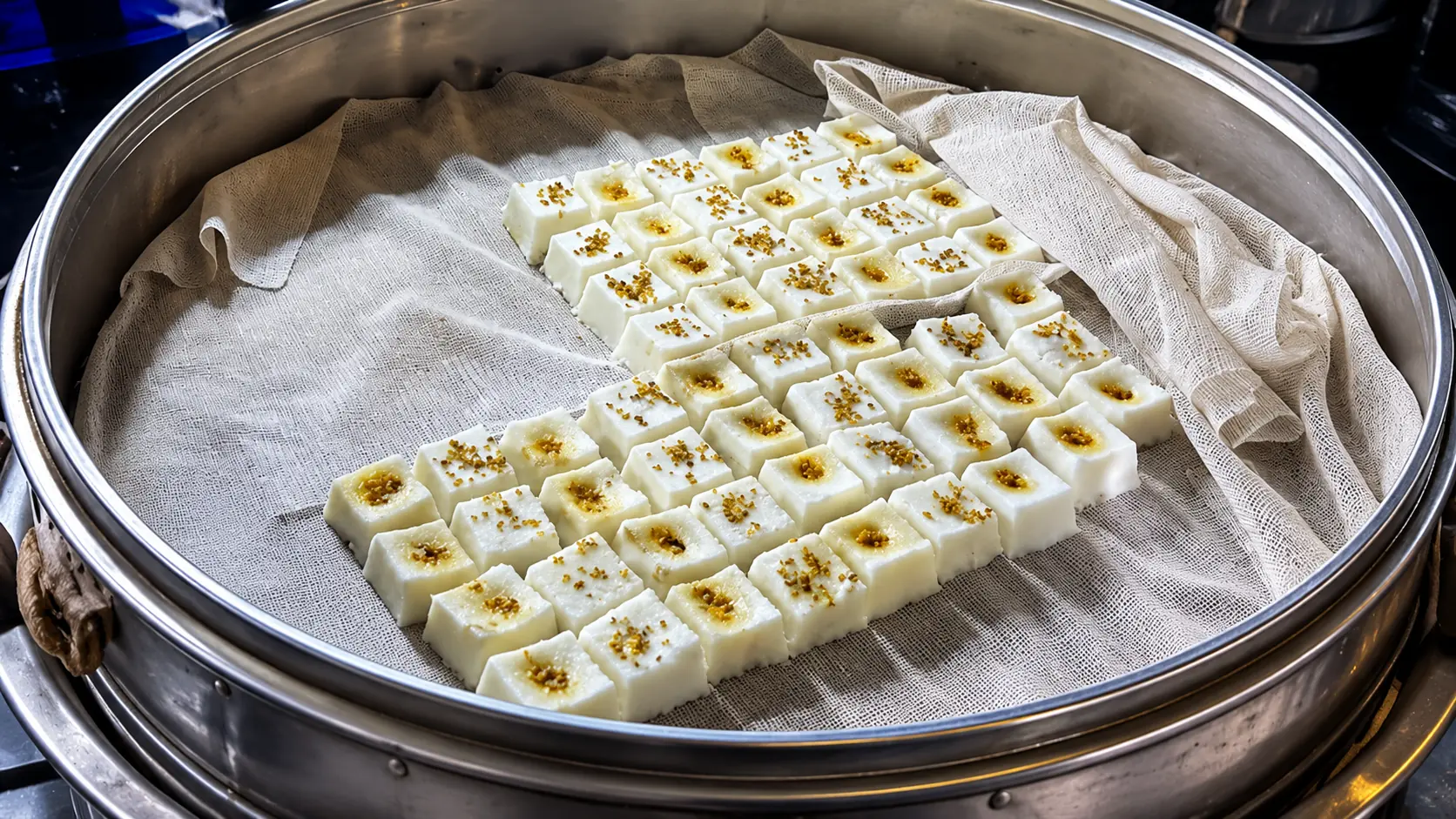
Light rice-flour sweets are useful after chili, garlic, and river dishes.
Oil tea (油茶), especially in northern Guangxi minority areas, is an acquired taste: savory tea, ginger, rice, peanuts, and sometimes meat or small fish. It is more common in mountain counties and villages than in central tourist restaurants, but it is worth knowing if you extend the trip to Longji or Sanjiang.
For sweets, look for water chestnut cake, osmanthus rice cakes, glutinous rice snacks, and seasonal fruit. They are not as famous as beer fish, but they are useful after chili, garlic, and river dishes.
Guilin Rice Noodles Breakfast Strategy for Travelers
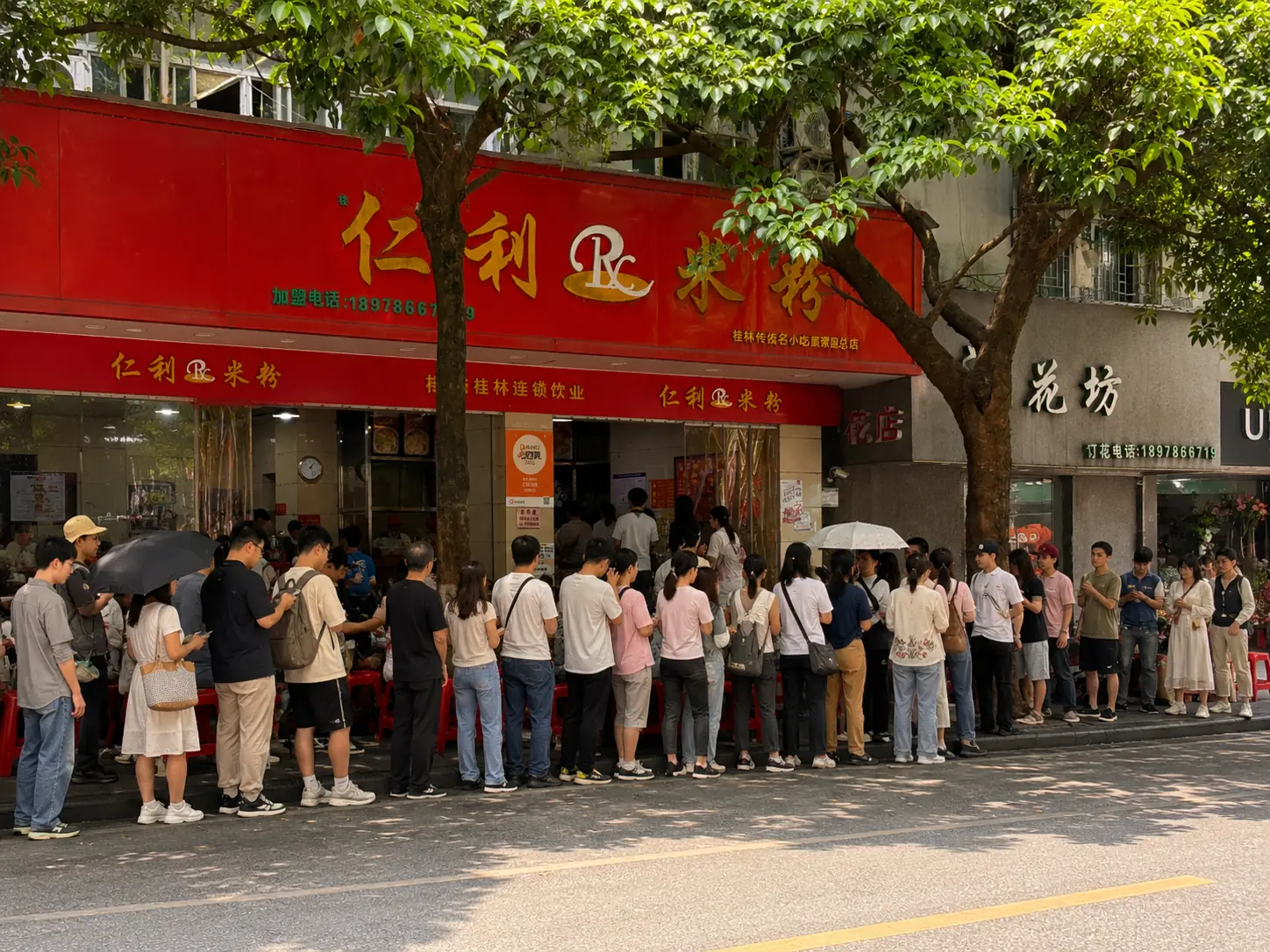
The best rice-noodle shops usually look busy, simple, and fast.
The best Guilin rice-noodle experience usually happens before the scenic day starts. Do not waste it on a hotel buffet version. Go to a busy neighborhood shop, order one bowl, then watch what locals add from the condiment counter.
A good shop has fast turnover, a visible topping counter, fresh chili oil, and people eating quickly rather than posing for photos. The room does not need to look beautiful. In fact, the most useful shops are often bright, simple, and slightly chaotic.
Dry-Mixed or Soup
Dry-mixed rice noodles carry the brine more clearly. Add pickles, peanuts, scallions, and chili in small amounts first; you can always add more. Some locals pour broth into the bowl after eating most of the noodles, turning the remaining sauce into a quick soup.
Soup rice noodles are safer for families, jet-lagged mornings, and travelers who want less oil. They are also better if you are testing your tolerance for local chili, pickled vegetables, or fermented flavors.
What to Add
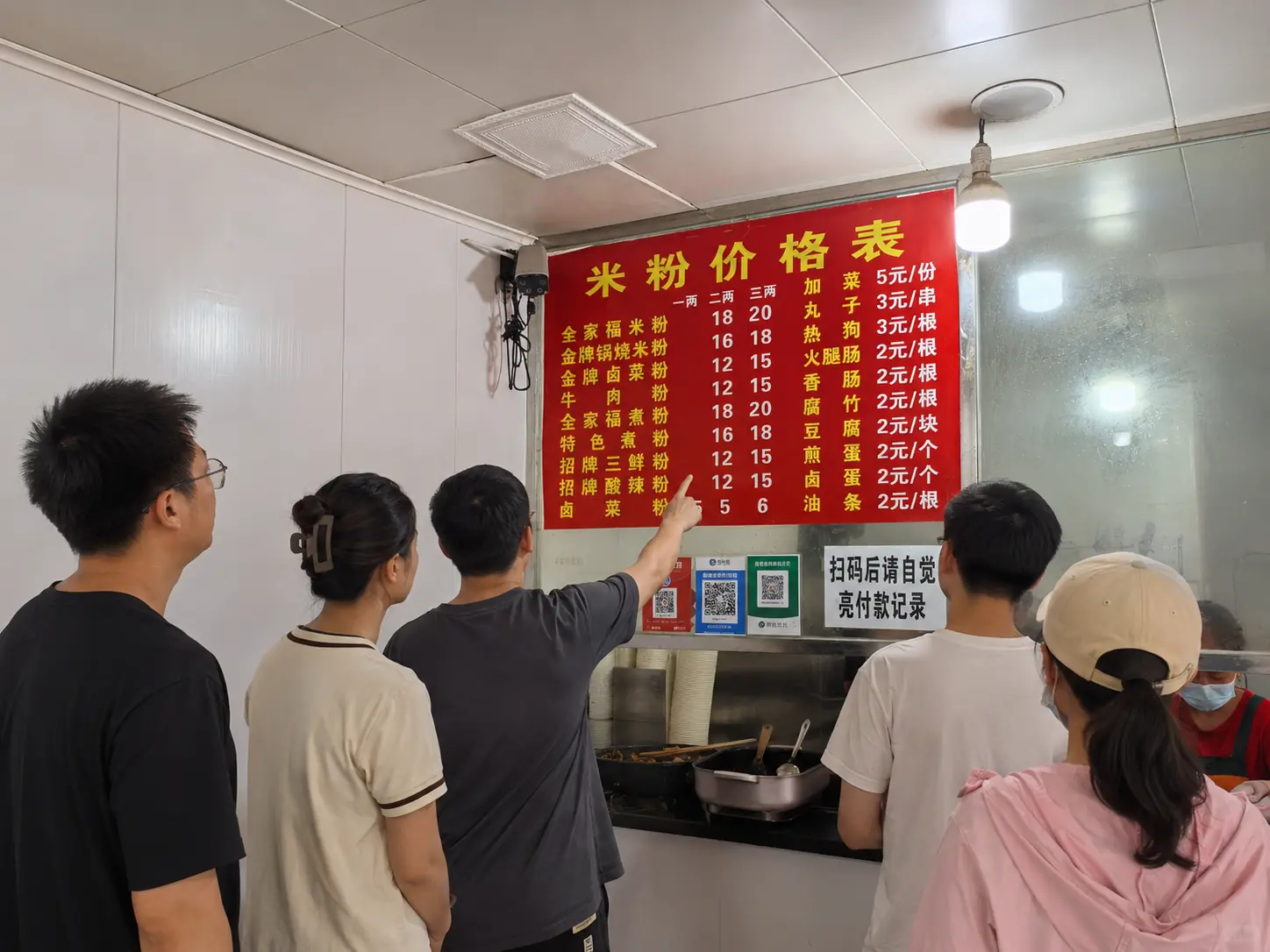
Simple phrases help at fast rice-noodle counters.
Common additions include braised beef, sliced pork, crispy pork, sour bamboo shoots, pickled long beans, roasted peanuts, chili oil, garlic, scallion, and cilantro. If you dislike cilantro, say so clearly. If you want less chili, ask before the bowl is finished because some shops add chili by default.
Rice noodles are cheap, fast, and forgiving. If your first bowl is only okay, try again the next morning in a different neighborhood. Guilin rice noodles are a habit, not a one-shop pilgrimage.
| English | Chinese | Pinyin | Say It Like… |
|---|---|---|---|
| I want Guilin rice noodles | 我要桂林米粉 | wo yao guilin mifen | Woh yow gway-lin mee-fun |
| Dry-mixed noodles | 干捞 | gan lao | Gahn laow |
| Soup rice noodles | 汤粉 | tang fen | Tahng fun |
| Use less chili | 少放辣 | shao fang la | Shaow fahng lah |
| No cilantro | 不要香菜 | bu yao xiangcai | Boo yow shyahng-tsai |
Yangshuo Beer Fish Without the Trap
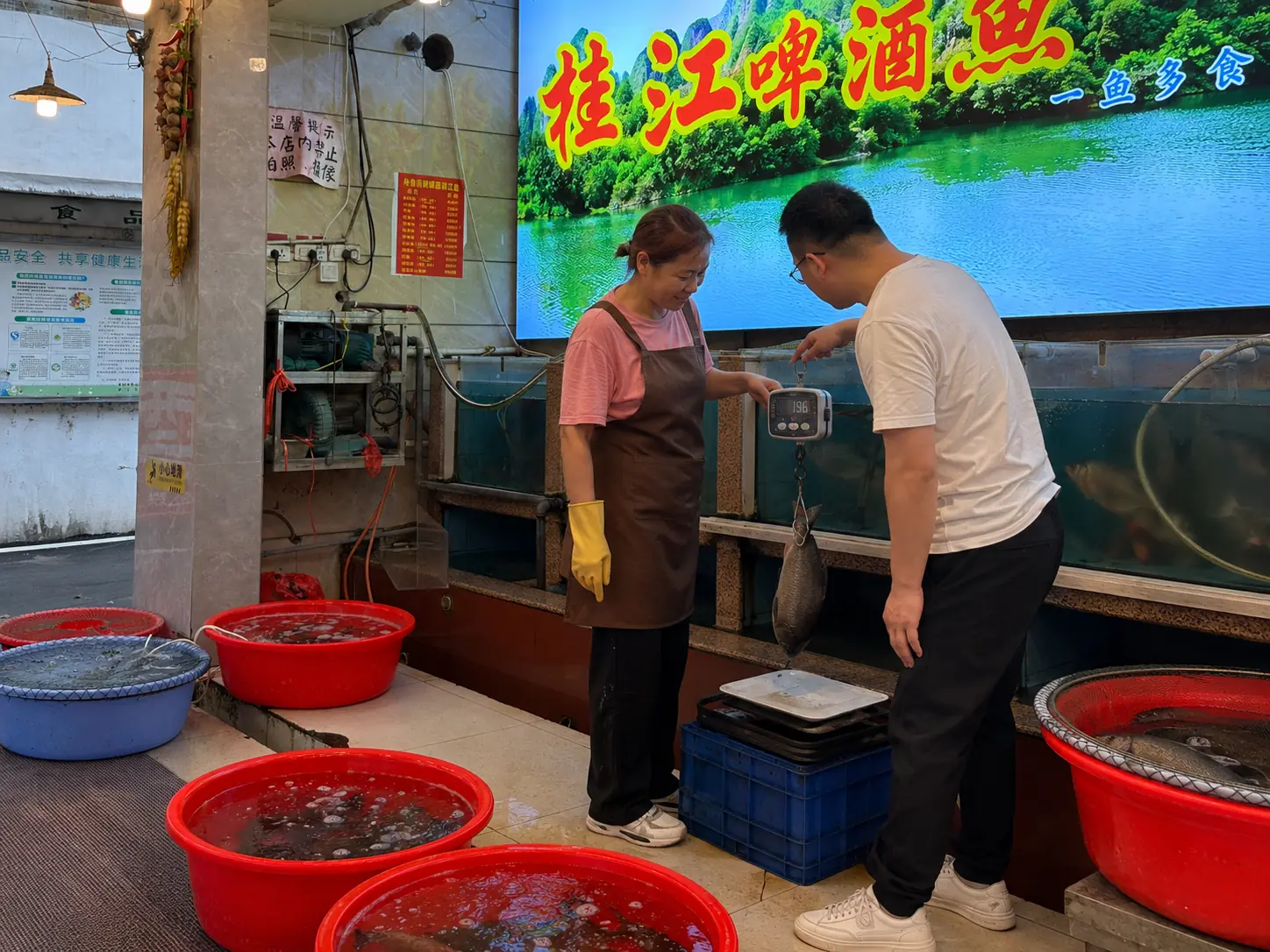
Confirm fish type, weight, and approximate total before the kitchen starts.
Beer fish is worth eating in Yangshuo, but it is also the easiest dish to overpay for or misunderstand. West Street (西街) (Google | Amap) and nearby restaurant clusters put beer fish on every menu because travelers expect it. That does not make every version bad. It just means you need a little ordering discipline.
Choose a restaurant where fish is moving through the kitchen, not sitting as a laminated photo on an empty street. Look for local families or domestic tour groups eating full tables, not only foreign travelers drinking on the main strip. If the menu lists different fish types, ask the price before choosing.
How to Order Beer Fish
For two people, one small to medium fish plus one stuffed dish, one vegetable, and rice is enough. For four people, add crispy river shrimp, Lipu taro pork, or another hot dish. Do not order three heavy sauced dishes at once; the table will become salty and repetitive.
The fish may arrive with skin, bones, head, and tail. That is normal. If you are traveling with children, ask about bones and request help separating the fish at the table.
West Street Is Useful, Not Sacred
West Street is convenient, lively, and easy to navigate after dark. It is also tourist-facing. Use it for a first beer-fish dinner, a drink, or a casual snack walk. Then use the next meal for a quieter countryside restaurant near the Yulong River (遇龙河) (Google | Amap), Xingping Ancient Town (兴坪古镇) (Google | Amap), or a market-linked cooking experience.
The fish-price check
If a restaurant prices beer fish by weight, confirm the fish type, weight, and estimated total before cooking. It is normal to choose from a live tank or display, but it is also normal to ask the price first.
Eat by Area in Guilin and Yangshuo
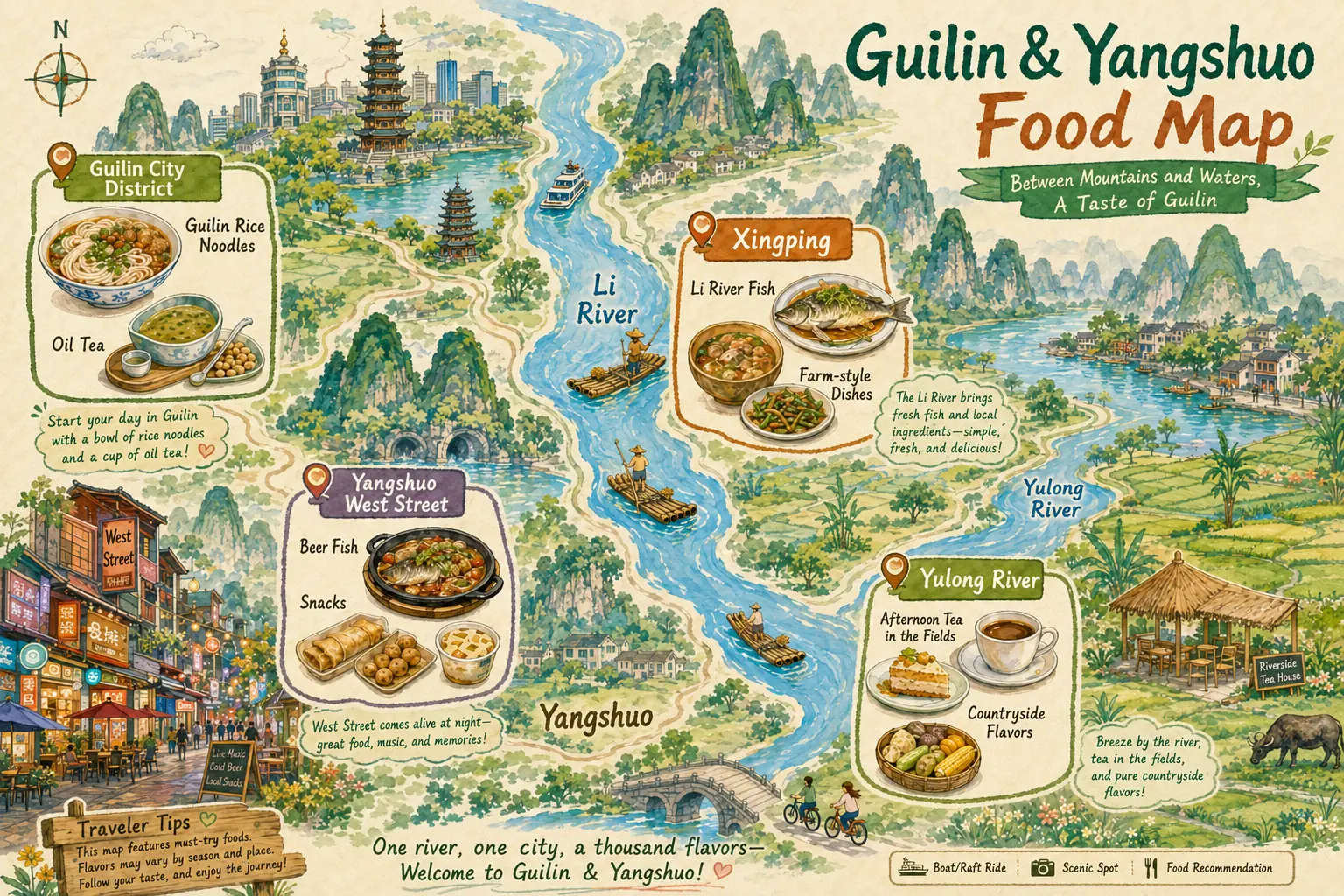
Plan meals by where the day ends: Guilin city, West Street, Xingping, or the countryside.
Do not plan Guilin and Yangshuo food as one giant checklist. Plan it by where your day ends.
Guilin City Center
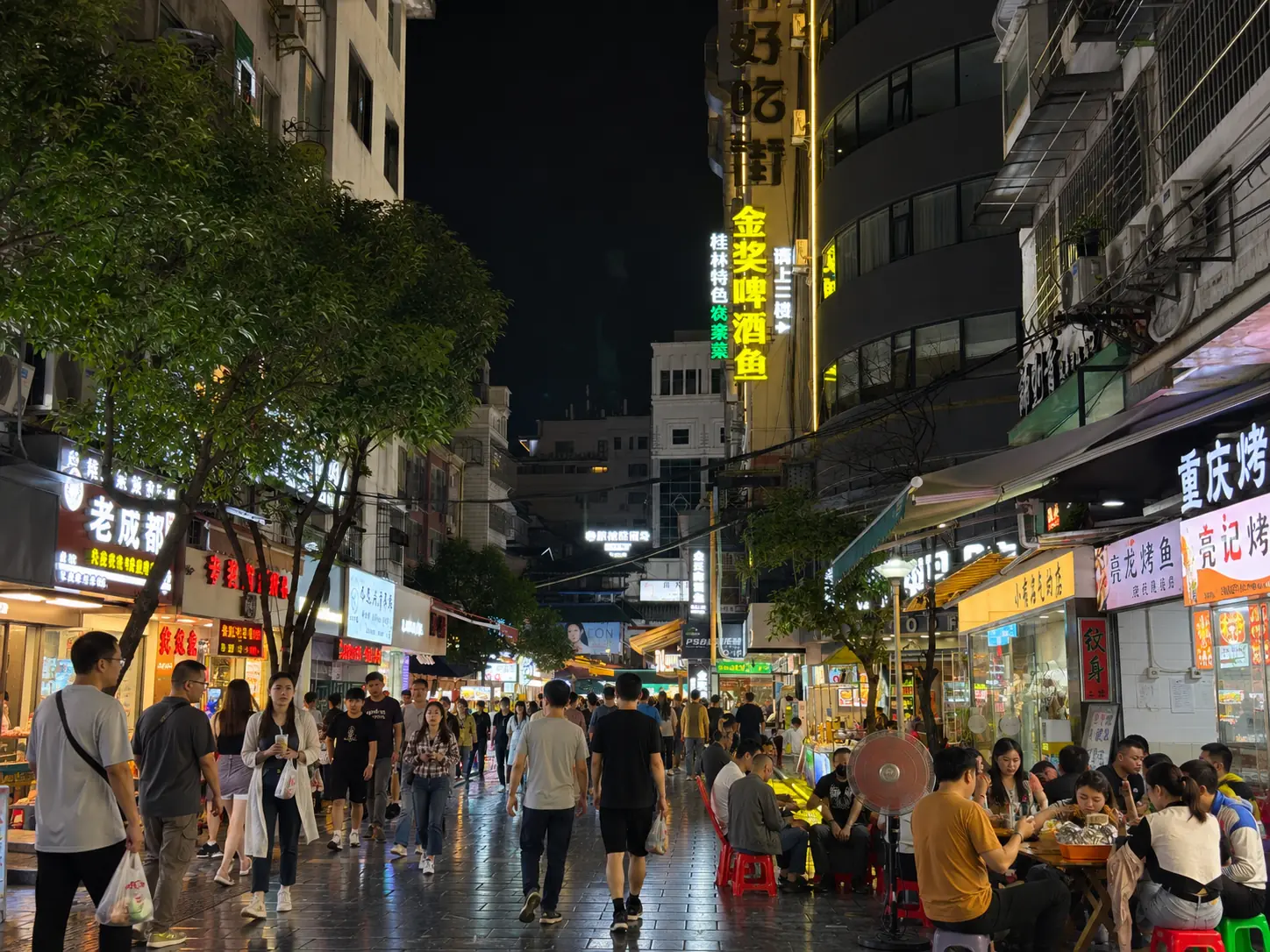
Central Guilin food streets are convenient for first-night orientation.
Zhengyang Pedestrian Street (正阳步行街) (Google | Amap), Dongxi Alley (东西巷) (Google | Amap), and Shangshui Food Street (尚水美食街) (Google | Amap) are the easiest food areas in central Guilin. They work well after Elephant Trunk Hill, Two Rivers and Four Lakes, or a city arrival evening.
Use this area for rice noodles, snacks, sweets, grilled items, and a practical first dinner. It is not where you should judge the deepest version of every dish. It is where you orient yourself without crossing the city.
Riverside and Night Walks
After dark, the riverside around central Guilin is better for atmosphere than for one essential dish. Eat rice noodles or snacks nearby, then walk toward the water and lights. If a restaurant relies entirely on the view, check the menu carefully before sitting down.
Yangshuo West Street

West Street is an easy gateway, not the whole Yangshuo food story.
West Street is the easiest first-night area in Yangshuo: beer fish, stuffed dishes, pizza, bars, coffee, rice noodles, fruit shops, and tour agencies all compressed into one walkable strip. The mix is exactly the point. It has been a foreign-traveler hub for decades, so it feels less local but much easier to use.
Go with clear expectations. It is a gateway, not a final verdict. Eat one obvious meal here, then let the rest of Yangshuo open outward.
Xingping and the Li River
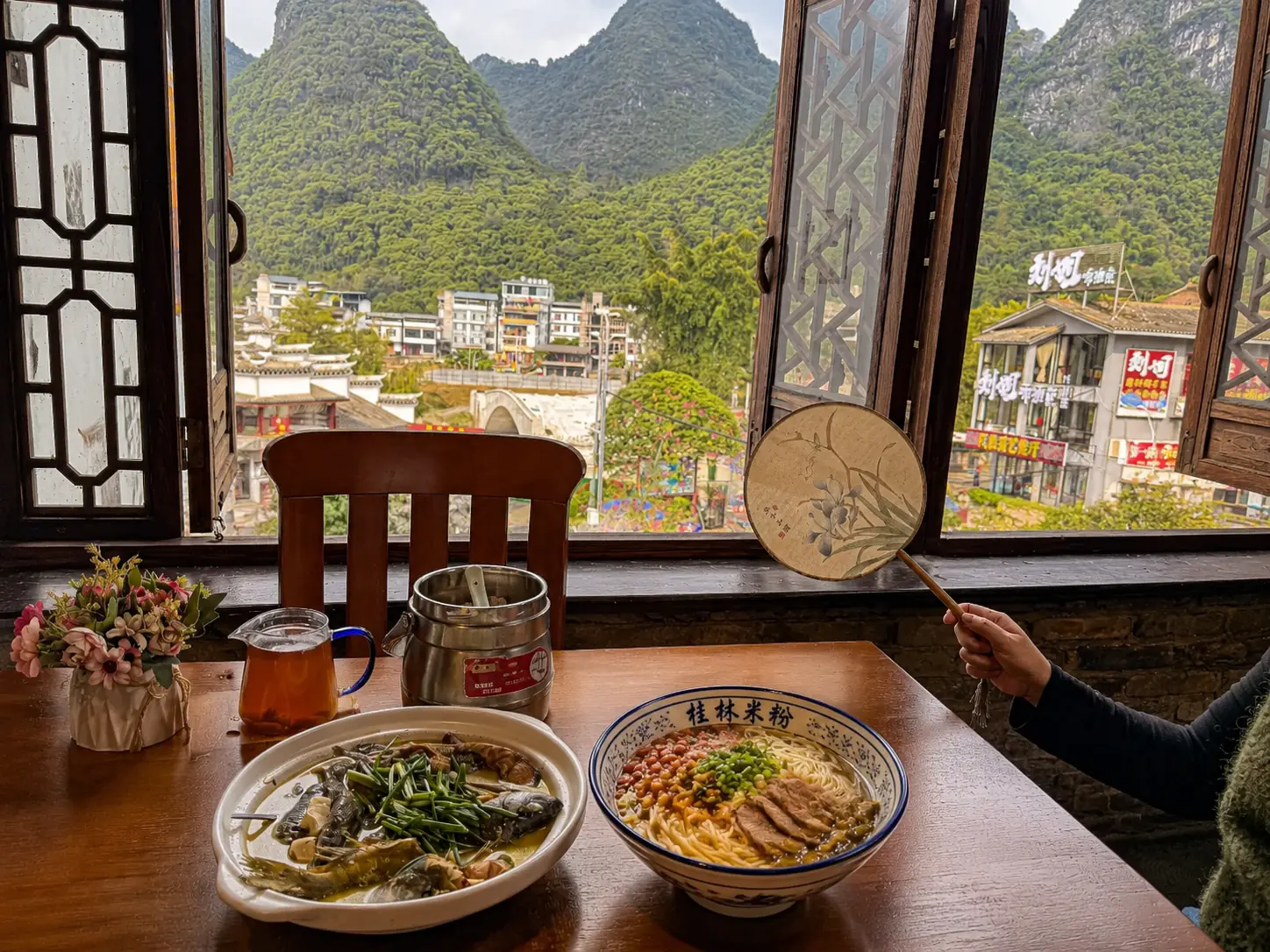
Xingping food is best kept simple after the Li River scenery.
Xingping is better for slow scenery than for a huge food crawl. After a Li River raft, cormorant fishing evening, or 20-yuan-banknote viewpoint, choose a simple meal: rice noodles, river fish, vegetables, or a small family restaurant. Day-tour crowds can empty out quickly, so do not assume late-night food will be as flexible as Yangshuo town.
Yulong River and Countryside Stays
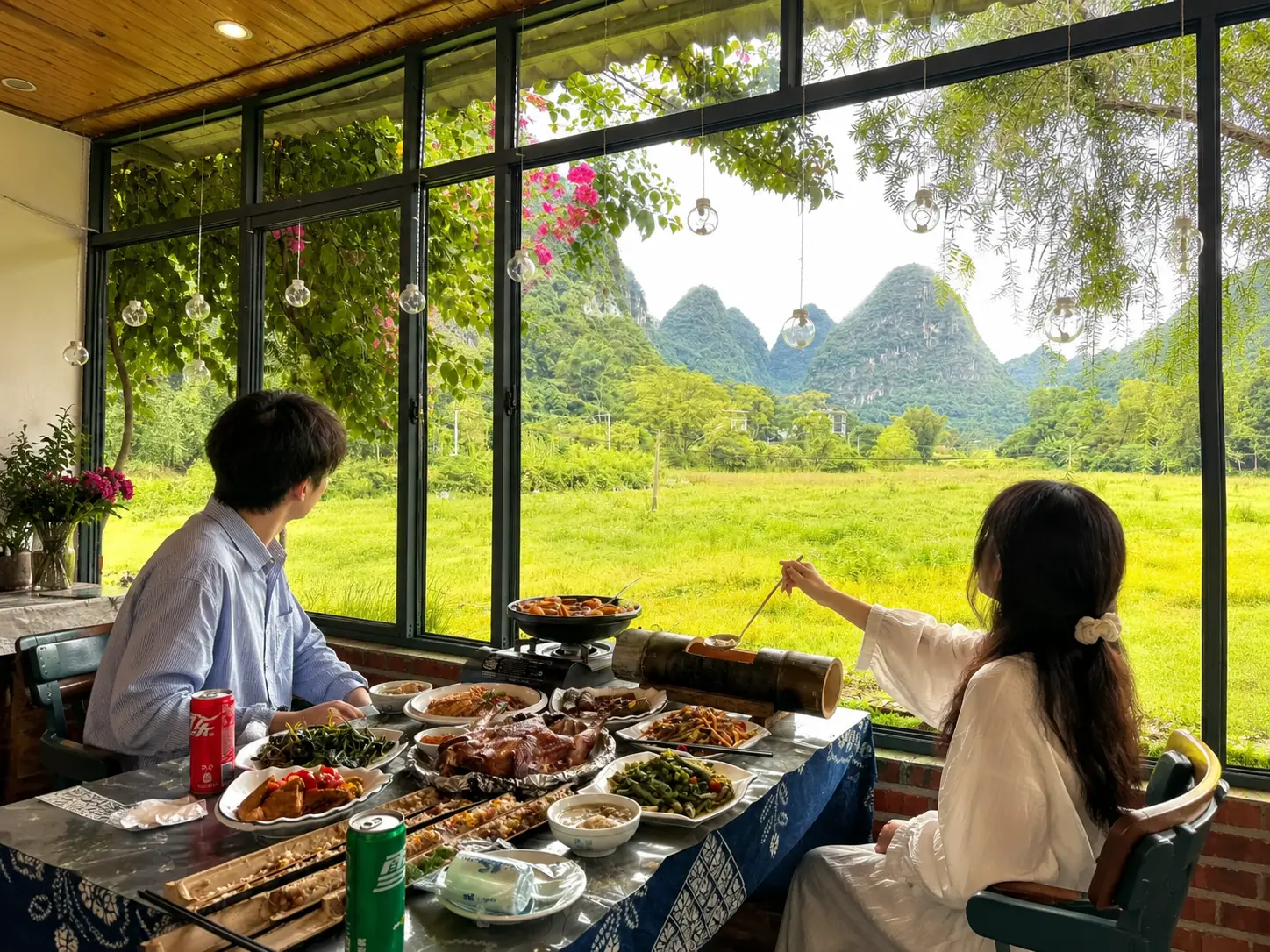
A Yulong River meal can connect the landscape and food better than another town-center dinner.
If you stay near the Yulong River or Ten-Mile Gallery, a countryside meal can be better than another West Street dinner. Look for seasonal vegetables, stuffed tofu, beer fish, chicken soup, bamboo shoots, and simple river dishes. This is where the food and landscape finally sit in the same frame.
Markets, Cooking Classes, and Countryside Meals
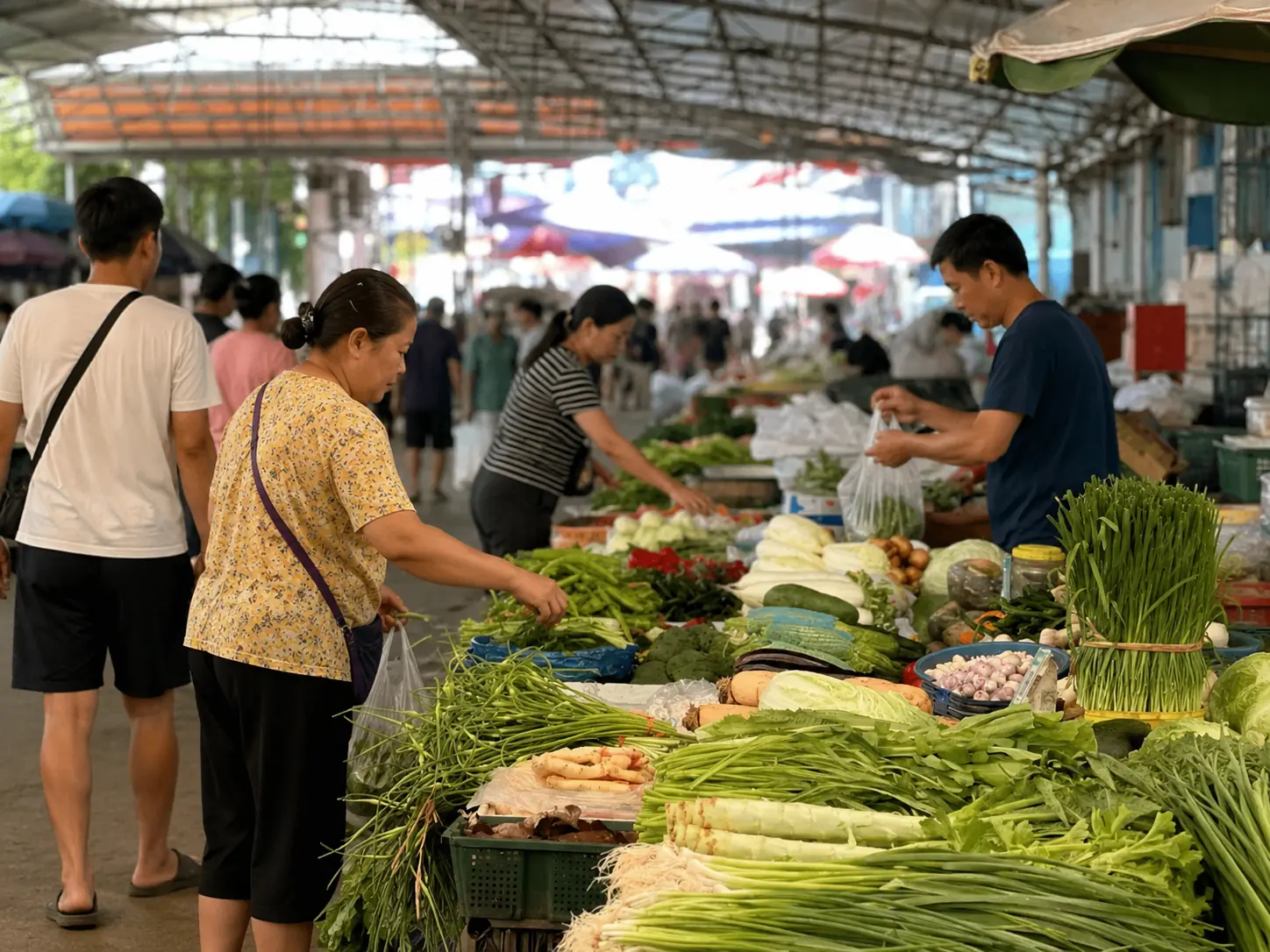
Markets show the raw ingredients behind Yangshuo cooking classes and countryside meals.
Markets matter in Yangshuo because many of the best food experiences start before the stove. Baisha Market Yangshuo (白沙市场) (Google | Amap) is a useful reference point for travelers taking cooking classes or staying outside the main town. You may see live fish, greens, tofu, eggplant, snails, herbs, pork, and seasonal produce.
If wet markets make you uncomfortable, choose a restaurant meal instead. If you are curious, a market-plus-cooking-class format can make the food much clearer than another tourist-menu dinner.
Cloud 9 Cooking School Yangshuo (Cloud 9阳朔厨艺学校) (Google | Amap) is one long-running reference point for the classic visitor format, but menus, market visits, pickup rules, and class times change by provider and date. Confirm the exact menu if beer fish, stuffed dishes, vegetarian food, or no pork matters to you.
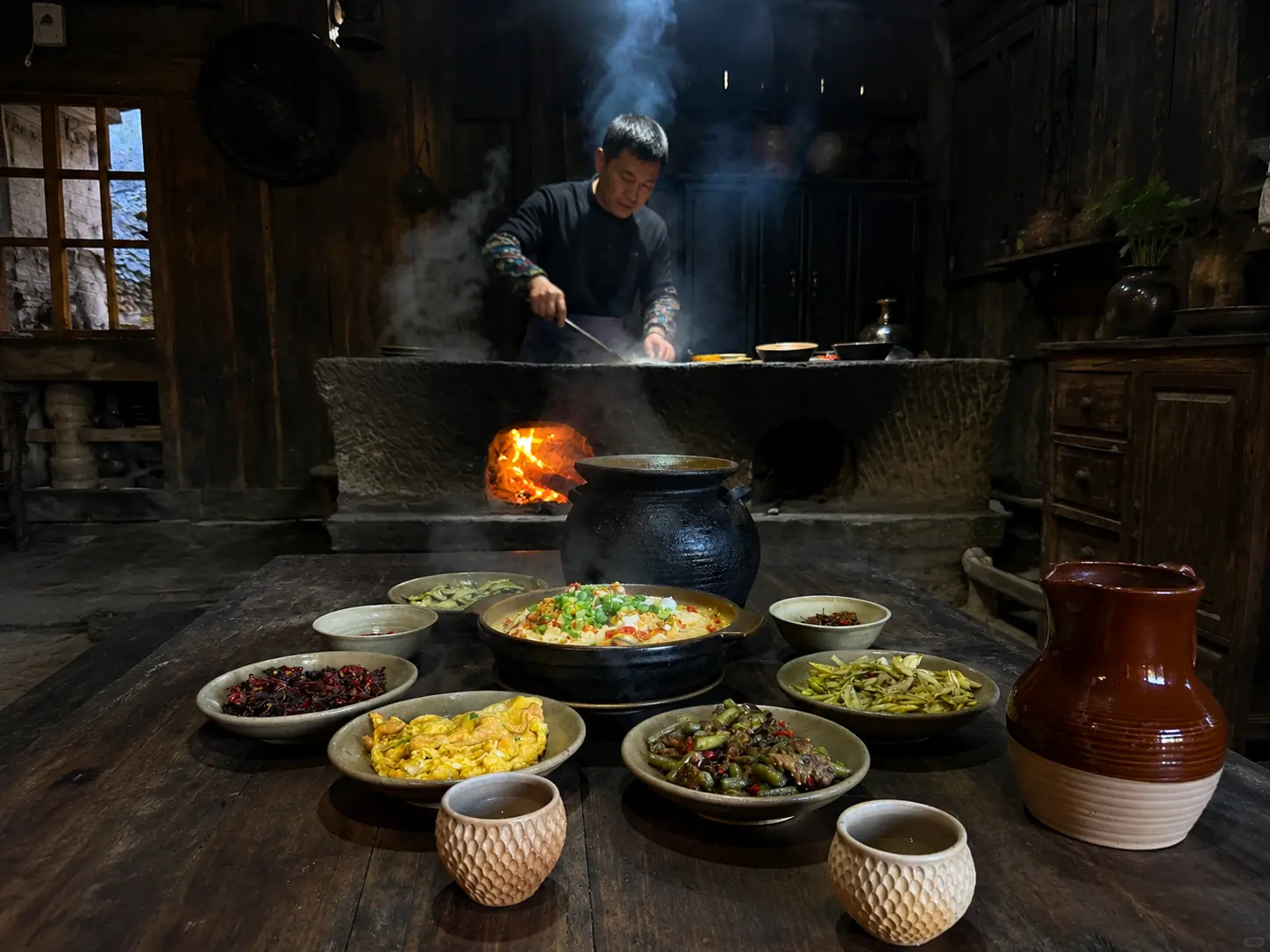
Hands-on cooking classes should teach judgment, not just recipes.
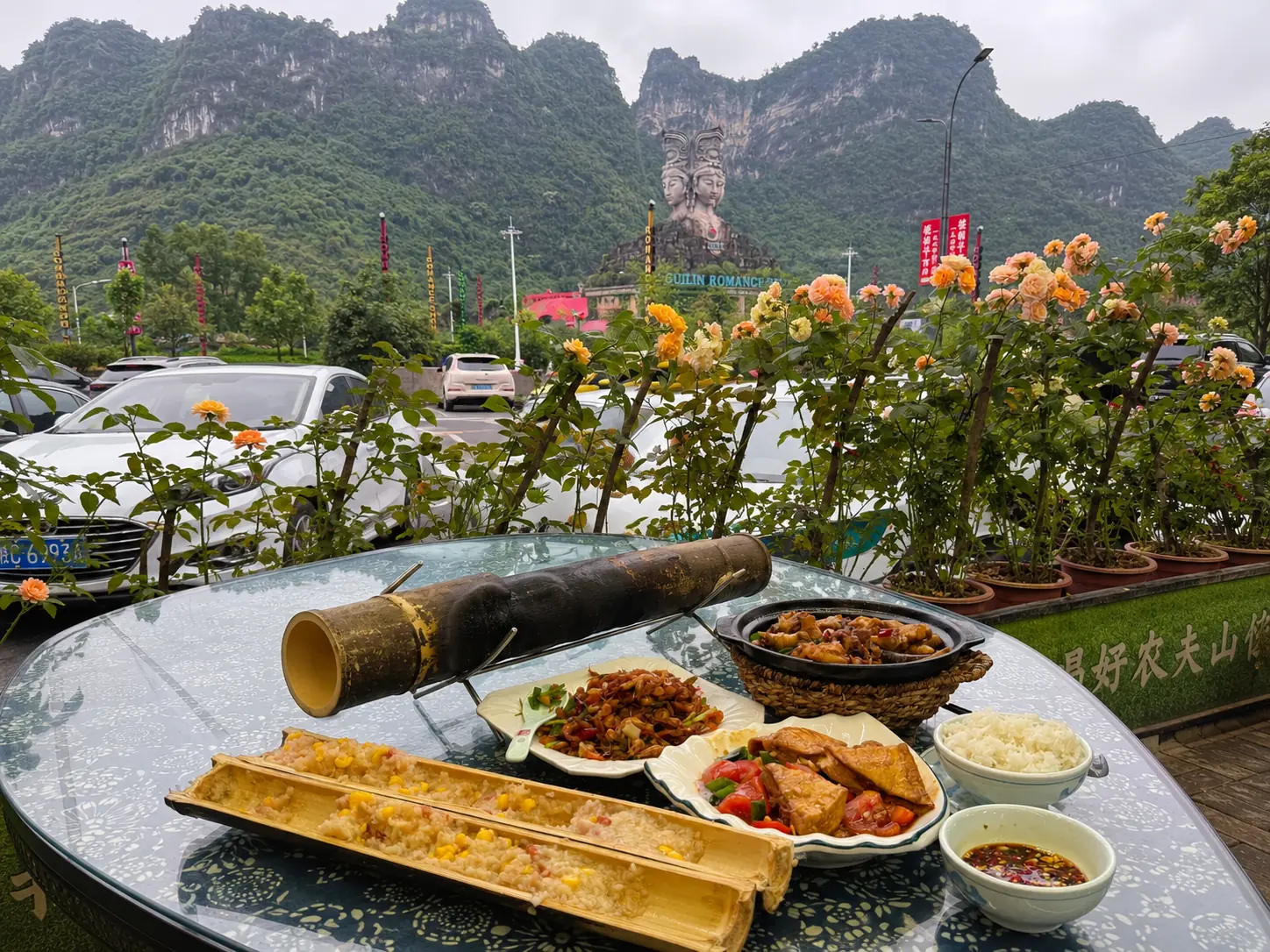
Bamboo rice points toward the wider northern Guangxi village-food route.
What a Good Class Teaches
A good Yangshuo cooking class should teach judgment, not just recipes. You should leave understanding why beer fish starts with searing, why stuffed vegetables need the right filling texture, why garlic and ginger appear everywhere, and why market herbs change the finished dish.
If you extend north to Longji Rice Terraces (龙脊梯田) or Dong minority villages, the food shifts again: bamboo rice, oil tea, smoked meats, preserved vegetables, and terrace-side family meals. That belongs more to a wider Guangxi itinerary, but it explains why "Guilin food" is more regional than one city menu.
Ordering, Spice, and Dietary Needs in Guangxi
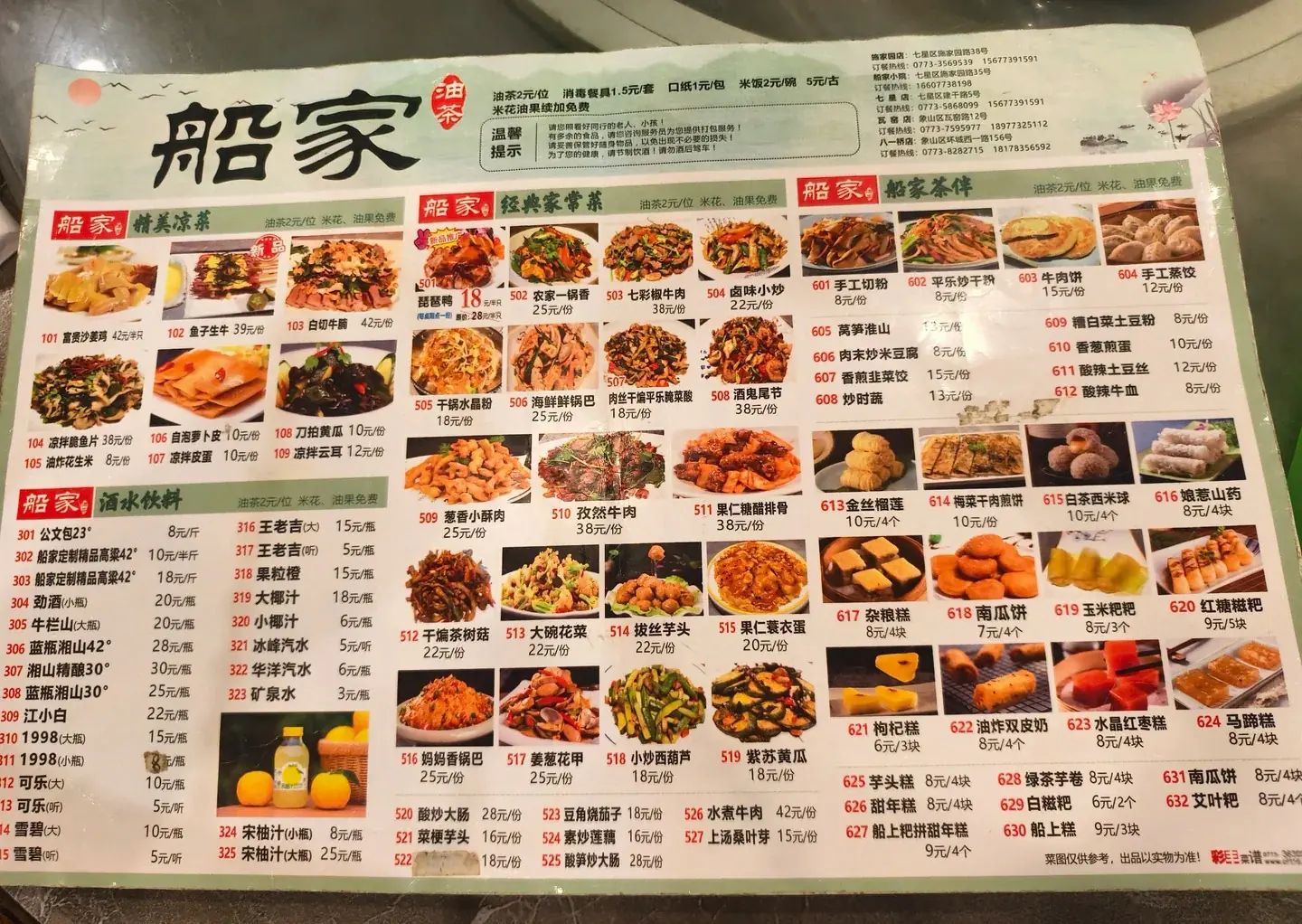
Scan-code menus make clear dietary phrases even more useful.
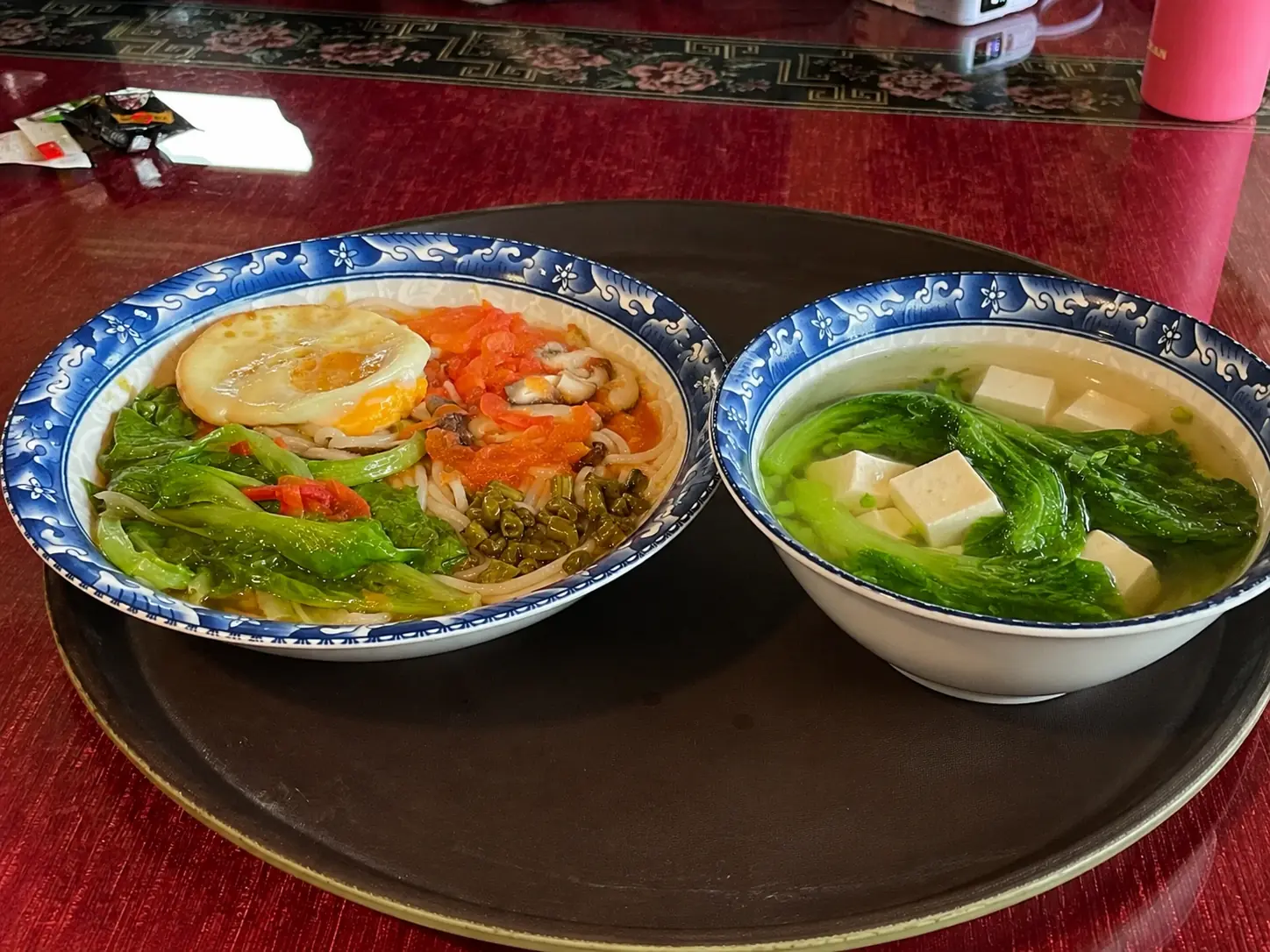
Vegetable-looking dishes still need ingredient checks for stock, oyster sauce, and pork.
Guilin and Yangshuo are easier than Chongqing for spice, but harder for hidden ingredients. Fish bones, shellfish, pork stuffing, peanuts, sesame, fermented tofu, shrimp, and meat stock can appear where foreign travelers do not expect them.
The safest first order for two people is one rice-noodle breakfast; then at dinner, one beer fish or stuffed dish, one green vegetable, one tofu or taro dish, and rice. If you are unsure about spice, ask for mild. If you are unsure about fish bones, ask before the dish is cooked.
Vegetarian Reality
- Rice noodles may use meat brine or stock even when the bowl looks simple.
- Stuffed vegetables often contain pork, and oil tea may include meat, shrimp, or small fish.
- Vegetable dishes can still use oyster sauce, lard, chicken powder, or meat stock.
- Tourist-facing Yangshuo restaurants are usually easier for vegetarian requests, but strict diets still need clear phrases.
Allergy Notes
Shellfish and hidden ingredient note
Shellfish allergies require special care because river shrimp, snails, dried shrimp, and shared cooking surfaces are common. Peanut and sesame appear in rice noodles, cold dishes, and sauces. Fish allergy is hard to manage in beer-fish and river-food restaurants because the kitchen may handle fish constantly.
| English | Chinese | Pinyin | Say It Like… |
|---|---|---|---|
| Does it have fish bones? | 有鱼刺吗? | you yu ci ma | Yo yoo-tsih mah |
| No pork | 不要猪肉 | bu yao zhurou | Boo yow joo-roh |
| No shrimp | 不要虾 | bu yao xia | Boo yow shyah |
| No peanuts | 不要花生 | bu yao huasheng | Boo yow hwah-shung |
| I am allergic to shellfish | 我对贝类过敏 | wo dui beilei guomin | Woh dway bay-lay gwaw-min |
| Check, please | 买单 | maidan | My-dan |
Local Food Mistakes First-Timers Should Avoid
- Judging the region from one West Street dinner. West Street is useful, but it is built for travelers. Combine it with a rice-noodle breakfast, a market-linked meal, and one quieter countryside restaurant before deciding what Yangshuo food is.
- Ordering beer fish without checking price. If the fish is priced by weight, confirm the fish and total before cooking. This is normal, not rude.
- Eating rice noodles too late. You can find noodles all day, but the best rhythm is morning. Shops are busier, broth and toppings move faster, and the dish feels like breakfast rather than backup food.
- Over-ordering stuffed dishes. Stuffed snails, stuffed tofu, stuffed peppers, and stuffed eggplant can all taste similar if they use the same pork filling. Choose one or two, then add vegetables or fish.
- Forgetting bones and shells. Beer fish has bones. River shrimp may be eaten shell-on. Snails need attention. This is normal local eating, but families with children should choose carefully.
- Buying too many food souvenirs. Guilin chili sauce, fermented tofu, Sanhua liquor, dried osmanthus sweets, and packaged rice noodles can be fun. Buy small amounts first. The airport suitcase version rarely tastes like the shop version.
Frequently Asked Questions
Guilin is most famous for Guilin rice noodles. For travelers, the essential first experience is a busy local rice-noodle shop at breakfast, with brine, pickles, peanuts, chili oil, and broth adjusted to taste.
Sources checked for this guide
- China Daily Guangxi profile checked for Yangshuo Beer Fish ingredients, local carp preparation, and regional cooking style: China Daily Guangxi: Yangshuo Beer Fish
- UNESCO World Heritage Centre listing checked for Guilin karst regional geography linking Guilin city and Yangshuo: UNESCO World Heritage: South China Karst
Beyond This Guide
Guilin and Yangshuo food works best when it follows the trip: rice noodles before the Li River, snacks around Guilin city at night, beer fish after arrival in Yangshuo, and a market or countryside meal when your scenery day slows down. If you want to explore Guangxi's other headline noodle bowl alongside Guilin rice noodles, read our Luosifen (Guangxi Snail Noodles) Guide. Pair this guide with the Li River guide, Yangshuo biking guide, Yulong River rafting guide, Yangshuo cooking class guide, and Longji Rice Terraces guide.
© gochinafreely.com — Original guide by Go China Freely.