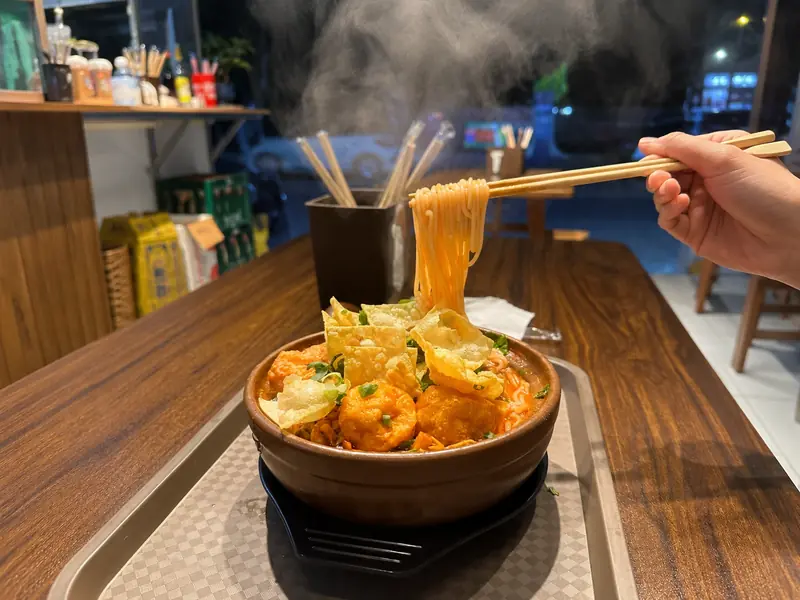
Luosifen (螺蛳粉) is the Chinese noodle bowl many first-timers smell before they understand: river-snail broth, fermented sour bamboo shoots, red chili oil, springy rice noodles, and crunchy toppings in one hot bowl. In Liuzhou (柳州), Guangxi (广西), it is not a dare food or a packaged-instant-noodle meme. It is the city's signature meal, cheap enough for breakfast, powerful enough for midnight, and strange enough that people usually split into two camps after the first spoonful.
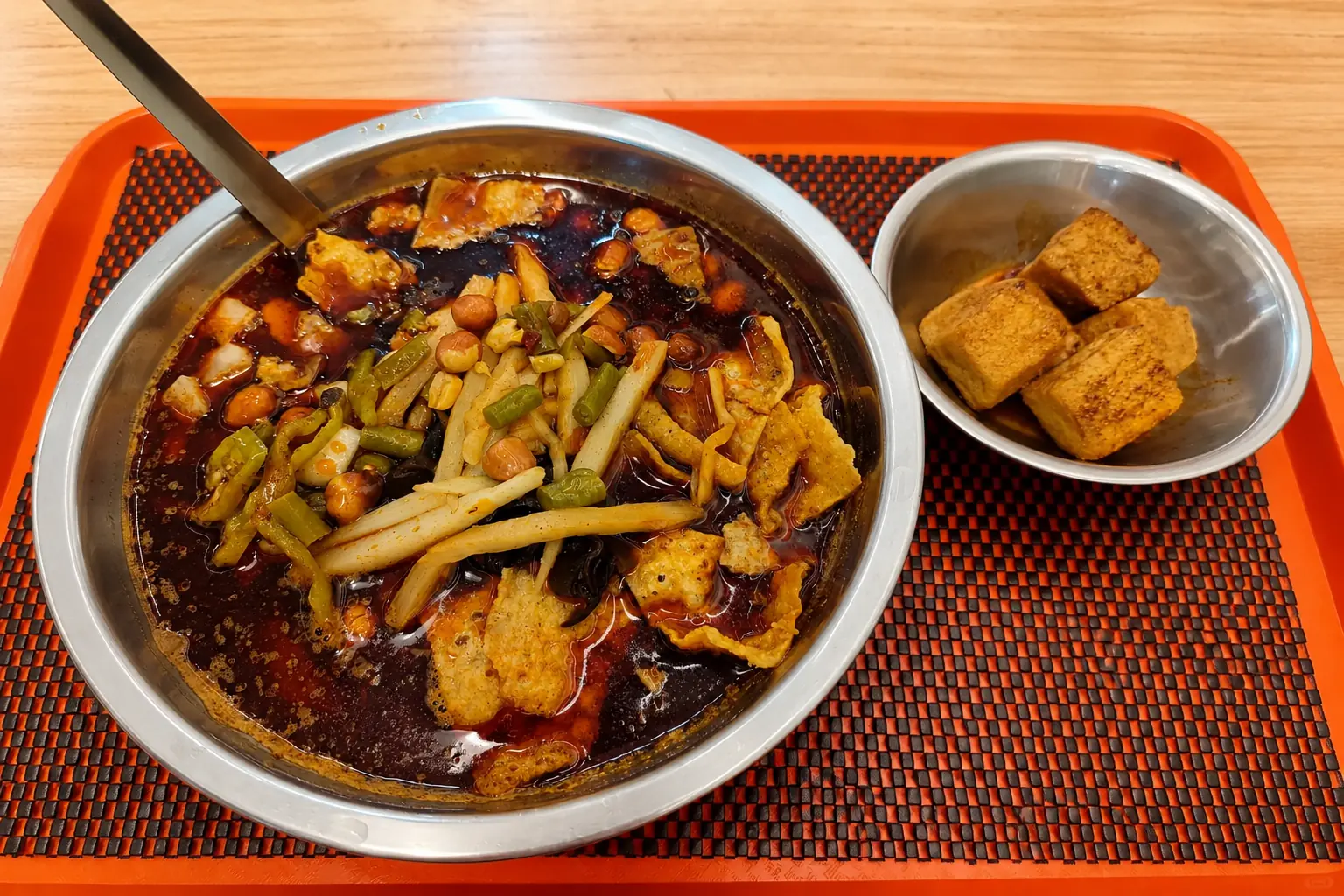
A classic bowl layers sour bamboo shoots, chili oil, rice noodles, fried tofu skin, peanuts, and greens.
Executive Summary
What it tastes like
Sour, spicy, savory, hot, and springy. The famous smell comes mainly from fermented sour bamboo shoots, while the broth gets depth from river snails, bones, aromatics, and chili oil.
Best first order
Choose original luosifen, mild spice, one fried egg, and normal sour bamboo shoots. Add duck feet only if you enjoy bony, gelatin-rich toppings.
Where to try it
Liuzhou is the real base. Wuxing Pedestrian Street is easiest for visitors, Qingyun is more local, and Gubu Street helps you understand the dish as night-market food.
2021
National heritage craft
¥10-25
Common local bowl
~1 hr
Fast trains nearby
2024
Liuzhou Luosifen name
Why Liuzhou Luosifen Divides the Room

A fresh bowl should taste sour, spicy, savory, springy, and hot, not just funky.
Luosifen is controversial because the aroma arrives first. Fans read it as sour bamboo, snail broth, chili oil, and hot rice noodles coming together. Unprepared diners may read it as something that should not have been opened in a hotel room.
That is why people compare it with durian, stinky tofu, blue cheese, or fermented soybeans. It is not a neutral dish. But in Liuzhou, a good bowl is not supposed to be only "stinky" or only punishingly spicy. It should be sour, spicy, savory, springy, and hot, with enough crunch from peanuts and fried tofu skin to keep each bite moving.
If you have only tried the instant packet version from an overseas Asian grocery, keep some humility in the verdict. A packet can introduce the aroma, but a Liuzhou shop bowl lets the broth, noodles, greens, and toppings work together while everything is still hot.
The Smell Comes From Sour Bamboo
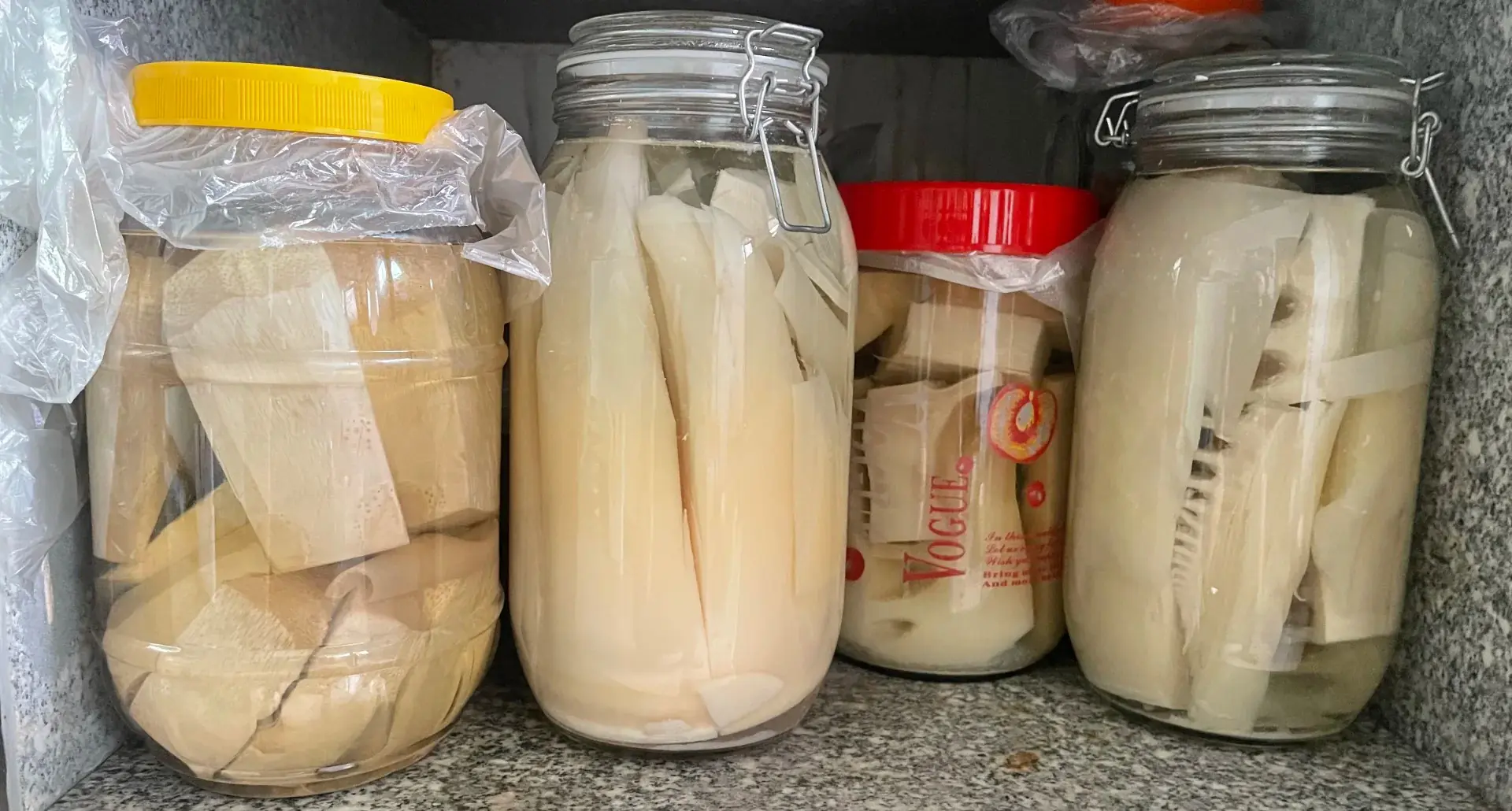
Most of luosifen's famous aroma comes from sour bamboo shoots, not visible snail meat.
Most of luosifen's reputation comes from sour bamboo shoots (酸笋), not from visible snail meat. Fresh bamboo shoots are fermented until they become sharply sour, funky, and deeply savory. When they hit hot broth, that aroma blooms fast.
Good sour bamboo should taste crisp, acidic, and appetizing. If a bowl smells harsh but tastes flat, bitter, or muddy, the problem is probably handling, not the idea of luosifen itself. The better versions make the smell part of the flavor rather than a separate assault.
First-timers should not remove the sour bamboo completely. Without it, luosifen becomes a much less interesting spicy rice-noodle soup. A safer first order is normal sour bamboo, mild chili oil, and one topping that absorbs broth.
First bowl strategy
Order mild spice before you adjust anything else. Sour bamboo is the identity of luosifen; chili oil is the variable most visitors should control first.
Yes, Snails Are in the Broth
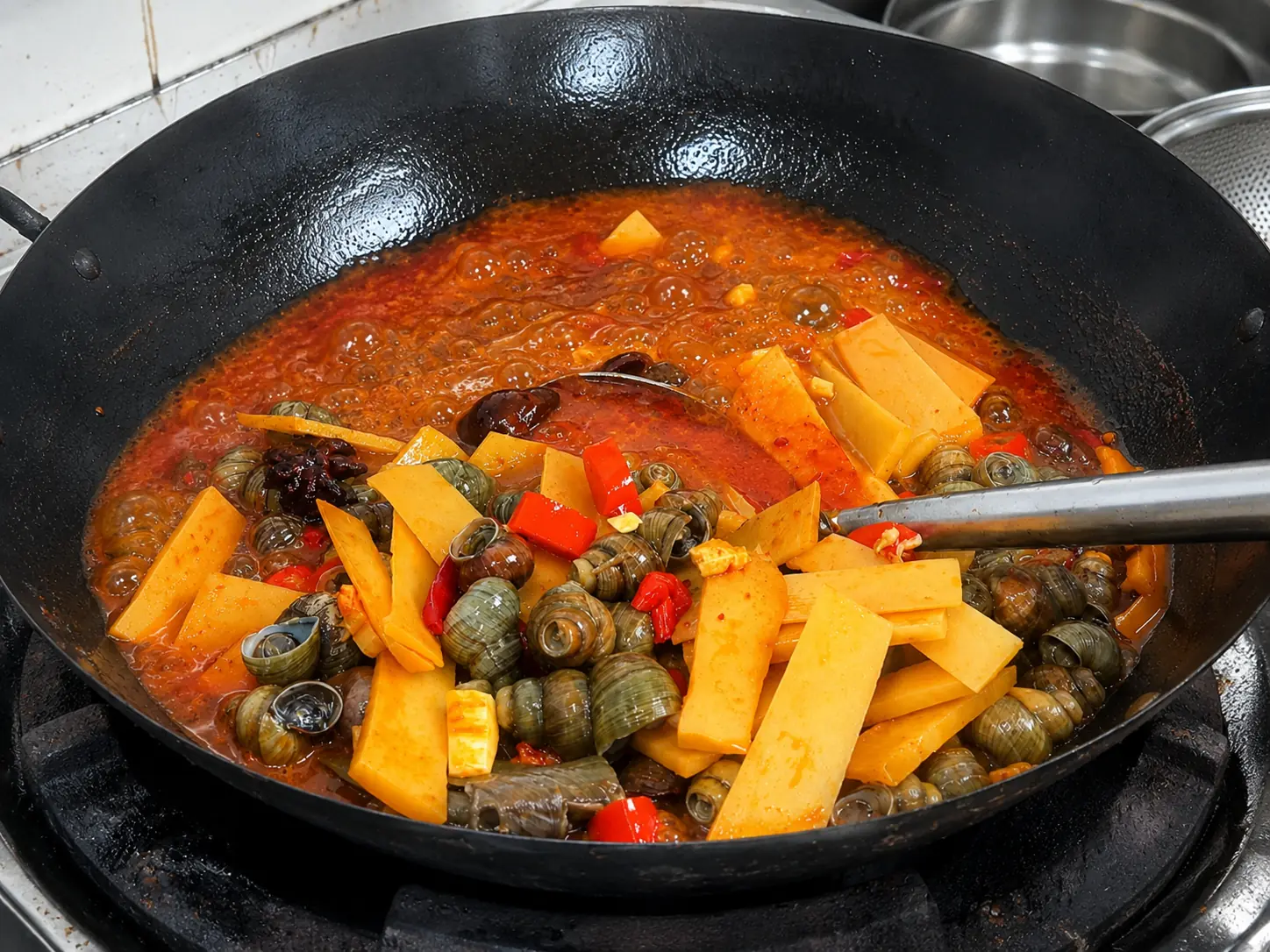
The snail flavor lives mostly in the broth, not in whole snails floating in a standard bowl.
The "snail" part is real, but not in the way many foreign visitors imagine. Traditional luosifen uses river snails or stone snails to make the broth, often with pork bones, spices, and aromatics. Standard bowls usually do not arrive with whole snails in the bowl unless the shop sells snail meat as an add-on.
China's national intangible cultural heritage database lists Liuzhou luosifen making as part of rice-noodle craft, describing the technique as boiling the noodle in a broth made with stone snails and then adding sour bamboo shoots, fried tofu skin, wood ear, and other ingredients. The listing was announced in 2021 as part of the fifth national batch.
The name itself has also been cleaned up for export. A 2024 CCTV News report on Liuzhou's local packaging standard says the unified English name is "Liuzhou Luosifen," avoiding the awkward impression that the product is simply a snail dish.
What Comes in a Luosifen Bowl
A standard bowl usually starts with rice noodles, snail broth, sour bamboo shoots, fried tofu skin, peanuts, wood ear, pickled long beans or other pickled vegetables, greens, and chili oil. The noodle texture matters: Liuzhou rice noodles should be smooth and springy, not soft like overcooked vermicelli.
Common add-ons include fried egg (炸蛋), duck feet (鸭脚), marinated egg (卤蛋), tofu puffs (豆腐泡), sausage (香肠), pork trotter (猪脚), extra fried tofu skin, and greens. For a first bowl, fried egg is the easiest upgrade because it soaks up the broth without changing the dish too much. Duck feet are delicious if you like collagen-rich, bony toppings; they are not the most beginner-friendly add-on.
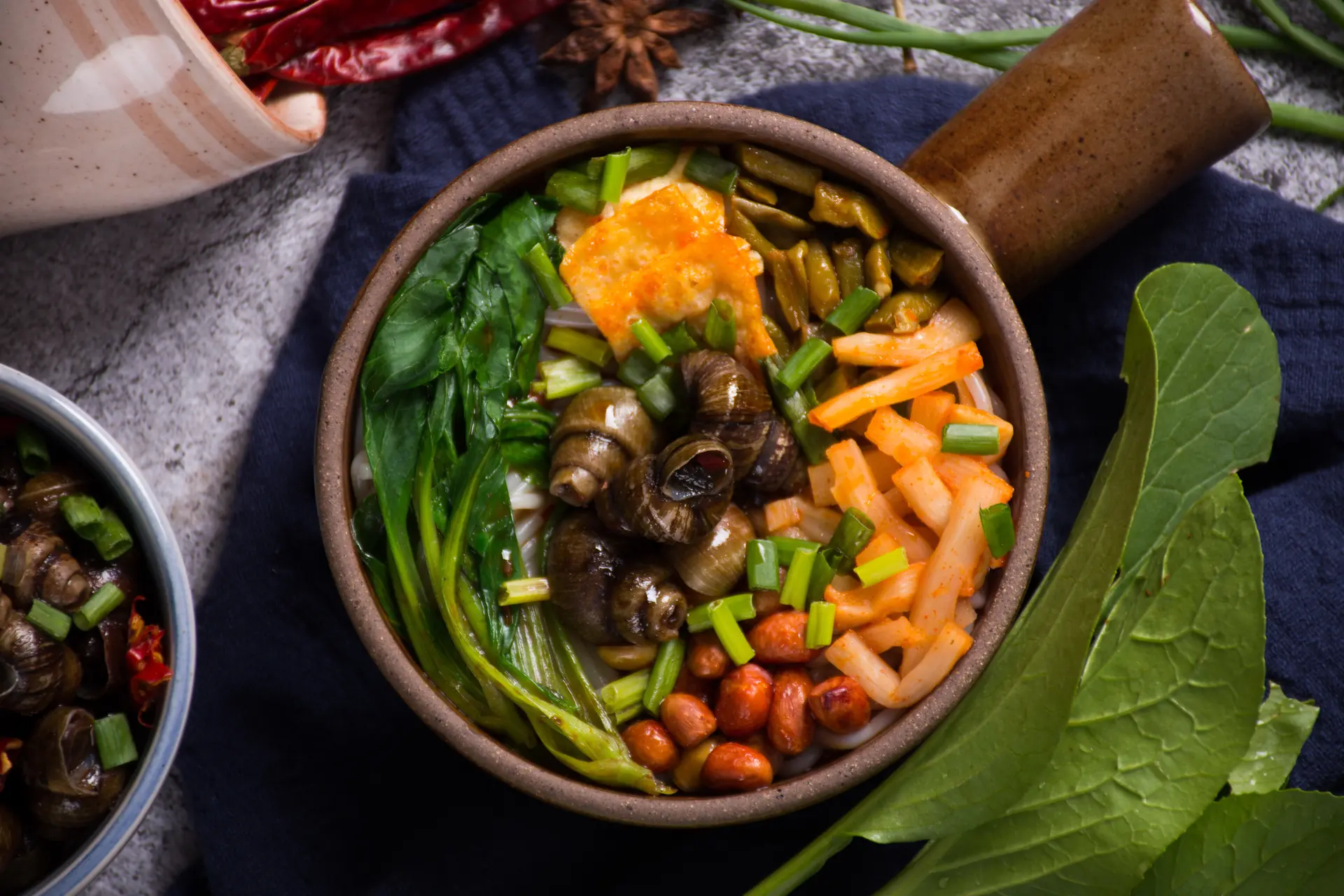
The toppings matter as much as the broth: crunch, sourness, and broth-soaked texture define the bowl.
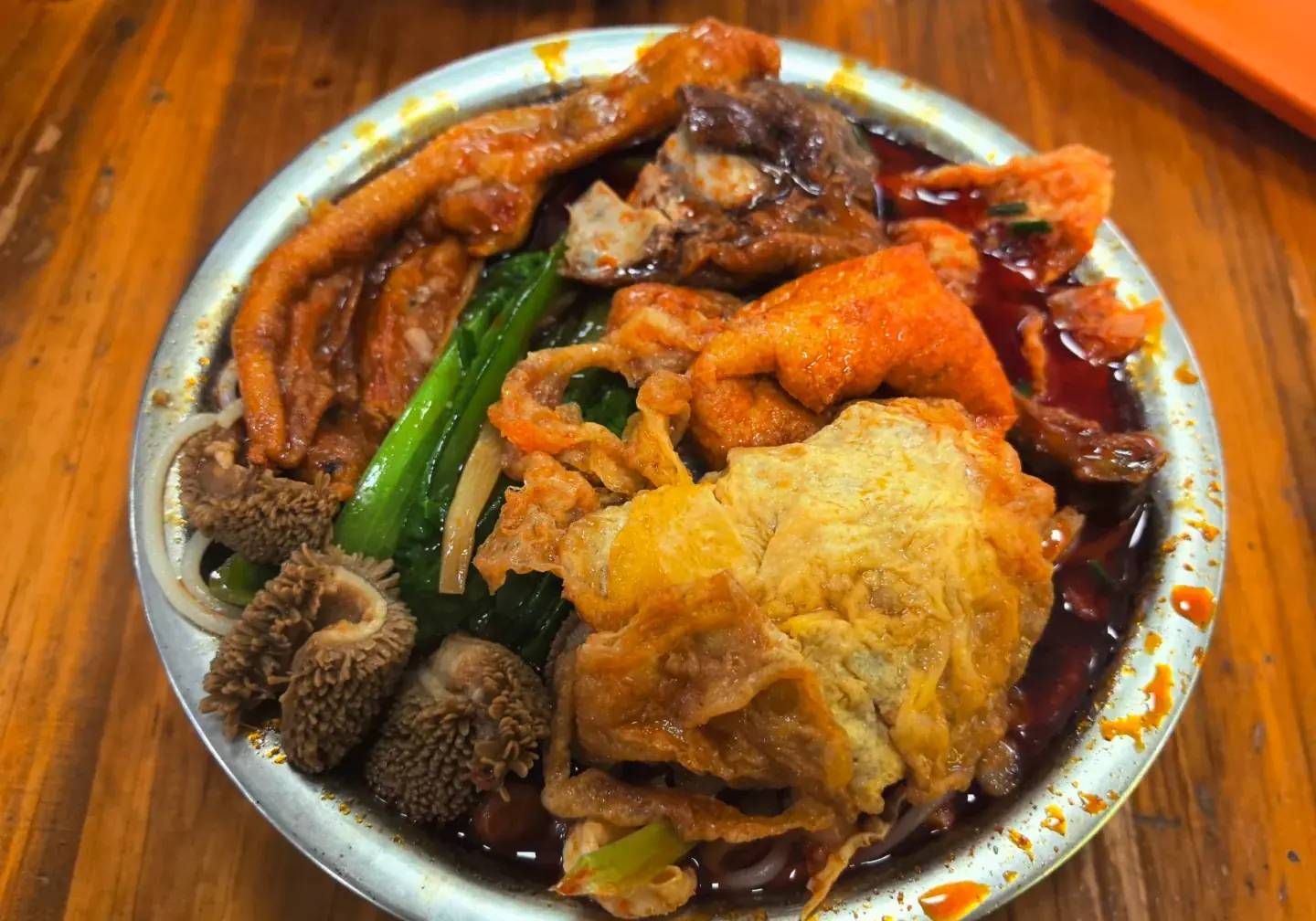
Fried egg is the easiest first add-on; duck feet are better for adventurous second bowls.
| Part | Chinese | What It Does | First-Timer Advice |
|---|---|---|---|
| Sour bamboo shoots | 酸笋 | Funky sour aroma and the dish's signature edge | Keep it, but do not ask for extra yet |
| Chili oil | 辣椒油 | Heat, color, and roasted chili fragrance | Start mild; add more later |
| Fried tofu skin | 腐竹 | Crunch and broth-soaked texture | Always worth keeping |
| Peanuts | 花生 | Nutty crunch against sour broth | Skip only for allergy reasons |
| Fried egg | 炸蛋 | Soaks up broth like a sponge | Best first add-on |
| Duck feet | 鸭脚 | Gelatin-rich, savory, and messy | Great later, not required first |
How to Order Your First Luosifen Bowl
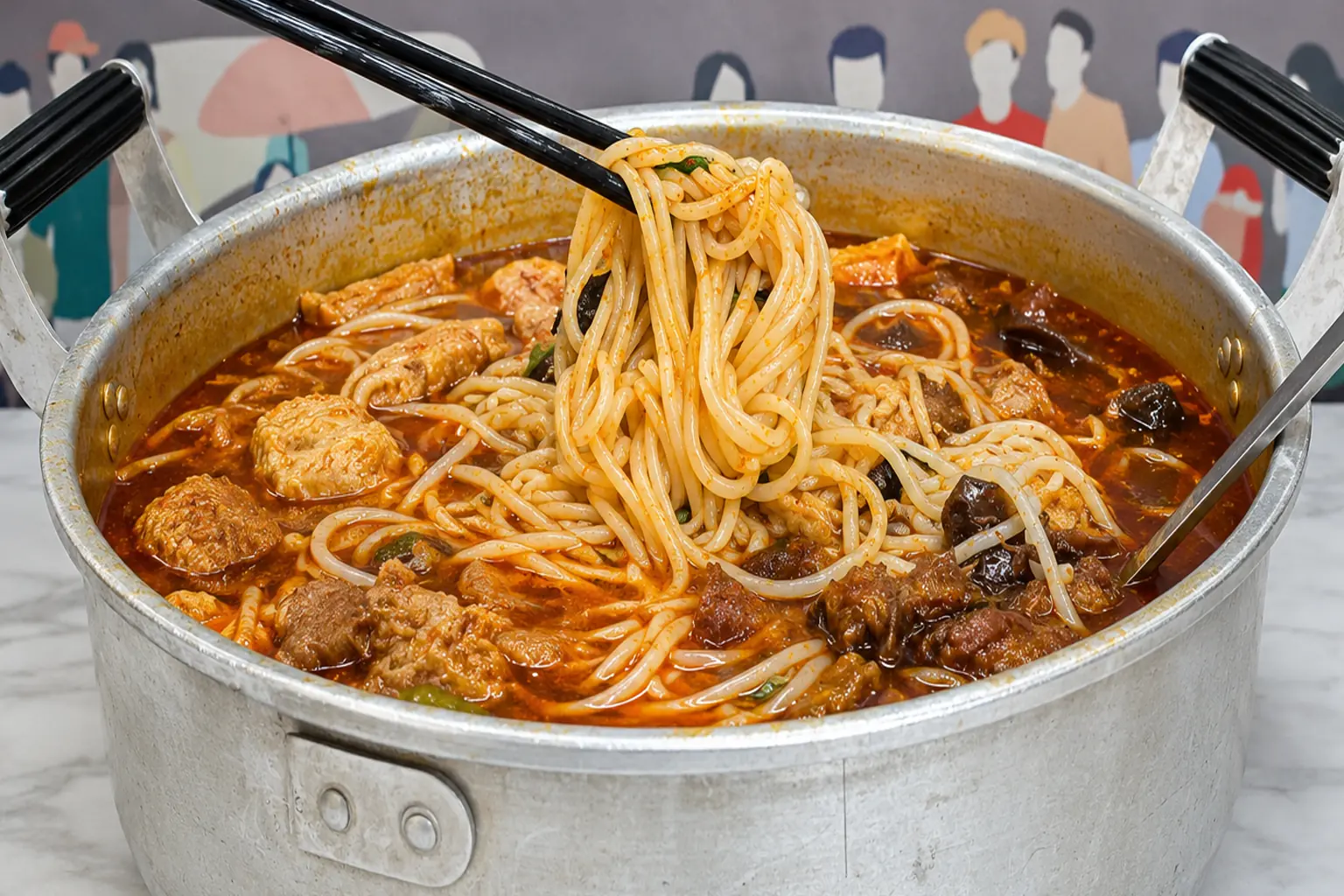
Fresh bowls depend on fast noodle blanching, hot broth, and toppings added in real time.
The safest first order is original luosifen, mild spice, one fried egg. At ordinary Liuzhou shops, a simple bowl is still inexpensive; with add-ons, many visitors land somewhere around ¥10-25, though touristy or premium versions can go higher. Check the menu board before you pile on toppings.
Small local shops may not have English menus. You do not need a long script; these phrases cover most ordering moments.
| English | Chinese | Pinyin | Say It Like… |
|---|---|---|---|
| One bowl of luosifen | 一碗螺蛳粉 | yī wǎn luó sī fěn | ee wahn lwor-suh-fen |
| Mild spice | 微辣 | wēi là | way lah |
| Less chili oil | 少辣 | shǎo là | shaow lah |
| No chili oil | 不要辣 | bú yào là | boo yaow lah |
| Less sour bamboo shoots | 少酸笋 | shǎo suān sǔn | shaow swan soon |
| Add fried egg | 加炸蛋 | jiā zhá dàn | jyah jah dahn |
| No pork or lard | 不要猪肉/猪油 | bú yào zhū ròu / zhū yóu | boo yaow joo row / joo yo |
For instant packets, do not dump in every sachet at once. Cook the rice noodles fully, add the soup base and sour bamboo shoots, then start with half the chili oil. You can add more heat later; you cannot take it back.
Where to Eat Luosifen in Liuzhou
Liuzhou Railway Station (Google | Amap)
Liuzhou is easy to add to a Guangxi food trip. Fast trains between Liuzhou and Guilin or Nanning often take roughly around one hour on the quickest services, but schedules and stations change, so check your travel date before building a food stop around it.

Wuxing is the easiest first area: central, busy at night, and dense with food options. Pick by turnover, not decoration: a steady line, visible hot broth, and a clean topping station matter more than neon branding.
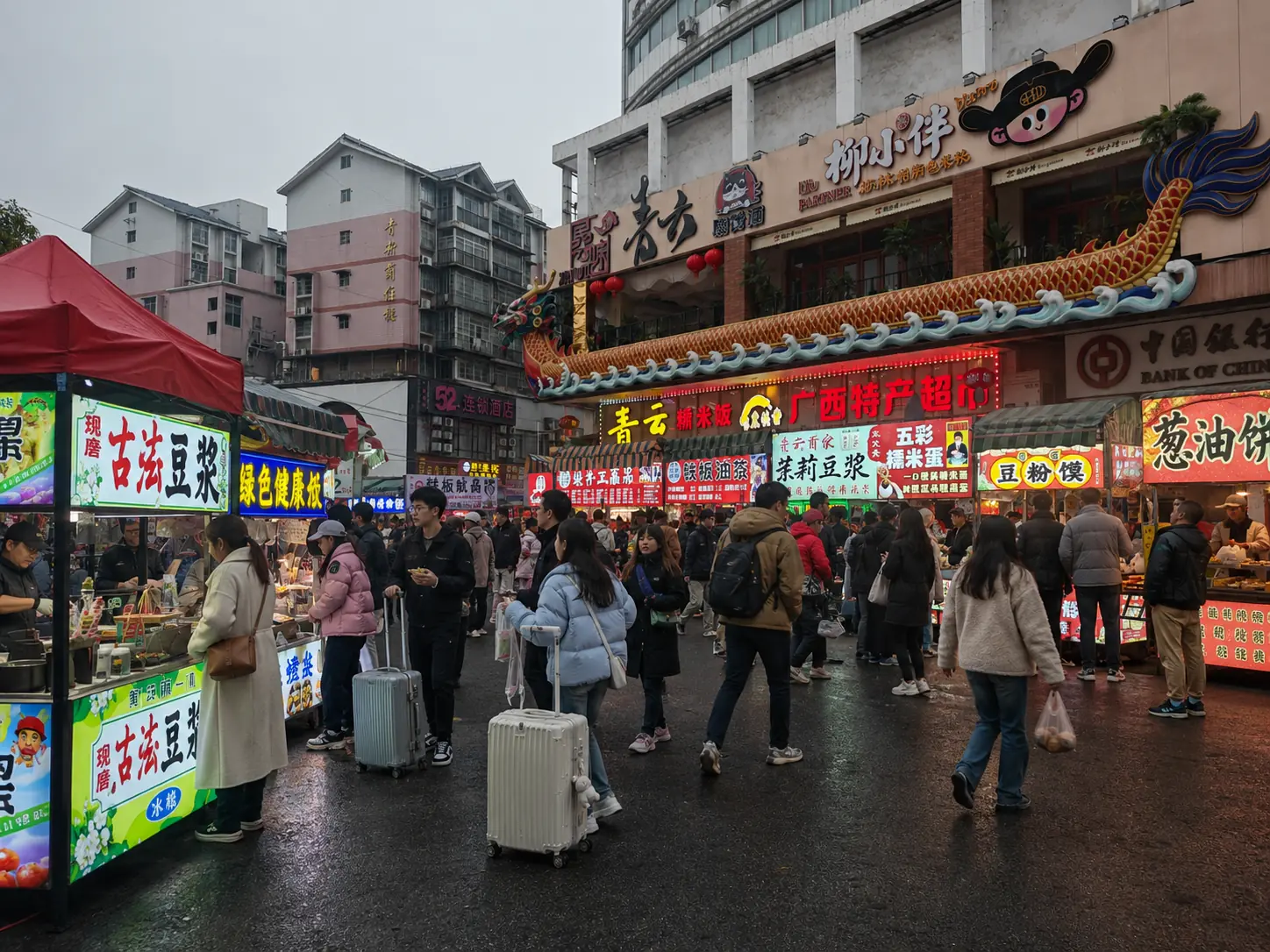
Qingyun feels more everyday and works well if you want luosifen plus other Liuzhou snacks in one grazing route. Choose a clean, busy stall, order the basic bowl first, then use a second stop for add-ons or snacks.

Gubu belongs in luosifen's origin story because old Liuzhou night-market life, snail eating, and rice-noodle culture are often tied to this area. Go in the evening for atmosphere and context, not to prove one single birthplace.
| Eating Goal | Best Area | What to Look For |
|---|---|---|
| Easiest first bowl | Wuxing Pedestrian Street | Busy noodle counter, visible broth, clean toppings, simple menu photos |
| More local grazing | Qingyun Market area | Fast turnover, locals eating alone or in pairs, other Liuzhou snacks nearby |
| Night-market context | Gubu Street | Evening energy, old food-street atmosphere, less polished presentation |
| Cleaner sit-down comfort | Central chain-style shops | Brighter dining room, clearer ordering, slightly less character but easier logistics |
Sister Shi Luosifen
Sister Shi Luosifen (石姐螺蛳粉) is one of the easier names for English-speaking visitors to find online, with address references on traveler platforms. Treat it as a useful search anchor, not the only correct bowl in town. Confirm current hours and branch details on your map app before you go.
Fresh Bowls vs Instant Luosifen Packets
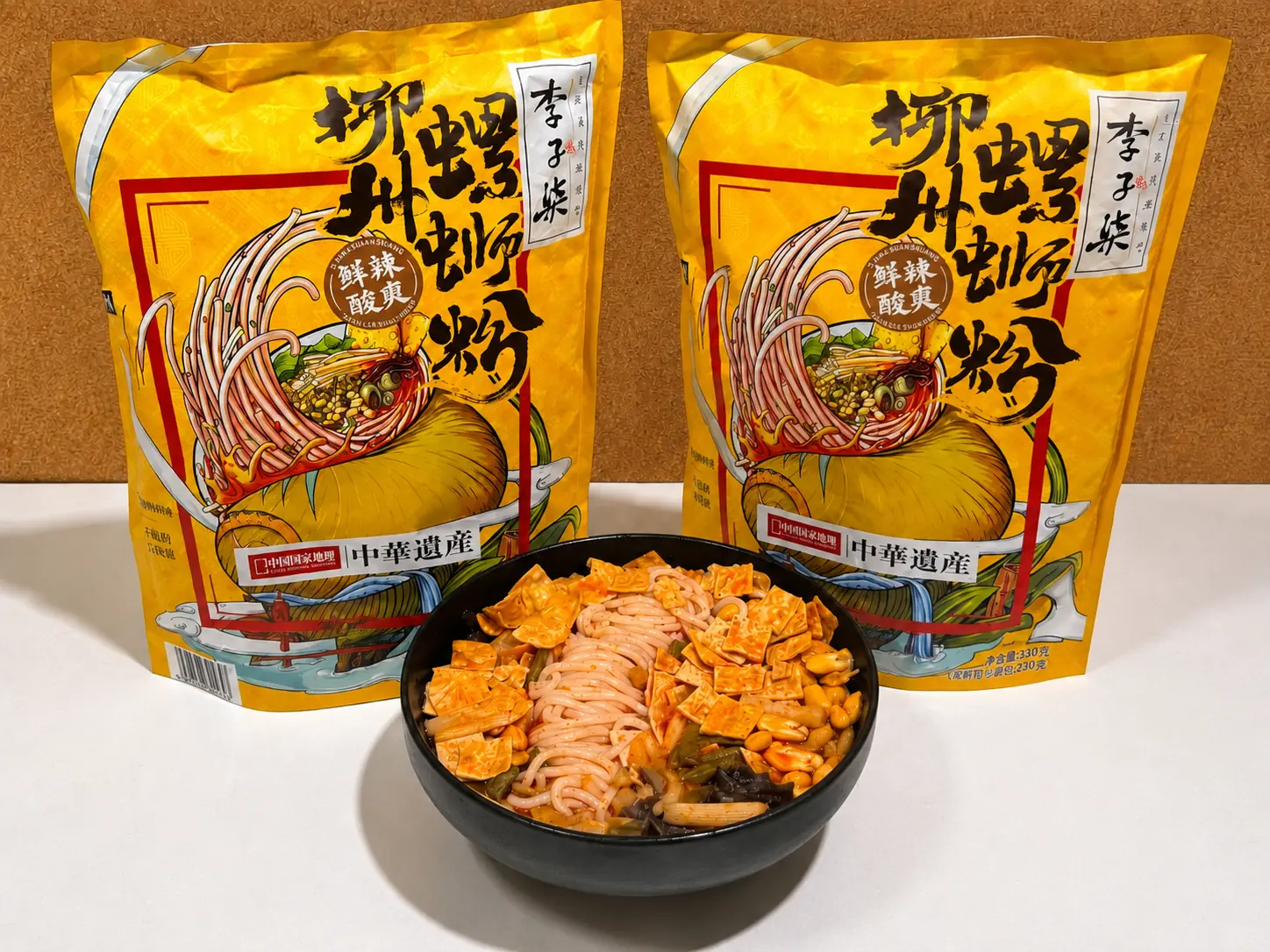
Packets made luosifen famous nationwide, but the fresh-bowl baseline still belongs to Liuzhou.
Packaged luosifen helped turn the dish into a national obsession. It also changed how many foreigners meet it: at home, alone, with a suspiciously powerful sour-bamboo sachet. That is convenient, but it is not the same experience as a fresh bowl.
The packet version is more portable and more intense. The sour bamboo shoots and chili oil are concentrated for shipping, which is why a home kitchen can smell louder than a restaurant. Fresh luosifen has timing on its side: the noodles are just blanched, the broth is hot, the greens still have bite, and fried egg or duck feet can soak up soup in real time.
← swipe to compare all options →
Fresh Bowl
Liuzhou baseline
- ✓Hot broth, just-blanched rice noodles, and toppings added in real time
- ✓Aroma sits inside a fuller sour-spicy-savory bowl
- —Needs a shop visit, ideally in Liuzhou
Best in a working noodle shop
Instant Packet
Portable and louder
- ✓Easy to buy, pack, and cook outside Guangxi
- —Sour bamboo and chili oil feel more concentrated
- ✗Do not eat it hot on trains, buses, or in enclosed public spaces
Better for a ventilated kitchen
China's Ministry of Industry and Information Technology reported that Liuzhou luosifen's whole industry-chain sales reached ¥75.96 billion in 2024, with prepackaged products sold to more than 30 overseas markets and regions. That scale explains why you can now find it far from Guangxi, but the fresh-bowl baseline still lives in Liuzhou.
Allergies, Etiquette, and Common Luosifen Pitfalls
Dietary restrictions need real caution
Luosifen is not safe to assume vegetarian, vegan, halal, or shellfish-free. The broth commonly uses snails and pork bones; peanuts are a standard topping; many shops use shared utensils and topping stations. If you have a serious mollusk, peanut, pork, or cross-contact concern, ordinary luosifen shops are difficult environments.
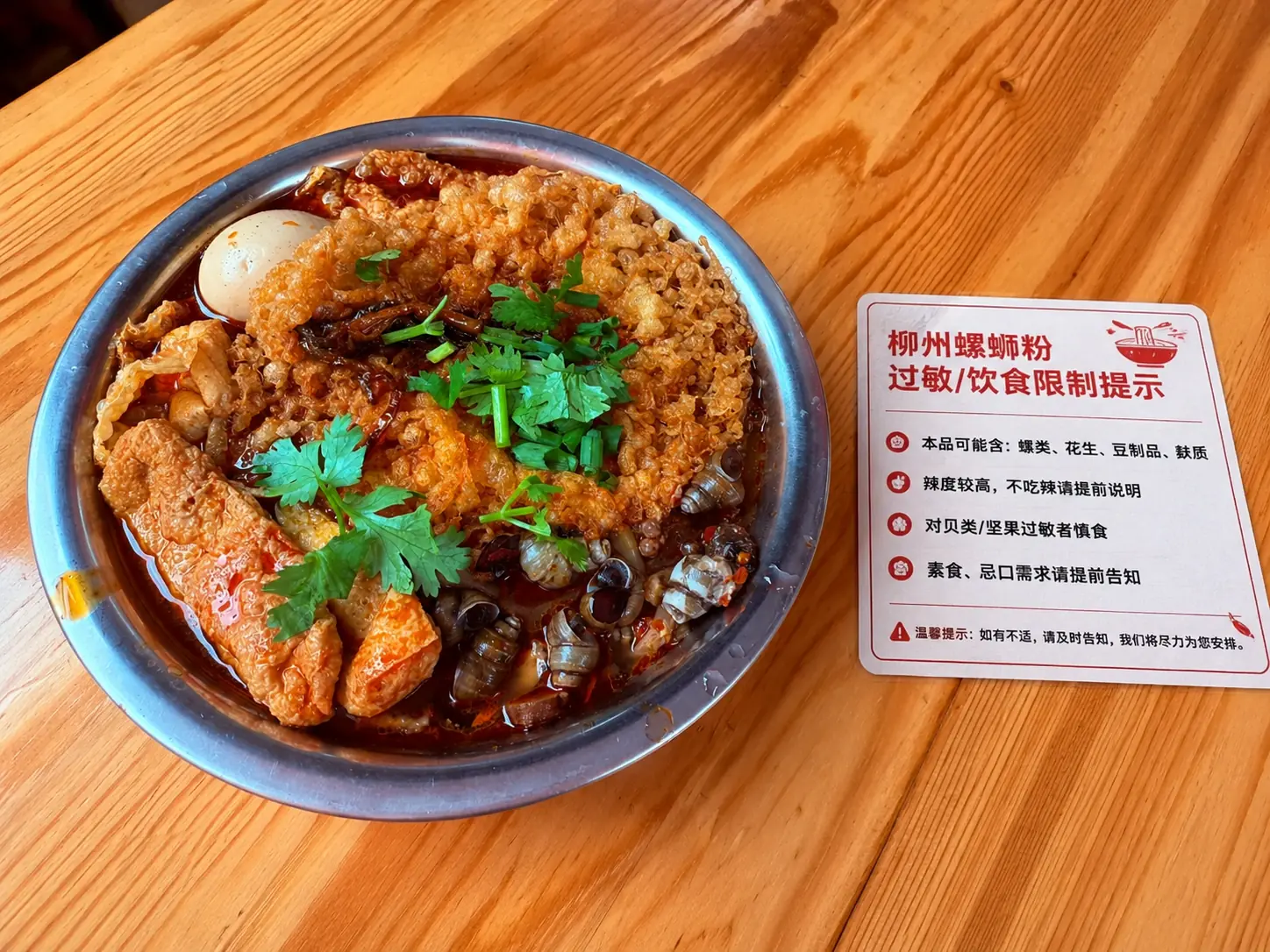
Broth, oil, peanuts, and shared prep space make dietary restrictions hard in ordinary luosifen shops.
Vegetarians should not rely on the words "rice noodles" or "vegetable toppings." Even instant packets need full ingredient checks, because broth bases and flavor oils vary by brand. Halal travelers should look for clearly marked halal restaurants and still ask about broth and cooking oil.
The biggest eating mistake is over-customizing before you understand the dish. Do not start with extra sour bamboo shoots, extra chili oil, duck feet, pork trotter, and a luxury topping pile. Start simple, then build.
Do not make the train your tasting room
Luosifen's aroma lingers. Eating hot packaged luosifen in a hotel room, train carriage, office, or shared indoor space may create real problems for people around you. Save it for a ventilated kitchen or a proper shop.
Frequently Asked Questions
The traditional broth is made with river snails or stone snails, so the flavor source is real. Standard bowls often do not include whole snail meat unless the shop sells it as an add-on.
Beyond This Guide
Luosifen is only one piece of a Guangxi food trip. If you are linking Guilin scenery, Yangshuo countryside, Nanning snacks, or Liuzhou markets into one route, the best plan depends on train timing, spice tolerance, and how adventurous your meals should be.
For more food planning, pair this with our Guilin and Yangshuo food guide, China food allergies guide, and China high-speed rail guide.
© gochinafreely.com — Original guide by Go China Freely.