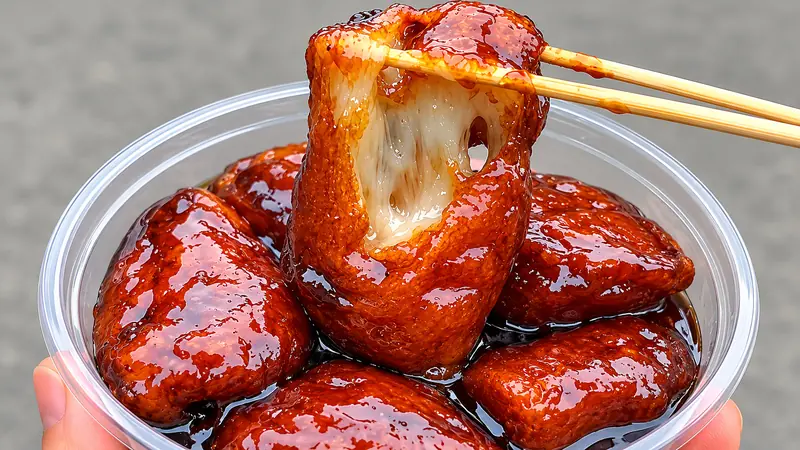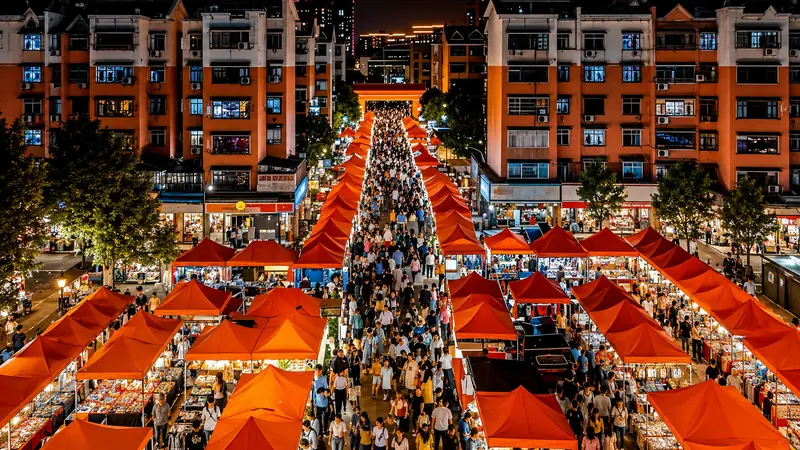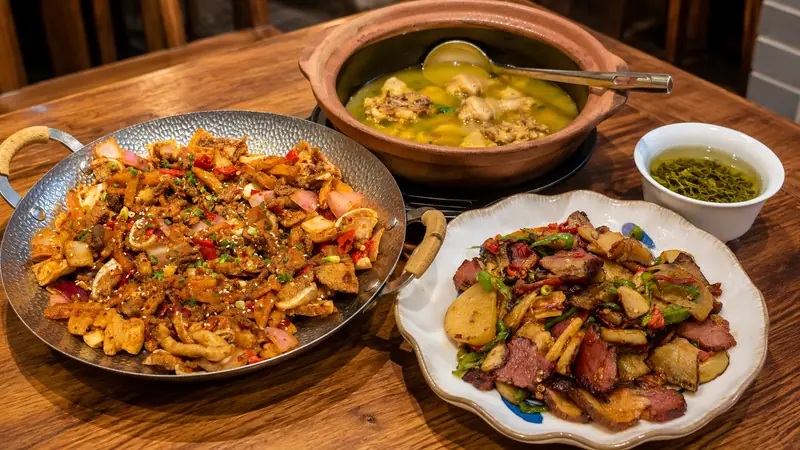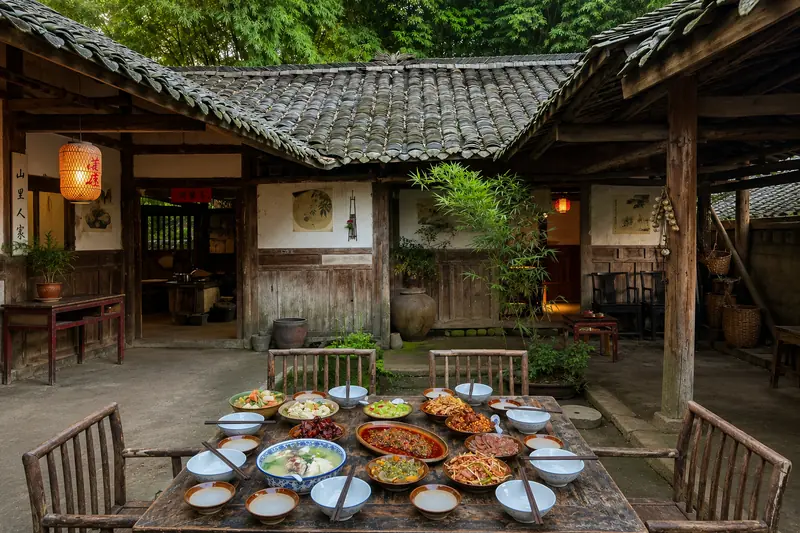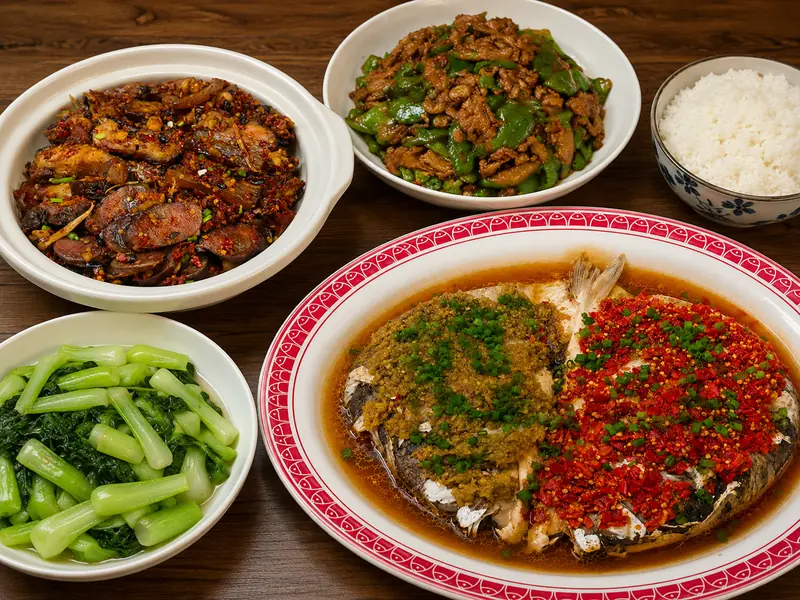
Hunan food is easy to misread from abroad: bright red chilies, a reputation for heat, and a few famous dishes that make the whole province look like one long spice challenge. The useful version is more precise. Hunan cuisine (湘菜) is a table system built around fresh chili, pickled sourness, smoke, rice, and a direct kind of heat that feels very different from Sichuan mala.
Executive Summary
What this guide covers
Fresh chili heat, chopped and pickled chilies, smoked meats, regional styles, classic dishes, first-table ordering, and dietary risks.
Best first table
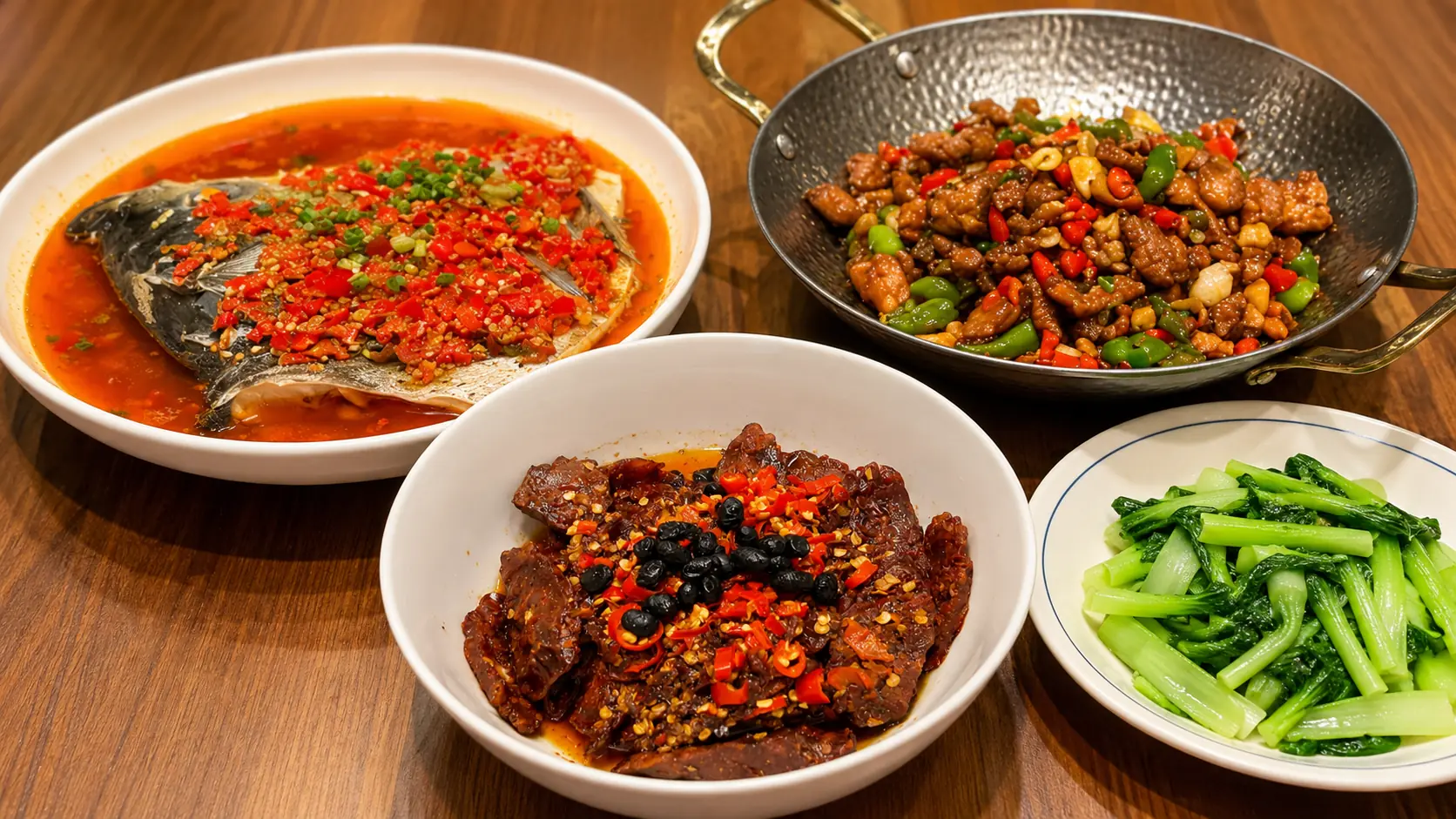
Build balance: one fresh-chili stir-fry, one steamed or sour-hot dish, one smoked or cured meat, one green vegetable, rice, and a cooling side.
Main traveler challenge
Hunan food is not only spicy. The harder skill is reading pork fat, smoked meats, freshwater fish, soy-based seasonings, and hidden chili before overordering.
8
Great cuisine status
3 styles
Useful regional frame
Fresh chili
Core heat source
Ask first
Pork and spice risks
Hunan Cuisine Starts With Fresh Chili Heat
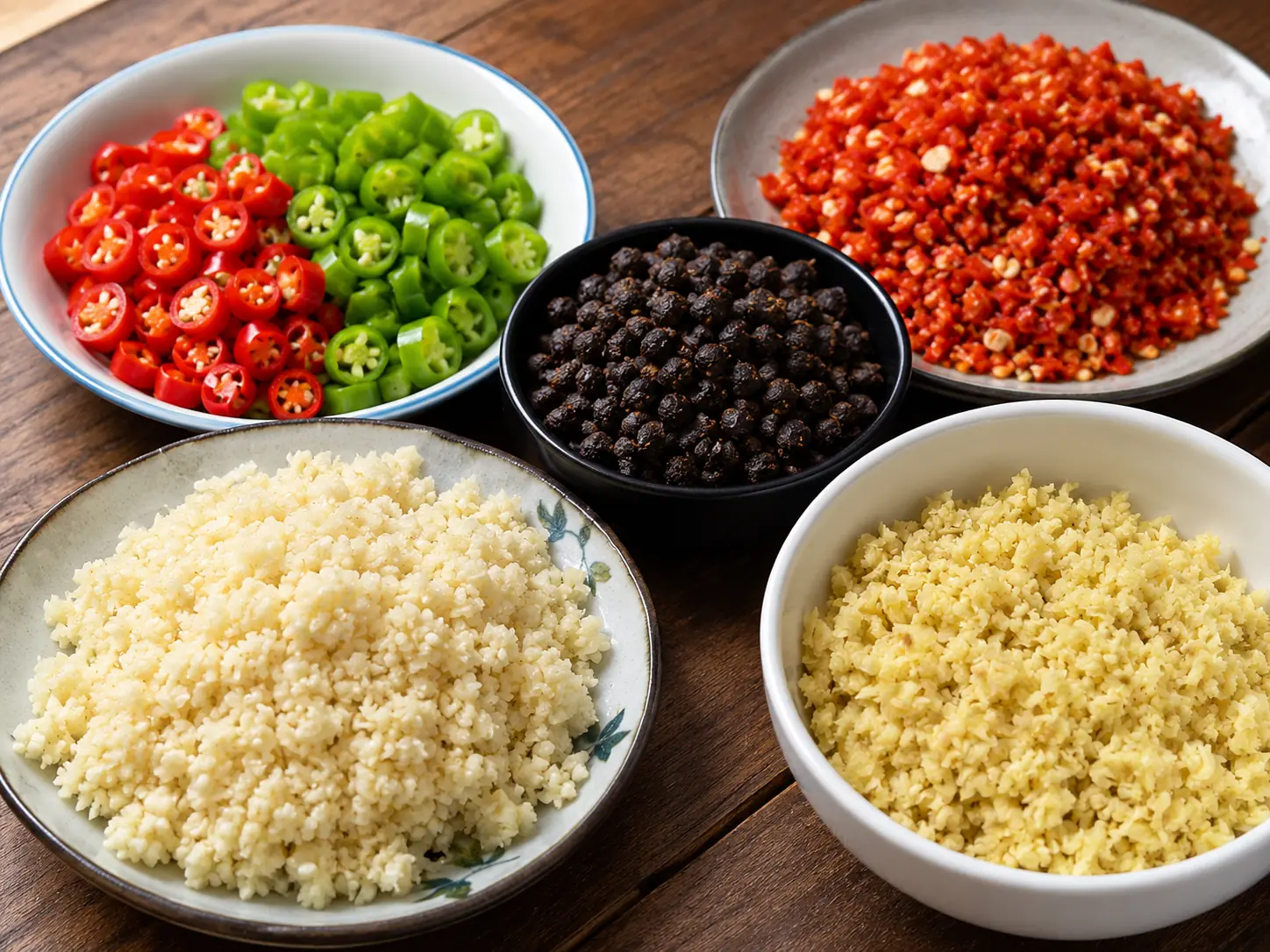
Hunan cuisine is widely counted among China's Eight Great Cuisines, but that label is less useful than the first bite. The flavor arrives fast: fresh red and green chilies, garlic, ginger, fermented black beans, hot wok oil, and sauces built for rice. A Hunan provincial government food page introduces Hunan food with exactly the expectation most visitors have: the first word that comes to mind is often spicy.
That spice is not just a red-oil blanket. In many everyday dishes, the chili is visible, chopped, fresh, and cooked with meat or vegetables at high heat. Fried pork with chili (辣椒炒肉) is the clearest example: pork fat, green chilies, garlic, soy sauce, and a hot wok create a dish that tastes simple only until you try to stop eating rice with it.
1Fresh
Fresh chilies make the heat feel bright and immediate, especially in stir-fries, beef dishes, and vegetable plates.
2Salty
Many dishes are seasoned for rice. A bite alone may feel too strong; a spoon of rice makes the balance clearer.
3Direct
The burn is usually cleaner and less numbing than Sichuan food, though restaurants can still cook fiercely hot.
Pickled Sourness Keeps the Fire Moving
The second key is sourness. Hunan heat often rides on chopped pickled chili, pickled long beans, sour radish, vinegar, and fermented vegetables. That sour edge stops the table from feeling only heavy or oily. It also explains why a dish can be spicy, salty, and refreshing at the same time.
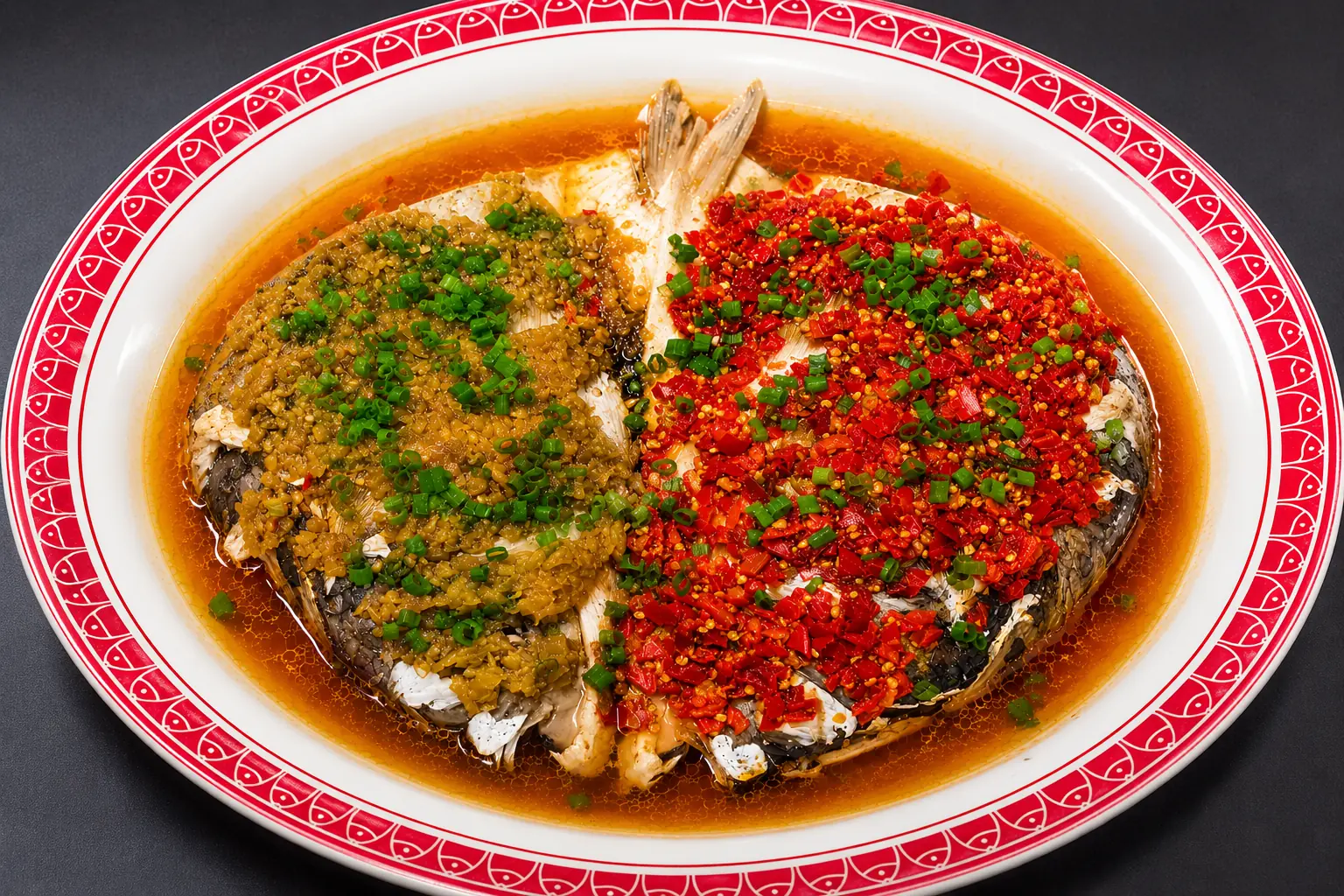
Chopped chili fish head (剁椒鱼头) teaches this best. The fish is steamed, not buried under stir-fry oil, so the chopped chili becomes a salty, fermented, sour-spicy blanket. The Hunan tourism food list names steamed fish head with chopped pepper as one of the most famous and popular dishes in Hunan cuisine, and that popularity makes sense: the sauce is as important as the fish.
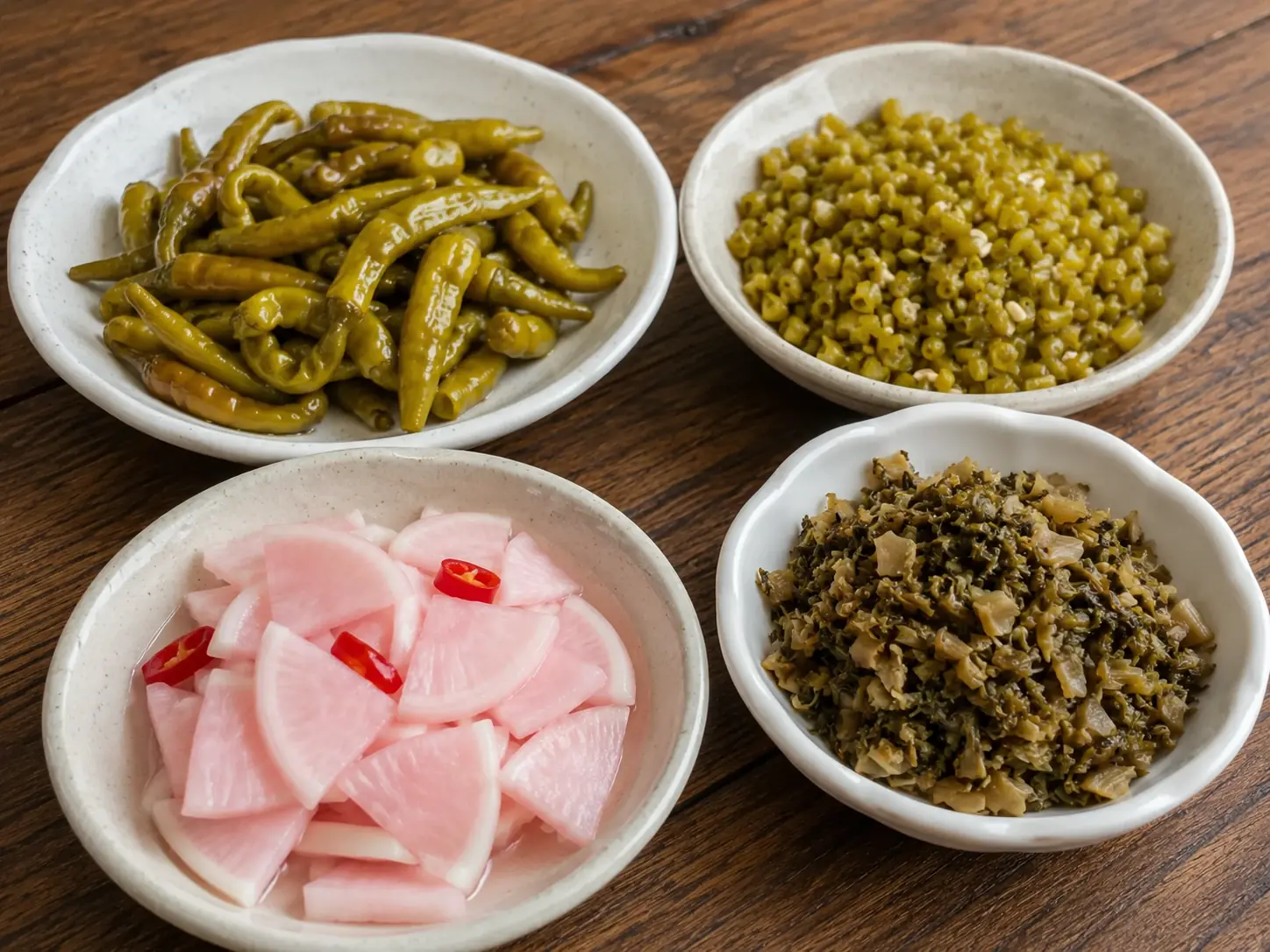
Pickled long beans with minced pork (酸豆角肉末) show the everyday version. The sour beans cut through pork fat, the chili lifts the whole dish, and the rice does the quiet work. If you are ordering for a mixed group, add one sour-pickled dish to keep the table from becoming only smoke and fire.
Order one sour dish early
If your first Hunan meal is all fried pork, smoked meat, and red chili, the flavors can blur. One pickled vegetable, sour bean, or chopped-chili steamed dish gives the meal a cleaner rhythm.
Smoke and Cured Meat Build Depth
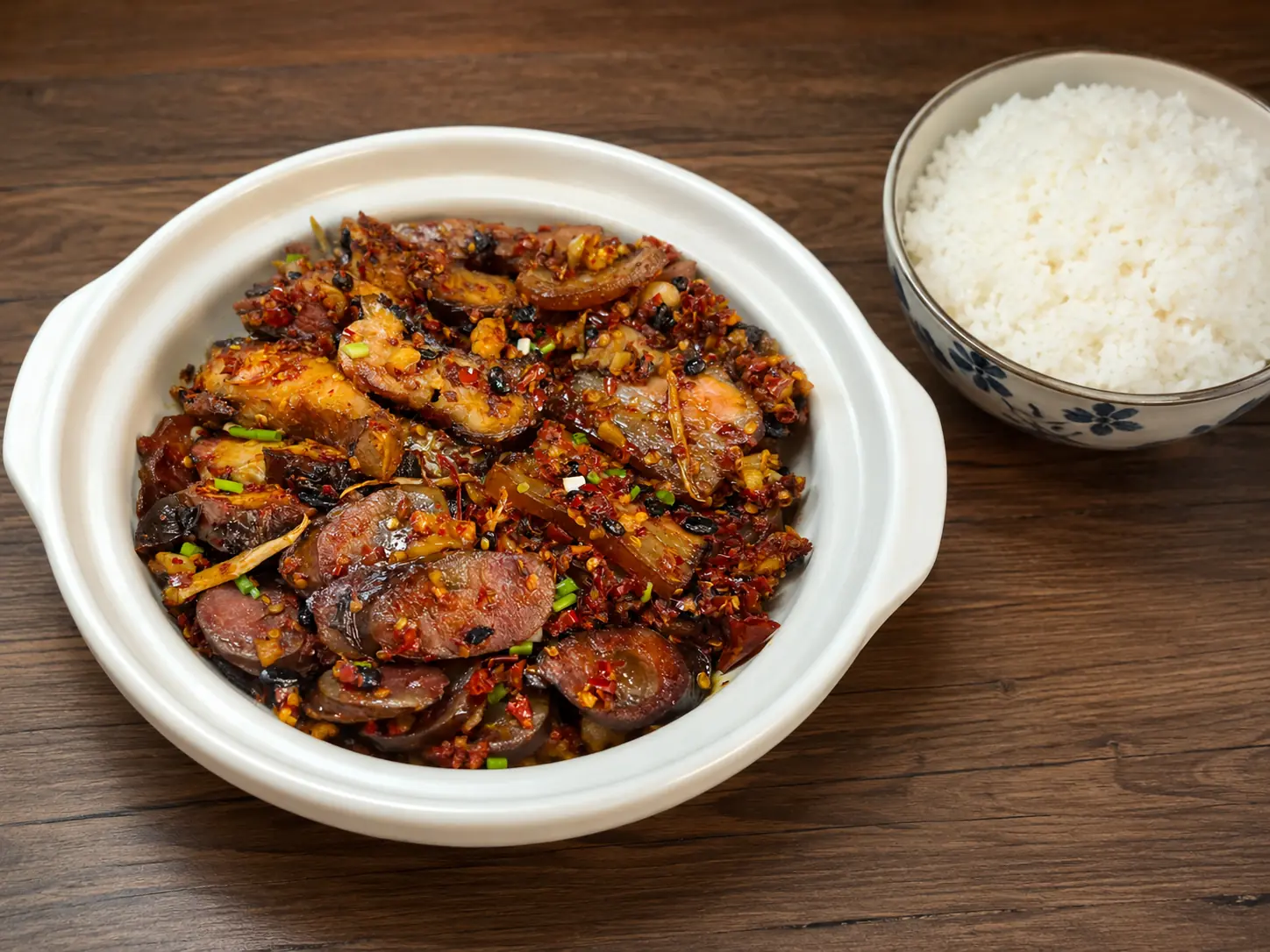
Smoke is the third pillar. Hunan smoked pork (腊肉), cured fish, smoked duck, sausage, and mixed preserved meats give the cuisine a deeper, older flavor than fresh chili alone can provide. The smoke is usually salty and intense, so it works best as part of a table rather than as your only main dish.
Steamed preserved meats (腊味合蒸) are the classic traveler-friendly doorway. Several cured meats are steamed together so the fat, salt, smoke, and steam perfume the plate. It is powerful with rice, useful in cold weather, and very easy for pork-avoidant or low-salt travelers to misread.
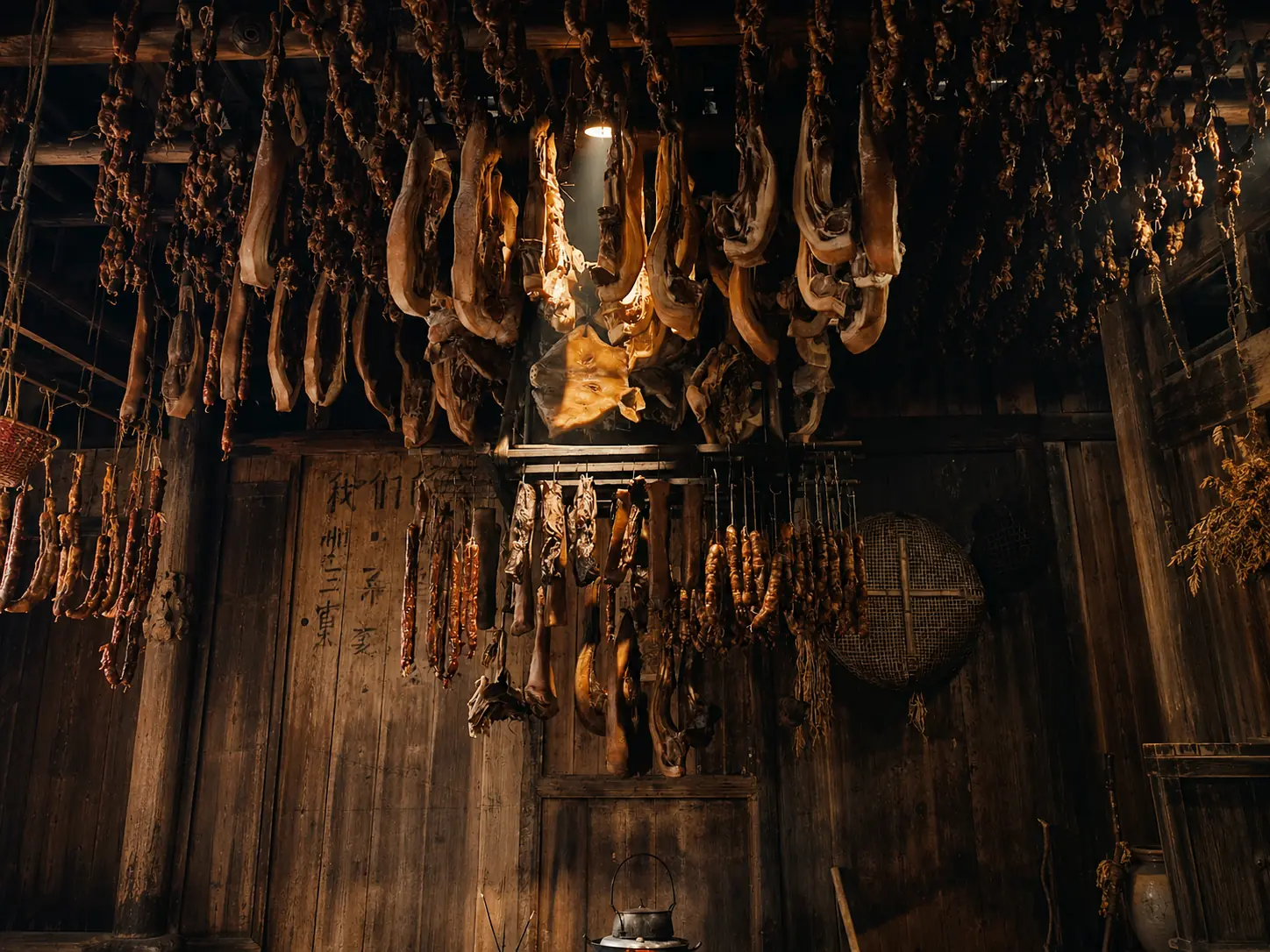
In western Hunan (湘西), smoke becomes even more visible. Mountain kitchens, Tujia and Miao food traditions, pickles, dry pots, and cured pork shape many meals around Zhangjiajie and nearby old towns. Use the Zhangjiajie food guide for where to eat after park days; use this article to understand why the smoke, sourness, and rice belong together.
Xiang River, Dongting Lake, and Western Hunan
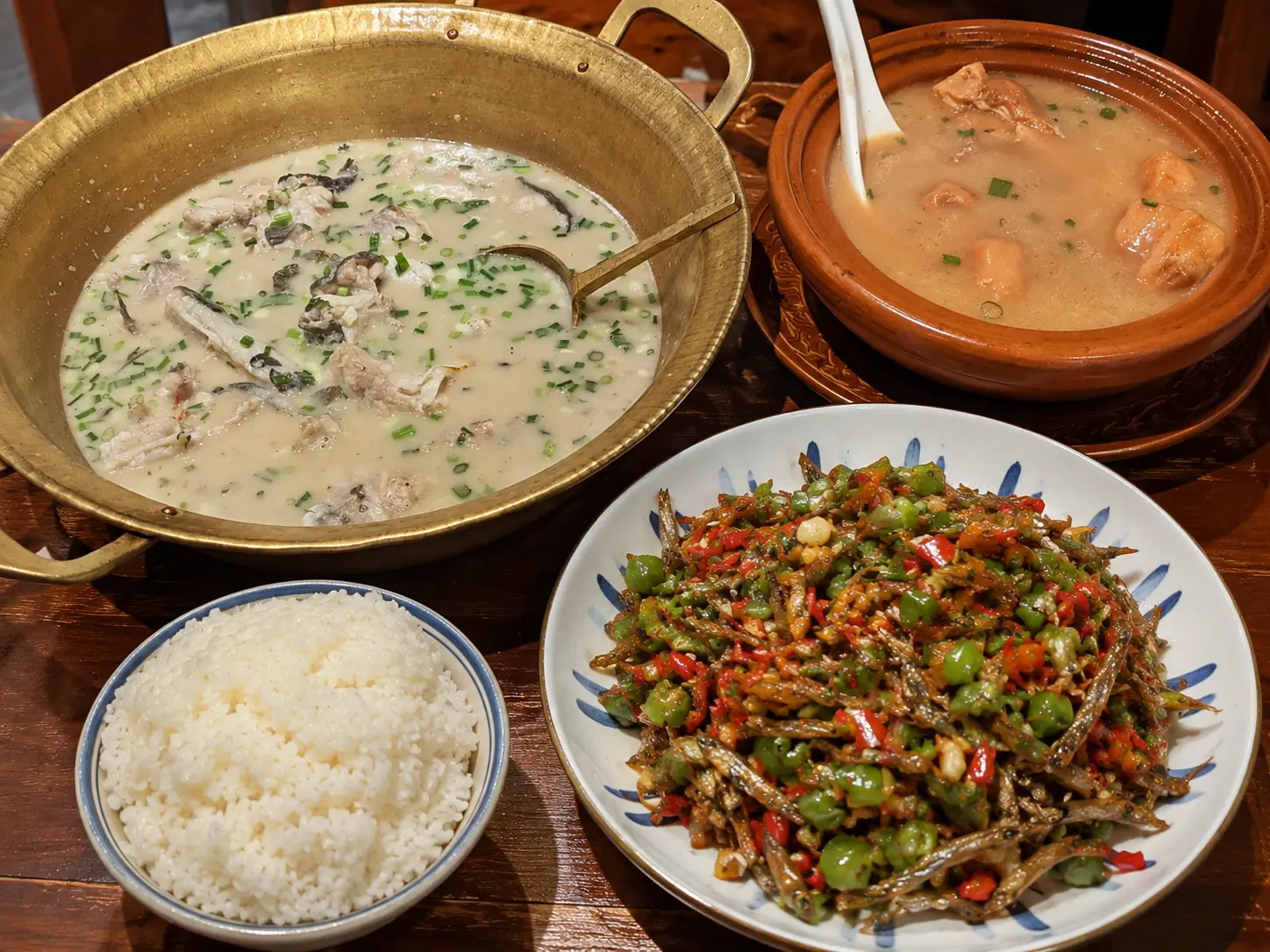
Cuisine borders are not hard walls, but one regional frame is useful for travelers. A Hunan archives article describes Hunan cuisine as roughly divided by the Xiang River basin (湘江流域), the Dongting Lake area (洞庭湖区), and the western Hunan mountains (湘西山区). Treat these as overlapping flavor zones, not rigid menu categories.
| Regional Zone | Flavor Tendency | Traveler Shortcut |
|---|---|---|
| Xiang River basin 湘江流域 | Fresh chili, refined and home-style stir-fries, fish head, pork, beef, urban Hunan restaurants | Think Changsha, Xiangtan, Hengyang, and the most visible restaurant version of Hunan food. |
| Dongting Lake area 洞庭湖区 | Lake fish, freshwater shrimp, lotus, heavier braising, steaming, and salty-spicy dishes | Expect bones, freshwater flavors, and dishes that pair naturally with rice and beer. |
| Western Hunan mountains 湘西山区 | Smoked meats, pickled vegetables, sour-preserved food, mountain ingredients, Tujia and Miao influence | Think Zhangjiajie, Fenghuang, Furong, and stronger smoke-sour mountain meals. |
This frame also prevents city-guide overlap. The Changsha food guide is for snacks, rice noodles, crayfish, night markets, and first neighborhoods. This page is for the flavor logic behind that city experience.
Classic Hunan Dishes by Flavor Logic
Do not order Hunan food as a simple greatest-hits list. Order by role: one fresh-chili dish, one sour-pickled dish, one smoked or cured dish, one protein with a different texture, and one vegetable or soup to keep the meal moving.
Fried pork with chili
辣椒炒肉
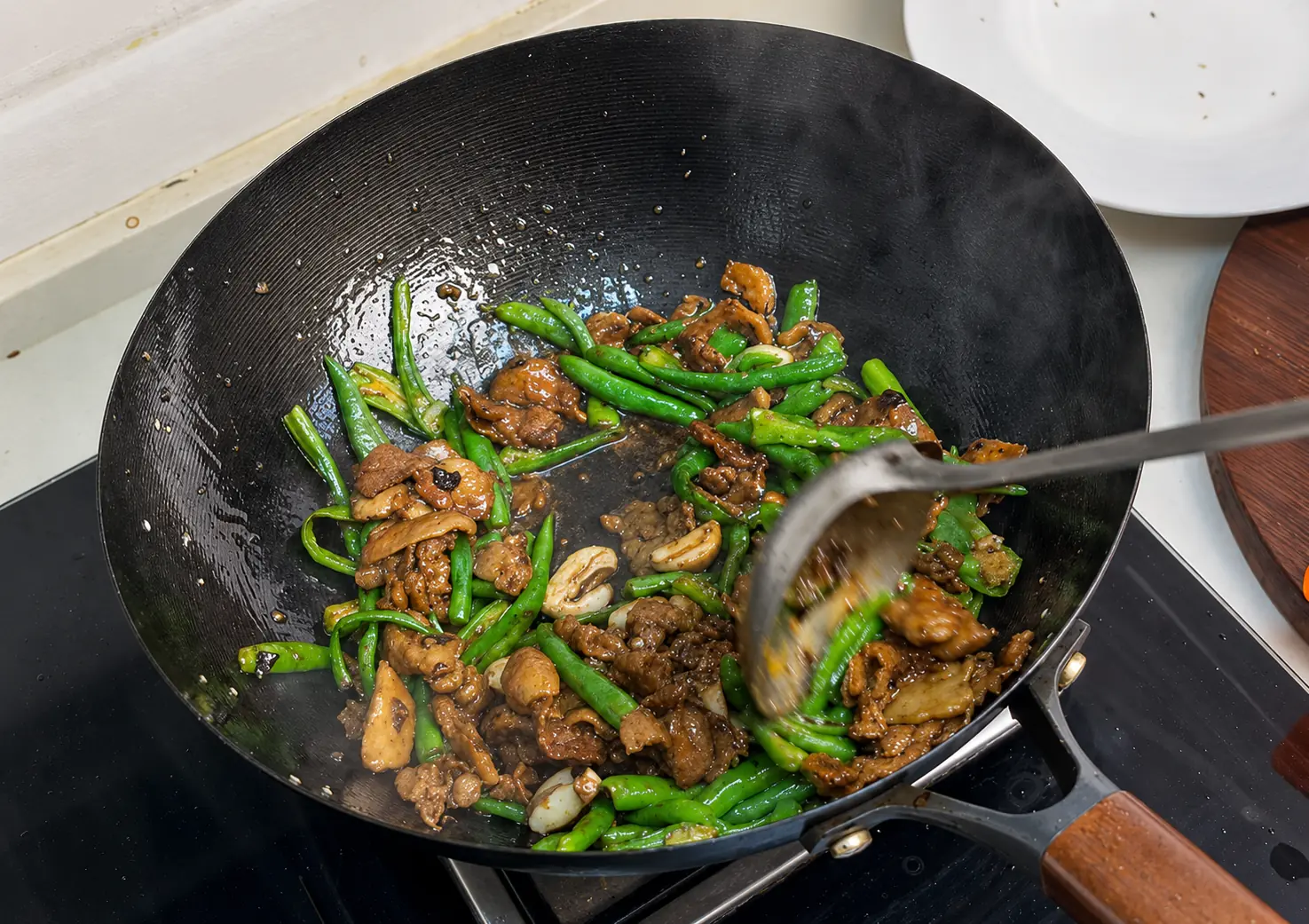
Flavor lesson: fresh chili, pork fat, garlic, wok heat, and rice. Traveler note: the safest first Hunan stir-fry, unless you avoid pork.
Chopped chili fish head
剁椒鱼头
Flavor lesson: steamed fish, salty-fermented chopped chili, and sour-spicy lift. Traveler note: better for two or more people; expect bones.
Steamed preserved meats
腊味合蒸
Flavor lesson: smoke, salt, fat, steam, cured pork, and cured fish. Traveler note: powerful, salty, and usually pork-heavy.
Dong'an chicken
东安鸡
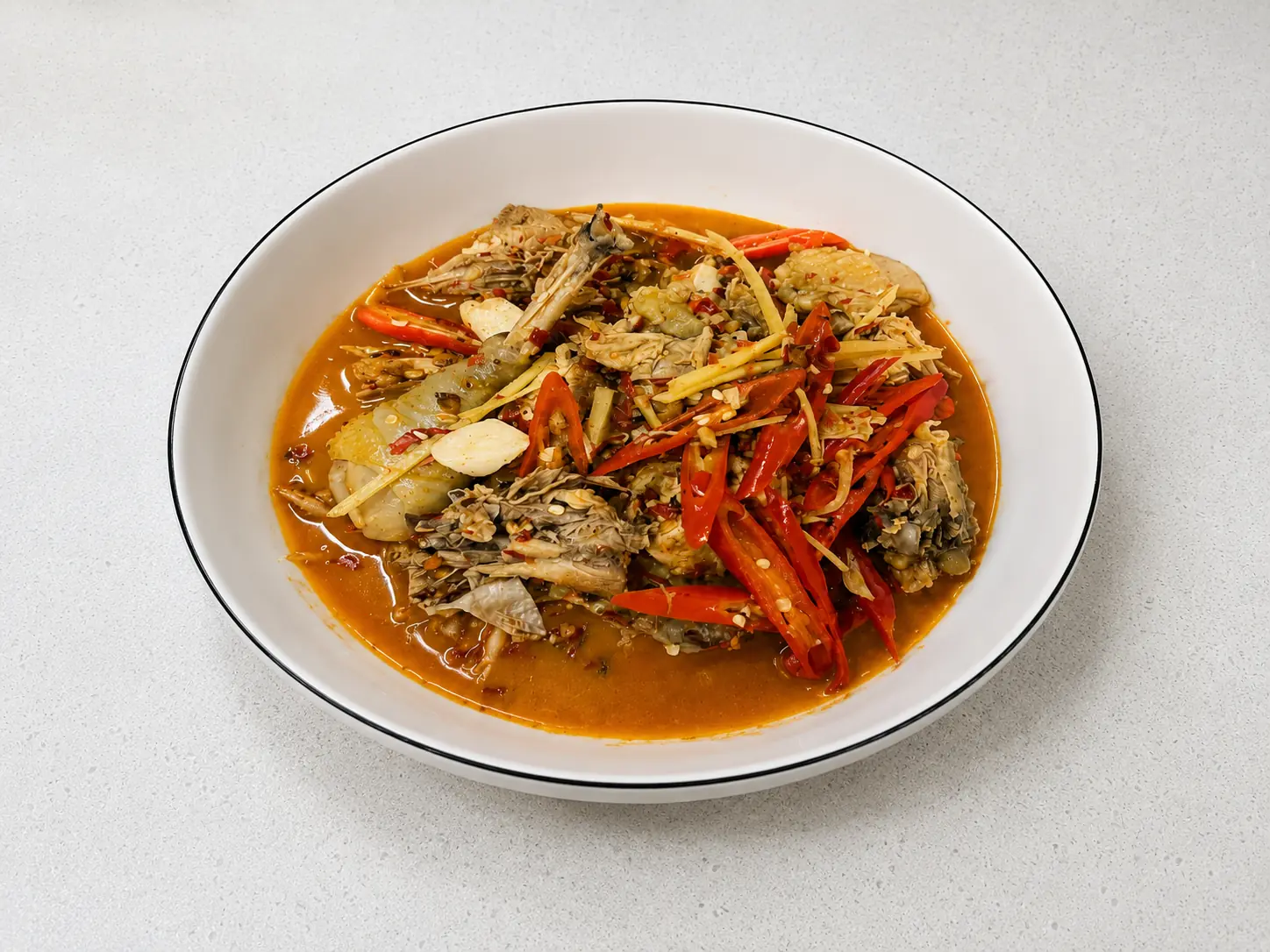
Flavor lesson: chicken, ginger, vinegar, red and green chili, and sour-hot aroma. Traveler note: a useful non-pork main if the kitchen can confirm no pork fat.
Sour long beans with minced pork
酸豆角肉末
Flavor lesson: pickled sourness, minced pork, chili, and rice-friendly salt. Traveler note: looks like a side dish, eats like a rice engine.
Xiangxi yellow beef stir-fry
小炒黄牛肉
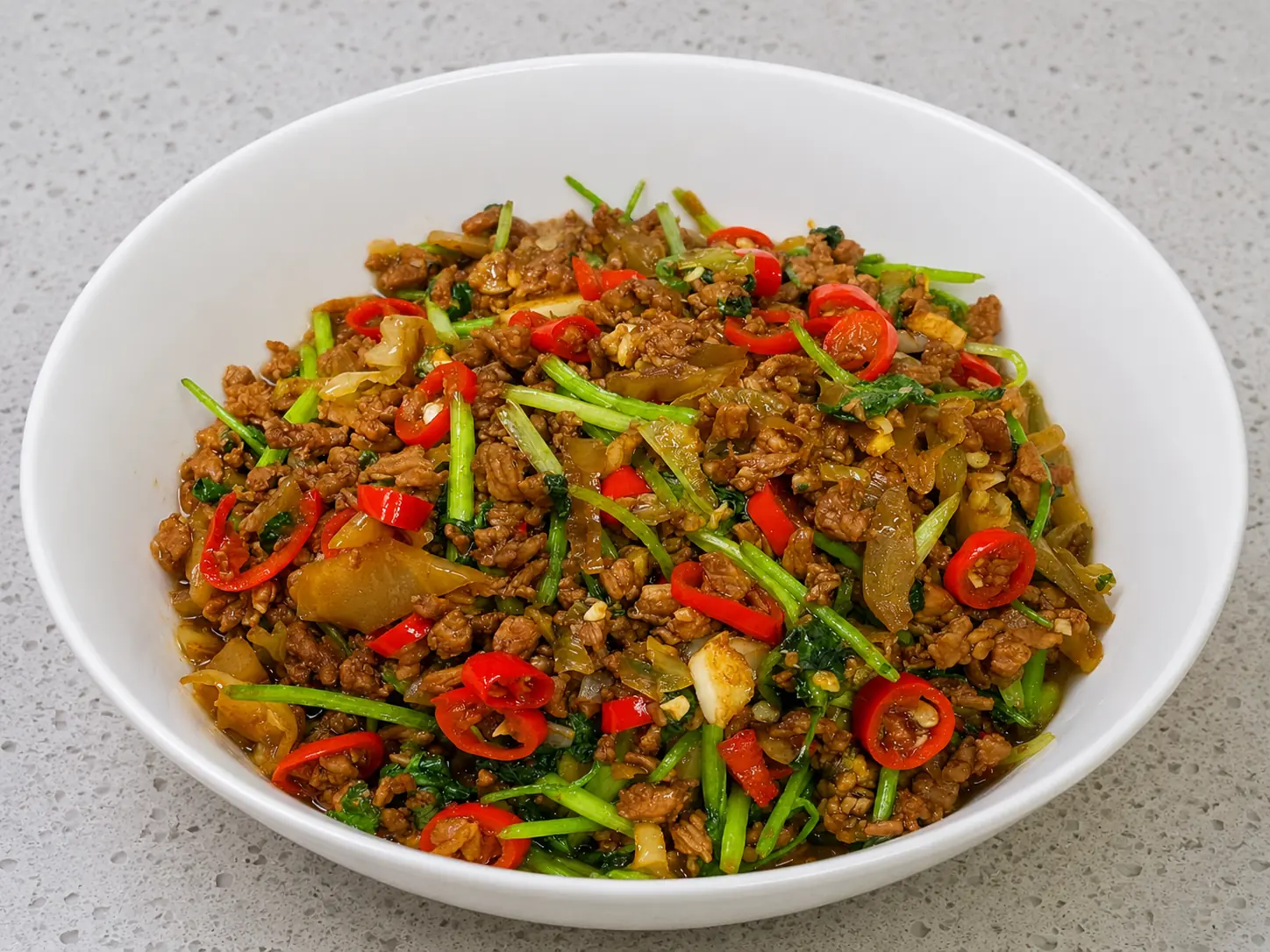
Flavor lesson: local beef, fresh chili, cilantro or celery, and high heat. Traveler note: easy for many visitors to love, but it can be very spicy.
Mao-style braised pork
毛氏红烧肉
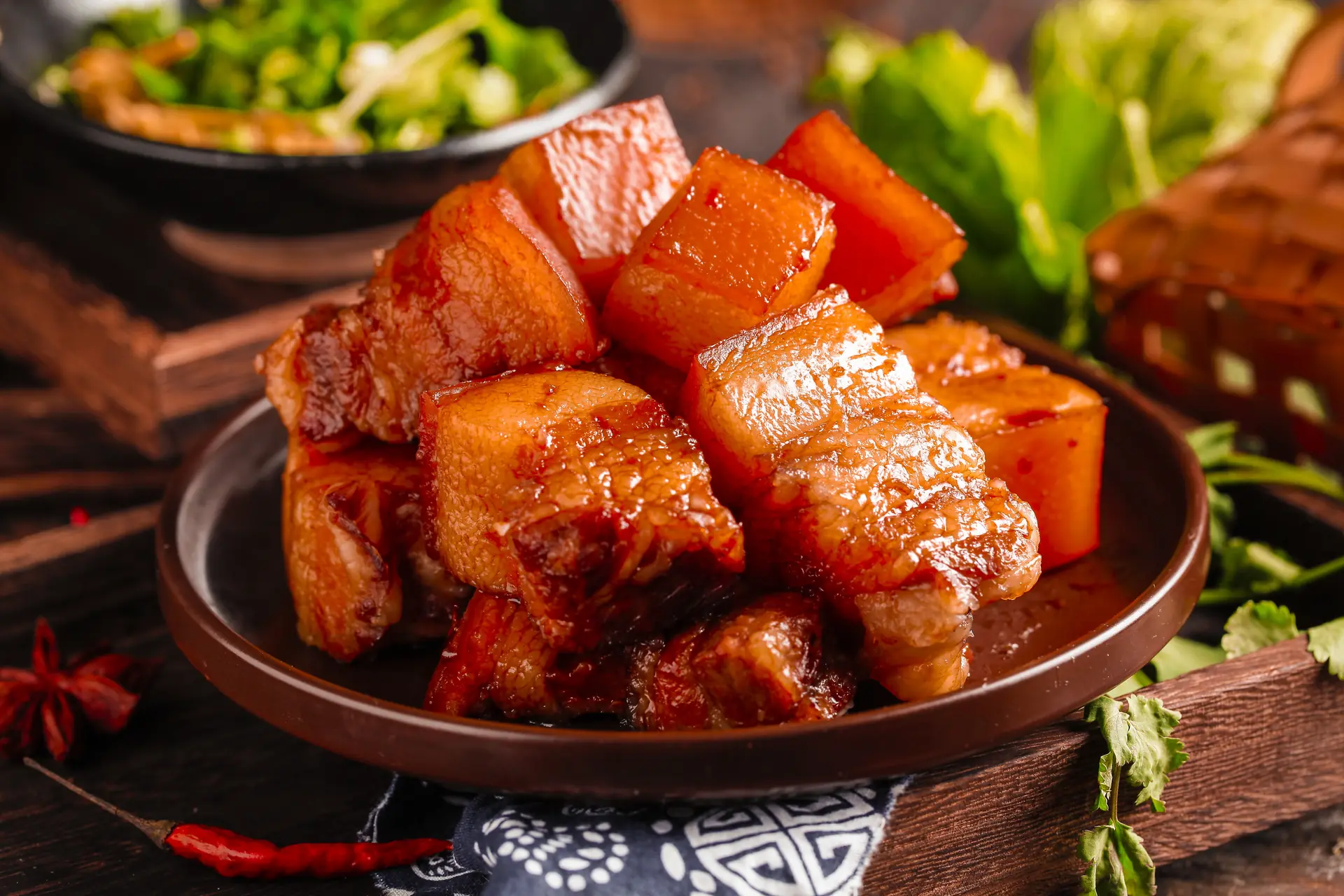
Flavor lesson: rich pork belly, soy, sugar, aromatics, and Hunan depth. Traveler note: not a chili test; a richness test.
Yongzhou blood duck
永州血鸭
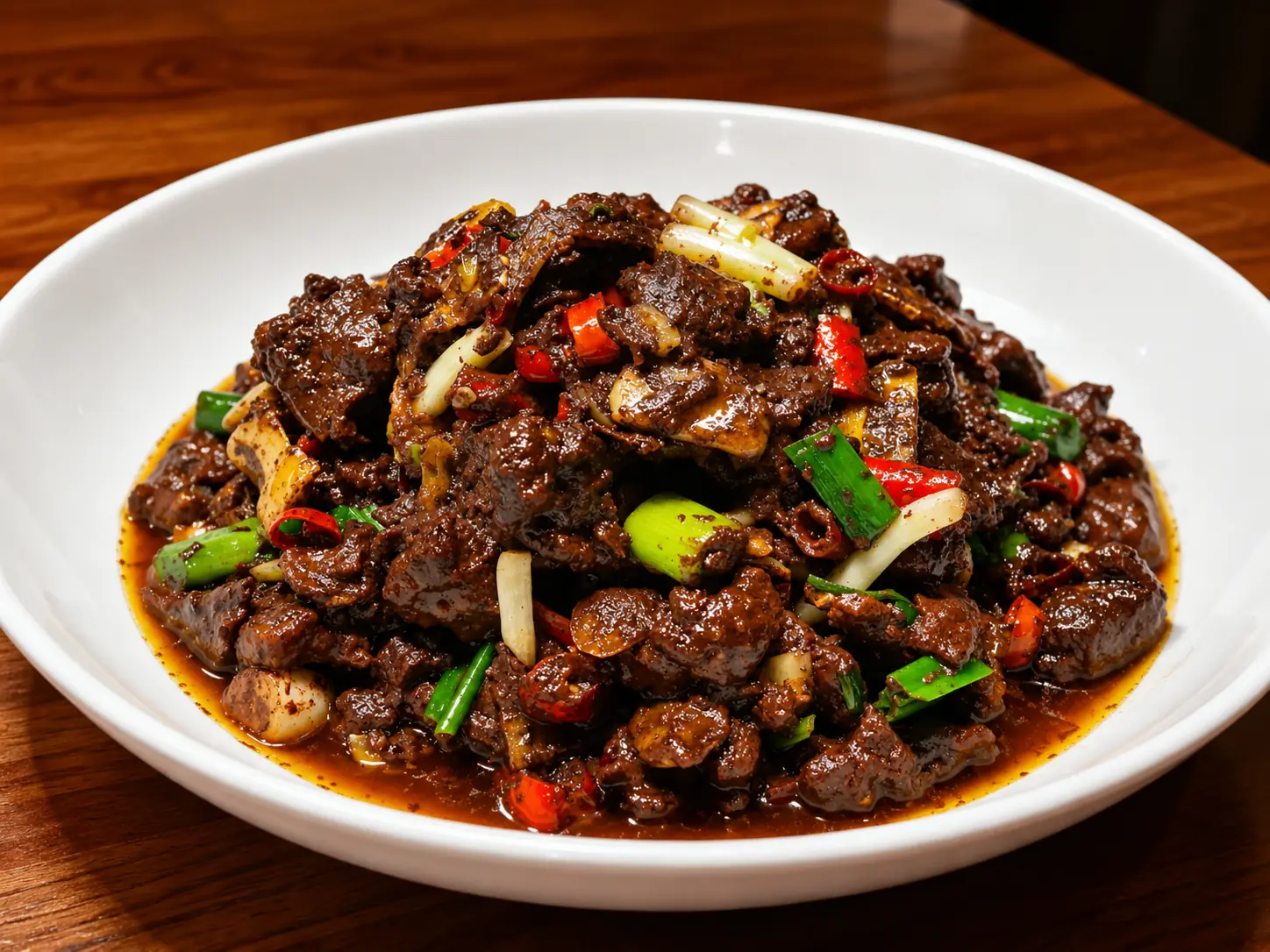
Flavor lesson: duck, chili, dark sauce, and blood-thickened richness. Traveler note: regional and adventurous; ask before ordering for a group.
The Hunan Provincial Department of Culture and Tourism's Changsha food list includes several dishes that international travelers actually meet first: steamed fish head with chopped pepper, fried pork with chili, spicy crayfish, stinky tofu, and cool bean-jelly snacks. Use those as a start, then widen the table toward sour, smoked, lake, and mountain flavors.
Hunan Cuisine Versus Sichuan Mala Heat
Hunan and Sichuan food are both famous for spice, but they do not attack the mouth in the same way. Sichuan cooking often uses a numbing-spicy mala structure built from chili and Sichuan peppercorn. Hunan cooking usually leans more on fresh chili burn, chopped or pickled chili, vinegar, fermented vegetables, smoked meat, and salty rice-friendly sauces.
That difference matters when ordering. If you dislike mouth-numbing spice, Hunan may feel easier than Sichuan. If you dislike direct chili burn, Hunan may feel harder. Asking for less spicy can help, but it does not turn a Hunan kitchen into a mild kitchen.
| Question | Hunan Tendency | Sichuan Tendency |
|---|---|---|
| Main heat feeling | Direct chili burn, often fresh and sharp | Numbing-spicy heat, often aromatic and layered |
| Key sour note | Pickled chili, sour beans, vinegar, fermented vegetables | Pickled chili exists too, but not the whole identity |
| Smoke | Smoked and cured meats are a major flavor marker | Present in some dishes, but less central for most travelers |
| First-table mistake | Ordering only pork, smoked meat, and fresh chili | Ordering only red-oil and numbing-spicy dishes |
Less numbing does not mean mild
Hunan restaurants may use less Sichuan peppercorn, but the fresh chili load can be fierce. Ask for less chili before cooking, and keep rice, greens, or a mild soup on the table.
Build Your First Balanced Hunan Table

The best first Hunan table is balanced, not heroic. You want enough heat to understand the cuisine, enough sourness to keep appetite moving, enough smoke to feel the regional depth, and enough plain rice to make the whole system work.
- Start with fresh chili(辣椒炒肉)- Order fried pork with chili or a local beef stir-fry for the clean Hunan heat lesson.
- Add sour-spicy steam(剁椒鱼头 / 东安鸡)- Choose chopped chili fish head for a group or Dong'an chicken for a sour-hot poultry main.
- Add smoke carefully(腊味合蒸)- One smoked or cured meat dish is enough for a first meal because it is salty and rich.
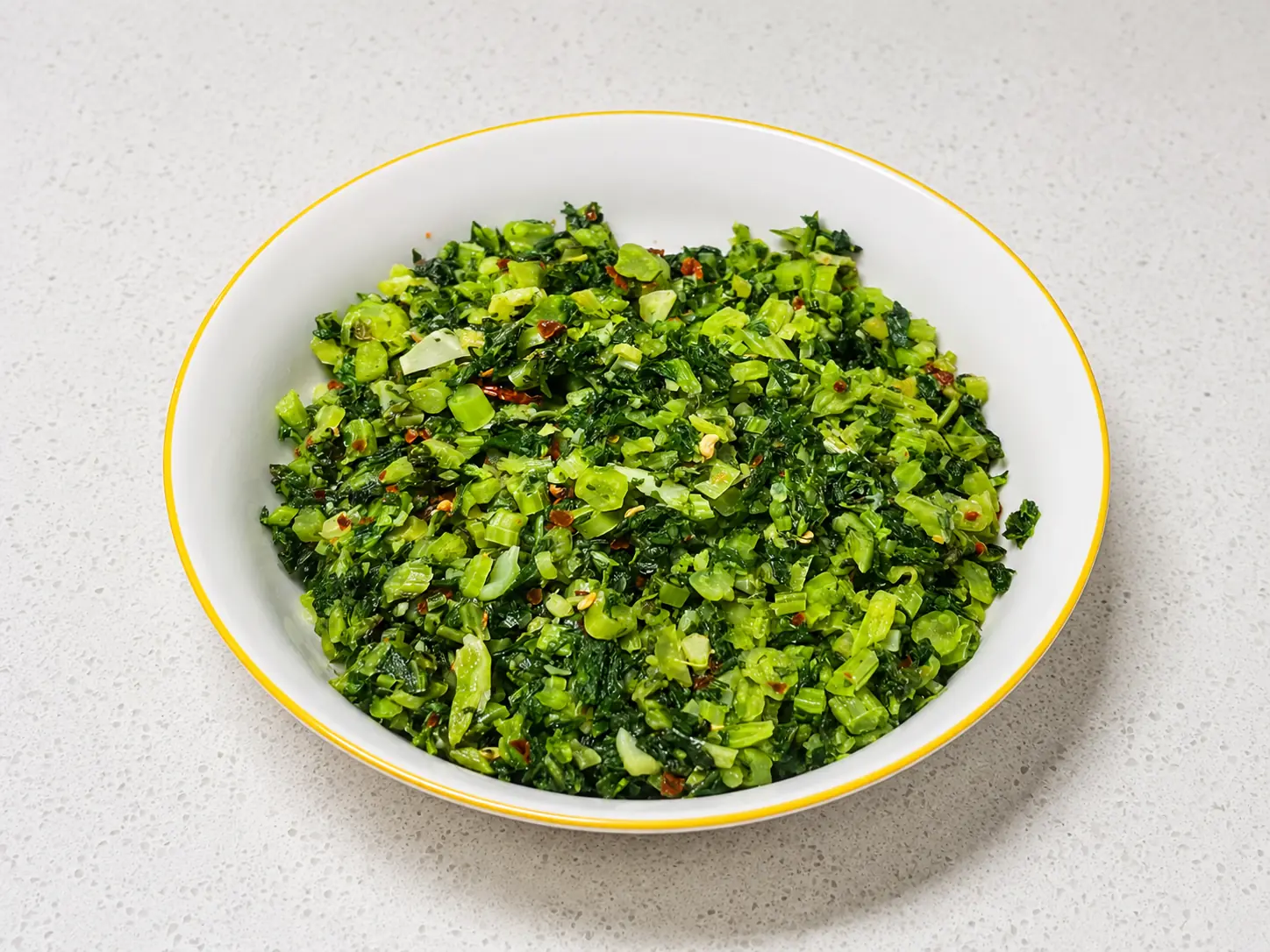
- Add greens or tofu(青菜 / 豆腐)- Ask whether the vegetable uses pork fat or minced pork if that matters to your group.
- Anchor with rice(米饭)- Hunan seasoning is designed for rice. Do not judge the meal without it.
For two people, keep it smaller: one fresh-chili stir-fry, one vegetable, rice, and either chopped chili fish head or Dong'an chicken. For three or four, add smoked meat and a sour side. For a solo traveler, a bowl of rice noodles, a small stir-fry, or a simple two-dish meal is better than forcing a banquet alone.
Spice, Pork, and Hidden Allergy Risks
The most useful question in a Hunan restaurant is not only "Is it spicy?" It is "What oil, meat, sauce, and garnish are inside?" Hunan kitchens often use pork, pork fat, smoked meat, soy sauce, fermented black beans, vinegar, fresh chili, chopped chili, garlic, ginger, chicken powder, freshwater fish, shrimp, peanuts, sesame, and shared woks.
| Need | Watch For | Safer Approach |
|---|---|---|
| Low spice | Fresh chili, chopped chili, pickled chili, chili oil | Ask for less chili before cooking; still expect visible heat. |
| No pork | Pork belly, smoked pork, lard, minced pork in vegetables | Ask about oil and hidden meat, not only visible pork pieces. |
| Vegetarian | Lard, meat stock, chicken powder, minced pork, smoked-meat flavoring | Use dedicated vegetarian restaurants when strict needs matter. |
| Fish or shellfish allergy | Fish head, freshwater shrimp, lake fish, shared seafood woks | Skip lake-style dishes and confirm sauces or stock if severe. |
| Soy or gluten | Soy sauce, fermented beans, wheat-containing seasonings | Assume soy-based sauces are present unless the restaurant confirms otherwise. |
| Peanut or sesame allergy | Snacks, chili oils, garnishes, sauce bowls, shared prep tools | Communicate clearly; cross-contact is hard to control in busy kitchens. |
For serious allergies, do not rely on the English menu alone. A translation app can communicate the risk, but it cannot make a normal kitchen allergy-controlled. Choose calmer restaurants, avoid peak rush, and keep the order simple.
Changsha and Zhangjiajie Food Guide Links
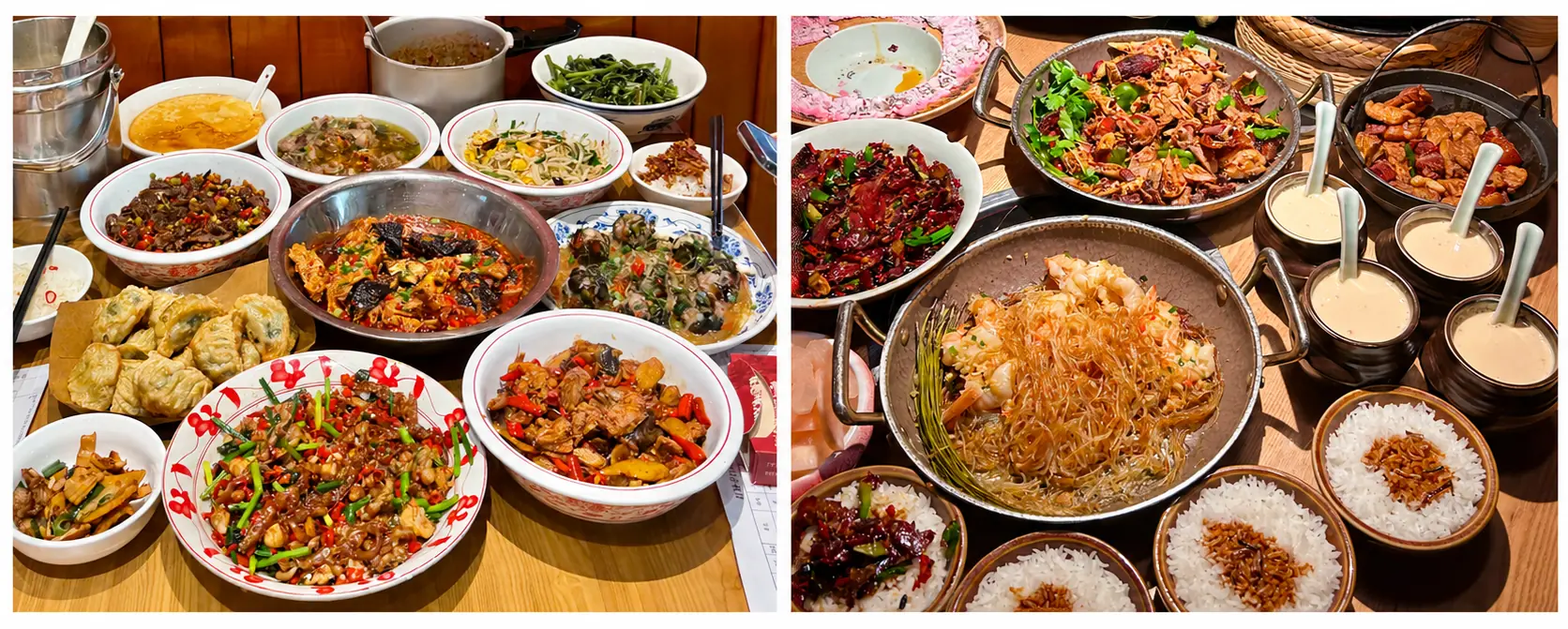
This cuisine guide should make the city guides easier, not replace them. Once you understand the flavor map, the city articles can answer the practical questions: where to eat, how to pace meals, which neighborhoods fit your day, and how to avoid wasting dinner on a tired travel night.
Use the Changsha food guide for rice-noodle breakfasts, stinky tofu, crayfish evenings, snack streets, night markets, and the urban version of Hunan food. Use the Zhangjiajie food guide for Tujia three-pot stew, smoked pork, mountain meals, Wulingyuan dinners, and scenic-day food planning.
Frequently Asked Questions
No, but many standard restaurant dishes are spicy by design. Even mild orders can include fresh chili, chopped chili, pickled chili, or chili oil. Balance the table with rice, greens, soup, and sour sides.
Beyond This Guide
Use this page as the cuisine map, then choose the city layer that fits your route: Changsha for street snacks, rice noodles, and night eating; Zhangjiajie for western Hunan mountain meals; and nearby regional articles when your trip expands toward Fenghuang, Furong, Yueyang, or other parts of Hunan.
© gochinafreely.com — Original guide by Go China Freely.