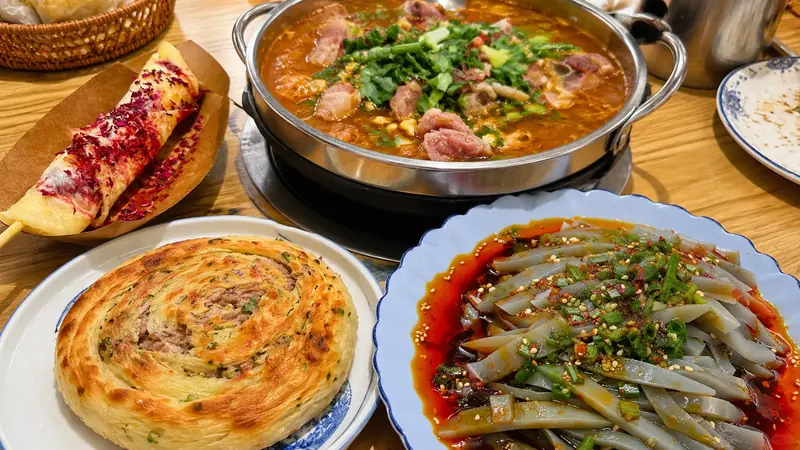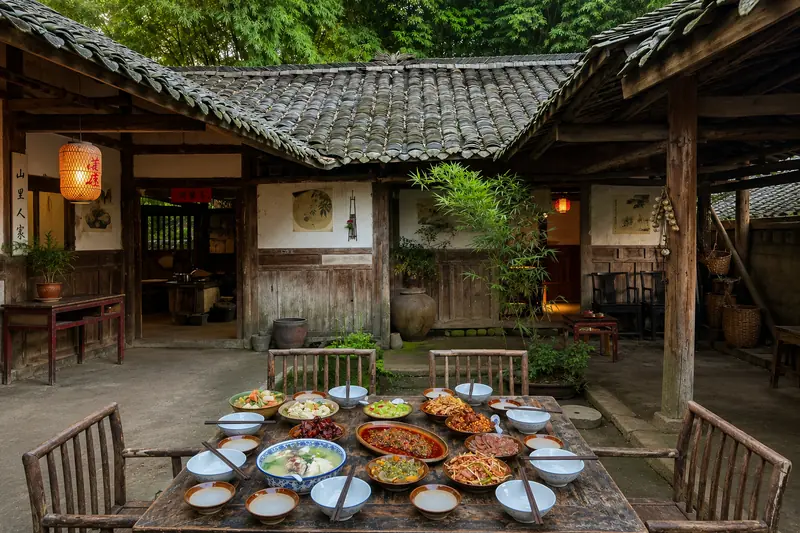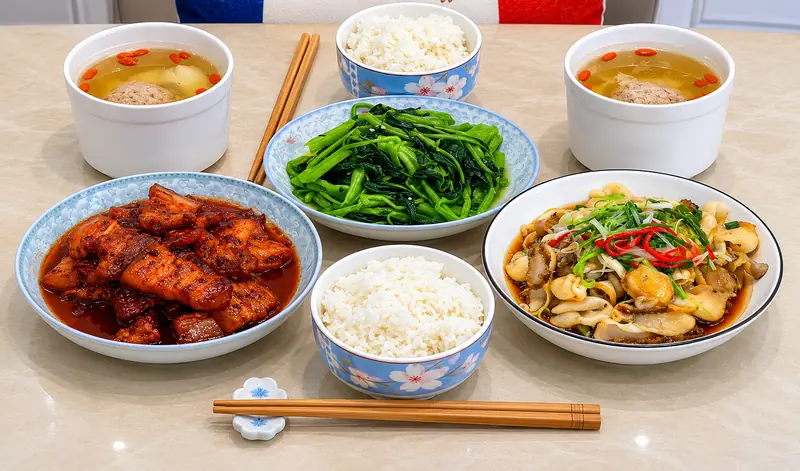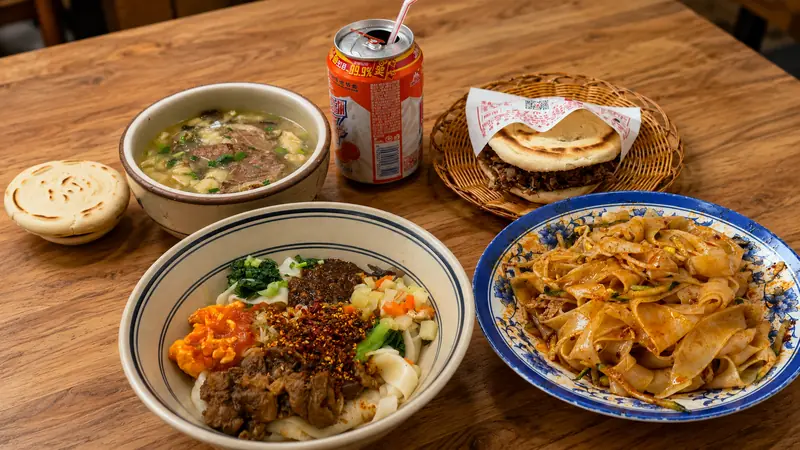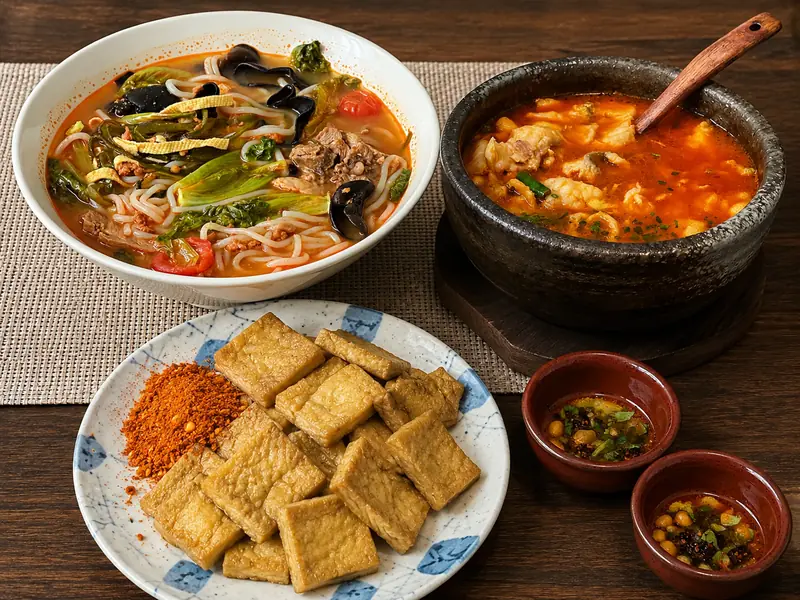
Guizhou cuisine (黔菜) is often filed under "spicy southwest food," but that shortcut misses the first thing your mouth notices. This is not a smaller version of Sichuan or Chongqing cuisine. The center of the table is fermented sourness: sour soup, pickled vegetables, fermented chili, rice noodles with acidic broth, and dipping bowls that let every diner tune the final bite.
Use this guide as a province-level flavor map. The Zhenyuan Ancient Town guide and Zhaoxing Dong Village guide already cover local eating around those stops. This article explains the wider Guizhou system: Guiyang (贵阳) snacks, Kaili (凯里) and Qiandongnan (黔东南) sour soup, Zunyi (遵义) chili and rice noodles, and the practical ordering risks behind a food culture that looks thrillingly simple until the dipping sauce arrives.

Executive Summary
What this guide covers
Province-level Guizhou food logic: fermented sour soup, chili dips, Guiyang snacks, rice noodles, Qiandongnan sour soup fish, Zunyi chili, and ordering risks.
Best first table
Build contrast: one sour-soup dish, one rice-noodle or snack item, one chili or dipping-sauce lesson, one vegetable or tofu dish, and one comfort hotpot or grilled plate.
Main traveler challenge
Guizhou food can hide pork, offal, blood curd, fish bones, fish mint, peanuts, soy, wheat, fermented condiments, and serious chili heat inside dishes that look casual.
Sour first
Guizhou flavor clue
Red + white
Sour soup families
Dips matter
Dipping sauce culture
Ask first
Pork, fish, offal
Start With Fermented Sour, Not Mala Heat
The easiest way to separate Guizhou food from nearby cuisines is this: Sichuan and Chongqing often lead with numbing-spicy mala, Hunan often leads with fresh chili and smoke, Yunnan often leads with mushrooms, herbs, rice noodles, and regional diversity. Guizhou leads with sourness that is usually fermented, not just vinegar poured into a dish.
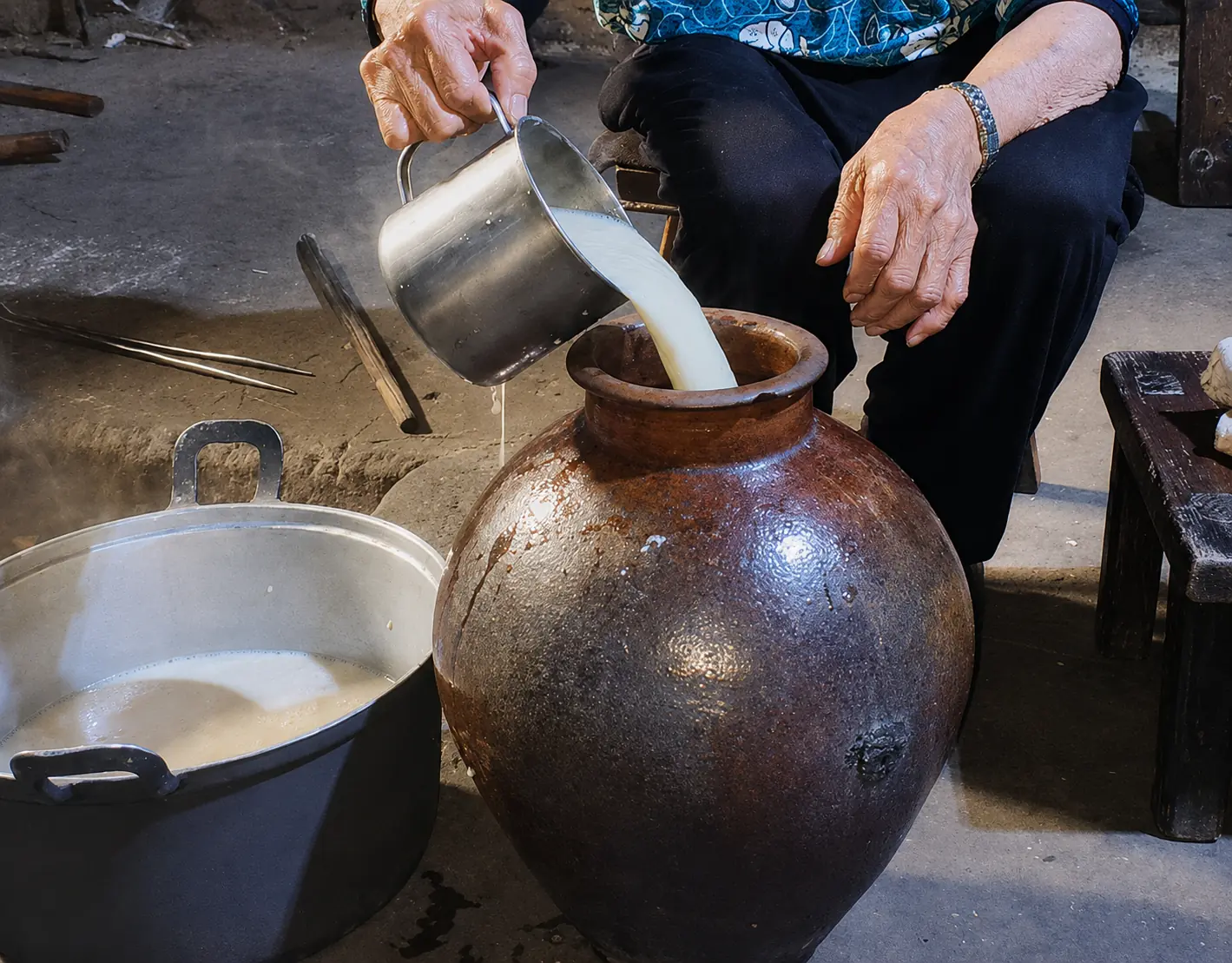
The local fondness for sour food is famous enough that People's Daily cites the Guizhou saying that going three days without sour food can leave your legs weak. The same short feature calls sour soup fish an iconic delicacy of the Miao (苗族) and Dong (侗族) ethnic groups in Guizhou, with a red sour base made from tomatoes, garlic, ginger, chiles, Chinese spirit, and other seasonings.
That everyday proverb is not the whole story, but it points in the right direction. A food-science study in Frontiers in Nutrition describes red sour soup as a traditional fermented food, made mainly with fresh red pepper and tomato, with lactic acid bacteria becoming important during fermentation. Travelers will hear about red and white sour soup families; the useful skill is asking which broth is on the table, not memorizing every local name.
1Sour
The sour note often comes from fermented soup bases, pickles, rice water, tomato, chili, or sour rice noodles rather than a last-minute splash of vinegar.
2Spicy
The heat can come from fermented chili, pounded chili, roasted chili, chili oil, or fresh chili. It is not automatically Sichuan peppercorn numbness.
3Dipped
Dipping sauce is not decoration. It is a personal seasoning system for controlling chili, salt, herbs, sour soup, fish mint, and aroma.
Sour Soup Fish Is the Doorway
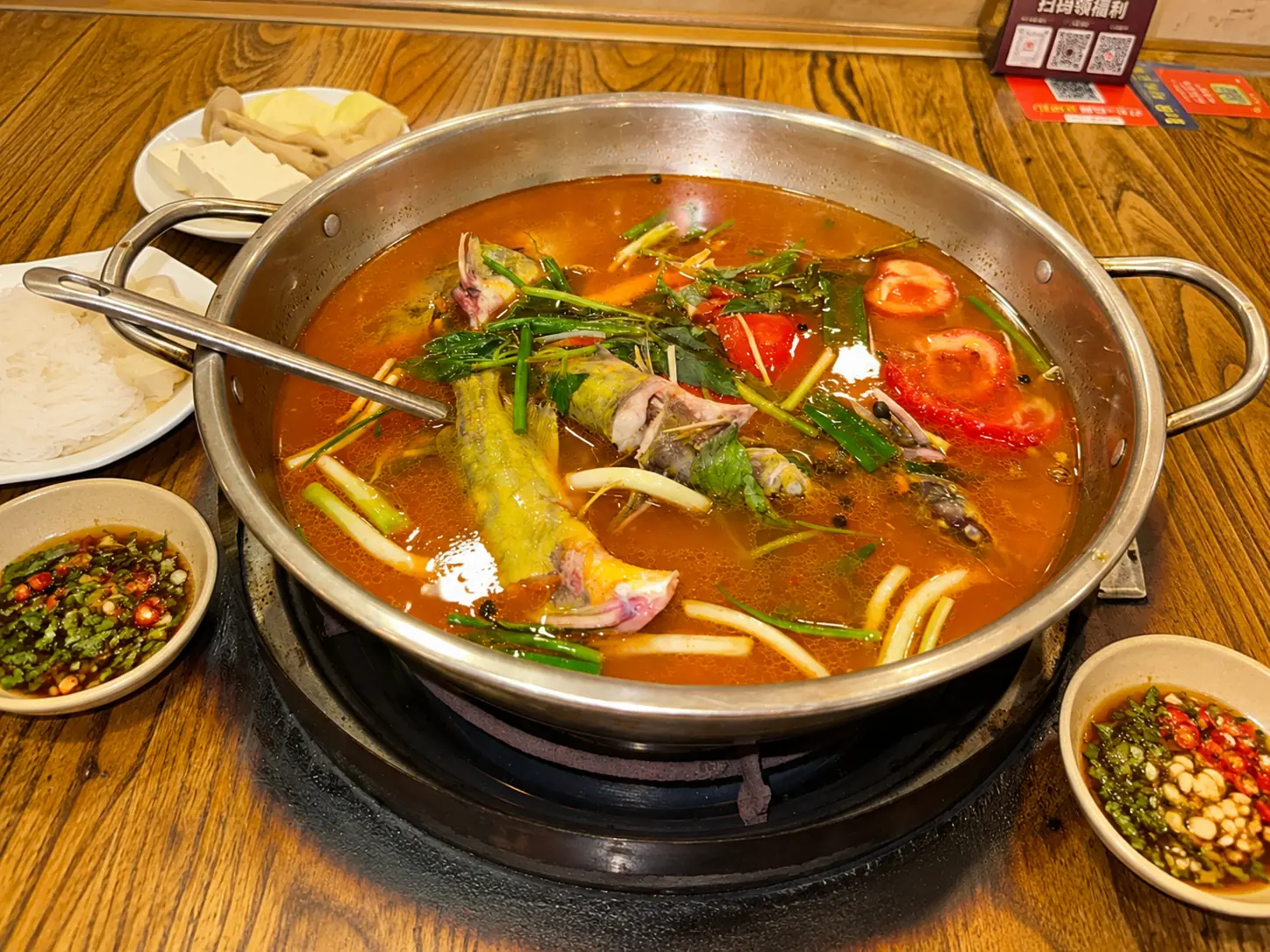
Sour soup fish (酸汤鱼) is the cleanest first lesson in Guizhou cuisine. A Guizhou provincial government food page describes Qiandongnan sour soup fish as using sour soup, tomato, fish, litsea cubeba oil, chili, aromatics, and seasonal vegetables. It also links the dish to Miao villages in southeastern Guizhou, where it is used to welcome guests during festivals and important occasions.
The important word is doorway. Sour soup fish should introduce Guizhou sourness, not swallow the whole article. In Zhenyuan or Zhaoxing, the dish becomes part of a village or old-town travel experience. In this province-level guide, use it to understand the flavor architecture: fermented broth, fresh fish, tomato brightness, chili warmth, fragrant oil, vegetables, and a dipping bowl on the side.
Three practical details matter when ordering:
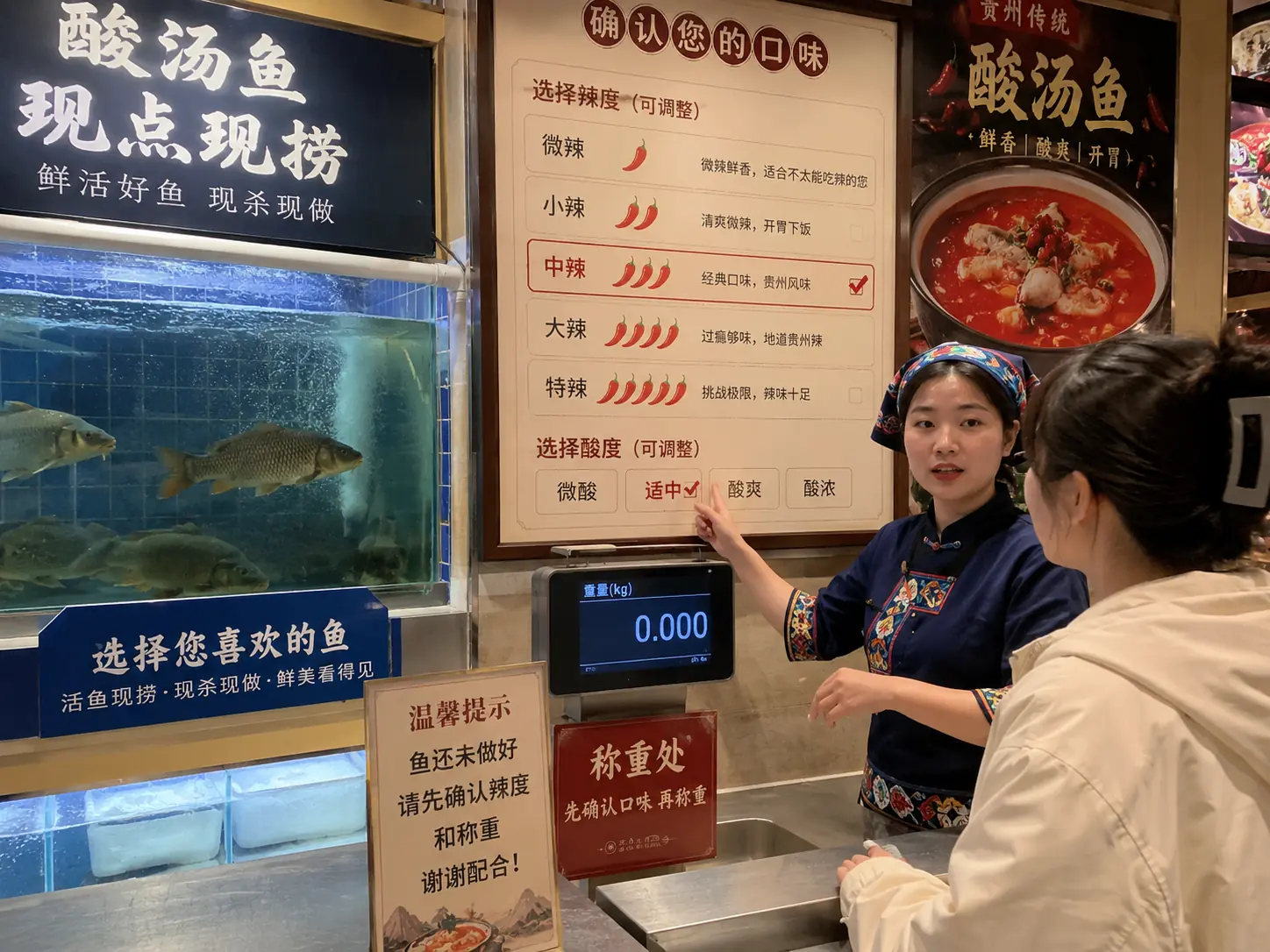
- Confirm the fish and price. Some restaurants price fish by weight, so ask before the fish goes into the pot.
- Expect bones. The fish may be served whole or in bone-in pieces; this is not a boneless fillet dish.
- Taste before dipping heavily. The broth already has sourness and chili; the dipping sauce can make it much stronger.
Do not confuse Guizhou sour soup fish with Sichuan pickled fish
Both can look red or sour from a distance, but Guizhou sour soup fish is usually built around fermented sour soup. Sichuan-style pickled fish often leans on pickled mustard greens, chili oil, or Sichuan restaurant seasoning logic.
Dipping Sauce Is the Second Language
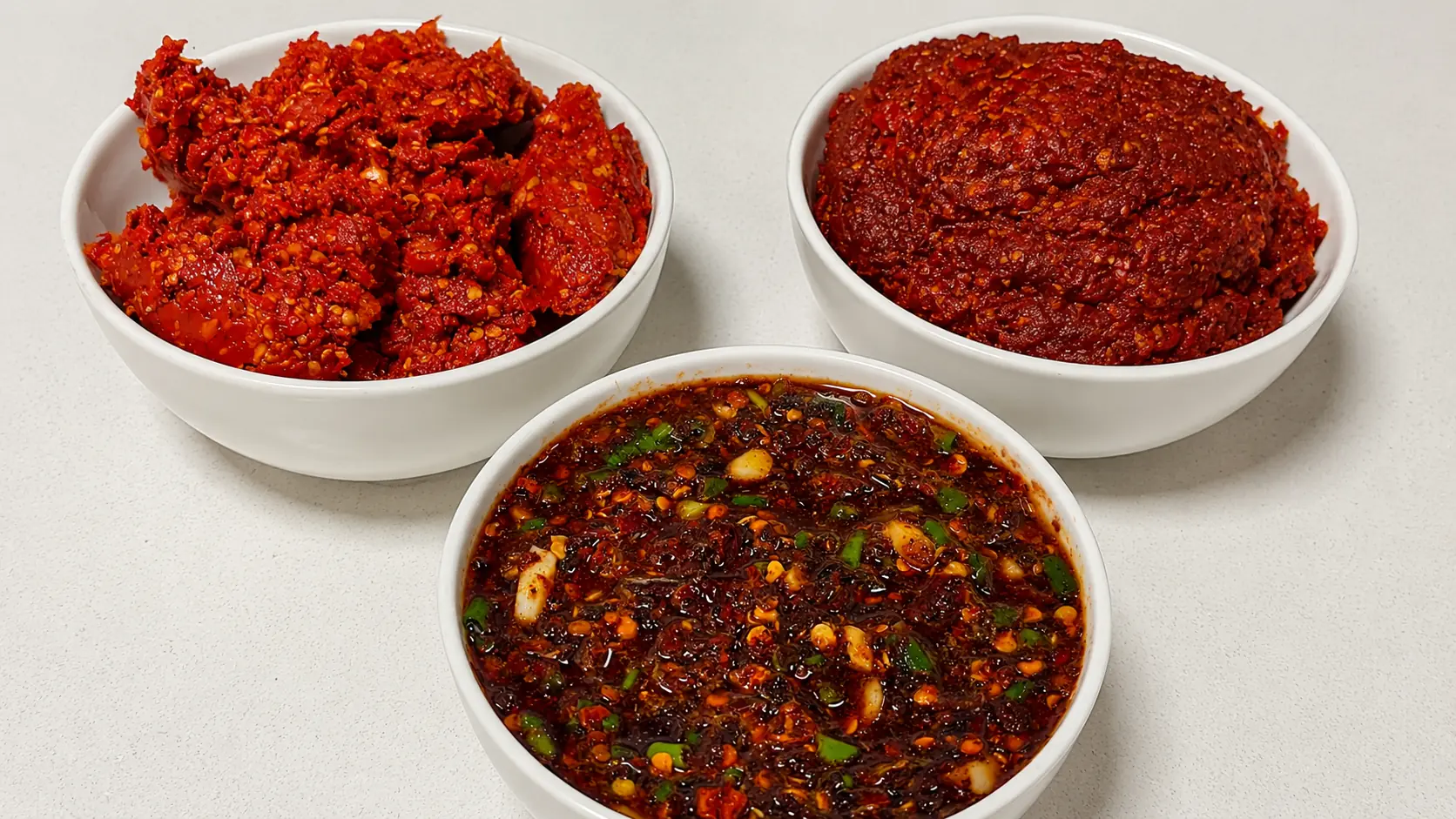
Guizhou tables often finish flavor in the small bowl, not only in the main pot. The dipping sauce (蘸水) may include roasted chili, fermented chili, pounded chili, fermented bean curd, litsea cubeba oil, scallions, garlic, cilantro, sour soup, soy, salt, Sichuan pepper, or fish mint (折耳根 / 鱼腥草).
This is why two people can eat the same sour soup fish or bean hotpot and remember different meals. One diner makes it smoky and hot with roasted chili. Another keeps it sour and herbal. A third accidentally adds too much fish mint and spends the next ten minutes wondering what just happened.
For first-timers, ask for the dipping sauce separately and go slowly. If you are sensitive to herbs, say no fish mint. If you need mild food, ask for less chili in the dipping bowl rather than expecting the whole kitchen to become mild.
| English | Chinese | Pinyin | Say It Like… |
|---|---|---|---|
| Less chili | 少放辣 | shao fang la | shaow fahng lah |
| Dipping sauce separate | 蘸水分开 | zhan shui fen kai | jahn shway fun kai |
| No fish mint | 不要折耳根 | bu yao zhe er gen | boo yow juh-er-gun |
| How much is this fish per jin? | 这条鱼多少钱一斤? | zhe tiao yu duo shao qian yi jin | juh tyaow yoo dwaw shaow chyen ee jin |
Guiyang Is the Easy First Window
Guiyang is the easiest place to begin because it compresses province-wide habits into breakfast shops, snack streets, hotpot tables, and night eating. It is not the whole of Guizhou, but it gives first-time visitors enough variety without requiring a perfect rural food itinerary.
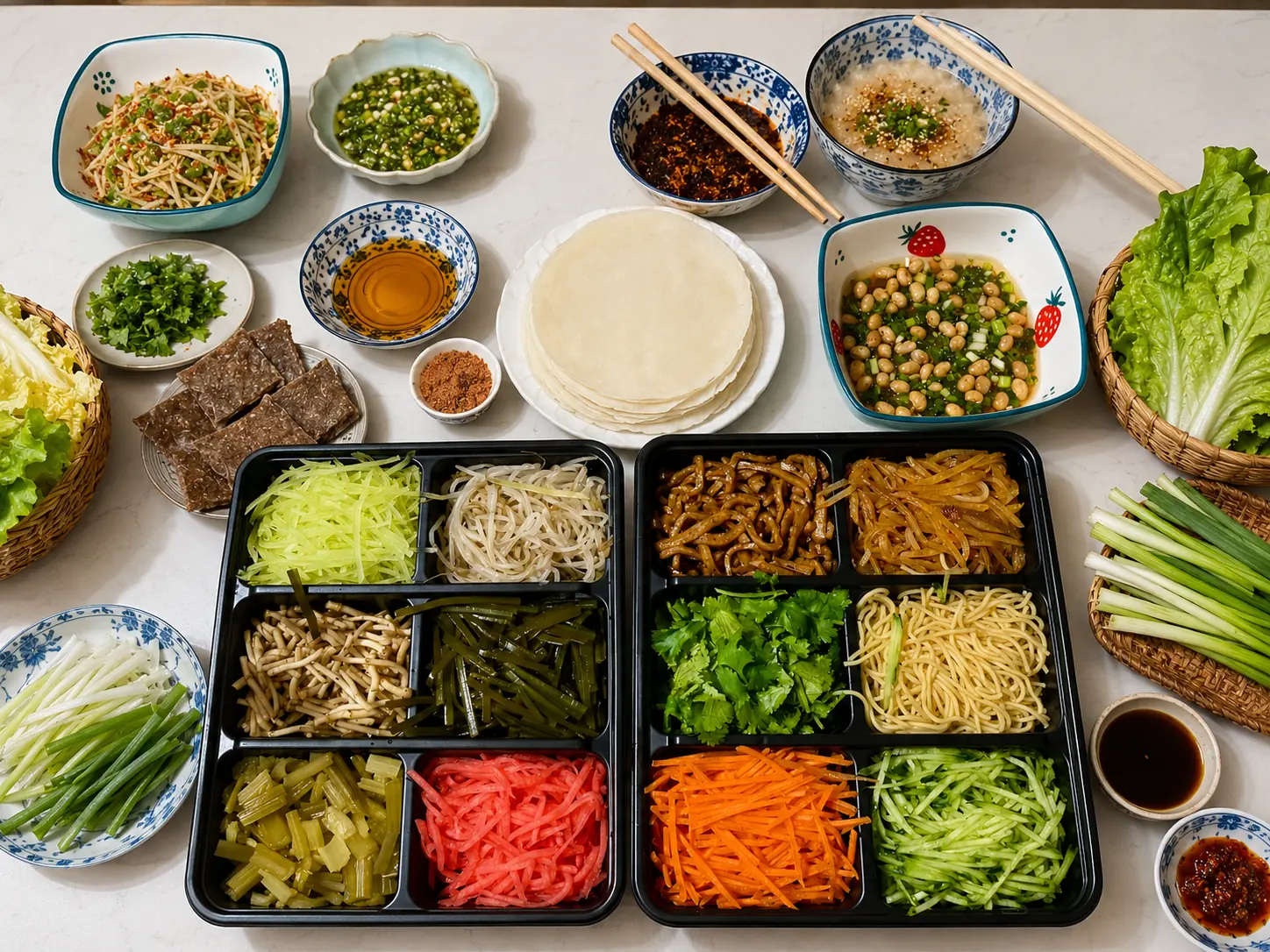
A 2025 Guiyang commerce bureau food-season article lists famous Guizhou dishes such as sour soup fish and spicy chicken, plus more than 100 snacks including siwawa, often translated as spring rolls. Treat siwawa (丝娃娃) as the fresh side of Guizhou food: thin wrappers, shredded vegetables, small fillings, and a sour-spicy sauce that makes the dish feel lighter than the words "spicy Guizhou food" suggest.
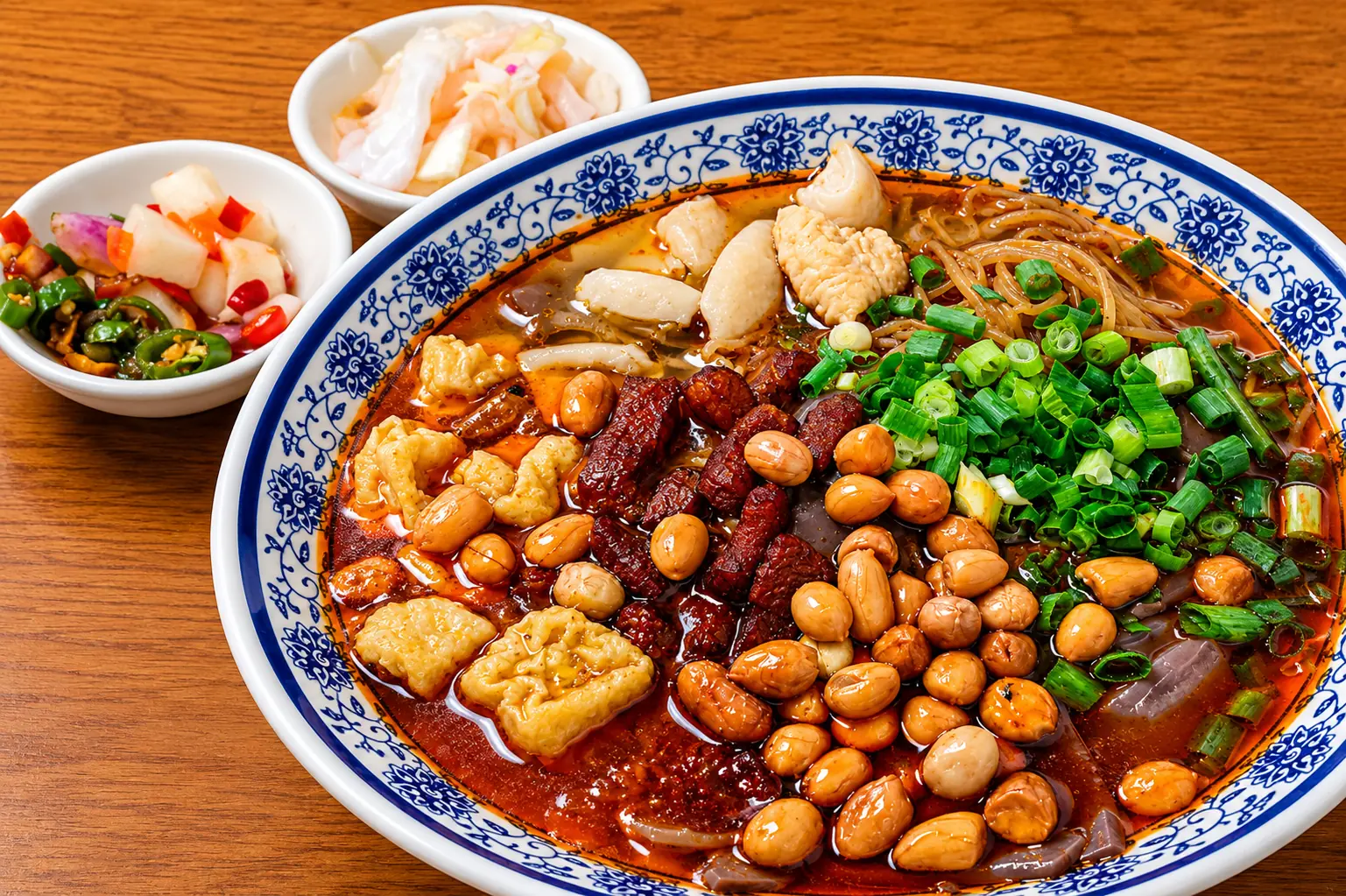
At the opposite end sits Changwang noodles (肠旺面). A Guiyang government English page calls it a famous Guiyang snack that originated in the late Qing Dynasty and lists pork intestines, blood curd, egg noodles, oil residue, bean sprouts, tofu, aromatics, stock, and chili oil among its ingredients. This is excellent if you like offal. It is a hard no if you avoid pork, blood, or rich oil.
Sour Soup Fish
酸汤鱼
Fermented sour broth, fish, chili, litsea cubeba oil, and dipping sauce. Better for two or more people; confirm weight and price.
Siwawa
丝娃娃
Thin wrappers, shredded vegetables, small fillings, and a sour-spicy sauce. A good first snack if a full sour-soup pot feels too heavy.
Changwang Noodles
肠旺面
Offal, blood curd, chili oil, and breakfast intensity. Excellent if you like pork intestine and blood curd; a hard no if you avoid them.
Huaxi Beef Rice Noodles
花溪牛肉粉
Rice noodles, beef broth, pickles, chili, and a daily breakfast rhythm. More approachable than offal noodles, but still ask about beef and spice.
Pan-Grilled Pot Snacks
烙锅
Griddled ingredients with chili powder or sauce. Good for groups; check pork, seafood, and shared cooking surfaces before everyone starts eating.
Rice Noodles Are a Province Map
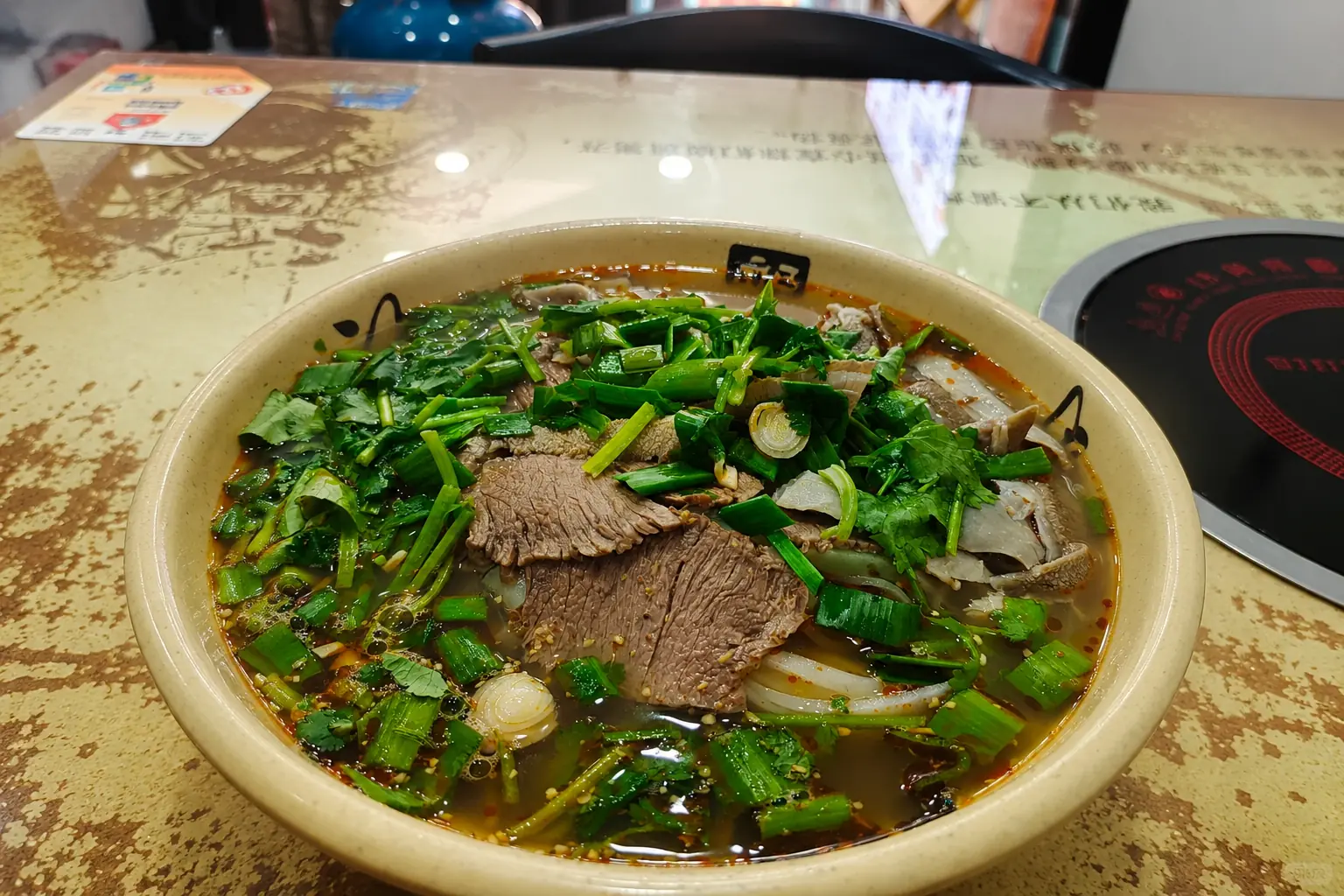
Rice noodles are not one dish in Guizhou. They are breakfast, late-night food, cold snack, soup, casserole, sour broth, beef bowl, mutton bowl, pork-topping bowl, and city identity.
A Guiyang government page calls rice noodles with beef the most popular breakfast choice for Guiyang people and says Huaxi beef noodles are especially popular, with clear soup, braised beef soup, stewed beef soup, pickled pepper soup, and sour soup among the versions found in the city.
Another Guiyang rice noodle overview names beef rice noodles, mutton rice noodles, hot casserole rice noodles, crisp-pork and soft-pork topping rice noodles, spicy chicken rice noodles, and minced pork rice noodles. A Chinese Guizhou provincial government article goes even wider, listing Zunyi mutton noodles, Bijie mutton noodles, Shuicheng mutton noodles, Xingyi mutton noodles, Huaxi beef noodles, sour soup noodles, casserole noodles, pig trotter noodles, spicy chicken noodles, rolled rice sheets, rice tofu, cold noodles, and more.
| Noodle Role | Examples | Use It When | Hidden Risk |
|---|---|---|---|
| Approachable breakfast | Huaxi beef rice noodles (花溪牛肉粉) | You want a local morning bowl without offal. | Beef, beef tallow, pickles, chili, possible soy or MSG. |
| Cold-weather bowl | Zunyi mutton rice noodles (遵义羊肉粉) | You want warming broth and chili aroma. | Lamb, strong chili, animal fat, offal in some shops. |
| Sourness lesson | Sour soup noodles (酸汤粉) | You want Guizhou acidity without a large fish pot. | Broth may still use pork, bones, fish, or chicken powder. |
| Adventurous classic | Changwang noodles (肠旺面) | You like offal, blood curd, and chili oil. | Pork intestine, blood curd, wheat egg noodles. |
| Snack side | Rice tofu (米豆腐), rolled rice sheets (卷粉), cold noodles (凉粉) | You want small plates with sour-spicy sauce. | Peanuts, soy, chili, fish mint, shared tools. |
Zunyi Gives Chili a Coordinate
Guizhou chili is not only about heat level. It is about how chili is handled: fermented, pounded, roasted, fried into oil, or turned into the base of a chicken or hotpot dish. Zunyi is the easiest traveler coordinate for that idea.
A Guizhou provincial government article describes Zunyi as a key Guizhou chili-producing area and says it has built major chili-market influence around China Chili City. Do not turn that into a claim that all Guizhou chili comes from Zunyi. Use it as a map clue: when you see Zunyi mutton noodles, Zunyi chili, or Guizhou spicy chicken, chili fragrance is part of the point.
The English page for Yanglang spicy chicken describes a Guizhou dish where local dried chilies are turned into pounded chili, stir-fried in hot oil, then combined with chicken and seasonings. This is different from a plate of dry-chili Sichuan chicken. The chili paste becomes body, color, and sauce.
| Chili Form | Chinese | Flavor Role | Where You Notice It |
|---|---|---|---|
| Pounded chili | 糍粑辣椒 | Thick, saucy, red, often used as a cooking base | Spicy chicken, red broths, hotpot-style dishes. |
| Fermented chili | 糟辣椒 | Sour, salty, aromatic, lightly funky | Stir-fries, sauces, rice noodles, sour-spicy dishes. |
| Roasted chili | 煳辣椒 | Smoky, toasty, dry heat | Dipping sauces and snack seasoning. |
| Chili oil | 油辣椒 | Fragrant oil, red color, noodle lift | Rice noodles, cold snacks, small bowls. |
Comfort Food Beyond Sour Soup
If you only order sour soup fish, you will leave Guizhou thinking the whole province is one red pot. The quieter comfort foods matter too.
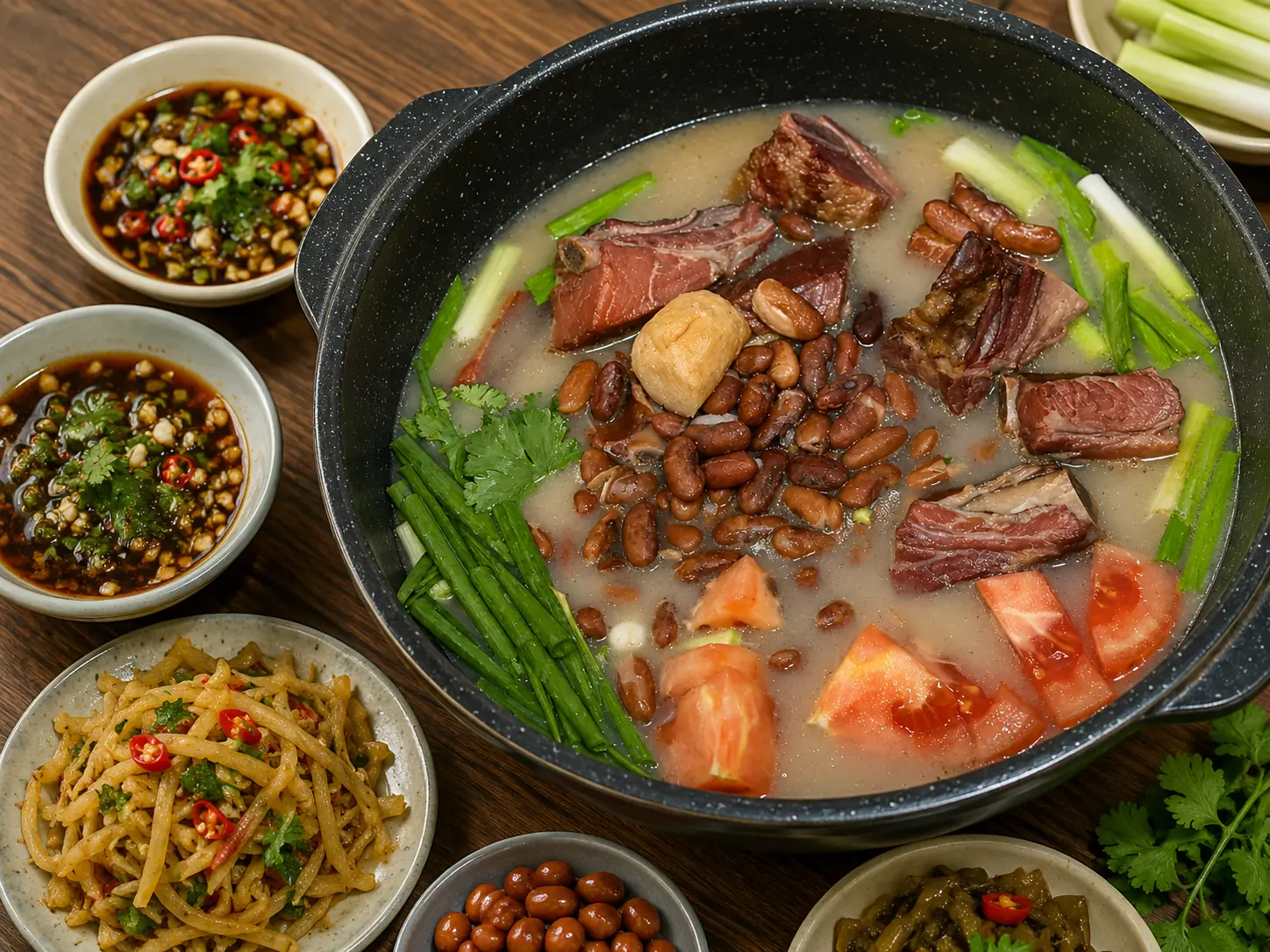
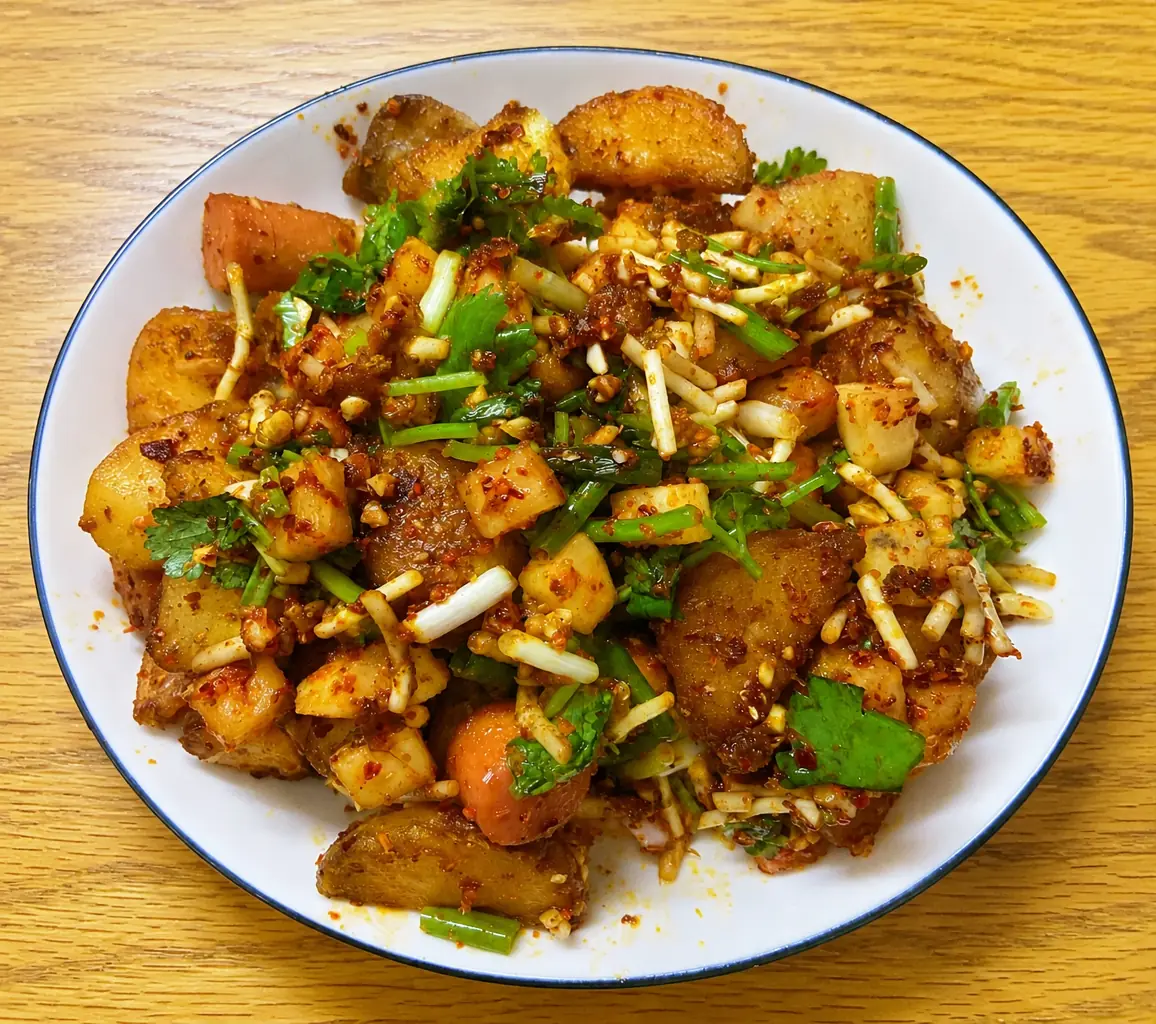
Bean hotpot (豆米火锅) is one example: a thick, comforting bean-based pot often paired with pork, ribs, cured meat, vegetables, and dipping sauce. English official sources are thinner here, so treat it as a common local comfort dish rather than making grand origin claims.
Pan-grilled pot snacks (烙锅) are easier to document in Guiyang. A Guiyang government festival report describes luoguo as a local snack where ingredients such as seafood, chicken, duck, cattle, sheep, and vegetables are fried in pans, then dipped into special chili powder or sauce. It is social, smoky, flexible, and exactly the kind of meal where shared surfaces matter for allergies.
Rice tofu (米豆腐), cold noodles, potatoes, tofu balls, and fish mint salads show another side of Guizhou eating: small foods that become memorable because of chili, sourness, peanuts, soy, herbs, and dipping sauce. A Guizhou provincial menu page describes Qiandongnan rice tofu as a rice-based food seasoned with sour soup, fermented chili, red oil, aromatics, soy sauce, roasted soybeans, and peanuts. That one sentence explains half the snack table.
Fish mint can define the whole bite
Fish mint is a beloved Guizhou herb with a strong grassy, earthy, sometimes fishy aroma. If you are curious, try a small amount in dipping sauce first. If you are sensitive to herbal flavors, ask for no fish mint before the bowl is mixed.
Regional Map for Travelers
Cuisine borders are not hard walls, but a regional frame keeps the article from turning into a random dish list.
| Food Zone | What to Look For | Best Traveler Use |
|---|---|---|
| Guiyang 贵阳 | Siwawa, Changwang noodles, Huaxi beef rice noodles, bean hotpot, pan-grilled snacks, market eating. | Use it as the first soft landing for Guizhou food variety. |
| Kaili and Qiandongnan 凯里 / 黔东南 | Sour soup fish, sour soup noodles, Miao and Dong foodways, pickled fish and meat, rice tofu, litsea cubeba oil. | Use it to understand fermented sourness more deeply, especially if your route includes Zhenyuan or Zhaoxing. |
| Zunyi 遵义 | Mutton rice noodles, chili, pounded chili, spicy chicken, tofu noodles, street snacks. | Use it as the chili and noodle coordinate in northern Guizhou. |
| Anshun, Bijie, Liupanshui 安顺 / 毕节 / 六盘水 | Rice noodles, potatoes, cold noodles, tofu dishes, mountain snacks, local chili styles. | Use these as deeper regional branches rather than trying to force them into one Guiyang meal. |
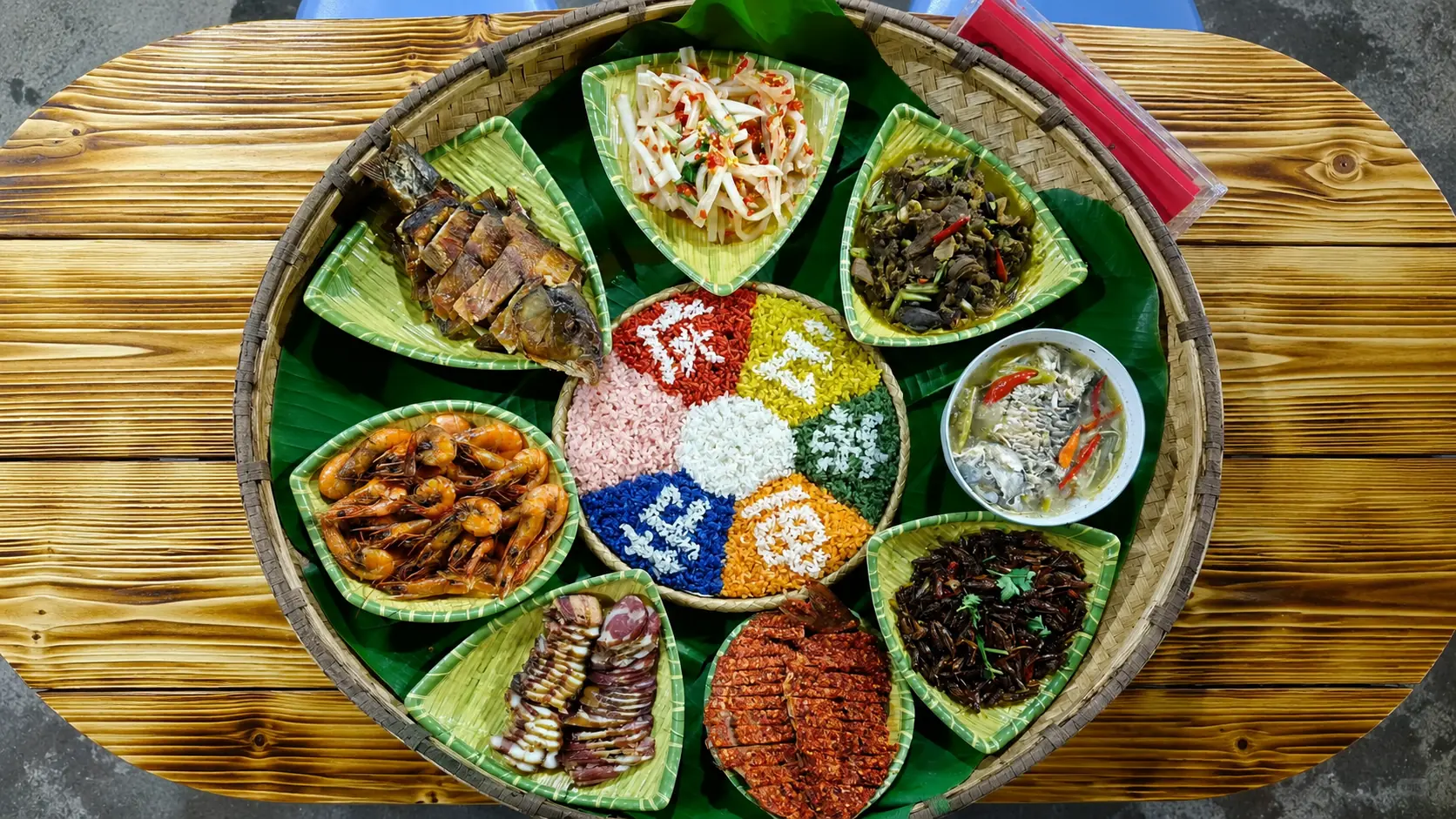
The same Guizhou menu page notes that pickled fish and pickled meat (腌鱼腌肉) are valued in Qiandongnan banquets, and that local people use them to receive guests. This supports a broad point about sour-preserved foods in the region, but it should not replace a specific village guide. For actual where-to-eat pacing in Zhaoxing or Zhenyuan, use those destination articles.
Build Your First Guizhou Table
Do not order Guizhou food as a greatest-hits checklist. Order by table role so the meal has contrast.
Two-Person First Table
balanced and realistic
Choose one sour-soup main, one siwawa or rice tofu snack, one vegetable, and dipping sauces on the side. Skip a second hotpot unless you are very hungry.
Four-Person First Table
more room for contrast
Add sour soup fish, one rice-noodle or offal noodle item to share, one chili chicken or bean hotpot, one vegetable or tofu dish, and one fresh snack.
Use this as the order logic for a first meal:
- Anchor the sourness(酸汤鱼 / 酸汤牛肉)- Start with one sour-soup main so the fermented Guizhou identity is clear.
- Add a light snack(丝娃娃 / 米豆腐)- Use siwawa or rice tofu to add vegetables, texture, and sour-spicy sauce without making the table heavier.
- Add one noodle lesson(花溪牛肉粉 / 酸汤粉)- Connect the meal to Guizhou breakfast culture with a rice-noodle bowl or shared noodle portion.
- Add chili depth(辣子鸡 / 煳辣椒蘸水)- Choose spicy chicken or roasted-chili dipping sauce to taste chili as aroma, not only heat.
- Finish with comfort(豆米火锅 / 烙锅 / 豆腐 / 土豆)- Add one bean hotpot, pan-grilled plate, tofu, potato, or vegetable dish so the meal is not only sour soup.
Allergy and Ordering Risks
Guizhou food is not impossible for dietary restrictions, but it rewards direct questions.
If you need vegetarian food, ask about broth, lard, fish sauce, meat powder, chicken powder, and the dipping sauce. A plate of vegetables or rice tofu may still arrive with animal stock, chili oil made with meat drippings, or a shared wok.
- Pork: Changwang noodles, crisp pork toppings, soft pork toppings, pig trotter noodles, cured meat, lard, and many bean hotpots may involve pork.
- Offal and blood: Changwang noodles are the main red flag because they are built around pork intestine and blood curd.
- Fish and bones: Sour soup fish is usually not boneless. Confirm fish type, weight, and price before cooking.
- Peanuts, soybeans, sesame: Rice tofu, cold noodles, rolled rice sheets, dipping sauces, and snack toppings may use roasted soybeans, peanuts, sesame, soy sauce, or fermented bean curd.
- Wheat and gluten: Rice noodles are rice-based, but sauces, soy sauce, shared cookware, egg noodles, and noodle toppings can still create gluten risk.
- Fish mint: Ask before ordering dipping sauce, tofu snacks, cold dishes, and salads if strong herbal flavors bother you.
- Fermentation and salt: Sour soup, pickles, cured meat, fermented chili, and bean condiments can be sour, salty, and intense for sensitive stomachs.
Use Neighbor Guides for Comparison
Guizhou food sits beside several strong food cultures, so comparison helps. Use the Sichuan and Chongqing cuisine guide for mala, red oil, and Chengdu versus Chongqing flavor logic. Use the Hunan cuisine guide for fresh chili, pickled heat, and smoked meat. Use the Yunnan cuisine guide for rice noodles, wild mushrooms, flowers, and border foodways.
Those guides make Guizhou easier to understand by contrast. It is sourer than most first-timers expect, less numbing than Sichuan, less fresh-chili direct than Hunan, and less mushroom-and-herb centered than Yunnan. Its best meals feel mountainous, fermented, sharp, and personal because the final taste often happens in your own dipping bowl.
No. Guizhou cuisine can be spicy, but its defining clue is fermented sourness, sour soup, chili dips, rice noodles, fish mint, and mountain foodways. Sichuan and Chongqing more often lead with mala, red oil, Sichuan peppercorn, and a broader restaurant flavor-profile system.
© gochinafreely.com — Original guide by Go China Freely.