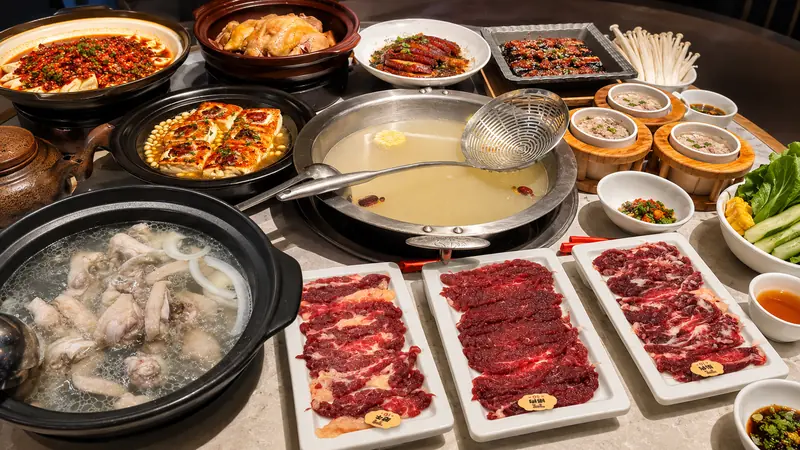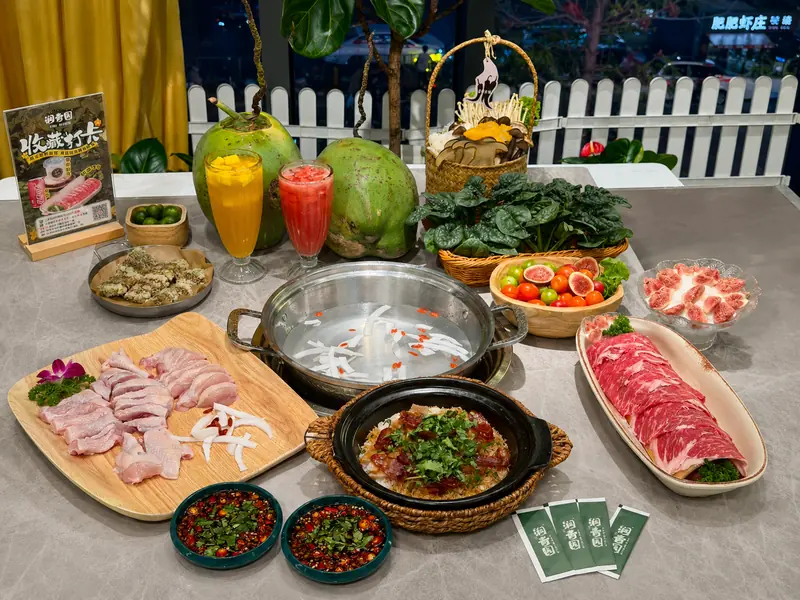
Coconut chicken hotpot (椰子鸡火锅) is the Chinese hotpot that least behaves like the stereotype: no red oil, no Sichuan pepper, and no broth designed to punish your spice tolerance. Fresh coconut water cooks the chicken, the first bowl of soup tastes clean and sweet, and the dipping sauce adds green orange, sand ginger, soy sauce, and optional chili only after you decide how bold you want the meal to be.
Executive Summary
What this guide covers
Coconut chicken identity, Hainan and Shenzhen context, broth logic, chicken timing, dipping sauce, side orders, where to try it, and allergy pitfalls.
Best first order
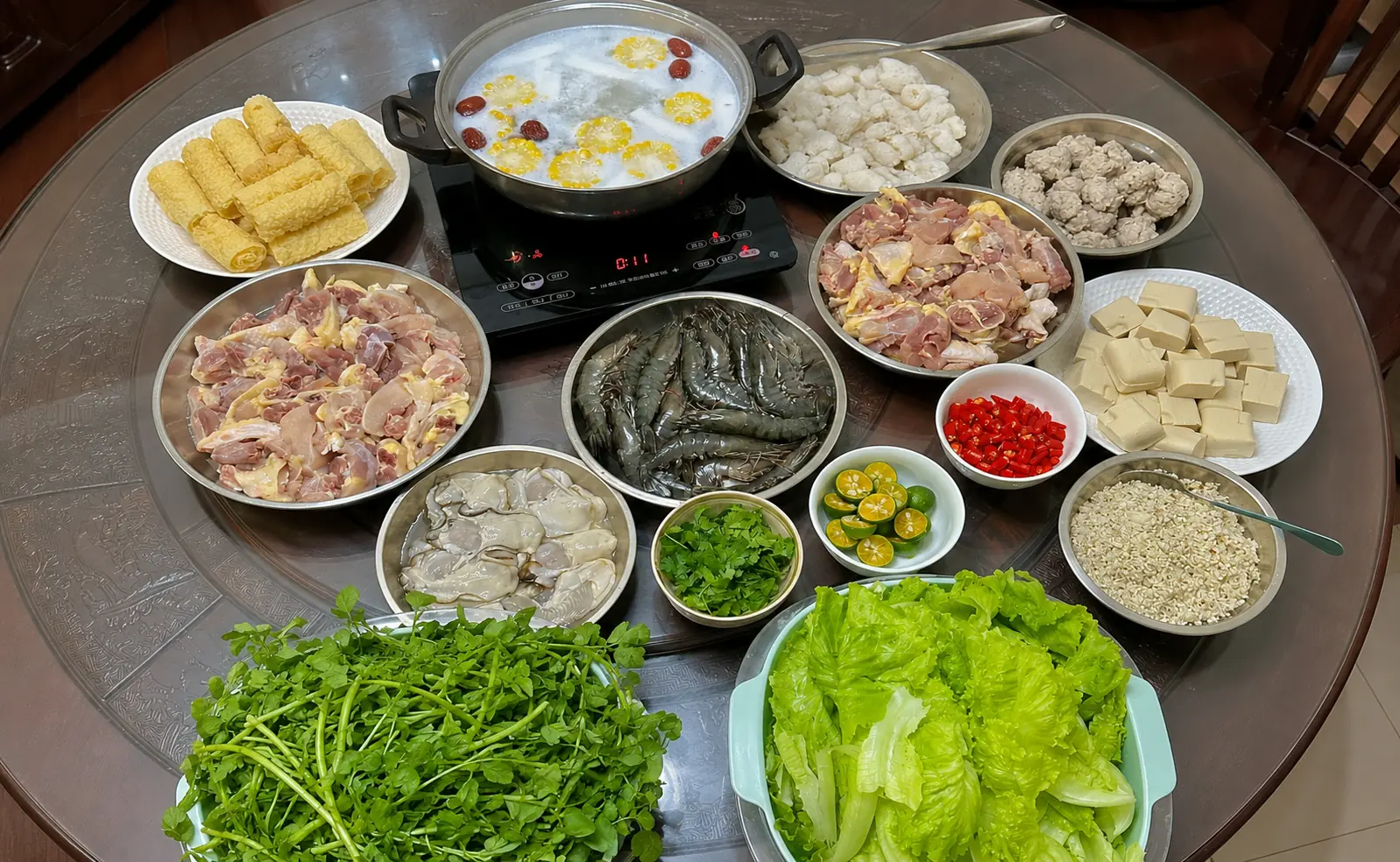
Coconut-water broth, one chicken portion, mushrooms, corn, water chestnuts, winter melon or greens, tofu, and a green-orange sand-ginger sauce bowl.
Main traveler challenge
The dish is not spicy, but coconut, chicken doneness, sauce-bar cross-contact, QR ordering, bones, and restaurant queues still need attention.
0-1 / 5
Typical spice level
¥80-200
Casual planning range
3-5 min
Common chicken timing
Soup first
Best first sip
Why Coconut Chicken Tastes So Light
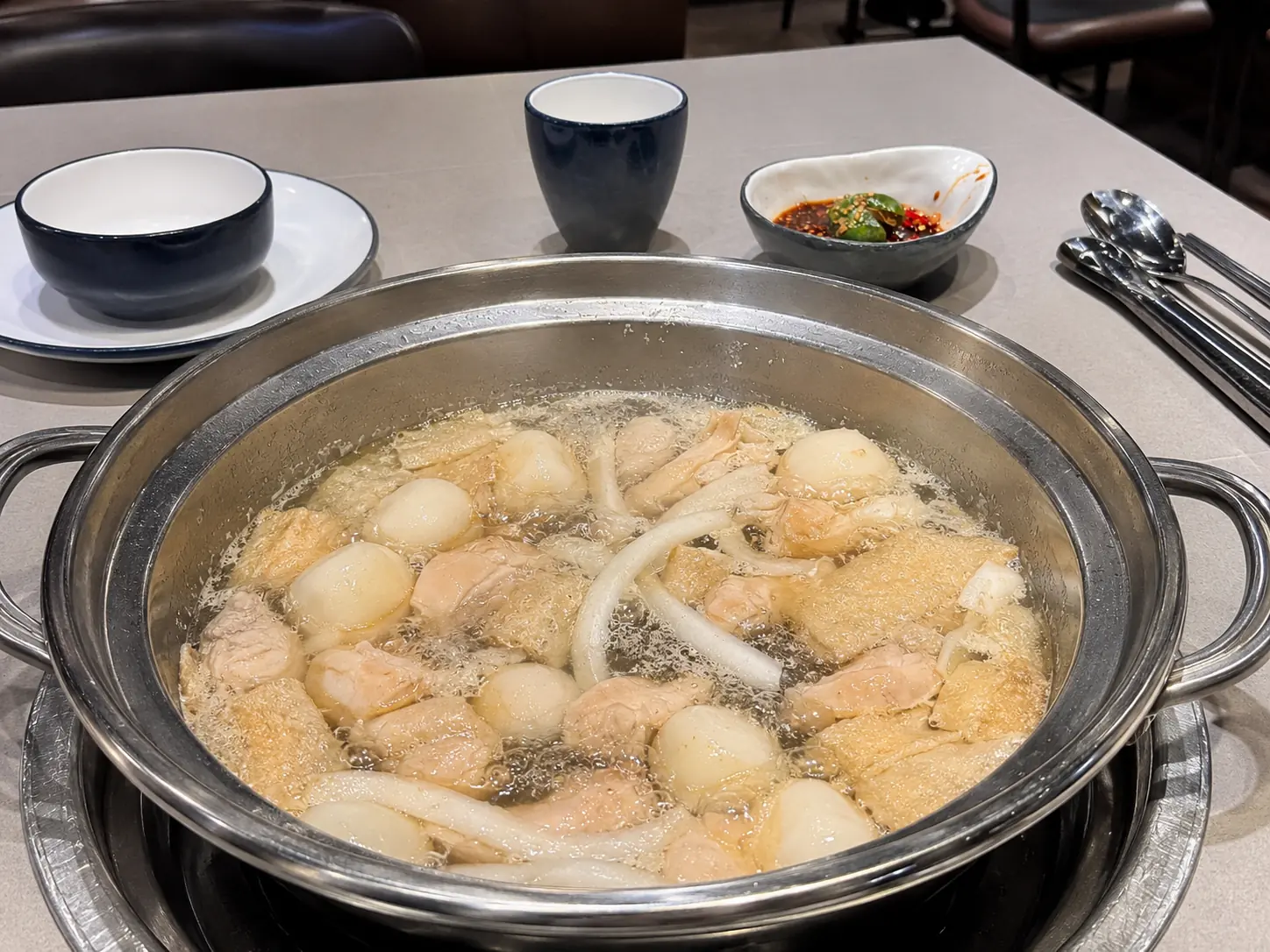
Coconut chicken hotpot tastes sweet, but it is not dessert and it is not coconut curry. The sweetness comes from fresh coconut water, coconut flesh, and chicken. Hainan's official English dining page describes the primary ingredients as fresh coconut water, water chestnuts, coconut flesh, and local free-range chicken, and contrasts the dish with spicy hotpot because the flavor is clean and lightly seasoned. Hainan Government
That is why it works so well for foreign travelers. A first Chinese hotpot meal can be a lot: red oil, numbing spice, raw ingredients, sauce stations, QR menus, and a table full of rules nobody explains. Coconut chicken lowers the stress. The pot starts clear, the chicken goes in first, the later vegetables are easy to understand, and the dipping sauce can stay mild.
Light does not mean bland. A good pot should give you coconut-water sweetness, fresh chicken flavor, a little crunch from coconut flesh or water chestnut, and a broth that feels refreshing rather than heavy. If the soup tastes like a sugary drink, or the chicken has been boiled until tight and dry, the kitchen has missed the point.
Think clean chicken broth, not spicy hotpot
This meal is closest to a clear chicken table hotpot with tropical sweetness. Judge it by broth clarity, chicken freshness, and sauce balance, not by chili intensity.
Hainan Roots and Shenzhen Dinner Culture

Coconut chicken has a slightly messy identity, which is exactly what makes it interesting. Hainan gives the dish its island flavor logic: coconuts, chicken, tropical freshness, and a lighter table after heat or beach time. Sanya tourism material frames coconut chicken as an iconic Hainan feast and even describes a classic restaurant version built from freshly opened young coconuts. Visit Sanya
Shenzhen gives the dish its urban dinner culture. EyeShenzhen, the city's official English portal, frames coconut chicken as one of Shenzhen's recognizable local foods and says the city has more than 1,000 coconut chicken restaurants. EyeShenzhen That does not mean you need to debate the birthplace over dinner. For travelers, the useful split is simpler: eat it in Hainan for island context; eat it in Shenzhen for convenience, branch density, and a polished group-meal format.
If your trip only includes Shenzhen, coconut chicken can be an excellent first-night dinner. If you are in Sanya, it is especially useful after a beach day when another seafood negotiation feels tiring. In Haikou, it fits into a more local food day with Hainan rice noodles, old dad tea, Qilou Old Street snacks, and night-market grazing.
Decision shortcut
Where should you eat it first?
Choose Shenzhen
You want an easy first dinner near malls, hotels, ports, or metro lines, with lots of branch options.
Choose Sanya
You want the beach-trip version: coconut chicken after sun, swimming, seafood, or resort time.
Choose Haikou
You want a more everyday Hainan food day, pairing the pot with breakfast noodles, old dad tea, and old-street snacks.
How Coconut Broth Cooks the Chicken
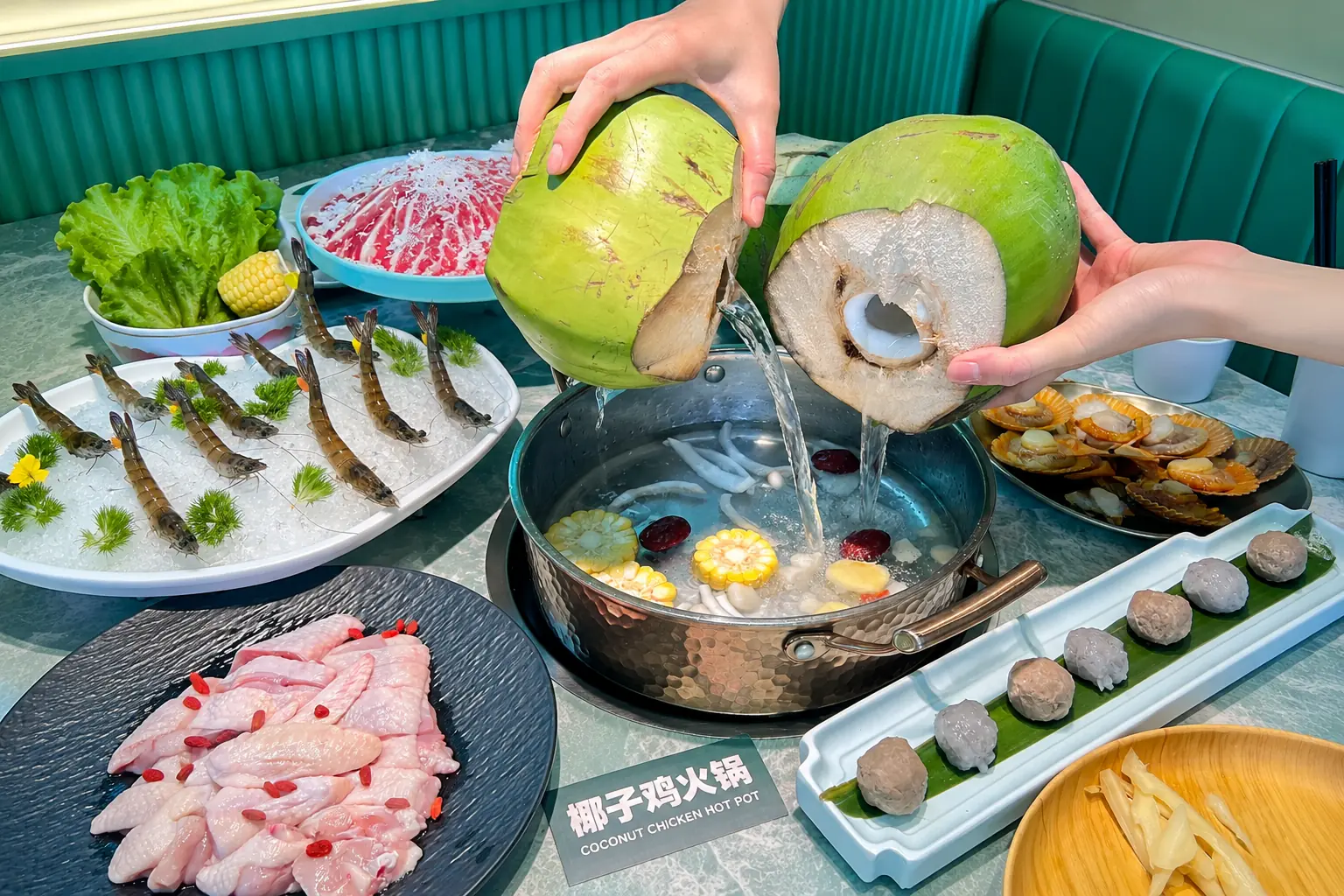
The broth is usually not a complex stock. It starts with fresh coconut water and coconut flesh; some restaurants add water chestnuts, red dates, goji berries, ginger, or other light aromatics. The flavor should stay transparent enough that you can still taste the chicken. Once the pot boils, the chicken usually goes in as the first cooking round.
The best sequence is broth first, chicken second, side ingredients later. Hainan's official dining page recommends enjoying the soup first, then dipping the chicken into a little green orange sauce. That order matters. The broth is clearest and sweetest before mushrooms, vegetables, tofu, starches, or extra seasonings change it.
Do not memorize one fixed cooking time as a safety rule. Some Sanya tourism copy describes a four-minute cook, and Shenzhen chain write-ups mention egg timers, but real timing depends on chicken size, cut, pot heat, and portion. Follow the restaurant timer or the staff. If there is no timer, wait until the broth returns to a strong boil and the chicken is fully cooked, then ask staff to confirm before eating. If a piece still looks pink near the bone, put it back in the pot.
| Stage | What Happens | Traveler Move |
|---|---|---|
| Fresh coconut broth | Coconut water and flesh set the clean, sweet base. | Taste the soup before adding vegetables or starch. |
| Chicken first | The meat cooks and gives the broth deeper chicken flavor. | Use the timer or staff cue; do not rush undercooked chicken. |
| Side ingredients later | Mushrooms, tofu, greens, corn, and winter melon change the soup. | Add in rounds so the pot stays clean and easy to manage. |
Chicken Timing and Green Orange Sauce
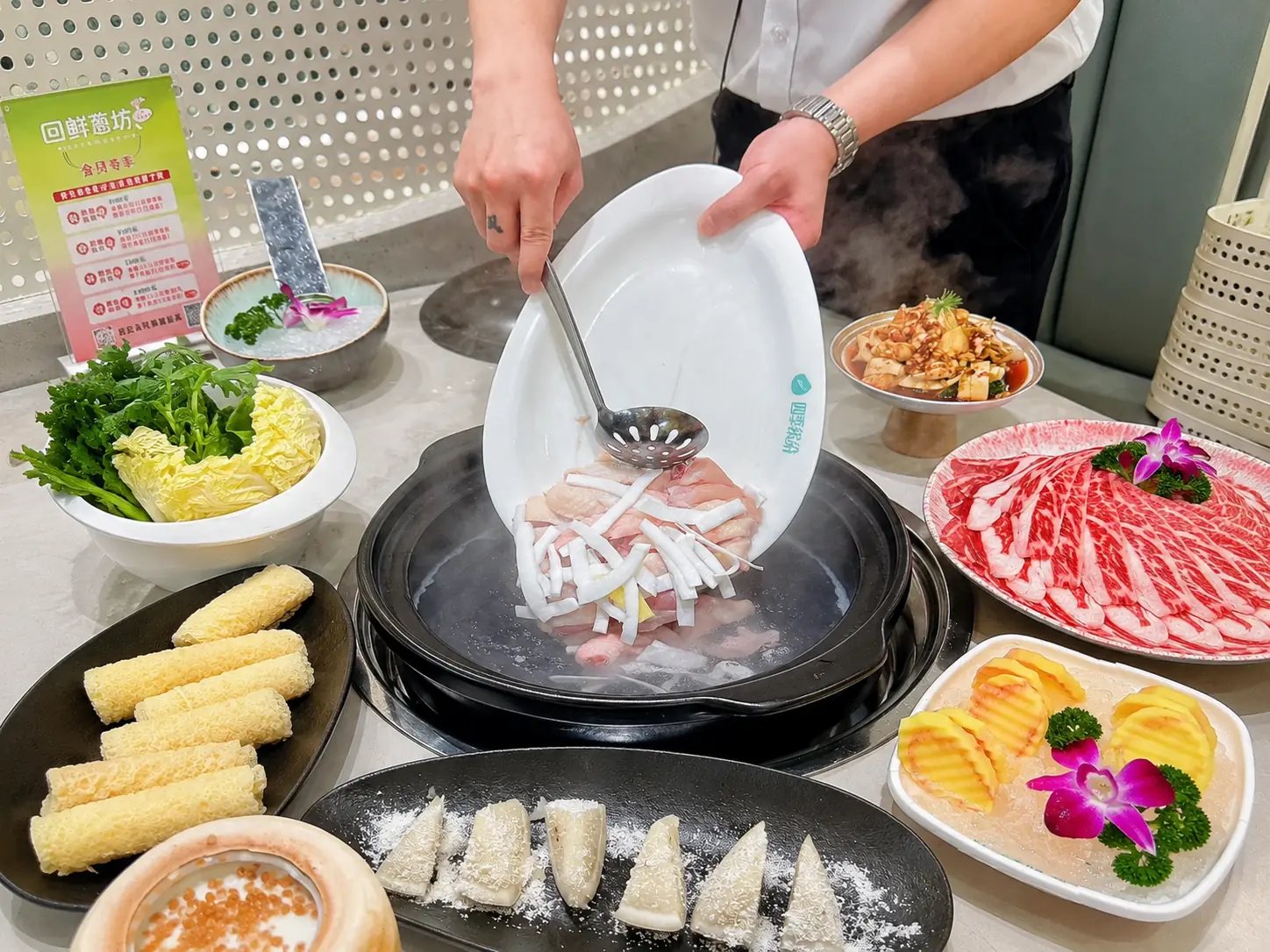
The easiest way to spoil coconut chicken is not by making it too spicy. It is by mistiming the chicken. Eat too early and you create a food-safety problem; wait too long and the meat tightens, dries out, and loses the gentle sweetness that makes the dish work.
Many restaurants use an hourglass, egg timer, or staff reminder because the first chicken round matters. Do not let the pot boil unattended while everyone takes photos, and do not dump every side dish into the broth before the first chicken pieces are done.
The sauce is where the meal wakes up. A common first bowl is soy sauce, green orange or small lime, sand ginger, garlic, cilantro, and optional fresh chili. Some restaurants add peanuts, sesame, chili oil, or house sauces. Start gently: soy, green orange, and sand ginger first; add chili only after tasting. The sauce should brighten the chicken, not bury it.
Sauce bars are allergy zones
If you have serious sesame, peanut, soy, wheat, coconut, chili, or herb allergies, treat the sauce counter carefully. Shared spoons and similar-looking condiments are common.
What to Order with the Pot
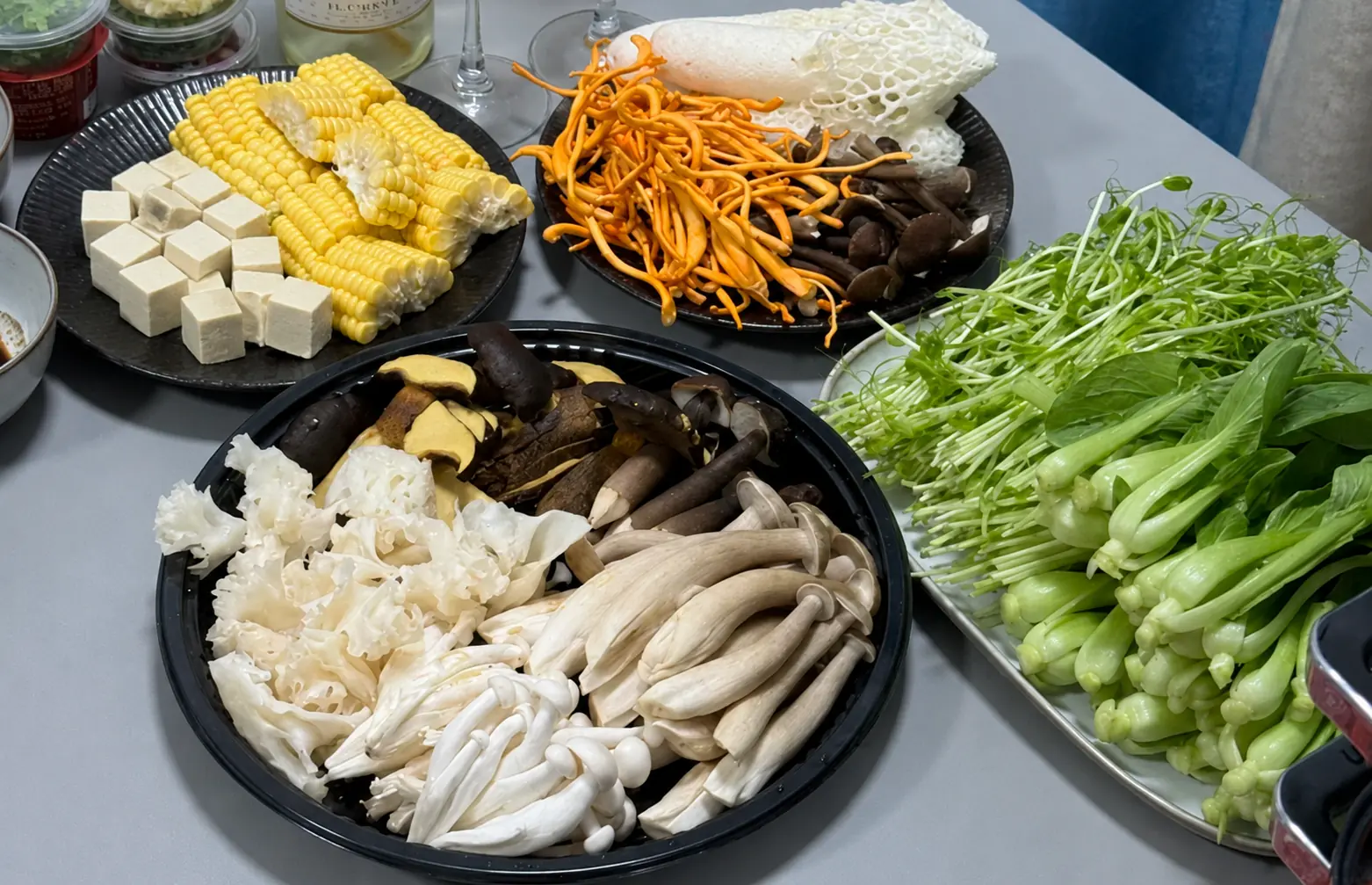
Do not turn the first meal into a random hotpot buffet. Coconut chicken has a cleaner rhythm than red-oil hotpot: first chicken and soup, then ingredients that absorb the broth without muddying it.
Good first add-ons include mushrooms, water chestnuts, corn, winter melon, tofu, tofu skin, bamboo fungus, Chinese yam, leafy greens, and a small starch at the end. Heavier processed items, meatballs, luncheon meat, and fried foods can be tasty, but they make the broth feel less clear. If this is your first coconut chicken meal, order less at the beginning and add more after the chicken round.
| Order Role | Good Choices | Why It Works |
|---|---|---|
| Core protein | Half or whole chicken, depending on group size | The dish exists for the chicken and the first broth. |
| Fresh crunch | Water chestnut, corn, winter melon | They support the sweet broth without making it greasy. |
| Umami and texture | Mushrooms, bamboo fungus, tofu skin | They add depth after the first soup round. |
| Finishers | Noodles, rice, or a small starch order | Add these late so the broth does not thicken too early. |
For two people, one chicken portion plus three or four sides is usually enough. For three to four people, add more vegetables or a second chicken portion if the first round disappears quickly. Families often like this meal because it is not spicy, but watch hot soup, bones, chicken doneness, and sauce bowls around children.
Where to Try Coconut Chicken Hotpot
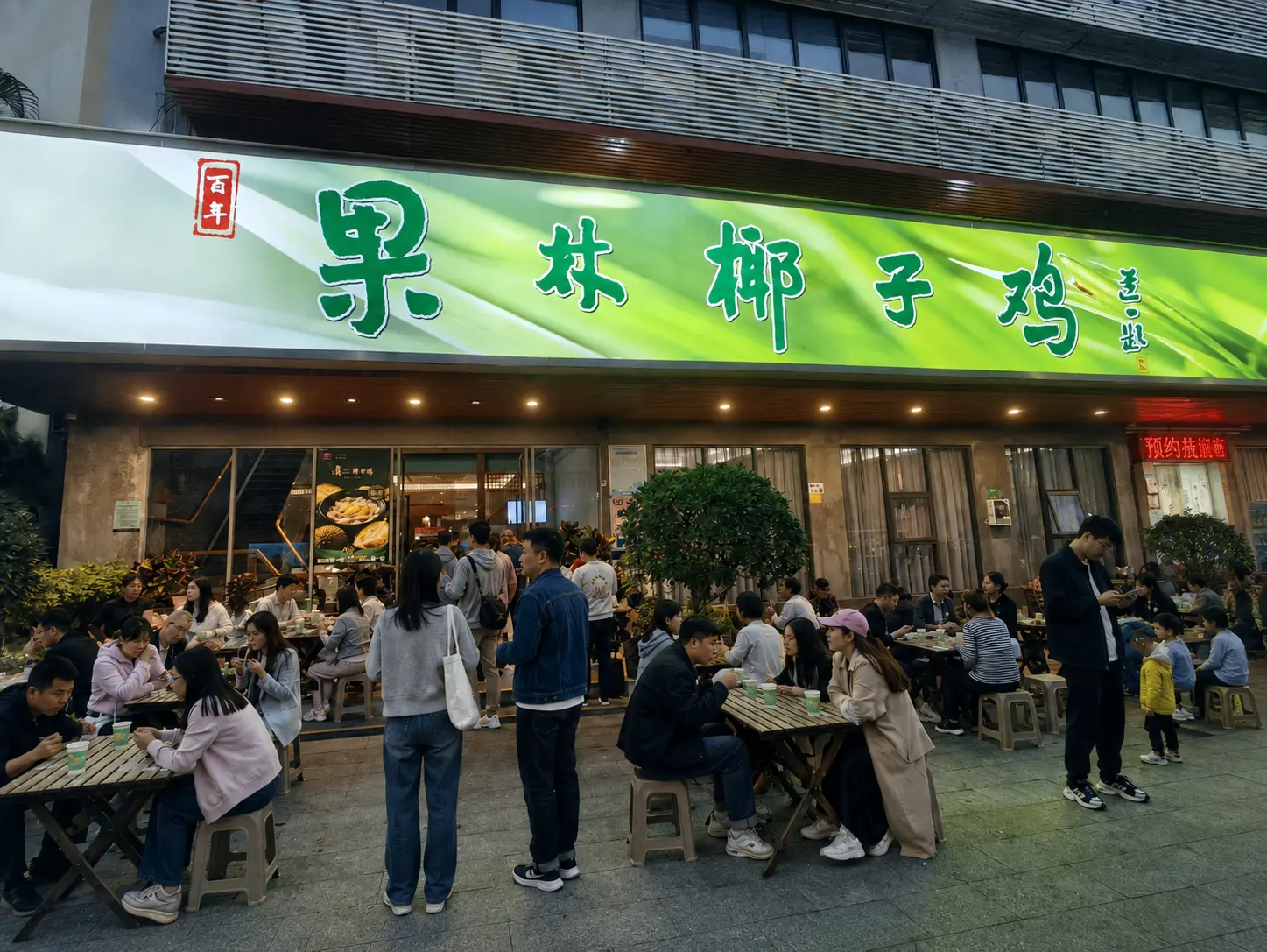
In Sanya (三亚), coconut chicken works best as a light dinner after beach time, shopping, or a seafood-heavy day. Sanya tourism pages have recommended local names such as Diadia's Coconut Chicken (嗲嗲的椰子鸡) and Ye Xiaoji Coconut Chicken (椰小鸡), but treat named restaurants as examples, not permanent rankings. Hours, branches, queues, and service change.
In Shenzhen (深圳), choose by location before fame. EyeShenzhen says the city has more than 1,000 coconut chicken restaurants, so crossing the whole city for one branch rarely makes sense. Local chains such as Seasons Coconut Chicken Hot Pot (润园四季椰子鸡) are useful for travelers because the process is clear, the sauce counter is familiar, and staff are used to managing the timer. EyeShenzhen
In Haikou (海口), coconut chicken is better as part of a broader Hainan food day than as a single trophy meal. Eat noodles or old dad tea earlier, walk around Qilou Old Street, then use coconut chicken as an easy dinner when you want something warm but not heavy.
Use the Shenzhen food guide if your dinner needs to fit Futian, Shekou, Dongmen, Longgang, or a border-crossing day. Use the Sanya and Haikou food guide if you are balancing coconut chicken with seafood, qingbuliang, Hainan noodles, and beach logistics.
Ordering and Allergy Pitfalls for Travelers
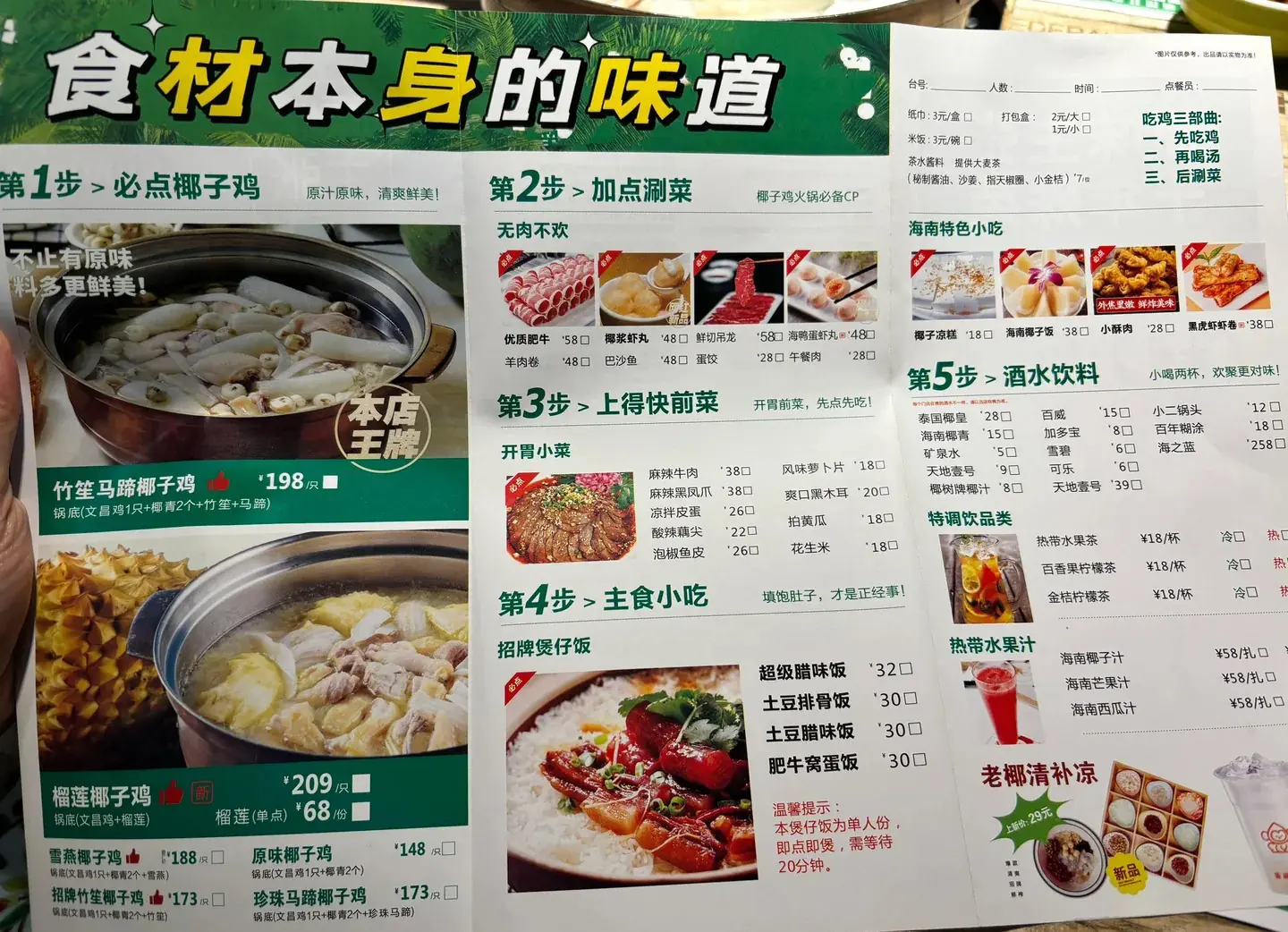
Most coconut chicken restaurants are manageable with a phone menu, but prepare for QR ordering and mobile payment. If you have not set up mobile payment yet, read the Alipay in China guide before building your food day around a busy local restaurant.
Useful menu words include coconut chicken hotpot (椰子鸡火锅), half chicken (半只鸡), whole chicken (一只鸡), pot base (锅底), green orange (青桔), sand ginger (沙姜), water chestnut (马蹄), mushrooms (菌菇), and add soup (加汤). Many staff will understand pointing, but allergy and doneness requests need clearer language.
| English | Chinese | Pinyin | Say It Like… |
|---|---|---|---|
| Coconut chicken hotpot | 椰子鸡火锅 | ye zi ji huo guo | yeh-dzuh jee hwaw-gwaw |
| No chili | 不要辣椒 | bu yao la jiao | boo yow lah jyow |
| Please confirm the chicken is fully cooked | 请确认鸡肉熟透 | qing que ren ji rou shu tou | ching chweh-ren jee roe shoo toh |
| I am allergic to coconut | 我对椰子过敏 | wo dui ye zi guo min | woh dway yeh-dzuh gwaw-min |
| Does this dipping sauce contain peanuts or sesame? | 这个蘸料有花生或芝麻吗? | zhe ge zhan liao you hua sheng huo zhi ma ma | juh-guh jahn-lyow yo hwah-shung hwaw jir-mah mah |
Do not assume mild food is automatically safe food. Coconut chicken is unsuitable for vegetarians, coconut-allergic travelers, and anyone avoiding chicken. Soy sauce may contain wheat; sauce counters may have sesame, peanuts, chili, cilantro, or shared utensils; some restaurants may use MSG or seasoning powder; and bone-in chicken requires care. If allergies are serious, show the Chinese phrase directly to staff and avoid self-service sauces that cannot be verified.
Frequently Asked Questions
No. The pot itself is usually not spicy. Heat comes from optional chili, fresh chili, or chili oil at the dipping-sauce counter.
Beyond This Guide
Coconut chicken is a gentle entry point into Chinese hotpot, but it is only one branch of the family. For contrast, compare it with Sichuan and Chongqing hotpot, where the broth seasons everything, and Beijing copper-pot mutton hotpot, where clear broth and sesame sauce carry a totally different rhythm.
Useful next reads:
- Shenzhen Food Guide
- Sanya and Haikou Food Guide
- Sichuan and Chongqing Hotpot Guide
- Beijing Copper-Pot Mutton Hotpot Guide
© gochinafreely.com — Original guide by Go China Freely.