Spend three days in China and you'll notice things that make you do a double take — someone blasting a video on speakerphone in the subway, the person behind you in line standing close enough for you to smell their shampoo, electric scooters gliding silently past you on the sidewalk. Some of this is just density, some is local habit, and some is discouraged in formal places even if you still see it happen. Once you understand that distinction, your trip shifts from "why is everyone so rude?" to "ah, that's how it works here."
China Public Behavior: The Logic
How to read the room
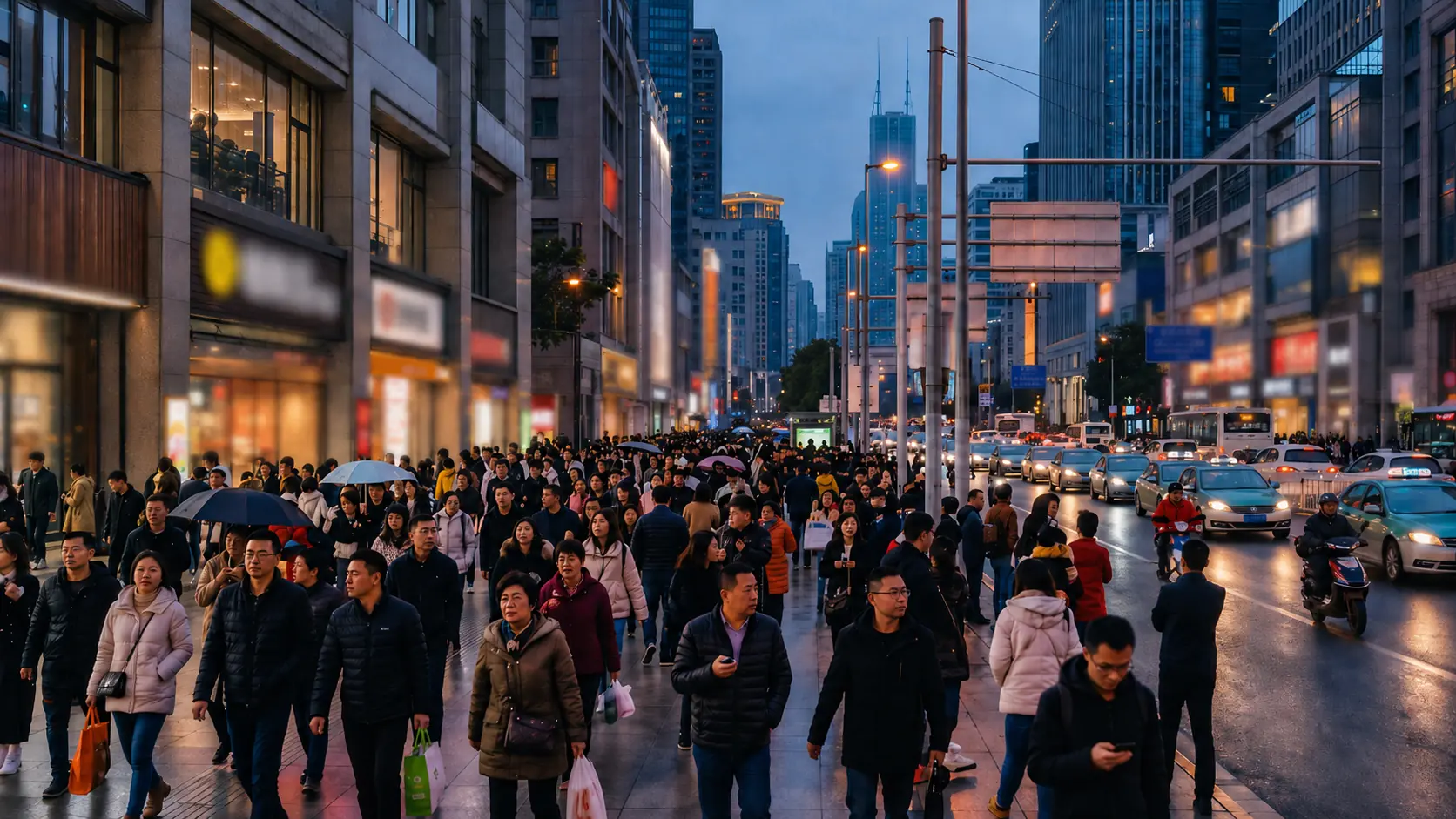
China's cities are dense in ways most Western countries simply aren't — Shanghai packs over 3,800 people per square kilometer, and Beijing's subway can move more than 10 million riders on a busy day. At that density, the Western idea of a personal space bubble gets much smaller.
People in China are not necessarily invading your space; most of the time, they are sharing it by local rules.
The key mindset shift: close does not mean rude, loud does not always mean disrespectful, and direct does not mean unfriendly. But "you may see it" is not the same as "you should copy it," especially on metros, trains, in museums, temples, and security-controlled spaces.
This difference shows up everywhere: shorter gaps in queues, higher noise tolerance, more frequent light contact between strangers, and a directness that can feel abrupt if you are used to softer public boundaries. China absolutely has manners, but the parameters are calibrated differently. Read the local room, then choose the more considerate version of the behavior when rules or signs point that way.
Close space
Queues, elevators, and transit feel tighter than many visitors expect.
Public sound
Phone speakers, park music, and restaurant noise may sit above your usual comfort level.
Daily friction
E-bikes, crossings, toilets, and queues need practical habits more than judgment.
Boundaries
Stares, photos, and direct questions are easier when you know simple exits.
Crowds, Queues & Noise
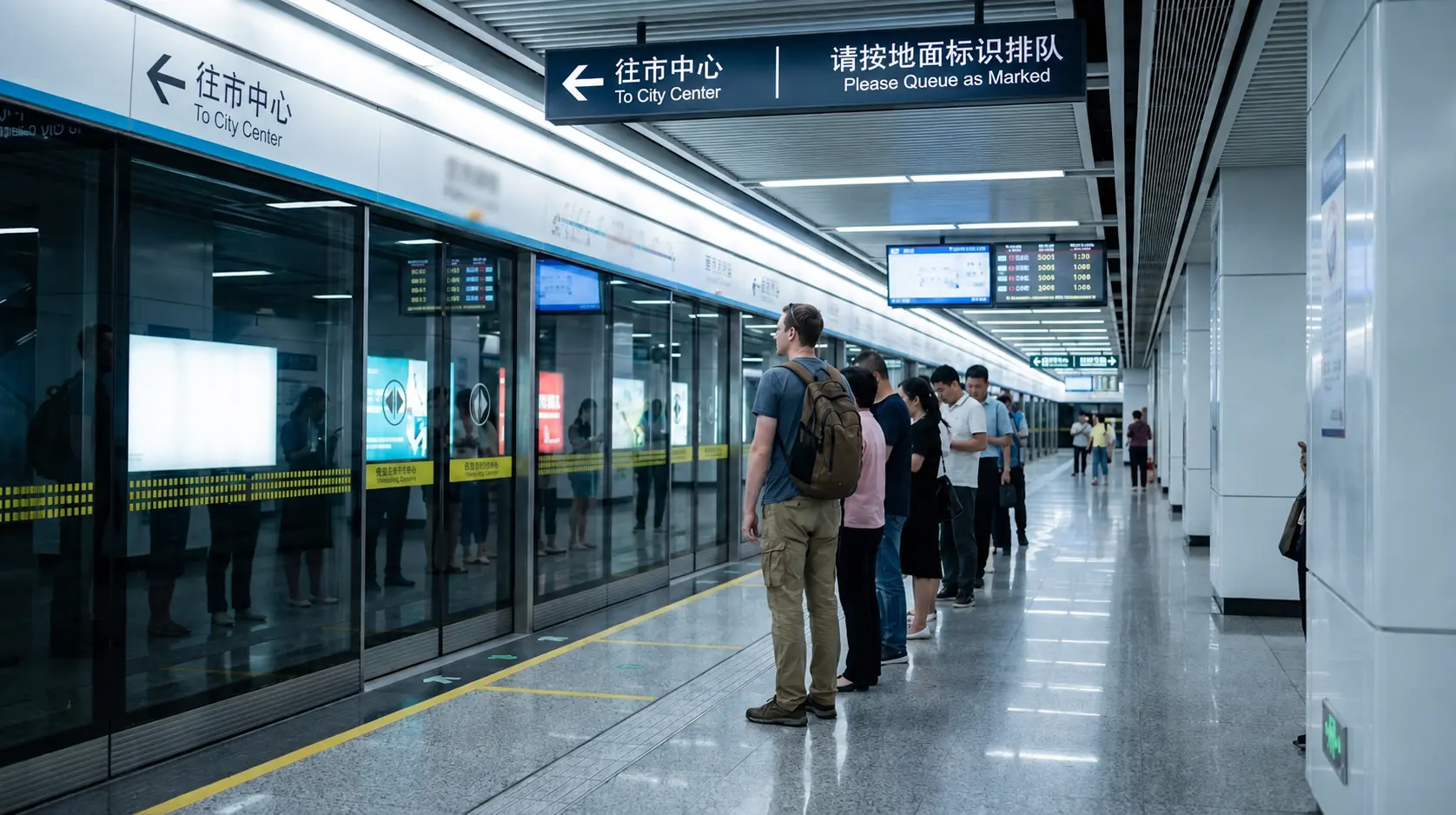
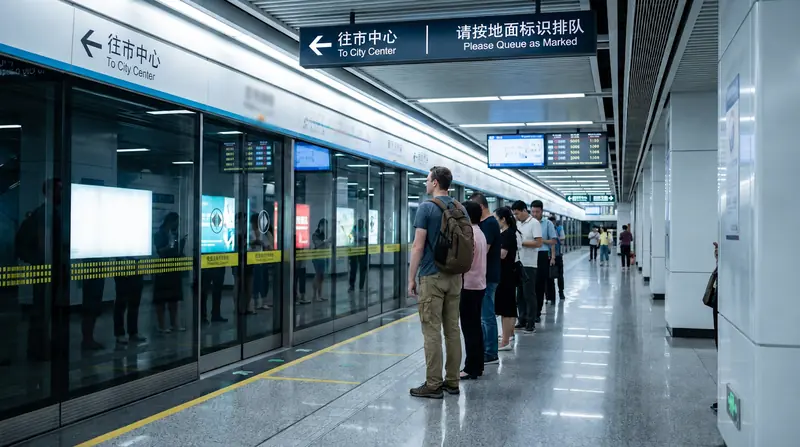
A decade ago, "nobody queues in China" was one of the most common complaints from foreign visitors. That has changed dramatically in first-tier city subways.
Stations in Beijing (北京), Shanghai (上海), Guangzhou (广州), and Shenzhen (深圳) now have clear platform markings, and most passengers follow the let-people-off-first rule.
The useful read
Formal transport spaces are usually more orderly than informal counters, holiday ticket windows, or small-city queues under pressure.
Outside major subway systems, queue discipline depends on place, crowd pressure, and local habits:
Scenic spot ticket offices
Line-cutting can happen during peak season, especially around tour groups.
Train station security
Major high-speed rail stations are usually orderly; smaller stations can feel more chaotic.
Attraction shuttle queues
When a shuttle bus or scenic-area cart arrives, the line can compress quickly. Keep your group together, follow staff barriers, and move with the queue.
Supermarket checkouts
Big-city stores feel familiar; in smaller cities, someone may put items on the belt ahead of yours.
Personal space in crowds
The comfortable social distance in China is often closer than what many Western visitors expect. In queues, buses, elevators, and attraction entrances, someone may stand close enough to brush your backpack, and it usually means nothing.
What you may experience
- The person behind you in line nearly touching your backpack — normal, not aggressive
- Getting jostled in a crowded subway — not personal, everyone is trying to move
- Someone brushing past without saying "excuse me" — light contact in crowds often does not register as an offense
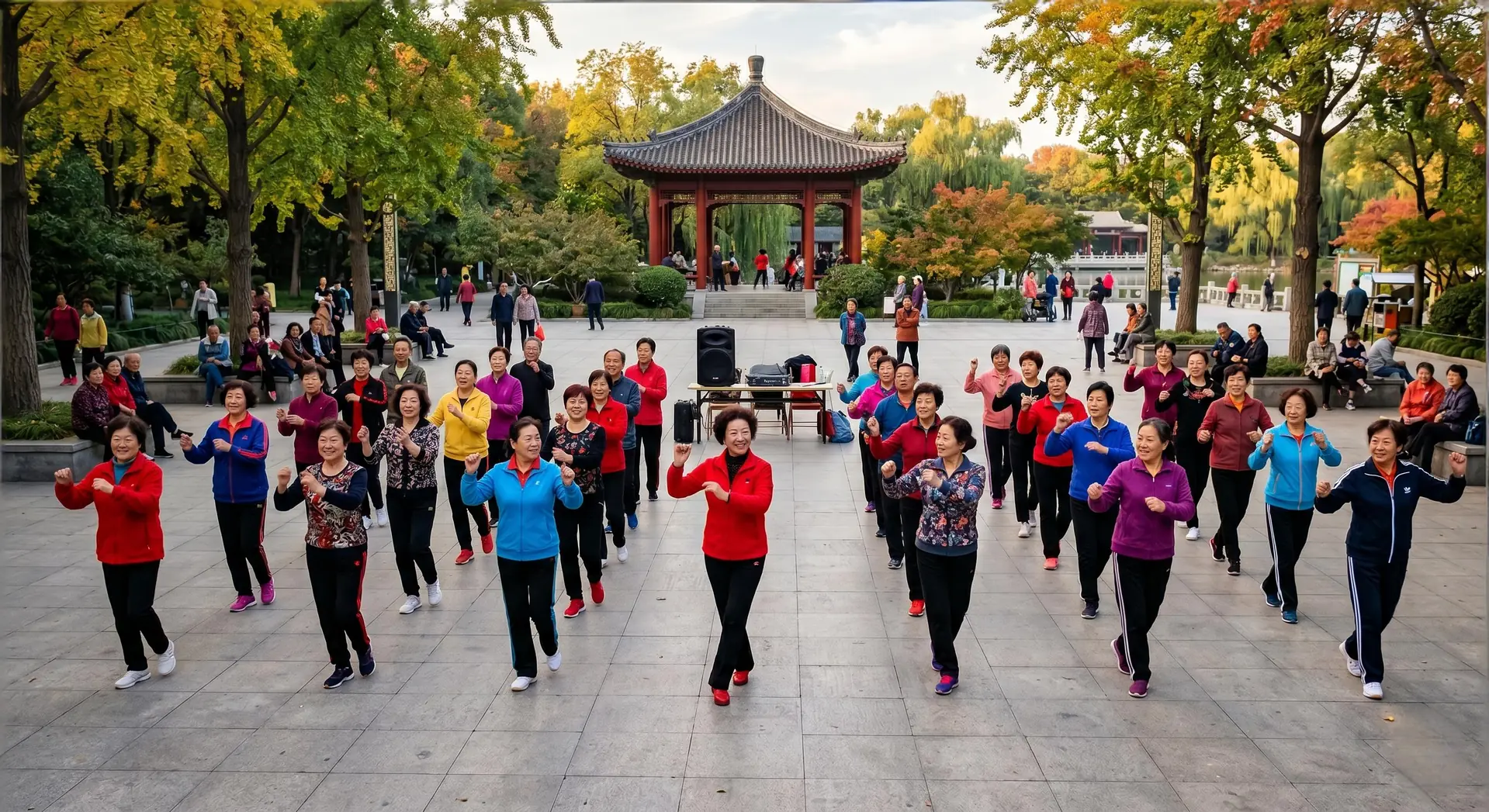
Public spaces in China are often louder than in most Western countries, not because rules do not exist, but because the social consensus on acceptable public noise is set at a different level. Parks, buses, waiting rooms, and casual restaurants can all run louder than your instinct expects.
Square dancing (广场舞)
Happens most mornings and evenings, when groups gather in parks and plazas to dance to portable speakers. The volume can be substantial and audible from nearby apartment blocks. It can feel loud to visitors; many locals have long since tuned it out.
Phone speakers
Are common on buses, in restaurants, and in waiting rooms. This is a live social debate inside China too: high-speed trains now offer quiet carriage (静音车厢) options on many services, where passengers are expected to avoid calls, speakerphone, and loud device audio.
Morning park exercises
Between about 6:00 and 8:00 AM can include tai chi (太极拳), sword dancing, opera singing, and small amplifiers. Shops and restaurants may also be loud, especially when staff call from doorways to attract customers.
How to handle crowds
- Do not overreact to pushing — pause, hold your position, and move with the crowd
- "让一让" ("please make way") is a useful phrase; it is basic communication, not rudeness
- Guard your belongings in crushes — not because theft is inevitable, but because phones and wallets fall out easily
- Avoid peak holidays at famous attractions: National Day around October 1, the Spring Festival travel season in January or February, and the May Day period around May 1. Exact holiday lengths and make-up workdays change each year
Three Ways to Beat the Noise
Noise-canceling headphones are genuinely useful China travel gear. When booking high-speed rail tickets, look for the 静音车厢 (quiet carriage) option if it appears. If you're noise-sensitive, avoid street-facing hotel rooms and hotels directly beside parks or public squares.
Street Safety & Daily Friction
Read the moving traffic
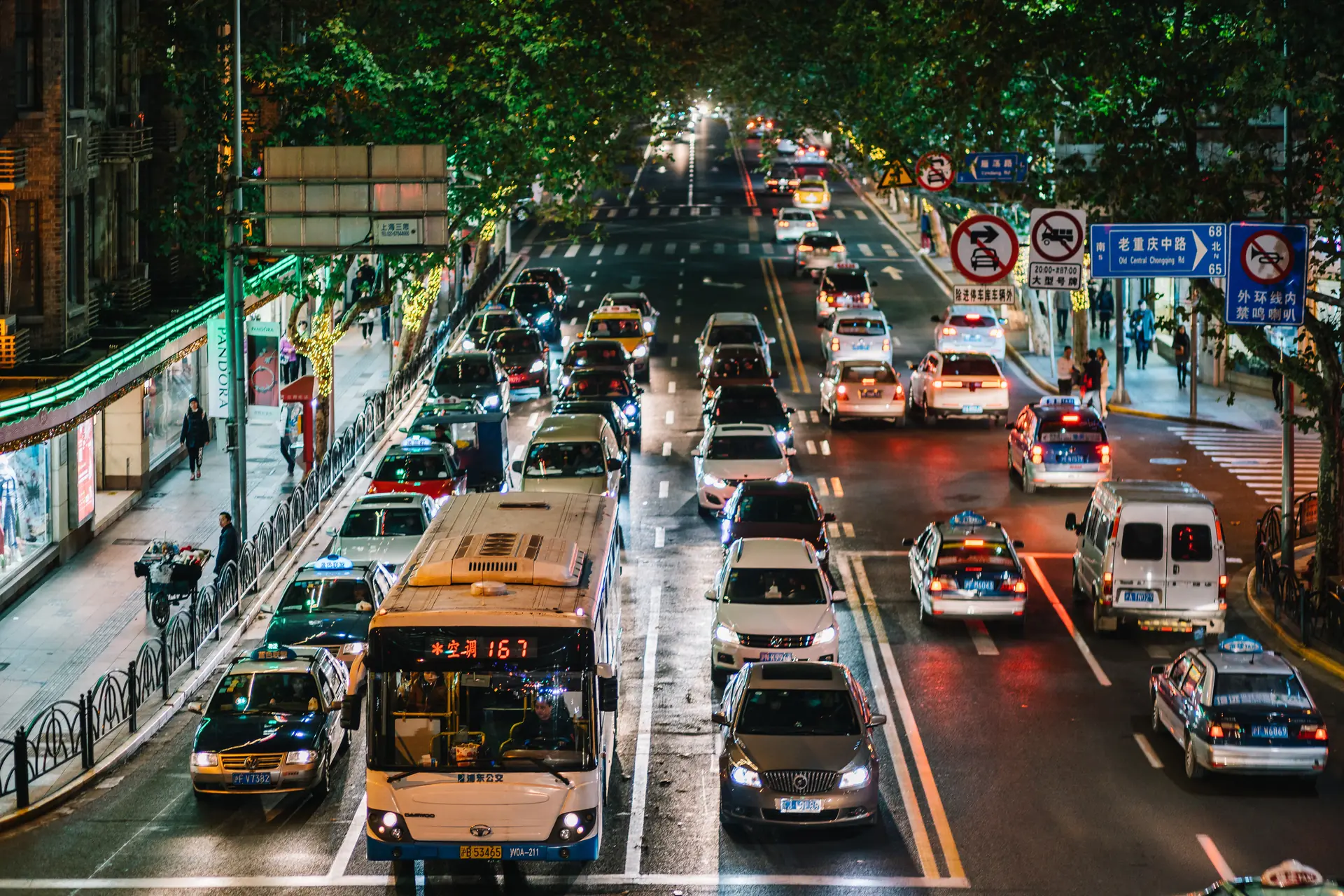
China's traffic laws are comprehensive, but pedestrians, drivers, and e-bike riders interact with signals in a way that can feel loose if you expect cars to behave predictably. On city streets, your safest habit is simple: read the moving traffic, not just the light.
This section is about daily friction, not danger panic: right turns, silent e-bikes, and small-city crossing habits are the parts to watch.
Right-turning cars may keep moving
At many intersections, vehicles can turn right on red if they do not obstruct permitted traffic or pedestrians. In practice, some drivers roll through while you have a green pedestrian signal, so never assume green means safe.
E-bikes are silent and fast
They can appear on sidewalks, from the wrong direction, or inside pedestrian areas. Look both ways more than once before crossing.
Jaywalking happens
At smaller intersections and in smaller cities, pedestrians may step out before the light changes. Follow the signal yourself, but stay aware of the crowd around you.
Core Safety Rule
In China, don't watch only the light — watch the traffic. Crossing with a group of locals is often safer than stepping out alone, because drivers can read a moving group more easily than one hesitant traveler.
Spitting
This is one of the harder daily-life moments for many visitors. Major cities have improved a lot — you will rarely see it on main streets in Beijing or Shanghai — but in smaller cities and rural areas, you may still hear someone clearing their throat and spitting on the ground.
Do not treat it as something to copy: many city rules, transit systems, malls, museums, and scenic areas prohibit spitting, littering, and similar public-hygiene behavior. You do not need to react or comment. It is okay to find it uncomfortable; file it under daily-life difference and move on.
Children and family privacy
In parks, small-town streets, or older scenic areas, parents sometimes handle a child's urgent bathroom need very casually.
Do not photograph it, comment loudly, or treat the family as a spectacle. Give them space and move on.
Public Toilets & Hygiene
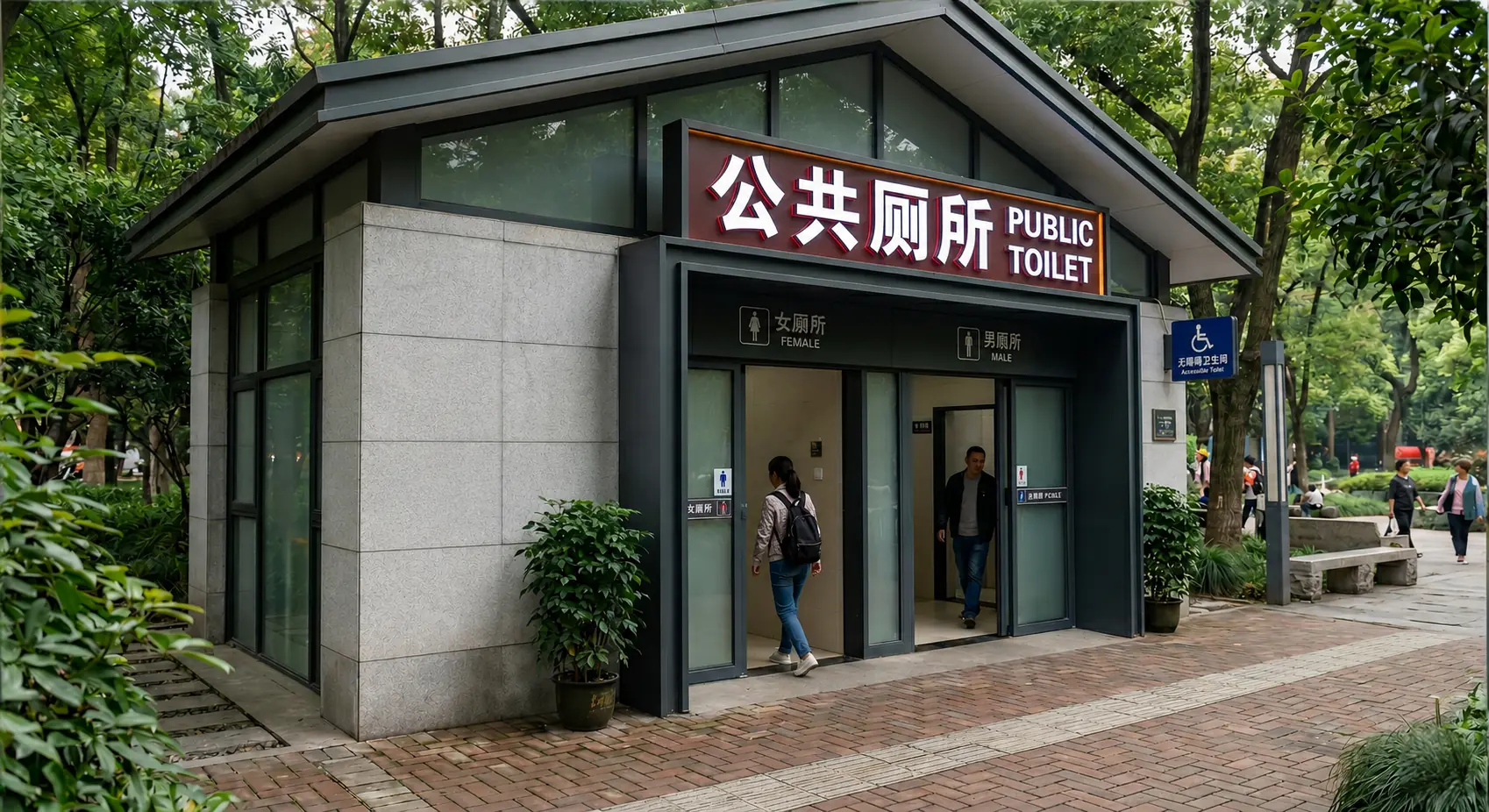
China's public restrooms have improved significantly over the past decade, especially in tourist cities, malls, high-speed rail stations, and major scenic areas.
Still highly location-dependent
They can still be a source of culture shock because availability, cleanliness, toilet type, and paper supply vary sharply by location.
Big-city malls, hotels, and new attractions
Seated Western-style toilets are common, often with auto-flush and hand dryers.
Older scenic spots, train stations, and smaller cities
Squat toilets still dominate. A squat toilet is a rectangular ceramic pan set into the floor.
How to use one
Face the hooded end, usually toward the door, place your feet on the raised footrests, and squat down. Do not face away from the door; that is backwards.
Tissues and Sanitizer
Many public restrooms do not provide toilet paper. When paper is available, it may come from a communal dispenser near the entrance rather than inside each stall, and some newer dispensers may require a WeChat or Alipay scan. Always keep a pack of tissues and a small bottle of hand sanitizer in your bag. You will use both far more often than you expect in China.
Major cities and scenic areas have upgraded many tourist toilets under China's "toilet revolution" campaign. Some public toilets show star ratings; three stars and above generally signals a cleaner, better-managed facility. Amap (高德地图) and Baidu Maps (百度地图) can search for nearby public restrooms; see the China navigation apps guide if you want the map keywords before you go.
Reliable restroom options (ranked by cleanliness):
- Shopping Malls- Almost always the cleanest, best option
- KFC / McDonald's / Starbucks- Usually usable even if you are not buying anything
- Hotel Lobbies- Many hotel lobbies have restrooms accessible to visitors
- Subway Stations- Newer stations usually have clean facilities
- Scenic Areas- Quality varies — main walkway restrooms are usually better than remote corners
Trash sorting without stress
In big cities, public bins often separate recyclables, kitchen or food waste, hazardous waste, and other trash. As a visitor, use the posted labels: bottles and cans go with recyclables, batteries with hazardous waste, obvious food scraps with food waste, and most mixed travel trash with other waste. Tourist areas are used to imperfect sorting, so do your best without overthinking it.
Staring, Photos & Boundaries
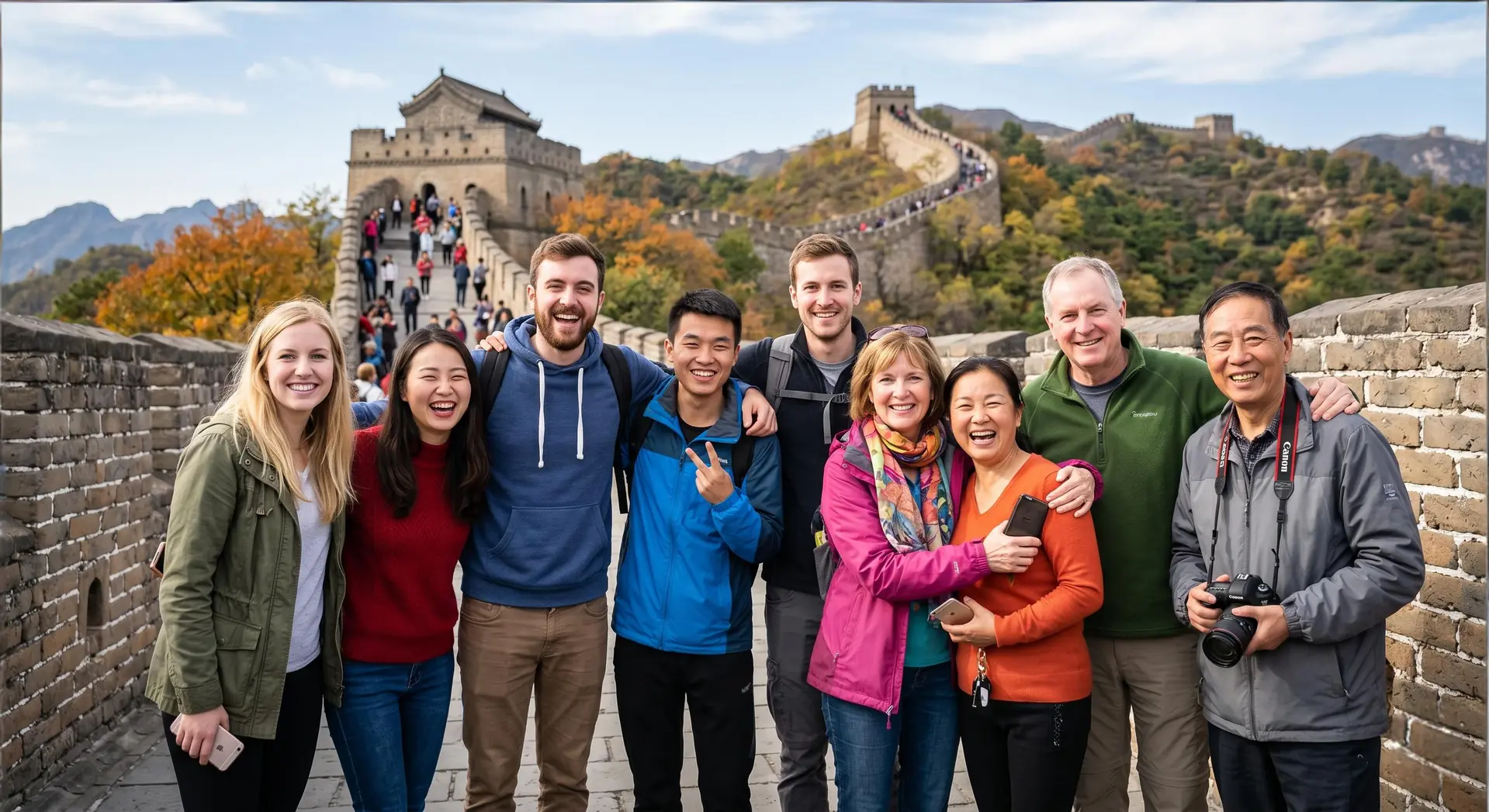
Curiosity, not usually hostility
If you do not look East Asian, traveling through non-tourist areas — even in first-tier cities — can draw attention.
In smaller cities and rural areas, you may be the first foreign visitor someone has seen in person. The attention is usually curiosity, not hostility.
Responding to stares
Your skin color, eye color, height, hair, or build may draw looks, and people may not realize they are staring. Smile or give a small nod. Most people return a friendly smile. If you frown or look angry, the other person may feel confused rather than deterred.
Photo requests and candid shots
- People may discreetly, or not so discreetly, point phone cameras at you
- Families, especially those with children, may approach for a selfie together
- If you are happy to join, smile and say yes; it may make their day
- If not, a friendly wave and "不用了" ("no thanks") is enough
- If someone is taking candid photos and you are uncomfortable, wave, turn away, or step behind a friend
This happens mainly in smaller cities and rural areas:
Unusual hair or looks
In smaller cities or family settings, people sometimes comment, stare, or ask for a photo, especially if you have blond or curly hair.
Children traveling with you
Older people or other families sometimes smile, praise your child, or ask for a photo. If the attention gets too close, step back before it becomes uncomfortable.
How to decline
Step back slightly, smile, and say "不用了" or wave your hand. Most people understand and stop.
Near universities and tourist sites, young people may approach to practice English, ask questions, request photos, or invite you to tea. Much of this is genuinely well-intentioned cultural exchange, but classic tea house scams also start this way.
Tea House Scam Warning
Two young people, often a man and woman, approach you at a tourist hotspot, chat for a few minutes, then suggest getting tea. The bill can run into hundreds or even thousands of yuan. See our safety and scam prevention guide for the full pattern.
What not to photograph
- Military facilities, police or security checkpoints, border and port areas, and sensitive government or security compounds — photography may be prohibited, and you may be asked to delete images
- Close-ups of strangers — taking close-up photos of people without permission is impolite everywhere, and China is no exception
- Sensitive areas — some checkpoints and installations in Xinjiang (新疆) will attract attention if you point a camera at them. If staff say "禁止拍照" or "不要拍照", put the camera down and move on
Transit Etiquette in China
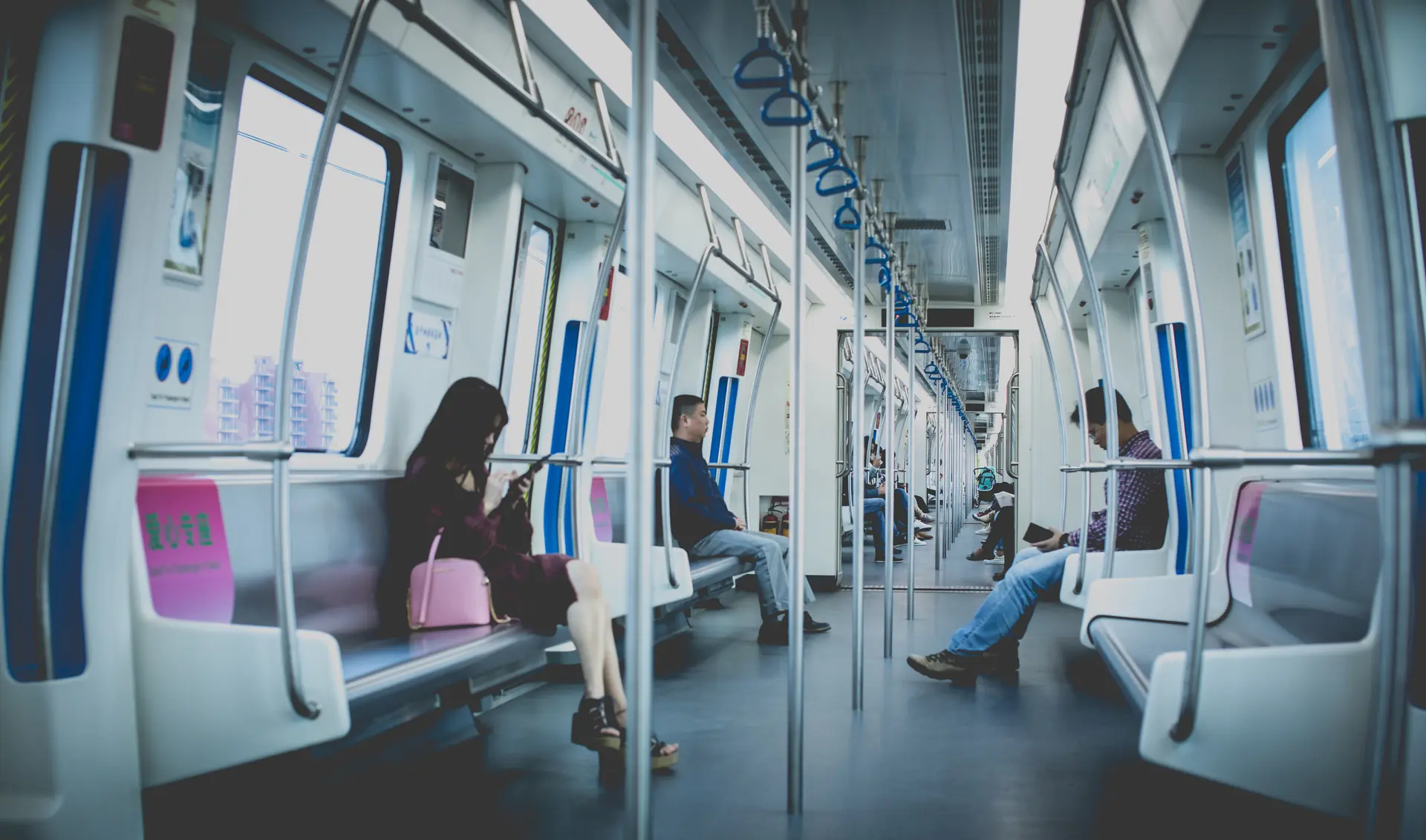
Transit has its own social script
Public transit in China runs on its own social rules. Whether you are riding the subway, a bullet train, a city bus, or a taxi, knowing the unwritten expectations helps you blend in and avoid small awkward moments.
City rides
Subway, buses, taxis
Long-distance rides
High-speed rail and station flows
Subway
- Board after others exit — stand to the side of the doors and wait before stepping in
- Give up priority seats — elderly passengers, pregnant women, parents carrying children, and passengers with disabilities are expected to get seats. Failing to offer one can draw disapproving looks
- Security screening — bags go through X-ray machines. Follow the local prohibited-items list and staff instructions; knives, flammables, pressurized aerosols, strong alcohol, oversized items, or restricted goods may be refused. Liquids are common but can be checked
- Train-car rules — many metro systems prohibit smoking or vaping, spitting, littering, loud audio, and eating inside train cars except for infants or medical needs
- Phone use — browsing with headphones is fine; speakerphone is frowned upon in formal transit spaces, though you will still hear it
High-speed rail
- Reclining seats — if you want to recline, turn around and give the person behind you a quick heads-up first
- Quiet carriages — see the noise section above; if a train offers one, book it only if you are willing to follow the quiet rules
- Shoes off — some passengers remove shoes on long journeys. If you do, wear clean socks and keep your feet off seats
- Trash — high-speed trains have bins, and attendants make regular collection rounds. Do not leave garbage at your seat
City buses
- Board at the front, exit at the back — most cities follow this pattern
- Payment — Alipay, WeChat, or local transit cards are normal. Cash-accepting buses are becoming less common
- Rush hours — expect serious crowding around 7:00–9:00 AM and 5:00–7:00 PM
Taxis
- Refusals — technically not allowed, but some drivers refuse fares during shift changes or rush hours
- Detours — keep your navigation app open to track the route in real time
- Ride-hailing is more reliable — DiDi (滴滴出行) is China's largest ride-hailing platform, with transparent pricing and routing. It is usually more dependable than hailing a cab on the street; the city transport guide covers the app setup
Smoking, Drinking & Drug Rules
China's written rules and on-the-ground enforcement do not always feel the same. Treat this section as the practical version: what you may encounter, what is legally risky, and where travelers should be strict.
Smoking and vaping
- Major cities and posted venues have indoor bans — Beijing and Shanghai prohibit smoking in indoor public spaces such as restaurants, malls, offices, and public transport. Individual fines commonly fall in the ¥50–200 range where local rules apply
- Smaller cities and older venues vary — anti-smoking rules may exist, but enforcement can be weak. You may still encounter smoke inside restaurants, stairwells, KTV rooms, or small hotels
- Outdoors — most cities do not have broad outdoor smoking bans, though scenic areas, parks, schools, and transport hubs may post no-smoking signs
- E-cigarettes — China regulates e-cigarettes as tobacco products, and many local indoor smoking rules treat vaping like smoking
No general public drinking ban
China has no general public drinking ban — drinking beer in parks, on streets, or on trains is not automatically treated as an offense.
Public disorder is different
Getting drunk and disturbing public order can trigger public-security penalties, including detention in serious cases.
Under-18 sales rule
China does not have one simple national legal drinking age for consumers, but selling alcohol to minors under 18 is prohibited.
Zero Tolerance — No Exceptions
China enforces severe drug penalties, foreigners included. Cannabis is illegal regardless of where you come from. Drug possession, trafficking, transport, manufacture, and related offenses can lead to detention, prison, or much harsher penalties in serious cases. Never carry, use, or buy illegal substances in China.
Chinese Politeness & Local Taboos
Chinese culture values modesty, indirectness, and avoiding public embarrassment. Everyday conversation has polite phrases that should not always be taken at face value, and some public behaviors that feel ordinary elsewhere can read as disrespectful here.
Compliments and modesty
When you compliment someone in China, they may not respond with a direct "thank you." Instead, you may hear:
| English | Chinese | Pinyin | Say It Like… |
|---|---|---|---|
| You're too kind | 哪里哪里 | nǎlǐ nǎlǐ | nah-lee nah-lee |
| Your praise exceeds my ability | 过奖了 | guòjiǎng le | gwoh-jee-ahng luh |
| Still learning (even if they're clearly an expert) | 还在学习 | hái zài xuéxí | hi zai shweh-shee |
Best Response
Smile and reaffirm. They heard the compliment; the deflection is the etiquette.
"有空来玩" / "改天吃饭"
"Come visit sometime" or "let's have dinner soon." These are often polite farewells. A genuine invitation usually has a specific date and place.
"不用麻烦了"
"Don't trouble yourself." Sometimes it means no; sometimes it is a polite first refusal. Asking once more, gently, reveals the real answer.
"随便吃点"
"Just eat whatever." If a host says this in front of a table full of dishes, the correct response is to eat well and compliment the cooking.
PDA Boundaries
Holding hands and linking arms is perfectly fine. Kissing, prolonged embraces, and more intimate displays may draw stares or mild disapproval. This is not usually a legal issue; it is a social comfort boundary.
Behaviors locals find rude
Knowing which behaviors Chinese people may consider 失礼 ("impolite") helps you avoid unintentional offense:
- Speaking loudly in quiet restaurants, temples, or museums — a loud foreign accent stands out even more
- Publicly criticizing China — politics, human rights, and territorial issues are poor public-space conversation topics
- Asking about income, marriage, or age early in conversation — if someone asks you, do not assume bad intent, but you do not have to answer directly
- Putting your feet on seats or tables — feet are considered dirty
- Making visible disgust at food — grimacing can feel like insulting someone's cooking or hospitality
- Treating locals as photo subjects — do not take close-up photos of strangers, especially children, older people, vendors, cleaners, or embarrassing moments, without permission
- Aggressive bargaining in fixed-price shops — haggling belongs in market stalls, not supermarkets or chain stores
Frequently Asked Questions
Most major Chinese cities feel very safe at night compared with many Western cities, especially around central neighborhoods, metro exits, shopping streets, and hotel areas. Keep normal awareness of your belongings and avoid drunk arguments, but ordinary night walks are not something most travelers need to fear.
Sources checked for this guide
- Subway security, queueing, train-car hygiene, no loud audio, no smoking or vaping, and no eating in train cars: Beijing Municipal Passenger Rules via State Council
- Road-crossing and traffic-safety legal framework: National Laws and Regulations Database: Road Traffic Safety Law
- Photography caution around military installations: State Council: Guide to Working and Living in China
- Shanghai indoor smoking-control rules and fine range: Shanghai Municipal Government: Smoking Control in Public Places
- E-cigarette regulation as tobacco products: State Council Gazette: E-cigarette Management Measures
- Quiet carriage expansion and 12306 service labels: China Railway: 2026 Spring Festival rail service update
- Tourism toilet improvement campaign context: State Council: China should push toilet revolution
- Public-security penalties for disorderly conduct: National People's Congress: Public Security Administration Punishments Law
- Drug-crime penalty framework: Supreme People's Court: Criminal Law, Article 347
- Traveler drinking-water advice: CDC Travelers' Health: China
Beyond This Guide
Navigating daily life in China gets easier when you know the social playbook, but every trip has its own curve balls: dates, cities, family needs, food restrictions, transport timing, and how much attention you personally want to avoid.
More on Chinese culture and etiquette:
- Chinese Customs, Traditions, Values & Taboos — deeper dive into core cultural values
- Chinese Social Etiquette: Greetings, Gift-Giving & Respect — how to interact with Chinese people
- Chinese Dining Etiquette: Chopsticks, Toasting & Customs — table manners and drinking culture
- Visiting Sacred Sites: Temple Etiquette & Dress Codes — rules for temples, mosques, and churches
- Safety & Scam Prevention Guide — tourist scams and how to avoid them
- Nonverbal Communication & Body Language — gestures and their meanings
- China Laws & Regulations for Tourists — legal basics for visitors
Getting around:
- City Transport: Subway, Taxi & DiDi — detailed transit guide
- High-Speed Rail Guide — everything about bullet trains
© gochinafreely.com — Original guide by Go China Freely.