What this guide solves
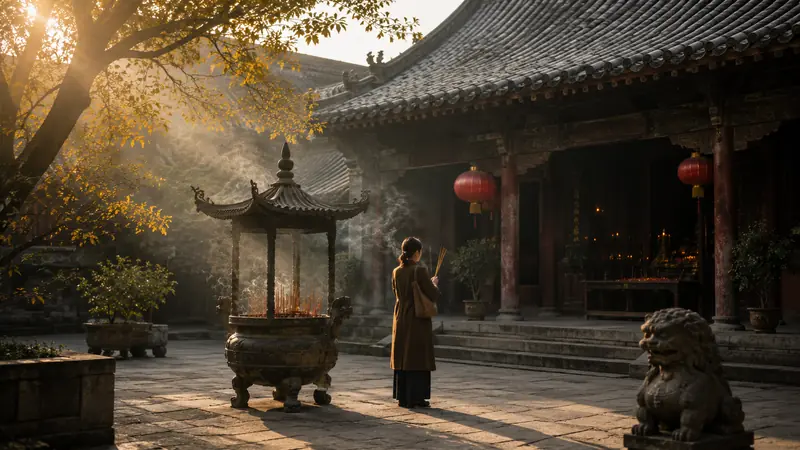
Spend two weeks in China and you will almost certainly walk into a sacred site: Yonghe Temple (雍和宫) in Beijing, Lingyin Temple (灵隐寺) in Hangzhou, the Great Mosque of Xi'an (西安大清真寺), or Saint Sophia Cathedral (圣索菲亚大教堂) in Harbin. These are not museum sets; monks chant, devotees burn incense, Muslims pray, and local families still use many of these places. This guide gives you the practical rules that keep a visit respectful and low-stress.
Goal
Keep the visit respectful and low-stress.
Applies to
Temples, monasteries, mosques, churches, and active worship spaces.
Best habit
Watch local worshippers first, then copy the quietest respectful behavior.
Respectful baseline
Local reality
Most city temples are relaxed. Posted signs, photo bans, and staff instructions matter more than perfect ritual knowledge.
Sacred Sites in China: Quick Rules
China's sacred sites welcome visitors regardless of faith, but the rules are not all the same. The safest travel habit is simple: dress neatly, move quietly, watch local worshippers, and treat posted signs as final even if other tourists ignore them.
Decision shortcut
What should I do first?
Any sacred site
Dress neatly, avoid very revealing clothes, silence your phone, and keep voices low.
Temple halls
Follow signs and ropes, step over thresholds, and skip indoor photos unless a sign clearly allows them.
Mosques
Wear long pants or a long skirt, avoid prayer times, and assume the prayer hall is off-limits unless staff says otherwise.
Mistake recovery
Stop immediately, apologize, step back, and follow staff direction. Honest mistakes are usually handled kindly.
Context and Site Types
Why sacred sites can feel both open and strict
Faith plays a different role in China than many visitors expect.
Daily custom
Many Chinese people do not formally identify as religious, yet they still burn incense at Spring Festival, pray for exam luck, visit a temple before a major life event, or keep a small Buddhist shrine at home.
Shared space
That mix of tourism, custom, and worship is why a site can feel open and welcoming while still having firm behavior rules.
What you will meet
As a traveler, you will mainly meet four types of sacred sites:
🛕Buddhist Temples
By far the most common, from Yonghe Temple in Beijing and Wenshu Monastery (文殊院) in Chengdu to Mount Putuo (普陀山) and Mount Jiuhua (九华山). Chinese Buddhist temples are the mainstream; Tibetan Buddhist monasteries in Tibet, Qinghai, and western Sichuan are stricter.
☯️Taoist Temples
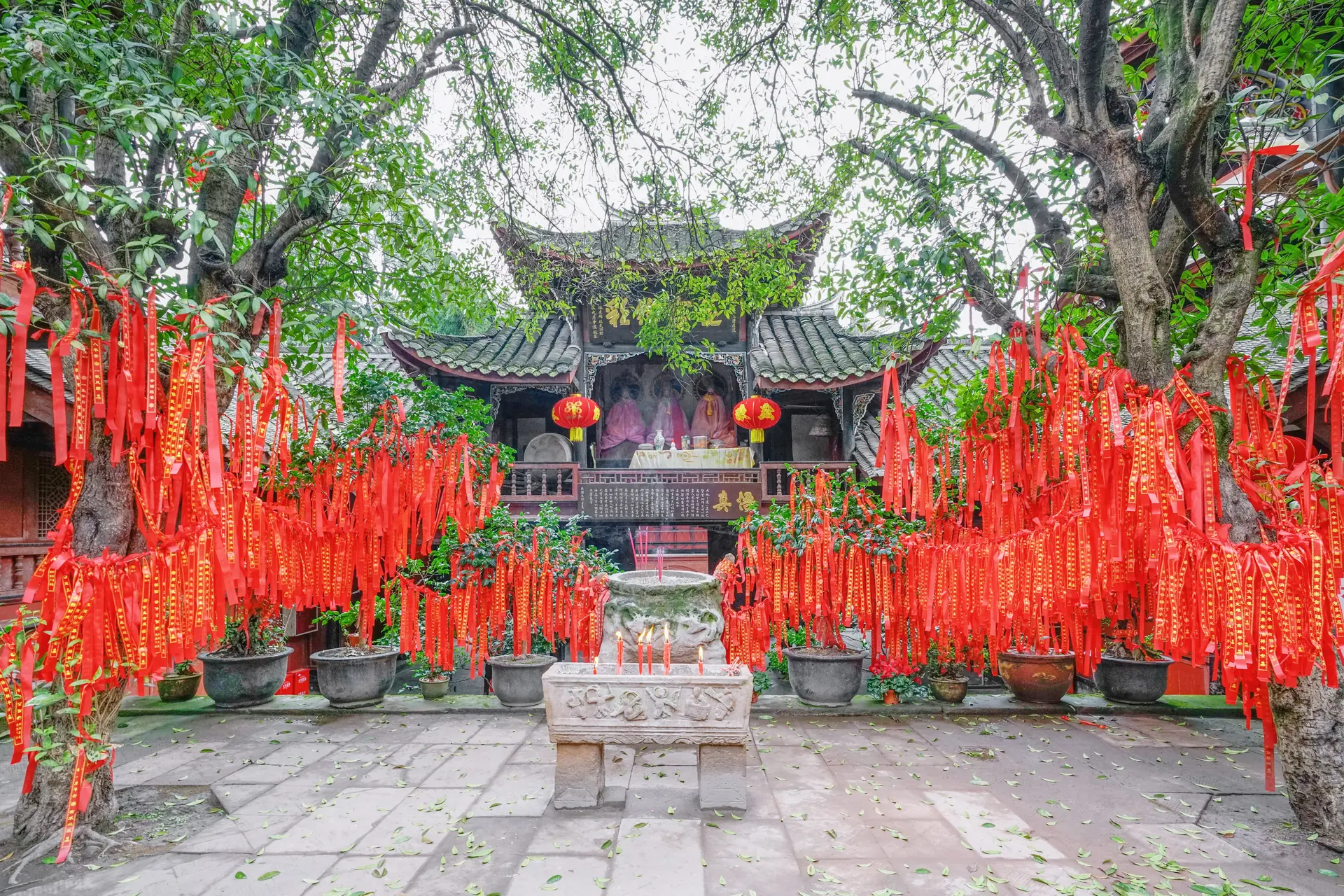
Fewer in number but deeply important. Wudang Mountain (武当山), Mount Qingcheng (青城山), and Baiyun Temple (白云观) in Beijing are key examples. Taoist priests often wear long hair in a topknot, unlike shaven-headed Buddhist monks.
🕌Mosques
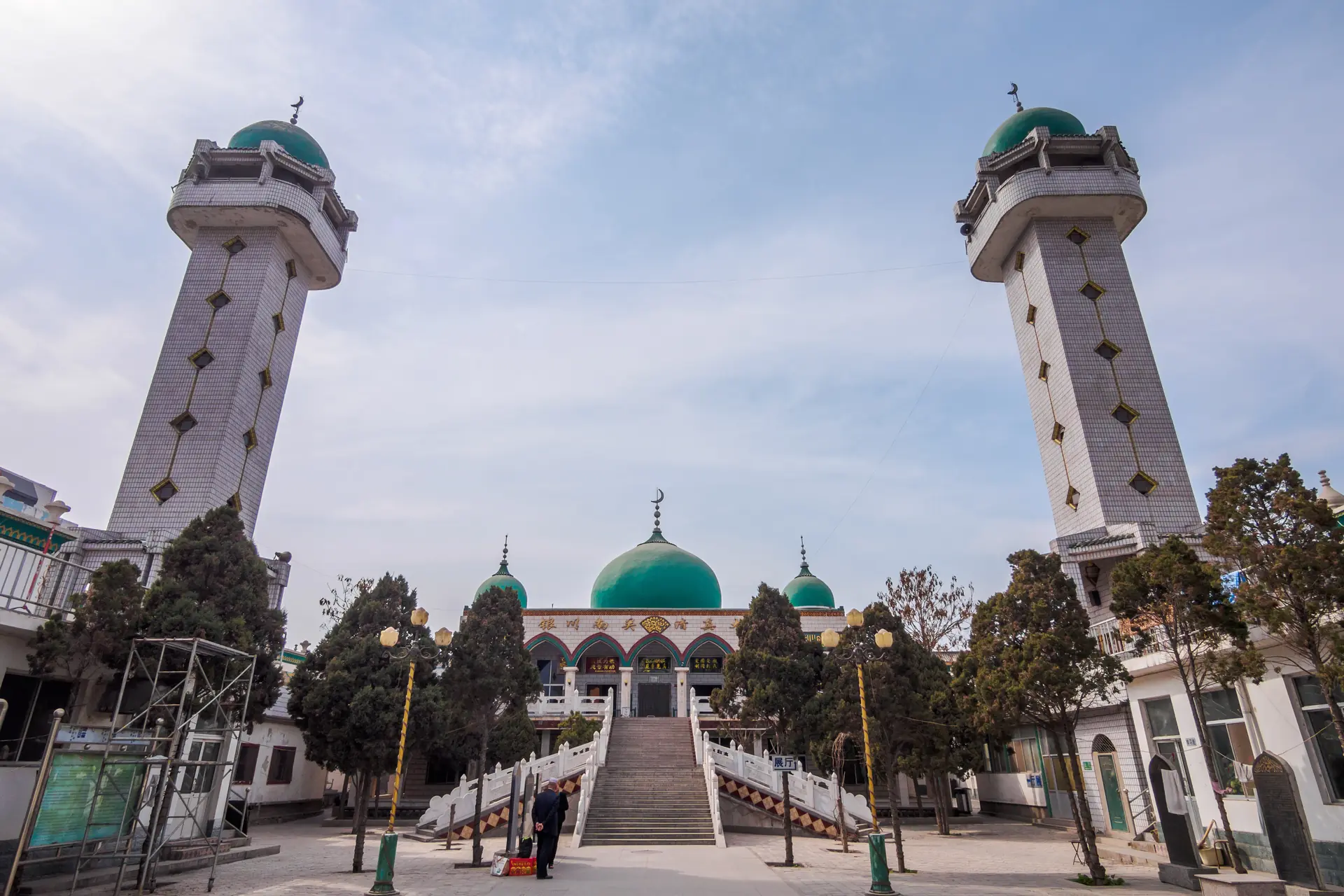
Common in the northwest and in Hui Muslim neighborhoods across major cities. The Great Mosque of Xi'an is a famous example, blending Chinese courtyards with Islamic worship space.
⛪Churches & Cathedrals
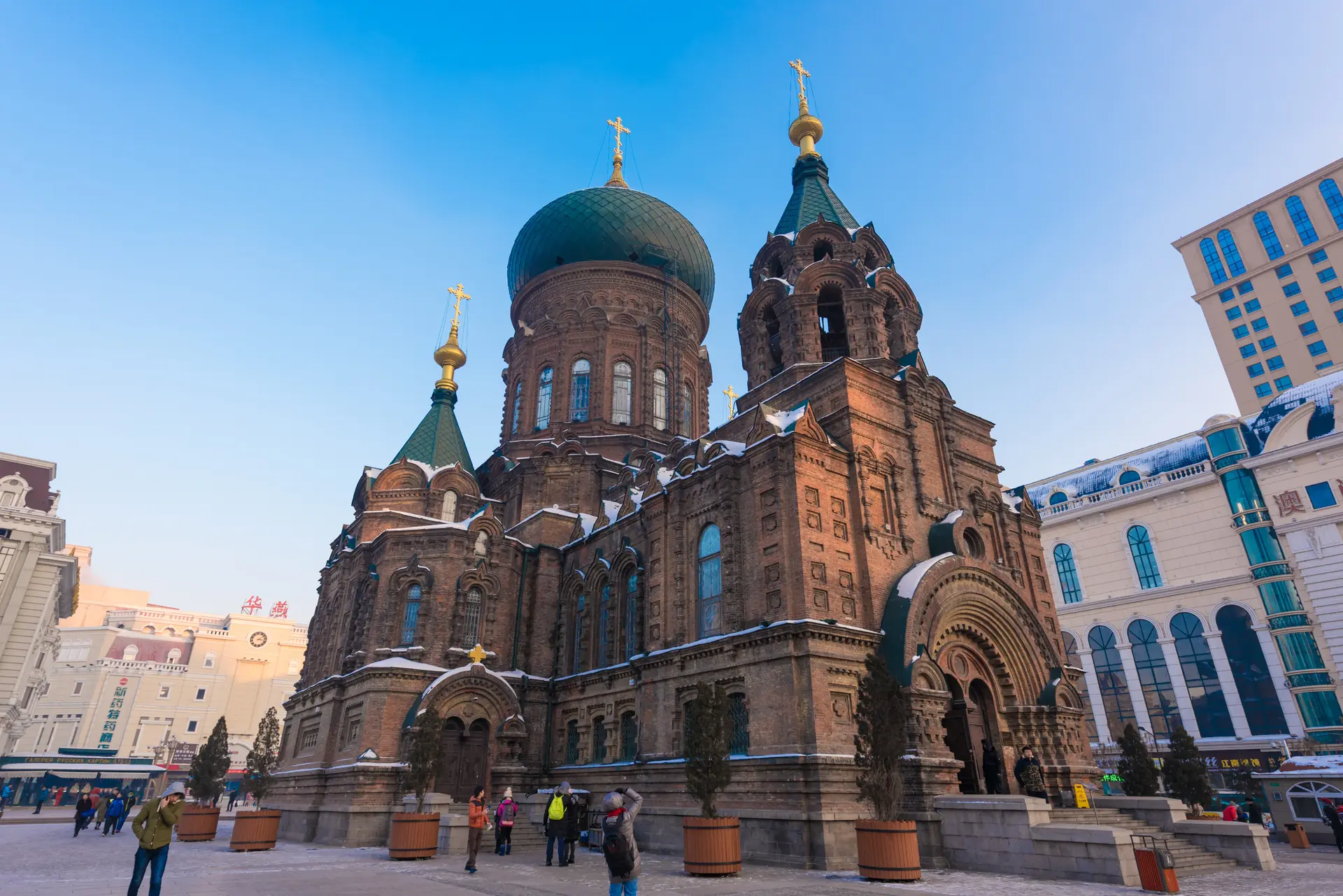
Mainly found in coastal cities and former treaty-port areas with missionary history. Shanghai, Guangzhou, Harbin, Tianjin, and Qingdao all have historic churches that function as worship spaces, museums, or both.
Dress Codes by Sacred Site
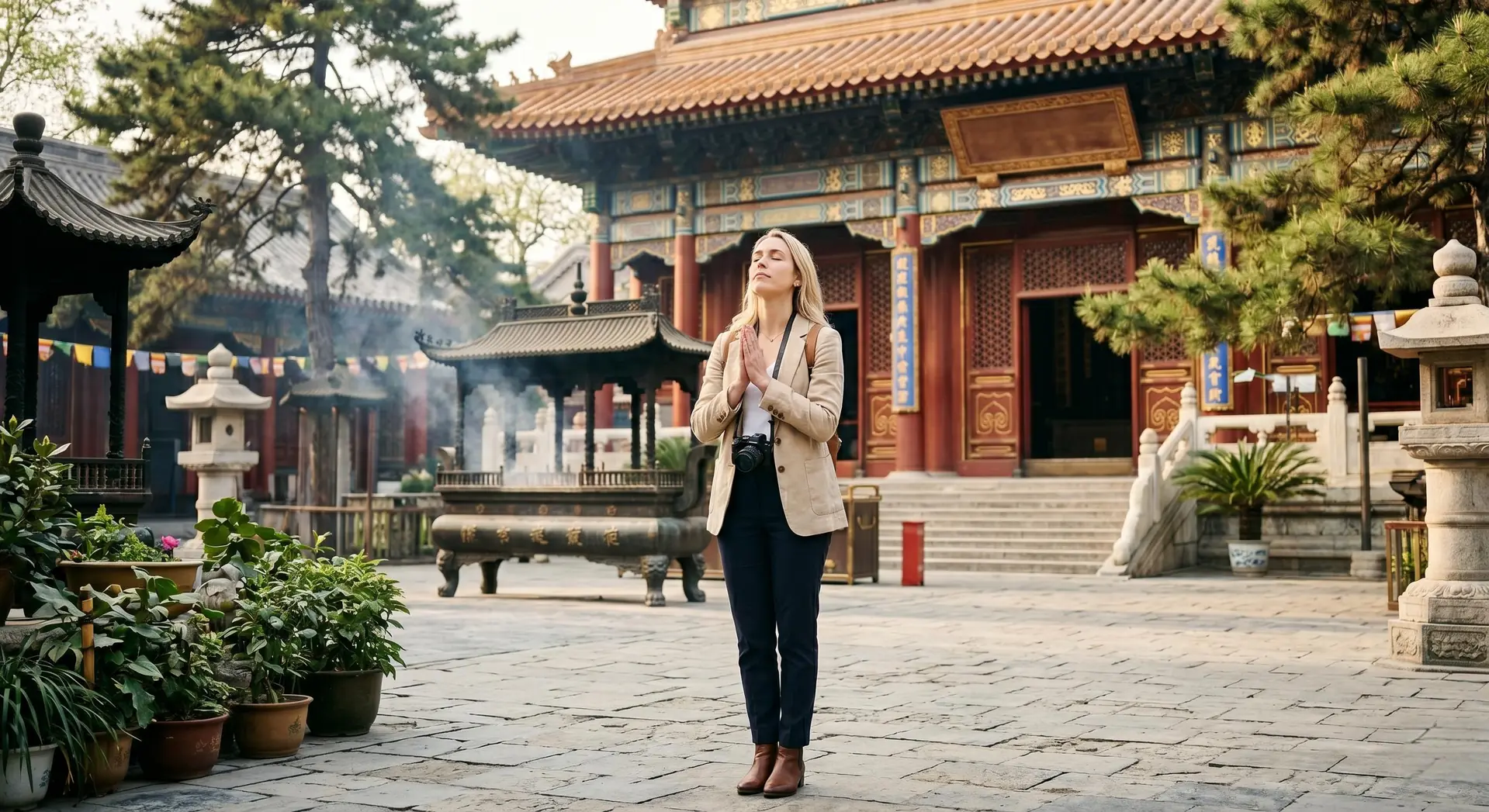
Clothing is easy to prepare for, but it is not the only thing staff watch. At ordinary city Buddhist and Taoist temples, neat summer travel clothes usually pass. Mosques, Tibetan monasteries, active ceremonies, and clearly posted worship areas are where stricter dress rules show up.
Avoid bare tops
T-shirts are fine at most city temples; tank tops are riskier at stricter sites.
Skip very short hems
Knee-length shorts usually pass; very short shorts or mini-skirts can be refused.
Remove hats indoors
Remove hats in halls with statues, deity figures, altars, or prayer areas.
Keep it low-key
Skip low-cut, see-through, or costume-like outfits at active worship sites.
Baseline
The practical baseline is modest but not complicated: neat top, no very short hems, and one light layer in your bag for stricter stops.
How Strictness Varies
Buddhist temples
Relaxed to moderate
Knee-length shorts and T-shirts usually pass at major city temples. Sacred mountains, working monasteries, and Tibetan Buddhist sites are stricter.
Tibetan monasteries
Strict
Cover shoulders and knees, move clockwise, and treat prayer wheels, murals, and sacred images with extra care. No headscarf is normally required.
Taoist temples
Usually relaxed
Rules are similar to Buddhist temples but often a little softer. Athletic wear is common at mountain sites such as Wudang and Qingcheng.
Mosques
Strictest
Long pants or a long skirt are safest. Shoulders and chest should be fully covered; some visitor-facing mosques lend women headscarves if they require one.
Churches
Most relaxed
Modest dress is usually enough. Still avoid tank tops, flip-flops, and very short shorts, especially during services.
The Universal Fix
Pack one flexible layer
Pack a light overshirt or cardigan in your day bag. For mosque days or Tibetan monastery days, choose long pants or a long skirt from the start. A headscarf is only relevant at some mosques, and many visitor-facing sites provide a loaner if they require one.
Temple Entry and Movement
Use open gates
At three-gate entrances (三门/山门), follow the open visitor route. If the center gate is closed, use the side gates without forcing the symbolism.
Step over thresholds
Raised thresholds are meant to be stepped over, not on. Slow down at hall entrances and watch the people ahead of you.
Follow marked direction
Clockwise movement matters most around Tibetan kora routes, prayer wheels, stupas, and clearly marked circuits.
Keep body language quiet
Avoid pointing at statues, crossing ropes, using the center cushion, or missing shoe-removal cues; silence your phone.
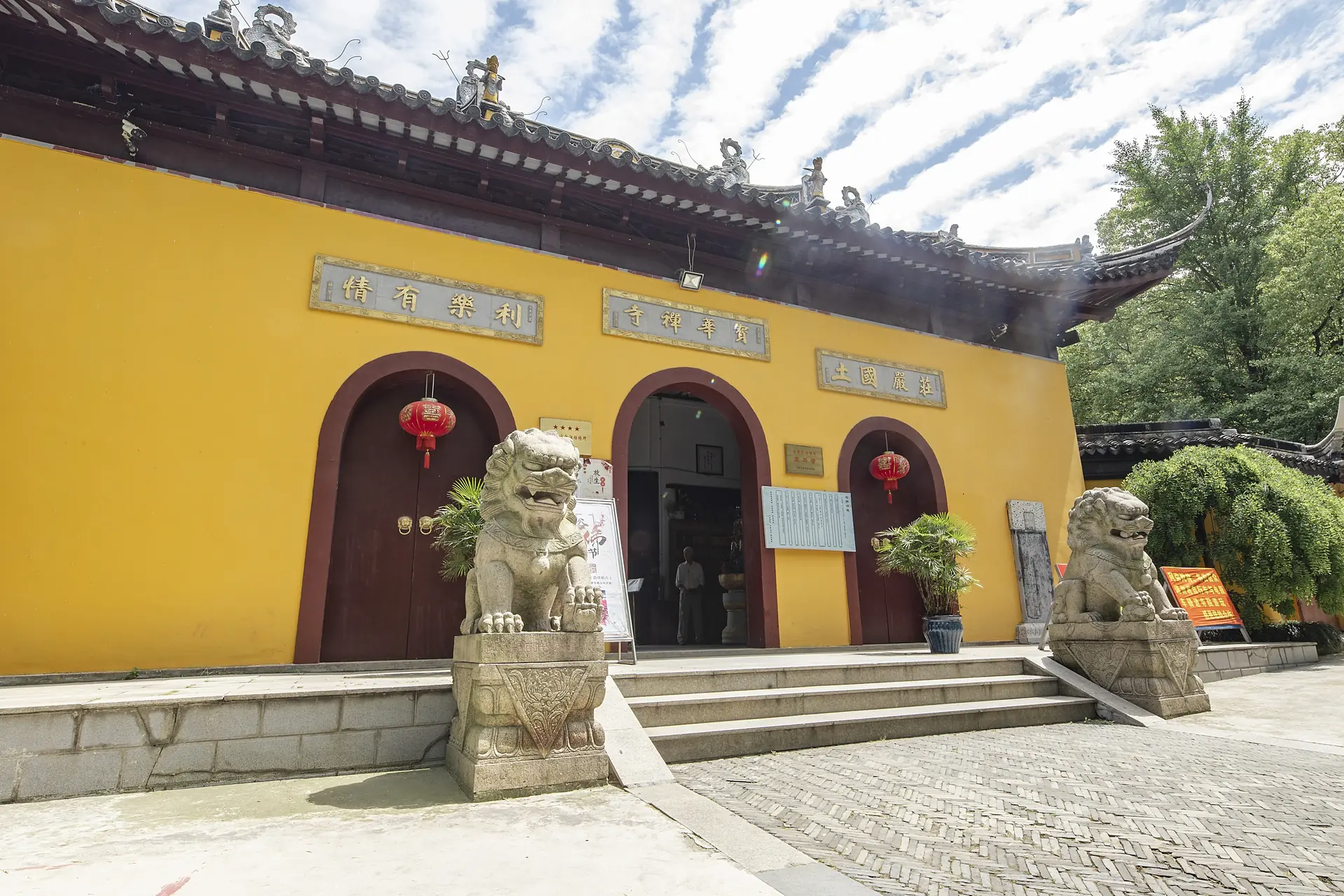
Read the layout first
Traditional Chinese temple layout is not random. Gates, thresholds, side doors, cushions, incense burners, and marked routes all carry meaning, even when a busy tourist site enforces the rules lightly.
Shoes and Temple-Type Differences
Shoes
Most Chinese Buddhist and Taoist temples do not require shoe removal, unlike many Southeast Asian temples. Some Tibetan Buddhist monastery areas and mosque prayer spaces do require it. The simple test: look for a line or pile of shoes at the entrance, or ask staff before stepping in.
Taoist temple rhythm
Taoist temples are usually relaxed for ordinary visitors. Follow posted routes, keep quiet in halls, and copy the flow around you instead of performing extra ritual gestures.
Incense, Prayer, and Offerings
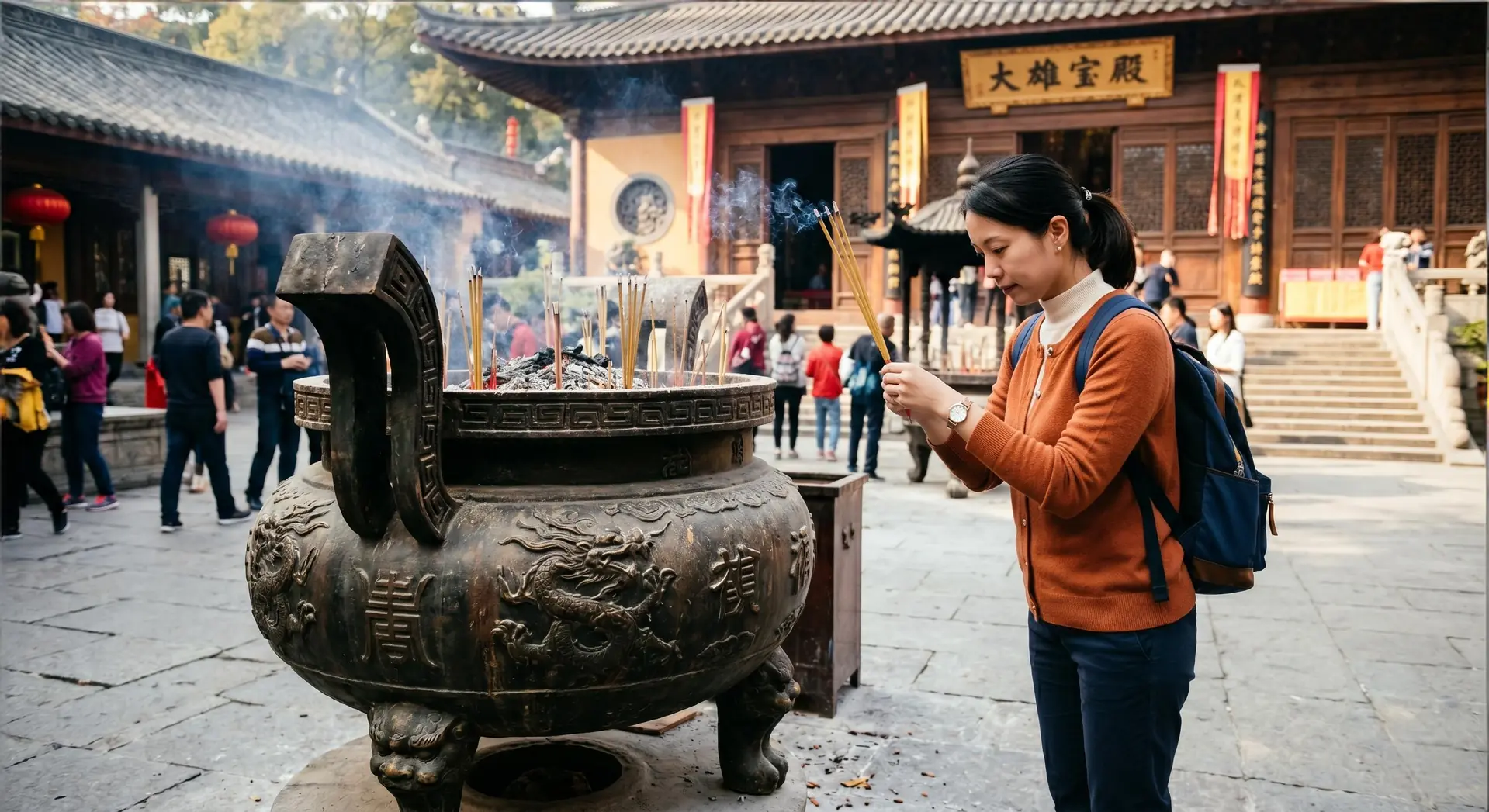
Use temple incense
Use temple-provided or temple-approved incense. Do not bring outside incense or candles where signs prohibit them.
Keep it simple
Three sticks, both hands, forehead level, and three bows are enough for a respectful visit.
Skip private offerings
Foreign visitors do not need to bring fruit or pastries. Use the site's own process if offerings are clearly provided.
Use donation boxes
Donations are voluntary; use the box, not direct cash to monks, nuns, priests, or imams.
What incense means for visitors
Burning incense is the most common ritual activity at Chinese temples. You do not need to be Buddhist or Taoist to participate; in ordinary travel practice, it is closer to expressing respect than making a formal religious commitment.
Incense Sequence
- Get your incense- Use the free or approved incense provided inside the site when available; do not bring outside incense where signs prohibit it
- Light the incense- Use the temple-designated flame or incense-lighting station
- Hold and pray- Hold the sticks with both hands, raise them to forehead level, and face the main hall
- Bow three times- Standing bows are fine; follow the calm pace of local worshippers
- Place the incense- Set the sticks upright in the large censer in front of the hall
Monks, Offerings, and Donations
If you encounter a monk, nun, priest, imam, or church staff member, keep it simple. Do not touch them, interrupt prayer or chanting, or ask for selfies. A quiet nod, smile, or soft "hello" is enough; if staff corrects you, step back and follow their direction.
Fortune Sticks and Scams
Many Buddhist and Taoist temples offer fortune stick drawing (求签). You shake a cylinder of numbered sticks, draw one, and read or request the matching interpretation. It is a cultural experience rather than a binding prophecy, and it can be free or cost a small fee.
Watch Out for Scams
Around heavily commercialized temple areas, people may approach you with "free palm reading" or "free fortune interpretation," then guide you into a room where you are pressured to pay a hefty "blessing fee," sometimes hundreds or thousands of yuan. Legitimate temples do not solicit on the street. If someone outside a temple tries to sell you incense or blessing services, politely decline. For the wider version of this pattern, use the China tourist safety and scams guide.
Photography Rules at Sacred Sites
Use outdoor photos
Courtyards and exteriors are usually fine; take most travel photos there.
Assume no indoor photos
Inside main halls, take photos only when signs clearly allow it.
Turn flash off
Flash can disturb worshippers and damage murals or painted statues.
Ask for portraits
Ask before close-ups of clergy, devotees, or anyone praying.
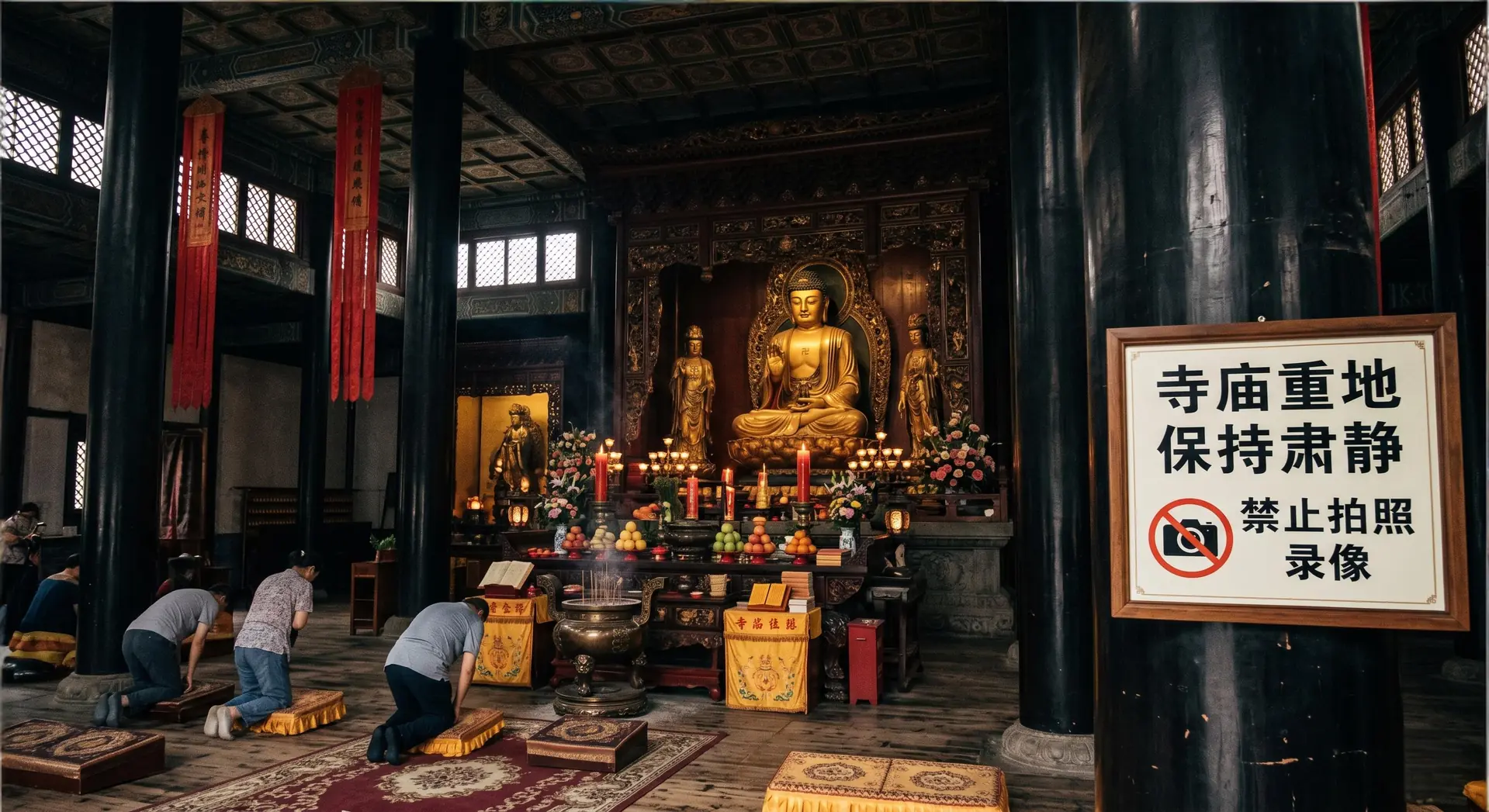
Where photo rules change
Courtyards and exteriors are usually fine to photograph. Halls with Buddha statues, deity figures, murals, relics, worshippers, or prayer carpets are where the rules change.
Sensitive Zones
Private and restricted rituals
Do not photograph monks, pilgrims, or private rituals without permission. In Tibetan areas, never seek out, watch, photograph, or share funerary rituals such as sky burials.
Absolute No-Go Zones
Photography Strictly Forbidden
Inside the caves at Dunhuang's Mogao Grottoes (莫高窟), photography is prohibited; follow staff instructions and posted signs. Certain halls in Tibetan Buddhist monasteries, especially those housing esoteric Buddhist statues, may be closed to visitors or photography. Mosque prayer halls are typically closed to non-Muslims unless staff explicitly says otherwise.
Buddhist and Taoist Temple Rules
Buddhist and Taoist temples can look similar at first glance, but the visitor habits are not identical. Use the three blocks below as the visual anchor: mainstream Chinese Buddhist temples, Tibetan Buddhist routes, and Taoist temples. For place-specific examples, compare the visitor flow at Lingyin Temple and Lama Temple.
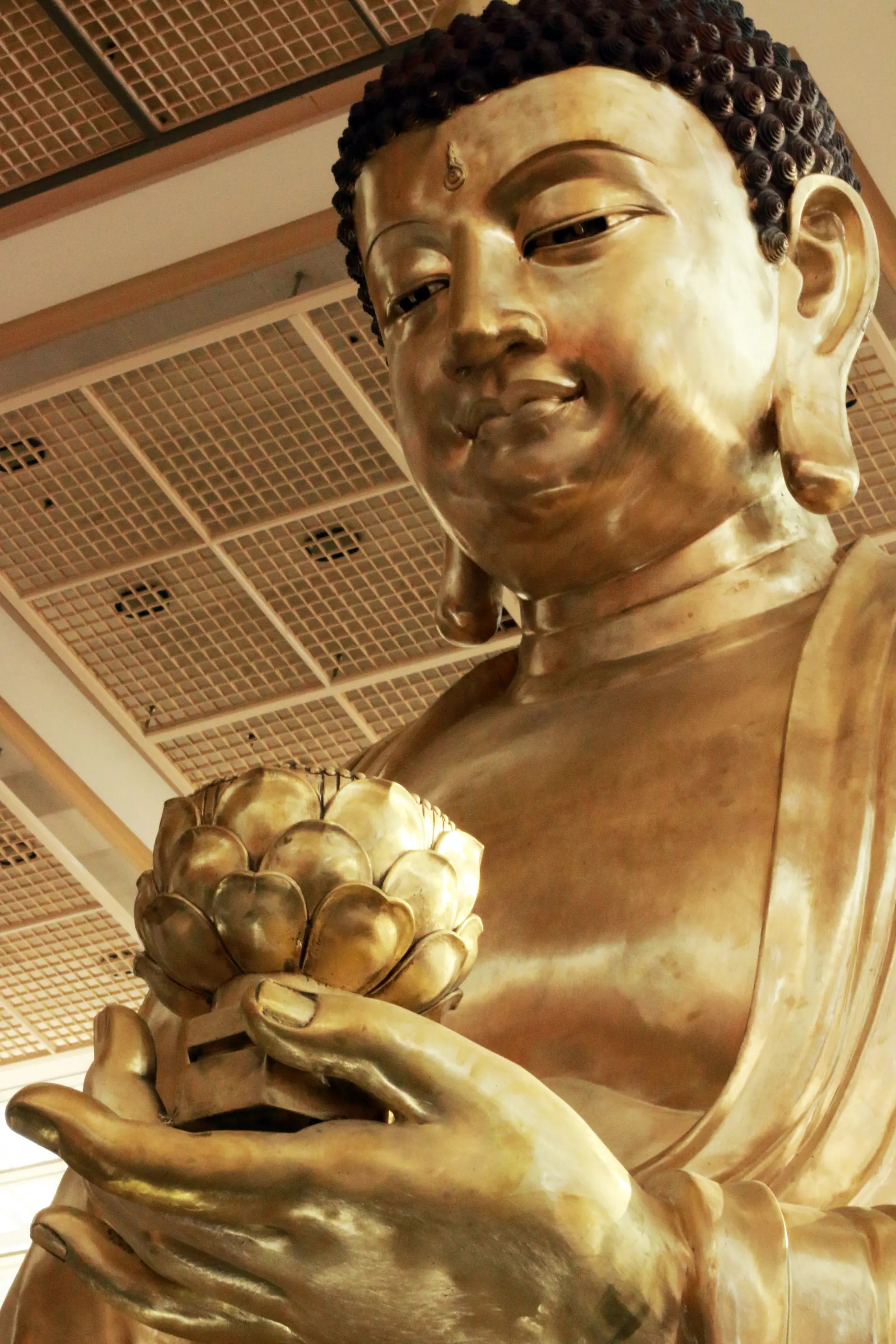
🛕Chinese Buddhist temples
These are the sacred sites you will meet most often. Keep Buddha statues, dharma instruments, murals, scriptures, and prayer beads untouched. Do not stretch your feet toward a Buddha image, and keep halls quiet.
📿Tibetan Buddhist routes
At Tibetan Buddhist monasteries and kora routes, walk clockwise around stupas, prayer wheels, and marked circuits. Do not cross the path of prostrating pilgrims.
☯️Taoist temples
Look for dark blue or gray robes, long hair in a topknot, and hall names ending in 宫, 观, or 庙. Ordinary visitors can simply keep quiet, observe first, and nod politely when needed.
Meals and Small Courtesies
Vegetarian meals
Some large Buddhist temples and sacred mountains offer vegetarian meals (斋饭) to visitors. If you join, follow the site's meal-ticket or donation process, eat quietly, do not waste food, and take only what you will finish.
Fortune telling and greetings
Some Taoist temples have fortune-telling traditions, but legitimate services should be clearly priced and should not pressure you on the street. For greetings, observe first; a small nod or quiet "hello" is enough for ordinary visitors.
Mosques and Churches in China
Mosques and churches often feel more familiar to international travelers, but China-specific context still matters. Some buildings are active worship spaces, some are heritage sites, and some combine both roles on different days or in different rooms.
🕌Mosques
Courtyards and exterior buildings may be open to visitors, while the main prayer hall is often reserved for Muslim worshippers. Wear long pants or a long skirt, cover shoulders and chest, avoid Friday noon prayer, and do not walk in front of people praying.
⛪Churches and cathedrals
Churches usually have the fewest visitor restrictions, but services are still worship, not sightseeing time. Dress modestly, stay quiet during Mass or prayer, avoid wandering during ceremonies, and turn off flash and shutter sound.
Mistakes and Recovery
Even with preparation, mistakes happen at sacred sites. Staff usually care less about perfect ritual knowledge than about whether you stop, apologize, and correct yourself quickly.
- Dress issue at the gate: follow staff direction first. If they stop you, add a light layer, change into long pants, or return after adjusting your outfit.
- Stepped on a threshold: smile, nod, step clear of it, and move on.
- Photo inside a hall: put your phone away immediately and apologize. Do not argue that others were doing it.
- Wrong prayer-wheel direction: switch to clockwise right away. In Tibetan areas, this is taken seriously.
- Touched a Buddha statue: apologize sincerely if noticed. Staff generally understand that foreign visitors may not know the rule.
- Photographed a private funerary ritual: stop immediately, do not share or publish anything, leave as directed, and follow staff or local authority instructions.
- Entered a mosque prayer hall without permission: leave immediately, apologize, and tell entrance staff you did not know the rule.
Recovery Script
Universal Recovery
Smile, say "sorry" or "不好意思," step back, and follow the staff member's direction. Staff at Chinese sacred sites are generally understanding with foreign visitors who make honest mistakes. Showing respect matters more than pretending you already know every rule.
Frequently Asked Questions
Absolutely. Chinese Buddhist temples and Taoist temples welcome everyone regardless of faith. You do not need to be Buddhist to visit Lingyin Temple or Taoist to climb Wudang Mountain. Mosque courtyards are also open at many visitor-facing sites; the main prayer hall is typically restricted to Muslim worshippers.
Sources Checked
Sources checked for this guide
- China religious-venue management context and protection of normal religious activities: National Religious Affairs Administration: Regulations on Religious Affairs
- Official overview of religious belief policy, including religious activities by foreigners in China: State Council white paper on freedom of religious belief
- Lingyin Temple visitor notice on free incense and not bringing outside incense or candles into the temple: Lingyin Temple official notices
- Mogao Grottoes cave-photography restriction and conservation rationale cross-check: China Daily report citing Dunhuang Academy
- Mogao Grottoes visitor conduct cross-check for no flash photography, no touching walls, no smoking, and route discipline: CCTV English Mogao visitor rules
- Great Mosque of Xi’an significance and official Xi’an attraction context: Xi’an official English tourism listing
Beyond This Guide
Sacred-site etiquette gets easier when you pair the general rules here with the specific place you are visiting next. These guides help you turn the rules into a real route:
- Great Mosque of Xi'an guide - mosque courtyards, Muslim Quarter context, and respectful access.
- Jokhang Temple and Barkhor Street guide - Tibetan Buddhist kora rhythm and Lhasa visitor rules.
- Wudang Mountains guide - Taoist mountain temples, Golden Hall photo limits, and route timing.
- China nonverbal communication guide - gestures, body language, and respectful everyday behavior beyond sacred sites.
© gochinafreely.com — Original guide by Go China Freely.