
Calendar pressure points
Why this calendar matters
Scale
China has 1.4 billion people and 7 national public-holiday categories.
Crowds
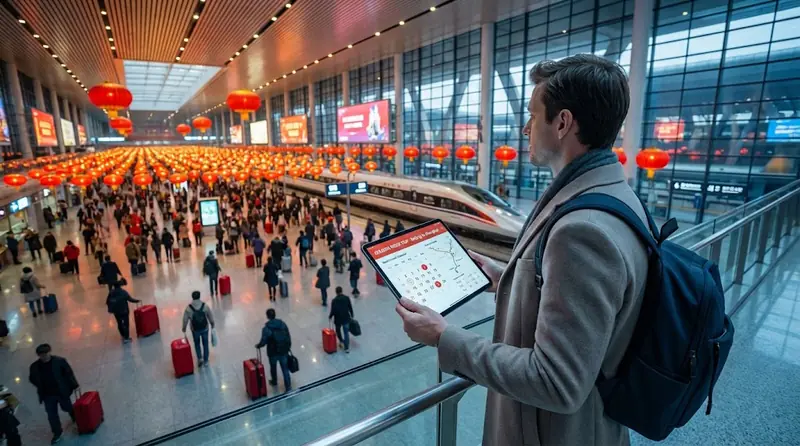
When the whole country moves at once, "sea of people" (人山人海) becomes a transportation statistic.
2025 data
The National Day and Mid-Autumn holiday counted 888 million domestic trips in 8 days and ¥809.006 billion in tourism spending.
Independent traveler rule
China's holiday system is not just about which days are off. Make-up workdays, attraction reservation windows, and train ticket release schedules all shape your trip quality and budget.
Reality check
888M
2025 National Day trips
7
National holiday categories
Varies
Holiday hotel and flight markups
2027 China Public Holiday Dates (Official)
China's General Office of the State Council released the official 2027 public holiday schedule on November 5, 2026 (国办发明电〔2026〕10号). If you are booking flights, hotels, or rail travel for 2027, plan around these confirmed blocks first:
- Official Dates Off
- Jan 1 (Fri) – Jan 3 (Sun)
- Length
- 3 days
- Make-Up Workdays (调休)
- None
- Crowd Risk
- ★☆☆☆☆ Low
- Official Dates Off
- Feb 5 (Fri) – Feb 13 (Sat)
- Length
- 9 days
- Make-Up Workdays (调休)
- Jan 31 (Sun), Feb 14 (Sun)
- Crowd Risk
- ★★★★★ Extreme
- Official Dates Off
- Apr 3 (Sat) – Apr 5 (Mon)
- Length
- 3 days
- Make-Up Workdays (调休)
- None
- Crowd Risk
- ★★☆☆☆ Moderate
- Official Dates Off
- May 1 (Sat) – May 5 (Wed)
- Length
- 5 days
- Make-Up Workdays (调休)
- May 8 (Sat)
- Crowd Risk
- ★★★★☆ High
- Official Dates Off
- Jun 9 (Wed)
- Length
- 1 day
- Make-Up Workdays (调休)
- None
- Crowd Risk
- ★★☆☆☆ Moderate
- Official Dates Off
- Sep 15 (Wed)
- Length
- 1 day
- Make-Up Workdays (调休)
- None
- Crowd Risk
- ★★☆☆☆ Moderate
- Official Dates Off
- Oct 1 (Fri) – Oct 7 (Thu)
- Length
- 7 days
- Make-Up Workdays (调休)
- Sep 26 (Sun), Oct 9 (Sat)
- Crowd Risk
- ★★★★★ Extreme
Notice two major shifts in 2027: Dragon Boat and Mid-Autumn both fall on a Wednesday with no make-up weekend swap (1 day off each), which keeps mid-week June and September travel far smoother than 3-day holiday blocks, while Spring Festival (Feb 5–13) and National Day Golden Week (Oct 1–7) remain China's two biggest transport and hotel surges.
2026 China Public Holiday Calendar
For year-over-year comparison with the 2027 schedule above, here is the full 2026 calendar showing how holiday blocks, borrowed weekend workdays, and crowd pressure lined up across the year.
New Year's Day
Jan 1-3 · 3 days off
Make-up workday: Jan 4 (Sun).
Crowd level: ★☆☆☆☆ Low.
Travel character: Urban countdown events; winter travel lull.
Spring Festival
Feb 15-23 · 9 days off
Make-up workdays: Feb 14 (Sat), Feb 28 (Sat).
Crowd level: ★★★★★ Extreme.
Travel character: Chunyun migration, quieter big cities, temple fairs, lantern shows.
Qingming Festival
Apr 4-6 · 3 days off
Make-up workday: None.
Crowd level: ★★☆☆☆ Moderate.
Travel character: Tomb-sweeping, spring outings, suburban parks busy.
Labor Day
May 1-5 · 5 days off
Make-up workday: May 9 (Sat).
Crowd level: ★★★★☆ High.
Travel character: Second-biggest travel surge; excellent late-spring weather.
Dragon Boat Festival
Jun 19-21 · 3 days off
Make-up workday: None.
Crowd level: ★★☆☆☆ Moderate.
Travel character: Dragon boat races, zongzi, start of summer heat.
Mid-Autumn Festival
Sep 25-27 · 3 days off
Make-up workday: None.
Crowd level: ★★★☆☆ Moderate-High.
Travel character: Moon-gazing, mooncakes, close to National Day.
National Day
Oct 1-7 · 7 days off
Make-up workdays: Sep 20 (Sun), Oct 10 (Sat).
Crowd level: ★★★★★ Extreme.
Travel character: Biggest tourism peak; 888M trips during the 2025 combined break.
How to read these cards
★★★★★ means "avoid unless you have a strong reason and thorough preparation." Holidays at ★★★☆☆ or below do not require full avoidance, but advance booking for attraction tickets, hotels, and intercity transport still matters.
Lunar calendar holidays shift every year
Spring Festival (农历正月初一), Dragon Boat Festival (农历五月初五), and Mid-Autumn Festival (农历八月十五) follow the traditional lunar calendar, so their Gregorian dates can move by 2–3 weeks from year to year. Qingming is tied to a solar term and usually falls on April 4 or 5. The State Council normally publishes the exact next-year holiday schedule in November, so recheck official dates if you are planning more than a year ahead.
Summer Break Is the Hidden Peak
July and August are not public holidays, but most Chinese schools and universities are on summer break, and family travel is especially strong from late July through mid-August. Popular attractions such as the Forbidden City, Great Wall, Zhangjiajie, and Jiuzhaigou can feel close to Golden Week on busy dates; hotel and flight markups vary sharply by route, city, and property. High-altitude and high-latitude destinations such as Qinghai, Gannan, Inner Mongolia grasslands, and Changbai Mountains are cooler and usually absorb summer crowds better.
Make-Up Workdays and Crowd Logic
China's public holiday system works differently from most Western calendars. There are 7 national public-holiday categories and 13 statutory paid holiday days, but travel pressure follows the longer blocks created by attached weekends and make-up workdays.
🔁Borrowed weekends
Nearby Saturdays or Sundays can become official workdays. In 2026, January 4, February 14, February 28, May 9, September 20, and October 10 are the key make-up workdays to notice.
🚆Compressed demand
When everyone waits through a make-up stretch, departure pressure concentrates on the final workday afternoon and the first holiday morning. Train stations and airports enter peak mode before the calendar block officially begins.
🧭Traveler edge
A make-up workday Saturday can be a stealth off-peak window. Locals are working, hotels often price like a weekday, and attractions can feel quieter than an ordinary weekend.
Peak blocks
The two highest-risk Golden Week-style blocks are Spring Festival and National Day. After the 2025 holiday adjustment, Spring Festival usually creates an 8- or 9-day travel block; in 2026 it runs 9 days. National Day usually runs 7 days. Labor Day, usually 5 days, is a shorter but still intense Golden Week-style peak. Together, these three holiday blocks create the most intense travel pressure of the year and account for a large share of China's annual domestic tourism movement.
Hidden mechanism
The make-up workday system (调休) is the hidden mechanism. To create a longer continuous holiday, the State Council borrows nearby weekends and turns them into regular workdays. Chinese workers may work 7–8 consecutive days before or after a break, which is one reason travel demand explodes the moment the holiday begins.
Make-up workdays are hidden crowd-free windows
If you visit an attraction on a make-up workday Saturday, it can be significantly less crowded than a normal weekend because locals are at work. Hotels often price these dates like weekdays, though some booking platforms still display weekend-style rates. Conversely, the evening before a long holiday can feel like the holiday has already started: allow double your normal station or airport transfer time.
The trap is mental, not just logistical. It is easy to assume Saturday is a rest day, only to find attractions oddly empty because it is a workday. Or you can arrive on a seemingly ordinary Friday and discover hotel prices have doubled because it is the eve of a long holiday.
Spring Festival: Chunyun and Quiet Cities
Spring Festival (春节, Chinese New Year) is China's most important traditional holiday. In 2026, the official break runs from February 15 to 23, covering the lead-in before Lunar New Year's Day and the first week of the new lunar year.
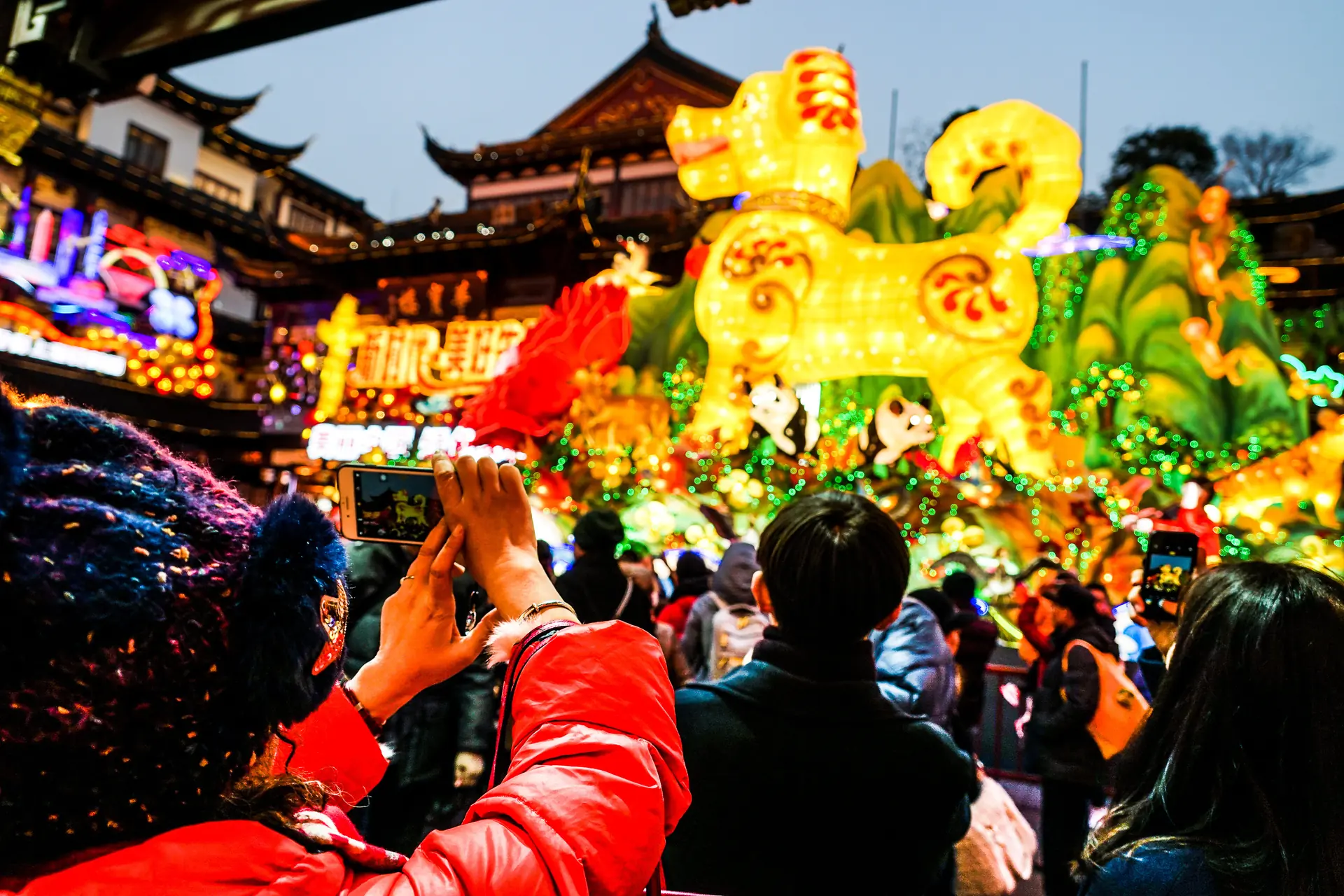
Spring Festival reality check
Great atmosphere, difficult logistics
Harder: transport, offices, visa extensions, and some attraction operations.
Special: temple fairs, lanterns, red couplets, and decorated neighborhoods.
Transport pressure
Chunyun (春运)
Transport is extremely strained during chunyun. Chunyun (春运), the world's largest annual human migration, usually begins 15 days before Lunar New Year's Day and ends 25 days after, spanning 40 days total. In 2026, Lunar New Year's Day is February 17, while the official public-holiday block runs February 15–23. Passenger volumes across rail, road, air, and waterways run into the billions when repeat trips are counted. Flights and hotels can spike sharply on hot routes. Train fares are normally the official fare shown by 12306, but peak routes such as Beijing → Chengdu, Shanghai → Wuhan, and Guangzhou → Changsha can sell out within minutes of release, leaving only higher seat classes, split-route backups, or third-party service-fee options. Bank branches and government offices close; visa extensions and administrative matters pause; attractions may adjust operations around New Year's Eve.
Worth the crowd
Festival moments
Temple fairs, lantern exhibitions, red couplets, and neighborhood decorations create a seasonal atmosphere you cannot get in a normal month. Beijing hutongs, Xi'an Muslim Quarter, and Chengdu Kuanzhai Alley are especially photogenic before the main holiday rush. Festival experiences worth considering include Ditan Temple Fair (地坛庙会) in Beijing, Yuyuan Lantern Festival (豫园灯会) in Shanghai, Wuhouci Temple Fair (武侯祠大庙会) in Chengdu, Nanjing Qinhuai Lantern Festival (秦淮灯会), Xi'an City Wall Lantern Show, and Zigong Lantern Festival (自贡灯会). The best photography window is often the week before the holiday, when decorations are already up but local crowds have not fully peaked.
Quiet-city trade-off
Calmer, but limited
The quieter city phenomenon is real. During Spring Festival, Beijing, Shanghai, Shenzhen, and Guangzhou can feel calmer than usual because many workers return to hometowns. Subways are less crowded and office districts quiet down. The trade-off: many small restaurants, street stalls, and independent shops close from New Year's Eve through about Day 5, while major malls, chain brands, hotel restaurants, and food delivery apps usually keep operating with reduced choice or shorter hours.
Spring Festival travel rhythm
- 1
Homeward rush
15 days beforeOne-directional flow from big cities to hometowns. Long-distance tickets out of major cities are hardest, but some destinations have not yet hit peak capacity.
- 2
Holiday peak
Feb 15–23The homeward rush overlaps with family outings. Pressure shifts from transport to attractions, resort cities, temple fairs, and lantern events.
- 3
Return rush
After the holidayDirection reverses as workers return to big cities. Some destinations clear out faster than transport does, creating useful post-holiday gaps.
Best Spring Festival strategies
Arrive 10–15 days before the holiday
Use this window for New Year markets, decorations, and reasonable prices, then leave 2–3 days before the main eve or stop moving.
Use Days 3–7 of the holiday
Aim for reopening attractions and tail-end festive atmosphere, but expect popular temple fairs to stay busy.
Stay put in Beijing or Shanghai
If you do not need small local restaurants every day, big-city subways can be calmer, while landmarks and festival sites still offer plenty to do.
National Day Golden Week: Peak Crowds
If you remember only one China holiday rule, make it this: avoid National Day Golden Week unless the trip is built around it.
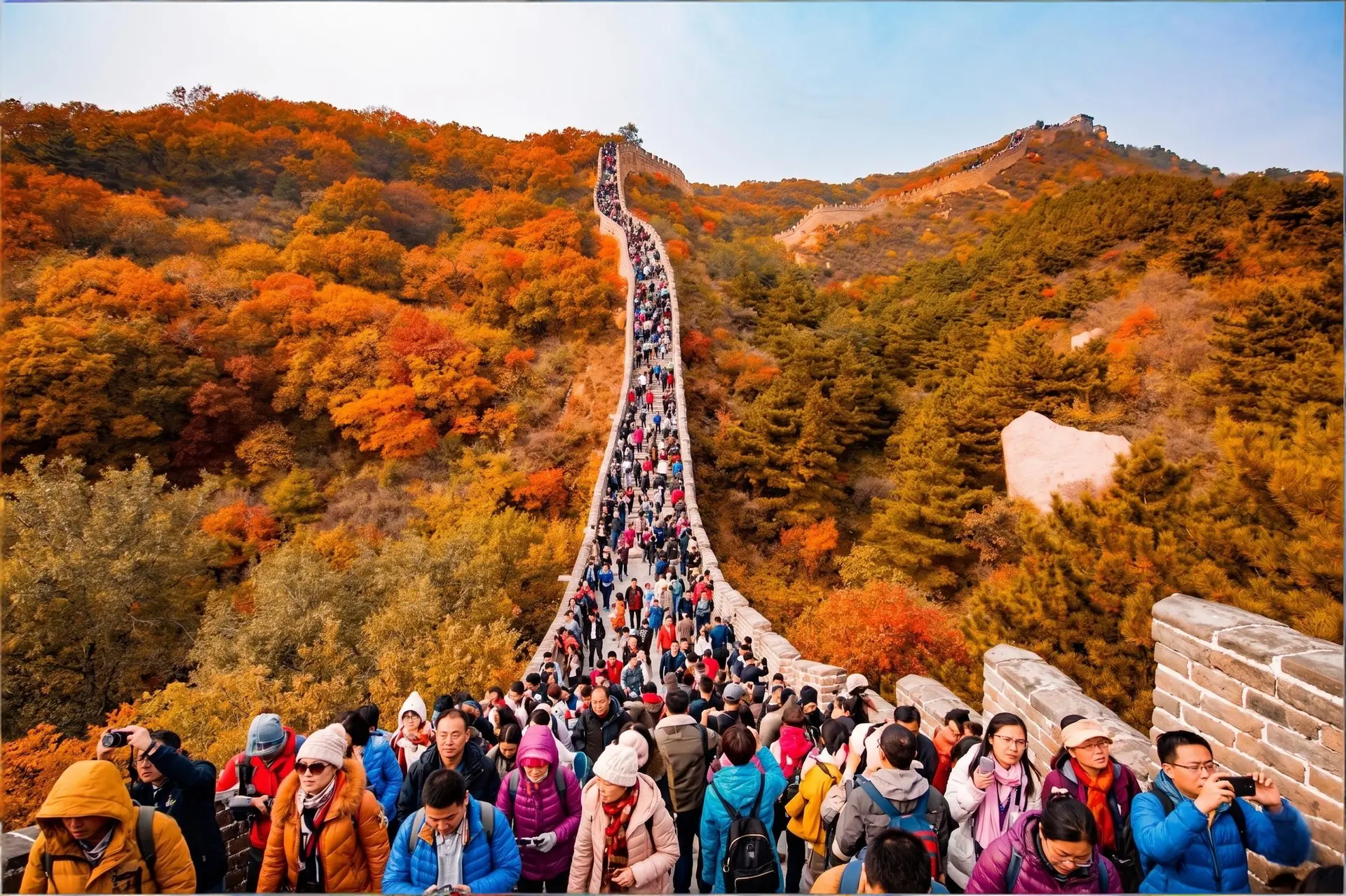
National Day reality check
China's highest-volume travel week
2025 traffic
888 million domestic trips in 8 days.
2025 spend
¥809.006 billion in tourism spending.
The crowds at popular attractions are not exaggerated; "people mountain, people sea" (人山人海) is a literal description.
What National Day actually looks like
Ticket pressure
Forbidden City
The Palace Museum uses real-name booking, does not sell same-day tickets, and releases tickets 7 days before the visit at 20:00. During peak periods, treat the official release time as a hard deadline.
Queue pressure
Badaling Great Wall
Cable car queues can stretch 2–3 hours, and narrow wall sections may slow to a shuffle.
Walking pressure
West Lake (Hangzhou)
Bai Causeway and Broken Bridge become slow-moving rivers of people, while surrounding roads gridlock.
Museum pressure
Terracotta Warriors
Front-row space at Pit 1 can require a 20–30 minute wait even after you enter the museum.
Price spikes
Hotels in popular cities can rise several times above ordinary weekday rates on the most compressed dates, while flights vary by route and remaining fare class. For realistic buffers, pair this calendar with the China price guide before locking a holiday itinerary.
The avoid list
Includes the Forbidden City, Badaling Great Wall, Terracotta Warriors, the Shanghai Bund, Yuyuan Garden, Chengdu Panda Base, Jiuzhaigou (九寨沟), Daocheng Yading (稻城亚丁), Kanas Lake (喀纳斯), Wuzhen, Xitang, Zhouzhuang, Fenghuang, Hongyadong in Chongqing, and Wenheyou in Changsha.
National Day's upside
Early October in northern China brings some of the year's clearest, most comfortable weather. Tiananmen flag-raising on October 1 is elaborate and draws people from around 3–4 AM; city light shows appear in places such as Shanghai Bund, Shenzhen Bay, Canton Tower (广州塔), and Beijing's Olympic Park area; and October 8–15 can be a beautiful post-holiday window.
If you must travel during National Day
Pick lower-density provinces
Guizhou, Gansu, Northeast China, or Ningxia usually give you more room than the headline cities.
Avoid the surge days
Avoid October 1–3 and October 7, when departure and return pressure is at its worst.
Shift one stop out
Ride one stop beyond the famous city where possible, then day-trip back if the route still works.
Use theme-based trips
Jingdezhen (景德镇) ceramics, Wuyishan (武夷山) tea, or Dali (大理) tie-dye and handicrafts spread demand better.
Prefer large nature areas
Crowds spread out better in large nature areas than in compact city landmarks.
Lock the essentials early
Book hotels, flights, and popular attraction tickets 2–3 months ahead.
Labor Day: The Second Travel Peak
Labor Day is China's underestimated second travel peak. For scale, the 2025 Labor Day holiday logged 314 million domestic trips in 5 days, yet many English-language guides still treat May 1 as a minor note.
Why it catches travelers out
Early May has excellent weather — roughly 15–25°C in the north and 20–28°C in the south, before plum rain and deep summer heat. Unlike Spring Festival, Labor Day does not empty big cities through a homeward migration. It is a pure tourism holiday, and university students travel in large numbers, so everyone goes to attractions.
Use May 6–10
When possible, the post-holiday window keeps the good weather but drops the worst crowds and prices.
Avoid core Jiangnan hotspots
West Lake in Hangzhou, Sun Yat-sen Mausoleum in Nanjing, and Humble Administrator's Garden in Suzhou are poor fits during the May 1–5 block.
Book 2 weeks ahead
Use that lead time for hotels and attraction tickets in popular cities, and book earlier if the trip depends on one famous site.
Qingming, Dragon Boat, Mid-Autumn
These three traditional holidays have far less travel impact than Golden Weeks, though their block length shifts by year: all three ran as 3-day weekends in 2026, while in 2027 Qingming stays a 3-day weekend (Apr 3–5) and both Dragon Boat (Jun 9) and Mid-Autumn (Sep 15) are single mid-week days off with no make-up workday swap.
Qingming Festival (2026: Apr 4–6 · 2027: Apr 3–5)
What it is
Qingming Festival (清明节, Tomb-Sweeping Day) falls around April 4 or 5 because it is tied to a solar term. Travel is mostly "visit family graves + enjoy spring outings."
Cultural experience
Qingming is one of the traditional 24 solar terms and falls in mid-spring, around 15 days after the Spring Equinox. The traditional "start of spring" is Lichun (立春), not Qingming. You may see people burning paper offerings or flying kites. Some cities, notably Kaifeng, hold Qingming cultural festivals.
Travel impact: ★★☆☆☆
Cemetery roads, suburban parks, hiking areas, and Great Wall sections near Beijing can get busy because Qingming overlaps tomb-sweeping and spring outings. City-center reservation sites such as the Forbidden City are less affected than suburban routes, but start early for hikes, cemeteries, and out-of-town sights.
Dragon Boat Festival (2026: Jun 19–21 · 2027: Jun 9)
What it is
Dragon Boat Festival (端午节, 农历五月初五) honors the ancient poet Qu Yuan (屈原). Because it follows the lunar calendar, the Gregorian date shifts each year, usually between late May and late June.
Cultural experience
The core activities are dragon boat racing and eating zongzi (粽子, sticky rice wrapped in bamboo leaves). Races bring drums, spray, and dozens of paddlers moving in sync; famous race areas include Guangdong (Dongguan and Foshan), Yueyang in Hunan, Zigui in Hubei, and Zhenyuan in Guizhou.
Travel impact: ★★☆☆☆
A moderate short holiday. By late June, southern China is already hot and humid.
Mid-Autumn Festival (2026: Sep 25–27 · 2027: Sep 15)
What it is
Mid-Autumn Festival (中秋节, 农历八月十五) is China's reunion festival, centered on moon-gazing and mooncakes (月饼). The Gregorian date varies each year, typically falling between mid-September and early October.
Cultural experience
Good travel moments include West Lake's "Autumn Moon over the Calm Lake" (平湖秋月) in Hangzhou, the Master of the Nets Garden (网师园) evening tour in Suzhou, and the Two Rivers and Four Lakes night cruise in Guilin.
Travel impact: ★★☆☆☆ – ★★★☆☆
In 2026, Mid-Autumn falls right before National Day (Sep 25–27), so some travelers bridge Sep 28–30 into a longer break. In 2027, it falls on Wednesday, September 15 as a single day off with no make-up weekend swap, keeping mid-September travel far calmer.
Mooncake note: Mooncake gift boxes from major brands and hotels are one of the most distinctly Chinese seasonal souvenirs; beyond five-nut and lotus-paste flavors, look for lava custard (流心奶黄) and snow-skin mooncakes (冰皮月饼).
Holiday-Only Festival Experiences
Not every holiday is just about crowds. Each festival offers cultural experiences you cannot find at other times, and the right one can become a real trip highlight if you plan around the foot traffic.
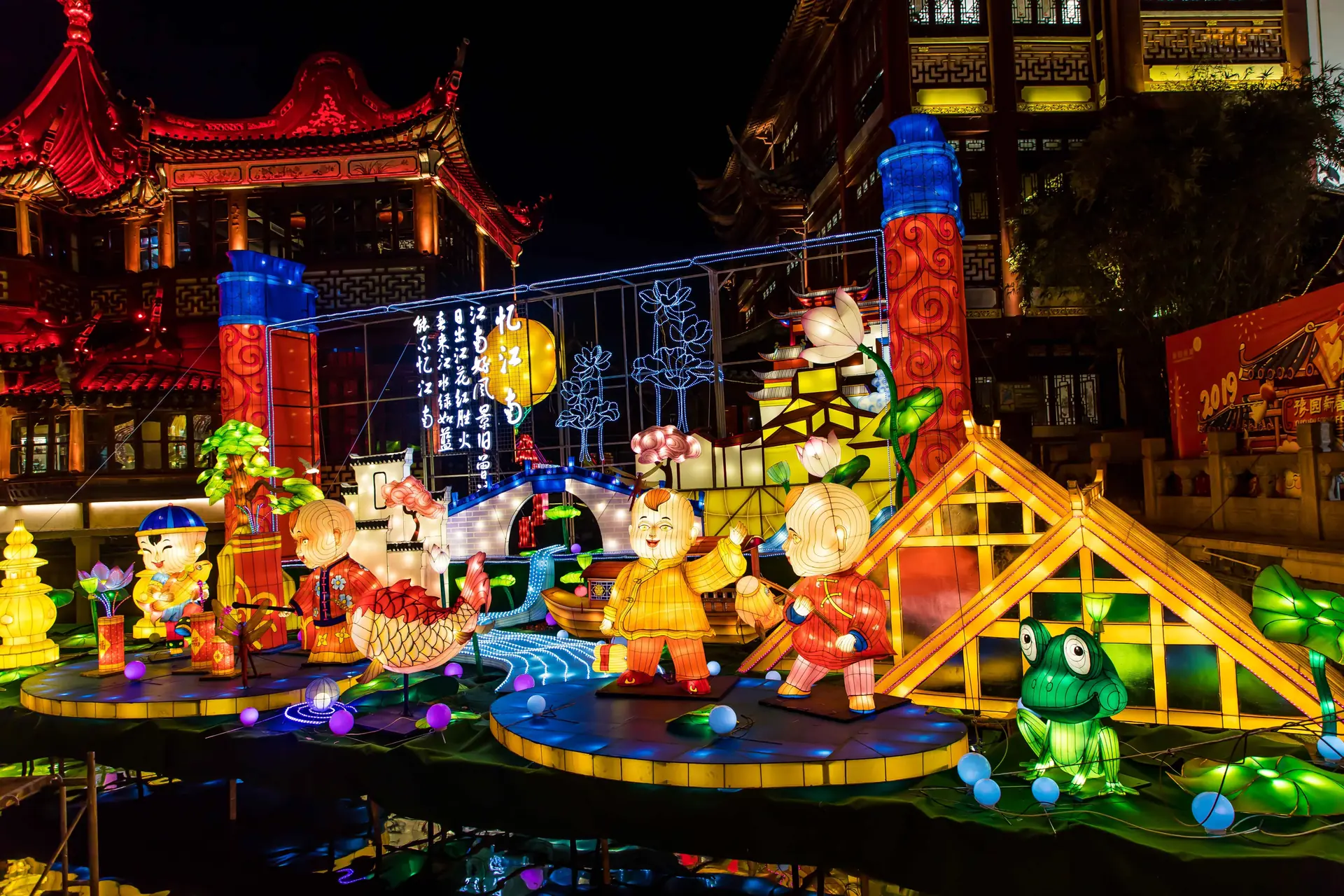
Spring Festival season
Lantern shows and temple fairs
Best for: river lanterns, palace-style light installations, temple fairs, and New Year night markets.
Where: Nanjing Qinhuai Lantern Festival, Xi'an, Zigong, and Shanghai.
How to plan: Treat it as an evening experience and keep dinner, metro return, or taxi pickup close to the festival area.
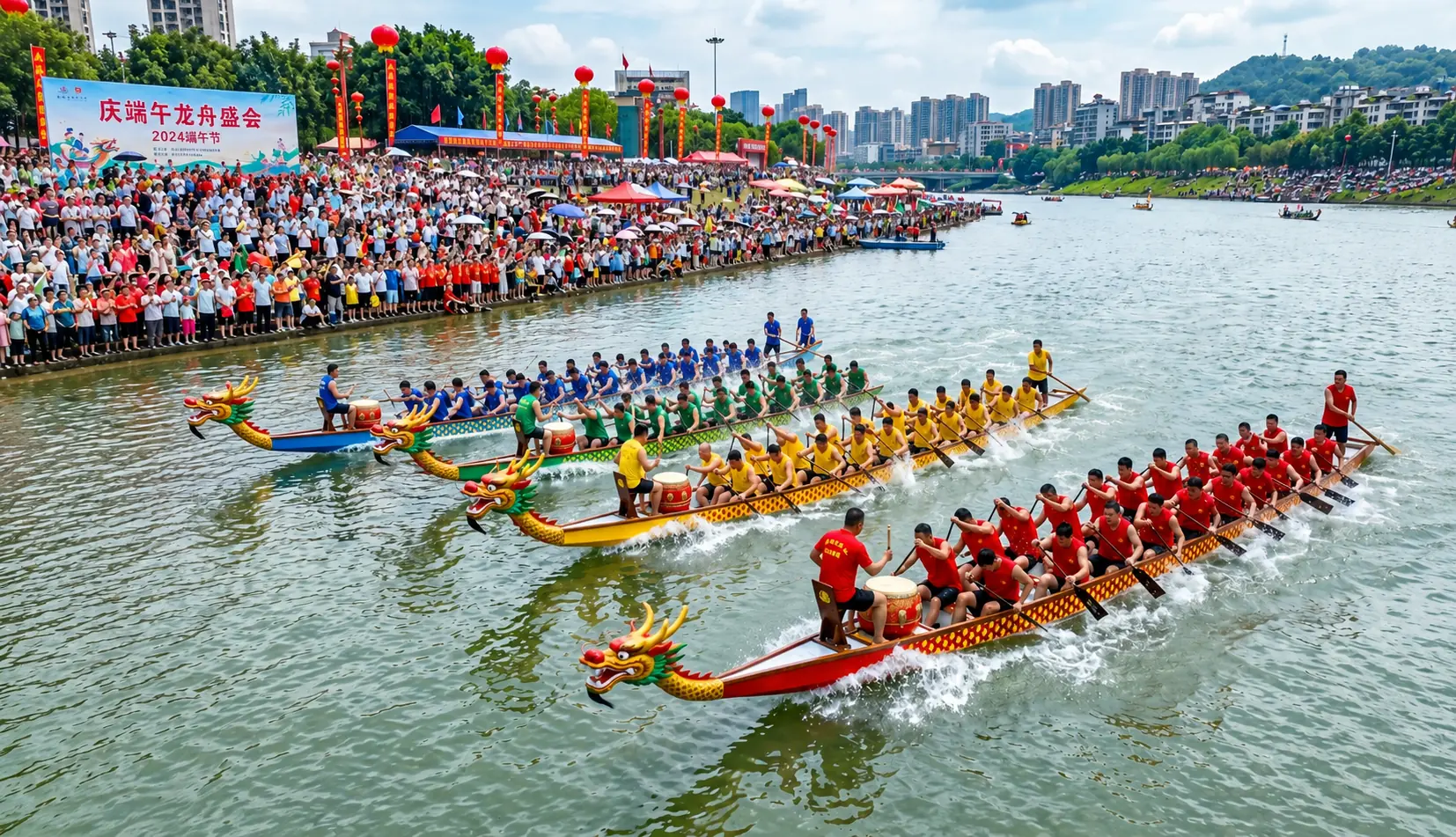
Dragon Boat Festival
Races, drums, spray, and zongzi
Best for: dragon boat racing and eating zongzi (粽子), sticky rice wrapped in bamboo leaves.
Where: Guangdong, Zigui, Yueyang, and Zhenyuan have famous race areas.
Add-on: Ancient towns around Jiaxing and Huzhou may offer DIY zongzi workshops.

Mid-Autumn Festival
Moon-gazing, night gardens, and mooncakes
Best for: moon-gazing at West Lake's "Three Pools Mirroring the Moon" (三潭印月), night gardens, and calm water views.
Where: West Lake in Hangzhou, the Master of the Nets Garden evening tour in Suzhou, and Guilin's Two Rivers and Four Lakes night cruise.
Seasonal souvenir: Mooncake season peaks 2-3 weeks before the festival, when brands release limited-edition flavors.
Ethnic Minority Festivals Worth Knowing
China's ethnic minority festivals are not national holidays, but they can create "regional Golden Week" effects in specific areas. If you are interested in these cultures, they are worth building a trip around and booking months ahead. If not, knowing about them helps you avoid unexpected local crowd spikes.
- Region
- Xishuangbanna, Yunnan
- Usual Timing
- Mid-April
- Travel Note
- Dai New Year; hotels and flights fill early
- Region
- Liangshan, Sichuan
- Usual Timing
- Late July
- Travel Note
- Yi festival; strong regional demand
- Region
- Guangxi
- Usual Timing
- Late March or April
- Travel Note
- Zhuang cultural holiday; local travel spikes
- Region
- Inner Mongolia
- Usual Timing
- July–August
- Travel Note
- Grassland events; date varies by banner and venue
- Region
- Xinjiang, Ningxia, Muslim communities
- Usual Timing
- Approx. May 27, 2026
- Travel Note
- Islamic calendar date; check local arrangements
Crowd-Beating Travel Strategies
Core rule
Do the opposite of the default domestic travel rhythm
The crowd impact of Chinese holidays can be managed if you shift dates, choose lower-density regions, and move through attractions against the main tour-group schedule.
Strategy 1
Shift by 2–3 days
Every Golden Week has a pattern: Day 1 is the departure flood; the middle days are attraction peak; the last 1–2 days are the return flood; and the first 1–3 days after the holiday see crowds and prices drop fast. Around National Day, October 8–10 is usually far better than October 1–7. Around Labor Day, May 6–8 is the sweet spot.
Strategy 2
Pick lesser-known provinces
Golden Week crowds concentrate in tier-1 cities and viral attractions. Gansu, Guizhou, Northeast China, Qinghai, and Ningxia tend to have lower tourist density, though headline sites such as Mogao Caves or Qinghai Lake still need advance planning.
Strategy 3
Swap city landmarks for nature
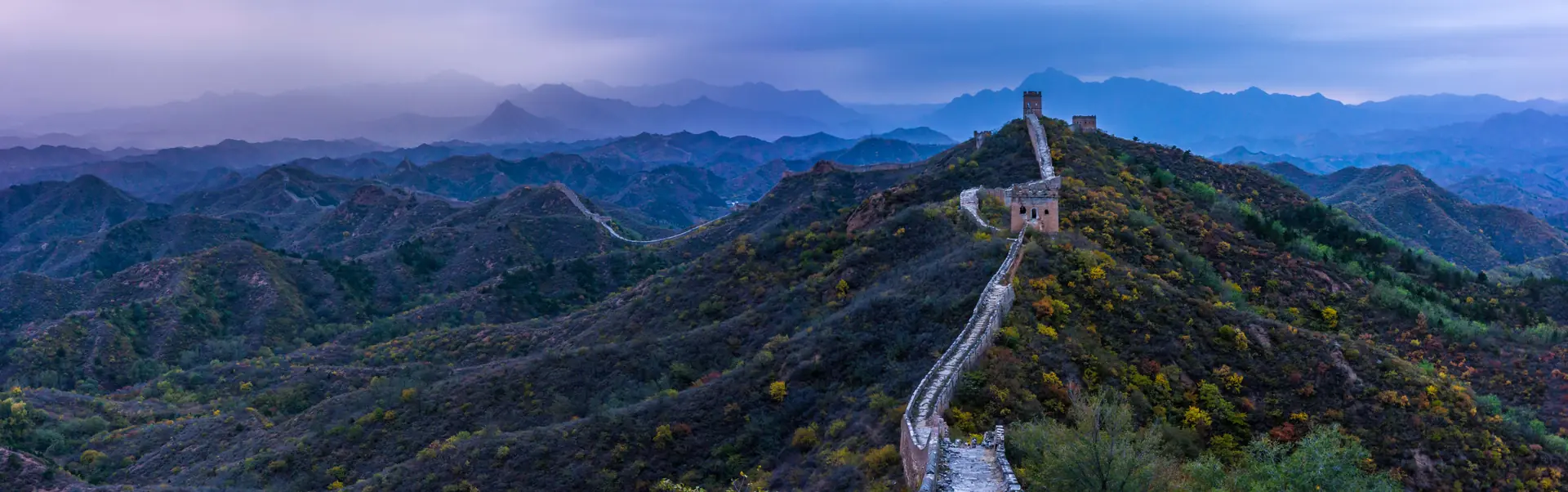
In Beijing, skip Badaling and use Jinshanling Great Wall when practical. In Hangzhou, move beyond the West Lake core to Xixi Wetland or Jingshan. In Xi'an, avoid the Terracotta Warriors from 10:00 AM to 3:00 PM and enter at opening.
Strategy 4
Use quiet-city windows
If you do not mind limited small-restaurant options, Spring Festival in Beijing or Shanghai can be one of the calmer urban windows of the year.
Strategy 5
Master in-attraction timing
Arrive at opening, avoid 10:00 AM–3:00 PM, and use the after-4:00 PM window when tour groups start leaving. At night, places such as Qianhu Miao Village, Fenghuang Ancient Town, and Xi'an City Wall are more atmospheric, but the best-known night-view areas can stay crowded; stay overnight when possible and use late-night or early-morning windows for quieter photos.
Holiday Booking Survival Guide
China's reservation systems during holidays operate nothing like normal times. "Buy it when I get there" during Golden Week can leave you stranded.
Train tickets (12306 App)
Release window
12306 uses a 15-day presale window including today — meaning tickets go on sale 14 calendar days before departure, at the departure station's release time (between 8:00 AM and 6:00 PM). Golden Week tickets on popular routes can sell out within 5–10 minutes of release. Use the China train-ticket guide for the full passport workflow.
Booking strategies
Register your 12306 account and complete identity verification with your passport well ahead of time; open the app 5 minutes before release; activate the official waitlist purchase (候补购票) immediately if the first sale is gone; check the estimated waitlist success rate shown by 12306, but do not treat it as guaranteed; consider business or first class; or split the journey via intermediate stations, such as Beijing → Zhengzhou + Zhengzhou → Wuhan if Beijing → Wuhan is sold out.
Foreign passports work
Use the same passport number for the account and ticket. The app has an English interface, but the Chinese version with a translation tool often exposes more complete functions.
Attraction ticket reservations
- Forbidden City: no same-day tickets. Tickets release 7 days before the visit at 20:00 via the Palace Museum (故宫博物院) official channel, with real-name booking and passport-based entry for foreign visitors.
- Terracotta Warriors: book via the Emperor Qin's Mausoleum Museum (秦始皇帝陵博物院) WeChat mini-program, usually 5–7 days ahead during Golden Week.
- Mogao Caves: rules vary by season, ticket type, and cave route. For peak season, verify the current quota, passport handling, and release window on the official booking channel before you build a Dunhuang day around it.
- Potala Palace: peak season requires advance planning through the Potala Palace Ticketing System (布达拉宫票务预订系统) WeChat mini-program or your Tibet travel operator. Confirm the current foreign-visitor handling with your operator before arrival.
Hotels
- Golden Week price surges: Beijing, Shanghai, Xi'an, Chengdu, Hangzhou, and small towns near Jiuzhaigou, Huangshan, and Zhangjiajie can become much more expensive on the most compressed dates. Compare against normal-season ranges in the China price guide.
- Booking lead time: plan at least 1–2 months ahead via Trip.com, an official hotel channel, or a Chinese local app with language help. Good hotels in popular areas may be full 2 months before Golden Week. If you are deciding which platform to trust, start with the China hotel booking guide.
- Cancellation policies: some hotels remove free cancellation during Golden Week. Confirm before paying.
Flights
- Domestic flight prices begin climbing a week before Golden Week. The first and last days of the holiday are usually the most expensive; the Trip.com app guide explains the tourist-friendly flight and hotel workflow.
- Depart 2–3 days early or return 1–2 days late where possible; on popular routes the price difference can be substantial.
- Red-eye and off-peak slots are usually cheaper than daytime flights.
Affiliate disclosure: the Trip.com links below are affiliate links; we may earn a commission at no extra cost to you. Always check cancellation deadlines and confirm foreign-passport hotel registration before locking in peak-date bookings.
Frequently Asked Questions
There is no single national markup. During Golden Weeks, popular hotels and flights can become several times more expensive on the tightest dates and routes, while 3-day holidays usually see smaller increases. Price the exact route, date, and hotel class instead of applying one blanket percentage.
Holiday dates and travel data checked
- 2027 official public holiday dates and make-up workdays (国办发明电〔2026〕10号, issued November 5, 2026): State Council 2027 holiday notice
- 2026 official public holiday dates and make-up workdays, including Spring Festival, Labor Day, Mid-Autumn Festival, and National Day: State Council 2026 holiday notice
- 2025 National Day and Mid-Autumn holiday domestic trip volume and tourism spending: Ministry of Culture and Tourism holiday data
- 2025 Labor Day domestic trip volume and tourism spending used for the May travel warning: Ministry of Culture and Tourism Labor Day data
- Palace Museum real-name ticketing, passport booking, no same-day tickets, and 7-day 20:00 release window: Palace Museum ticketing notice
- 12306 15-day presale window rule (including today, i.e., 14 calendar days before travel) and waitlist purchase context: 12306 presale rule and 12306 waitlist rules
- 12306 app presale-window and sale-reminder context for train ticket preparation: Beijing Gov 12306 app notice
Beyond This Guide
Holiday timing is the planning foundation. These companion guides help you choose the right season, protect your booking plan, and prepare the practical pieces around your route:
- Best Time to Visit China — month-by-month weather, regional picks, and price trends to choose the right travel window
- China Packing List — season-by-season checklists, highland gear, airline luggage rules, and what NOT to pack
- China Train Tickets: 12306 & Trip.com — passport booking, official waitlist use, seat classes, and backup plans for crowded dates
- China Price Guide — food, hotel, transport, attraction, and holiday-buffer ranges for realistic budgeting
- Best Hotel Booking Platforms for China — Trip.com, direct booking, local apps, passport check-in risks, and cancellation traps
- Trip.com App for China Travel — practical setup for flights, hotels, attraction tickets, and English-language booking support
If your dates touch a major Chinese holiday, shift major cities outside peak days, book refundable hotels early, and set 14-day alarms (matching 12306's 15-day presale window including today) for intercity train releases before finalizing attraction tickets.
© gochinafreely.com — Original guide by Go China Freely.