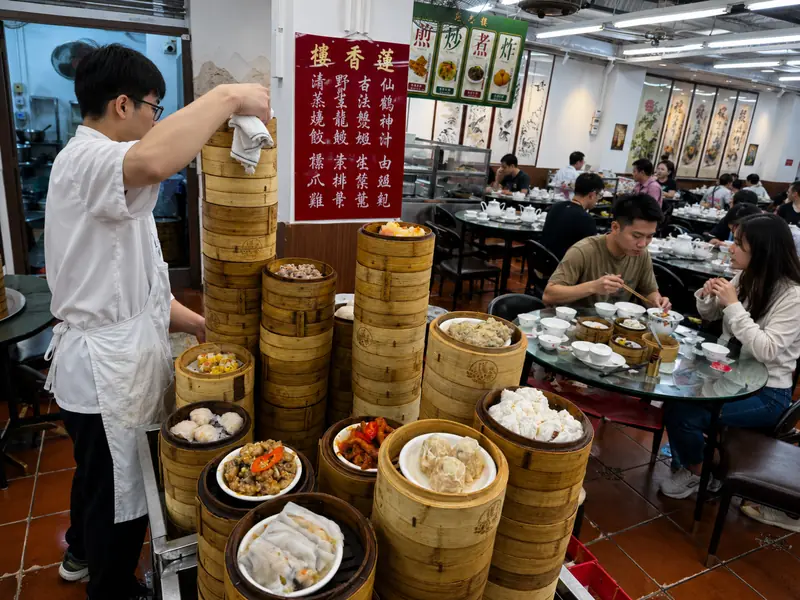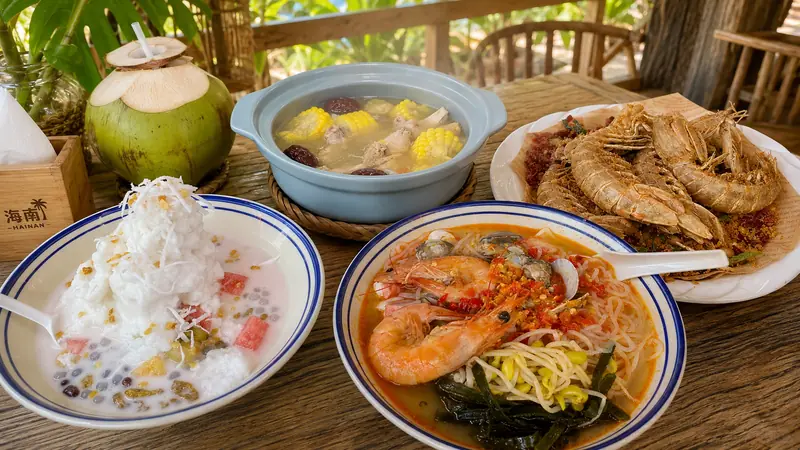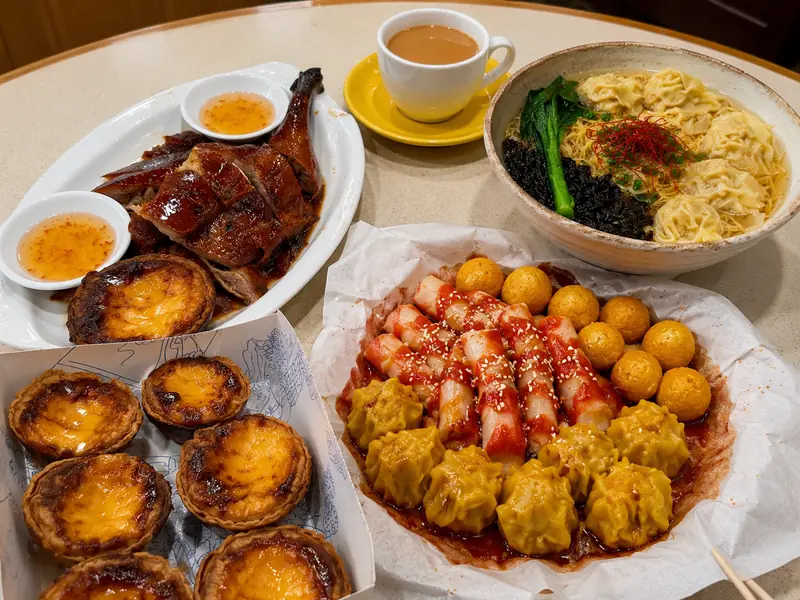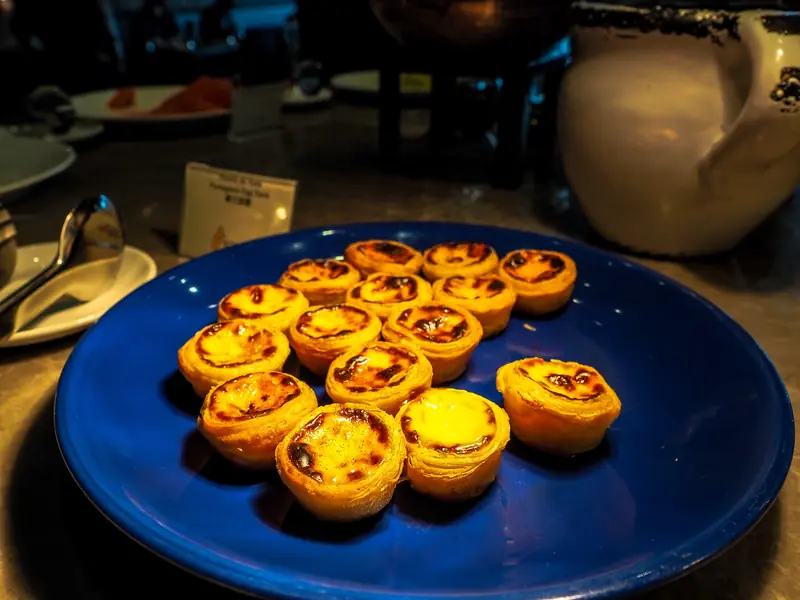
Macau (澳门) is tiny on the map and surprisingly hard to summarize at the table. One block can smell like butter-rich Portuguese egg tarts, the next like grilled pork jerky, the next like curry, tomato seafood rice, almond cookies, Cantonese noodles, and casino-hotel pastry counters.
The mistake is treating Macau as a smaller Hong Kong. Hong Kong teaches you tea cafes, roast goose, and fast Cantonese diner culture. Guangzhou teaches you the older ritual of Cantonese freshness and yum cha. Macau sits somewhere else: Portuguese colonial foodways, Cantonese daily eating, Macanese family dishes, souvenir-street snacks, Taipa lanes, Coloane bakeries, and resort dining compressed into one very walkable food city.
Executive Summary
What to expect
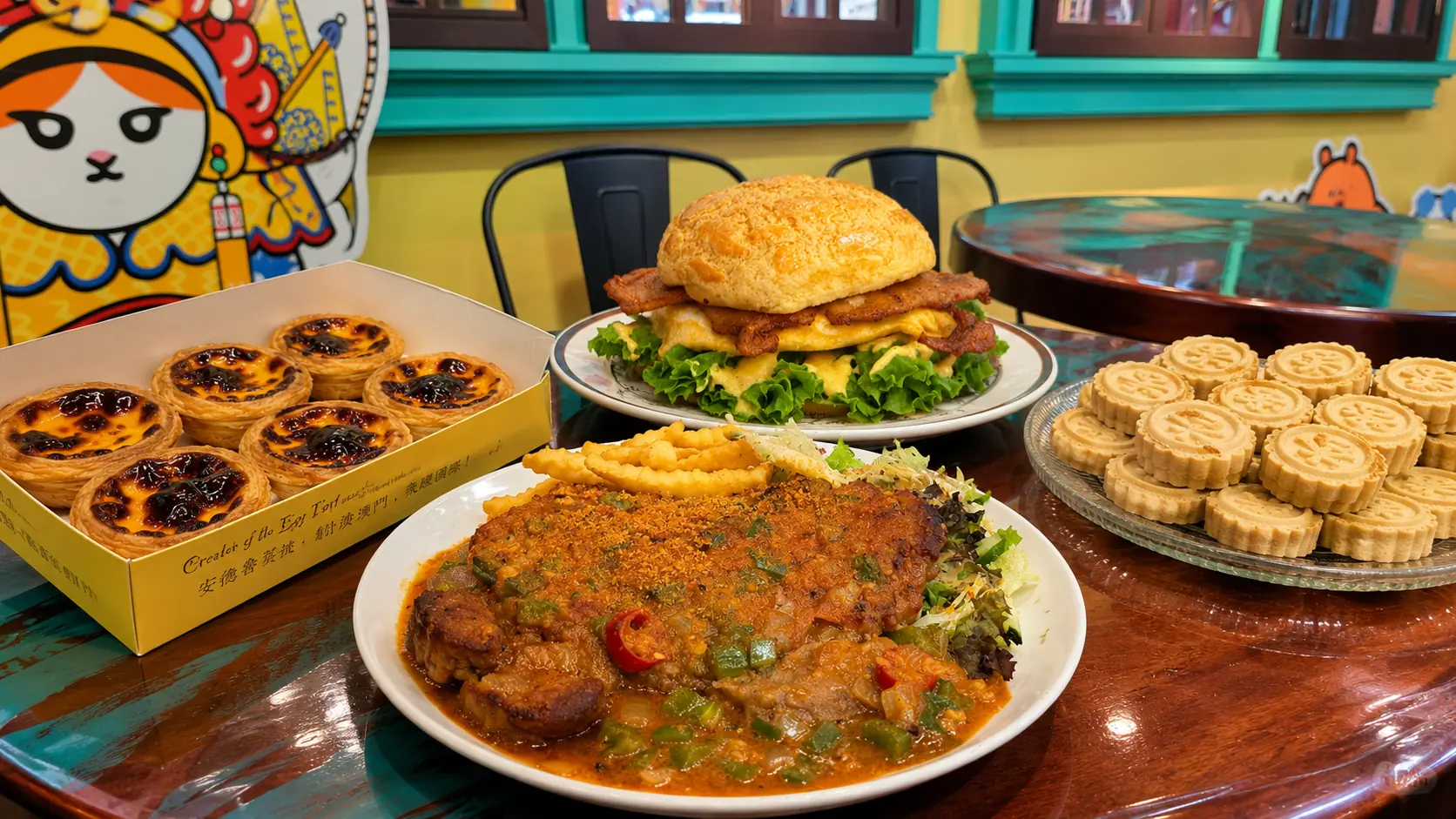
Portuguese egg tarts, pork chop buns, almond cookies, jerky, Macanese fusion dishes such as African chicken, minchi, seafood rice, bacalhau, and easy Cantonese-style noodles and congee.
Best first meal
Start with a warm egg tart, use pork chop buns or almond-cookie tasting as snacks, then save African chicken, minchi, or Portuguese seafood rice for a sit-down dinner.
Main traveler challenge
Macau is compact but not friction-free. Ferry timing, old-town crowds, Taipa and Coloane distance, MOP versus HKD, and meat-souvenir customs rules matter more than spice level.
Macau Food in One Bite
Macau food works because it has layers. The official tourism board presents Macanese and Portuguese dishes beside local daily foods, and the list already shows the split: African chicken, Portuguese-style seafood rice, bacalhau, minchi, and serradura on one side; dried shrimp roe noodles, pork chop buns, skewers, beef jerky, almond cookies, and egg puffs on the other.
That is the right mental model. Macau is not only "Portuguese food in China" and not only "Cantonese snacks near casinos." It is a small city where maritime Portuguese influence, Chinese home cooking, South China street food, Catholic festival food, bakery culture, and casino-era dining all sit close enough to become one tourist day.
The Macao Government Tourism Office notes that "Macao, China" was designated a UNESCO Creative City of Gastronomy in 2017. For visitors, the practical meaning is simpler: food is not a side quest here. It is one of the main reasons the city feels different from both Hong Kong and mainland China.
1-2 / 5
Typical spice level
MOP
Official currency
HKD often accepted
Merchant policies vary
Cantonese
Main local language
Do not overfill on the first snack street
Old-town tasting is fun, but the strongest Macau meal usually comes later. Leave room for a sit-down Macanese or Portuguese-style dinner instead of making almond-cookie samples your whole lunch.
What to Eat First in Macau
Start with foods that explain Macau quickly. Some are snacks, some are proper meals, and a few are better as souvenirs than as restaurant orders.
- Chinese
- 葡式蛋挞
- Why It Matters
- Custard, caramelized top, flaky pastry; Macau's easiest first bite
- Best Context
- Warm snack, bakery stop
- Chinese
- 猪扒包
- Why It Matters
- Crusty bread plus grilled pork, usually simple and sauce-light
- Best Context
- Taipa snack or quick lunch
- Chinese
- 杏仁饼
- Why It Matters
- The classic edible souvenir, crumbly and dry in a good way
- Best Context
- Tasting, gifting
- Chinese
- 猪肉脯 / 牛肉干
- Why It Matters
- Smoky, sweet, free-sample magnet, but customs-sensitive
- Best Context
- Eat locally, buy cautiously
- Chinese
- 非洲鸡
- Why It Matters
- Spiced, sauced, restaurant-style Macanese comfort
- Best Context
- Sit-down dinner
- Chinese
- 免治
- Why It Matters
- Minced meat, potato, onion, often with rice and egg
- Best Context
- Casual Macanese meal
- Chinese
- 葡国海鲜饭
- Why It Matters
- Tomato-rich rice with shellfish and seafood stock
- Best Context
- Group dinner
- Chinese
- 马介休
- Why It Matters
- Salt cod in fritters, roasted dishes, or egg-potato plates
- Best Context
- Portuguese-style meal
- Chinese
- 葡国鸡
- Why It Matters
- Coconut-curry-like comfort dish, softer than African chicken
- Best Context
- Mild group order
- Chinese
- 木糠布甸
- Why It Matters
- Cream and biscuit crumb dessert
- Best Context
- After Macanese dinner
- Chinese
- 虾籽捞面
- Why It Matters
- Salty, dry noodle dish with concentrated seafood flavor
- Best Context
- Quick local lunch
- Chinese
- 水蟹粥
- Why It Matters
- Comforting rice porridge with seafood sweetness
- Best Context
- Breakfast, late supper
- Chinese
- 串烧 / 咖喱鱼蛋
- Why It Matters
- Spicy curry-sauce street snacks, especially near old-town lanes
- Best Context
- Snack crawl
- Chinese
- 鸡蛋仔
- Why It Matters
- Crisp-edged, soft-centered street waffle
- Best Context
- Family-friendly snack
Portuguese Egg Tarts

Portuguese egg tarts are the entry point because they are low-risk, easy to recognize, and genuinely better warm. The official Macao tourism page describes pastéis de nata as one of the best-known desserts offered in Macanese and Portuguese restaurants, with the custard-and-caramel character that made them famous.
Eat one immediately. Do not save it for the ferry, do not pack it as a gift, and do not compare it too literally with Hong Kong egg tarts. Macau's version is richer, darker on top, and more associated with Portuguese bakery culture.
Pork Chop Buns
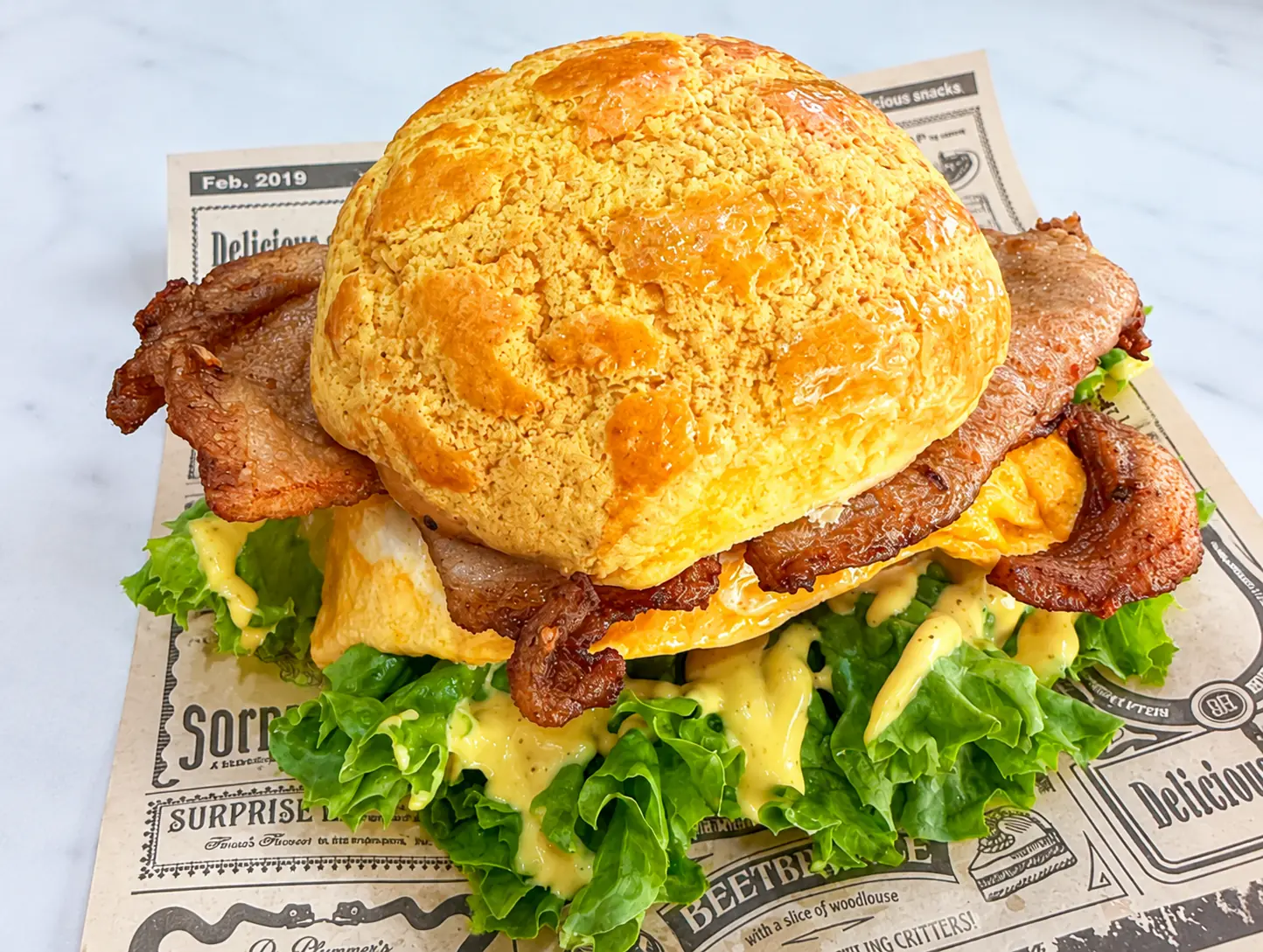
The pork chop bun (猪扒包) is sometimes described like a burger, but that creates the wrong expectation. A good one is usually simpler: crusty bread, a thick grilled pork chop, little or no vegetable, and enough char to make the bread taste useful.
It works best as a quick snack between heritage stops or in Taipa. Do not expect a balanced sandwich. Expect meat, bread, heat, and speed.
Almond Cookies and Jerky
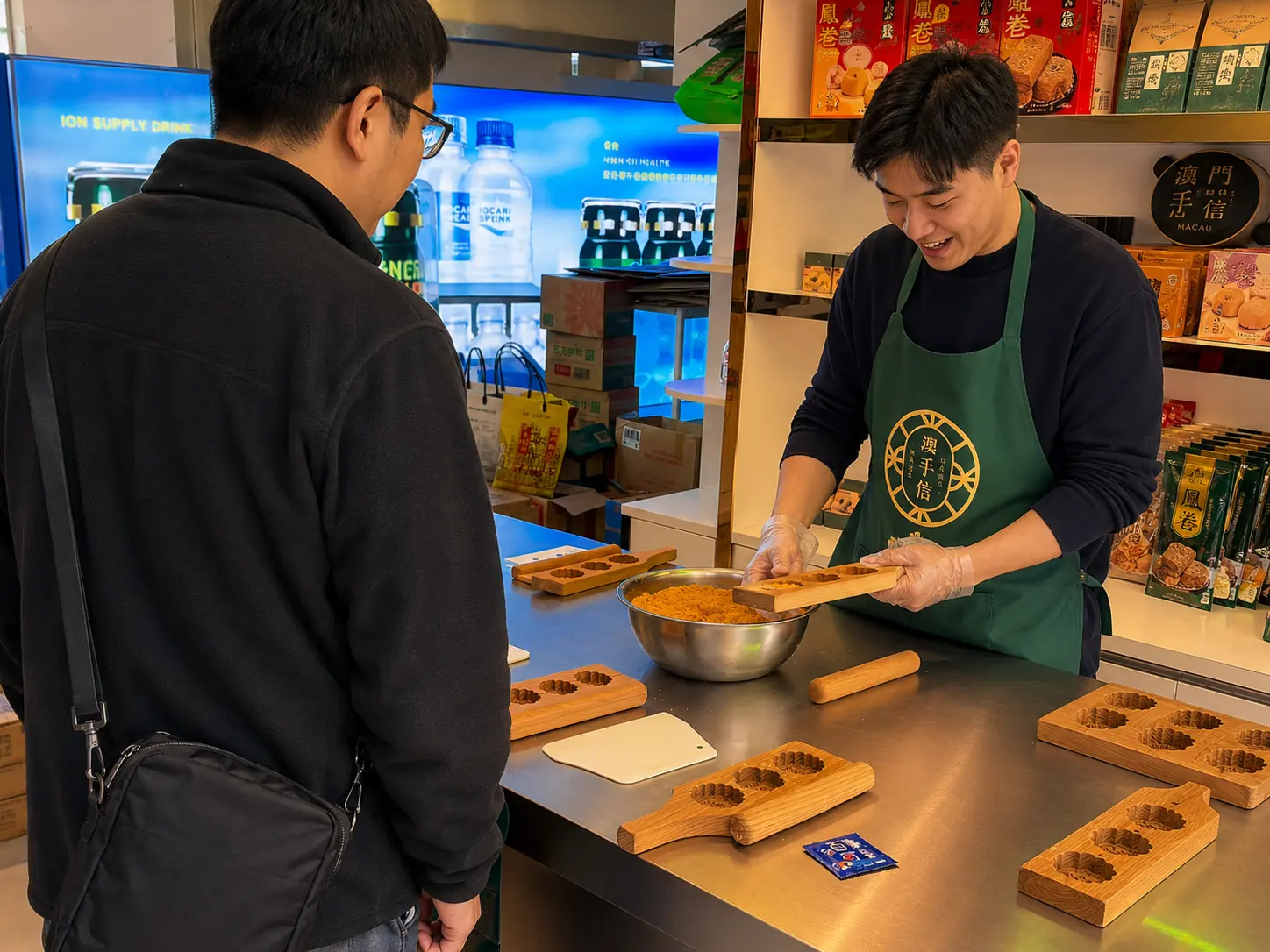
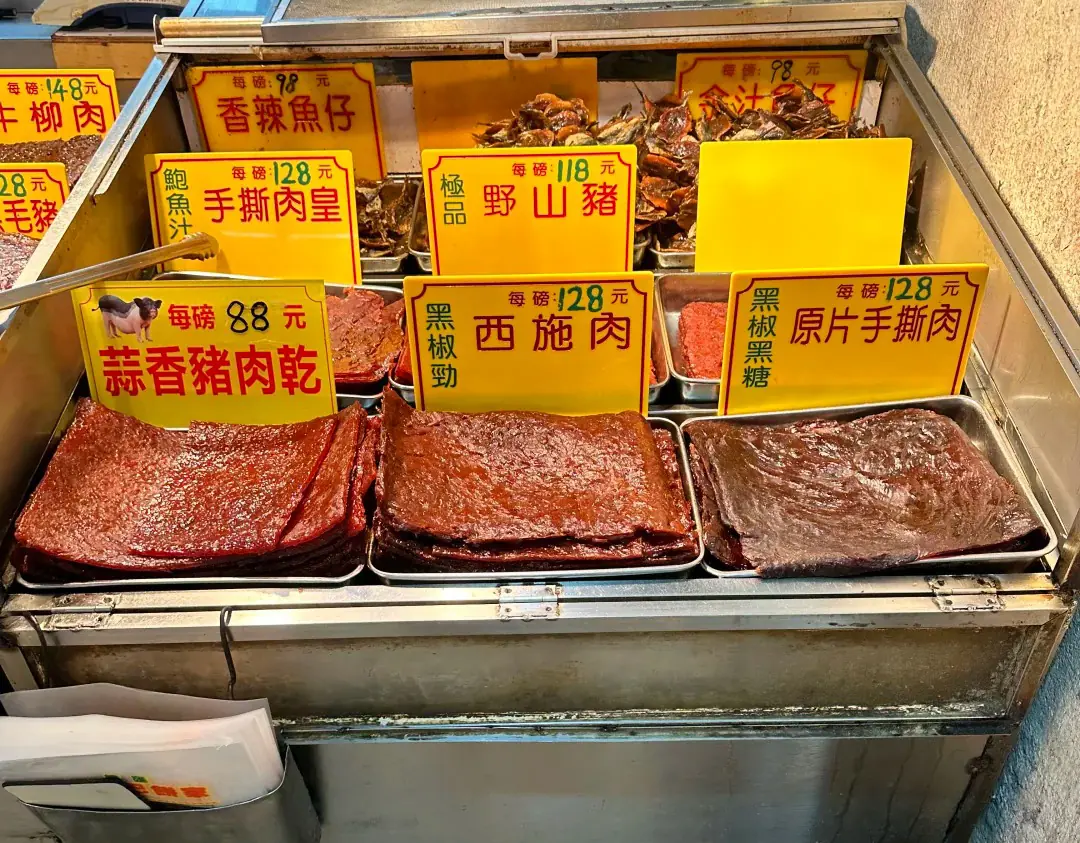
Almond cookies (杏仁饼) are Macau's safest classic souvenir. They are dry, crumbly, fragrant, and easy to carry compared with tarts. Buy after tasting, because texture varies by shop.
Jerky is the opposite: delicious on the street, risky in luggage. Pork jerky and beef jerky are common Macau snacks, but meat products can be restricted or confiscated depending on your destination country. If in doubt, eat samples locally and bring home almond cookies, egg rolls, or peanut candy instead.
Treat jerky as eat-now food unless you checked customs
Rules vary by destination, and airlines cannot solve this for you at the gate. If your country restricts meat products, skip packaged jerky and choose non-meat souvenirs.
Noodles, Congee, and Street Snacks
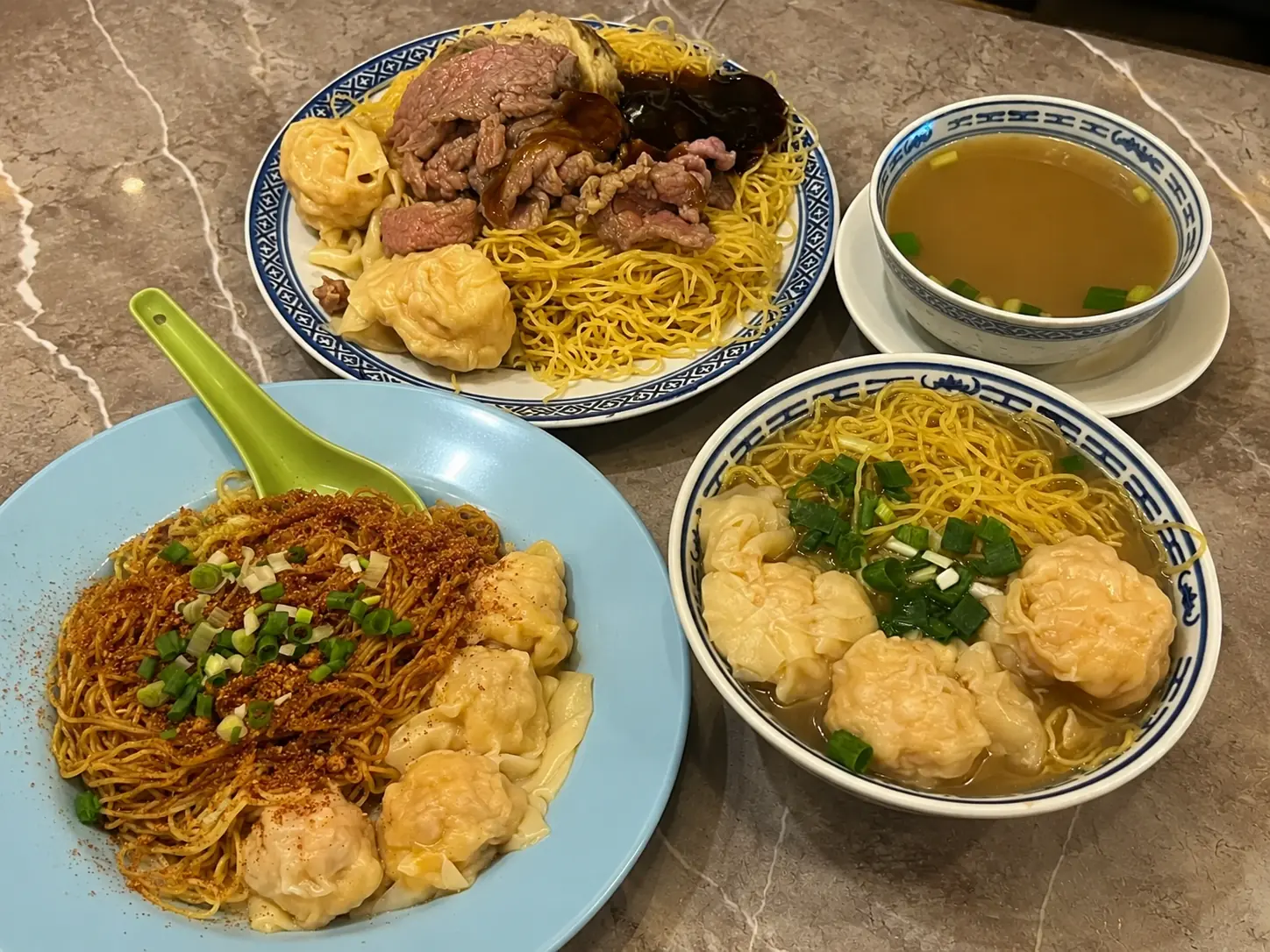
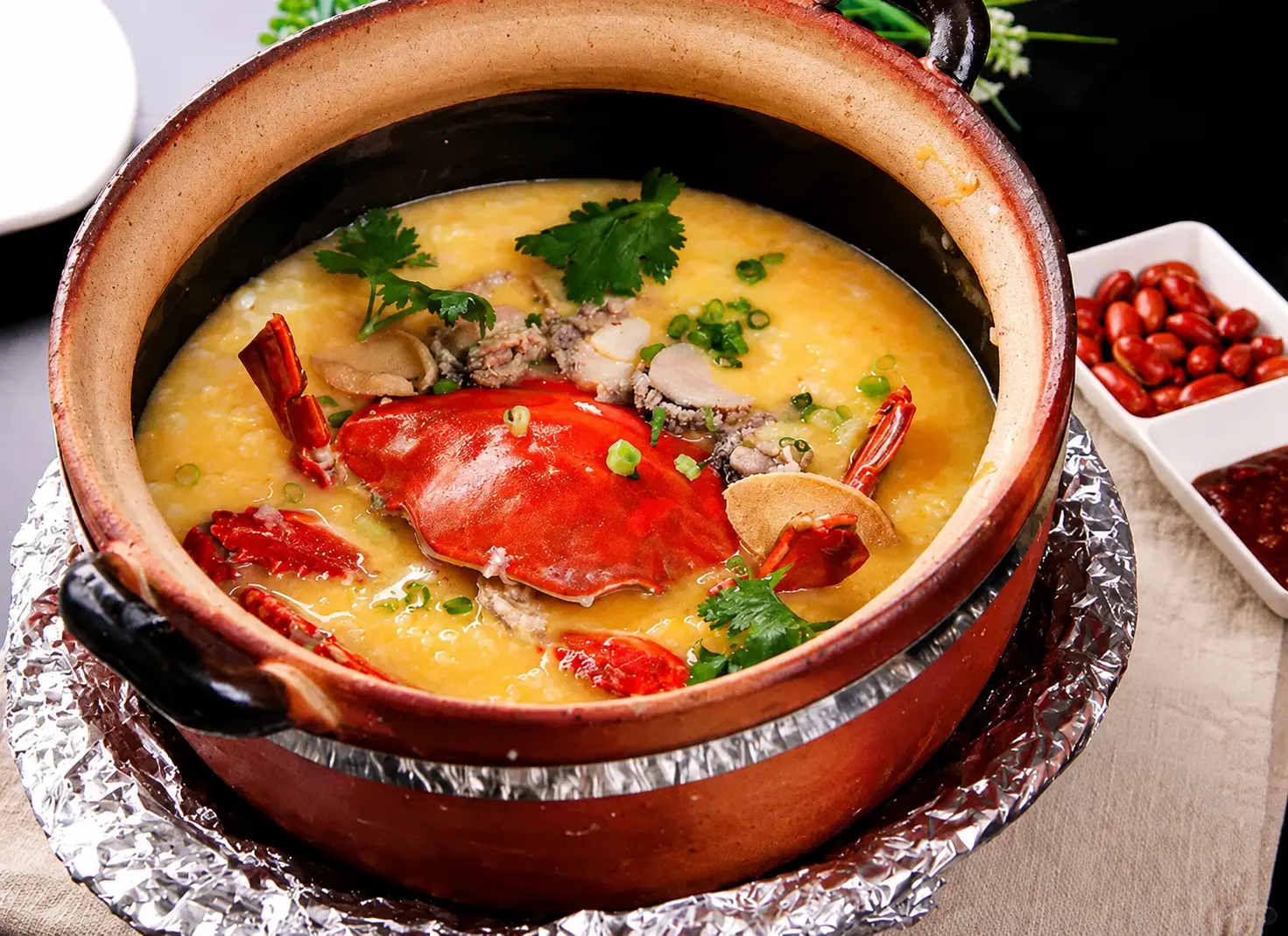
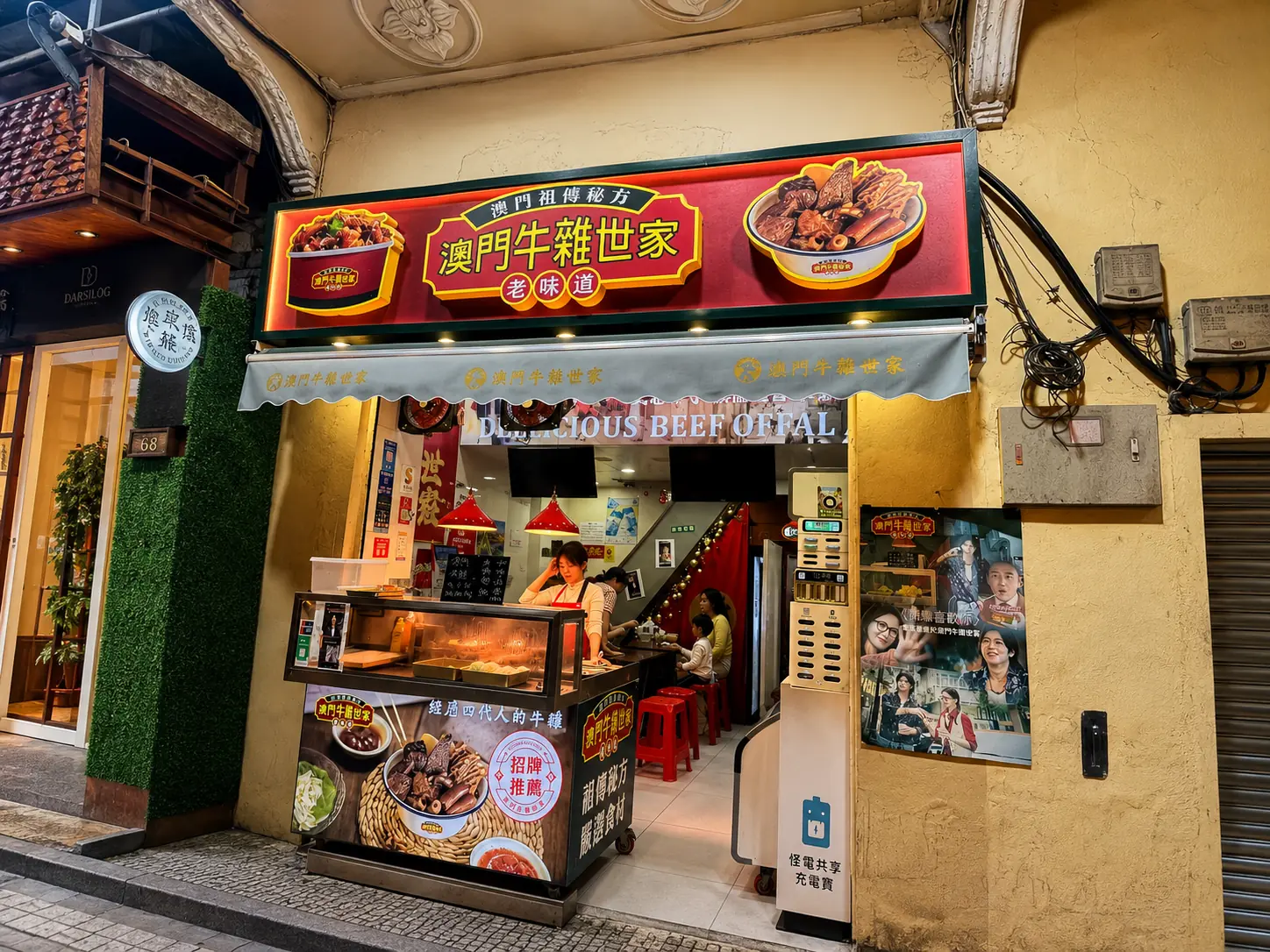
Macau's local-food side is not as globally famous as egg tarts, but it is useful for real meals. The MGTO local food page lists dried shrimp roe noodles, wonton noodles, pork chop buns, congee, skewers, beef jerky, almond cookies, Coke boiled with ginger, and egg puffs as daily local foods.
For a short trip, prioritize shrimp roe noodles, crab congee, skewers, and one bakery snack. Wonton noodles are fine, but if your route already includes Hong Kong or Guangzhou, Macau's more distinctive value is the Portuguese-Chinese fusion plus snack-street culture.
Macanese Fusion Dishes Worth Sitting Down For
Macanese food is where Macau becomes more than a snack city. The official Macanese and Portuguese dishes page lists African chicken, Portuguese-style seafood rice, curry shrimp, stuffed squid, bacalhau, minchi, oxtail, roast duck rice, sardines, Portuguese egg tarts, and serradura among the city's representative dishes.
The flavors are not a single neat formula. Some dishes feel Portuguese, some Cantonese, some curry-led, some tomato-rich, and some like family comfort food that grew from centuries of exchange.
African Chicken
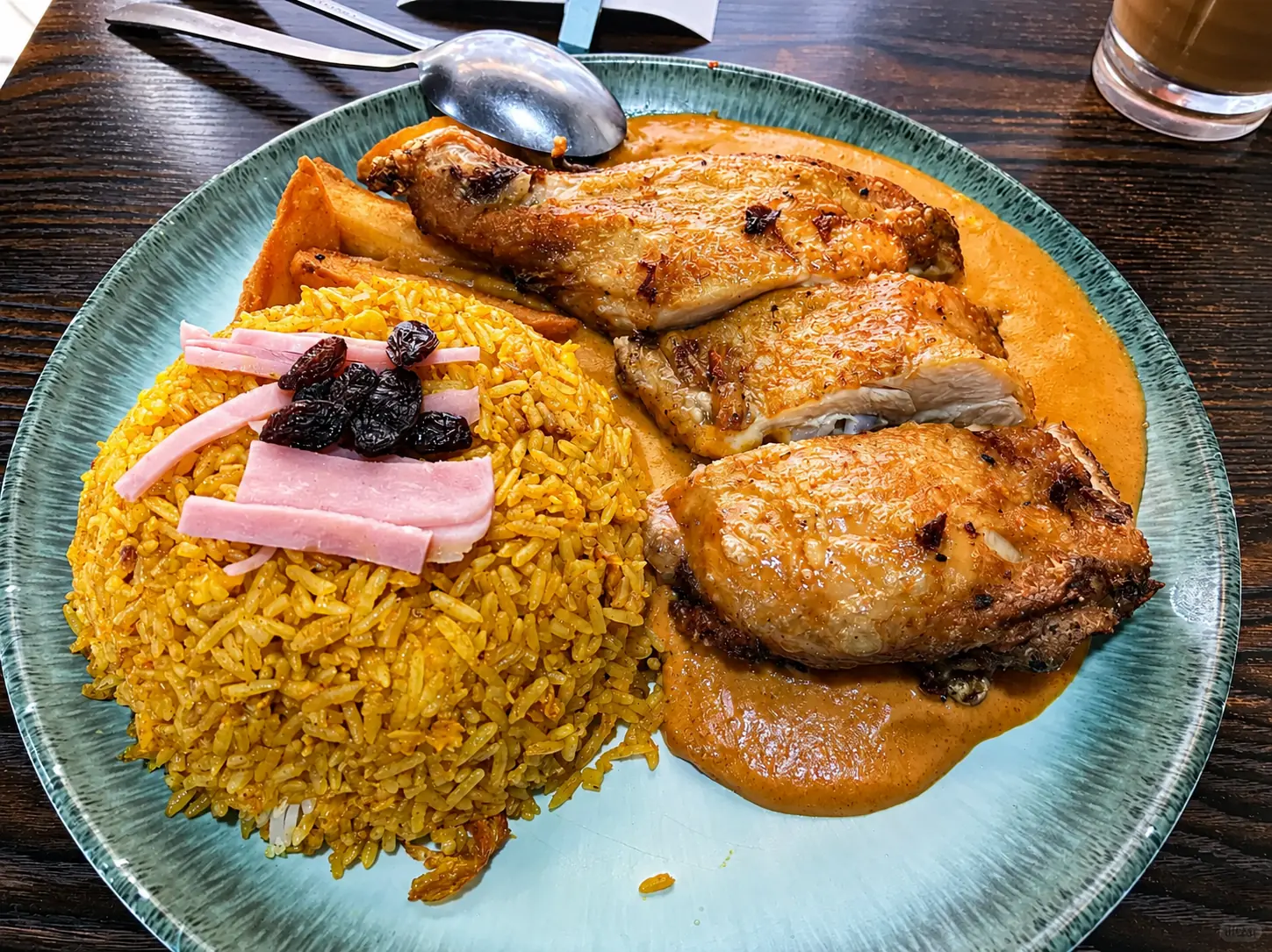
African chicken (非洲鸡) is usually the first sit-down Macanese dish I would suggest to visitors. The sauce can include chili, pepper, coconut, garlic, herbs, spices, and restaurant-specific secrets. It is more aromatic than painfully hot.
Order rice or bread with it. The sauce is the point, and you do not want it stranded on the plate.
Minchi and Portuguese Chicken
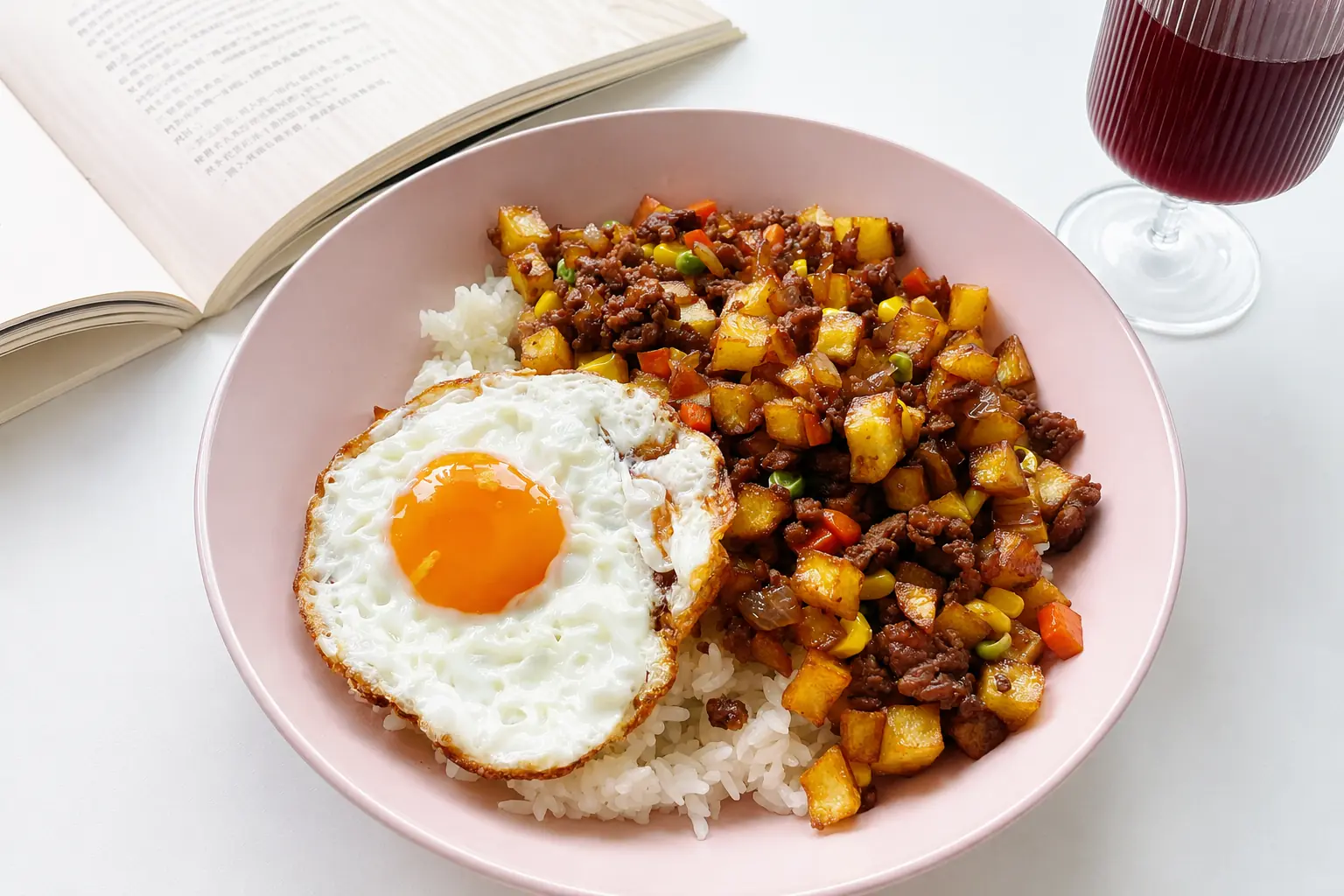
Minchi (免治) is not dramatic, which is why it is useful. Think minced meat, potato, onion, rice, and often an egg. It is the Macanese dish most likely to feel like home cooking rather than a tourist set piece.
Portuguese chicken (葡国鸡) is usually softer and more curry-like than African chicken, often with coconut and a gentle yellow sauce. If your group is cautious about spice, Portuguese chicken may be easier than African chicken.
Seafood Rice and Bacalhau
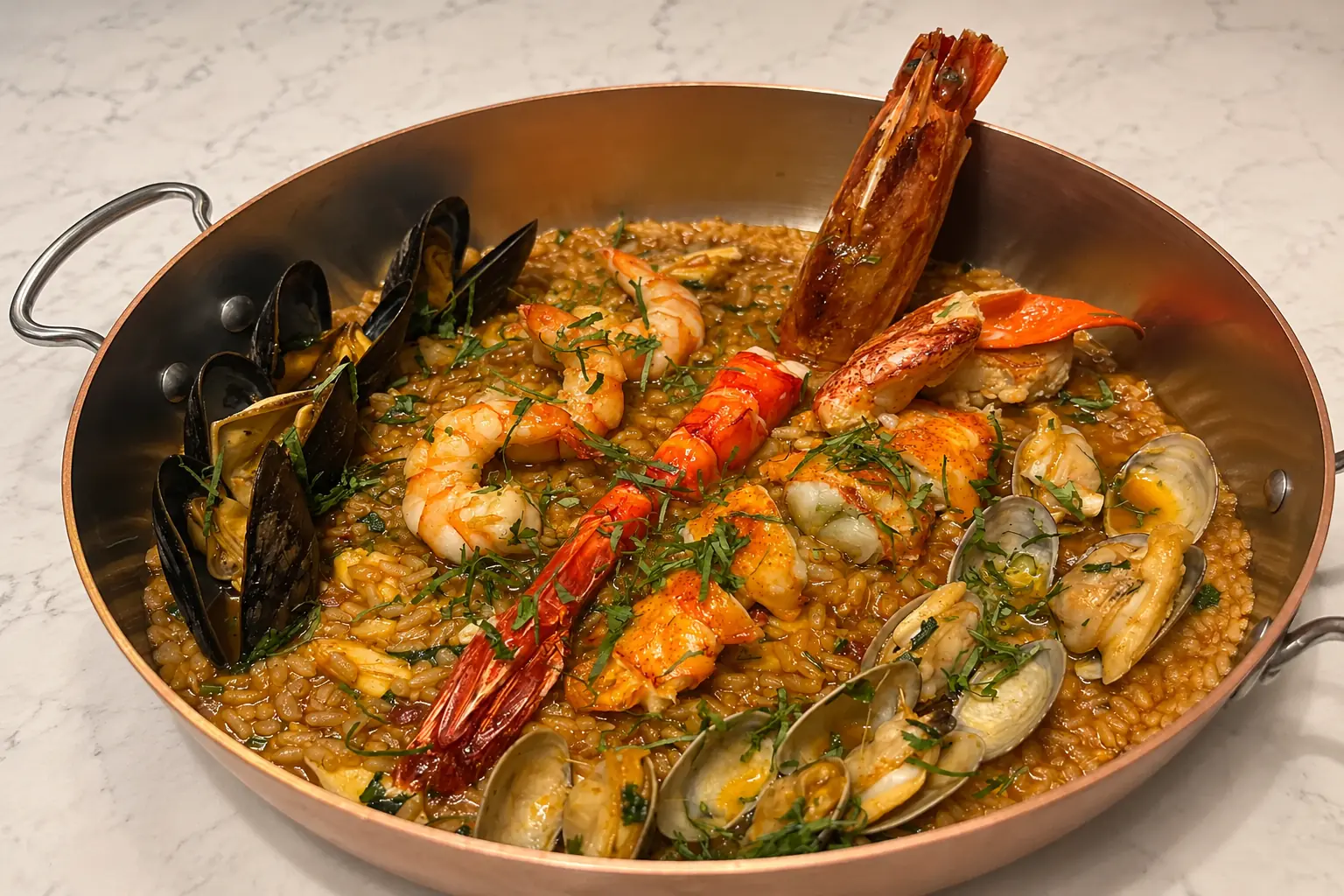
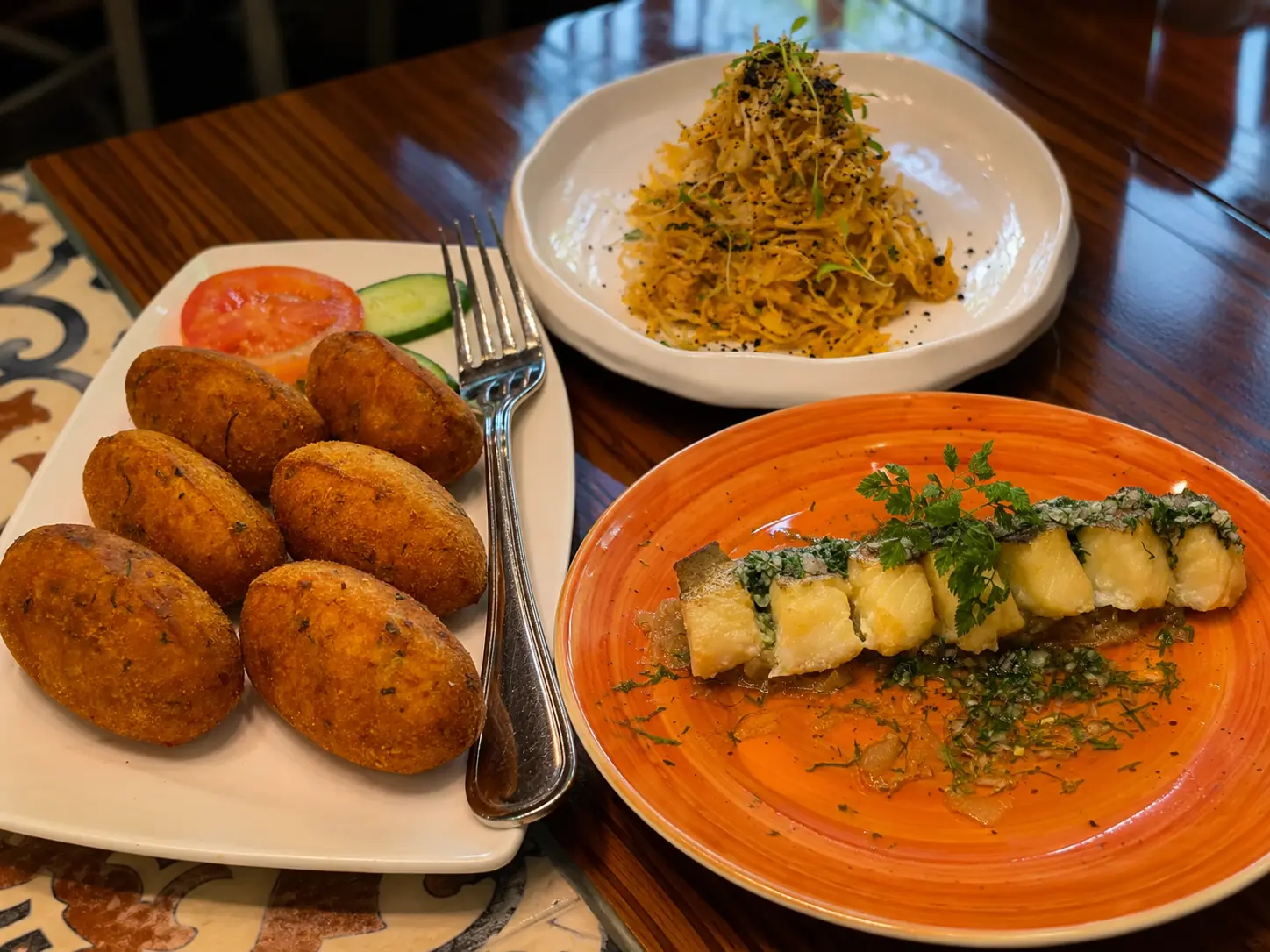
Portuguese seafood rice (葡国海鲜饭) makes sense when you have two or more people. It is not paella; it is wetter, saucier, and built around tomato, seafood stock, shellfish, and rice that soaks up the broth.
Bacalhau (马介休), or salt cod, appears in fried, roasted, and egg-potato forms. It can be salty and heavy, so order it as part of a table rather than as your only dish.
Serradura and Cafe Desserts
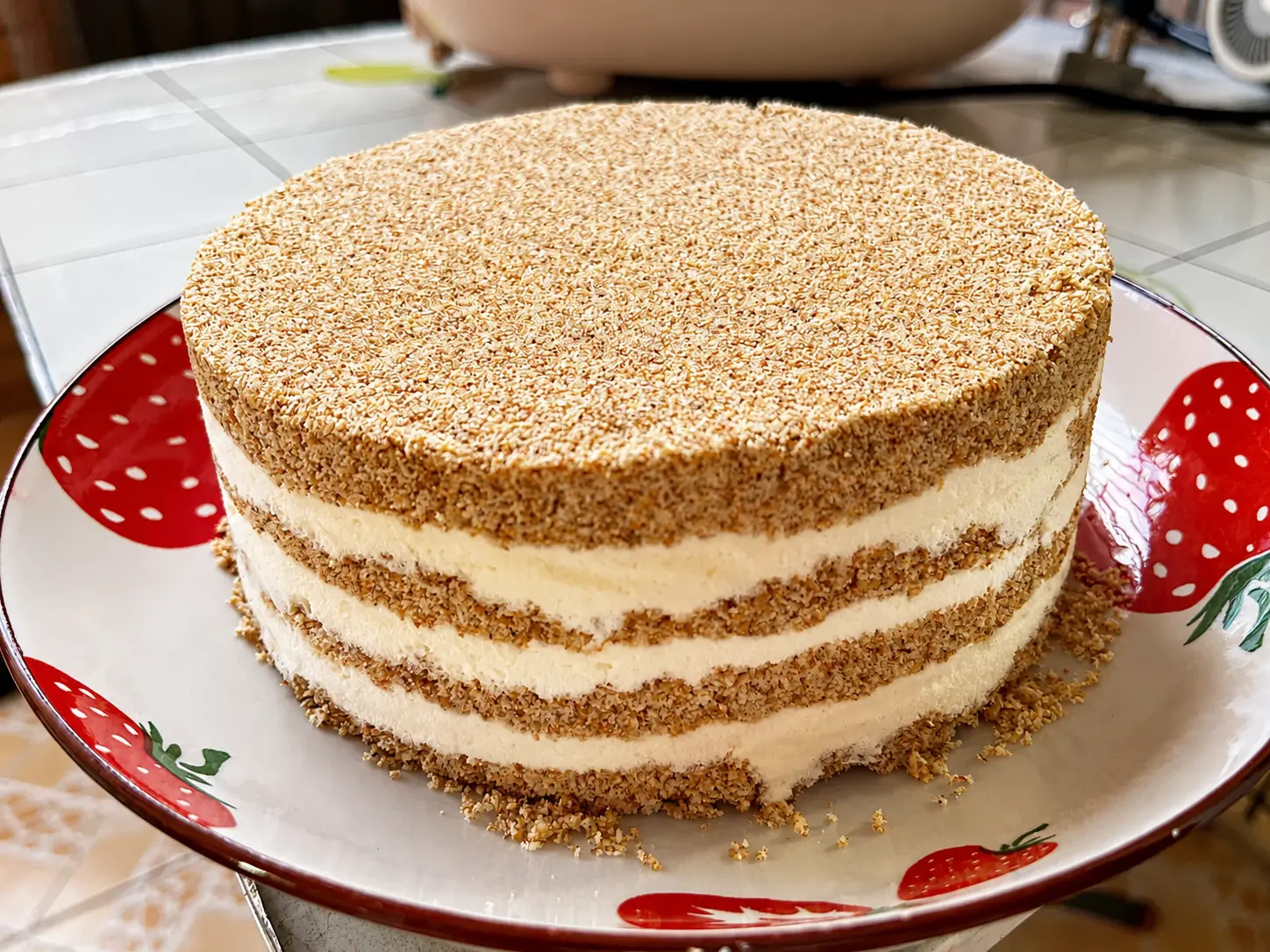
Serradura (木糠布甸) is a simple dessert of cream and biscuit crumbs, but after a curry-rich Macanese meal it makes sense. Egg pudding, molotof, coffee, and bakery sweets also fit this part of the meal.
If you already had multiple egg tarts that day, order serradura instead of another custard dessert. Macau rewards variety.
Where to Eat by Area
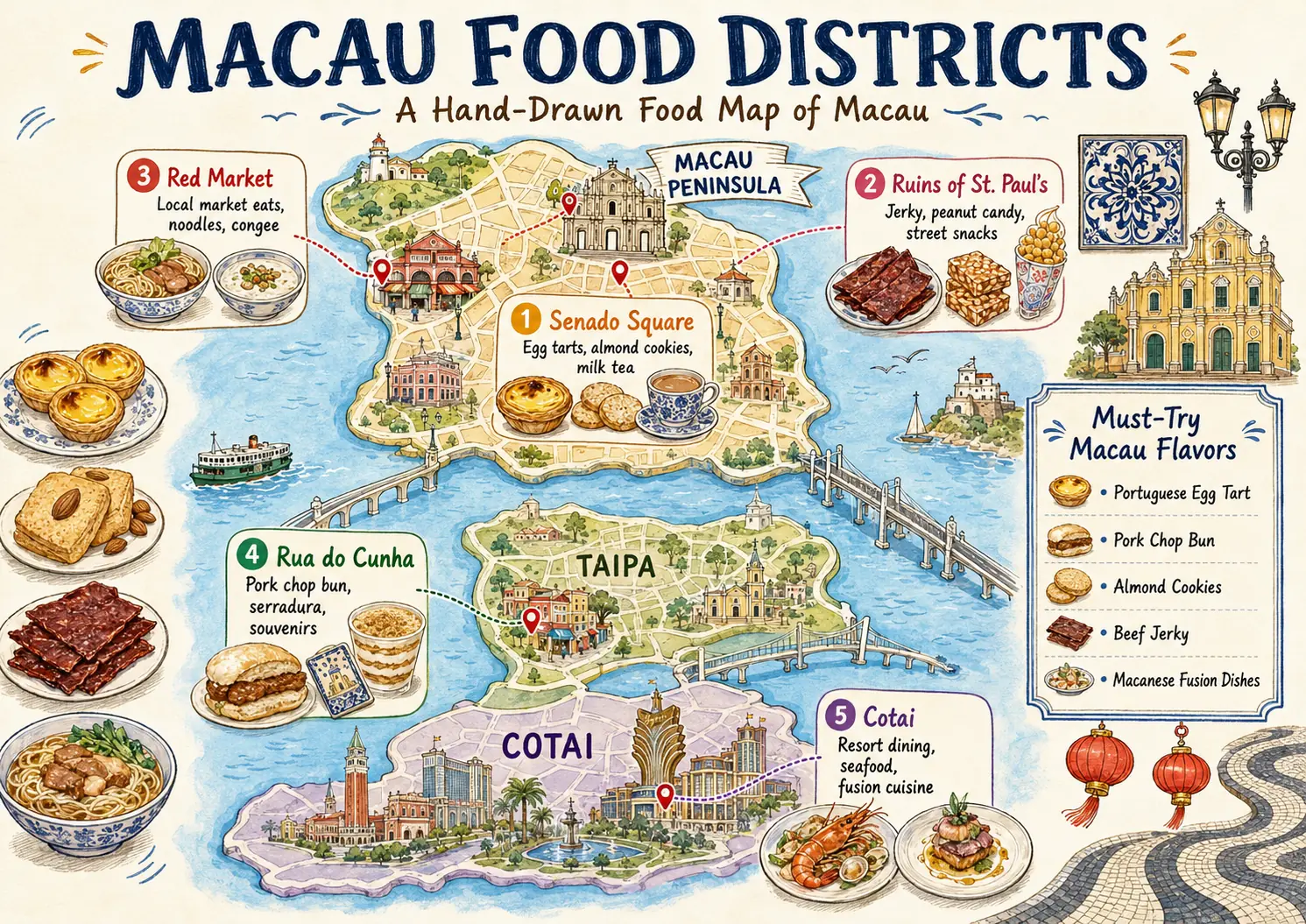
Macau is small enough to tempt you into zigzagging. Resist that. Food works better when you pair it with the area you are already visiting.
- Best For
- Egg tarts, almond cookies, jerky, skewers, old cafes
- Use It Like This
- Snack while doing the Historic Centre
- Best For
- Old-street atmosphere, cafes, small restaurants
- Use It Like This
- Add after Senado if you want a quieter food lane
- Best For
- Pork chop buns, egg tarts, souvenirs, local snacks
- Use It Like This
- Best all-purpose snack street after old town
- Best For
- Lord Stow-style egg tarts, slower seaside food
- Use It Like This
- Best when you want a quieter bakery stop
- Best For
- Resort restaurants, buffets, easy group dining
- Use It Like This
- Useful for comfort, not old Macau texture
- Best For
- Wet-market context, everyday food, local rhythm
- Use It Like This
- Better for food-nerd travelers than first timers
Senado and St. Paul's (Google | Amap) (Google | Amap)
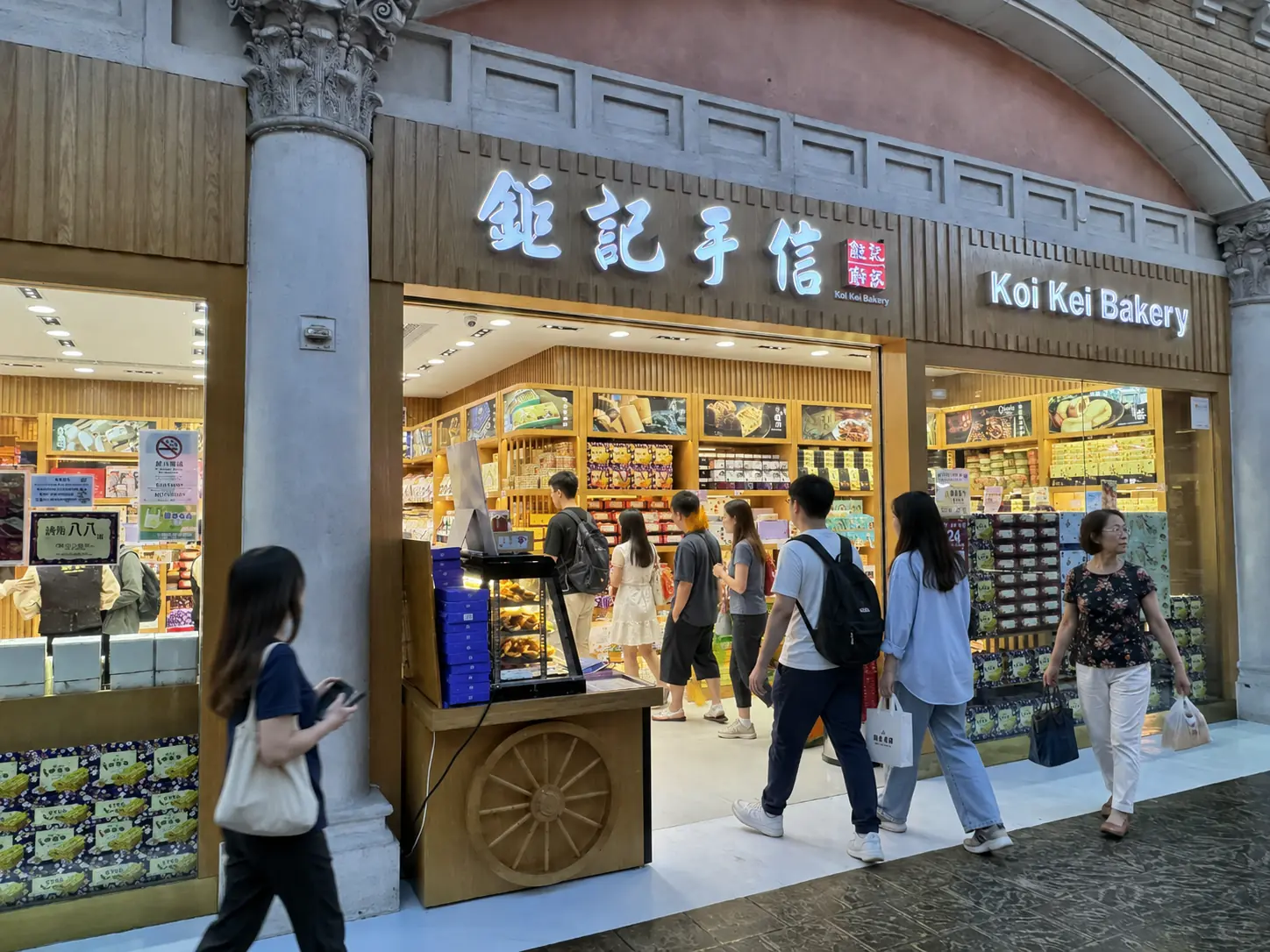
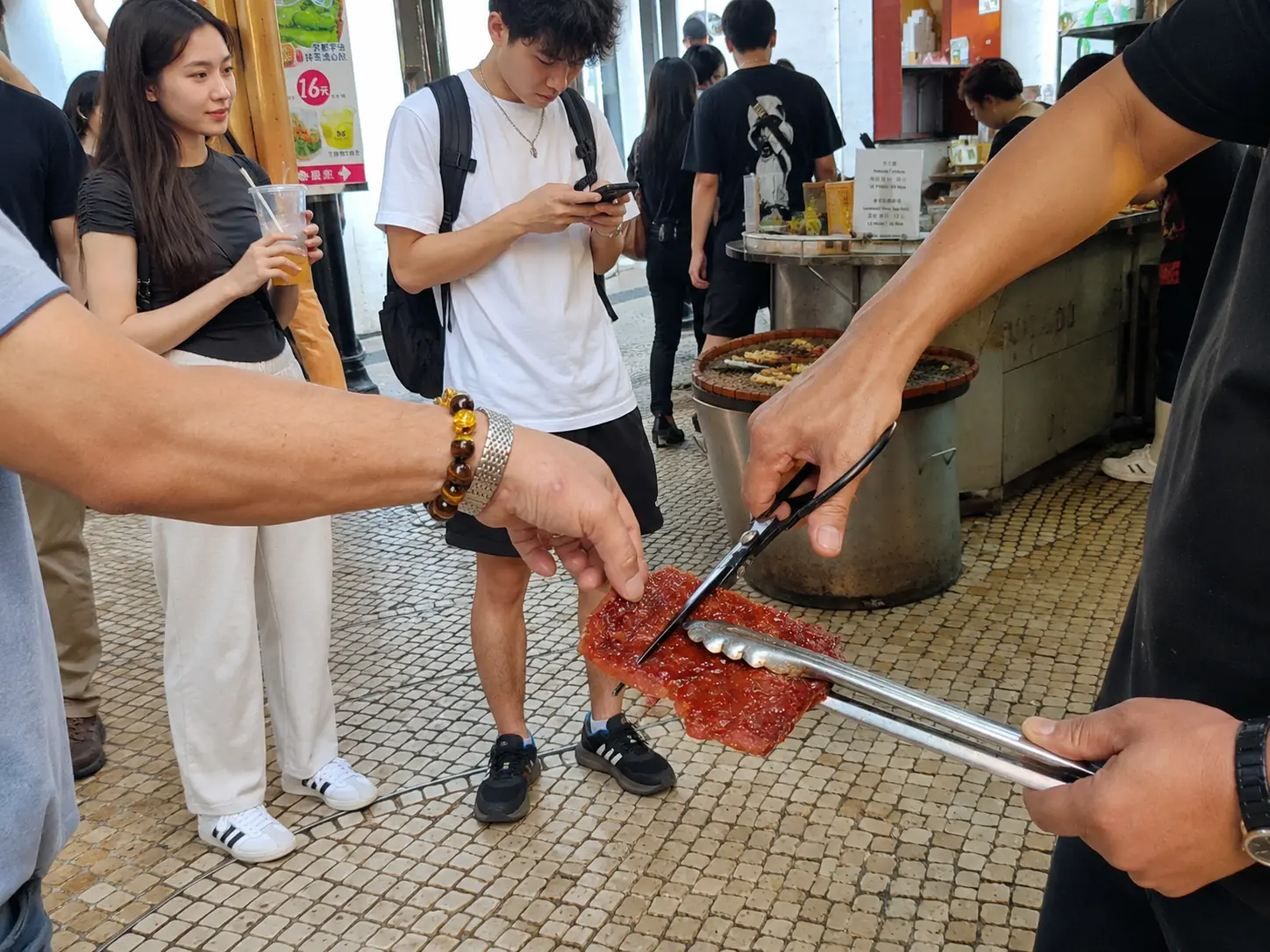
Senado Square (议事亭前地) and the uphill route toward the Ruins of St. Paul's souvenir street (大三巴手信街) are the easiest first food zone. You will see egg tarts, almond cookies, jerky samples, drinks, and quick snacks woven into the heritage route.
Use this zone for grazing, not for a full meal. The crowd is part of the atmosphere, but it also makes slow restaurant decisions tiring.
Rua da Felicidade (Google | Amap)
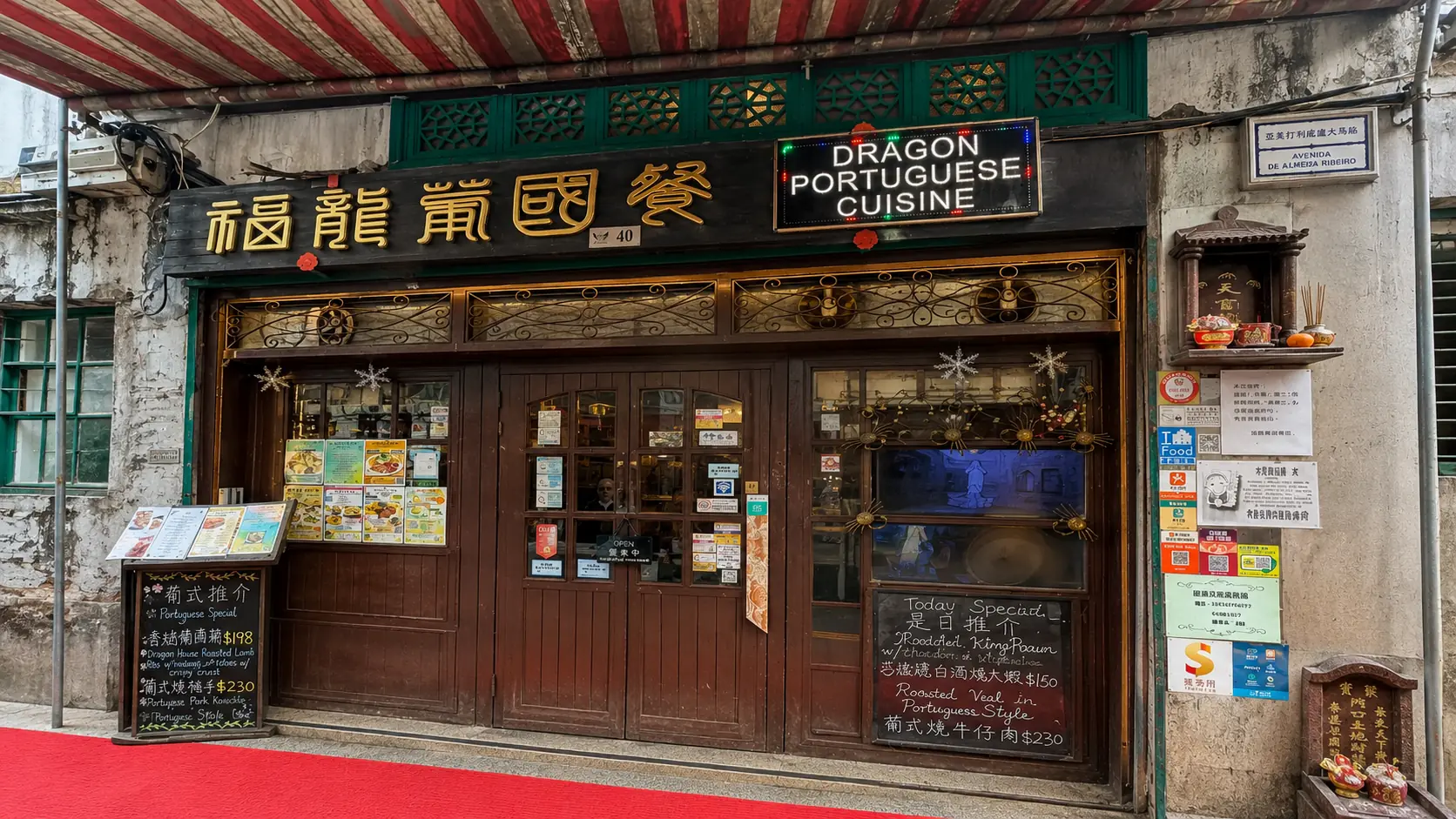
Rua da Felicidade (福隆新街) is a good old-town reset. It gives you red-shuttered facades, historic street texture, small restaurants, and cafes without the same bottleneck feeling as the St. Paul's climb.
It is not a must-eat street in the way Rua do Cunha is, but it is useful if you want old Macau atmosphere near Senado and do not want to immediately join the snack-shop crowd.
Rua do Cunha and Taipa Village (Google | Amap) (Google | Amap)
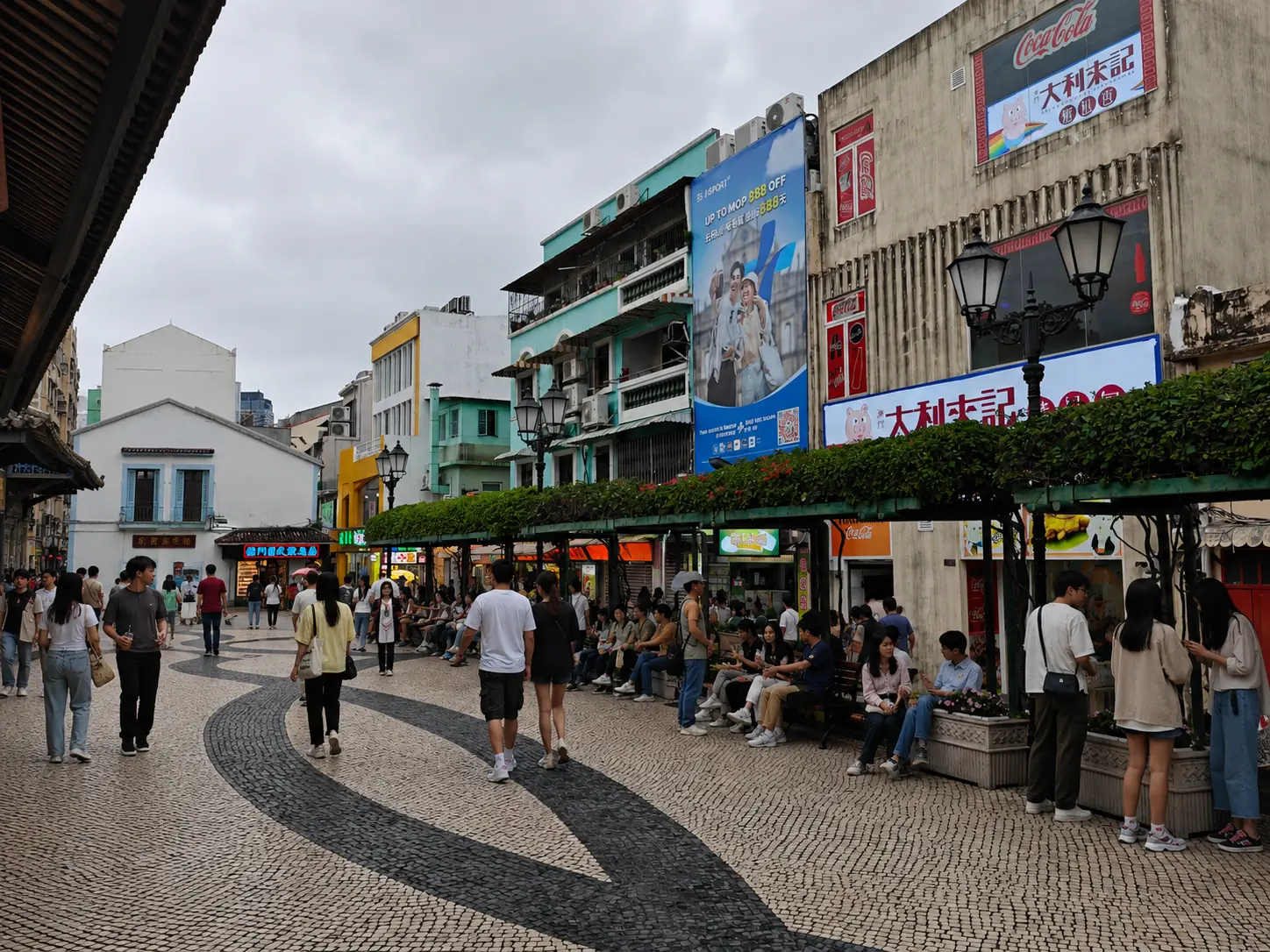
Rua do Cunha (官也街) and Taipa Village (氹仔旧城区) are the most practical food area after the Historic Centre. You can combine pork chop buns, egg tarts, almond cookies, jerky, crab congee, local snacks, and quieter side streets in one compact walk.
This area is especially useful if your day includes Cotai. Eat in Taipa before or after the resort zone, then use Cotai for shows, hotels, and easy transport.
Coloane Village (Google | Amap) (Google | Amap)
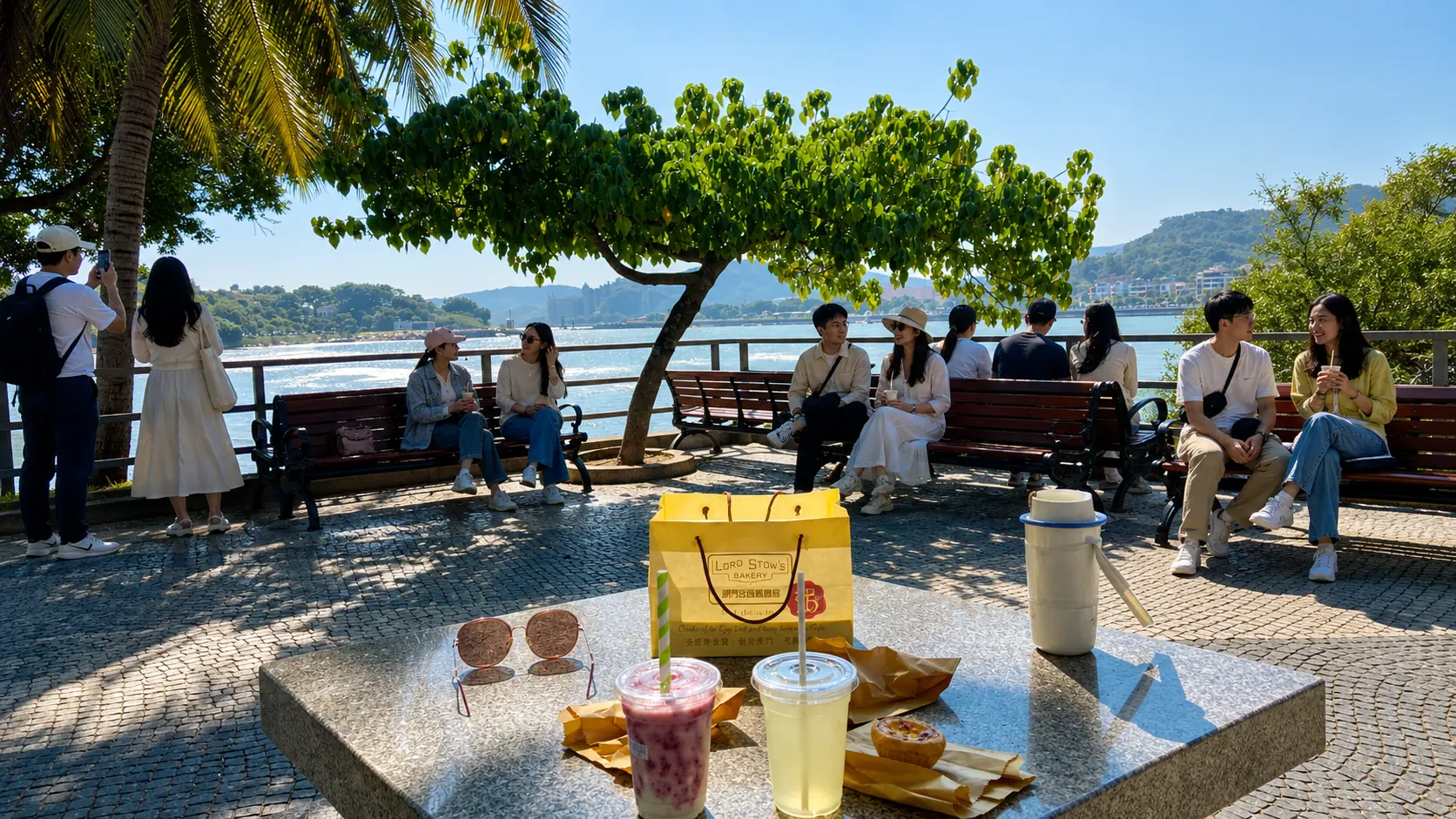
Coloane Village (路环市区) feels like a different Macau. It is slower, lower, and better for travelers who want a bakery stop without a dense city-center crowd.
Lord Stow's Bakery Coloane (安德鲁饼店路环店) is the obvious egg-tart reference point, but the real value is the whole setting: pastel lanes, quiet streets, small cafes, and a seaside walk if weather cooperates.
Cotai and Resort Dining (Google | Amap)
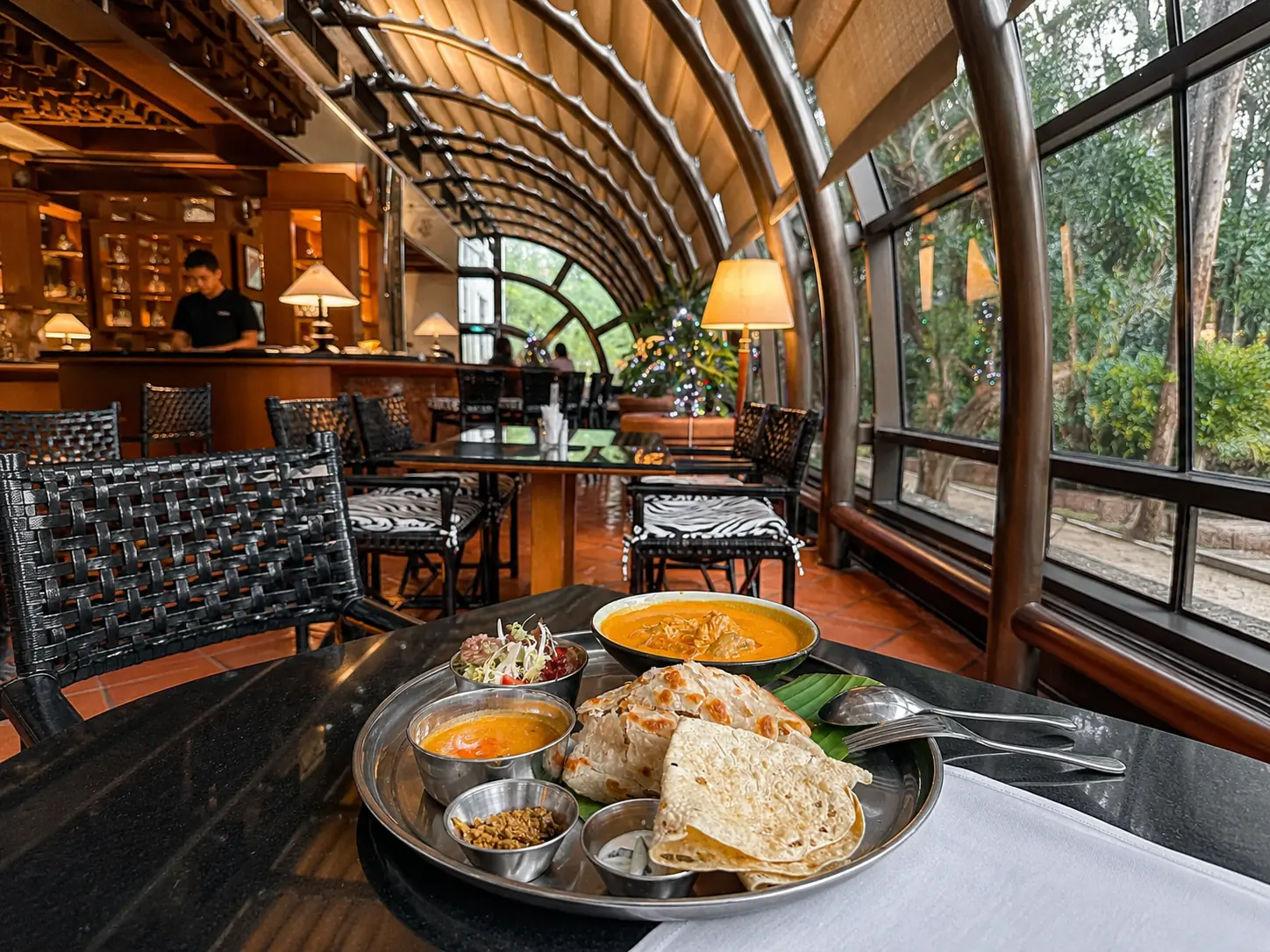
Cotai is not where you go to understand old Macau food culture, but it solves real travel problems. City of Dreams Macau (新濠天地) and neighboring resorts offer restaurants, food courts, bakeries, buffets, international options, and comfortable seating.
Use Cotai when your group is tired, traveling with kids, managing dietary needs, or staying in a resort hotel. Just do not let every Macau meal happen inside a mall or casino complex, or the city will feel flatter than it is.
Red Market and Local Corners (Google | Amap)
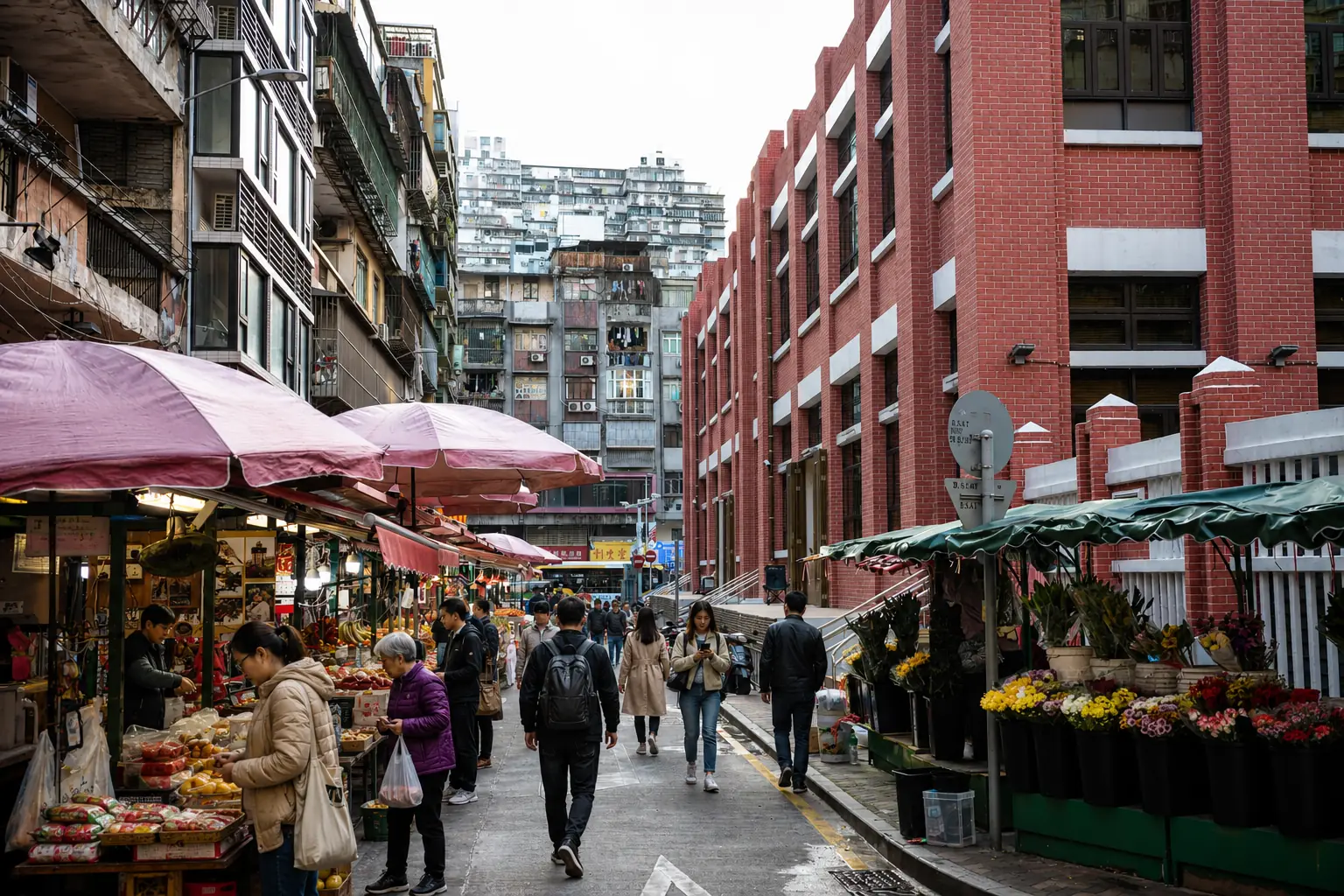
Red Market (红街市) is for food-nerd context rather than a simple first-timer lunch. It gives you a better sense of everyday ingredients, market rhythm, and local neighborhoods away from the postcard route.
If you have only one day, skip it. If you are staying overnight and care about food beyond famous snacks, add it in the morning.
A First-Timer Macau Food Day
Do not treat this as a restaurant checklist. Use it as a pacing template.
- Senado and Historic Centre- One egg tart, coffee or tea, and a light snack before crowds build
- St Pauls souvenir street- Almond cookie samples and jerky samples eaten locally; do not overbuy yet
- Taipa Village- Pork chop bun, shrimp roe noodles, crab congee, or a simple cafe meal
- Coloane or Cotai- Egg tart in Coloane, or a resort cafe break in Cotai
- Macanese or Portuguese-style restaurant- African chicken, minchi, seafood rice, bacalhau, and serradura tell the strongest Macau story
- Taipa, Cotai, or hotel area- Dessert, milk tea, or a light snack after a heavy dinner
If You Only Have One Meal
Choose a sit-down Macanese or Portuguese-style meal. Egg tarts and pork chop buns are easy to add as snacks, but African chicken, minchi, seafood rice, and serradura need a table. Order one sauced chicken dish, one rice or potato dish, one vegetable, one seafood or bacalhau dish if the group wants it, and one dessert to share.
If You Are Coming From Hong Kong
If your broader trip already includes Hong Kong, reduce overlap. Skip dim sum as your Macau priority unless you have a specific restaurant in mind. Make Macau about egg tarts, Macanese fusion, Taipa snacks, and old-town souvenir culture instead. If you arrive by ferry for a day trip, plan dinner early enough that you are not rushing to the terminal.
If You Are Staying Overnight
An overnight stay makes Macau food much easier. Do the Historic Centre in the morning, Taipa or Coloane in the afternoon, and Macanese dinner at night. The second morning can be for congee, noodles, or a slower bakery stop before leaving.
Payment, Queues, and Customs Caveats
Official currency
The MGTO practical information page lists the Pataca (MOP) as Macau's official currency and notes its link to the Hong Kong dollar at MOP 103.20 to HKD 100.00.
HKD is common
Hong Kong dollars are often accepted in tourist-facing places, but acceptance and change policies vary by merchant. Confirm before paying.
Small cash helps
Cards and digital wallets are widespread, but egg-tart counters and snack stalls are still easier with small notes and coins.
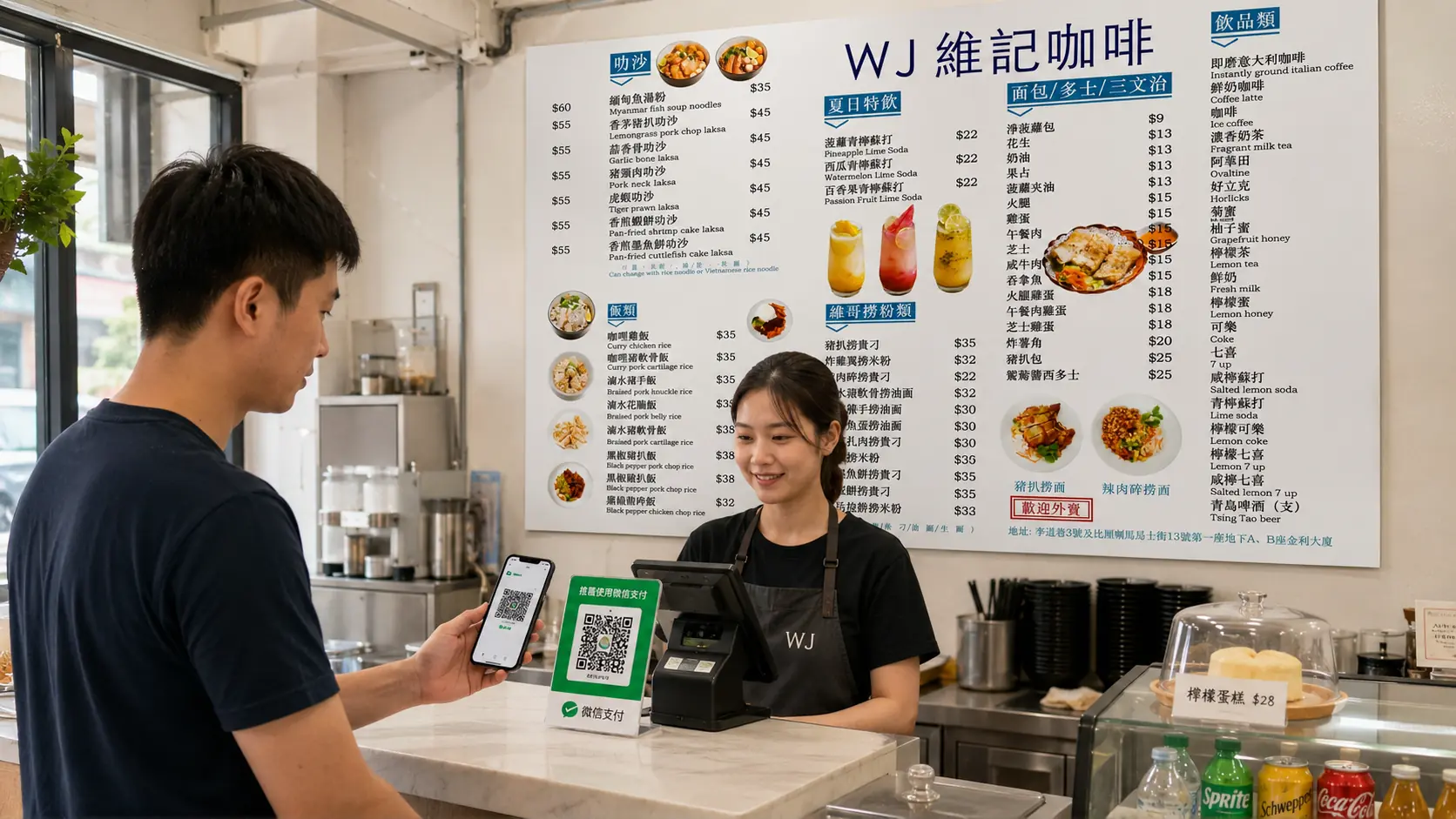
Queue Strategy
Decide Before the Counter
Queues move faster when you know whether you want one tart, a box, coffee, or a takeaway bag before reaching the cashier. At souvenir shops, taste first, then step aside before discussing flavors.
Avoid the Squeezed Hours
Old-town snack streets are calmer earlier in the morning and later in the evening. Midday and mid-afternoon can feel squeezed because heritage visitors, tour groups, and snack shoppers all occupy the same lanes.
Customs-Safe Souvenirs
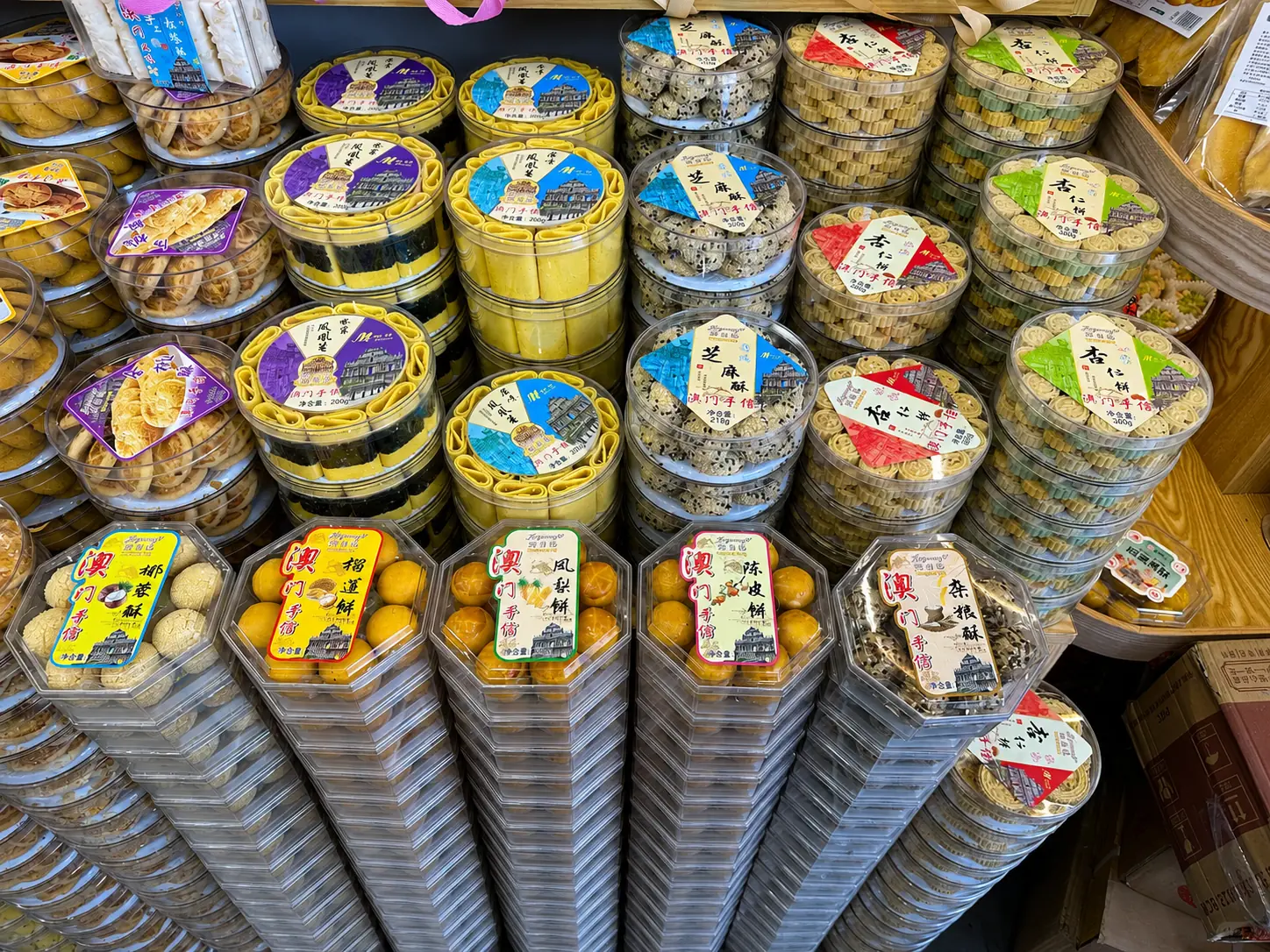
For international flights, the safest Macau food gifts are dry, non-meat items: almond cookies, egg rolls without meat floss, peanut candy, sesame snacks, and packaged sweets. Egg tarts are eat-now food. Meat jerky and pork-floss products need destination-specific checking.
Do not gamble with meat souvenirs
If customs confiscates a product, the shop will not refund you. When buying gifts for another country, choose shelf-stable non-meat snacks unless you have checked that destination's import rules.
Dietary Notes and Ordering Phrases
Allergy and Hidden Ingredients
Macau is easier than many mainland cities for English menus in tourist districts, hotels, and well-known restaurants, but allergies still need clear communication. The main risks for foreign visitors are seafood, shellfish, nuts, pork, egg, dairy, and hidden meat or seafood stock.
Vegetarian Reality Check
Vegetarians can eat in Macau, but ordinary noodle shops and Portuguese-style restaurants may use pork, chicken stock, shrimp paste, fish sauce, seafood broth, or lard even when a dish looks vegetable-based. Buddhist vegetarian restaurants and modern hotel restaurants are safer.
| English | Chinese | Pinyin | Say It Like… |
|---|---|---|---|
| Do you have an English menu? | 请问有英文菜单吗? | qing wen you ying wen cai dan ma | Ching wun yo ying-wun tsai-dan mah |
| Does this contain pork? | 这个含有猪肉吗? | zhe ge han you zhu rou ma | Juh-guh hahn yo joo-roh mah |
| I am allergic to seafood | 我对海鲜过敏 | wo dui hai xian guo min | Woh dway high-shyen gwaw min |
| I am allergic to nuts | 我对坚果过敏 | wo dui jian guo guo min | Woh dway jyen-gwaw gwaw min |
| Not too spicy | 不要太辣 | bu yao tai la | Boo yow tie lah |
| Please pack these separately | 请分开打包 | qing fen kai da bao | Ching fun-kai dah-baow |
What to Skip on a Short Visit
Skip anything that turns a one-day Macau visit into transport homework. A famous restaurant on the wrong side of your route can cost more energy than it gives back.
- Avoid making dim sum your core Macau food experience if you are also eating in Hong Kong or Guangzhou.
- Avoid raw shellfish unless you trust the restaurant and your stomach.
- Avoid bulk-buying jerky for an overseas flight unless you checked customs.
- Avoid casino buffets if you only have one real Macau dinner, unless comfort matters more than local texture for your group.
Frequently Asked Questions
For first-time visitors, Macau is most famous for Portuguese egg tarts, pork chop buns, almond cookies, pork or beef jerky, African chicken, minchi, Portuguese seafood rice, bacalhau, and serradura.
Sources checked for this guide
- UNESCO Creative Cities Network profile checked for Macao designation as a Creative City of Gastronomy and East-meets-West culinary heritage: UNESCO Creative Cities: Macao
- Macao Government Tourism Office (MGTO) release checked for official Macanese cuisine preservation and gastronomy context: MGTO: Macao Creative City of Gastronomy
Beyond This Guide
For the old-town route that naturally connects snacks with heritage, use our Macau Historic Centre walk and Ruins of St. Paul's souvenir street guide. If you are visiting from Hong Kong, place this food plan inside the Macau day trip itinerary. For a quieter cultural add-on between meals, pair Taipa or Coloane with St. Lazarus Quarter.
© gochinafreely.com — Original guide by Go China Freely.