Traveling China with a severe seafood or shellfish allergy is not just about avoiding seafood restaurants. The risky ingredient may be visible as shrimp, crab, fish, or clams, or invisible as oyster sauce, dried shrimp, dried scallop, fish sauce, shrimp paste, seafood stock, wonton filling, congee broth, hotpot soup, or a shared wok. This guide is not medical advice; it is a China restaurant framework for asking the right questions before a meal becomes a problem.

Executive Summary
Best rule
Do not rely on the word seafood alone. Name fish, shrimp, crab, shellfish, oyster sauce, dried shrimp, dried scallop, fish sauce, seafood stock, and shared tools separately.
Main traveler trap
A dish can look meat-only, vegetable-only, or noodle-only and still contain oyster sauce, dried seafood, fish sauce, seafood broth, or shellfish cross-contact.
Safer path
Use a written Chinese allergy card, choose controllable restaurant settings, carry backup food and prescribed emergency medication, and leave when answers are vague.
Seafood Allergy Needs Precise China Words
Seafood is useful as an umbrella word, but it is not precise enough for a Chinese kitchen. One traveler may react to fish. Another may react to shrimp, crab, lobster, or crayfish. Another may need to avoid oysters, clams, mussels, scallops, squid, cuttlefish, or dried seafood used as seasoning.
The practical China problem is that seafood can become flavor rather than a visible ingredient. A server may say a plate of greens has "no seafood" because there are no shrimp pieces, while the sauce still contains oyster sauce. A noodle soup may have no visible fish, while the broth is seafood-based. A wonton may look like pork until you learn the filling includes shrimp.
This guide cannot certify food safety
Do not use this article as medical advice or as a guarantee that any China restaurant is safe. Travelers with diagnosed severe allergies should follow their clinician's plan, carry prescribed medication, and avoid any meal that cannot be clearly confirmed.
Fish, Shellfish, and Mollusks Differ in Labels

In U.S. labeling rules, the FDA lists fish and crustacean shellfish among the major food allergens. FDA guidance gives crab, lobster, and shrimp as examples of crustacean shellfish, while explaining that molluscan shellfish such as oysters, clams, mussels, and scallops are not treated as crustacean shellfish under that U.S. statutory definition.
FARE's shellfish page makes the travel issue clear: crustacean shellfish must be identified on U.S. packaged foods, while mollusks are not required to be labeled the same way and may appear unexpectedly. That U.S. rule is not a China restaurant rule, but it explains why your Chinese card should not stop at one English word.
| Category | Chinese to Show | Examples to Name |
|---|---|---|
| Fish | 鱼 | Fish meat, fish balls, fish broth, fish sauce, fish powder. |
| Crustacean shellfish | 虾 / 蟹 / 甲壳类 | Shrimp, prawns, crab, crayfish, lobster, shrimp paste, dried shrimp. |
| Mollusks and shellfish | 贝类 | Oysters, clams, mussels, scallops, abalone, shellfish stock, oyster sauce. |
| General seafood | 海鲜 | Useful as a broad warning, but not enough by itself for severe allergy. |
If you do not know whether you can tolerate mollusks, oysters, scallops, or fish sauce, do not experiment while traveling. Use the strict version of your allergy card and follow your allergist's guidance.
The Oyster Sauce Trap in China

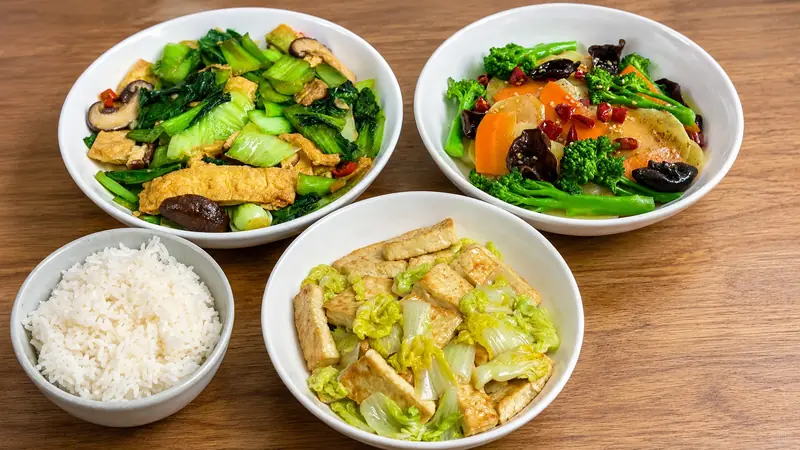
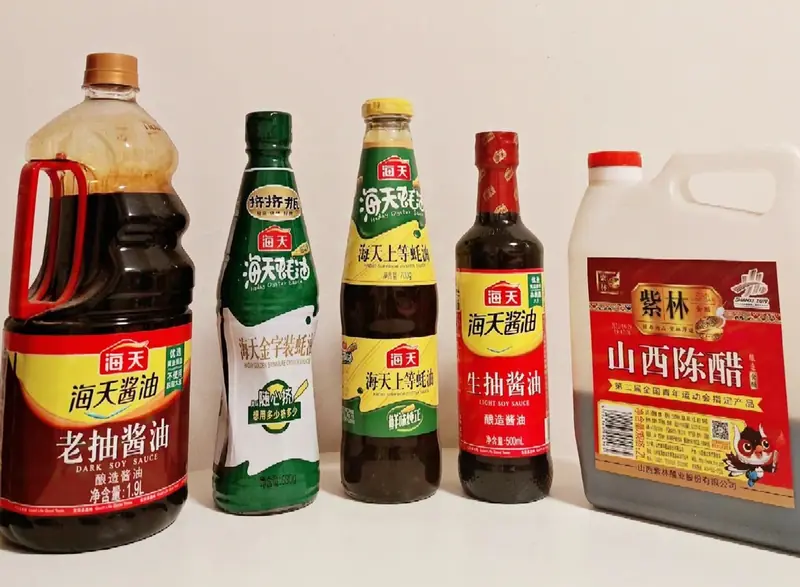
Oyster sauce is the quiet trap in many China meals. It does not always taste strongly like seafood, and it often appears in dishes that look safe at first glance: stir-fried greens, mushrooms, beef, chicken, tofu, noodles, rice, and glossy brown sauces.
The Bon Appétit oyster sauce explainer describes modern bottled oyster sauce as using oyster extractives for its flavor. MyFoodAllergyTeam also notes that regular oyster sauce contains some form of oyster, and advises people with shellfish allergy who are unsure about oysters to avoid it.
That is why "no seafood" is weaker than "no oyster sauce." A server may understand seafood as shrimp, crab, fish, or shellfish pieces. Oyster sauce may be treated as a seasoning, not a visible seafood ingredient.
Vegetable does not mean seafood-free
In Chinese restaurants, a plate of greens, mushrooms, tofu, beef, or noodles may still use oyster sauce, dried shrimp, dried scallop, fish sauce, or seafood stock. Ask about sauces and broth, not only visible seafood.
Hidden Seafood Ingredients to Ask About

Use this as your inspection list before ordering. For severe allergies, ask before the dish is cooked, not after it arrives.
Small dried seafood can be used to add umami even when the main dish is vegetable, pork, beef, chicken, tofu, or noodles.
| Chinese | English | Where It Hides |
|---|---|---|
| 蚝油 | Oyster sauce | Greens, mushrooms, beef, chicken, tofu, noodles, stir-fries, sauces. |
| 虾皮 / 虾米 | Dried shrimp | Congee, soy milk, dumplings, wontons, soups, fried rice, vegetable dishes. |
| 干贝 / 瑶柱 | Dried scallop | Broth, congee, sauces, Cantonese and Fujian-style dishes. |
| 虾酱 | Shrimp paste | Coastal, Cantonese, Fujian, Southeast Asian-influenced sauces. |
| 鱼露 | Fish sauce | Cold dishes, sauces, marinades, coastal and Southeast Asian-influenced dishes. |
| 海鲜高汤 / 海鲜汤 | Seafood stock / seafood broth | Noodle soup, wonton soup, congee, hotpot, rice noodles, clay pots. |
| 鱼丸 / 虾丸 / 墨鱼丸 | Fish, shrimp, or cuttlefish balls | Hotpot, malatang, noodle shops, street snacks, soup counters. |
Also ask about XO sauce, seafood powder, mixed dumpling fillings, dim sum fillings, and soup bases.
High-Risk China Restaurant Situations for Seafood

Some settings are harder to control because seafood is everywhere in the kitchen, the broth is shared, or the food is made ahead.
Use the table as a risk filter, not as a promise that another setting is safe.
| Situation | Why It Is Risky | Conservative Move |
|---|---|---|
| Seafood restaurants and live tanks | High cross-contact risk from tanks, chopping boards, woks, steamers, sauces, and staff workflow. | Avoid if your allergy is life-threatening unless you have a very clear clinician-approved plan. |
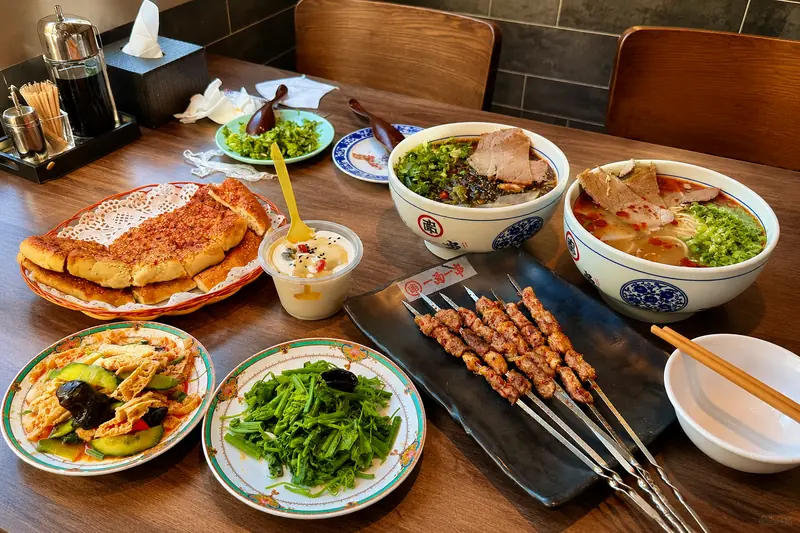
| Cantonese, Hong Kong, and dim sum meals | Oyster sauce, shrimp dumplings, siu mai, dried scallop, seafood stock, and shared steamers are common. | Use a written card and avoid mixed fillings or unclear sauces. |
| Fujian, Xiamen, Chaoshan, and coastal food | Dried seafood, fish sauce, shrimp paste, satay-style sauces, seafood broth, and shellfish can be core flavors. | Plan safer meals before arriving in seafood-heavy areas. |
| Hotpot, malatang, and soup counters | Broths, shared baskets, fish balls, shrimp balls, shellfish, and sauce stations create many contact points. | Skip shared broth and self-serve sauce setups for severe allergy. |
| Wontons, dumplings, congee, and noodle soups | Fillings and broth can include shrimp, dried shrimp, fish, scallop, or seafood stock. | Do not rely on the English name. Ask about filling and soup base. |
Decision shortcut
Should I eat here?
They read the card and ask the kitchen
Possible, but still choose simple food and confirm sauce, broth, filling, and tools.
They only say no visible seafood
Not enough. Ask about oyster sauce, dried shrimp, dried scallop, fish sauce, and stock.
It is a seafood-heavy kitchen
Treat cross-contact risk as high, especially with life-threatening allergy.
The answer is vague or rushed
Leave or eat backup food. Vague answers are not useful for severe allergy.
Safer Meal Strategy for Severe Allergy

"Safer" does not mean "safe." It means easier to verify. The goal is to reduce hidden sauces, mixed fillings, shared broth, and rushed communication.
Better starting points can include hotel restaurants, higher-end mall restaurants, self-catering stays, packed safe foods from home, and very simple orders that the kitchen can explain clearly.
- International hotels: usually better at reading written allergy cards and involving kitchen staff.
- Higher-end mall restaurants: often slower-paced than street stalls and more likely to have a manager who can help.
- Self-catering stays: useful for breakfast, children, remote days, and seafood-heavy coastal routes.
- Packaged safe foods from home: important for flights, trains, scenic areas, late arrivals, and days when restaurants cannot answer.
- Simple orders: plain rice, plain congee, steamed egg, plain noodles, or simply cooked vegetables may be easier to discuss than dim sum, soups, sauces, or stir-fries.
Even then, ask about oyster sauce, dried shrimp, dried scallop, fish sauce, shrimp paste, seafood stock, and shared tools. A plain-looking vegetable can still be cooked with oyster sauce. A congee bowl can still use dried seafood. A soup can still use a seafood base.
How to Use a Chinese Allergy Card

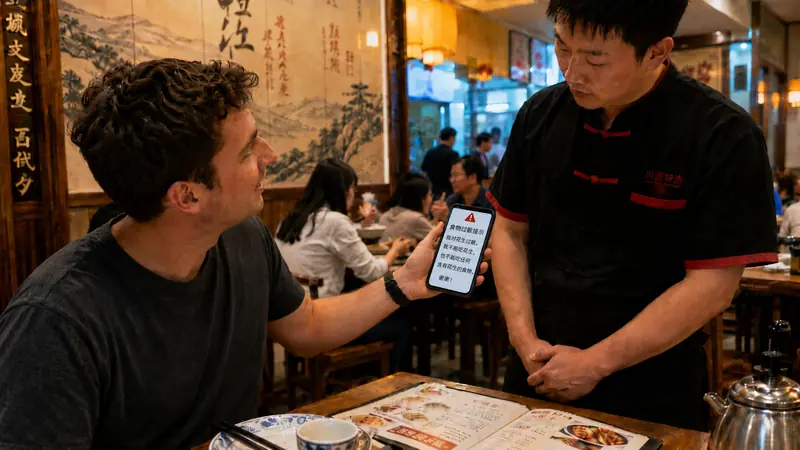
Do not rely on one short sentence. "I am allergic to seafood" may be understood as "do not serve me a seafood dish." It may not trigger a check for oyster sauce, dried shrimp, broth, fish sauce, or a shared wok.
The card works best when staff have time to read it and check with the kitchen before cooking begins.
Use this order:
- Show the card before ordering- Do this before the kitchen starts cooking, not after the dish arrives.
- Let the server read it fully- Do not reduce the message to one spoken word like seafood.
- Ask them to check with the kitchen- The person taking the order may not know the sauce, stock, filling, or cooking tools.
- Wait for a clear answer- Probably, maybe, and should be okay are not enough for severe allergy.
- Leave if uncertain- Politeness is not worth an avoidable reaction.
Your card should say something like this:
Severe seafood allergy card core text
我对海鲜、鱼、虾、蟹和贝类严重过敏。少量也可能有生命危险。请不要使用鱼、虾、蟹、贝类、蚝油、虾皮、虾米、干贝、瑶柱、鱼露、虾酱、海鲜汤或海鲜高汤,也不要使用碰过这些食材的油、锅、铲子、勺子、夹子、砧板或刀。如果不能保证,请告诉我,我不吃。谢谢。
Carry a printed version as well as a phone screenshot. If your allergy is only to one category, edit the card with your allergist's guidance and remove categories that do not apply.
Phrases for Seafood and Shellfish Allergies
Show the Chinese characters
Save these phrases as a screenshot or printout. For serious allergies, show the characters first and treat pronunciation as backup only.
| English | Chinese | Pinyin | Say It Like… |
|---|---|---|---|
| I have a severe seafood allergy. | 我对海鲜严重过敏。 | wǒ duì hǎi xiān yán zhòng guò mǐn | Woh dway high-shyen yen-jong gwor-meen |
| I have a severe fish allergy. | 我对鱼严重过敏。 | wǒ duì yú yán zhòng guò mǐn | Woh dway yoo yen-jong gwor-meen |
| I have a severe shrimp allergy. | 我对虾严重过敏。 | wǒ duì xiā yán zhòng guò mǐn | Woh dway shyah yen-jong gwor-meen |
| I have a severe crab allergy. | 我对蟹严重过敏。 | wǒ duì xiè yán zhòng guò mǐn | Woh dway shyeh yen-jong gwor-meen |
| I have a severe shellfish or mollusk allergy. | 我对贝类严重过敏。 | wǒ duì bèi lèi yán zhòng guò mǐn | Woh dway bay-lay yen-jong gwor-meen |
| Even a small amount can be life-threatening. | 少量也可能有生命危险。 | shǎo liàng yě kě néng yǒu shēng mìng wēi xiǎn | Shaow lyahng yeh kuh nung yo shung-ming way-shyen |
| No oyster sauce. | 不要蚝油。 | bù yào háo yóu | Boo yow how-yo |
| No dried shrimp. | 不要虾皮,也不要虾米。 | bù yào xiā pí, yě bù yào xiā mǐ | Boo yow shyah pee, yeh boo yow shyah mee |
| No dried scallop. | 不要干贝,也不要瑶柱。 | bù yào gān bèi, yě bù yào yáo zhù | Boo yow gahn bay, yeh boo yow yaow-joo |
| No fish sauce, shrimp paste, seafood soup, or seafood stock. | 不要鱼露、虾酱、海鲜汤或海鲜高汤。 | bù yào yú lù, xiā jiàng, hǎi xiān tāng huò hǎi xiān gāo tāng | Boo yow yoo loo, shyah jyahng, high-shyen tahng hwaw high-shyen gaow tahng |
| Please use a clean wok and a clean spatula. | 请用干净的锅和干净的铲子。 | qǐng yòng gān jìng de guō hé gān jìng de chǎn zi | Ching yong gahn-jing duh gwaw huh gahn-jing duh chan-dz |
| If you cannot guarantee it, please tell me. I will not eat. | 如果不能保证,请告诉我,我不吃。 | rú guǒ bù néng bǎo zhèng, qǐng gào su wǒ, wǒ bù chī | Roo gwaw boo nung baow-jung, ching gow soo woh, woh boo chir |
| Please call an ambulance. | 请叫救护车。 | qǐng jiào jiù hù chē | Ching jyow jyoh-hoo-chuh |
Pack and Plan Before You Fly

Food planning and medical planning need to travel together. The CDC Yellow Book advises travelers at risk for anaphylaxis to carry injectable epinephrine, an anaphylaxis action plan, and medical phrase cards, and to confirm nearby medical facilities. FARE's emergency care plan page describes a physician-signed plan with treatment recommendations and emergency contacts.
Build a practical kit before the travel day, not after the first restaurant says it cannot confirm ingredients.
- Emergency medication: prescribed epinephrine and other medication according to your clinician's plan.
- Paperwork: allergy action plan, doctor letter, prescriptions, and original packaging.
- Communication: printed Chinese allergy cards, phone screenshots, medical phrases, and local emergency contacts.
- Food backups: safe snacks for flights, trains, scenic areas, early starts, late arrivals, and days when restaurants cannot answer.
- City planning: save nearby hospital or international clinic options in each major stop.
Do not assume the same medication or device is easy to replace locally. A boring backup meal is better than gambling on a sauce, broth, or filling that no one can explain.
China prepackaged labels cover crustaceans and fish — not mollusks or restaurants
Under China's updated prepackaged-food labeling standard (GB 7718-2025, mandatory from March 16, 2027 after a two-year transition), sealed prepackaged foods must declare crustaceans (甲壳纲) and fish (鱼类) except specified deeply processed derivatives under Appendix D (such as fish gelatin used as a vitamin carrier or clarifying agent). Crucially, molluscan shellfish (贝类 — oysters, scallops, clams, mussels) are not in the mandatory eight categories, precautionary "may contain" cross-contact warnings remain voluntary, older labels circulate through the transition, and freshly made restaurant meals are exempt. An absent allergen warning never proves absence of seafood derivatives, mollusks, or cross-contact — always read the full 配料表 (ingredient list) for 蚝油, 干贝/瑶柱, and 虾皮/虾米.
Frequently Asked Questions
It can be managed with planning, but severe seafood, fish, or shellfish allergy requires precise Chinese, a written allergy card, backup food, and conservative restaurant choices.
Sources checked for this guide
- GB 7718-2025 mandatory prepackaged allergen warnings for crustaceans (甲壳纲) and fish (鱼类), March 16, 2027 implementation date, non-inclusion of mollusks in the mandatory eight categories, and restaurant exemption: Quanzhou Market Supervision Administration — GB 7718-2025 compliance guide
- Distinction between crustacean shellfish and mollusks, cross-contact risks, and hidden seafood ingredients: FARE — Shellfish Allergy overview
- Physician-signed anaphylaxis emergency care plan and epinephrine readiness: FARE — Food Allergy & Anaphylaxis Emergency Care Plan
- Severe allergic reaction warning signs and immediate adrenaline auto-injector protocol: NHS — Anaphylaxis guidance
- Carrying local-language allergy and medication cards when traveling in China: CDC Travelers' Health — China
- 120 national emergency ambulance dispatch rules in China: Beijing Municipal Health Commission — 120 emergency guidance
Beyond This Guide
For pre-trip medical preparation, emergency 120 workflow, and hospital communication, start with our China food allergies and dietary restrictions guide. For nearby dietary-risk reading, use Peanut, Nut, and Sesame Allergy Guide, Hidden Pork and Broth in Chinese Veggie Dishes, and Halal Food in China. Food-specific guides such as Cantonese Cuisine, Baozi, Wontons, Bingfen, and Youtiao and Doujiang can help you spot where sauces, dried seafood, shellfish, shrimp, fish, wheat, soy, or shared tools enter simple-looking meals.
© gochinafreely.com — Original guide by Go China Freely.