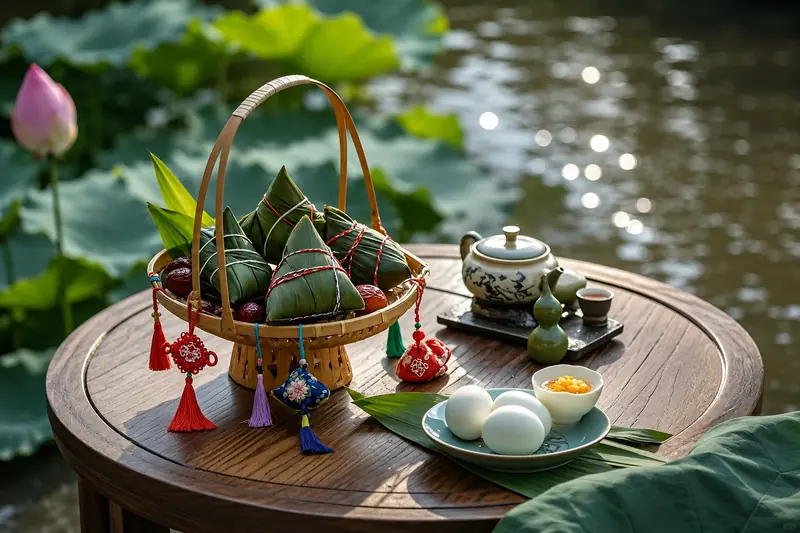
Zongzi (粽子) are the leaf-wrapped sticky rice dumplings Chinese families buy, make, gift, and eat around Dragon Boat Festival (端午节). The festival falls on the fifth day of the fifth lunar month; in 2026, the mainland China public holiday runs from June 19 to 21. For travelers, the useful question is not only what zongzi mean, but what is inside the one in front of you: red dates, pork belly, salted egg yolk, peanuts, seafood, or something else entirely.
Executive Summary
What this guide covers
Dragon Boat Festival meaning, sweet and savory styles, common fillings, where travelers find zongzi, how to buy them, safety notes, and ordering phrases.
Best first try
Choose red date or red bean paste zongzi for a gentle sweet version, or a small pork-and-salted-egg-yolk zongzi for the classic savory festival bite.
Main traveler trap
Do not treat sticky rice dumpling as one fixed food. Regional styles, package labels, fillings, and dietary risks vary a lot.
5th
5th lunar month
Jun 19-21
2026 mainland holiday
Sweet or savory
Main flavor split
No
Leaf is not eaten
Zongzi and Dragon Boat Festival Meaning
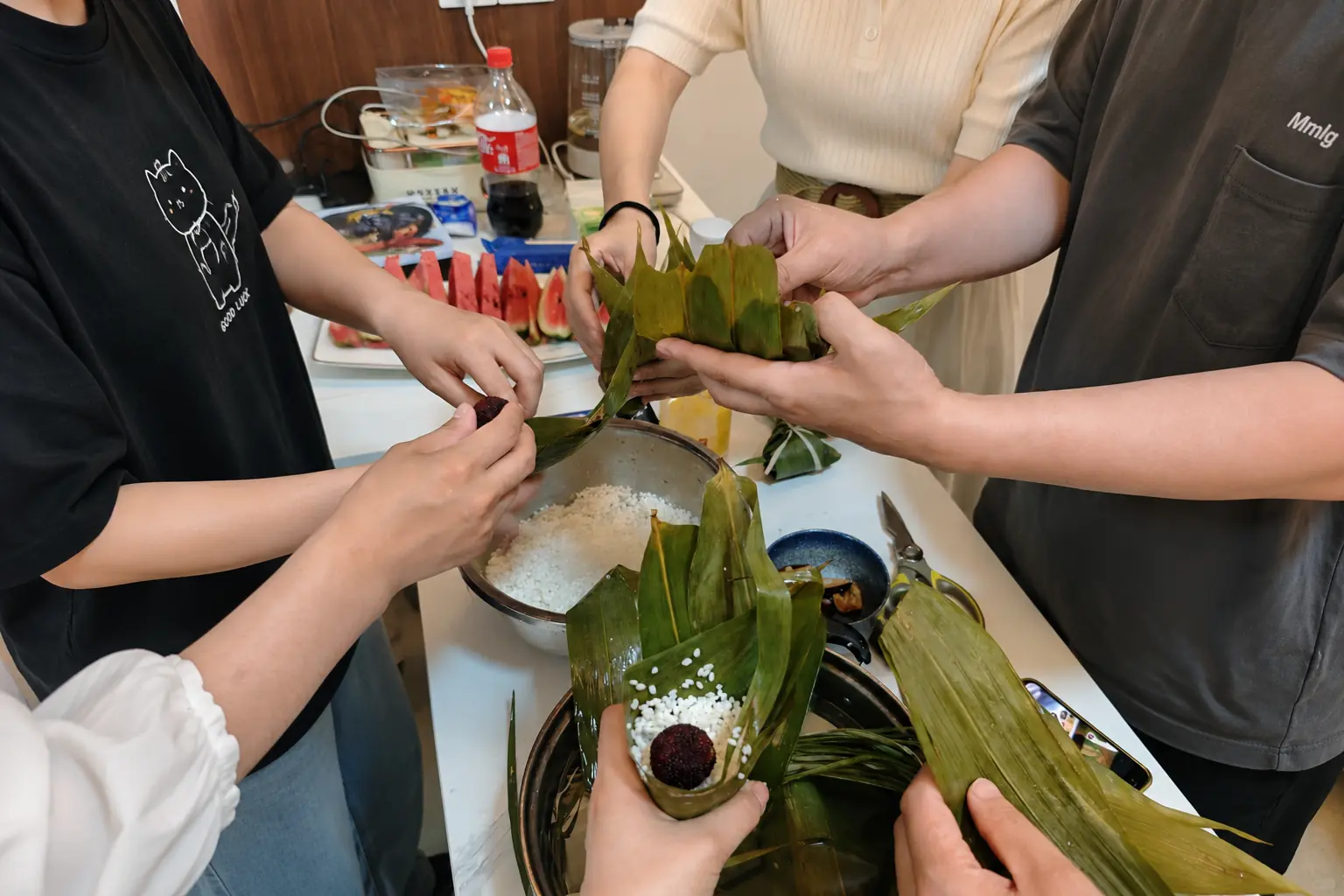
Dragon Boat Festival is one of the traditional Chinese festivals with the clearest food symbol. The best-known modern story connects it with Qu Yuan (屈原), the patriotic poet whose death is commemorated through dragon boat racing and rice dumplings. A Shanghai municipal culture article notes that the festival falls on the fifth day of the fifth Chinese calendar month and has several origin legends, with Qu Yuan as the most prominent popular narrative. Shanghai Dragon Boat Festival overview
For a travel guide, it is safer to say that Qu Yuan is the story most visitors will hear, not that every scholar or region traces the festival to one single origin. Beijing's official folklore page also discusses several figures and customs connected with Dragon Boat Festival, a useful reminder that this is a layered festival, not a neat one-line legend. Beijing folklore note

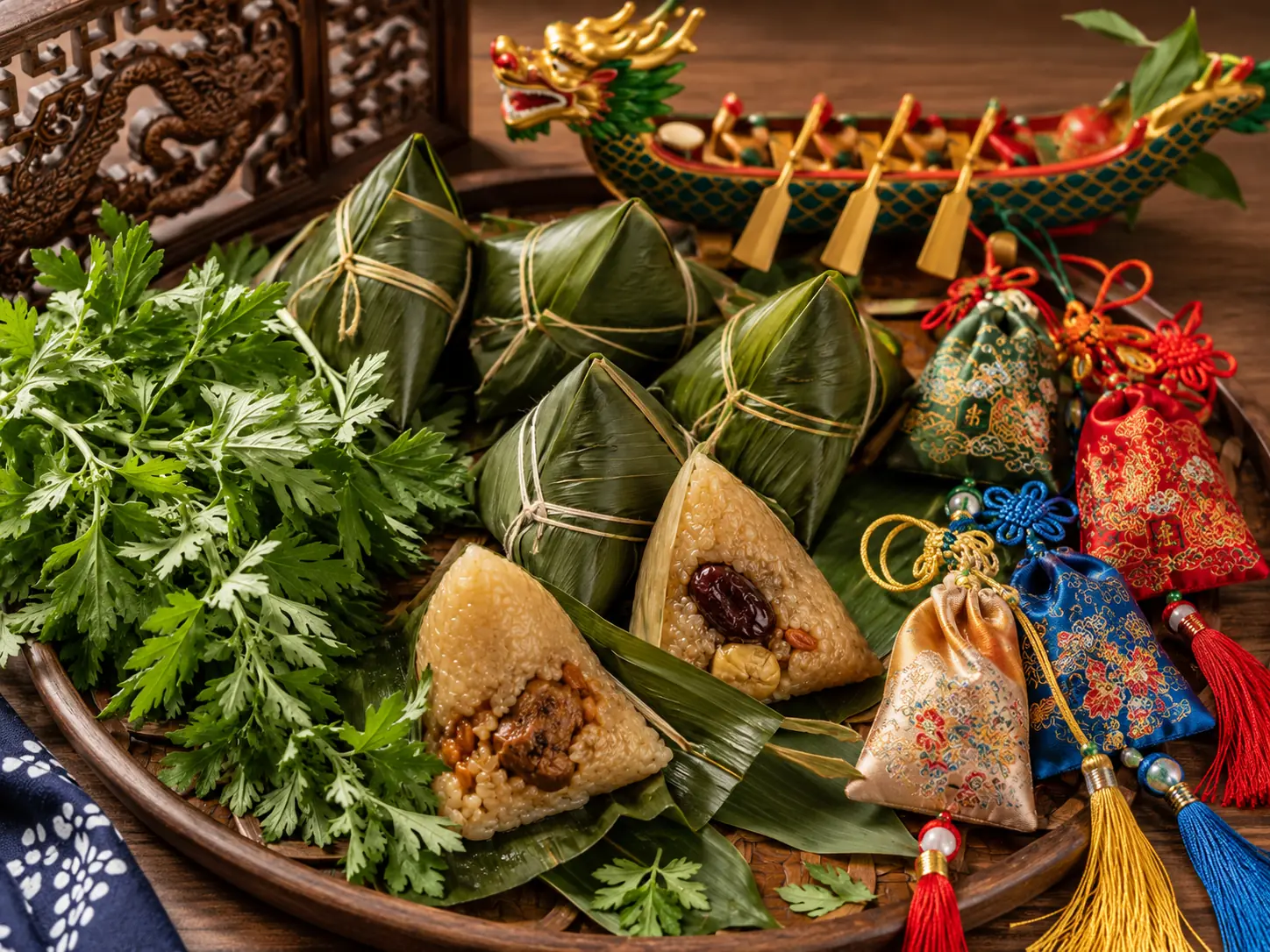
The food itself is easier to read than the origin story. Zongzi are glutinous rice parcels wrapped in bamboo leaves, reed leaves, or other local plant leaves, tied with string, then boiled or steamed until the rice turns dense and fragrant. The leaf gives shape and aroma. It is not the part you eat.
For travel planning, note the dates. The 2026 public-holiday notice republished by Beijing Haidian lists Dragon Boat Festival as a three-day mainland China holiday from June 19, Friday, to June 21, Sunday. 2026 public holiday notice Expect modest holiday crowds, dragon boat events in some waterside cities, and zongzi displays in supermarkets and food shops.
Festival timing
Dragon Boat Festival is a short holiday, not a Golden Week. It still affects hotel prices, train demand, riverside event crowds, and opening hours in some places, so check city-specific events if your trip overlaps June 19-21, 2026.
Sweet and Savory Zongzi Across China
The easiest traveler shortcut is sweet north, savory south. It helps, but it is not a rule. Many northern diners think first of red date zongzi (红枣粽), candied-date zongzi (蜜枣粽), or red bean paste zongzi (豆沙粽). Many Jiangnan (江南), Fujian (福建), Guangdong (广东), Hong Kong (香港), Macau (澳门), and Taiwan (台湾) versions lean savory, meaty, or seafood-rich.
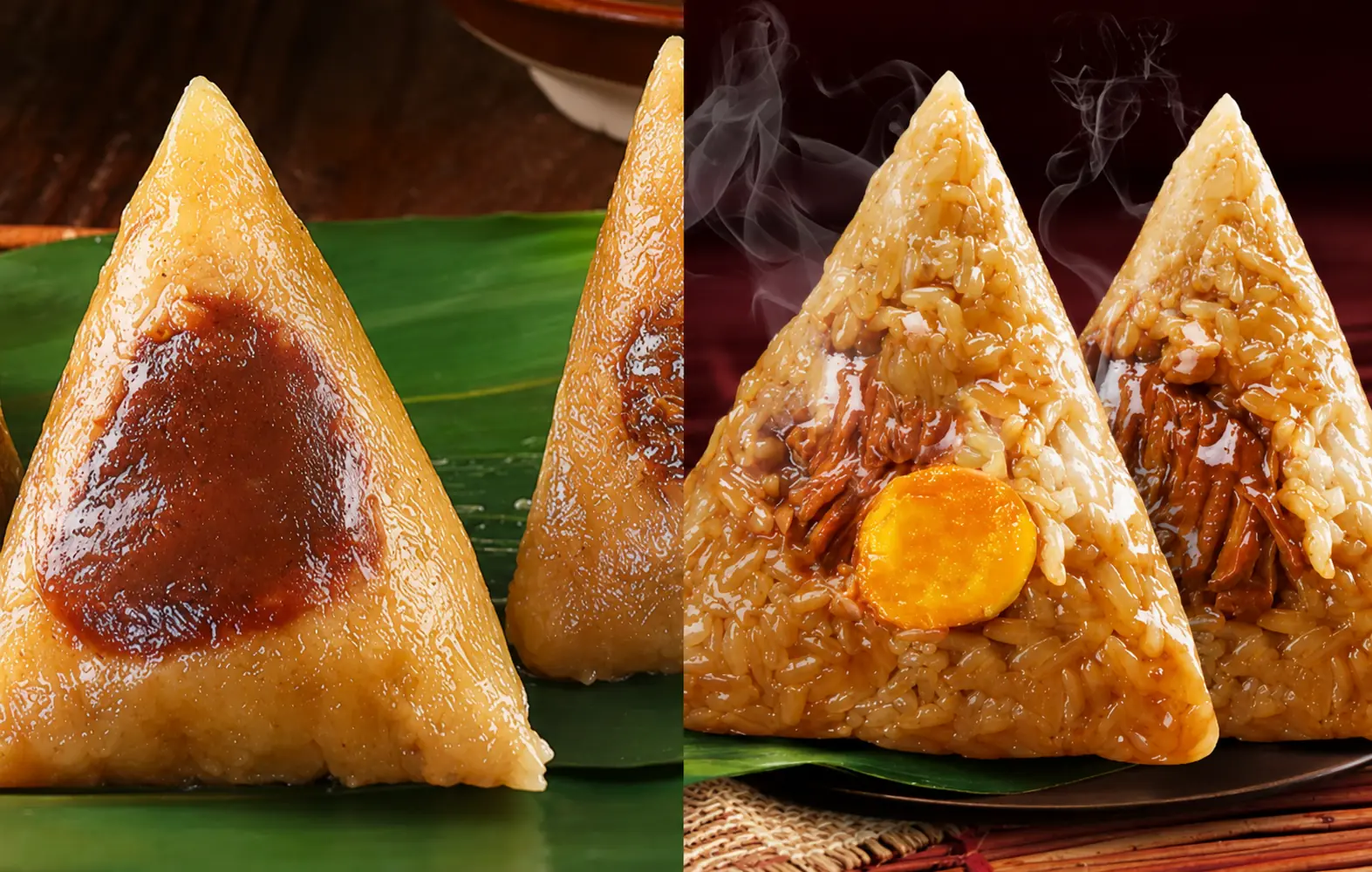
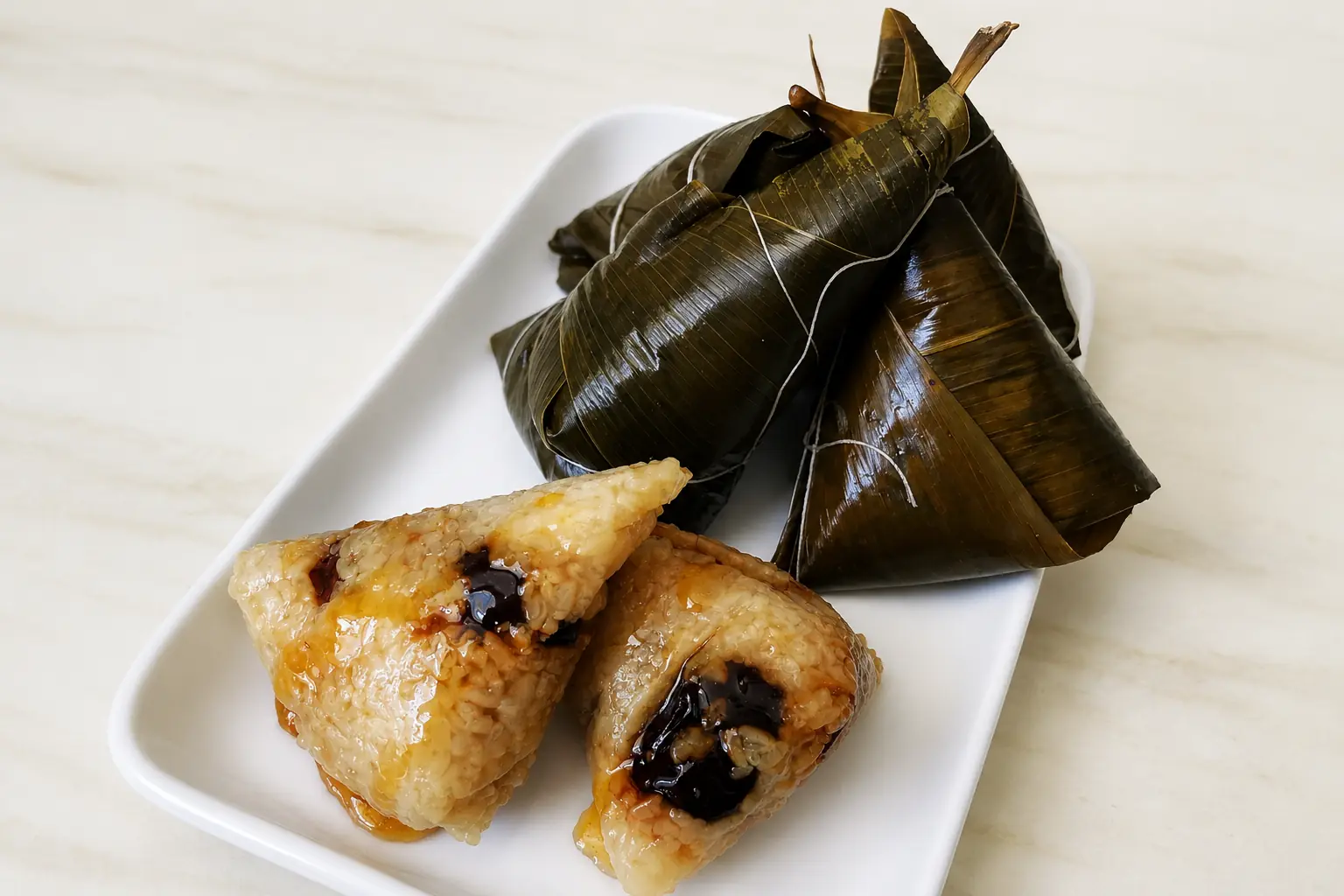
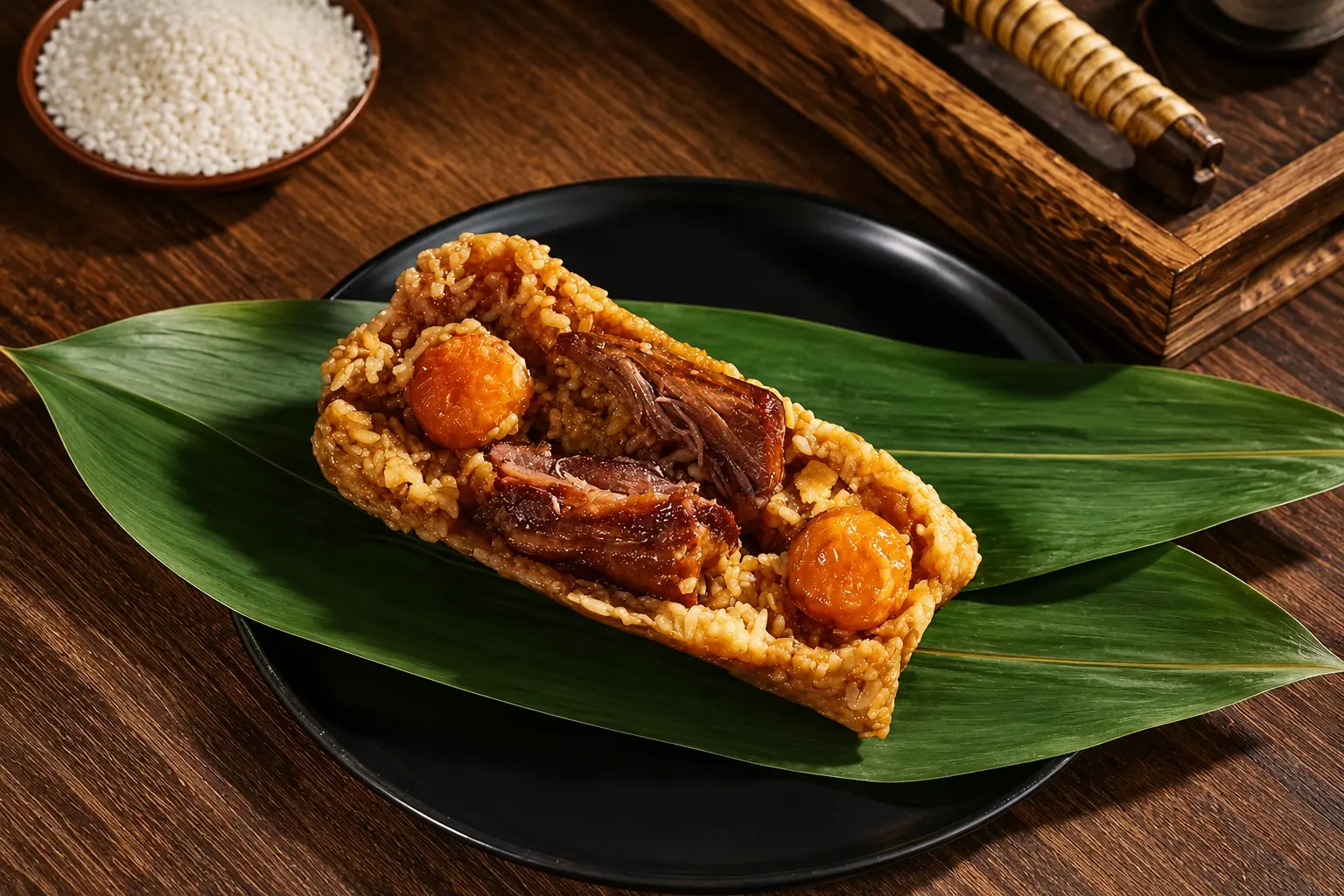
Use the shortcut only to start the conversation. Northern shops can sell savory zongzi; southern shops can sell sweet ones; modern gift boxes often mix several styles in one package. The more useful question is direct: is this sweet or savory, and does it contain meat?
Sweet zongzi are usually the gentler first bite. Red date, candied date, red bean paste, and alkaline zongzi dipped in sugar or syrup are easy to understand if you like sticky rice desserts. They are not always light, but they are less likely to surprise you with pork, seafood, or salted egg yolk.
Savory zongzi eat more like a meal. Pork belly, soy-seasoned pork, salted duck egg yolk, mushrooms, chestnuts, mung beans, peanuts, dried shrimp, dried scallops, and other regional fillings may appear. One large meat zongzi can be enough for lunch if you are already snack-hopping.
Decision shortcut
Which zongzi should I try first?
I want a gentle first bite
Choose red date or red bean paste zongzi. The flavor is sweet, simple, and easy to recognize.
I want the classic savory route
Try a small pork zongzi or pork-and-salted-egg-yolk zongzi, especially in Jiangnan cities.
I avoid pork
Ask clearly before buying. Many savory zongzi use pork, pork fat, meat stock, or pork-seasoned rice.
I am sharing with friends
Buy one sweet and one savory zongzi, cut them open, and compare textures before buying a box.
What Usually Goes Inside a Zongzi
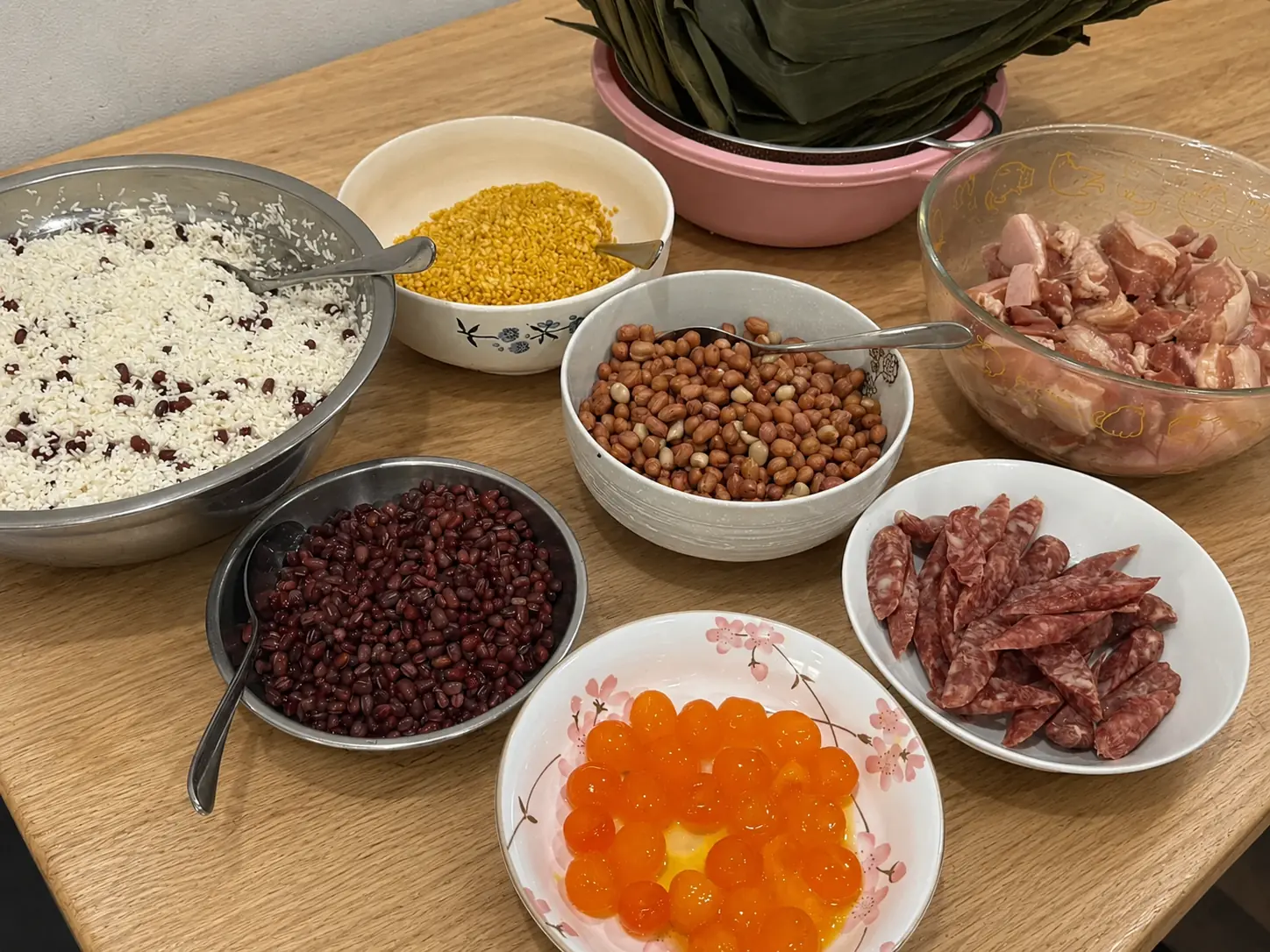
Sweet zongzi are built around sticky rice and a clean sweet center. Red dates are the safest classic. Red bean paste is softer and dessert-like. Alkaline zongzi (碱水粽) are yellowish, springier, and often served with sugar, honey, or syrup rather than a heavy filling.
Savory zongzi are where local identity shows up. Pork fat melts into the rice. Soy sauce stains the grains brown. Salted egg yolk adds a dense orange center. Mushrooms, chestnuts, mung beans, peanuts, dried shrimp, and dried scallops bring fragrance and texture. Two savory zongzi with the same English label can eat very differently.
Jiaxing (嘉兴) in Zhejiang (浙江) is one of the easiest places to mention when explaining famous zongzi. A China Daily feature describes Wufangzhai, a time-honored Jiaxing brand, as known for meat zongzi, with its zongzi-making technique placed on China's national intangible cultural heritage list in 2011. Wufangzhai zongzi background
Do not take that as the only benchmark. Quanzhou (泉州) has pork zongzi as part of its Minnan (闽南) snack culture. Cantonese and Hong Kong styles may be larger and richer. Some minority-region rice dumplings are much bigger, smoky, or packed with cured meat. Zongzi is a food family, not one standardized product.
| Filling | Chinese | Taste | Watch Out For |
|---|---|---|---|
| Red date | 红枣 | Sweet, simple, lightly fruity | Pits or hard date pieces in rustic versions |
| Red bean paste | 豆沙 | Smooth, sweet, mild | Can be very sweet |
| Pork belly | 五花肉 | Rich, soy-scented, filling | Pork, pork fat, and sometimes alcohol in marinade |
| Salted egg yolk | 咸蛋黄 | Dense, salty, festive | Egg allergy and strong richness |
| Peanuts or beans | 花生 / 绿豆 | Nutty or earthy | Peanut and legume allergies |
| Dried shrimp or scallops | 虾米 / 干贝 | Seafood umami | Seafood allergy; not vegetarian |
Zongzi Shapes, Leaves, and Cooking Methods
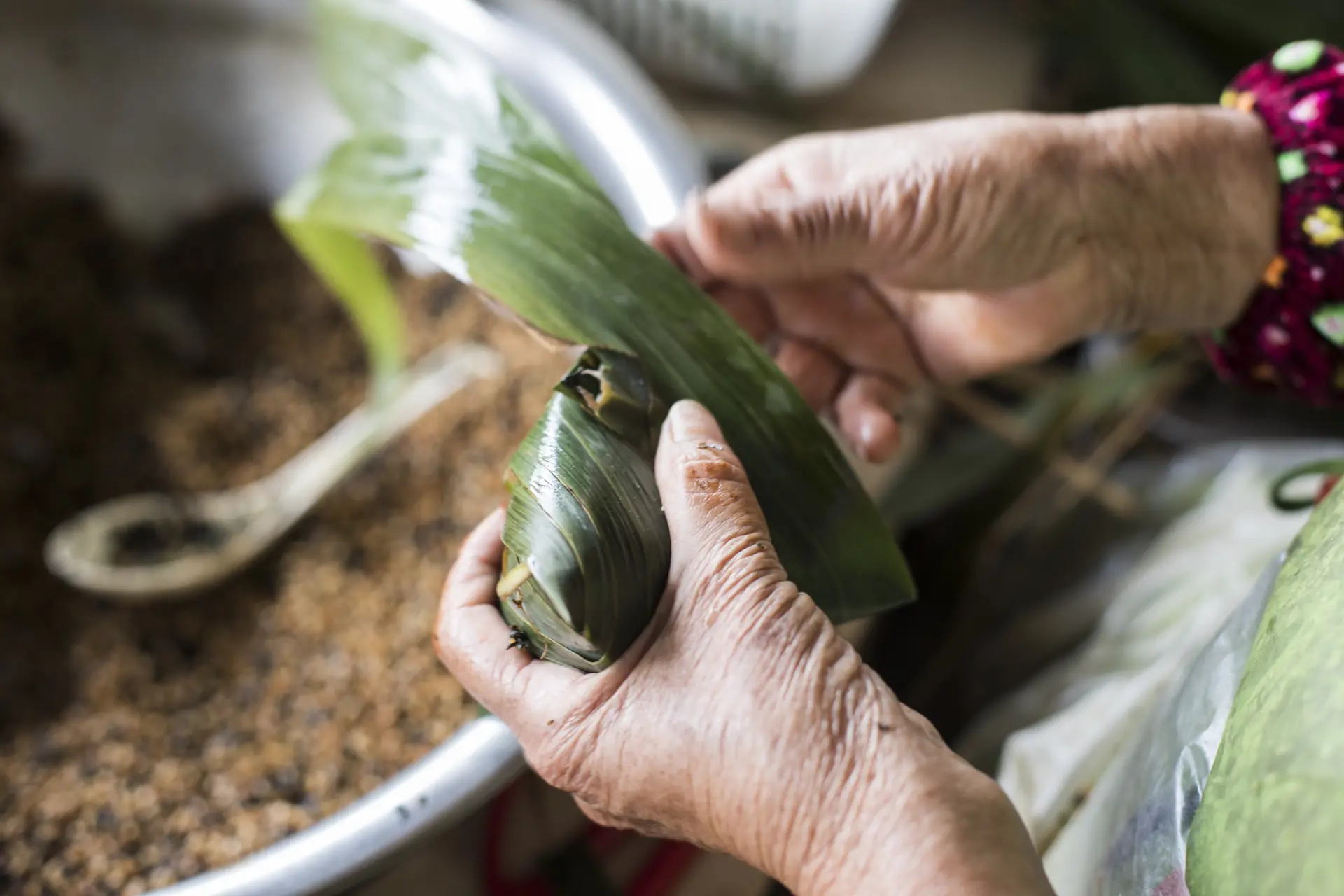
Zongzi shape changes by region and maker. You may see triangular pyramids, four-cornered parcels, long pillow shapes, or large bundles. Shape is useful for recognition, but it is not a perfect map of flavor. The safest method is still to ask about the filling.
The wrapper leaf also varies. English descriptions often say bamboo leaves or reed leaves, but local makers may use other plant leaves depending on region, season, and habit. The leaf is part cooking vessel, part perfume, part handle. It is peeled away before eating.
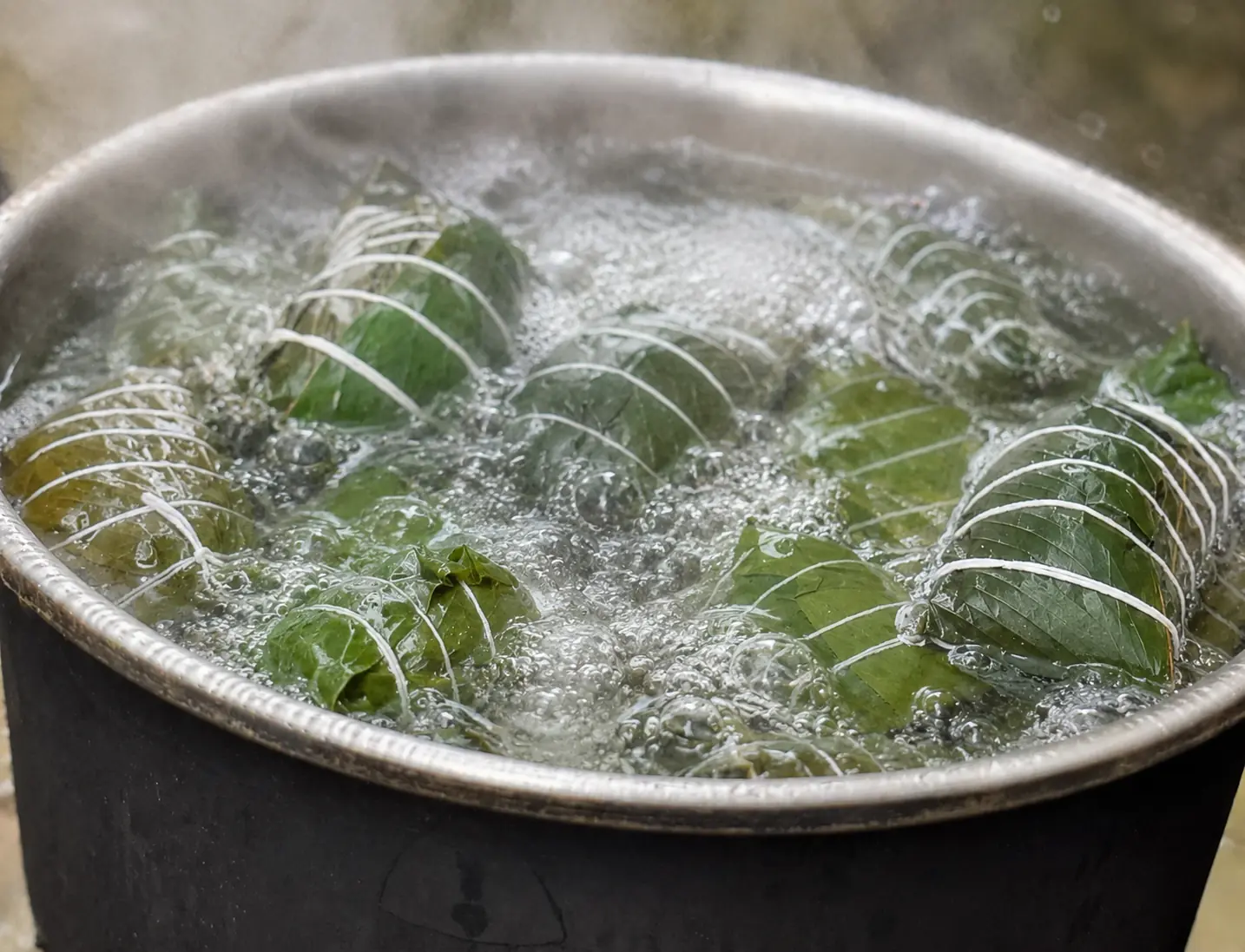
The basic process is slow. Rice is soaked, fillings are seasoned, leaves are folded, parcels are tied tight, and the zongzi are boiled or steamed until the rice is fully cooked. That density is why reheating matters. A cold zongzi from the fridge is not the same experience as a hot one, and a partially warmed meat zongzi can be unpleasant in the center.
Leaf rule
Untie or cut the string, peel back the leaf, and eat the rice and filling inside. If you are unsure, ask the seller or point to the leaf and say: do I eat this?
Where Travelers Find Zongzi in China
The strongest zongzi season begins before Dragon Boat Festival. Supermarkets build gift-box displays, time-honored brands run seasonal counters, hotels may offer zongzi at breakfast, and some waterside towns or cultural venues hold wrapping activities. In 2026, that seasonal window peaks around the June 19-21 mainland holiday.
Jiangnan Counters
嘉兴 · 上海 · 杭州
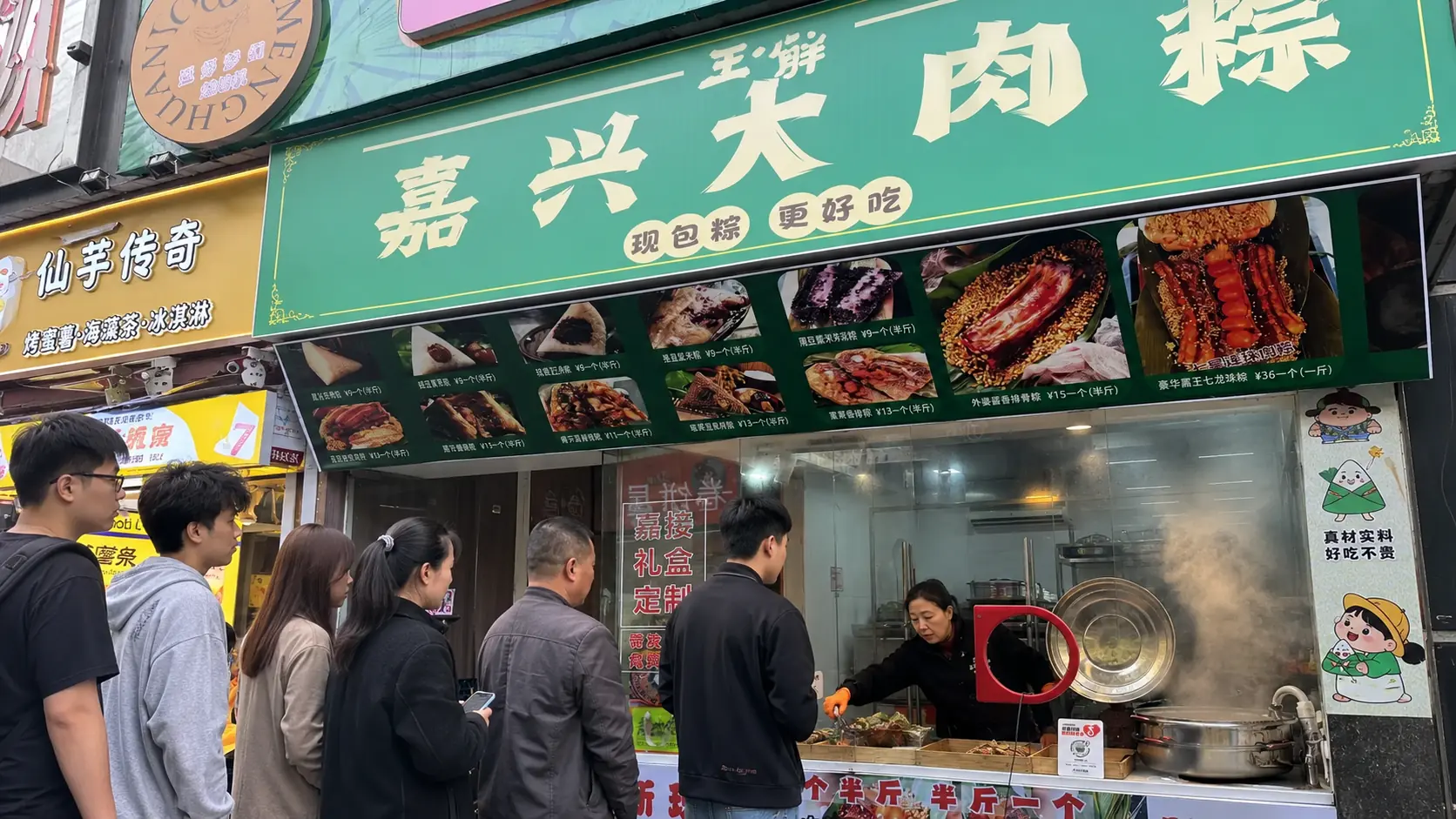
In Shanghai, Hangzhou, Suzhou, Jiaxing, Huzhou, Nanjing, and other Jiangnan cities, savory meat zongzi and salted-egg-yolk zongzi are the most useful first targets.
Supermarket Packs
Gift boxes and vacuum packs
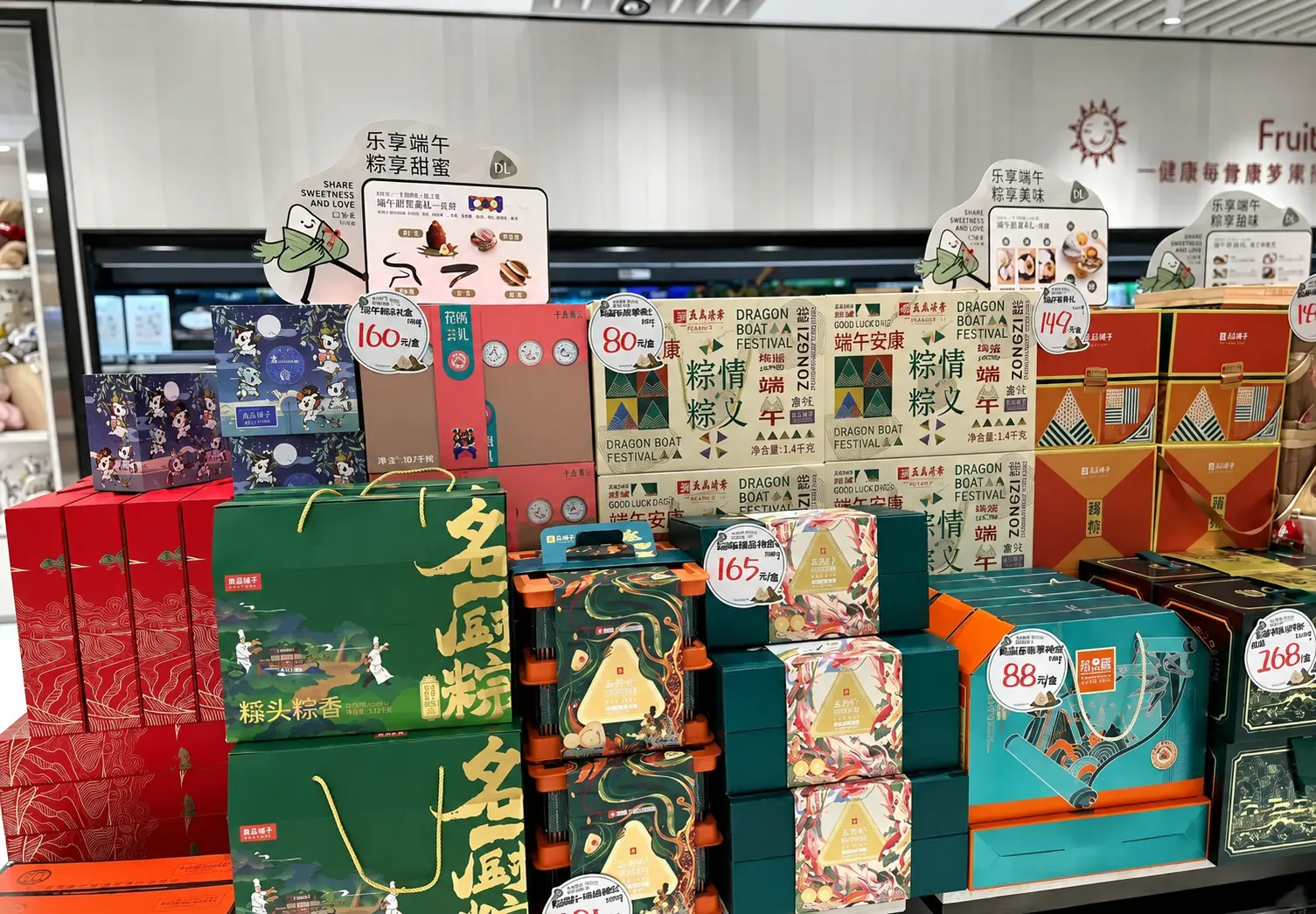
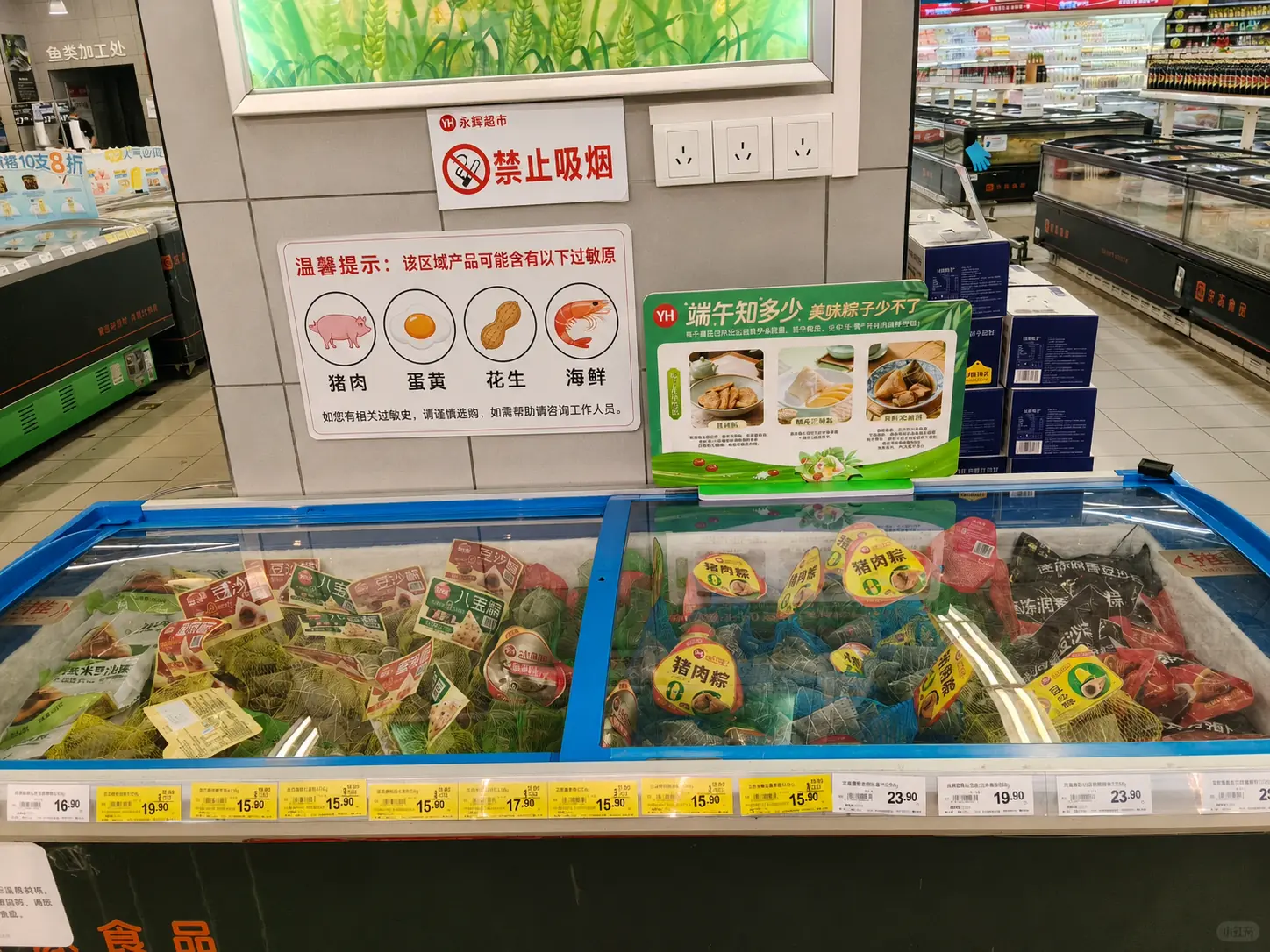
Supermarkets are convenient for mixed flavors, frozen packs, and gifts. Check labels for storage, expiration dates, and pork, egg, peanut, or seafood fillings.
Breakfast Counters
Convenience stores and hotels
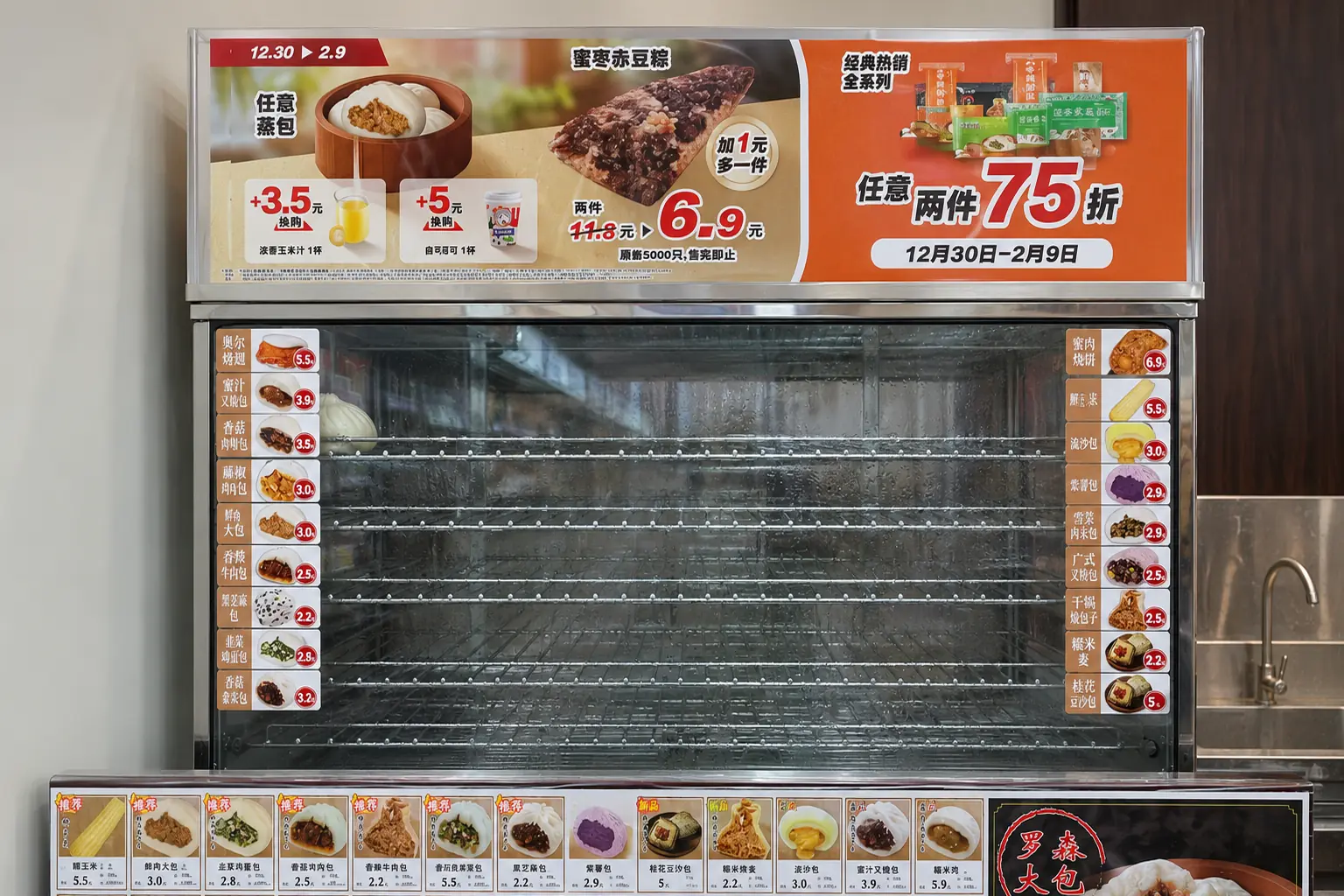
Convenience-store or hotel breakfast zongzi are low-commitment first bites. Ask whether they can heat one for you and start with a single piece.
In Beijing, Tianjin, Xi'an, Shandong, and other northern or wheat-focused food regions, sweet zongzi with dates or bean paste may feel more familiar as a festival snack. That said, Beijing municipal food coverage for Dragon Boat Festival also lists many modern and savory Beijing shop versions, which shows how blurred the market has become. Beijing zongzi shop guide
In Fujian, Guangdong, Hong Kong, and Macau, expect more savory, seafood, pork, or alkaline-rice variations. In Quanzhou, pork zongzi appears as a local snack beyond Dragon Boat Festival. In Guangzhou and Hong Kong, larger savory parcels and alkaline sweet versions are part of the wider rice-dumpling world.
How to Buy and Eat Zongzi
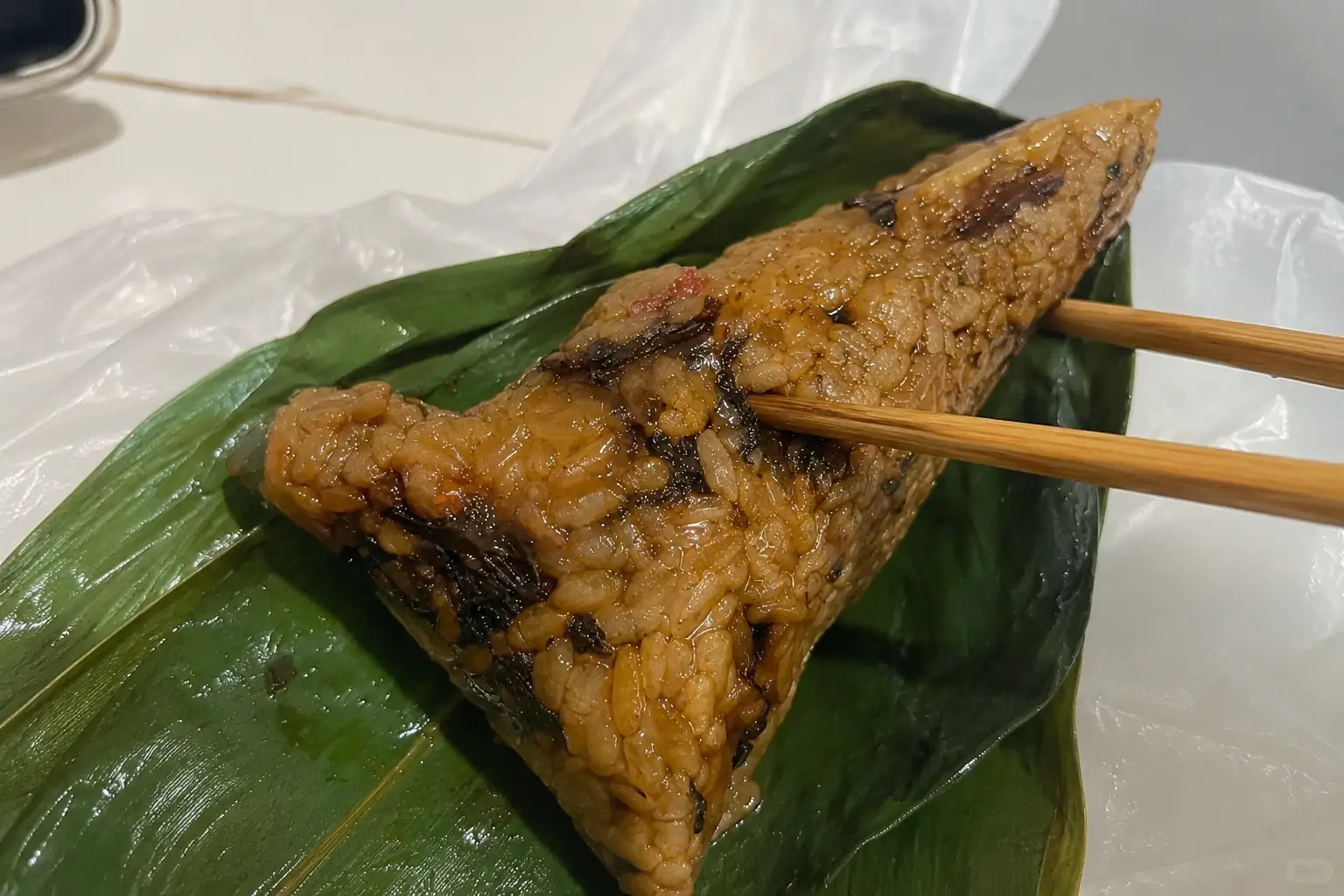
When buying zongzi, ask three things first: sweet or savory, what filling, and whether it can be heated. At a shop counter, point to one and ask if it contains pork, egg yolk, peanuts, or seafood. At a supermarket, check the storage label, expiration date, and heating instructions.
For a first purchase, buy one or two pieces, not a whole gift box. One zongzi is denser than it looks. A pork-and-egg-yolk zongzi can feel like a small meal; a sweet date zongzi can still be heavy because sticky rice expands in the stomach.
Eat it slowly. Unwrap the leaf, split the rice if it is large, and watch for a hot center after reheating. The texture is sticky, and some fillings hide bones, date pits, whole peanuts, or hot fat.
- Start with one sweet and one savory zongzi if you are sharing.
- Ask about pork, egg yolk, peanuts, seafood, and soy sauce if restrictions matter.
- Follow package heating instructions for frozen or vacuum-packed zongzi.
- Do not eat the wrapper leaf.
- Do not keep chilled cooked zongzi in a hot backpack for hours.
Zongzi Allergy and Food Safety Notes
The word glutinous creates unnecessary confusion in English. Glutinous rice is still rice; the term refers to sticky texture, not the gluten protein in wheat, barley, or rye. Beyond Celiac explains that rice and glutinous rice are naturally gluten-free.
The bigger everyday risks are pork, pork fat, egg yolk, peanuts, tree nuts, seafood, dried shrimp, dried scallops, beans, and mushrooms. Vegetarian travelers should not assume a plain rice parcel is vegetarian; savory rice may be seasoned with meat fat, seafood, stock, or sauce.
Glutinous rice is not the whole ingredient list
Plain glutinous rice is naturally gluten-free, but finished zongzi may contain soy sauce, oyster sauce, modern flavorings, or cross-contact from shared equipment. If you have celiac disease or strict gluten sensitivity, ask about ingredients instead of relying on the rice alone.
For food safety, use the same caution you would use with any cooked rice-and-meat food in summer. The Singapore Food Agency's rice dumpling guidance recommends buying from reliable sources and checking that products are properly wrapped and labeled; it is a useful practical lens for travelers, even outside Singapore. SFA rice dumpling safety note
If a zongzi needs refrigeration, do not leave it at room temperature for half a sightseeing day. Reheat it until hot through; Hong Kong's Centre for Food Safety gives the same practical advice for rice dumplings that have been kept chilled. CFS rice dumpling safety tips Skip any package that is leaking, swollen, oddly sticky on the outside, or smells off. Small children, older travelers, and anyone with swallowing difficulty should take small bites or choose a smaller unfilled rice snack instead.
Useful Chinese Ordering Phrases for Zongzi
Show the Chinese phrase and point if pronunciation feels awkward. These are for ordering and safety, not language-class perfection.
| English | Chinese | Pinyin | Say It Like… |
|---|---|---|---|
| Zongzi; sticky rice dumpling | 粽子 | zong zi | dzong-dzuh |
| Sweet zongzi | 甜粽 | tian zong | tyen dzong |
| Savory zongzi | 咸粽 | xian zong | shyen dzong |
| Meat zongzi | 肉粽 | rou zong | roh dzong |
| Red date zongzi | 红枣粽 | hong zao zong | hong dzaow dzong |
| Red bean paste zongzi | 豆沙粽 | dou sha zong | doh shah dzong |
| Salted egg yolk and pork zongzi | 蛋黄肉粽 | dan huang rou zong | dahn hwahng roh dzong |
| Is this sweet or savory? | 这个是甜的还是咸的? | zhe ge shi tian de hai shi xian de? | juh-guh shir tyen duh high shir shyen duh |
| Does this contain pork? | 这个有猪肉吗? | zhe ge you zhu rou ma? | juh-guh yo joo roh mah |
| Does this contain peanuts? | 这个有花生吗? | zhe ge you hua sheng ma? | juh-guh yo hwa-shung mah |
| Does this contain seafood? | 这个有海鲜吗? | zhe ge you hai xian ma? | juh-guh yo high-shyen mah |
| Could you heat it for me? | 可以帮我加热吗? | ke yi bang wo jia re ma? | kuh-yee bahng woh jyah-ruh mah |
| I do not eat the leaf, right? | 叶子不吃,对吗? | ye zi bu chi, dui ma? | yeh-dzuh boo chur, dway mah |
Frequently Asked Questions
Yes in everyday travel English. More precisely, zongzi are leaf-wrapped sticky rice dumplings tied with string and boiled or steamed, most famously around Dragon Boat Festival.
Beyond This Guide
Zongzi are a useful doorway into Chinese festival food because one English translation hides many local choices: sweet or savory, snack or meal, gift box or family table, northern date or Jiangnan pork. For broader timing, read the China public holidays travel calendar and Chinese customs and traditions. For related festival foods, compare this with Tangyuan and Yuanxiao and Jiaozi Chinese Dumplings.
© gochinafreely.com — Original guide by Go China Freely.