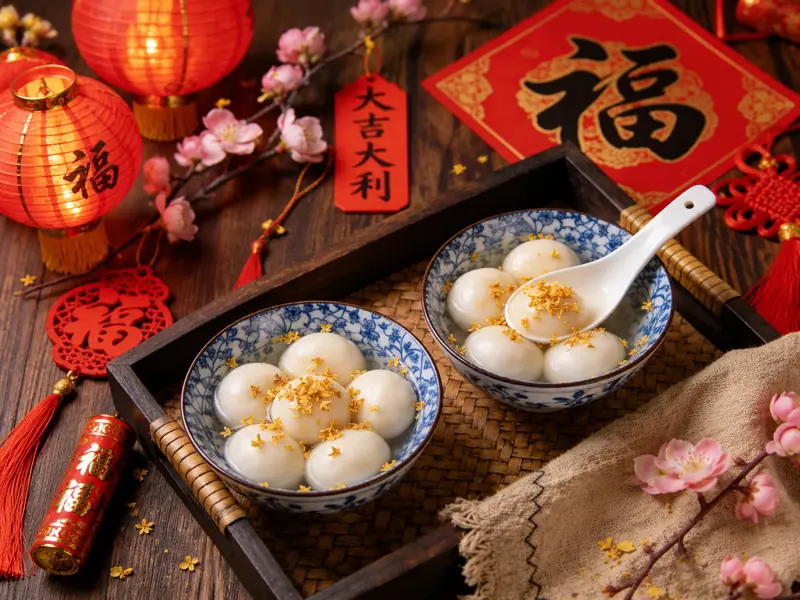
Tangyuan (汤圆) and yuanxiao (元宵) are the sweet, chewy rice balls Chinese families eat around Lantern Festival, the 15th day of the first lunar month and the closing note of Chinese New Year. For travelers, the useful question is not just "what are they?" but which version is in front of you: a smooth wrapped tangyuan, a flour-rolled northern yuanxiao, or a frozen supermarket bowl dressed up for the season.
Executive Summary
What this guide covers
Lantern Festival meaning, tangyuan vs yuanxiao, classic fillings, modern flavors, where travelers find them, ordering phrases, and safety notes.
Best first bowl
Start with black sesame tangyuan if you want the most classic sweet filling. Try freshly rolled yuanxiao if you are in north China during the festival period.
Main traveler trap
Do not treat every rice ball as identical. Wrapped tangyuan, rolled yuanxiao, unfilled small rice balls, and fermented-rice desserts all eat differently.
15th
First lunar month
Wrapped
Tangyuan method
Rolled
Yuanxiao method
No
Separate national holiday
Lantern Festival Rice Balls and Reunion
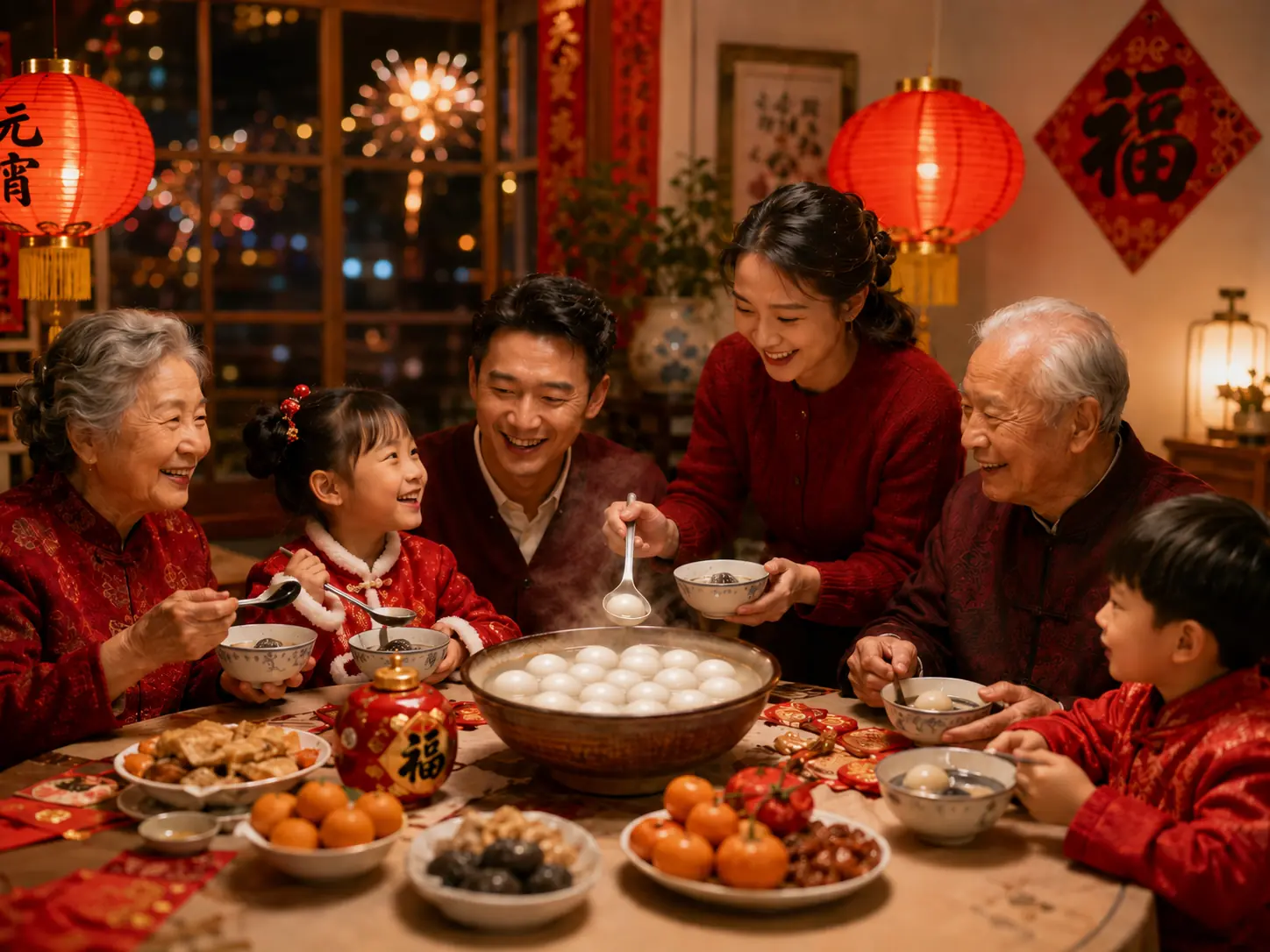
Lantern Festival falls on the 15th day of the first lunar month. China's State Council English site describes it as the festival that marks the end of Chinese New Year celebrations, while Visit Beijing notes that people eat yuanxiao or tangyuan on this day and links the name tangyuan to reunion. The food works because the symbolism is easy to read: round bowl, round rice balls, full moon, family circle.
That does not mean every Chinese person eats the same dessert in the same way. Some families boil frozen tangyuan at home. Some Beijingers queue for freshly rolled yuanxiao from time-honored brands. Some travelers meet the food at a hotel breakfast, a lantern fair, a supermarket freezer, or a dessert shop months after the festival. The safest travel translation is this: tangyuan and yuanxiao are the most recognizable Lantern Festival food symbols, but local habits vary.
Lantern Festival is culturally important, but it is not a separate mainland China national public holiday. The 2026 State Council holiday notice lists New Year's Day, Spring Festival, Qingming Festival, Labor Day, Dragon Boat Festival, Mid-Autumn Festival, and National Day; Lantern Festival is not listed as its own day off. For planning, treat it as a festive evening with possible crowds and event changes, not a new Golden Week.
Travel planning shortcut
If your China trip overlaps Lantern Festival, check local lantern-display dates city by city. The food is easy to find; the crowd pressure around famous light shows is the part that needs planning.
Tangyuan vs Yuanxiao: Wrapped and Rolled
In English, both names often become "glutinous rice balls" or "sweet rice balls." In Chinese food culture, the names point to different habits. The simple version is: tangyuan is more associated with southern China and is usually wrapped by hand; yuanxiao is more associated with northern China and is usually rolled in dry glutinous rice flour.
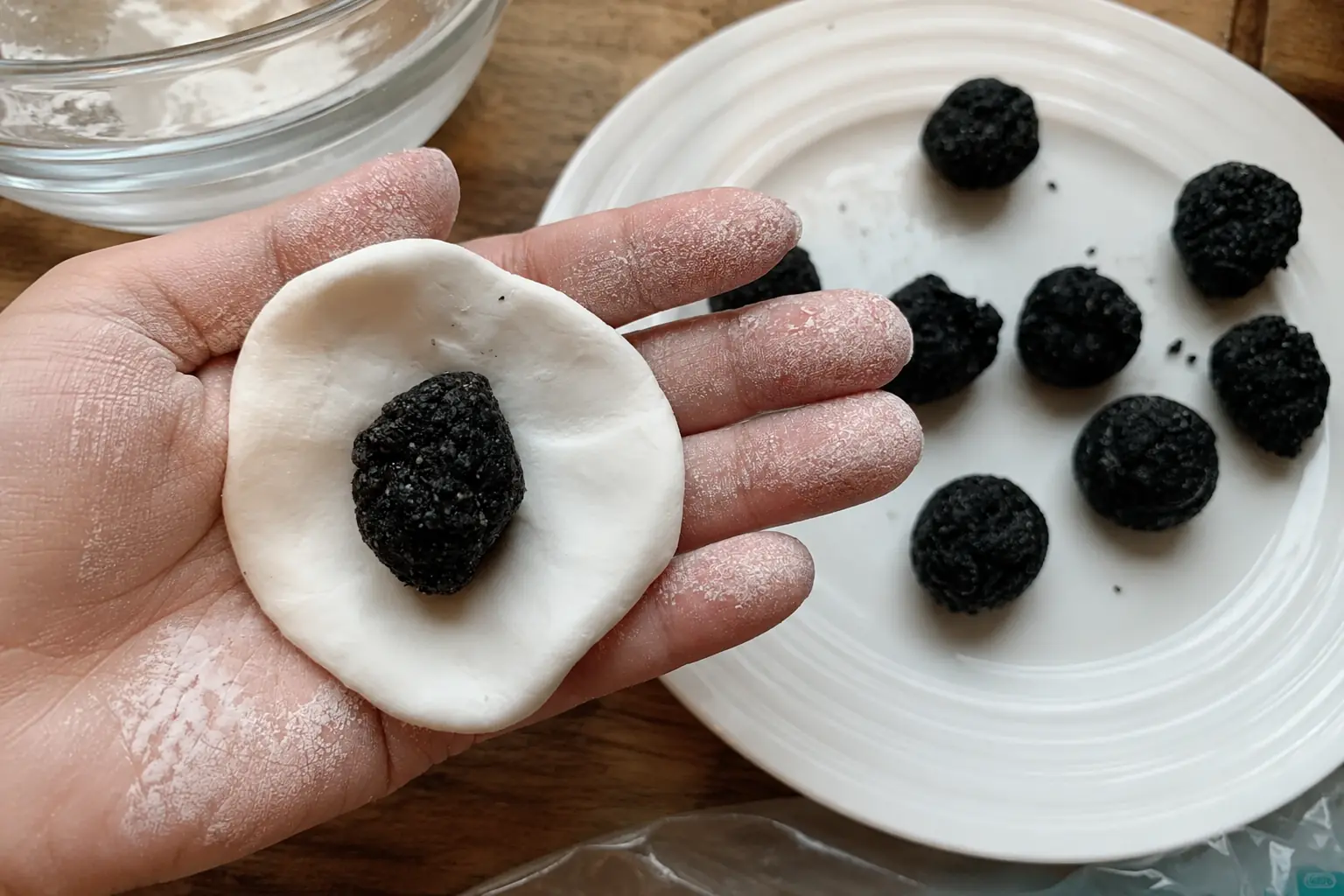
Tangyuan are made like tiny rice-flour dumplings. Glutinous rice flour is mixed with water into a soft dough; a piece is flattened, filled, sealed, and rolled smooth between the hands. The surface is usually smooth, the skin is soft, and frozen versions are common in supermarkets across China.
Yuanxiao are made more like snowballs. The filling is pressed or cut into small firm pieces, dipped lightly in water, then rolled in a basket or tray of dry glutinous rice flour. A layer sticks; the piece is moistened and rolled again; the rice-flour shell grows layer by layer. This is why northern shops often advertise freshly rolled yuanxiao around the festival.
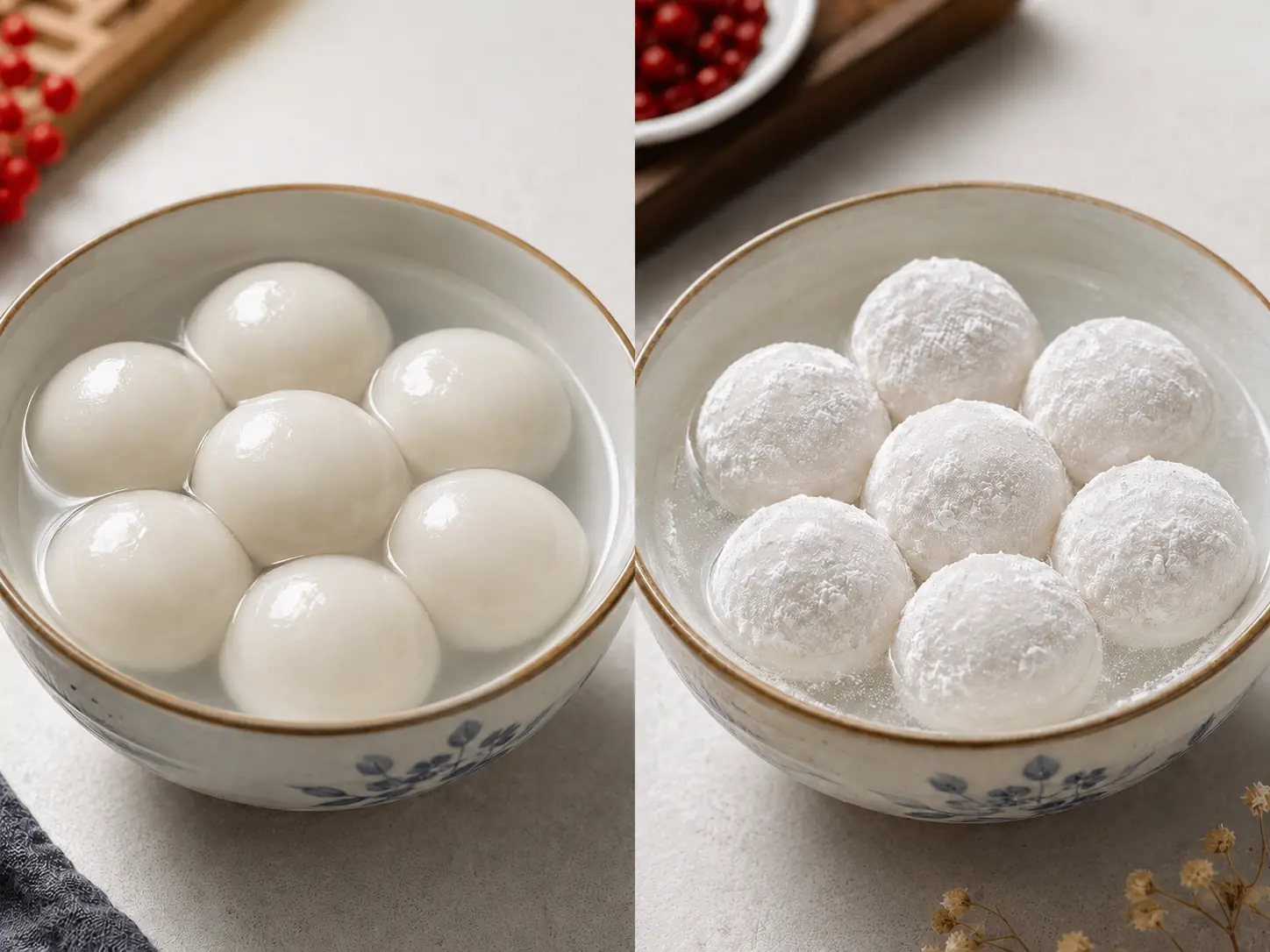
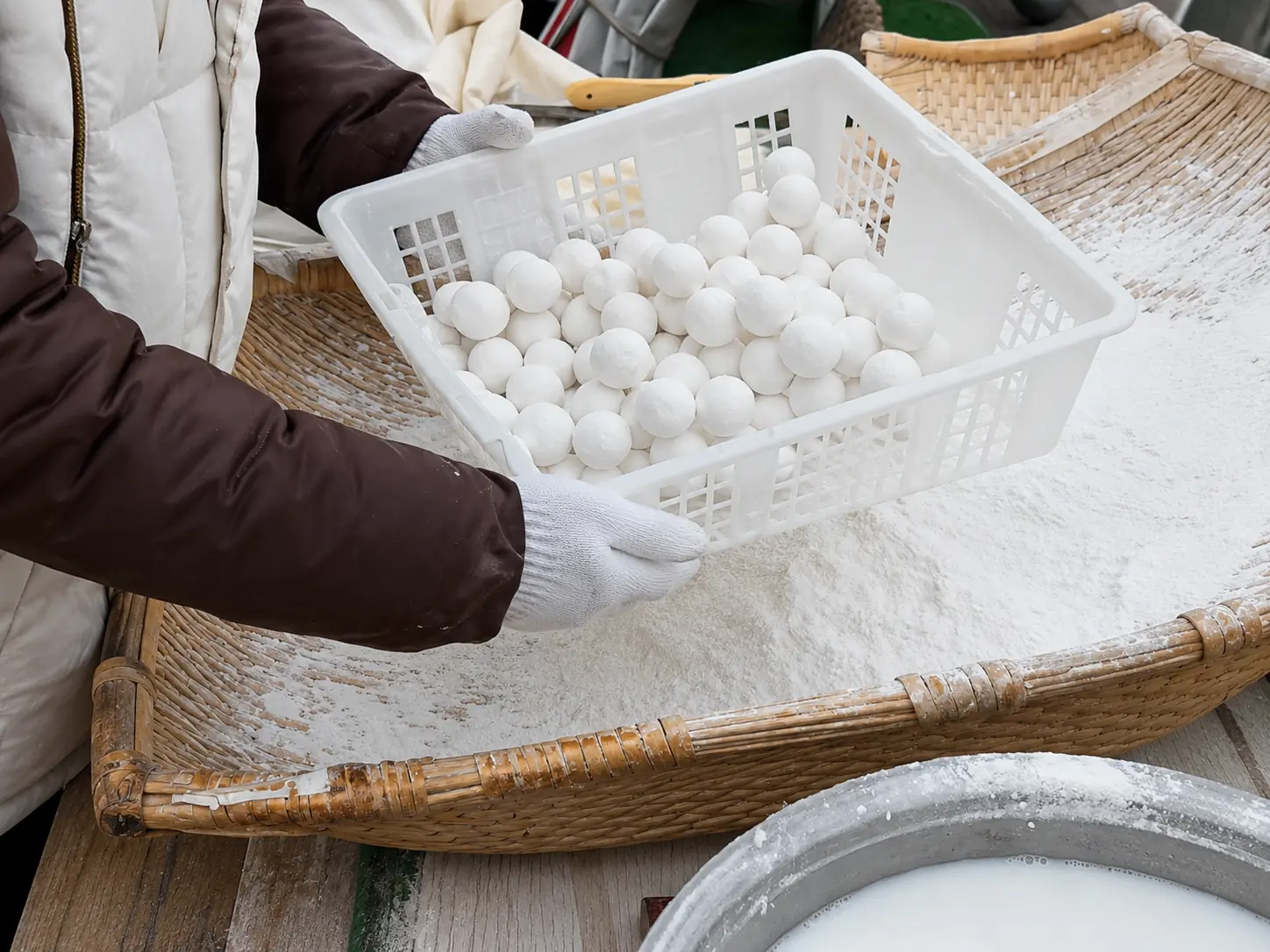
Do not turn this into a rigid map rule. Beijing shops also sell tangyuan, Shanghai diners may hear the word yuanxiao, and commercial packaging sometimes uses whichever term sounds familiar. For a traveler, the useful distinction is texture and method: wrapped tangyuan tend to feel smoother and softer; rolled yuanxiao often feel a little firmer, with a thicker rice-flour shell and a cloudier cooking liquid.
Swipe to compare the two rice balls
Tangyuan
汤圆
- ✓Smooth glutinous rice dough wraps a soft filling
- ✓Sweet or savory versions exist
- —More strongly associated with southern China
Usually wrapped by hand
Common in frozen packs
Yuanxiao
元宵
- ✓Firm filling is rolled layer by layer in rice flour
- ✓Usually sweet in common northern festival use
- —More strongly associated with northern China
Usually rolled in dry flour
Strong festival feel
Regional usage is real, but modern shops and supermarket packaging can blur the names.
Texture, Soup, and First Bite Safety
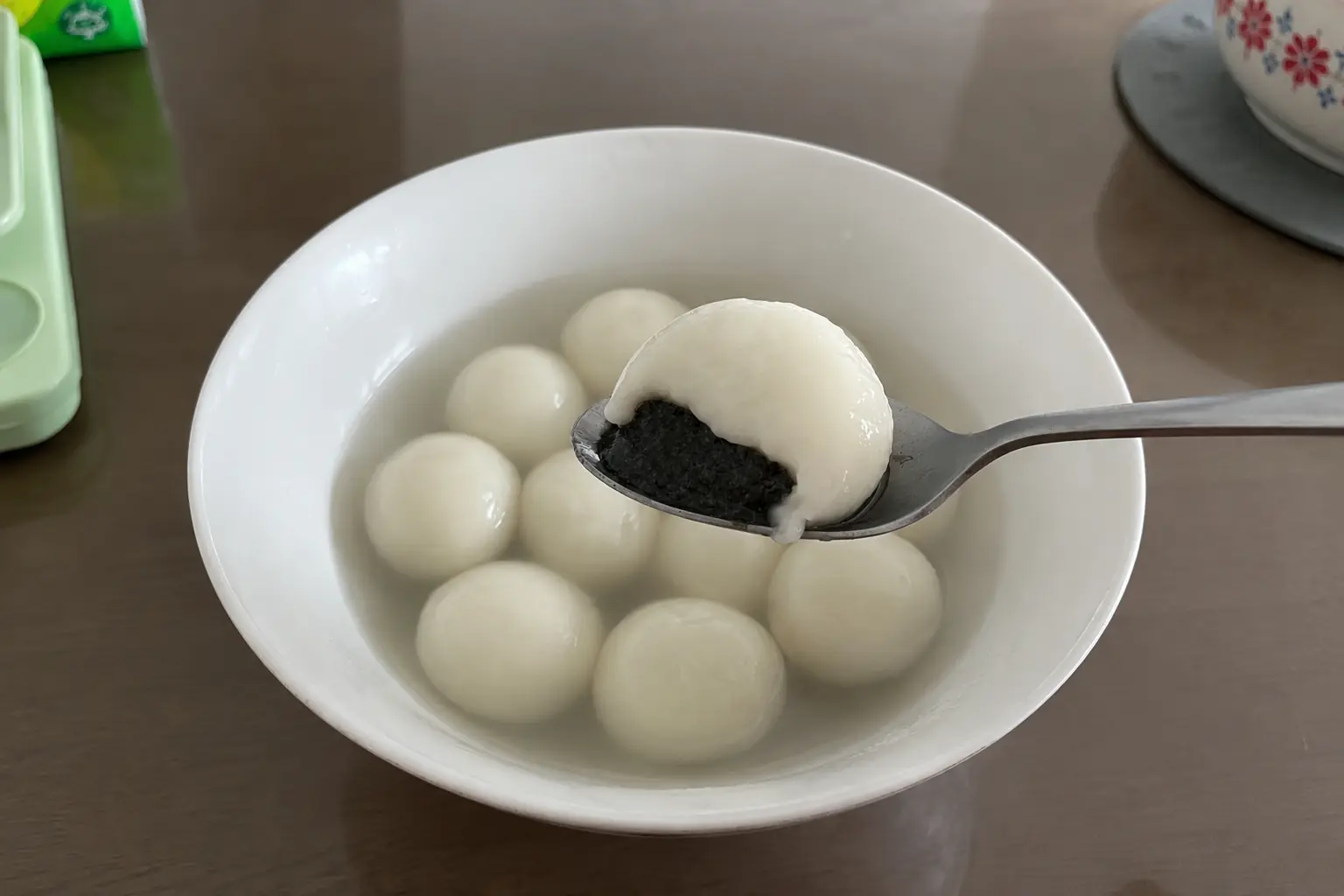
Tangyuan are about soft skin and hot filling. Black sesame filling can turn molten; peanut filling is nuttier and more granular; red bean is gentler; small unfilled rice balls often appear in sweet soups, fermented rice desserts, red bean soup, osmanthus syrup, or ginger broth. Good tangyuan should be chewy and fragrant, not only sugary.
The first bite needs patience. A rice ball may look calm in the bowl while the sesame or peanut filling inside is still extremely hot. Hold it with a spoon, bite a small opening, let steam escape, then continue. This one tiny technique prevents most of the burnt-tongue drama.
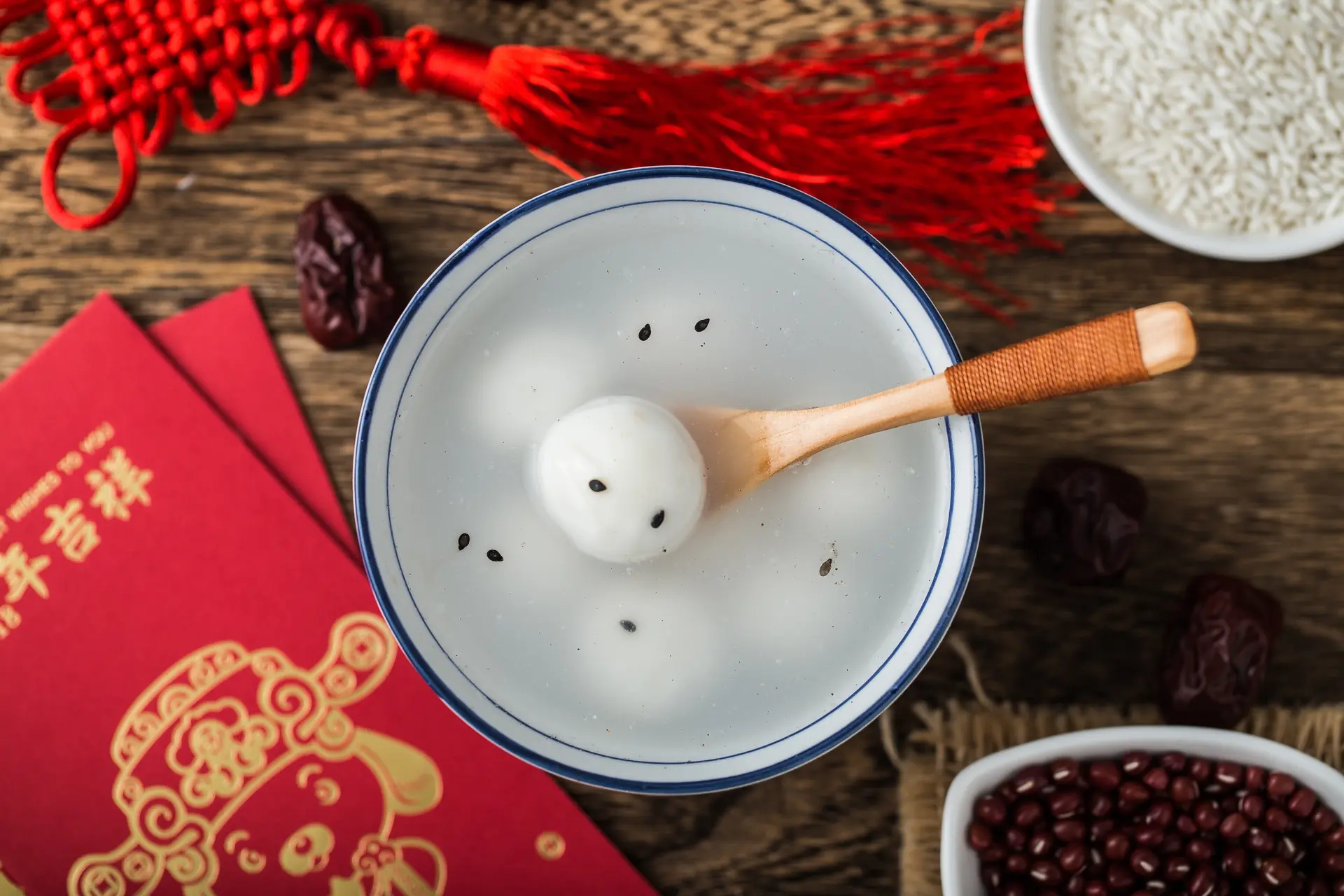
Yuanxiao often eat denser. The rice-flour shell is built up in layers, so the surface may feel less silky, and the cooking water can become starchier. That is not a flaw; it is part of the style. If you find a fresh yuanxiao counter in north China during the festival period, try a small portion and compare it with the frozen tangyuan you may see elsewhere.
Decision shortcut
Which rice ball should I try first?
I want the classic sweet bowl
Choose black sesame tangyuan. It gives the clearest mix of sticky skin, aromatic filling, and festival comfort.
I am in north China near Lantern Festival
Look for freshly rolled yuanxiao from a busy traditional shop and buy a small portion.
I want something lighter
Try small unfilled rice balls in osmanthus, red bean, ginger, or fermented rice soup.
I dislike very sweet desserts
Share one bowl first. Glutinous rice and sweet fillings are more filling than they look.
Classic Fillings and Modern Tangyuan Flavors
Black sesame is the safest first filling. It is aromatic, slightly oily, and intense enough to make the plain white skin feel necessary. Peanut is also classic and fragrant, but it is the obvious allergy warning. Red bean paste is milder and easier for people who dislike strong nutty flavors. Hawthorn, jujube paste, rose, osmanthus, mixed nuts, and other traditional pastry flavors also appear, especially in festival assortments.
Modern China also treats festival foods like seasonal product launches. A Beijing municipal news item on time-honored brands described Lantern Festival rice balls with chocolate, durian, salted egg yolk, fruit-and-vegetable colors, mixed gift boxes, and decorative versions. These are real, but they are modern commercial flavors. Write them in your head as "you may see this in shops," not as ancient Lantern Festival canon.
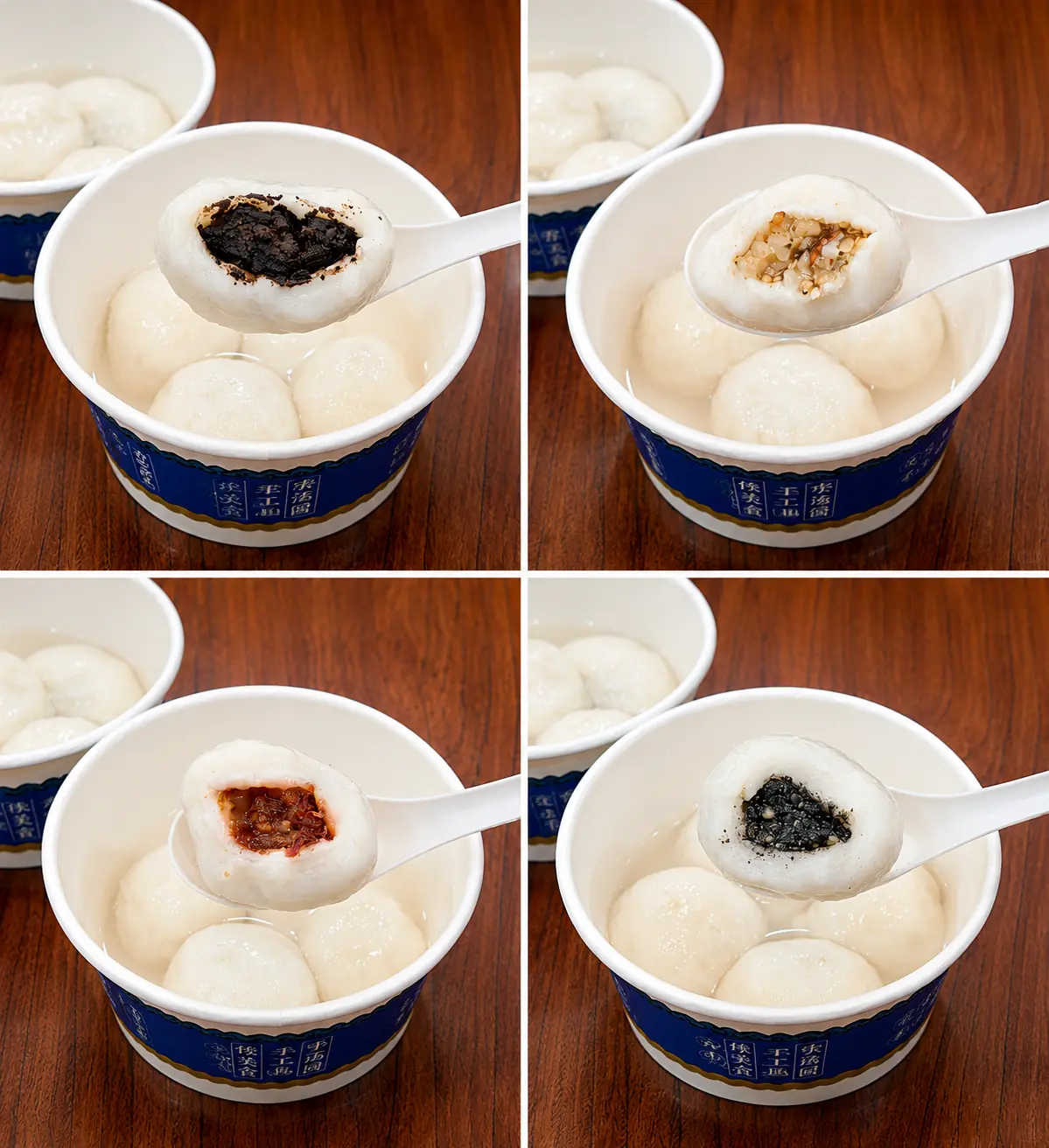
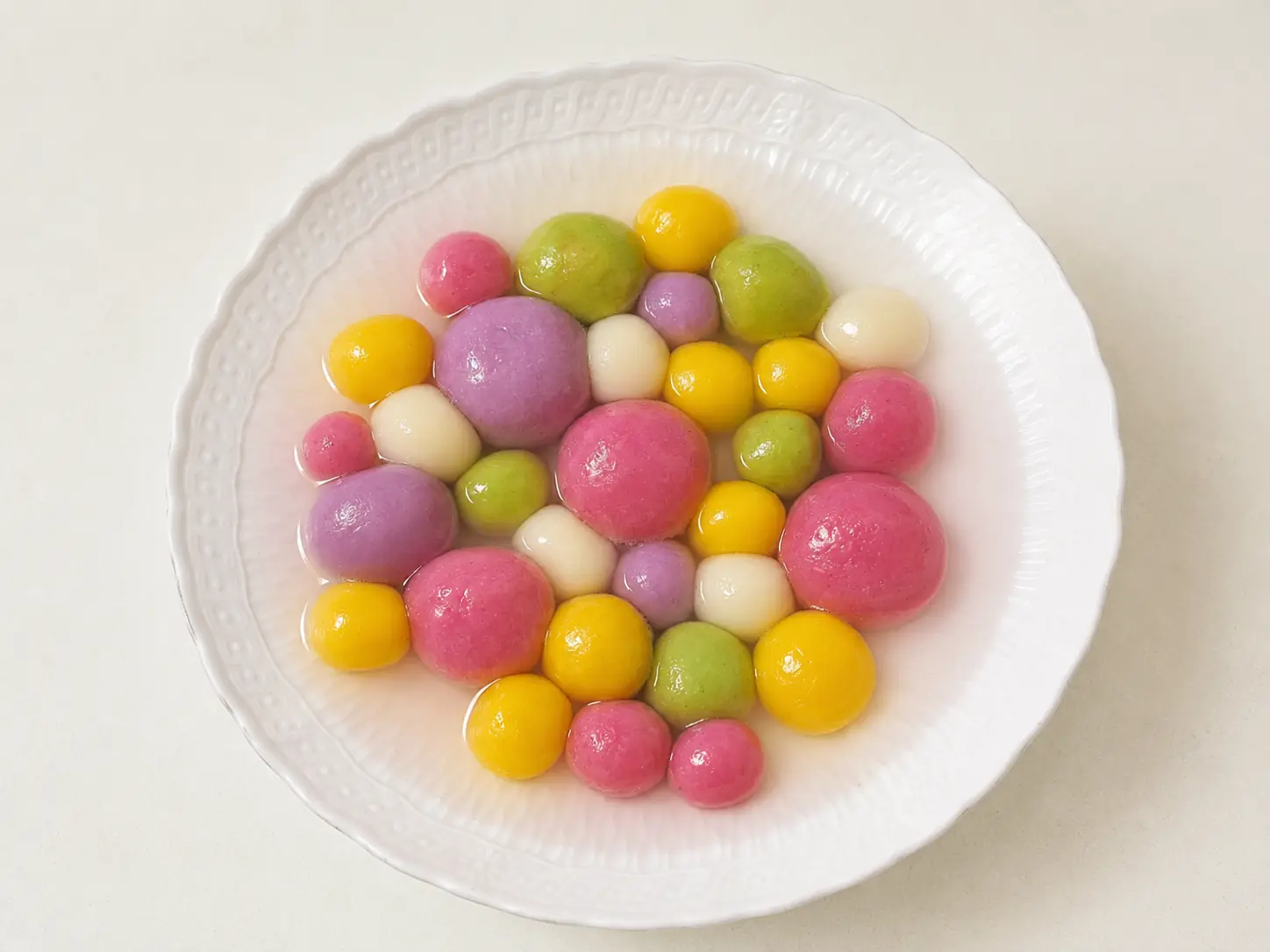
For a first purchase, use this order: black sesame first, peanut second if allergies are not a concern, red bean if you want something gentler, novelty flavors only for sharing. Do not buy a huge box before tasting one bowl. Glutinous rice desserts are small, sticky, and surprisingly filling.
| Filling | Chinese | Why Try It | Watch Out For |
|---|---|---|---|
| Black sesame | 黑芝麻 | The classic first bowl: fragrant, dark, sweet, and often molten | May contain lard; very hot inside |
| Peanut | 花生 | Nutty, rich, and familiar for many travelers | Major allergy risk |
| Red bean | 红豆沙 | Gentler, smoother, and less intense than sesame | Can be very sweet |
| Hawthorn or jujube | 山楂 / 枣泥 | Old-style sweet-shop flavor with fruit or date depth | Less common outside festival assortments |
| Modern flavors | 巧克力 / 榴莲 / 咸蛋黄 | Fun to share and useful if you enjoy novelty sweets | Not the best baseline for tradition |
Where Travelers Find Tangyuan and Yuanxiao
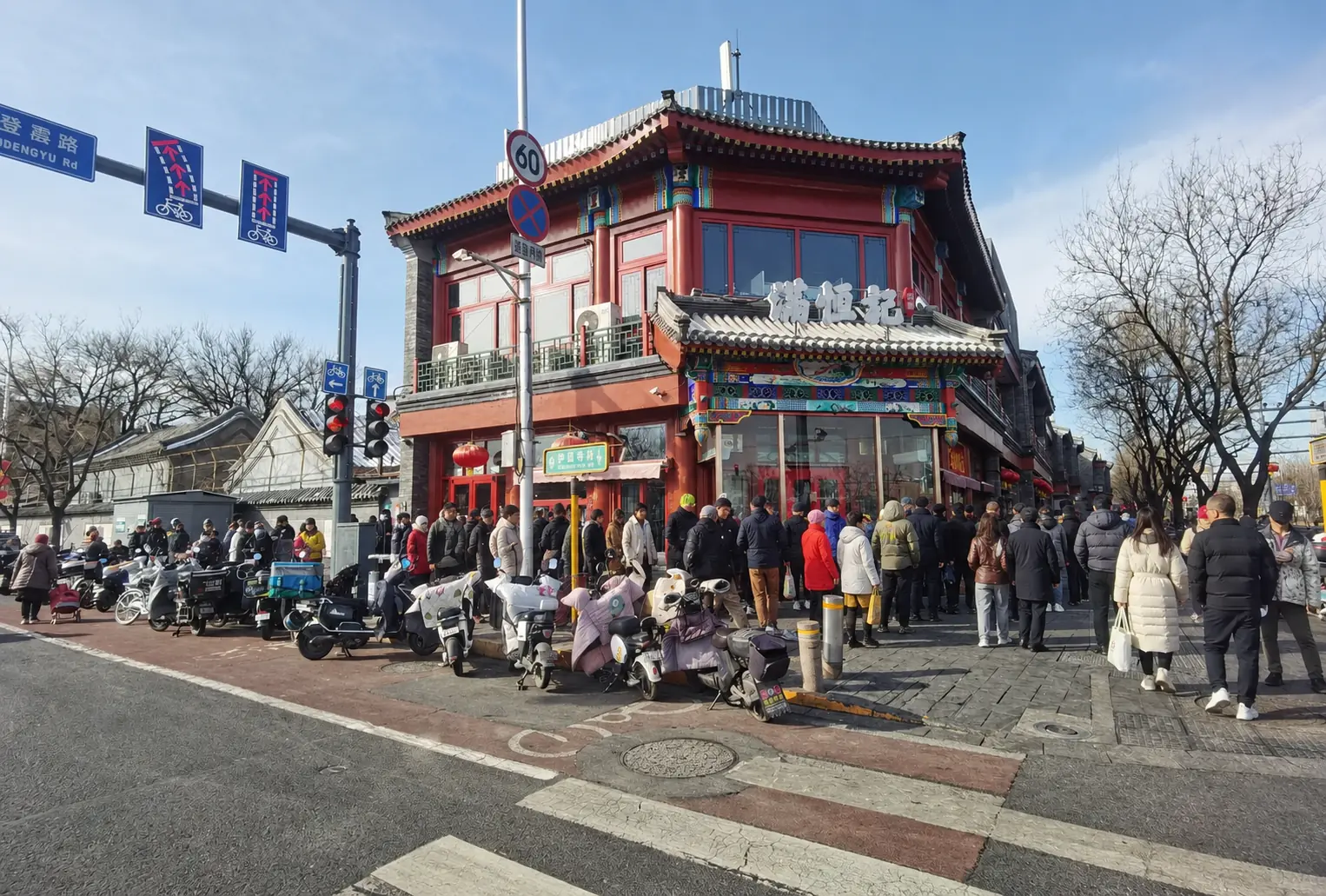
The strongest season is the stretch from Chinese New Year through Lantern Festival. In Beijing, Tianjin, and other northern cities, some time-honored snack brands and food counters sell freshly rolled yuanxiao before the festival. Lines can be part of the ritual. Buy a small amount, eat them hot, and avoid turning the whole day into a queue.
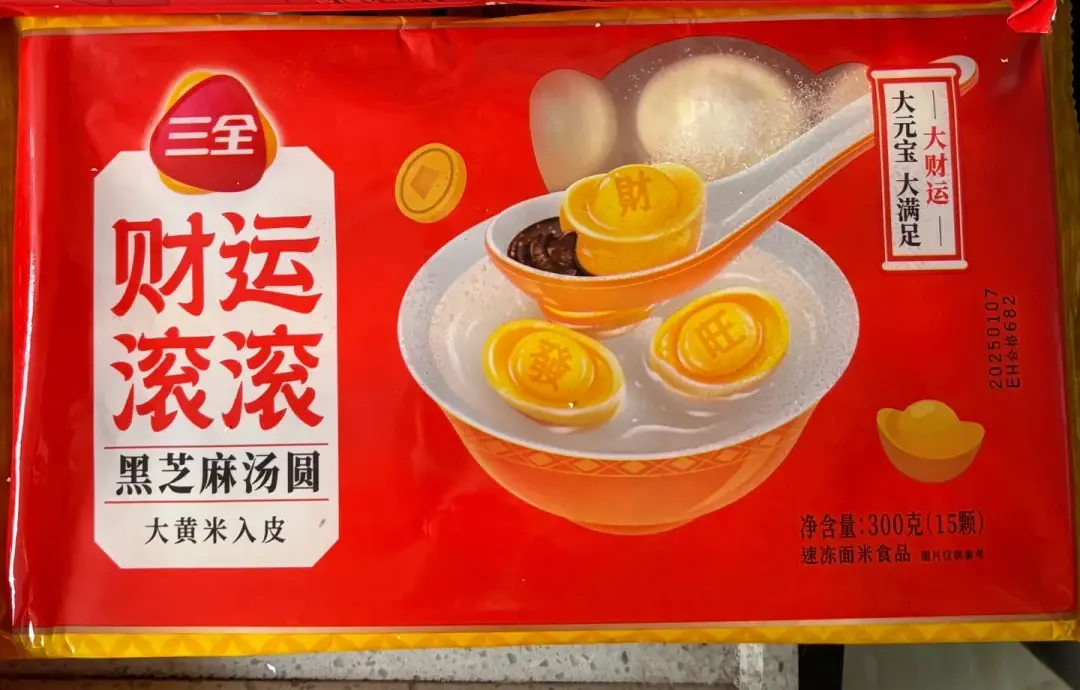
Outside the festival period, frozen tangyuan are the easiest route. Chinese supermarkets commonly carry black sesame, peanut, red bean, and mixed-flavor packs. Hotels, breakfast buffets, dessert shops, and local snack restaurants may serve them too, especially in cities with sweet-soup traditions.
The best travel move is to attach the bowl to a route you already want. In Shanghai, try sweet rice balls near an old-city or Yu Garden evening. In Beijing, look for yuanxiao during the festival period or eat a bowl after a winter snack walk. In Chengdu or Chongqing, small tangyuan can be a gentle sweet finish after spicy food. Do not cross a city only for one rice ball unless the shop itself is part of your plan.
How to Order and Eat Them
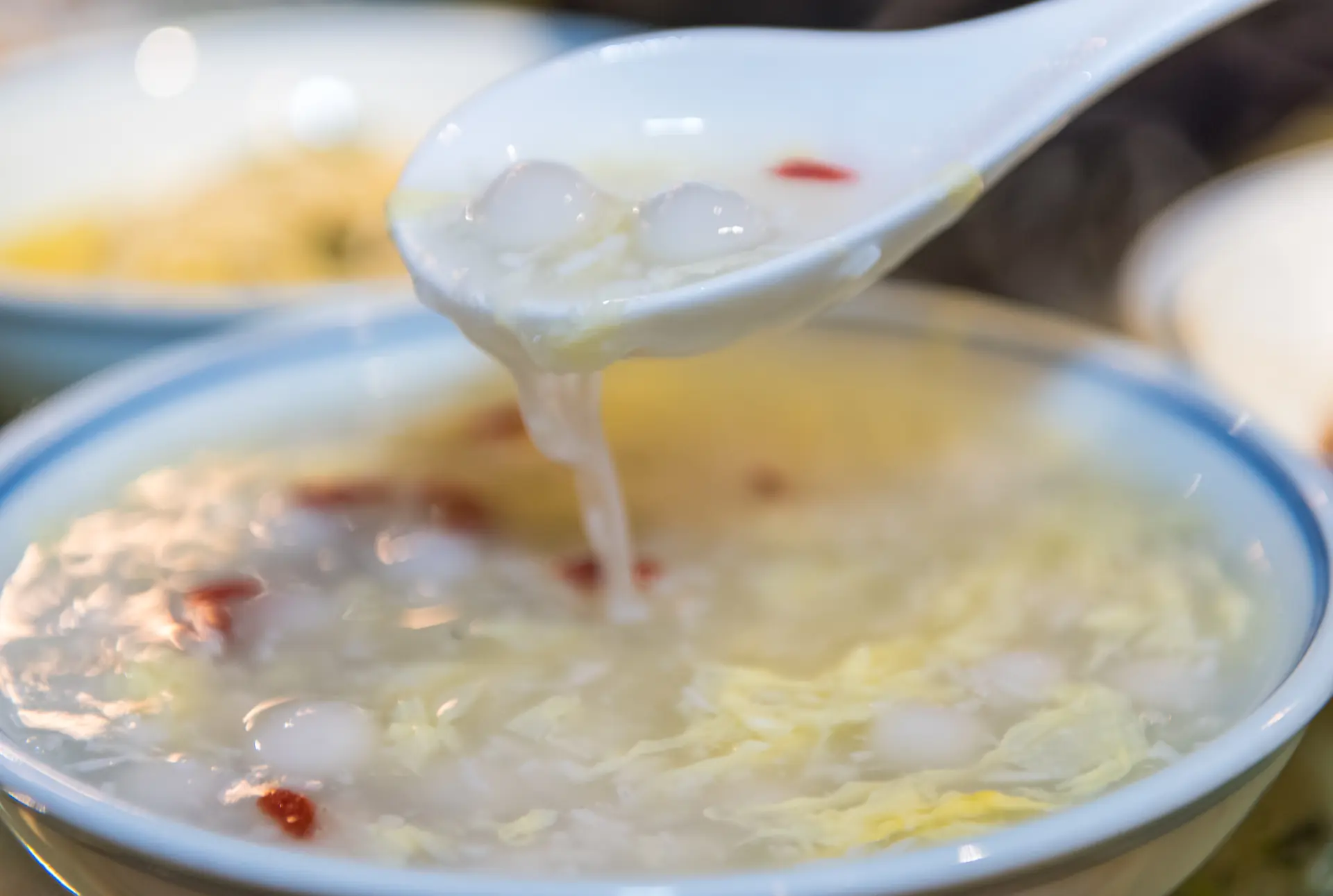
Read the menu in this order: filled or unfilled, filling type, soup style. Black sesame (黑芝麻) and peanut (花生) are the most common sweet fillings. Red bean paste (红豆沙) is milder. Small rice balls (小圆子) are usually unfilled and appear in sweet soups. Fermented rice balls (酒酿圆子) have a light fermented rice aroma; the alcohol level is usually very low, but the flavor is not plain water.
Portion size matters. For one traveler, 4-6 filled rice balls are enough for tasting, especially if dinner or street snacks are still ahead. For a group, order one black sesame bowl and one lighter soup with small rice balls. You will learn more from contrast than from forcing down a large sweet portion.
Eat slowly. Use the spoon as a safety platform, bite a small opening, wait for the filling to cool, then continue. Do not spear them with chopsticks, do not swallow a whole filled rice ball, and do not hand a steaming bowl to a child in a crowd.
- Start with black sesame if you want the classic taste.
- Ask about peanut, sesame, and lard if allergies or dietary rules matter.
- Share novelty flavors instead of making them your only bowl.
- Do not swallow a whole filled rice ball in one bite.
- Do not assume the word glutinous means wheat gluten.
Dietary and Safety Notes for Rice Balls
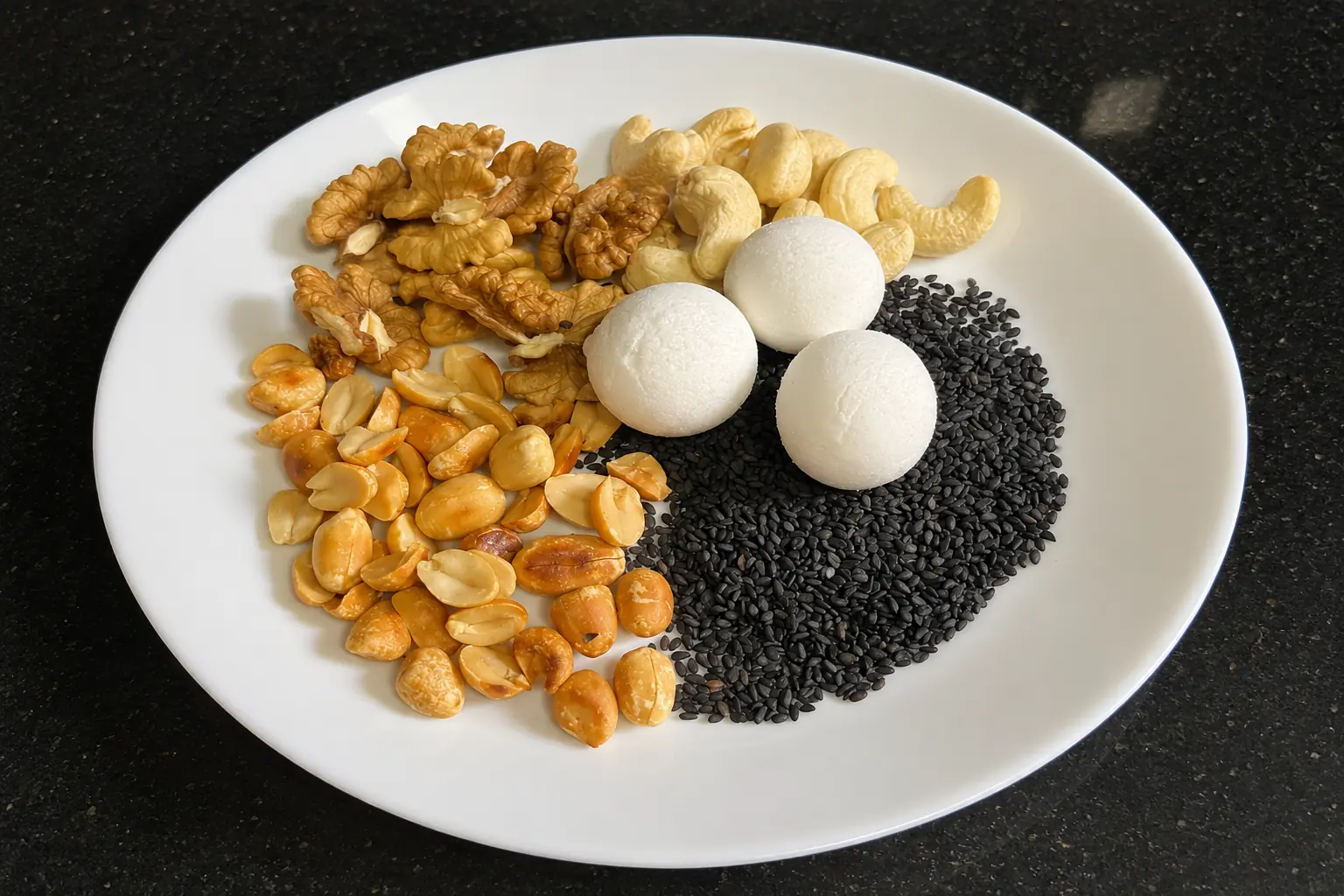
The English phrase "glutinous rice" is confusing. Glutinous rice is still rice, and Beyond Celiac explains that the word glutinous refers to sticky texture, not the gluten protein found in wheat, barley, and rye. Plain glutinous rice flour is naturally gluten-free.
That does not make every tangyuan safe for gluten-free travelers. Fillings, toppings, sauces, chocolate, cookie crumbs, shared equipment, and restaurant handling can still matter. Travelers with celiac disease or strict gluten sensitivity should ask about ingredients and cross-contact, not just the rice flour.
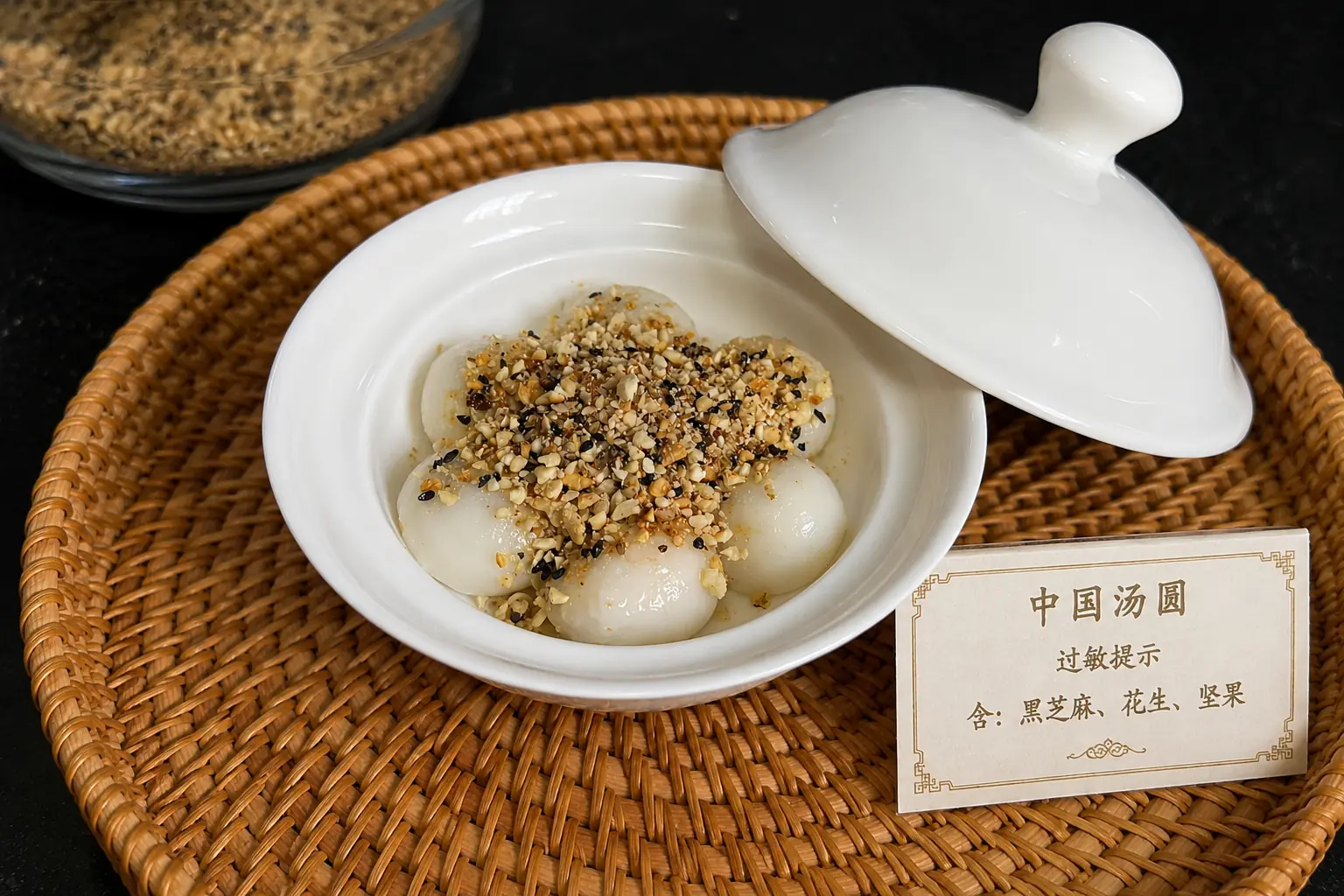
The bigger everyday allergy risks are sesame, peanut, tree nuts, dairy, and sometimes lard. Traditional black sesame fillings may use pork lard for aroma and flow. Mixed-nut fillings can contain several nuts. Modern flavors may include milk, chocolate, coconut, coloring, or flavorings.
Sticky and hot
Tangyuan and yuanxiao are soft, slippery, sticky, and often filled with very hot paste. Small children, older travelers, and anyone with swallowing difficulty should take small bites, let them cool, or choose smaller unfilled rice balls.
Useful Chinese Phrases for Ordering Tangyuan
Show the Chinese phrase and point if pronunciation feels awkward. These are practical ordering phrases, not language-class perfection.
| English | Chinese | Pinyin | Say It Like… |
|---|---|---|---|
| Tangyuan rice balls | 汤圆 | tāngyuán | tahng-ywen |
| Yuanxiao rice balls | 元宵 | yuánxiāo | ywen-shyaow |
| Black sesame filling | 黑芝麻馅 | hēizhīma xiàn | hay-jir-mah shyen |
| Peanut filling | 花生馅 | huāshēng xiàn | hwa-shung shyen |
| Red bean paste filling | 红豆沙馅 | hóngdòushā xiàn | hong-doh-shah shyen |
| Small unfilled rice balls | 小圆子 | xiǎo yuánzi | shyaow ywen-dzuh |
| Fermented rice soup with rice balls | 酒酿圆子 | jiǔniàng yuánzi | jyo-nyahng ywen-dzuh |
| Does this contain peanuts? | 这个有花生吗? | zhège yǒu huāshēng ma? | juh-guh yo hwa-shung mah |
| Does this contain lard? | 这个有猪油吗? | zhège yǒu zhūyóu ma? | juh-guh yo joo-yo mah |
| Can I have a smaller portion? | 可以少一点吗? | kěyǐ shǎo yìdiǎn ma? | kuh-yee shaow ee-dyen mah |
Frequently Asked Questions About Tangyuan and Yuanxiao
In English travel use, they are both Lantern Festival glutinous rice balls. Traditionally, tangyuan are wrapped with soft dough around a filling, while yuanxiao are rolled in dry glutinous rice flour around a firm filling.
What to Read After Tangyuan and Yuanxiao
Tangyuan and yuanxiao sit at the sweet end of China's festival-food logic: round shapes, family language, hot bowls, and local habits hiding behind one English translation. For the wider festival context, read Chinese customs and traditions and the China public holidays travel calendar. For the savory New Year counterpart, compare this with the jiaozi Chinese dumplings guide. City by city, these little rice balls start to look less like a single dessert and more like a clue to how China turns food into timing.
© gochinafreely.com — Original guide by Go China Freely.