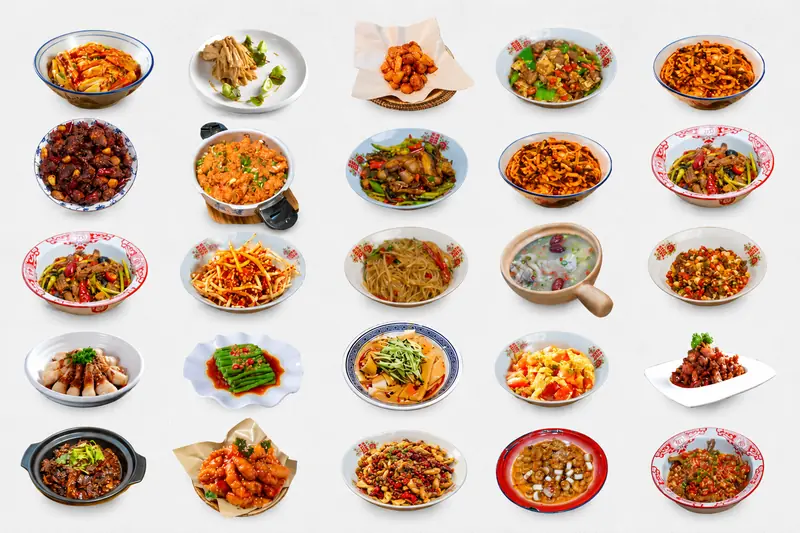
Most English menus compress Sichuan and Chongqing food into one red word: spicy. The real system is more useful than that: Chengdu has been a UNESCO City of Gastronomy since 2010, and local Sichuan seasoning work now publicly discusses 24 composite flavor types, from fish-fragrant (鱼香) and strange-flavor (怪味) to red-oil (红油), garlic (蒜泥), and home-style (家常). Use this guide as the flavor map behind the Chengdu, Chongqing, hotpot, and individual dish guides.
Executive Summary
What this guide covers
Sichuan and Chongqing flavor profiles, Chengdu vs Chongqing style differences, classic dishes by seasoning logic, first-table orders, non-spicy options, and dietary risks.
Best first table
Build balance: one cold red-oil dish, one classic hot dish, one vegetable or tofu, rice or noodles, and hotpot as a separate meal.
Main traveler challenge
Not just heat. The real skill is reading flavor style, hidden animal fats, peanuts, sesame, wheat, and Sichuan peppercorn before ordering too much red oil.
2010
Chengdu UNESCO gastronomy
24
Composite flavor shortcut
2 styles
Chengdu and Chongqing
Ask first
Spice and animal fats
Sichuan Cuisine Is a Flavor System
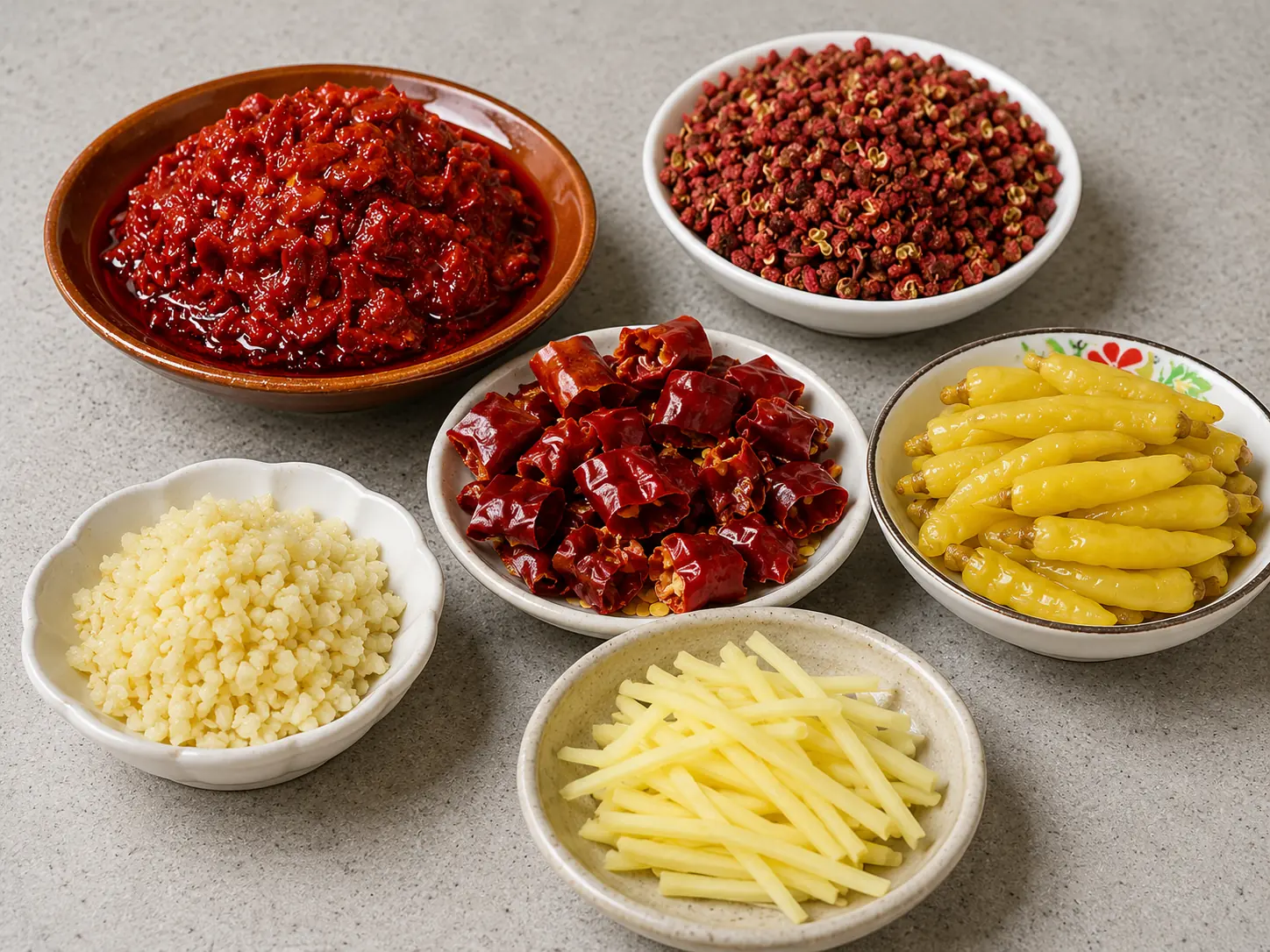
Sichuan cuisine (川菜) is bigger than chili oil. A Sichuan commerce department article explains that Sichuan cuisine formed and developed in the Bashu region (巴蜀地区) and includes Sichuan-style dishes, noodles and snacks, hotpot, ingredients, food products, and cultural transmission. That definition matters for travelers: a bowl of noodles, a cold red-oil plate, a banquet soup, and a hotpot table all belong to the same food system.
UNESCO's Chengdu Creative Cities page calls Chengdu a renowned gastronomy center and describes it as the cradle and center of Sichuan cuisine. UNESCO's multimedia archive also says Chengdu cuisine is known for great flavor variety built from sweet, sour, bitter, spicy, and salty elements. That is the correct starting point: heat is only one part of the structure.
A common Chinese summary for Sichuan food is "one dish, one style; one hundred dishes, one hundred flavors" (一菜一格,百菜百味). Treat it less as a slogan and more as ordering advice. Do not fill the table with five dishes that all taste like the same red oil. The point is contrast: numbing, sour, sweet, salty, garlicky, fermented, smoky, peppery, and cooling in the same meal.
The Sichuan 24-Flavors Shortcut for Travelers

The "24 flavors" idea is not a tourist checklist. It is a chef and seasoning-language shortcut for how Sichuan cooking builds compound tastes. In 2025, the Sichuan Condiment Association publicly sought comments on a group standard for Sichuan cuisine's 24 composite flavor types, listing categories such as numbing-spicy (麻辣), fish-fragrant (鱼香), strange-flavor (怪味), red-oil (红油), scorched-chili (煳辣), home-style (家常), ginger-juice (姜汁), pepper-sesame (椒麻), garlic (蒜泥), smoke-fragrant (烟香), sweet-sour (糖醋), and savory-fresh (咸鲜). For readers, the value is simple: you can order by flavor, not only by dish name.
| Flavor Profile | Chinese | What It Feels Like | Good First Dish |
|---|---|---|---|
| Numbing-spicy | 麻辣 | Chili heat plus Sichuan peppercorn tingle | Mapo tofu, hotpot |
| Fish-fragrant | 鱼香 | No fish; pickled chili, ginger, garlic, sugar, vinegar, and soy | Fish-fragrant eggplant or shredded pork |
| Strange-flavor | 怪味 | Sweet, salty, sour, spicy, numbing, and nutty at once | Cold chicken or cold noodle dishes |
| Red-oil | 红油 | Bright chili oil, fragrance, and a clean savory base | Red-oil wontons, cold beef slices |
| Home-style | 家常 | Fermented chili-bean paste, wok aroma, pork fat, garlic shoots | Twice-cooked pork, home-style tofu |
| Pepper-sesame | 椒麻 | Fresh scallion and Sichuan pepper aroma, often greener and cleaner | Pepper-sesame chicken |
| Garlic | 蒜泥 | Strong garlic, soy, chili oil, and cold-dish freshness | Garlic pork slices, cucumber |
| Hot-and-sour | 酸辣 | Vinegar lift, chili oil, sometimes peanuts or preserved vegetables | Chongqing sour-spicy noodles |
Use flavor profiles as a menu filter
If every dish you choose belongs to numbing-spicy or red-oil, the meal will feel flat and punishing. Add one fish-fragrant, home-style, garlicky, or mild dish so the table has rhythm.
How Chengdu and Chongqing Eat Differently
Chengdu (成都) and Chongqing (重庆) sit in the same broad food family, but they do not eat with the same personality. China Culture's Chongqing overview notes that Chongqing became a municipality directly under the central government on March 14, 1997, and lists hotpot, dan dan noodles, spicy hot soup, mapo tofu, and twice-cooked pork among its food examples. It is fair for a traveler guide to group Sichuan and Chongqing together, as long as the local differences stay visible.
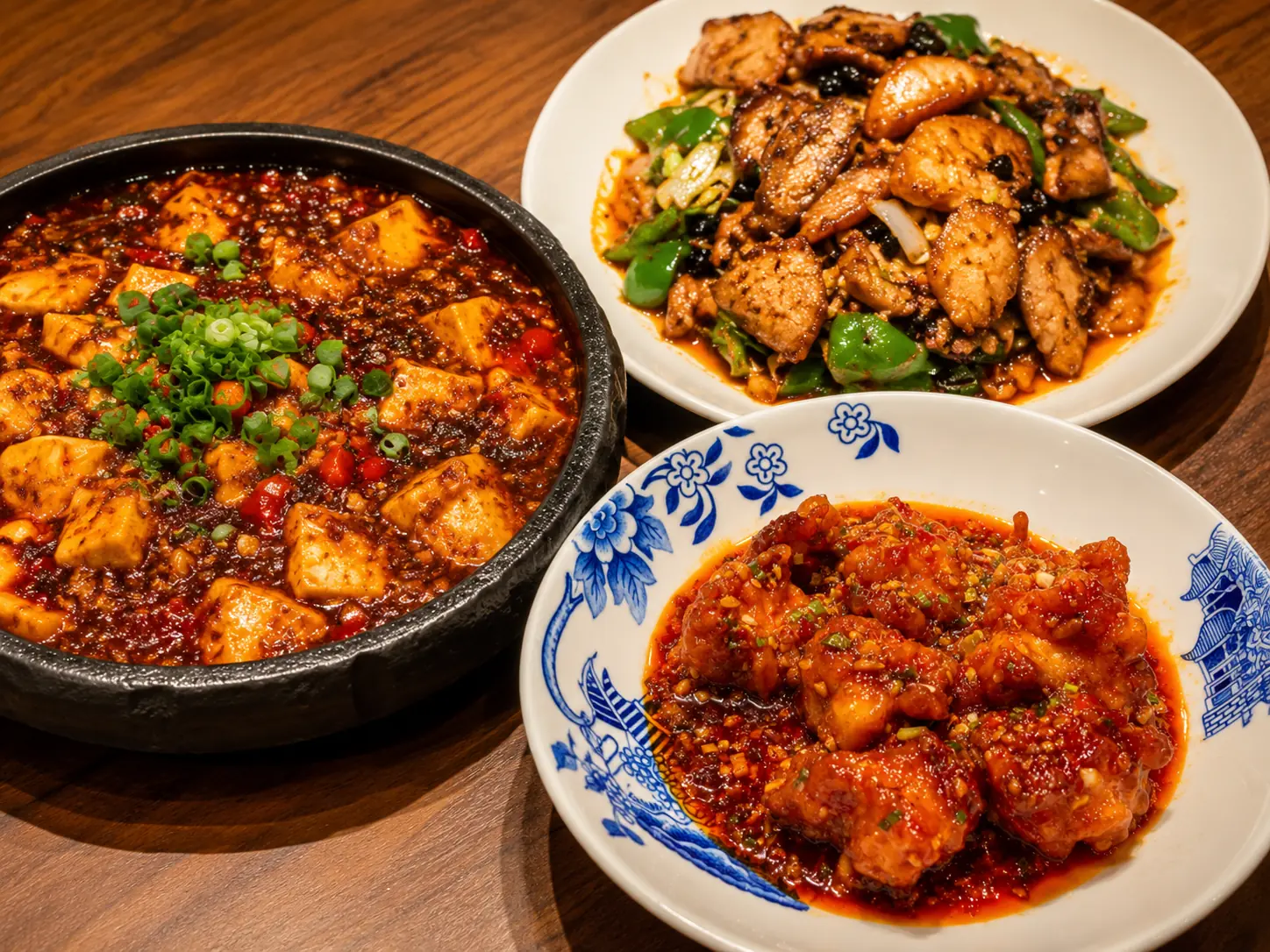
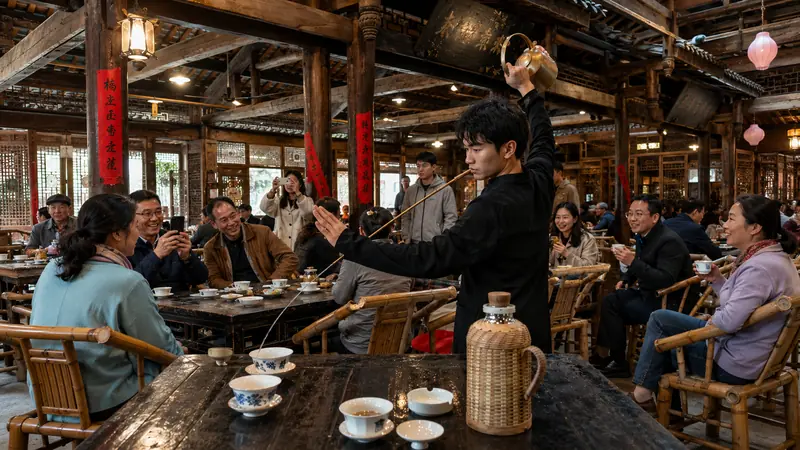
Chengdu's popular image is more layered: classic restaurant dishes, snack houses, teahouse pacing, adjustable heat, and a wider soft landing for first-timers. That does not mean Chengdu food is gentle. It means you can often build a meal across more styles: mapo tofu (麻婆豆腐), dan dan noodles (担担面), kung pao chicken (宫保鸡丁), fish-fragrant pork (鱼香肉丝), twice-cooked pork (回锅肉), and a calm dessert or tea break.
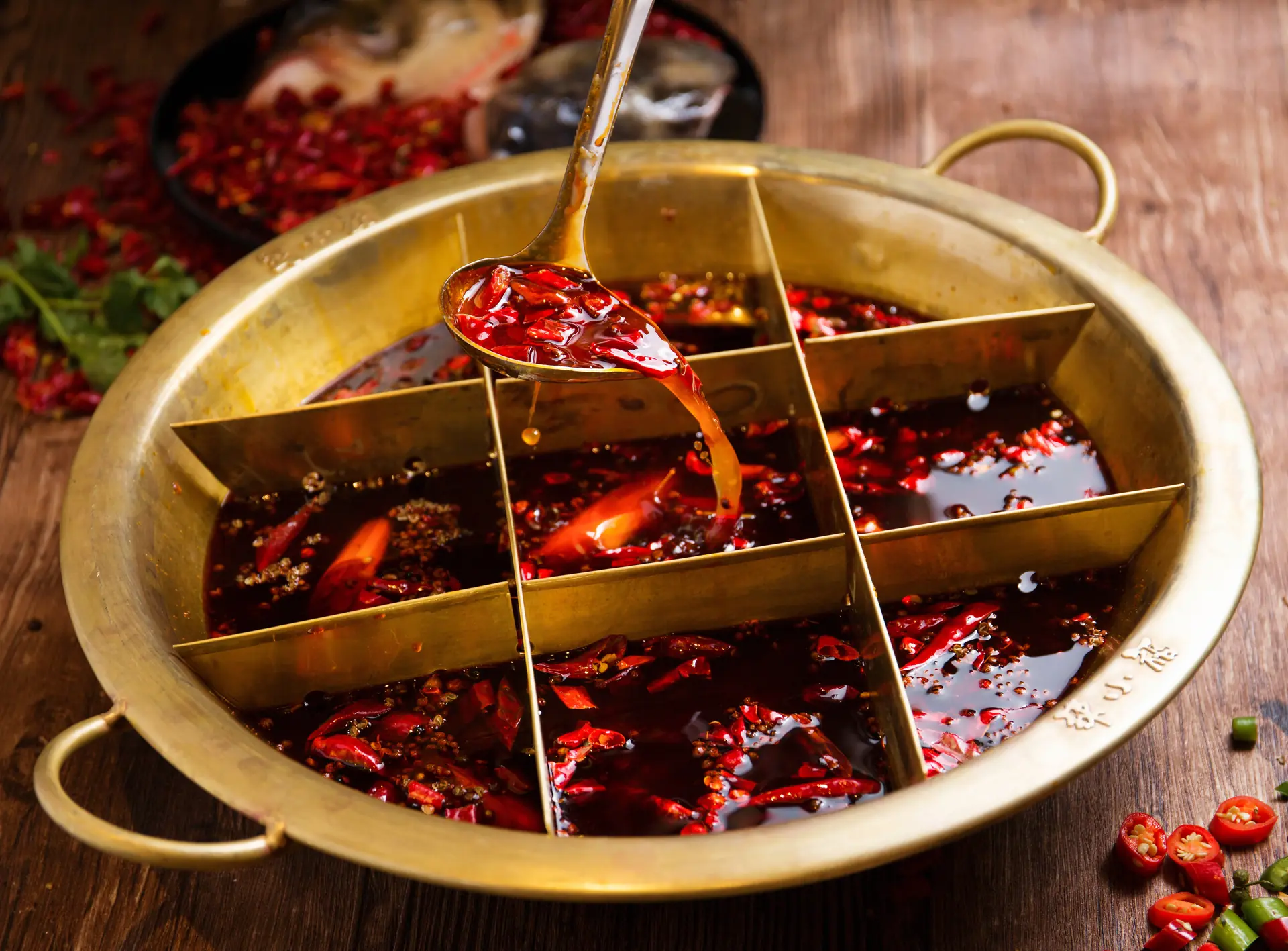
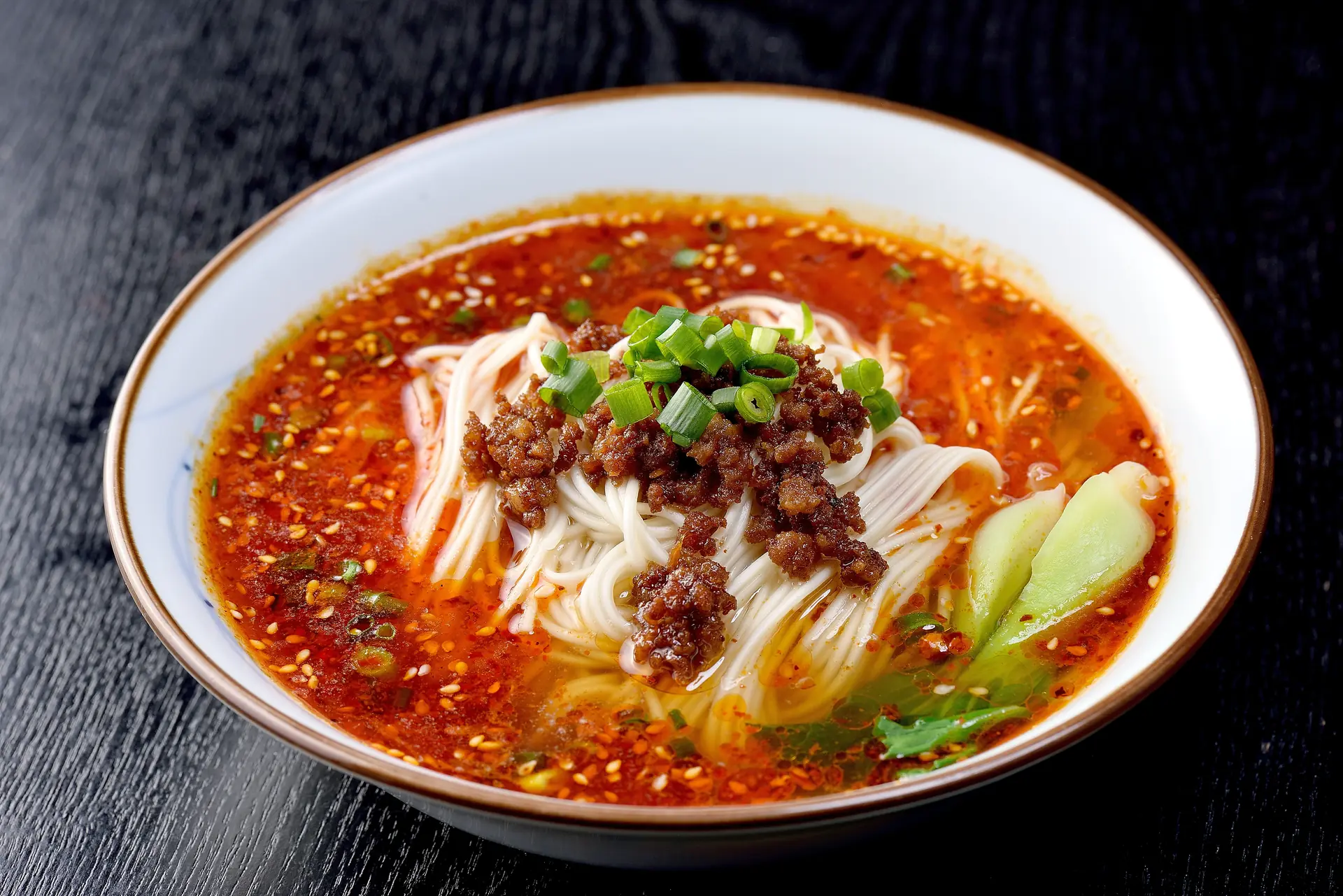
Chongqing's popular image is more direct: beef-tallow hotpot, morning xiaomian noodles (重庆小面), dry chili, strong oil, river-city noise, and "jianghu" cooking (江湖菜) that feels less polished and more forceful. A TourChongqing xiaomian page describes the noodles as a beloved local comfort food eaten from breakfast through late-night snacks, usually built from many seasonings. Use the Chongqing food guide when you need districts and eating routes; use this page to understand why the bowl tastes the way it does.
← swipe to compare all options →
Chengdu
Layered and adjustable
- ✓Best first context: snack house, teahouse day, or classic restaurant table.
- ✓Spice often feels more aromatic and easier to adjust in many traveler-friendly restaurants.
- —Hotpot can be social and split-pot friendly, but it still deserves its own meal.
Snack houses
teahouse pace
classic Sichuan restaurants
Chongqing
Louder and more direct
- ✓Best first context: xiaomian breakfast, hotpot dinner, or a night food street.
- ✓Spice often feels sharper, oilier, and more direct, especially in old-style hotpot.
- —Start with xiaomian, sour-spicy noodles, hotpot, or one jianghu dish instead of forcing every taste into one dinner.
Xiaomian breakfast
beef-tallow hotpot
night food
These are tendencies for planning a first food day, not fixed rules for every restaurant.
Classic Sichuan Dishes by Flavor Profile
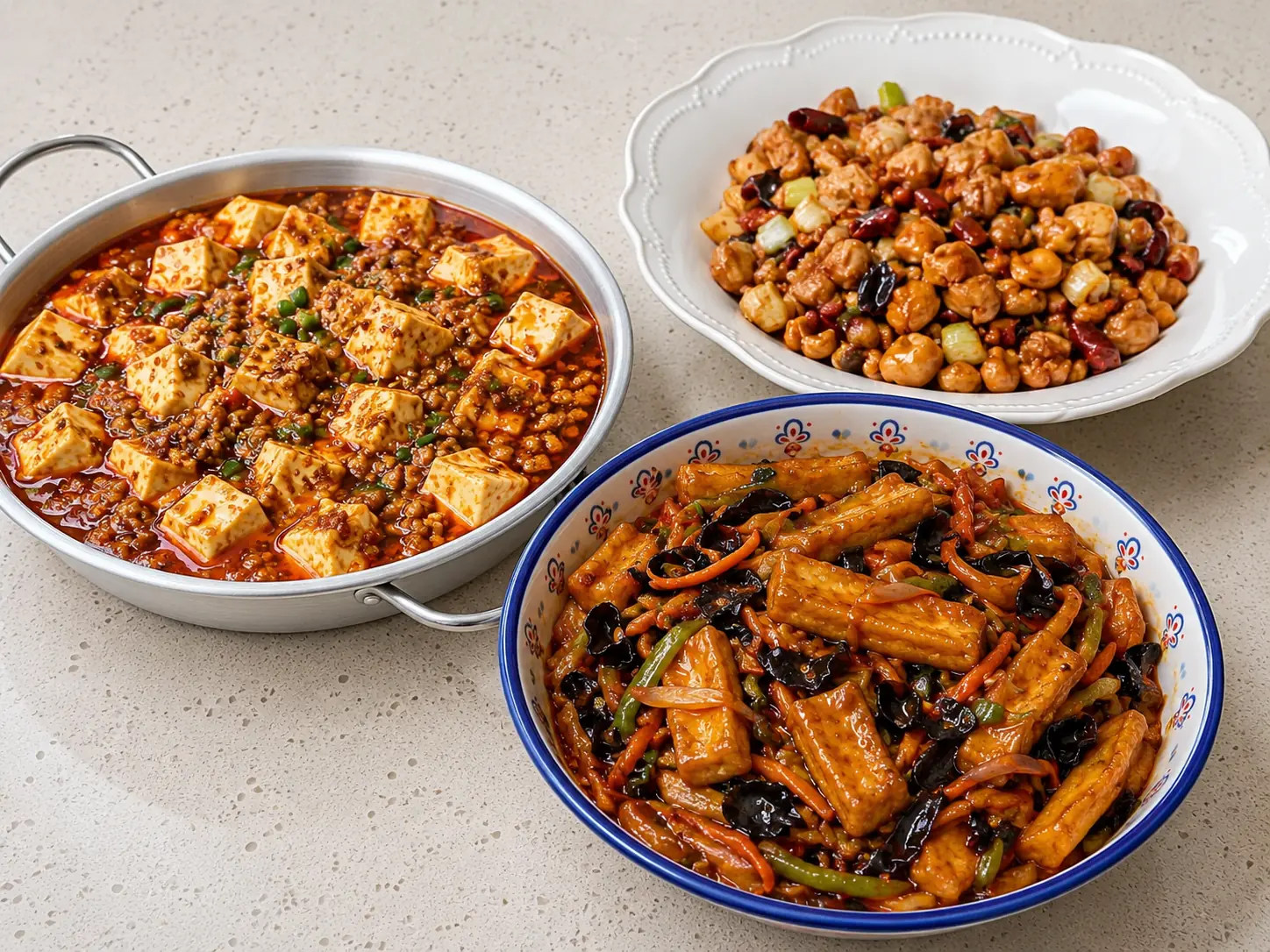
Instead of asking "What are the famous Sichuan dishes?", ask "Which flavor profile do I want to learn?" That keeps the meal from becoming a greatest-hits pile of red oil.
| Dish | Main Flavor Lesson | Why It Matters | Traveler Note |
|---|---|---|---|
| Mapo tofu (麻婆豆腐) | Numbing-spicy, hot, tender, savory | The cleanest test of chili-bean paste, Sichuan peppercorn, tofu texture, and heat control | Not vegetarian by default |
| Dan dan noodles (担担面) | Red-oil, sesame, preserved vegetable, dry bowl | Shows how a small snack bowl can carry deep flavor without becoming soup | Mix from the bottom |
| Kung pao chicken (宫保鸡丁) | Scorched-chili, sweet-sour, peanuts | Proof that Sichuan spice can be precise instead of just hot | Peanut allergy risk |
| Fish-fragrant eggplant or pork (鱼香茄子 / 鱼香肉丝) | Fish-fragrant | The name confuses visitors, but the flavor is one of the most approachable Sichuan profiles | No fish, but not vegetarian-safe unless confirmed |
| Twice-cooked pork (回锅肉) | Home-style | Pork belly, chili-bean paste, garlic shoots, and wok aroma explain daily Sichuan restaurant cooking | Rich, salty, and pork-heavy |
| Fuqi feipian (夫妻肺片) | Red-oil cold dish | Shows cold-dish balance: chili oil, sesame, beef/offal texture, and Sichuan peppercorn | Not for offal-averse diners |
| Chongqing or Chengdu hotpot (火锅) | Numbing-spicy table ritual | The social format, broth, dipping sauce, and cooking rhythm matter as much as spice | Eat as its own meal |
| Chongqing xiaomian (重庆小面) | Chili oil, Sichuan peppercorn, noodle bite | The everyday breakfast version of strong Chongqing seasoning | Start mild if sensitive |
How to Build Your First Sichuan Table
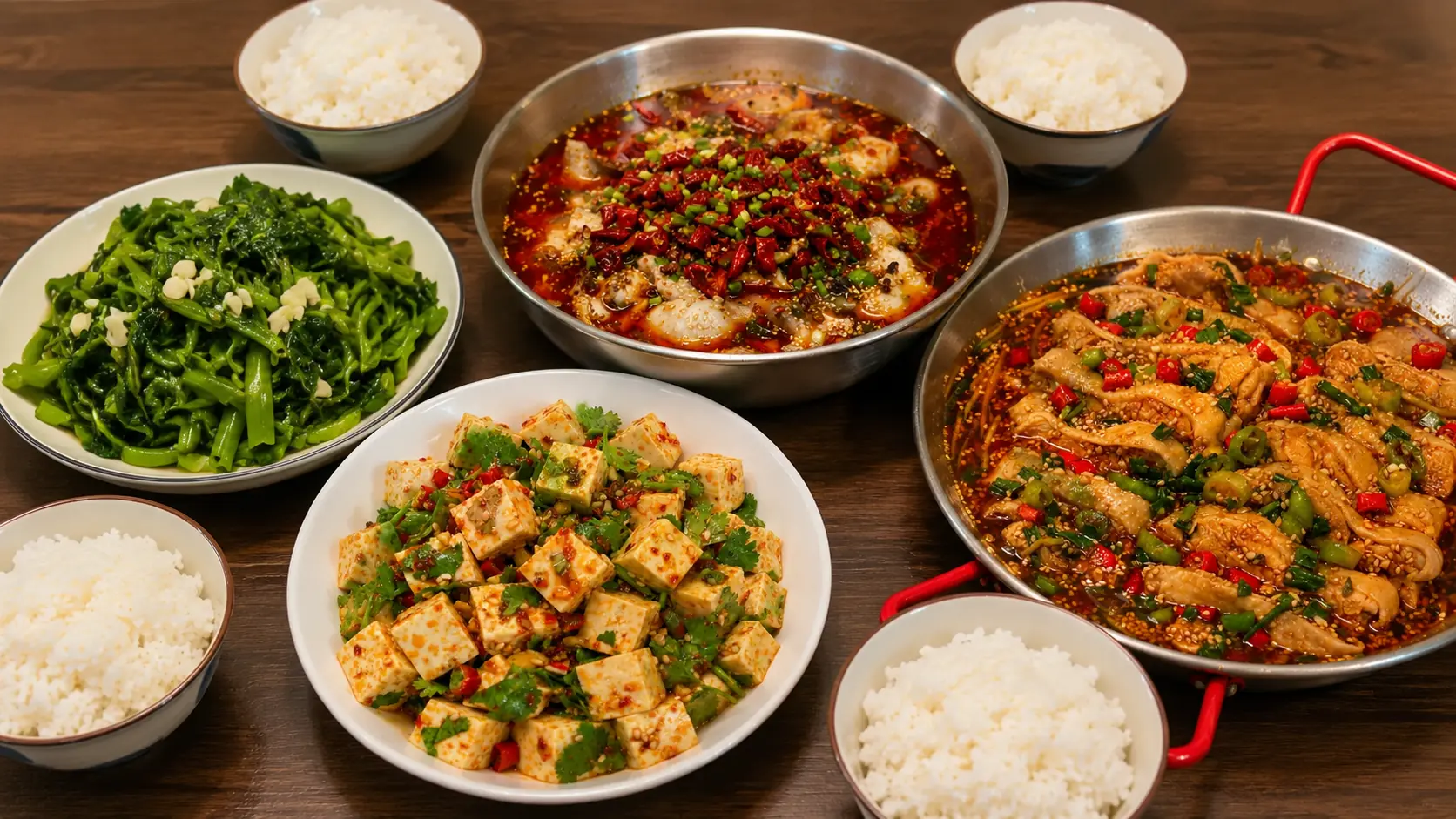
The safest first Sichuan meal is balanced, not brave. Think in roles: one cold dish, one benchmark hot dish, one flavor-profile dish that is not pure numbing-spicy, one vegetable or tofu, rice, and a cooling finish. Hotpot is usually a separate meal because it takes over the table.
| Table Type | Good First Order | Why It Works |
|---|---|---|
| Conservative first-timer | Kung pao chicken, fish-fragrant eggplant, mild mapo tofu, stir-fried greens, rice | Teaches three flavor profiles without making the whole meal heavy red oil |
| Classic Chengdu table | Fuqi feipian, mapo tofu, twice-cooked pork, one mild vegetable, rice, ice jelly | Strong, local, and still structured enough for first-timers |
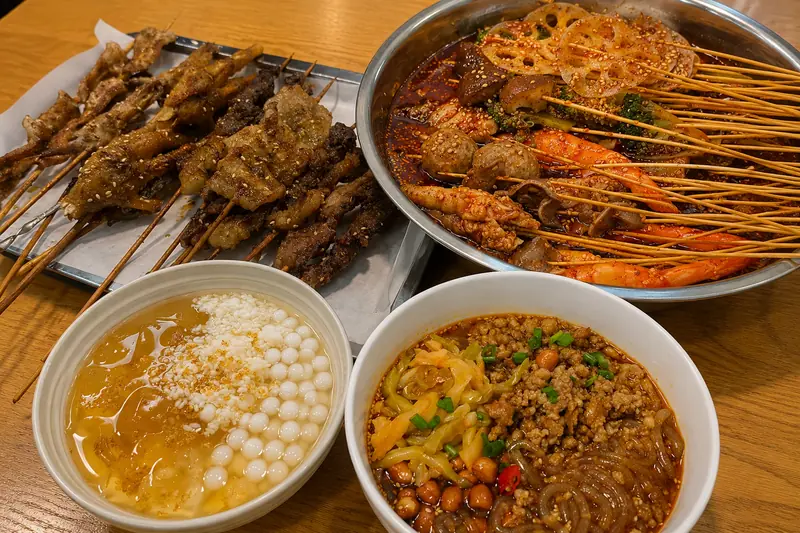
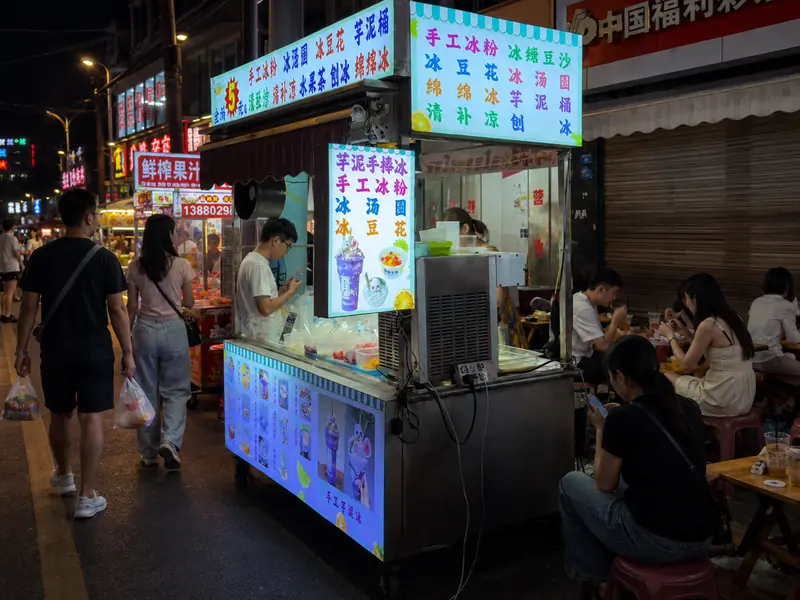
| Snack crawl | Dan dan noodles, red-oil wontons, Zhong dumplings, sweet water noodles, ice jelly | Best for tasting many seasonings without committing to a big restaurant meal |
| Chongqing food day | Xiaomian breakfast, sour-spicy noodles or douhua rice at lunch, hotpot or jianghu cooking at night | Matches the city rhythm better than forcing every dish into one dinner |
| No-hotpot dinner | Fish-fragrant pork, home-style tofu, dry-fried green beans, one cold dish, rice | Lets you understand Sichuan cooking even if your group is not ready for hotpot |
For Chengdu execution, use the Chengdu food guide. For Chongqing districts, xiaomian, and hotpot routes, use the Chongqing food guide. This page should help you know what you are ordering before those city choices begin.
The Non-Spicy Side of Sichuan Food
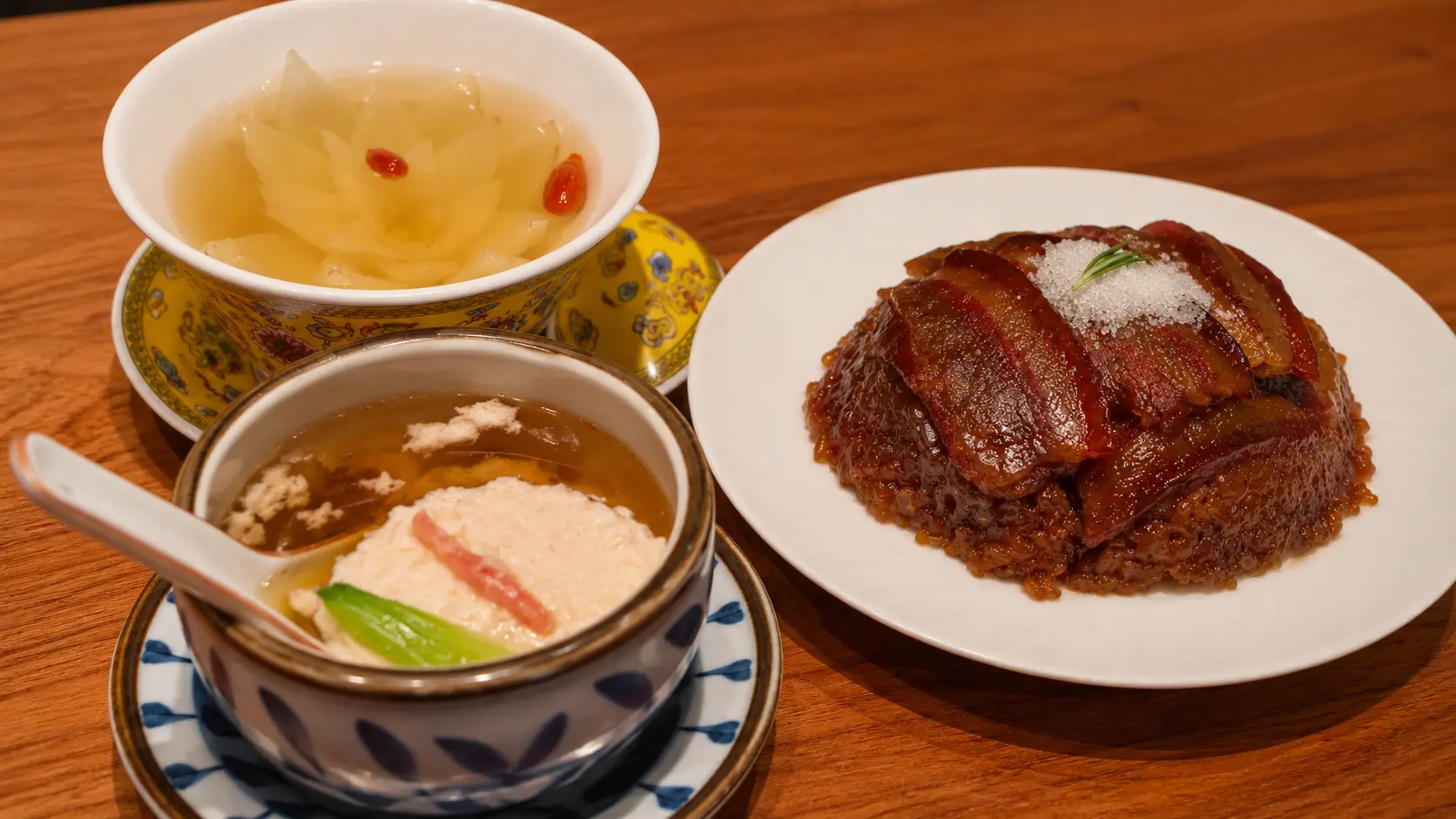
Sichuan food has a non-spicy side, but visitors often miss it because casual menus push red-oil hits first. Banquet cooking, snacks, desserts, soups, and teahouse breaks show another face: delicate broth, glutinous rice, brown sugar, soft tofu-like textures, and sweet pork dishes.
Useful names to recognize:
Clear-Broth Cabbage
开水白菜
A refined banquet soup that looks simple but depends on clear stock.
Chicken Tofu Pudding
鸡豆花
Minced chicken worked into a tofu-like texture, usually mild and delicate.
Sweet Steamed Pork Belly
甜烧白
Sticky rice and sweet pork belly, rich rather than spicy.
Ice Jelly
冰粉
A cooling brown-sugar dessert, common after hotpot.
Glutinous Rice Balls
汤圆 / 赖汤圆
Sweet, soft, and usually not spicy.
Brown Sugar Rice Cake
红糖糍粑
Fried or warm glutinous rice cake with syrup.
The warning is important: not spicy does not mean vegetarian, light, or allergy-safe. Clear-broth cabbage may contain chicken or ham stock. Chicken tofu pudding is made from chicken. Sweet steamed pork belly is pork. Desserts may contain peanuts, sesame, dairy-like toppings, or shared utensils.
Hotpot, Noodles, and Snacks in Context
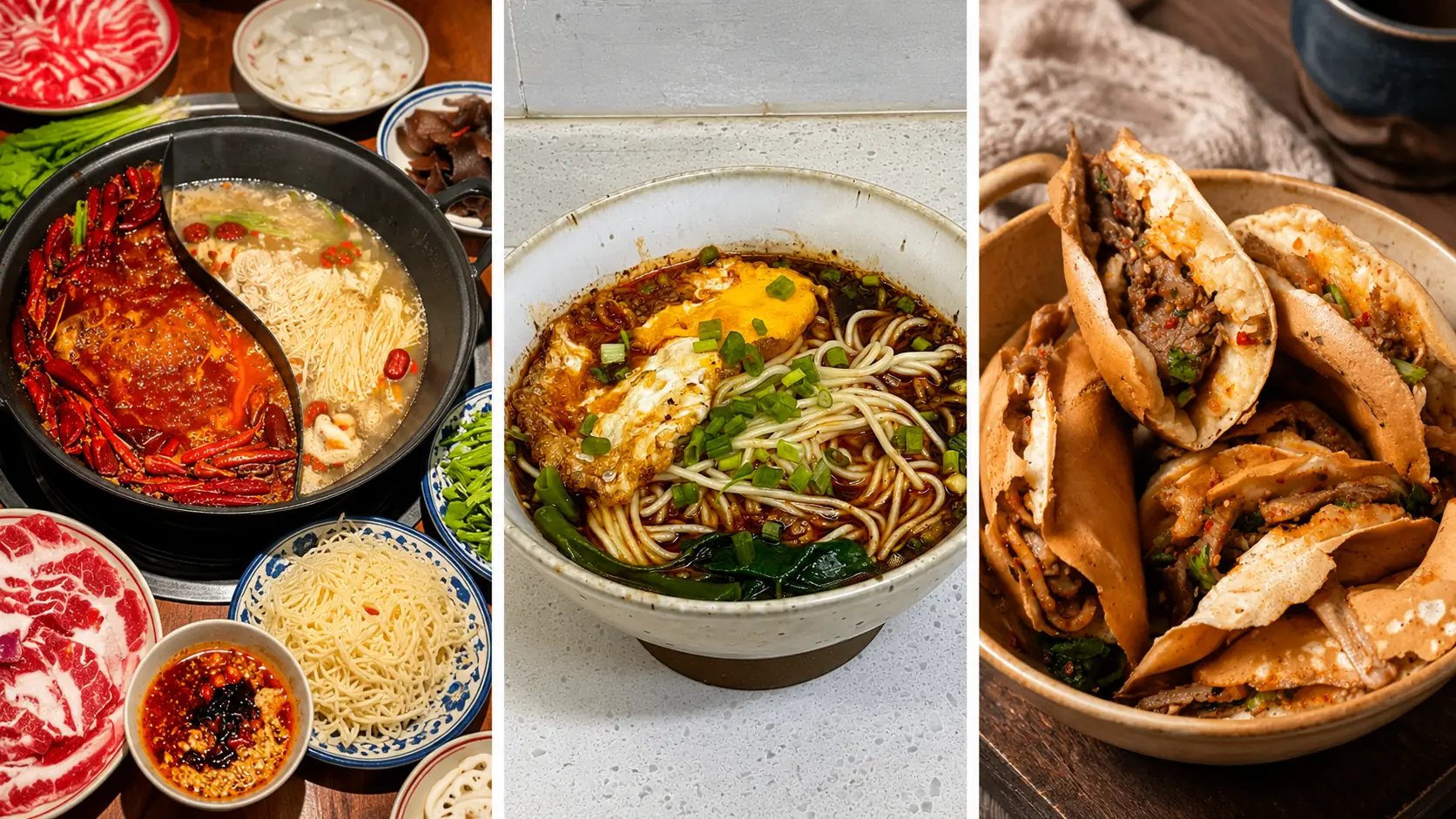
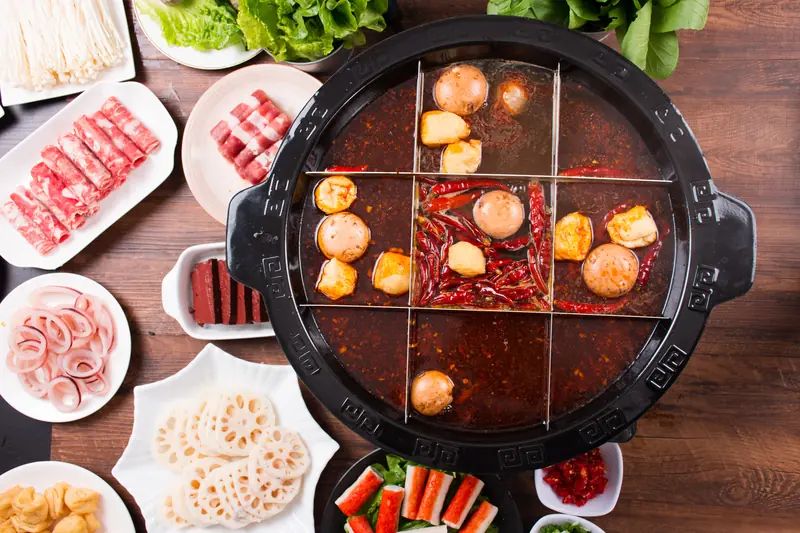
Hotpot is the loudest Sichuan-Chongqing food ritual, but it should not swallow the whole cuisine. The Sichuan and Chongqing hotpot guide covers broths, pot shapes, ingredients, dipping sauces, and cooking rhythm in detail. Here, the big lesson is simpler: hotpot is a social format, not just a flavor.
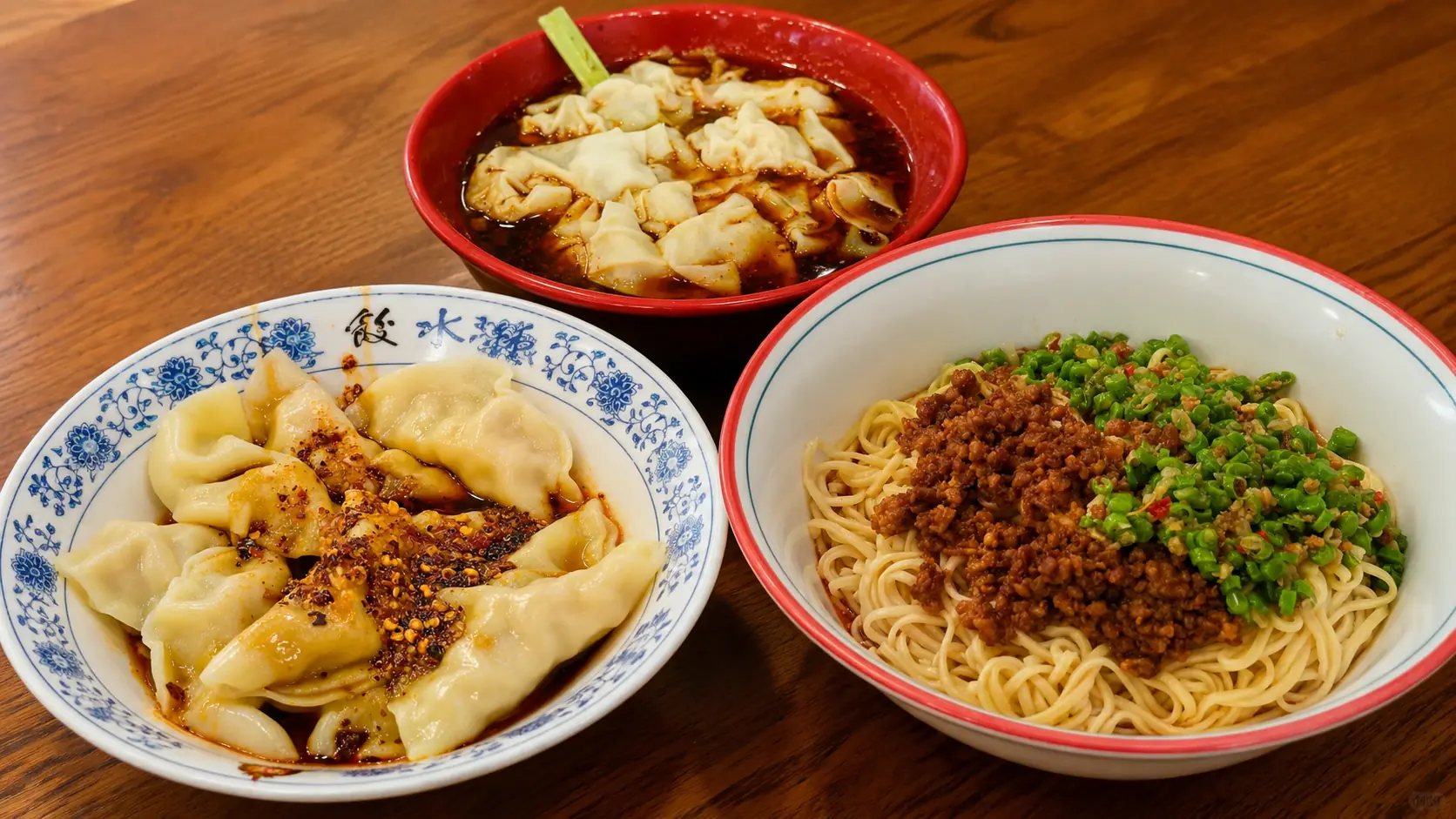
Noodles and snacks explain daily life better. Chengdu snack bowls such as dan dan noodles, red-oil wontons, Zhong dumplings (钟水饺), and sweet water noodles (甜水面) show how a few spoonfuls of seasoning can carry a whole flavor system. Chongqing xiaomian shows the same idea in breakfast form: wheat noodles, chili oil, Sichuan peppercorn, preserved vegetables, garlic, scallion, and optional toppings.
If you are spice-nervous, start with snack portions before committing to a red hotpot dinner. If you love strong food, do not skip the milder or sweeter breaks. They are not filler; they are how locals reset the table.
Spice, Allergies, and Hidden Animal Fats
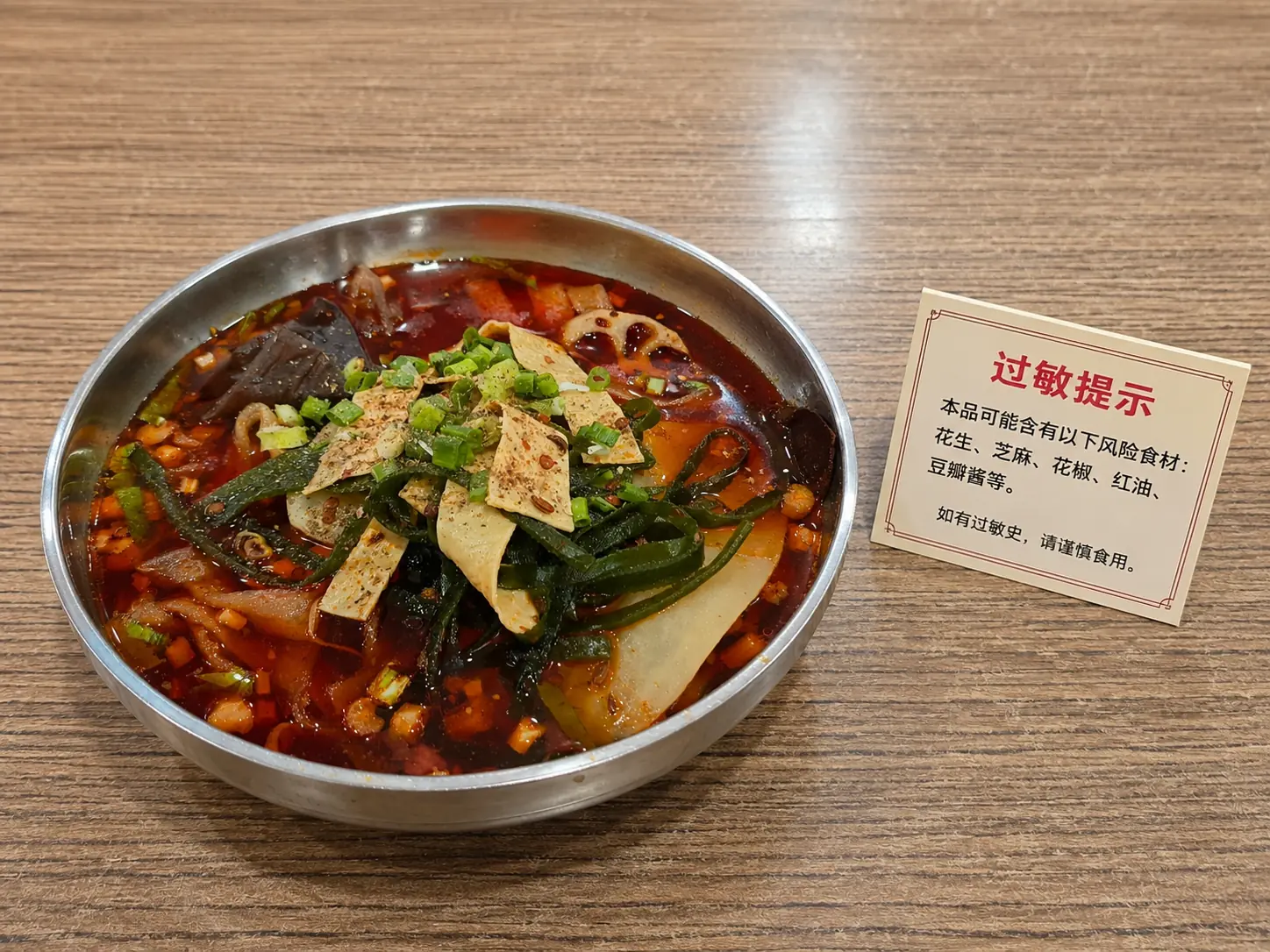
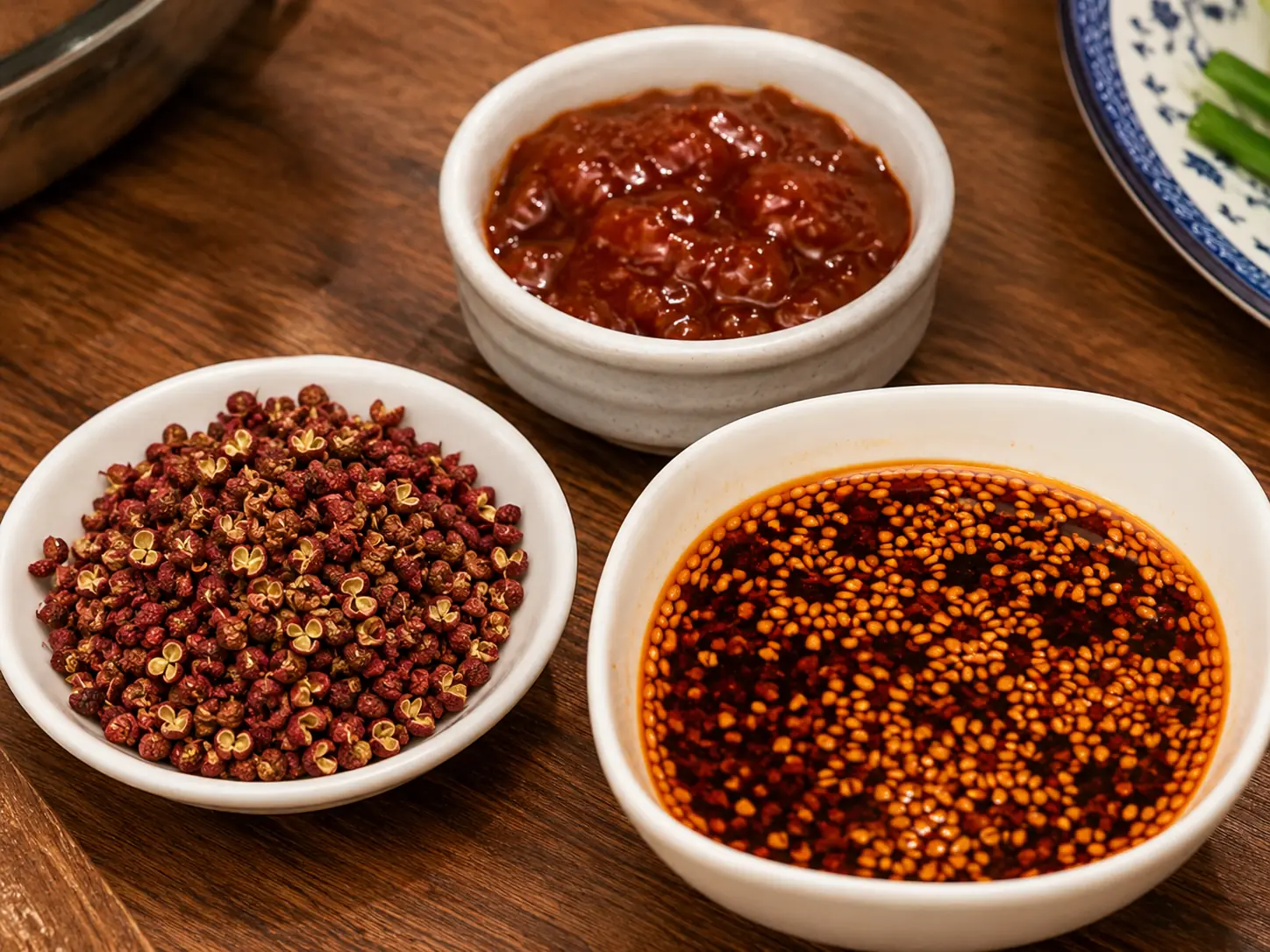
The most useful question is not "Is it spicy?" It is "What is in the seasoning?" Sichuan and Chongqing kitchens often use chili oil, Sichuan peppercorn, fermented chili-bean paste, soy sauce, vinegar, garlic, ginger, sesame oil, peanuts, pork mince, lard, beef tallow, chicken powder, meat stock, and shared sauce containers. For many travelers, hidden animal fat or wheat is a bigger problem than heat.
| Need | Watch For | Safer Approach |
|---|---|---|
| Vegetarian | Lard, beef tallow, meat stock, pork mince, chicken powder | Ask about oil and broth, not only visible meat |
| Peanut allergy | Kung pao chicken, noodles, sour-spicy noodles, snacks, desserts | Skip dishes with peanuts by design; cross-contact is hard to control |
| Sesame allergy | Hotpot dipping sauce, dan dan noodles, cold dishes, sesame paste | Avoid self-serve sauce bars unless staff can confirm clean tools |
| Gluten or wheat | Noodles, soy sauce, chili-bean paste, dumpling skins, wheat snacks | Rice helps, but sauces still need checking |
| Chili or pepper sensitivity | Chili oil, dried chili, Sichuan peppercorn, red broth | Ask for mild and less Sichuan peppercorn separately |
| English | Chinese | Pinyin | Say It Like… |
|---|---|---|---|
| Mild spice, less Sichuan peppercorn. | 微辣,少花椒。 | Wēi là, shǎo huājiāo. | Way lah, shaow hwah-jyow |
| No Sichuan peppercorn. | 不要花椒。 | Bú yào huājiāo. | Boo yaow hwah-jyow |
| I do not eat pork. | 我不吃猪肉。 | Wǒ bù chī zhūròu. | Waw boo chrr joo-roe |
| No beef tallow. | 不要牛油。 | Bú yào niúyóu. | Boo yaow nyoh-yo |
| Does it contain peanuts or sesame? | 里面有花生或芝麻吗? | Lǐmiàn yǒu huāshēng huò zhīma ma? | Lee-myen yo hwah-shung hwaw jir-mah mah |
For serious allergies, ordinary snack shops and hotpot sauce bars are risky because utensils, oil, toppings, and prep surfaces are shared. A phone translation can help, but it cannot make a busy kitchen allergy-controlled.
Frequently Asked Questions
They are closely related, but not identical. Chongqing was historically tied to Sichuan and became a direct-administered municipality in 1997. For travelers, it makes sense to learn them together while respecting Chongqing's stronger hotpot, xiaomian, and jianghu-cooking identity.
Beyond This Guide
Use this page as the flavor map, then go deeper where your route needs it: the Chengdu food guide for neighborhoods and first meals, the Chongqing food guide for hotpot, xiaomian, and district choices, the Sichuan and Chongqing hotpot guide for the full table ritual, and the dish guides for mapo tofu, dan dan noodles, and kung pao chicken.
If you want to see the system in one place, the Sichuan Cuisine Museum (川菜博物馆) (Google | Amap) is useful context before or after a Chengdu food day. The museum's official introduction describes it as a Sichuan cuisine culture base and intangible-heritage experience base with more than 6,000 collection items.
© gochinafreely.com — Original guide by Go China Freely.