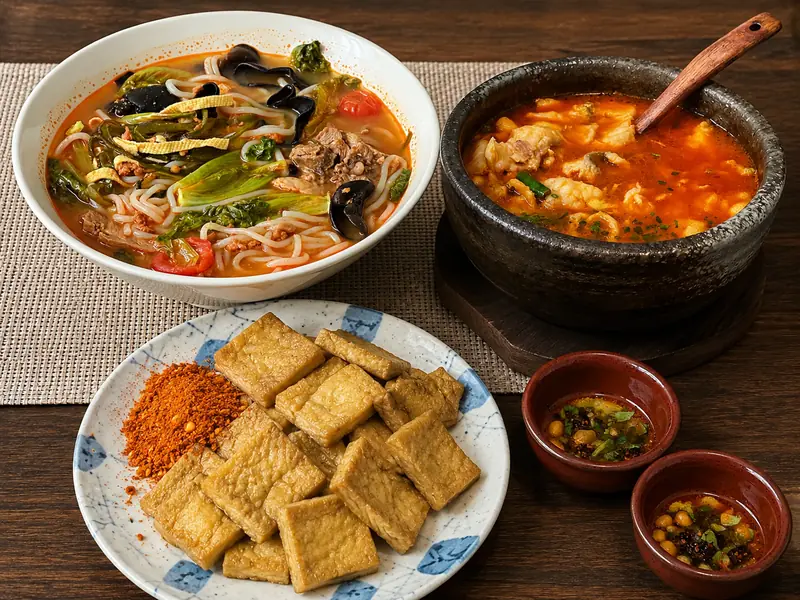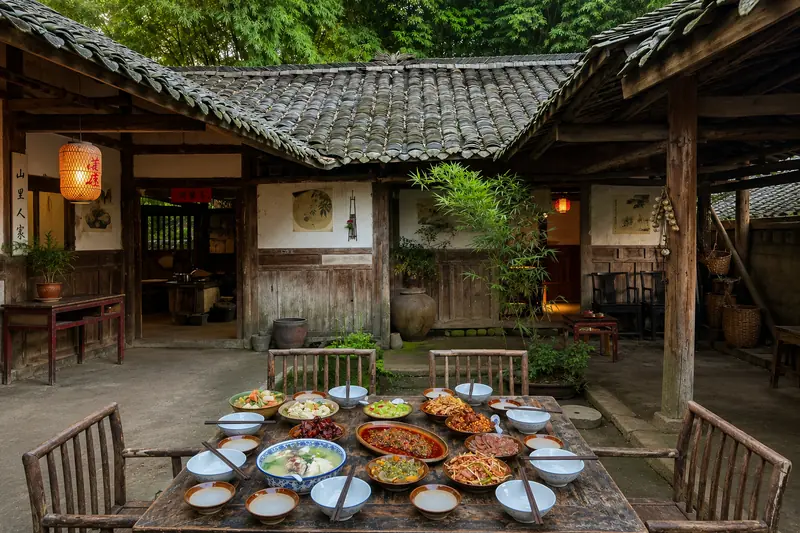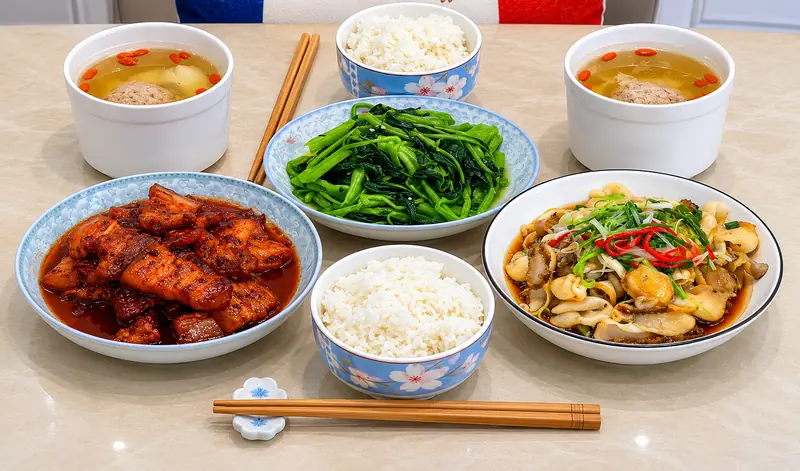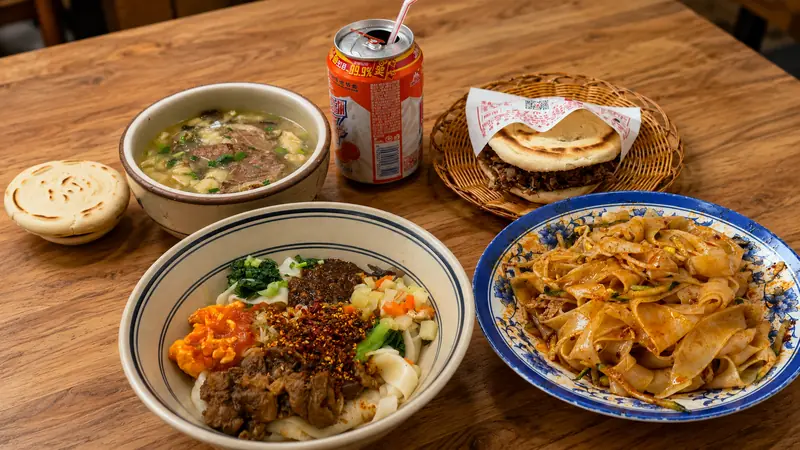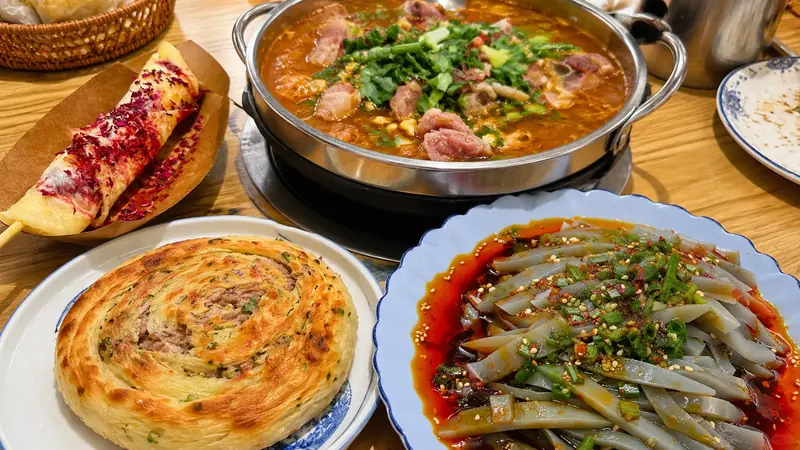
Dali (大理) and Lijiang (丽江) are both in Yunnan, but they should not feel like a second serving of Kunming. Kunming is the easiest place to learn rice noodles, wild mushrooms, steam-pot chicken, flower cakes, and province-wide restaurant cooking. Dali and Lijiang are more specific: Bai (白族) dairy, Xizhou baba, hot-sour fish, three-course tea, Naxi (纳西族) snacks, chickpea jelly, preserved pork rib hotpot, and market mornings that make the old towns easier to read.
The best way to eat here is by route, not by a scattered shop list. In Dali, build a day around Dali Old Town, Xizhou Old Town, and an Erhai-side dinner. In Lijiang, use Zhongyi Market for breakfast, Lijiang Old Town for snacks and atmosphere, then Xiangshan Market, Shuhe, or Baisha for a calmer meal.
Executive Summary
What to expect
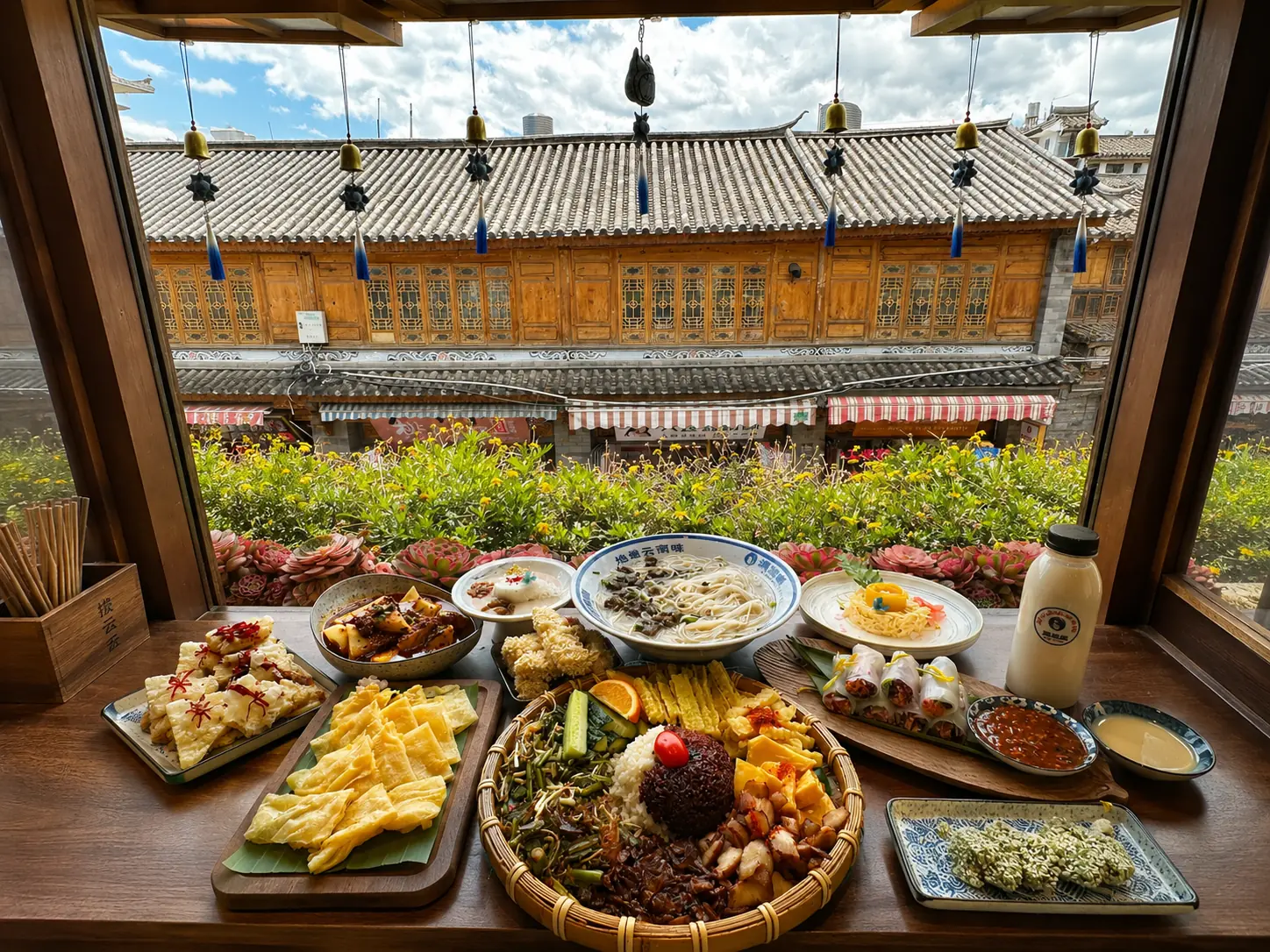
Bai dairy, wheat cakes, sour-spicy fish, tea rituals, Naxi snacks, preserved pork hotpot, cold jelly, old-town markets, and much less rice-noodle repetition than Kunming.
Best first meal
In Dali, start with Xizhou baba plus grilled rushan or a simple Bai lunch. In Lijiang, try chickpea jelly and Lijiang baba in the day, then preserved pork rib hotpot for dinner.
Main traveler challenge
Old towns are convenient but tourist-facing. Markets and quieter towns usually teach you more, while raw pork dishes, dairy, chili oil, and pork-heavy hotpots need clear ordering.
Why Dali and Lijiang Eat Differently from Kunming
Dali's food story belongs to the Bai world around Cangshan Mountain, Erhai Lake, Xizhou, Zhoucheng, and the old town. The flavors are often milky, wheaty, sour, lightly spicy, floral, or smoky rather than centered on rice-noodle bowls. Grilled rushan (乳扇), fresh cheese-like rubing (乳饼), Xizhou baba (喜洲粑粑), hot-sour fish (酸辣鱼), and Bai three-course tea (白族三道茶) all make more sense here than they do as a quick snack in Kunming.
Lijiang has a different rhythm. Lijiang Old Town is beautiful and convenient, but its main lanes can be expensive and tourist-facing. The better food logic is wider: Zhongyi Market (忠义市场) in the morning, old-town snacks in small portions, preserved pork rib hotpot for dinner, then slower lunches in Shuhe (束河) or Baisha (白沙). UNESCO's listing for the Old Town of Lijiang highlights a historic townscape, a still-functioning water system, and architecture shaped by several cultures. That broader old-town world helps explain why Dayan, Shuhe, and Baisha feel linked but not identical. UNESCO World Heritage Centre
That is the real point of this guide: do not spend your Dali and Lijiang days repeating crossing-the-bridge noodles, wild mushrooms, steam-pot chicken, and flower cakes if you already handled those in Kunming. Use northwest Yunnan for the foods that are strongest at their source.
What to Eat First in Dali and Lijiang
Use this as a first-timer shortlist, not a checklist to finish in one day.
Xizhou baba
喜洲粑粑
Best place: Xizhou Old Town. A Bai town flatbread with sweet and savory versions.
Grilled rushan
烤乳扇
Best place: Dali Old Town, Xizhou, and markets. The most visible Dali dairy snack, often grilled and brushed with rose sauce.
Rubing
乳饼
Best place: Bai restaurants. Better as part of a meal than as a walking snack.
Hot-sour fish
酸辣鱼
Best place: Erhai-side or Bai restaurants. A Dali Bai sour-spicy fish dish brightened by fruit or tomato acidity.
Bai three-course tea
白族三道茶
Best place: Xizhou and Bai courtyards. A cultural tasting, not a meal replacement.
Dali cold jelly or noodles
凉粉 / 凉米线
Best place: Markets and snack shops. Cheap, refreshing, and useful between heavier meals.
Lijiang chickpea jelly
鸡豆凉粉
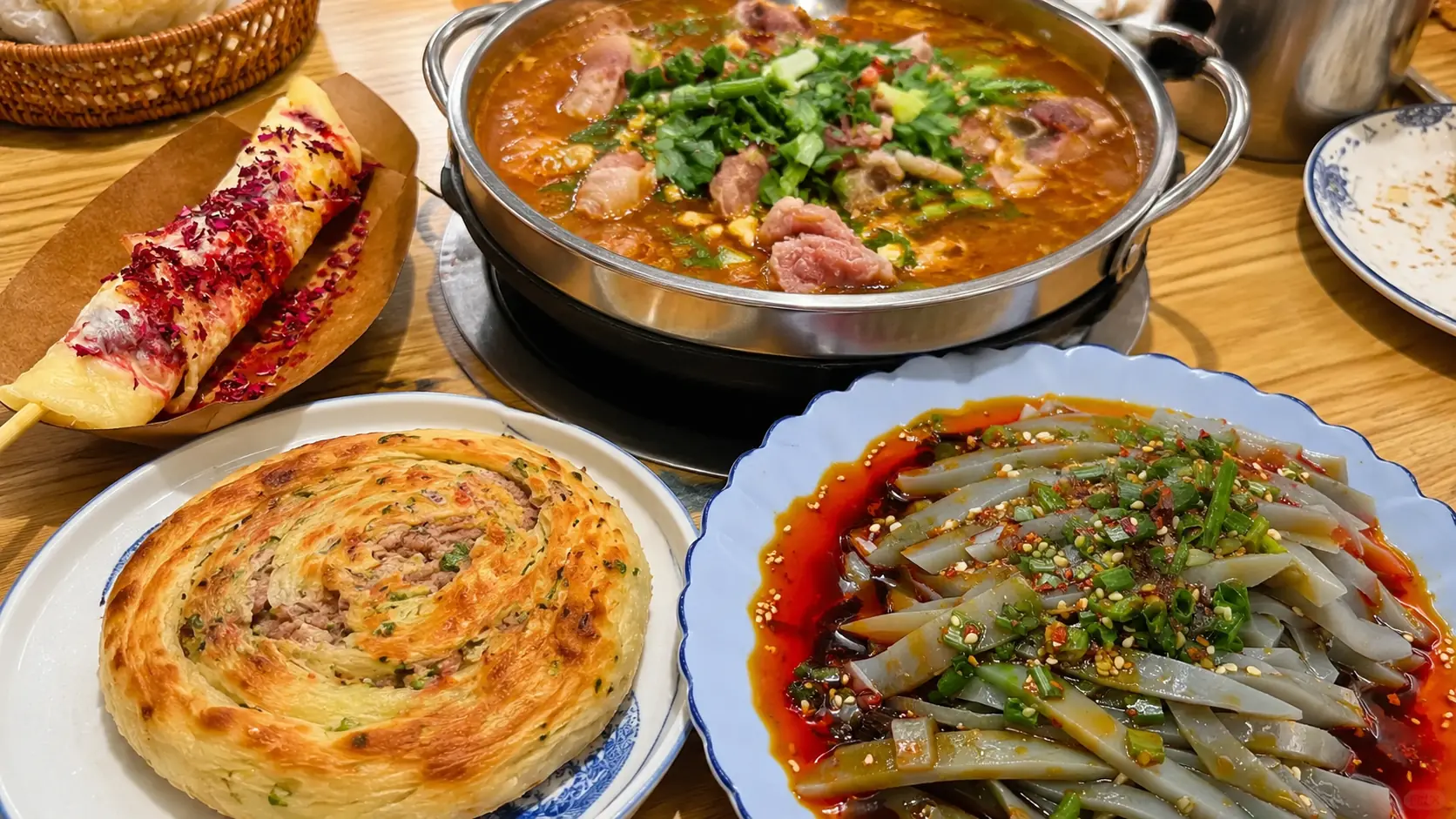
Best place: Zhongyi Market and Lijiang Old Town. Served cold with sauce or pan-fried.
Lijiang baba
丽江粑粑
Best place: Old-town snack shops. Wheaty, sweet or savory, and often made with pork fat or ham.
Preserved pork rib hotpot
腊排骨火锅
Best place: Xiangshan Market area hotpot shops. The most useful shared Lijiang dinner, especially in cool weather.
Naxi hotpot or copper-pot dishes
纳西火锅 / 铜锅菜
Best place: Lijiang, Shuhe, and Baisha. A good fit after mountain days when you want a hot shared meal.
Lijiang yogurt
丽江酸奶
Best place: Old Town snack shops. A light pause between market eating and a hotpot dinner.
Dali Food Strategy by Area
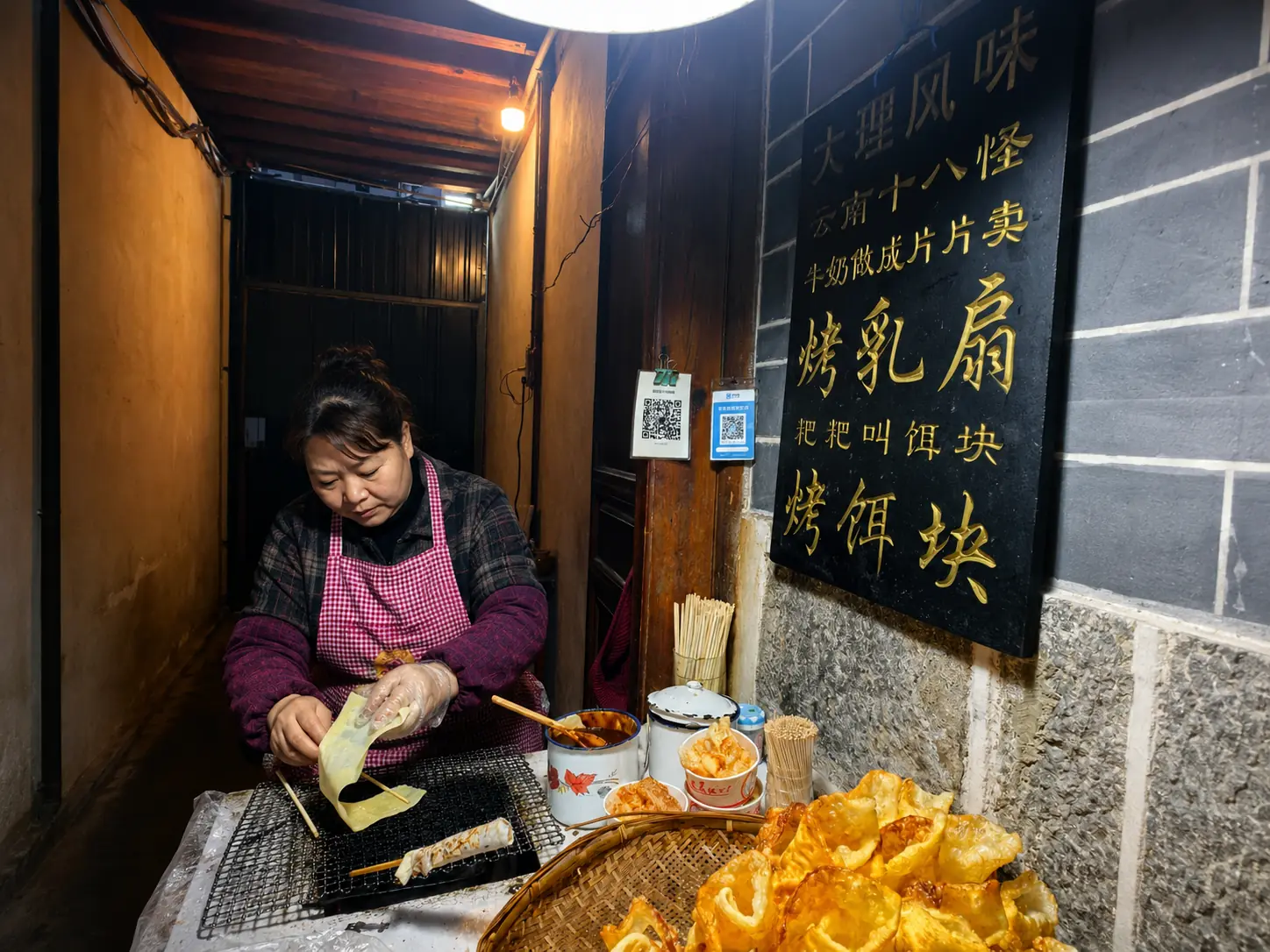
Dali Old Town (大理古城) (Google | Amap) is the easiest first stop. It is good for grilled rushan, cold jelly, small Bai restaurants, drinks, and a low-pressure first evening. It is not where every meal needs to happen. Treat it as a base, then use Xizhou, Zhoucheng, and the Erhai corridor to make the food day more local.
Xizhou Baba and Market Mornings
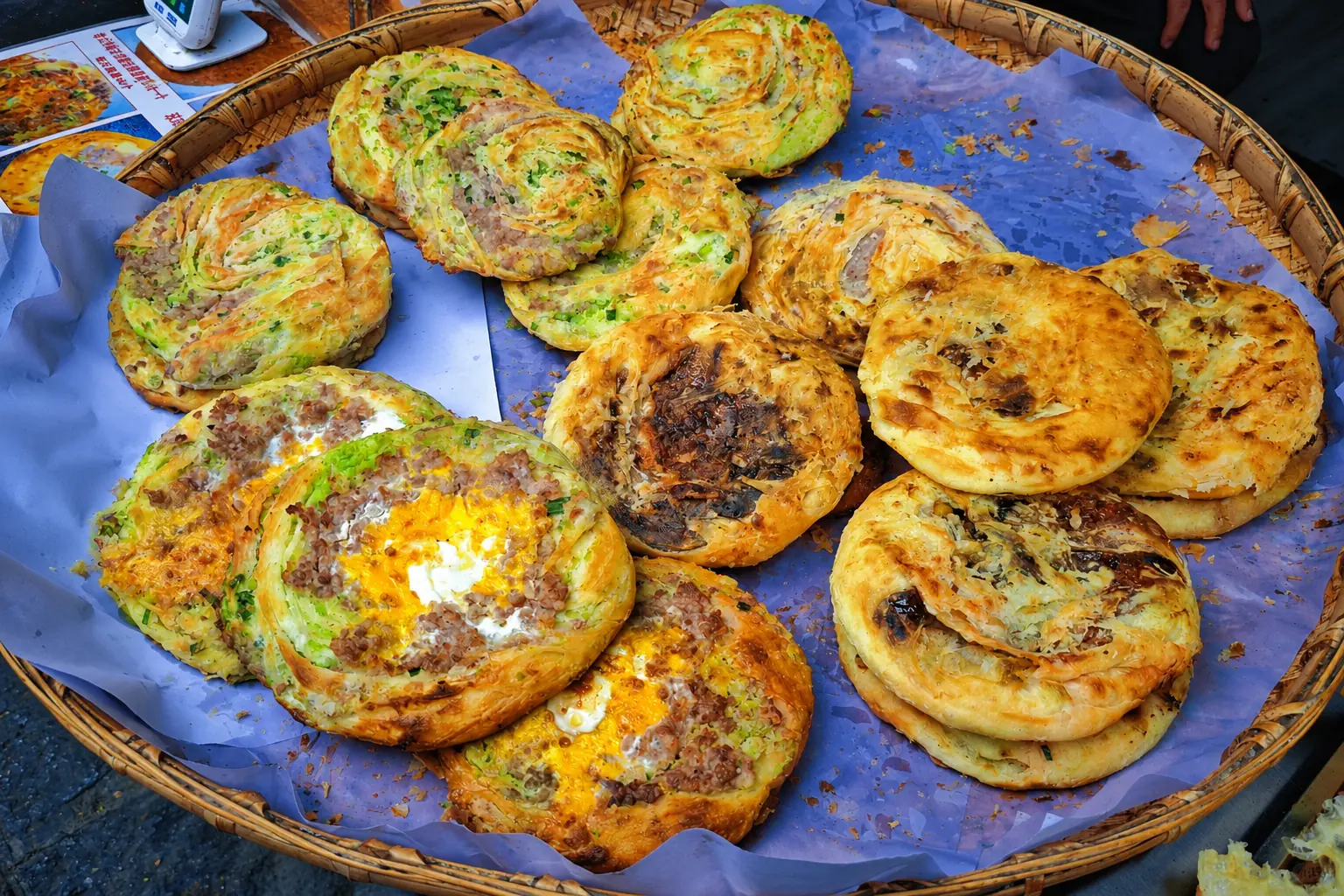
Xizhou Old Town (喜洲古镇) (Google | Amap) is where Xizhou baba feels most natural. Yunnan Gateway describes it as a baked wheat-flour pie and notes both savory toppings, such as scallion, meat, and egg, and sweet fillings, such as red bean and rose sauce. Yunnan Gateway
Go in the morning if you can. A warm baba, a market walk, and a slow look at Bai courtyards give you a better Dali food memory than trying three random old-town snack stalls at midnight.
Rushan, Rubing, and Bai Dairy
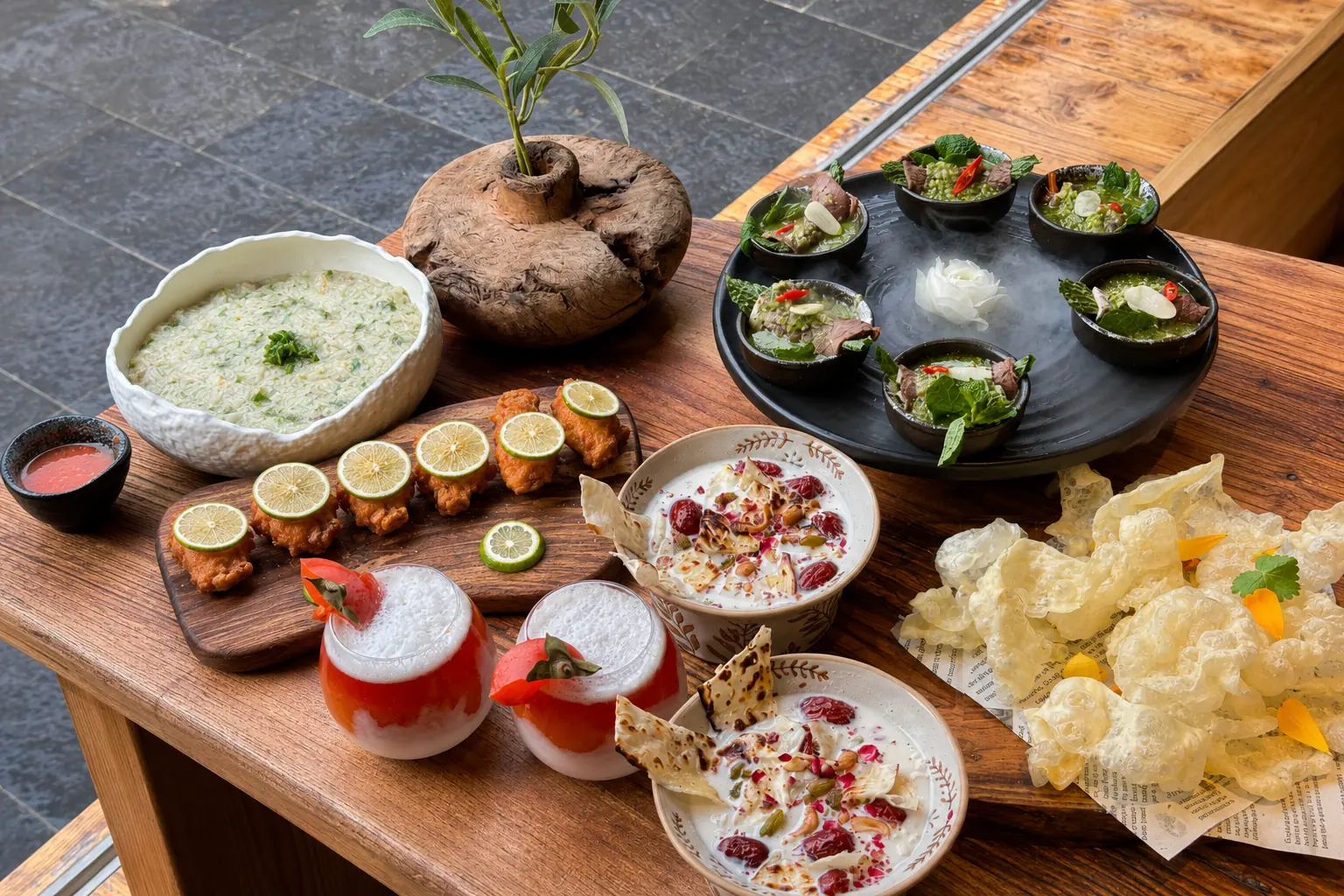
Rushan is the Dali food that travelers often see first because it is easy to grill on the street. China Daily describes dairy fan, or rushan, as a Dali specialty made from milk, shaped like a fan, and eaten raw, dried, fried, toasted, or cooked with other ingredients. China Daily
The street version is usually grilled and brushed with something sweet, often rose-flavored. Try one, but do not stop there. Bai restaurants may also serve rubing, a thicker fresh cheese-style ingredient that can be fried, grilled, or paired with vegetables and ham. If you are lactose intolerant or dairy-allergic, Dali is one of the places in China where you need to ask clearly before sharing plates.
Hot-Sour Fish and Erhai-Side Meals
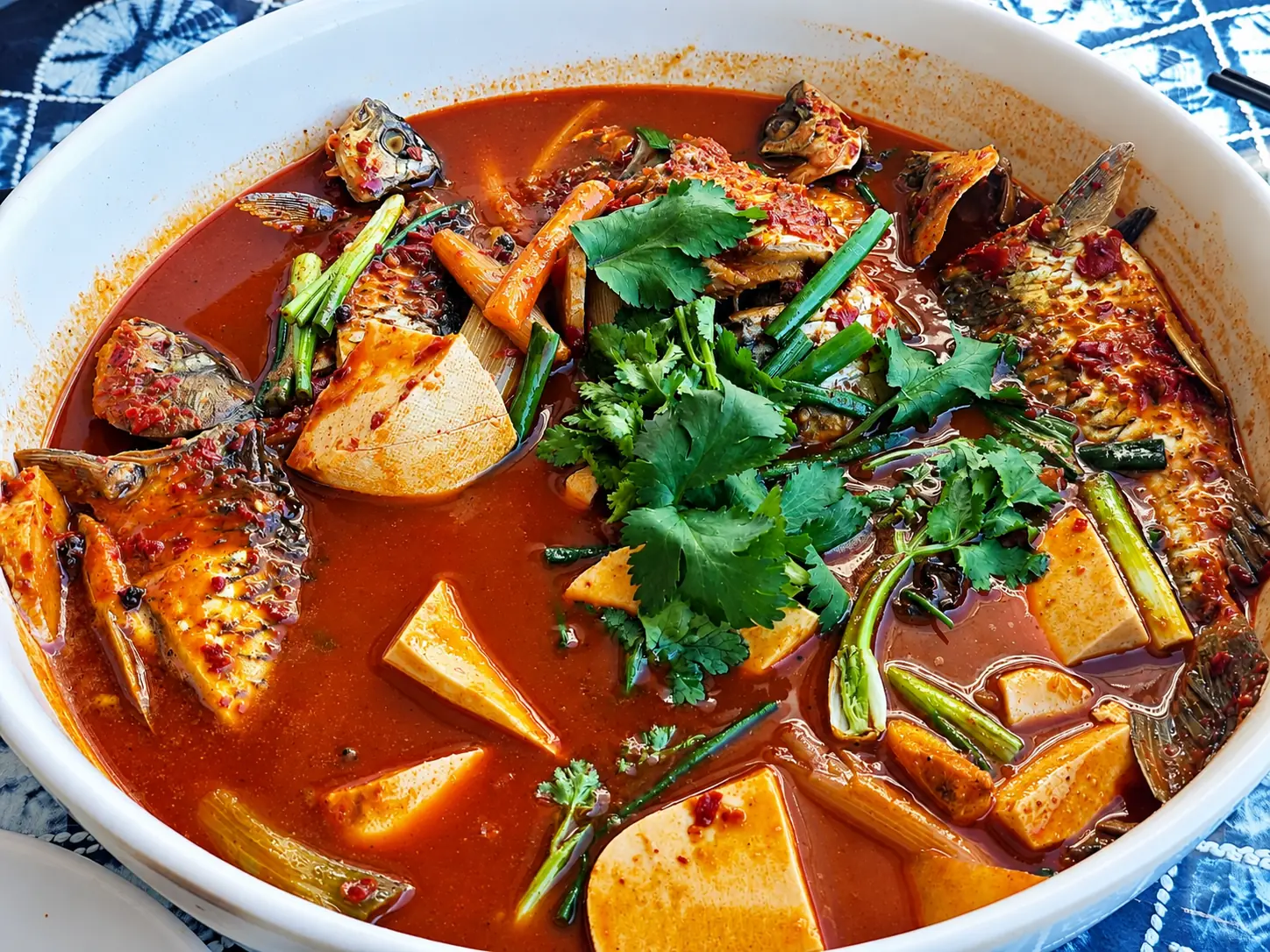
Hot-sour fish is the Dali dish that explains why "sour" in Yunnan can be bright rather than harsh. Yunnan Gateway calls hot and sour fish a traditional Bai dish in west Yunnan's Dali Prefecture and describes acidity coming from ingredients such as papaya, tomato, pepper, and plum vinegar. Yunnan Gateway
For travelers, the important part is ordering carefully. At Erhai-side restaurants, ask what fish is available, how it is priced, and where it comes from. Do not assume every fish on a lakeside menu is from Erhai Lake. A good order for two or three people is one fish dish, one green vegetable, one tofu or mushroom dish, and rice.
Three-Course Tea as a Pause
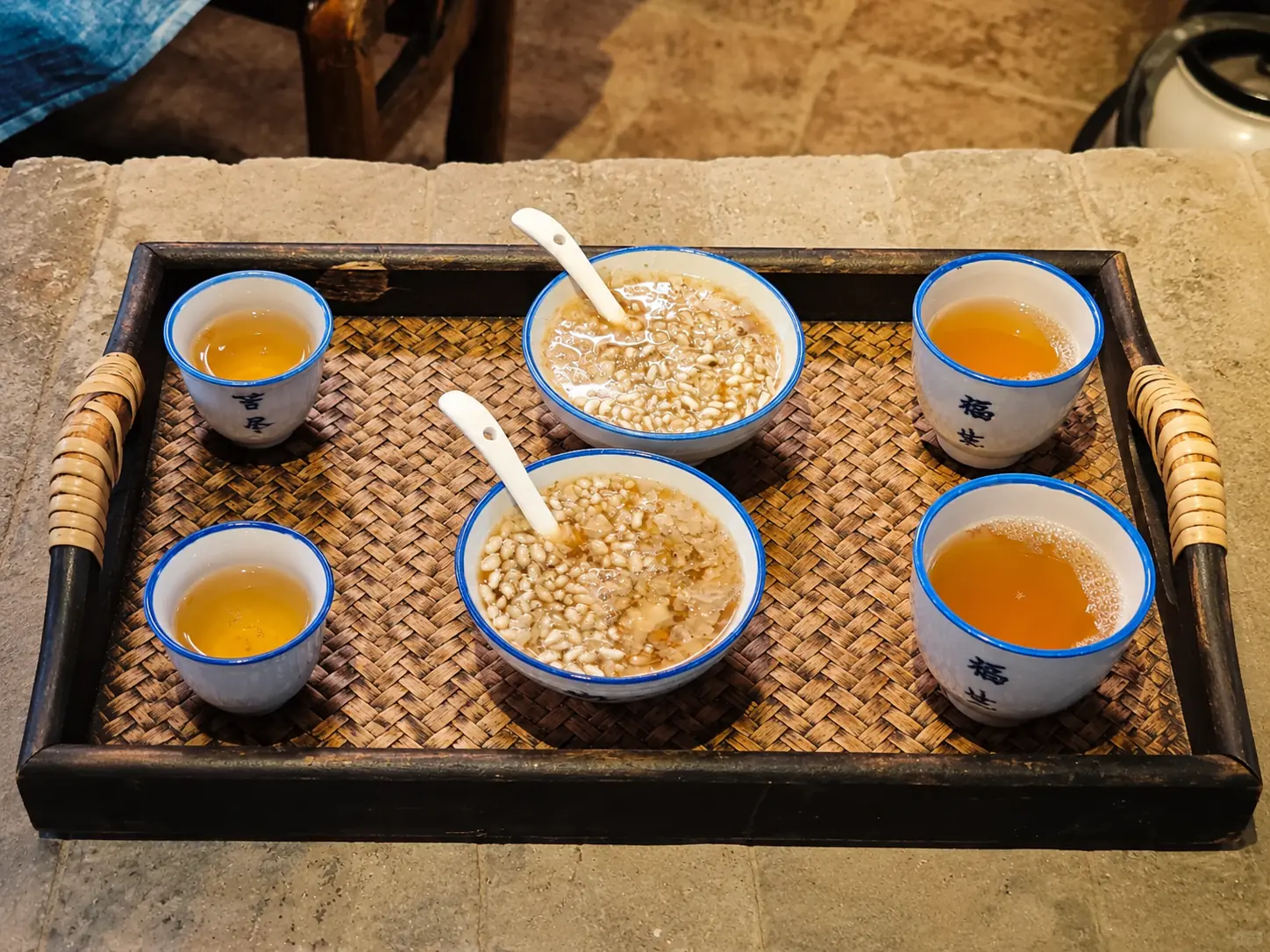
Bai three-course tea is worth doing if you want context, quiet, and a sense of hospitality. It is usually framed as bitter, sweet, then lingering aftertaste. Think of it as a cultural tasting in a Bai courtyard, not as your lunch.
Zhoucheng Village (周城村) (Google | Amap) is especially useful if your Dali plan includes Bai tie-dye. Pair the craft stop with a simple Bai lunch instead of turning the whole day into photo stops and coffee.
Dali Route Suggestions
Use one of these simple patterns:
Dali Old Town evening
Best food move: Grilled rushan, cold jelly, and simple Bai dishes. Why it works: Easy arrival eating without over-planning.
Xizhou morning
Best food move: Xizhou baba, market snacks, and three-course tea. Why it works: The strongest source-context day for Bai food.
Erhai late afternoon
Best food move: Hot-sour fish and vegetables. Why it works: Better as a sit-down dinner than a rushed lunch.
Shuanglang or Caicun
Best food move: A lake-side meal or coffee break. Why it works: Good scenery, but only if the food beats the terrace photos.
Shuanglang Old Town (双廊古镇) (Google | Amap) can be lovely, but do not let a view replace the meal. Look for a place with clear prices, a busy kitchen, and actual food on neighboring tables.
Lijiang Food Strategy by Area
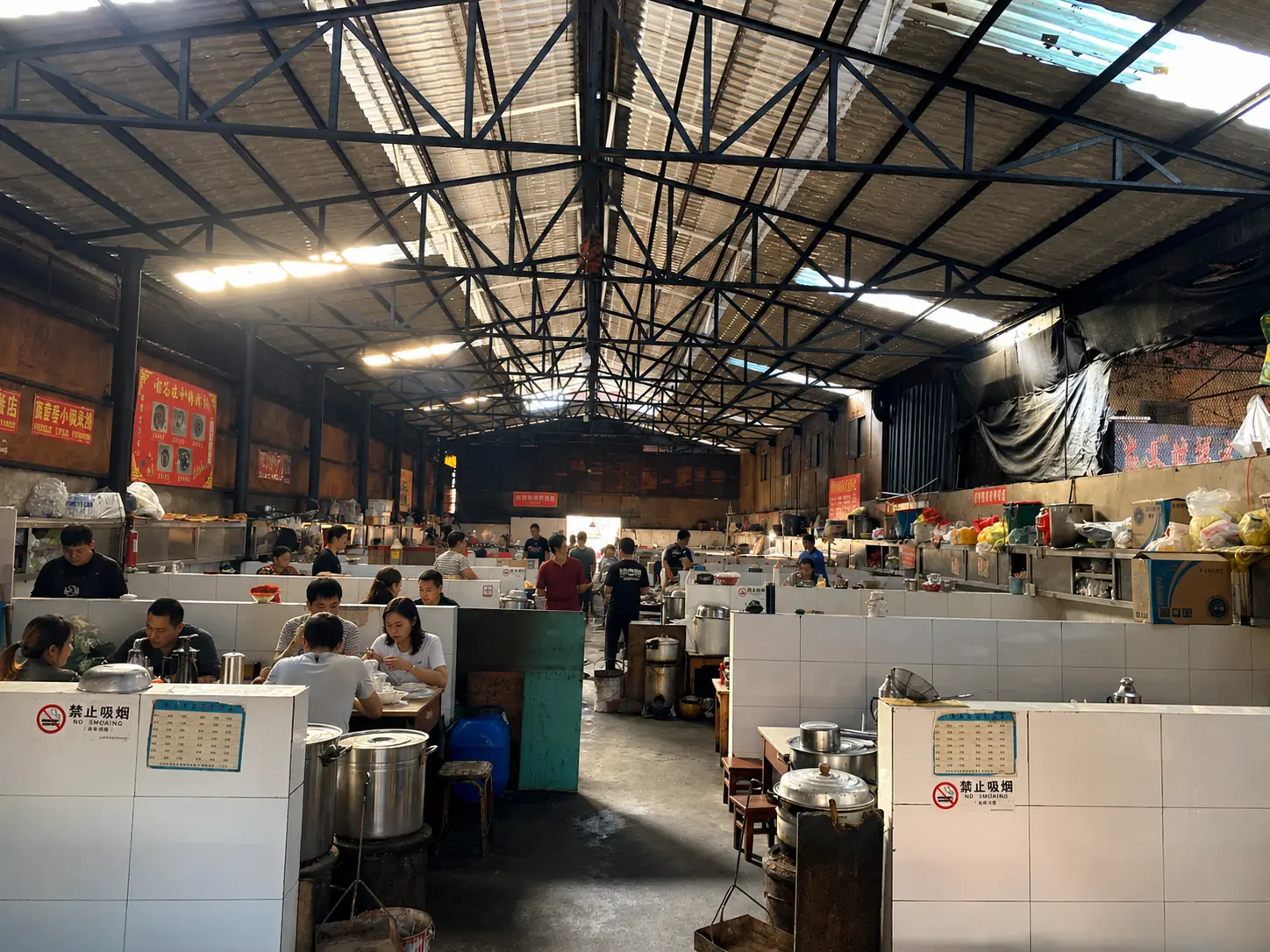
Chickpea Jelly and Lijiang Baba
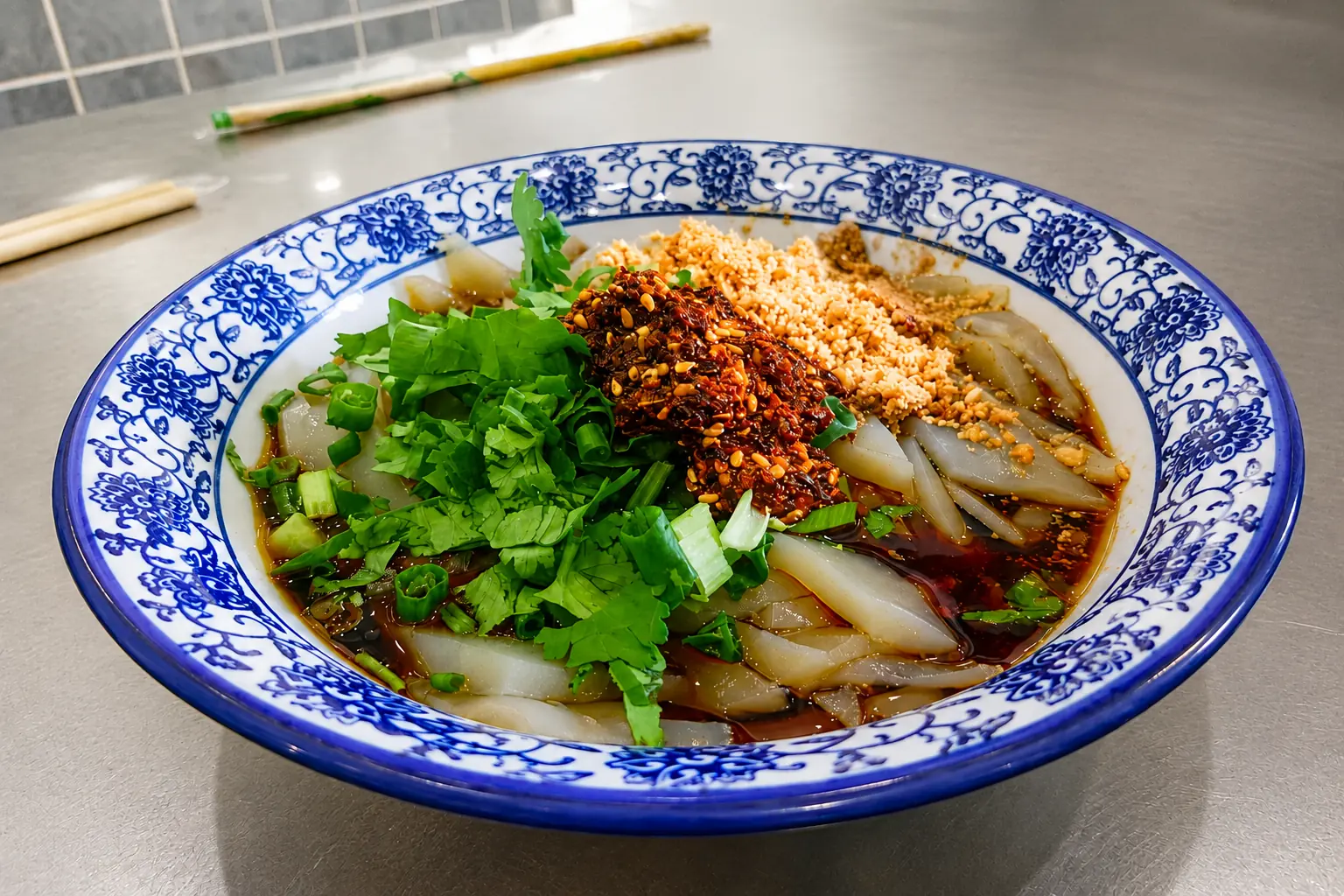
Chickpea jelly is one of Lijiang's most useful snacks because it can be light or filling depending on how it is served. China Daily's Lijiang tourism page lists chickpea jelly and notes that it can be fried or served cold with sauce. China Daily
Try the cold version first if you want something refreshing. It is usually dressed with chili oil, vinegar, garlic, herbs, or sesame. The pan-fried version is warmer and richer, good when the weather turns cold or you need a snack after a long walk.
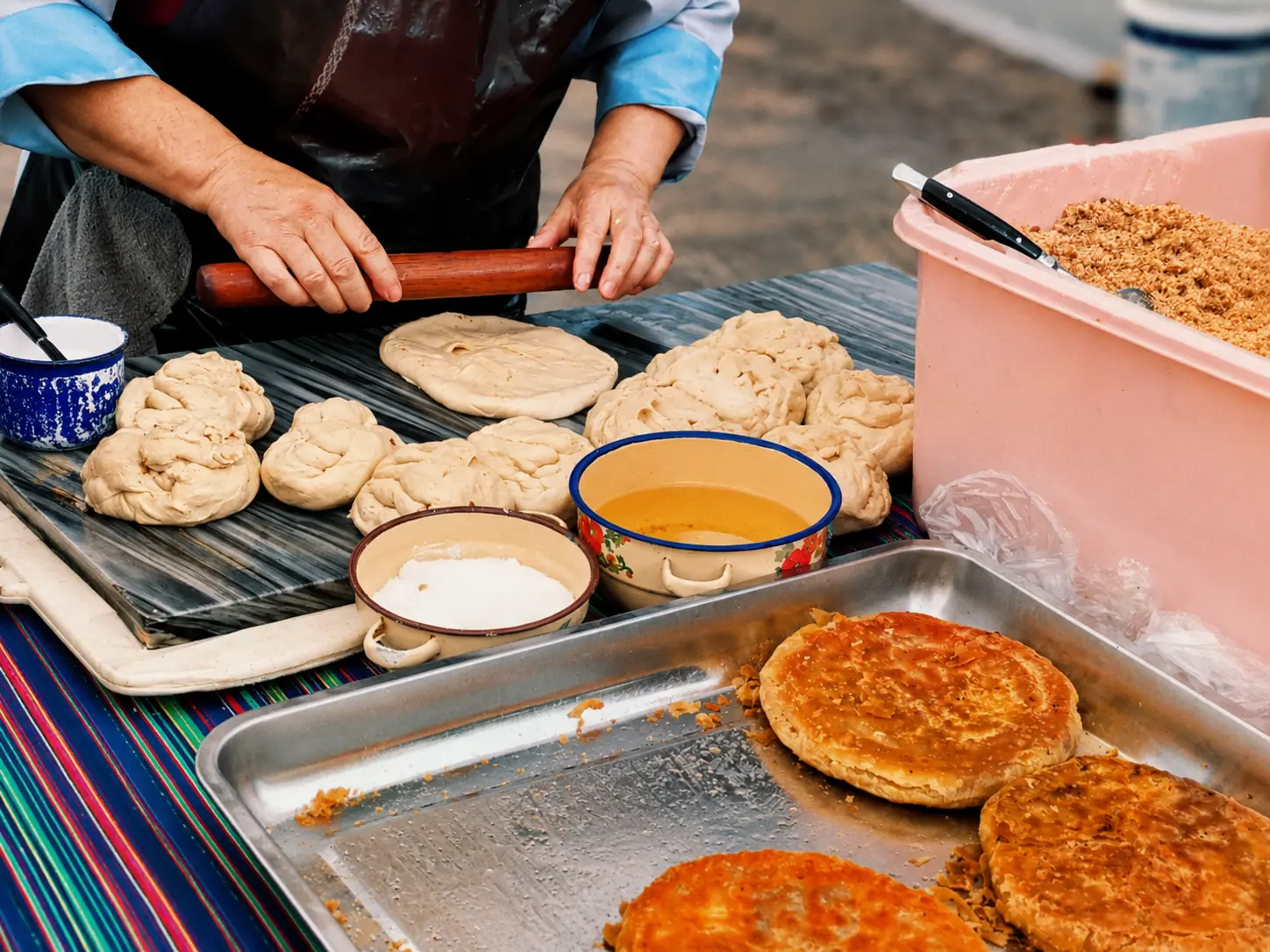
Lijiang baba is the wheat-based companion snack. The same China Daily page describes a Lijiang stuffed bun as a distinctive Naxi-loved snack with local wheat flour, ham, lard, and sugar. That is helpful for ordering: travelers who avoid pork, lard, or meat should ask before assuming a snack is vegetarian.
Preserved Pork Rib Hotpot
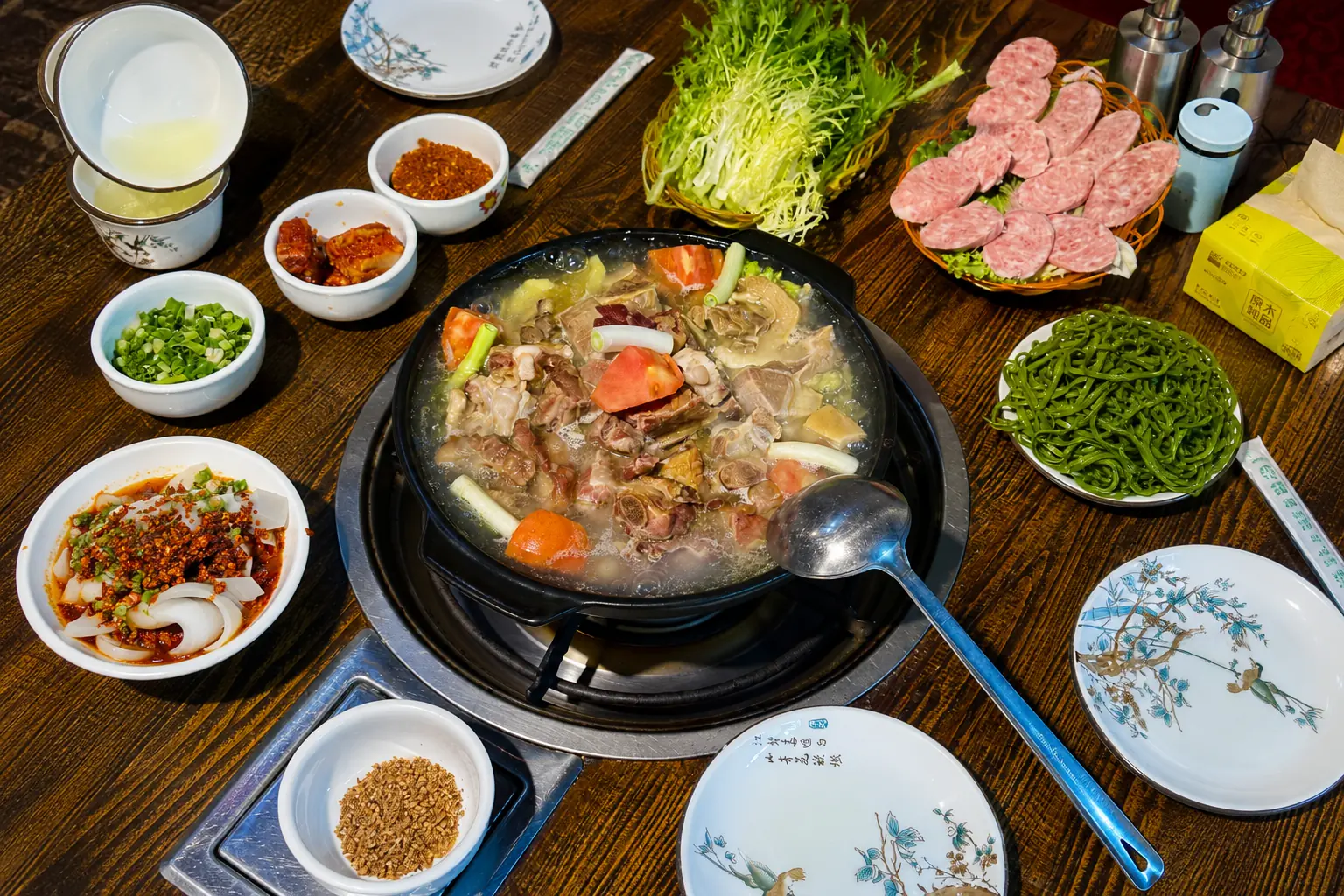
Preserved pork rib hotpot is the Lijiang dinner most travelers can actually use. China Daily calls cured pork ribs one of Lijiang's characteristic foods and notes Naxi rural residents making cured pork ribs. China Daily Another China Daily Lijiang food page points travelers toward dried rib hotpot restaurants near the east gate of Xiangshan Market and describes preserved ribs with celery, tomato, and Chinese chives. China Daily
Expect salt, preserved-meat depth, vegetables, tofu, roots, and a broth that is comforting rather than delicate. It is best for two or more people. Solo travelers can still try it, but a bowl of chickpea jelly plus a smaller hot dish may be easier than committing to a whole pot.
Naxi Hotpots, Copper Pots, and Snack Pauses
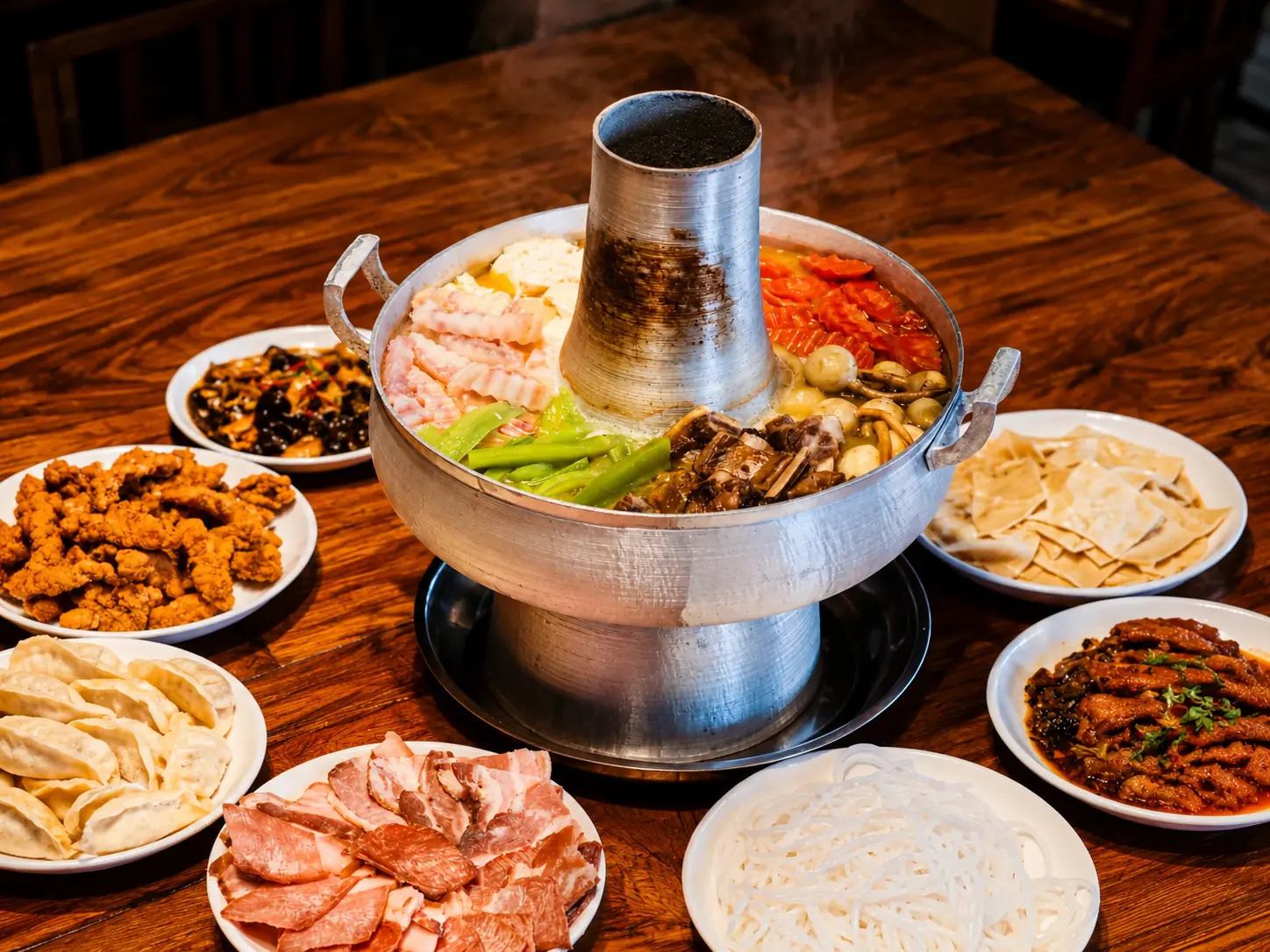
China Daily also describes a Naxi spring-festival dish called hoosh, with ingredients such as salt-preserved pork ribs, carrots, Chinese chive roots, bean sprouts, tofu, vermicelli, taro, and Chinese yam. China Daily You do not need to find that exact name on every menu. Use it as a clue to Lijiang's hotpot logic: preserved meat, roots, tofu, vegetables, and a shared pot that makes sense in mountain weather.
For breaks, old-town yogurt shops and small dessert stands are useful. Treat them as pauses, not must-eat icons. A yogurt, tea, or coffee stop can save the day after Lijiang's stone lanes start punishing your feet.
Where to Eat by Area
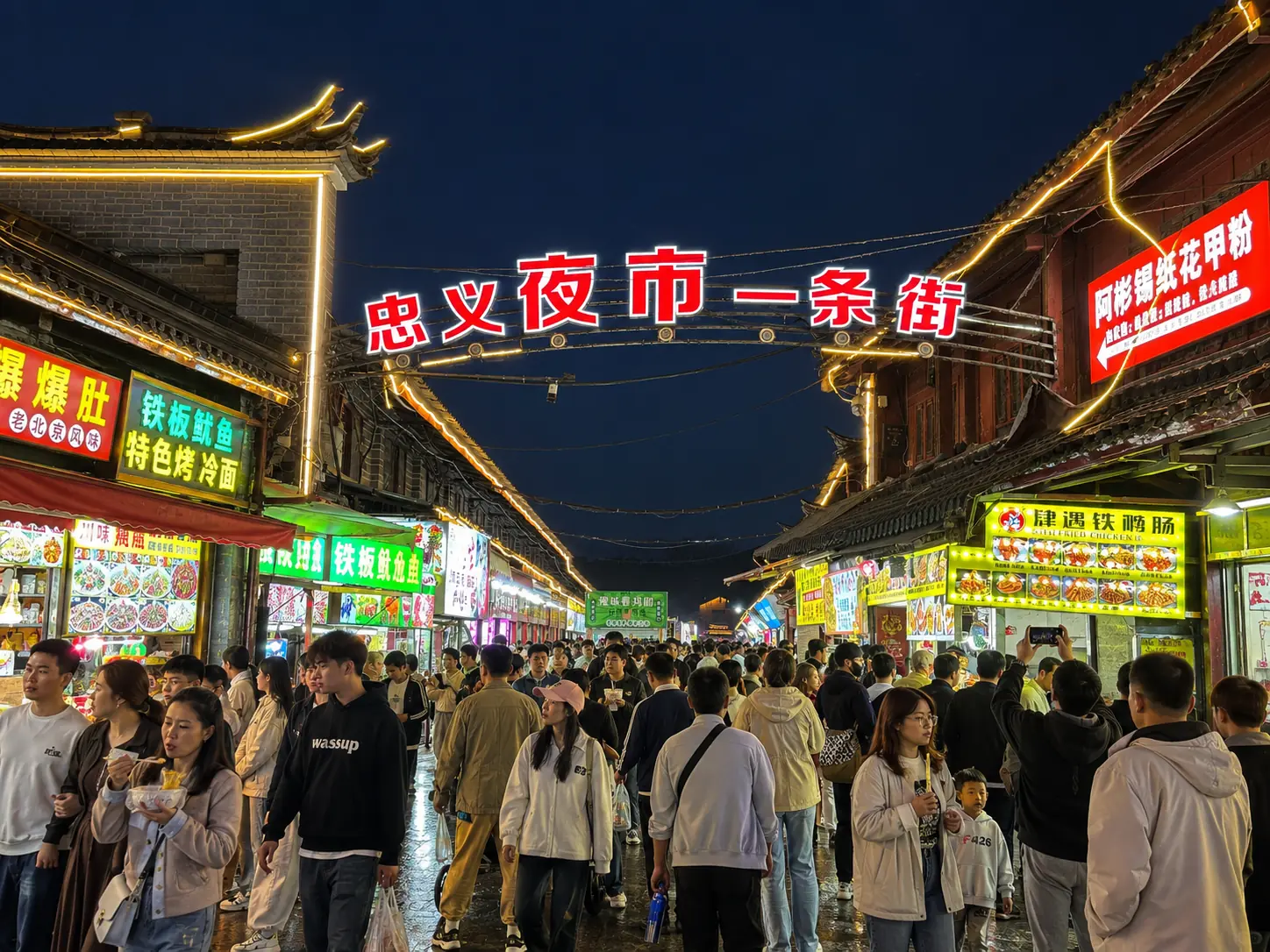
Use Lijiang by zone:
Zhongyi Market
忠义市场
Best for: Breakfast, produce, snacks, and local texture. Watch out for: Go early, before the market rhythm fades.
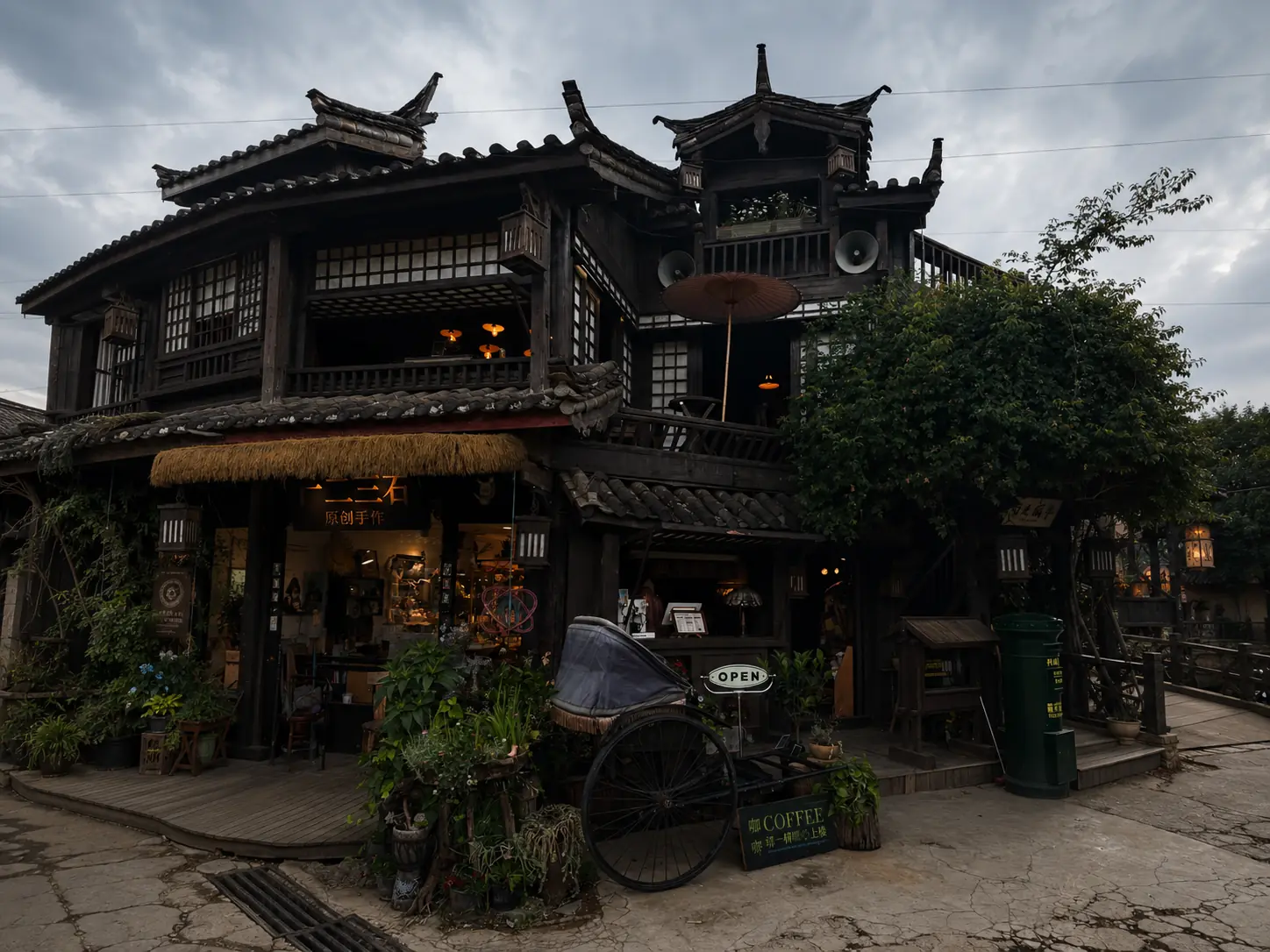
Lijiang Old Town
丽江古城
Best for: Snack sampling, night walks, and convenient first bites. Watch out for: Do not make every proper meal happen on the main lanes.
Xiangshan Market area
象山市场片区
Best for: Preserved pork rib hotpot dinner. Watch out for: Portions are better for sharing.
Shuhe Old Town
束河古镇
Best for: Quieter lunches, cafes, and a slower old-town meal. Watch out for: It is still tourist-facing, just calmer than Dayan.
Baisha Old Town
白沙古镇
Best for: A low-key meal with old-town and mountain context. Watch out for: Better as a slow half-day than a rushed snack stop.
One-Day Food Routes by City
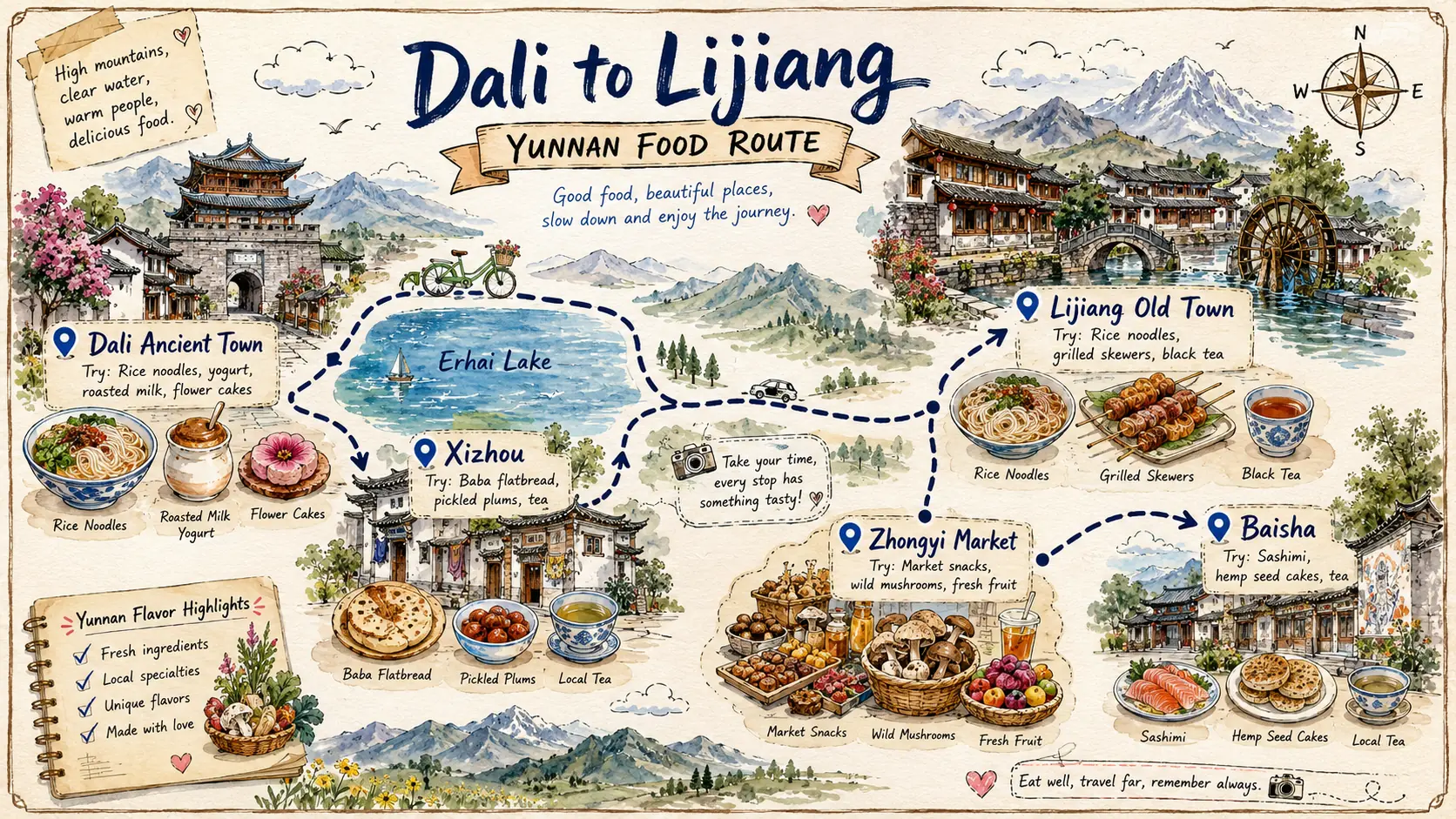
If you have one food-focused day in each city, keep the route light. Northwest Yunnan rewards walking, altitude adjustment, and market timing more than forced eating.
Dali One-Day Food Route
Keep this one loose enough for village wandering and a lake-side dinner.
- Breakfast in Dali Old Town(大理古城早餐)- Cold jelly, simple noodles, or another light local breakfast
- Late morning in Xizhou(喜洲上午)- Xizhou baba plus market walking
- Lunch in Xizhou or Zhoucheng(喜洲或周城午餐)- A Bai restaurant meal instead of more snack grazing
- Afternoon tea or coffee break(下午茶歇)- Three-course tea or a slower courtyard pause
- Erhai-side dinner(洱海边晚餐)- Hot-sour fish or a simple Bai home-style meal
Lijiang One-Day Food Route
This route works best when you start early and save the heavy meal for evening.
- Breakfast at Zhongyi Market(忠义市场早餐)- Chickpea jelly, baba, rice cakes, or other market snacks
- Simple lunch in Dayan or Shuhe(大研或束河午餐)- Keep lunch lighter than dinner
- Afternoon yogurt, tea, or Baisha break(下午茶歇或白沙停留)- Use Baisha for a calmer reset if old-town crowds build up
- Rib hotpot or Naxi-style dinner(腊排骨或纳西热菜晚餐)- Best saved for the evening when you can share a full meal
If you are coming from Kunming:
Use this stretch for dairy, wheat cakes, old-town snacks, and preserved-meat hotpots rather than another round of Yunnan noodle-and-mushroom greatest hits.
Ordering, Allergies, and Safety
Ask before you order
In Dali, dairy is not a garnish: rushan, rubing, sauces, desserts, and snacks may contain milk. In Lijiang, baba, hotpots, broths, and snack fillings may use pork, lard, ham, or preserved ribs.
For fish near Erhai, confirm the fish type, total price, cooking method, and whether the price is per jin or for the whole fish. Skip raw pork dishes if you are unsure about food safety.
Dali and Lijiang are easy places to snack, but not always easy places for strict diets. Dairy is common in Dali. Pork, lard, ham, and preserved ribs are common in Lijiang. Chili oil, peanuts, sesame, and garlic may appear in cold jelly and snack sauces.
Budget in ranges rather than fixed promises:
| Meal Type | Typical Planning Range | Notes |
|---|---|---|
| Snack | RMB 10-30 | Baba, rushan, cold jelly, yogurt, small market bites. |
| Simple meal | RMB 20-50 | Breakfast, noodles, rice dishes, snack-shop lunch. |
| Bai or Naxi restaurant meal | RMB 50-120 per person | Varies by old-town location, view, and meat or fish dishes. |
| Fish meal or rib hotpot | RMB 80-180+ per person | Ask total price, portion size, and whether the pot is too large for your group. |
| Three-course tea experience | Varies widely | Confirm whether it is simple tasting, courtyard visit, or performance package. |
Avoid these common mistakes:
- Do not order fish near Erhai without asking the price, fish type, and cooking method.
- Do not assume old-town snacks are vegetarian. Lard and ham can appear in wheat snacks.
- Do not make raw pork dishes a first-timer challenge. If you do not eat raw meat, skip Bai shengpi (生皮).
- Do not treat dairy as a garnish in Dali. It can be the main ingredient.
- Do not put every Lijiang dinner inside the busiest old-town lanes.
- Do not chase yak-heavy menus as if they define Naxi food. Yak appears in northwest Yunnan tourism, but this guide's core Lijiang foods are chickpea jelly, baba, preserved pork ribs, and Naxi-style shared dishes.
| English | Chinese | Pinyin | Say It Like… |
|---|---|---|---|
| Is this sweet or savory? | 这个是甜的还是咸的? | zhe ge shi tian de hai shi xian de | Juh-guh shrr tyen duh high shrr shyen duh |
| Not too spicy. | 不要太辣。 | bu yao tai la | Boo yow tie lah |
| Does this contain pork or lard? | 这个有猪肉或猪油吗? | zhe ge you zhu rou huo zhu you ma | Juh-guh yo joo roh hwaw joo yo mah |
| I am allergic to dairy. | 我对奶制品过敏。 | wo dui nai zhi pin guo min | Woh dway nye jy pin gwaw meen |
| I do not eat raw meat. | 我不吃生肉。 | wo bu chi sheng rou | Woh boo chrr shung roh |
| How is this fish priced? | 这条鱼怎么收费? | zhe tiao yu zen me shou fei | Juh tyaow yoo dzun-muh show fay |
| How many people is this hotpot for? | 这锅够几个人吃? | zhe guo gou ji ge ren chi | Juh gwaw go jee-guh run chrr |
Frequently Asked Questions
Not as your priority. If you already ate rice noodles, wild mushroom hotpot, steam-pot chicken, flower cakes, and Pu'er tea in Kunming, use Dali and Lijiang for Bai and Naxi foods instead.
Sources checked for this guide
- China Daily feature checked for Yunnan regional food heritage including Dali Bai dairy traditions and rushan: China Daily: History on the plate in Yunnan
- China Daily coverage checked for Dali intangible cultural heritage and local culinary traditions: China Daily: Dali intangible cultural heritage
Beyond This Guide
Use the Kunming food guide for the Yunnan dishes this article deliberately does not repeat: crossing-the-bridge noodles, small-pot rice noodles, wild mushrooms, steam-pot chicken, and Zhuanxin Market.
If you are building a Dali day, pair this guide with the Erhai Lake guide and the Bai tie-dye workshop in Zhoucheng. For Lijiang, use the Lijiang Old Town guide for walking strategy, then come back here to decide where to eat instead of spending every meal on the busiest lanes.
Shaxi Ancient Town (沙溪古镇) (Google | Amap) is a good slow-food pause if your route runs between Dali and Lijiang. It is not a replacement for either city, but it can make the whole Yunnan northwest route feel less rushed.
If you are stitching Kunming, Dali, Shaxi, and Lijiang into one trip, compare transfer times, overnight bases, and appetite pace so the meals support the journey instead of competing with it.
© gochinafreely.com — Original guide by Go China Freely.