Shaanxi food is easy to remember as "Xi'an noodles," but the real logic is wider: Guanzhong wheat, northern Shaanxi grains and lamb broth, and southern Shaanxi rice-skin noodles all meet in the old capital. You hear hot oil hit chili, tear bread into mutton soup, and wake cold noodles with vinegar and garlic; this guide explains why the system works instead of repeating another Xi'an restaurant list.
Executive Summary
What this guide covers
Shaanxi and Qin cuisine, wheat-based food logic, vinegar and chili oil, Hui Muslim foodways, regional differences, classic dishes, first-table ordering, and dietary risks.
Best first table
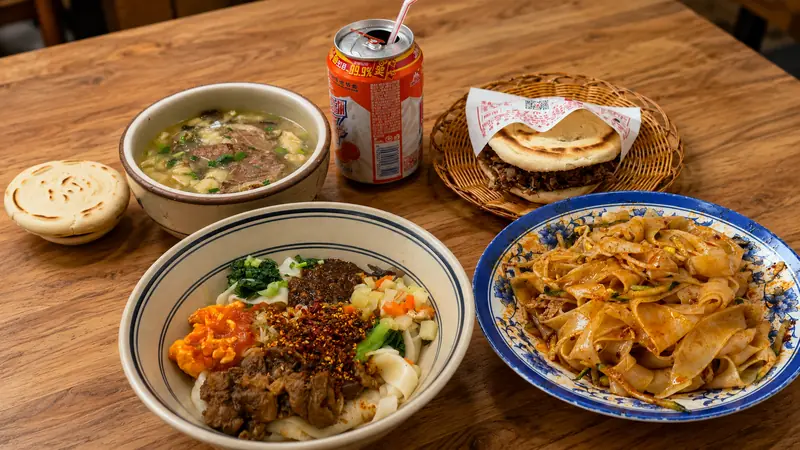
Build balance: one noodle, one bread or bun, one cold skin noodle, one lamb or broth dish, and one sweet or local drink.
Main traveler challenge
Shaanxi food looks simple, but wheat, pork, lard, bone broth, halal context, chili oil, vinegar, sesame, peanuts, blood, and offal all need attention.
3 regions
Useful food frame
Wheat first
Core carb logic
Vinegar + chili
Signature lift
Ask first
Pork and gluten risks
Shaanxi Cuisine Is Wheat With Momentum
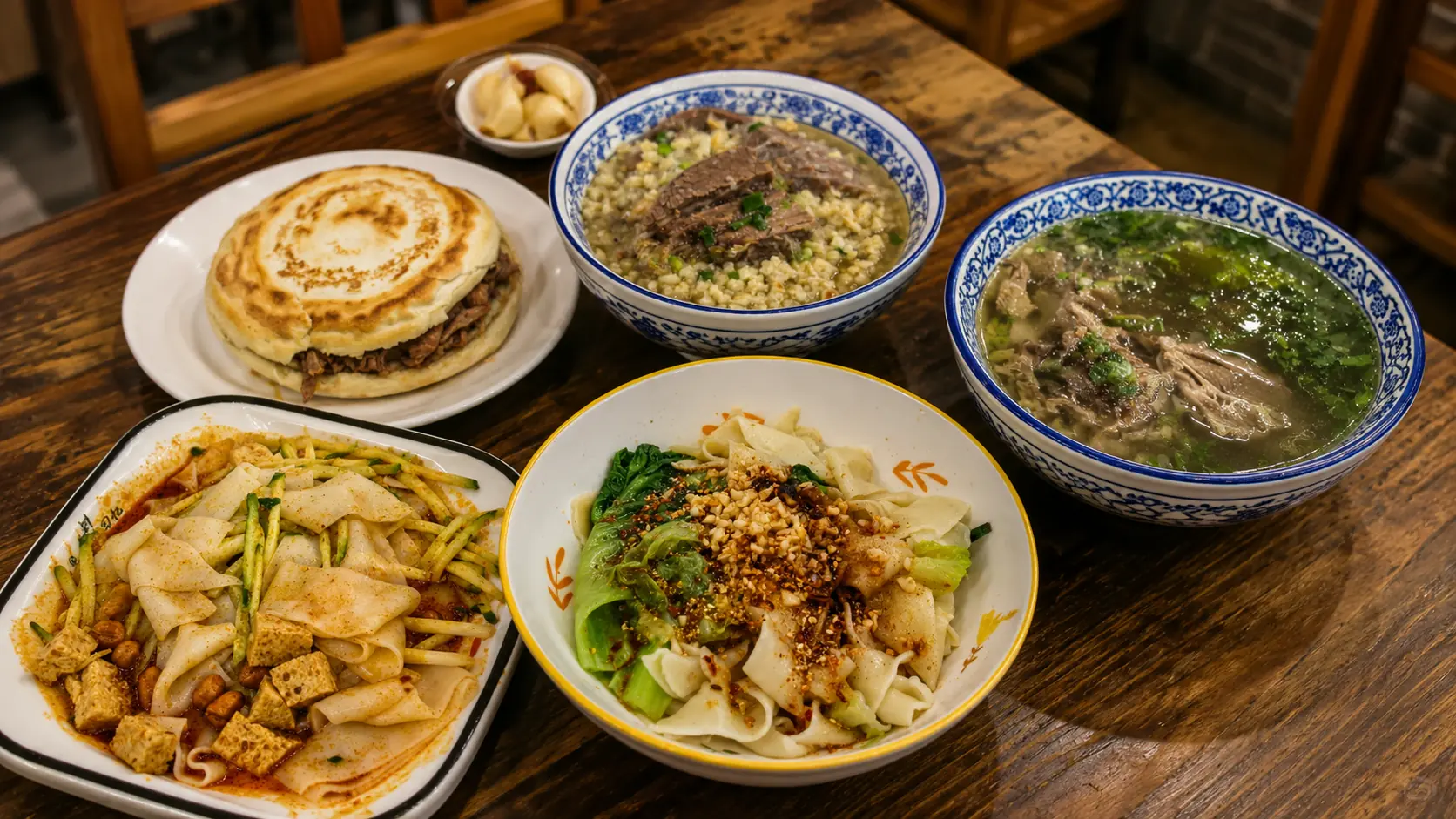
Shaanxi cuisine (陕西菜), also called Qin cuisine (秦菜), is one of the easiest northwestern Chinese food systems for travelers to feel immediately. It does not lead with Cantonese freshness or Sichuan numb-hot complexity. Its first hit is usually wheat fragrance, vinegar, hot chili oil, garlic, lamb, beef, flatbread, and noodles with real chew.
The Shaanxi government's A Bite of Shaanxi describes Qin cuisine as a representative culinary achievement of northwest China and highlights salt, vinegar, capsicum, and garlic as recurring seasonings. For travelers, that is more useful than a long dish list.
Shaanxi is a strong doorway into northern Chinese carb culture. Rice is not the default anchor. Wheat is: noodles can be belt-wide or fine enough to drink with sour soup; flatbread can hold meat, soak up lamb broth, bake into a crisp round, or become a travel snack.
When you see noodles, flatbread, bread soaked in broth, cold skin noodles, minced-meat sauce, or oil-splashed chili on a menu, you are usually inside the same flavor grammar.
Vinegar and Chili Oil Drive Flavor
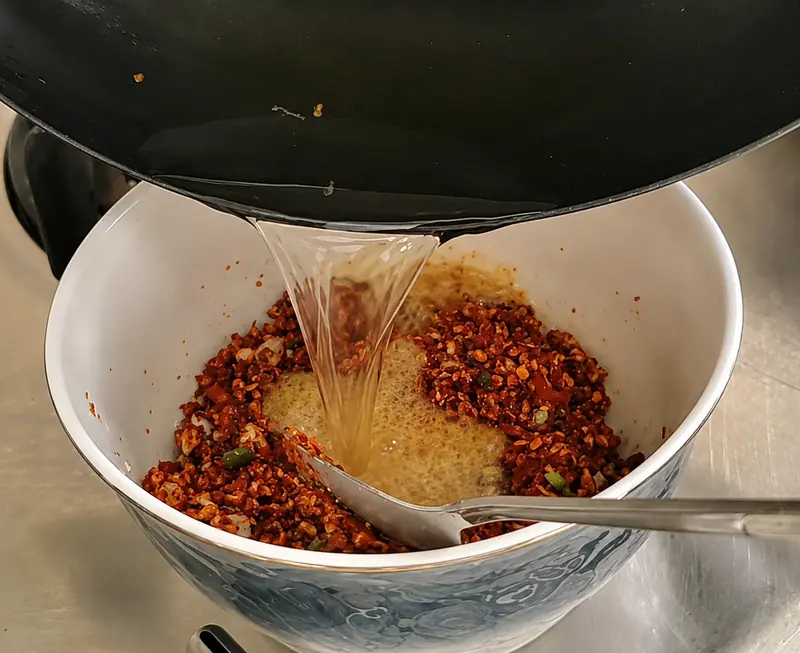
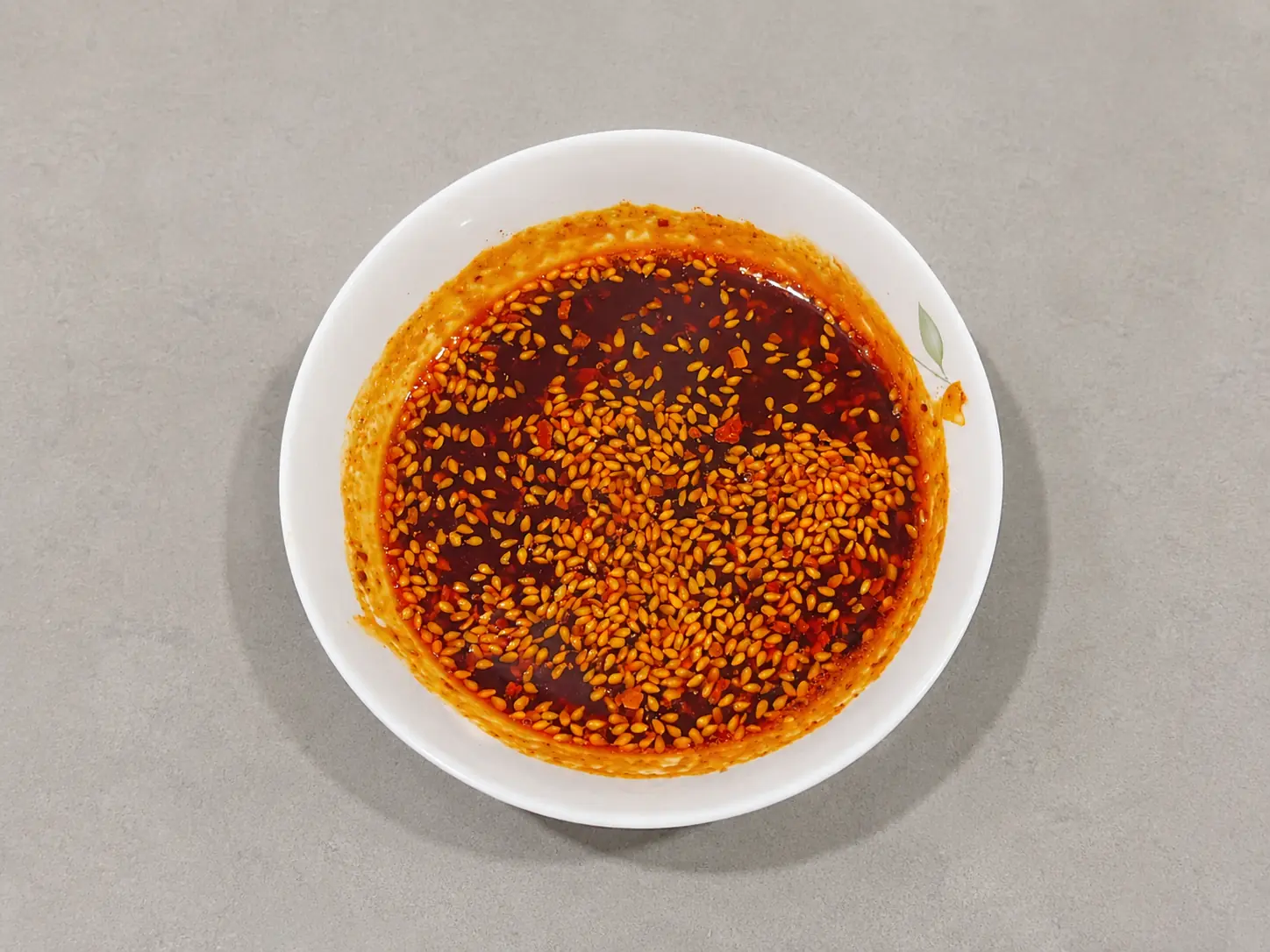
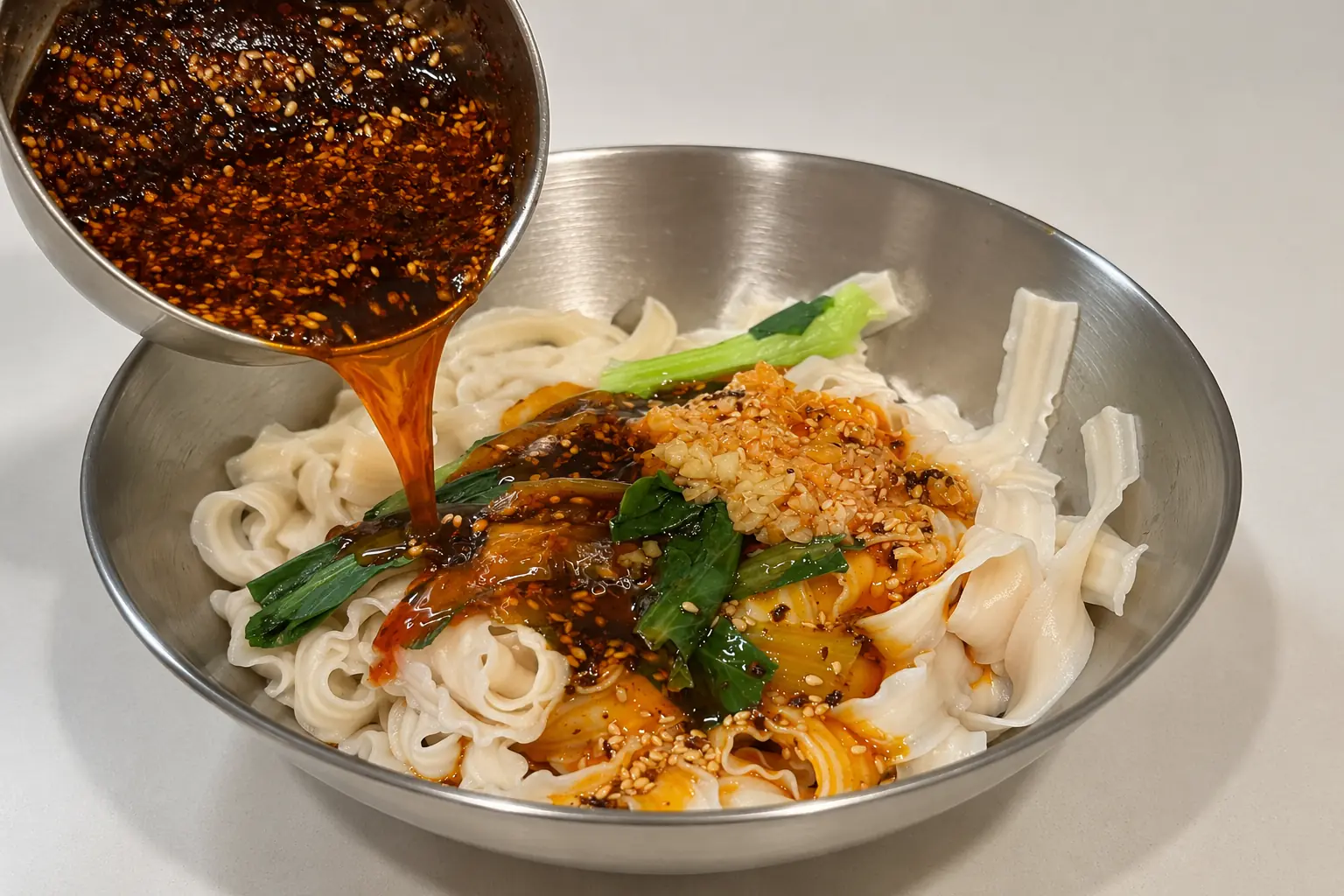
Shaanxi spice is often misunderstood. It is not the thick, numbing, hotpot-style heat many travelers associate with Sichuan and Chongqing. The more typical Shaanxi lesson is fragrant chili oil, garlic, vinegar, and the moment hot oil wakes dried chili over noodles.
Vinegar is not a side condiment here. Cold skin noodles (凉皮 / 米皮) need it for brightness; Qishan minced noodles (岐山臊子面) need sour soup for structure; bean jelly, tofu pudding, noodle soups, and flatbread dishes often use acidity to cut through oil and starch. The sourness is not always sharp, but it is often what keeps the bowl moving.
Chili oil is not only about pain. Good oil-splashed chili should smell toasted, warm, and nutty, clinging to noodles and bread without necessarily overwhelming you. If you are sensitive to heat, ask for less chili or no chili, but know that removing it completely can make some dishes feel as if their engine has been taken out.
Silk Road Foodways Change the Meat
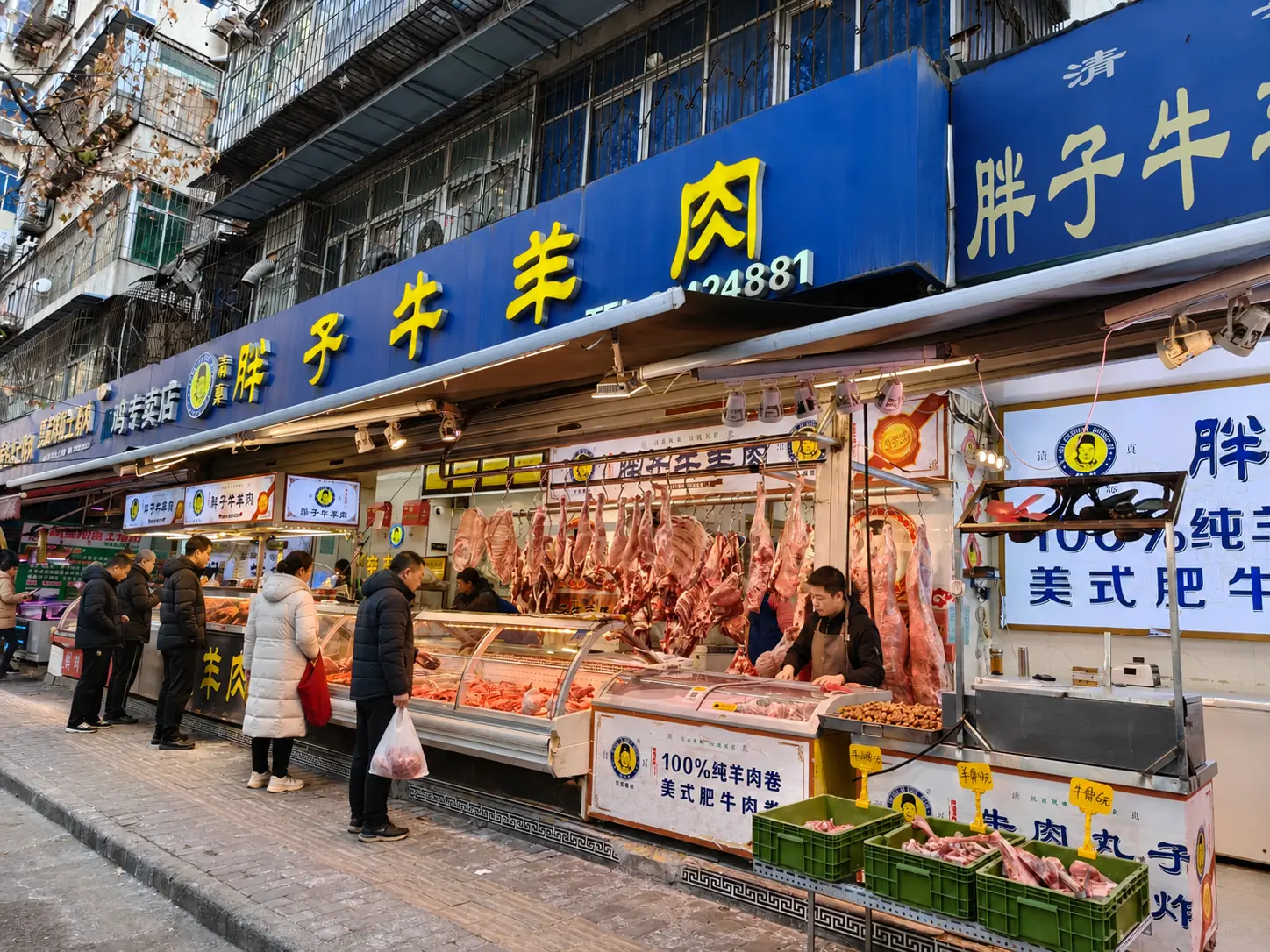
One of Shaanxi cuisine's most important traveler lessons is the meeting of Han wheat food and Hui Muslim foodways in Xi'an (西安). The Shaanxi government's Muslim Quarter guide describes the area as the hub of Xi'an's Muslim community, with several blocks, more than 20,000 Muslims, about ten mosques, and a food market shaped by that community.
That changes the menu in front of you. In ordinary Han-run Shaanxi restaurants, pork, lard, pork bone broth, and minced pork sauce are common. In clearly halal Hui settings, beef, lamb, mutton broth, beef or lamb soup dumplings, grilled meat, cured beef and mutton, and paomo-style bowls become more prominent.
This is also where "Silk Road flavors" need careful handling. A more accurate traveler frame is this: Xi'an's old-capital and Silk Road history helped put wheat food, beef and lamb, cumin, halal foodways, local vinegar, garlic, and chili oil into the same city. You are eating daily food, not a performance.
Central, Northern, and Southern Shaanxi Differ
Shaanxi is not only Xi'an. The official Shaanxi overview divides the cuisine into Guanzhong (关中, central Shaanxi), Shannan (陕南, southern Shaanxi), and Shanbei (陕北, northern Shaanxi). That three-part frame explains why one province can give travelers belt noodles, lamb broth, buckwheat noodles, potato dishes, rice-skin noodles, and sweet glutinous rice.
| Region | Food Logic | Traveler Clue |
|---|---|---|
| Guanzhong (关中) | Xi'an, Baoji, Xianyang; wheat, flatbread, pork, lamb, vinegar, chili oil | Use this frame for biangbiang noodles, oil-splashed noodles, Qishan minced noodles, roujiamo, and paomo. |
| Northern Shaanxi (陕北) | Yan'an and Yulin; loess plateau grains, buckwheat, potatoes, lamb broth, steaming | Expect sturdier grain dishes such as buckwheat hele, potato shreds, deep-fried millet cakes, and lamb soup. |
| Southern Shaanxi (陕南) | Hanzhong and Ankang; Qinling-Bashan mountain food, rice-skin noodles, peppery heat, rice-wheat transition | Look for rice noodles or hot rice-skin noodles rather than assuming every Shaanxi carb is wheat. |
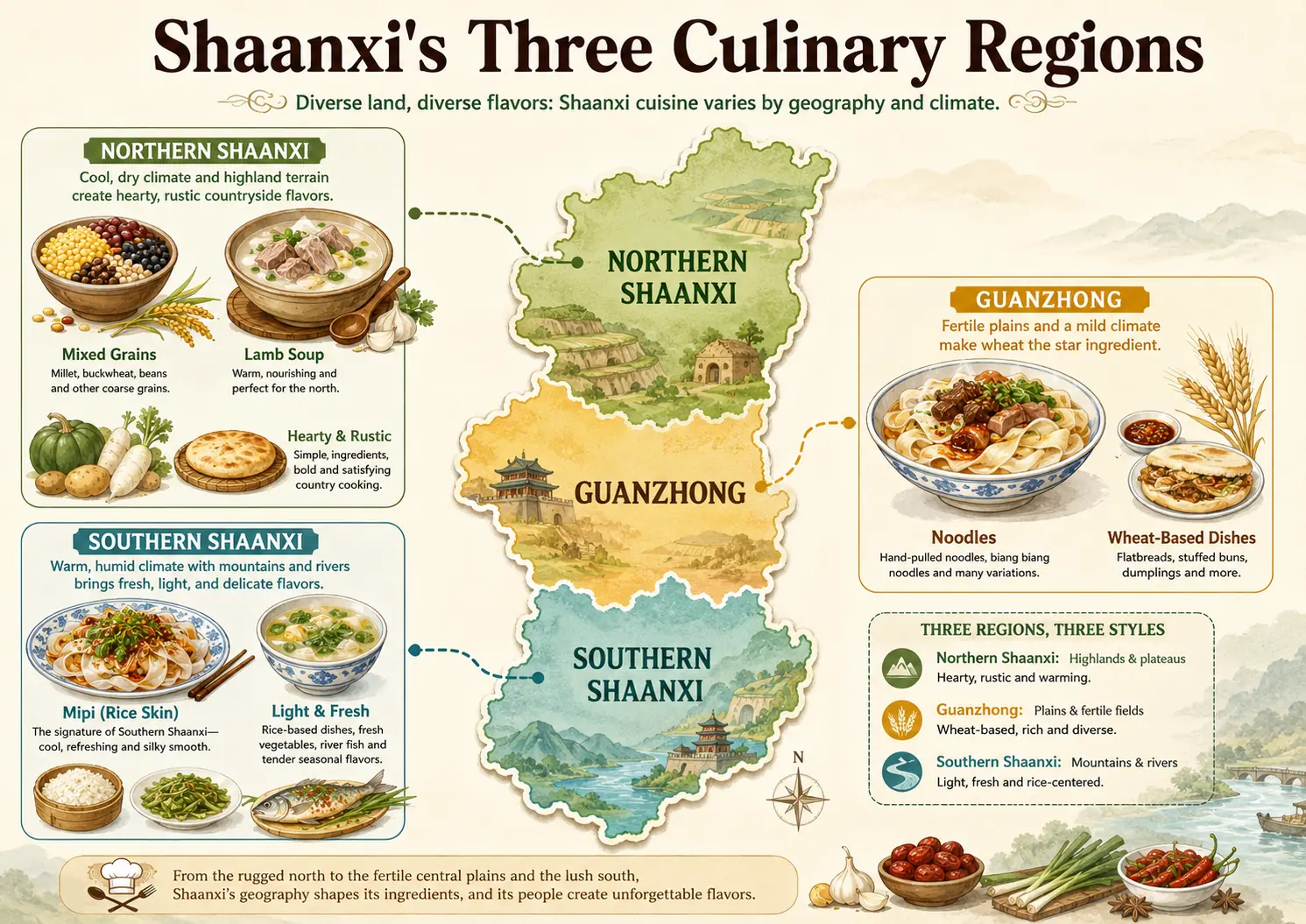
Guanzhong is what most foreign visitors meet first. Northern Shaanxi is a different grain world: the Shaanxi government's Yan'an dining page lists deep-fried cakes, bean jelly, buckwheat hele, potato dishes, and black-bean millet porridge. Southern Shaanxi brings more rice-skin noodle logic into the picture.
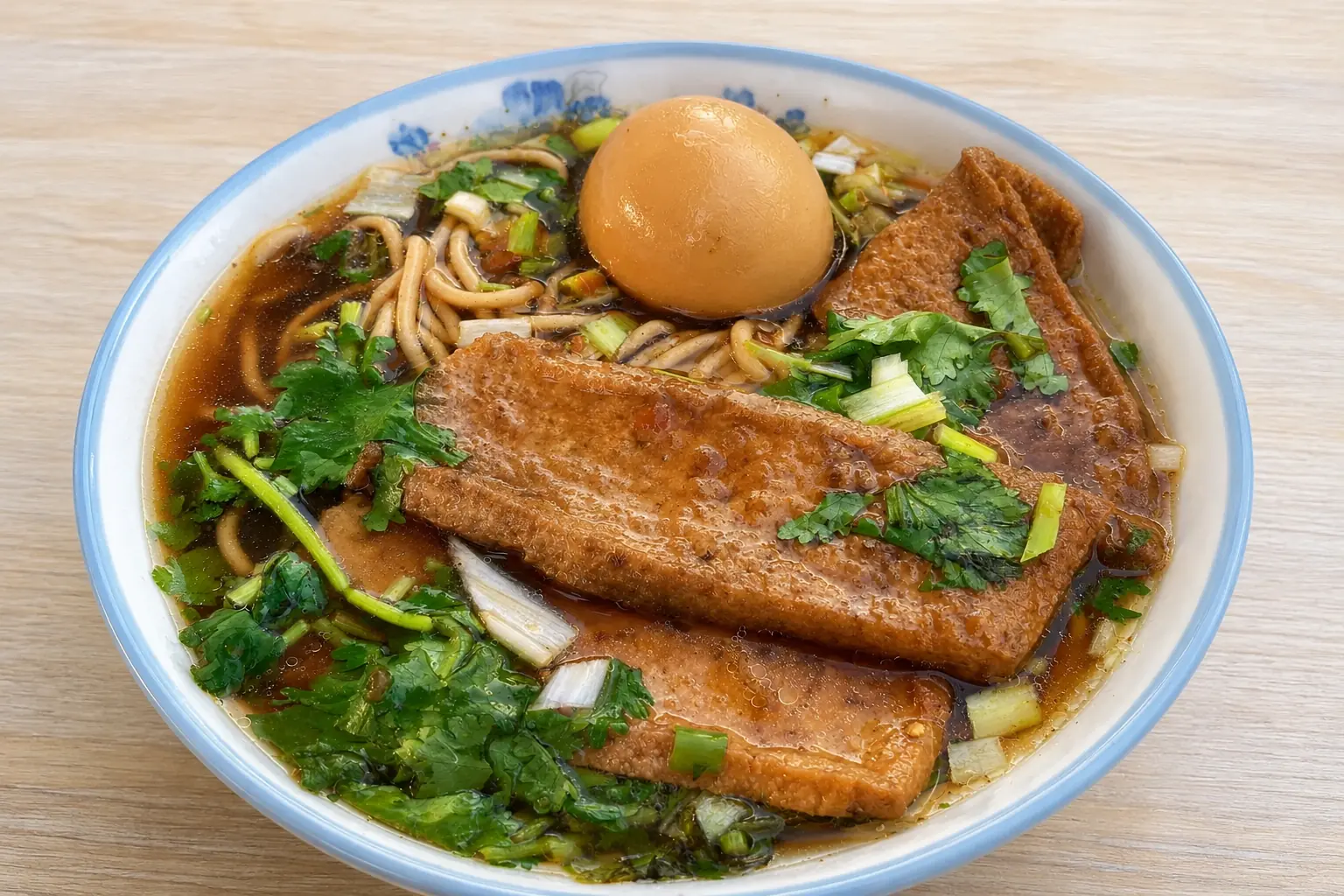
Classic Shaanxi Dishes by Carb Logic
The easiest way to understand Shaanxi dishes is not by memorizing a top-ten list. Sort them by carb form. The food starts to make sense when you see how noodles, flatbread, cold skins, soup, grains, and sweets each carry vinegar, chili oil, garlic, meat broth, or meat juice differently.
| Carb Form | Classic Examples | What It Teaches You |
|---|---|---|
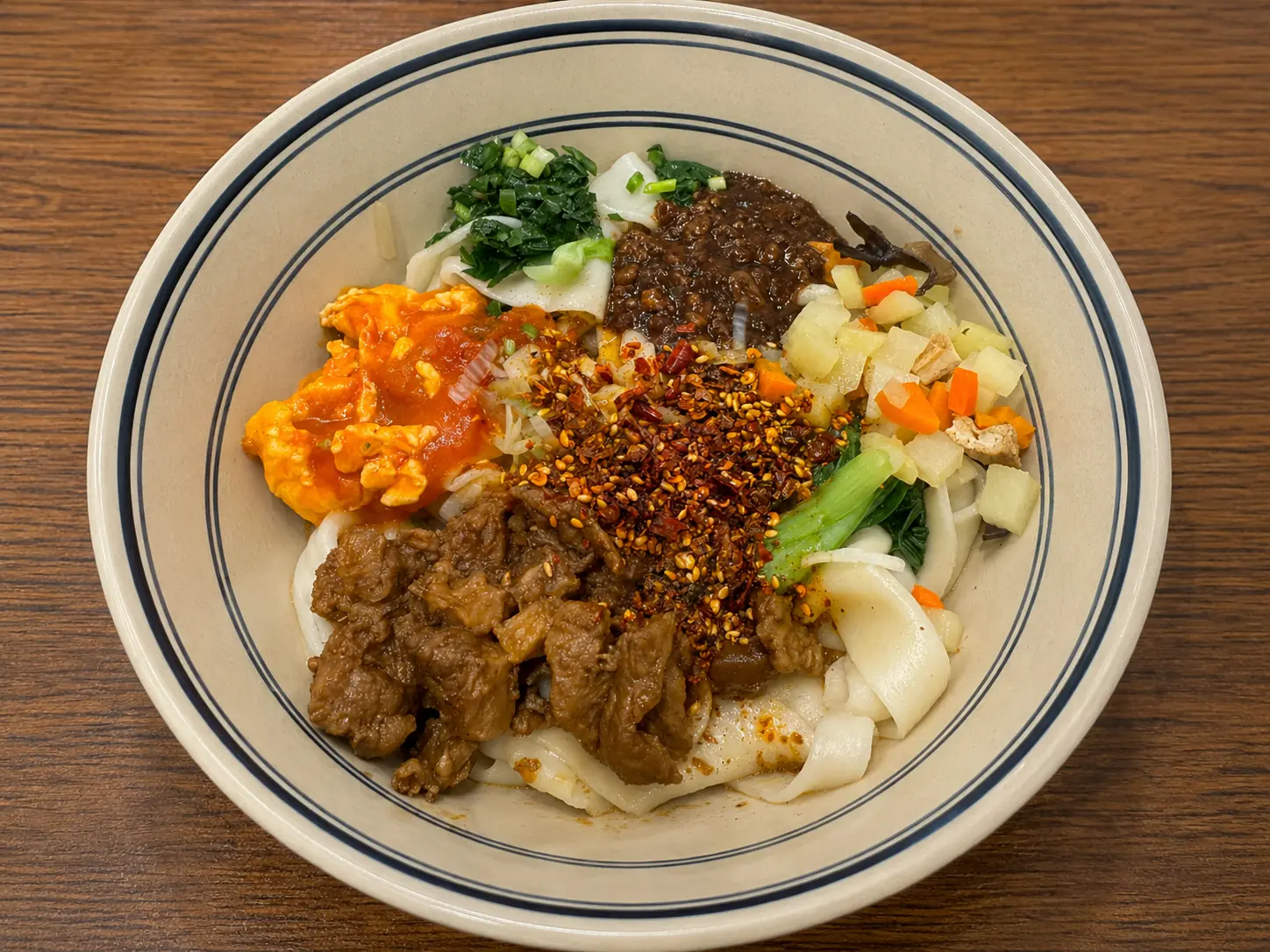
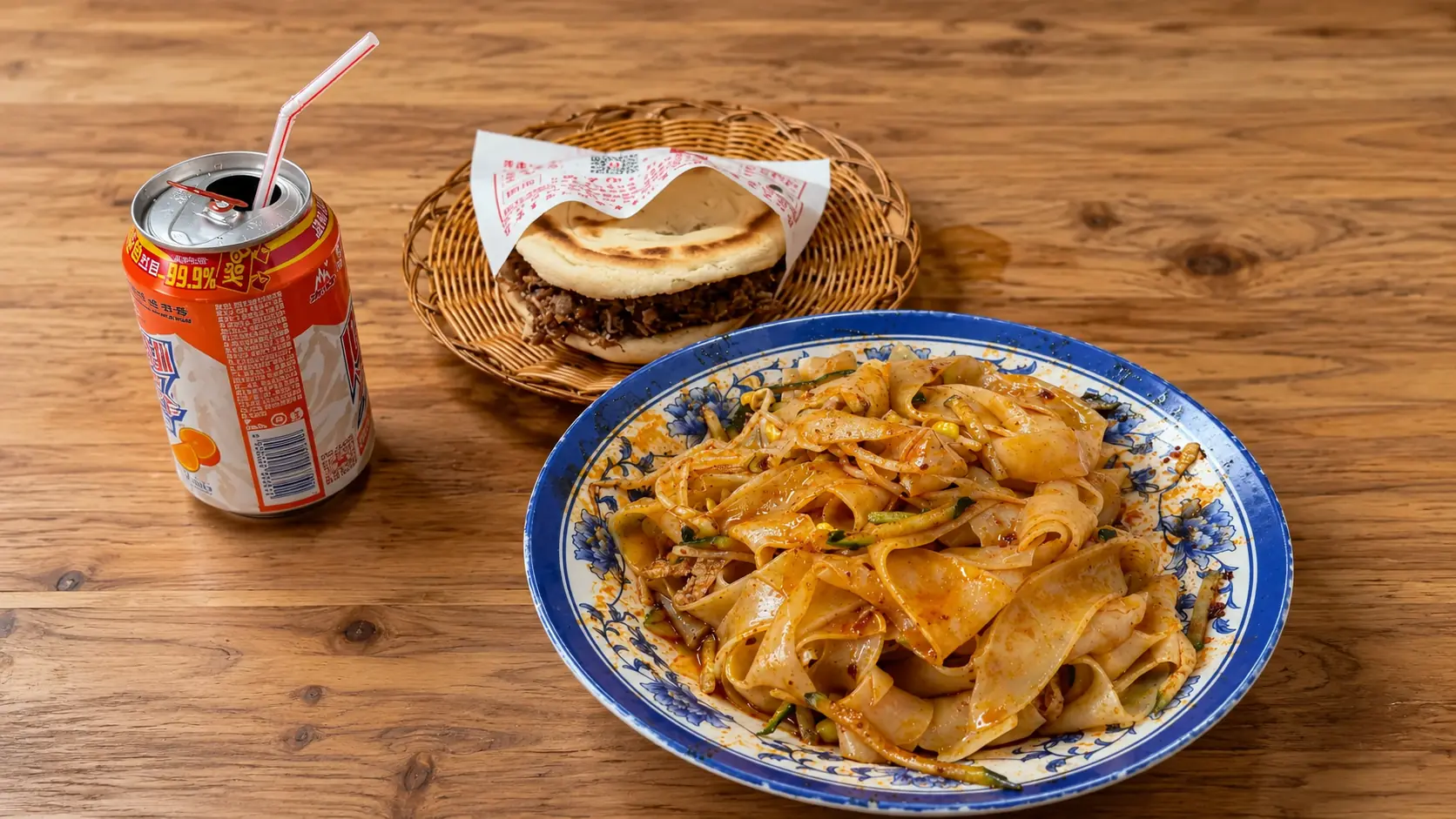
| Wide wheat noodles | Biangbiang noodles (𰻝𰻝面), belt noodles (裤带面), oil-splashed pulled noodles (油泼扯面) | Chew, surface area, garlic, chili oil, and hot-oil aroma are the point. |
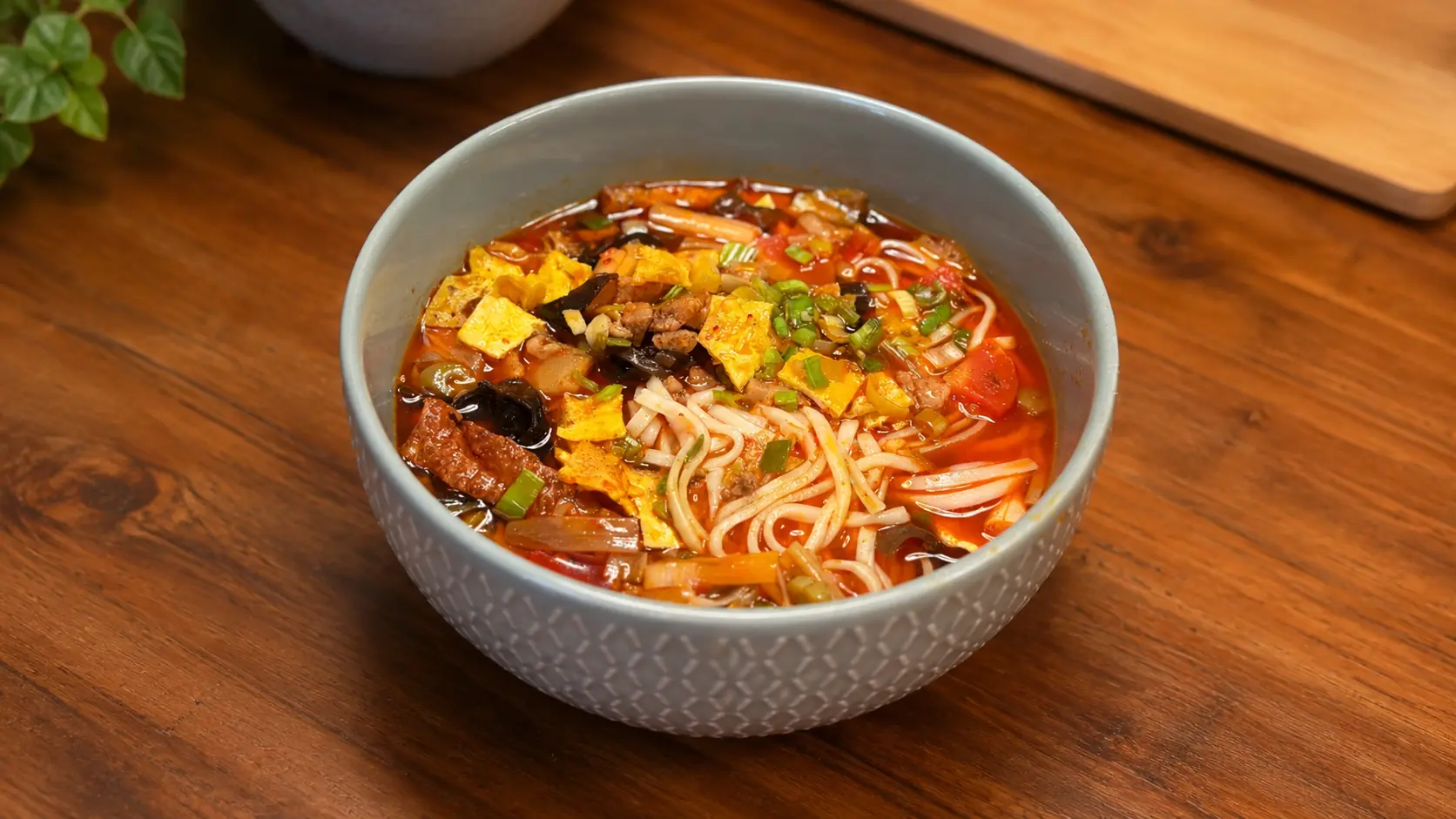
| Thin sour-soup noodles | Qishan minced noodles (岐山臊子面) | Vinegar, minced meat, chili oil, and thin noodles create a sour-spicy rhythm. |
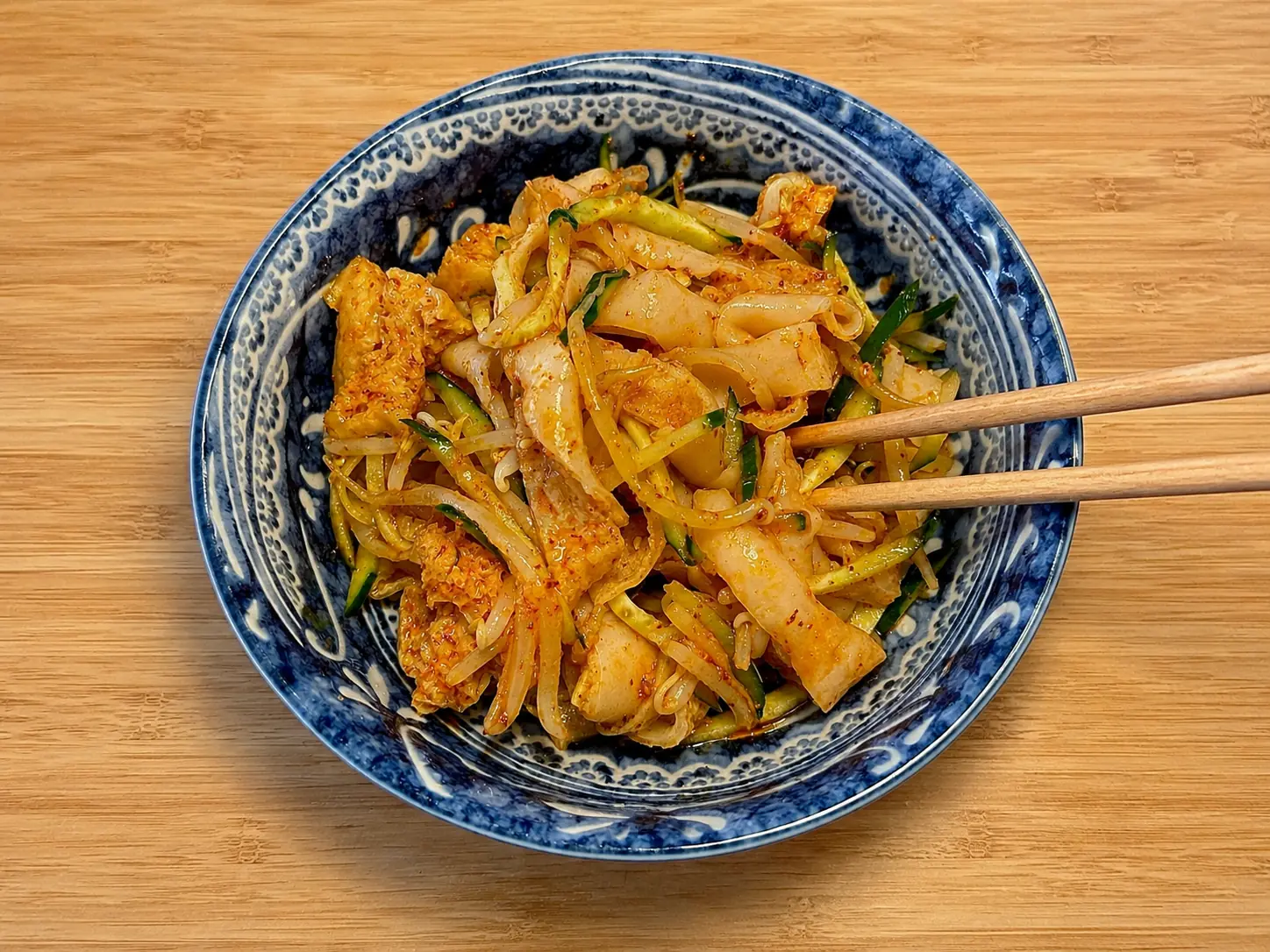
| Cold skin noodles | Liangpi (凉皮), mipi (米皮), wheat skin noodles (面皮) | Cold texture, vinegar, chili, garlic water, bean sprouts, and cucumber reset a heavy meal. |
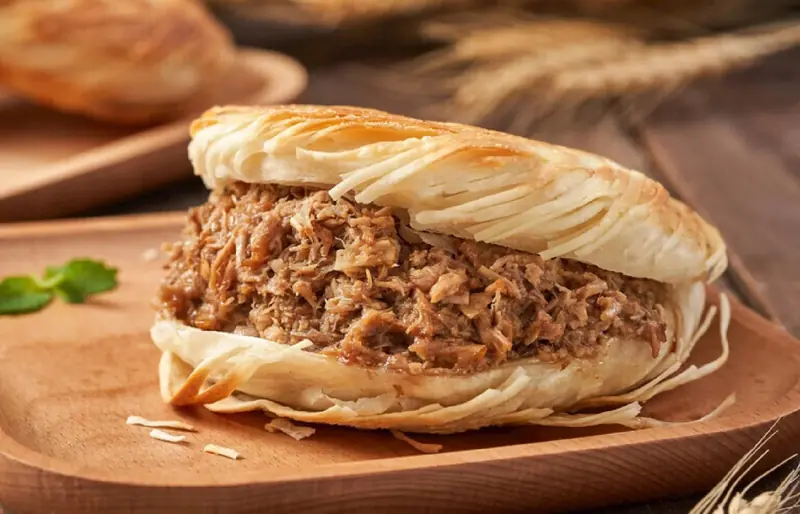
| Flatbread and buns | Roujiamo (肉夹馍), guokui (锅盔), bread for paomo (馍) | Wheat can hold meat juice, soak broth, or become a dry, crisp staple. |
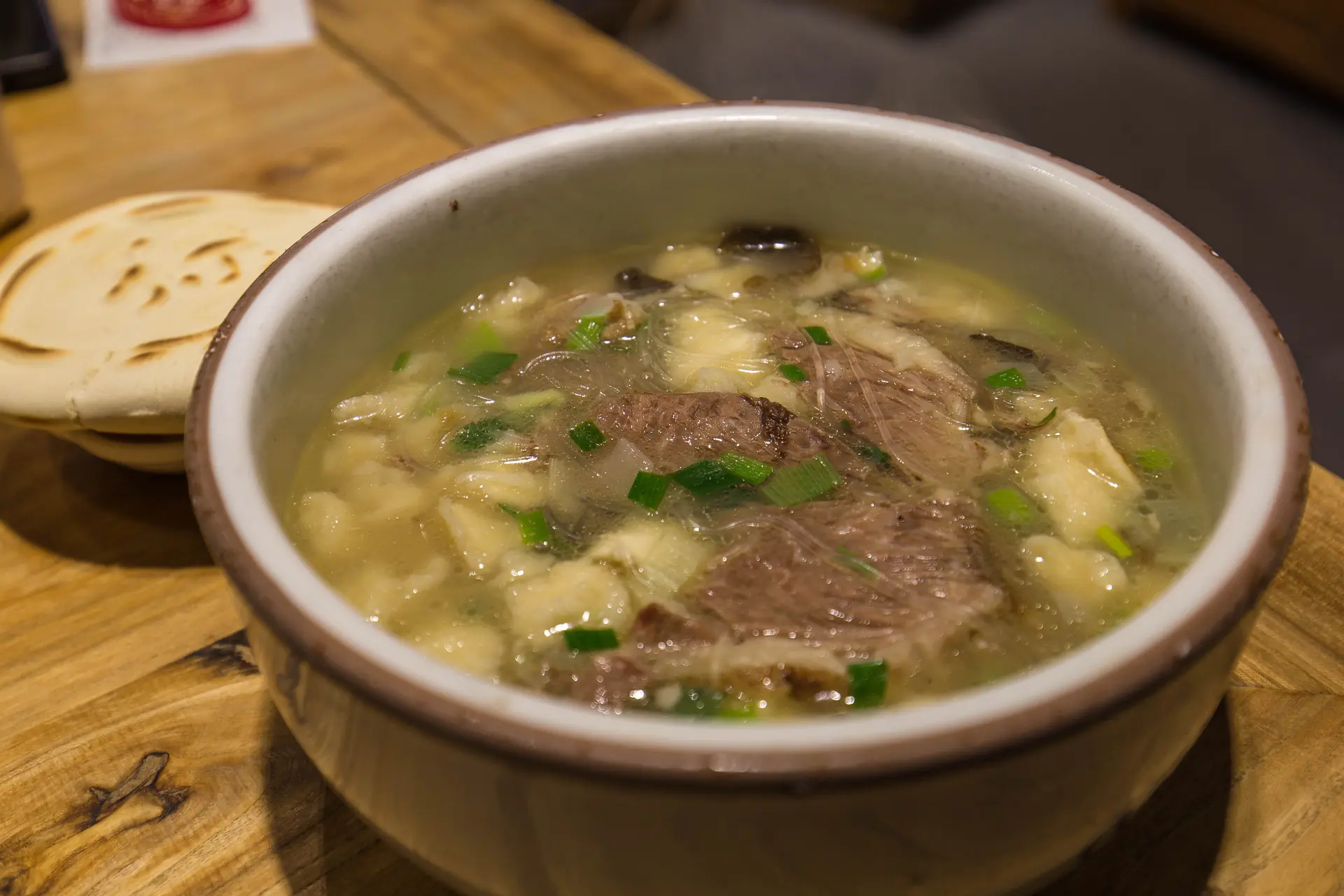
| Bread in broth | Yangrou paomo (羊肉泡馍), shuipen lamb (水盆羊肉), hulutou paomo (葫芦头泡馍) | Soup, meat, and torn bread turn wheat into a full sit-down meal. |
| Soup breakfasts | Hulatang (胡辣汤), lamb blood vermicelli soup (粉汤羊血) | Morning food can be peppery, brothy, meaty, and more intense than visitors expect. |
| Grain and potato dishes | Buckwheat hele (荞面饸饹), potato caca (洋芋擦擦), northern Shaanxi oil cakes (油糕) | Shaanxi is not only wheat; northern grain and potato foods matter outside Xi'an. |
| Sweet starches | Zenggao (甑糕), persimmon cakes (黄桂柿子饼), osmanthus thick rice wine (黄桂稠酒) | The cuisine also has sticky, sweet, festival-like textures that soften the sour-spicy meal. |
The Shaanxi government's local snacks page is especially useful because it places roujiamo, cold noodles, beef and mutton, hu la tang, persimmon cakes, zenggao, sheep-blood soup, guokui, tofu pudding, and bean jelly in the same Xi'an food world. The Baoji Qishan minced noodles page adds the sour-spicy thin-noodle side of the province.
Shaanxi Cuisine Versus Shanxi and Sichuan
English readers often confuse Shaanxi (陕西) and Shanxi (山西). Both provinces care deeply about noodles and vinegar, but the travel impression is different. Shanxi is more famous nationally for mature vinegar and knife-cut noodles, while Shaanxi is more easily read through flatbread, oil-splashed chili, roujiamo, paomo, Hui Muslim foodways, and Xi'an's old-capital food culture.
Shaanxi vs Shanxi
Noodles and vinegar, different travel signals
Shaanxi is easier to recognize through flatbread, oil-splashed chili, roujiamo, paomo, Hui foodways, and old-capital food culture. Shanxi is more strongly associated with mature vinegar and knife-cut noodles.
Shaanxi vs Sichuan
Fragrant oil, not default mala
Sichuan heat often brings Sichuan pepper, chili, red oil, garlic, and bean paste into the same flavor system. Shaanxi heat more often comes from chili oil, garlic, vinegar, and hot oil meeting wheat.
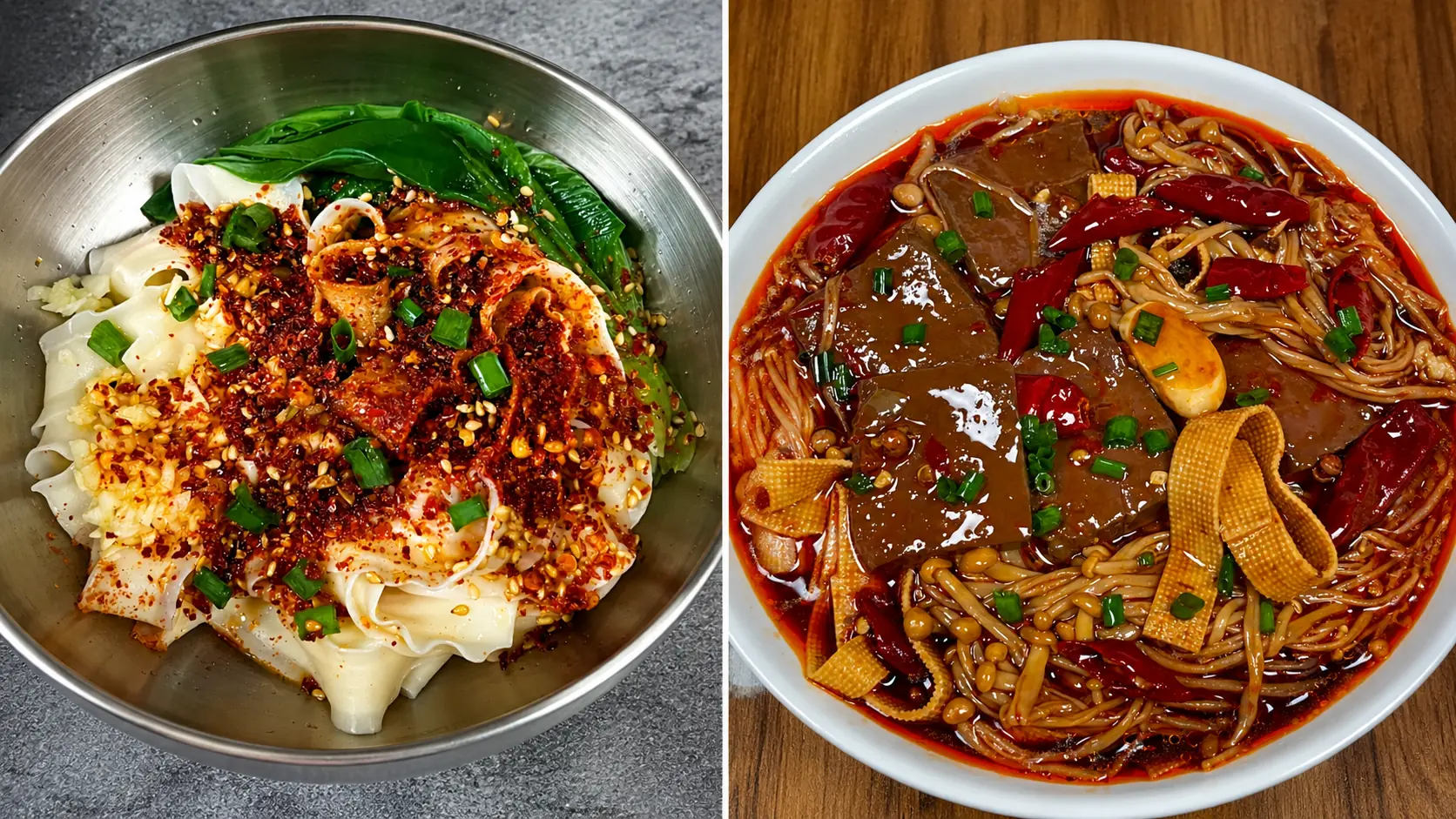
That distinction helps at the table. If you avoid Sichuan mala, Shaanxi is not automatically off-limits: paomo, lamb soup, guokui, zenggao, some roujiamo, and plain buns can be mild.
If you like sour-spicy fragrance, oil-splashed noodles, cold skin noodles, and Qishan minced noodles are the dishes to prioritize. The point is not only heat level; it is how vinegar, garlic, chili oil, and wheat move together.
Build Your First Balanced Shaanxi Table
Do not make your first Shaanxi meal three heavy noodle bowls. A better table gives you hot and cold, soup and dry, wheat and vinegar, meat and brightness.
- Choose one noodle(油泼面 / 𰻝𰻝面 / 臊子面)- Pick oil-splashed noodles, biangbiang noodles, or Qishan-style minced noodles for the wheat-and-seasoning lesson.
- Add one bread item(肉夹馍 / 锅盔 / 馍)- Use roujiamo, guokui, or paomo bread to understand how Shaanxi handles wheat outside noodle bowls.
- Add something cold(凉皮 / 米皮 / 凉粉)- Cold skin noodles or bean jelly bring vinegar, garlic, chili, and texture relief.
- Add broth or lamb(羊肉泡馍 / 水盆羊肉 / 胡辣汤)- Choose based on appetite and dietary limits; many soups rely on meat broth.
- Finish sweet or local(甑糕 / 柿子饼 / 黄桂稠酒 / 冰峰)- A sticky rice cake, persimmon cake, rice wine, or orange soda softens the meal.

Wheat, Pork, Halal, and Allergy Risks
Shaanxi cuisine is difficult for strict gluten-free travelers, and it can be confusing for vegetarian, halal, pork-free, sesame-free, peanut-free, or offal-avoidant travelers. The risk is not only the dish name; it is the restaurant context, broth base, seasoning oil, shared prep, and whether a mild-looking bowl still contains wheat, meat, or animal fat.
Gluten and wheat
Noodles, flatbread, buns, paomo bread, guokui, dumplings, wheat skin noodles, soy sauce, and wheat-thickened sauces can appear everywhere. Even soup or vegetable dishes may involve wheat-based seasonings or shared prep.
Pork and halal context
In ordinary Han-run restaurants, pork, lard, pork bone broth, minced pork sauce, and pork offal may appear in noodles, stir-fries, buns, and soups. In clearly halal Hui restaurants, beef and lamb are more common, and pork is normally absent.
Vegetarian and allergy checks
Paomo, lamb soup, hu la tang, minced-noodle broth, cold noodle dressing, and stir-fry oil may include bone broth, minced meat, lamb fat, lard, chicken seasoning, or animal oil. Sesame, peanuts, chili oil, vinegar, and garlic are also common.
Blood, offal, and bones
Lamb blood vermicelli soup (粉汤羊血), hulutou paomo (葫芦头泡馍), lamb offal soup, and some breakfast soups may involve blood, intestine, tripe, or long-simmered bones. Identify them before ordering if restrictions matter.
Restaurant context matters
"Muslim area" is not the same thing as a certification label. If halal, pork-free, vegetarian, or severe allergy needs matter, choose the restaurant context first, then ask about broth, oil, sauce, and shared prep before ordering.
Xi'an Food Links Without Repeating Them
This guide gives you the logic layer, not another Xi'an restaurant route. Use it before the city and dish pages so the names on the menu stop feeling random.
Xi'an Food Guide
Open the Xi'an Food Guide when you need neighborhoods, budgets, restaurant types, and what to eat in the city.
Biangbiang Noodles
Use Biangbiang Noodles for wide noodle texture, oil-splashed seasoning, and how to order.
Roujiamo
Read Roujiamo before choosing pork, beef, lamb, or Tongguan-style buns.
Yangrou Paomo
Read Yangrou Paomo before sitting down for the bread-tearing ritual.
Muslim Quarter Walk
Pair food planning with the Xi'an Muslim Quarter walking tour if you want to understand the neighborhood beyond snack photos.
Giant Wild Goose Pagoda & Tang Nights
Balance daytime noodle hunting with an evening loop around the Giant Wild Goose Pagoda and Datang Everbright City.
Frequently Asked Questions
Often, but usually not in the Sichuan hotpot sense. Many dishes use chili oil, dried chili, garlic, and vinegar, creating fragrant sour-spicy heat. Mild options still exist, including paomo, lamb soup, guokui, zenggao, and some roujiamo.
Beyond This Guide
Use this guide as the flavor map, then move into the Xi'an travel guide and Xi'an Muslim Quarter street food guide when you are ready to plan meals around an actual day.
© gochinafreely.com — Original guide by Go China Freely.