China has thousands of hotel options, from ¥150 budget chains to international luxury hotels. The tricky part is that a Chinese star plaque, an international brand name, and a high OTA review score each measure something different. This guide explains how to read all three before you pay for a room.
Hotel decision stack
What to decide before booking
Safe value
A well-reviewed Chinese mid-range chain or international four-star hotel is usually the safest value point.
Check-in check
The front desk must be able to process your passport and accommodation registration.
Best first night
Pay extra for low friction if you arrive late, travel with family, or need English help.
One-rule summary
Use star ratings as a floor for facilities, not as a full promise of Western-style service polish.
Chinese Hotel Ratings: Fast Answer
Fast answer
For most first-time foreign travelers, a well-reviewed Chinese mid-range chain or international four-star hotel is the safest value point.
A five-star Chinese hotel often gives you a large lobby, better rooms, stronger breakfast, and easier payment handling. Service can still feel more process-driven than a luxury hotel in Tokyo, Paris, or New York.
Star rating rule
Chinese star ratings are useful for hardware, room facilities, signage, and public areas; they do not always predict Western-style service polish.
Passport workflow
The real check-in question is whether the front desk can process your passport and accommodation registration, especially in smaller cities and budget properties.
Lowest friction
International brands and major Chinese mid-range chains are the easiest for passport registration, deposits, English support, and late arrivals.
Small-property check
Very cheap budget hotels and small guesthouses can look bookable online but still fail at the passport-registration step.
3-star
Workable minimum
4-star
Comfort threshold
5-star
Lowest-stress arrival
Reviews
Current-condition check
Best value
A high-scoring three- or four-star hotel can beat an aging five-star on comfort, location, and price. Read recent reviews before trusting the plaque.
Three-star floor
Three-star is the minimum for a workable stay if you need a private bathroom, stable hot water, Wi-Fi, and some front-desk help.
When five-star pays off
Five-star is worth paying for when you need strong English, international card handling, airport timing, executive lounges, or a low-stress first night.
Star Ratings vs. Brand Standards

China's current tourist-hotel star-rating standard is Classification and Accreditation for Star-Rated Tourist Hotels (GB/T 14308-2023), issued in 2023 and effective from March 1, 2024. For travelers, the current scale to understand is straightforward: one star to five stars. Treat older higher-tier labels as legacy background, not as a current planning tier.
The system is formal, but participation is not the only way quality is judged. Many international brands and newer Chinese chains rely more on brand standards, guest reviews, and platform scores than on a visible star plaque.
The De-Starring Trend
A hotel without a star plaque is not automatically low quality. Some Marriott, Hilton, IHG, Hyatt, and Accor properties in China operate primarily under global brand standards. Domestic chains such as Atour (亚朵) and Ji Hotel (全季) are also better understood as brand-led products than star-rated tourist hotels.
Judge a hotel through three lenses:
Official stars
Useful for minimum facilities, public areas, signage, and broad hotel tier.
Brand standards
Useful for service consistency, bedding, loyalty benefits, and staff training.
Recent reviews
Useful for noise, renovation age, foreign-passport handling, breakfast, and room condition.
Do not overpay for an old plaque
An aging five-star hotel can have a marble lobby and tired rooms. A newer four-star or strong Chinese mid-range brand can feel cleaner and easier. Check review photos from the last six months before choosing.
What Each Hotel Tier Includes

How the tiers read in practice
1-2 star: usable only when price is the main point and passport handling is confirmed.
3 star: the workable private-room floor for hot water, Wi-Fi, and front-desk help.
4 star: the comfort threshold for better rooms, stronger breakfast, and easier check-in.
5 star: strongest odds of English help, international card handling, and a low-stress arrival.
This table is a traveler-facing expectation guide, not an official GB/T checklist. Always check the actual room size, bed width, breakfast photos, air-conditioning reviews, and passport-registration comments in the listing before you pay.
- 1-2 Star
- Check listing carefully
- 3 Star
- Basic private room
- 4 Star
- More reliable space
- 5 Star
- Larger rooms and suites
- 1-2 Star
- Confirm width
- 3 Star
- 1.5 m or 1.8 m common
- 4 Star
- Twin or large-bed rooms clearer
- 5 Star
- Better bedding and wider room choice
- 1-2 Star
- Basic
- 3 Star
- Yes, with tub or shower
- 4 Star
- Wet/dry separation
- 5 Star
- Premium fixtures
- 1-2 Star
- Available
- 3 Star
- Available
- 4 Star
- 24h stable
- 5 Star
- Strong pressure, stable
- 1-2 Star
- Check reviews
- 3 Star
- Seasonal or room AC varies
- 4 Star
- Better odds, still seasonal
- 5 Star
- Stronger system, still check season
- 1-2 Star
- Available, uneven
- 3 Star
- Available
- 4 Star
- Often decent
- 5 Star
- Better coverage
- 1-2 Star
- None or simple Chinese
- 3 Star
- Chinese buffet
- 4 Star
- Chinese-Western buffet more likely
- 5 Star
- Broadest buffet choice
- 1-2 Star
- Rare
- 3 Star
- Limited
- 4 Star
- Basic front desk English
- 5 Star
- Strongest chance of fluent help
- 1-2 Star
- Confirm before paying
- 3 Star
- Varies by city
- 4 Star
- Generally reliable
- 5 Star
- Lowest-friction option
- 1-2 Star
- Not guaranteed
- 3 Star
- Common in newer hotels
- 4 Star
- Yes
- 5 Star
- Yes, often with key-card access
- 1-2 Star
- Basic or request-only
- 3 Star
- Common, sometimes request-only
- 4 Star
- Better quality
- 5 Star
- Premium amenities
Best practical picks:
← swipe to compare all options →
Budget
Hanting · Home Inn · 7 Days
- —Works best in major cities and near transport hubs.
- ✗Weakest English and foreign-passport consistency.
¥150-300
Good for price
verify passport registration
Mid-Range
Atour · Ji Hotel · Orange
- ✓Often the sweet spot for independent travelers.
- —Confirm foreign-passport handling in small cities.
¥250-700
Best value
clean newer rooms
Upscale
Marriott · Hilton · IHG · Hyatt
- ✓Best for first nights, late arrivals, families, and business trips.
- —Often cheaper than equivalent brands in the US or Europe.
¥500-1k+
Lowest check-in friction
strongest English
Actual prices change by city, season, holiday period, and renovation age. Treat these as planning ranges, not fixed rates.
Ready to compare your preferred hotel tier? Check hotel prices and availability on Trip.com(affiliate link · may earn commission, no extra cost). Enter your destination and dates, then compare recent reviews, room facilities, and cancellation terms—not just the star label. Confirm foreign-passport check-in with the exact property before paying if anything is unclear.
Affiliate link: we may earn a commission at no extra cost to you.
China Hotel Expectations
What the system rewards
If you are used to European or American hotels, the biggest difference is what the system rewards.
Facilities first
Chinese star ratings are still heavily shaped by physical facilities: lobby scale, room equipment, dining spaces, signage, safety systems, and public-area standards.
Service layer second
International brands add their own service audits on top, but a domestic star plaque alone does not guarantee Western-style anticipation, personalization, or polished English conversation.
Where Things Feel Different
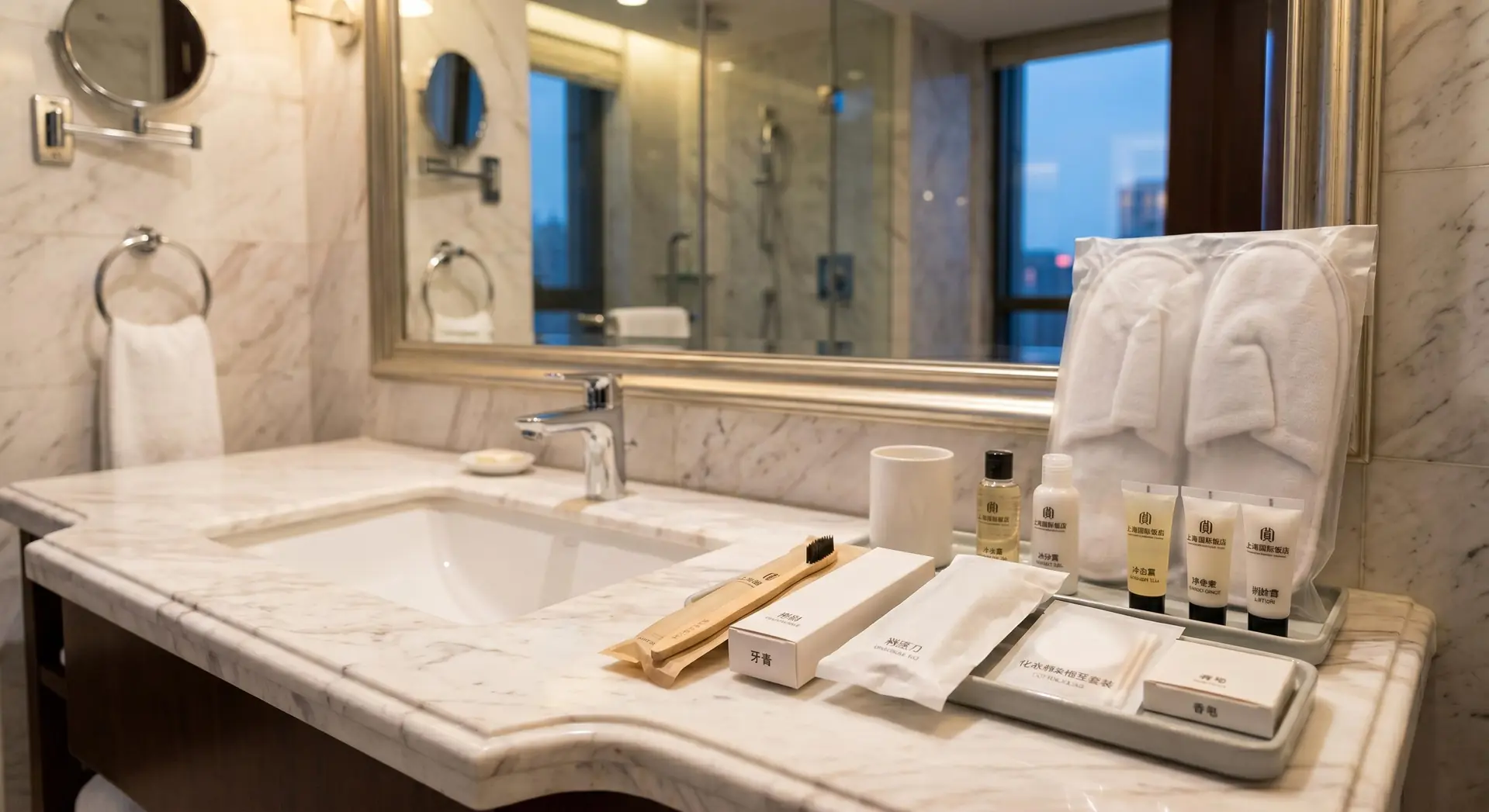
Soundproofing: hallway footsteps, neighboring TVs, and morning cleaning carts can be more noticeable than you expect. Higher floors and end-of-corridor rooms are usually quieter.
Bathrooms: four-star and above usually have wet/dry separation. Older hotels can have a shower that drains across the full bathroom floor.
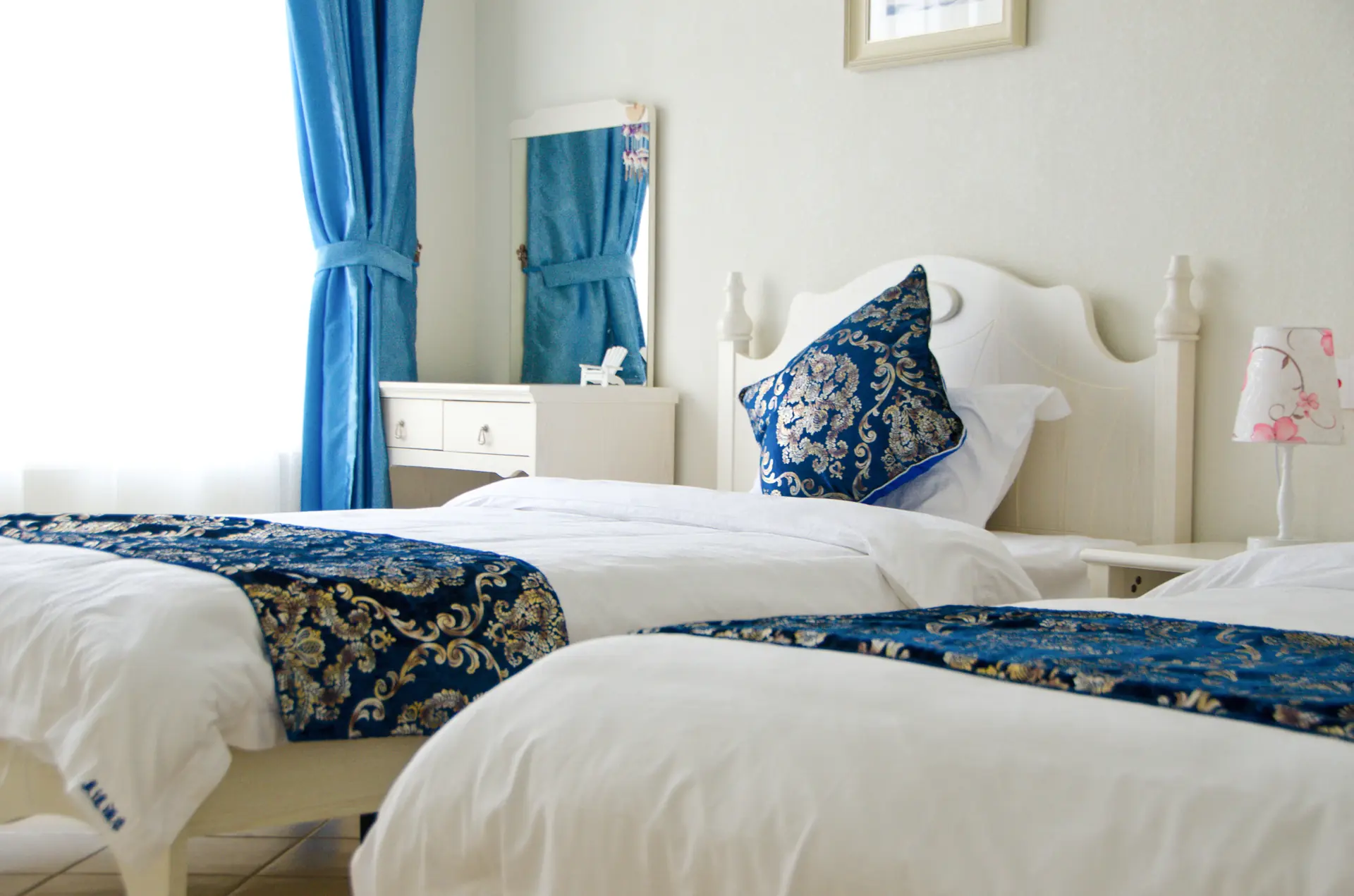
Bedding: mattresses and pillows tend firmer than in many Western hotels. Four-star and five-star hotels are more likely to offer extra pillows or a pillow menu.
🫖Electric Kettle
Most staffed hotels and chain properties provide an electric kettle, usually with tea bags or disposable cups. Hot water is treated as a normal room function, not a perk.
☕Coffee Machine
Expect tea, not a coffee setup. Capsule machines are mostly limited to five-star rooms and high-tier international brands. Bring drip bags if coffee matters to you.
🧴Toiletries
Toothbrushes, combs, razors, slippers, and shower caps are common. In cities such as Beijing and Shanghai, hotels often keep disposable items at the front desk instead of placing them in the room, so ask if you need them.
🌑Blackout Curtains
Blackout curtains are common and often better than in many Western mid-range hotels. This is a genuine plus for jet lag.
🛏️Linen Changes
Daily cleaning is common, but sheet changes are less frequent below five-star. Ask the front desk or use the bedding-change card if you need fresh sheets.
🌬️Seasonal AC
Many Chinese hotels run central cooling or heating by season. In spring and autumn, the room panel can adjust fan speed or a narrow temperature range, but not force full cooling or heating.
Hotel Brands to Trust
Brand often tells you more than a star number. For a first trip, choose a known chain unless you have a specific reason to book a boutique property.
International Brands
International chains in China maintain global service standards with local adaptations:
Marriott
JW Marriott, Sheraton, Courtyard, W, and other brands; useful if you collect Bonvoy points.
IHG
InterContinental, Holiday Inn, Crowne Plaza, and Hotel Indigo; Holiday Inn has a broad mid-range footprint.
Hilton
Hilton, Hilton Garden Inn, and Hampton by Hilton (欢朋); Hampton is a strong budget-conscious international option.
Accor
Sofitel, Grand Mercure, Novotel, and ibis; ibis is one of the more affordable international choices.
Hyatt
Park Hyatt, Grand Hyatt, Hyatt Regency, and Hyatt Place; usually strongest in major cities.
Use international brands for first nights
If you land late, arrive with children, or need a smooth first accommodation registration, an international chain or strong Chinese mid-range chain is worth the extra money. Switch to cheaper local brands after you are rested and oriented.
Chinese Mid-Range Brands
These brands do not always carry official star plaques, but they deliver consistent rooms at strong value:
Atour (亚朵)
Design-forward lobbies, good bedding, welcome tea, and self-service laundry at many locations; most locations are foreigner-friendly.
Ji Hotel (全季)
Huazhu Group's minimalist mid-range brand; clean, predictable, and often near metro stations.
Orange Hotel / Crystal Orange (桔子)
Design-focused mid-range; Crystal Orange is the premium tier.
Metropolo by Jin Jiang (锦江都城)
Jin Jiang Group's mid-range option, often useful near business districts and stations.
Vienna Hotel (维也纳)
Common domestic mid-range chain; quality varies by location, so recent reviews matter.
Budget Chains
If your budget is ¥150-300 per night, the common options are Hanting (汉庭), Home Inn (如家), 7 Days Inn (7天), and Jinjiang Inn (锦江之星). They can be perfectly fine in major cities, but foreign-passport handling is less consistent than at mid-range chains.
Confirm budget hotels before you pay
Even after the 2024 national accommodation guidance, a small hotel can still struggle with foreign-passport registration in practice. Use Trip.com messaging or support to confirm the exact property can check in your passport before relying on a low-priced booking.
Facilities, Rooms & Beds
This is where Chinese hotel listings can feel confusing: room names, bed widths, and facility labels do not map perfectly to Western hotel language.
Lobby and Front Desk
Bilingual signage
Official star-rated tourist hotels should have Chinese plus a second-language sign system. Ordinary chain hotels and guesthouses vary, so check listing photos if English signage matters.
Luggage storage
Most staffed hotels and chain properties store luggage before check-in or after checkout. Confirm this for guesthouses, apartments, hourly rooms, and properties without a 24-hour desk.
Cash and exchange
Do not rely on hotel currency exchange. Use bank ATMs, set up mobile payments, and keep a small RMB cash backup for deposits, taxis, and small properties.
Late-night check-in
Most staffed chain hotels have 24-hour front desks. Small guesthouses and apartments need an arrival-time confirmation before you land late at night.
Guest Rooms
Electric kettle
Common in staffed hotels and chains, usually with tea or cups.
USB charging ports
Common in newer three-star and above hotels; older rooms can require your own adapter.
In-room safe
Common at three-star and above; budget hotels sometimes use front-desk storage.
Power outlets
China uses 220V with two-prong flat and three-prong angled plugs; bring a universal adapter.
Bottled water
Most staffed hotels provide one or two bottles, but budget rooms, guesthouses, and apartments vary.
If you rely on hotel Wi-Fi for Google, WhatsApp, Gmail, work apps, or map sync, read the China VPN guide before departure and keep a working mobile data setup from the China tourist internet guide. Hotel Wi-Fi alone is not a good backup plan for overseas apps.
Dining
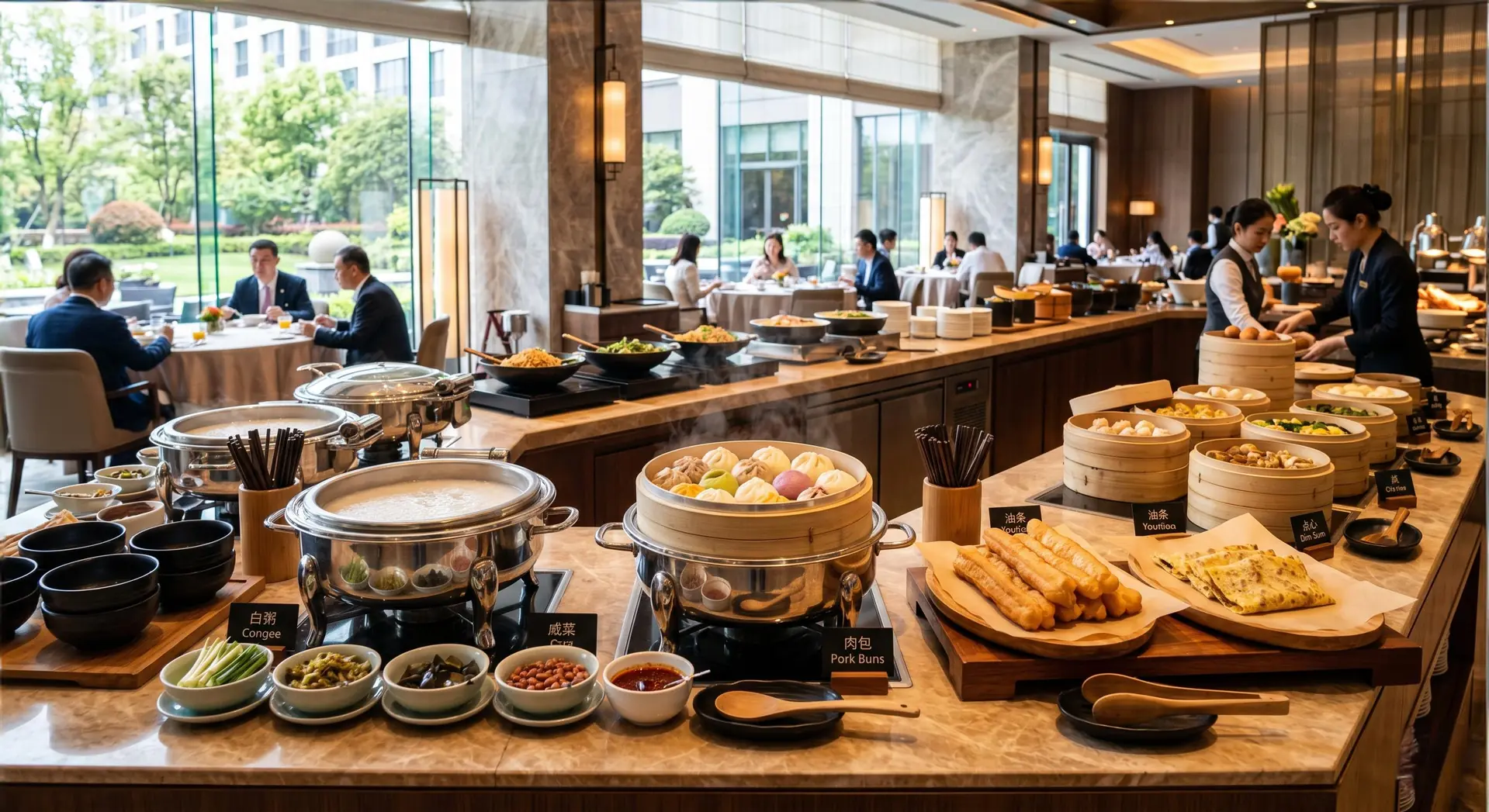
Chinese breakfast: most included breakfasts lean Chinese: congee, pickled vegetables, steamed buns, fried dough sticks (油条), soy milk, and eggs. Three-star and above usually add some Western options.
Executive lounges: five-star executive floors often include afternoon tea and evening drinks. International loyalty lounge benefits generally work as they do elsewhere.
Room service: check the service hours, delivery or service charge, and late-night options. Many travelers get faster results from nearby restaurants or food-delivery help through the front desk.
Fitness and Leisure
Gym
Standard at four-star and above; three-star gyms are less predictable.
Swimming pool
Common at five-star hotels and occasional at four-star hotels; rare below three-star.
Spa and massage
Five-star hotels often have full spas; mid-range hotels sometimes offer foot massage (足浴).
Laundry
Four-star and above offer paid laundry pickup; many Atour and Ji Hotel locations have self-service laundry.
Emergency equipment
Registered hotels post escape maps in rooms; higher-tier hotels sometimes provide flashlights or high-rise escape equipment.
Room Types and Bed Labels
- English Equivalent
- Twin Room
- What You Get
- Two single beds, usually about 1.2 m wide
- English Equivalent
- King / Queen Room
- What You Get
- One large bed, often 1.5 m or 1.8 m wide
- English Equivalent
- Superior / Business
- What You Get
- Slightly larger room with better amenities
- English Equivalent
- Executive Room
- What You Get
- Usually on an executive floor with lounge access
- English Equivalent
- Suite
- What You Get
- Separate bedroom and living room
- English Equivalent
- Family Room
- What You Get
- Larger room, often with one large bed plus one single or sofa bed
- English Equivalent
- Kids Room
- What You Get
- Themed family room, available at some mid-to-high-end hotels
Common bed pitfalls:
- A "king room" is not always a Western king-size bed; confirm the bed width if two adults need space.
- Twin beds are often narrower than Western travelers expect.
- Rollaway beds usually cost ¥100-200 per night and require enough room space.
- Baby cribs are often free at four-star and above hotels, but supply is limited.
Booking Prices and Deal Timing
Chinese hotel pricing moves sharply with holidays, city type, and booking channel.
Seasonal Swings
National Day Golden Week (October 1-7)
Tourist hubs, resorts, theme-park areas, scenic towns, and old-town guesthouse zones can double or worse. Business districts behave differently, so compare by neighborhood.
Chinese New Year
First-tier city business hotels often soften as business travel slows, while resort areas such as Sanya and Yunnan rise sharply.
Summer holidays (July-August)
Family travel peak; popular city hotels often rise 30-50%.
Weekday vs. weekend
Business districts can be cheaper on weekends, while tourist towns usually get more expensive.
Best booking window
For normal trips, 2-4 weeks ahead works for most cities. For National Day, Chinese New Year, school-holiday resorts, and famous scenic towns, lock a refundable room earlier and re-check prices before the free-cancellation deadline.
For Beijing and Shanghai, the right district matters as much as the star tier. Use the Beijing and Shanghai stay-area guide before choosing between a station area, business district, old-city stay, or sightseeing base.
Day-Use Rooms
Chinese hotels offer day-use rooms (钟点房): rooms rented by the hour, commonly for a 2-4 hour block at a fraction of the overnight rate. They are mainstream and legitimate, useful for layovers, afternoon rests, and early train arrivals before regular check-in.
Loyalty Programs
Marriott Bonvoy / Hilton Honors / IHG One Rewards / World of Hyatt
Work at participating China properties as they do elsewhere.
Huazhu H Rewards
Covers Hanting, Ji Hotel, and other Huazhu brands; member rates can be lower than OTA prices, but app usability varies for visitors.
Atour A-Card
Atour's program can unlock late checkout and upgrades for frequent stays.
Foreigner Check-In Rules
The practical question is not "does this hotel like foreigners?" It is whether the property can process your passport and submit the required accommodation registration cleanly.
Foreign-Passport Acceptance
China's 2024 accommodation guidance says local departments and online platforms should not use qualification requirements to restrict accommodation operators from receiving foreign guests, and platforms or hotels should not illegally advertise that they do not accept foreign guests. In practice, front-desk reality still varies: small hotels can lack training, confidence, or a working passport-registration workflow.
Use this registration-workflow guide:
Lowest friction
International brands and five-star hotels.
Usually reliable
Four-star and major domestic mid-range brands.
Often fine
Three-star city-center hotels, but verify in smaller cities.
Mixed
Budget chains; confirm the exact location before paying.
Highest uncertainty
Guesthouses and independent small hotels; read our Boutique & Cultural Stays guide before relying on them.
Passport Registration
Under China's accommodation-registration rules, hotels must register foreign guests and submit the information to local public security authorities. For you, the process is simple: show your original passport at check-in. Phone photos and photocopies are useful backups, but they do not replace the original passport at the desk.
For the full lobby-to-room-key walkthrough, see our Chinese hotel check-in guide. For non-hotel stays such as apartments, homestays, or staying with friends, the foreign traveler or host has a separate temporary accommodation registration duty within 24 hours, so do not treat "no front desk" as "no registration."
Deposits
Credit card pre-authorization
Common at four-star and above hotels and international chains; release timing depends on your bank.
Cash deposit
Possible at three-star and below, often around ¥200-500 and returned at checkout.
Mobile payment hold
Common at Chinese chains, but some deposit-free workflows require a Chinese Alipay or WeChat Pay credit profile.
Communication Tips
Trip.com in-app support
Useful for hotel confirmation and translation calls.
WeChat translate
Type your message, translate it, and show the front desk.
Baidu Translate
Works in China without a VPN and handles camera translation.
Saved phrases
Keep simple requests on your phone, such as "Please give me an extra pillow" (请给我一个枕头), "The air conditioning is too cold" (空调太冷了), and "What is the Wi-Fi password?" (Wi-Fi密码是什么?).
Frequently Asked Questions
Not exactly. A Chinese five-star rating tells you the hotel has strong facilities and public-area standards, but service style can still feel different from Europe or North America. International luxury brands in China usually feel more familiar because they add global brand audits and staff training on top of local requirements.
Sources checked for this guide
- Official SAMR national-standard listing checked for GB/T 14308-2023, release date, implementation date, replacement of GB/T 14308-2010, and Ministry of Culture and Tourism supervision context.: GB/T 14308-2023 official standard listing
- GB/T 14308-2023 public standard text cross-check used for the English title, star-rating framework, validity-period references, hotel operation quality updates, and disposable-item standard changes.: GB/T 14308-2023 text cross-check
- State Council / Xinhua accommodation guidance checked for the July 2024 circular saying platforms and accommodation operators should not restrict foreign travelers based on qualification requirements or illegally advertise that foreign guests are not accepted.: China accommodation guidance for foreign travelers
- National Immigration Administration guidance checked for Article 39 accommodation registration: hotels register foreign guests and submit accommodation information to local public security authorities.: NIA accommodation registration rules
- Beijing municipal solid-waste regulation checked for the rule that hotels should not proactively provide disposable toiletries and similar items to consumers.: Beijing disposable-items regulation
- Shanghai official travel guidance checked for request-only hotel disposable items, including toothbrushes, combs, razors, and related amenities.: Shanghai hotel disposable-items guidance
Plan Your China Hotel Stays Next
Hotel standards are one piece of the China accommodation puzzle. Connect this guide with booking platforms, check-in registration, payment setup, and city-by-city stay planning before you lock in your route.
Related guides:
- China Hotel Check-In for Foreigners - know what the front desk does with your passport and when non-hotel stays need extra registration
- Best Hotel Booking Platforms in China - compare Trip.com, international chains, and China-focused booking channels
- How to Book China Train Tickets: 12306 & Trip.com - connect hotel stays smoothly with intercity rail bookings on Trip.com and 12306
- Where to Stay in Beijing & Shanghai - choose the right district before comparing star tiers
- China City Transport Guide - plan airport, station, and late-night hotel transfers
- Do Tourists Need a VPN in China? - avoid relying on hotel Wi-Fi for overseas apps
- Mobile Payments in China: Alipay & WeChat Pay - set up the payment tools hotels use for deposits and front-desk charges
- China Travel Budget: Daily Costs & Money-Saving Tips - fit accommodation choices into the rest of your trip budget
© gochinafreely.com — Original guide by Go China Freely.