Cultural stay filter
China's most memorable rooms are often inside old buildings: Beijing courtyards, Fujian tulou, Pingyao merchant houses, Yunnan guesthouses, Tibetan lodges, and minority-village timber homes. They can be magical, but they are not chain hotels with heritage wallpaper. This guide helps you choose when a cultural stay is worth it, what comfort trade-offs to expect, and when to confirm foreign passport registration before you pay.
7
stay styles
¥100+
entry rooms
24h
non-hotel rule
Use this guide for
Choose
Match the stay style to your route, luggage, sleep needs, and appetite for local friction.
Expect
Thin walls, stairs, winter heating gaps, weaker Wi-Fi, or smaller bathrooms can be part of the trade-off.
Verify
For small or family-run stays, confirm foreign-passport accommodation registration before a non-refundable payment.
Traveler rhythm
Pick the building for atmosphere, then verify the boring logistics before you lock the room.
Cultural Stays in China: Trade-Offs
Cultural stays are different because the building is part of the trip. The courtyard layout, timber beams, rammed-earth walls, breakfast table, lane approach, and family-style hosting all tell you where you are in China.
The catch is consistency. A restored courtyard or tulou guesthouse can be unforgettable, but it can also have thin walls, uneven water pressure, no elevator, and small-property staff who sometimes need extra time to process a foreign passport.
Decision shortcut
Should you choose a cultural stay?
Choose it when
The building, village, or neighborhood is part of the reason you are going, and you can accept some variation in comfort.
Skip it when
You need guaranteed quiet, elevator access, strong Wi-Fi, late-night front desk support, or perfectly predictable bathrooms.
Verify first
For small, remote, direct-contact, or non-refundable stays, ask in writing whether the property can complete foreign-passport accommodation registration.
Pack for
Narrow lanes, stairs, weaker heating in the south, and smaller rooms. A small soft bag beats a large hard-shell suitcase.
Reality check
Soundproofing
Old doors, timber frames, and shared courtyards mean earplugs help if you sleep lightly.
Heating / AC
Reliable in the north, uneven in the south. Ask before winter stays in Fujian, Anhui, Dali, and villages.
Bathrooms
Usually private at better properties, but rooms are smaller and water pressure is less consistent.
Wi-Fi
Fine in cities, weaker in tulou and villages. Use a China SIM or hotspot if work calls matter.
Registration
For small guesthouses, village stays, direct-contact bookings, and non-refundable rates, confirm foreign-passport registration. If a non-hotel stay says no registration is needed at all, choose another property.
The comfort trade-off
If stable soundproofing and consistent hot water are non-negotiable, choose a modern chain or high-end boutique conversion. If you can accept small imperfections, the payoff is irreplaceable: a courtyard pomegranate tree outside your room, a tulou atrium under the stars, or breakfast inside a timber village house.
Choose Your Cultural Stay Style
The best cultural stay is not the most photogenic one. It is the one that matches your route, luggage, sleep needs, altitude tolerance, and appetite for local friction. If the accommodation category itself is still unclear, compare the trade-offs in the China accommodation guide first.
History first
Beijing courtyards, Pingyao inns
Strong photos
Hongcun, Xidi, tulou, Longji
Slow romantic stay
Dali Erhai, Lijiang, Shuhe
Highland culture
Shangri-La, Daocheng-Yading
Village immersion
Zhaoxing, Xijiang, Longji
Seven Cultural Stay Types
Use the sections below as a planning map, not a ranking. Some are easy first-trip add-ons; others work best when the accommodation itself is the reason you detour.
Feel
What the stay is really about.
Base
Where to sleep or which town to use.
Check
The one constraint to verify first.
Beijing Courtyard Hotels
Check
Proper heating at better properties, weaker soundproofing than concrete hotels, a short walk from the nearest car drop-off, and Chinese breakfasts such as soy milk, fried dough sticks, and millet congee.
Feel
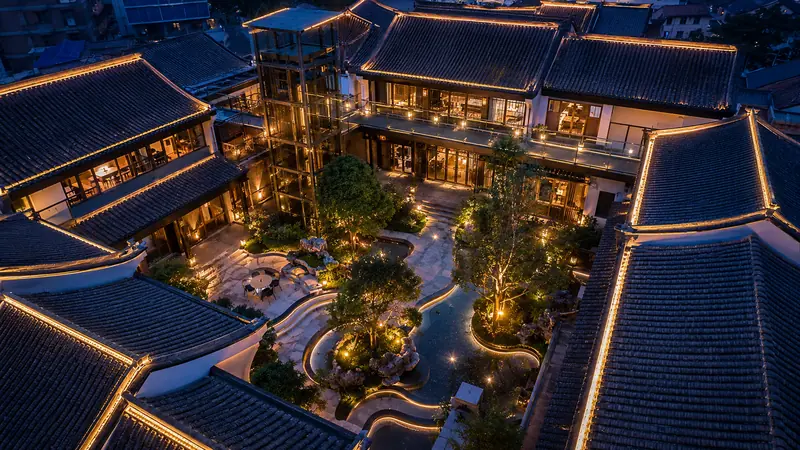
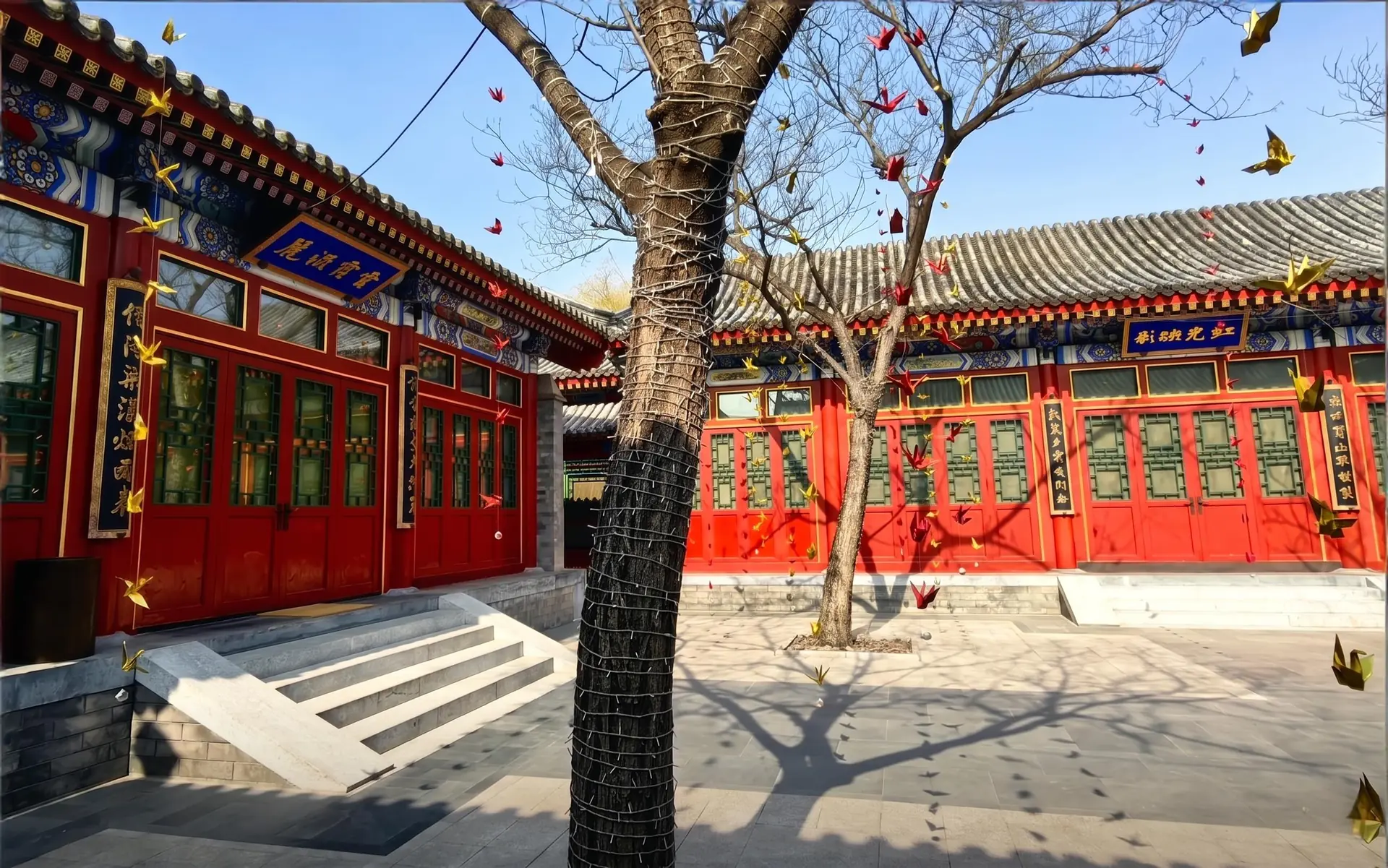
The Beijing courtyard compound (四合院) is the city's most iconic residential form: rooms arranged around a central courtyard, once home to everyone from imperial nobles to ordinary families. Today, selected hutong compounds and even temple buildings have become boutique stays that mix traditional spatial rhythm with modern rooms.
Base
Temple Hotel (东景缘) (Google | Amap) occupies the restored Zhizhusi (智珠寺) temple near the National Art Museum, with eight rooms, preserved halls, contemporary art, and a James Turrell Skyspace. The Orchid (觉品) hides inside Baochao Hutong with a rooftop over hutong roofs, while Gucheng Boutique Courtyard Hotel near Shichahai gives a more accessible classic courtyard experience.
Fujian Tulou Guesthouses

Check
Simple clean rooms, private bathrooms at better guesthouses, home-cooked Hakka food with cured meats and bamboo shoots, weak Wi-Fi, and a transfer of about 3-4 hours by car from Xiamen or 1.5 hours from Longyan railway station.
Feel
Fujian tulou are massive circular or square rammed-earth buildings built by Hakka and Minnan communities in the mountains of southeast China. UNESCO lists 46 Fujian Tulou buildings as World Heritage, and a few nearby guesthouses let you sleep inside or beside this architecture.
Base
Tianluokeng Tulou Cluster (田螺坑) (Google | Amap) is the famous "Four Dishes and a Soup" view; nearby Hekeng Village (河坑) and Taxia Village (塔下) (Google | Amap) are common overnight bases. Chuxi Tulou Cluster (初溪) (Google | Amap) is less commercialized, with Jiqing Lou (集庆楼, built circa 1419) open for visits.
Pingyao Ancient City Inns
Check
¥200-1,000/night inside the old city, no motor vehicles inside the wall, thin walls in some renovated houses, and an easier time if you pack light. Drivers can stay outside the wall, but first-time visitors should spend at least one night inside.
Feel
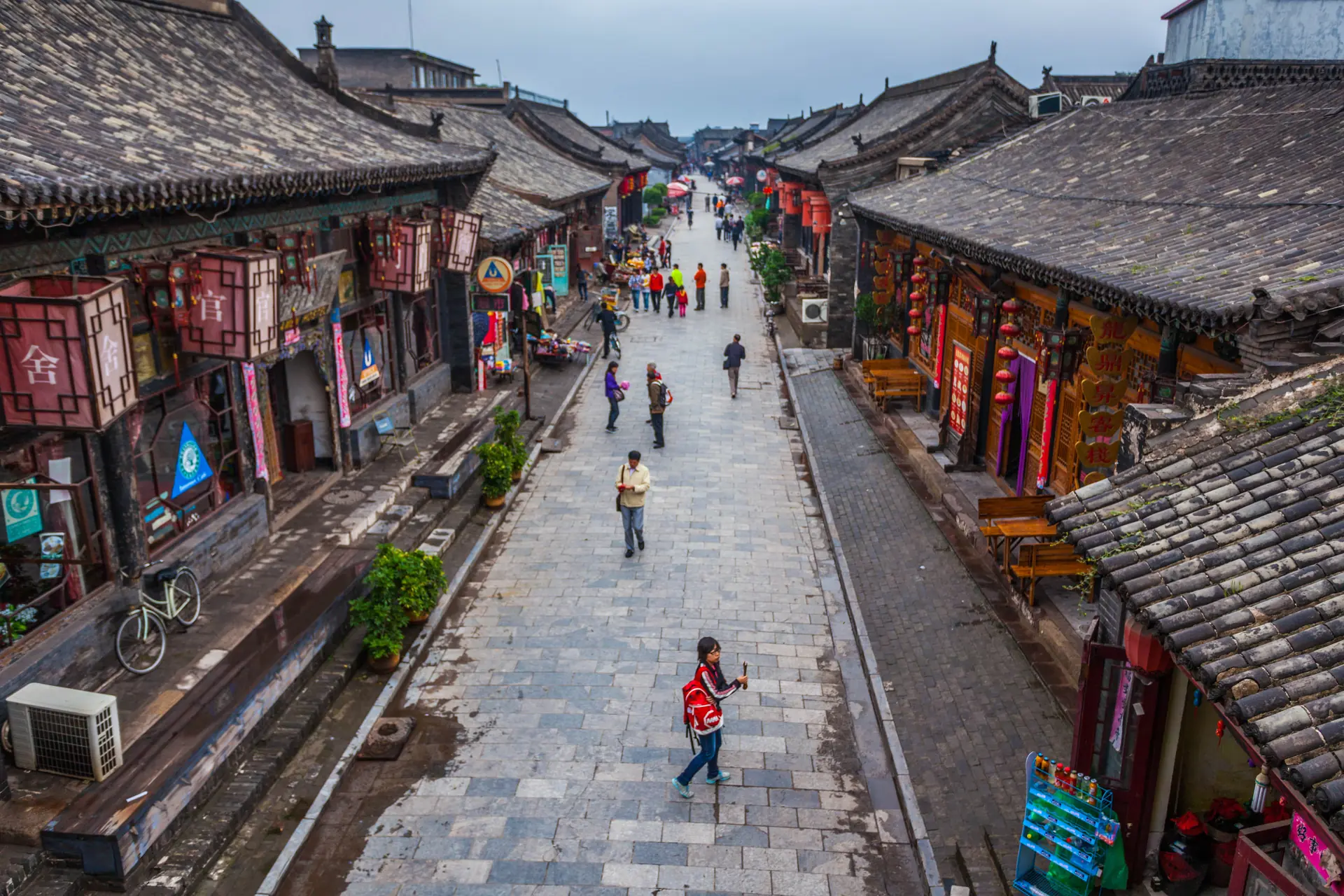
Pingyao Ancient City (平遥古城) (Google | Amap) is a preserved Ming-Qing walled city where the streets, banking houses, temples, and city wall still form a complete old-city fabric. Staying inside the wall lets you see the lantern-lit lanes after day-trippers leave.
Base
Pingyao Lodge (平遥会馆) occupies a multi-courtyard compound with preserved brick and wood carvings. Zheng Family Inn (郑家客栈) is family-run and centered on an old pomegranate tree. Dejuyuan Inn (德居源客栈), near Rishengchang Draft Bank, keeps a Qing-dynasty banking-house feel with solid heating.
Dali & Lijiang Guesthouses
Check
Dali lakefront guesthouses run roughly ¥300-2,000/night; old-town guesthouses are often ¥150-600/night. Most established Dali and Lijiang guesthouses accept foreign guests; confirm registration for small family-run or direct-contact properties. Budget for the ¥50 Lijiang Old Town maintenance fee if you stay around Dayan, Baisha, or Shuhe, and check the current collection rule with your guesthouse.
Feel
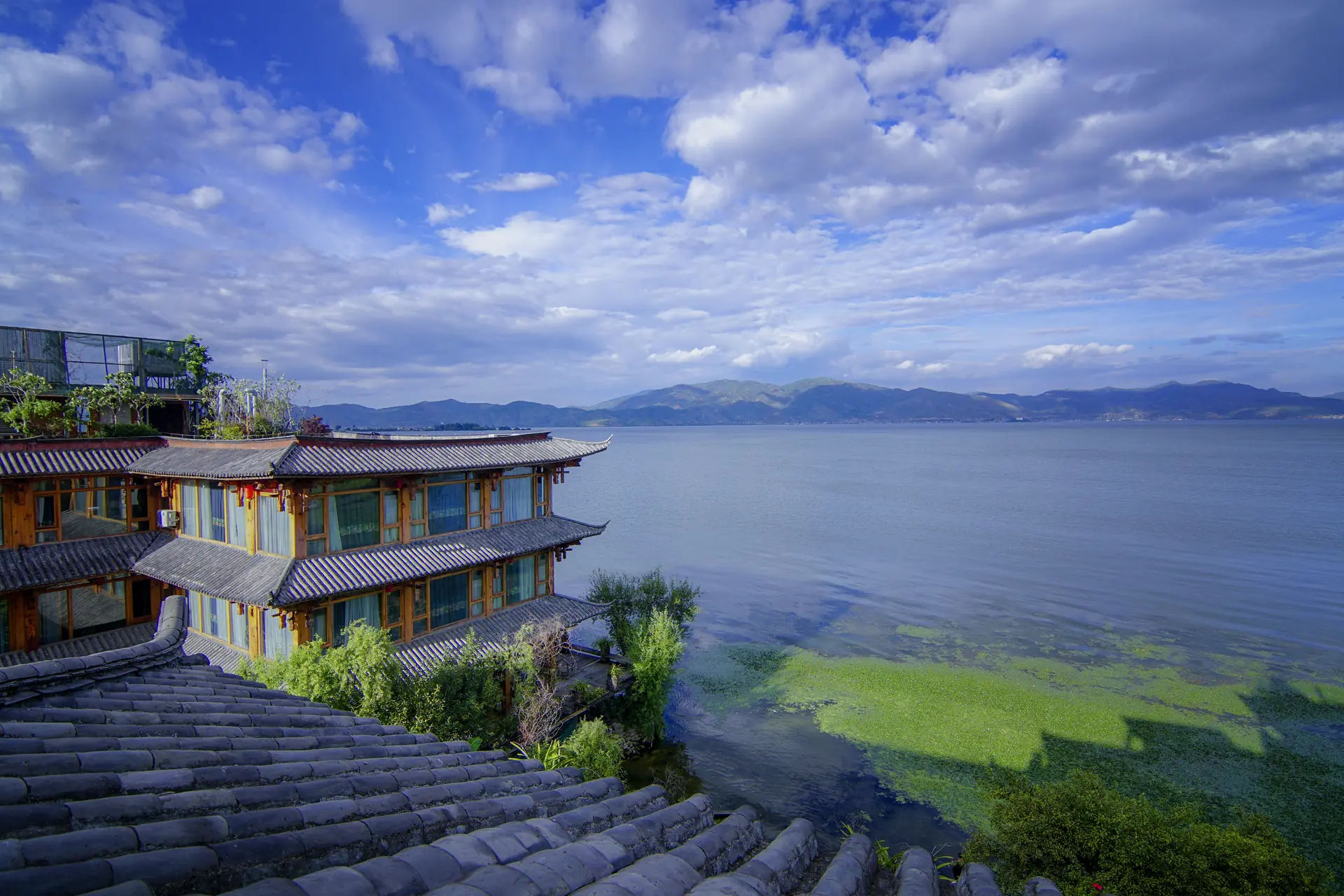
Dali and Lijiang have China's most developed guesthouse culture: lake balconies, Naxi courtyards, Bai-style compounds, and old-town lanes with cafes, roofs, and mountain backdrops.
Base
Dali Old Town (大理古城) (Google | Amap) is the practical base, while Shuanglang (双廊) (Google | Amap) and Wase (挖色) are better for Erhai lakefront rooms. Lijiang Old Town (丽江古城) (Google | Amap) has Naxi courtyard conversions, while Shuhe Ancient Town (束河古镇) (Google | Amap) is quieter and usually cheaper. The Linden Centre (喜林苑) in Xizhou is the restored Bai courtyard option.
Tibetan-Style Lodges
Check
Altitude. Shangri-La sits around 3,200m and Daocheng around 3,700m, so headaches and shortness of breath are common on arrival. Better lodges have underfloor heating, wood stoves, and oxygen canisters; budget stays often rely on electric blankets. Shangri-La has an airport and rail service from Lijiang; check live 12306 schedules. A car transfer still makes sense if you want to stop at Tiger Leaping Gorge or villages. Overland Daocheng routes are much longer.
Feel
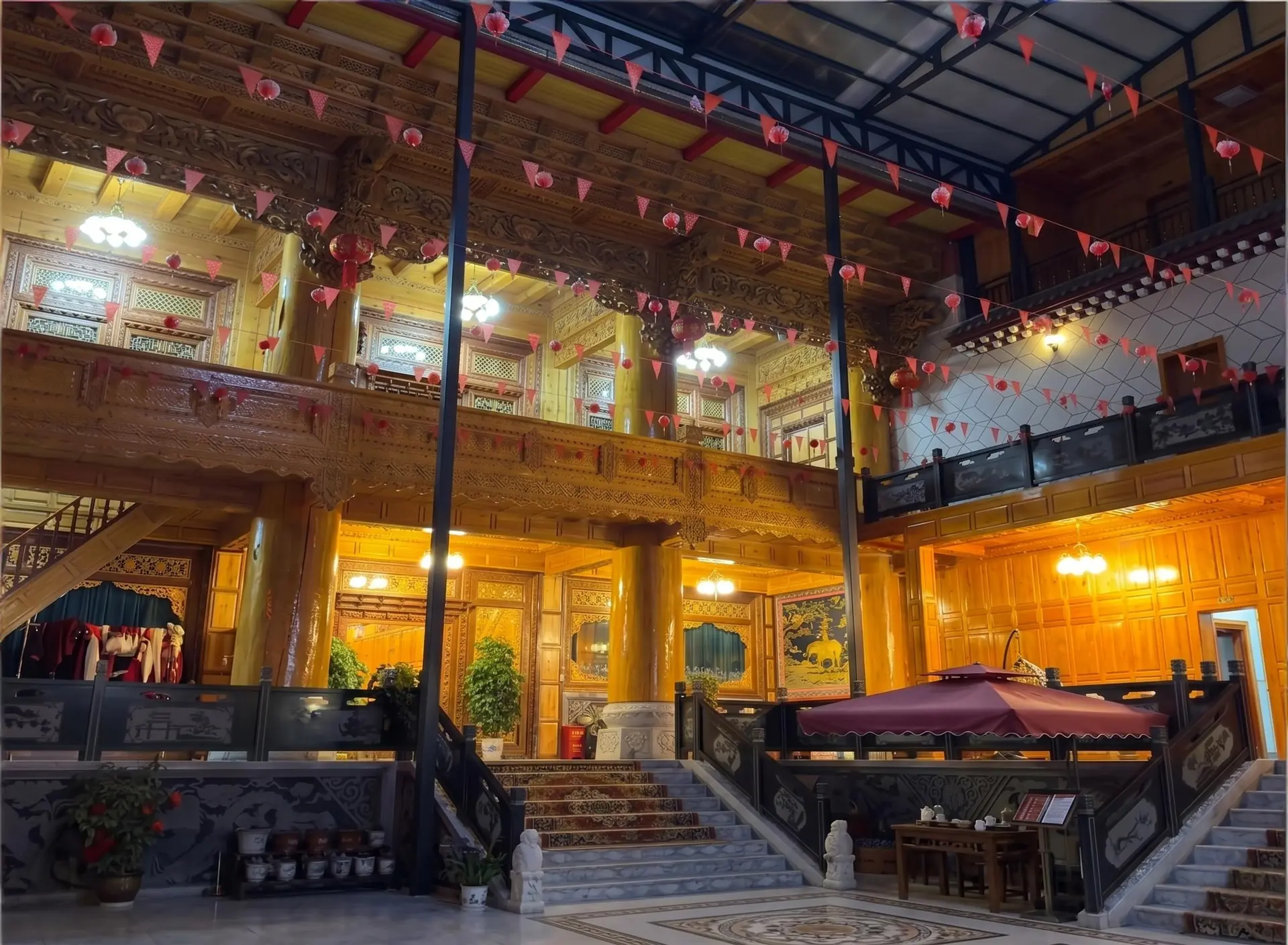
On the Tibetan Plateau and its edges, Tibetan-style lodges mean painted balconies, prayer flags, yak butter tea, and views toward snow peaks or alpine meadows.
Base
Shangri-La Old Town (Dukezong, 独克宗古城) (Google | Amap) is the easiest first base. Songtsam Lodges (松赞系列) are the best-known luxury option around Shangri-La, Meili Snow Mountain, and Lhasa. For independent travelers, Shangri-La and western Yunnan Tibetan areas are much easier than Lhasa and the Tibet Autonomous Region; Lhasa trips require a Tibet permit and agency-arranged travel for foreign passport holders. Arro Khampa by Zinc Journey (阿若康巴) is more accessible in Shangri-La. Desti Youth Park Hostel and similar Tibetan-style hostels serve backpackers heading toward Yading Nature Reserve (亚丁自然保护区) (Google | Amap).
Huizhou Village Stays
Check
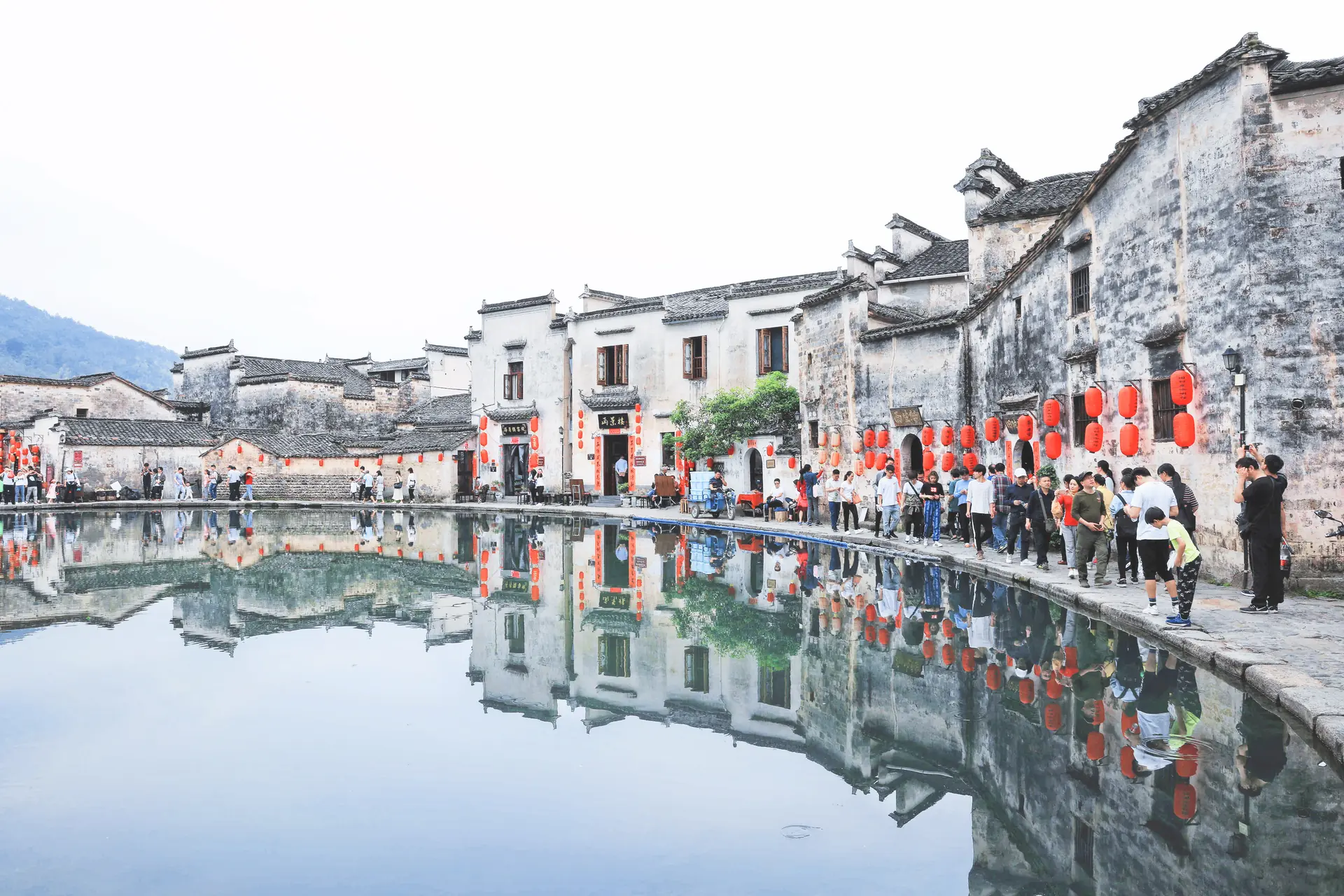
Stone paths, hand-carried luggage, spring rapeseed fields, autumn Tachuan foliage, and cold damp winters with limited heating. Hongcun and Xidi both require scenic-area tickets, commonly listed at ¥104/person; overnight guests should confirm re-entry rules with their guesthouse. Skywells Boutique Inn in Wuyuan, Jiangxi, is a related Huizhou-style option about two hours by car from Hongcun.
Feel
Hongcun Village (宏村) (Google | Amap) and Xidi Village (西递) (Google | Amap) in southern Anhui are UNESCO-listed Huizhou villages with white walls, dark-tile roofs, horse-head gables, sky wells, water systems, and carved interiors. They work especially well when paired with Huangshan.
Base
Hongcun has boutique guesthouses around Moon Pond (月沼), with classic reflections right outside the window and prices often around ¥300-1,200/night. Xidi is quieter, with some century-old houses converted into guesthouses at about ¥200-800/night. Bishan Village (碧山) (Google | Amap) is the design-hotel add-on, led by Pig's Inn (碧山工销社) in a converted cooperative and granary.
Ethnic Minority Village Stays

Check
Little English, translation-app dependence, shared family-style meals, uneven paths and stairs, and limited flexibility for strict diets. Zhaoxing is about 3.5 hours from Guiyang by car or train to Congjiang plus taxi; Longji is about 2 hours from Guilin; Xijiang is about 3 hours from Guiyang by tourist bus.
Feel
In Guizhou, Guangxi, and parts of Yunnan, Miao, Dong, Zhuang, and other communities still live in villages where stilt houses, drum towers, wind-and-rain bridges, and terraced fields remain part of daily life. These stays are less polished but can be the most immersive.
Base
Zhaoxing Dong Village (肇兴侗寨) (Google | Amap) has five drum towers, cobblestone lanes, Dong-style meals, indigo dyeing workshops, and improved guesthouse infrastructure. Longji Rice Terraces (龙脊梯田) (Google | Amap) offers wooden family-run guesthouses with terrace views. Xijiang Miao Village (西江千户苗寨) (Google | Amap) is larger and more commercialized, but the lantern-lit hillside scale is unmatched.
Booking and Passport Checks
For cultural stays, booking is partly about room style and partly about check-in certainty. A beautiful guesthouse can still become a bad first night if it cannot handle a foreign passport, late arrival, or basic communication. Use a hotel booking platform that supports pre-arrival verification, then review the foreign-passport check-in process before relying on the stay.
Booking Platforms
Trip.com(affiliate link · may earn commission, no extra cost)
Lowest-friction English starting point for many cultural stays. It is useful for written support and mainstream inventory, but tiny guesthouses, tulou, and village stays often still need direct contact.
Optional price references
Useful for Beijing courtyards and Dali/Lijiang boutiques, but coverage is thinner for tulou, Pingyao, Hongcun, and village stays.
Xiaohongshu (Little Red Book)
Useful for real guest photos and hidden-gem ideas. Search terms such as "大理民宿" or "丽江客栈" help, but booking usually requires WeChat or phone contact.
Direct contact
Common for boutique guesthouses and village stays. It can get better prices or better room choices, but use it only when payment, cancellation, arrival time, and registration are clear.
High-Risk Stay Registration Checklist
- For small, remote, direct-contact, or non-refundable stays, message the property: "I hold a foreign passport. Can you complete temporary accommodation registration for me?"
- Use Trip.com's in-app chat when the booking is on Trip.com so the answer is written inside the booking record.
- If a non-hotel or family-run stay says "no registration needed," treat that as a red flag and choose another property.
- Bring your original passport, not only a copy or phone photo. The guesthouse needs to scan or record the information page.
- Reconfirm remote, family-run, or newly listed guesthouses one day before arrival, especially during public holidays.
Facility Expectations
🔥Heating
Beijing and Pingyao stays usually have centralized or independent heating. Fujian, Dali, Hongcun, and other southern stays often rely on AC units or portable heaters in winter.
🚿Hot water
Polished boutique conversions are usually stable; family-run guesthouses sometimes use solar water heaters, so cloudy winter days can mean lukewarm showers.
📶Wi-Fi
Reliable in city courtyards, weaker in tulou, Hongcun, Taxia, Longji, and mountain villages. Buy a China SIM or bring a mobile hotspot if work calls matter.
🎒Luggage
Every cultural stay category involves narrow lanes, cobblestones, village steps, or no elevator. Pack soft and light.
Frequently Asked Questions
No. Famous boutique conversions and established hotels usually handle foreign passports without trouble, but small family-run guesthouses sometimes lack the workflow or confidence. Confirm before non-refundable payment for family-run, remote, newly listed, or direct-contact stays.
Sources Checked
Primary references for this update
- UNESCO World Heritage Centre pages checked for Fujian Tulou, Ancient City of Ping Yao, and Ancient Villages in Southern Anhui - Xidi and Hongcun inscription context.: Fujian Tulou, Ancient City of Ping Yao and Xidi and Hongcun
- Beijing municipal English guidance and National Immigration Administration policy interpretation checked for hotel and non-hotel accommodation registration rules for foreign travelers.: Beijing residence registration guidance and NIA registration policy explanation
- China Daily report checked for the 2025 Lijiang Old Town maintenance-fee update: ¥50 from August 1, 2025.: Lijiang maintenance fee update
- Official Xidi-Hongcun tourism notice checked for the commonly listed ¥104 full-price ticket reference used for the Huizhou village stay section.: Xidi-Hongcun ticket notice
- Tibet/TAR access caveat checked for foreign travelers needing a permit and organized or agency-arranged travel.: Canada travel advice: Tibet access
Beyond This Guide
Cultural stays are one dimension of accommodation in China. Once you know the style you want, connect it with platform choice, check-in registration, payments, and your city-by-city route.
Related guides:
- Where to Stay in Beijing & Shanghai: Best Areas & Hotels - neighborhood-by-neighborhood accommodation planning
© gochinafreely.com — Original guide by Go China Freely.