Most travelers do not run out of money in China - they run into payment friction.
What goes wrong
Mobile payments dominate daily life, foreign cards work unevenly, and cash is still useful when data, apps, or card risk controls get in the way.
What this guide builds
A practical RMB system: how to benchmark the exchange rate, where to get cash, which ATM choices matter, and how much to carry without overexposing yourself.
RMB Cash Strategy for China
RMB means renminbi (人民币), China's official currency; CNY is the currency code you will see in banking apps and statements. In daily speech, people often say "yuan" for the unit and "kuai" informally, but travelers only need one working rule: use RMB cash as a controlled backup, not as the main way to pay for a modern China trip.
Primary rail
Mobile payment
Use Alipay or WeChat Pay for most urban spending once your foreign card is linked and tested; app verification, issuer rules, and merchant categories can still block a payment.
First backup
Physical card
Useful where UnionPay, Visa, or Mastercard logos are shown, especially hotels, larger merchants, and ATMs, but not reliable enough for every small purchase.
Cash fallback
Small RMB cash
Keep enough for arrivals, transport glitches, older vendors, weak signal, and payment app failures.
China's official payment guidance now emphasizes a mix of mobile payment, bank cards, and cash for overseas visitors. That does not mean every cashier is equally comfortable with each method. Your goal is not to carry a huge cash pile; it is to avoid having only one payment path.
Exchange Rates: Build Your Benchmark
Exchange rates move daily, so a fixed "good rate" number becomes stale quickly. Before departure, check the mid-market CNY rate in your banking app or card-network calculator, then build a personal acceptance range.
Build the benchmark
- Start with the current mid-market or network rate.
- Add your bank's foreign ATM, cash-advance, or currency-conversion fees.
- Allow room for ATM-side fees and exchange-counter spread.
Set your own maximum total cost after checking issuer fees, ATM-side fees, exchange-counter spread, and any dynamic currency conversion offer. The acceptable buffer depends on your bank, card type, ATM owner, and how urgently you need cash.
Three-step exchange sanity check
1. Know the baseline
Check CNY against your home currency shortly before you travel.
2. Add real fees
Include your issuer fee, possible ATM fee, and any exchange-counter spread.
3. Decide fast
If the offer falls outside your range, use another ATM or exchange channel.
Best Ways to Get RMB
You have three practical channels: exchange a small amount before departure, use an arrival exchange counter as a bridge, and rely mainly on official bank or qualified exchange channels for ongoing cash.
1
Pre-trip emergency cash
2
Major-bank ATM
3
Counter as backup
Before departure
Bring only enough RMB for first-day transport, one simple meal, and small incidentals. This removes arrival stress if your mobile setup needs SMS verification, data is unstable, or your first card test fails. If you plan to carry significant RMB or foreign currency across the border, check current Customs and SAFE rules before departure.
After arrival
Exchange counters at airports and ports are convenient but often not your best long-run cost option. Use them as a bridge, then move to ATMs or your normal payment setup once you are settled. Avoid street exchangers, private swaps, or unofficial intermediaries; keep receipts where available.
Ongoing cash
Look first for the international card-network logo that matches your card, then prioritize ATMs at major bank branches, airport banking areas, large railway stations, shopping malls, or busy commercial zones. Hotel staff can point you to a nearby ATM, but do not assume the hotel has one on site. Avoid isolated machines where you would feel uncomfortable counting cash or troubleshooting a failed transaction.
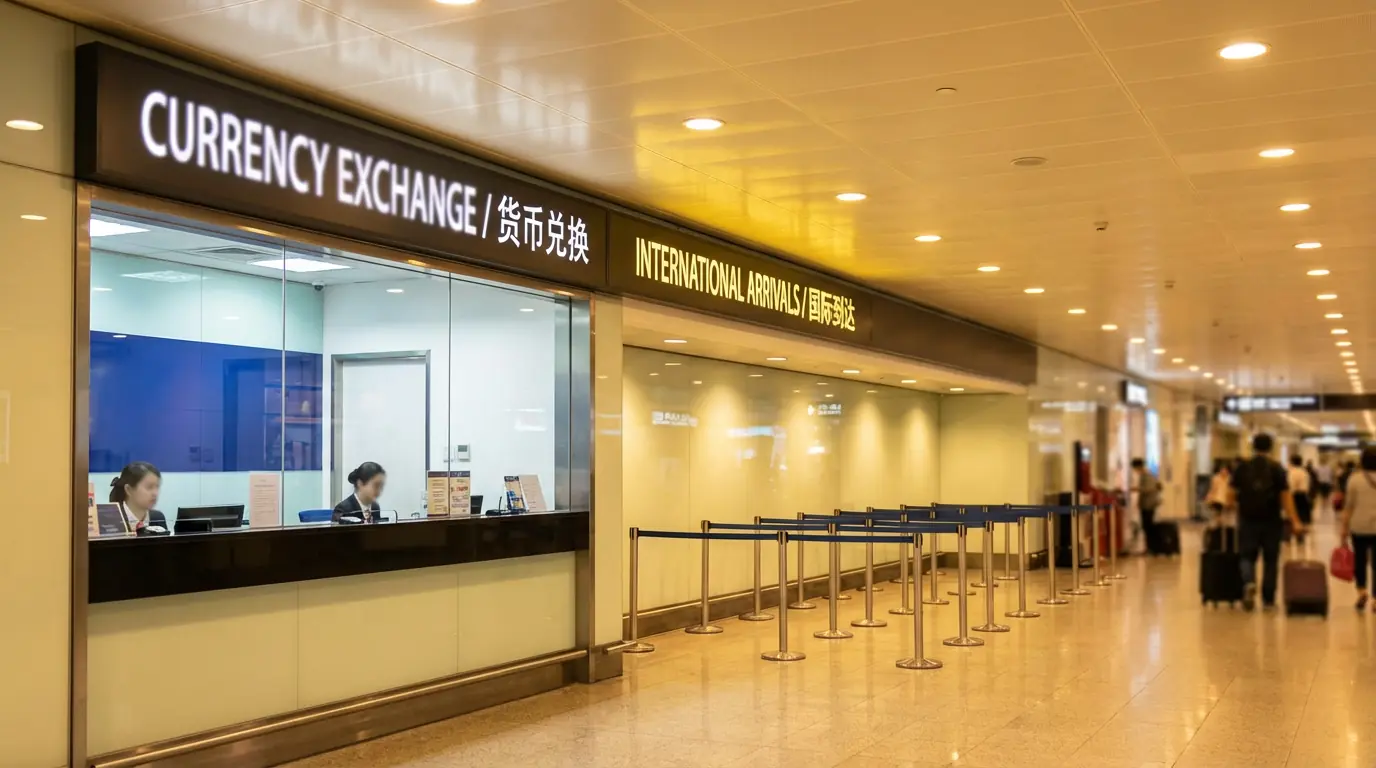
Best first withdrawal
Make one modest test withdrawal on arrival day, then check your banking app after it posts. That one real transaction tells you more than a dozen generic fee articles.
Foreign Card ATM Withdrawals
Foreign cards usually work better at ATMs showing the matching international card-network logo, especially at major banks rather than random standalone machines. Screen flow can still vary by bank, so slow down at the confirmation screens, especially around account type, fees, and currency choice.
ATM flow to follow
- Insert card and choose English if available.
- Select withdrawal, then choose a modest test amount.
- If asked RMB or home currency, choose RMB.
- Read any ATM-side fee prompt before confirming.
- Take cash, card, and receipt before leaving.
If the ATM fails
Do not keep retrying the same machine. Move to another bank ATM nearby, check overseas cash-withdrawal permissions in your banking app, and try a smaller amount.
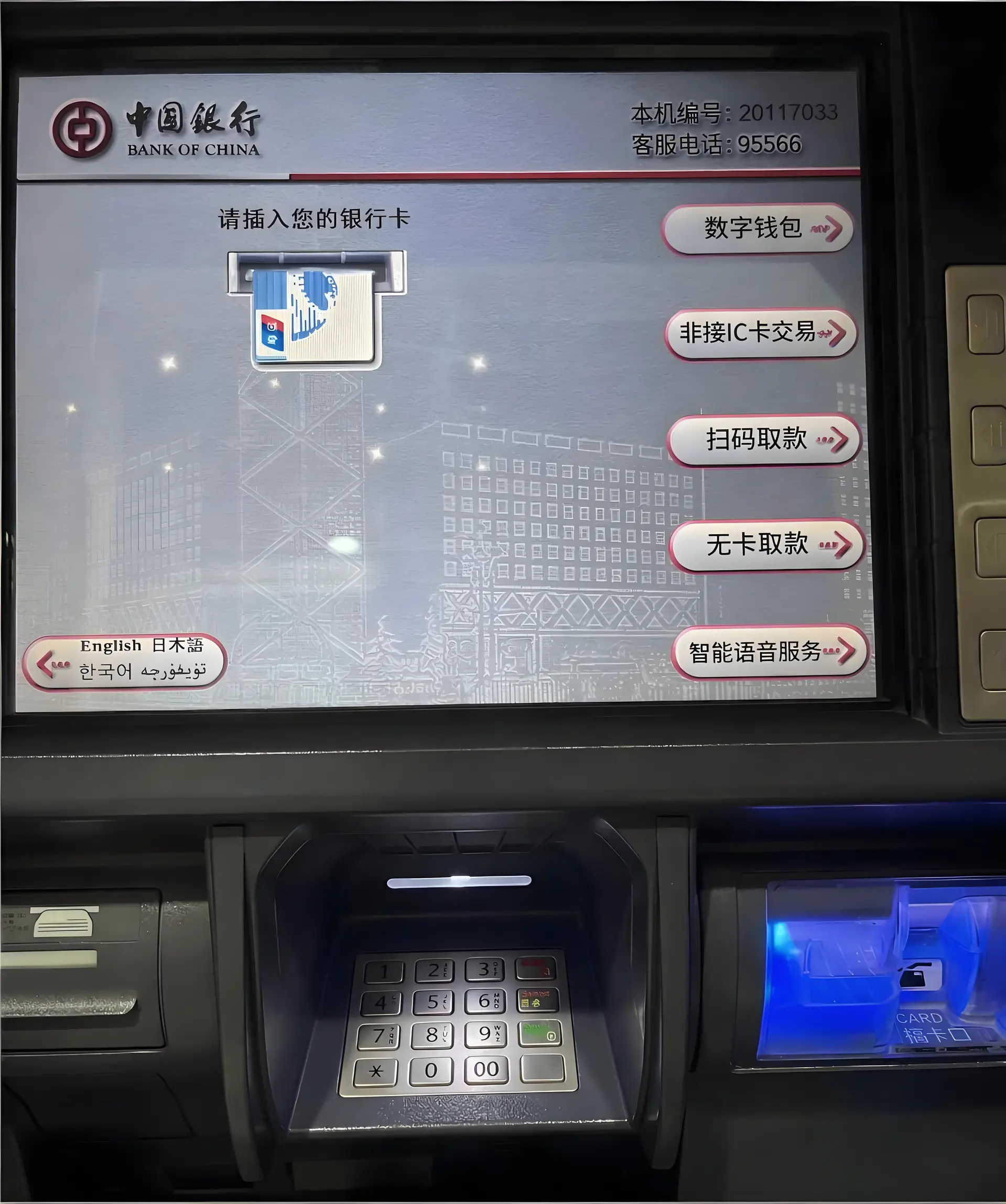
Late-arrival rule
For late arrivals, complete your first withdrawal in major transport hubs, airport banking zones, or large commercial areas. If you need cash after midnight, ask hotel staff where the nearest safe, legitimate ATM or official exchange point is; do not assume a hotel desk can exchange or advance cash.
Avoid DCC and Fee Traps
Travelers often focus on headline exchange rates and miss the hidden cost stack. In practice, losses usually come from ATM-side service fees, issuer foreign-withdrawal fees, exchange spread, and dynamic currency conversion (DCC).
DCC Decision Rule
If an ATM or card terminal asks whether to charge in RMB or your home currency, choose RMB in most cases. Your card network and issuer then handle the conversion instead of the ATM or merchant setting an on-screen rate.
What the DCC screen should disclose
Visa says merchants and ATMs that offer DCC should show both currencies, the exchange rate, and any extra markup or fees, and that you should be able to accept or decline the conversion.
Mastercard similarly notes that if a merchant or ATM operator converts the transaction, Mastercard's own currency conversion rate will not apply.
Usually better
Choose RMB, decline the ATM's conversion offer, and let your issuer post the final home-currency amount.
Usually costlier
Accept a home-currency amount on the ATM screen without checking the exchange rate and markup.
Withdrawal rhythm
Do not max out every withdrawal just because the machine works. A better control model is to withdraw in 2 to 4 day chunks, then compare the posted cost in your banking app before repeating the same ATM choice.
How Much Cash to Carry
For most city itineraries, medium daily cash is enough. The important part is not the largest possible amount; it is the denomination structure and where you store it.
Daily
Wallet cash
Silent
Bag backup
Emergency
Hotel reserve
Use a three-layer system:
Wallet layer
What you are comfortable using in public that day.
Bag layer
Quiet backup for a payment failure or late transfer.
Hotel layer
Emergency reserve kept away from your daily wallet.
Denomination and transfer days
Prefer smaller notes for taxis, snacks, local shops, and quick purchases. Pair this with the China price guide and city transport guide so your cash buffer matches your route. Keep larger notes in reserve and avoid exposing your full cash stack in crowded spaces. On transfer-heavy days - late trains, long-distance moves, airport arrivals, or rural detours - temporarily raise your cash ceiling, then reset the next day.
Customs and declaration limits
Do not travel with large undeclared cash piles. China has rules for RMB and foreign-currency cash carried across the border; SAFE/GACC rules include permit thresholds for larger foreign-currency cash amounts. Check current Customs and SAFE rules before carrying significant RMB or foreign currency.
Payment Backup Setup
A resilient China setup is layered. Mobile payment should carry most everyday spending; a physical international card helps at hotels, larger merchants, and ATMs; RMB cash covers the edge cases.
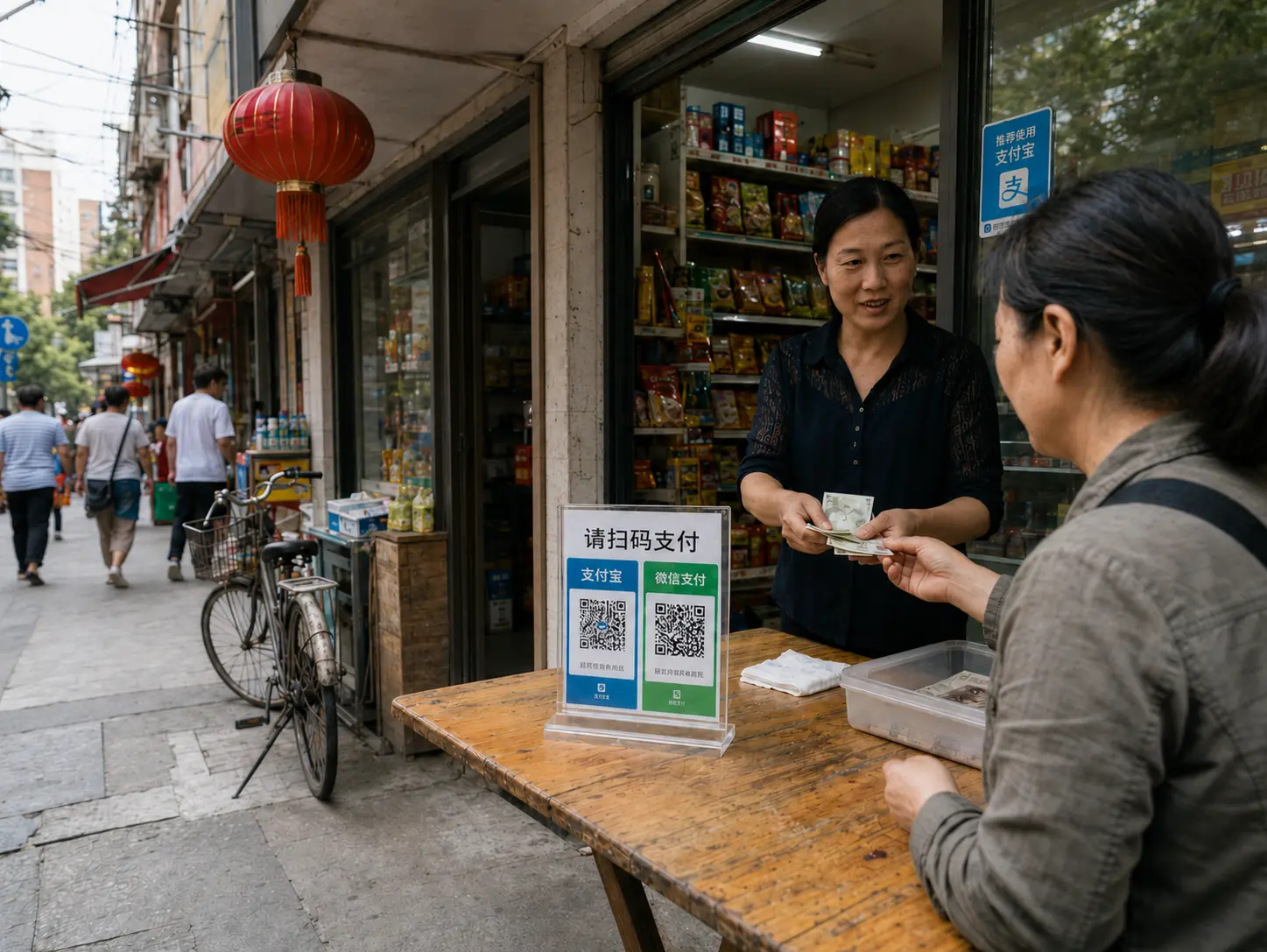
Primary
Mobile payment with an international card linked. Linked does not mean unlimited: app verification, risk controls, card issuer rules, transaction caps, and merchant category can still block a payment. Use the mobile payments guide, Alipay guide, and WeChat guide before you fly.
Backup 1
A physical international card from another issuer or network.
Backup 2
RMB cash split across wallet, bag, and hotel.
Why layers matter
If you rely on only one method, one risk-control event or one network issue can derail your day. RMB cash should remain accepted, but small merchants may have limited change or QR-first habits; carry small notes and avoid relying only on cash. If weak signal or app setup is the problem, use the essential travel apps guide and internet troubleshooting guide.
Pre-Departure Money Checklist
10-minute setup
- Confirm overseas transaction access on at least two cards.
- Check issuer cash-withdrawal fees and daily limits.
- Prepare first-day RMB emergency cash.
- Set personal per-withdrawal and daily-carry ceilings.
- Save both English and Chinese names for 2 to 3 major banks, such as Bank of China (中国银行), ICBC (工商银行), and CCB (建设银行).
- Keep cards and cash in separate physical locations.
Common mistakes to avoid
- Frequent tiny withdrawals from unknown machines.
- Accepting DCC because the home-currency amount feels familiar.
- Keeping all cards and backup money in one wallet.
- Forgetting to compare the posted banking-app cost after your first withdrawal.

What to verify first
Run this once before you fly, then repeat the card limits check if your trip includes remote areas, late-night transfers, or a large hotel deposit.
RMB, Exchange, and ATM FAQ
In practice, no. International cards work in some hotels, airports, larger shops, higher-end malls, and places showing the relevant card-network logo, but daily spending still runs through Alipay, WeChat Pay, or cash in many small shops, stalls, taxis, and local restaurants. A reliable setup is mobile payment with international card linkage, plus a physical card and a small RMB cash backup.
Sources checked for this guide
- China State Council / Xinhua payment service guide for overseas visitors: mobile payment, bank card, cash, exchange, ATM, and visitor transaction-limit guidance
- People's Bank of China Shanghai payment guide: foreign-card ATM withdrawal and currency-exchange channel guidance
- State Council payment optimization opinion hosted by PBOC: cash acceptance, ATM access, bank-card acceptance, and foreign-visitor payment policy context
- SAFE/GACC foreign-currency cash carry notice: foreign-currency cash carry permit-threshold context
- Visa dynamic currency conversion explainer: DCC screen disclosure and conversion-choice guidance
- Mastercard currency converter guidance: merchant or ATM conversion vs Mastercard rate note
Beyond This Guide
Exchange rates, ATM behavior, and payment acceptance vary by city, card issuer, and travel pace. Use these next if you are building your full China payment setup:
- China mobile payments: Alipay & WeChat Pay - decide how QR payments fit beside cash.
- Credit & debit cards in China - understand where physical foreign cards still work.
- Alipay for foreigners - set up the most useful visitor payment app before arrival.
- WeChat in China - add the social and payment backup most locals expect.
- China price guide - size your cash buffer against real food, taxi, ticket, and hotel bands.
- City transport, taxis, and Didi - plan cash needs around late transfers, taxis, and ride-hailing fallback.
© gochinafreely.com — Original guide by Go China Freely.